Last month the Doomsday Clock had moved closer to midnight than at any point since it was created in 1947. Maintained by the Bulletin of the Atomic Scientists, the clock is meant to signal how close humanity stands to destroying itself, whether through nuclear conflict, climate breakdown or new technologies. Its latest shift suggests that we are living through a particularly dangerous moment.
That is one way to look at the year ahead.
Another comes from a friend of mine who follows astrology. “2026 will be intense,” she told me after we had worked out the time difference to talk. “There are major planetary shifts happening. But that also means there is potential for growth.”
Between scientific warning and planetary symbolism sits a familiar question. Are we heading towards catastrophe, or simply moving through another period of change?
It is difficult to judge the scale of events while we are inside them. Perspective usually comes later. At the time, everything feels amplified. The media leans towards urgency. Our own thoughts do the same. The expectation of upheaval can sometimes be more overwhelming than the experience itself.
In recent weeks there have been many reminders of transition: the turning of the calendar year; the Lunar New Year observed across China, parts of Southeast Asia, Korea and the Himalayan region; the beginning of Ramadan for Muslims around the world. These moments draw people together in ritual and reflection. They offer continuity, even when the wider world feels unstable.
At the same time, global leaders speak in stark terms. The Secretary-General of the United Nations recently described a world marked by conflict, inequality and unpredictability. Climate scientists warn that we have entered uncharted territory. Heat records continue to fall. Rain arrives in sudden deluges. Winters in some places are no longer as cold as they once were.
For centuries, seasonal rhythms have provided reassurance. Spring follows winter. Festivals return at roughly the same time each year. Even the Gregorian calendar, introduced in 1582, was an attempt to bring order to time.
The Greek philosopher, Heraclitus, wrote that no person steps into the same river twice. The water flows on, and so do we. It is a simple image, but it captures something steady and true about human life.
What feels different now is the speed. Changes that once unfolded across generations now seem compressed into years. Climate patterns shift within decades. Technology reshapes industries almost overnight. Artificial intelligence systems are altering the nature of work, leaving some people optimistic and others uncertain. I know people who are struggling to find employment, both those nearing the end of long careers and those only just starting out.
My friend attributes the turbulence to a conjunction of Saturn and Neptune. She links economic instability and political upheaval to movements in the sky. When she mentioned the recent increase in visible auroras, I thought of astronomers pointing out that the Sun is nearing the peak of its eleven-year solar cycle. Different explanations, same phenomena.
Whether we turn to science, philosophy or astrology, the underlying experience is similar. Things feel unsettled. Time feels faster. The future feels closer than it used to.
It is tempting either to tune out the warnings or to become consumed by them. Neither response changes what is happening. Ignoring risk does not reduce it. Constant alarm does not resolve it either.
We cannot return to a previous version of stability. The seasons will continue to shift, though perhaps less predictably. Technologies will continue to develop. Political arrangements will evolve. Some changes are small and gradual. Others are abrupt and disorienting.
The real question is how we live through them.
After our conversation, my friend sent a message: “Changes aren’t endings, but thresholds.” It is a hopeful way to think about uncertainty. Crossing a threshold suggests movement rather than collapse.
Perhaps this year calls for small, steady practices. Paying attention to what we consume, digitally and otherwise. Slowing down our thinking when everything pushes us to react. Staying connected to the people around us. These are modest responses, but they are within reach.
We step into the river again. The water is different. So are we.
.
Keith Lyons (keithlyons.net) is an award-winning writer and creative writing mentor originally from New Zealand who has spent a quarter of his existence living and working in Asia including southwest China, Myanmar and Bali. His Venn diagram of happiness features the aroma of freshly-roasted coffee, the negative ions of the natural world including moving water, and connecting with others in meaningful ways. A Contributing Editor on Borderless journal’sEditorial Board, his work has appeared in Borderless since its early days, and his writing featured in the anthology Monalisa No Longer Smiles.
.
PLEASE NOTE: ARTICLES CAN ONLY BE REPRODUCED IN OTHER SITES WITH DUE ACKNOWLEDGEMENT TO BORDERLESS JOURNAL.
Pongal Pot. Photo Courtesy: Ravi Varmman K Kanniappan
On the 15th of January 2026, while much of the modern world was busy checking notifications, updating calendars, and worrying about quarterly outcomes, traditional Tamil households across the globe were doing something far more radical, watching milk boil. “Pongal”, the harvest festival, is one of those ancient cultural practices that stubbornly refuses to modernise. It does not arrive as an app update, cannot be streamed, and has no subscription model.
Milk is poured into a pot, heated patiently, and allowed, indeed encouraged, to overflow. This overflow is not considered inefficiency or waste, but it is the very point. It signifies abundance, wellbeing, and prosperity not merely for humans but for the entire ecosystem that made the meal possible, the sun, the rain, the soil, the cow, and the quiet, unseen labour of nature itself. Rice, lentils, jaggery, nuts, legumes, and raisins follow, and the resulting sweet dish is shared freely among family and friends, because prosperity that is not shared is considered incomplete.
This is an economy based not on accumulation but on circulation, not on profit but on participation. Something I believe is deeply unsettling to modern sensibilities.
Into this defiantly non-consumerist ritual wandered a chickpea with an extraordinarily well travelled past. This was no humble backyard legume, nor had it been picked up at the nearest market. It had sprouted in Mexico, been packed in Lebanon, purchased in Sierra Leone, and generously gifted by my wife Greeja’s friend, Saras, and her husband Pieter, a Belgian whose kindness, like the chickpea itself, clearly knows no borders. The chickpea’s journey to Malaysia, where, after crossing more continents than most humans manage in a lifetime, it finally fulfilled its destiny, being cooked into a traditional Tamil Pongal.
By then this chickpea had crossed more borders than most people ever will, navigated more currencies than a multinational executive, and yet arrived without a single stamp of self-importance. If globalization were ever to seek a spokesperson, it would do well to choose this chickpea, which achieved in silence what conferences and treaties have struggled to explain. The chickpea does not attend Davos, does not publish white papers, does not tweet about resilience or sustainability, and yet it embodies globalisation with a calm confidence that makes economists look unnecessarily stressed.
We often speak of globalisation as though it were invented sometime in the late twentieth century by economists with impressive haircuts and Power Point skills. But the chickpea, unimpressed by timelines, has been global for at least nine thousand years. Its origins lie in the “Fertile Crescent”, that much abused cradle of early civilisations covering modern day Turkey and Syria, where early cultivation was recorded between 7500 and 6800 BCE. The wild ancestor, “cicer reticulatum”, still grows in southeastern Turkey, quietly ignoring the fact that humans have spent millennia fighting over the land around it. From this region, chickpeas spread naturally to the Middle East, the Mediterranean basin, and India by around 3000 to 2000 BCE, becoming a staple across cultures, religions, and cuisines. This was globalisation without shipping containers, trade sanctions, or consultants, just humans carrying seeds because hunger is wonderfully non-ideological.
India, once it encountered the chickpea, embraced it with characteristic enthusiasm and then proceeded to dominate its production. Today, India accounts for more than 70 percent of global chickpea output, a statistic that has made the chickpea an unlikely participant in modern trade wars. Protectionist policies, tariffs, reciprocal duties, and import bans imposed by major players such as India, the United States, and Mexico have transformed this humble legume into a politically sensitive commodity. It turns out that even the simplest food becomes controversial once spreadsheets get involved.
Thiruvalluvar (an ancient philosopher), writing two thousand years ago, anticipated this uncomfortable truth with brutal clarity:
“Only those who live by agriculture truly live; all others merely follow and feed upon them.” - Kural 1033
The verse throws stylish shade at modern life, while we sip lattes under perfect air conditioning and call it “work”, farmers are out there negotiating with the sun, rain, and stubborn soil to keep humanity fed. Our sleek jobs, fancy titles, and glowing screens? Well, they are merely luxury addons. Strip away agriculture and civilisation collapses into a very well-dressed famine. Turns out, all our progress still runs on dirt, with attitude.
The chickpea’s journey to South America, especially Mexico, is a reminder that globalisation has often travelled under less noble banners. Portuguese and Spanish explorers introduced chickpeas to the New World in the sixteenth century, carrying them across oceans as reliable, non-perishable protein sources. From these initial points of contact, chickpeas spread across Central and South America, embedding themselves into local agriculture and diets. In modern times, Mexico has emerged as a significant exporter, specialising in the Kabuli variety prized for its size and quality, with major production zones in Sonora and Sinaloa. Argentina and Chile also joined the club. Thus, a crop born in ancient Anatolia, nurtured in India, and sanctified by ritual, found itself repackaged for global markets, complete with branding, logistics, and regulatory oversight. The chickpea, once again, remained silent.
Silence, however, does not mean insignificance. Homer knew this. In TheIliad (Book 13) he famously compares arrows ricocheting off Menelaus’s armour to chickpeas and dark-fleshed beans flying off a threshing floor in the wind. The metaphor works only because the audience knew exactly how dried chickpeas behave, hard, resilient, and oddly bouncy. By likening lethal weapons to pulses, Homer not only emphasises the strength of the armour but also performs a subtle act of cultural grounding. The epic world of gods and heroes is momentarily tethered to the everyday agricultural reality of farmers winnowing grain. War, Homer seems to say, may be glorious, but it is ultimately sustained by food. Chickpeas, by 800 BCE, were so deeply embedded in Greek life that their sound and movement were universally recognisable. Even epic poetry depended on legumes.
Indian tradition offers an equally revealing, if more logistical, narrative. In South Indian tale associated with the Mahabharata, an Udupi King is said to have managed catering for the massive armies at Kurukshetra. Legend holds that he could predict daily casualties by observing leftover food. In some versions, the king visits Krishna at night, who eats a handful of roasted chickpeas, the number consumed corresponding mysteriously to the thousands who would fall the next day. This allowed precise meal planning and zero waste on an industrial scale of destruction. These divine data analytics allowed the king to cook exactly the right amount of food, avoiding waste on a genocidal scale. It is perhaps the earliest example of just-in-time inventory management, achieved without software, powered entirely by chickpeas and divine omniscience.
If you have ever wondered why Udupi cuisine is famous for efficiency and planning, this story offers a clue. Here, chickpeas function not just as food but as instruments of cosmic accounting.
Interestingly, while early Vedic texts sometimes viewed certain pulses as unsuitable for sacrifice, the Mahabharata period saw chickpeas elevated into sraddha rites (funeral rituals) and daily offerings. They transitioned from questionable to sacred, a promotion many humans would envy.
Thiruvalluvar’s ethical framework accommodates this evolution effortlessly:
“Sharing food and caring for all life is the highest of virtues.”-- Kural 322
A noble idea, until chickpeas quietly steal the spotlight. Modest, beige, and absurdly cooperative, they divide endlessly without complaint and nourish everyone from monks to gym bros. While humans argue ethics in panels and podcasts, chickpeas get on with the job, feeding the masses without ego. In the moral economy of virtue, they don’t preach but they simply multiply and sustain, humbling us one hummus bowl at a time.
Across civilisations, chickpeas became the dependable fuel of endurance. Roman soldiers consumed them as part of their standard rations, boiling them into thick porridge known as “puls” when meat was scarce. Gladiators relied on pulses for strength, earning nicknames that emphasised grain and legume consumption rather than heroism. Spanish and Portuguese sailors trusted chickpeas on long sea voyages because they did not rot, sulk, or demand refrigeration. During World War II, Allied researchers turned again to pulses to address vitamin deficiencies among troops, while the modern Indian Army continues to include chickpea flour and whole chickpeas in field rations due to their high caloric density and reliability. Empires rise and fall, but soldiers keep eating chickpeas.
Modern science, arriving fashionably late as usual, now confirms what ancient armies, monks, and farmers already knew. Chickpeas are celebrated as “brain food,” dense with nutrients that support cognitive function, mood regulation, and neurological health. Nutritional psychiatry highlights their role in reducing inflammation and stabilising the gut brain axis, making them valuable in alleviating anxiety and depression. Unlike the sugar-fuelled spikes and crashes of contemporary diets, chickpeas offer slow-release energy, the kind required for sustained thought, emotional regulation, empathy, and decision making. In a world addicted to instant gratification, caffeine dependence, and burnout worn as a badge of honour, the chickpea is almost offensively patient. That patience makes it profoundly incompatible with modern lifestyles, and incompatibility, in our times, is the surest mark of subversion.
If this sounds like ancient wisdom romanticised through hindsight, it is worth noting that modern civilisation has recently spent billions of dollars rediscovering precisely the same conclusion, often during lunch breaks. Sometime in the post-Covid era, somewhere between a glass walled co-working space and an overbranded café serving ethically sourced air, a young startup founder sat staring at his laptop, attempting to optimise a problem modern life seems uniquely skilled at inventing, how to eat “mindfully” without actually having time to eat. His company was building an AI-driven wellness platform designed to “personalise nutrition using real time biometric feedback.” Investors liked it. The pitch deck had the correct fonts. The valuation was impressive for something that had not yet solved hunger, distraction, or exhaustion.
Lunch arrived in recyclable packaging engineered to survive a nuclear winter. Inside was a bowl labelled Ancient Protein Medley. It contained quinoa flown in from the Andes, kale grown in a vertical farm two kilometres away, avocado sourced from somewhere geopolitically awkward, and, almost as an afterthought, roasted chickpeas. The chickpeas were rebranded as “plant-based protein spheres,” presumably because “chickpea” did not sound sufficiently disruptive, scalable, or fundable.
As the founder ate mechanically between Slack notifications, his smartwatch vibrated with updates. Blood sugar stable. Cortisol marginally elevated. Cognitive focus acceptable. The AI recommended breathing exercises and fewer screens. The founder ignored both and continued eating. The irony was complete. A system powered by cloud computing, global capital, and predictive algorithms had concluded, after millions in funding, that roasted chickpeas were ideal for sustained energy and mental clarity.
This was not new knowledge. Roman soldiers had marched on it. Tamil farmers had lived on it. Sailors had crossed oceans with it. But now it had a dashboard, a graph, and a subscription model.
Later that evening, the same founder attended a panel discussion on sustainability. Someone in the audience asked about regenerative agriculture. The panellists responded confidently, invoking carbon credits, blockchain traceability, lab-grown proteins, and the future of food. No one mentioned legumes fixing nitrogen. No one mentioned soil. No one mentioned that the chickpeas quietly sitting in the founder’s lunch bowl had already done more for planetary health than the entire panel combined. The chickpeas, true to form, offered no comment, no keynote, and no thought leadership, only nourishment.
The chickpea’s journey eastward is no less intriguing. It reached China via the Silk Road, settling primarily in Xinjiang, where evidence of cultivation dates back around two thousand years. There, it became part of Uighur medicinal traditions, prescribed for ailments ranging from hypertension to itchy skin. During the Tang and Yuan dynasties, chickpeas gained prominence as a “cosmopolitan” food, sometimes referred to as the “Muslim bean”. Yet in central China, the chickpea struggled for a distinct identity, often conflated with the common pea even by Li Shizhen[1], the famed Ming dynasty herbalist. Not all travellers are recognised for who they are, some spend centuries being mistaken for someone else.
And yet, through all this travel, confusion, commodification, and conflict, the chickpea remained quietly regenerative. Unlike extractive crops, it forms a symbiotic relationship with Rhizobium bacteria in its roots, fixing nitrogen from the air and enriching the soil. It takes and gives simultaneously, leaving the land better than it found it. This is perhaps the most radical aspect of the chickpea’s philosophy, one that stands in stark contrast to modern economic models based on extraction and exhaustion.
Thiruvalluvar warns us gently but firmly:
“Harm done to others inevitably returns to oneself.” – Kural 319
A warning humans hear, nod at, and immediately ignore. The chickpea takes a cooler approach. It survives by being outrageously generous, throwing itself into curries, salads, and hummus without a trace of resentment. No revenge arc, no ego. Just pure edible goodwill. While we stress over karma and consequences, the chickpea lives its truth, give everything away, become indispensable, and achieve immortality in every lunch bowl.
Humanity today resembles the ancient chickpea, hard, resilient, perpetually defensive. We pride ourselves on toughness, bouncing off crises with admirable persistence, yet rarely ask what we leave behind. Climate change, trade wars, and political upheavals are the shrill winds of Homer’s winnowing floor, tossing us about. The question is not whether we survive the tossing, but whether we enrich the soil when we land. Progress, the chickpea suggests, is not about becoming larger, louder, or more profitable. It is about being regenerative, ordinary, and useful.
In an age obsessed with luxury, consumption, and curated lifestyles, the chickpea offers a quietly subversive model. It is not elite food, but it is the food of soldiers, monks, labourers, and families. It does not advertise, rebrand, or reinvent itself. It simply nourishes.
Thiruvalluvar captures this understated wisdom perfectly:
“From seeds come harvests, and from giving comes abundance.” -- Kural 1030
A line politicians quote solemnly before approving tax breaks for themselves. The chickpea, deeply unimpressed, just does the math. One seed becomes many, then redistributes itself aggressively into every cuisine on earth. No gatekeeping, no merit tests, no ‘personal responsibility’ lecture. While humans weaponise scarcity and call it policy, the chickpea runs a ruthless experiment in abundance and wins, by being cheap, shared, and impossible to cancel. The chickpea has lived this truth for millennia.
So perhaps the real lesson of globalisation does not lie in trade agreements or consumer choices but in a small legume that has travelled from ancient Turkey to modern Mexico, survived Roman marches and mythic wars, endured misnaming and trade barriers, and still ends up quietly nourishing someone’s meal.
Even now, after dashboards have glowed, algorithms have pontificated, and every opinion has been optimised into a performance, the answer remains stubbornly ancient, from Roman roads to Tamil fields. The chickpea does not care about your ideology, your portfolio, or your meticulously curated identity. It will grow, fix nitrogen, feed someone, and move on without a press release.
In a world addicted to spectacle, branding, and moral pontification, this calm, beige indifference feels almost obscene. Quiet competence and unfashionable, the chick pea, turns out to be the rarest, and most outrageously extravagant, luxury left.
The travelled chickpea. Photo Courtesy: Ravi Varmman K Kanniappan
[1] Li Shizen(1518-1593), Ming acupuncturist, herbalist, naturalist, pharmacologist, physician.
Ravi Varmman explores leadership, culture, and self-inquiry through a philosophical lens, weaving management insight with human experience to illuminate resilience, ethical living, and reflective growth in an ever shifting world today.
PLEASE NOTE: ARTICLES CAN ONLY BE REPRODUCED IN OTHER SITES WITH DUE ACKNOWLEDGEMENT TO BORDERLESS JOURNAL
Bibliography
Pongal festival, milk boiling ritual, symbolism of abundance and ecology
Ramaswamy, N. (2004). Festivals of Tamil Nadu. New Delhi: Sterling Publishers.
Origins of chickpea domestication in the Fertile Crescent; dates (7500–6800 BCE); wild ancestor Cicer reticulatum
Zohary, D., Hopf, M., & Weiss, E. (2012). Domestication of Plants in the Old World (4th ed.). Oxford: Oxford University Press.
Spread of chickpeas to India by 3000–2000 BCE
Fuller, D. Q. (2006). Agricultural origins and frontiers in South Asia. Journal of World Prehistory, 20(1), 1–86.
India producing ~70% of global chickpeas; modern trade disputes
FAO. (2023). FAOSTAT Statistical Database: Pulses Production and Trade. Rome: Food and Agriculture Organization of the United Nations.
Thiruvalluvar quotations, dating (~2nd century BCE–2nd century CE), agrarian ethics
Pope, G. U. (1886). The Tirukkural. London: Oxford University Press.
Introduction of chickpeas to the Americas by Spanish and Portuguese explorers
Smith, B. D. (2011). General patterns of niche construction and the management of ‘wild’ plant and animal resources. Philosophical Transactions of the Royal Society B, 366(1566), 836–848.
Modern chickpea cultivation in Mexico (Sonora, Sinaloa), Kabuli variety exports
Gaur, P. M., et al. (2012). Chickpea breeding and production. Plant Breeding Reviews, 36, 1–87.
Homer’s Iliad Book 13 chickpea/threshing-floor simile
Homer. (c. 8th century BCE). The Iliad, Book XIII. Trans. E. V. Rieu. London: Penguin Classics.
Udupi King / Mahabharata legends involving chickpeas and casualty prediction
Hiltebeitel, A. (2001). Rethinking the Mahābhārata: A Reader’s Guide to the Education of the Dharma King. Chicago: University of Chicago Press.
Chickpeas in sraddha rites and post-Vedic ritual elevation
Olivelle, P. (1993). The Āśrama System: The History and Hermeneutics of a Religious Institution. Oxford: Oxford University Press.
Roman soldiers, gladiators, and chickpea-based diets (“puls”)
Garnsey, P. (1999). Food and Society in Classical Antiquity. Cambridge: Cambridge University Press.
Chickpeas in maritime rations and early modern naval diets
Braudel, F. (1981). The Structures of Everyday Life: Civilization and Capitalism, Vol. 1. New York: Harper & Row.
Use of pulses in World War II nutrition and modern military rations
Nestle, M. (2002). Food Politics: How the Food Industry Influences Nutrition and Health. Berkeley: University of California Press.
Nutritional psychiatry: chickpeas, gut–brain axis, slow-release energy
Jacka, F. N. et al. (2017). Nutritional psychiatry: The present state of the evidence. The Lancet Psychiatry, 4(3), 271–282.
Modern “wellness tech,” quantified nutrition, and startup food culture
Lupton, D. (2016). The Quantified Self. Cambridge: Polity Press.
Nitrogen fixation via Rhizobium in chickpeas; regenerative agriculture
Peoples, M. B., et al. (2009). The contributions of legumes to reducing the environmental risk of agricultural production. Agriculture, Ecosystems & Environment, 133(3–4), 223–234.
Chickpeas in China via Silk Road; Xinjiang cultivation; “Muslim bean”
Hansen, V. (2012). The Silk Road: A New History. Oxford: Oxford University Press.
Li Shizhen and historical misclassification of chickpeas
Unschuld, P. U. (1986). Medicine in China: A History of Ideas. Berkeley: University of California Press.
The phrase “irony of fate” is usually illustrated with the image of a sailor dying of thirst in the desert. Neat. Canonical. But as a mental exercise, one might try to find others, less obvious, less obedient. For instance, history has no grave for Herodotus, the very man whom Cicero, with the confidence of a Roman who knew how to assign paternity, called the father of history.
No tomb. No urn. No reliably identified city where he saw his last sunrise, or survived (or failed to survive) upto his final day. No one knows now. No one knew three hundred years ago. And judging by the silence, no one was particularly eager to know then either.
What remains are versions. Hypotheses. And the thick, practiced silence of old Hellas.
Thurii[1] gave him his second name, his last one, acquired while still alive. Yet, Thurii never returned the favour. No monument. No plaque. No modest column leaning into oblivion. Athens, meanwhile, built him something closer to a pedagogical complex. It was recommended for students who expected from the Lyceum not only rhetorical muscle but moral posture. Almost a museum. Almost a cult.
This asymmetry conveniently feeds the supporters of the so-called Periclean Scraper theory. According to them, Herodotus died not in some conveniently barbarian elsewhere, but in radiant Athens itself. Symbolic. Elegant. As the theory goes, he was removed along with other initiates into Pericles’ grand ideas by men who had begun to feel less like assets and more like liabilities. Or worse, witnesses.
We are not inclined to dignify such conjectures by reinforcing their place in history. Still less to supplement them with later interpolations produced by interested hands. These surface periodically in northern Aegean archives as lists or tables.
Yet one fact remains stubbornly intact. Herodotus was involved in the founding of Thurii.
A “common” colony, raised almost at the site of ancient Sybaris. Almost. Instead of theatrically restoring the legendary city of pleasures and refined excess (the Sybaris that gave its name to an entire philosophy of living), Thurii was assembled in haste, shoulder to shoulder with the ruins.
It was populated by Athenian volunteers, new settlers, descendants of Sybarites by blood or coincidence. Every day they walked through the ruins of yesterday. Every evening they returned to today. Dour, makeshift Thurii, assembled without taste or patience, it was like a punishment for former luxury.
The only unresolved detail was the addressee of that punishment.
Herodotus’ role in the final phase of Athenian democracy remains opaque. So opaque that one is tempted to suspect the opacity was the point. Too many moments in his biography coincide neatly with zones where documents stop leaving footprints. From fragments, partial transcripts, unsigned notes, and a couple of discreetly scraped tablets, the following version has been reconstructed. Its coherence is provisional. Responsibility for interpretation rests with the reader.
Pericles ( 495BCE–429BCE), Ancient Greek statesman and general.Herodotus (484 BCE – 425 BCE), Ancient Greek historian and geographerFrom Public Domain
Pericles acted with the confidence of a mature servant of democracy. His concept of an external threat (Persia) was remarkably versatile. It justified emergencies, softened expansion, and wrapped ambition in collective security. The threat itself worked better than any actual invasion. While others clung to the marathon, Pericles spoke of the future. A unified alliance of poleis, decisions made swiftly, centrally, and preferably in his office.
In practice, matters were simpler. The democratic faction wanted more. Territory, tribute, votes in foreign councils. Everything else was rhetorical upholstery. Their opponents could read subtext too, so Pericles began by clearing the flanks at home. The Areopagus was “reformed,” officially. Thucydides and his circle were removed next, with minimal explanation and maximum finality.
In the end Pericles remained one of the ten Strategoi[2], exactly as the constitution prescribed. But he alone decided. The others attended meetings, signed when prompted, nodded often. Formally, it was a democracy. In reality, a political singularity noticed by everyone and addressed by no one, because addressing it would have required rewriting the rules.
Only then could the Idea of a greater Hellas[3] be carried beyond the sacred city.
Herodotus arrived in Athens the way one arrives when one’s biography has already begun to resemble the synopsis of a tragedy. Still negotiable, but increasingly reluctant to change genre. There had been an attempted coup in Halicarnassus. It failed, but failure in Athens was judged alongside the elegance of the leap itself. Exile followed. He sailed with the Athenian fleet. More excursion than service, but the checkbox mattered. What he brought back was not heroism so much as stories, trimmed, calibrated, arranged with care. Athens was perpetually hungry for narratives, especially those that began as personal experience and ended as matter of state.
Pericles learned of him long before shaking his hand. By their first meeting, Herodotus had already been tested in conversation, whetted at banquets, evaluated through third parties of both sexes and varying loyalties. When Pericles finally invited him, first informally, then into his office, Herodotus was already half-installed. They spoke like men who had been reading the same books for years and drawing incompatible conclusions. Herodotus offered careful directness, still marketable. Pericles listened, then made the small, economical gesture Athenians read fluently. This man would be allowed closer.
From that moment on, Herodotus ceased to be merely a gifted interlocutor and became part of the infrastructure. His notes were quietly reclassified as “auxiliary material for decision-making.” He began to appear at discussions of issues that officially did not exist, meetings without agendas, where unrecorded questions were discussed and ideas could not to be seen walking alone in daylight.
It was elegant. Herodotus believed he was being heard. Pericles ensured he was being used. Athens congratulated itself on the illusion of mutual benefit. In conversations with Pericles and those nearest to him, Herodotus eventually let slip two places that unsettled him by their scale, precision, and absolute dissimilarity to anything he had encountered among any monuments created by human.
It was an even octagonal platform, a night’s march east of Tyre, made of marble cracked by age, yet laid so carefully, and on such a foundation, that no one, however motivated, managed to pry out blocks or grind it down into reusable rubble. The vacant expanse, roughly the size of four Athenian quarters, stubbornly refused conversion into cheap building material. And also a pyramid sunk deep into sand, referred to as Shaytep by locals. Later it was imitated with scholarly enthusiasm by Egyptians who inherited the territory above it. Its accessible chambers suggested the scale of a ten-story palace, if such a structure could ever make sense as habitation. Immense, curiously pointless, poorly translated allegories, it had the same heavy geometry, the same sensation that it was not built for people.
The locals knew nothing. Those who called them tombs did not argue with those who believed them to be stations of the gods. But one detail struck Herodotus as well as Egyptians, Persians, border tribes – all speaking different tongues had the same conviction – structures like these existed elsewhere.
No one had seen them. No one had mapped them. Yet everyone “knew” they must be there. Drunken sailors’ tales from the inhospitable north. Evening stories about distant shores of the Pontus. No names. No coordinates. Only background noise, the shadow of something once called knowledge.
Then there was Lampon, a seer, a priest, an interpreter of higher meanings knew how to speak with the gods or at least how to simulate the effect convincingly. In Athens he was respected not as a person but as a function. He had a lifelong right to dine in the Prytaneion, where the Council of Five Hundred formalised the will of the people. Lampon had access without election as he was said to have authority delegated directly from the sky. His task was to ensure no decision passed that might anger Olympus. A dizzying appointment for a supervisor overseeing assemblies theoretically designed to lack any single supervisor.
Lampon stayed close to Pericles, intimately close. Either Pericles believed in signs, or he understood the value of myth and knew how to deploy it. The two are not mutually exclusive. On the square, the people saw a priest and heard a voice as to who stood behind that voice remained speculation.
It was almost certainly Lampon who conceived the idea, layered like honeyed pastry. He compiled all reports of megalithic structures, convened a council of moderately learned men to interpret them, dispatched colourfully dressed priests with sombre escorts to the empire’s edges. And made the big announcement.
Athens, the statement would go, had recovered forgotten pre-literate knowledge. The knowledge of how to turn piles of stone into defensive infrastructure. Or, with fewer syllables, a wonder-weapon. Against it, Persian arrows and anonymous triremes would amount to little more than wind in a vineyard.
Domestically, it was signal geometry. Parallelograms of fact intersecting triangles of legend, with the Athenian party standing at the centre beneath the slogan. We read stone better than anyone. Anyone asking unnecessary questions simply would not be invited to the next symposium.
Externally, it was never about hoisting a catapult atop a pyramid. It was about saturating every diplomatic front with a myth. Athenian hegemony was not merely foreign policy. It was access to ancient knowledge, to a power beyond imagination.
Beneath the ornamentation lay the real goal – to ensure recalcitrant polies[4] would arrive voluntarily, bread and butter in hand, at a confederation where Athens controlled the bread, the butter, and the ledger.
Pericles did not merely approve Lampon’s hypothesis. He sealed it with an official nod and an unofficial proceed until it smoked. Marketability mattered more than the truth. If more than three neighbouring poleis believed it, it would cease to be a local myth and begin to function.
Herodotus received two sets of instructions. The written one was to collect and systematise material on the Greco-Persian Wars. Paperwork for the Academy and the gullible. The oral one was simpler – to locate traces of the “ancients” across the edges of the oikoumene[5], and try not to damage them too badly while taking measurements.
What would be done with the material was not explained, not out of mistrust, but pragmatism. Knowledge without leverage becomes ballast. And Herodotus already carried enough weight — nobility. faith in democracy coupled with dependence on his own authorial voice. Throughout the expedition, whose geography we know in exhausting detail, he sent Lampon encrypted reports with exemplary regularity about the locations of structures of titanic scale and improbable forms.
The earliest reports were meticulous, almost embarrassingly enthusiastic. As if he were seeking revelation in massive forms. He analyzed slab placement, light behavior, hypothetical priestly processions, even the dietary preferences of imagined builders. But by the eighth object the style thinned. By the tenth it collapsed into two lines, as if the text itself had grown embarrassed.
Geodesy and geometry remained precise. His team continued to perform duties in full compliance with instructions and payroll. But metaphors vanished. Comparisons evaporated. The rhetoric crumbled. The stones remained. The words did not.
Lampon followed the change with mounting concern. Some blamed fatigue, barbarian cuisine, women insufficiently trained in Hellenic desire. But Lampon was not convinced.
Herodotus’ second arrival in Athens was calm, without excessive praise. His report to Lampon was scheduled without urgency, for the evening. The time when architecture becomes philosophy and political maneuvering turns into liturgy. This meeting has been reconstructed below as per the authors’ assumptions.
“We’ll pour the wine ourselves,” Lampon smiled. “So, did you bring us an oracle from the barbarians?”
“I did,” Herodotus said. “The oracle, and the barbarians.”
He did not elaborate.
Lampon pressed gently. Herodotus replied, almost apologetically. “I’m avoiding language. When you try to describe what was created outside description, you don’t move closer to understanding. You build a private labyrinth of words and find a sign reading Museum Closed.”
“At first there were words,” he admitted. “Epithets. Analogies. Cyclopean observatories. Celestial surgery. Shafts draining souls to Sirius. But these similarities are projection phantoms. My culture reflected onto something without a reflective surface.”
Lampon asked what changed.
“We see a monument like an unsolved equation and immediately insert familiar context,” Herodotus said. “Circle means cult. Twelve means zodiac. Stone means ancestors lacked better materials. And we’re satisfied because we’ve obtained an answer that stops thought. That isn’t research. It’s mental self-fertilization.”
“So you went looking for a different answer?”
“No. A different question.”
A pause, then. “If you want to understand a shadow, you don’t stare at the object. You examine the source of light. I looked at the invisible craftsmen. At the light they emitted so we could amuse ourselves by drafting plans in the shade of their buildings.”
“How do you encode emptiness?” he added. “The impulse faded. I accepted the emptiness as it was. And I began to write accordingly. As a witness, not an apologist.”
Then, unexpectedly clear, as though rehearsed to the point of premiere. “They caught the wind not for movement, but for taste.”
“That’s all?”
“I found not an explanation,” Herodotus said, “but an understanding. That if among the ancestors there was one whose mischief outweighed his fear, he said: let’s place the stones like this. By the stars. Or the other way around.”
“And others followed,” he continued. “Not because they understood, but because it felt exciting. Amusing. New. And it spread, like a fire no one meant to light, but everyone enjoyed feeding.”
Lampon pressed. “You reduce the work of titans to a game?”
“A game,” Herodotus shrugged. “Or play. Or fashion. Rituals without gods. I searched for depth where there was only the width of a moment. Sometimes a dolmen is just a dolmen. The imprint of laughter that has gone silent.”
Lampon looked inward, auditing the contents of his guest’s soul. He found no deceit. Herodotus had tried earnestly to assign cult and function to chaos. Each new structure replied: “No. Nothing. Calm down.”
By the tenth, the traveler had calmed down.
In practice, however, Thurii happened.
The initiative came from the democrats, formally from Pericles’ associates, informally perhaps from Pericles himself. Here the fog thickens. Was this merely bureaucratic arrhythmia, or the final phase of a longer operation? The sponsor colony’s paradox remained. It did not eclipse Sybaris. It multiplied despair by forcing a daily view of its ruins.
It was there that Herodotus acquired his enduring epithet, the Thurian. It was there, tradition says, that he unified his Histories, at least in the “recommended” reading. The sequence gently guides an inexperienced reader toward the conclusion that the author prioritised events that glorified Hellas. Everything before appears as clay, material to be kneaded into anonymous coating for tablets meant to record the “truly significant” milestones.
Later editors, we now know, divided the work into nine books. Another irony. A life devoted to weaving disparate accounts into a chain. Successors dismantled it into links, then displayed them in whichever sequence proved momentarily convenient.
For a time Athens mentioned Thurii only occasionally, as one recalls a long dinner with dull relatives. Then something occurred to pull Herodotus back into the field of managerial imagination.The answer is disarmingly prosaic.
The old man decided it was time. Not to die. To speak.
Publicly. Before an audience. With scrolls and a lectern, and that expression professional speakers wear just before and do you know what else? Publication was discussed. Workshops began calculating margins.
Word of this reached Lampon not as a fresh wind but as a warm exhalation of antique panic. Ready for readings was enough. He knew how easily Herodotus could forget the boundary between narration and confession when listened to attentively. The danger was not a direct accusation. Herodotus was no enemy. Far worse, he was a witness. In the vortex of his diegesis[6], scraps of geography, personal reflections, unapproved versions could be swept together. Everything Pericles had ordered to be formulated, but not pronounced.
The decision was swift. Herodotus was summoned to Athens. The pretext was patronage. A chair. An audience. A laurel wreath and a lifetime bust. Perfect timing. If there were readings, let them occur at the center of the world.
And on the way back, a stone, rain, a robber, a horse — the classic, well, age after all. In modern terms, something we would call prevention. The Greek lexicon offered a more refined word. Hygiene. If nothing else, the Hellenes knew how to keep a narrative clean. Thus, according to proponents of the Scraper theory, the true story of Herodotus ends. Pericles methodically erases associates from the commemorative board.
His work survived, though not without excisions, and the factual foundation thinned accordingly. Speculation about conjecture and truth continues to feed professional unmaskers.
Pericles never obtained his diplomatic wonder-weapon. No column trembled under an egregore’s vibration. Instead, two blocs of poleis emerged, welded by paranoia and ambition, and the Peloponnesian War followed. An internal conflict of unprecedented scale, like a culinary dispute between the two heads of a single serpent.
As if that were insufficient, a plague disembarked in the Piraeus — classical symptoms with a metaphysical aftertaste. Pericles himself exited through an emergency door politely opened by the Queen of Epidemics.
Lampon, however, seems to have drawn a different conclusion — divine retribution for attempting unauthorised access to the gods’ toy chest. He dissolved his name into topical comedies and administrative archives.
Time, as is well known, is not the enemy of knowledge, but its only victor.
The pyramids sink deeper each year, as if the earth were ashamed of their nakedness. Island statues once mistaken for fallen heroes increasingly resemble quirks of terrain. The blurrier the outline, the freer the hypothesis. The fewer the features, the louder the voices eager to explain.
Perhaps this is how history repaid Herodotus. Monuments built in the style of titans (?) simply fade just as the meaning of their existence once faded, just as Herodotus of Thurii himself faded, leaving behind only a controversial image.
Andriy Nivchuk is a Ukrainian-born author with a background in IT engineering. He spent fifteen years working as an artistic photographer in Paris and now lives in Ukraine.
PLEASE NOTE: ARTICLES CAN ONLY BE REPRODUCED IN OTHER SITES WITH DUE ACKNOWLEDGEMENT TO BORDERLESS JOURNAL
Bibliography
Herodotus (life, association with Thurii, traditional framing of the Histories)
I was in Oxford on a Charles Wallace fellowship to study John Ruskin’s influence on M K Gandhi and R N Tagore. Like any other student I lived in a hostel, walked up to the Ruskin School of Art and Ashmolean Museum, to the High Street and the flea market, to the Bodleian Library, and – of course – the book stores that continue to make that ancient city of academic excellence such a delight for a person like me who started crawling in the midst of books.
What caught my fancy on the book-lined shelves in the hometown of a ‘legal deposit’ library? The screenplays of Quentin Tarantino. Countless books on Elizabeth 1 – perhaps because Shekhar Kapur’s Elizabeth had just released worldwide. And the volumes on art. The gorgeous reproductions halved the tedium of walking miles of museums and galleries. And the history of art rekindled my love for paintings from our collective past.
But what I didn’t take kindly to was the neglect of – if not bias against — art from my homeland. There were books on Greek, Chinese, Japanese , African, Egyptian, Mayan, Roman art, on Russian Icons and Stained Glass windows, on French Impressionists and German Expressionists, Cubists and Moderns… But Indian art? For crying out loud, where was Ajanta-Ellora? The glass paintings and Miniatures? Pichwai and Patachitra, Nathdwara and Kalighat Pat, Warli and Madhubani, Santiniketan and Baroda?
That’s when I told myself, “Put the journey of Indian paintings between covers.” For, which other country has a continuity that I can boast, of a tradition that has continued unchequered for three thousand years and more?
Once I was back home, my friend Reeta Dutta Gupta approached me to edit an Encyclopedia of Culture for the India Series she was nursing. And Dr Jain of Ratna Sagar entrusted me to author a Notebook that would recount for school-going children the story of Indian art from Bhimbetka to the present millennia. What luck!
*
Be it the hunters and the hunted of Bhimbetka, the rock art now on the UNESCO list of World Heritage, or Kolam and Alpana and Rangoli, the decorative designs of Kerala and Bengal and Maharashtra. Be it the Buddha of Ajanta Frescoes or the ploughmen and blacksmith of the Haripura Congress panels painted by the Bengal master Nandalal Bose, be it the illuminations in the Jain manuscripts or the Mughal manners immortalised by the kalams: art in India has grown out of everyday life. These art expressions have been an integral part of the people’s existence, regardless of the style or the period in which they were painted. Yes, down centuries Indian art has withstood change of regiments, religions, philosophy, social content, historical setbacks. And, aesthetic excellence has found an outlet in forms and lines, strokes and colours, whether these were obtained by crushing gems or pounded rice.
This has helped India enjoy a continuity that is rare even in the developed societies. From the sketches of Bhimbetka to those of the tribal artists of Warli, from the murals of ancient India to the art of contemporary masters, from the miniaturised figures to the Tantric patterns – art in India has reinvented itself again and again. And each time it has emerged with renewed vigour and vitality. Because, every age has related to art in an intimate way. By painting on the wall. Decorating the floor. Placing it on the altar. Or simply by keeping an account of the times.
Bhimbetka Cave paintings from prehistoryA fresco from the Ajanta caves, 2nd century BCE to 6th century CEArt from Indian past. From Public Domain
As A Ramachandran – then professor of art at Jamia Millia Islamia in Delhi – had said to me, “Even when our ancient language that was deemed the language of the gods, fell into oblivion, art transcended centuries because it was communicating through a universal language – the visual language of colours and hues.” The lines defined the form, and also created a unitary area for the use of colour, he had further explained. “No matter what the subject, comprehension was never a problem for the Indian – until he was confronted by the art that was imposed by the colonialists.”
The Western overemphasis on realism played havoc, with the native sensibility that allowed for imagination and stylization, Nair Sir had pointed out. That sensibility had no problem accepting a ten-armed goddess, Dasabhuja Durga, or Dasanan, the ten-headed Ravan. “Lifestyle changes too have led to the dilution of Indian aesthetics that once enveloped our workaday lives. The only living art today is the visual art traditions in the villages, but that too might not last as villagers now want to ‘rise’ to the level of the urbans!” he had lamented.
In such a situation, art becomes doubly significant in the life of a child. When she or he is exposed to it, the child can not only access the history and the continuity of a culture but also nurture it with love that can ensure it lives in the days to come… With this in mind, I will write to focus on the high points of Indian art.
Ratnottama Sengupta, formerly Arts Editor of The Times of India, teaches mass communication and film appreciation, curates film festivals and art exhibitions, and translates and writes books. She has been a member of CBFC, served on the National Film Awards jury and has herself won a National Award.
.
PLEASE NOTE: ARTICLES CAN ONLY BE REPRODUCED IN OTHER SITES WITH DUE ACKNOWLEDGEMENT TO BORDERLESS JOURNAL
Not Ptolemy’s Kasperia, nay, not Kashyap Mar – Kasheer is the abode of irrevocable loss. Homes razed to ground by centuries of betrayal: we stand as mute specters – the ruins and I.
Kalhana, your word is lost! Spiritual defeat has finally come to pass. The era of pit dwellers and sun worshippers is gone, And now the faithless grave worshippers abound.
“In time past, we were; in time future, we shall be; Throughout the ages, we have been,” quoth Laila Arifa. I shove back the diggers, frantic to cover the long-lost city buried in my mind.
Kasheer might have forgotten the monster Jalodbhava, Were it not for the wine bottles dangling from barbed wires. I had happily lost my memory of you, until It was revived by the fish bones on mountain tops.
The mythical, the legendary -- that Kasheer is non-existent. The snow endures longer than the memory of the dead. It’s getting way too dark. Tell me a new story– of Kasheer – the land reclaimed from the sea of sighs.
From Public Domain
Glossary
Kasperiais the ancient Greek name of Kashmir as mentioned by Ptolemy
Kashyap Mar is he abode of Kashyap, Kashmir, in Kashmiri
Kasheer is Kashmir in Kashmiri
Kalhan wrote Ratnagiri, an account of the history of Kashmir
Laila Arifa is a 14th century poetess who wrote in Kashmiri
Jalodbhava or Waterborn was a mythical demon who tormented the inhabitants of Lake Satisar in Kashmir. He was destroyed by the joint efforts of the sage Kashyap, Parvati and Vishnu. His destruction destroyed the lake and led to the formation of Srinagar, the current capital of Kashmir.
.
Saba Zahoor, an engineer from Kashmir and self-styled peasant poet, views poetry as a portal to alternate realities and has been published in several literary outlets.
.
PLEASE NOTE: ARTICLES CAN ONLY BE REPRODUCED IN OTHER SITES WITH DUE ACKNOWLEDGEMENT TO BORDERLESS JOURNAL.
A river bridge in Minneapolis, the ragged sky all cloaked in river mist.
The only man to make the Furies weep plaintively sings; he can no longer sleep.
In verdant meadows high above Rhodope, shades cling to cypresses with little hope.
A backward glance in Avernus’s valley left us these songs and ruined Eurydice.
Twice dead is dead; though hyacinths still bloom, the rooks will leave their shadows on the moon.
EARLY AUTUMN
A northern flicker kicking up small clouds
of dust and needle duff beneath the blue spruce
in the yard. Some sparrows flit away from the lone
land-foraging woodpecker. I’ve seen the bird before,
I’d like to say, but it’s probably not the one
that drummed the soffit of our roof so many
mornings in a row a couple springs ago.
ANOTHER AUTUMN
That saw-whet owl in the boxwood along the banks of Ecorse Creek.
Woodland sunflowers yellow above the mud, their green leaves glistening
with water. October rain has turned to October sun.
A culvert sings with run-off. I wonder if the built world will reclaim me.
Greek Mythology: Haemus and Rhodope turning into Mountains as they were punished by Zeus for calling themselves Zeus and Hera. Greek Mythology: Eurydice dies of snakebite as she was about to be wed to her beloved Orpheus. From Public Domain
Cal Freeman is the author of the books Fight Songs, Poolside at the Dearborn Inn, and The Weather of Our Names. He lives in Dearborn, MI, and teaches at Oakland University.
.
PLEASE NOTE: ARTICLES CAN ONLY BE REPRODUCED IN OTHER SITES WITH DUE ACKNOWLEDGEMENT TO BORDERLESS JOURNAL
Ogden Nash is the finest. The snobs who dismiss his work are knobs and jerks whose heads should be examined and given an F minus. Of his talent they have not a tenth. I mean, flipping heck! Lacking depth is his strength.
And now for some HAIRY QUESTIONS… Werewolf? Whywolf? Howwolf? Whenwolf? Whatwolf? Whowolf?
Questions like those never can be answered because the facts are tactless and the fangs will leave you gutless on nights of a full moon. The lycanthropic topic is one best avoided and thus I will always avoid it.
I made myself a sandwich. I made it for my health. I am a self-made man despite my lack of wealth.
I made myself a promise I would be a bitter gourd cut into fancy segments by an even fancier sword.
Unlike okra I’m not slimy. If you ever dare to try me I’m a vegetable Cockney, I must say, “gourd blimey.”
Is that all? No, it certainly isn’t.
Lady Rickshaw claims we are all ghost ships on the streets of cities, drifting here and there.
That’s modern civilisation for you: please join the queue for the time machine.
But in more barbaric times in chillier climes…
Our cavemen noses glow in the cold. They never grow when we are old but snowmen’s noses linger for longer and their nostrils resemble craters.
The comet made from ice, interstellar, vast, oblivious, very fast, will strike that fellah dead when it hits his head.
And now let’s take a trip to ANCIENT GREECE
A gorgon’s internal organs must be clever forgeries. She turns heroes to stone, in pairs or if they’re alone, and when destiny calls and Greece finally falls those statues will be taken to Rome, their new home.
But the gorgon’s heart will never beat a rhythm you can dance to. It won’t thump like a man-bull’s hoof-shaped shoes, that’s true. No swirling sonic brews amuse our motley crews.
I’ve had better days lost in this maze: one time I almost found my way out, said the Minotaur…
Fenugreek Mythology featuring Hercules and Coriander leaves, Turmeric and Ulysses, Centaurs and Bottle Gourds on a bed of saffron rice is nicer to devour than plain old Greek mythology.
Tell me honestly: have you ever seen A GHOST?
Death’s anniversary, is a ghost’s birthday: blowing out cake candles with supernatural breezes he teases the ectoplasm, a professional phantasm.
Are spooks international?
I am turning Japanese after a sneeze because some wasabi went up my nose. Kimonos are my clothes.
Also, I play shogi with my toes. (Shogi is a kind of chess: I’m glad to get this off my chest).
Now let’s have a SELF-REFERENTIAL HAIKU
Counting syllables when confronted with haiku ruins the effect.
That’s done. Where else can we find our fun?
Do you know the tale of Patriarchy and Mehitabel? Do you know the tail that twitches on the windowsill?
The proof is in the pudding, or so they say, but I think I know a better way: the waterproof is in the puddling duck.
A vestige of a visage? My face is the place where my luck never runs out. It may lack grace, a waste of features belonging to other creatures, but each to their own.
The philosopher doesn’t like my tone: he tells me to ponder harder but not to think about swamp imps named Marsha. Easily done: I don’t know anyone with that name.
Harsher, he calls me timid, says I am a coward. Coward? But how? I don’t know the meaning of that word but I can work it out and applied to me it’s quite absurd. It means to move in the direction of a cow, or many cows, a herd.
Have mercy if you’re thirsty. Be ruthless if you’re toothless.
Do farm girls grow on you over time, seasonally?
A question I can’t answer because I am a scarecrow. No one planted me, I do not grow. I do not know a single thing.
But I can take a guess about the mess made by guests at dinnertime. Billabong Monkeys dunk their feet in the soup in groups much larger than gorillas are long.
Is that a SONG? Somehow, I don’t think so.
And now let’s have some Soliloquies for Stringless Guitars.
Kiss her through the mask. Miss her through the cask.
Foxglove Alley. Weasel Stockings. Garter Snakes, real and fake. Rotten Shed and Rusty Rake. I venture down the Cul-de-Sac of Frogs. I lost my way in the fogs.
That isn’t fog: it’s sand. That’s no frog: it’s a panda. Are you an understander? There is no great demand for sand disguised as mist and so we insist you redo the list of things you wish to purchase in the sopping shops that underwater lie.
Swinging on a garden gate, it’s far too late to palpitate at sunset but the day’s still too early to fly away and so you may barbaric be, barbaric bee, barbaric beer.
Beer comes in at the mouth. Jokes come in at the ear. Foam comes out of the nose. POOR ATTILA lost his clothes during a drunken stupor. It’s not ideal but he is super.
Attila was very short. Only one metre tall and nocked with battle scars at one centimetre intervals. No wonder he was such an effective ruler!
He wanted his wife to call him ‘Darling’ in the marriage bed but she insisted on calling him ‘Hun’ instead.
Oh dear! Have no fear: King Lear has shed a tear that splashes on the lashes of the whip that thickens cream in dreams.
When I was younger I had a narrow mind and only thought of narrow things: tight corridors, blocked canals, mountain ledges, malnourished gulls, ladders designed for stick insects, crevices into which no man could fall.
But now I am older and think only of wide things like canyons and gulfs, the open mouths that shout bravo at gigs, the taste in literature of well-read people, the square bases of the mighty steeples perched on churches in historical towns, the flapping gowns of aristocratic vamps, the pipe bowl of my eccentric gramps and the prehistoric snouts of pigs snuffling for unripe but fallen figs.
Listen closely, my dear…
My love for you might sound hyperbolic to hyperactive alcoholics. But it will sound perfectly fine to good romantic folks.
Now here’s a thing: sea roofs on the inside are called sea lings.
Freshwater otters in Goa. Salty authors in the shower. Both are so clean but only the latter dare dream of rivers of cash. The former dream only of fish.
FOR A FLUTE?
Love for a flute is holy love because a flute without holes is a stick and love for sticks makes me sick but flutes have holes thus my stomach will settle at the base of the kettle and I will laugh: tea-hee cough-hee.
The frozen lion thaws before he roars.
A thaw in the old ball bearings and the machinery of his desire began working again.
The machine marks time like a strict examiner puffing out his metal cheeks in the weeks before the summer holidays.
Do machines really play the drums?
As a rule of thumb, yes! Keeping the beat with steel feet. How neat. What a treat. The soul of the dance is deep in the soles. The heels heal the heart.
We have our whole lifetimes A HEAD of us in which to try out new hairstyles, she said. She knew what she was talking about. The barber’s wife.
The gentle love drizzle puzzles the riddler. The lion is sizzling in the meri jaan frying pan over the fire of our heartfelt desire.
And that’s the end of the line for the wandering rhymes and the Nomads of the Bone will soon end up back home.
*meri jaan is an endearment in Hindi meaning my life
Rhys Hughes has lived in many countries. He graduated as an engineer but currently works as a tutor of mathematics. Since his first book was published in 1995 he has had fifty other books published and his work has been translated into ten languages.
.
PLEASE NOTE: ARTICLES CAN ONLY BE REPRODUCED IN OTHER SITES WITH DUE ACKNOWLEDGEMENT TO BORDERLESS JOURNAL
“And suddenly, among all those people I didn’t know, I had this strange feeling, this implausible realisation that I was seeing him for the first time. Handsome, confident, articulate in a language I still cannot follow with grace. And I felt this pang inside, you know, as if a naughty elf inside me were swaying my heart with a rope. How can I see my husband for the first time after having been married to him for almost eight years?”
Rosalia remained silent, observing for some speculating seconds the little square of tablet that Rita had brought for their tea.
“Your husband is exactly like this sweet, darling, which, by the way, is delicious. I need the recipe before you leave.”
“Like tablet?” Rita inclined her head to the right in the exact same way her daughter did when she heard anything worth clarification. “My grandmother Cochrane would be very honoured to know you like her Scottish tablet so much. I cannot make anybody eat it at home. Henry says it’s too sweet and Maggie too sticky.”
“Well…,” Rosalia sighed, “for me it’s perfect, and I am sure nobody in this office will say no to this morsel of Heaven. It reminds me of a dulce de leche candy my detestable mother-in-law used to make in Buenos Aires for Christmas. As you can see, even her perfect evilness was imperfect.”
Rita smiled again and rejoiced at the fact that she could come to visit her older friend at the Castelo de San Jorge with the express purpose of selfishly collecting smiles like Maggie used to collect peacock feathers in the garden before she started going to kindergarten. Rosalia’s office was a new environment for their meetings now. A step up on the podium of a friendship that had begun outside the Castelo box office under a narrow eave on a humid stone bench. Rita loved to breathe in the peace of the office, with its austere decor and dark wooden cabinets that had once cherished the delicate porcelain of Portuguese queens and now held Rosalia’s dictionaries alongside maps, brochures, and tourist forms for all those who came to witness the royal luxury of ancient times.
“So, do you mean that this feeling of seeing Henry again for the first time at the bank’s banquet is sweet like my grandmother’s tablet?”
“Not exactly. When I saw those brownish cubes on the plate, I was convinced that it would be difficult for me to bite into them. You know, my weak teeth and all that. But then I bit into one of them, and it melted on my tongue. And I felt this torrent of pleasure bursting in my mouth. I think what happened to you on Saturday is that you saw Henry like random people usually see him. You heard a far echo of the vision you had of him when you fell in love.”
Rita’s inner elf jumped from her heart to her face to make her frown and purse her lips at the same time.
“But sadly,” Rosalia continued, “you already know that what you saw is an act. The source of your confusion and your loneliness. You love a vision in a dream, a beautiful piece of candy in a perfect window shop that gets further and further away as you get closer.”
A soft knock at the door interrupted the old woman’s thought and let Rita take a sip of tea to conceal her disillusionment. Rosalia took the documents that Victor brought, turned to her side desk, and placed one of the pages in her sturdy IBM Selectric. She adjusted the corners of the paper as if she were folding a handkerchief for the ghost of one of the queens that had inhabited the Castelo centuries ago. Rosalia’s eyes were fixed on the rectangular screen of her typewriter as she turned toward Rita and pronounced in perfect French, “Trompe-l’oil…. trompe-l’oil[1] people I call them. What you see is never what you get. The man I married and later divorced, so many decades ago, was like that. Sometimes, out of the blue, I remember how elegant and self-confident he seemed to be, and still, after all this time, that elf you mentioned still plays tricks with my heart and its cords. Do you know the legend of the two Greek painters of ancient times?”
Rita looked up from her cup and raised her left red-haired eyebrow as an invitation.
“There was a competition to declare the most realistic painter in the land. Zeuxis and Parrhasius presented their art. The grapes that Zeuxis had painted were so impossibly real that birds flew into them and crushed their beaks and heads on the purple spheres. They died a cruel death, believing they were tasting the sweetest pulps and the bitterest seeds. Zeuxis, sure of his triumph, asked his opponent where his painting was. Parrhasius walked him in front of the curtain that hid his work. ‘Draw this cloth and you will see it,’ he said humbly. But Zeuxis’ eager hand trampled on the folds of a fake, perfect drapery made of shades, hues, and light. Parrhasius won not only the prize but the admiration of his enemy.”
Rita inclined her head to the left. “I’m sorry for the birds.”
“That’s why I don’t tell this story much. My granddaughter has a phobia of birds that decide to fly stubbornly in the wrong direction. I’m afraid I instilled that in her with this tale.”
Rita picked up a brown crumb from her saucer. “If only I could draw aside the curtain Henry places between himself, Maggie, and me. I’m a good wife. I don’t know what else to do.” Rita dropped the crumb and killed an imminent sob with the tip of her finger.
“You are like the candid birds, my child. You are hurt but strong. Cannot you see? You’re making sweets with the salt of tears, pure visions of love with the threads of deceit.”
Fabiana Elisa Martínez authored the collections 12 Random Words and Conquered by Fog. Other works of hers have been published in literary publications on five continents.
PLEASE NOTE: ARTICLES CAN ONLY BE REPRODUCED IN OTHER SITES WITH DUE ACKNOWLEDGEMENT TO BORDERLESS JOURNAL
Writing about Lucknow’s fabled monuments has set me free to regurgitate images and feelings (‘ehsaas‘ as the Urdu equivalent goes) that call for effusive recollections. When the praxis of location and travel stand side by side, words flow out of the material foundations of structures that court our instant awe. Another fabled monument that rewrites the architectural-historical continuum of Awadh in that admirable vein is Bibiapur Kothi (Mansion); there’s just something sturdy about its presence in one of the most beautifully quiet corners of the cityscape.
Blessed by the legendary aesthetic choices of Nawab Asaf-ud-Daula, one of the most prominent architects of Lucknow, and built by architect Antoine Polier and his dedicated team in the latter part of the 18th Century, Bibiapur Kothi is a vision of grandeur. Legend has it that it was a favourite country retreat for the Nawabs as well as a centre for another arcane ritual from the past — hunting.
Like it always happens, visiting this site is like opening a door and entering the mystifying corridors of a past that can never be replicated. The neo-classical architectural style itself is easy on the eyes as spacious arches, halls, high roofs and round pillars — hypnotic ballasts of extreme strength – mesmerize the visitor. An enchanting spiral staircase divides this space into two storeys while the halls and Greek columns, beautifying its iconic exteriors, make us hark back to the glory days of interracial socialization that prevailed here. Lakhauri[1]betweenbricks and majestic stones’ sturdy network further arrests our undivided attention.
Imagine the masked balls, coronations (such as that of Saadat Ali Khan as the legend goes) and exquisite mehfils (musical/ poetic congregations) marked this mansion and its prominence for both for the native and colonial understanding of Awadh’s sensibilities, particularly Lucknow as the harbinger of urban sophistication.
.
Even for a modern traveller who can visualise yesteryears’ customs and etiquettes, the place is like a replica for the way the people lived and loved the essence of Lucknow. One can hear the hooves of equestrian sentinels guiding elaborate carriages, imagine a nawab reminiscing of a beloved while beholding the moon from the second floor and guests spread out under these roofs and occupying the hall, deep in conversations that could make or break the cultural sphere of influence tied intimately to regional politics. So, it’s natural that the more credulous storytellers still believe in this space holding fort for ghostly travellers who, it seems, just can’t escape the thrilling sensibilities of this particular realm.
.
Bibiapur Mansion is a visual delight. Its current locational axis generates awe for discerning visitors. Today, one has to take a straight drive from the Dilkusha corridor and nestled within the cantonment area beyond an old railway line is this architectural wonder. An army sentry guides us further as we enter the gateway and a world of trees, vegetation, cricket’s unified whispers, quarters and a granary beholden to the cantonment board fall in the pathway. Everything has old-world charm. The passage invites to the visitor like a transcendent experience. Surrounded by ancient trees, some with beautiful forms and thickets relaying the permanence of this area’s timelessness, is this fabled monument.
Sunlight lights up its walls and every now and then a langur(monkey) sprawling his long tail stands guard over the gates. The staircases, spacious compound, arched entryway and the glory of the Greek columns touched by the inimitable mix of lakhauri and current-day refurbishments awe us.
Here at Bibiapur Mansion, everything has a presence. Everything is accessible and iconic. In the absence of noise and marked by surfeits of wonder, we travel to the past while celebrating the immediate moments that brought us to this place.
Here, History and Wonder never sleep for long. Rather they awaken a new sentience.
Prithvijeet Sinha is an MPhil from the University of Lucknow, having launched his prolific writing career by self-publishing on the worldwide community Wattpad since 2015 and on his WordPress blog An Awadh Boy’s Panorama. Besides that, his works have been published in several journals and anthologies.
PLEASE NOTE: ARTICLES CAN ONLY BE REPRODUCED IN OTHER SITES WITH DUE ACKNOWLEDGEMENT TO BORDERLESS JOURNAL
“This is just like Midsomer Murders without the murders!” I quipped to Alex.
Midsomer Murders was one of my favourite British crime shows. In particular, I loved the depiction of English village life, where villagers gossiped on the village green. The only problem was when the happy village life was interrupted by a gruesome and unexpected murder. Then I had to place my hands before my eyes to block out the scene of the murder in case the camera lingered there too long.
Alex, Verity and I were visiting the Mypunga Markets in the South Australian countryside. The first vendor was selling a wide selection of eye-wateringly delectable Greek cakes. To our right was an Italian wine-grower selling his wines, such as Pinot Grigio, from a nearby vineyard. A Korean stall holder was selling kimchi[1]. Perhaps the offerings were a tad more multicultural that those depicted on the village green in Midsomer Murders. Farmers sold organic vegetables and local dairies sold cheeses. We stopped to soak in the sounds of a group of elderly ukulele players. Shoppers were wearing home-spun hand-knitted jumpers, scarves and beanies, carrying shopping bags made of cheesecloth. I revelled at being on the set of the South Australian equivalent of the village green in Midsomer.
Our purpose for driving into the countryside was twofold. After the market, we went to the shed at Alex’s hobby farm to collect some firewood. Alex unlocked the gates at the roadside entrance, and we drove through the spotted eucalypts, wound up and down the hill through the gorge to eventually arrive at the shed. The roller door was wide open. This was the first time we had been greeted by an open roller door. We parked and peeked inside.
“Don’t go in, Dad!” screamed Verity.
Plastic tubs had their lids off. Children’s toys were scattered. Furniture was tipped over. The new off-grid battery modules, in the process of being installed, had been ripped out and strewn on the floor. We could not turn on the lights because they were powered by the batteries.
We carefully continued our entry into the huge dark shed lest we surprise the burglars and become a victim ourselves. No-one was there. I looked in the ancient sideboard I had inherited from my grandmother and opened the top drawers. My forty-year-old flutes were missing. Were the burglars flautists?
We righted the upturned furniture, returned the toys to the plastic tubs, affixed the lids and stacked them neatly. Then Alex got on the phone to his young employee, Troy.
“Would you mind getting hold of a battery-powered camera and placing it up high in the gum tree facing the shed door?” he asked. “We need surveillance.”
It was Saturday and Troy’s day off, but he was willing to assist Alex, and by 9 pm that evening he had purchased a camera and placed it where requested. He used the drop-down menu to ensure that notifications of camera images would come to his phone.
We returned home with the firewood. At least the burglars hadn’t stolen that. We lit a fire in the fireplace and luxuriated in front of it, savouring the delights we had purchased at the Mypunga markets. Now we had a camera installed, surely, we would be safe.
At 5 am the next morning the telephone rang. It was Troy. Alex’ phone had been on bedtime mode, and he could not have received calls any earlier.
“They’ve broken in again,” said Troy. “At 2.38 am. This time with a car. The footage came to my phone.”
“Are you there now?” asked Alex.
“Yes. I came straight here when I got the notification.”
“OK. We’ll head over there this morning. Have you called the police?”
“Yes. They’re coming shortly.”
Usually, I savour sleeping in on the weekend, or in fact on any day, but suddenly I had no desire to continue nestling between the brushed cotton sheets. I had been jolted awake.
“Are we going now?” I asked Alex.
“Soon. I have to wait for the hardware store to open. I want to buy some metal reinforcements to secure the shed door. Because we have no power, I’ll have to buy an inverter to power my tools.”
We drove towards Mypunga, first stopping at the hardware store en route to buy the bolts and then at an electronic’s store to buy the inverter. When we arrived at the farm we stopped at the gates to check the locks. The chain had been cut with bolt cutters. Then came a phone call from Troy.
“Are the police here?” asked Alex.
“Yes. They have collected fingerprints and DNA samples. They are coming out now to talk to you.”
Soon we were joined at the gates by four detectives and Troy. It was 11 am. Troy had been on the site for at least six hours, not to mention having been there at 9 pm the night before to install the cameras. He excused himself and the detectives explained to Alex the evidence they had found. The visit from the previous day had been a stake-out on foot. Once they had discovered the batteries, they had resolved to return with a car. The batteries were too heavy to have been carried out on foot. But not the flutes. They were much lighter than the batteries.
The police promised to examine the footage carefully. It captured the arrival of the car, and three men with torches circling the shed. One of the men had spied the camera, seized it, and thrown it down the hill. After that the images from the camera were of the surrounding grass. The detectives left and Alex and I drove up and down the winding track to the shed. The roller door was wide open. We entered, and the carefully stacked boxes again were opened and the lids strewn around the shed. Toys and hats were scattered. The drawer from which my flutes had been removed was now firmly wedged against the sideboard. They had clearly opened and shut it again, even after having removed the flutes the day before.
Unlike in Midsomer, no-one had been murdered, but there was a strong sense of violation. Burglars had staked out Alex’s shed, upturned the contents, and left with the roller door still open. Returning the very next day after having staked out the property was brazen. There was a dark underside in this countryside location despite the peaceful scene we had observed the previous day in Mypunga, with shoppers in their home-spun hand-knitted jumpers carrying their organic produce in cheesecloth bags. Most likely the thieves were from elsewhere and had followed the battery installer’s vehicle emblazoned “Remote Power Australia”.
A few days later Alex received a call from the detectives requesting a DNA sample, in order to rule him out. Some tools in the shed had been used to remove the batteries, and they had produced a DNA sample from these. Alex agreed, and a constable arrived at the house the next day to take a swab.
“Have you made any progress on the case?” asked Alex.
“We’ve identified the car the burglars used from the footage. It’s a Ford Maverick. That narrows it down quite a bit.”
Meanwhile Alex and Troy restored the camera to the eucalyptus tree, and bought another one which they affixed it to another tree one hundred and fifty feet away. At the detective’s suggestion, the second camera was aimed at the first one. If a burglar took down the first camera they would be filmed by the second camera. Since the batteries had been stolen and there was no power in the shed, the cameras were operated by solar panels. Alex could regularly check for notifications on his phone.
Two months later Alex received a phone call from a constable with a strong northern English accent that transported you to a distant time and place. It was the kind of English you would hear on a British detective show, although not the southeastern English accent of the fictional Midsomer.
“This is Senior Constable Jane Michaels. We have found two flutes. They may be yours. Can you identify them from the photo? I took it with my bodycam.”
Alex showed me his phone. I couldn’t identify them from the photo. However, they had to be mine. Flute theft must be a much rarer crime than battery theft. More people are in need of batteries than a flute.
“If you prefer to identify them in person, I can make myself available next week,” explained the Senior Constable. “The burglars were not what you would call a musical family,” she quipped.
“I’ll give you my partner’s number so that you can contact her directly,” offered Alex.
The next Wednesday a call came from an unknown number. I let it ring out because I never answer unless I know who is calling. Then I listened to the recorded message the caller had left behind.
“It’s Senior Constable Jane Michaels from the Camden Police Station. I’m hoping you can identify those flutes. Please call me back.”
Hearing this English accent made me feel like I was on the set of Midsomer Murders. A frisson of excitement tingled up my spine. It was a warm, old-world and unpretentious accent that I associated with the north of England. (When you hear an English accent by a worker in South Australia, you may feel like you are on the set of a detective show like me, or you may assume they are in the health or policing professions because of the recruitment drives in Britain in these professions.)
“Can you come to Camden Station to identify them? We’ll be there in half an hour.”
I drove to the address she provided, entered through the imposing gates, and parked outside a giant warehouse. I entered the building and pressed a button marked ‘Property recovery’. A constable greeted me from behind a glass partition.
“What have you come to collect?” he asked.
“Two flutes.”
He looked at me quizzically. Flute theft is probably an uncommon crime.
“What?” he asked again.
“Flutes,” I repeated.
He disappeared to the room behind, and Senior Constable Jane Michaels appeared bearing the flutes in their cases. Despite her old-world accent on the phone, she was surprisingly young.
“Are these in fact yours?”
I looked at the cover of the box for the brand, and sure enough, ‘Armstrong’ was written in faded silver letters. This was the flute I had owned since my teenage years.
“How about the batteries? Are you likely to find them?” I asked hopefully.
“We didn’t find them at the property, but it’s an ongoing investigation,” she explained. I could tell from her apologetic tone that she thought we would be unlikely to retrieve them.
I thanked her and left. I returned to my car, the sole one in the enormous car park. As I drove off two constables headed to close the enormous gates behind me, smiling and waving, happy that I had been reunited with my stolen flutes.
I have to hope for Alex’ sake that the batteries will be found. Meanwhile, I haven’t played my Armstrong flute in over forty years, but now that it has been stolen and recovered in a raid, I feel compelled to take it up again. What’s more, who knows whether the recovered flutes will be instrumental in solving the crime of the stolen batteries?
Meredith Stephens is an applied linguist from South Australia. Her recent work has appeared in Syncopation Literary Journal, Continue the Voice, Micking Owl Roost blog, The Font – A Literary Journal for Language Teachers, and Mind, Brain & Education Think Tank. In 2024, her story Safari was chosen as the Editor’s Choice for the June edition of All Your Stories.
PLEASE NOTE: ARTICLES CAN ONLY BE REPRODUCED IN OTHER SITES WITH DUE ACKNOWLEDGEMENT TO BORDERLESS JOURNAL

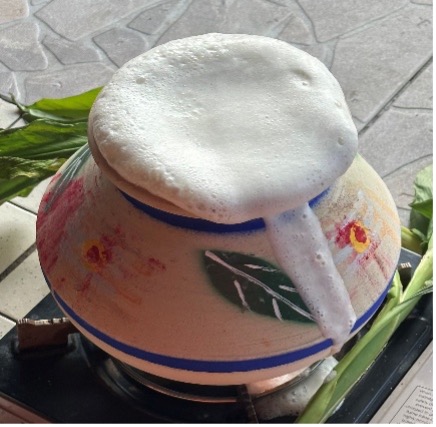
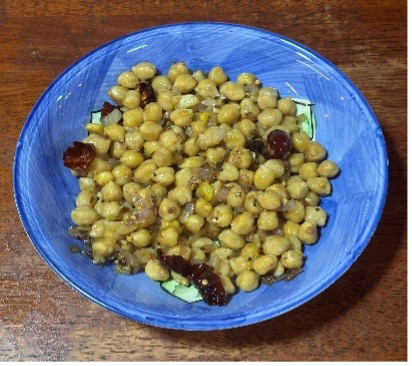

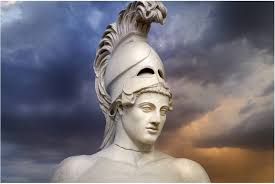
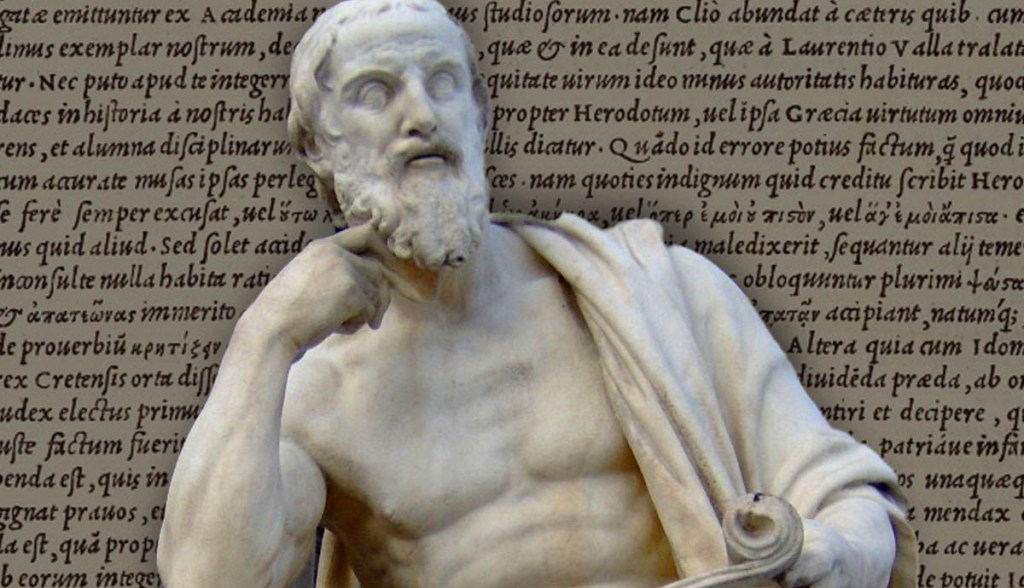
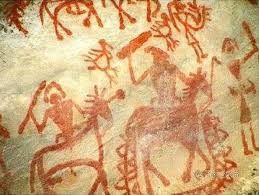
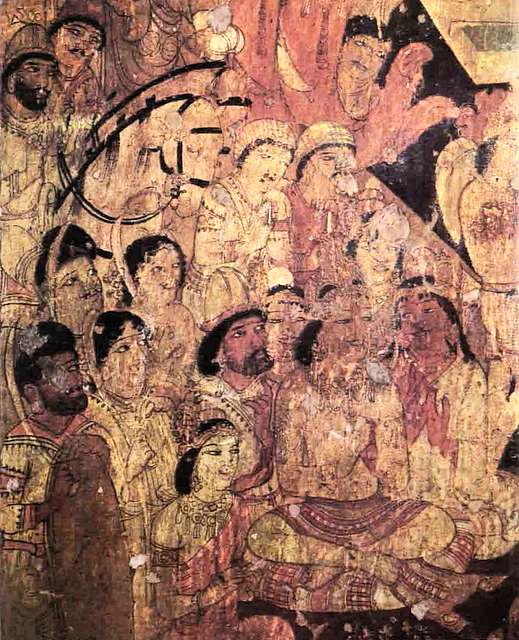
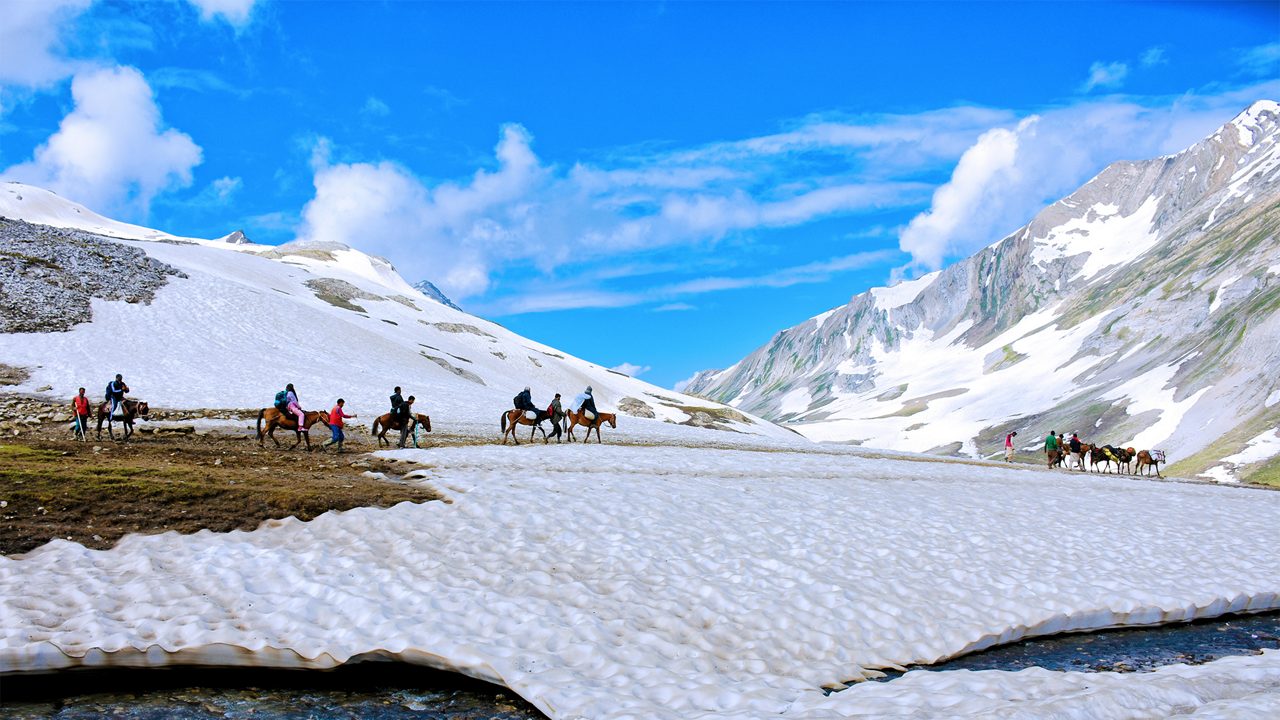


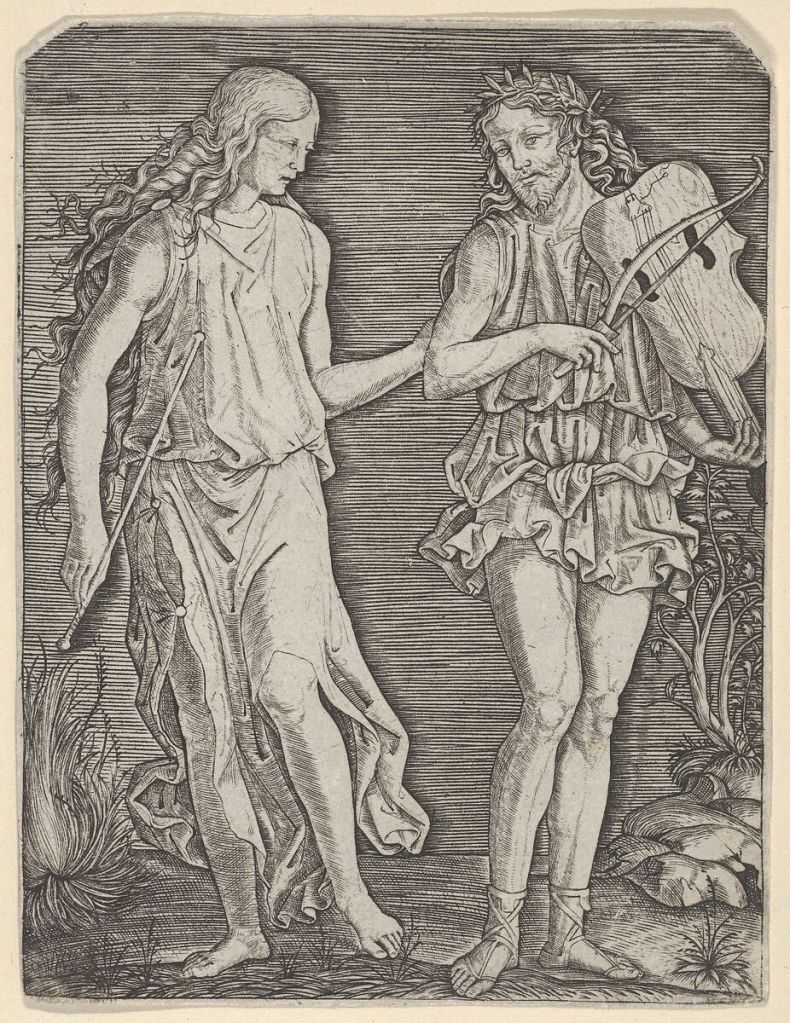

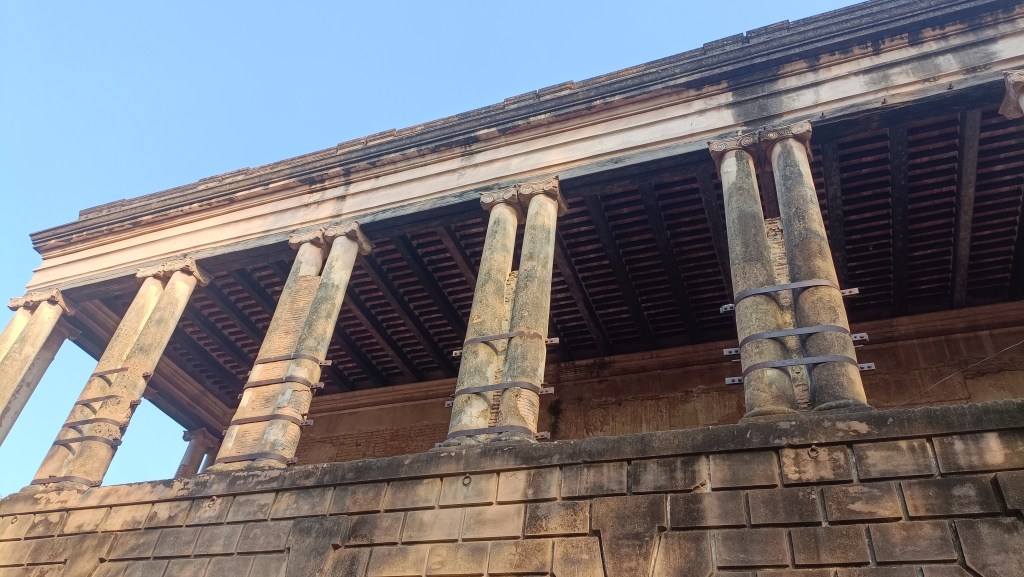
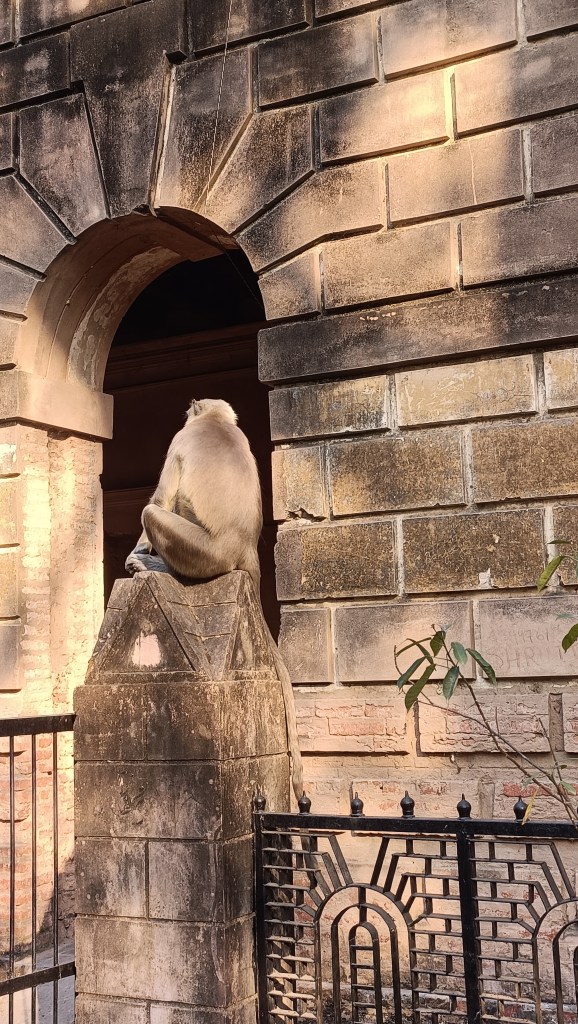
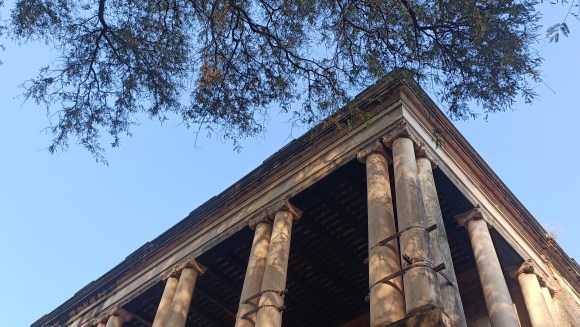

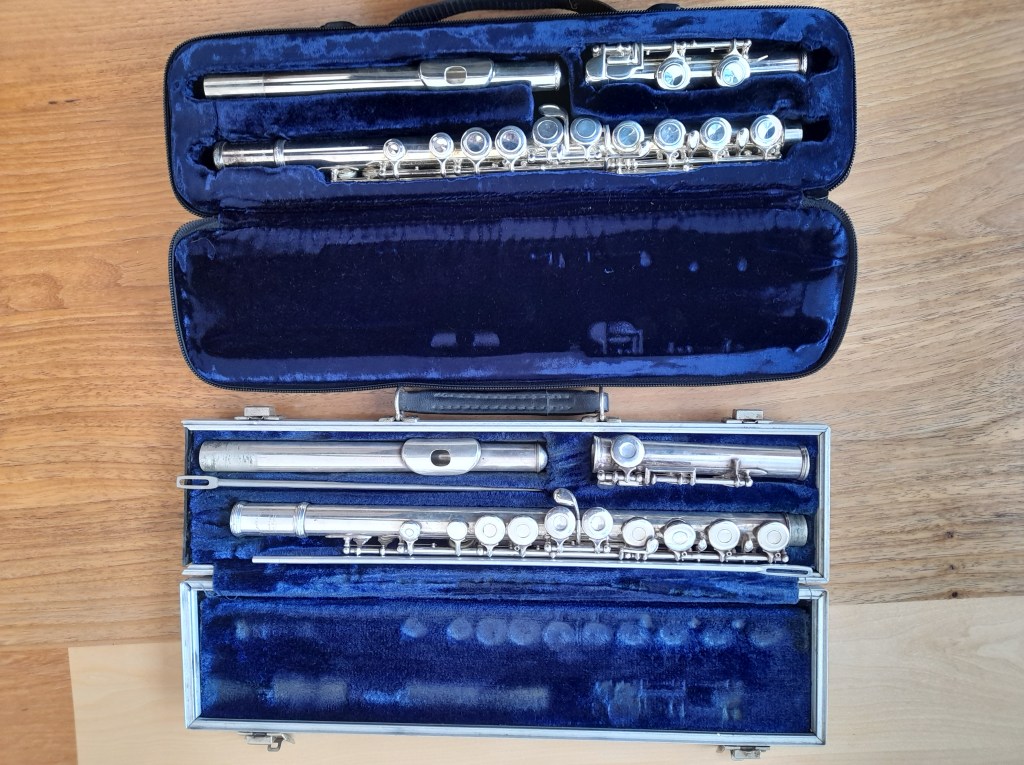
 Borderless