Categories
Poetry

Waffles and the Easter Egg

By Snigdha Agrawal

On Easter morn, with baskets bright,
Four tiny tots dressed in onesies white
Set out on an Easter egg hunt.
All bushy-tailed and bright-eyed.

But lurking near the garden hedge,
A rookie pup stood on the edge,
His name? Waffles. Coat fluffy gold
With one big dream: an egg to hold.

He sniffed and snorted the flower beds,
Then spotted what looked like an egg!
Pink and huge, dusted with gold,
His to claim, his to own.

But then the tots raised a hullabaloo,
“Hey, Waffles! That’s for us kiddos
Drop it at once, will you?!”
What followed was a tug-of-war

Four kids and a fluffy pup,
With an expression that said
I’m not giving up,
heard a loud crack!

The egg exploded.
They jumped back,
Out popped a chicken
Bathed in glowing light.

It twirled, it chirped.
Waffles stood and stared,
Then licked its face
Without any protest.

‘GO…GO…’ the youngsters cried
But Waffles just stood, eyes open wide.
Then, ‘GO’ rang a bell in his doggy mind.
He left to chase a squirrel with wise eyes.

Thus, the war of “who wins”
ended on an amicable note,
The tots with their baskets full
Got back in time for Easter brunch.

From Public Domain

Snigdha Agrawal (nee Banerjee) is a passionate septuagenarian writer with five published books, including Fragments of Time (Memoirs), her deeply personal memoir.  A lifelong lover of storytelling, she blends fact and fiction with a keen eye for detail and emotion.  Her works span diverse genres, reflecting her rich experiences and insightful observations.

.

PLEASE NOTE: ARTICLES CAN ONLY BE REPRODUCED IN OTHER SITES WITH DUE ACKNOWLEDGEMENT TO BORDERLESS JOURNAL

Click here to access the Borderless anthology, Monalisa No Longer Smiles

Click here to access Monalisa No Longer Smiles on Amazon International

Categories
Contents

Borderless, April 2025

Art by Sohana Manzoor

Editorial

Seasons in the Sun?….Click here to read.

Translations

An excerpt from Tagore’s long play, Roktokorobi or Red Oleanders, has been translated by Professor Fakrul Alam. Click here to read.

Tagore’s essay, Classifications in Society, has been translated by Somdatta Mandal. Click here to read.

Poems of Longing by Jibananada Das homes two of his poems translated from Bengali by Professor Fakrul Alam. Click here to read.

Four cantos from Ramakanta Rath’s Sri Radha, translated from Odiya by the late poet himself, have been excerpted from his full length translation. Click here to read.

An excerpt from Syad Zahoor Shah Hashmi’s Nazuk, has been translated from Balochi by Fazal Baloch. Click here to read.

Disappearance by Bitan Chakraborty has been translated from Bengali by Kiriti Sengupta. Click here to read.

Roadside Ritual, a poem by Ihlwha Choi  has been translated from Korean by the poet himself. Click here to read.

Tagore’s Pochishe Boisakh Cholechhe (The twenty fifth of Boisakh draws close…) from Bengali by Mitali Chakravarty. Click here to read.

Poetry

Click on the names to read the poems

Luis Cuauhtémoc Berriozábal, Thompson Emate, Pramod Rastogi, George Freek, Vidya Hariharan, Stuart McFarlane, Meetu Mishra, Lizzie Packer, Saranyan BV, Paul Mirabile, Hema Ravi, Ryan Quinn Flanagan, Rhys Hughes

Poets, Poetry & Rhys Hughes

In Three Gothic Poems, Rhys Hughes explores the world of horrific with a light touch. Click here to read.

Musings/Slices from Life

The Day the Earth Quaked

Amy Sawitta Lefevre gives an eyewitness account of the March 28th earthquake from Bangkok. Click here to read.

Felix, the Philosophical Cat

Farouk Gulsara shares lessons learnt from his spoilt pet with a touch of humour. Click here to read.

Not Everyone is Invited to a Child’s Haircut Ceremony

Odbayar Dorje muses on Mongolian traditions. Click here to read.

From a Bucking Bronco to an Ageing Clydesdale

Meredith Stephens writes of sailing on rough seas one dark night. Click here to read.

Musings of a Copywriter

Stay Blessed! by Devraj Singh Kalsi is a tongue-in-cheek musing on social norms and niceties. Click here to read.

Notes from Japan

On Safari in South Africa by Suzanne Kamata takes us to a photographic and narrative treat of the Kruger National Park. Click here to read.

Essays

Songs of the Adivasi Earth

Ratnottama Sengupta introduces us to the art of Haren Thakur, rooted in tribal lores. Click here to read.

‘Rajnigandha’: A Celebration of the Middle-of-the-Road

Tamara Raza writes of a film that she loves. Click here to read.

‘Climate change matters to me, and it should matter to you too’

Zeeshan Nasir writes of the impact of the recent climate disasters in Pakistan, with special focus on Balochistan. Click here to read.

Bhaskar’s Corner

Ramakanta Rath: A Monument of Literature: Bhaskar Parichha pays a tribute to the late poet. Click here to read.

Stories

Jai Ho Chai

Snigdha Agrawal narrates a funny narrative about sadhus and AI. Click here to read.

The Mischief

Mitra Samal writes a sensitive story about childhood. Click here to read.

Lending a hand

Naramsetti Umamaheswararao takes us back to school. Click here to read.

Conversation

Ratnottama Sengupta talks to filmmaker and author Leslie Carvalho about his old film, The Outhouse, that will be screened this month and his new book, Smoke on the Backwaters. Click here to read.

Book Excerpts

An excerpt from Anuradha Kumar’s Wanderers, Adventurers, Missionaries: Early Americans in India. Click here to read.

An excerpt from Snigdha Agrawal’s Fragments of Time (Memoirs). Click here to read.

Book Reviews

Somdatta Mandal reviews Sheela Rohekar’s Miss Samuel: A Jewish Indian Saga, translated by Madhu Singh. Click here to read.

Gracy Samjetsabam reviews Tony K Stewart’s Needle at the Bottom of the Sea: Classic Bengali Tales from the Sundarbans. Click here to read.

Bhaskar Parichha reviews Raisina Chronicles: India’s Global Public Square by S. Jaishankar & Samir Saran. Click here to read.

.

Click here to access the Borderless anthology, Monalisa No Longer Smiles

Click here to access Monalisa No Longer Smiles on Amazon International

Categories
Editorial

Seasons in the Sun?

April is a month full of celebrations around the world. Asia hosts a spray of New Year festivities. Then there are festivals like Qing Ming Jie, Good Friday and Easter. All these are in a way reminders of our past. And yet, we critique things as old fashioned! So, where does tradition end and ‘outdated’ or ‘outmoded’ start? Meanwhile we continue to celebrate these festivals with joy but what happens to those who have lost their home, family and their living due to war or climate disasters? Can they too join in with the joie de vivre? Can we take our celebrations to them to give solace in some way?

In our April issue, we have stories from climate and conflict-ridden parts of the world. From Bangkok, Amy Sawitta Lefevre gives an eyewitness account of the March 28th Earthquake that originated in Myanmar. While in her city, the disaster was managed, she writes: “I’m also thinking of all the children in Myanmar who are sleeping in the open, who lost loved ones, who are feeling scared and alone, with no one to reassure them.” As news reels tell us, in Myanmar there have been thousands of casualties from the earthquake as well as shootings by the army.

From another troubled region, Pakistan, Zeeshan Nasir gives a heartrending narrative about climate change, which also dwells on the human suffering, including increase in underage marriages.

Human suffering can be generated by rituals and customs too. For instance, if festivals dwell on exclusivity, they can hurt those who are left out of the celebrations. Odbayar Dorje muses along those lines on Mongolian traditions and calls for inclusivity and the need to change norms. On the other hand, Devraj Singh Kalsi hums with humour as he reflects on social norms and niceties and hints at the need for change in a light-hearted manner. Farouk Gulsara makes us laugh with the antics of his spoilt pet cat. And Suzanne Kamata dwells on her animal sightings in Kruger National Park with her words and camera while Meredith Stephens takes us sailing on stormy seas… that too at night.

Art is brought into focus by Ratnottama Sengupta who introduces artist Haren Thakur with his adaptation of tribal styles that has been compared to that of Paul Klee (1879-1940). She also converses with filmmaker Leslie Carvalho, known for his film The Outhouse, and his new novel, Smoke on the Backwaters. Both of these have a focus on the Anglo-Indian community in India. Also writing on Indian film trends of the 1970s is Tamara Raza. Bhaskar Parichha pays tribute to the late Ramakanta Rath (1934-2025), whose powerful and touching poetry, translated from Odia by the poet himself, can be found in our translations section.

We have an excerpt from Professor Fakrul Alam’s unpublished translation of Tagore’s Red Oleanders. It’s a long play and truly relevant for our times. Somdatta Mandal shares with us her translation of Tagore’s essay called ‘The Classification in Society’, an essay where the writer dwells on the need for change in mindsets of individuals that make up a community to move forward. A transcreation of a poem by Tagore for his birthday in 1935 reflects the darkness he overcame in his own life. Two poems expressive of longings by Jibananada Das have been translated from Bengali by Professor Alam aswell. From Balochistan, we have an excerpt from the first Balochi novel, Nazuk, written by the late Syad Zahoor Shah Hashmi and rendered into English by Fazal Baloch. Among contemporaries, we have a short story by Bitan Chakraborty translated from Bengali by Kiriti Sengupta, a poignant story that reflects on gaps in our society. And a Korean poem by Ihlwha Choi rendered to English by the poet himself.

Our poetry section celebrates nature with poetry by Lizzie Packer. Many of the poems draw from nature like that of George Freek and Luis Cuauhtémoc Berriozábal. Some talk of the relationship between man and nature as does Stuart McFarlane. We have a variety of themes addressed in poems by Thompson Emate, Meetu Mishra, Saranyan BV, Paul Mirabile, Pramod Rastogi, Ryan Quinn Flanagan and many more. Rhys Hughes brings in both humour and social commentary of sorts with his poem. And in his column, Hughes has shared three gothic poems which he claims are horrible but there is that twinge of fable and lightness similar to the ghosts of Ebenezer Scrooge’s world[1]— colourful and symbolic.

Stories sprinkle humour of different shades with Snigdha Agrawal’s narrative about mendicants and AI and Mitra Samal’s strange tale about childhood pranks. Naramsetti Umamaheswararao takes us back to schooldays with his narrative. We have a fun book excerpt from Agrawal’s Fragments of Time (Memoirs), almost in tone with some of her stories and musings.

An extract from Anuradha Kumar’s latest non-fiction making bridges across time and geographies. Called Wanderers, Adventurers, Missionaries: Early Americans in India, the book is an intriguing read. We have a review by Professor Mandal of Sheela Rohekar’s Miss Samuel: A Jewish Indian Saga, translated by Madhu Singh. Highlighting syncretic folk traditions, Gracy Samjetsabam has discussed the late Tony K Stewart’s translation of oral folklore in Needle at the Bottom of the Sea: Classic Bengali Tales from the Sundarbans. Parichha has written about a high-profile book that also hopes to draw bridges across the world, Raisina Chronicles: India’s Global Public Square, by S. Jaishankar and Samir Saran.

This issue has been made possible because of support from all of you. Huge thanks to the team, all our contributors and readers. Thanks to Sohana Manzoor for her fabulous artwork. Do pause by our contents page as all the content could not be covered here.

Perhaps, world events leave a sense of pensiveness in all of us and an aura of insecurity. But, as Scarlett O’ Hara of Gone with the Wind[2] fame says, “After all, tomorrow is another day.” 

Looking forward to a new day with hope, let’s dream of happier times filled with sunshine and change.

Enjoy the reads!

Mitali Chakravarty

borderlessjournal.com

[1] A Christmas Carol by Charles Dickens, 1843

[2] Gone With the Wind, a novel by Margaret Mitchell, published in 1936

Click here to access the contents page for the April 2025 Issue

READ THE LATEST UPDATES ON THE FIRST BORDERLESS ANTHOLOGY, MONALISA NO LONGER SMILES, BY CLICKING ON THIS LINK.

Categories
Excerpt

The Wild One, Birds, Rabbits and Kittens…

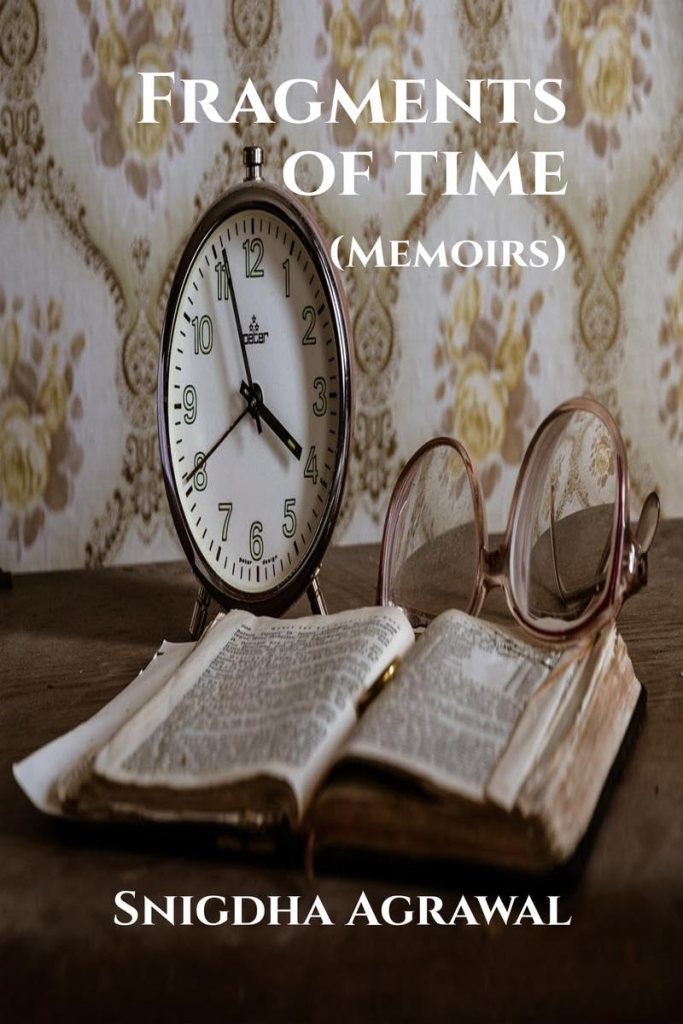
Title: Fragments of Time (Memoirs)

Author: Snigdha Agrawal

Publisher: Notion Press

To say I was the wild one out of the four would be an understatement. The non-conformist in me surfaced very early on.  I never tired of climbing trees, sitting on the guava tree branches, gorging on the half-ripe fruits, rescuing kittens from overflowing drains, cycling around the golf course, swimming and dancing in the rain. Activities one would tend to associate with boys. Indulging in these activities gave me a high, like no other, despite the occasional mishaps, sometimes returning home with cuts and bruises and once a sprained ankle.  The latter memory still brings on chuckles and many more acts of dare-devilry, often landing me in serious trouble.

When I was about ten or eleven, I found myself clutching a squash racquet, sitting impatiently in the upper gallery of the court. My sibling and our best buddy were monopolising the game, deaf to my relentless pleas for a turn. Frustrated, I finally resorted to threats. “I’ll jump down and physically drag you two out!” I declared, pointing to the six-foot drop beneath me.

They burst out laughing, waving off my threat as an empty bluff. “Alright then, here I come!” I announced with dramatic flair before leaping off the gallery like a tragic superhero. Predictably, I landed flat on my skinny, bony backside, twisted ankle and all. Tears of pain and humiliation stung my eyes as I sat there, my busted pride compounded by the unmistakable warmth of pee spreading beneath me.

The scene was absurd: me, sprawled on the court floor, ankle throbbing, dignity in tatters and wet underwear adding to the shame. To their credit, the two culprits did feel a little bad. They hoisted me up and hobbled me home. Thereafter, I was sentenced to two weeks of house arrest with a plastered leg. My heroic leap had cost me not only a turn at squash but also a chunk of my pride.

The ‘Jamun’ (Java plum) season brings back more laughs—and another painfully ridiculous memory. The broad trunk of the Jamun tree in the backyard was too tall for us kids to climb, so we enlisted the gardener to shimmy up and shake the branches. The purple fruit rained down like magical stardust, scattering across the ground.

In a frenzy, I dashed across the open drain, gathering the fleshy fruits in my frock, which I’d rolled up to create a makeshift pouch. In my excitement, I missed a step and went flying face-first into the drain. The Jamuns soared into the air in protest, pelting down on me like purple confetti as I lay sprawled, filthy, and bruised.

My loyal partners-in-crime stared down at me, their goofy grins quickly morphing into full-blown laughter. Their hilarity was so contagious that even I couldn’t help but laugh at my misadventure. Covered in muck and Jamun juice, I climbed out of the drain, purple-tongued and scratched up, determined not to let Ma discover my mishap.

With my frock a casualty of war, I sneaked past her, heading straight for a long, scrubbing shower to erase all evidence of the day’s follies. No way was I going to cry or complain. If there’s one thing childhood taught me, it’s that a little dignity can survive even the most spectacular disasters.

Growing up with pets

During this period, the animal world entered our home, each one leaving under different circumstances.  Out of the many, the first that appears in my mind is a monkey, kept in the garden shed, brought out occasionally to be fed, and patted.  The gardener spotted the baby wandering around amongst the flower beds, looking lost and forlorn, in search of his mother, who probably had been chased back into the nearby Sal forests.  Baba decided to parent this little guy till he was of age and able to fend for himself.  Honestly, I never liked this furry creature, with large round eyes, vying for Baba’s attention.  Six months later, he was seen bounding off with confidence, probably in search of a mate.  

A parakeet with an orange beak, vibrant green feathers, and a long-spotted tail was the next addition to our home. This feisty little bird quickly made its presence felt, taking liberties whenever it was let out of its cage. It would hop onto the dining table and help itself to the food, unbothered by anyone’s protests. Though it was most attached to Baba, it also formed a special bond with Didi, the eldest sister. The bird would happily perch on her shoulder, observing the household with a sense of ownership.

Despite our many attempts to teach it to sing catchy tunes, the parakeet refused to comply, displaying an attitude far too big for its tiny frame. The only sound it ever uttered from its hooked beak was “khuku…khuku,” Didi’s pet name.

One day, the bird decided it was time to spread its wings—literally—and see the world beyond the confines of its cosy cage. The catalyst? A heated argument between Baba and Didi, during which Didi earned herself a thorough scolding for talking back. When she started crying, Laljhuti, the parakeet, seemed to lose its tiny green mind.

Squawking like an avian alarm, Laljhuti transformed into a miniature cyclone, zipping through the room at breakneck speed. It knocked over cups and sent saucers crashing, turning perfectly folded papers into a confetti of chaos. In its final act of rebellion, Laljhuti delivered precise nips to both Baba and Didi, leaving behind small but meaningful bite marks—souvenirs of its outrage. And then, with a dramatic flair, worthy of a Bollywood hero storming out after a family quarrel, Laljhuti shot straight out of the house.

Didi was inconsolable. Her beloved Laljhuti was gone. For days, she stood on the veranda, calling its name with the kind of desperation usually reserved for lost lottery tickets. But the green tornado had no intention of returning. Laljhuti had flown the coop, leaving behind only chaos, confusion, and a few well-placed dents in family egos.

To console her, Baba brought home a flock of colourful Budgerigars. These cheerful, social birds were more manageable and quickly became part of our household. They lived in a specially built cage, which Baba cleaned daily, ensuring their water and food bowls were always replenished. Their lively chatter often blended with our own, filling the house with a delightful din.

Over time, however, we lost a few of them and Baba decided to set the remaining ones free. With that, the “bird phase” of our lives came to an end, leaving behind memories of fluttering wings and chirping voices.

Next came a bunny rabbit, a fluffball with the whitest fur, pink glassy eyes, and a bushy tail that wiggled with mischief. This little creature was treated like royalty, roaming freely around the house and being pampered with baby carrots.

While everyone adored it, I had my grievances—specifically its habit of leaving tiny black droppings in the most inconvenient places. The worst was finding them nestled in my school shoes. There’s nothing quite like starting your day by gagging over rabbit poop.

To this day, I can’t recall what became of the bunny. One day it was there, twitching its nose and ruling the household, and the next, its cage had been unceremoniously relegated to the garden shed. Perhaps it hopped off to greener pastures, or maybe someone had finally had enough of the shoe sabotage. Either way, the bunny left its mark—quite literally—all over my childhood memories.

The last one was a surprise birthday gift for me and my twin, which arrived packaged in a shoe box, lined with layers of cotton.  A two-week-old Siamese kitten got from a litter of eight and was as tiny as the palm of my hand.  I watched Baba and Ma taking turns feeding this one with milk, prying open its mouth and squeezing the cotton ball soaked in milk.  He was named “Tuuta” and as he grew, the colour of his coat changed from white to grey and then a darker shade of grey. From milk, he graduated to eating goat entrails mashed with cooked rice and was a happy camper, rubbing his back against Ma’s legs, perhaps as a reminder it was feeding time. My twin and I fought over him, as one would fight over toys, setting dates for Tuuta’s sleeping schedule under our blankets.  One week in my bed, the next week in my twin’s bed.  Soon enough the fights ceased, with “Tuuta“, going out for overnight dates with the stray cats in the neighbourhood, probably the most sought-after male in the cat kingdom. The reasons could be his debonair looks, his pedigree and the fact that he lived in a bungalow, served gourmet meals, slept on whichever bed he fancied and most importantly, had his toilet created out of a wooden crate, filled with sand, where he performed his daily business.  Cleaned periodically. And if we so much as watched him at his job, he gave the stinky eye as if to say — “Get lost.  Let me shit in peace!”  

His entry/exit route for the overnight dates was through the open bathroom exhaust window.  One morning when Ma found he had not turned up for his breakfast, we looked everywhere and found him in the half-filled bathtub with water up to his neck, trying to scramble out, with little success.  The philanderer had missed his step on the ledge of the bathtub and landed inside.  Of course, that didn’t change our love for him.  He continued with such escapades, sowing quite a few wild oats, and ended up catching rabies.  A very sad end for him and us.  My twin and I had to take the rabies injection for a fortnight.  Very painful shots in the hips, administered by the Company doctor in the hospital.  Thus ended the saga of “Tuuta” the Siamese cat with whiskers that tickled, my favourite.

About the Author

Snigdha Agrawal (née Banerjee) is an aspiring writer who views herself as a perpetual learner on an ever-evolving creative journey. A graduate of Loreto Institutions and brought up in a cosmopolitan environment, she weaves a rich tapestry of Eastern and Western cultural influences into her literary work. Her writing is also shaped by two decades of corporate experience, which lends depth and realism to her narratives.

Spanning genres from short stories to poetry, her lifelong passion for creative writing is fuelled by a desire to connect with readers, evoke emotions, and spark reflection through her vivid storytelling.  She is a published author of five books, the latest Fragments of Time (Memoirs) is available on Amazon worldwide and on Flipkart, in Paperback, Hardcover and Kindle formats.

Now in her 70s, she embraces life with curiosity and an unquenchable thirst for learning. When not immersed in writing, she explores new places and shares her adventures on her travel blog.

Based in Bangalore, India, Snigdha finds enduring inspiration in her husband, her partner of nearly fifty years. Together, they continue to cherish and celebrate the ever-changing journey of life, which serves as the foundation for her creative pursuits.

About the Book

Fragments of Time is a heartwarming memoir that celebrates the beauty of life’s quiet yet meaningful moments.  Written by a woman in her seventies, it offers reflections on childhood, love, loss, and ageing, transforming the ordinary into the extraordinary.  With grace, humour and honesty, these stories reveal the richness of a life well-lived, reminding readers that even the simplest experiences hold profound value and are worth cherishing and sharing.

.

PLEASE NOTE: ARTICLES CAN ONLY BE REPRODUCED IN OTHER SITES WITH DUE ACKNOWLEDGEMENT TO BORDERLESS JOURNAL

Click here to access the Borderless anthology, Monalisa No Longer Smiles

Click here to access Monalisa No Longer Smiles on Amazon International