Categories
Editorial

‘I wondered should I go or should I stay…’

I flow and fly
with the wind further
still; through time
and newborn worlds…

--‘Limits’ by Luis Cuauhtémoc Berriozábal

In winters, birds migrate. They face no barriers. The sun also shines across fences without any hindrance. Long ago, the late Nirendranath Chakraborty (1924-2018) wrote about a boy, Amalkanti, who wanted to be sunshine. The real world held him back and he became a worker in a dark printing press. Dreams sometimes can come to nought for humanity has enough walls to keep out those who they feel do not ‘belong’ to their way of life or thought. Some even war, kill and violate to secure an exclusive existence. Despite the perpetuation of these fences, people are now forced to emigrate not only to find shelter from the violences of wars but also to find a refuge from climate disasters. These people — the refuge seekers— are referred to as refugees[1]. And yet, there are a few who find it in themselves to waft to new worlds, create with their ideas and redefine norms… for no reason except that they feel a sense of belonging to a culture to which they were not born. These people are often referred to as migrants.

At the close of this year, Keith Lyons brings us one such persona who has found a firm footing in New Zealand. Setting new trends and inspiring others is a writer called Harry Ricketts[2]. He has even shared a poem from his latest collection, Bonfires on the Ice. Ricketts’ poem moves from the personal to the universal as does the poetry of another migrant, Luis Cuauhtémoc Berriozábal, aspiring to a new, more accepting world. While Tulip Chowdhury — who also moved across oceans — prays for peace in a war torn, weather-worn world:

I plant new seeds of dreams
for a peaceful world of tomorrow.

--‘Hopes and Dreams’ by Tulip Chowdhury

We have more poems this month that while showcasing the vibrancy of thoughts bind with the commonality of felt emotions on a variety of issues from Laila Brahmbhatt, John Grey, Saba Zahoor, Diane Webster, Gautham Pradeep, Daniel Gene Barlekamp, Annwesa Abhipsa Pani, Cal Freeman, Smitha Vishwanath, John Swain, Nziku Ann and Anne Whitehouse. Ramzi Albert Rihani makes us sit up by inverting norms while Ryan Quinn Flangan with his distinctive style raises larger questions on the need for attitudinal changes while talking of car parks. Rhys Hughes sprinkles ‘Hughesque’ humour into poetry with traffic jams as he does with his funny spooky narrative around Christmas.

Fiction in this issue reverberates across the world with Marc Rosenberg bringing us a poignant telling centred around childhood, innocence and abuse. Sayan Sarkar gives a witty, captivating, climate-friendly narrative centred around trees. Naramsetti Umamaheswararao weaves a fable set in Southern India.

A story by Nasir Rahim Sohrabi from the dusty landscapes of Balochistan has found its way into our translations too with Fazal Baloch rendering it into English from Balochi. Isa Kamari translates his own Malay poems which echo themes of his powerful novels, A Song of the Wind (2007) and Tweet(2017), both centred around the making of Singapore. Snehaprava Das introduces Odia poems by Satrughna Pandab in English. While Professor Fakrul Alam renders one of Nazrul’s best-loved songs from Bengali to English, Tagore’s translated poem Jatri (Passenger) welcomes prospectives onboard a boat —almost an anti-thesis of his earlier poem ‘Sonar Tori’ (The Golden Boat) where the ferry woman rows off robbing her client.

In reviews, we also have a poetry collection, This Could Be a Love Poem for You by Ranu Uniyal discussed by Gazala Khan. Bhaskar Parichha introduces a book that dwells on aging and mental health issues, Indira Das’s Last Song before Home, translated from Bengali by Bina Biswas. Rakhi Dalal has reviewed Anuradha Kumar’s Love and Crime in the Time of Plague:A Bombay Mystery, a historical mystery novel set in the Bombay of yore, a sequel to her earlier The Kidnapping of Mark Twain. Andreas Giesbert has woven in supernatural lore into this section by introducing Ariel Slick’s The Devil Take the Blues: A Southern Gothic Novel. In our excerpts too, we have ghostly lore with an extract from Ghosted: Delhi’s Haunted Monuments by Eric Chopra. The other excerpt is from Marzia Pasini’s Leonie’s Leap, a YA novel showcasing resilience.

We have plenty of non-fiction this time starting with a tribute to Jane Austen (1775-1817) by Meenakshi Malhotra. Austen turns 250 this year and continues relevant with remakes in not only films but also reimagined with books around her novels — especially Pride and Prejudice (which has even a zombie version). Bhaskar Parichha pays a tribute to writer Bibhuti Patnaik. Ravi Varmman K Kanniappan explores ancient Sangam Literature from Tamil Nadu and Ratnottama Sengupta revisits an art exhibition that draws bridges across time… an exploration she herself curated.

Suzanne Kamata takes us on a train journey through historical Japan and Meredith Stephens finds joy in visiting friends and living in a two-hundred-year-old house from the Edo period[3]. Mohul Bhowmick introduces a syncretic and cosmopolitan Bombay (now Mumbai). Gower Bhat gives his opinion on examination systems in Kashmir, which echoes issues faced across the world while Jun A. Alindogan raises concerns over Filipino norms.

Farouk Gulsara — with his dry humour — critiques the growing dependence on artificial intelligence (or the lack of it). Devraj Singh Kalsi again shares a spooky adventure in a funny vein while Malachi Edwin Vethamani woos us with syncretic colours of Christmas during his childhood in Brickfields, Malaysia — a narrative woven with his own poems and nostalgia.

We have a spray of colours from across almost all the continents in our pages this time. A bumper issue again — for which all of the contributors have our heartfelt thanks. Huge thanks to our fabulous team who pitch in to make a vibrant issue for all of us. A special thanks to Sohana Manzoor for the fabulous artwork. And as our readers continue to grow in numbers by leap and bounds, I would want to thank you all for visiting our content! Introduce your friends too if you like what you find and do remember to pause by this issue’s contents page.

Wish all of you happy reading through the holiday season!

Best wishes,

Mitali Chakravarty

borderlessjournal.com

CLICK HERE TO ACCESS THE CONTENTS FOR THE DECEMBER 2025 ISSUE.

[1] UNHCR Refugees

[2] Harry Ricketts born and educated in  England moved to New Zealand.

[3] Edo period in Japan (1603-1868)

.

READ THE LATEST UPDATES ON THE FIRST BORDERLESS ANTHOLOGY, MONALISA NO LONGER SMILES, BY CLICKING ON THIS LINK.
Categories
Slices from Life

Honeymoon Homecoming

By Meredith Stephens

“Please show me your international driver’s licence.”

“Certainly!”

Alex produced the licence.

“This is out of date! I’m sorry but we can’t hand over the car.”

“No! It’s current! It’s valid for five years.”

We scrutinized the licence. The start date was prominently displayed, but not the expiration date. As we squinted to decipher the fine print on page three, we discovered that it had expired three years ago. Alex had thought it would be valid for five years, but it was only valid for one. We attributed it to his light-heartedly referred to “OCD Deficit Disorder”. And that is how a one-week road trip suddenly became a public transport and taxi trip.

This was my first visit back to Japan after having left at the beginning of the pandemic. Alex and I had been deliberating where to spend our honeymoon, and we agreed that the island of Shikoku in western Japan where I had spent over twenty years would be our first choice.

Onigiri. Photo courtesy:
Mariko Hisamatsu

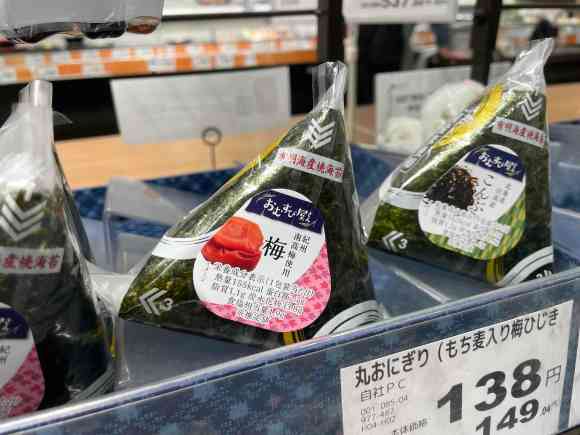
There were so many things to look forward to. The first thing I did, before even leaving Kansai Airport, was rush into the convenience store and buy an onigiri flavoured with an umeboshi pickled plum. An onigiri is a triangle of rice, with a choice of flavours in the centre such as fish, seaweed, or the aforementioned umeboshi. It is wrapped in a crisp sheet of seaweed. Before eating it you gently pull away a thin layer of wrapping which protects the outer seaweed from absorbing the moisture of the rice. As you bite into it you can enjoy the three distinct textures and flavours – the piquant centre, the contrasting bland rice, and the crisp outer layer of seaweed. Next, I purchased a mugwort daifuku. This is a Japanese sweet, consisting of a layer of pounded mugwort-flavoured rice around a centre of sweet azuki bean paste. All of this was washed down with a bottle of green tea.

From the above account, it might sound like I was returning to Japan to indulge in simple culinary delights from a convenience store, and maybe this is a possibility I am unwilling to admit to myself. Of course, the main purpose was to reconnect with old friends, the second to reconnect with old pleasures, such as the aforementioned onigiri and daifuku, and the third, to stay in a traditional Japanese house.

After having been refused permission to drive our hire car, we headed back towards the terminal and searched for the railway station. We caught trains out to the UNESCO heritage listed site of Koyasan to enjoy the autumn leaves, and then seven trains and two buses later, to Wakayama station. Finally, we caught a taxi to our accommodation, which turned out to be a house that was over two hundred years ago, dating from the end of the Edo Period.

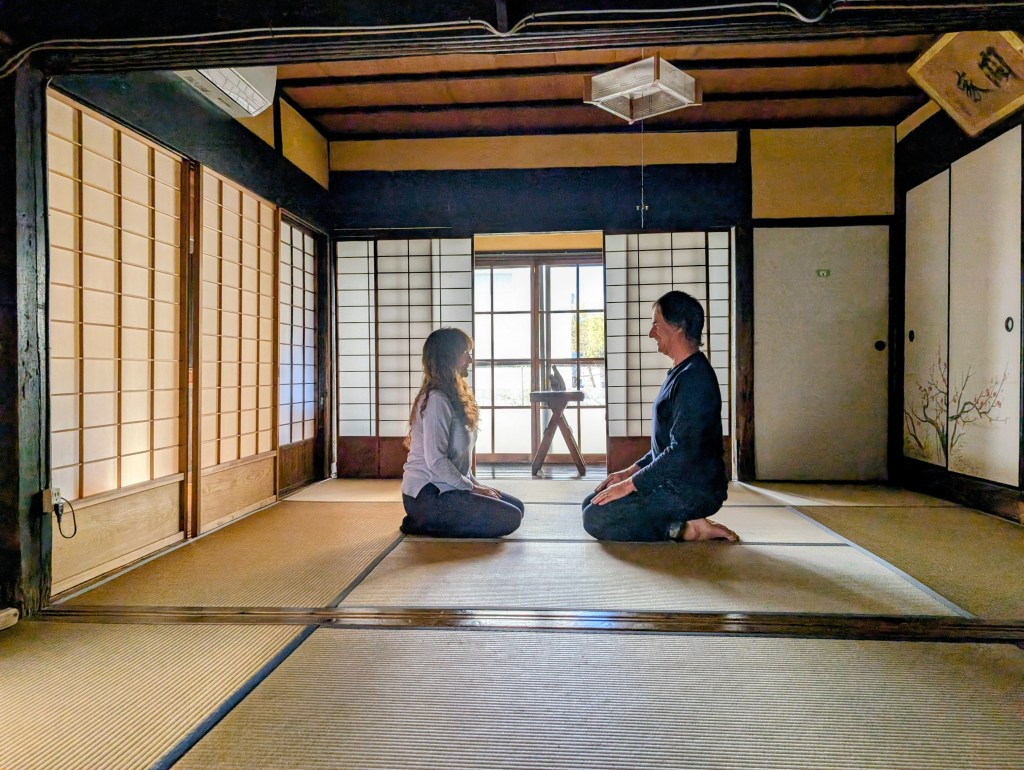
The door slid open to reveal an earthen floor. We walked down the hall to the kitchen, left our shoes in the sunken area, and donned the provided slippers. The kitchen opened onto two traditional tatami rooms, with fusuma sliding cupboards, and latticed paper shoji screens leading onto the garden. Beyond the shoji was a narrow hall known as an engawa, with a small wooden table and chair where you could enjoy sipping a drink while looking out over the garden. This was the kind of room I had been longing for during my five years away from Japan.

But we hadn’t had dinner yet and I was longing to ride to a local supermarket to purchase a ready meal.

‘“Do you have any bicycles?” I asked the host.

“Certainly. We have mountain bikes too!”

“You don’t want to go cycling in the dark?” queried Alex. “Not after a long-distance flight, seven trains, two buses, and a taxi ride? Surely not!”

I insisted, and Alex gave up persuading me otherwise. Rather than a mountain bike I chose the mamachari, a vintage bike replete with a shopping basket attached to the front handlebars.

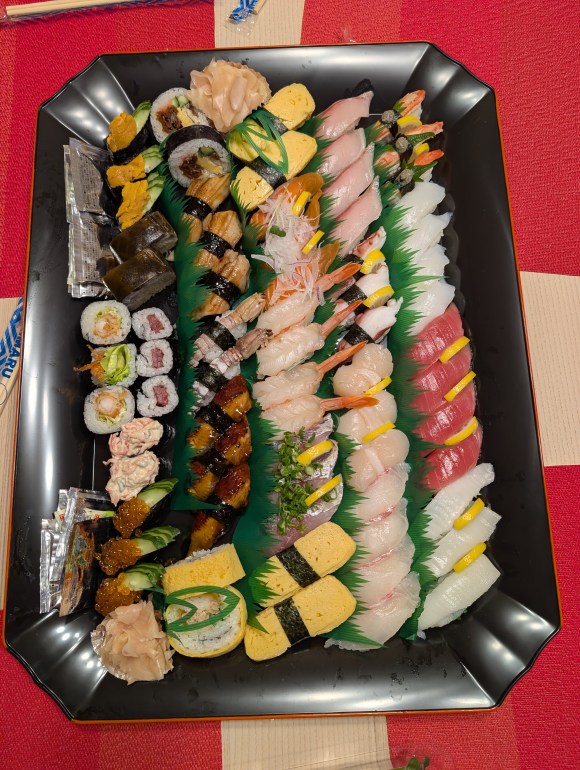
We cycled to the supermarket, as I had done almost daily during my twenty years of living in Shikoku. There we bought sushi and sashimi ready meals, and cycled home, scanning to avoid roadside ditches with sheer drops and no guard rails. Once safely home, we indulged in the much longed for sushi and sashimi, enjoyed the traditional deep Japanese bath, spread out the futons on the tatami, and luxuriated in a deep sleep.

The next morning, we woke to a gentle light streaming through the latticed paper shoji screens. We cycled to Wakayama castle, Alex on the mountain bike and me on the mamachari. We strolled around the traditional garden before entering the castle and then completed it with a visit to the adjacent tearoom, where we enjoyed green tea and a sweet bean paste confectionery.

The following day, we bid farewell to our Edo Period home, and our kind host drove us to the ferry terminal. As soon as I saw the sign in Japanese for Tokushima, I could feel the colour rising to my cheeks. This had been my home in Japan for fifteen of my twenty years in Shikoku, until the day I departed for a routine visit to Australia, just before the international borders were closed due to COVID. Little did I know that the pandemic would prevent me from returning to Japan. I boarded the ferry as I had so many other times after returning from various work trips, but this time I was visiting on my honeymoon. The two-hour crossing readied me for the arrival in my old stomping ground and was heralded by the sentimental music played to signal a homecoming. Alex and I exited the ferry to be met by my old friend and writing mentor, Suzanne. Overcome with emotion, I covered my face with my hands to spare her the sight of my crumpled features and then gave her a hug. Then I went back to covering my swollen eyes and gave her another hug.

Platter of Sushi at Sally’s home. Photo courtesy: Alan Noble

Suzanne drove us to the home of the son of another old friend, Sally, who had kindly offered us a couple of nights’ accommodation. That evening a subset of old friends dropped in to see us and eat sushi. I braced myself for the entry of each friend into the house, trying to compose my features, after an unanticipated five-year interval. My eyes, however, betrayed me. I caught the expressions of those who returned by gaze, and they could sense my relief and excitement of meeting them again. Over five years people’s appearances were a little different. Those who had long hair now wore it shorter. Those with shorter hair had grown it. Those who were curvaceous were now svelte, and those who were svelte were now curvaceous. A child had now become a lanky teenager. I’m sure I must have looked different to them too. What had not changed was people’s smiles, conversation and sense of humour. People who I would normally see a few times over a month were now all present in the same room in the space of a few hours.

A few days later, we took the bus across Shikoku to Matsuyama, where another happy reunion took place of eight friends from six different countries. I was freshly aware of the joys of the expat life, where you can make friends from a greater range of countries, and a greater range of ages, than you would at home.

Ranma Carvings in a traditional room. Photo Courtesy: Alan Noble

I had been craving another stay in a traditional house, and we savoured a room with ranma carvings suspended from the ceiling, letting in light and air flow from the adjacent room. We sat at the kotatsu low heated table on the tatami, and slept on futon, in a room featuring shoji paper screens facing outside and fusuma cupboards where futons were stored. Features which had once seemed so ordinary were now infused with nostalgia.

Family obligations called us back to Australia after only one week of our Japanese honeymoon. A taxi was followed by a bus which took us on the long trek back across Shikoku, driving through impossibly long tunnels, crossing elegant bridges, with views of the sea and mountains. Once we crossed the final bridge onto the largest main island of Honshu, the landscape was transformed into high rise apartments, and dense traffic. We alighted from the bus at Kobe’s Sannomiya Station.

There we asked directions to the airport limousine bus and made a final purchase of onigiri. My favourite umeboshi pickled plum one was not on sale, so I had to make do with a tuna mayonnaise one and a pickled seaweed one. We ran to the bus stop, purchased tickets, and skipped into the bus holding our luggage. There was no time to store the luggage in the hold. Once the bus pulled into the traffic, we knew we could relax after our long and complicated journey. I gently pulled away the wrapping separating the layers of the tuna mayonnaise onigiri and savoured the contrasting flavours and textures. Our fleeting trip to Japan was punctuated by savouring onigiri on both arrival and departure. We bade farewell to this land of delectable tastes, exquisite arts, historic houses, hair-raising bicycle rides, and precious friends.

.

Meredith Stephens is an applied linguist from South Australia. Her recent work has appeared in Syncopation Literary Journal, Continue the Voice, Micking Owl Roost blog, The Font – A Literary Journal for Language Teachers, and Mind, Brain & Education Think Tank. In 2024, her story Safari was chosen as the Editor’s Choice for the June edition of All Your Stories.

PLEASE NOTE: ARTICLES CAN ONLY BE REPRODUCED IN OTHER SITES WITH DUE ACKNOWLEDGEMENT TO BORDERLESS JOURNAL

Click here to access the Borderless anthology, Monalisa No Longer Smiles

Click here to access Monalisa No Longer Smiles on Amazon International

Categories
Review

A Dialogue with Stillness

Book Review by Basudhara Roy

Title: Ukiyo-e Days… Haiku Moments

Author: Bina Sarkar Ellias

Publisher: Red River

The wonder of art acknowledges and affirms the potency of stillness, its pregnancy vouching for a revelation that is both vital and imminent. Ambitious as the thought is, is it possible to engage in a dialogue with stillness, to distil the flurry of a day into the transcendence of a moment, and to transform that moment, in turn, into a metaphoric prism for the illumination of all our hereafters? In her recent collection of poems Ukiyo-e Days… Haiku Moments, Bina Sarkar Ellias can justifiably claim to have assayed each of these tasks with remarkable felicity and quiet grace.

A form of Japanese art that flourished between the 17th and the 19th centuries, ‘ukiyo-e’ is a composite of three words – ‘uki’ (floating), ‘yo’ (world) and ‘e’ (pictures), literally meaning “pictures of the floating world”. The ‘floating world’ referred to the theatre districts and (licensed) courtesan quarters that flourished in Japan’s major cities during the Edo period and constituted an important source of attraction for the nouveau-riche of the era. Inhabited largely by courtesans and the traditional kabuki actors, this floating world, despite its low status in the social hierarchy of the times, made its impact as valuable cultural capital, its sartorial customs and mannerisms becoming quite effectively, a rage among common people.

Since paintings could be afforded only by the prosperous, the ukiyo-e artists made a distinct historical move to democratise art by being the first to experiment with woodblock prints which could be produced cheaply and in large numbers, thus making ukiyo-e widely accessible to the  populace. Actors, courtesans, legends, folklore, and landscapes were some of the common subjects that marked this art, the heroic and the erotic being significant thematic notes within it.

Ukiyo-e Days… Haiku Moments revisits this memorable Japanese artform to bring to the reader a remarkable collection of 68 ukiyo-e by 28 artists from across the seventeenth to the early twentieth century, showcasing a delectable mix of the traditional and the modern in Japanese art and its unique blend of native and foreign influences. Compounding the effect of the Ukiyo-e here, is a set of 62 haiku by Bina that excavate, explore and expand the meaning and value of the artworks by bringing them into dense ekphrastic conversation with her own mind and times. “My haiku travels with each of the ukiyo-e works as a companion through this journey, responding with a deep kinship I feel with the artworks,” she writes in her Preface.

In this collaborative project of creativity, the haiku become a companion to the historical journey of the ukiyo-e, illuminating them in a transcultural framework which even as it asserts the omnipotent significance of art, helps draw attention to its omniscience across temporal and cultural divides. “To read a haiku,” says Jane Hirshfield, “is to become its co-author, to place yourself inside its words until they reveal one of the proteus-shapes of your own life.” As Bina places her contemporary and complex historical self within the sensibility of the ukiyo-e, her unravelling of meaning through the haiku becomes yet another act of seeking connection and consolation in an alienated world.

As a poetic form, the haiku establishes a constant romance with the brevity of expression on the one hand and the expanse of space on the other. Its sharp imagism helps to illumine both the moment and the emotional ambience that will render this moment organic in every context. Scale, speed, succinctness and surrealism can all work in concert within the seemingly fragile universe of the haiku to make it an emblem of and testimony to the wide-ranging historical forces within which it is birthed. The animated and tender conversation between colour, form and script in Ukiyo-e Days… Haiku Moments works similarly holding both word and beauty in suspension, mirroring the moment as self and self as moment, and asking us to return to the quintessential celebration of both:

you want to be free
but maya mesmerises-
locks all the doors

The haiku is, often, a lesson in perception. It is characteristic of the haiku to be profoundly epiphanic and in many of her pieces, Bina ascends to that level of quiet illumination wherein an inner truth becomes simpler by the sole virtue of its lucid expression. Art, life, hope, faith, poetry, war, human vulnerability — all emerge as important themes here. One cannot help noticing, however, the collection’s loving partiality toward women. Women and their myriad-layered lives constitute a recurrent thematic motif in these poems:

into the long night
her toil of pleasure-giving
a tale of two worlds

Since in much of the ukiyo-e, the women represented were courtesans, Bina brings a profound sense of tenderness and understanding in reinterpreting their situation for modern women whose lives, in different contexts, remain emotively the same. In their intensity and in the overall poignance with which these haiku delineate women’s ever-shifting roles in terms of profession, domesticity and relationships with the world, Bina evinces a deep knowledge of women’s spiritual multiplicity. To Torii Kiiyonaga’s delicate artwork ‘Bathhouse Women’, for instance, Bina, deflecting attention from the voyeuristic potential of the scene to give the bathhouse a larger cultural and political logic, responds:

a day for washing
wash away patriarchy
energise our souls

Another beautiful narrative turn in haiku is offered in response to Kitagawa Utamaro’s print ‘Naniwa Okita Admiring Herself in a Mirror’ in which Bina imagines a different (more youthful) face emerging from the mirror. While the mirror has mostly been used as a truth-telling device in literature and a means of shattering illusion, this particular mirror becomes a gateway to the discovery of the magical self within, unmarred by the winter of time:

i see a mirage
see my youth in winter years
does the mirror lie?

With Chobunsai Eishi’s ‘The Courtesan Hanaogi of the Ogiya Brothel’, Bina communicates thus:

within the prose
of her pleasure-house living
she breathes poetry

Here is a mature and perceptive weaving of art and life — a recognition of art as art and of life as life with the potential of building strong and tenable bridges across them. It is noteworthy how each haiku stands independently even as it adds a significant hermeneutic or experiential dimension to the ukiyo-e, imparting a certain luminosity to this book. There is a distinct sensation of time-travel in this collection, of moving through the slow whirl of centuries while remaining undivorced from the crises and flavours of the present:

realisation
we were not born violent
let’s repair ourselves

Empathy becomes a powerful voice in Ukiyo-e Days as Bina’s haiku touches raw spots within our shredding cultural fabric to draw attention to greed, war, exploitation and the relentless process of needing to find our integral human selves:

all the world’s armies
trained as cannon fodder
they live to die

In these delicate and consummately-crafted pieces, one finds doors open to deep investigation of the moment and what it stands for in life’s ever-shifting landscape. There is a stillness that the collection speaks from and to, a stillness that characterises both the ukiyo-e and the haiku as art forms. Invested with extraordinary visual and tactile charm and an interesting Preface that throws light on the genesis and growth of the ukiyo-e in Japan, this book accomplishes a unique synthesis between two valuable Japanese art forms, bringing to a connoisseur-reader the unforgettable enchantment of both.

Basudhara Roy teaches English at Karim City College affiliated to Kolhan University, Chaibasa. Author of three collections of poems, her latest work has been featured in EPW, The Pine Cone Review, Live Wire, Lucy Writers Platform, Setu and The Aleph Review among others. 

.

PLEASE NOTE: ARTICLES CAN ONLY BE REPRODUCED IN OTHER SITES WITH DUE ACKNOWLEDGEMENT TO BORDERLESS JOURNAL

Click here to access the Borderless anthology, Monalisa No Longer Smiles

Click here to access Monalisa No Longer Smiles on Kindle Amazon International

Categories
Poetry

Menuki by Jared Carter

A found poem, consisting of various captions copied verbatim from descriptions of small figurines displayed in the Asian Wing of the Dayton Art Institute, in the state of Ohio, in the United States.

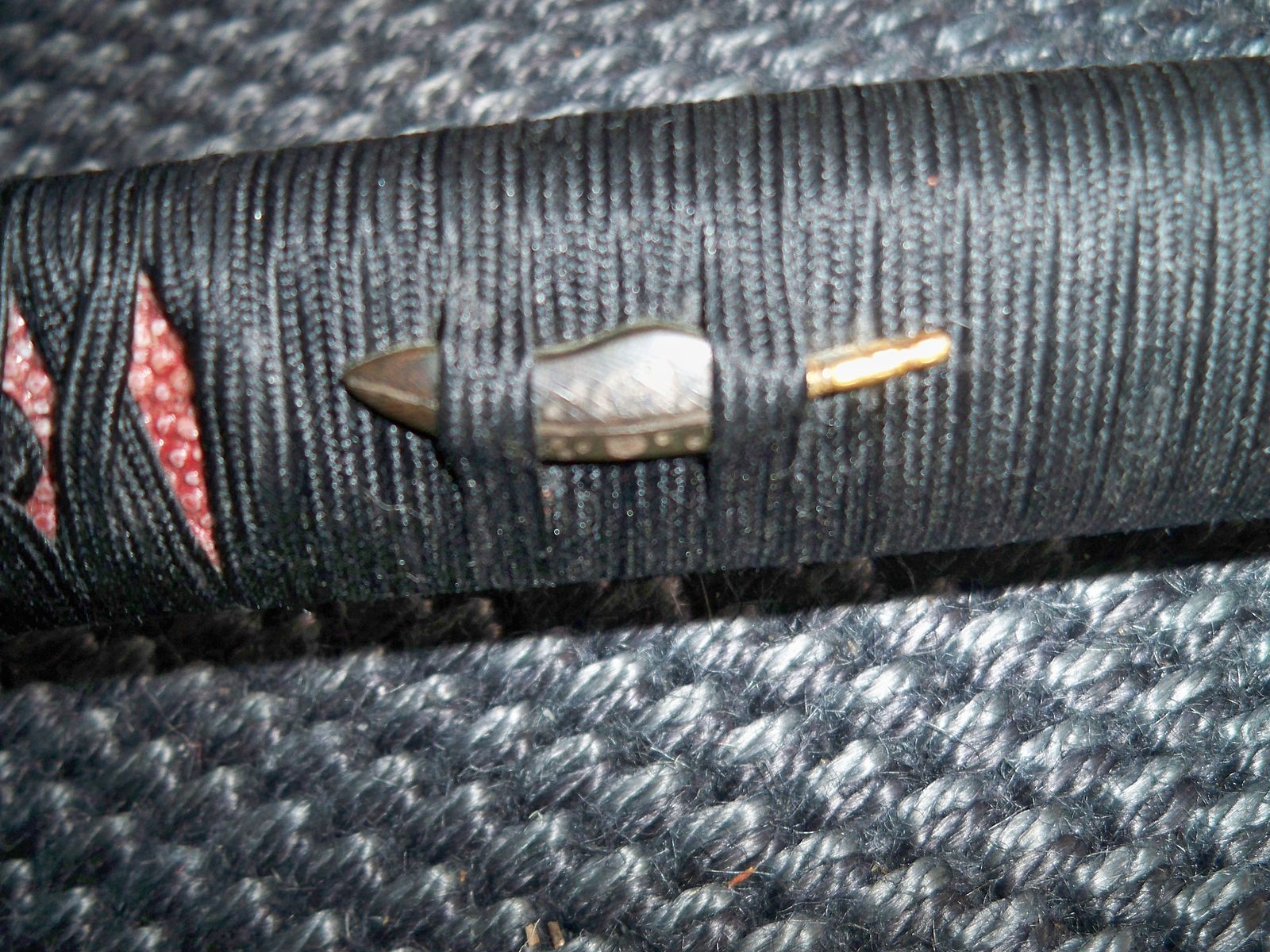
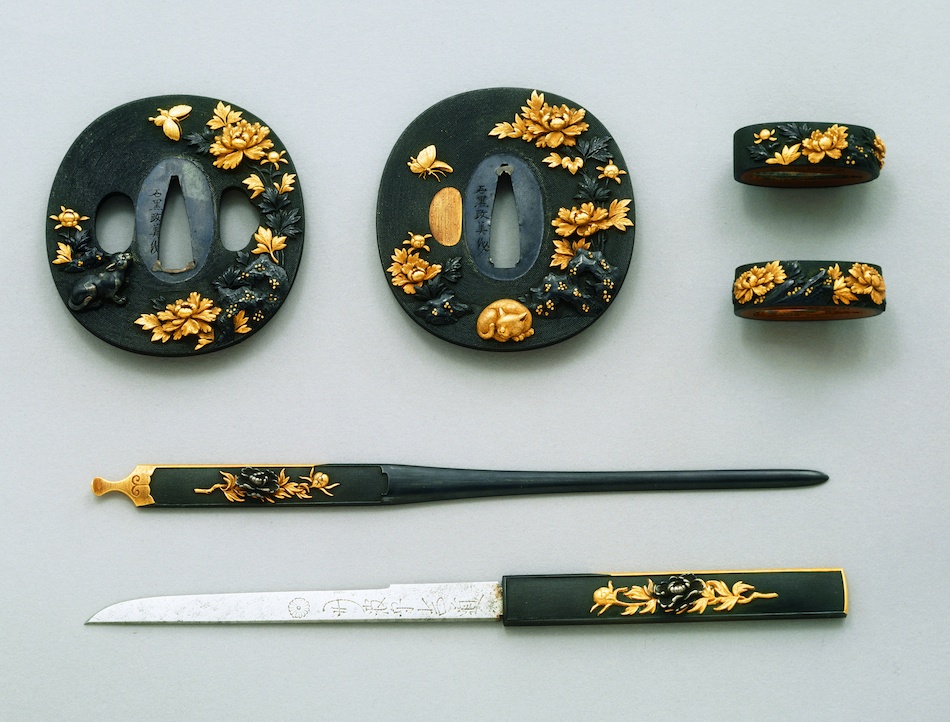
Menuki, sometimes called sword fittings, are matching or complementary pairs of tiny metal sculptures, traditionally secured to the hilt of a samurai sword and thought to improve the grip.

They were hammered from sheets of copper or alloys of silver and gold and were held in position on either side of a sword’s hilt by braids of silk.

— Jared Carter

MENUKI

Each in the form of a cluster of branches and a flowering plum
Each in the form of celestial dragons
Each in the form of a cluster of flowers wrapped around a rolled mat
Each in the form of a crane with spread wings
            nestled amidst the upper branches
                        of an ornamental spreading pine

One in the form of a prancing stag
            the other in the form of a stag nuzzling a recumbent doe
One in the form of a cluster of grasses with a crescent moon
            the other of grasses with the new moon
Each in the form of Mount Fuji

One in the form of a court noble in military dress
           the other in the form of a sage holding a book
Each in the form of a woven basket filled with sprays of flowers
Each in the form of a cluster of eggplants
One in the form of a crane taking flight
           the other in the form of a heron

Each in the form of a cluster of peacocks
Each in the form of a crawfish and waterweeds
Each in the form of crickets and wildflowers
Each in the form of two galloping horses
One in the form of a nightingale in flight
           the other in the form of the moon
Each in the form of a horse cleaning itself
           beside a shallow stream

One in the form of a stalking tiger
           the other in the form of a seated tiger
Each in the form of a fisherman walking
           with a large wicker basket

Each in the form of a samurai astride a galloping horse
Each in the form of three Chinese sages playing go
Each in the form of a gold pheasant
            backed by a cluster of kiku, millet,
                        wildflowers, and grasses

Each in the form of a fisherman poling a boat

First published in Nexus.

Jared Carter’s most recent collection, The Land Itself, is from Monongahela Books in West Virginia. His Darkened Rooms of Summer: New and Selected Poems, with an introduction by Ted Kooser, was published by the University of Nebraska Press in 2014. A recipient of several literary awards and fellowships, Carter is from the state of Indiana in the U.S.

.

PLEASE NOTE: ARTICLES CAN ONLY BE REPRODUCED IN OTHER SITES WITH DUE ACKNOWLEDGEMENT TO BORDERLESS JOURNAL