Poetry by Atta Shad: Translated from Balochi by Fazal Baloch
Whether morning or eventide,
dawn or twilight—
what remains to be said
of the rainbow and raincloud,
of the scented breeze,
of the beloved earth?
The heart seems withdrawn from all.

The heart, a patient mendicant,
feels and endures each rebuff.
Desire wanders beneath the scorching sun,
a traveler without a destination.

Night falls, (so we’ve heard).
Day breaks, (so they claim).
But who can tell of day and the night?
Both are deemed dead now.
Joy wraps itself in mourning’s cloak.

Love’s springtide
carries the green pulse of bloom.
Yet to slay hope, to shatter a vow,
is a catastrophe enough for any age.
Love and wrath are bound in a single knot.

In the mirror of dreams
the world becomes a marketplace.
And in that marketplace
a shadow falls
over translucent melodies of spring,
over verdant meadows,
over pearl-laden, swaying fields.

Eyes go blind.
Ears turn deaf.
Only wealth gleams,
only riches glitter.

What remains to be said
of the rainbow and raincloud,
of the scented breeze,
of the beloved earth?

In this marketplace
you are for sale.
So am I.

The heart, a patient mendicant
feels and endures each rebuff.
Desire wanders in the scorching sun,
a traveler without a destination.
Atta Shad(1939-1997) is the most revered and cherished modern Balochi poet. He instilled a new spirit in the moribund body of modern Balochi poetry in the early 1950s when the latter was drastically paralysed by the influence of Persian and Urdu poetry. Atta Shad gave a new orientation to modern Balochi poetry by giving a formidable ground to the free verse, which also brought in its wake a chain of new themes and mode of expression hitherto untouched by Balochi poets. Apart from the popular motifs of love and romance, subjugation and suffering, freedom and liberty, life and its absurdities are a few recurrent themes which appear in Shad’s poetry. What sets Shad apart from the rest of Balochi poets is his subtle, metaphoric and symbolic approach while versifying socio-political themes. He seemed more concerned about the aesthetic sense of art than anything else.
Shad’s poetry anthologies include Roch Ger and Shap Sahaar Andem, which were later collected in a single anthology under the title Gulzameen, posthumously published by the Balochi Academy Quetta in 2015. The translated poem is from Gulzameen.
Fazal Baloch is a Balochi writer and translator. He has translated many Balochi poems and short stories into English. His translations have been featured in Pakistani Literature published by Pakistan Academy of Letters and in the form of books and anthologies. Fazal Baloch has the translation rights of Atta Shad from the publisher.
PLEASE NOTE: ARTICLES CAN ONLY BE REPRODUCED IN OTHER SITES WITH DUE ACKNOWLEDGEMENT TO BORDERLESS JOURNAL
Translators are bridge builders across cultures, time and place. We have interviewed five of them from South Asia. While the translators we have interviewed are academics, they have all ventured further than the bounds of academia towards evolving a larger literary persona.
The doyen of translation and the queen of historical fiction, Aruna Chakravarti, and poet, critic and translator, Radha Chakravarty , feel their experience at bridging cultures has impacted their creative writing aswell. Somdatta Mandal, is prolific with a huge barrage of translations ranging from Tagore, to women to travellers, despite being an essayist and reviewer, claims she does not do creative writing and views translations as her passion. Whereas eminent professor and essayist from Bangladesh, Fakrul Alam tells us that translating helped him as a teacher too. Fazal Baloch, translator and columnist from Balochistan, tells us that translation is immersive, creative and an art into itself. We started the conversation with the most basic question – how do they choose the text they want to translate…
How do you choose which texts to translate?
Aruna Chakravarti
Aruna Chakravarti: A translation is an attempt at communication on behalf of a culture, a tradition and a literature. Choosing an author and, more importantly, the most significant areas of his or her work are the first steps towards this communication, because it is only through translation that masterpieces from a small provincial culture become universal ones. Since I come from Bengal, I have always chosen the best of its literature for translation. My first translation was of Rabindranath Tagore’s lyrics. Rabindranath once said that even if all his other work fades to oblivion, his songs would remain. Saratchandra Chattopadhyay, a leading writer of 19th and early 20th century Bengal, considered Srikanta the best of his novels and the most suited to be conveyed to a global readership. I translated Srikanta. Sunil Gangopadhyay is hailed as the most eminent writer of present-day Bengal. My translations of his novels and short stories are extraordinarily well received by non-Bengali readers, to this day.
Radha Chakravarty
Radha Chakravarty: Every occasion is different. Sometimes a text chooses itself because I feel compelled to translate it. Sometimes I select texts to translate, in response to suggestions or requests from editors, readers and friends who read. Several of my books in translation evolved alongside my research interests as a scholar and academic. For instance, VermillionClouds, my anthology of stories by Bengali women, developed from my general interest in feminist literature and my desire to bring texts from our own culture to the English-speaking world. My translations of Mahasweta Devi’s writings, especially the stories on motherhood in the collection titled In the Name of the Mother, happened when I was working on a chapter about Mahasweta for my PhD thesis. Our Santiniketan, my translation of her childhood memoir, emerged from my interest in her writings, as well as my admiration for Rabindranath Tagore. The translations of Chokher Bali1, Farewell Song (Shesher Kabita) and FourChapters reflect my special fascination with Tagore’s woman-centred novels, for this was also the subject of my post-doctoral work. Later, I developed this research into my book Novelist Tagore: Gender and Modernity in Selected Texts. For my edited anthology Shades ofDifference, a compilation of Tagore’s works on the theme of universality in heterogeneity, the selection involved a great deal of thinking and research. And translating Kazi Nazrul Islam’s essays turned out to be an incredible learning experience.
Somdatta Mandal
Somdatta Mandal: I have been translating different kinds of texts over the last couple of decades, and I have no fixed agenda of what I choose to translate. Usually, I am assigned some particular text by the author or a publisher, but sometimes I pick up texts which I like to do on my own. Since I have been working and researching on travel writing for a long time, I have chosen and translated several travel texts from Bengali to English written by women during the colonial times. I have also translated a lot of Rabindranath Tagore’s essays, letters and memoirs of different women related to him. Recently I translated a seminal Bengali travel text of a sadhu’s sojourn in the Himalayas in the late nineteenth century. I have a huge bucket list of texts that I would love to translate provided I find some publisher willing to undertake it. Since copyright permissions have become quite rigid and complicated nowadays, I have learnt from my own experience that it is always advisable to seek permission from the respective authorities before venturing into translating anything. Earlier I was naïve to translate stories which I liked without seeking necessary permission from the copyright holder and those projects ultimately did not see the light of day.
Fakrul Alam
Fakrul Alam: I have no fixed policy on this issue. Sometimes the texts choose me, so to speak. For instance, I began translating poems from Bengali when I first read Jibanananda Das’s “Banalata Sen”. The poem got hold of me and would not let go. I felt at one point an intense desire to translate it and read more of Jibanananda’s poems. Translating the poem elated me and having the end product in my hand in a printed page was joyous. The more poems I read by Jibanananda afterwards, the more I felt like rendering them into English, as if to share my delight and excitement at coming across such wonderful poems with readers who would not have read them in Bengali. That led to my first book of translations, Jibanananda Das: Selected Poems (Dhaka, UPL, 1999). As I ended my work on Jibanananda I thought: why not translate some poems by Rabindranath too? I had climbed one very high mountain satisfactorily and so why not venture forth and climb the topmost peak of Bengali literature? And so, I began translating Rabindranath’s poems as well as his songs. I had grown up with them, but till now had never imagined I could render them into English. Kumkum Bhattacharya, a dear friend who at that time was in charge of Viswa-Bharati’s publishing wing, Granthana Vibhaga, had seen samples of my work and told me to think of an anthology of his translated works to be published in Tagore’s sesquicentenary year for them. This led me to the poems, prose pieces and songs by him that I translated for The Essential Tagore (Cambridge, Mass, Harvard UP, 2011 and Kolkata: Viswa Bharati, 2011), a book that I had co-edited (with Radha Chakravarty). My last book of translations, Gitabitan: Selected Song-Lyrics of Rabindranath Tagore (Dhaka: Journeyman Books, 2023) alsocame out of this same compulsion of translating works in Bengali. This particular work is a book of translations of nearly 300 songs that I love to listen to again and again—songs that made me feel every now and then that I had to translate them, especially when I heard them sung by a favourite Tagore singer. My translations of a few Kazi Nazrul Islam’s poems and some of his songs are also the result of such compulsive feelings.
However, I also translated some works because I was requested to do so by people who knew about my Jibanananda Das and Tagore translations and who felt that I would be a competent translator of works they felt were worth presenting to readers in English versions of Bengali books very dear to them. My three translations of works by Sheikh Mujibur Rahman, The Unfinished Memoirs (Dhaka: UPL Books, 2012), The Prison Dairies (Dhaka: Bangla Academy, 2017), and New China 1952 (Dhaka: Bangla Academy, 2021) were all outcomes of requests made to me to translate them. Translating Ocean of Sorrow, the epic 1891 novel by Mir Mosharraf Hossain, has been the most challenging translating work I have had to undertake till now (Dhaka: Bangla Academy, 2016). I would not have dared take on the task of translating such a long and demanding prose work if Shamsuzzaman Khan, the Director of the Bangla Academy of that period, had not kept requesting me to translate this classic of Bengali Literature.
I will end my response to this question by saying that every now and then I translate poems and prose pieces by leading writers who are my contemporaries and who keep requesting me to translate them. Occasionally, I will also translate poems by major poets of our country of the last century—poets like Shamsur Rahman and Al Mahmud—because a poem or two by them had gripped me and made me feel like venturing forth into the realm of translation.
Fazal Baloch
Fazal Baloch: Translating poetry and prose are two very different endeavors. Poetry often makes an immediate impact. Sometimes just a few lines strike me powerfully on the first reading, creating an atmosphere that sets the translation process in motion. In other words, I tend to translate the verses that stir something in me or resonate deeply.
Prose translation, by contrast, works differently. It usually unfolds after a longer process and often requires multiple readings of the text. At times, it even calls for a more deliberate, conscious effort.
Does translating impact your own writing?
Aruna Chakravarti: Yes, it does. While translating the great masters of Bengali literature I have learned much that has impacted my own writing. From Rabindranath I learned that prose need not necessarily be dry and matter of fact. It could be imbued with lyricism without appearing sentimental and over emotional. Saratchandra taught me the importance of brevity and precision. Search all his novels and you will not find one superfluous word. I try to follow his example and shun over-writing. From Sunil Gangopadhyay, I learned the art of dialogue. His direct, no-nonsense style and use of colloquialisms work best in dialogue.
Radha Chakravarty: Yes indeed. As I have just indicated in my answer to your previous question, my translations often take a course parallel to my research, and the two strands of my work sometimes become inseparably interrelated. In my critical works on Indian literature, I remain conscious of bringing these writings to an audience beyond India. Hence an element of cultural translation infuses my analysis of texts by Indian writers. In my own English poetry, when I write about Bengali settings and themes, bilingual overtones often seep in.
Somdatta Mandal: No, not at all. I am not a creative writer per se, so there is no way that translation can influence my own writing.
Fakrul Alam: I will start answering the question by saying that apart from translating and writing nonfiction essays in the creative mode, I have not authored literary works. I am first and foremost an academic. Inevitably, translating Rabindranath’s works have impacted on me academically. By now I have at least one collection of essays on various aspects of Rabindranath’s life and enough essays on him that can lead to another such book. No doubt coming to know Rabindranath so intimately through the kind of close reading that is essential for translation work has made me more sensitive to him as a thinker, educator and visionary, as well as a poet and writer of prose and fictional works. Reading literary creations by him, his letters and lectures that I came across because of my involvement with his work has also lead me to editing; the work I did as co-editor of The Essential Tagore is surely proof of that.
Let me add that my translations have also impacted on my teaching. I am now able to draw on comparisons with Bangladeshi writers and Bengali literature for comparison and contrast in the classroom when I teach texts written in English to my students. Reading up on the authors I have translated has also equipped me to be more aware of Bangladesh’s roots and national identity formation. This has led me to essays on these subjects.
Fazal Baloch: Translation is not separate from the process of creativity. Through it, we enter a new world of meaning and explore the experiences of others through a creative lens. As a writer, I find translation essential for nurturing and enriching the mind. It is also worth noting that translation is not partial or fragmentary but a complete and holistic act. When I translate, I move with its current just as I do when I write. Both processes unfold in their own rhythm without obstructing one another. In fact, it is through translation that I have come to recognize and understand great works of creativity in a deeper way.
What is the most challenging part of translation? Do you need to research when you translate?
Aruna Chakravarti: Yes, since a major part of my translation work was set in 19th century Bengal, I needed to understand and imbibe the ethos and ambience of the times. Being a Probasi Bangali who has lived outside Bengal all her life, this was important. Consequently, a fair amount of research was involved. This has stood me in good stead in my own writing.
Speaking about challenges there are many. The more divergent the two literary traditions the greater the dilemma of the translator. But the test of a good translation is the absence of uncertainty, hesitation and strain. Since translation undertakes to build bridges across cultures it is important that it reads like a creative work. The language must be flowing and spontaneous; one that readers from other languages and cultures don’t feel alienated from. One that they are willing, even eager to read. One they can sail through with effortless ease.
On the other hand, readability or beauty of language cannot be the sole test of a good translation. If the translator becomes obsessed with sounding right in the target language, he/she could run the risk of diluting and distorting the original text which would be a disservice to the author. The reader should hear the author’s voice and be conscious of the source language and culture, down to the finest nuance, if the translation is a truly good one. A good translator is constantly trying to keep a balance between Beauty and Fidelity. No translation is perfect but the finer the balance…the better the translation.
Radha Chakravarty: When translating from Bengali into a culturally distant language like English, the greatest challenge is to bring the spirit of the original alive in the target language, for readers who may not be familiar with the local context. Literal translation does not work.
The need for research can vary, depending on the nature of the text being translated, the purpose of the translation, and the target readership. Some texts travel easily across cultural and linguistic borders, while others need to be interpreted in relation to the time, place and milieu to which they belong. The latter demand more research on the part of the translator, who must act as the cultural mediator or interpreter. When translating Tagore’s writings for my anthology The Land of Cards: Stories, Poems and Playsfor Children, I found that these works speak to all children without requiring too much explanation or contextualization; very often the context becomes clear from the writing itself. But Boyhood Days, my translation of Tagore’s childhood memories in Chhelebela, required greater contextualization, for present day readers to grasp unfamiliar details of life in old-world Kolkata.
Somdatta Mandal: The most challenging part of translation is to maintain the readability of the text which I consider to be of foremost importance for any text to communicate with its readers. However, this readability should not be achieved at the cost of omission or suppression of portions of the original. Instead of rigidly following one particular criterion, usually my focus has been to choose what best communicates the nuances of the Source Language [SL]. Sometimes of course when it is best to do a literal translation of cultural material rather than obfuscate it by transforming it into an alien idiom taken from the target language resulting thus in a significant loss of the culture reflected in the original text.
As for doing research when I translate, the answer depends on what kind of text I am working on. If it is a serious academic piece, then occasionally I must consult the dictionary or the thesaurus for the most suitable word. Sometimes contextual or historical references need special attention and background research but such instances are occasional. What really attracts me towards translation is the inherent joy of creativity – of being free to frame the writer’s thoughts in your own words.
Fakrul Alam: The most challenging part of translation is getting it right, that is to say, conveying the words and feel of the original as accurately as possible. But “getting it right” also means being able to convey the form and tone of the original as well as is possible. In every way the translator must carry on his translating shoulder the burden of accuracy whenever and whatever he or she is into translating. In this respect a translator like me is different from creative people who take on the task of translating ready to take liberties to render the original in distinctive ways that will bear their signatures. They do not feel constrained like translators of my kind who never dare to move away more than a little distance from the original in order to convey the tone and the meaning as imaginatively and creatively as is possible for them.
I have a simple method when it comes to translating. My first draft is the result of no aid other than printed and/or online dictionaries. If there are allusions I come across when readying the first draft, I Google. Lately, AI has been very helpful in this regard—it even gives me the English equivalence for quite a few Bengali words when, for instance, I type the title in English of a Bengali song-lyric by Rabindranath. Then I compare my translation with that of other translations available online to see if my version is deviating to much from the ones I see.
Occasionally, I will need to do research on the work I am translating. In translating Mir Mosharraf Hossein’s epic novel, for example, I kept searching on the net to know more about the characters and situations of history he had rendered into his narrative than I knew from his writing. I will also do a lot of research if and when I feel a poem or prose work needs to be contextualized and footnotes or end notes needed by readers to understand what is being depicted fully. Thus, for Jibanananda Das’s “Banalata Sen” alone I had to Google a number of times to understand fully the imaginative geography of the piece and get a feel of the real-life equivalents of the places and characters mentioned. In particular, for the first stanza of the poem I had to look for glossaries I intended to provide on words like Vimbisar, Vidarbha, Sravasti and Natore for overseas readers.
Fazal Baloch: Translation is not simply the process of transferring of text from one language to another; it is more like a conversation between cultures, a process through which they come closer and begin to understand one another.
For me, the most challenging part of translation is working with idiomatic and metaphorical expressions. Every language has its own unique idioms and linguistic frameworks, and these are often difficult to carry over into another language. To meet this challenge, I often need to conduct research and explore the etymological roots of words.
What is more important in a translation? Capturing the essence of the work or accuracy?
Aruna Chakravarti: Capturing the essence of the work is certainly more important than accuracy. Translators shouldn’t translate words. They should convey the spirit, the intent of the work. There are some authors so obsessed with their own use of language… they want translators to find the exact equivalent for each word they have written. This is a bad idea. Firstly, it is simply not possible to find exact equivalents. At least, not in languages as diverse as Bengali and English. Secondly, the job of the translator is not to satisfy the author’s ego. It is to transfer a literary gem from a small readership to a larger, more inclusive one. If one is unable to do so, the author revered in his own country will fail to speak meaningfully across the language barrier and the onus of the failure will fall on the translator.
Radha Chakravarty: A literary text is a living reality, not a corpus of printed words on the page. It is this living spirit that needs to animate the translated text, rather than precise verbal equivalence. The popular emphasis on fidelity in translation is misplaced. For literary translation cannot be a mechanical exercise. It is, in its own right, a creative process, which depends, not on rigid verbal ‘accuracy’, but on the translator’s ability to recreate, in another language, the very soul of the original. Perhaps ‘transcreation’ is a good word to describe this.
Somdatta Mandal: Regarding translation, it must be kept in mind that though something is always lost in translation, one must always attempt to strike the right balance between oversimplification and over-explanation. Translation is also creative and the challenges it poses are significant. The intricate navigation between the source language and the translated language shows that there are two major meanings of translation in South Asia – bhashantar, altering the language, and anuvad, retelling the story. Without going into major theoretical analyses that crowd translation studies per se, I feel one should have an equal grasp over the SL and the TL [Translated Language] to make a translated piece readable. I translate between two languages – Bengali and English. Sometimes of course, cultural fidelity must be prioritised over linguistic fidelity.
Translating has caught up in a big way over the past five or six years. Now big publishing houses are venturing into publishing from regional bhasha [Language] literatures into English and so the possibilities are endless. Now every other day we come across new titles which are translations of regional novels or short stories. Translating should have as its prime motive current readability and not always rigidly adhering to being very particular about remaining close to each individual line of the source text. The target readership should also be kept in mind and so the choice of words used, and glossary should be eliminated or kept to a minimum. The meaning of a foreign word should as far as possible be embedded within the text itself. All these issues would make translating an enjoyable experience. Way back in 1995, Lawrence Venuti popularised the term ‘foreignized’ so that readers can get access to the source culture as well. He used the term to explain the kind of translation that ‘signifies the difference of the foreign text by disrupting the cultural codes that prevail in the target language.’ Thus, the idea of translation is not to just communicate the plot but also to make readers familiar with the traditions, rituals, and world views of the other.
Fakrul Alam: To me the most important goal is to come as close to the original in every possible way. This means aiming for accuracy, but surely it also means coming as near as possible to the essence of the original. In other words, as far as I am concerned, accuracy will lead to essence. But as I indicate above, most creative writers doing translation will go for the essence and forego accuracy. But knowing something will be lost in translation I will try to minimize the loss by sticking close to the original in every possible way—word meaning, the rhythm of speech, sound elements and imagery. Of course, a man’s reach should exceed his grasp but what else is going to bring the translator close to cloud nine?
Fazal Baloch: Both essence and accuracy matter, but in poetry translation, the limited space to maneuver often makes essence the priority. As I mentioned earlier, the goal of translation is not only to carry over the meaning of the words but also the rhythm, tone, emotion, and cultural context that bring the original to life.
In practice, this means the translator has to balance several tasks at once: preserving cadence and rhythm, maintaining poetic flow, and ensuring semantic clarity. Yet above all, the translator must not lose the spirit of the original when choosing between essence and accuracy.
Prose, on the other hand, offers more freedom. Because it allows greater room to preserve meaning, accuracy tends to matter more, though essence still plays a role.
In short, poetry often gives more weight to essence, while prose allows essence and accuracy to work together more harmoniously.
Best friend from Childhood, literally Sand from the Eye ↩︎
Bios of Featured Translators:
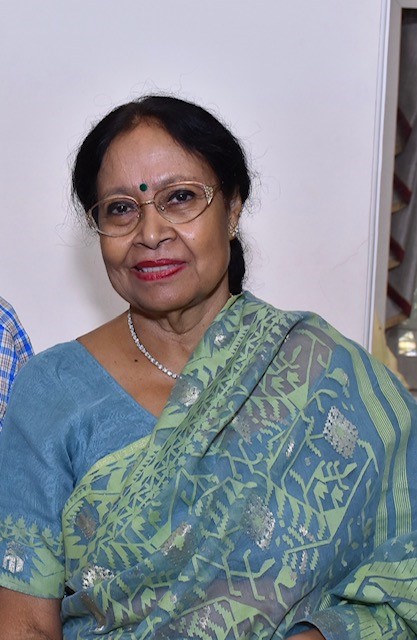
Aruna Chakravarti has been the principal of a prestigious women’s college of Delhi University for ten years. She is also a well-known academic, creative writer and translator. Her novels, Jorasanko, Daughters of Jorasanko, The Inheritors, Suralakshmi Villa and The Mendicant Prince have sold widely and received rave reviews. She has two collections of short stories and many translations, the latest being Rising from the Dust. She has also received awards such as the Vaitalik Award, Sahitya Akademi Award and Sarat Puraskar for her translations.
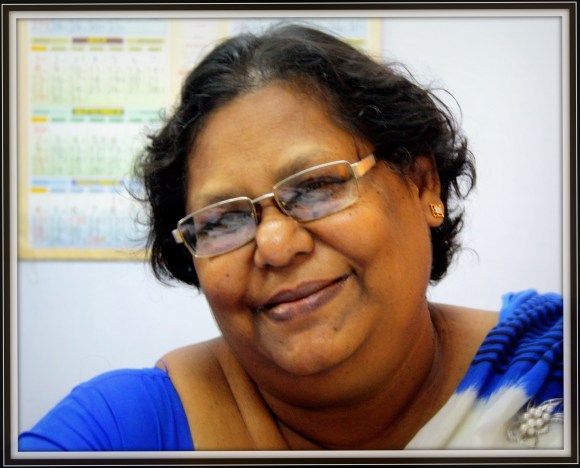
Radha Chakravarty is a poet, critic and translator based in Delhi, India. She has published over 20 books, including translations of major Bengali writers such as Rabindranath Tagore, Bankimchandra Chatterjee and Kazi Nazrul Islam, anthologies of South Asian writing, and several critical monographs. She has co-edited The Essential Tagore (Harvard and Visva-Bharati), named Book of the Year 2011 by Martha Nussbaum. She was Professor of Comparative Literature and Translation Studies at Ambedkar University Delhi.
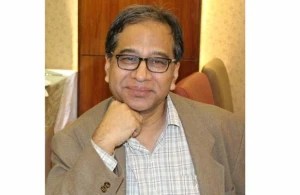
Somdatta Mandalis the Former Professor of English and Chairperson at the Department of English & Other Modern European Languages, Visva-Bharati, Santiniketan. Somdatta has a keen interest in translation and travel writing.
Fazal Baloch is a writer and translator. So far, he has published seven English anthologies and one Urdu collection of his translations. His. works include “God and the Blind Man: Selected short stories by Munir Ahmed Badini (Balochistan Academy of Science and Research, 2020), The Broken Verses: Aphorism and Epigrams by Sayad Hashumi (Balochi Academy Quetta 2021), Rising Stars: English Translations of Selected Balochi Literature by the Writers under the Age of Fifty (Pakistan Academy of Letters Islamabad 2022), Muntakhib Balochi Kahaniyan (Pakistan Academy of Letters Islamabad 2022), Adam’s Remorse and Other Poems by Akbar Barakzai (Balochi Academy Quetta 2023), “Why Does the Moon Look So Beautiful?: Selected short stories by Naguman” (Balochistan Academy Turbat, revised edition 2024) and “Every Verse for You”: Selected Poetry by Mubarak Qazi (Balochistan Academy Turbat, revised edition 2025). His translations have also been included in different anthologies such as ‘Silence between the Note’ (Dhauli Books India, 2019), Unheard Voices: Twenty-One Short Stories in Balochi with English translations (Uppsala University Sweden, 2022) and ‘Monalisa No Longer Smiles: An Anthology of Writings from across the World (Om Books International, 2022). He also contributes literary columns to various newspapers and magazines. He lives in Turbat Balochistan where he serves as an Assistant Professor at Atta Shad Degree College Turbat.
(The interviews were conducted via email by Mitali Chakravarty)
PLEASE NOTE: ARTICLES CAN ONLY BE REPRODUCED IN OTHER SITES WITH DUE ACKNOWLEDGEMENT TO BORDERLESS JOURNAL
Poetry by Atta Shad, translated from Balochi by Fazal Baloch
Had we known the fate of tomorrow,
Today would’ve not slipped
So carelessly from our hands.

Alas! On the gallows of follies,
Desire stands condemned.

True — it is the heart alone
That bears witness to God’s existence,
Not the eye,
For each reflection is a slave to sight.
But what the heart feels —
That alone is the truth:
The rest is illusion.

Some walk with reason,
Some, in a dreamlike haze,
Yet all are bound together,
Step by step,
Carrying the weight of longing
In the folds of a thirsty soul.

In the vast realm of my imagination,
Stands the idol sculpted by my own hands.
I bow before it—
This endless expanse but remains devoid of the Divine.

From being, nothingness emerges,
And from nothingness,
The being is born, over and again.

The lament for yesterday,
The hopes for tomorrow,
The wealth of ages
In search of unseen wisdom,
Wander upon the shores of today.
Either the flood shall wash them away,
Or the shore shall stand unshaken
Before the surging tides.

Where lies the end
Of this unquenchable thirst?
From Public Domain
Atta Shad(1939-1997) is the most revered and cherished modern Balochi poet. He instilled a new spirit in the moribund body of modern Balochi poetry in the early 1950s when the latter was drastically paralysed by the influence of Persian and Urdu poetry. Atta Shad gave a new orientation to modern Balochi poetry by giving a formidable ground to the free verse, which also brought in its wake a chain of new themes and mode of expression hitherto untouched by Balochi poets. Apart from the popular motifs of love and romance, subjugation and suffering, freedom and liberty, life and its absurdities are a few recurrent themes which appear in Shad’s poetry. What sets Shad apart from the rest of Balochi poets is his subtle, metaphoric and symbolic approach while versifying socio-political themes. He seemed more concerned about the aesthetic sense of art than anything else.
Shad’s poetry anthologies include Roch Ger and Shap Sahaar Andem, which were later collected in a single anthology under the title Gulzameen, posthumously published by the Balochi Academy Quetta in 2015.
Fazal Baloch is a Balochi writer and translator. He has translated many Balochi poems and short stories into English. His translations have been featured in Pakistani Literature published by Pakistan Academy of Letters and in the form of books and anthologies. Fazal Baloch has the translation rights of Atta Shad from the publisher.
PLEASE NOTE: ARTICLES CAN ONLY BE REPRODUCED IN OTHER SITES WITH DUE ACKNOWLEDGEMENT TO BORDERLESS JOURNAL
Poetry by Allah Bashk Buzdar: translated from Balochi by Fazal Baloch
Allah Bashk Buzdar. Courtsey: Fazal Baloch
The world of my dreams longs for you,
My love, come and fill my thoughts with radiant hues and shades.
Let my eyes feast on your glowing face,
And grace my lips with the warmth of your breath.
Let my hands feel your soft caress,
And let the fragrance of blooming flowers
Permeate the air around me,
Filling my heart with boundless joy.
Let the breeze rising from your comely gait
Enchant my existence.

My destination lies far from here,
I’ve to journey beyond borders of tyranny and oppression.
Every stone and thorn along the way
I must gather,
The tangled strands of life
I must unravel.

A new harvest of love
I must sow.
Bid me farewell with
Blessings and infinite hope.
Hold me in your gaze
And beneath your sable tresses,
Lest the sapling and bloom of love
You planted should wither away.

I must leave for barren, distant lands,
I’m aware
The quest of life may lead me astray.
And who knows then,
On whose shoulders
Your tresses will fall in soft disarray?
Translator’s Note:Allah Bashk Buzdar is a remarkable modern Balochi poet known for his distinct diction, unique poetic language, and peculiar mode of expression. He writes in the Sulaimani dialect—one of the three major dialects of Balochi, predominantly spoken in the eastern regions of Balochistan and adjoining areas. Buzdar’s poetry reflects his unwavering love and commitment to humanity. Even when writing verses of love and romance, he connects them to the plight of people who live around him. He has published two anthologies of poetry so far. The translated poem is taken from his first anthology, Hoshken Rakk Saoz Bant (The Parched Lips Will Bloom Anew), published by the Balochi Academy Quetta in 2004.
Fazal Baloch is a Balochi writer and translator. He has translated many Balochi poems and short stories into English. His translations have been featured in Pakistani Literature published by Pakistan Academy of Letters and in the form of books and anthologies. Fazal Baloch has the translation rights to this poem.
PLEASE NOTE: ARTICLES CAN ONLY BE REPRODUCED IN OTHER SITES WITH DUE ACKNOWLEDGEMENT TO BORDERLESS JOURNAL
O, White Lady!

Your alluring figure,

With seductive gestures

And sway of your gentle gait,

Sets lamps aquiver

In shame and discomfiture.


O, White Lady!

Your flower-adorned hair,

At times, gleams red,

At times, shines black,

At times, turns grey.

The morning and evening breeze

Tousle them in shameful disarray.

Women, sneer at you

As with comely grace

Their exquisite clothes they array.
Atta Shad(1939-1997) is the most revered and cherished modern Balochi poet. He instilled a new spirit in the moribund body of modern Balochi poetry in the early 1950s when the latter was drastically paralysed by the influence of Persian and Urdu poetry. Atta Shad gave a new orientation to modern Balochi poetry by giving a formidable ground to the free verse, which also brought in its wake a chain of new themes and mode of expression hitherto untouched by Balochi poets. Apart from the popular motifs of love and romance, subjugation and suffering, freedom and liberty, life and its absurdities are a few recurrent themes which appear in Shad’s poetry. What sets Shad apart from the rest of Balochi poets is his subtle, metaphoric and symbolic approach while versifying socio-political themes. He seemed more concerned about the aesthetic sense of art than anything else.
Shad’s poetry anthologies include Roch Ger and Shap Sahaar Andem, which were later collected in a single anthology under the title Gulzameen, posthumously published by the Balochi Academy Quetta in 2015.
Fazal Baloch is a Balochi writer and translator. He has translated many Balochi poems and short stories into English. His translations have been featured in Pakistani Literature published by Pakistan Academy of Letters and in the form of books and anthologies. Fazal Baloch has the translation rights of Atta Shad from the publisher.
PLEASE NOTE: ARTICLES CAN ONLY BE REPRODUCED IN OTHER SITES WITH DUE ACKNOWLEDGEMENT TO BORDERLESS JOURNAL
A CONVERSATION BETWEEN A LADY AND HER SUITOR

She: Hither come, help me get off the cliff, O white-shawled lad!
He: I’ll, O, red-dressed lass, but what will be the reward, I have?

She: Either my necklace or my bangles, you will have.
He: Of your necklace and bangles, none I ever need!
‘Tis your shapely nose and flowing tresses I seek.

She: Shapely nose and flowing tresses lie beyond your reach
-- I’ll become a wild citron on a lofty tree.
Boy: I’ll become grasshopper and nibble your tender leaves.

She: I’ll become a cumulus and on the valley burst forth.
He: A thirsty deer I’ll become, and drink all the fresh water you pour.

She: I’ll become a sorghum grain and rest on the field.
He: I’ll become a grey dove and hold you in my beak.

She: I’ll become a rabbit, in rosebushes I’ll sleep.
He: I’ll become a shepherd, you with my crook I’ll gently beat.

She: I’ll become a turban that rests on a bride’s head.
He: I’ll play my mouth-harp, and as a reward, you I’ll seek.

She: I’ll become the helpless daughter of a poor man.
He: I’ll become the grim-reaper, and whisk you off to the heaven.

She: You’ve filled my heart with boundless joy and delight
Hurry to the wedding chamber, I’m your bride.
This folk song was originally featured in Dreen (The Rainbow: A Collection of Folksongs) collected and translated into Urdu by Atta Shad and A. Salam and published by the Balochi Academy Quetta.Fazal Baloch has the rights to the translation in English.
Fazal Baloch is a Balochi writer and translator. He has translated many Balochi poems and short stories into English. His translations have been featured in Pakistani Literature published by Pakistan Academy of Letters and in the form of books and anthologies.
.
PLEASE NOTE: ARTICLES CAN ONLY BE REPRODUCED IN OTHER SITES WITH DUE ACKNOWLEDGEMENT TO BORDERLESS JOURNAL.
Once there lived a king who had a son. With the passage of time, the prince grew into a young man. The king thought that before he shut his eyes forever, the prince should be married off. He expressed his desire to his son who responded with his choice. He wanted to marry a princess of a distant land. The next day, the king summoned his vizier and told him what the prince desired. Moreover, he said that he would pay as much dower as they asked for.
The vizier sent a messenger to the king for the purpose. The king gave his consent. The messenger returned to his country with the good news. The prince was married with great pomp and splendour. A few days after their marriage, the king brought his daughter-in-law to the palace. She was beautiful and well-mannered.
Days passed by. One day the king breathed his last and his son subsequently ascended the throne and became the king. But he loved his wife so much that he did not pay much attention to the affairs of his kingdom. At last, he abdicated his throne to live a happy and peaceful life with his beautiful wife. Soon he ran out of his wealth and become so poor that he had nothing left. A few days later his wife turned to him and said, “By sitting idle at home we will die of hunger. You should do something or engage yourself in a business”. He replied, “First, I can’t live without you. Separation from you will rend my heart. Second I’m not well-versed in any craft. There is however a desire in my heart to conduct some trade but I don’t have any capital for it”.
“Don’t worry I will finance you,” his wife told him.
“How come?” asked the husband.
“Take all my jewels and sell them off and bring me the sum you receive for them.”
The husband did what his wife had told him. The wife then advised him to buy goods with the money and board a ship. Thus he loaded the goods on a ship and returned to his wife and asked her, “What should I do next?”
She gave him a flower and said, “Whenever you feel sorrowful for me, just look at the flower. It will ease off your sorrows”.
He put the flower into his pocket, boarded the ship and set on his journey. After journeying for many days and night he finally landed in a distant country. He anchored the ship in the harbour. Meanwhile, the soldiers arrived and demanded duties. He paid the duty for the ship but surprised the soldiers saying that he had something else on him but neither was he going to pay any duty for it nor show it to them.
“How strange! What is it?” a soldier asked him but he refused to reveal.
When the soldiers continued to insist, he at last told them that it was the flower given by his wife. The soldiers took him to the king’s court and told the king about the flower he was keeping with him. The king turned to him and asked him sarcastically, “Oh, you think your wife is such a good woman that you can live by her token?”
“Yes, I think so” was his reply.
“If we produce your wife here at our court, what would you say?”
“If you think you can convince her to come here, I will give her to you”, he told the king. Then he turned to the court and said, “A man or two could go and try to persuade his wife to come.”
Two young men, one was king’s own son and the other was the vizier’s, presented themselves for the adventure. After making necessary preparations, they set out on their journey.
Meanwhile, the man sought permission to sell his goods. The king granted permission happily.
The king’s and vizier’s son traveled long and finally reached the city where the wife of the king who was now a merchant lived. There they ran into an old lady who invited them to her cottage. They asked the old woman to go to the merchant’s wife and tell her that the son of a king was desperate to see her. Initially she refused but when the prince gave her a sack full of gold coins, the old woman hurried to merchant’s wife and conveyed her prince’s message. At first she made excuses but when the old woman gave her no rest she at last said, “Ask the prince to visit me at night”.
The old woman told the prince what she had been told by the merchant’s wife. In the evening, the prince spruced himself up and took leave of his friend, the vizier’s son and left for his desired destination.
When he reached there, the woman pointed towards the bathroom and said, “Go there and refresh yourself. I do the same. Then we will have a conversation. We’ve a long night ahead”.
The moment the prince entered the bathroom, the woman locked the door from outside. Two days later, when the prince failed to return, the vizier’s son grew anxious about him. He wondered if someone had done him ill or he had gone somewhere. The next night he decided to see the woman and ask her about the prince. But when his eyes fell on her, he forgot the prince and thought that it would be a lucky hit if he managed to trick her.
He told her that he had been desperate to see her and would be much obliged if she would spare some moments to talk to him. The woman told him to do what she had asked the prince the other night. When he entered the bathroom she locked it from the outside. Now the prince and vizier’s son both lay locked in the bathroom. Six or seven days later she sent for a carpenter and asked him to make two giant sixed boxes in which a man could sleep easily. He also asked the carpenter to make two holes on the side of the each box.
The carpenter went off and made the boxes as she had ordered him. She then summoned two men who owned camels. She instructed them thus, “I have locked two men in the bathroom, put them in these two boxes, load them on the camels”.
When they were all done she asked the camel owners to follow her. She fed them water and food through the holes in the boxes. After travelling for many days and night, they finally reached the land of the king who wished to have her in his court. Upon reaching there, she rented a quarter and placed the two boxes there. She locked the house and went out. On her way to the city, she encountered the kotwal or the police chief of the city. He inquired her: “Who are you?”
“I am a courtesan”, she replied.
“Don’t you know courtesans are not allowed to move around freely in this city? I wouldn’t let you wander like this.”
“Is there any way that I could be spared?” She asked the kotwal.
“If you visit my home in the evening, I will let you go,” the kotwal put the condition before her.
“Of course I will come. This is what I do. But being a servant of the king you have always people around you. If any of your sentries or soldiers catches the sight of me, it will bring ruin to your reputation. I have rented a house in the corner of the city. It is better we meet there”.
Thus, the kotwal let her go.
The Imam of the mosque was the next she encountered. He asked her:
“Who are you?”
“I am a courtesan,” she replied.
“I seek refuge from the Holy Lord! Don’t you know such impure women are not allowed to roam freely in this city? I will take you to the king”.
“Please for God’s sake, let me go,” she pleaded.
“If you visit me in the evening I will let you go,” he told her.
“Of course, I will come. This is what I do. But as you are the Imam of the entire city, whether it is death or marriage people will come to you to perform the rituals. If someone saw me with you, it would tarnish your dignity and honor. I have rented a house in the corner of the city. It is better we meet there”.
Hence the Imam let her go.
She then ran into the vizier who inquired: “Who are you?”
“I am a courtesan”, she replied.
“The king has banned the movement of courtesans in the city. I will take you to the king”.
“Is there any way that I may be spared?” she asked the vizier.
“Yes, if you come at my home near king’s palace tonight, then I will leave you,” said the vizier.
“Of course, I will come. This is what I do. But as you are the vizier, if king sends someone for you and he happens to catches the sight me with you it will dent your dignity. I have rented a room in the city. It is better we meet there”.
The vizier agreed and let her go.
At last she bumped into the king himself. He asked her: “Who are you?”
“I am a courtesan,” she replied.
“In my kingdom sinful women like you are not allowed. I will put you in the prison”.
“I am a poor woman. Let me earn a livelihood. Take pity on me,” she pleaded.
“No, I can’t,” the king replied.
“Isn’t there any way that I may be spared?” she asked the king earnestly.
“Yes, there is but one condition. If you accept it I will let you go the very instant”.
“What is it”?
“If you come at my palace in the evening, I will let you go,” said the king.
“Of course I will. This is what I do. But as you are the king of the land, if someone saw me with you; it would stain your honour and esteem. I have rented a house in the corner of the city. It is better we meet there”.
Thus the king was agreed to see her at her house. He noted down the details of the location and told her that he would pay her a visit at her place that night.
The woman returned to her quarter. At dusk she cooked herself a dinner. She was just done with her meal when someone knocked at the door. She got up and opened the door. The kotwal was standing outside. She let him in. He had barely seated himself when someone again knocked at the door. The kotwal pleaded with the woman:
“For God sake hide me somewhere.”
“There is no such place in the house where I could hide you, but I have an idea,” replied the woman.
“What is the idea?” the kotwal instantly asked her.
“I will give you a sack of grain and you grind the content in the quern. Thus, nobody will suspect you”.
The kotwal agreed.
She opened the door and found the mullah standing outside. She welcomed him. The mullah had just started the conversation with the woman, when someone knocked at the door again. The mullah grew worried, and he begged to the woman saying: “Pray hide me somewhere”.
“There is no such place in the house where I could hide you but I have an idea”, replied the woman.
“What is the idea?” the mullah asked her trembling.
“You should bend down on your knees, and I will place the water-pitchers on your back,” said the woman.
The mullah consented and she placed two water-pitchers on his back and strolled out of the room.
She opened the door and let the vizier in. The vizier had barely stepped into the house, when there was a knock on the door again. The vizier turned to the woman and urged her: “Please hide me somewhere”.
“There is no such place in the house where I could hide you but I have an idea,”replied the woman.
“What is the idea?” The vizier asked her in an earnest voice.
“You should snuggle against the wall and I will place the lamp on your head. It will be dark beneath the lamp and nobody will notice your presence,” said the woman.
The vizier did what the woman told him. She placed the lamp on his head and left the room.
She opened the door and to her surprise she found the king himself standing before her. She courteously greeted him and conducted him into the house. Then she went and unlocked the two giant boxes. A moment later she excused herself and said: “Let me take a bath to refresh myself before I join you”.
The king granted her the permission, and she stole out of the door and started her journey back home.
Back in the house, the king kept waiting for her. When after a long time she failed to show up, the king decided to ask the maidservant who was grinding the grain. Hence he walked over there and he was astonished to discover that instead of a maidservant it was the kotwal grinding the grains. When the kotwal saw the king there he smiled and said: “Thank God! I’m not alone. His Majesty too has been tricked by the woman”.
The vizier also felt relieved and so did the mullah. The king said that since they had been tricked by the woman, they would take away the two boxes of the woman. The king went forward and opened one box and but instead of any finery or jewelry he found his own son lying in the box. The king lost his temper saying, “I spit on your face. You damn coward!”
The prince turned to his father and said, “I was made a captive away from home, but I curse you for you all have been tricked in your own kingdom.”
The king asked him about vizier’s son. The prince told him that he was lying in the next box. They all broke the door and sheepishly went to the merchant and sought his forgiveness for they couldn’t bring his wife into the palace. The king presented him a shipload of silver and gold.At last he reached his home. He felt very proud to have a clever woman as his wife who with her shrewdness not only protected her own honour but also did not let any stain spoil her husband’s dignity. Thus, she remained honoured and exalted in the eyes of both her husband and God.
(This folktale was originally featured in Balochi in Geedi Kessah-5, compiled by Mahmood Mari published by Balochi Academy Quetta in 1979. Fazal Baloch has the translation rights of this collection.)
Fazal Baloch is a Balochi writer and translator. He has translated many Balochi poems and short stories into English. His translations have been featured in Pakistani Literature published by Pakistan Academy of Letters and in the form of books and anthologies.
.
PLEASE NOTE: ARTICLES CAN ONLY BE REPRODUCED IN OTHER SITES WITH DUE ACKNOWLEDGEMENT TO BORDERLESS JOURNAL




 Borderless