Categories
Editorial

And Wilderness is Paradise Enow…

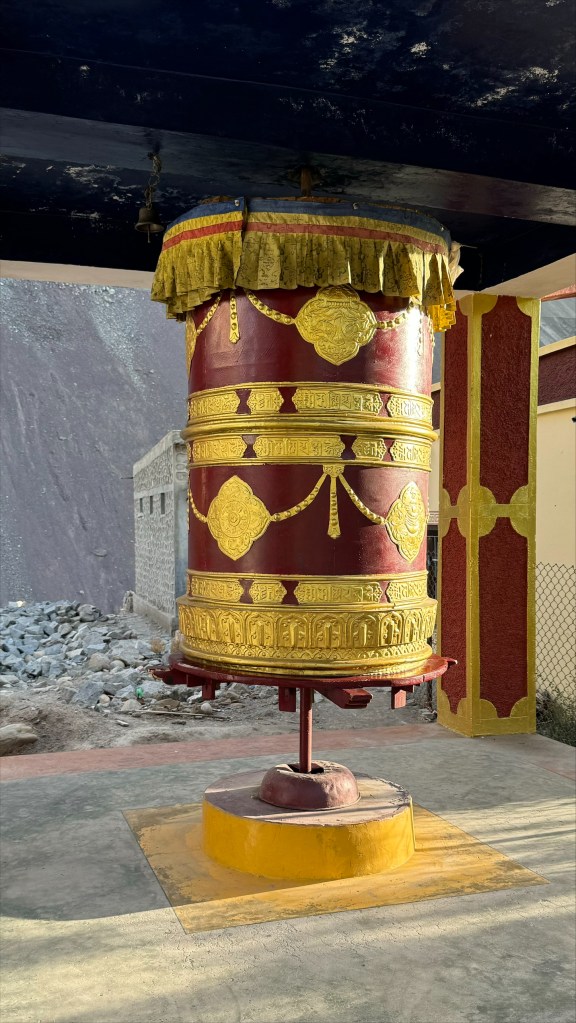
Prayer Wheel at Nurulia, Ladakh. Photo Courtesy: Farouk Gulsara
We lock eyes, find glimmers
of smiles, trust our leaders.
We break bread with strangers
because there aren’t any.

--Imagine by Miriam Bassuk

Imagine the world envisioned by John Lennon. Imagine the world envisioned and partly materialised by Tagore in his pet twin projects of Santiniketan and Sriniketan, training institutes made with the intent of moving towards creating a work force that would dedicate their lives to human weal, to closing social gaps borne of human constructs and to uplifting the less privileged by educating them and giving them the means to earn a livelihood. You might well call these people visionaries and utopian dreamers, but were they? Tagore had hoped to inspire with his model institutions.  In 1939, he wrote in a letter: “My path, as you know, lies in the domain of quiet integral action and thought, my units must be few and small, and I can but face human problems in relation to some basic village or cultural area. So, in the midst of worldwide anguish, and with the problems of over three hundred millions staring us in the face, I stick to my work in Santiniketan and Sriniketan hoping that my efforts will touch the heart of our village neighbours and help them in reasserting themselves in a new social order. If we can give a start to a few villages, they would perhaps be an inspiration to some others—and my life work will have been done.”  But did we really have a new social order or try to emulate him?

If we had acted out of compassion and kindness towards redefining with a new social order, as Miriam Bassuk points out in her poem based on Lennon’s lyrics of Imagine, there would be no strangers. We’d all be friends living in harmony and creating a world with compassion, kindness, love and tolerance. We would not have wars or regional geopolitical tensions which act against human weal. Perhaps, we would not have had the issues of war of climate change take on the proportions that are wrecking our own constructs.

Natural disasters, floods, fires, landslides have affected many of our lives. Bringing us close to such a disaster is an essay by Salma A Shafi at ground level in Noakhali. More than 4.5 million were affected and 71 died in this disaster. Another 23 died in the same spate of floods in Tripura with 65,000 affected. We are looking at a single region here, but such disasters seem to be becoming more frequent. And yet. there had been a time when Noakhali was an idyllic vacation spot as reflected in Professor Fakrul Alam’s nostalgic essay, filled with memories of love, green outdoors and kindnesses. Such emotions reverberate in Ravi Shankar’s account of his medical adventures in the highlands of Kerala, a state that suffered a stupendous landslide last month. While Shafi shows how extreme rainfall can cause disasters, Keith Lyons writes of water, whose waves in oceanic form lap landmasses like bridges. He finds a microcosm of the whole world in a swimming pool as migrants find their way to New Zealand too. Farouk Gulsara muses on kindness and caregiving while Priyanka Panwar ponders about ordinary days. Saeed Ibrahim gives a literary twist to our musings.   Tongue in cheek humour is woven into our nonfiction section by Suzanne Kamata’s notes from Japan, Devraj Singh Kalsi’s piece on premature greying and Uday Deshwal’s paean to his sunglasses!

Humour is wrought into poetry by Rhys Hughes. Supriya Javelkar and Shamik Banerjee have cheeky poems that make you smile. We have poetry on love by Michael Burch and poetry for Dylan Thomas by Ryan Quinn Flanagan. Miriam Bassuk has described a Utopian world… but very much in the spirit of our journal. Variety is brought into our journal with poetry from Jackie Kabir, Jennifer McCormack, Craig Kirchner, Stuart MacFarlane, George Freek, Luis Cuauhtémoc Berriozábal and many more.

In translations, we have Nazrul lyrics transcreated from Bengali by Professor Alam and poetry from Korean by Ihlwha Choi. We pay our respects to an eminent Balochi poet who passed on exactly a year ago, Mubarak Qazi, by carrying a translation by Fazal Baloch. Tagore’s Suprobhat (Good morning) has been rendered in English from Bengali. His descriptions of the morning are layered and amazing — with a hint of the need to reconstruct our world, very relevant even today.  A powerful essay by Tagore called Raja O Praja (The King and His Subjects), has been translated by Himadri Lahiri.

Our fiction hosts two narratives that centre around childhood, one by Naramsetti Umamaheswararao and another by G Venkatesh, though with very different approaches. Mahila Iqbal relates a poignant tale about aging, mental health and neglect, the very antithesis of Gulsara’s musing. Paul Mirabile has given a strange story about a ‘useless idler’.

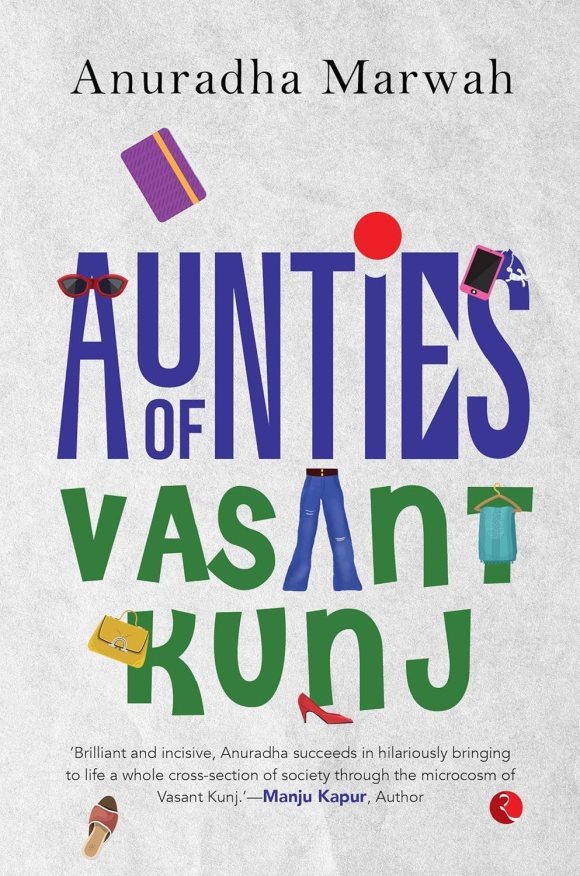
A short story collection has been reviewed by Rakhi Dalal, Swadesh Deepak’s A Bouquet of Dead Flowers, translated from Hindi by Jerry Pinto, Pratik Kanjilal, Nirupama Dutt, Sukant Deepak. Somdatta Mandal has written about a book by a Kashmiri immigrant which is part based on lived experiences and part fictive, Karan Mujoo’s This Our Paradise: A Novel. Bhaskar Parichha has reviewed Ayurveda, Nation and Society: United Provinces, c. 1890–1950 by Saurav Kumar Rai, a book which shows how healthcare was even a hundred years ago, politicised. Meenakshi Malhotra has reviewed Anuradha Marwah’s novel, Aunties of Vasant Kunj, of which we also have an excerpt. The other excerpt is from Mineke Schipper’s Widows: A Global History. Ratnottama Sengupta converses with Reba Som, author of Hop, Skip and Jump; Peregrinations of a Diplomat’s Wife.

We have more content that adds to the vibrancy of the issue. Do pause by this issue and take a look. This issue would not have been possible without all your writings. Thank you for that. Huge thanks to our readers and our team, without whose support we could not have come this far. I would especially like to thank Sohana Manzoor for her continued supply of her fabulous and distinctive artwork and Gulsara for his fabulous photographs.

Let us look forward to a festive season which awakens each autumn and stretches to winter. May we in this season find love, compassion and kindness in our hearts towards our whole human family.

Have a wonderful month!

Mitali Chakravarty

borderlessjournal.com

Click here to access the content’s page for the September 2024 Issue.

.

READ THE LATEST UPDATES ON THE FIRST BORDERLESS ANTHOLOGY, MONALISA NO LONGER SMILES, BY CLICKING ON THIS LINK.

Categories
Review

Portraying Urban Middle Class Life

Book Review by Meenakshi Malhotra

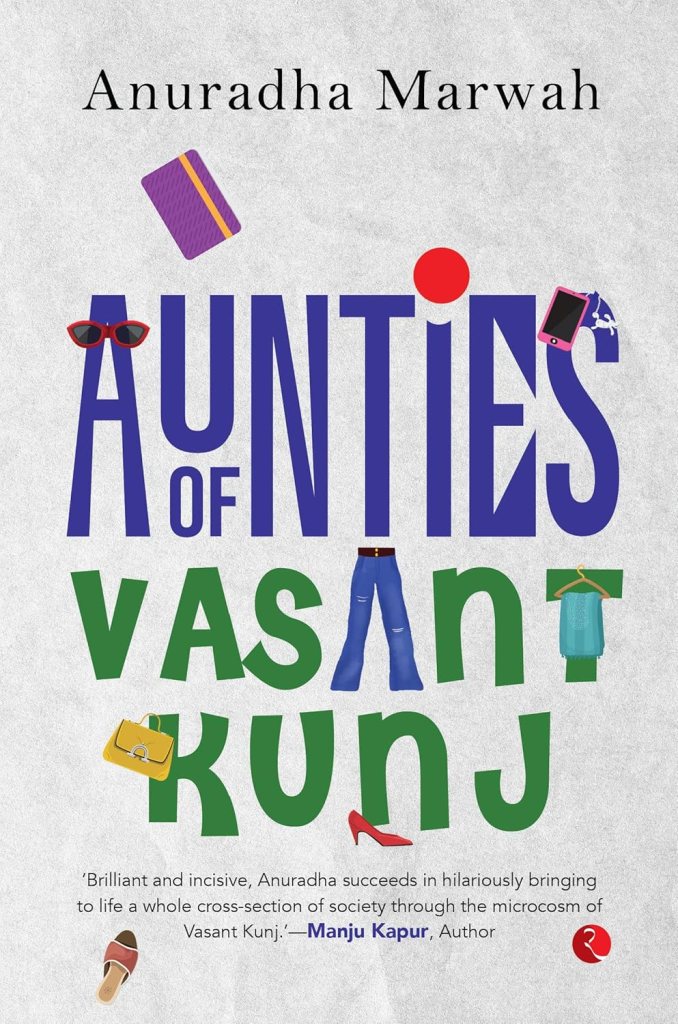
Title: Aunties of Vasant Kunj

Author: Anuradha Marwah

Publisher: Rupa Publications, India

A well-conceived and captivating take on the lives and circumstances of three different women who happen to inhabit  the same building in the middle class not so ‘posh’ locality in South Delhi called Vasant Kunj, Anuradha Marwah’s   observations  about  class, domesticity and “auntyhood” in the novel are both humorous and accurate. With three novels in her authorial bag, the fourth, Aunties of Vasant Kun,j revisits that time in a woman’s life when she is supposedly teetering on the verge of being middle-aged , somewhat on the wrong side of forty, except that the “aunties” are nowhere near “auntie-dom” understood in the conventional sense. In fact, in the  21st century urban churn, women and men are probably more unsettled than ever before, and often embrace that uncertainty. The subtle or not so subtle tension between traditional gender roles and expectations and the actual lives of urban middle class women is wittily and sensitively portrayed in this extremely readable novel.

The three women are almost wholly different from each other except in the fact that each of them is grappling with their own struggles where they have to juggle multiple  issues. The protagonists are  Shailaja, raw from her recent experience of betrayal by her long-standing boyfriend and facing harrassment at her workplace; Dini, in a demanding job with an international NGO,  a single-parented child, experiencing a half-acknowledged attraction to a handsome grass-roots activist and Mrs Gandhi who has subsumed her identity in the household resulting in a sense of neglect and loss of confidence. Ignored by her husband who seems to spend more time with his secretary  than with his wife, we realise that Sunil “Casanova” Gandhi has not only a roving eye, but is actively  engaged in pursuit of other women. In a clever sleight of hand, Anuradha Marwah turns a slice of life novel focusing on the everyday lives of women into a delicious take on the new modern woman as she navigates the quicksands of desire and domesticity, motherhood, meditation and professional commitments, simultaneously.

Shailaja, a newly single academic whose workplace woes are comparable to her messy not-quite-resolved (are they ever?) relationship with a recalcitrant ex who meanders in and out of her life, moves into Vasant Kunj which also houses the hospitable Mrs Gandhi, and the prickly Dini, who is fierce about guarding her privacy. The latter has also become equally adept at dodging both the hospitality as well as the probing questions thrown her way by the determined- to- be- friendly Mrs Gandhi.  Mrs Nilima Gandhi has her own share of troubles-a difficult mother-in -law, a cheating husband who has a roving eye that preys upon other women, a dismissive daughter who gangs up with her father to demean her mother — all these combine in varying degrees to further lower her already plummeting self-esteem. She is rescued from the throes of self-pity by the timely intervention of Mrs Malhotra and Navneeta Singh who encourage her to adopt the Buddhist practice of chanting as a way to address her problems. Listening to Mrs Singh’s optimistic projections, Mrs Gandhi experiences a twinge of doubt but nevertheless goes about it with single minded determination to transform her life and turn it around. As some things start falling into place for   her, Shailaja and Dini, the three women strike an unlikely friendship which provides a holding structure as they negotiate everyday challenges. Dini ‘succumbs’ to the abrasive charms of Radhey Shyam and Shailaja is able to shake off the vestiges of her previous relationship and take a bold new step forward. Mrs Gandhi is able to regain a sort of equilibrium.

As the women collectively register and celebrate their small and big victories in the course of the novel’s unfolding, we as readers are brought face to face with a relatively new sub-genre in the Indian English novel. It is the story of women by women narrated with both humour and compassion, occupying a niche in popular literature between chick-lit and mature women’s fiction, between popular and literary fiction. It actually challenges taxonomies of ‘literary’ vs ‘popular’ fiction. This is clear from the  choice of a title that is quite a masterstroke. Though it sounds subversive, the title seems to be the choice of an author who refuses to take herself too seriously. The  lightness of tone is sustained as the novel critiques societal attitudes towards single women and the entitled behaviour of men who are never held responsible or called to account within patriarchy.  Perhaps  the  only deviation from the lightness of tone is the autobiographical fragment towards the close of the novel which provides a sort of afterword articulating the impulse and desire to write the Aunties of Vasant Kunj. Post-publication, when the author was asked what impels her to create fiction, she replied that it was the hope of getting a glimpse of all the other lives that she might have lived. Marwah has achieved a fine balance in nuancing all her characters, making their stories at once convincing and identifiable.  

She has depicted the rhythms of everyday life and  nuanced the dialogues to suggest a bilingual sensibility. Cinematic and captivating, Aunties of Vasant Kunj provides plenty of fun and frolic without trivialising the serious concerns and conflicts of the three protagonists. Marwah’s humour is spot on, and she does not miss a beat in capturing the water woes and other roadblocks of quotidian life in the sprawling urban metropolis /megapolis of Delhi. The novel is likely to resonate with many readers in its highlighting of vital aspects of life in the city, along with the varied kinds of crises experienced daily.

The novel narrates the stories of its protagonists with verve and humour and with exactly  the ‘mot juste’ or the right words to irradiate them, creating a smorgasboard of delights for the reader.

Click here to read the book excerpt

.

Dr Meenakshi Malhotra is Associate Professor of English Literature at Hansraj College, University of Delhi, and has been involved in teaching and curriculum development in several universities. She has edited two books on Women and Lifewriting, Representing the Self and Claiming the I, in addition  to numerous published articles on gender, literature and feminist theory.  Her most recent publication is The Gendered Body: Negotiation, Resistance, Struggle.

.

PLEASE NOTE: ARTICLES CAN ONLY BE REPRODUCED IN OTHER SITES WITH DUE ACKNOWLEDGEMENT TO BORDERLESS JOURNAL

Click here to access the Borderless anthology, Monalisa No Longer Smiles

Click here to access Monalisa No Longer Smiles on Amazon International

Categories
Excerpt

Aunties of Vasant Kunj

Title: Aunties of Vasant Kunj

Author: Anuradha Marwah

Publisher: Rupa Publications, India

Shailaja woke up reluctantly with the phone alarm at six in the morning and switched on the pump. The first day of the odd semester! She hadn’t got much sleep, but she was still looking forward to meeting the students. She had worked quite hard in the vacation: reading Gone with the Wind, word by word, and photocopying and collating secondary material. Preparing for the new course on popular fiction had given her an insight into romance; teaching it would be therapeutic, she told herself firmly.

The morning passed too quickly with the ever-voluble Rajni ki Ma[1]. She laid out Shailaja’s green chiffon sari on the bed. A gift from Ranjan in a previous life! Or had it been just last year?

‘Didi, wear this today,’ she commanded.

‘I have to go to college. This sari is thin and transparent. It is for the evening.’

Rajni ki Ma started off another tirade about single women dressing like widows and driving away men from their doorsteps.

‘One should not fight all the time. It can’t be his fault totally. Can one clap with one hand? After all, he came and gave the car, didn’t he? Who gives away something so expensive! You could have talked to him, offered him something to eat. There was enough food and I could have made more. As it is, you people eat so little…’ She went on. Shailaja thought she had a point but she still hung the sari back in the wardrobe and took out a yellow salwar and a grey kurta instead.

Rajni ki Ma made a face. ‘Uh, not even matching. Other madams have everything matching, even sandals. Buy some new clothes, no!’

Shailaja emerged from her new home. She felt young—about five years old. The poha[2] Rajni ki Ma had prepared for her—the Maharashtrian way, with peanuts, curry leaves and a dash of sugar—had been piquant with green chilies. She really enjoyed breakfast in spite of the heartache. Her class began at ten-thirty. It was a good forty-minute drive from Vasant Kunj to college. Shailaja shot out of the parking; it was ten already.

But then she had to brake rather precipitately. A huge water tanker was squatting right outside the parking in the middle of the narrow road to the colony gate. What was she to do? As usual, there were cars parked on both sides of the lane all the way till the gate. The parking areas inside the colony were woefully inadequate to contain the Indian automobile revolution that had resulted in two-three cars per flat. With the tanker standing where it was, it was a complete roadblock. In fact, the sides of the tanker were brushing the parked cars on both sides. Shailaja honked. A woman resplendent in a parrot-green dressing gown appeared from the thicket at the side of the road. ‘Two minutes, Madam,’ she said.

Shailaja noted that the huge pipe that emerged from the underbelly of the tanker and vanished into the hedgerow was vibrating. It was dispensing water into one of the monstrous black storage water tanks behind the hedgerow. The tanker was, no doubt, from the state water department and had been sent to pacify the irate residents. Water was supplied for only half an hour that morning.

Another woman in a frilly pink nightgown arrived on the scene and said to parrot-green, ‘I called the tanker. How is it that you are taking water before me?’

It was Mrs Gandhi underneath the pink frills. But she did not even look at Shailaja. She was busy holding her own with parrot-green.

‘If you keep sitting inside having tea, the whole world is not going to wait for you,’ parrot-green attacked.

‘I had called the tanker,’ repeated Mrs Gandhi.

‘So what, I had called him yesterday and the day before, and you took water before me both days.’

Shailaja stuck her head out of the window. ‘Nilima-ji, it’s me.’

‘There is not a drop in my home, and Mr Gandhi has to leave for work,’ she said turning to Shailaja at last.

Mr Gandhi? Husband… Wow! ‘So do I, Nilima-ji. I have work too. My class begins in twenty minutes,’ said Shailaja poking her head out further. ‘Please move the tanker and let me pass.’

Both the women looked askance. ‘Not a drop of water,’ repeated parrot-green.

‘This is emergency, Shailaja. One day the children can wait for five minutes,’ said the betraying Mrs Gandhi.

‘You know I teach in a college. And can’t the water wait five minutes?’  Shailaja persisted.

‘No, it can’t. Why should we ask the tanker to move? He got here first,’ replied parrot-green querulously.

‘I will lose my job,’ Shailaja pleaded.

‘Teachers in Delhi University are always late,’ said the treacherous Mrs Gandhi as her partner-in-crime nodded her agreement. ‘Nobody ever loses job. You only said!’

‘That’s not true. Like in every other job, there are some who are conscientious and others who aren’t,’ replied Shailaja, cursing herself for bitching about her colleagues to all and sundry.

‘It is a good job for women,’ conceded parrot-green. ‘You’re a woman. You must understand the kind of problems one can have without water,’ she continued in a sisterly way.

‘I’m not telling you to not take water; I’m only requesting you to let me pass. Where is the driver?’ said Shailaja, feeling a little desperate now.

‘How do I know? He must be around,’ replied parrot-green.

‘Don’t get so impatient, Shailaja. Try and see it from Mrs Malhotra’s point of view,’ said Mrs Gandhi brokering Buddhist peace. She had been nattering about her ‘new way of worship’ all through summer.

By then, there were three cars honking behind Shailaja. Somebody yelled, ‘Which so and so is blocking the road today?’

Mrs Gandhi and parrot-green looked at each other and, in unspoken agreement, disappeared behind the hedgerow like exotic birds startled by rude tourists in a bird sanctuary.

‘Nilima-ji, I will get very late,’ whined Shailaja but she was talking to thin air.

A man strode out of the car, ‘Inconveniencing everybody!’ he hollered. ‘Blocking traffic at ten in the morning! Driver!’ he called.

Nothing happened.

‘Whose tanker is this?’ The man demanded.

‘There were a couple of ladies here a minute ago,’ said Shailaja, trying to help.

The man gave her a scornful look. ‘Mrs Gandhi!’ he growled. ‘She seems to have a swimming pool in her flat. Water came for an hour in the morning; still this truck from Jal Board has to be called!’

‘I think the water came for just half an hour this side. There was also this other woman, Mrs Malhotra… In fact, she was taking water,’ the ever fair and loyal Shailaja tried to explain.

The man paid no attention to her. He walked to the tanker and turned off the water supply; the fat tube stopped vibrating. Shailaja wondered about him, obviously a man of consequence. His tummy protruded so confidently, like that of her college principal. A thin boy emerged from the thicket. He looked about fifteen.

‘Move the tanker, you…. Next time I’ll get you arrested,’ the man commanded.

The boy jumped into the driver’s seat and the tanker began to roll back.

Law of inertia: roadblocks in Vasant Kunj don’t move without the use of rude force.

I should have got out of the home earlier, rued Shailaja. She would be very late.

Law of inertia: Rajni ki Ma won’t stop unless there is an equal force against her.

She was trapped between the home and the world, powerless, helpless! Panic had her stomach in knots, the road seemed to rise to block her way, the trees on either side gesticulated menacingly. The big tanker was challenging her to pass from the narrow alley that it had created by rolling back just a couple of feet. The car behind her was honking. She breathed deeply, released the clutch and wove her way around the monster. The car nipping at her heels seemed to snort derisively at her lack of expertise.

She had learnt driving just a couple of years ago; Ranjan’s driver had taught her. They had bought a second-hand car for her commute to college. She hadn’t used her skill much because the driver was usually free to drop her to college in Ranjan’s brand new sedan. But at least she could drive and had a car, Shailaja told herself, in an unconscious echo of Mrs Gandhi’s Buddhism.

[1] Rajni’s mother

[2] A dish with flattened rice

[3] biscuit

About the Book

Three women try Buddhist chanting, activism, and fermented drinks of various kinds to make sense of their fast-changing worlds.

Shailaja, abandoned but lovelorn, wistfully teaching romance in a Delhi University college; Mrs Gandhi, plump and garrulous, dedicated to providing endless cups of tea and plates of biskut[3] to all and sundry; and firebrand Dini, ensconced in her idyllic female world, simply cannot see eye to eye. 

But suddenly, their lives take unexpected turns. A lecherous boss, a cheating husband and a completely unsuitable but irresistible lover make them seek out each other. Will Vasant Kunj, with its tight shared spaces, encroached pathways and perennial water and electricity crises provide intersections for unlikely friendships? Or will they continue to collide at Aunty Point, where they’ve all been cast ashore? 

Written mainly in the form of witty dialogue, the novel is like a play about warring world views. The three women act out Buddhism, feminist activism, and love and longing but in doing so they improvise their acts and their roles merge into a shared femaleness. Indian society is sometimes described in terms of conflict between the pre-modern and the post-modern. In this novel such confusion is located within individuals and the conflict is always psychosocial. So while it details the bizarre dailiness of middle class Vasant Kunj — the illegal water pumps and power breakdowns — the novel also touches lightly on universal dilemmas about identity and conflicting social roles that women face all over the world. It is an accessibly written book intended to make the reader chuckle and think.

About the Author

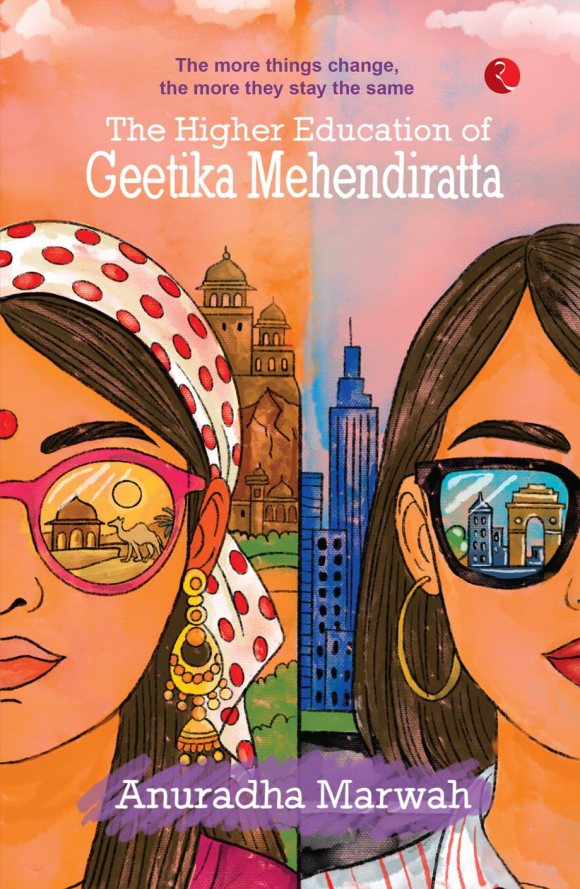
Anuradha Marwah is the author of four novels The Higher Education of Geetika Mehendiratta, Idol Love, Dirty Picture, and Aunties of Vasant Kunj and five plays. She has co-authored the textbooks for Creative Writing prescribed by Delhi University for undergraduate students and by the NCERT for class nine.  She is recipient of the Charles Wallace Writer’s Residency (2001) to three universities in the UK and Fulbright-Nehru Academic and Professional Excellence (FNAPE) fellowship to the University of Minnesota-Twin Cities (2017). She is Professor of English at Zakir Husain Delhi College, Delhi University and lives in Vasant Kunj with her partner.

.

PLEASE NOTE: ARTICLES CAN ONLY BE REPRODUCED IN OTHER SITES WITH DUE ACKNOWLEDGEMENT TO BORDERLESS JOURNAL

Click here to access the Borderless anthology, Monalisa No Longer Smiles

Click here to access Monalisa No Longer Smiles on Kindle Amazon International