An introduction to Aruna Chakravarti’s Creeping Shadows: 13 Ghost Stories, published by Penguin India, along with a discussion with the author.
Ghosts are evocative of a past… of history one could say. Then who could be a better storyteller of the past than an author steeped in colours of historical fiction — Aruna Chakravarti! In the past she not only translated novels set in colonial India but evoked the Bengal Renaissance to perfection in her two Jorasanko novels and details of a court hearing in her retelling of the Bhawal prince! This time the diva of historical fiction brings to us a book of spine chilling, ghost stories, Creeping Shadows: 13 Ghost Stories. It is her third collection of short stories.
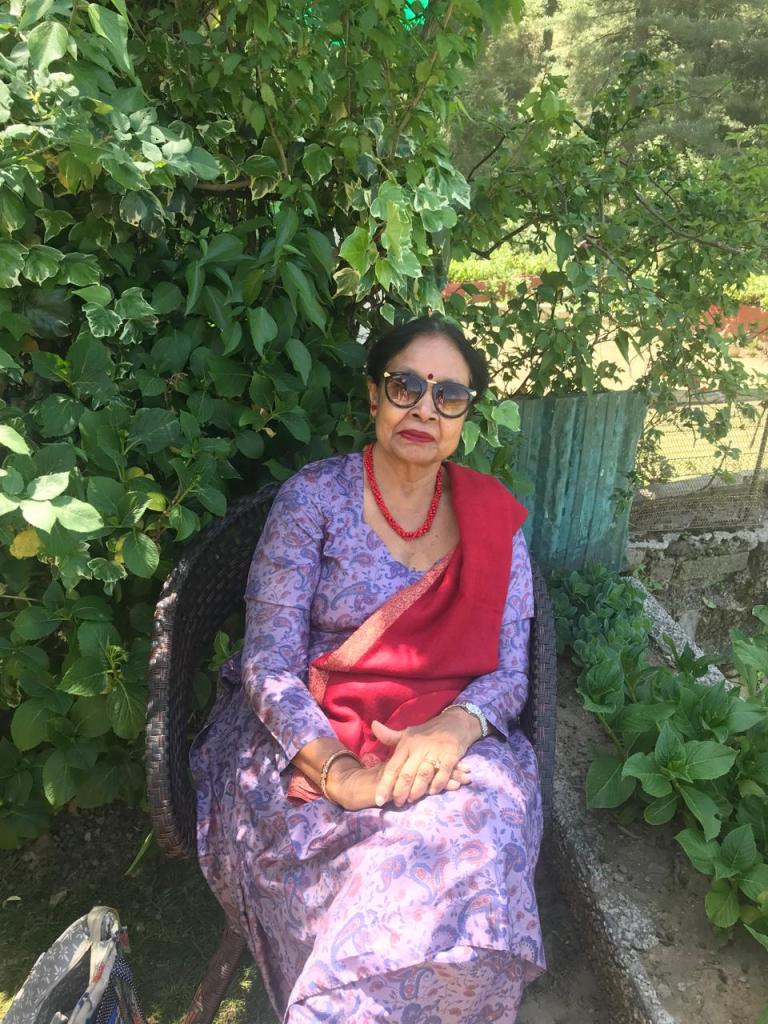
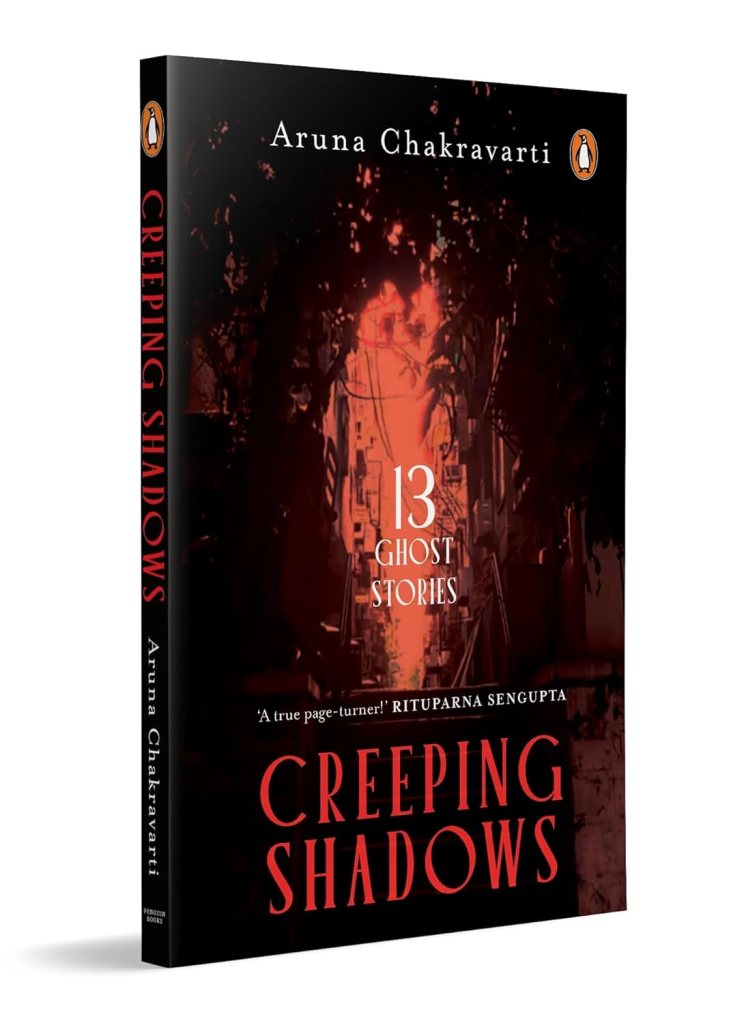
The narratives are so vivid and visual that they could be worthy of being made into films. They are distinctive in that she has mostly created her own very horrific ghouls – not the traditional ones. They pop up and frighten the reader with their bizarreness and terrifying presences which linger even when you try to sleep at night! She has given us thirteen stories — a spooky number in itself — spread across multiple communities in Asia.
Some of the narratives evoke the past, starting from the 1800s. ‘The House of Flowers’ is set in China partly and partly in Kolkata, where there is now a thriving Chinatown known as “Tangra” and a Kali temple that serves ‘noodles’ as its prasad or offering. The story has echoes of Pearl S Buck’s China interestingly. What was a surprise was the fluency with which she wove in the influences that impact a community of migrants!
Chakravarti has used her skills as a writer of historical fiction in some of the stories like, ‘The Road to Karimganj’, in which a spook takes us back to undivided Bengal, when passports were not needed as in the story of the migrant Chinese. Hovering around history are more narratives like ‘Possessed’, where a courtesan who performs with the legendary Girish Ghosh1 of the nineteenth century Kolkata undergoes, along with the audience, a strange spooky experience!
Traveling down the century, closer to our times, is the story that is perhaps one of the most bizarre and yet most relatable, ‘The Necklace’. Set in the Anglo-Indian community and the glamour of Park Street — where Wiccan writer, Rajorshi Patranabis, claimed to have met a colonial ghost awaiting her lover — Chakravarti’s narrative is of black magic and betrayal. The fiction is far more impactful and frightening than the factual narrative, which too was spine chilling! You realise what makes fiction so much more gripping than facts — anything can happen in fiction. Chakravarti is imaginative enough to make it as creepy and shadowy as any regular horror writer!
Holding on to that thought, the author holds the key to our experiences as she skillfully outlines two demons grown out of poverty in ‘A Winter Night’. The conclusion has a sense of irony and tragedy. ‘Truth is stranger than Fiction’ weaves in more of the diversity in the historic annals of Bengal. The story that starts the book, ‘The Caregivers of Gazipur’, has an unresolved ending, like some of her other narratives. Though there is a frightful resolution in ‘They Come Out After Dark’. The ghosts play spine chilling havoc with fears of the living while recalling the senseless violence of 1947. ‘There are More Things in Heaven and Earth’…takes us back to the atrocities committed during the Sikh riots of 1984 in Delhi. The mingling of fact and fiction to create weird a fantastical narrative is addressed during a conversation on the supernatural. And there is an exploration of the lines from Shakespeare’s Hamlet, which probably is a touch of the academic as Chakravarti had a long tenure as the principal of a girl’s college in Delhi. It also defines the authorial stance in this story:
‘Don’t forget what Hamlet said to Horatio? There are more things in heaven and earth, Horatio, than are dreamt of in your philosophy.’
What is unusual about these stories is the way she has created fictitious geographies and personas, evoking historic realities. They seem perfectly authentic to the reader, including the one set in China. There is a vast mingling of facts and fiction in these stories all to lead to spine-chilling ends with strange twists.
‘Grandmother’s Bundle’ stands out in its rendition as the ghosts given out are part of the mythical lore of Bengal — stories that were related to most Bengali kids of the twentieth century. They have a touch of humour and dry wit, perhaps introducing a sense of comic relief among very dark and horrific stories that transport us into different worlds.
‘The Motorcycle Rider’, set in modern times, takes us into a university campus to shock us with horrific spooks born out of tragic deaths, while ‘Twenty-nine Years, Seven Months and Eleven Days’, merges a modern outlook with an unfathomable past, touching upon strange tantric yearnings. ‘Vendetta’ twirls nature and supernatural to give a frightening narrative of how nature takes its revenge… a theme that reiterates in writings addressing our current concerns with climate change.
The ease and fluidity with which she has switched from history and realism to horror and fantasy is amazing. Let’s find out more from her about this new persona that inhabits her writerly self…
Till now we have had translations, numerous novels—many of which can be called historical fiction—and realistic short stories with their base in history or contemporary life. What made you think of writing ghost stories?
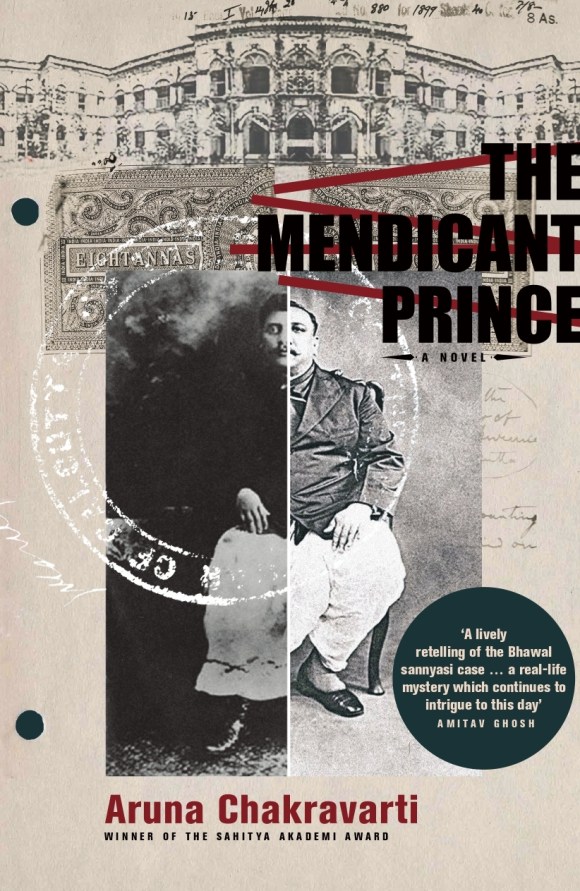
After writing The Mendicant Prince which involved extensive research into the life and times of Prince Ramendranarayan Roy of Bhawal, I didn’t feel up to writing a historical novel again. The work had demanded delving into sociological texts, court records, letters, insurance papers and medical reports. Apart from research, historical fiction also demands a certain amount of field work.
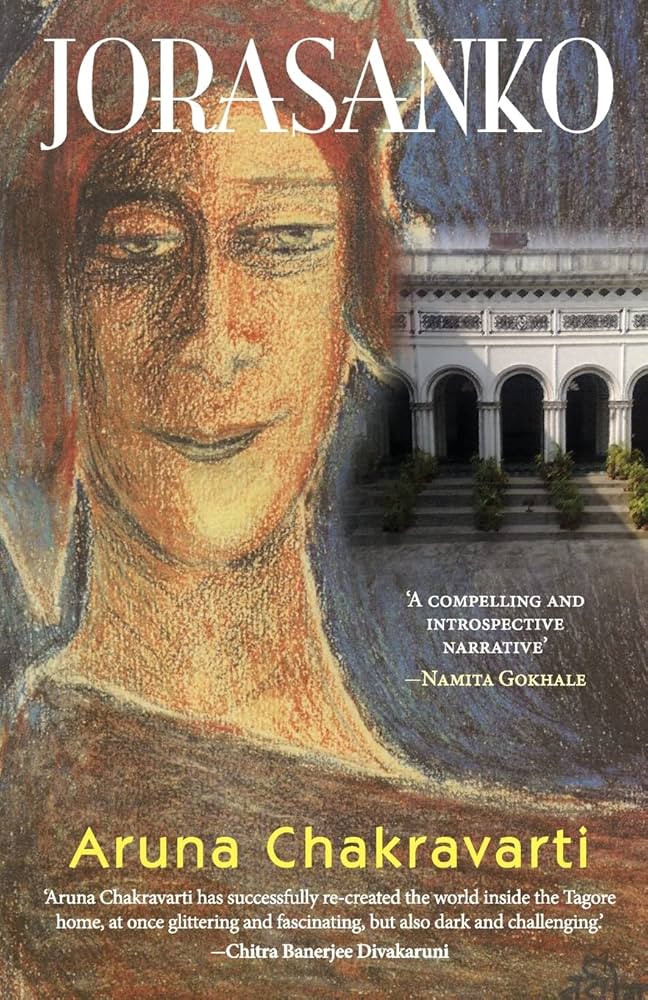
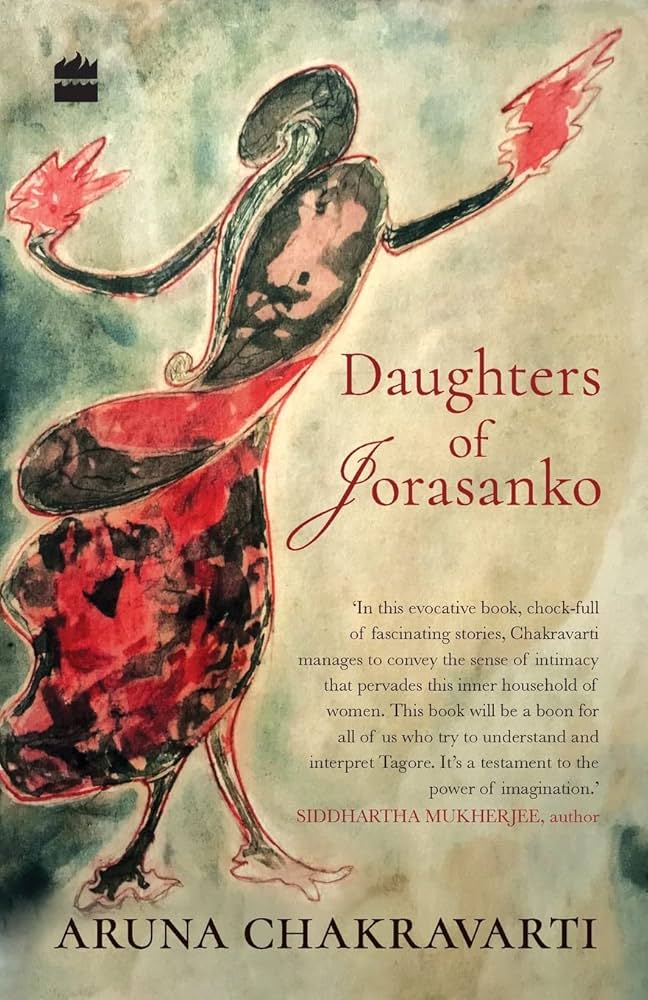
Before writing the Jorasanko novels I visited the Tagore mansion thrice and while writing The Mendicant Prince, I went to Bangladesh to see the royal palace in Bhawal, renamed Gazipur. Though it has been totally neglected, with shopkeepers and squatters having overtaken most of the area, I was able to get some idea of the topography of the palace and its grounds. I saw the lake and the temple (which was locked) and was able to visualise where the halls and galleries and the apartments of the queens and princesses would have stood. All this work was exhausting. So, for a change, I decided to try my hand at short stories which emerge straight from the imagination. And while at it, I decided to break out of the mould of “historical fiction” writer in which I had trapped myself and try a completely new genre.
I wrote the first one on an impulse and found myself quite enjoying the process. I didn’t even think of publishing at that time. The first story led to another and another. When eleven stories had been written I sent the manuscript to three publishers and was surprised when all three accepted it. It was then that I found out that ghost stories were the in-thing. That they were selling well and that publishers were looking out for them. I signed up with Penguin as you know. At one point my editor Moutushi Mukherjee suggested I write another two. Thirteen stories will make it even more spooky, she said. So, I wrote another two.
Would you list these stories as fantasies or fantastical? Or are they stories of personal experience? Please elaborate.
No. They are not born out personal experience. I must confess that I have never seen a ghost in my life. I believe in sixth sense. As a matter of fact, I have acted on my sixth sense on occasions. I have had sudden impulses to do certain things and realised later that if I hadn’t yielded to the impulses, I would have regretted it. But I have had no brush with the supernatural. These stories were sparked off by sudden memories. Something I had read somewhere. Something somebody had told me years ago. A face I had seen in childhood which had stuck in my mind though whose I don’t remember. A conversation overheard which made no sense at the time but which, as an adult, seemed ridden with sinister nuances. A phrase from a book whose title and author’s name I had forgotten. In fact, I didn’t even remember the context from where the phrase had come.
Sudden flashes such as these triggered off the stories. But in the writing, they took on a life and soul of their own. I even feel, sometimes, that the pen took over and they were written by an invisible hand.
Your stories are set, sometimes in real landscapes and sometimes in fictional ones. What kind of research went into creating them? How do you make them so vivid and real?
There wasn’t any immediate research. I needed to look up a few facts, now and then, mostly to be sure of their authenticity. But nothing truly back breaking. The landscapes, both physical and of the mind, were culled from my travels and my reading of both English and Bengali writers over the eight decades of my life. Much of it stayed with me tucked away in some unconscious part of the mind. Although I write in English, you will notice that almost all the stories are about Bengalis. Bengalis living in Delhi, Kolkata, Bihar and the small towns and villages of Bengal. There are Anglo-Indians, Punjabis and Chinese, too among my characters. But having lived in Bengal for generations, they have adopted Bengali customs and a quasi-Bengali way of living. Many of the locales in which, they appear are fictional…gathered from my reading and observation of people from different strands of Bengali life.
You have a story set in China which also has the Chinatown of Kolkata in it. Have you been to China? What was the reason for the choice? Were you influenced by any Chinese writers? How did you visualise the Chinese migrants in Kolkata?
Yes, I have been to China. I visited the cities of Guangzhou, Shanghai and Beijing in 2004. Naturally, I have no personal experience of life as it was lived in the late 18th century which is the period covered in the story ‘The House of Flowers’. For this I had to rely totally on my reading of English authors writing about China like Pearl Buck and Amy Tan. Pearl Buck was a great influence on me while writing this story. It was from her books that I was able to catch the ambience of tea houses and brothels of the period. In depicting the Chinese family who lived in Calcutta in the early 20th century I had to rely on childhood experience, I knew some Chinese girls who had lived for several generations in Calcutta. And my imagination went into full play, of course.
In ‘Grandmother’s Bundle’ you have written about spooks from Bengal. It departs from your other stories in as much as it does not really introduce the supernatural except as a source of folklore. Do you feel it blends with the other narratives in your collection?
Well. It is different from my other stories in certain ways. Firstly, it is three stories rolled into one. Secondly, unlike the others, they are children’s stories. Thirdly, it is the only one that deals with ghosts and other supernatural beings with humour. Lastly, they have been drawn from folklore. I agree that it doesn’t quite blend with the others in this collection. But it is also true that each story in this collection is different from another. There are different time spans. Different locales. Different themes. Characters from different levels of society. That being the case, I think that this story lends variety and another flavour to the collection.
Your stories aren’t like the usual ghost stories one reads. The structure and content seem different. Your comments.
You are right. These stories do not belong to the gothic/horror genre. They are not about vampires, blood sucking bats, severed heads or violence heaped on violence. They are essentially human-interest stories with a supernatural twist at the end. I have taken my cue, you may say, from Coleridge’s demand for a willing suspension of disbelief before reading his poetry. These stories have innocuous beginnings. Two friends sharing an apartment, a boy walking from his village to an unseen destination, a dinner party in an exclusive area of the capital, a marital spat or a telephone call at dawn. Then, a few paragraphs later a subtle hint is dropped startling the reader into a realisation that it is not a simple story of human relationships. That it is headed in another, more sinister direction. Another hint is dropped and another. Then in the final sentence the bomb bursts. The last line is the most important line of the story.
Which is your favourite story? And why?
Just as a mother loves all her children, I love all my stories. But mothers also have favourites and so do I. “The House of Flowers,” “Vendetta,” “Possessed” and “The Necklace” are my favourites. That’s because their themes are unusual and posed a greater challenge. And, perhaps, because I had to work harder on them than on the others.
Are you planning any new books? Exploring any new genres? Any new book we can expect soon?
I always think of a new book even when I am writing the current one. Yes, I am planning to explore yet another genre of writing. But my ideas are nebulous at the moment. Still in a fluid state That being the case I cannot share them with you. All I can say is that the work will be a challenging one and I’m not even sure I’ll be able to see it through. So, we must both wait for some more time
- Girish Ghosh (1844-1912) Actor and Director from Bengal ↩︎
(This review and online interview by email is by Mitali Chakravarty)
.
Click here to read an excerpt from Creeping Shadows.
PLEASE NOTE: ARTICLES CAN ONLY BE REPRODUCED IN OTHER SITES WITH DUE ACKNOWLEDGEMENT TO BORDERLESS JOURNAL
Click here to access the Borderless anthology, Monalisa No Longer Smiles
Click here to access Monalisa No Longer Smiles on Kindle Amazon International
 Borderless