I levitate around my home. My toes barely graze the cold stone floor. Moving one box here, displacing another there, but still not getting any real work done. For I am a sorceress, a descendant from a rare and powerful subspecies of human who knows fearsome magic. Yet still, I cannot part with my piles of odd socks and large frocks. I clasp my slender, bejewelled hands together. That’s it, today I will declutter the castle for only twenty minutes – as that’s what the pros recommend.
There is a friction keeping me from knowing how to start, as too many souls have come and gone from this castle over the centuries. My father passed away grumpily in his bed in the north wing four decades ago. In his chambers, he left behind a husk of a gaming computer, piles of tangled tendril-like cables, a dusty vinyl record turntable and hefty piles of skating and street art magazines. He was bizarrely fascinated with the subculture he observed in mere mortals, one which he called ‘hip and cool’, despite being a gaunt three-hundred-and-forty-two-year-old wizard. He spent his last decades of life locked away in that room playing video games. I only ever witnessed an unearthly rainbow glow and pew-pew sounds from under his door day and night.
Then don’t get me started on my mother. She left behind her lifetime of artsy hobbies. From mosaic tile clippers, to a vinyl design t-shirt press, she had been the crafting queen. I don’t mind the crafting supplies, but other items of hers are more of a dilemma for me to know whether to keep. As a prolific vampiress, she had a tendency to never part with even a single skull belonging to her victims. They’re nostalgic, she used to parrot at me over the dining table. I opened the closet in her room and more than a dozen skulls fell on top of me. Mother, I am not up for dealing with your nostalgia right now!
Yet the worst of it all was my brother. It all happened one morning in the dead of winter, a blizzard was raging outside.
He said: ‘I can’t stand this place anymore!’
I remember his pained green eyes as he pushed open the large iron doors. With nothing but a bag on his side and tattered coat on his back, he left. That was half a century ago. It really worsened my father’s depression, and he never really got over it. I haven’t talked to my brother since then. I had assumed his old room had probably been taken over by clusters of breeding spiders by now. Yet, the one time a draught creaked the door open, I was horrified to see how empty it was — not a single book or a scrap of a poster left on any wall. Just bits of hardened Blu-Tak. Now whenever I pass by his room, I cannot remember the good times me and my spellcasting sibling had. I can only remember the hurt in his eyes when he left, so many moons ago. That memory is the one thing I cannot get rid of.
Decluttering is a challenging task, even for a wise and formidable sorceress such as myself, who can conjure up thunder and lightning with a mere twitch of my finger. It is inherently existential – well – it is for me at least. It makes you think about what legacy you’ll be leaving behind. Despite knowing I will probably live longer than both my mother and father, (both never, never exercised and the latter had a video game addiction, mind you) I feel such dread seize my heart just by looking at the piles. My lifelong research, reduced down to flaky and pitifully unsubstantial yellowy parchment.
I do not have any progeny, at least not yet, so will I leave behind a sorceress’s lifetime of sorry spellbooks that no living soul can decipher? How I wish there was any spell in one of these antediluvian old grimoires, anything to help me shift through these emotions and clutter! The only spell I can conjure up is to magically teleport everything to a storage shed in another continent, but my conscience gets the better of me.
The only living soul in this cold old mansion is me — and well, my greyhound, whose name is Speckles. I dust off my hands, I may not have made much progress today, but there is something I must do. I go into the kitchen to make myself a cup of tea. I then plop down in the loungeroom. Speckles snuggles his delicate pointed snout into my lap, I smile at him, I pick up a loose piece of parchment, dip my pen in ink and begin to write:
Hello dearest brother, how have you been?
Time will sort things out. The skulls in the closet can wait.
Illustration by Vela Noble
Vela Noble is multidisciplinary artist and writer based in Adelaide, Australia. She finished a BA majoring in Creative Writing at Adelaide University. You can see her work at velanoble.com.
.
PLEASE NOTE: ARTICLES CAN ONLY BE REPRODUCED IN OTHER SITES WITH DUE ACKNOWLEDGEMENT TO BORDERLESS JOURNAL
Mr. Williams lived in a town called Vinjamur. He owned several businesses and was well-known for being extremely careful with money. Whether at home or in his shop, he made sure that not even a single rupee was wasted.
One day, Mr. Williams had to go out on some work. Before leaving, he asked his fifteen-year-old son, Raman, to sit in the shop. While Mr. Williams was away, a group of devotees came to the shop asking for donations for the construction of a temple. Raman took Rs 100 from the cash box and gave it to them as charity.
When Mr. Williams returned and heard of Raman’s donation, he became very angry. He made his son sit in front of him and said sternly, “First learn how hard it is to earn money. Only after that should you think of charity. If you do this again, I will not tolerate it.”
Another incident happened sometime later. One day, when Mr. Williams was not at home, a beggar came asking for food. His ten-year-old daughter felt pity for the poor man. She fed him till he was full. She also gave him some rice to take home.
When Mr. Williams came to know about this, he was angry with his daughter as well. He warned her strictly never to do such a thing again.
Mr. Williams’ wife knew her husband very well. She never argued with him about money matters, but she warned the children to be careful and not to go against their father.
A few days later, an old man with an unshaven beard and torn clothes came to Mr. Williams’ shop. He asked the workers about Mr. Williams. Looking at his appearance, the workers assumed he was a beggar. Afraid that their owner would scold them if he saw the man, they asked him to leave at once.
But the old man did not go away. He waited patiently for a long time. After some time, Mr. Williams arrived at the shop. The moment he saw the old man standing there, he recognised him.
Mr. Williams immediately called him inside, made him sit on a chair, and offered him drinking water. When the old man said he was hungry, Mr. Williams arranged food for him. He sat in front of him until he finished eating. Before the old man left, Mr. Williams spoke to him privately and gave him ten thousand rupees.
The workers were stunned. They could not believe that their master—who never spent money easily—had given away such a large amount.
Just then, Raman came to the shop to deliver some things. He saw an unknown person eating in front of his father and, to his shock, saw his father give him a bundle of money. Raman could not believe his eyes.
He went to his father and asked,
“Father, you scolded me for donating just one hundred rupees, and you scolded my sister for giving rice to a beggar. Then how could you give ten thousand rupees to a stranger?”
Mr. Williams smiled and replied,
“He is not a stranger. He is someone I know very well. And he was once a very prosperous man. You don’t need to know anything more.”
Saying this, he returned to his work.
Confused by his father’s words, Raman went home and told his mother everything that had happened. Curious to know the truth, Mrs. Williams came to the shop.
“I know you never give anything away for free,” she said. “You ask for accounts even if ten rupees are spent. So, I cannot believe that you gave ten thousand rupees to a stranger. Who is he?”
Mr. Williams sighed and said,
“So, this matter has reached you as well? He is not a stranger. You know him very well. Do you remember how, soon after our marriage, our relatives cheated us and threw us out? We were on the streets with small children and not a single rupee in hand.”
“Yes, I remember,” she said softly.
“At that time,” continued Mr. Williams, “one great man gave us shelter. He fed us and even gave me some money to start a business. Do you remember him?”
“Yes,” she replied. “His name was Parandham. I can never forget his kindness.”
“The man who came today was Parandham,” Mr. Williams said. “His sons and daughters-in-law took away all his property and threw him out. He said his wife needs medical treatment and he needed money. The foundation of our success today was laid with the help he gave us back then. Today, I got the chance to repay that debt of gratitude.”
Mrs. Williams was deeply moved.
“Has he fallen into such trouble? If he comes again, please bring him home. We will look after him and feed him for as many days as he wants,” she said.
Mr. Williams agreed.
Turning to his son, who was watching everything with wonder, Mr. Williams said, “We have reached this position only after swallowing many hardships and humiliations. Every penny we earned came through hard work. That is why I know the true value of money. When we have nothing, we cannot beg anyone with an outstretched hand. So, when we have money, it must be spent carefully and thoughtfully. I scolded you earlier because you are still too young to understand charity. I did not want you to suffer the hardships we once faced.”
Raman finally understood. He realised that parents always think of their children’s welfare, and that every action of his father had a deeper meaning behind it. From that day on, he learned not to misunderstand his father’s actions, but to try to understand them.
Naramsetti Umamaheswararao has written more than a thousand stories, songs, and novels for children over 42 years. he has published 32 books. His novel, Anandalokam, received the Central Sahitya Akademi Award for children’s literature. He has received numerous awards and honours, including the Andhra Pradesh Government’s Distinguished Telugu Language Award and the Pratibha Award from Potti Sreeramulu Telugu University. He established the Naramshetty Children’s Literature Foundation and has been actively promoting children’s literature as its president.
.
PLEASE NOTE: ARTICLES CAN ONLY BE REPRODUCED IN OTHER SITES WITH DUE ACKNOWLEDGEMENT TO BORDERLESS JOURNAL
“My gang members are lookin’ for a score and think there’s money inside a storefront full of old pianos.”
“How’s your gang going to steel a store full of pianos?”
“Those are Steinway pianos and handmade from the finest woods, metal, and copper. We’ll bust ‘em apart and sell the salvaged metal and wood. Get your ass over there and scope out the inside of the store for me.”
“You have until the end of the week or I’m throwin’ you out on the street.”
*
I never expected to find friendship in the most unlikely place, a dusty old piano store on Whittier Boulevard in an East Los Angeles barrio[1].
I stepped inside, greeted by the musty scent of wood and rusting metal. The store was quiet, almost sacred, and I was drawn to a black grand piano in the corner. As I pressed the keys, their voices rang out clear, strong, and unexpectedly comforting.
Suddenly, a head popped up from behind the piano.
“What are you doing here?”
“I just came into look around, Sir.”
“I’m Saul Bernstein, the store’s owner and a piano tuner by trade.”
“I’m Lupe Jimenez.”
“Do you play the piano?”
“No, but I’m curious about all these pianos. Do you sell them?”
“I run an orphanage for Steinways. These orphans are used, broken, abused, and seldom sell. They have souls and require a home just like people.”
“Where do they come from?”
“Some were rescued from burnt out homes, piano teachers with arthritic fingers who could no longer teach, and some from great performers who passed away. I gave them all a name. The gold grand Madame is ‘Goldie’. ’Red’ was owned by a famous singer songwriter who used it in his longstanding Las Vegas act. The others are called ‘Blackie’, ‘Ginger’, ‘Mira’ and ‘Rose’.”
Saul showed me the intricate insides of the Steinway, explaining how each string and key were crafted from beautiful wood and metals. The Steinways, he said, had personalities and stories including joy and tragedy just like lives. I watched as Saul spoke to them, dusted their keys, and shared memories of their former owners. In those moments, the store felt less like a place of business and more like a House of Worship.
Saul beckoned me over to “Goldie”, his hands steady as he opened the lid to reveal the intricate strings and hammers inside.
“Tuning a piano isn’t just about tightening strings. It’s about listening to what each note wants to say.” He pressed the key, and a slightly sour note rang out.
“Hear that? It’s off. Now, watch.”
He placed the tuning hammer on the pin and gently adjusted it, his ear close to the strings.
“You don’t force it. You coax it, like you’re persuading an old friend to sing again.”
He invited me to try. My hands trembled as I fitted the hammer onto the pin. Saul guided my fingers, showing me how to turn just enough, then play the note again.
“Now, listen for the waves resemble a beating sound. When the waves slow down and disappear, you’re in tune.”
I listened, adjusted, and played the note. The sound grew clearer, steadier. Saul smiled. “That’s it…You’re tuning not just the piano, but learning patience, care, and respect for the instrument.”
Saul became my mentor and friend. He taught me how to tune pianos, how to listen to the subtle differences in sound, and how to care for each instrument as if it were alive.
His passion was contagious, and I found myself returning day after day, eager to learn more.
*
My uncle pressed me for information, convinced the Steinways were worth a fortune if stripped for their materials. Torn between loyalty to my family and my growing affection for Saul and his Steinways, I invented stories to delay any plans for theft. Each day, the risk grew, but so did my resolve to protect the store and the friendship I’d found there.
The bell rang above the doorway one day and an ominous looking man with arms of steel, full of tattoos, wearing a red cap embroidered with “Ace” approached the counter. I witnessed that look of desperation in a man’s face many times before and feared for Saul’s safety.
“Where’s Saul?”
“Saul is over here tuning ‘Blackie’. How may I help you?”
“I’m Ace Menendez. You sold me a piano on an installment plan for my little girl.”
“I seem to remember you and a friend came in a big truck and picked up the piano. Is the instrument out of tune?”
“No, Sir. I’ve come to apologize for being three payments behind and ask for more time to bring the account current. My trucking business hauling shipping containers is suffering due to the strike at the port, and all the truckers in the neighborhood are struggling financially. It would break my daughter’s heart if you came to repossess the piano. My wife and I fear that without the discipline and love for the piano; she’ll fall victim to the crime elements in our poor neighbourhood.”
“When you’re ready to settle your account, just stop by.”
“Thank you, Mister Berstein. You have a big heart.”
“Tell that to my family wanting me to sell this joint. Vaya con Dio’s, Ace.”
I came to learn, Saul, ever generous, offered installment plans and low interest rates, caring more about the music and joy the Steinways brought than about profit.
He lived a sparse existence upstairs with only a cot, hotplate, while surviving on canned food, crackers, fruit, and his love for the Steinways sustained him.
Saul shared stories of the Steinways he tuned over the years, each with its own history and quirks.
“Every piano has a soul. And every tuner leaves a little piece of themselves behind.”
With each lesson, I grew more confident not just in tuning, but of myself. The shop became a place of transformation, where the music we coaxed from the old Steinways echoed the changes happening within me.
Saul watched as I gripped the tuning hammer, my knuckles white with concentration. I turned the pin, but the note wavered, stubbornly out of tune. Frustrated, I pressed the key again, harder this time, as if force would tune it into harmony.
“You’re fighting the piano. It’s not about strength. It’s about finesse.”
He took the hammer from me and demonstrated his movements slowly and deliberately.
“Hear those waves? That’s the sound of disagreement between the strings.Your job isn’t to overpower them, but to guide them into agreement.”
He handed the hammer back.
“Try again, but this time, breathe. Turn the pin just a hair, then listen. Let the sound tell you what it needs.”
I followed his instructions, turning the pin more carefully, my ear tuned to the subtle changes. The waves slowed, then faded. The note rang true.
“Remember, tuning a piano is a conversation, not a battle. If you listen, the piano will tell you when it’s ready.”
Saul wasn’t just teaching me about Steinways. He was teaching me patience, respect, and how to listen, not just to music, but to the world around me.
“Let’s tune ‘Mira’ who I rescued from a closed piano bar. She was soaked in decades of spilled booze and witness to trashy cocktail bar conversations.”
Saul watched as I struggled with the tuning hammer, frustration tightening my grip. The note wavered, refusing to settle. He gently placed his hand over mine, stopping me.
He took the hammer and demonstrated, his movements calm and precise. “Tuning a piano is like tending a garden. You can’t yank the weeds or drown the flowers. You have to be patient, gentle always giving each note what it needs to grow strong and true.”
He struck a key, letting the sound linger. “If you rush, you’ll miss the moment when the music is ready to bloom. But if you listen, really listen, you’ll hear when everything comes into harmony.”
He handed the hammer back to me. “This time, treat each string like a seed you’re coaxing to life.”
I breathed, relaxed my grip, and turned the pin with care. The waves in the sound slowed, then faded. The note rang clear and bright.
Saul smiled. “With patience and respect, you help the piano find its voice and your own along the way. Life is much the same. Sometimes, you can’t force things to happen.You have to listen to what life is telling you, make small adjustments, and trust that, with time, things will come into tune.”
I realized Saul wasn’t just teaching me about tuning a piano. Saul taught me how to live a life of harmony.
*
The next time my uncle pressed me for information about the store, I remembered Saul’s advice.“You have to listen to what life is telling you, make small adjustments, and trust that, with time, things will come into tune.”
I paused and listened to my conscience. I could make small, careful choices to protect what mattered. I lied telling my uncle that the store was under CCTV surveillance including a silent alarm system, a warning that steered him away without confrontation.
*
When I struggled at public school, frustrated by lessons that never seemed to stick, I recalled Saul’s metaphor. I stopped blaming myself for not learning as quickly as others. Instead, I adjusted my approach, asking for help, taking breaks, and celebrating small victories. Gradually, things began to make sense, and my confidence grew. I was told I could earn a scholarship to college to study music. I wanted to share the good news with Saul.
After school, I ran to the store and found Saul on his knees gripping his chest. I phoned for help. The paramedics told me Saul suffered a heart attack and invited me to ride to the emergency room with them. Saul gripped my hand and smiled. “I’m as tough as piano strings. I keep a card inside my wallet with my family emergency contacts for the hospital.Remember what I told you, ‘…every tuner leaves a little piece of themselves behind.’I hope a little piece of me is left behind inside you, Lupe.”
The doctor informed me Saul passed away, and the family was on its way. He handed me the keys to the store saying Saul had instructed him to place them in my possession.
Saul took a big piece of me with him to the beyond and the fate of the Steinways hung in the balance. I faced a chorus of doubts and obstacles, remembering,“Don’t force, listen.”
*
I reached out to the community, listened to their ideas, and coordinated efforts with patience and care. I was told to visit the neighborhood parish and speak with the priest who took me to a school for developmentally disabled children.
It was a room of beaten up, out-of-tune, upright pianos with eager students stridently following the teacher’s instructions. Others simply tried their best, pounding on the keys.
“Piano music is a miracle and enables these learning-disabled children to find joy and a sense of accomplishment in playing the piano. I’ll make inquiries with fellow priests, and we’ll pray for a home for Saul’s Steinways. The logistics of moving those heavy Steinways may be insurmountable.”
I learned to trust the process, and to believe that, with time and care, even the most troublesome moments could come into harmony like Saul’s garden metaphor.
*
Night had fallen over Whittier Boulevard. The streetlights flickering outside the dusty windows of the piano store. I stood inside the store, surrounded by the silent witnesses of my transformation, Saul’s beloved Steinways.
My uncle’s voice echoed in my mind, his demand clear:
“Tonight is the night!”
The gang was waiting. All I had to do was unlock the door and let them in.
I gripped the tuning hammer Saul had given me, its weight familiar and comforting. Memories flooded back about Saul’s gentle guidance, his stories, the metaphor he’d shared: “Tuning a piano is like tuning your life. You can’t force harmony; you have to listen, make small adjustments, and trust that, with patience, things will come into tune.”
My heart pounded. I could betray Saul’s legacy, give in to fear and loyalty to my uncle, or I could honour the music, the lessons, and the hope these Steinways represented.
I closed my eyes and listened to the notes from each piano signaling my decision. I imagined more children, their faces alight with joy as they played the rescued Steinways. I remembered Saul’s faith in me, his belief that I could choose a different path.
With trembling hands, I locked the door from the inside and dialed the police. As sirens approached, I stood by the Steinways, ready to face the consequences of my choice.
The gang sped away, but I remained, surrounded by the instruments that had given me a second chance. In that moment, I understood Saul’s lesson fully, “Sometimes, the hardest notes to tune are the ones inside us. But with patience, courage, and a willingness to listen, even the most discordant life can find its harmony.”
*
Without Saul, the piano store no longer felt like a happy orphanage for rescued Steinways but a dark, soulless, graveyard. His family, overwhelmed by grief and unable to afford to move the Steinways, decided to dismantle them for scrap. The thought of those beautiful instruments, each with its own story, each witness to Saul’s kindness being destroyed was unbearable.
Desperate, I remembered Saul’s lesson: “You can’t force harmony; you have to listen, make small adjustments, and trust that, with patience, things will come into tune.”
I reached out again to the community and anyone who might care. The parish priest had found a network of schools inside Mexico in need of pianos. Word spread, and soon a group of neighbourhood truckers led by Ace volunteered their time and their trucks. The plan was bold: we would transport the Steinways to poor schools in Mexico, where children with learning disabilities and limited resources could discover the joy of the Steinways.
*
On the moving day, a procession of battered trucks lined up outside the store. Men and women from the neighbourhood, some who had never set foot in the shop before, worked together to carefully load each piano. The journey was long and uncertain, but the spirit of Saul’s generosity guided us.
The Steinways found new homes in schools where children’s laughter and music filled the halls. I watched as students, many barely able to speak, some communicating only in sign language, sat at the old Steinways and played with wonder and delight. The instruments, once gathering dust, now sang again.
After betraying my uncle and the gang, I couldn’t return home. The priest arranged for me to move into a parochial school with boarding facilities run by a nunnery.
*
Years passed. I grew up carrying Saul’s lessons with me. Eventually, I returned to one of those schools, this time as a teacher. On my first day, I walked into a classroom filled with the very Steinways we had rescued. Their familiar shapes and worn keys greeted me like old friends.
“Hello, class. I’m Ms. Jimenez, your piano teacher. I was once a young person like you sitting in front of a grand piano called a Steinway. Don’t fear it’s size or complexity. Make it your friend, trust it, and it will take you on a journey into happiness you can’t yet realise.”
I realised that Saul’s legacy lived on inside me, not just in the music, but in every child who found their voice through these instruments. The harmony I had sought for so long was engrained inside my soul and spilled into the lives of those who needed it most.
And in the quiet moments, when the sun set over the schoolyard and the last notes faded, I would whisper a thank you to Saul, knowing that, together, we had tuned not just Steinways, but futures.
“With patience and respect, you help not just a piano, but your own life, find its voice.”
Jonathan B Ferrini has published over eighty stories and poems. A partial collection of his stories has been included in Heart’s Without Sleeves: Twenty-Three Stories available at Amazon. Jonathan hosts a weekly podcast about film, television, and music, titled “The Razor’s Ink Podcast with Jonathan Ferrini”. He received his MFA in motion picture and television production from UCLA and resides in San Diego, California.
.
PLEASE NOTE: ARTICLES CAN ONLY BE REPRODUCED IN OTHER SITES WITH DUE ACKNOWLEDGEMENT TO BORDERLESS JOURNAL
Mr. Foley’s sister, Gin Thompson, was somewhat taken aback when the mail person arrived on the Wednesday after New Year’s with a suspicious looking package; suspicious because it was both heavy and oblong; a dimension heretofore not observed by her, at least not pertaining to a package.
“Mercy!” she yelled upon twisting the last bit of brown paper away from its contents.
Mr. Thompson stood beside his wife as she read the note addressed to her from St. Paul, Minnesota. They lived in Sioux City, Iowa.
“This is obviously from your brother Jack,” Harold Thompson said, grinning due to the curiosity aroused because Jack had been out of touch for years.
His wife didn’t find her husband’s big grin amusing. She usually knew what he was thinking. Yet, he was right. Jack hadn’t contacted Gin, his only sibling, in coming on fifteen years.
“It’s not FROM Jack!” Gin screamed. “It IS Jack!”
“What the hell?” was all Harold could find to say. To ask. Whatever.
Gin plopped down in Harold’s usual chair holding the ominous quart jar in both hands. “Gee whiz,” was all she could muster, and then a quieter, “Damn.”
“I had so many things I wanted to ask him,” she said.
“I wanted to pick his brain a little too,” Harold said, trying not to smile. “I guess that opens up a can of worms now,” he continued, still pretending a serious demeanor.
“Shut up, Harold!” Gin insisted.
Still, the couple agreed that what Jack Foley did, sending himself to his sister in such an unadulterated, absurd and impossible form with only a brief note was, in itself, unthinkable, untenable, and even morose.
They didn’t use those exact words, but that’s what they thought and Gin did say: “He’s made a mockery of my life.”
After all, Jack Foley had known that ever since his older sister turned sixteen, she’d adored canning. He was present in the Foley home attending grade school when Gin enthusiastically learned to can and pickle cucumbers, beets, zucchini, radishes, and okra. There were also jars of tomatoes and a host of other vegetables.
This very day in the Thompson basement assorted canned veggies were lined up with care on grease papered shelves.
But what should I do with this jar of mortal remains? Gin wondered.
She suffered, perhaps more than was necessary, over the prospect of Jack’s ashes getting mixed up with the onions which were the same color, though of a coarser texture, of course; dear nostalgic memories mixing with fatigued, cooked vegetables in a pickled sauce.
“What do you make of it?” Harold asked with a ruddy faced naivete that deserved scolding, but she didn’t have the stamina for it at that moment.
His question seemed as rottenly absurd as the jar full of what had been her brother for over 59 years. She pondered over how she was to remember him now. The phrase: Jack the vagabond’s last stop occurred to her but was quickly abandoned.
Jack was once an itinerant deli worker. A pill popper of barbiturates; yet he’d probably saved the life of a little girl named Betsy Sears by taking her to Hobby ’N Crafts every Friday so she could buy supplies and paint her way past the abuse she was dealing with at home until she was old enough to go out on her own. Ten years of going to the craft market, reading the ads while Betsy shopped.
He’d desperately wanted to donate one of his corneas to the Eye Bank but they’d insisted on a pair; something he couldn’t bring himself to sacrifice. Still, it was a sweet thought, their mother always said.
“And what would Mama think of Jack passing this way?” Gin asked, conjuring a gnawing question that Harold certainly couldn’t answer.
“What way?” Harold asked. “We know nothing of how the fellow actually died; if he were ill for a long time or hit by a bus. We just don’t know.”
“I guess I mean, what would she think of him passing himself to me like this?”
Gin confessed that she should have called her brother more often, not understanding the true nature of her failure; yet, realising deep down that there must have been a time when she dropped the ball, when she might have kept it surging in the air until Jack could have caught it, might have returned it, and kept the momentum going. She’d never been one to send birthday cards, or even Christmas cards. She thought of that too.
“You did all you could,” Harold soothed.
Everyone who says that phase knows it’s a lie. Still, as Harold saw it, soothing was a husband’s duty in such a situation, and he was merely doing his duty. He certainly felt no guilt in regard to the strange demise of his brother-in-law — no guilt or remorse whatsoever.
His only hidden concern was that Gin would somehow grow less fond of canning. This might affect his daily menu as it was presently full of pickled relish and mango chutney, condiments he favored almost as much as he loved a good cut of beef.
And Harold was right to worry, for it did take Gin a few weeks to bounce back, but canning was in her nature. Her mother had always told her that, and it was true.
She would store Jack on the bottom shelf, far to the left of the vegetables, and that would be that.
.
Mary Ellen Campagna taught Creative Writing and Essay at Virginia Western Community College after receiving her Master’s in Liberal Arts from Hollins University in Virginia. She now writes full-time from Upstate New York. She was recently published in Wild Sound Festival/Experimental Stories, Half and One Literary Magazine, and the Hudson Valley Writers’ Guild.
.
PLEASE NOTE: ARTICLES CAN ONLY BE REPRODUCED IN OTHER SITES WITH DUE ACKNOWLEDGEMENT TO BORDERLESS JOURNAL
After nearly twenty years, perhaps more, I bumped into Sadhu Kaka[1] again.
That meeting—sudden, strange—pulled me back. Back to a time before Google was born. When the world still moved at its own unhurried pace, unshackled by the glow of mobile screens; when days stretched longer; when people were simply, quietly human.
That morning, I sat at the bus stop with my wife and daughter. The air was still; the sunlight tender. We were on our way back to Bhubaneswar when he saw me—came running, shouting my name, and clasped my hands tightly. I felt the roughness of his palms, the faint tremor of age in his grip. A smile lingered on his lips—gentle, unguarded, like the soft fragrance of fresh jasmine. And yet, no matter how hard I tried, I could not bring myself to smile. Something within me had gone still, as if time itself had forgotten to move.
I looked at my wife, bewildered and uncertain. My guess had been right. By then, her face had set like stone, her eyes dulled by silence. She looked at me once, then at him, and turned away. A grimace flickered across her lips, carrying the sting of quiet satire. She stepped aside and stood there wordlessly, her gaze fixed on the road. Cars passed in a slow rhythm, their noise distant and unreal, as though the world around me had quietly lowered its volume.
I wasn’t surprised by my wife’s reaction. She had always flinched whenever I surrendered to the weakness of my heart. I knew my failing well, and what rose in me was not anger but a slow, lingering guilt. Men like Sadhu Kaka have long taken advantage of the tenderness in me, and each time, it was my family that carried the scar. Once, in a moment of misguided affection—or perhaps a surge of foolish tenderness—I had pushed my daughter into danger for his sake, and now, it was my turn to bleed before the world—this time, for the same fragile sentiment that refused to die, the one I still hold for my childhood friend, Jagabandhu.
There was a time when Jagabandhu and I sat side by side in class—sharing the same bench, the same cracked slate, the same fragile dreams that fluttered like paper kites in the dusty afternoon air.
Then one day, poverty came and sat beside him—silent, patient, and unyielding. From that day on, his place in the classroom remained empty. He began walking to the fields with his father instead, turning the soil where once he had turned the pages. The spade and the hoe became his prayer, the sun his only witness.
I went on, class after class, until the village felt too small for my growing dreams. I left, but he stayed behind, as though the earth itself had claimed him, unwilling to set him free.
The words came unbidden as I walked to the bus stop. Without intending to, I turned down the narrow lane that led to Jagabandhu’s house.
He was sitting beneath the guava tree in his courtyard, the same spot where I had seen him years ago. The tree had grown denser, its shadow trembling on the cracked earth. A brown cow stood nearby, chewing its cud in slow, unhurried rhythm.
When I saw Jagabandhu, I hesitated. It took a moment to recognise him. His face had grown thinner, his eyes sunken, as if time had quietly worked its way through him. His life, I thought, could have belonged to one of those tragic stories that never make it to paper.
The years had pressed heavily on him. The weight of poverty had bent his frame. Life, for him, had withered into a cruel jest of fate—an endless hum from some tired, indifferent machine. His wife lay ill inside the house. Last year, his eldest daughter had died. The papers called it suicide, but Jagabandhu whispered that her in-laws had murdered her. Three unmarried daughters still lived with him, and he carried their future like a stone in his chest. At night, he said, a dull pain rose from his stomach and stayed there until morning.
My eyes welled with tears the moment I heard of Jagabandhu’s plight. I have always been an emotional soul; sorrow, whether on screen or stage, seeps into me until I lose sense of where the story ends and my own ache begins. But this was no performance. This was the truth of a man’s suffering, and I was only a witness, powerless to soften his suffering.
A heaviness gathered in my chest. I laid my hand upon Jagabandhu’s shoulder. A long, tremulous sigh slipped out of me, as though my heart itself had grown tired of carrying sorrow.
“Give me five thousand rupees,” I said to my wife.
Startled, she looked up. Her eyes widened—half fear, half disbelief. I ignored her and pressed on, my voice firm. “Didn’t you hear what I said?”
For a moment, a spark of rebellion flared in her eyes, but she held it back. Wordlessly, she opened her purse. Her fingers trembled. She drew out a bundle of hundred-rupee notes and placed it in my hand as though it weighed a mountain.
I passed the money to Jagabandhu and whispered a silent prayer to Lord Jagannath. Not for fortune, but for mercy. Then I turned away and walked toward the bus stop, leaving him behind with his burden of sorrow.
The road stretched empty; my footsteps sounded hollow. It felt as if every sound within me had fallen still—as though the earth itself had grown quieter than it should be. I seemed to sink into a darkness so deep that I had not known it existed within me.
How does Jagabandhu live beneath such sorrow? How does he bear a life so heavy? Is what he endures truly a life—or a curse disguised in the clothes of living?
If I were in his place…
No. My body trembled. I tried to imagine it, but I could not. It was not merely difficult—it was impossible, like trying to build a ladder that reaches heaven.
Just as I was making a futile attempt to step into Jagabandhu’s shoes, and failing all the same, my wife’s voice drifted through the silence.
“You gave the last note to charity. Do you have money for the bus fare?”
I snapped out of my thoughts and asked, “Why? What about the money I gave you the day we came to the village?”
As though she had already anticipated my question, she quietly handed me a notebook where every expense was recorded, down to the last coin.
“The money you gave your friend was the last you ever gave me,” she said. “Now you’ll have to take care of the bus fare yourself.”
It was as if a cold hand had struck me awake. I stepped out of my daze into the harsh glare of truth: I was penniless. I didn’t even have enough to buy the bus tickets.
What madness drove me to Jagabandhu’s house? Why had I stopped there on my way to the bus stop?
He is my friend, yes—but that doesn’t mean I must lose my head every time I think of him. More than anything, why had that sudden tide of emotion risen in me the moment I saw him?
It would have been different if I’d been alone. But I wasn’t. My wife and daughter were there, silent witnesses to my grand stupidity. How could I tell the bus conductor, without shame, “Brother, I have not a paisa left. Take us to Bhubaneswar for nothing”?
My mind went blank. Darkness pressed close, thick and suffocating. I wished I could slap myself. And if anyone asked why, I’d tell them plainly: because I earned it.
Sadhu Kaka broke my trance. “Are you disturbed?” he asked gently. “Your wife doesn’t seem well. Has there been some disagreement between the two of you?”
I forced a smile. A thin, artificial smile.
I wanted to tell him, Life isn’t as simple as you think, Sadhu Kaka. You, who have stepped away from the world, can never truly understand it.
I studied, loved, built a home, became a father—and soon, I’ll be the one giving my daughter’s hand away. And yet, I still wonder if I’ve ever truly grasped the delicate mathematics of living.
If I had, would I, once again ensnared by emotion, have placed my last bit of money in Jagabandhu’s hands today—just as I did twenty years ago, when my daughter burned with fever and I gave you the money meant for her medicine?
I still remember it clearly: my daughter’s asthma had flared again after days of fever. The doctor had ordered an urgent injection, and I set out in haste to buy it.
Sadhu Kaka caught me in the traffic. He ran to me, gasping, and gripped my arm.
“Jayant, disaster has struck. I must leave for the village right now, but my bag is gone. Lend me some money. I’ll send you a money order the moment I reach home.”
I opened my wallet, not even sure why. There were three thousand rupees inside. The instant his eyes fell on them, he said, “That will do. Don’t worry, I’ll return it as soon as I reach the village.”
Before I could protest, he tore the notes from my hand and disappeared onto a bus.
I went back home with nothing. No medicine, no words to explain. My daughter’s condition worsened that night, and by morning she was in the ICU.
That morning never left me. Even now, the sound of an ambulance makes my chest tighten.
Twenty years have gone by since then.
And now, Sadhu Kaka again, after twenty long years.
I wanted to cry out, to shout until my voice broke. I wanted to grab Sadhu Kaka by the shoulders and plead:
“I desperately need that money today, Sadhu Kaka. Otherwise, the bus conductor will humiliate me in front of my wife and daughter. If only you could return what I gave you twenty years ago, it would save me now.”
But I said nothing. His vacant eyes, his frail face, left no space for words.
Long ago, he had loved someone. She betrayed him, and he never recovered. He lived only as long as duty required—until his parents were gone. Then he simply let the world slip past.
People say he has no place to call his own. No one knows what he does or where he lives. How could I expect anything from a man who has already abandoned everything, even himself?
The bus pulled in at the stop. My wife caught our daughter by the hand and climbed aboard. I loosened my grip on Sadhu Kaka’s hand and turned to follow them. But before I could reach the door, he ran after me. With trembling fingers, he straightened my collar and smoothed the stray hair from my forehead. Perhaps he wished to speak, but no words came.
For an instant, I faltered, my mind adrift. His face glowed before me like that of the Lord Buddha at the Peace Pagoda in Dhauli—calm, compassionate. Then I turned away in revulsion. I’ve always been vulnerable to such people. Who would help me now? Sadhu Kaka, or Jagabandhu?
My face hardened in defiance. I pushed him aside, climbed into the bus, and sank onto the three-seater beside my wife. My eyes closed. Inside me, it felt as though the cyclone of ninety-nine was still raging.
Ah, why does this keep happening to me? Why do I remain a slave to my own emotions? Even after stumbling into trouble time and again, why can’t I understand that charity is good—but never at the cost of losing yourself?
I don’t know when I drifted into sleep. A soft touch pulled me back. I opened my eyes. The bus conductor stood before me.
Oh my God!
Startled, I cried out silently. Sweat broke across my skin; the ground seemed to give way beneath my feet. My blood turned cold. I saw my wife and daughter staring at me, their faces pale with fear.
“Mr. Jayant, right?” the bus conductor said, smiling. “Here—your ticket to Bhubaneswar. And three thousand rupees.”
I looked up, uncertain I had heard him correctly.
A ticket… money… what was all this?
The bus conductor’s smile lingered.
“Sadhu Kaka bought the tickets for you,” he said. “He told me to give you the money as well. He was afraid you might refuse if he tried to hand it to you himself.”
So, this time in the crowded market place, both my wife and I smiled and looked with contrition at him. Before we could speak, he smiled and said, “Stay well!” Then he disappeared.
[1]Kaka means “uncle” and is often used in Odia as a respectful form of address for an elderly man. Thus, Sadhu Kaka may be understood as “Uncle Sadhu.”
Rajendra Kumar Roul is an acclaimed bilingual fiction writer. A professional feature journalist, he has written more than a hundred short stories, over a thousand feature articles for Odia daily newspapers, two novels and several plays for the stage.
.
PLEASE NOTE: ARTICLES CAN ONLY BE REPRODUCED IN OTHER SITES WITH DUE ACKNOWLEDGEMENT TO BORDERLESS JOURNAL
It’s twelve o’clock on one of those autumnal spring days. The clouds hang expectantly, waiting to pour their copious contents on unsuspecting recipients; gone are the mare’s tails of the morning’s optimistic outlook. Unaware of the drama above, small children are playing in the enclosed space marked for the younger generations and their mums, one moment laughing, the next moment mopping skinned knees and bumped heads where the children’s end of the world cries are calmed not by nuclear disarmament but a well-placed wet wipe.
It’s twelve o’clock and Harry turns up for work. His metal grey dank and weary coat covers a series of layers of varying shades of dirty brown garments, thankfully mostly hidden from view. His wild and far-flung white hair frames a moth-eaten face, pockmarked and gnarled like tree bark. The hair at the crown of his head has long gone and is replaced by a scarred and spotted pate which it seems has witnessed much violence.
It’s a seasonal thing for me and Harry. Spring rekindles the relationship we’ve never had. I’ve noticed over the past three years that he is fading. The walk has become a shuffle, and every movement is considered carefully.
A few passers-by acknowledge his existence, but most avoid his gaze and he mindlessly watches them hurry past. A busy, well-turned-out lady stops and gives Harry a sandwich. He acknowledges the gift and pushes the contents of the cardboard container into his mouth in one go. The lady’s face is hidden from view, but I imagine there is a look of scorn aimed Harry’s way.
Cheek’s bulging, Harry moves between bins. Not much there yet, he’ll wait until the hour’s up and people with eyes bigger than their bellies will be ditching excess produce. He comes my way and slowly stops in front of me. I take out the extra tuna sandwiches I bought and offer them in his direction. He takes them and nods. He repeats the process of putting a whole sandwich into his mouth at once. The other he pockets for now.
“Any change?” He splutters as pieces of half chewed bread sprinkle the floor.
“No Harry, I don’t do money, you know that.”
He’ll get tired soon and rest. He won’t have any trouble getting a seat. If the benches are full, he merely stops in front of one and stares intently at an individual. This is Old Harry’s Game. It’s not long before they remove themselves. Then within a minute, he will have the bench to himself. If this fails, he just conspicuously starts scratching his crotch. Sure enough, in a wink of an eye Harry is laid out flat on the bench and the former occupants scattered around the park. However, today, he lands on my bench, with a thump.
“You can scratch your balls all you like Harry, I’m not moving.”
Harry reaches down and lifts his left trouser leg to reveal a large patch of red and yellow skin. He looks up at me and his face breaks from the usual inscrutable pose to one of pain and panic.
“I think it’s infected.” And just like that, Harry is no longer the surly tramp that inhabits my lunch spot, but someone in need.
“Do you want my help?” Harry nods.
Fifty minutes later myself and Harry are ensconced in the back of an ambulance. The ambulanceman asked Harry a few questions and I find out more in thirty seconds than I have in the last three years about Harry the tramp. He’s Harry Denton and he’s been on the street for ten years. He’s sixty-two, has one son somewhere, but he hadn’t seen him for a long time.
Thankfully St Andrew’s hospital was quiet for a change on that Tuesday morning. Doctor Sukhra got Harry to lie down. She was diminutive and ordered, and Harry didn’t argue. She seemed immune to the smell that emanated from her patient and I’m guessing he wasn’t an isolated case of ‘Homeless man turns up at Accident and Emergency’.
“Are you a relation?”
“I’m Gareth, A friend…sort of.”
“Now Mr Denton tell me all about this wound.”
It turns out he’d had it for weeks, cut it getting through some wire fencing. She attempted to cut the trousers, but Harry wouldn’t have it, so he rolled the leg up.
“Well, that’s one of the best examples of advanced gangrenous infection I’ve seen. I’m going to call Mr Archer down to look at it. He may be able to save that leg by treating the infection with antibiotics. You’ve left things late sir.”
The next few days I visited Harry. We didn’t talk really, there was no bonding as such, and I mostly ended up playing on my phone. Eventually, Mr Archer came around and broke the news that I’m pretty sure Harry didn’t want to hear.
“Right, Mr Denton. Unfortunately treating that leg hasn’t worked and if you don’t want to die from that infection, we are going to have to amputate that leg just below the knee. You’re damned lucky the infection hasn’t spread further.”
I think my lasting memory from that moment was Harry’s silence. There was a sigh and the shake of a head, but otherwise nothing. The operation would take place on Tuesday, at one o’clock.
“I’ll be back on Tuesday evening,” I assured Harry. It seemed not to register, and I left the hospital once again not sure if I had visited anybody. It was a fraught couple of days, and I was annoyed that my neat and tidy life had been taken over by a tramp.
Monday finally crawled into Tuesday, and at five o’clock I left my desk and headed to St Andrew’s. I picked up some Lucozade from the hospital shop, which somehow seemed little compensation to someone who had just had his leg cut off. I stood outside the ward for a bit, taking longer than usual to apply the hand gel and eventually with a conscious deep breath I went in. I got to Harry’s bed and stood there quizzically. There was a stranger lying in it. I checked I’d come to the right cubicle as they pretty much all look the same, and sure enough this was the correct one. I turned to the nursing station. Perhaps they had moved Harry to another ward following the operation. I was then escorted to an empty private room. The nurse closed the door behind us.
“You’re Harry Denton’s friend, aren’t you?”
“Yes,” I clutched my Lucozade bottle a little tighter.
“I’m afraid Mr Denton didn’t make it. He suffered a heart attack whilst in surgery and never regained consciousness. I’m sorry. We have his belonging here, which aren’t many. We incinerated the clothes he came in.”
I was presented with a small parcel. Enclosed were a few coins, a small knife, tin opener and two sealed envelopes. I looked at the nurse.
“Do you know any of his relatives?” I shook my head.
“I’m sorry he didn’t pull through. Would you mind leaving your details at the desk, as you’re the only contact we have for him.” I did so, and left the hospital stunned. At home, I examined the two unopened envelopes. One addressed to me, the other to his son. What struck me was the quality of the handwriting. Neat, cursive and rather elegant. I opened my envelope.
Dear Gareth,

       Thank you for taking the time to look after me. I lost my wife several years ago, and myself and my son became estranged. We didn’t get on without her. Could you send the other envelope to him? It’s the last address I had. The money is for my funeral. Keep any that is left over. Thank you for the sandwiches.

         Harry
Also in the envelope was a cheque for four thousand pounds. So, I made the arrangements. God knows where he got the money from. I sent notification of the time and date of the funeral to Harry’s son, but no acknowledgement came back.
So, on a cold, wet April day, the vicar and I stood over Harry’s grave. The rain drove under my umbrella and my only black suit began to get damp at the knees. The Reverend Allison read the ‘Lord’s my Shepherd’, and we both cast some dirt onto the coffin. The vicar’s umbrella holder signalled to the grave diggers and Harry left the world, buried by an old stone wall in St Michael’s churchyard overlooked by a yew tree. A good spot I thought. Stephen Denton unfortunately didn’t appear, so it was just left to the three of us to say goodbye.
I don’t know if there is a heaven, but if there is I hope it has benches just like the ones in the park, where my tramp friend can play Old Harry’s game to his heart’s content and outrage old ladies on a regular basis. I think it made him happy.
Ross Salvage is a retired teacher who came late to writing. He has written comedy sketches for two review shows (Newsrevue-London and The Treason Show-Brighton). Three monologues can be found on YouTube (Spaghetti Bolognese for One/ Being Greta Thunberg/ Keeping Mum) and he has had two plays performed at the Dolman Theatre, Newport UK. The last one (Drawing the Line) was a winner in their one act play competition. Tea at Five, his first play, has been performed on stage and radio. Ross is currently seeking publication of his children’s novel, Octavius Blood and the BloodOath.
.
PLEASE NOTE: ARTICLES CAN ONLY BE REPRODUCED IN OTHER SITES WITH DUE ACKNOWLEDGEMENT TO BORDERLESS JOURNAL
A tiny honeybee once wished to fly on her own and see the world. She longed to gather nectar from flowers and store honey by herself. After persuading her mother, she flew out of the hive.
As she flew around, she spotted a bright red rose blooming in one place. She immediately tried to land on it. But the rose closed its petals at once.
“Oh, little honeybee! Have you come to sip my nectar so easily? Give me what I want, and then take what you want,” said the rose.
“What can I give the rose?” the honeybee wondered.
Just then, a rabbit appeared beside the bushes. The honeybee asked, “What should I give the rose to make her happy?”
“I don’t know. I have to collect roots,” said the rabbit and hopped away.
A little further, the honeybee saw a cow grazing. She asked, “What should I give the rose?”
“How would I know what a rose wants? All I know is grazing and giving milk,” said the cow.
The honeybee felt disappointed by this answer. As she flew ahead, she saw a peacock. “Peacock! Do you know what I should give the rose?” she asked.
“I’m not sure. But if you want, take one of my feathers and try giving that,” suggested the peacock.
The honeybee brightened up. She happily took the peacock feather and flew to the rose.
“Look what I brought for you!” she said, showing the feather.
But the rose said, “This is not what I want,” and closed her petals again.
This time the honeybee saw a parrot and asked for help.
“Children love my playfulness. Take this ripe guava I’ve pecked. Give it to the rose. She will surely like it,” said the parrot.
The honeybee felt hopeful and took the guava to the rose. But the rose frowned, “I’m a flower. Do you think I eat fruits?”
Discouraged, the honeybee settled sadly on a nearby bush.
“In this huge forest, doesn’t anyone know what the rose wants? How will I sup on nectar?” she cried.
A sage meditating in a nearby hermitage heard her voice. He called her close and told her what the rose truly wished for.
Immediately, the honeybee flew to a meadow where little children were playing. She played with them for a while and then asked them to come to the rose plant.
When they hesitated, she said, “There are guava, orange, and banana trees. You can eat plenty of fruits!”
Hearing this, the children followed her.
When they reached the garden, they laughed, clapped, and shouted joyfully, “This place is so beautiful!”
The honeybee went to the rose and said, “You wanted children’s laughter, didn’t you? Look over there.”
Hearing the children’s joyful laughter, the rose blossomed happily.
The honeybee gently landed on the flower and drank nectar to her heart’s content.
The children picked the fruits they liked and went home.
After a while, the honeybee too returned to her hive and shared many stories with her mother. The mother bee felt proud of the little bee’s kindness.
Naramsetti Umamaheswararao has written more than a thousand stories, songs, and novels for children over 42 years. he has published 32 books. His novel, Anandalokam, received the Central Sahitya Akademi Award for children’s literature. He has received numerous awards and honours, including the Andhra Pradesh Government’s Distinguished Telugu Language Award and the Pratibha Award from Potti Sreeramulu Telugu University. He established the Naramshetty Children’s Literature Foundation and has been actively promoting children’s literature as its president.
.
PLEASE NOTE: ARTICLES CAN ONLY BE REPRODUCED IN OTHER SITES WITH DUE ACKNOWLEDGEMENT TO BORDERLESS JOURNAL
Around the World in Eighty Days was the first film I saw on a big screen, or at least half-saw, as my parents, sitting in the front seat of our Plymouth, blocked my view. They’d taken us to King Center Twin Drive-in, five-minutes from our house. When you arrived and found the best available viewing spot, you parked your front wheels on the crest of the raised ground. Walking to the concession stand was like surfing a small set of waves. A metal speaker was cradled atop an iron pole next to the car. The speaker was to be attached to the side window glass, half-rolled up. They didn’t always work, and if not, you kept driving until you found one that did. Parallel rows of cars stuffed with people faced the screen, waiting to be entranced. To me, there was a festive glamor about it all. I ignored the screams of inappropriate laughter, smokers walking in front of our view, the honking horns and the loud drunken arguments. I was swept up in a tsunami of wonder. The idea that all these different people came together to forget their ordinary lives and enjoy the same story was spectacular.
*
Films and filmmaking have played a huge part in my life. Brenda Carmichael, a lithe young blonde woman I’d lusted after for a year, broke my heart because I couldn’t see the deeper meaning in 2001: A Space Odyssey. The first time my brother and I bonded was in London after seeing and enjoying Truffaut’s Day for Night. I extended my stay in NYC so I could see Eastwood’s Bird. It enflamed my passion for jazz. I’ve seen hundreds of films, but an experience that comes back to me now, was the first time I saw a movie alone.
I was young, maybe nine or ten, when my mother dropped me off at the cinema. There were matinees on Saturday and my mother had some errands to do in town. I would have preferred to see Jason and the Argonauts but the only screening that fitted the time slot my mother allowed was South Pacific, a musical celebrating war’s happy moments. It was enjoying a second life. Given the choice of going shopping with my mother or seeing South Pacific, I chose the latter. Seeing a movie on my own was the fun part, more than what I saw.
“When the movie finishes come straight out,” she told me, after she’d bought my ticket. “I’ll be waiting in the car. No wandering around.”
“Can I get some popcorn or a drink?” I asked, already knowing the answer.
“You’re just here to see the picture, that’s all. We’re not made of money,” my mother reminded me.
The theater was almost empty, it being an afternoon screening of a movie that had already been out for a couple of years. I chose a seat in the middle, the best seat in the house. Once the lights dimmed, the credits rolled and the movie began, an adult man came and sat next to me. He had a large carton of popcorn. Even with all the empty seats, he wanted to sit next to me. I knew not everybody liked to see movies on their own, or maybe he was after the second-best seat.
He had a friendly smile. “You don’t have any popcorn.”
“Nope, we’re not made of money.”
This made him chuckle. “Would you like to share mine. I bought too much.”
I really didn’t like people talking to me while I was watching a movie, but I didn’t want to be rude either. The smell of his popcorn was melting my resistance. “If you don’t mind,” I told him.
He put the popcorn between us. “Help yourself.” He seemed a bit jittery, looking from the screen then to me. I returned his smile.
We may have been mid-way through the movie, the popcorn was almost gone, when he put his hand on my thigh. His eyes were on the movie, but his other hand was buried in his pants. I hadn’t noticed him loosening his belt. The man groaned, looked at me and started crying, which didn’t make sense since the actors were singing “Happy Talk”.
“I’m sorry,” he told me, before he got up and walked out. He left his popcorn.
My mother was waiting in our car, and I got in.
“Did you like the movie?” she asked, starting the car’s engine.
“Happy talkin’, talkin’, happy talk, talk about things you like to do…” The lyrics weren’t that hard to remember and there were two hands talking to each other. I was demonstrating when my mother noticed some popcorn on sweater.
“There’re crumbs on your clothes. Did you eat something?” she wanted to know.
“It must have been on the seat,” I told her. I didn’t want to explain something she wouldn’t understand. My mother wouldn’t believe I could make friends so easily.
.
Marc Rosenberg has written seven feature films, producing three. He’s worked with Miles Davis, Daniel Radcliffe and Jeremy Irons.
.
PLEASE NOTE: ARTICLES CAN ONLY BE REPRODUCED IN OTHER SITES WITH DUE ACKNOWLEDGEMENT TO BORDERLESS JOURNAL
For 30 years, Mr. Roy had been a professor of mathematics at a university in Kolkata.
At 65, he had grown tired of the fast-paced and boisterous city life. He never married and had no close relatives in the city. Therefore, he never had any attachments to the city.
A few months before his retirement, he had heard of an old British-era bungalow in a village in the district of Bankura.
Mr. Roy visited the location and immediately fell in love with the place. The two-storeyed bungalow stood near the outskirts of the village, very close to the forest. The other houses in the village were a little further away, and it took around 10 minutes to reach the nearest house on foot. A peepul and a banyan tree flanked the back portion of the bungalow, behind which lay a large pond. The forest began from the other end of the pond. Numerous rows of teak, sal, mahua, and arjun trees stood almost shoulder to shoulder, creating a pleasant view for the human eye.
After inspecting the bungalow and speaking with the owner, Mr. Roy finalised the deal and completed the associated formalities promptly. He decided to employ the existing caretaker as his daily help. The caretaker lived just 15 minutes from the bungalow with his family.
Mr. Roy had already sent some of his belongings to the bungalow before his retirement, and on the 15th of April, he moved permanently to this place with the rest of his items. The date was significant – 15th April was the Bengali New Year, or Poila Baisakh. Mr. Roy had specifically chosen the beginning of the new year to start this new phase in his life.
Upon his arrival on the 15th, he found a small crowd in front of his bungalow. Many of the locals had come to welcome him to their village. He invited all of them into the bungalow and spent a considerable amount of time interacting with them. The crowd thinned around noon until only the caretaker was left. His name was Samir, a man in his mid-40s.
“Samir, please give me something to eat. I am famished,” Mr. Roy said, getting ready for his bath.
“Yes, Dada! I will prepare your lunch within half an hour,” Samir replied, heading towards the kitchen.
After a long and refreshing bath, Mr. Roy got dressed and approached his bedroom window to look outside. He found that the banyan and peepul trees were quite close to his window and obstructed most of the view. Some of the branches almost touched the window as if trying to claw their way into the house. He saw a lot of birds on the trees, chirping and hopping from branch to branch. As he looked down, he suddenly noticed a young boy of around 10. The little boy was sitting on a branch of the banyan tree and munching on an apple.
“Hey! What are you doing there? You’ll get hurt if you fall!” Mr. Roy shouted with a look of apprehension.
The boy looked up and saw Mr. Roy’s worried face. He smiled from ear to ear in response and jumped down from the branch like a trapeze artist.
“Don’t worry, Kaku[1]! I have a habit of climbing this tree,” he said with a mischievous smile and disappeared around the corner.
Hearing Mr. Roy’s shouts, Samir came up from the kitchen, just in time to see the little boy run away.
“That’s my son, Sukumar! He’s a very mischievous boy, Dada[2]! He runs around the village all day after returning from school. He climbs trees like a monkey. This spot is his favourite. He must climb the banyan tree at least once every day,” Samir confessed.
“I see,” replied Mr. Roy. “But don’t you think these trees are a little too close to the window? This is the only room in the house facing the forest, but I can’t see anything because of these two trees. And here I was thinking of sitting in front of this window and enjoying a view of the forest.”
“Yes, Dada! These trees are quite close to the house. You can even consider them to be a part of the house. It’s said that they are more than a hundred years old!” Samir informed Mr. Roy.
“Hmm. I see!” he remarked.
The next morning, Mr. Roy went out to explore the village after breakfast. He returned around noon, huffing and puffing in the summer heat. After his bath, he called Samir to his bedroom.
“Samir, there’s something I wanted to talk to you about,” he said, his eyes fixed on the trees outside. “You see, I’d been thinking about those trees since yesterday. You must admit that the view of the forest beyond the pond is breathtaking. But those damned trees are in the way! I can’t see anything at all! So, I’ve decided to get rid of them.
“Usually, I’m against the felling of trees, but I must make an exception this time. I talked to a woodcutter in the village bazaar today. He agreed to do the job for me. However, he already had some assignments for the next three days, so he’ll be coming on Sunday.”
Samir stood aghast. He couldn’t believe his ears.
“Dada…you wish to cut down the trees? But they’re a part of this house! They’ve been here long before I came to this house. You can simply cut some of the branches to give you a better view. You don’t need to cut down the entire trees!” he said, visibly emotional.
Mr. Roy stared at Samir for a few seconds before giving his reply.
“I’d thought about pruning the trees as well. But that wouldn’t solve the problem. The branches would grow back over time, and I’d have to continue pruning them every now and then. It’s better to just be done with them entirely. Besides, this village has an abundance of trees all around. It won’t cause anyone harm if I cut just two. No, no. I’ve made up my mind.”
“Okay, Dada… As you wish!” Samir turned away dejectedly.
“Samir,” Mr. Roy called him back, his tone much softer than before.
“I know you love the trees, and your son loves them too. I’ll build him a playground where he can enjoy himself.”
Samir nodded slowly and headed down towards the kitchen.
Mr. Roy felt a pang of guilt in his heart, but his desire to enjoy the view from his bedroom far outweighed his feeling of guilt. As he walked towards the window, he found Sukumar playing among the branches of the trees like the day before.
They’ll feel bad now. But time will heal everything eventually, he thought to himself.
*
Samir was a little late arriving the next day.
“What happened? Is everything all right?” enquired Mr. Roy, a little upset as well as worried.
“Sukumar is not well, Dada. He went swimming in the pond yesterday and caught a terrible cold. He’s had a fever since last night and couldn’t sleep a wink. I was finally able to put him to sleep in the morning. I’m sorry for being late,” Samir explained. His face looked worn out.
“Poor boy! If you need medicines, you can come to me, you know. I’ve been practicing homeopathy for quite some time,” Mr. Roy responded.
Samir nodded his head.
“You can go home early today after preparing dinner,” Mr. Roy added after a little pause. “Your son’s health comes first!”
“Thank you, Dada!” Samir said gratefully.
He took his leave around 5 PM, two hours before his usual time.
Mr. Roy read a book until nine o’clock, had his dinner, and then went to sleep. He kept his bedroom window open for better air circulation. The weather outside was oppressively hot and humid. There was an unnatural stillness in the air, with no hint of a breeze whatsoever.
*
Mr. Roy was woken up by the chirping of the birds outside his window at the crack of dawn. As he gathered his senses and sat up in bed, he received quite a shock – the entire bedroom floor was strewn with dead leaves of peepul and banyan. They had reached as far as the door, which was quite some distance from the open window.
But how’s this possible? There wasn’t the slightest breeze last night! Even if there was a breeze late at night, how have the leaves fallen only on the floor and not on my bed? Mr. Roy thought to himself.
He couldn’t make head or tail of the situation.
The thing that worried him the most was the fact that all the leaves were withered and dead. Not a single fresh leaf was in sight! He collected the leaves and threw them out the window before Samir arrived, not wanting him to know about this incident.
When Samir came to work, he tried to act normally. He learnt that Sukumar was better, but still very weak. His mother was taking care of him that day.
The day passed quite uneventfully. Mr. Roy went out for a stroll through the village and returned before lunch. He took a nap in the afternoon and spent the evening reading. By the time Samir left at eight o’clock, he had finished his dinner and was sitting in front of his bedroom window smoking a cigar. As he gazed outside, the silhouette of the trees was the only thing visible to him.
The night was quite hot, and there was still no sign of a breeze. His mind wandered to the incident of the morning, and he tried in vain to find a logical explanation to satisfy himself. He decided to close the window that night to be on the safe side.
At 10 PM, Mr. Roy locked the window, double-checked it, and went to bed. As he dozed off, he silently hoped everything would be all right the next morning.
*
But alas! He woke up to a similar scene the next morning. Dead leaves were strewn across the floor. That day, he even found some leaves on his bed and his body. He jumped up to the window and found it locked—just as he’d left it the night before. His face turned pale, and he felt a chill run down his spine. As he opened the window, his eyes fell on the two trees staring back at him ominously.
Are the trees sending me a message and warning me against cutting them? But how’s that possible? Am I really supposed to believe that some tree spirits are trying to threaten me? That’s simply absurd!
Mr. Roy tried to strengthen his mind. It was Friday, and the woodcutter would be arriving on Sunday to do his job. He just had to endure two more nights. He decided that he would ask Samir to stay with him for the remaining two nights.
Happy with the resolution, he then proceeded to pick up the leaves and dump them out the window.
When Samir arrived, Mr. Roy learned that his son was much better. Relieved, he asked Samir to stay with him for the next two nights, citing that he wasn’t feeling well and might need assistance at night. Samir agreed and took his leave after lunch to inform his family of his overnight stay.
Mr. Roy took a little nap in the afternoon and read the paper till evening. There was a forecast of a thunderstorm at night—what the locals called Kalbaisakhi, or what is referred to as a Nor’wester.
Samir returned around 6 PM and prepared some tea for both of them. He sat on the floor of his master’s bedroom and sipped tea, chatting with him about various topics.
Mr. Roy felt his confidence returning in the presence of another human being.
After dinner, Samir made his bed on the floor and waited for his master to go to bed. Mr. Roy instructed him to close the window just in case it started raining after they fell asleep. They conversed a little before eventually drifting off.
Mr. Roy’s sleep was disturbed by a series of shrill noises. As he woke up with a start, he found the room engulfed in pitch-black darkness. He heard the rain pattering against the closed window. A storm was brewing outside. The fan had stopped moving.
There was a power cut.
But all this was quite normal. The only abnormal thing in this atmosphere was the continuous chirping of birds outside his window! It felt as if dozens of birds were pressed against the window, chirping incessantly.
Mr. Roy had never had such an experience before. The avian cacophony created a haunting ambience.
“Samir! Samir! Wake up!” he shouted at the top of his voice.
Samir jolted up in his bed.
“Dada? What’s wrong?” he asked, unable to grasp the situation.
“Birds! Why are so many birds chirping outside my window?” Mr. Roy panicked.
Samir rubbed his eyes in confusion. “Birds? Where? I can’t hear anything!” he said after processing everything around him.
“What do you mean you can’t hear anything? There are dozens of birds chirping outside! Have you gone deaf?!” Mr. Roy responded, his voice shaking with fear.
“Dada, are you alright? I can’t hear any birds at all. The only things I hear are the sound of the rain and the whistling of the wind. Maybe you are mistaking the wind for birds,” Samir tried to explain, visibly confused at the delirium of his master.
“Impossible! That’s not the wind! That’s the sound of birds! I can’t stand it anymore!” Mr. Roy desperately put both hands against his ears.
“It’s those damned trees! They won’t leave me alone!” he shouted like a madman.
“Dada! Calm down, I’m here with you. Nothing will happen.” Samir got up from his bed and approached his master.
But by this time, Mr. Roy had fallen silent. He had fainted.
*
When he finally opened his eyes, it was morning.
“Thank God you’re awake! How do you feel now?” enquired Samir with a worried expression.
“What happened? Did I pass out?” Mr. Roy blurted out, still quite confused.
“Yes, Dada! Last night, you were shouting about hearing birds. You passed out shortly after that episode. I was quite worried. I couldn’t go out to fetch anyone in the storm, so I waited till morning. Should I call a doctor?” Samir asked, still quite concerned.
“No, I’m fine. No need to call a doctor. I must’ve been dreaming. Why don’t you make some tea for both of us?” Mr. Roy replied slowly.
As Samir went to the kitchen, he sat up in his bed. Although he had told Samir that he might have been dreaming of the bird sounds, he knew that he had been wide awake. He had definitely heard the chirping of birds.
It must be the trees! What are they trying to tell me? That dozens of birds will be forced to abandon their nests if I cut them down? What should I do then?
He got out of bed and moved towards the window, deep in thought. As he looked outside, he found Sukumar playing near the peepul tree. How happy he looked!
A smile appeared across Mr. Roy’s face as he watched the child enjoying himself.
“Here’s your tea, Dada,” he heard Samir’s voice behind him.
“Samir, your son is here. He’s playing with the trees again,” Mr. Roy said, taking up his cup and sipping the hot tea.
“Yes, Dada. He missed his friends for the last few days. So, he came here early today to catch up.” Samir laughed.
Mr. Roy’s smile broadened.
“Samir, I’ve decided not to cut the trees,” he said after a moment’s silence. “As you said, they are a part of the house. Your son loves them too. Maybe I’ll get used to this view after all!”
Samir stared at his master, overwhelmed with joy.
“That’s great news, Dada! Sukumar will be very happy to hear that!” he said, wiping away a tear from his eye.
“Very well then, go home and get some rest. Come back in the afternoon. I have some reading to do.” Mr. Roy got up and shook Samir’s hand.
“Okay, Dada!” Samir replied, getting ready to go.
As he went out of the main gate, Sukumar ran to greet him.
“What did he say?” the 10-year-old boy asked anxiously.
“He has decided against cutting the trees,” assured Samir.
The boy’s face lit up. He started dancing around in joy.
Samir put his hand inside his pocket and took out an audio cassette player.
“Here, take it.” He handed it over to his son.
“I never thought your cassette recording of chirping birds from the zoo would be of any use. But it was of great service last night. You should’ve seen Mr. Roy’s face when the recording started playing outside the window. It looked like he’d seen a ghost. It was difficult for me to keep a straight face!” Samir broke off into laughter.
Sukumar quickly joined him.
“What about the dead leaves? You should give me some credit for that! That was my idea!” he declared, looking for his father’s approval.
“Of course! That was a fantastic idea,” Samir replied.
“That’s what sowed the seed of doubt in his mind. Little did he know that I’ve always had spare keys to the rooms in the house. With the keys, it was child’s play to get into his room and spread the leaves at night.”
“Yes, we did, son. Although it’s never good to fool another person, we did it for the greater good. Those trees are a part of the history of this village, and I will never let them be harmed!” Samir spoke, his voice quivering with emotion.
Sukumar squeezed his father’s hand tightly.
“I will protect the trees with you, Dad! I promise!” he replied with tears in his eyes.
Sayan Sarkar was born and raised in Kolkata. He is a passionate reader and lifelong learner who spends his leisure time immersed in books and new ideas.
.
PLEASE NOTE: ARTICLES CAN ONLY BE REPRODUCED IN OTHER SITES WITH DUE ACKNOWLEDGEMENT TO BORDERLESS JOURNAL
A Balochi short story by Nasir Rahim Sohrabi translated by Fazal Baloch
The bus had stopped in front of the roadside hotel, but the dust from the road still hung around it. The passengers, before getting off completely, were busy brushing the dust off the from their travel. The fatigue caused by the delipidated road was visible on their faces and in the creases of their clothes. I had been following the bus and was now sitting under the thatched shelter, drinking tea from a small boy’s cup. The sun was at its peak, glaring down like an angry man. The grime from the boy’s hands on the hot teacup had not yet dried when a red ambulance pulled up in front of the hotel. The dirt and dust stuck to it showed clearly that it had travelled a long way. Two men got out, dusted their clothes, and walked straight toward the water to wash their faces and hands.
The hotel waiter watched them closely. Then the back door of the ambulance opened and their third companion stepped out. His shoulders seemed burdened with many years, and he walked forward with heavy steps until he reached the shade of the shelter. He greeted everyone, and sat down leaning against a wooden pillar. A glass of water was placed before him, but he didn’t touch it. His eyes remained fixed on the ambulance, from which dust continued to rise as though it were still on the road.
After a while, the other two men joined him. Their faces were clean now, but the dust still clung to their ears, eyes, and nostrils. They ordered food. To their third companion they said only, “Come, let’s eat.” But he kept looking at the ambulance fixedly. They didn’t ask him again.
The young boy who had been watching him from a distance placed my tea before me and went toward the man. He touched his shoulder and asked, “Why aren’t you eating?”
The man was startled as if waking from a deep sleep. His gaze shifted from the ambulance to the boy’s face. He looked at him the way someone, seeing the world for the first time after eye surgery.
“I can never eat alone,” he said. “Food never sits well with me unless someone eats with me. Will you sit here with me?”
The boy nodded.
Offering him the first bite, the man said, “I’ve always fed him the first bite. Until I fed him, he wouldn’t eat at all.”
“Who was he?” the boy asked.
The question seemed to trouble him. His teeth tried to chew the morsel while his eyes stayed fixed on the boy’s face. I saw clouds of dust gather in his eyes, and their darkness spread over his face. Pain began to pour like rain. Lakes of grief rose within him. His breath grew heavy. At last, composing himself, he said: “He was my son. But he had taken my father’s place in my life. When he was a child, I fed him. But over time, I became used to eating the bites he offered me. His mother left him and me long ago. She went away with those who were demanding water and electricity along with the young, the old, and the children. I pleaded with her not to go, but she didn’t listen. She left and never returned. At first, people wrote poems about her. But now, people have too much water in their eyes and too much brightness from electricity in their homes. Now they’re concerned only with their own reflection. She once lived in people’s memories, but the world has forgotten her now.”
After a pause, his eyes drifted again toward the ambulance, though the rain inside him didn’t stop.
“He was in a hurry too, just like his mother. He was always in a rush for everything. He would run to school and never delay returning home. He grew up before my eyes. One day he said to me, ‘Now you sit and rest. It’s my turn to look after you. I’ll feed you now.’ I insisted that my turn wasn’t over yet, but he was in a hurry and won the argument. Then he joined Captian Qasim’s boat as helmsman. But he didn’t stay there long. A year later he became a sailor on Ibrahim’s boat. He never hid anything from me, but after joining Ibrahim, I seldom knew when he left for the sea or when he came home. Whenever I asked, he only said, ‘Whenever the boss orders, we’re ready to go.’
This time too he was in a rush. The moment he came home, he said, ‘We’re leaving for the deep sea. We’ll be back in a few days.’ I wanted to stand up and hug him goodbye, but before I could rise, he had already stepped out the door. Then news came that their boat had caught fire. It didn’t sink, but it was badly burnt. Thanks to the boss, they sent us to Karachi by air. But maybe this time it was the order of the Great Boss. Or maybe the son was in a hurry to go to his mother. He didn’t stay in Karachi even for a day.”
The bus horn blared and the passengers hurried toward it. The boy got up too and began to put on his sandals.
“I haven’t even eaten yet,” the man said. “Where are you going?”
“Look, the bus is leaving. I have to hurry,” the boy replied.
The sun had now slipped behind the western mountains. The shelter had emptied. The red ambulance was gone too. But the old man still sat leaning against the wooden pillar, his eyes fixed on the road. The bus sped off, trailing dust behind it.
.
Nasir Rahim Sohrabi lives in Gwadar, Balochistan. He occasionally writes short stories. This story originally appeared in Monthly Balochi, Quetta in year 2000 and translated and published with permission from the author.
Fazal Baloch is a Balochi writer and translator. He has translated many Balochi poems and short stories into English. His translations have been featured in Pakistani Literature published by Pakistan Academy of Letters and in the form of books and anthologies.
.
PLEASE NOTE: ARTICLES CAN ONLY BE REPRODUCED IN OTHER SITES WITH DUE ACKNOWLEDGEMENT TO BORDERLESS JOURNAL

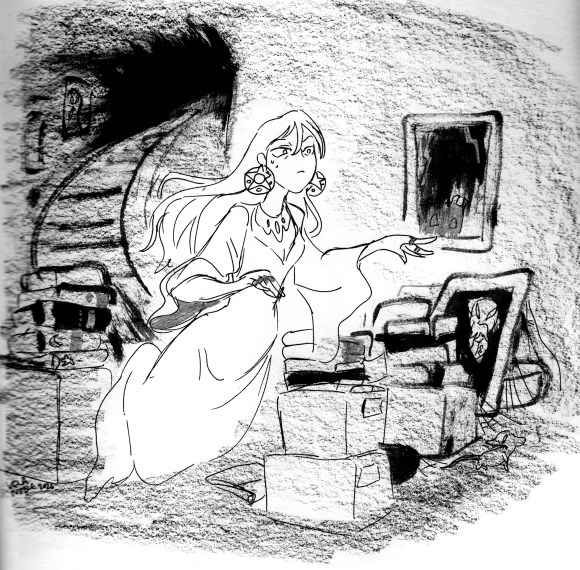






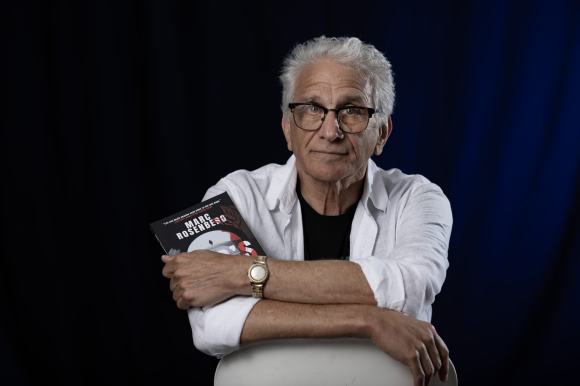
 Borderless