I wait
weighing words against memories
memories against poetry
poetry against noise
noise against feeling
feeling against time
only to arrive
at the deepest homecoming of words
-	‘Homecoming’
Something irreplaceably urgent yet inconsolably fragile commands the readers’ attention in Sanket Mhatre’s A City Full of Sirens. There is, to begin with, the orderly chaos of the book cover that with its startling depiction of noise and alarm, summons us to a danger that is as neurological as it is existential, as concretely physical as it is metaphysical, and as identifiable as it is, ultimately, anonymous.
Darkness asphyxiates
shifting the axis of your soul
madness froths
bubbles of hurt
shadows of shards
inserting lost files of remembrance
pulse rising –
raising a question at boiling point
Here is an understanding of the city as both protagonist and witness, as conquistador and vanquished, as healer and diseased. Mhatre is mostly talking about Mumbai (“Andheri East doesn’t realize/ that it is sleeping in a belly of void/ It is only a matter of time/ until all the lights go out”) but his city could be “the broken arteries of Kolkata” (‘Mid-flight’) or precisely any cityscape where life routinely unravels amidst disillusionment, betrayal, threat and hope, every poem to it being “a wound or a flower or a piece of sunshine” “written on the threshold of vulnerability and despair” as “a letter trying to find its own footprint on the shifting axis of time and circumstance” (‘Introduction’)
Tortuous and tortured, Mhatre’s city is a site of bereavement, uncertainty, imperilment, disease, derangement and more, its inhabitants choiceless in their compulsion to wear its frayed fabric upon their skin. But this is not all. Lurking within these poems is also the decisive realisation of the city as a human construct, a mirror that reflects rather than distorts or imposes human irresponsibility and disorder. In the title poem of the collection, for instance, the city is a patient incapable of being saved by its nonchalant dwellers:
the city has been suddenly diagnosed with Stage 3C
and all of us who matter to her:
slum dwellers, middle class, uber rich
upper caste, sub-middle-sub-lower, lower,
converts, casteless, outcasts, pimps and city planners
were late by a minimum of ten months in pre-empting this disease
Mhatre’s cities emit steady sirens of disaster – biological, ecological, technological, moral and aesthetic. But redemption, too, is to be found here alone (“Clay hands in a relentless prayer to -/ everything the earth stands for/ and everything that rises upwards from it.” – ‘A Kiss of Cotton’) for only what hurts has the ability to effectively transform – “anything that doesn’t change our body can never change us”. (‘Culture of Transience’) What, chiefly, reconciles the city as wound to the city as mirror, is the imperative of language and its expressive potential for love and poetry. (“A verse could be an open road” – ‘These Years with Her’)
A City Full of Sirens is a dense interrogation of the city, its sirens of overpopulation, congestion, capitalism and climate change, and an exploration of the fullness or plenitude of language that can somehow soften all of this and make it more bearable for life and time. Firmly rooting this collection is a momentous faith in the capacity of words to resist postmodern fragmentation by building bridges across emotions, cultures, and epistemologies. Mhatre’s imagination in poetry is luxuriantly metaphorical. In almost every poem, words defy ordinary appearances to transform into winged images in deep conversation with a reality tangential to the page. In ‘Anuvaad[1]’, as the poet says, all languages are born “from the same birdsong”. In ‘The Concept of Distance’, every stanza offers a new perspective into distance – “The space of pain between two alphabets, now divorced,/ looking on either side of a sentence”. In ‘Morphing into Everything’, the beloved and the city coalesce into one:
my fortresses crumble
dissolve mid-sea
rebirth as an archipelago
sink into her navel
populate her mind
germinate on her dermis
disintegrate into a thousand birds
taking early flight
In each of the fifty-six poems in the collection, is a seamless interweaving of self and space. Most of Mhatre’s sirens are symbolic, conjured through the weight and immediacy of metaphor. In each poem is this sense of something that must be overcome — a lurking claustrophobia, an unnamed distrust, a haunting faithlessness, a constant suggestion of order tipping into anarchy.
An acute precariousness, marked by a vital need to thresh out feeling on the floor of language, is the signature of this collection.
Very significantly, many of these poems are about poetry itself — its genesis, composition, structure, and its relentless shapeshifting ability to weld disparate worlds and subjectivities into a coherent experiential whole. Unravelling within this book’s narrative arc is an empathetic journey of the body and spirit, its goal being to discover “the completeness of existence…Time. Tide. Man. Woman. Humanity. Age. Difference. Distance”. (‘Rain Being’) Passion configures these poems in various ways and not least through the erotic of language. In the best poems here, love, poetry, woman and city become indistinguishable from one another, permeating ontological and aesthetic boundaries and accomplishing a spiritual surrealism that marks the distinctness of this collection.
A City Full of Sirens is, thus, about cities that are both germane and antithetical to poetry, about a “confabulated planet” and mutating geographies “stretching/ through thick mesh of bones and arteries/ pulp synchronized to our heartbeats/ birdsong to a breath/ while ink sprawls/ on a dream of half-slept pages”. (‘Vertical Forests’) It is equally about the inhabitants of the cityscape, the reconciliation of their numerous fragments and roles – “a new you added everyday/ an old you subtracted”. (‘The Queue’), intending “to geolocate/ the fulcrum of our absolute feeling/ outliving erasures”. (‘Synthesis’)
The collection remains remarkable for its obsession with language, its authentic emotional inflections, its charged candour, and its oscillations across a wide thematic range of existence, estrangement, erosion, and redemption. Annihilation, disease and death watermark these poems in undeniable ways but the energy of the book lies in its refusal to be contained within scripts of hopelessness or pain. Summoning optimism to thought and agency to action, A City Full of Sirens makes a palliative of poetry and crafts an entourage of life’s resilience to learn from every setback –
I was never the rain.
Until you cloud-burst me with words.
You gave me the first drop.
It’s my turn to take you in.
--‘Rain Being’
Basudhara Roy teaches English at Karim City College affiliated to Kolhan University, Chaibasa. Author of three collections of poems, her latest work has been featured in EPW, The Pine Cone Review, Live Wire, Lucy Writers Platform, Setu and The Aleph Review among others.
.
PLEASE NOTE: ARTICLES CAN ONLY BE REPRODUCED IN OTHER SITES WITH DUE ACKNOWLEDGEMENT TO BORDERLESS JOURNAL
Ujjal Dosanjh left his village in Punjab in quest of a better life. He had a bare smattering of English, very less money and some family overseas when he left his home at Dosanjh Kalan at the age of seventeen. That was in 1964. He spent the first three years in Britain and then, moved to Canada to become a prominent lawyer, activist and political figure.
When he started in the 1960s, to earn a livelihood in England, he shunted trains in the British Railways. He left for Canada in hope of a better future. He had to work initially in sawmills and factories to support himself. Eventually, he could get an education and satisfy his ambitions in British Columbia, which became his home. Coming from a family which contributed to the freedom struggle of India, it was but natural that he would turn towards a public life. His uprightness, courage, tolerance, openness and commitment had roots in his background, where his parents despite different political ideologies, lived together in harmony. His family, despite their diverse beliefs, stood by him as he tried to live by his values.
Dosanjh voiced out against separatist forces that continue to demand an autonomous country for Sikhs to this day. In 1985, he was beaten almost to death by such Khalistani separatists as he boldly opposed the movement that had earlier led to the assassination of the Indian Prime Minister, Indira Gandhi (1917-1984) and to the bombing of an aircraft where all 329 people aboard died. However, undaunted by such attacks, he continues to talk unity, welfare for the underprivileged and upholds Mahatma Gandhi as his ideal. He went into Canadian politics with unfractured belief in the Mahatma. Dosanjh was the Health Minister of Canada and earlier the Premier of British Columbia. He has been honoured by both the Indian and Canadian governments. In 2003, he received the highest award for diaspora living outside India, Pravasi Bharatiya Samman, and, in 2009, he was a recipient of the Top 25 Canadian Immigrant Award.
Now, sixty years from the time he left his country of birth, he shares his narratives with the world with his updated autobiography — the first edition had been published in 2016 — and also with fiction. As an immigrant with his life spread over different geographies, he tells us in his non-fiction, Journey After Midnight – A Punjabi Life: From India to Canada:“Canada has been my abode, providing me with physical comforts and the arena for being an active citizen. India has been my spiritual refuge and my sanctuary.”He writes of what he had hoped could be a better future for humankind based on the gleanings from his own experiences and contributions to the world: “If humanity isn’t going to drown in the chaos of its own creation, the leading nations of the world will have to create a new world order, which may involve fewer international boundaries.”
In this interview, he shares his journey and expands further his vision of a world with diminishing borders.
You travelled from a village in Punjab, through UK and ended up in the Canadian cabinet to make changes that impacted humanity in your various public roles as a politician. Would you have been able to make an impact in a similar public role if you had never left India? Was the journey you went through necessary to help you become who you are?
It’s almost next to impossible to imagine what actually would have happened to my life in India had I stayed there. The most complicating element would be the standards that I would apply in such reimagining, the standards I most certainly wouldn’t have known or applied to my Indian life’s journey. I do think though and I have said it often in conversations with friends that had I stayed in India I would have either turned into a saint or devil; nothing in between for one who in 1964, the year I left, already hated the beginnings of the corruption that has now almost completely enslaved the country’s polity and ensnared the society.
Even though what has guided me throughout my life were the lessons I learnt from my freedom fighter maternal grandfather, my activist father and Mahatma Gandhi’s life, I believe the ethics and mores of public life, first in Britain and then in Canada helped shape and sculpt who I became and how I conducted myself. Had I not been to Britain and not lived most of my life in Canada, it’s impossible even to imagine the ‘me’ that would now be walking upon our planet earth.
While within five years of landing in Canada, you were studying in University of British Columbia and driving an Austin, some other immigrants fifteen years down the line continued in abject poverty. What does it take to rise out of endemic poverty? Do you see that happening in the world around us today?
The way you phrased the question conceals the fact that before I resumed full time college in January 1970s and went on to complete my BA and then LL.B. in 1976, I had spent full six years of my life in UK and Canada working jobs including shunting trains with British Rail, making crayons in a factory, being a lab assistant in a secondary school and pulling lumber on the green chain in a saw mill in Canada while often attending night school.
And I must add that my extended family and my spouse were largely responsible for paying my way through my B.A. and LL.B.
While even then it wasn’t easy, I do recognise the union wage then available to students in summer employment enabled them to save enough for the school year; with most summer jobs that’s not the case now. The students now more often than not have to depend on loans or help from the parents.
A significant section of the immigrant diaspora has done reasonably well while for many it’s becoming harder and harder to just make ends meet.
And by the way the Austin, you refer to, was the used Austin 1100, Austin Mini’s sister, I had bought for the then princely sum of six hundred dollars; it took mere six dollars to fill its tank.
That’s truly interesting. At the beginning of your biography, you stated ‘politics is a noble calling’. Later you have written, “I had realized I needed to make a clean break from thepettiness of politics.” Which of these is true? And why the dichotomy — pettiness as opposed to nobleness? And what made you change your perspective?
No, I have not changed my view of politics. It is a noble calling but only if you do it for the right reasons. More and more I found that a significant number of people seeking public office did so for glory that they perceived the elected public office bestowed upon them. Shorn of any lofty ideals and the pursuit of public good politics often degenerates into petty squabbles rather than the giant battles of great and contrasting ideas.
The pettiness is the result of small minds pursuing the mirage of glory in phony battles that barely move the needle on the bar of public good. I often refer to the absence of great leaders in the political landscape of India and the world; Canada has not escaped the current curse of the dearth of great minds in the political arena. Hence my exasperation at the situation I found myself in.
The world over, politics seems to have become the refuge of intellectual dwarfs—no offence intended to our shorter brothers and sisters. The small minds tend not to see too far into the future; they are oblivious to the need to constantly challenge the world to be what it could be.
After a lifetime of activism and close to eighteen years of elected office it was only natural for me to tire of the myopia and pettiness in what otherwise remains a noble endeavour.
You met Indira Gandhi — the second woman to lead a country in a prime ministerial role — and had this to say of her “Indira Gandhi loved India immensely. One can be an imperfect leader and yet a patriot”. Do you think she was an effective leader for India?
My wife and I spent an hour speaking with Indira Gandhi on the afternoon of January 13, 1984. We spent the first few minutes comparing notes about our grandparents and parents as freedom fighters and activists before discussing the issues related to the agitation in Punjab, its growing militancy and increasing violence in and outside the Golden Temple. From what she said it was clear she was extremely troubled about the dangerous situation of the militants holed up in the Temple and the toll it was taking on the peace, politics and the economy of the state. I sensed a certain helplessness in this otherwise quite brave woman when describing the unsuccessful efforts she and her office had made to reach a peaceful settlement of the issues raised by the Sikh agitation. Because I had met both the militant Bhindranwale and the peace loving leader of the agitation, Longowal, and understood the tension between the two men and their followers, I knew she was grappling with a political minefield. All of this and much more that we discussed left me in no doubt about her love for the country and all its people.
But I do believe she allowed the situation at the Golden Temple to linger too long and deteriorate before trying to bring it under control; thus, it and the Operation Bluestar, her ultimate response to the armed militants holed up in the Temple, remains one of her great misjudgements—perhaps as grave as the declaration of the National Emergency in 1975.
Imperfection being part of the human condition, one isn’t surprised that Indira Gandhi who saw all Indians as equally Indian, too, was imperfect; a strong but imperfect leader.
“Sikri was the capital for the new world of unity that Akbar had wanted to create. Ashoka took a similarly bold leap toward peace after a bloody war. Two millennia after Ashoka and four centuries after Akbar, Mahatma Gandhi shared with India a similar vision and a path out of colonialism. India killed him.” Please explain why you feel India killed Gandhi.
One can’t and mustn’t blame an entire country for the actions of one or two persons and yet what I said of Gandhi’s assassination, at least figuratively if not literally, can be said with ample justification; not one but several attempts were made to end Gandhi the mortal. If many Indian hearts and minds—and there were many in his lifetime, perhaps not as many as there are in Modi’s India—wanted Gandhi and his philosophy of nonviolence and love for all dead, then I must say, even without resorting to the writers’ licence, India stands accused and guilty of his January 30th, 1948 assassination; India killed Gandhi.
Even before the advent of Modi on the national scene India’s politicians had substantially diminished and damaged Gandhi’s legacy of Truth, Love and Non-violence. Considering the so few prominent voices in the public domain criticising the Modi regime’s single-minded undermining of Gandhi’s legacy, almost to the point of extinction, it can be said that if it already hasn’t done so, India is close to annihilating Gandhi’s Truth, Love and Non-violence.
“To India’s shame, the rich and ruling classes of today mimic the sahibs of yore. Some of them still head to the hills with their servants, the Indian equivalent of the slaves of the United States.” As Gandhi is seen as one of the architects of modern India, what would have Gandhi’s stand been on this?
When Gandhi lived in England and South Africa, he was part of the diaspora of his time and learnt new things as such. Today with social and digital media one hopes even living in India he would have been aware of the yearning of humanity for equality and economic and social justice. The way most rich and powerful treat the poor and the weak in India is absolutely antithetical to what an egalitarian India would demand of them.
I’m aware of how Gandhi didn’t support the abolition of caste and of his position or lack thereof on the question of equality for the blacks of South Africa at the time. But different times throw up leaders with different and perhaps better approaches to the fundamental issues. Were he alive today, he would have argued for the abolition of caste, equality for all and he wouldn’t have accepted or ignored how India treats its workers, poor and the powerless.
You have told us “India leads the world in the curse of child slavery and labour. Millions of India’s children are trapped in bonded labour, sex trafficking and domestic ‘help’ servitude.” Most people plead poverty and survival when they talk of children working. Do you see a way out? Is there a solution?
Yes, like all problems, this, too, has a solution:
Legislate, legislate and legislate.
Enforce, enforce and enforce the legislation.
I know some laws do exist but we need legislation with more teeth. The laws regarding minimum wage, hours of work, overtime and holiday pay and health regulations must be strengthened and more vigorously enforced, in particular, in the so-called domestic help sector. Better wages and working conditions rigorously enforced would attract adult workers who would be able to send their children to proper schools rather than thrust them in to slavery in exploitative homes, factories and workplaces.
Not much will improve on this front though unless Indians end the endemic corruption in law enforcement. You see corruption confronts and stares us in almost all, if not all, issues Indian; it is the elephant almost in each and every room.
“Violence can never be a tool for change in a modern, democratic nation.” You tried to use Gandhian principles through your life — even in Canada. Do you think non-violence can be a way of life given the current world scenario with wars and dissensions? How do you view Gandhi sanctioning the participation of soldiers in the first and second world wars? Can wars ever be erased or made non-violent?
First let’s deal with Gandhi’s sanction of the soldiers in the two world wars. Whether or not he had sanctioned their participation, the soldiers would have gone to war; most of them fought for wages, not for the love of war or the country except those for whom the Second World War was a war against fascism and hence justified.
I don’t believe Gandhi ever stated that in fighting a violent enemy or a perceived enemy one was not allowed to use violence. All I ever remember him saying was that you throw your unarmed body wrapped in soul force in front of the enemy but if you are too chicken to do so or can’t do so for some other reason but fight an aggressor you must, violence is better than doing nothing.
As for countries fighting each other I don’t believe he ever said that, in an uncertain world where the military of another country could invade at any moment, a country must forego a military of its own.
As for nonviolence being a way of life, it can and must be for a country in its internal life. On the borders however one always has to deal with what one is presented with; you can’t ask Ukraine to not fight; in the face of a suddenly expansionist China or a belligerent Pakistan, Gandhi wouldn’t have urged the Buddha’s meditational pose for India; he didn’t do so in late 1947 when Pakistani fighters invaded Kashmir.
As for wars being non-violent, they can never be if the likes of Russia continue to invade others.
You opposed the Khalistani separatists and stood for a united India. What is your stand on Khalistan, given the recent flare up? Did you do anything this time to allay the situation in Canada?
I have always been opposed to countries being carved out on ethnic, linguistic or religious basis; I am a firm believer in multilingual, multi-ethnic, multi-religious and multi-racial populations living together in peace within the boundaries of peaceful countries; for that to happen, secularism remains a sine qua non[1]. That is why I so passionately continue to support a secular and inclusive India.
As for me doing something in the face of what is happening in Canada today vis a vis the Khalistanis, I didn’t say anything because I don’t believe it would have added to the debate; everyone already knows what I think and believe.
What does concern me though is the weak-kneed response and reaction of the public leaders of Canada; they have not unconditionally condemned the glorification of terrorists, known murderers or those who on the streets of Canada glorify and revere the killers of Air India passengers or of Mrs. Indira Gandhi. For me, someone who immigrated to Canada in 1968 when the elder Trudeau became the Prime Minister of the country, the near silence of our politicians on Khalistani violence and its glorification has been a low point; the older Trudeau knew how to deal with the terrorists; he didn’t and wouldn’t have pussy footed around terrorism or its glorification.
When your autobiography was published the first time in 2016, your column in Indian Express was cancelled. As many of us grew up in India of the past, we believed in secularism and democracy with freedom of expression. How has it changed over a period of time?
After I left India and particularly when I was introduced to the Hyde Park, I reflected on India and it seemed to be one of the freest places in the world; any intersection of a city road or a corner of the village served as a mini Hyde Park; from the millions of speeches made in such Hyde Parks all over India, millions of ideas tumbled forth from the lips of ordinary but engaged Indians.
Of course, I do realise that in the lives of the poor and the powerless, the freedom hadn’t shone as bright. The imprisoning of the Naxalites without charges and Indira Gandhi’s Emergency were the first real jolts of un-democracy and unfreedom I felt India as a whole had suffered. From there it went downhill; that sporadic communal riots continued; that Godhra was done to the Muslims as was done the post Indira assassination violence to the Sikhs; lynchings of Muslims and Dalits continue today.
India’s response to the first major unfreedom, Indira’s Emergency censorship, was encapsulated in the blank front pages of the censored Indian Express, that symbol of the Journalism of Courage. That symbol may still burn today but it is smouldering and clearly less bright enveloped as it and others are in the atmosphere of fear of the likes of ED[2] and CBI[3]; almost none amongst the traditional media homes shines much or at all; the digital media has thrown up some brave examples like The Wire. But the overall scene is dismal. India needs many revolutions; one of them is the reawakening of some semblance of fortitude in India’s Godi[4] media outlets.
Over repeated trips to India, you observed that people did not want to talk of major issues like availability of potable water but wanted to discuss issues like the eroding culture among the diaspora. Why do you think this has happened? Is there a way to change this mindset?
Human mind is an amazing thing; it seeks engagement but when the immediate is painful to observe and feel, it finds solace in contemplating the scenes afar; for sheer survival in its troubled and troubling milieu it develops numbness; such numbness shields it from the immediate while thinking about the distant problems, imagined or real, offer it a sense of engagement. Such is what I thought happened to many in Punjab.
Another troubling thing was that much beyond the essential human pride a sense of chauvinism and superiority, at least among its rich and powerful, has plagued Punjab for a long time which has blinded it to the need for change and progress—one didn’t need to improve what one believed to be perfect and hence superior.
Punjab has significantly slipped in the Human Development Index. That this humbling fact is now quite widely acknowledged in intellectual and political circles gives me some hope that things may improve.
“There are massive water shortages across the country. There’s a crisis in health care…Under the weight of crippling debts and droughts, small and marginal farmers are killing themselves. There aren’t enough jobs being created for the millions of youth joining the job market every year. The human-rights record of the Indian State inKashmir, the Northeast and other parts in the grip of insurgency is horrific and shameful. Dalits and Muslims are lynched with impunity by Hindutva-inspired mobs for skinning dead cows, or being in the vicinity of meat that may or may not be beef.” Do you see a way out? What can India do to step out of the condition you have described so accurately?
I have argued for some time that what India needs is a new freedom struggle, a Values’ Revolution, to rid itself of corruption—rishwat[5], unethicality, religious and cultural fanaticism that impinges on many Indians’ right to life, dignity and liberty. In arguing this I am aided by Gandhi’s dictum—that I have always alluded to in my own writings—that he was engaged in not creating a new India but a new Indian; my reading of what he said has led me to conclude he meant a caring, humane, compassionate, egalitarian and an ethical Indian. To create an India with 1.4 billion ethical and progressive Indians requires a mammoth revolutionary change in our values; hence a Values’ Revolution.
At the moment I see the country’s civil society under constant attack by the forces of social division whereas in fact social solidarity and cohesion are sorely needed. A Values’ Revolution will require giant leaders; I see none on the scene today but I’m not disheartened because once begun the Revolution itself may, as do all revolutions, throw up the necessary giants.
You are an immigrant who has lived out of India for almost half a century. Do you think as part of the diaspora living outside India, we could all act together to heal a region broken by its own inability to live up to the vision created by those who wrote the constitution of the country? What would be your vision of India?
The diaspora coming together to even slightly nudge India forward is an emotionally compelling and noble thought; many of us constantly dream of doing something for the country we have left behind. Some of us do so while others revel in its imaginings only.
A major stumbling block to the diasporic unity on this question has been the ideological divisions amongst the Indians abroad which usually mirror India’s domestic political fault lines and unfortunately those difference have been only rendered sharper by the way elements of the diaspora have recently been employed in aid of India’s domestic political machinations. The old diasporic divisions now seem and feel more rabid; it is as if the political battles of India now rage equally actively in the diaspora itself.
I always dream of India as a caring, compassionate, egalitarian and ethical India. One that values all its citizens equally and brims with social and economic justice.
That is such a wonderful thought with which many of us agree wholeheartedly. You have written: “If humanity isn’t going to drown in the chaos of its own creation, the leading nations of the world will have to create a new world order, which may involve fewer international boundaries.” What is the world order you suggest?
For starter no order can be imposed by the so-called leading nations, no matter how powerful. It may take a significant amount of nudging and cajoling by them to change anything.
When I wrote my autobiography, I was imagining the world moving, at least to begin with, in the direction of regional groupings like the European Union. We saw that as the number of member states of the United Nations trended upwards, Europe witnessed the opposite where many countries dared to create the EU practically erasing borders; granted Britain rebelled – but even within its borders a referendum held today would most likely approve it re-joining the EU.
As a possible beginning for the rest of the world, our best hope lies in grand imaginings such as a South Asian Common Market at once reducing the expense of standing militaries staring angrily at each other across the borders; Southeast Asia, Africa, South America could follow; North American Free Trade Agreement already exists creating at least an economic union.
If to begin with the countries regionally moved toward the free flow of human beings along with the necessary and more convenient local trading, one could foresee the international will and desire developing toward a world populated by fewer borders and more freedom. Hopefully that would move humanity toward more international egalitarianism, prosperity and fewer wars.
Hopefully, the vision materialises. Thank you very much for giving us your time and wonderful books that make us think and emote.
Title: Greening the Earth: A Global Anthology of Poetry
Editors: K. Satchidanandan and Nishi Chawla
Publisher: Penguin Random House
At a time when apocalyptic unease about the precarity of our home on this planet grips us as a civilisation and is concomitantly coupled with the irremediable apathy that governs our everyday mundanity, a collection of poems on the subject by some of the finest poets from around the world writing in our times, is both an existential alarm of urgency and a spiritual balm that soothes our despondency enough to spur us to action. Greening the Earth: A Global Anthology of Poetry edited by K. Satchidanandan and Nishi Chawla, and recently brought out by Penguin Random House is, as its editors point out, an act of “responsible activism”.
A tonal sequel to Singing in the Dark, their first co-edited anthology of poems around the pandemic which had already foregrounded nature’s clear vengeance against human greed, this collection attempts to grapple with the more sinister and nemetic darkness of environmental crises by establishing a dialogic space for the affirmation of ecological citizenry through poetry and “the articulation of a new aesthetic of survival”.
Poetry has, always and undeniably, been at the forefront of every revolution and the reasons for this are not hard to seek. Out of the circuit of formal epistemology, poetry has mostly been free to encode and perform alternative knowledges. The language of poetry, being generically unanswerable to established patterns of syntax and semantics, has been, historically, at liberty to pursue and present its own ensemble of meaning. Again, just as poetry, dispensing with literacy and formal training, has offered little resistance or discouragement to potential creators, it has also always been widely accessible to the general public owing to its capacity for oral dissemination and circulation in minor media such as notes, letters, greeting cards, placards and advertisements.
But poetry’s chief merit, most significantly, lies in its ability to accomplish a multifaceted and compound expression encompassing reality and possibility, facticity and vision, statistics and emotions. To declare in editorial essays or news reports that the world is coming to an end is one thing, to express its consequences in poetry is something else. Ecological poetry or ecopoetry has been on the scene for a considerable period of time now. An extension or intensification of the genre of nature poetry, ecological poetry evinces a keen political and activist consciousness geared to fight back the environmental crisis through determined human effort. Integrating perspective, observation, information, emotion, vision and testimony, ecopoetry attempts to establish a deeply personal relationship between man and nature underlining, thereby, their indispensability to each other’s survival.
Greening the Earth with its staggering set of around a hundred and eighty-five poets and poems from across the world, offers us an essentially global anthem of hope. The planet cannot be greened by afforestation alone. Greening the planet requires a systemic reconstruction of our relationship with it that envisages love, responsibility and sustainability. It is a recognition of nature’s intrinsic worth beyond her instrumental value and the fierce acknowledgement of the inextricability of the two.
A walk through the anthology is an immensely moving and personal tour through innumerable poetic moods and ecotopes, our teeming biodiversity, and our shared vulnerability as inhabitants of the cosmos. At the heart of each of these astonishingly diverse and beautiful poems is a sense of kinship to a wider and infinitely unknown world, an awareness of the mutability of life-forms within the unmapped continuity of time, a strong condemnation of human selfishness and myopia, and a more-than strong suspicion of the imminent end of humanity.
At the same time, here is also the urgent and extraordinary tenderness that arrives only with the knowledge of transience and the prophecy of loss. If life and the world are to be lost to us as a species, there will never be time enough to dwell on all that we love. Each of these poems is, therefore, also about love – love not merely for the natural world but for every little thing that holds up our lives and which we have been taught to discount as inessential or marginal in our daily drive to build a living.
Greening the Earth, thus, advocates a different ontological ethics – one that calls for wide inclusiveness, greater mindfulness, minute attention, and an adjustment to the flow of time around us instead of attempting to govern this flow. It embodies an intense desire to reverse the cycle of alienated technological growth and to revert to an era of deep feeling and conscious interconnectedness. Here is joy, agony, grief, fear, beauty, despair, isolation, and community but most significantly, here is the possibility of building both ourselves and the world anew through searching self-analysis.
In ‘Signs and Wonders’, Paul Hoover sketches a barren civilization which can be revived only when “a child will write them back into existence,/one branch at a time”. Toi Derricotte’s ‘Unburying the Bird’, similarly, is a deeply moving poem about bird deaths “because of too much/ something” and yet, the poem’s onus is on resurrection rather than on accusation:
Feed her from the tip of your finger.
Teach her the cup of your hand.
You breathe on her.
One day,
you open up your hand
and show her sky.
The recognition of the human as one insignificant dot within the immensity of the universe marks many of these poems. Sarah Key’s ‘Ode to the Scarce Yellow Sally Stonefly’ is one among several poems where humans are treated as textual equals with other species. The poem pays tribute to a critically endangered variety of the stonefly that was rediscovered in the United Kingdom after a period of twenty-two years owing to the efforts of conservation biologists like John Davy-Bowker. After eight stanzas of describing the stonefly, its disappearance, and its rediscovery, the poem in its final stanza, deftly but unassumingly, turns to the larger and logical picture – the extinction of homo sapiens from the planet:
Tell me, flighty friends, will there be
A Mr. Davy-Bowker for me?
Will some AI god come along, algorithm my scent,
go where my species has gone?
Rochelle Potkar’s ‘Confluence’ raises concern regarding the legal personhood and rights of our natural environment. Embodying the spirit of the ‘Rights of Nature’ movement that believes in the right of every ecosystem to flourish without victimisation by humans, the poem makes a strong case for the rights of water bodies which are relentlessly drained, contaminated, and exploited by human activities, its opening line being highly potent in its irony:
Waters when they evaporate, meet…
at a global conference, to speak of fish dropouts,
obscura of clouds, near-deaths, hydrological dynamics,
monocultures, and metals:
nickel, lead, chromium, at their beds.
The constant awareness of despair and inertia runs in a large number of poems as in Michael Cope’s ‘We Watch the Signs’ where the awareness of danger leads to numbness rather than action, the first and third lines of this first stanza being a constant refrain throughout the poem:
We watch the signs in numbness and regret.
Midwinter summer, chaos in the year,
And still our money’s on the outside bet.
David Ebenbach’s ‘Viaduct Greene’ eloquently traces the possibilities of companionship in a posthuman world – a date through “this expanse of soda bottles and human waste” when “a subway dies and you make it a garden.” In Meg Eden’s ‘Scene of a Dismantled Village outside Pripyat’, “The forest has become/ a radioactive living room.” Humans are absent from this scene altogether, their “heirloom china,/ covering the forest floor!” Animals have taken over:
Inside one cup, a chipmunk
makes its home. Inside another,
a spider breeds. Soon, her eggs
will hatch and from where
there was one body, there will be
thousands. Think about that –
something still lives after all of this.
‘Lakeside Walks’ by Arvind Krishna Mehrotra is, entirely, an exercise in mindful perception, the poetic consciousness establishing itself as intimately one with its immediate environment. Here rain, squirrel, friend, four-lane highway, letter, piebald cow, pinwheel flower, poem, face mask, mynah and park bench are all emotive equals drawing the poet’s attention “aimlessly, which is the same as purposefully”, articulating thereby an intense ecopoetic vision of connection and harmony.
What makes the book a trifle inconvenient to handle is the absence of a table of contents so that attempting to look up a specific poem in this anthology becomes entirely a matter of labour, memory, and chance. Its Preface, however, constitutes a comprehensive and well-researched essay on ecological consciousness in literature and will be an appreciable resource for readers in general and those with special interest in ecocriticism. What is also valuable about this anthology is its inclusion of poems in translation from a wide variety of global languages.
With a memorable green cover showcasing an opulent spread of maple leaves, here is a body of poems intended to woo us to an earth-centric view of life and the world, and as Rainer Maria Gassen writes here in his poem ‘To Nature – Three Sonnets’, “should this poem fail to win you over/ there’ll be hundreds if not thousands more of them.”
Basudhara Roy teaches English at Karim City College affiliated to Kolhan University, Chaibasa. Author of three collections of poems, her latest work has been featured in EPW, The Pine Cone Review, Live Wire, Lucy Writers Platform, Setu and The Aleph Review among others.
.
PLEASE NOTE: ARTICLES CAN ONLY BE REPRODUCED IN OTHER SITES WITH DUE ACKNOWLEDGEMENT TO BORDERLESS JOURNAL
Title: The Greatest Indian Stories Ever Told: Fifty Masterpieces from the Nineteenth Century to the Present
Editor: Arunava Sinha
Publisher: Aleph Book Company
The Indian subcontinent has had a long tradition of storytelling that is referred to as ‘contes’ or tales, by the French. ‘Kathasaritsagar‘ by Somdev in Sanskrit compiled in the 11th century CE is a great example of this. Flavourful folk tales can also be found in renditions after the 11th Century CE — like the ‘Singhasan Battisi’[1].
Various Indian languages soon adopted this genre, gaining popularity throughout the country. Over the past 150 years, hundreds of memorable and popular stories have been written in more than 20 different languages. There are many ways in which they have become cultural cornerstones. Even those who do not read books often quote from a Premchand story or refer to a Tagore character in conversation. There are more people who know about our recent history as a result of Manto’s stories than any other history book published.
The Greatest Indian Stories Ever Told: Fifty Masterpieces from the Nineteenth Century to the Present edited by Arunava Sinha, is a welcome addition to the genre.As an English translator, Sinha specialises in translating Bengali fiction and non-fiction from Bangladesh and India into English, including classic, contemporary, and modern works. More than seventy of his translations have been published so far in India, UK, and USA. He has twice won India’s top translation prize, the Crossword Award for translated books. He teaches at Ashoka University, where he is also the co-director of the Ashoka Centre for Translation.
This anthology contains stories that draw inspiration from a wide range of Indian regional dialects, languages, literature, and cultures, and includes early masters of the form, contemporary stars, and brilliant writers who came of age during the twenty-first century.
Among these authors are some of the most revered in Indian literature and have, between them, won almost every major literary award, including the Nobel Prize for Literature, the Jnanpith Award, the Sahitya Akademi Award as well as numerous other honours at the state, national, and international level.
There is a plethora of literary delights in this collection, from Tagore’s evocative prose to Amrita Pritam’s emotional depth, from Ruskin Bond’s enchanting stories to Mahasweta Devi’s thought-provoking stories. It is a treasure trove of narratives translated to or written in English. If all these weaving the colours of the diversities in India are to be savoured across all the Indian states with diverse languages, they need to be in English. Collections of some of the best literary short fiction written by Indian writers began to emerge in the country at the end of the nineteenth century. And now in the twenty first century, the trend has been retained by this collection.
A must-have for any Indian literature enthusiast, The Greatest Indian Stories Ever Told provides a literary journey that explores space and time, which makes it a precious collector’s item that will become a valuable over time. Anyone who is interested in India’s rich cultural heritage as well as the rich tapestry of Indian storytelling should definitely read this anthology in order to gain some insight into the country’s rich cultural heritage. It promises to be an exciting and enticing literary feast, leaving readers awe-struck and enriched by the depth and beauty of Indian storytelling whether you are familiar with these eminent authors or are new to them, regardless of whether you know their work or not.
.
[1] Collection of ancient Indian folk tales; Literally, 32 tales of the throne, compiled after the 11th century CE
.
PLEASE NOTE: ARTICLES CAN ONLY BE REPRODUCED IN OTHER SITES WITH DUE ACKNOWLEDGEMENT TO BORDERLESS JOURNAL
Title: Smoke and Ashes: A Writer’s Journey Through Opium’s Hidden Histories
Author: Amitav Ghosh
Publisher: HarperCollins India
Amitav Ghosh has been traversing the boundaries between fiction, non-fiction, history, anthropology with ease for a long time. After the publication of his Ibis Trilogy [Sea of Poppies (2008), River of Smoke (2011) and Flood of Fire (2012)] more than a decade earlier, he has been primarily focusing on issues related to environment, global warming and ecology in his later novels like Gun Island (2019), The Nutmeg’s Curse: Parables for a Planet in Crisis (2021), a non-fiction like The Great Derangement (2016), and two slim volumes of fables, Jungle Nama (2021) and The Living Mountain (2022). Now in his latest book Smoke and Ashes: A Writer’s Journey Through Opium’s Hidden Histories (2023), he blends travelogue, memoir, and historical tract into a multi-textured narrative that tells us about how ‘opium is a historical force in its own right’ and ‘must be approached with due attention to the ways in which it has interacted with humans over time.’ When he began his research for the Ibis Trilogy, he was startled to find how the lives of the nineteenth-century sailors and soldiers he wrote of were dictated not only by the currents of the Indian Ocean, but also by a precious commodity carried in enormous quantities on those currents: opium. Through both economic and cultural history, Ghosh traces the transformative effect the opium trade had on Britain, India and China; the trade and its revenues were essential to the Empire’s survival.
Of the eighteen chapters of the book, the first two enlighten the reader about little knowledge of China and the way tea (cha or chai) became an inevitable part of living both in the West and in India. It was after Ghosh’s first trip to Guangzhou (anglicized later to Canton) that the epiphany occurred about the very subtle influence of China and how the British actually stole the technology of tea plantation to make it flourish in the colonies. Thus ‘tea came to India as a corollary of a sustained contest – economic, social and military – between the West and China.’
From the third chapter onwards Ghosh gives us the history of the opium poppy and how social conventions that had developed through centuries of exposure to opium may have helped to protect some parts of Eurasia from highly addictive forms of opioid use and also how the drug was instrumental in the creation of a certain kind of colonial modernity. We get to know how it was the Dutch who led the way in enmeshing opium with colonialism, and in creating the first imperial narco-state, heavily dependent on drug revenues. But in India, the model of the colonial narco-state was perfected by the British. In the entire region of Purvanchal, the British created a system that was coercive to its core. The growth and cultivation of opium poppy was entirely controlled by them and the drug was mass produced in the two largest factories in Patna and Ghazipur. Though the dangers of opium were certainly no secret to the British government, yet they did not bat an eyelid in exporting the drug to China, knowing fully well it was a criminal enterprise utterly indefensible by the standards of its own time as well as ours.
Ghosh then gives details of the poppy cultivation in Malwa and the western provinces of India. By thwarting the British efforts to impose a monopoly on the trade, Malwa opium sustained Bombay and left a large share of the profits to remain in indigenous hands. Throughout the colonial era therefore, Calcutta and Bombay defined the two opposite poles of India’s political economy; the way in which business was conducted in the two cities were completely different and soon the Parsis turned out to be the maximum number of the non-western merchants who were present in Guangzhou in the years before the First Opium War. Thus, Bombay and its hinterlands benefited from Malwa’s opium in multiple ways. From Mumbai’s Parsis we go to the horticulturists and weavers, potters and painters of China, especially of the great city of Guangzhou. The intricacies of the Parsi Gara saris are traced back to weavers of Guangzhou, and so are the origins of an artistic ferment in Bombay when Jamsetji Tata, the founder of the Taj Mahal Hotel in Mumbai, brought back many paintings to India from China. The idea for an art school in Bombay came to Jamstjee Jejeebhoy after his Guangzhou visits, and the JJ School of Art came about.
Ghosh describes how opium money seeped so deeply into nineteenth century Britain that it essentially became invisible through ubiquity. After Britain, the country that benefited the most from the China trade and therefore, the global traffic in opium, was none other than the United States and the beneficiaries included many of the prominent families, institutions, and individuals in the land. By 1818 Americans were smuggling as much as a third of all the opium consumed in China thereby posing a major challenge to the East India Company’s domination of the market. Known as the Boston Concern, all the rich families from Boston, Massachusetts and the fortunate Americans were a series of names from the Northeastern upper crust — Astor, Cabot, Peabody, and so on. The young returnees from China ploughed their opium money into every sector of the rapidly expanding American economy. Even the opium money used in the railroad industry also came from China. “Opium was really a way that America was able to transfer China’s economic power to America’s industrial revolution”. In the United States the connection between opium and philanthropy has endured till the present day. It also left a distinct stamp on American architectural styles, modes of consumption, interior décor, philanthropy, and forms of recreation. Interestingly, Ghosh’s narrative keeps circling back to the present, when in the US as well in many countries around the world including India, the opioid crisis has reached epic proportions and the American government is bullish about its “War on Drugs”. Ghosh candidly states, “The ideology of Free Trade capitalism sanctioned entirely new levels of depravity in the pursuit of profit and the demons that were engendered as a result that have now so viscerally taken hold of the world that they can probably never be exorcised.”
Ghosh reiterates through the book that binary narratives about countries and culture — like, China is evil — that is entrenched in popular perception is misleading and takes away the historical context of trade relations among nations. “The staggering reality is that many of the cities that are now pillars of the modern globalised economy — Mumbai, Singapore, Hong Kong and Shanghai — were initially sustained by opium.”
There are many places in the book where Ghosh skilfully refers to his actual borrowing of historical details in his Ibis trilogy and these interjections add flavour to the non-fiction narration. Chapter Eight again is a memoir of Ghosh’s own lineage and how that has connections with the opium trade. Moving away from their ancestral home in East Bengal, it was the opium industry that took his ancestors to Chhapra in Bihar and kept them there. Like the millions of people that opium trading affected, uprooted, and dehumanised, his father told him stories of growing up in Chhapra and seeing opium ruin as well as make lives. These digressions add zing to the often-monotonous narration of facts and figures of the opium trade.
Ghosh goes on to devote pages to the nature of grassroots psychoactive substances and how opium was different in this class of psychoactive because it became a mainstay among pharmaceuticals too: “The reality is that all other efforts at curbing the spread of opioids have failed: the opium poppy has always found a way of circumventing them.” Towards the end of the book, after Ghosh finds that the wealthy and powerful people of the world to be suicidally indifferent to the prospect of a global catastrophe vis-s-vis the drug scenario, he asks a seminal question: “In such a world does it serve any purpose to recount this bleak and unedifying story?” Apparently, this question had haunted him since he first started working on the book, many years ago. It was the reason why, at a certain point, he felt he could not go on, even though he had already accumulated an enormous amount of material. It seemed to him then that Tagore had got it exactly right when he wrote: ‘in the Indo-China opium traffic, human nature itself sinks down to such a depth of despicable meanness, that is hateful even to follow the story to its conclusion.’ So persuaded was he of this that he decided to abandon the project: he cancelled the contracts he had signed and returned the advances he had been paid by his publishers.
Now we are happy that the story of the opium poppy had its cathartic effect upon Ghosh and in retrospect, after a period of more than a decade, he could give us the story from multiple perspectives today. Like his other books, this text is also accompanied by voluminous end notes which will deter the layman reader from enjoying the book. The amount of material and the different issues that Ghosh mentions is fit for at least four books but it is to his credit that he manages to present to us this world-roving tale in his signature method of weaving diverse narrative strands together into this book. How Ghosh establishes the interconnectedness of economic agency with geopolitics, a plant with human flourishing and wreckage and produces a narrative as luxuriant as it is painstaking in detail and density is his mastery as a prose writer and thinker.
.
Somdatta Mandal, author, academic and translator is former Professor of English at Visva-Bharati, Santiniketan, India.
PLEASE NOTE: ARTICLES CAN ONLY BE REPRODUCED IN OTHER SITES WITH DUE ACKNOWLEDGEMENT TO BORDERLESS JOURNAL
Ujjal Dosanjh’s latest novel, The Past is Never Dead, sheds light on the stranglehold of caste on Punjabi Sikh immigrants in the UK – a unique perspective of caste violence in a faith outside of Hinduism, one that was born out of the noble teaching by Guru Nanak and his followers that every human being is equal in the eyes of God. Borrowing the prologue from William Faulkner’s famous statement, “The past is never dead. It is not even past,” Dosanjh makes it his project to challenge this idea about Sikhism, as he writes about a poor family that migrates to England soon after India’s independence in the hope of escaping the indignities of caste back home – only to be confronted by it again, and in the most horrifying ways possible, in a western foreign land, where caste is supposed to be an insignificant marker of identity.
In the year 1952, Kalu escaped Banjhan Kalan in Punjab’s Hoshiarpur for Bedford in the British Midlands, hoping to find a life of dignity that he had been denied because of his untouchable caste. He was in his late teens and had grown up believing in Sikhism’s tenet of equality preached by Guru Nanak and Ravidas, a principle the villagers never sincerely practised. They had maimed his father, accusing him of stealing a zamindar’s ox; they had thrown father and son out of a Quit India rally; they had mercilessly thrashed young Kalu himself for daring to enter a temple. He had never been allowed to forget—even by his schoolmates—that he was a Chamar, destined to skin dead cattle like his ancestors. His father Udho was determined to get his son out of this life of indignity and had said, “Son, I don’t want you to grow up a Chamar. You will never do what made my hands and feet like this.” Soon Udho borrowed money from a kind merchant, bribed the officials, got a passport and left for Britain.
England promised a new life of respect and opportunity. Udho laboured hard to give his son a college education and his wife a decent life that was denied to them back in India. The way Kalu and his mother ultimately bribed their way onto an earlier flight to escape from the powerful connections his propertied travel agents had, and who could create obstacles in their journey to Britain, speaks a lot about the plight of scores of rural people in the Punjabi villages who dreamt of building a new life in the West. But freedom was illusory. Kalu’s fellow expatriates had brought caste along when they came to that country, and he would be forced to adhere to its degrading rules just as he was in Banjhan.
Apart from the story of a rural Punjabi family’s search for better life, the novel is also a powerful depiction of the stranglehold of caste over Sikh immigrants in Britain. We have read about honour killings of Sikh women during the riots that took place after the Partition of India when family patriarchs forced their wives and daughters to jump into the well or commit suicide to avoid being kidnapped by the Muslims, but the horror behind the story of honour killing within the Sikh community in England based on caste differences is something terrifying. The construction of different gurdwaras in the same locality according to caste affiliations including local politics, enmity, and gruesome killings by the Jats, who considered themselves racially superior to the other Sikhs, expose the horror and obstinacy of caste even in the middle of the twentieth century, and is just unimaginable. Determined not to bend—as he had refused to do back home—Kalu fights back as he could not suffer indignity silently, but his resoluteness in the struggle puts him and his family at serious risk.
With many turns and twists in the storyline, including the abduction and death of his doctor wife, Kalu’s hair was shaved by his caste-hate-obsessed kidnappers as revenge for what they considered his audacity in describing a Jat’s daughter as mini bell unsuited to be married to his Jat friend. Eventually, he discards his hair; the act acknowledges the impotence of religion and religious symbols in the struggle for equality and against caste. In the end, through his indomitable will force, we find how Kalu manages to overcome all odds and contest for a MP seat in the Parliament as a Labour Party candidate under the name of Dr. Kalha Chamar — “He was done fleeing, escaping or dressing up caste in surnames, unshorn hair or turban.” The concluding paragraph of the novel which gives a positive message of hope for the future is worth quoting here:
“Angad made chai. Between the sips of chai, the humpbacked Banti, the limping Udho, the hairless Kalu and the adolescent Angad danced. When Robert, Janice and Gurbat knocked on the door to congratulate him, Udho Chamar and his son, Kalu Chamar MP, were standing with raised glasses, about to down neat double Johnnie Walkers.”
Though the story of Dosanjjh’s own life and the timeframe of the novel bear a lot of similarities with the incidents narrated in the story, he does not mention it to be an autobiography. Instead, he fills the novel with various other racist perspectives that the Sikhs in Britain still cannot steer clear of. So, he safely adds other issues and titles it “A Novel.” But how far some of the incidents narrated in the novel have moved him becomes clear when we read in an interview given to scroll.in where he states:
“It was emotionally quite exacting to write The Past Is Never Dead. The toll of the issues I wrote about has been a lifelong companion. Age has rendered me shameless enough for me to confess that I often cried as I wrote many parts of the novel…. The human incapacity to learn from the past astounds me. It aids us in veiling the past from ourselves and abets our continuing cruelty in the name of dumb tradition and comatose culture.”
The novel is surely worth reading and is strongly recommended as it pays tribute to the courage and tenacity of the human spirit and its capacity for hope despite all odds.
.
Somdatta Mandal, academic, critic and translator is a former Professor of English at Visva-Bharati, Santiniketan, India.
PLEASE NOTE: ARTICLES CAN ONLY BE REPRODUCED IN OTHER SITES WITH DUE ACKNOWLEDGEMENT TO BORDERLESS JOURNAL
Sangeetha G’s debut novel, Drop of the Last Cloud, portrays through the life of its protagonist, the decline of matrilineal system and its influence on the prominent Nair community in Travancore from the period 1920s onwards. This system started collapsing with the arrival of colonial morality and was later abolished to make way for the patriarchal system.
The description of this transition is compelling at the hands of its author who has been a senior business journalist and part of the mainstream media in India for more than 20 years. She has worked with various visual media, news agencies and newspapers. Her flash fiction and short stories have been published by various magazines and journals and her work ‘Burning flesh’ won the first prize in Himalayan Writing Retreat flash fiction contest 2022.
The story examines complexities arising in the turbulent period of the said transition which traumatises and affects behavioural changes in a girl at the cusp of adulthood. It lays bare the generational attributes, seeping down and permanently altering the character of the woman the young girl grows into. At the centre however, it is the story of unrequited love which haunts the mind of its protagonist, Gomathy, influencing her life and her relationship with her own children.
Gomathy, born to one of the three sisters of a feudal Nair family, is labelled unlucky at birth by the family astrologer and is sent to her father’s house for her upbringing. Bereft of mother’s affection and brought up by an imposing paternal grandmother, the child Gomathy is set on a course diverse from her siblings and cousins. As she grows into a beautiful and demure young woman, her life is dictated by the choices she makes in order to please her elders and to prove herself morally dignified in the society which has begun to be influenced by the ideas of patriarchy. It is Gomathy’s irresoluteness which makes her accept Govindan as her husband, despite her awareness of his deception and of his manipulative ways which he used to persuade her grandmother to let him marry her. Her decision to not marry Madhavan, the person she loves, and his subsequent death becomes a nightmare from which she never recovers.
The conscious and subconscious self of Gomathy is laid bare through her everyday life with her family, including her children whom she despises, as well as through her dreams of the man she loved but did not marry. Dissimilar in demeanour to the women of her family in her initial growing years, Gomathy as she ages, becomes like her paternal grandmother – daunting and inadequate to love those closer to her.
Through the description of the lifestyles of two households at Kakasherry and Madathil, the author presents a commentary on the societal ways prevailing in the era. In the three sisters of Kakasherry Nair household — Narayani (Gomathy’s mother), Karthiyayani and Parvathy — we find independent women making their own decisions on one hand, while on the other hand we also have the same household absorbed in practicing deep-seated ideas of caste superiority and untouchability. The men, trying to find a strong foothold in changing times, are either manipulative, like Govindan, or vulnerable, like Madhavan. It also hints at the ritual of polyandry as an accepted norm in the matriarchal society.
The book is a critique on the collapse of matrilineal system in Kerala, on the ramifications of succeeding partitions in affluent Nair families, on the hardships of running nuclear families and on the adopting of patriarchal systems. However, intertwined within the narrative are also the themes of blatant caste discrimination, curbing of women’s rights, freedom and the hollowness of wars that not only deaden human sensitivity and empathy but essentially devalue human life and humanity.
Sangeetha’s laidback writing style achieves what the novel misses out in narration. It evolves into a moving account of a woman’s trials and tribulations resulting from her inescapable circumstances, of her helplessness and disquiet which not only turns her into her worst self but also makes her unperceptive of love and compassion. This is an account, whose closure manages to provoke thoughts on the worthlessness of deliberately wasting away a precious life.
Rakhi Dalal is an educator by profession. When not working, she can usually be found reading books or writing about reading them. She writes at https://rakhidalal.blogspot.com/ .
.
PLEASE NOTE: ARTICLES CAN ONLY BE REPRODUCED IN OTHER SITES WITH DUE ACKNOWLEDGEMENT TO BORDERLESS JOURNAL
Title: The Stolen Necklace: A Small Crime in a Small Town
Authors: Shevlin Sebastian and VK Thajudheen
Publisher: HarperCollins India
With an enigmatic cover, reflecting the nature of the content, this is the true story of a small-town crime. A gripping narrative, it is the poignant saga of an innocent citizen, forced to suffer incarceration due to the mishandling of a theft case by the police.
Veteran journalist Shevlin Sebastian, and businessman, VK Thajudheen, are the authors. Thajudheen is the kingpin of this book, and also the victim. The incident took place a few years ago in the historic town of Thalassery in north Kerala.
Shevlin is based in Kochi, which is hundreds of kilometres away, in the south. Shevlin and Thajudheen came together following the media hype. With his impressive credentials, and long-standing in the journalistic field, Shevlin has proven his mettle by publishing more than 4500 feature articles in reputed periodicals. He has authored four children’s novels also.
Thajudheen, around whom the thriller revolves, has his home in Kadirur, a suburb of Thalassery. A middle-class businessman in Qatar, he had left his family of wife and three children at Kadirur. A God-fearing upright man, he is middle-aged and balding. His courage led him to an adventurous love marriage with his teenage sweetheart. Nasreena, being from a financially backward family, the alliance was considered of low status for his wealthy family.
Nevertheless, he had the temerity to ignore and disobey even his patriarchal father, in carrying on his long affair. However, before his secret wedding, his father passed away. Even then Nasreena had to wait for three years to be accepted in his home. That was after the birth of their second child – a son. The arrival of a boy child in his family after a long gap, mellowed his mother and two sisters who changed their hostile attitude against Nasreena.
All this happened years ago. Meanwhile, Thajudheen had a checkered career spread over different locations, which ended up with a business in Doha. That was when he fulfilled his dream of marrying his daughter to an eligible young man, Shiraz Abdulla.
The tragic turns of events, entangling Thajudheen in the stolen necklace fiasco, commenced a couple of days after the celebration of Thazleena’s wedding. The family was returning from his sister’s home after a sumptuous dinner hosted for the newly-wedded couple.
It was a rainy night. Suddenly, they spotted two police jeeps with eight occupants waiting near their Kadirur home. Three of the men were in uniform. The rest were also from the same genus, it was revealed. They were from a station outside Kadirur police control called Chakkarakkal. Stopping their car, their leader, approached the family with an expression of “You are all prey. I am a lion looking for a meal”.
Biju, having already earned a name as being reckless in controlling crime, was a known terror. He and his team had arrived armed with a phone evidence showing that Thajudheen was the culprit in a necklace-snatching crime. The incident was reported in his station a few days back. The CCTV camera that showed the purported thief cannot lie, they thought. It showed someone exactly resembling Thajudheen! But was it Thajudheen?
Thus started the ordeal of an innocent family man in the presence of his loving wife, and children. After a heart-breaking scene, near his home, Thajudheen was offered a compromise — pay the price of the stolen necklace and avoid litigation.
The offer was with a friendly ‘advice’: “I heard your daughter has just got married. The reputation of your family is at stake. We will inform the media that you are the thief.”
Anyone with a chicken heart would have yielded, but not Thajudheen, who always admired his late father for standing up to injustice. That was how Thajudheen had to languish in Thalassery sub jail till the story led to the final proverbial ‘happy ending’, nearly seven weeks later.
As a remand prisoner Thajudheen had the most undesirable company of robbers, underworld gang members, sex offenders, political workers, and so forth. At the same time, outside, his shattered family and Abdulla, the father of Shiraz, Thajudheen’s son-in-law, did not leaving any stone unturned to unravel the mysterious crime. They were making all-out efforts to obtain bail as well.
But Sub Inspector Biju was not to give up the big catch that easily. The police were even trying to trap Thajudheen in some other unsolved cases as a possible culprit.
This included even a murder case where the perpetrator was missing.
Ultimately, when the higher court decided to let him free, the readers, along with Thajudheen himself, are left to wonder about the dispensation of justice by the police in a democracy. It is true that the politicians, the legislature, and even the Chief Minister had to interfere in ensuring proper investigation in this case. But still the question remains: what can one do to enforce timely change in the method of handling of criminal cases by the police?
Imprisonment of innocents and their vindication in the end is nothing new in the annals of ‘crime and punishment’. Fiction being a reflection of fact, such cases are not uncommon in world literature. Inspector Javert of Victor Hugo’s ‘Les Miserables’ (1862) can very well match up with the modern-day Biju, the sub inspector.
Likewise, in Leo Tolstoy’s short story, ‘God Sees the Truth but Waits’ (1872), a young merchant named Ivan Dmitrich Aksionov was accused of a crime he did not commit. One can see the forerunner of Thajudheen! After all, human nature is basically the same whether in France, Tsar’s Russia or India.
Undoubtedly, Shevlin and Thajudheen have succeeded in bringing out the darker side of the police force. However, though the narrative is touching, one wonders at the intent of the book. Have the authors succeeded in openly projecting the atrocities of the police force to draw the attention of the establishment to prevent such incidents in future? Apart from presenting the insensitive and sadistic attitude of Sub Inspector Biju, little effort seems to be expended to indict the system to which he is linked. The fact that Biju is ‘punished’ for his ‘crime’ by just a transfer and withholding a few increments is an eloquent testimony to the laissez-faire attitude of our society at large.
Dr. KPP Nambiar, formerly a Consultant/Technocrat at the UN Food and Agriculture Organisation, is the author of many scientific papers and books, including a 1500-page Japanese-Malayalam dictionary.
PLEASE NOTE: ARTICLES CAN ONLY BE REPRODUCED IN OTHER SITES WITH DUE ACKNOWLEDGEMENT TO BORDERLESS JOURNAL.
Title: Burning Pyres, Mass Graves and A State That Failed Its People : India’s Covid Tragedy
Author: Harsh Mander
Publisher: Speaking Tiger Books
Many parts of India were in a state of frenzy as a result of the pandemic. The official figures of sickness and mortality have been widely disputed, and most agree that they have been significantly underestimated.
Burning Pyres, Mass Graves and A State That Failed Its People: India’s Covid Tragedy by Harsh Mander is a comprehensive account of the humanitarian crisis and the appalling state response. Human rights campaigner Harsh Mander is one of India’s most trusted and courageous activists. He is also the author of several acclaimed books on contemporary India, among them, Looking Away: Inequality, Prejudice and Indifference in New India;Ash in the Belly: India’s Unfinished Battle Against Hunger; Fatal Accidents of Birth: Stories of Suffering, Oppression and Resistance; and This Land Is Mine, I Am Not of This Land: CAA–NRC and the Manufacture of Statelessness.
The book examines the events around the year 2020, that led to food shortages for the urban poor and pushed them to the brink of starvation due to food scarcity. There is a compelling argument to be made that the timing of the lockdown was directly related to public policy choices, specifically the decision to impose the lockdown with only four hours’ notice to the media. As Mander recounts in his book, things got even worse in the following year, as everything from hospital beds to medical oxygen to essential medicines ran short of supplies to function properly. Mander chronicles the disaster in an in-depth manner by combining ground reports with hard data from the scene.
According to the book’s blurb: “The summer of 2021 saw a massive rise in the number of infections and deaths from Covid-19 in India. Even by conservative estimates, at least 1.5 million people had lost their lives by June; several times the official figure. As in the first wave of the pandemic, this time, too, the chaos and suffering was in large measure, as Harsh Mander shows, due to mismanagement by an uncaring and cynical state.”
This book contains two parts. The first part, titled ‘Locking Down the Poor’, describes how the urban poor were being driven to the brink of starvation due to the severe humanitarian crisis that was sweeping across the globe in 2020. According to the study, this was a direct consequence of the policy decisions that the government made. It led to the imposition of the world’s longest and most stringent lockdown, along with the smallest relief packages, as a direct result of the government’s public policy choices.
As the story unfolds, we hear the voices of out-of-work daily-wage and informal workers, the homeless and the destitute, all of whom overwhelmed by hunger, humiliation, and a sense of dread. There are over 3 crore migrant workers in India whose livelihoods have been destroyed and they had been forced to walk hundreds of kilometres back to their villages as they had no means of surviving in the cities and no way to get home other than by foot. He brings us stories of those migrant workers from the highways and overcrowded quarantine centres.
The second part of the book, entitled ‘Burning Pyres, Mass Graves,’ is the account of what took place the following year, when everything from hospital beds to oxygen and essential medicines were still in short supply. The underlying cause of these shortages, according to Mander, is the criminal neglect of public health care in India, a situation which worsened under the Narendra Modi government, resulting in the extortion of a beleaguered population by everyone from oxygen suppliers to pharmaceutical billionaires. The author holds the state culpable for indulging in pageantry – with the PM advertising himself as a messiah – when the country needed to brace for the impact of the second wave of terrorism.
Using an invaluable combination of ground reports, hard data, and firsthand experiences to describe the worst humanitarian catastrophe India has experienced in a century, and which will have a lasting impact on the country for decades to come, Mander provides a detailed account of this cataclysmic phase. It is a powerful book and sometimes it is even shattering. In a way, the narrative is a live remembrance of a national tragedy that too many of us wish to forget when we should, instead, etch it in our minds so that we can prevent another national tragedy like this one from recurring in the future.
.
Bhaskar Parichha is a journalist and author of Unbiased, No Strings Attached: Writings on Odisha and Biju Patnaik – A Political Biography. He lives in Bhubaneswar and writes bilingually. Besides writing for newspapers, he also reviews books on various media platforms.
.
PLEASE NOTE: ARTICLES CAN ONLY BE REPRODUCED IN OTHER SITES WITH DUE ACKNOWLEDGEMENT TO BORDERLESS JOURNAL
In Conversation with Advait Kottary about his debut historical fiction, Siddhartha: The Boy Who Became the Buddha, published by Hachette, May 2023.
At a time, when the world looks for compassion, acceptance, love, kindness, relief from wars, economic downturns, divides drawn by multiple human-made constructs, what kind of a book could provide entertainment, solace and also suggest solutions to human crises?
Perhaps, Advait Kottary’s Siddhartha: The Boy Who Became the Buddha, comes closest to the kind of book that would encompass all these demands. Many people have written about Buddha and Buddhism, but few have attempted to recreate vividly the life of a prince who rebelled against social norms to uncover a path that more than 2,500 years later continues to be seen as a refuge from violence and hatred. For those who misconstrue Buddhism in the modern political ambience, this book could well be a reminder of what Buddhism is all about.
The writer, Advait Kottary, is an engineer turned actor. Perhaps that is why the visual vividness of the narrative is almost cinematic. The story flows like a stream taking the reader back in time to a period we know very less about. What is amazing is the way in which the author has unfolded the story beginning with Siddhartha’s enlightenment and his journey back through his life in that state. This unique situation gives the Buddha the advantage of not just revisiting scenes but also to visit those aspects of his life and that of others which he could not possibly have witnessed in reality. The Enlightened One witnesses his own birth, his mother’s demise, many battles and courts that he had never ventured into. At a point in his journey, Buddha brings to readers Prince Siddhartha’s dejection despite winning a war. Kottary narrates: “Siddhartha burst into tears. The man was right and all his anger was for the war itself, not directed towards the soldier in front of him… They had won the war, but at what cost?” These are pertinent questions that perhaps, if world leaders asked themselves, we would not have had Bakhmut (Ukraine) or the World Wars.
As Siddhartha finds his peace leaving his palatial home, he realises that he is fortunate to have a family that gives him the freedom to complete his quest (though initially with reluctance). He reflects on why he needs to go on this journey, upending the lives of his family, traditions and even his kingdom. He tells his first teacher, Alara Kalama, “At the root of all the customs and the things we consider to be tradition, I could find no answers, other than the ones that said we live in one way, simply because that is what we are accustomed to; whether it is by virtue of following the habits of one’s parents, or the habits of those in the world around us.”
While raising pertinent issues that need to be brought to the fore in the present context through Buddha’s journey, the detailed research that Kottary has put in is evident. People get drunk on Tongba, a pre-historic recipe for an alcoholic brew of millet which is still in use. Authenticity is enhanced by an interplay of historic incidents, including acceptance of Buddha’s beliefs by one of the bloodiest kings of Indian history, Ajaatshatru, who killed his own father, Bimbisara, drove his mother to death, fell in love with his father’s concubine and razed a city down to find her. Reading of the change wrought by Buddhism in such a ruthless man, one can find hope in the darkest of times. Maybe, like Ajaatshatru, mindless, warmongering political overlords will have a change of heart at some point.
The book is racy despite the factual content. It reads like a well-written fiction. Perhaps it is a bit of that for after all, could we really know what Buddha said to his wife? But what we do know is his wife supported him and became a bhikshuni at the end. The narrative flows — sometimes, calm and reflective while Buddha talks, and sometimes, moving through turbulence, war, intrigue and violence providing a counterfoil to Buddha’s own quest. At the end of every episode, there is that moment of stillness induced by the enlightened one’s comment as he moves towards a new scene from his past.
Each scene brings us closer to the resolution of how the personal and the larger-than-life quest combine to create a sense of harmony at the end. The narrative has the ageless innocence, elegance and wisdom of Oscar Wilde’s stories like “The Happy Prince”. Kottary, a debuting author with the ability to create a compelling tale, explains what went into the making of this remarkable book in this interview.
Buddha is a subject much written about. And yet, you have given this book a unique twist. What made you select the life of Buddha as your debut venture into the arena of historical fiction?
I think I’ve always been fascinated with history and stories from the past, wondering how much of it happened the way we imagine it, and constantly imagining what life was like in any age of the past.
The story of Siddhartha, or the Buddha, came to me at a very interesting time in my life. I had just quit my engineering job, and though I vaguely knew I wanted to act and write, I had no real clue what lay ahead. It was at this time that I found a copy of Old Path, White Clouds by the revered Buddhist monk, Thich Nhat Hath, at home. At the time, Mom (Gajra Kottary) was reading it for research for a television show she was scripting, and I began to read it, often just opening up to a different random page every time and reading about a fascinating story from Siddhartha’s life. Over the years, I began to read more and more about the life of Siddhartha, beyond the basic facts I had learned in school, and found it so striking that a lot of questions that Siddhartha had from his life and his world, were the same questions that we have from life today. At a stage I was trying to find my feet in life, something resonated within me, and I found so many facets of his life that barely anyone knew about… I felt compelled to tell the story, and it seemed only natural to tell it through his eyes.
What kind of research went into your book? How many years did it take you to create the final product?
If I’m honest I can’t really quantify the amount of research that went into it, I can just sum it up and say, A LOT! Through each and every draft of the book, I’d read more and more about the subject, and there were so many beautiful tales that couldn’t make it to the final manuscript too! But it took more than five years of writing, rewriting, and rethinking. Several drafts were involved. Of course, there were other things I was doing, but putting the book aside for a few months, and revisiting it made me come back with a fresh perspective too, which really helped the process.
How much is fact and how much fiction? Tell us about the journey of the book.
History is certainly the greatest storyteller, and most of what you read in the book is fact. The places, the people, and most of the incidents are all part of recorded history. I had to imagine a lot of the interpersonal relationships involved in the story while weaving the narrative, especially since I was telling the tale from Siddhartha’s point of view. It was therefore critical to understand where he was in his spiritual journey at the time those things happened.
And to be honest that is what fascinated me the most, the lesser-known parts surrounding the known facts and bullet points of history. I couldn’t find Siddhartha’s angst really being dissected before, or his pain being talked about, because history often makes us think of him as a sea of calm, a stoic man. As I went through the drafts, I understood that in this layer of emotions lay something that perhaps we hadn’t thought of before. And of course, we know now that Siddhartha found the answers he was looking for, but back when he left the palace and renounced his life, he had no idea if he would ever find what he was looking for. Can you imagine the turmoil of someone who can surrender the rest of their time to finding an answer they may never actually find? There was a great human tale there, and I wanted to delve into the things in his life that built up to that journey, while learning more about it myself.
You have unfolded the Eightfold Path through Buddha’s personal journey, bringing in his own life experiences into play. Is that something you found in the course of your research or was it your own conclusion? Please elaborate.
A lot of it was down to research, and documented incidents in the life of Siddhartha, but I feel like especially when telling the story of Siddhartha’s life from his own point of view, it was essential to bring his own life experiences into play. Siddhartha’s learnings were often through practice and self-experimentation, a theme that is echoed throughout the book.
There are many personalised details which recreate a distant time period that is unknown to us. What went into giving authenticity to these unknown persons, their thoughts, conversations and tying them up to give us a picture of the times? How did you create characters from the past that could touch on contemporary issues and hearts?
I think it’s easy to think of characters of the past as unidimensional beings. Often that is how history is academically taught to us; good person – bad person, winner – loser etc. But when telling a story, it would be a huge injustice on my part if I did the same. As an actor, the biggest strength one can have is empathy, and every character I’ve played, I’ve always had to personalise the motivations, the desires, the fears and the joys of them all. I tried to think of all the characters in Siddhartha in the same manner. For example, it would have been easy for us to think about Siddhartha’s father, King Shuddhodana, as wrong for sheltering him from the realities of life, like pain, suffering and death. But that would be such a myopic view of what happened, and not taking into account the prophecies that had been told to him, and the fact that Siddhartha had been born after years and years of wanting a child; the stakes were incredibly high!
All it took was a little curiosity and deep thinking into why these characters did what they did; they were simply following their convictions in that moment… Most of it seemed logical, given we knew what each of these characters wanted at different points in time, but of course there was a fair bit of imagination when it came to their conversations. I was always fascinated by how each character would be at their most vulnerable, because that is a part of history that is never touched upon, and I’ve tried to do that in Siddhartha.
You have touched on many contemporary concerns in your book— war, the need to question traditions. You have even said something very deep when you had Buddha say: “Acceptance can only happen when there is no ego.” Was all this done intentionally, or did it just happen in the flow of events? Please elucidate.
When I first began to think about the story of Siddhartha, what struck me was always the contemporary relevance of the questions Siddhartha asked, more than 2500 years ago… Siddhartha always questioned everyone around him, but it was with a view to understand the universe and the world that he was born into. If he didn’t understand, he asked, and with every answer he got from people or the world around him, came new understanding and new questions too. A lot of it happened in the flow of events; but what was challenging was understanding the internal journey of Siddhartha through these events, his emotions and learnings as he grew up, and that had to be intentional in journey and design.
You have been living in London. Did you visit the parts of the Indian subcontinent you have written about?
Yes! It was a surreal experience for me, I had the good fortune of being able to visit Sarnath and Bodh Gaya from Varanasi. I can tell you that photos do not do the Dhamekh Stupa justice, it’s a beautiful and tranquil place, almost like you’ve stepped into a different world.
Did any films, writers or books impact your choices and the way you executed the book? What writers, artistes impact you as a writer?
Growing up as the son of a journalist and a scriptwriter, I’d be lying if I said my parents Sailesh and Gajra Kottary hadn’t strongly influenced my writing. I’ve also been inspired by Antione de Saint Exupery’s The Little Prince and the way it spoke of such beautiful thoughts in such a simple manner, a principle I tried to keep in mind while writing Siddhartha. Some of my favourite films are Dr. Strangelove, the Batman Trilogy, and the television series, Succession. I’m quite fond of storytelling in general as an actor and creator, and I have this weird habit of trying to piece together the narrative in everything I see, maybe even an advertisement in a magazine, deconstructing it and analysing the choices made by the creators.
Your novel is very cinematic. Are there plans afoot to make it into a film, considering the choices you have made, choosing acting over engineering and cars? Did your mother, Gajra Kottary, a major screenplay writer in India, have an impact on the choices you made and your journey as a writer?
Thank you! I’m a very visual thinker, so when I read or write about something, I watch it unfold like a movie in my mind, perhaps that is reflected to some extent in my writing. I have had interest expressed in the book from a couple of wonderful filmmakers, and hopefully I’ll have some amazing news to share soon!
My mother has been the greatest writing influence in my life, and I have to give her credit in that she has only guided and taught me and never tried to influence my decisions in the kind of work or projects that I take up.
So, what are your plans for the future? Any more books coming our way?
Yes, most certainly! I’ve got two drafts screaming at me for attention. One is about the life of another historical figure, closer to modern times, who lead an unbelievable life. The other one is pure fiction and more in the genre of dark humour; a dystopian take on modern civilisation, but again centred around a clear protagonist.
I’m living in London now and continue to act and perform in theatre as well, so there’s always something exciting happening on that front. I’ve also had some interest in Siddhartha from some wonderful film makers, so fingers crossed something visually beautiful can be born from this. So the hunt for great stories continues!
Thank you so much for your time and your lovely book.
(The review & online interview conducted through emails are by Mitali Chakravarty)
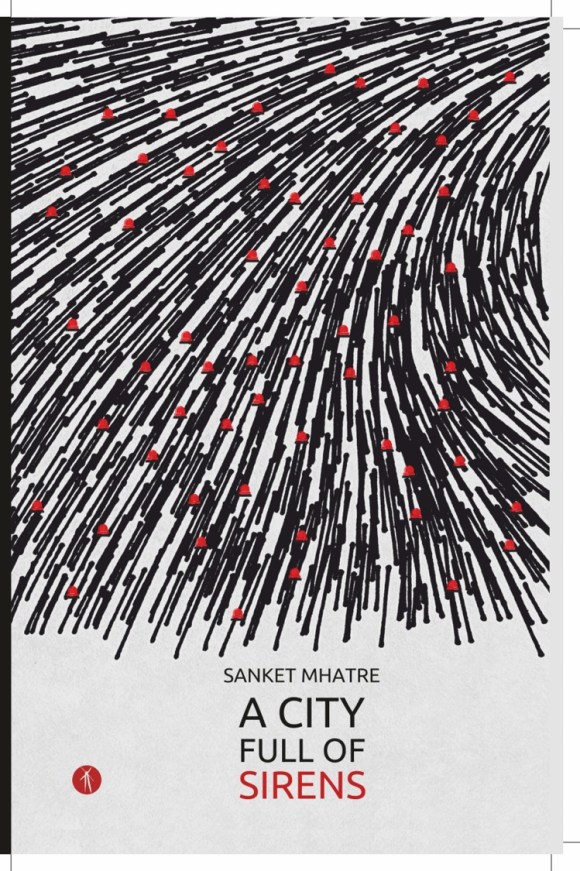
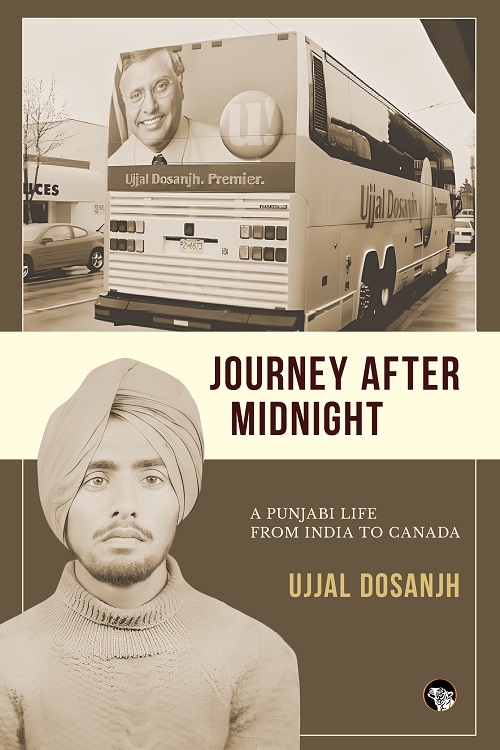
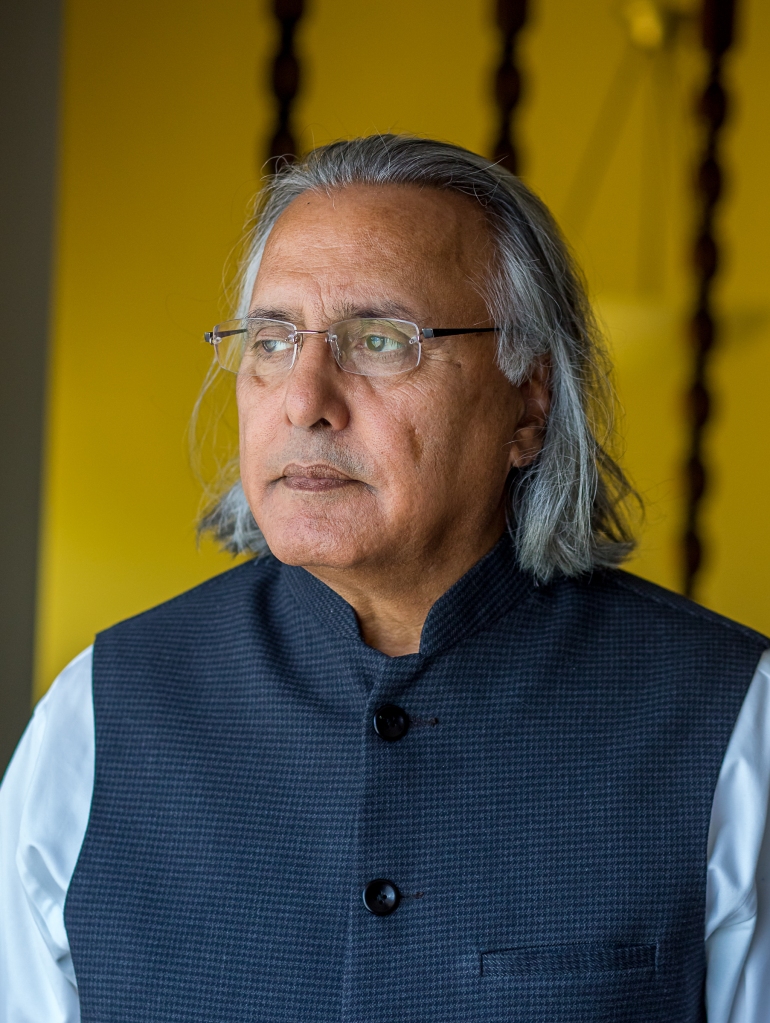
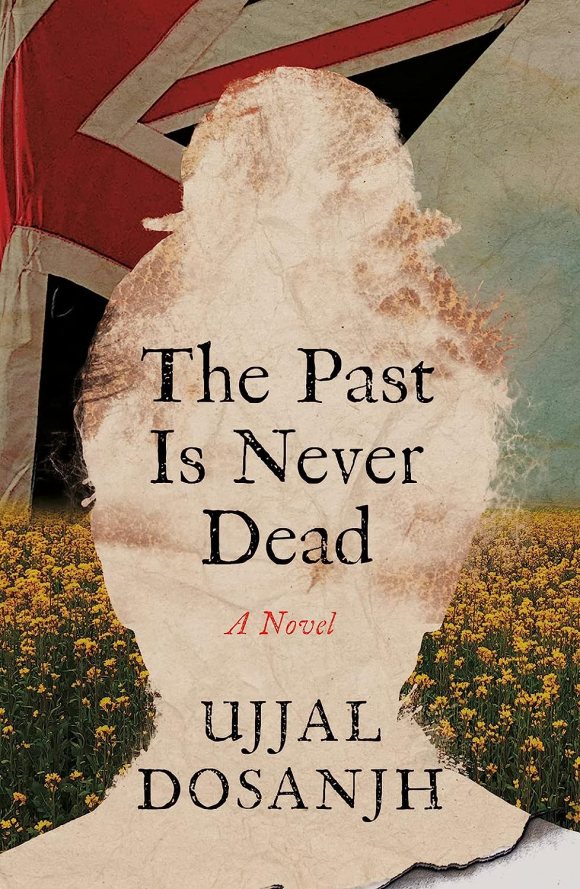


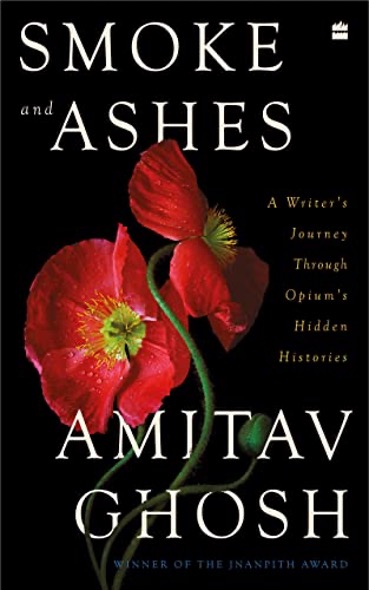
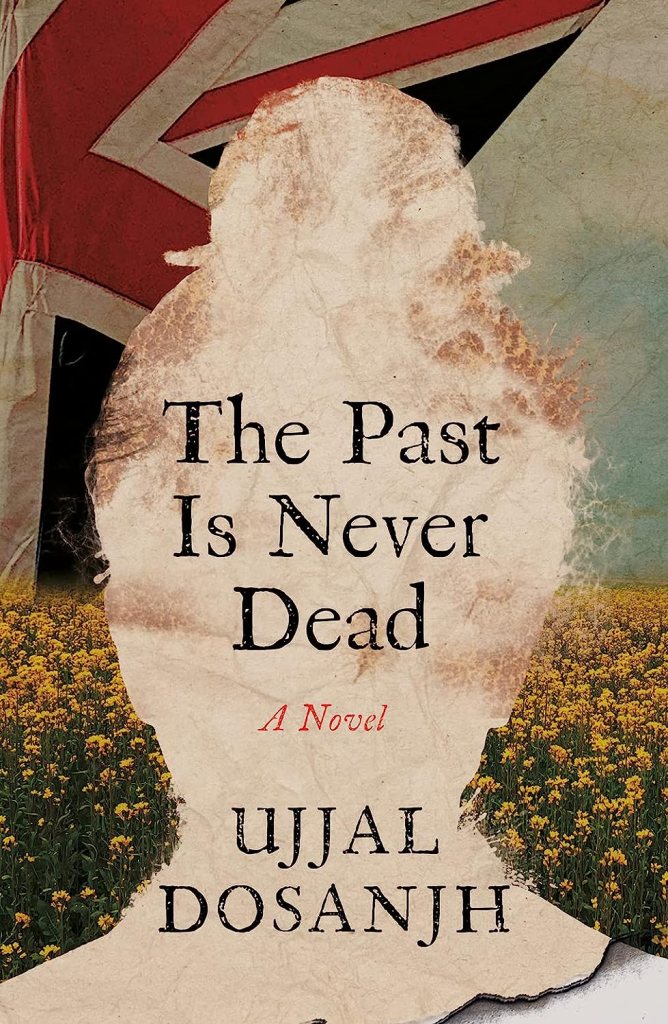
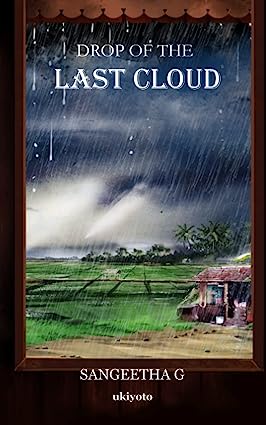
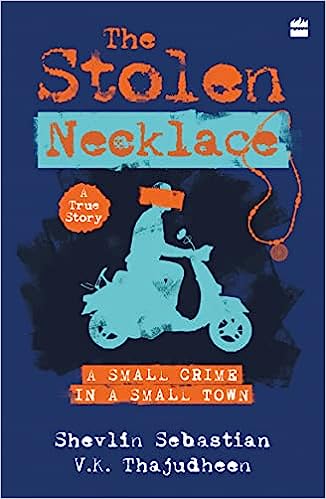


 Borderless