Gandhi on currency notes: Courtesy: Creative Commons
Twentieth century India could arguably be said to belong to Mohandas Karamchand Gandhi, or simply Mahatma (Great Soul), or even Bapu (father). In its political and moral imagination, India was enveloped by the enduring legacy of both the man himself, and his philosophy. So many things written into the Constitution were scripted by Gandhian belief, even quirks, for that matter. Cow Protection (“The central fact of Hinduism is cow protection”) was accommodated in the Constitution because Gandhi wanted it in. Nehruvian liberalism ensured its relegation to the Directive Principles of State Policy, which are not enforceable, but more recommendatory in nature, but Gandhian sentiment could not be unaccommodated.
The twentieth century was left behind not very long ago, but India seems to have leapt into another era in these two decades, shaken from the moral moorings anchored by Gandhi. The starkest recognition of this change has been the veiled attacks on Gandhi himself (though the valorised resurrection of his assassin, Nathuram Godse). The more direct attacks have been on the very nature of the Constitution. The key words in the Indian Constitution bear the mark of Gandhian beliefs, wedded top the standards of a modern Constitutional democracy. These are Encoded in the preamble. In the 1950 version the words the words ‘Sovereign’, ‘Democratic’, ‘Republic’ are headlined (Secular and Socialist were added later via the 42nd Amendment). Below them are listed words like ‘Justice’, ‘Liberty’, ‘Equality’ and ‘Fraternity’. These hallowed principles are under threat in every day public life. Justice is colour blind, liberty not protected by justice, inequality threatened by unequal notions regarding liberty, and the sense of fraternity shredded by unchecked sectarianism.
The safeguarding of the idea of India is not merely an ideological battle; it is the fight for the soul of India. The soul that Gandhi’s deeper moral philosophy gave shape to. This soul was moulded through ideas both ancient (that once sprang in this land) and modern (drawn from the best philosophies from across the world). This endeavor was not easy. It was difficult in both conception and adoption. It was rendered possible because of Gandhi’s great moral force, and adopted because of the Freedom Movement’s largely liberal and inclusive character.
After Ashoka the Great and possibly Prophet Mohammad (PBUH[1]), Gandhi is singular in the modern era as someone who viewed politics and the engagement between political entities though the prism of morality. Before and after him politics has always been the ‘art of the possible’. Gandhi wished to go deeper, to find the idea of the nation, indeed the very idea of an independent India beyond merely the definition of nationhood. He wanted his India to have a soul, to emerge from its bondage purified by intent and moral leadership. This is what Gilbert Murray, the redoubtable classical scholar and public intellectual, once wrote about Gandhi: “When I met him in England in 1914, he ate, I believe, only rice, and drank only water, and slept on the floor; and his wife, who seemed to be his companion in everything, lived in the same way. His conversation was that of a cultivated and well-read man with a certain indefinable suggestion if saintliness. His patriotism, which is combined with an enthusiastic support of England against Germany, is interwoven with his religion, and aims at the moral regeneration of India on the lines of Indian thought, with no barriers between one Indian and another, and to the exclusion as far as possible of the influence of the West, money-worship, and its wars.”
Gandhi was never against the West; what he was against was what Western politics and society had become (recall his famous quip about ‘Western civilisation’ and that ‘it would be a good idea’). Gandhi was deeply impressed by Tolstoy’s ‘Letter to a Hindoo’ wherein he exhorted the Indian revolutionary, Taraknath Das, to adopt the path of non-violence. Tolstoy quotes widely from ancient texts. He was impressed by the fact that Tolstoy was quoting the ancient Tamil saint-philosopher while speaking of non-violence. The crucial wisdom that struck Gandhi deep (because it became his credo later) was this: “The punishment of evil doers consists in making them feel ashamed of themselves by doing them a great kindness.” This ancient wisdom reached the west via an eighteenth-century Latin translation. The journey of the idea of nonviolence and its acceptance by someone as revered by Tolstoy took Gandhi deeper into its exploration, since he was morally drawn to its spiritual embeddedness and its synergy with his own worldview. The concept of Ahimsa emerged from this distillation.
On the other side Gandhi was drawn to Henry David Thoreau’s ideas of civil disobedience and nonviolent resistance against an unjust government. In his 1942 ‘Appeal to American Friends’, Gandhi says,“ [Y]ou have given me a teacher in Thoreau, who furnished me through his essay on the ‘Duty of Civil Disobedience’ scientific confirmation of what I was doing in South Africa’. This scientific confirmation was drawn by Thoreau and his guru Emerson from ancient Asian philosophy, both Buddhist and Hindu. They believed the path of righteousness can be charted by the individual, outside of prescribed religions. Transcendentalism, a dominating cultural and philosophical movement in nineteenth century America, emerged from the distillation of older moral philosophies of the East, and, the path to righteousness, embedded in civil disobedience against any entity that is not moral, howsoever powerful it might be, emerged from such thoughts with stark clarity in Gandhi’s chosen mode for resistance – Satyagraha.
Gandhi dissolved so many ideas in his thoughts that it is sometimes difficult to discern the origins of many of his ideas. This is also because his was a syncretic mind, blending, assessing, conjoining and ultimately putting all ideas to the test of a simple morality, expressed best in one of his last notes (1948) in words that are talismanic: “Whenever you are in doubt, or when the self becomes too much with you, apply the following test. Recall the face of the poorest and the weakest man [woman] whom you may have seen, and ask yourself, if the step you contemplate is going to be of any use to him [her]. Will he [she] gain anything by it? Will it restore him [her] to a control over his [her] own life and destiny? In other words, will it lead to swaraj [freedom] for the hungry and spiritually starving millions? Then you will find your doubts and yourself melt away.”
The great beauty of Gandhi is that he is simple and complex at the same time. In the words of UR Anantha Murthy (author of Samskara, and a great literary voice), Gandhi was a ‘critical insider’, a phenomenon that India was lucky to experience, but a rare phenomenon. He was an insider in the sense that he identified with the lowest common denominator of what it meant to be an Indian, leading an abstemious life of frugal simplicity. But he was also critical of that which needed reform and transformation. He had the moral energy to envision a modern India, not based on modern technology, but based on a philosophy the world had abandoned. He envisioned a world of justice, where the downtrodden would determine the priorities of governance, where righteousness would set the terms for nations engaging with other nations, and where politics would not cast aside morality and ethics to foster its goals. In his lifetime he carried the moral force of a juggernaut, recognised by the world as one set apart.
Today’s India is choosing to not only not heed the path offered by him, a path that held us together though times good and bad, but to actively discard acceptance, to choose violence over consensus, and to enforce the will of the majority over those who exist on the margins. Gandhi is fading away from the India’s conscience. Once his moral force has completely dissipated, he will remain only on the face of currency notes (a materiality he himself eschewed). And then, one day, when we are another nation, he’ll perhaps drop off even those currency notes.
Debraj Mookerjee has taught literature at the University of Delhi for close to thirty years. He claims he never gets bored. Ever. And that is his highest skill in life. No moment for him is not worth the while. He embraces life and allows life to embrace him.
.
PLEASE NOTE: ARTICLES CAN ONLY BE REPRODUCED IN OTHER SITES WITH DUE ACKNOWLEDGEMENT TO BORDERLESS JOURNAL.
Durga Puja is an annual festival that marks a time of joyous celebration among the Bengali community worldwide. The UNESCO declared this festival as an ‘Intangible Cultural Heritage of Humanity’. A festival that has become the most looked forward to cultural event in the year, among the communities celebrating them, it is the biggest event in the festive calendar of Bengalis. Durga Puja in certain ways has transcended its religious context to assume mammoth proportions as can be seen in the UNESCO citation: “Durga Puja is seen as the best instance of the public performance of religion and art, and as a thriving ground for collaborative artists and designers. The festival is characterized by large-scale installations and pavilions in urban areas, as well as by traditional Bengali drumming and veneration of the Goddess. During the event, the divides of class, religion and ethnicities collapse as crowds of spectators walk around to admire the installations.”
The idol of Durga, drowned at the end of the festival, is made by local craftsmen and is at the fulcrum of all the festivities as people come to worship her and celebrate her homecoming.The goddess is said to have descended from her husband’s home to visit her parents. According to art historians, the UNESCO tag will give a boost to the crafts around the festival — from the idol-making at Kumartuli to the designing and making of elaborate sets to house the idol. What is worth noting, moreover, is that no effort is spared when it comes to embellishing or decorating the goddess, in spite of its transient and impermanent nature. For, on the last day of the festival, the idol is immersed in the river, signifying the evanescence and temporality that marks human life and all its endeavours.
Her descent on earth with her four children (Lakshmi, goddess of prosperity; Saraswati, goddess of learning; Ganesh, god of wisdom, and Kartik, god of war) for the five days of the festival, is also perceived as the advent of a daughter to the house of the mother, a moment which overflows with affection and emotions. The event happens at a certain time in the Hindu calendar and participates in linear time, as well as part of a larger ongoing cycle of temporality. In the Hindu pantheon, Durga or Parvati is a prominent mother goddess, the consort of Shiva. Her names refer to split roles of the feminine imaginary. As Durga she is the fiery slayer of demons, as Kali she has to be appeased through blood and slaughter. Interestingly, in the cultural imaginary and imagery of the Durga Puja, she is also mother as well as the daughter, whose visit to the paternal home is brief and fleeting and therefore, provides the occasion for a joyous celebration.
Significantly, the Shaktik or the empowered feminine goddess, Durga, signifies the triumph of good over evil. The divine is represented both in terms of mythic abstractions and the material every day, as power and poetry, as divine and human, as mother and daughter. Thus she is the resplendent and refulgent goddess but also the all-powerful who eliminates all suffering and is thus referred to as “durgati-nashini”(destroyer of troubles). The goddess is shown as ten-armed, mounted on a lion, the king of the animals, ready to go into battle against the demonic strength of the demon king, Mahisasura. She is fully geared to destroy the demon king as her ten hands hold weapons.
The weapons tell a tale, which is intricately linked to the narrative and symbolism of Durga. They were given to her by male Gods who had failed to defeat Mahisasur to empower her to kill the evil demon. The trident was said to be given by her spouse, Shiva, and its three sharp points symbolised the three qualities (called ‘gunas’) of ‘sattva’(signifying wisdom and purity), ‘rajas’(signifying activity and material gain ) and ‘tamas’(signifying darkness and destruction). The snake, a part of the iconography of Shiva who is depicted with a snake wound around his neck, was also gifted by him. The conch signifying the primordial sound called “aum”, the seed word for all creation, was gifted by Varuna, the god of water bodies. The sword was given by Yama, the god of death and Justice. The lotus, which represents the emergence of spiritual consciousness even under trying circumstances, was gifted by the creator of the universe, Brahma. The discus-also known as the “Sudarshan chakra” was given by the preserver of the universe, Vishnu, and spins on Durga’s index figure to symbolise how the energy provided by the goddess sets the universe in motion. The chakra represents the cosmic cycle of life and death in continuum, emphasising that though time destroys everything, inner awakening can help transcend the transience of time.
The thunderbolt or ‘vajra’ given by the king of gods, Indra, symbolises firmness of character, determination, and supreme power. The divinity empowers her devotee with unshaken confidence and implacable will. The bow and infinite arrows, gifted by Vayu, the air god, is a weapon whose combination of potential and kinetic powers symbolises energy. The spear is a gift from Agni or the fire god; it represents pure, fiery power. It also represents the power to judge and act with fairness and wisdom, differentiating the right from the wrong. The club or axe, gifted by Vishwakarma (a deity mentioned in the Rig veda and considered the architect or the engineer of the universe) represents the power to defeat evil and embodies fearlessness while fighting against the wicked. Solar radiance is gifted to her by Surya, the sun god, to banish darkness and evil around her.
Finally, the goddess is depicted as mounted on a lion, the king of all animals and the most powerful. Her mount signifies the need to keep strength and power within one’s control and use it only when required. The weapons of Durga are depictive of qualities we need to possess to empower ourselves to achieve our dreams.
Her fight with Mahisasur was not just to eradicate evil from the universe at a particular conjuncture, but also to set an example for generations to come. Yet the iconography and the narrative symbolism of the Goddess begs a question: Does she become more than a site or ground where masculine power is on display? Does her iconography also highlight the gap between the sexes and the fact that the source of her power lies in the weapons she is given by the male gods and is, therefore, ultimately controlled by them? Or can it be seen as a joint effort of the male and the female to find a world free of hatred, violence and evil?
.
Dr Meenakshi Malhotra is Associate Professor of English Literature at Hansraj College, University of Delhi, and has been involved in teaching and curriculum development in several universities. She has edited two books on Women and Lifewriting, Representing the Self and Claiming the I, in addition to numerous published articles on gender, literature and feminist theory.
.
PLEASE NOTE: ARTICLES CAN ONLY BE REPRODUCED IN OTHER SITES WITH DUE ACKNOWLEDGEMENT TO BORDERLESS JOURNAL
A tribute from Ravi Shankar to a fellow trekker& a recap of their adventures in the Himalayas
Ama Dulam and Lohtse peaks on the way to Everest. Photo courtesy: Ravi Shankar
A very fit and energetic person strode into my office. My good friend, Varun, accompanied and introduced him as a newly joined faculty member in the Physiology department at the Manipal College of Medical Sciences (MCOMS), Pokhara. My friend always called himself Ashutosh though he quickly became famous at MCOMS by his surname Bodhe.
Bodhe was always in perpetual motion. During our five years of close interactions, I rarely saw him sitting quietly in one place. He was a member of the college mess but rarely ate from there. I sometimes saw him around 2 or 3 pm having noodles and eggs from the private food stall located within the mess. He was fond of repairing things. He could put back together nearly everything — except maybe, broken hearts. His tool kit consisted of a soldering iron, screwdriver, screws, insulation tape, clamps, and a multimeter; rather strange appurtenances for a doctor.
During my conversations with him, I came to know that he had always wanted to be an engineer and had secured admission into a premier engineering college in Mumbai, India. He also later qualified for admission to the medical course and his family insisted that he switch over to medicine. He would walk around the city of Pokhara, Nepal at strange times of the day and night. He would walk from the lakeside to the college campus after 10 pm. This seemed strange in a city that usually goes to sleep by nine.
The hill overlooking the Fewa Lake. Photo Courtesy: Ravi Shankar
Bodhe, on occasions, also joined us on day hikes in the Pokhara valley. Pokhara is a trekker’s paradise. The walk up to the Shanti Stupa on the hill slopes overlooking the Fewa lake can be a good Saturday morning activity. Rowboats are available on the shore of Fewa Lake and are mainly used to visit the Tal Barahi temple located on an island in the middle of the lake. The stupa was built by a Japanese monk with the help of locals in the early 1970s. The stupa stands on Anadu hill in the onomatopoeic village of Pumdi Bhumdi and is a good hour’s climb. After the visit, you can climb down to Damside, continue to Lakeside, and return after a delicious lunch.
Boats on the shore of the Fewa Lake. Photo Courtesy: Ravi Shankar
Occasionally, Bodhe would join us on our Saturday walks to Lakeside. The walk would take about 90 minutes. We continued along the lake to a ‘Korean[1]’ restaurant. The restaurant constituted of small huts by the side of the lake with tables and chairs. It was a magnificent location for a feast! We used to have Nepali daal bhaat tarkari maasu (lentil curry, rice, vegetables and meat, usually chicken). In many Nepalese restaurants, food is usually prepared fresh after you order. The food takes around an hour to be prepared. This leaves plenty of time for conversation. The food by the lake was always fresh and piping hot. The country chicken was beautifully spiced, and the green leafy vegetables were perfect.
Our other go-to place for lunch on Saturdays (the weekly off in Nepal) was the Pokhara Thakali Kitchen. Thakalis are originally from the Thak Khola (the upper Kali Gandaki River) around the Nigiri Himals to the north of Pokhara. They are successful businessmen and run some of the best hotels and restaurants in the country. I simply loved their rich, thick green daal and their potatoes fried in ghiu (clarified butter). The other specialty was dhido (a thick paste) made from either corn or buckwheat flour.
Bodhe, me, and a group of students hiked to the Everest Base Camp and Kala Pathar. We flew to Lukla (from Kathmandu) and the Tenzing Hillary airport at around 2800 m. This is one of the most dangerous airports in the world and accidents were not uncommon. The runway was only around 600 m and then it is a steep drop to the river below. We had lunch at a lodge in Lukla while we waited for our porters. Most hikers spent the first night on the trail at the settlement of Phakding. The first thing we noticed was that the Everest region was much colder than the Annapurna trekking region just north of Pokhara. A large portion of the hike is at heights of over 3000 m.
The peak autumn trekking season was underway and there were large groups of hikers on the trail. We were racing against each other to find a place for the night. Those were the days before online booking and land telephone and internet access were still not available in Khumbu.
Namche BazaarView of the Himals from Namche BazaarPhoto Courtesy: Ravi Shankar
Namche Bazaar, the ‘Sherpa Capital’[2] was packed with tourists, and we were lucky to find rooms at a small lodge. The next morning dawned clear and frosty and the views of the Himals were spectacular. Bodhe, while chewing tobacco, was busy clicking photos and we were dancing vigorously to various songs. He really liked the song Kaanta laga[3]. He would reminisce about the wild morning and mention the ruckus we had created, chewing his usual wad of tobacco for he seemed addicted to the stuff.
Bodhe was a man with tremendous energy and a useful person to have on a long trek. He was impulsive and a practical joker but a kind soul with the energy to get going when the going becomes tough. He sprinted uphill on hikes and then climbed a tree or went off sprinting into the bushes. He did not reach a lodge or a settlement early as he was easily diverted by wayside attractions. He was fascinated by the term boche which stands for a flat land seen from a hilltop. In a very rugged and mountainous landscape, flat land is a coveted commodity. There are many boches in the Everest region – Pangboche, Deboche, Dingboche, Pheriche Tengboche among others.
We eventually reached the settlement of Gorak Shep at 5300 m. The weather was cloudy and freezing. The temperature was well below zero. We were shivering under our quilts in the lodge. It was the eve of Kojagiri Purnima[4], and the moon was beginning to rise. Bodhe motivated a group of students to carry and pitch a tent on the slopes of Kala Pathar (Black Stone) in the freezing cold. They donned all the winter clothing they had and spent the night on the rock photographing the world’s highest mountains in moonlight. The cold chilled their marrows and sleep was out of the question. They arrived around eight the next morning with wild stories of their hair-raising night.
We eventually returned to Lukla and reconfirmed our flight tickets for the following morning. Our flight was scheduled for eleven am and the last night at the lodge was a wild one. Bodhe was in full form and we were all relieved that the trek was over, and we were flying back to Pokhara. It was raining heavily the next morning and our flight was repeatedly delayed. Flights to and from Lukla are notoriously fickle. We were the last flight to take off as rainy weather closed in.
It was a long drive in the rain from Kathmandu to Pokhara. Clouds and mist draped the hills. Soon after reaching the hostel, one of the students who had joined us on the trek mentioned that the next day was a holiday as the roof of the Manipal Teaching Hospital had collapsed. We chided him for his fertile imagination but slowly realised that he was telling the truth. The hospital roof had collapsed that afternoon killing a few patients in the waiting area and seriously injuring a few others.
We hiked with Bodhe, some other faculty, and a few postgraduate students to the village of Ghandruk. Ghandruk (also called Ghandrung) is the second largest Gurung[5] village in Nepal. The hike was along a rocky riverbank and then through stone staircases. The sun was up full force and our trek to the village was hot. Mule trains raised dust clouds as they move up and down the trail. The village is the headquarters of the Annapurna Conservation Area Project (ACAP). There are several excellent lodges in the village and the Annapurna South and Hiunchuli Himals can be viewed from there. One of the finest lodges in the village was the Himalaya lodge, a Kerr and Downey resort located at the top of the village. The lodge was an additional twenty-minute hike, but it is well worth the effort. The views are stupendous and the rooms beautiful. They provide down jackets and slippers for the comfort of their guests. There was a good porch and a magnificent lawn in front. Bodhe absolutely loved this place.
Sadly, Bodhe never stayed in touch after he left Pokhara. There were rumours of him working in the Caribbean, in Mauritius, and in different places in India. In a circuitous fashion, I came to know about his death last year. We do not know the details yet. Looking back on his life, I am reminded of so many unfulfilled promises. The man had a first-rate intellect and boundless energy. He could have achieved much only if he had been able to focus and channel his God-given gifts. But, he lived his life in his own terms. Dear friend, I sincerely hope you are finally at peace. Ashutosh Bodhe – tujhe salaam[6]!
Bodhe
[1] The restaurant mainly catered to Korean tourists and used to serve primarily Korean food but also cooked Nepalese dal bhaat
Dr. P Ravi Shankar is a faculty member at the IMU Centre for Education (ICE), International Medical University, Kuala Lumpur, Malaysia. He enjoys traveling and is a creative writer and photographer.
.
PLEASE NOTE: ARTICLES CAN ONLY BE REPRODUCED IN OTHER SITES WITH DUE ACKNOWLEDGEMENT TO BORDERLESS JOURNAL
Narrative by Paul Mirabile with photographs by Françoise Mirabile.
The Treewood sculpture by Çağdaş Ercelik of Sait Faik greets the visitor at the Burgaz docks on his or her arrival.
To have sojourned on Burgaz Island was such a marvellous experience. This experience resulted from the fact that I worked twelve years in Istanbul and had rented a small flat on the island from an Armenian woman whose daughter had been a student of mine at University.
I rented the small, rooftop flat for about five or six years. Then I met one of the protagonists of my story, Abi Din Bey, a Turkish Alevite[1] who had been living on Burgaz since the 1940s in his two room wooden dwelling on the beach, opposite Yassi (Flat) Island and Sivri ( Pointed ) Island in the Marmara Sea, which he and his brother had built. He sold coffee or tea with little cakes or grilled cheese sandwiches to infrequent visitors, hikers or swimmers who happened to stumble across his home on the beachhead. That was in fact how he made his living. We got to know one another well, and soon he offered to rent me the smaller room of his lodgings whenever I arrived on the island for week-ends or for the longer holidays at a much more advantageous price than my flat in the village. I took him up on it without a second thought …
Abi Din Bey’s front gardens, peppered with shady fruit trees, under which he had placed long or square tables with benches or chairs for the occasional visitors, touched the stony beach. From those gardens one had a wide open view of the Sea of Marmara. It was truly a place of magic ! In the mornings we would take our coffee or tea in the gardens and contemplate those placid waters lapping the pebbly strand, a slight breeze coming in from the North, the sky and the sea, enamel blue. Hikers or visitors would stop in after eleven, and he would serve them cold beverages and grilled cheese toast, which he prepared in his kitchenette. I would help him on the week-ends when students arrived with their tents to stay on for a day or two on in the wooded areas.
Marmara Sea seen from Abi Din Bey’s front gardens. Pointed (Sivri) and Flat (Yassi) Islands can be seen in the background
Burgaz, the second of the four Princes’ Islands of the Sea of Marmara, known to the Greeks as Antigone, was as popular if not more than the first island Kınalada (Prōtē), the third, Heybeliada (Halki) and the largest Büyükada (Prinkēpos). Their Greek names fell out of use after the Greek-Turkish War in 1921, and following the founding of the Turkish Republic in 1923. Burgaz was a world of poetry, in rhythm wth the movements of steamers coming and going, lapping waves and rough winds … screaming seagulls, the long solitary walks up into the hilly woods and along the sandless beaches, by the evening strolls amongst the white-washed nineteenth century wooden Ottoman-era mansions of Burgaz village, whose fretted pitches mounted from the cornice to the high gabled roofs of the façade. Bougainvillaea and wisteria of bright blues, purples and whites overflowed from the cast-iron balconied façades. Neatly kept gardens hugged the quiet lanes and streets fringed with mimosas and pomegranate trees, pricked here and there with aging trees, one of which near the House of the Alevites, was said to be over six-hundred years of age.
Indeed, life on Burgaz contrasts so starkly with that of Istanbul: no vehicles, no mass movements of people rushing to and from work, no tram, metro or train ; a world of enchantment and marvels, of monasteries, churches and cathedrals, of dancing boats at the piers, of leather-faced fisherman casting nets or having tea; of forested hills, rocky cliffs, of bougainvillea sagging in great clusters and copses of cypress … of crimson sunsets dipping into the Marmara. Truly, Burgaz is ideal for the painter’s palette …
How I inhaled and exhaled those wonderful visions as I made my way down upon the winding path towards Abidin Bey’s home — splashes of roses, honeysuckles and oleanders blazing orange and crimson through the deep forest greens. And as I did, the voice of my foremost protagonist, the hero of this story, Sait Faik Abasıyanık[2], would implore me to reanimate his presence on this island paradise, to hearken to and bring forth, as if snatched up in some dreamy reminiscence of poetic éclat, that forlorn, melancholic voice:
Yes, that Sait Faik voice, elliptic, forlorn and melancholic, as if he solicited an unaffected sincere souvenir of his masterful art: the Art of Poetics … of the short-story, a palatable keepsake of his short-lived grandeur :
The wind that bears the salt to the shore,
I hear the swimming of the fish
I listen to the seaweed talking amongst themselves,
So many journeys into the past borne by that doleful voice of the solitary poet and story-teller of fishermen, wood-choppers, street vendors, birds, steamers, cafés; of motley dressed street children, long, starry nights meditating the brushing waves of the Marmara Sea along the indented coasts of Burgaz … of insular Freedom …
What exactly is insular Freedom? A land free of noisome noise; the islanders hear only the laughing seagull in flight, the chants of fishermen repairing their nets, the brays of donkeys, the wheedling of jays and the coarse hawking of merchants on market days, the neighs and snorts of work-horses, the cock-a’doodle doos of roosters at the break of dawn.
A land where the naked eye embraces gold-gilded sunrises and dragon-red sunsets at the not so distant point where the azures of the sky touch those of the briny sea.
A land of a myriad flowery perfumed fragrances, free from the toxic fumes of vehicle emission, from chemical discharge and human waste. A land of powerful telluric forces where the islanders’ footfalls tread dirt tracks, sandy or stony beachheads, soft, leafy trails; where he or she communes with the trees, the sea, tastes the salty air free of pollution. Even the taste of Burgaz coffee smacks of that island brew, a nice commingling of robust richness and timeless tincture! Freedom which releases all the senses from their ensnared urban uniformity, their artificial, conventional urbanity of foot-shuffling routine and tiresome ennui …
So I descended and descended towards Abi Din Bey’s strand home, winding steeply in zig-zag fashion, alive to that distant but clear, impelling voice:
When reading or listening to these verses I experienced a veil of despondency, a dash of fury that underscores a struggle of consciousness, of surpassing vanity as the principal motivation of solitude within an island envelope. The consciousness may be called nostalgia; that is, suffering of and from a past, familiar lieu, a stead-sickness of some remote time within the fantastic unfolding of a man’s former existences. And yet, these former existences may not be as remote as I believed. So I continued to lend an ear as I approached the beachcomber’s humble abode:
Ah, Sait, you have been my faithful road companion ; the herald of the short story, of the furtive glimpse, of the snap-shot of possible realities which have been the ardent desire of our existential Way … the Flame of Life …
Here, at long last, Abi Din Bey has come to greet me at his welcoming gate — a hearty greeting indeed. Abi Din Bey towers over me in all his nobleness; he is a descendent of the great Ali, fourth Caliph of the Sunna, first Imam of the Shia.[7] He took great pleasure and pride in showing me his genealogical tree finely printed out on vellum in triptych form as he had done in the past every time I visited him. He had it done by specialists at the Vatican for a meagre fee. He never fully explained why he had it done at the Vatican.
Noble, humble, ascetic and combative like his distant descendant, he stands erect for his advanced age (perhaps eighty), and remarkably lucid when discussing religious matters and Sufi poets. He was well versed in Ali’s conquests as well as Sait Faik Abasıyanık’s life and personality, whom he knew personally in his younger days. How many nights under a speckless sky did my friend and host narrate Saik’s life to me, abridged of course, and oftentimes modified to enfold the atmosphere of that night’s solicitude, the turbulence of the waves pounding the jutting rocks, the scrapings of the pines against the rising cliffs that arched over his diminutive home.
It was the month of May in the year 2006. The mimosas were in full bloom as we sat in his front gardens, breathing in the fresh balmy air of the calm, morning sea. The fragrance of rose attar mounted from the morning dew which clung to the garden trees like hoarfrost. The tea, too, had a fresh taste to it. Abi Din Bey looked out upon the cool blues of the late morning sky and waters :
“Sait was a rebel !” he began abruptly in his deep, coarse voice. “You know, he didn’t look to transform the world like some revolutionary, he wanted to be as useless as possible to the whims and caprices of our political and economic decision-makers, to the ideological escapades of social redeemers or misfits so as to accomplish his own destiny for the benefit of all Humanity.”
“Is that why he wrote ‘The Useless Man’?” I ventured, a lovely short story that I had translated several years back.
“Yes, for the whole of Humanity,” he continued excitedly as if not hearing my rhetorical question. “That may sound strange because he lived such a hermit’s life, a socially useless life, especially here on Burgaz. However, if you’ve noticed, and I’m sure you have noticed, he always wrote ‘on the road’ : at the docks waiting for the steamers, on the steamers, in cafés, whilst strolling about the island plunged in his world of creative imagination … even when fishing or rowing. He loved to stroll up the dirt tracks into the forested hills and visit the Greek priest on Hristo’s Hill in his chapel.
“Nothing revolutionary. No message to peddle or to plead, only the solemn and sober cheerfulness of his flamboyant and oftentimes eccentric character which he consciously or unconsciously weaved into his short stories and poetry. His voice was not the authoritative, pompous voice booming from above, but the unfettered voice of pure simplicity, describing simple gestures, simple acts, simple conversations, freed from conventional social and literary shackles. A rebel is neither serf nor master: he is absolutely free from social rank and class …”
Abi Din Bey paused to take a sip of tea. This man, too, lived an unfettered, unconventional life in his two-room cabin on the pebbly strand of Burgaz, alone, besides the occasional visitor. But he was no rebel ; his parents had long since been deceased, and since he had never married had no children. His only brother died many years ago of alcohol in middle age. And so there we sat, alone, the sun rising high on the wooded hills of the Kalpazankaya peninsula bay, Abi Din Bey spinning his own tale of Sait, a timeless reminiscence where story-telling reveals not only the pleasures of listening, of sharing, but more important still, the essence of identification with the Other of that story …
“You know, he hadn’t always lived on Burgaz; he had his schooling in Bursa, where he lodged at a boarding school for boys. His father wished him to be a merchant or a diplomat, but this lifestyle suited him not. Deep in his heart, Sait yearned to be a wandering, carefree writer who observes the details of life that wheel and whirl around him. It was in High School where he wrote his first story ‘The Silken Handkerchief‘ (Ipekli Mendil). It aroused much interest from his literature teacher who encouraged him to work harder to flesh out his ideas, rear in his galloping imagination. His father, on the other hand, disliked the route his son was taking, so he promptly sent him to Switzerland in 1931, I think, to study economics. Unstable as he was, the agitated student dropped his studies and left for France, exploring its towns and literature, especially those short stories of Maupassant, the finest of the French short-story writers, which he read in the original, as he developed a solid base in that language. Finally in 1935, he returned to Istanbul via Marseilles by ship, and there took up different employments, ignoring his father’s growing obsessions about lumber merchant opportunities. He even taught Turkish at an Armenian School for orphans …He translated, too. Since he excelled in French, he translated André Gide’s books for the literary journal Varlık (Existence). Translation served as an exercise in style and intellectual perspicacity for his own writings, which by the way, were gaining more and more attention within the small literary cliques of Istanbul.”
Abi Din Bey stopped for a moment to gather his thoughts. This was not the first time he was narrating Sait Faik’s story to me (and assuredly to others), with of course the usual modifications. I noted, however, that his memory seemed to wane and to compensate for its loses and lapses, he filled in the gaps with judgemental remarks. Oddly enough, his attitude towards Sait became more and more distant, almost academic, as if Sait’s person, long since passed, betrayed Abi Din Bey’s own anguish of passing … His relation to Sait had been casual, not intimate ; yet, there were moments when recounting the events of Sait’s life that Abi Din Bey gave the impression that he was reliving his own past, concomitantly with Sait’s ! This might have explained the urgency in his voice, often broken, the lapses and chronological errors. Did he already know that he would be expropriated in the not so distant future? I cannot say …
“He never earned a great deal of money from his stories, although they were quickly catching the eye of important literary critics and publishing firms. It was his father’s money that provided his bread, tea … and alcohol. More and more collections of his narratives poured out from his energetic pen, written in every possible place on every possible situation that he experienced. How many I cannot say or remember … I haven’t read them all …”
I interrupted to refresh his memory, “Semaver (The Sarmovar), Lüzsüz Adam (The Useless Man), Alemdağ’da Var Bir Yılan (There’s a Snake on Alemdağ), Son Kuşlar (The Last Birds), Az Şekerli (A Wee bit of Sugar), Havuz Başı (At the Poolside), Mahalle Kahvesi (The Neighbourhood Café), Şahmedan (The Pile Driver).”
“Yes! Yes, so many stories in those collections!”
“There are twenty or so in each collection,” I added quickly.
“Have you read them all?”
The question posed so bluntly caught me off guard. I shook my head : “No, perhaps twenty or thirty. I’ve only translated seven or eight of them.”
“Yes, seven or eight,” he echoed in a flat voice, gazing dreamily out to sea beyond his front garden fence. A few young people were strolling amongst the smooth rocks jutting into the sea.
“You know, Abi Din Bey, his stories are not easy to translate,” I rejoined, observing that my loquacious host remained unusually silent. “His vocabulary jumps from Ottoman word-hoards to Burgaz jargon ; from street talk to poetic solipsism. His syntax, so elliptic at times, coils like a snake on the branch of a tree on others ; to follow this coiling I had to slither like a snake.” Abi Din Bey broke into a wide grin : he enjoyed simile and metaphor. “Saik Fait’s reasoning defies Cartesian logic with his uncanny sounding rhythms and odd visual associations ; he had such an eye for details.” I pursued after Abi Din Bey had withdrawn into his cabin to procure a few cakes and returned to our table. “I’m sure I have done violence to the English language with my translations. Then again, my approach to translation has always been a Poetics one ; that is, a unique adventure by which Sait’s enonciations and utterances, his ‘style’ of writing if you like, are ‘transferred’ to my poetic expression in English. Poetics in translation is not one of language to language, but discourse to discourse …” Abi Din Bey nodded kindly in my direction. He knew nothing about translation, but had been grateful to me for having translated his deceased brother’s poems, a marginal poet amongst the plethora of Turkish poetic writers[8]. Yet, Abi Din Bey refused that I seek out a publisher for them; his brother’s tragic death would not be flaunted and besmirched publicly by the blood-thirsty horde of scandalmongers who called themselves literary critics. His poetry, whatever its worth, translated or not, would remain a ‘family affair’ … which it did … Abi Din Bey poured out some more tea, then resumed his reminiscing. He was drifting into his favourite souvenirs, those to which, I am sure, he identified himself: “Many so-called critics despised Sait. Not his stories but his way of living ! They trumped up intrigues against him, accused him of political incorrectness, of social disorder. But this man never advocated any political ideology, nor did he mingle with criminals, as some imbeciles claimed. How the mediocre can conjure up calamitous falsehoods through jealousy, malice and hate. He reacted badly to these accusations and insinuations, withdrawing from the world’s fair ; it was also then that he began to drink very heavily and lead a very unproductive life.
“His father died, and Sait, fed up with all that puerile scandal-mongering, left for Burgaz, where he inherited his mother’s lovely two-storey house near the Greek Cathedral of Saint John. A whole new existential vista opened up for him on his island retreat, far from vanity and pseudo-intellectualism. On Burgaz, he regained that the freedom of the beachcomber, that artful notion of being humane to all living creatures, confronting Nature’s formidable forces, interlacing his childhood dreams and fantasies with natural surroundings. He explored the psychic of individuals of meagre living and of strenuous trades. Sait Faik’s daily existence transpired on the pages of his stories : modest or tragic family events, streets filled with vendors or motley children, fishing expeditions, prawn catching at midnight, flocks of seagulls on the wing and shoals of fish frolicking in gay abandon. He recorded the voices that echoed off the walls of cafés filled with fisherman, spoons tinkling in their glasses, the crisp sounds of cards shuffled or dominoes tumbling. His was an unaffected world of banal circumstances acted out in harmony or disharmony with roaming wildlife, teeming vegetation or simple, working people.
“Sometimes I met him at his favourite café, which no longer exists. There we chatted and chatted for hours; I know he was using me as his first reader, narrating details of his day’s activities, and those of the islanders.
Sait Faik’s house and Gardens on Burgaz facing the façade of Saint John’s Cathedral
“You know at that time very little Turkish was spoken on Burgaz ; many of the inhabitants spoke Greek, Armenian or Jewish-Spanish. Sait savoured these foreign sounds, so exotic to his ears since he none of these languages. But he listened as if he understood them perfectly. Anyway, we would meet every now and then, stroll about or just have tea or coffee in the village. He led a simple, hermit’s life.”
“Like yours?” I put in slyly.
He turned a bit red, the limpidity of his eyes losing their usual sunset softness. He rubbed his arching nose: “Perhaps. But I never wrote a sentence or verse in my life ; that was my brother’s destiny. And please, don’t publish those poems of his that you translated,” he admonished me in a colourless voice.
I promised not to do so for the hundredth time. Abi Din Bey, relieved for the hundredth time, resumed rather pedantically: “Sait rubbed shoulders with people of whom he had ignored the very existence, whether in Bursa or in Istanbul, and by all this rubbing, however awkward or uncouth, he came to realise that his Destiny was one of Freedom, a philosophy of Life, an Art of Existence that he gradually cultivated here on Burgaz, and which blossomed out into the most beautiful bouquet of literary flowers.”
“Yes, Abi Din Bey,” I began slowly, pleased at my host’s sudden poetic élan. “A Destiny of a sovereign being who regards each and every being as equal in value. An equality of value that can be gauged not particularly by choice of theme, but rather in the glimpses of detail that strikes the ear and eye: a miaowing cat, a reduplicated adjective or noun, the howling wind or soft breeze, a bright scarf on a darkening day, a bird hopping among the trees or on the wing ; details that play not a major role in the setting of his stories but should not be regarded as mere rhetorical artifice. They produce not a ‘local atmosphere’ but generate an intensity to his oftentimes plotless narratives or actionless plots. In fact, they rhythm the levels of narrative threads that weave the dramaless narrations no matter how insignificant or banal. I have never experienced a climax or a ‘dénouement‘ in any of his stories.”
Abi Din Bey agreed, then added: “Unlike most Turkish writing, Saik’s stories are written in plain language, they carry no overweening pomposity.” (Here I refrained from objecting : Orhan Pamuk[9] does not write in any overweening, bombastic language !). “They are unburdened by bloated images. His choice of vocabulary captures the accents of Greek, Armenian, Jew and Turk of Burgaz and Istanbul at that time. You noticed, of course, that there are no proverbs in his writings, so salient in Turkish literature ?” I of course had noted. And it is true that Sait shied away from the Persian and Arabic influences in Turkish literature, still read in modern or contemporary Turkish writers. “You know why?” I did, but shrugged my shoulders ; I preferred to hear his opinion on the subject. “Because proverbs are associated now with the Ottoman aristocratic literati, the çelebi we call them, now with the folk sayings of the Anatolian Turkish villagers. Sait created a new form of writing in Turkish …”
“On the road writing or insular writing?” I chanced. He took out a handkerchief and wiped the perspiration from his large forehead. I wasn’t sure whether he subscribed to my viewpoint or simply ignored it. “Sait was not a writer who sought desperately to compose a great œuvre, but one who arranged movement by movement the myriad glimpses of human reality. There lies his universality!”
There followed a profound silence between us. The waves broke against the rocks. The pines scraped against the flat roof of his abode. The seagulls screamed. Abi Din Bey scratched the remaining white bristles on his round head then spoke in a half whisper:“He was such a mild-mannered man, so gentle, so attentive to others, never intrusive, only curious of life’s gifts to mankind.” He shook his big head sadly: “Can you imagine, the literati of Istanbul dared call him a tramp and a vagrant!”
“They were devoured by jealousy, Abi Din Bey. The majority of those critics hardly ever wrote one sentence that could rival with Sait’s whimsical seizing of gestures and conversations, his alacrity and precision in story-plot and transition. Had any one of them ever traced a vision of the world where animals commingle with humans, children with adults, elders with youngsters? Ostriches and seagulls are compared to human beings; he even compares himself to an ostrich! Had any one of them ever composed homespun characters who express their inner world of trials and tribulations without the narrator meddling in their affairs, however tragic or exuberant? Had any one of them ever experienced the insular life as a source of narrative inspiration, then externalise it, touching the sensitive notes on the scale of universality? His was the open, horizonless, borderless life, in spite of an existence as a ‘recluse’. Instead of sentences written at a desk and smelling of the oil lamp, his literary creations exude the aroma of cypress and spruce, the fragrance of the salty sea, of the fisherman’s catch and the common man’s labouring moils. The rusticity of his new life on Burgaz was in no way condescending, nor the parenthetical plunge of a dilettante.” I concluded.
“Sait never caroused with the literary lackeys and scribblers during his short life.” Abi Din Bey stated emphatically with a bit of harshness in his tone. “He told me that he had found comfort and inspiration here on Burgaz, and that we were all children of a timeless present … of a past fallen into oblivion.”
“So true,” I rejoined immediately. “The writer explores the many levels of reality which diverge and converge as silently and indiscreetly as dreams, phantasies and musings cohere with daily mundane events. Does this not mark the novelty of the modern short story, of which Sait was one of the initiators, artisans and masters ?”
“I shall not object to that!” he laughed. “He even won a prize for his stories, but I have forgotten the name.”
“The Mark Twain Prize,” I reminded him. “In 1953. I remember it because it was the year of my birth.”
“Mark Twain … an American short-story writer, I think? Yes. How tragic, he died a year later of cirrohis, like my brother … They both drank too much rakı[10]… Horrible stuff ! It has killed off many excellent Turkish poets. His doctor, the good Selahatin Hanın, warned him about his heavy drinking, but the doctor, too, would indulge in bouts of boozing with Sait! What a shame … You know, we would sometimes meet. He would chat about the events of the island, his writing, or this or that. Then he would just get up and leave, stroll slowly along the beach, stop to converse with a visitor or an islander. He was not a man who impressed you by his stature or knowledge or personality; he would just carry on a conversation whilst dreamily looking out to sea, or follow the flight of the seagulls. He never invited me to his home, although I visited it when it became a museum. What a shame …”
With those words said in a broken voice lacking in resonance, Abi Din Bey stood and with a half smile trudged languidly into his lodging to retire for an afternoon nap ; the heat was becoming unbearable. I observed him disappear into his room. I noted that his footfalls had lost that former blithe spring to them, and his hunched back seemed more and more enshrouded in a halo of solitude … of quiet resignation. I turned my attention to the sheen of the sea growing bluer and bluer, the seagulls plunging downwards to fetch their silvery prey. Tonight would be my last night on Burgaz. The next afternoon I had classes at the university …
In fact, it would be my last night spent with Abi Din Bey. For little did I know that in a few months I would begin a three-year teaching sojourn in Siberia. And when I did return to Istanbul, take the boat to Burgaz and amble down that old and winding path to my friend’s humble home nothing appeared to have changed : the steep path, the dense, leafy vegetation, the briny fragrance of the sea, the laughing seagulls. Yet upon reaching the welcoming gate it had been sealed shut by order of the municipality! The shutters of his home were closed. The tables and chairs in his garden overturned and strewn about. The plants and trees unattended … lifeless. The barefoot islander who, for some unknown reason, would pile up the stones on the beachhead every day into huge cairns here and there, strolled over and informed me that the authorities had expropriated the ‘old man’s’ property, which forced him to leave Burgaz. Apparently he died of loneliness and of a broken heart. So said the bare-footed stone cairn piler of Burgaz …
Abi Din Bey was the last descendant of the great Ali ibn Abi Talib, and the last person to have personally known Sait Faik Abasıyanık, one of the finest short story writers of the twentieth century …
Portrait of Sait Faik Abasıyanık by Sabri Erat Siyavuşgil hung in Sait’s Burgaz museum-home
[1] Alevites are a branch of Muslim Shias who settled in Anatolia Turkey during the Middle Ages.
[2] Turkish writer, 18 November 1906 – 11 May 1954
[7] Ali ibn Abi Talib was Mohammad’s son-in-law, having married Fatima, the Prophet’s only daughter.
[8] Ali Ekbar Aksu, and his collection of poems ‘Bir Göz Orda Bir Göz Burda‘ (A Glance There A Glance Here) and ‘YaArif Kul Ya BoşÇul‘ ( Ether a Wise Servant Or an Empty Moneybags).
[9] Turkish novel writer who won the Nobel Price for literature in 2006.
[10] A strong alcoholic beverage commonly referred to as arrack in English.
Paul Mirabile is a retired professor of philology now living in France. He has published mostly academic works centred on philology, history, pedagogy and religion. He has also published stories of his travels throughout Asia, where he spent thirty years.
.
PLEASE NOTE: ARTICLES CAN ONLY BE REPRODUCED IN OTHER SITES WITH DUE ACKNOWLEDGEMENT TO BORDERLESS JOURNAL
The summers of high school were eight weeks lived between a haze of pages, books borrowed and exchanged (even secreted away) with abandon.
The exchanges were facilitated with much gusto in rooms, parks, benches by the streets, friends looking over shoulders as the item in question was reverently drawn out of the bag. Some sealed the exchange verbally — “I’ll give it back to you in two weeks” — and the deed was done. Others laid out sacrosanct rules. “Don’t fold the corners. Don’t mark the pages. And for God’s sake, don’t underline anything”.
I have an elderly neighbour who keeps two copies of each book — one for reading and the other for lending. When asked why, she said, “my books are sacred”.
“Sacred” has been used as a stand-in for “religion” for so long that it’s become almost synonymous. But there’s a class of ‘sacred” that refers to things set apart with special meaning and not necessarily connected to anything religious, spiritual or metaphysical.
Sounding very much like German theologian Rudolf Otto, American psychologist JH Leuba suggested that the experience of the sacred is characterised by “an element of awe… The sacred object has a hold upon us, we stand in dynamic relation with it, and this relation is not one of equal to equal, but of superior to inferior.”
I like to observe this in others — the reverent handling of pages, the ginger grip over a paperback so the spine doesn’t crease. Much like the devout scrabble to touch the feet of statues or hold hands with holy seers, even the most upright can fall to weeping at the sight of certain books, begging to hold them in their hands. In essence, they feel what author, educator and priest, Andrew Greeley describes: “By the sacred I mean not only the other-worldly, but also the ecstatic, the transcendental, that which takes man out of himself and puts him in contact with the basic life forces of the universe.”
If you’ve said— or heard someone say —something to the effect of “I lost myself in a book”, you’ve felt this. If you’ve curled up to read a novel and felt as though there were two of you — one curled up on the couch and one hurtling through the pages — then you’ve felt this sacredness.
But like there’s more than one way to love someone, there’s more than one way to love a book. Of course, some cults and sub-cults declare the other blasphemous, but the truth is simple: one book can be revered in many ways.
The platonic lovers read books and keep them only in their hearts and minds, if at all. They don’t actively disrespect the book, but they don’t leave way-markers to say they were here, either. If one “buys books intending to read them” and “reads books only in certain situations” were a Venn diagram, platonic lovers of books would fall into that overlapped territory. They’re most likely to pack a recent bestseller in their rattan bag for a beach day or optimistically buy one at the airport bookstore but crack open only a few pages before falling asleep.
There are the preux[1] lovers, for whom form is inseparable from message. These are the ones who strive to preserve the purity of a novel assured to them by their first-hand bookseller. They carefully mark pauses with magnetic bookmarks and high-quality post-it notes aligned to the line they stopped at. Not for them the creased spines, dog-eared pages, and watermarks from dropping a V.E. Schwab[2] into the bath one tipsy night.
No, these are for the physical lovers, the ones for whom some books are as familiar as a partner’s skin. Touch breeds intimacy — marks of use are marks of love. They leave their footprint — dried flowers, bus tickets, clean leaves off the floor, demonetised currency, letters from a daughter, strands of hair — behind with the boldness of a graffiti artist in broad daylight. The book itself is but a vessel, and they prop it open with whatever’s within arm’s reach: the dog’s tail, an AirPod, or the wrapper of a Twix bar. These are the people who know what it is like to love something to pieces.
And then there are the intellectual lovers, who care to pry open layer after layer and document what they find. The most permanent way-marker— writing in books — has haters and zealots in equal proportions, and this is the class of the latter. After all, the margins — or “sophisticated information-processing space”, as mathematician-philosopher John Dee calls them — often hold more heart-stirring epiphanies than diaries can hope to match. These people might also prefer to read vandalised books over virginal ones, getting caught as much in the flow of the text as in the passions of the reader that came before them.
When I was younger, I was much like the preux booklover I describe: a young novel for a young girl. Smudges, watermarks and left-over mementoes invoked the same ‘ick’ in me that vaguely disgusting bugs did. When you’re young, it’s customary to assume ageing is something that happened to other people — I, however, extended that belief to my straight-spined, pristine novels.
Cut to now: in my late twenties, grey hairs are shooting up from my skull at an alarming rate (a hereditary disposition I give my father much grief about). My oldest books haven’t fared any better, ravaged as they are by time, bathwater, and a 2-month sea voyage from Nigeria to India in ‘06. My early-edition Harry Potter copies, in particular, are now perilously held together by duct tape and makeshift covers. (I’m yet to find Inkheart’s Silvertongue in the real world, but I continue to hope).
Over time, I became less preux and more physical, choosing secondhand books over pristine copies for the same reasons that I’d once detested them. “Where is human nature so weak as in the bookstore!” exclaimed Henry Ward Beecher[3] once, and while I can stand strong in a Crossword or an Amazon, before my favourite Church Street antiquarian store, I am weak. My excuse is that it’s a lot more exciting to be the next in line for the throne of a kingdom contained within 600 pages.
I still draw the line at marginalia, though. It feels too much like watching a movie at the cinema while Chris Hemsworth’s[4] dialogues are punctuated by boos, expletives or, if it were Mark Twain sitting beside me, vicious comments like “The Droolings of an Idiot”.
Inscriptions are yet another marker on the long-winding road of time and an invitation to re-imagine what circumstances this book has been through. These are marks that even preux lovers can’t deny because they rank highly in the eyes of a true bibliomaniac, glossing over the worst wear and tear. Even at their briefest, they tell a story, like a lovingly inscribed “To Mom” in a heartbreakingly unused novel on a used-book shelf. Indeed, a stroll through a secondhand bookstore is a study in betrayal, distance, and the melancholy effects of time. A secret taken to the grave is now out in the open for hundreds to witness.
In a Ziploc on one shelf in my library sits a battered first edition copy of Bunyan’s The Pilgrim’s Progress, passed on to me by another elderly neighbour whose home was suddenly devoid of seating space. An inscription on the flyleaf (instead of the title page where only heathens write) reads: “Berhampore, 1908”. This doesn’t hold a candle to most inscriptions out there, including Lord Byron’s 226-word note to Countess Guiccioli, which ends with, “Think of me sometimes when the Alps and the ocean divide us — but they never will, unless you wish it”. But it is a relic of our colonial history, bequeathed to me.
So it’ll remain: the small book’s journey over Hill Difficulty and the Valley of the Shadow of Death ending on this twenty-something-year-old’s shelf, cheek and jowl with other hand-me-down slices of history and mystery.
Sindhu Shivaprasad is an essayist. Her work has been (or is set to be) published in The Yorkshire Post, Kitaab, The Curator, Thrive Global, and more. When not at her day job or curating for her magazine, Ex Libris, she’s usually curled up in a patch of sunlight with a paperback and lemon tea.
.
PLEASE NOTE: ARTICLES CAN ONLY BE REPRODUCED IN OTHER SITES WITH DUE ACKNOWLEDGEMENT TO BORDERLESS JOURNAL
The Sun had already set behind the hills. Dark clouds were gathering all around us. We could see occasional flashes of lightning and peals of thunder. The trail was getting difficult to see and was rough and slippery. The forest was dark. It started raining. Our only option was to continue till we came across a lodge. Eventually, we reached a clearing and a lodge by the trailside. The room was fine but the toilets were not in good shape. Trekking articles about Nepal always talk about toileting. Over the years we have got used to comfortable and hygienic toilets and want our time spent there to be as pleasant as possible.
Cellular services were now available. The night was peaceful, and we got up early the next morning. We set out early the next morning as we had a long way to hike. Our target was to reach the settlement of Tiwari and walk to the road head at Syarubesi, the following morning. The hike was long, and it was only after sunset that we reached the Bob Marley guest house at Tiwari. The last part of the hike was along the newly constructed road. The guest house is colourful and located on the banks of the Langtang River. The lodge is well designed but may be past its days of glory. A variety of factors ranging from new road heads, alternative trails, and different trekking groups can make a lodge less popular and lodge owners usually cannot do much about it.
Nabin Ban (Nabinji) is our all-purpose man at Kathmandu Medical College in Lalitpur and has been with the institution from the very beginning. He is a musician, videographer, farmer, craftsman, and small businessman. He is from Bhaktapur in the Kathmandu valley, and his village is on the way to the tourist resort of Nagarkot. He farms his land and raises chickens and breeds dogs and other animals. He is a resourceful and kind person and very useful in an emergency. I was back in Nepal after a long gap and was doing the Langtang trek, the nearest trek to Kathmandu which puts you among the snow-covered mountains.
Trekking with NabinjiHiking though a landslide
The 2015 earthquake had hit this region hard and the old Langtang village was still buried under the rubble. We stayed in newly built lodges in the village. The views of the Himalayas were spectacular. I was finding the going difficult. The trail was rough, and I was carrying my winter gear and other necessities. Nepalese usually trek lighter and manage with the clothes they have on them. A large group of Nabin’s classmates were also hiking and planning to visit Gosainkund, the holy lake.
Nabin loved to travel and had hiked in various regions of Nepal. In the less touristy areas, the trails are rougher and the accommodation more basic. Nearly a decade ago we had hiked in the Gauri Shankar region. This trekking region was newly developed and had community lodges built in different villages. Each lodge would also serve as a gathering place for the villagers and had a local store. Dr David Wells, a chiropractor and applied kinesiologist from Singapore accompanied us on our trek.
We took the local bus to the village of Barabhise and started climbing and our first night was in the village of Karthali. The community lodge is situated among smiling mustard fields. Each lodge is built along similar lines. They have a store, a kitchen and dining room on the ground floor, and three bedrooms with bunk beds on the first. There is a balcony on the first floor. Organic fruits and vegetables are grown around the lodge. Karthali is in the gently sloping mid-hills. The next day we climbed steadily to the lodge at Dolangsa, a Sherpa village. The mountainous terrain has both blessed and disadvantaged Nepal. The crinkled landscape ensures a much bigger surface area for the country. There are several hills of around 5000 m in height. People who follow Hinduism stay at the lower elevations in caste-based villages while people of Tibetan descent reside higher up the hill.
A trekking lodgeA reconstructed village
From Dolangsa it is a steep and difficult climb to the Thingsang pass. The forests looked dark and menacing and prayer flags and stones were everywhere. David mentioned that he could sense evil vibrations and the shrines were to protect the valley from evil forces. The path eventually reaches flatter grasslands dotted with ponds. It often rains here. The Hindu shrine of Kalinchowk is nearby. On a clear day from the pass, the Gaurishankar and Rolwaling massif can be seen in the distance.
The descent to the settlement of Bigu is long and you descend through a hillside charred by a forest fire. The community lodge at Bigu painted a dark orange is my favourite. The didi[1] at the lodge prepares delicious food and I enjoy having pooris and aloosabzi[2]for breakfast. The settlement is dominated by the Bigu gompa[3]. Most visitors start their day with a trip to the gompa and attend the morning prayers. The gompa is huge and has an interesting history. After the devastating 1934 earthquake, a Drukpa lama along with the headman of Bigu constructed the monastery. There is a huge population of nuns in residence. The nuns had played an important role in the construction of the monastery and were said to be engaged in long-term silent meditation retreats in caves high up the mountain.
Gompas at Bigu
After a heavy breakfast, we set off to the Chettri[4] village of Loting. The lodge is surrounded by fields and is in the middle of the village. Nabin and David were engrossed in playing Baghchal, a Nepalese board game. The lodge has good views of the settlements on the surrounding hill across the river. Laduk is a large village, and the lodge is next to the village school. David was attracting a lot of attention from the village children. We passed through the old farmhouses of Bulung and the settlement of Orang. The sky was cloudy, and it started raining. Just below the lodge were the fields and a farmer was carrying a huge plough on his shoulder. The clouds parted and we had a clear and spectacular view of Gaurishankar. A young lady studying in Kathmandu had come home for the Dusshera holidays and efficiently took care of us.
Sunrise
Singati at 1100 m is the headquarters of the Eco Himal project and a major local centre. Red flags were everywhere, and I later read that the area was an important base of the Maoists during the civil war. With increasing access to information and travel people are becoming aware of the world beyond their villages. They become better informed and unhappy with their lot. There has been a population explosion in the hills and most young people are unwilling to till the land and live the meagre life of their parents and grandparents. There was a landslide on the road to Charikot, and the road was not passable to buses.
We stayed in a hotel and took a jeep to Charikot the next morning. From there we took an extremely crowded bus to Kathmandu. Many were returning to the city after the Dashain celebrations. Trekking with Nabin is always fun. He is adaptable, resourceful, and enterprising. He has travel in his blood and music in his soul. I look forward to more journeys with Nabinji!
Nabinji (in sunglasses) & the author
[1] Elder sister literally but here used as a term of respect
Dr. P Ravi Shankar is a faculty member at the IMU Centre for Education (ICE), International Medical University, Kuala Lumpur, Malaysia. He enjoys traveling and is a creative writer and photographer.
.
PLEASE NOTE: ARTICLES CAN ONLY BE REPRODUCED IN OTHER SITES WITH DUE ACKNOWLEDGEMENT TO BORDERLESS JOURNAL
Ratnottama Sengupta gives a glimpse of the life of a woman impacted by the Partition, spirited enough to be a celebrated performer and to have a compelling saga written on her life posthumously, Zohra: A Biography in Four Acts by Ritu Menon, published by Speaking Tiger Books. This feature is based on the book and Sengupta’s own personal interactions with the aging Zohra Sehgal.
Zohra Sehgal. Photo provided by Ratnottama Sengupta
Zohra Sehgal[1] mirrors, in a strange kind of way, the story of the Indian subcontinent.
Born a Khan in 1912, raised in purdah by the Nawabs of Rampur in palaces and mansions in Lucknow and Dehradun, educated in Queen Mary’s College of Lahore; trained in Western dance in pre-Hitler Germany; whirling through the globe and basking in limelight as the dancing partner of the phenomenal Uday Shankar; setting up her own dance school with husband Kameshwar Segal in pre-Partition Lahore; rising to carve a niche for herself as a member of Prithvi Theatres; dominating the screen as a nonagenarian cast against the legendary Amitabh Bachchan… Sahibzadi bestowed with an impulse to find her way in the world, made of her life what she would.
So, was it all sunshine and moonlight in the life of the lady who, when she turned 100, had the wit to say, “You are looking at me now, when I am old and ugly… You should have seen me when I was young and ugly…”? No. She had seen the failure of Uday Shankar Cultural Centre in Almora; the closure of her own dance school in Lahore. She’d relocated to Bombay and be a less appreciated ‘side-kick’ to her ‘prettier’ younger sister in Prithvi Theatres. She performed in makeshift stages more often than in the Opera House; traveled in third class compartments with the troupe, slept on trunks, washed her own clothes. She had to worry about providing for her children and their father. She had to cope with the whimsicality, alcoholism, depression and finally, the suicide of her husband… But the caravan of misfortunes never dampened her spirit. “If I were to be reborn, I’ll be back as a blue-eyed, five feet five, 36-24-36,” she could repartee with humorist Khushwant Singh.
But then, much of the tragedy unfolded around the Independence cum Partition at Midnight. And I thank Ritu Menon’s ‘ABiography in Four Acts’ for lifting the curtain on this side of Zohra Segal – the phenomenon I had the good fortune to know through the years we spent in Delhi’s Alaknanda area.
Zohra’s father, Mohammed Mumtazullah Khan had descended from Maulvi Ghulam Jilani Khan, the warrior chieftain of a clan of the Yusufzai tribe[2] and a religious scholar of repute who came to the Mughal court in Delhi possibly in 1754. Along with infantry and cavalry and the title of Khan Saheb he was given Chitargaon Pargana in Bihar, but since the British rulers were taking over Bengal and Bihar, he fled to Rohilkhand and joined the Rohilla chieftains who survived the battle against the Nawab of Awadh and rose to become Nawab of Rampur.
Zohra’s mother, on the other hand, descended from Najibuddaulah, another Rohilla Pathan[3] in the service of Ahmad Shah Abdali and the Mughals, who founded Najibabad in 1740 and received the hereditary title of Nawab. By 1760, the tract of land he ruled included Dehradun, Najibabad, Meerut, Muzaffarnagar, Badayun, Bijnor and Bulandshahar. After 1887 his descendents, being incharge of the Regency Council that looked after the affairs of the Nawabs, set up schools to teach English, impart western education, encourage education of girls…
So, like many of India’s Muslim royalty and landed gentry, the Mumtazullahs were largely liberal, often westernised, and mostly secular. Their daughters, educated in English medium schools, went on to become hightly qualified professionals, including as ophthalmologist or Montessori teacher. Their sons went abroad for further studies, as did Zohra’s betrothed Mahmud — her maternal uncle’s son who went to school in England, graduated from Oxford, became a Communist, married a comrade and distributed all his inherited land in Moradabad to the peasants. Her elder sister Hajra married Z A Ahmed, an alumni of the London School of Economics who, as a committed communist, organised railway coolies, press workers, farmers and underground members of the then CPI[4].
Yet, even for such a family it was unusual to send the daughter to a boarding school — Queen Mary College, founded in 1908 — in a distant city like the cosmopolitan Lahore. It was a purdah school for girls from aristocratic families from where Zohra matriculated in 1929. By then she had imbibed the secular, broadminded values of her mostly-British teachers, and of an education that placed equal emphasis on physical activities – sports, to be precise. Here Zohra was initiated into both, art and acting – two passions of Uday Shankar who proved providential in her life.
It wasn’t so surprising then, that after matriculating, she set out on an arduous, even hazardous, overland trip across Afghanistan, Iraq, Turkey and Middle East, with a kindred spirit: her strong willed maternal uncle Memphis who, being a maverick much like Zohra herself, endorsed all her unconventional choices. He enrolled her in Mary Wigman Tanz Schule in Dresden; he financed her stay as too her owning a teeny-weeny car so she wouldn’t have to travel by train! None of this, however, ruled out her performing Namaz five times a day or reading the Koran. Years later, it was he who unreservedly stood by her decision to marry Kameshwar Sehgal when her own family was wary of the choice. And they spent their honeymoon in his house ‘Nasreen’ – now well-known as Welham Girls’ School. Built by an Irishman on five acres of land, it had pointed roofs, gables and half-timbering with extensive lawns, gravel pathways and exotic trees…
Young Zohra. Photo provided by Ratnottama Sengupta
‘Can you dance?’ Mary Wigman had asked Zohra. It wasn’t to her disadvantage that her sheltered childhood did not have the scope for that. A radical artiste herself, Wigman had rejected formal technique in favour of improvisation although Zohra had to master theories, alongside choreography and dramatic pieces that entailed limbering up exercises for the whole body, from fingertips and wrists to arms and shoulder, neck, head, back, chest, hips, knees, legs, toes… There were no mirrors: the training did not allow them to look at themselves while composing since, Wigman held, “consciousness and awareness should proceed from within rather than from an external image.”
All this was different from the grammar of classical Indian dancing – and by the end of her third year, when Hitler was hovering on the horizon, she was nimble on her toes dancing foxtrot, waltz, polka and tango. When she returned to Dehradun, she enjoyed a newfound freedom that expressed itself in cutting all her silk burqas to make petticoats and blouses!
Zohra delighted in the adventure of travel, in discovering new places and people. She sought out travel agents, pored over brochures, spotted packages to travel with groups, by trains or buses, walked with friends, rucksacks on their back and sandwiches in their pocket, to Norway, Austria, Hungary, Switzerland, France. This was the time when Uday Shankar and Simkie – Simone Barbier[5] – were crisscrossing Europe. These stars of the Uday Shankar Dance Company were rapturously received by audiences who were mesmerised by the oriental exotica that had little to do with classical or folk dances of India. Instead, it offered romance and sensuousness wrapped in myth and mysticism. The blithe Adonis and his graceful energy cast a spell with his ‘physical beauty,’ ‘transcendental expression,’ ‘grandness’ and ‘command of muscles’. The ‘deep charm of the indescribable nobility’ of his dance became the face of ‘the rare yet mysterious personality of Modern India.”
When she joined Shankar in Calcutta as he prepared to tour Rangoon, Singapore, Moulmein and Kuala Lumpur, Zohra not only learnt to apply western make-up on an Indian face. She had to adapt if not unlearn her training at Wigman’s, to discipline her body and rehearse, rehearse and rehearse. For, at Shankar’s, there was no rule or theory. Instead, there were parties and dinners, meetings with the Viceroy and the Governor of Bengal, driving fast cars and boating, ballroom dances and cabarets too! If Zohra reveled in this, she also soon imbibed the almost religious atmosphere of Shankar’s performances that required them to travel regardless of the time of day or night and be in the theatre well before the hour in order to shed every thought other than the dance — one in which movements radiated from a concept and merged back into it.
Most of all, Shankar’s physical beauty and creative iconoclasm proved irresistible, and Zohra happily succumbed to the dancer and his stage lights. She saw how his unorthodox dance imagination reveled in sensuality and she marveled at its potential. None in India then was experimenting with form and movement nor choreographing for an ensemble. And then, Shankar was using a unique orchestra of violin, sitar, piano, sarod, gongs, drums and cymbals. The musicians composed for the dance, the dancers in glittering costumes moved on dazzling sets to their music. This transported audiences to unexplored aesthetic heights and conquered the world.
With Shankar, Zohra performed in Palestine, Syria, Iraq, Egypt, Greece, the Balkans, Czechoslovakia, Italy, Switzerland. Belgium, Holland, Poland, Italy, France. By now, the company included Allauddin Khan[6], Ravi Shankar, Kathakali artiste Madhavan Nair, and Zohra’s younger sister Uzra. Names, all, that would go on to shine long after Shankar set up the Almora Dance Centre – modeled after Dartington Hall, a country estate in Devon, UK that promoted forestry, agriculture and education too, besides the arts. Before that, however, Zohra toured America performing love duets with Shankar, in New York, Chicago, Boston, Philadelphia. Wherever they went, they were greeted by applause and bouquets, photographs, reviews and receptions. Besotted audiences treated them like rockstars and on one occasion Pearl S Buck presented ‘the princess’ an autographed copy of The Good Earth.
On a subsequent visit to Bali with Shankar, she had the heady experience of romance and passionate discovery – of the splendours of dance and music on the island as much as her very being. The magnetic field that was Shankar aroused her senses thrilling awareness of her body. And on her return to India, she met Rabindranath in Santiniketan…
*
When the Uday Shankar Cultural Centre opened in 1940 at Almora, there were only ten students. As its repertoire kept growing, so did its popularity. Soon they were joined by Nehru’s nieces, Nayantara[7] and Chandralekha[8]; Guru Dutt who would one day become a celluloid maestro; Shanta Kirnan — later Gandhi — who’d shine on stage; Sundari Bhavnani who’d become Shridharani, the founder of Delhi’s Triveni Kala Sangam; and Shiela Bharat Ram, of the industrial family, who gained stardom as Baba Allauddin Khan’s disciple. Classes in technique combined with training under gurus of Kathakali, Bharatanatyam and Manipuri — Sankaran Namboodiri, Kandappa Pillai, Amoebi Singh — and to music by Shankar’s brother Ravi, and Baba’s son, Ali Akbar.
Zohra, besides assisting Shankar just like Simkie, also prepared a five-year course for the learners to improvise intricate movements. If theories of Shankar’s art gave form to his dreams, Zohra also learnt the importance of walking elegantly, suppleness of facial expression, and relaxation of mood, prior to dancing. The training evoked in his dancers the consciousness of the body as a whole. A body that moved in space to form patterns of intrinsic beauty.
Kameshwar Segal, a Rossetti-like boy, slim and fair with curly locks, slender hands and feet, fitted right into the scenario. The great grandson of one of the dewans – prime ministers – of the then princely state of Indore, he was well versed in Urdu and Hindustani besides his mother tongue, Punjabi. Soon he was a painter, set designer, light designer, mask-maker, handyman. Though Zohra, being involved with Shankar, had decided never to marry, she admired Kameshwar’s ingenuity, loved his humour and responded to his banter. Soon he proposed to his teacher. Zohra, senior to him by eight years, was aware of the odds against them. Yet she responded, perhaps because by now, the air in Almora was thick with romance and its byproduct, jealousy. Besides Simkie, so far recognised as his prime dance partner, there was Amala Nandi, whom Shankar would garland as his life partner. Simkie herself settled down with Prabhat Ganguly; Rajendra Shankar married Lakshmi Shankar, and Ravi Shankar married Baba’s daughter, Annapurna.
Photographs provided by Ratnottama Sengupta
Uzra, who had met Hameed Butt in Calcutta, also married the same year – 1942 – as Zohra. But, unlike Uzra she had to reconcile with a vegetarian, orthodox Hindu family of Radha Soami sect. Surprisingly, her uneducated mother-in-law welcomed the alliance more readily than Zohra’s own father who was used to the interfaith marriages of his own communist sons but didn’t wish for either Zohra or Kameshwar to convert. Jawaharlal Nehru was to attend the civil wedding which took place on 14 August 1942, in Feroze Gandhi[9]’s mother’s house in Allahabad, Zohra had learnt from his secretary. Her brother-in-law being Nehru’s secretary, the future prime minister of India had even shared that he would gift them Persian rugs. But two days before that the Quit India Movement[10] started, and Jawaharlal Nehru was jailed. Zohra, ever her sprightly self, had revealed her own story to me: “My brother received him on his release, and the first thing he asked was ‘Where is the young couple?’ I asked my brother, ‘Why didn’t you ask him where are the Persian rugs?’”
*
However, the dream wedding may have been the peak moment of happiness in the life of Kameshwar and Zohra. There on the WW2 gained in intensity, transportation became difficult, food and money too got scarce. In a couple of years, Shankar downed the shutters at Almora and went on to film his dream project, Kalpana. Simkie soon left India never to return. Sachin Shankar set up his ballet unit in Bombay. But before that, when Zohra put her all into starting Zoresh Dance School in Lahore of 1943, Kameshwar staked his claim as director.
Photo provided by Ratnottama Sengupta
When the school was inundated with students, she was forced into motherhood. When she returned to the stage, they went on a national tour with boxes and curtains from Lahore to Amritsar, Bareilly, Dehradun, Meerut, Lucknow, Allahabad, Patna, Asansol and Calcutta. Artistically a huge success, the school, however, left the coffers dry. More importantly, at the end of the Big War in 1945, Britain didn’t rule the waves and India was restive. The Muslim League was at loggerheads with the Congress, equations between the Hindus and Muslims had soured, their Muslim friends were looking at them with misgivings. Lahore clearly was not an ideal place for a couple like them. Kameshwar and Zohra relocated to Bombay, where Uzra and Hameed had set up home.
But in the city of celluloid dreams Zohra did not stand a chance in cinema. Not only was she short, somewhat plump, not quite a beauty; in cinema, a nachnewali was merely a nautch girl. In fact, she did not ever dance on stage again. She re-invented her fluidity of movement and expression to make her mark as a choreographer in Prithvi Theatres where her sister was already a leading lady. Eventually, in mid-1950s she choreographed for a few films such as Navketan’s Nau Do Gyarah and Guru Dutt’s CID.
Their bungalow on Pali Hill – a neighbourhood that was home to British, Catholic and Parsi families — was surrounded with Uma and Chetan Anand, his brothers Dev and Goldie, Balraj and Damayanti Sahni, Meena Kumari, Dilip Kumar, the Kapoors… Frequent visitors included Guru Dutt, Raj Khosla, Mohan Segal, Geeta Dutt, Nasir Khan[11], writers Sahir Ludhianvi, Sardar Jafri, Vishwamitra Adil, Amita Malik, composers S D Burman, and Ravi Shankar … Names that would in the next decade become Bollywood royalty.
Cinema was of course the big thing in Bombay of 1940s. Bombay Talkies had already heralded glory days with titles like Achhut Kanya (1936, untouchable maiden), Kangan(1939, Bangles), Bandhan (Ties, 1940), Jhoola(Swing, 1941), Sikandar(Alexander the Great, 1941). Devika Rani, Ashok Kumar, Leela Chitnis, Sohrab Modi, Prithviraj Kapoor were stars who would soon be joined by Punjabis from Lahore such as K L Saigal, Jagdish Sethi, B R Chopra, F C Mehra. Partition wasn’t a certainty yet, in the city of the political beliefs of Right and Left, mixed with industrialists and progressive writers and struggling artistes, the cry for freedom had created a ferment of ideas and the house resounded with scripts, arguments, reading, dancing, painting. K A Abbas, Sajjad Zaheer, Sadat Hasan Manto, Ismat Chughtai, Shahid Lateef[12] – they would associate with Utpal Dutt, Ritwik Ghatak, Salil Chowdhury, Hamid Sayani, Ebrahim Alkazi, Balraj Sahni and Prithviraj Kapoor[13], to pledge that they would present the crisis of the times through the medium of theatre.
*
Prithviraj[14], although a superstar on screen, believed that theatre should proliferate every city, not temples and mosques. Instead, he urged, “spend on theatres that would become centres for cultural education.” After the first election, when he was nominated to the Rajya Sabha in 1952, he’d said, “In that temple called theatre, a Hindu, Muslim, Christian, Jew, Parsi and Sikh all come together. No one cares whether it’s a pandit or a mulla [15]sitting next to them. Communists sit with communalists, to laugh together and cry together. It would be the biggest temple for the benefit of the nation.”
Such a person could not reconcile to the Partition of the subcontinent. It meant, in his own words, that “You will turn me out of Peshawar, and leave my unfortunate Muslim brethren here in the lurch, with their roots uprooted from the soil!” His protest took the shape of four plays that started in 1945 by underscoring the folly of dividing lives on religious basis.
The quartet began with Deewar (Wall), an original play thoroughly contemporary in its politics and communicating its message in a language everyman could follow. The Partition was symbolised by two brothers who, egged on by the foreign wife of one brother – played by Zohra – insist on dividing their ancestral home into two halves by erecting a wall. At a time when Jinnah was raising his pitch for a Muslim nation, the play interpolated the dialogue with speeches by him, Gandhi and Macaulay. So prescient was the message that the British government refused to allow the performance without a green signal from the Muslim League, despite the go-ahead by its CID and the IG Police.
Eventually, despite objection by certain Urdu papers, the play continued to play till 1947 with the peasants pulling down the wall in the climax. In reality, though, the Radcliffe Line concretised the division on the midnight of 14/ 15 August, unleashing bloodshed and misery for millions. On that fateful day, the play was exempted from Entertainment Tax for one full year. Deewar was performed 712 times between 1945 and 1959, until Prithvi Theatres folded up.
The secular credentials of the company is summed up in one practise: The actors began their days with voice production handled by Prithviraj himself, and singing rehearsed by the music director Ram Gangoli. And what did they sing? The base tones were practised by singing Allah Hu! While the high pitches intoned Ram! Ram!
In another expression of his secularism, after the Direct Action Day[16] riots unleashed on August 16th by Jinnah’s demand for Pakistan, leaving 5000 dead and 15000 homeless in Calcutta alone, Prithviraj drove through the city in an open truck with Uzra and Zohra on either side. However, this Hindu-Muslim amity resulted in death threats for them.
And on the eve of Independence, the entire company gathered in the compound of Prithvi Theatres, unfurled the Indian Tricolour, sang Vande Mataram, then took out a procession. Zohra danced with abandon on the streets of Bombay, while Prithviraj’s son Raj Kapoor played the drum. The euphoria did not last: at a personal level Kameshwar was annoyed; on a larger level, death and destruction stalked the streets and the country was engulfed in the horror of untold violence.
Prithviraj’s immediate response was to stage Pathan, the story of two friends – a Muslim Pathan and a Hindu Dewan. When Tarachand dies, Sher Khan promises to look after his son as his own. Local feuds result in a revenge killing where Vazir is implicated. When tribal custom demands an eye for an eye, Khan sacrifices his own son, Bahadur. And when this scene was enacted, there would be no dry eye in the auditorium. Uzra and, in particular, Zohra immersed herself in the play along with Raj and Shammi, the two sons of Prithviraj, who played the two boys. Raj, then only 23, also travelled to Peshawar to design and redesign to perfection the single set of the play. The play was staged 558 times between 1947 and 1960, when curtain fell on Prithvi Theatres.
When rehearsals for the play were on, so was rioting in the cities and towns across India. Prithviraj would, without fail, visit the affected mohallas[17]and hold peace processions. The one dialogue that resonated long after the play ceased to be staged is still pertinent: “Do you want that Hindus should sacrifice their lives for Muslims and the Muslims should not sacrifice their lives for Hindus? Why should they not when they know they belong to one country, eat the same food, drink the same water, and breathe in the same air? Knowing this, you still raise this hateful question of Hindu-Muslim?”
Prithviraj truly believed that religion does not make for conflict, only the abuse of religion, turning it into the handmaiden of vandals, created conflict. “And it is the responsibility of art to present the true aspect of reality.” So, his next production, Ghaddar (Traitor) covered the period from Khilafat Movement to 1947 to deal with the question of the four million Muslims who had remained in India. If they were traitors, who had they betrayed – Islam or Pakistan? Prithviraj as Ashraf and Uzra as his wife join Muslim League but remain staunch nationalists. Shattered by the violence unleashed in Punjab after August 15, he vows to stay back and serve his motherland. He is therefore shot dead by a ‘friend’ Muslim Leaguer.
Zohra loved the cameo she played of a maidservant who refuses to go to Pakistan. Fully identifying with the sentiments of the character — whom she crafted after the family retainers in her mother’s home — she would add extempore dialogue, and these endeared her to the audiences. She was deeply pained that the Partition created personal loss in her family as many of her own people moved across while she, married to a Hindu, never even considered it. But, in covering the thirty-year span of the play she had to enact an old woman – and “feeling old from within” was against the grain of the ever-exuberant lady who, even at 102, would go to bed with a smile on her lips as she whispered to her long dead husband, “Wait just a little longer Kameshwar, I’m on my way to be with you…”
As with Deewar, Ghaddar too faced problems with censor board clearance. The chief minister of Bombay asked Prithviraj to approach the Central government. Sardar Patel introduced him to Nehru, who sent him to Maulana Azad. The Education and Culture minister not only gave him a letter of clearance but also a 50 percent reduction in train fare for all cultural troupes. But the Muslims boycotted the play; Muslim Leaguers in Cochin threatened to burn down the theatre; and some crazy elements wanted to shoot Prithviraj. When he invited people from Bhendi Bazar to watch the play, they concluded that, “People who have been shown as Ghaddar deserve to be shown as traitors.”
Meanwhile the entire population of villages — where their neighbours were their community, their family — were being uprooted in Punjab and Bengal. They were going crazy trying to decide, “To go or to stay?” People who didn’t know any borders were figuring out if, by crisscrossing the imaginary line, they would remain Indians or become Pakistanis. Would they forego their lifestyle by going or ditch their religion by staying? The questions assumed frightening proportion as two of Zohra’s brother, one of her sisters, and even her dearest Uzra relocated themselves in Lahore and Karachi.
However, the real tragedy in all this for Zohra was that Kameshwar had distanced himself from her. Never having found a foothold for himself in Bombay, he had taken to alcoholism, substance support, and perhaps occult activities. Her touring with the Theatre did not make matters easy. But the need to put food on the table combined with the draw of footlights, and acting became Zohra’s calling and, yes, her second nature.
Ahooti (Sacrifice), Prithvi’s final play in the Partition Quartet, was the story of Janki, who is abducted and raped on the eve of her wedding. She’s rescued by Mohammed Shafi and reconciled with her father in a relief camp. But when the family moves to Bombay, she is subjected to slander, and although her fiancee is willing to marry her, his father forbids that, compelling her to commit suicide. The story mirrored the life of countless ‘Partition widows’ – on either side of the border — who have found place in literature and, much later, in films like Shahid-e-Mohabbat Buta Singh(The Sacrificing Lover, Buta Singh, 1991) and Gadar:Ek Prem katha (Rebellion: A Love Story, 2001)too. The published estimates of the number of women abducted by the governments of both the fledgling countries put the figure at 50,000 Muslim women in India and 33,000 non-Muslim women in Pakistan. The enormity of the problem led the two governments to enter into an agreement to locate, recover and restore all such women to their respective families. But what of the women who had, in the meantime, acquired a new family?
In the original script it was to be the story of a mother and daughter but since Uzra had left the country, Prithviraj rewrote it as the story of a father and his daughter. Zohra did not have her heart in the play: first, becaue Uzra was not there; then, because her original role had been altered. Here too, she discerned Prithviraj’s self-indulgence. The play opened in 1949 to tepid reception and dull reviews that dubbed it ‘boring’. But the Deputy Genral of Bombay Police was moved by the girl’s plight and offered his services to help all such women. Prithviraj introduced him to one refugee whose daughter had been separated in the chaos of fleeing – and within days the daughter was found and restored to him. That is not all: at the end of the play the larger-than-life personality would stand with shawl spread out to collect any donation dropped into it, to help the relief work. Such was the emotional response that women even dropped their jewellery in the shawl – which Prithviraj soon requested them to desist from doing.
The Partition Quartet was to first perhaps to see where the rhetoric of religious difference can lead, the contest over territory can entail, the violence and violations that can result. Whatever the quantum of success or criticism they earned, they certainly provoked debate and affected political discourse that still hasn’t lost its sting. Zohra’s heart would swell with pride when Prithviraj rose to address conventions; call on people to turn his moves into a movement for peace. Through him she found herself performing in Punjab’s Firozpur jail, for prisoners who sat with hands and feet in chain… and she also got to witness the hanging of a man scheduled for the next dawn.
All this changed Zohra in a fundamental way: she shed her arrogance; she learnt to respect the dignity of everyone she worked with; she understood the transformative power of theatre. And perhaps she came to love her country, her people, her roots a little more.
Ratnottama Sengupta, formerly Arts Editor of The Times of India, teaches mass communication and film appreciation, curates film festivals and art exhibitions, and translates and write books. She has been a member of CBFC, served on the National Film Awards jury and has herself won a National Award. Ratnottama Sengupta has the rights to translate her father, Nabendu Ghosh.
.
PLEASE NOTE: ARTICLES CAN ONLY BE REPRODUCED IN OTHER SITES WITH DUE ACKNOWLEDGEMENT TO BORDERLESS JOURNAL
Meredith Stephens sails the Australian coastline, recording her experiences with words and her camera.
Maybe because I am an applied linguist, one of the pleasures of travel is the novelty of learning unfamiliar place names. Sailing north from Eden in southern New South Wales towards Wollongong, south of Sydney, provided ample opportunity to indulge this pastime.
We were relieved to arrive at the township of Eden after the long crossing of Bass Strait from Tasmania to the mainland. Too tired to disembark, we spent the evening recovering on the boat after availing ourselves of a public mooring. The next morning, we rose afresh and resolved to explore Eden. We made our way to the wharf but found that it was formidably higher than our vessel. As much as I was looking forward to Eden, I suddenly realised that climbing onto the wharf looked impossible.
“I can’t do it!” I complained, as I often did, to my sailing companions Alex, Katie and Verity. They were all taller than me and leapt up to the wharf.
“I don’t mind staying here and reading a book. You all go off and enjoy the town,” I urged, as I looked down at the green water in between the boat and the wharf. It wasn’t the first time. Whether climbing a mountain, or hiking, I just couldn’t keep up with the others. Rather than holding everyone up I would prefer to stay back and read.
“No, you have to come with us,” Alex insisted, as always.
I lifted my left foot onto the tyre and my right onto the beam, grabbed hold of the side of the wharf and somehow made it to safety, as the others encouraged me on.
We climbed up the hill and walked along the coastal road to the centre of Eden, taking in shops and the Eden Killer Whale Museum. Then we wound our way downhill back to the boat, ready to sail across the bay to the Sea Horse Inn, where we planned to dine later.
After anchoring Alex decided to attend to boat maintenance before heading across the water to the inn. Alex always attended to business before pleasure, but I was hungry and couldn’t wait for the inn to open at 6 pm. I had to be patient because Alex wanted to fix his anchor light. He climbed into his bosun’s chair. Katie and I winched him up the mast with the electronic winch. Katie released the rope steadily. We had to watch carefully because he would give a hand signal when he wanted to pause. As he moved higher and higher up the mast it became harder to crank our necks backwards to keep him in view. The only way we could keep our eyes on him without bending over backwards was to lie on the deck facing upwards. It might appear that we were lounging around but in fact we were doing our best to keep him in sight. Alex repaired the anchor light and then Katie and I slowly and carefully winched him back to the deck.
Having performed the essential maintenance, we were ready to hop into the dinghy and motor to shore.
After disembarking we dragged the dinghy as far onto the sand as we could and secured it to a branch with a rope. We walked up to the restaurant and wiped the sand off our bare feet before putting on our shoes. We were greeted by a smiling Maitre d’. His expressions changed to concern when he saw Verity.
“I need to see your ID. You can only come into the bar if you are over 18.”
We tried to suppress our giggles. Verity was 28.
“Don’t worry, She’s an adult,” I reassured him.
“We have to check. Until we don’t. Some people get upset when we stop asking them,” he quipped.
After presenting her ID we sat outside and basked in the sunset sitting on the outdoor furniture facing the bay. Then we made our way into the dining room. Although our first choice on the menu had been sold out, my second choice of smoked salmon proved to be the most delicious of the trip. Alex was just as impressed by his serving of sole.
Our destination was Shellharbour, near Wollongong and we were due to sail north along the New South Wales Coast. After having sailed through the fierce Southern Ocean to circumnavigate Tasmania, and the notorious Bass Strait, I was relieved that land would be in sight for the rest of the voyage.
The most memorable stop was South Durras, because as soon as we arrived on the shore we were greeted by a kangaroo grazing and scratching her belly with her forearm. We walked through the caravan park to a rainforest lined with ferns underfoot which led to the shore. We circled back to the shore, treading over rock pools on our way to the beach leading back to the boat.
The next stop had an enchanting name – Ulladulla. If somewhere was named Ulladulla, I simply had to stop there. I kept practising the pronunciation as we sailed into the bay. We anchored, and as usual, took the dinghy to a wharf. As we approached the wharf, we noticed barnacles. The sharp barnacles could easily cause a puncture and it was too late to turn it around.
“Push back as hard as you can!” urged Alex.
We pushed the dinghy away from the barnacles. Then we motored to the wharf on the other side of the bay and disembarked. We walked up the hill into Ulladulla, and unexpectedly Alex announced, “Let’s visit the secondhand bookstore. There’s a sign over there.”
We followed a narrow arcade to the end and spotted the bookstore. My attention was immediately drawn to a signed copy by Heather Morris, a bestselling author.
Sailing often entails many hours of crossing vast distances at the slow rate of 6 knots. When the seas are rough there is nothing for me to do but take an anti-seasickness pill and sleep in the cabin while Alex, who doesn’t suffer from seasickness, takes the helm.
But when the seas are calm there is ample time for reading, if you have enough crew to take turns at the helm. Thankfully Alex’s boat library takes pride of place. Even so, the addition of Heather Morris’ book was welcome and the long hours at sea passed quickly as I read this.
The seas were calm as we headed to Shellharbour, a new marina south of Wollongong, another city with a mellifluous name. We sailed through the many empty berths to the heart of the marina and located our assigned berth. Katie put out the fenders, and then we leapt onto the dock to tie the boat to the cleats. Relieved to have made this long sail to Wollongong, Alex cracked open some of our sparkling Tasmanian wine, with which we celebrate the completion of each leg.
Next, we had to clean up the boat before our flight back to Adelaide. We still had plenty of unopened food in the fridge, so Alex went to offer it to our friendly French Canadian boat neighbours, Gerard and Heloise. They happily received it. Then we asked them the easiest way to get to Sydney airport, after which they offered to drive us to Wollongong station. It was our first time to see Wollongong, and we were astounded to see the lush vegetation so unlike our home state of South Australia. We caught the train from Wollongong to the airport, passing all too quickly through the temperate rainforest. We then flew back to Adelaide to unlimited hot water and clean sheets, as we slowly discarded our sea legs. Not least, I was proud to have learnt beautiful place names such as Ulladulla and Shellharbour, although I still couldn’t manage to spell Wollongong without a spellchecker.
* All the photographs are courtesy Meredith Stephens.
Meredith Stephens is an applied linguist from South Australia. Her work has appeared in Transnational Literature, The Muse, The Font – A Literary Journal for Language Teachers, The Journal of Literature in Language Teaching, The Writers’ and Readers’ Magazine, Reading in a Foreign Language, and in chapters in anthologies published by Demeter Press, Canada.
PLEASE NOTE: ARTICLES CAN ONLY BE REPRODUCED IN OTHER SITES WITH DUE ACKNOWLEDGEMENT TO BORDERLESS JOURNAL
I ran through the dark narrow corridor into the cold night air. I had been having a pounding headache since my arrival and lacked the appetite for my evening meal of spaghetti and eggs. My stomach churned violently, and the bile rose in my throat ejecting the contents into the frozen ground surrounding the lodge. Vomiting always makes me uneasy and brings back unpleasant memories of my early childhood when vomiting accompanied most maladies. Luckily this was the only serious episode of altitude sickness that I had during my high-altitude travels.
We had broken most rules of acclimatising to the altitude during this trip. We had flown to the Humde/Hongde airport at Manang from the lakeside town of Pokhara, a day before. Pokhara is at around 800 m above sea level while Humde is at around 3400 m. Most flights to Manang are from Kathmandu and many Manangis are rich and sophisticated traders. The pilot did a visual inspection tour walking around the twin otter aircraft. He seemed satisfied and we were soon skyborne. The view of the Annapurna Himal (snow mountain in Nepali) in the morning sunshine was breath taking. We had lunch at the Airport Hotel in Humde and then hiked up to Khangsar at 3800m. We spent a night at a lodge run by a relative of our Humde didi [1]and started walking to the Tilicho Tal[2] after a substantial breakfast of buckwheat bread, late in the morning.
A cold wind was blowing, and the trail wound through scree[3] slopes. The hike was becoming treacherous, and we did some of the worst sections on our hands and knees. The mountain views were becoming spectacular as the Himals closed in on the valley. Our heavy backpacks threatened to unbalance us and push us over the edge to the Khangsar Khola and Marsyangadi river far below. Thorny bushes grew in the arid landscape and snagged our down jackets. We were worried about the condition of these jackets that we had rented in Pokhara. The shop owner was a patient of my fellow trekker, Dr Praveen Partha.
Manang Village Treacherous trail
We could see the Tilicho base camp lodge far below. The descent was along sheer scree slopes. The soil was loose, and the ground could vanish at your feet! Running descents down 45-degree slopes were battering to the knees. Time seemed to stop as we negotiated the vertigo-inducing slopes. Eventually, we reached the valley below and the final stretch was a short level walk. The lodge was dusty and cold. There was some problem with the solar lights and only the dining room was lit.
The next morning dawned cloudy and grey. It had snowed the previous night and I was still feeling nauseous and light-headed. The lodge owner told us about an ultra-marathon race being held that day and that we might meet the runners on our way up. It was a long climb to the lake. The trail initially wound through scree slopes and then climbed more slowly through snowfields. A freezing wind was blowing, and we wore sunglasses with side blinders to protect our eyes from the reflected sunlight and avoid snow blindness. My nose was becoming numb due to the cold. We were struggling at the high altitude (above 4500 m) and in my weakened state, I was finding the going difficult.
The runners were racing through the landscape. Their fitness was astounding. The ones we had met during the early stages of our hike were now returning from the lake. We saw the trail to Yak Kharka[4] and Thorung La[5] in the distance. Our plan was to cross the pass and descend to the holy site of Muktinath and the city of Jomson on the other side.
The mountains provided a stark contrast. The north-facing slopes were cloaked in the snow while the south-facing ones were bare. The power of our star, the Sun even at 152 million kilometres was awe-inspiring. We continued climbing. A steep climb along a snow-covered slope and the dark blue waters of the lake could be seen in the distance. The race organizers had set up stations for the runners and race flags and posters were seen on both sides of the trail. The wind was bitterly cold. The snow-cloaked landscape was breathtakingly beautiful. The lake is located at an altitude of 4940 m. No aquatic organisms have been recorded in the lake.
Snowfields
Tilicho lake is believed by Hindus to be the ancient Kak Bhasundi lake mentioned in the Ramayana. The sage Kak Bhasundi told the epic to Garuda, the king of birds near this lake. The lake was also the location of the highest scuba dive by a Russian team in 2000. A trekking route skirting the lake and reaching Thini Gaon in the Kali Gandaki valley is becoming popular.
Tilicho Lake
This route requires at least a night of camping as there are no lodges (tea houses) after Tilicho Base Camp till you reach Thini Gaon[6]. I have never camped during my travels in the Himalayas. Camping gives you more options but may be more challenging in terms of logistics. Many lodges also have well-maintained camping places.
The trekking lodges in Nepal started as converted tea houses. They were places to have tea, exchange gossip, and eat food. They had been around in the hills for a long time. People hiked the trails for different reasons ranging from trade, visiting family and friends, and pilgrimage. As trekking became more popular many of these started offering travellers a place to sleep. They used to charge only for the food. Later the rooms became more elaborate and private accommodations were created. In big towns and popular locations, some have become hotels.
The cold soon drove us down from the lake and the descent was easier on the lungs. Runners were still running up the slopes. The weather was becoming cloudy, and the sun was soon cloaked by clouds. Light snow started falling. In the mountains, it often snows around noon. I was beginning to feel better but was still weak. It was around four in the afternoon when Dr Partha and I reached the base camp lodge. My appetite was slowly returning.
Climbing to the village of Khangsar
The next morning, we started mid-morning to the settlement of Khangsar and eventually continued to Manang village. The village has some excellent hotels and spectacular views of the Gangapurna glacier. Manang is at 3500 m and the plan was for me to rest here and see how I felt the next morning and then decide whether to continue to do the circuit trek through the pass or return down to the road head of base town of Besishahar. My bout with altitude sickness had sapped my confidence and we decided discretion was better and slowly headed down. I felt bad for Praveen who was keen to do the circuit before heading off to the greener pastures of the United Kingdom.
The Thorung pass still remains on my bucket list. Hopefully one day I will be able to do it. The Annapurna circuit trek has steadily contracted over the decades as roads have made deeper inroads into the mountains. The trek used to start from Dumre on the Kathmandu-Pokhara highway, then the trailhead shifted to Besishahar, and with the construction of the new road to the district headquarters of Chame. On the other side, there are regular buses from Pokhara and Kathmandu to Muktinath.
Tim Cahill, a travel writer from Montana, wrote, “A journey is best measured in friends rather than miles.” Praveen was perfect company. We gelled well together, we were adaptable and took the rough with the smooth. We did some interesting treks together and I am sure he must be continuing his walks in the cold English air as he thinks about medicine, health, love, happiness, and eternity!
Dr. P Ravi Shankar is a faculty member at the IMU Centre for Education (ICE), International Medical University, Kuala Lumpur, Malaysia. He enjoys traveling and is a creative writer and photographer.
.
PLEASE NOTE: ARTICLES CAN ONLY BE REPRODUCED IN OTHER SITES WITH DUE ACKNOWLEDGEMENT TO BORDERLESS JOURNAL
Dan Meloche visits a contemporary Canadian novel written as an animal fable to draw an unexpected inference
Apologues, or animal fables, deepen our understanding of aspects of the human experience. In both Richard Adams’s Watership Down and George Orwell’s Animal Farm, the authors’ anthropomorphised rabbits and farm animals struggle with class division, malevolent leadership, and violence. Mirroring current or historical political realities, these books remain popular as cautionary tales. Similarly cautionary, Andre Alexis’s award-winning novel, Fifteen Dogs: An Apologue (2015), provides a twist to the typical apologue genre. Alexis’s animals are not attributed human qualities but become human-like when transformed with human consciousness. Less politically and more philosophical, Alexis’s apologue highlights each dog’s response to the dubious gift of human consciousness and intelligence:
“‘I’ll wager a year’s servitude,’ said Apollo, ‘that animals – any animal you choose – would be even more unhappy than humans are, if they had human intelligence.
An earth year? I’ll take that bet, said Hermes, but on condition that if at the end of its life, even one of the creatures is happy, I win.’”
Only three dogs embrace the gift of human consciousness that leads to a “new language flowered within them”. This new language is most significantly embraced by Prince, the only dog that is happy at the end of his life. Throughout the novel, Alexis traces Prince’s journey and the path that leads to his happiness. His path begins with exile after defying pack leadership by refusing to curb his desire for language expansion and poetic expression. Also separated from the pack are two other human consciousness embracers, Benjy and Majnoun. When Benjy and Majnoun die, Prince becomes the lamplighter of their endangered language. Until his death, Prince carries with him Hermes warning: “if you die, your way of speaking dies with you.” By passing on his poetry, Prince abides the warning, saves the language, and ensures his happiness in his darkest hour.
At the outset, Prince revels in his expanded consciousness in the face of threatening forces. Following their escape from the veterinarian clinic, the dogs gather in a coppice to begin the sorting out of dogs wishing to stay “dog” and dogs willing to explore their new expanded consciousness., Atticus, the “crumpled-face” and “natural hunter of small animals,” assumes pack leadership and encourages his fellow canines to stay “dog” and deny the gift of human consciousness. For Atticus and his sycophants, denying human consciousness means denying language development and other ‘non-dog’ behaviour. According to Atticus, dogs already have a language of barks and growls sufficient to communicate basic need and social standing. To Prince, who “entirely embraced the change in consciousness,” language expansion is necessary to express the “new way of seeing, an angle that made all that he had known strange and wonderful.”
Overwhelmed by the wonder of his heightened consciousness, Prince moves beyond his old ‘dogness’ to declare his expanded awareness and express himself in verse:
“The grass is wet on the hill.
The sky has no end.
For the dog who waits for his mistress,
Madge, noon comes again.”
In the last line, Prince plays on the name of his friend Majnoun, a similarly awoken dog. This connection with Majnoun affirms Prince’s poetic spirit and establishes fidelity to the new language. However, Atticus’s henchmen Max, Frick, and Frack are more interested in affirming pack order and want to tear Prince to pieces. Oblivious to Frack and Frick’s menacing postures, Prince, encouraged by from Athena, Bella, and Majnoun, indulges his small audience with more verse:
“Beyond the hills, a master is
who knows our secret names.
With bell and bones, he’ll call us home,
winter, fall, or spring.”
With his cryptic suggestion of a new order of things, Prince’s words are enlightening to some and enraging to others. This second poem entrenches the pack’s two camps: those wanting more poetry, thereby embracing the gift of consciousness, and those unsettled by the “strange talk.” Threatened by Prince’s poetry, the latter camp acts to secure pack order.
After a murderous pack cleansing, Prince escapes into exile to revel in his expanded consciousness. With that comes more poetry, more language. Yet, what good is a language in solitude? Rambling through Toronto’s urban expanse, Prince craves reunion with his pack mates: “But what am I without those who understand me?” Also exiled, Majnoun and Benjy remain psychically connected to Prince. Inspired by Prince and his artful musings on his expanded consciousness, Majnoun tries his hand at poetic expression. Despite its curious subject, Majnoun’s verse is presented as love poetry to his master Nira:
“In China, where wild dogs are eaten,
I am dismayed to be in season.
I curse men who think of me as food
and dream of rickshaws, and lacquered wood.”
Also inspired by the poet dog, Benjy draws on Prince’s courage to ponder what is seen through their new human lens. Looking across the limitless expanse of Lake Ontario, Benjy wonders: “Why should this bluish, non-land be? And how far did it extend?” Benjy’s philosophical rumination then causes the poet dog, Prince, to magically appear.
Overcome with joy and “tongue lolling out,” Prince revels in his delight in seeing Benjy. Mostly, Prince is happy to affirm that their pack language lives on in at least one other dog. With hope renewed, Prince circles the embarrassed Benjy: “It was as if he were chasing the delight that animated him.” His animation is quickly deflated when Benjy tells Prince of the pack’s obliteration in the Garden of Death. For Prince, the dwindling pack size threatens preservation of the pack’s language: “And his cries were such an unfettered expression of grief that even the humans in the distance stopped to listen.” To affirm the language’s vibrancy, Prince offers a poem as balm:
“With one paw, trying
the edges of the winter pond,
finding it waters solid,
he advances, nails sliding,
still far from home.”
Nonplussed, Benjy shows no interest in Prince’s description of a dog’s tenuous existence: “He knew no word for boredom, but the feeling was accompanied by a nearly palpable desire to have Prince stop talking.” Less interested in the pack language, Benjy is more interested in reciting Vanity Fair to his master. For Benjy, this party trick secures home and comfort better than a dying language. When Benjy brings Prince home with him, the English speaking, literature quoting Benjy receives an enthusiastic reception while Prince is shown the curb: “In this way, as suddenly as he’d regained a pack mate, Prince lost the dog he believed was the last to share his language.” As the three remaining dogs approach death, the fate of their pack language moves closer to extinction.
While Prince dies happy, his consciousness embracing counterparts, Benjy and Majoun, share crueler fates. After killing off most of the pack (Atticus, Rosie, Frick and Frack) by leading them to a “garden of death,” Benjy invokes a retributive Zeus. Fulfilling Atticus’s final wish, Zeus punishes Benjy with a horrific death: “as if a fire were moving deliberately through the den of his body”. In his moment of death, Benjy “conjures hope” for a place where a just world establishes “balance, order, right and pleasure”. Although Hermes pleads his case that hope is a manifestation of happiness, Apollo dismisses hope as “a dimension of the mortal, nothing more.”
After a five-year vigil pining for his missing master, Majnoun approaches death heavy with the ravages of unreciprocated love. Tormented with more than just a broken heart, Majnoun struggles with unresolvable questions: “What, he wondered, did it mean to be human?” As Hermes tried to explain to Majnoun, a dog will never understand love the same way as a human. Unable to square his canine-human experience, Majoun rests uneasily “adrift between species.” Bearing witness to Majnoun’s philosophical torments, Zeus strong arms the Fates to mercifully cut short the thread of the lovestruck dog’s life. Heart-broken, philosophically perplexed and, consequently, unhappy, Majnoun makes his transition.
How, then, is Prince’s response to consciousness different from the experiences of his awoken confederates? Benjy’s final appeal for a just world can only be followed with the unhappiness that results from recognising that such a thing is impossible. Also given to unreasonable expectations, Majnoun cannot find happiness as he’s unable to neither bridge the canine-human divide, nor mend his broken heart. While Benjy and Majnoun base their happiness on things over which they have no control (the entire world and Nira’s love), Prince’s goal is to preserve the pack language: “There was at least one thing he loved, one thing that would be with him always; his pack’s language.”
By saving the pack language, Prince saves himself from misery. In his death throes, Prince loses his sight. Fearing the same fate for his language, “in a heroic effort to preserve his language, Prince began to speak his poems to the woman.” When Prince hears his human guardian repeat his poetry, happiness comes: “Somewhere, within some other being, his beautiful language existed as a possibility, perhaps as a seed.”
For Hermes and Apollo, that seed represents access to the eternal. As they both agree to the indisputability of Prince’s happiness prior to death, the sons of Zeus acknowledge the notion claimed by all immortals that “all true poetry existed in an eternal present, eternally new, its language undying.” By preserving the language and passing on his poetry, Prince gains access to the eternal. As his poetry exists eternally, so will he, thus overcoming the greatest fear of those governed by human consciousness. In a uniquely human way, Prince’s happiness comes from realising that the surest antidote to the fear of death is the most transcendent and eternal of emotions: “In his final moment on earth, Prince loved and knew that he was loved in return.”
Dan Meloche is a full-time professor at Algonquin College in Ottawa. When he isn’t teaching English and economics, he reads widely and writes literary criticism, reviews, poetry, and personal account essays.
.
PLEASE NOTE: ARTICLES CAN ONLY BE REPRODUCED IN OTHER SITES WITH DUE ACKNOWLEDGEMENT TO BORDERLESS JOURNAL
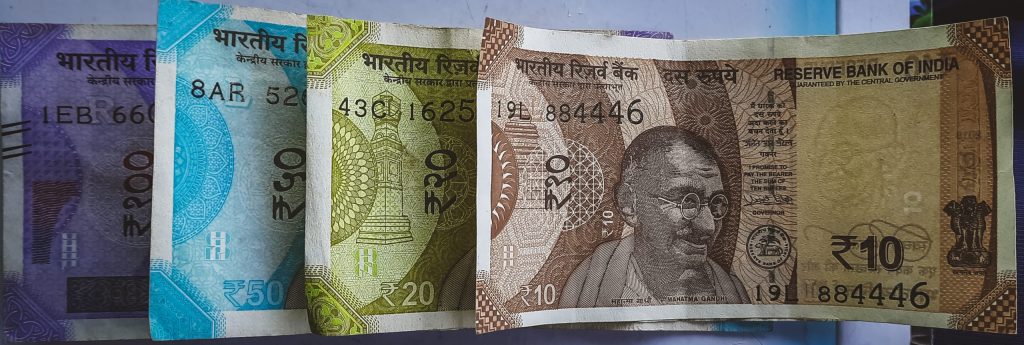
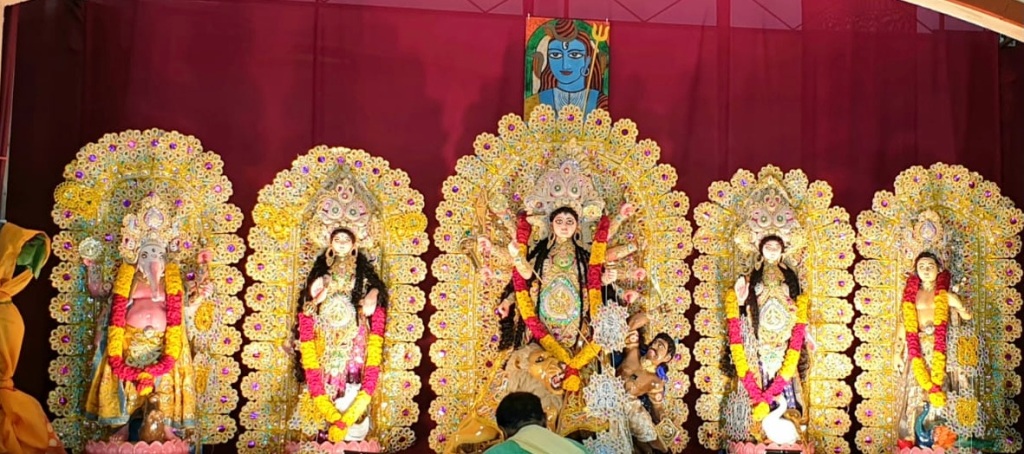

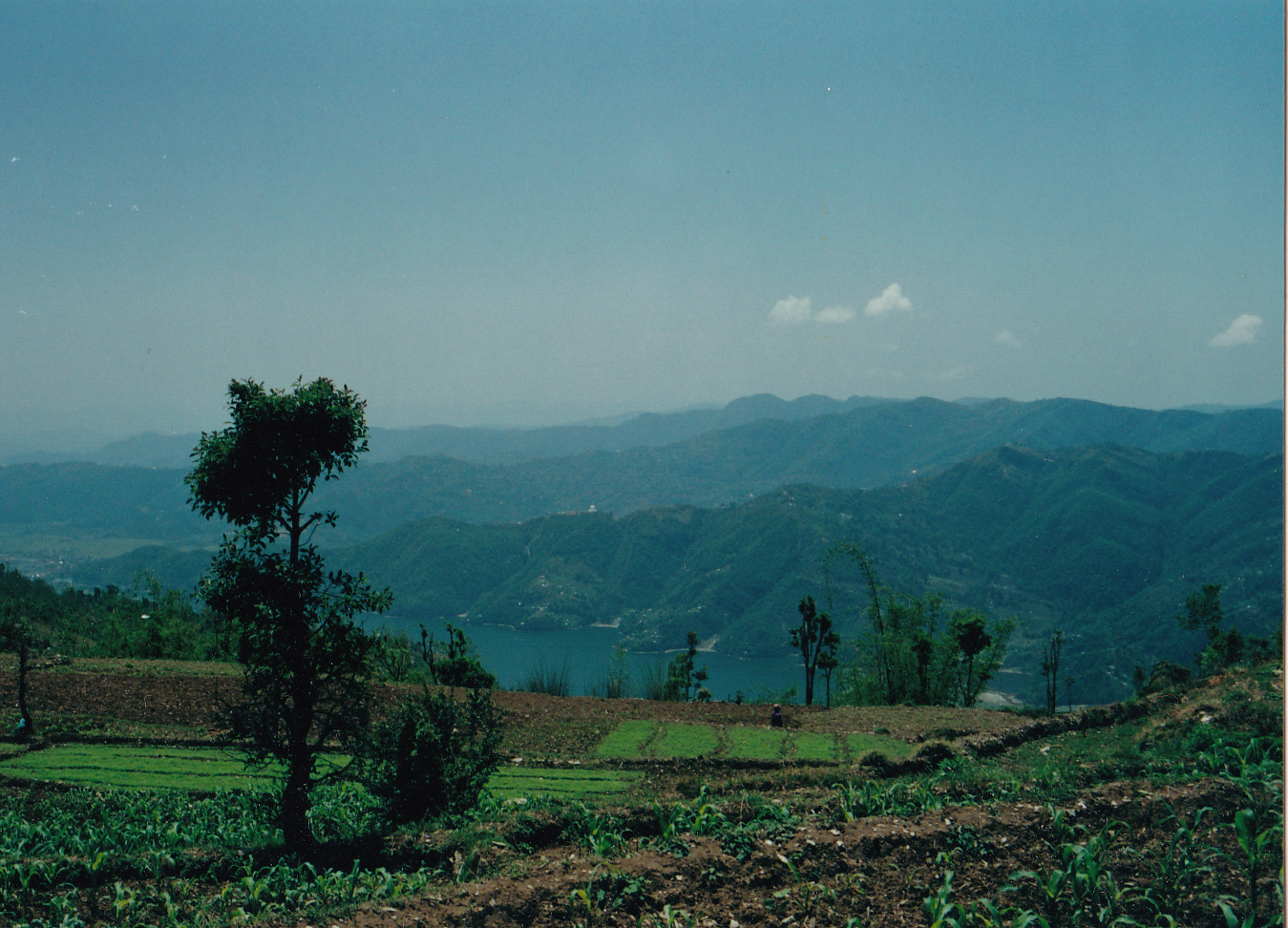

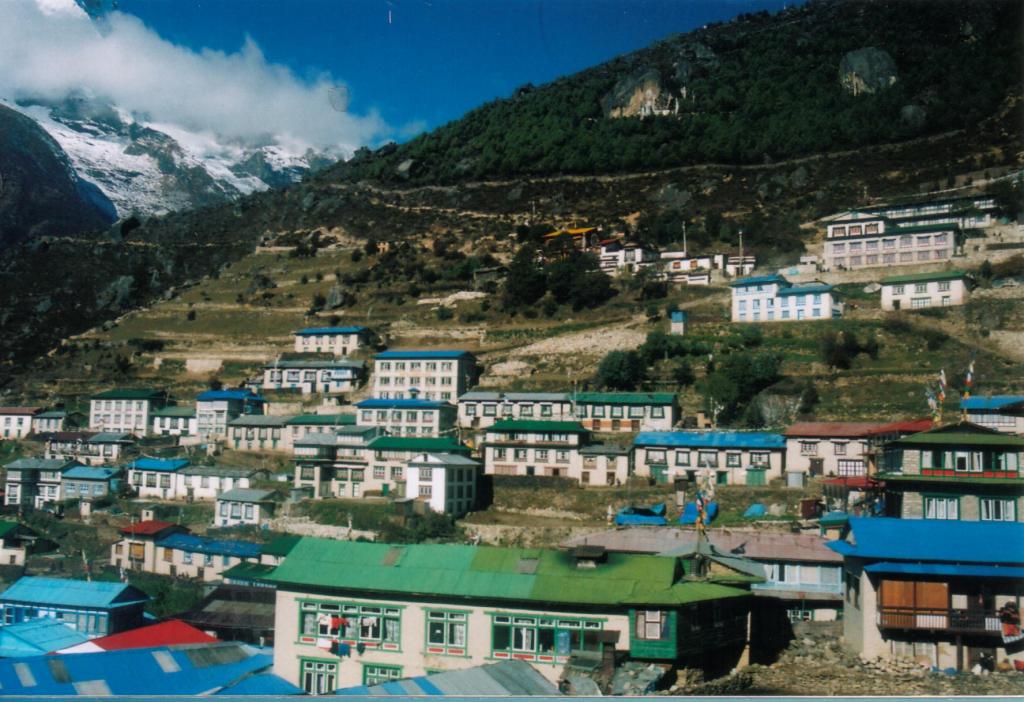
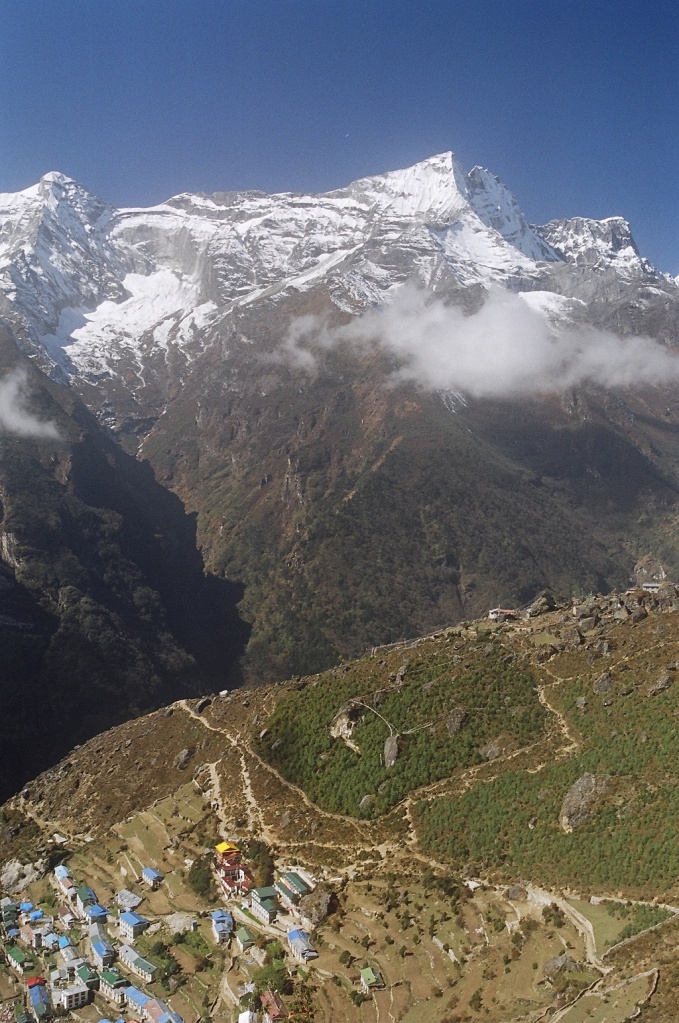
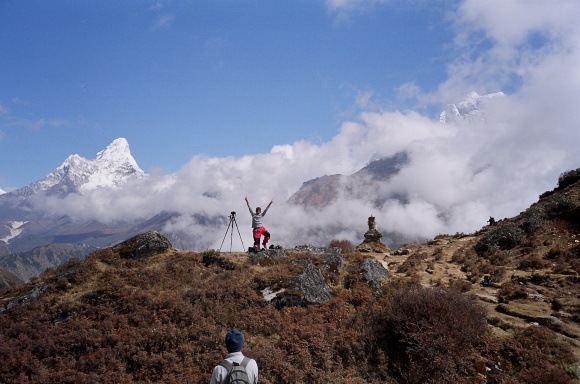




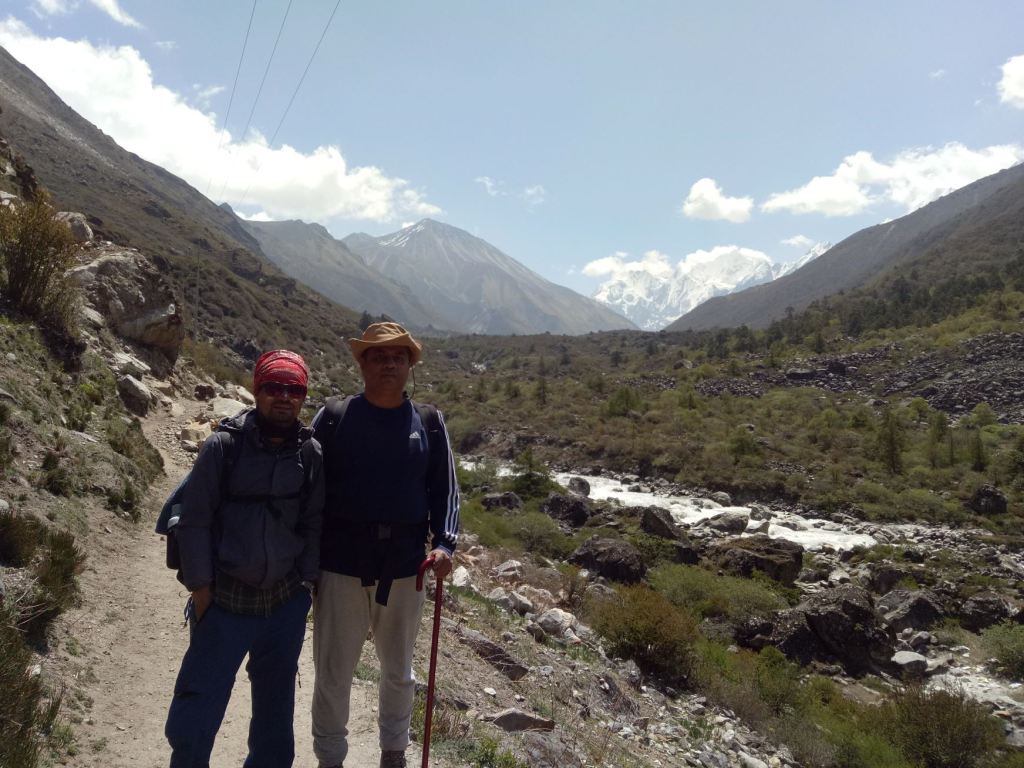
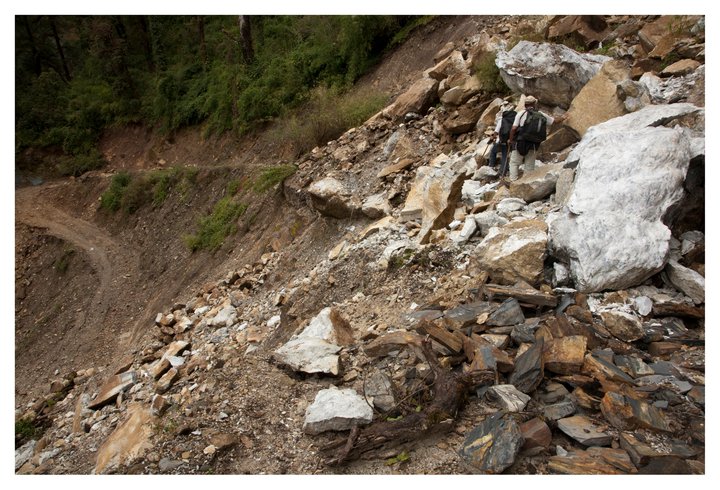

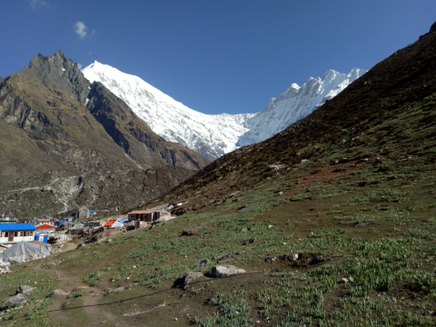
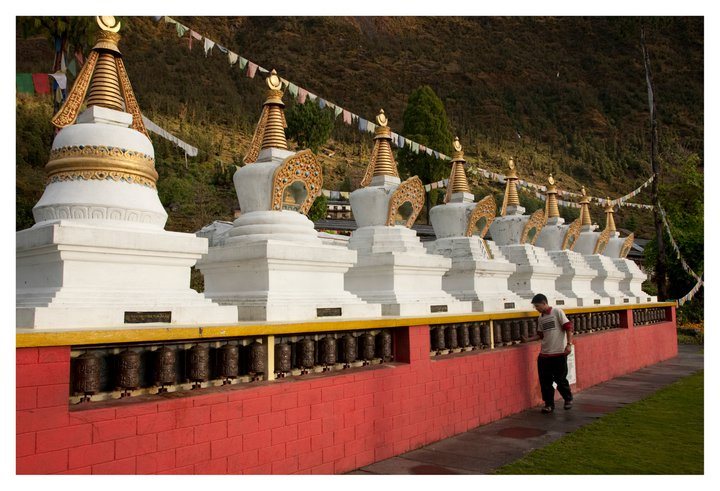
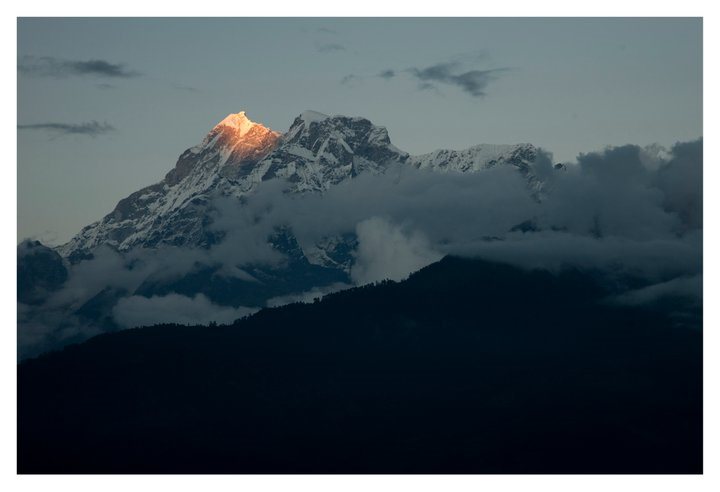

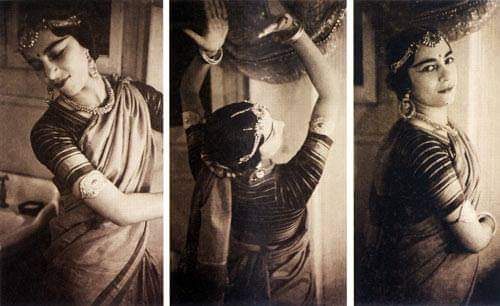

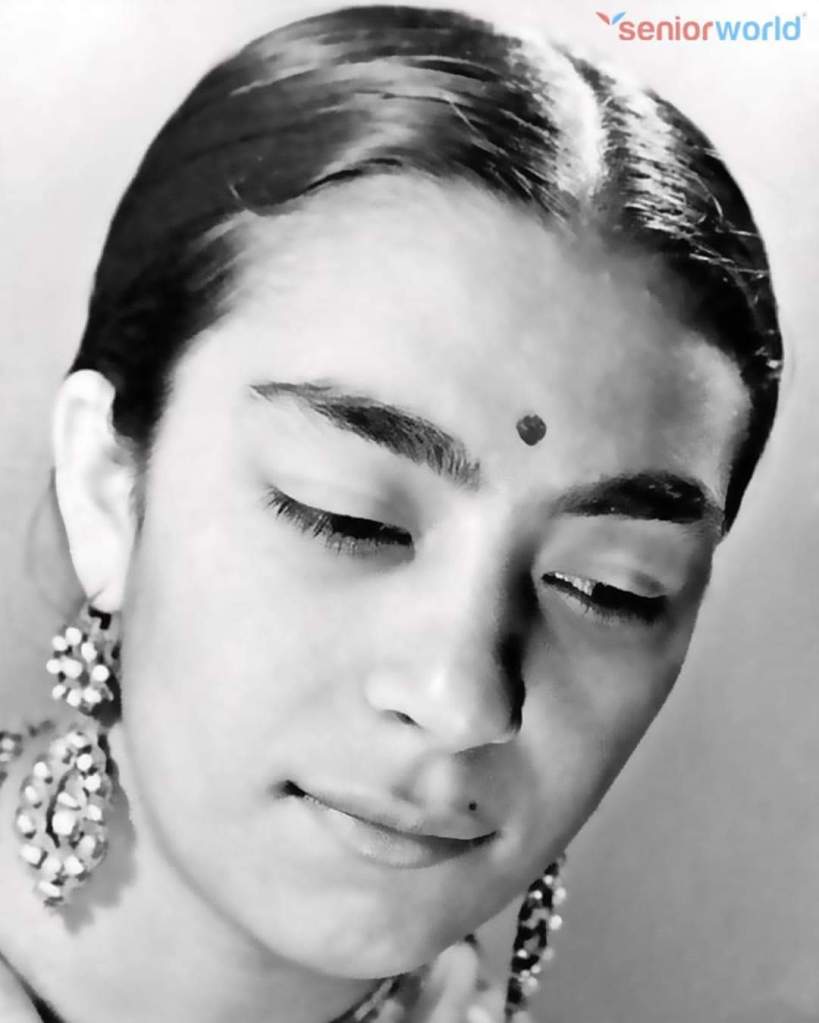
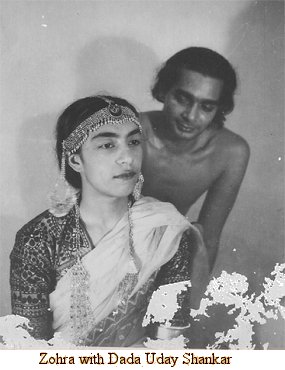

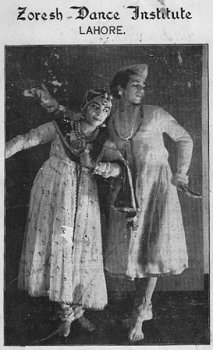









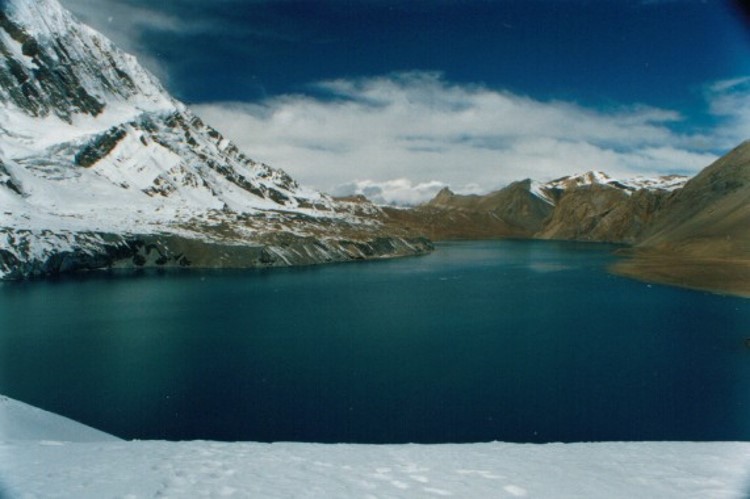


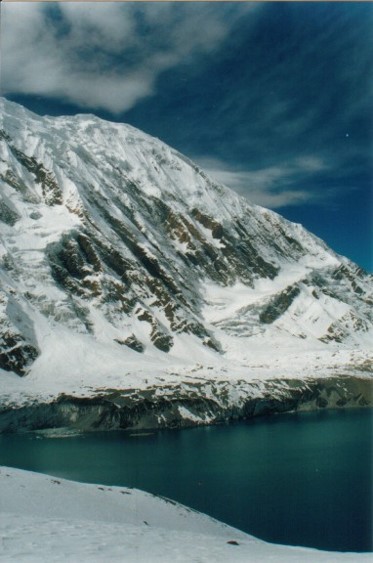
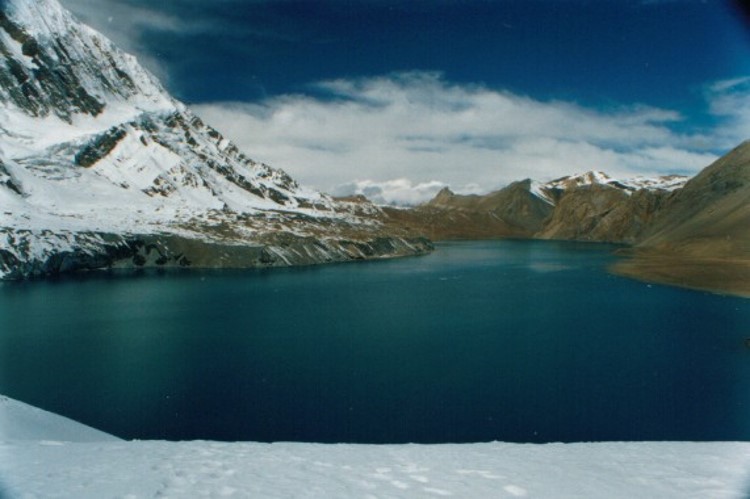


 Borderless