Greetings fromBorderless Journalfor all Asian New Years!Click here to read our message along with the video and a translation of a Tagore song written to greet the new year, with lyrics that not only inspire but ask the fledgling to heal mankind from deadly diseases.
Rabindranath Tagore’s Ekti Khudro Puraton Golpo (One Small Ancient Tale) from his collection Golpo Guchcho ( literally, a bunch of stories) has been translated by Nishat Atiya. Click here to read.
Sohana Manzoor shares the Bengali New Year celebrations in Bangladesh with colourful photographs and interesting history and traditions that mingle beyond the borders. Click here to read.
Ratnottama Sengupta, a well-known senior journalist and film critic lives through her past to make an interesting discovery at the end of recapping about the silk route. Click here to read and find out more.
Mike Smith drifts into nostalgia about mid-twentieth century while exploring a box of old postcards. What are the stories they tell? Click here to read.
Over 150 Authors and Artists from five continents have written on mental illness in an anthology called Through the Looking Glass. Candice Louisa Daquin, a psychotherapist and writer and editor, tells us why this is important for healing. Click here to read.
Meenakshi Malhotra explores the role of masculinity in Nationalism prescribed by Tagore, his niece Sarala Debi, Gandhi and Colonials. Click here to read.
Sohana Manzoor explores the social relevance of a dance drama by Tagore, Natir puja. We carry this to commemorate Tagore’s birth anniversary. Click here to read
Bhaskar Parichha reviews Reconciling Differencesby Rudolf C Heredia, a book that explores hate and violence. Click here to read.
Nivedita Sen reviews Nomad’s Landby Paro Anand, a fiction set among migrant children of a culture borne of displaced Rohingyas, Syrian refugees, Tibetans and more. Click here to read
We wish all our readers and writers fabulous varieties of new year celebrations across Asia! We also complete one year and waft towards a new beginning. We have had some alterations as you know over the last few months — new faces on our board and writers in residence. Now, in addition to hosting writers from across all borders and ages, we have decided to also become an online forum for translated Tagore songs and writings. This will be launched on Tagore’s Birth Anniversary — 7th May. We hope that the transcreations in this section will take the treasures of the great writer and philosopher closer to the non-Bengali speaking populations from all over the world. We will try to retain the spirit of his poetry and attempt to recreate the impact of the Bengali verses for everyone who can read in English. We have already started with transcreations of about half-a-dozen of his songs. Do take a look and tell us what you think.
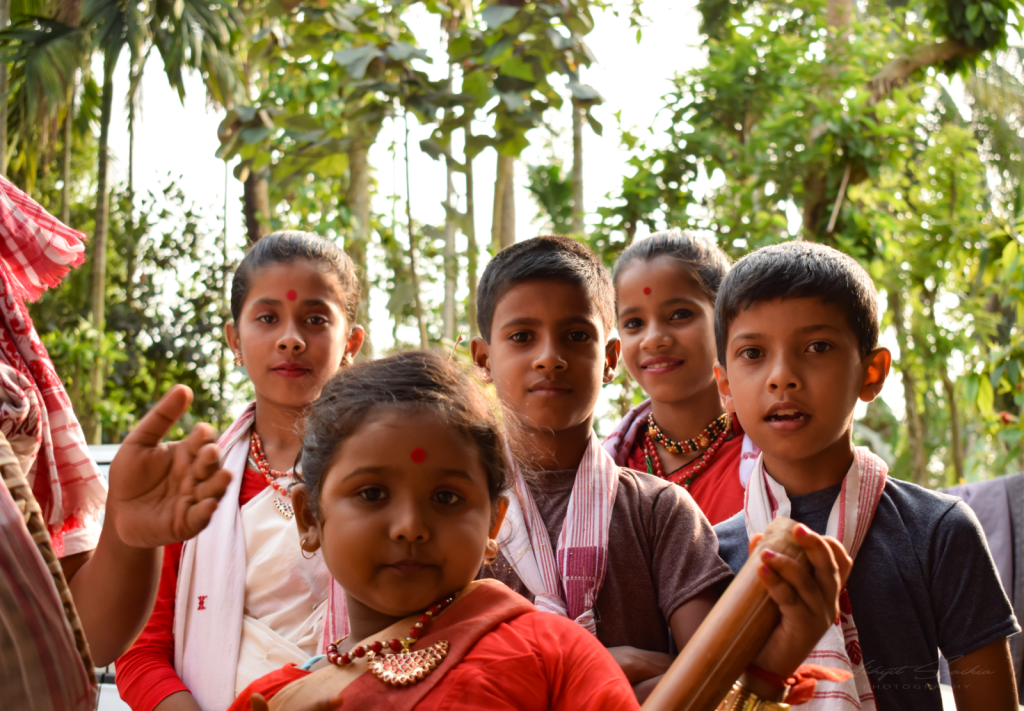
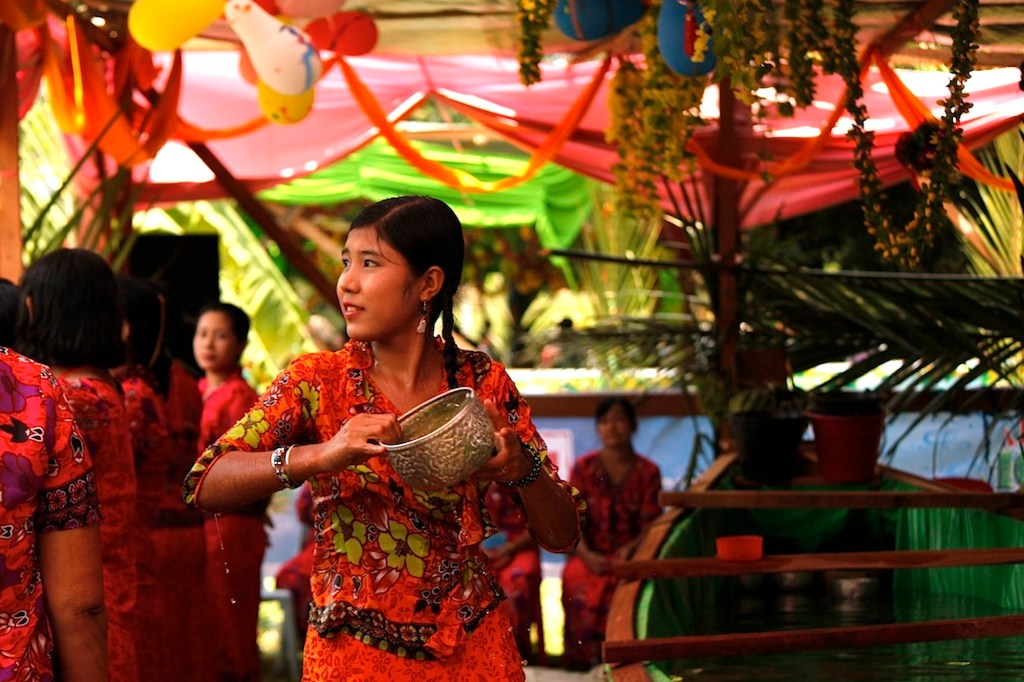
To celebrate our diverse new years, we have a musing by Sohana Manzoor. Did you know that Pohela Baishakh or the Bengali New Year is a national holiday in Bangladesh and is observed on the 14th of April each year?
A new year bodes a new beginning, a new sunrise and a new day — a new bunch of experiences. That is why our theme this time was new beginnings. What did we have in the beginning? Dylan Thomas tells us —
In the beginning was the word, the word
That from the solid bases of the light
Abstracted all the letters of the void;
And from the cloudy bases of the breath
The word flowed up, translating to the heart
First characters of birth and death.
On that theme of words, we have a fabulous poem by Balochi writer, Akbar Barakzai, who created a furore by turning down an award from the Pakistan Academy of Letters last year. His poem has been translated by Fazal Baloch. That is just one of the treasures. This time to celebrate this bouquet of new years across Asia, we have a bumper issue which includes, interviews with the 2020 Sahitya Akademi winner, Arundhathi Subramaniam, and academic-cum-writer Sumana Roy. Both poets have been kind enough to share a poem each with us. Arundhathi’s poem is inspiring and Sumana’s is a moving one about a tree, a tree that made history. We have powerful poetry from a number of other writers, Pushcart winner Jared Carter, Michael Burch, Sekhar Banerjee, Vatsala Radhakeesoon, Ihlwa Choi and of course our inimitable Rhys Hughes. Rhys has also started a column for us in which he will talk of poets, poetry and whatever else he chooses (within the confines of our magazine’s needs, of course). Our focus this year will shift even more towards quality of content.
In translations, other than Tagore songs and Baloch’s translations, we have Aditya Shankar’s translation of Malayalam writer, Shylan. A short story by Tagore from his famous collection Golpo Guchcho has been translated by Nishat Atya. To celebrate Tagore’s anniversary, we have essays by Meenakshi Malhotra and Sohana Manzoor too. Interestingly Sohana Manzoor’s essay has Tagore’s vision of Buddha — and Sumana Roy gave us a poem on the Bodhi tree, a tree under which the Buddha meditated his way to salvation! Looking at the sad situation in Myanmar, we definitely have a need for reviving Buddhism, a theme that has been touched on by well-known film critic, journalist and translator Ratnottama Sengupta, in her ponderings on the Silk Route. Branching off from the journey across Asia towards Europe and moving up north to Siberia is a narrative from our spunky back packing granny, Sybil Pretious. She writes of her travels all the way to Lake Baikal!
Devraj Singh Kalsi suffered personal loss and has given us a poignant in memoriam on his mother. Mike Smith takes us on a memorable nostalgic journey with postcards from the past with stories that want to make you weep. There is more on memorabilia with a photo-essay by Nishi Pulugurtha and a photo-poem by Penny Wilkes (have you ever adventured with one of these?). Sunil Sharma tried out a playlet! The other exciting and new thing is Bhaskar Parichha has started a witty column with us. We are calling it Bhaskar’s Corner! I won’t tell you what about but do take a peek!
Books reviewed are Paro Anand’s Nomad’s Land by Nivedita Sen — a book on migrants, a theme which is there in the piece on silk route too; Rudolf C Heredia’s Reconciling Differenceby Bhaskar Parichha and Candice Louisa Daquin has reviewed a book on cancer, The First Cellby Azra Raza. Our book excerpt is from a book on parenting,Raising a Humanist: Conscious Parenting in an Increasingly Fragmented World by Manisha Pathak-Shelat and Kiran Vinod Bhatia. An interesting read in a world of changing values. Our young person’s section run by Bookosmia owe a huge thanks to the untiring efforts of Nidhi Mishra and Archana Mohan. Thank you both. Thanks to the whole team for your immense support.
I have as usual not covered all the content in my note. I leave you to unfold the surprises! Much thanks to all our writers and readers for continuing to be with us!
Does she need an introduction? Arundhathi Subramaniam who has taken the world by storm with her poetry, reinforcing God, using English as a medium of writing over what we call a mother tongue, and voicing her stand on her own concept of national identity, and yet she has won the Sahitya Akademi award for 2020 for her collection, When God is a Traveller. She has broken rules that defined the modern literary world and moved towards creating her own individual brand of writing. Her writing is full of vivacity and makes the reader emote. She writes from the core of her being — that is clearly evident in the flow of her poems. Clarity, preciseness and perfection in linguistic usage enhance her ideas and grasp the reader in their fulcrum to lever their thoughts and emotions into her world. In this exclusive with Borderless Journal, read about Arundhathi’s journey.
Tell us about your journey as a writer and a poet. When and why did you start writing?
I’ve been excited by poetry for as long as I can remember, Mitali — the swing, the rhythm, the velocity, the precariousness of it. Thankfully, none of my early efforts at writing it have endured! But I composed many bits of doggerel as a child. In my adolescence and early adulthood, poetry was catharsis and emotional self-expression, as it is for so many. I think it was in my late twenties and thirties that I began to come into my own as a poet.
My first book, On Cleaning Bookshelves, happened in 2001. I felt I’d been waiting a long time to be published. But in hindsight, it was a good thing. It took me time to find the timbre of my voice, to allow it to embody a mix of assurance and doubt. At least I now began to know the poetry I aspired to. It is what I still aspire to — a kind of textured clarity, a poised uncertainty.
What gets your muse going?
I’m still finding out! I know some measure of quiet helps. Long days, devoid of agenda, help. And yet, so much writing also happens on flights, in cab rides, in coffee shops, waiting for a friend to arrive. Poems happen when I’m able to strike a certain creative tension between urgency and unhurriedness.
When you were a child, what were your aspirations? What did you want to become?
There was a fleeting aspiration at age five to join the army. But I think I realized pretty soon that the path to field marshaldom was an arduous one. It was always poetry after that!
In 1997 you had a life changing experience. What was it and has it impacted your writing?
It was a naked-wire experience of emptiness, if you will. A brush with life without form, without any graspable meaning. There was terror in it, but later, also a kind of freedom. I’m never quite sure what brought it on. But the experience faded in a week, leaving in its wake a strong, unwavering awareness that I needed to live my life differently, to commit myself to making my peace with this vacancy. That turned me into a seeker, first and foremost. All the writing – both prose and poetry – that came afterwards probably reflected this shift in some way.
What have been the influences that impacted your writing?
The literary influences have been as varied as all the poets whose work I’ve ever loved: TS Eliot, Basho, Wallace Stevens, Donne, Neruda, Rilke, Anne Sexton, Denise Levertov, Arun Kolatkar, AK Ramanujan, John Burnside, and so, so many more. But as my spiritual journey took on a certain momentum, I also rediscovered the Bhakti poets for myself, and realized they were an integral part of my literary lineage. They are my ancestral guides and companions, in a sense: Nammalvar, Annamacharya, Tukaram, Akka Mahadevi, among others. And there are so many other mystic poets I’d add to that list: Issa, Buson, Ryokan, Ikkyu, Dogen, St John of the Cross, Hafiz, Rumi, among them.
But we aren’t shaped only by what we read, are we? My life experiences have also impacted my writing. I’ve met some extraordinary people, had some fascinating conversations, travelled to some unforgettable places, had some deeply life-altering (and not always easy) experiences, and I’m sure all of those have contributed to who I am and how I write.
You have done a book on Sadhguru and another with him. What was it like working with him?
Sadhguru can be funny, profound, provocative, compassionate, a friend, a remote spiritual master — sometimes all in the course of a single interaction. So, I learnt to go into every book session, prepared to be startled. It’s been interesting — the way I have felt provoked, unsettled, singed, during many of our meetings, and still emerged, feeling oddly energized, invigorated, alive. As the writer of his biography, I was struck by the freedom he allowed me, his refusal to micro-manage the writing.
You have written books on Buddha and Sadhguru. Why did you opt to write on men associated with religion?
Well, I’ve also edited an anthology of Bhakti poetry, Eating God, and have a forthcoming book on four contemporary little-known women who walk the spiritual path in their own deeply individual ways, called Women Who Wear Only Themselves. So, my fascination is with the realm of the sacred – and not just with men who commit themselves to it, but with women too.
I am emphatically not fascinated with the exoteric aspects of religion. But I am interested in the nascent experiential insights around which faiths are often built. So, the Buddha has long interested me as the fearless amateur questor, the compassionate guide who showed us a direct path back to ourselves – one that allows us to bypass all the institutional middlemen who ‘sell water by the river’, as it were. Sadhguru fascinates me for similar reasons, as a contemporary mystic – irreverent, flamboyant, and deeply human all at once.
You have got God back into poetry. Eating God, a recent book of yours, even says it in the title. What made you opt for bringing God back in where the modern trend is to shun the spiritual? What is your perception of God?
Eating God is an anthology of sacred verse – of devotional poetry. So, it was difficult not to have god on the menu. The bhaktas wouldn’t have forgiven me for it!
My own book of poems, When God is a Traveller, also uses the word ‘god’. But the god of this book is not a deity in a temple, but a heroic adventurer who, like so many others in world myth, takes off on a journey around the world and returns to find the answers lie within him. So, the god, Muruga, is a kind of alter ego in this case; a pilgrim/ traveller/ vagabond archetype who mirrors us back to ourselves.
My perception of the divine? It’s still unfolding and is best implicated in poetry. So, let me simply share my poem, ‘Goddess – II’, with you. It’s from my most recent book, Love Without a Story.
Goddess II
(after Linga Bhairavi)

In her burning rainforest
silence is so alive
you can hear

listening.
Have you ever written in any other language other than English? Why?
No, I haven’t. English is my first language, and it is an Indian language. It may be ours due to unfortunate historical circumstances. But it is no longer a foreign import. It is as much ours today as democracy, or cricket, or chai, or the chili, or tamarind, or okra, or the nose ring! I have translated poems from Tamil and Gujarati into the English, however, working with fellow-translators for whom those are their first languages.
In your poem, To the Welsh Critic, you have said: “This business about language, / how much of it is mine, /how much yours”. By saying this, in a way you critique the commonly held belief that writers should write in their mother tongue to express themselves. Can you explain your views on this?
Well, I often say that my mother speaks many tongues. She is a Tamilian, raised in Burma and Delhi, married in Mumbai, and has chosen now to live in Chennai. Consequently, she speaks Tamil, English and Hindi fluently, and is now studying Spanish online! Like most Indians, she has bequeathed to me a multilingual inheritance. I grew up in Mumbai where I heard Bambaiyya Hindi, Marathi, Gujarati, Tamil and English around me. English, however, was the language I formally studied, and the language I heard plentifully at home, so it is my first language. It is the language I dream in, express rage and grief in. It is the language closest to my skin; it is the language I need, therefore, to write poetry in.
Rather than impose some doomed project of cultural jingoism upon ourselves, rather than try to aspire to some mythic state of cultural purity, it would make our lives infinitely richer and more exciting if we embraced our pasts. My ‘Welsh Critic’ poem is addressed to all those – in our country and elsewhere — who offer us absolutist formulae for belonging, who would have us believe there is only one way to be ourselves. As I say in the poem, ‘I stammer through my Tamil,/ and I long for a nirvana that is hermetic,/ odour-free, bottled in Switzerland’. My cultural identity is polyglottal, happily hybrid, and for those very reasons and other indefinable ones, I believe I am as Indian as they come.
How do you think language should be perceived? Should it be bound to the umbilical bonds? Or should a writer, like an artist, be free to choose his medium of expression — for language is merely his tool, his colour or paintbrush?
Language is and must always be about freedom of choice. Only when we choose freely can we express freely. Rather than chop and hack at a diverse cultural legacy, it makes sense to enjoy its abundance and savour its many flavours. This is why so many Indian poets I know are translators as well. We enjoy the challenges of bringing the textures and insights of one literature into another, opening up new worlds of aesthetic experience. I have worked for years as editor of the India domain of the Poetry International Web, a small but significant online archive of contemporary Indian poetry. It entailed working with poets working in over twenty Indian languages. The work on this website, as well as all my book of Bhakti poetry, has been about translation – allowing literatures to roam freely from one linguistic context to another.
It is time to talk unapologetically about the language of poetry. Poets everywhere recognize each other because of this kinship. It has nothing to do with jaded arguments around language politics. Those belong to politicians, not poets.
Some of your poems talk of establishing an identity as a woman and express a fierce desire for an independent existence. “I erupt from pillars, / half-lion half-woman.” Do you think this need is gender related? Or is it the call of poetry?
Well, yes, some of my poems do consciously assert a female identity. It is one of the many identities I own – alongside being Anglophone, Indian, contemporary, among other things. In ‘Confession’, the poem you mention, the entity that erupts from pillars, ‘half lion-half woman’, is clearly an allusion to the Narasimha avatar of Vishnu – and yes, I’m definitely presenting a female version of that archetype here. I remember the surge of freedom and joy when crafting that metaphor.
There is an early poem, ‘5.46, Andheri Local’, in which I speak of a women’s compartment in a peak-hour Mumbai local train being transformed into ‘a thousand-limbed, million-tongued, multi-spoused Kali on wheels’. And in my most recent book, I have a song for ‘catabolic women’ – women who are happily ‘unbuilding, unperpetuating, unfortifying, disintegrating’. These are some of the poems in which the female identity is asserted strongly, emphatically.
‘Catabolic Woman’ is a poem that binds you to both your identity as a woman and an Indian. Do you see nationalism as a necessary part of a writer’s identity?
Well, there’s a playful paradox in one phrase — ‘proudly Indian, anti-national’ — but other than that, the poem doesn’t really dwell on national identity. It’s more about growing into oneself as a woman (something that happens usually in one’s forties and fifties, or at least, did for me), a woman who’s no longer fooled by self-serving rhetoric, vested interests, hidden agendas. As I said of the poem, ‘To the Welsh Critic’, I see myself as deeply Indian. But I’m uncomfortable with dogmatic definitions of what it means to belong to a particular country, a particular faith, or even a particular gender. There are many ways of being not just Indian, but woman, as well. I would like to believe that my work reflects that complex sense of identity.
Tagore, perhaps the most acclaimed poet from India, wrote in the start of his essay on Nationalism, “Our real problem in India is not political. It is social.” Would you agree with that?
Well, I know that there are ways of belonging that lie beyond a glib cosmopolitanism and what I think Tagore called ‘the fierce idolatry of nation-worship’. Belonging anywhere is not about passivity. It is always an act of negotiation. It takes time to see plurality as a possibility, rather than a liability. As richness, rather than confusion. Countries everywhere are grappling with this in their own way – how to celebrate diversity, but without hierarchy, a diversity rooted in justice, in equality. That is our challenge too.
What is your perception of the role of a poet or writer in the world? Is it only aesthetics or something further?
We sometimes tend to polarize the morality-aesthetics debate. Being morally attentive doesn’t mean turning heavy-handed or perennially indignant, and valuing aesthetics doesn’t mean turning ethically laissez-faire or politically indifferent. The role of a poet, as I see it, is to be true to the way she sees the world and to use language with precision and thoughtfulness. A mix of authenticity and artistry, integrity and craft – both are essential to poetry.
Poetry alters human beings in very deep and enduring ways. But those changes aren’t accomplished by turning self-conscious, but by growing more conscious – aiming for greater exactitude and greater nuance, but without losing intensity, without losing the fire that burns, and must always burn, at the core of this art.
Thank you Arundhathi for giving us your time.
Photo Credit: Meetesh Taneja
This interview was conducted online by Mitali Chakravarty on behalf of Borderless Journal.
We’re bound for the ocean
and a largesse of sky,
we’re not looking for the truth
or living a lie.

We’re coming apart,
we’re going downhill,
the fury’s almost done,
we’ve had our fill.

We’re passionate, ironic
angelic, demonic,
clairvoyant, rational
wildly Indian, anti-national.

We’re not trying to make our peace
not itching for a fight,
we don’t need your shade
and we don’t need your light.

We know charisma isn’t contagious
and most rules are egregious.

We’re catabolic women.

We’ve known the refuge of human arms,
the comfort of bathroom floors,
we’ve stormed out of rooms,
thrown open the doors.

We’ve figured the tricks to turn rage
into celebration,
we know why the oldest god dances
at every cremation.

We’ve kissed in the rose garden,
been the belles of the ball,
hidden under bedcovers
and we’ve stood tall.

We’re not interested in camouflage
or self-revelation,
not looking for a bargain
or an invitation.

We’re capable of stillness
even as we gallivant,
capable of wisdom
even as we rant.

Look into our eyes,
you’ll see we’re almost through.
We can be kind but we’re not really
thinking of you.

We don’t remember names
and we don’t do Sudoku.
We’re losing EQ and IQ,
forgetting to say please and thank you.

We’re catabolic women

We’ve never ticked the right boxes,
never filled out the form,
our dharma is tepid,
our politics lukewarm.

We’ve had enough of earnestness
and indignation
but still keep the faith
in conversation.

We’re wily Easterners enough
to argue nirvana and bhakti,
talk yin and yang,
Shiva and Shakti.

When we’re denied a visa
we fall back on astral travel
and when samsara gets intense
we simply unravel.

We’re unbuilding now,
unperpetuating,
unfortifying,
disintegrating.

We’re caterwauling,
           catastrophic,
           shambolic,
           cataclysmic,
           catabolic women.
First Published in Love Without a Story, 2019.
Arundhathi Subramaniam is a poet who has recently won the Sahitya Akademi Award, 2020, for her book When God is the traveller (2014). She has authored a number of books and won multiple awards and fellowships. She has been part of a number of numerous anthologies and journals.
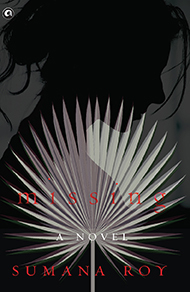
She loves trees and identifies with Tagore’s Bolai, who had an affinity for trees. She has written a non-fiction called How I became a Tree (2017), which is being reprinted now by Yale University Press. Sumana Roy is a writer who writes out her passion for trees and more. The draft of her first novel was long listed for Man Asian Literary Prize, but eventually, abandoned by her because she felt it was not good enough. She later authored a novel called Missing (2018), an anthology of poems called Out of Syllabus (2019), and a collection of short stories, My Mother’s Lover and Other Stories (2019). She also contributes essays regularly on various online forums and teaches in Ashoka University, near Delhi. Sumana hails from a small Himalayan town of Siliguri which impacts here writing in different ways. Her interview reflects how she lives by her convictions and looks beyond man made constructs in quest of an undefined Eldorado which is abstruse in itself. However, I am convinced, when she finds her Eldorado, her readers will probably be overwhelmed by the radiance of what she shares with the world. In this interview, she shares snapshots of her life as writer and her convictions.
When and why did you start writing?
I don’t think any of us can answer this question. I had no ambition to be a writer. I had not met a single writer in my life. In my middleclass Bengali life were people like my parents – teachers, bankers, officegoers, and the unemployed, looking for jobs. I wrote love letters for my friends in boarding school, and letters to the editor before that. Then I started studying literature at university, and I think I wrote nothing else except essays to pass examinations and the occasional letter to the man I would eventually marry. I say this just to reiterate that the idea of a writer as someone who could live an unremarkable life like myself wasn’t available to me at that time. I began working towards a PhD, and as I was living away from home, I hungered for the sound of Bangla. I began reading Bangla poetry and I felt something inside me loosen – I wanted to write like these poets had, but in English, the language I was most comfortable in. I kept the writing a secret from my family and the world. Only after I had submitted my doctoral dissertation did I begin sharing my writing with the world – by submitting to online magazines I liked reading, but also responding to most ‘Call for Submission’ pages that I came across in the early years of social media.
What gets your muse going?
Life. Living. I know this is a cliché and an unsatisfactory answer, but that is what it is – to live inside my writing …
Your first book is about trees. Tell us what egged you on to choose to write about trees and why?
I suppose it came from a disaffection – the Bangla word ‘bishaad’ would be more appropriate perhaps – for the social world, for the human in it. I wanted to live outside the emotion economy of social relationships. Groping for various possibilities, I realised that I wanted to live like a tree. I had been reading and living with plants long before that. I suppose I began seeing them differently after that epiphany.
Would you say your obsession with trees was similar to that of Tagore’s Bolai?
I’ve written about Bawlai in How I Became a Tree. He is a relative, yes, among the many I discovered when looking for those who had felt the human-tree equivalence emotionally, intellectually, or, as in the case of Rabindranath’s story, intuitively.
You have also spoken of Nandalal Bose, the famous Indian artist who passed away before you were born in the book. Why him? Do paintings in general affect your writing?
I discovered Nandalal’s Vision and Creation in Santiniketan’s Subarnarekha bookstore. I might have seen it before, in Bangla, as a child, but much of it had disappeared from my consciousness. I was staying in a guest house in Ratanpalli. The full moon night of spring I still remember, as I do the curiosity of the mosquitoes. I found Nandalal teaching his students how to draw trees by constantly referring to the human anatomy – this analogical plant-human relationship seemed most natural to his imagination. That is how I found another relative in him.
To answer your second question, yes, art – and music – brings something to my life.
Your novel is about a missing woman. Parallels have been drawn between her and Sita. Why?
I don’t know who has drawn this parallel. What I do know is that I was interested in the life of the missing woman, a woman like Sita, in the world today. Why are battles fought and epics written around the missing woman? I did not make this comparison explicit, but always hope that the reader would, on their own, particularly because, like the seven adhyas (parts) of the Ramayan, the novel, too, is structured around seven sections – seven days in the lives of the characters.
If we perceive Rama as a democratic ruler who listened to his subjects, would you hold him guilty for abandoning Sita? How do you perceive him?
Rama was a king, not an elected representative, as we know. Even if he were, as you are asking me to imagine him hypothetically, I cannot see how anything can justify the demand on Sita to prove her ‘purity’. About abandonment, it is a personal matter between the two people involved. Using the narrative of abandonment of a woman to prove one’s purity as a ruler, as a democratically elected representative in our country has done recently, is as ridiculous as the State’s demand on Sita’s purity.
You are a professor too. You have been doing number of columns talking of educational values. What are the things you would want to see changed? And why?
I don’t think I’ve written about values. It’s a loaded word, and I feel incompetent to speak about it. What I have been writing against is the industrialisation of the curriculum, particularly in the English Literature syllabus, specifically the postcolonial syllabus.
What would I like to see changed in this regard? I’d like the structure of such a syllabus to be more egalitarian – in a real way – and not dictated by metropolitan impulses alone.
I remember your essay against long biodatas. Do you think reverting to past values where marketing oneself as a writer with a huge biodata was not a necessity would be relevant or possible today? Is this a construct of the publisher or the writer? Do you think the only the quality of one’s work without a publication history or academic excellence would allow a writer to get published?
The biodata is a marketing tool. The book can stand its own ground without us knowing where the author lives or what prizes they have won or where they studied. If there were blind submissions, without the name and bio of the writer, we might not be reading the same writers in the pages of The New Yorker or the London Review of Books – so much is published because of the reputation that attends writers. I think it is unfair to writers who are just starting out, and, most importantly, those who have not had many of the opportunities that their more well-published contemporaries have had. The snob value of the biodata also creates a hierarchy – it is against this that my reservation lies.
In your opinion, what is most important — fame, money or creative satisfaction? Why? Can there be creative satisfaction without accolades of the external world? Would that be of any value?
I can only speak for myself. This has perhaps to do with one’s temperament. The three things you mention – ‘fame, money, creative satisfaction’ – may all be important for many artists, as it might be for a sportsperson or even a politician. I think I write just to be able to get away from the social world, to stay with myself, self-indulgently – that someone reads me in a world where so much of reading material is available for free is a gift from the reader to me. I don’t exactly know what ‘creative satisfaction’ is. It’s because I suffer from creative dissatisfaction. I dislike everything I have written or everything that I write. And yet I do not want to stop writing. So… I do not write for fame, money, or creative satisfaction. I write to make sense of my world, to protect myself from myself perhaps.
You often colour your writing with food and family. Why?
I enjoy a life of the senses, of eating. I like to cook and eat, but, most of all, I love to fantasise about eating – the things I want to eat, how I could make them, whether I will ever get to taste them, how to grow some of the produce, and so on.
My understanding of ‘family’ is not blood-bound. Those I love are my family, both humans and non-humans. They will naturally enter my writing.
Do you teach creative writing? Can creativity be taught? Is it any different from studying literature or language?
Yes, I teach Creative Writing at Ashoka University. Writing can be taught as much as music can be taught – both involve Riyaz(practice), which is what my writing workshops are meant to be. To be a singer one must first train to become a listener. And so, with writing – one must become a reader first. By this I do not mean that one has to read 52 books a year, but one must be mindful of how words work, how lines and sentences work through us, the senses in which literature comes to us, and so on.
Where are you located now? Gurgaon or Siliguri and does your locale impact your writing.
I live in Sonipat during the teaching semester. The rest of the year I am in Siliguri, which is where I always want to be. My surroundings affect me, and, by extension, my writing. This is true of everyone, I think? By this I do not mean that living in a small town will make me write about the idyllic life in contrast to a life in the metropolis. The sensory affects us and, consequently, our writing.
How do you juggle writing and teaching?
With a lot of difficulty, because there’s also housework and caregiving for the elderly. And yet, I now know that my students make me think of things that I wouldn’t have had I worked on my laptop all day.
What is your favourite genre in writing and why?
The poem and the essay, the shorter forms. I am also very fond of the letter and the interview as literary genres.
What are your future plans? Any more books coming our way?
I am waiting for the semester to end, to get away from the Zoom life, to rest my eyes, to play with my nephew and niece, to comb my mother’s hair, and, if the rains help, to plant a few moringa and jackfruit trees. I want to feel better, for my health to get better than what it has been over the last few months. I’m not thinking about books now.
This interview was conducted online by Mitali Chakravarty on behalf of Borderless Journal.
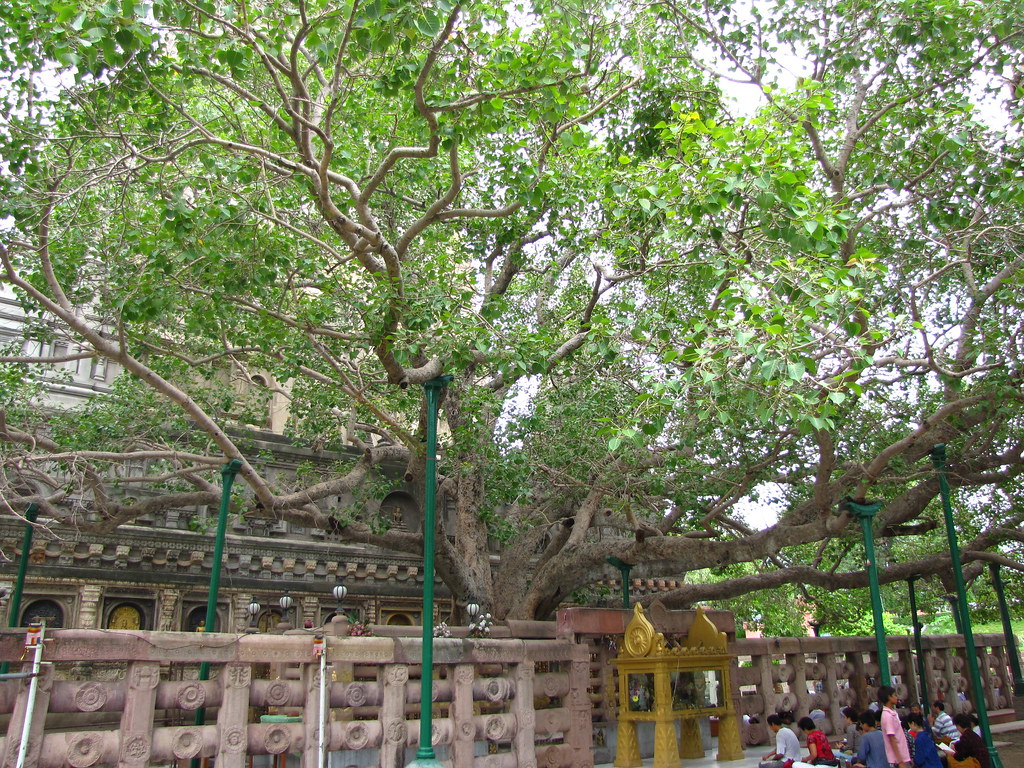
Here you can come without brushing your teeth – the Buddha and the fig tree have never needed toothbrushes.
The myths that surround places are like ambulance sirens – patients, pilgrims and tourists are all the same.
One comes to trees to escape the pornography of waiting. There must be something about sitting under a tree, in the bandaged conflation between shade and shadow. Other men chose exile in the forest, vanwas – Rama, the five Pandava brothers, their wives. Only Siddhartha came to a solitary tree, to escape desire. A forest is a hiding place, where men compete with trees. So Gautama stopped walking and closed his eyes. The uselessness of eyes, of legs, of combs, of words – all this the Buddha learned from this tree.
Today, only bombs are living Buddhas. When one went off in Gaya, everyone ran, everyone except the trees. For death also demands walking.
Now, after the fret of flowering, I only seek the tree’s heart. Guns are seedless fruits, the gardens full of traitor trees. Now I am free. Only I know that the tree is Buddha. And that the Buddha was a tree.
Sumana Royis the author of How I became a Tree, a work of nonfiction, Missing: A Novel, Out of Syllabus: Poems, and My Mother’s Lover and Other Stories, a collection of short stories.
PLEASE NOTE: ARTICLES CAN ONLY BE REPRODUCED IN OTHER SITES WITH DUE ACKNOWLEDGEMENT TO BORDERLESS JOURNAL
Bhaskar Parichha debuts his column with a witty collection of quotes that he has picked up with his wide reading, arranged in a way that they take the reader through a series of thought-provoking comments on contemporary issues
Cartoon by Mario Miranda in the November 8th,1987 issue of Illustrated Weekly. Photo courtesy: Bhaskar Parichha
We, in India, are in the throes of a big political churning right now. No one knows who the victor and who the vanquished will be. But politics — and obviously elections in India — are as multi-hued as they are rancid.
Adore it or loathe it, politics has its own share of quotable quotes. From the funniest quotes to the dumbest one, here is an uplifting list of famous lines said by equally famous people.
Niccolo Machiavelli, a fifteenth century florentine philospher, has a very pertinent line for the present day politics. He said, “Politics have no relation to morals.” Charles de Gaulle’s take on politicians is so sensible! “In order to become the master, the politician poses as the servant.” Two other famous literary figures — the Irish George Bernard Shaw and British novelist George Orwell — too were scornful of politicians. Shaw said, “He knows nothing and thinks he knows everything. That points clearly to a political career.”
Orwell remarked, “In our age there is no such thing as keeping out of politics. All issues are political issues, and politics itself is a mass of lies, evasions, folly, hatred and schizophrenia.”
American comedian George Carlin had a terse remark on that country’s politicians: “Now, there’s one thing you might have noticed I don’t complain about: politicians. Everybody complains about politicians. Everybody says they suck. Well, where do people think these politicians come from? They don’t fall out of the sky. They don’t pass through a membrane from another reality. They come from American parents and American families, American homes, American schools, American churches, American businesses and American universities, and they are elected by American citizens. This is the best we can do folks. This is what we have to offer. It’s what our system produces: Garbage in, garbage out.”
There is so much of coaxing and wheedling to take part in elections. Plato, the great Greek philosopher, observed, “one of the penalties for refusing to participate in politics is that you end up being governed by your inferiors.” Elections in India have become so expensive that ordinary mortals like you and me can’t think of fighting them even in our dreams. Will Rogers said, “Politics has become so expensive that it takes a lot of money even to be defeated.” Gore Vidal has a different take on this issue: “Apparently, a democracy is a place where numerous elections are held at great cost without issues and with interchangeable candidates.”
US President Calvin Coolidge once said, “Politics is not an end, but a means. It is not a product, but a process. It is the art of government. Like other values it has its counterfeits. So much emphasis has been placed upon the false that the significance of the true has been obscured and politics has come to convey the meaning of crafty and cunning selfishness, instead of candid and sincere service.”
What New York City writer Christian Nestell Bovee who relished the intimate friendship of Washington Irving, Longfellow, Emerson, and Oliver Wendell Holmes believed politics is interesting: “Political aspirants make too much of the people before election, and, if successful, too much of themselves after it. They use the people when they want to rise, as we treat a spirited horse when we want to mount him; — for a time we pat the animal upon the neck, and speak him softly; but once in the saddle, then come the whip and spur.”
Finding the right candidate in elections is next to impossible. Cartoonist Kin Hubbard too had the same dilemma when he said, “We would all like to vote for the best man but he is never a candidate.” Edmund Burke’s caution on gentlemen despising politics is worth the while. Eighteenth century statesman and thinker Burke said, “When bad men combine, the good must associate; else they will fall one by one, an unpitied sacrifice in a contemptible struggle.” NOTA (none of the above) has been added to the preference for voters in the EVMs (electronic voting machines) these elections. American comedian, WC Fields , once said, “Hell, I never vote for anybody, I always vote against.”
Why there is widespread abhorrence of politics is easy to fathom. According to radio commentator, political commentator, author, columnist, Cal Thomas, “One of the reasons people hate politics is that truth is rarely a politician’s aim. Election and power are.” Lord Acton’s famous quote hardly needs mention. He said, “power corrupts and absolute power corrupts absolutely.” It was Henry A. Kissinger who rather pithily observed: “Ninety percent of the politicians give the other ten percent a bad reputation.” Groucho Marx , a humorist, opined, “Politics is the art of looking for trouble, finding it everywhere, diagnosing it incorrectly and applying the wrong remedies.”
What essentially should a political party have? According to Dwight D. Eisenhower, “If a political party does not have its foundation in the determination to advance a cause that is right and that is moral, then it is not a political party; it is merely a conspiracy to seize power.”
Winston Churchill’s famous take is worth remembering today ever than before: “Politics are almost as exciting as war, and quite as dangerous … In war, you can only be killed once. But in politics many times.”
American Novelist Edgar Watson Howe thought, “If you have sense enough to realize why flies gather around a restaurant, you should be able to appreciate why men run for office.”
According to the former US president Barack Obama, “We’ve come to be consumed by a 24-hour, slash-and-burn, negative ad, bickering, small-minded politics that doesn’t move us forward. Sometimes one side is up and the other side is down. But there’s no sense that they are coming together in a common-sense, practical, nonideological way to solve the problems that we face.”
And, finally, Columnist and Editor Doug Larson has this warning against the political class: “Instead of giving a politician the keys to the city, it might be better to change the locks.”
.
Bhaskar Parichha is a journalist and author of No Strings Attached: Writings on Odisha and Biju Patnaik – A Political Biography. He lives in Bhubaneswar and writes bilingually. Besides writing for newspapers, he also reviews books on various media platforms.
.
PLEASE NOTE: ARTICLES CAN ONLY BE REPRODUCED IN OTHER SITES WITH DUE ACKNOWLEDGEMENT TO BORDERLESS JOURNAL
Silencer

The silencer disengages
From the motorbike on the ascent.

Onward,
The routes resonate multi-fold.

After stripping off
The celebrated name
That stuck by chance,
May be my resonance too
Would turn glorious.
Shylan (b.1975) is a poet and film critic. His poetry collections include Vettaikkaran, Nishkasithante Easter, Ottakappakshi, Thamraparni, and Deja Vu.
Aditya Shankar is an Indian poet, flash fiction author, and translator. His work has appeared in international journals and anthologies of repute and translated into Malayalam and Arabic. Books: After Seeing (2006), Party Poopers (2014), and XXL (Dhauli Books, 2018). He lives in Bangalore, India.
.
PLEASE NOTE: ARTICLES CAN ONLY BE REPRODUCED IN OTHER SITES WITH DUE ACKNOWLEDGEMENT TO BORDERLESS JOURNAL
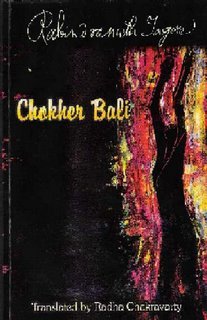
In exploring the question of Rabindranath Tagore (1861-1941) and alternative masculinities, it is important to keep in mind the multiple contexts and registers in which this question can be explored. One is obviously Tagore’s critique of and take on man-woman relationships in his books and stories throughout his life, which he had observed at close quarters in an extended/joint family context. Many of his short stories, like “The Exercise-Book”, and novels like, Chokhher Bali (A Grain of Sand), show a keen sympathy for women’s aspirations and the situation of that unaccommodated woman, the young widow. Tagore demonstrates his sympathy, even empathy, with the young widow, Binodini, while recognizing that she might pose a threat to social stability within the household of Mahendra and Asha, his girl-wife. The second register is the intertwining of creative writing and androgyny (the latter being a necessary attribute for an author, according to Virginia Woolf), and how Tagore in his capacity as a creative writer had qualities of empathy and sensitivity, which he drew upon to forge unusually close emotional bonds with women. This theme has been discussed by writers and critics under the rubric of Tagore and the feminine or Tagore and women. However, this article seeks not just to explore Tagore’s views on women but his search for a calibrated and balanced way of being in the world without falling into the binaries of imperial and colonized masculinities, and to shape the contours of a self which makes the world its home and is at home in the world.
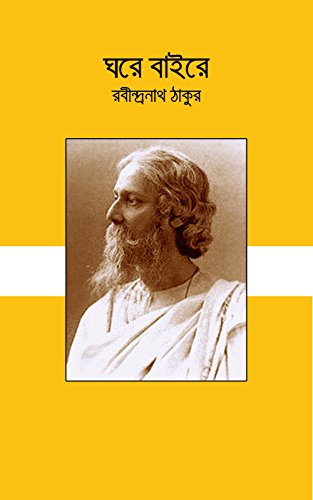
In his novel Ghare Baire (The Home and the World), we come across a criticism of extremist politics and jingoistic nationalism. A tripartite narrative about the growing political consciousness of Bimala, her failure to understand her liberal husband, Nikhilesh, a landlord and his friend Sandip, a fiery nationalist and a turbulent petrel, who storms the bastions of their household and marriage. Sandip’s brand of militant nationalism appeals to Bimala, who had once harboured feelings of inferiority because of her birth in an ordinary family, and who feels elevated and special under Sandip’s scrutiny. Sandip singles her out for special attention and calls her the “Queen Bee’’ and his muse and inspiration leading her to ignore Nikhilesh’s more mature and balanced views. Early in the novel, Nikhilesh who often functions as a mouthpiece for Tagore’s views in the novel, says that though he loves his country/nation, he cannot place nationalism over humanity. Reflecting Tagore’s views, which espouses internationalism and humanitarianism, Nikhilesh is not understood by his politically immature wife and ignored by his self-serving and unscrupulous friend.
Central to the formation of Tagore’s political views and suspicion about nationalism was his ideological debate with his own niece, his sister, the novelist Swarnalata Debi’s daughter, Sarala Debi Chaudhurani. A keen and fiery nationalist and patriot, Sarala was deeply impressed by the physical culture of imperial masculinities. She was particularly enthused/motivated by the concept of uplifting the nation through encouraging the growth of a physical culture. A statement that resonated with her was the idea of national character and she quotes lines from the ‘Educationist’:
“Physical weakness is a crime-against yourself and those who depend on you. Weaklings are despised and a weakling nation is doomed. The decline of ancient Greece and Rome which fell rapidly from the pinnacle of supreme civilization was due to physical neglect and abuse of the inflexible laws of nature. A physically weak nation is drained out mentally, its feet are on the downward path and it will end upon the scrap-heap if it does not act before it is too late.”
She also quotes a proverb which pronounces that the“battles of England are fought and won in the fields of Eton” (Chapter 18,129). Her interest in and involvement with the politics of the freedom movement led her to initiate the celebration of Birashtami (festival of heroes to celebrate martial prowess, bravery and courage)) to mark courage and martial valour. Her belief in developing a physical culture and strengthening the national character made her revive certain traditions, re-invent rituals in order to paint a glorious version of India’s past. In doing so, she encouraged celebrations of Birashtami and invoked and revived the ‘braveheart’, Pratapditya, a landlord with questionable antecedents since he was also guilty of killing his father. In elevating such a figure to a status of a nationalist war-hero, she elicited mixed responses, particularly from her Brahmo family and her uncle, Rabindranath Tagore.
Rabindranath Tagore, among others, strongly objected to Sarala’s invocation of the figure of a parricide as a martial hero. Such a figure could act as a dangerous precedent since it would seem to encourage untrammeled and uncontrolled aggression and blur moral boundaries and ethical codes. This blunting of all moral and ethical codes and boundaries, the danger lurking in a militant and violent nationalism was, as indicated above, represented by Tagore in his novel, Ghare Baire but also in his essays on nationalism. In the novel, the conflict between a rational civic and humanitarian nationalism which eschews violence is embodied by the idealized figure of Nikhil and the primordial reactionary chauvinistic version of nationalism which endorses violence by his ‘friend’, Sandip. After casting a spell (metaphorically speaking) over the impressionable Bimala, whose affection he then misuses to drive a wedge between the couple and then to extract money from her to fund his terrorist activities.
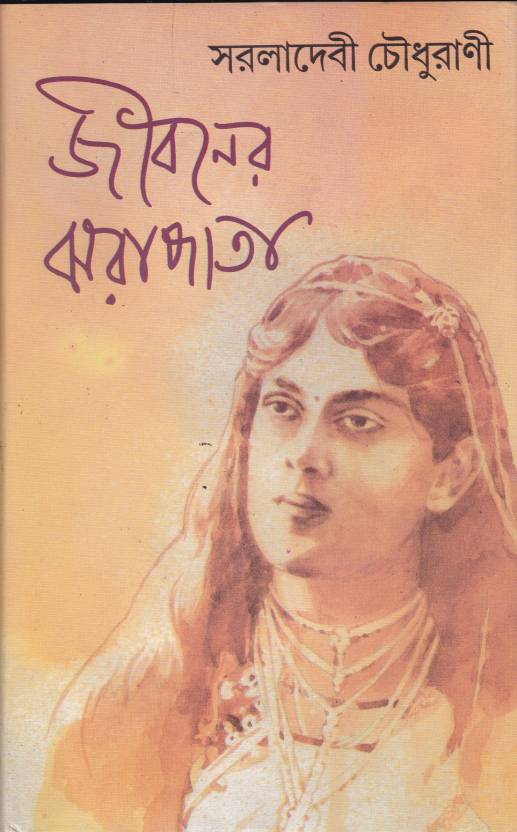
The Scattred Leaves of my Life By Saraladebi Chaudhurani
Rabindranath’s indictment of Sandip could be viewed as his response, a sort of extended debate and dialogue with an ideological viewpoint diametrically different from his own, which was represented by his niece. The increasing rift and estrangement between the two — Rabindranath and Sarala — might explain the wistfulness and occasionally melancholic and autumnal tone of Jibaner Jharapata (The Scattered Leaves of My Life) Saraladebi’s autobiography. A proud and self-respecting person, Sarala was probably conscious of the slur or aspersion of effeminacy that the British had cast on the Bengali character. She felt the humiliation and indignity too keenly to accept such descriptions and attributions quietly.
Gandhi and the Crafting of Political Masculinity
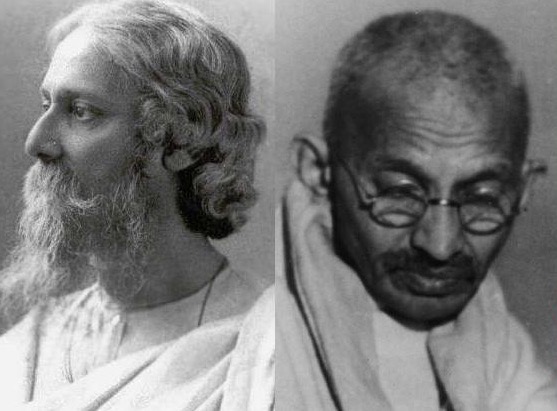
One common threadthat runs through the work and writings both these towering personalities of Tagore and Gandhi, is a critique of existing, culturally prescribed and sanctioned models of masculinity as they prevailed in the eastern (Tagore) and western (Gandhi) extremities of India. Both these great men, as public personages, were conscious that they were thought leaders and role models and that examples set by them would be emulated.
In the case of M.K. Gandhi(1869-1948), a great national leader who was instrumental in India’s throwing off the yoke of colonialism in 1947, there is a conscious experimentation with the “truth’’, presumably of one’s inner self, to oppose certain culturally sanctioned models of masculinity. Interestingly, his great-niece, Manu Gandhi referred to the ageing Gandhi as “Gandhiji, my mother” in her diaries, which were translated into English in 2019. When we focus on his corporeal politics, we see in Gandhi’s “experiments with truth” a series of experiments to do with the body which express both a consciously crafted gender ambivalence and throws a challenge to the concept of the manly body of the colonizer. Here my point is that Gandhi was consciously deploying his self, his body identity/ies and attendant subjectivities, in order to make a political point. He used his body and body-politics to establish his difference from the colonially attributed native body and also to mark his distance from colonial models of masculinity. While in one sense, this fluid body seems almost gender ambivalent, it is also an invitation to re-imagine and revision stereotypical notions of gender which circulate in cultures.
Both of these thinkers were probably conscious of the import of the political masculinities espoused by them, particularly under the yoke of imperialism, at a specific historical conjuncture. This conjuncture is the first two decades of the twentieth century, when the models of masculinity available can be broadly conceptualized as imperial, colonial and ascetic masculinities.
The imperial masculinity model is based on the white imperial ‘master’, the civil servant, the ‘pukka saheb’, the kind extolled by Kipling and criticized by E. M.Forster. Coincidentally, this Kiplingesque masculinity, often caricatured, found its takers in people who extolled the muscular, strong masculinity of imperial cultures, like Sarala Debi, Tagore’s niece. The Forsterian view that the English public school culture shaped “well developed bodies, under-developed minds and undeveloped hearts’’ was not known to her, nor would it have found favour. This model also made its way into Indian discourses where it becomes linked with questions of national character and patriotism. In his book, The Intimate Enemy (1983) Ashis Nandy proffers the view that the Indian elite in the 19th century perceived the British as agents of progressive change and accepted the ethos of aggressive imperial masculinities.
According to historians and critics like Indira Chowdhury, Mrinalini Sinha and Chandrima Chakraborty, there was a developing discourse of de-masculinization and emasculation among the British, where they denigrated the Indian middle class and particularly the Bengali men as weak and effeminate and this also led some political leaders to move in the direction of defining and conscious crafting of alternative masculinities.
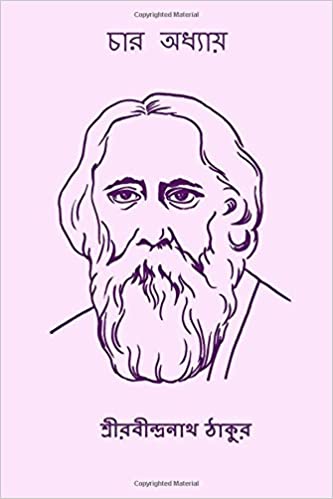
Four Chapters by Tagore
The third or ascetic model is available in Ananda Math by Bankim Chandra Chatterjee and CharAdhay ( Four Chapters, 1933), the last and thirteenth novel by Tagore along with real life characters such as Swami Vivekanand (1863-1902) and Sri Aurobindo (1872-1950), albeit delineated with some ambivalence. Chandrima Chakraborty in her book on Masculinity,Asceticism, Hinduism: Past and Present Imaginings of India (2011), highlights the “conjunctural alignment of asceticism and masculinity in Indian political history,” in order for its transformation into a strident symbol of Indian nationalism.
Interestingly, there is a further dimension and addition to this narrative. Jibaner Jharapata is not the only source of Sarala’s life story. She is described in Rajmohan Gandhi’s biography as Gandhi’s “spiritual wife”, because he felt strongly drawn to her, seeing in her a woman who possessed a unique combination of education and emotional strength. To Gandhi, she was a woman whose love for the nation was equally strong as his, although it followed and developed along different trajectories. In a peculiar role-reversal, we find Sarala Debi, who spent her formative years in Tagore family mansion at Jorashanko, inverts the models of “colonized masculinity” to promote and propagate militant nationalism. Tagore and Gandhi, whose spheres of influence she existed in, do not seem to have brought about much of a change in her. The great men eschewed and turned away from existing models of masculinity and moved towards the crafting of new masculinities, drawing on asceticism and spiritualism to do so.
References
Chakraborty, Chandrima(2011)Masculinity,Asceticism, Hinduism: Past and Present Imaginings of India. Delhi: Permanent Black
Chattopadhyay, Bankimchandra, Anandamath or The Sacred Brotherhood.Trana Julius Lipner, New DelhiOUP
Chaudhurani, Sarala Debi(2007)Jibaner Jharapata, Calcutta, Dey’s Publishing.(Bengali) All references in the text are to this edition,with translations by the author of this paper
Gandhi, Rajmohan (2006) Mohandas: A True Story of a Man, his People and an Empire. New Delhi:Penguin/Viking.
Kumar, Radha (1993) The History of Doing: An Illustrated History of Doing. New Delhi, Kali for Women
Malhotra, Meenakshi (2018) A Dark Goddess for a Fallen World: Mapping Apocalypse in Some of Bankim C.Chatterjee’s Novels in Unveiling Desire: Fallen Women in Literature,Culture and Films of the East eds Devaleena das and Colette Morrow. New Brunswick: Rutgers University Press
Ray, Sangeeta (2000) En-Gendering the Nation: Women and nation in Colonial and Postcolonial Narratives Duke UP
Dr Meenakshi Malhotra is Associate Professor in English at Hansraj College, University of Delhi and has been involved in teaching and curriculum development at several universities. She has edited two books on Women and Lifewriting, Representing theSelf and Claiming the I, in addition to numerous published articles on gender and/in literature and feminist theory.
.
PLEASE NOTE: ARTICLES CAN ONLY BE REPRODUCED IN OTHER SITES WITH DUE ACKNOWLEDGEMENT TO BORDERLESS JOURNAL
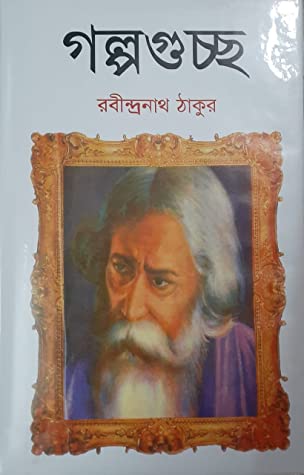
Rabindranath Tagore’s Ekti Khudro Puraton Golpo (One Small Ancient Tale, written in September 1893) from his collection Golpo Guchcho ( literally, a bunch of stories, constituted of 95 short stories, published in five volumes between 1908-1909), translated by Nishat Atiya
Golpo Guchcho by Tagore
I am meant to start another story — a brand new one — aren’t I? It can be tiring at times, you see. I mean, truly.
I look back but can hardly remember who offered me the position and why. It was five of you who arrived in perfect synchrony one after another; and still, it is a mystery to me as to why I was the vassal of your keen interest in the first place and what made you choose me to carry this Daedalian of a métier as if it was nothing short of a child’s play? I wonder … and conclude that it must have been destiny itself to command your kindness in my direction and though minute and mortal, the endeavor is pursued with the same fervour now as it was in the beginning. At least I am inclined to imagine it thus.
Nevertheless, with due regard to the learned quintet, I would venture to propose that this grave burden does not quite suit the small and cowering casket that I am. Whether or not the individual in question here possesses the writerly tenacity required to prove true to his split-self, that is a different matter altogether, for I was created merely as a biological being with his infirmities ad infinitum. No amount of iron mantlets could persuade me otherwise. Therefore, to have to endure the overwhelming voices of elation from my readers is a mere torture as it was ordained by God that I will find peace in stillness. My very being breathes and lives that secrecy, the hour of glorious quietude. But I do recall my grandfather pushing me into the limelight of a fully packed theatre show (perhaps by divine irony or just a random set of occurrences), swaying lightly back and forth as he failed to muffle the waves of sneaky laughter that managed to slip through the fingers pressed tightly against his lips. I wanted to be a part of the audience as well and laugh at myself to fulfill the historical obligation of a fool, but could not.
I wondered if hiding was a probable option, of course. But that would be an attempt in vain, for when a paid soldier pledges to attend the frontline and is expected to perform as an active entrant, the fading comfort he might be enjoying in a no man’s land can turn out to be the very weapon ready to come back and interrupt his otherwise innocuous impulse to simply flee and survive. It will be a pleasant change of subject for once to hope that the Supreme Being knows better and since He does, perhaps it makes more sense if we comply and we comply diligently, with proper devotion and finesse.
It is my duty to entertain people from all walks of life who come and visit their storyteller of choice before they say polite goodbyes, exchanging sweet glances or occasional intellectual swordplay. They recognise me with great admiration which, nonetheless, is an episodic pretense play followed by a devious delight of unknown origin and an artful dismissal of what once used to be alluring but now is démodé. It’s only the way of the world and indeed, this is the primary reason behind auxiliaries of an apparatus denouncing the king component of all routine affairs called “commonality” and its questionable amusement principle. The sense that is common, thus, runs the risk of becoming suspicious and eventually, an easy prey for exploitation. And yet, the cascade of men begging or pleading for a story of ‘one’s own’ does not stop, making it tough for me to not believe that ultimately what I write becomes an end product of their imagination, not mine.
That being so, you can stop for a while if you want. Neither the tale will tire, nor shall I look for a desperate sparkle in your eyes. That is a promise.
If I am asked, however, a most ancient and quick airy storyline spread about the cosmos I do remember. It might not suit your fine palate at first but will definitely tempt you just enough to stay till the brief chain of charming events ends.
There was once an enormous woodland along the coast-side of a mighty waterway. A woodpecker and a snipe used to live there in separate abodes, the former inside the forest and the latter across a rivulet nearby.
Once the world was lush and fructuous, the feathered friends would be well-fed and pleased. Sublunary benefactions would gratify their appetite and to their relief, it had seemed as if their heydays were never to end.
Yet came a day when they found no mites, mosquitoes or any other vermin.
The bird by the riverbank addressed the one on the bough, “Brother mine, it all seemed particularly robust and radiant at first, didn’t it? The sparkle of life in its green folioles and soft hibiscus! But now that the times have changed this little realm of ours has never been more sterile and lifeless, revealing its hideous face once and for all.”
The bird on the bough replied to the one by the riverbank, “Brother mine, remember how they would praise to the skies about our once-splendid habitat and all it had to offer us? Even if you do, I say the wasteland is quite unforgiving and has been as such ever since it came into existence.”
Both felt it mandatory to prove that their mutual observation was true. Thereby, they immediately undertook an exploration of their respective territories which they felt were their personal possessions. First, the snipe dived deep into the murky purlieu of the earth and began to excavate long trenches inside its soft bosoms, desperate to verify his conviction about his ‘private property’ or so to speak, its ill-health. Likewise, the woodpecker on the other end of the forest kept drilling into the firm skin of tree trunks so their bare skeletons would unfold even an emptier stomach underneath.
Fully immersed in their common passionate goal, these disruptors of different feathers were unmindful of the greater confrontation awaiting them ahead — being songbirds and not singing. Consequently, as the springtime came and took over a dreary winter of discontent to replace it with florae and faunae of all sorts or nightingales recounting shared moments of ecstasy, the birds of woe continued their mournful quest for an imaginary resolution. The mute passerines thus pursued a shadowy sphere that neither existed nor surely expired.
I can go on, but you did not quite develop a liking for this one, did you? Perhaps, the story is not one of those kinds that you would easily find admirable after all. But the biggest virtue of it, you wonder? Well, a neatly finished exquisite product within five to seven paragraphs ready to be preserved in the pages of human history, which is mind-blowing in and of itself if you ask me!
Wait, you don’t even believe that the story is ancient and always has been so as evidenced in our blood, do you? Well, it is not entirely unlikely for one to have frequent amnesiac attacks as the very humanized notion of historicity has been exchanging the old with the new and the new with the old from times immemorial. Also, a great many days have passed since then. Not to mention, the ungrateful woodpecker has been carrying on his duty, causing significant damage to the earth’s interior by pecking holes into its subastral surface, whereas the ruthless snipe also can be found to enjoy invading the privacy of the aged planet and its mysterious watercourses. Both are trapped, indeed. Both are lost in their own ways.
Now, what’s the concrete tone of happiness or loss one can identify in this sort of authorial technicality, you ask? If you look closely you will find both in each other’s warm embrace, whispering sweet nothings in a magical melody. It does not matter whether or not the gargantuan universe has a tendency to connect humanities across borders, for what is more important is to understand the sheer delight the snipes across the world might acquire on a daily basis by hammering on the ground, happy to change into a parasite and manage meager meals once or twice a day. On the other hand, a small and seemingly ineffective glimmer of hope beacons forth as we dream of a better future, provided that green patches and pastures are somehow still around the cold and distant city dwellers who consider stomping on organisms a certified hobby. To conclude, a moment of silence for those unfortunates that envy and resent with no chance of redemption — and to catastrophize more — not a single living soul knows that they ever really existed!
I dread to assume correctly that you did not understand a single word of this garbled set of whimsies and whispers. I can only predict that someday soon, the impregnable walls of nothingness will crack into pieces, leaving only a trail of a void behind. Give yourself some time and see if you can come back to the story again, will you?
All in all, is it just as meaningless as I feared it would be? Is it a terrible beauty waiting to be reborn this way?
I guess time will tell.
.
Nishat Atiya is a Lecturer in the Department of English and Humanities at the University of Liberal Arts Bangladesh, Dhaka. She is also a sub-editor at the Star Literature and Review pages of The Daily Star.
.
PLEASE NOTE: ARTICLES CAN ONLY BE REPRODUCED IN OTHER SITES WITH DUE ACKNOWLEDGEMENT TO BORDERLESS JOURNAL








 Borderless

