Categories
Poets, Poetry & Rhys Hughes

Making Something of Nothing…

I dislike giving advice almost as much as I dislike receiving it, but as a friend recently asked me if I knew of any easy techniques to generate ‘inspiration’ when creating an outline for a story or script. I replied to her request. Somewhat pompously and just a little ponderously, I’d now like to share the answer I gave to her with everyone, even with you out there. This is what I said:

(a) Don’t sit around waiting for inspiration.

(b) Don’t chase it too hard.

Some people appear to assume that ideas are difficult to come by, and if we mean very good ideas, then that’s true. But if we concentrate on workable ideas, the fact is that they can be manufactured easily. Strange useful juxtaposition is one reliable and simple way to create new ideas. Think of the elements hydrogen and oxygen. Pretty neat on their own? Yes, but a bit overdone.

Put them together and what do you get? Water! The first time water was created I am sure that its originality was astounding, far more astounding than might have been anticipated. After all, water is a fusion of hydrogen and oxygen but not just that. It is also something entirely itself, with all its own qualities and properties, most of which hydrogen and oxygen don’t have. Indeed it would be virtually impossible to anticipate the properties of water by examining the behaviours of the elements that constitute it, no matter how minutely detailed the analysis.

Water is a new thing. You can’t pre-empt thingness. It can’t be modelled before it exists. Only with hindsight can we have understanding. We may work backwards as a consequence and then model it as the necessary outcome of a combination of the two elements that constitute it, but this doesn’t change the fact that water is not obviously contained in embryonic form in hydrogen and oxygen. The empirical truth came first, the chemical formula followed, and only later did we nod at each other with the false wisdom of experience disguised as physics.

I repeat, there is nothing in the attributes of the atoms of elements to give us specific clues about the attributes of the compounds they would generate when they are clashed together. The same may be true for ideas, if we regard archetypes or clichés as the atoms of story elements and decide to combine them unusually. This method is one I might use when I want to come up with an outline for a story from scratch. I’ll take two things that aren’t connected and put them together to see what will happen. The less naturally connected those things already are, the better the process and the nicer the outcome, because you can have more fun trying to connect them, and more surprising ideas will be generated as a result.

These original ideas will come with very little effort, because they have no other choice. The simple act of colliding and fusing a pair of unrelated items will mean that such ideas naturally come into being, the same way that water comes into being when we bash hydrogen and oxygen atoms into each other. And one way of finding pairs of things that aren’t naturally connected is to flip open a dictionary at random and jab a finger down onto the page. The finger chooses a word, the first word, then repeats the process for the second word, and the two consequent words are the magnetic poles of the story. They run right through it just as the magnetic poles of our planet spear our globe like a blue pumpkin on a skewer.

I tried the method recently and here are my combinations:

  • Caffeine addiction and macramé.
  • Frogs and tangerines.
  • The fashion world and tropical diseases.
  • Astronomy and crossbows.
  • Economic downturn and pickled gherkins.
  • Liver salts and scarves.
  • Tinted windows and army trousers.
  • Bananas and canoes.
  • Howler monkeys and world peace.
  • Bellybuttons and cacti.
  • Castigation and dirigible accidents.
  • Zoetropes and cheese.

Almost any two unconnected things will work. Maybe pairing together ‘modulus’ and ‘reciprocal’ would cause difficulties. ‘Oneness’ and ‘duplicity’ too. ‘Contradiction’ and ‘congruence’. I am sure there are many others, and that you can devise pairs that defy my technique. But generally speaking the method is sound. And perhaps a very clever person could work perfectly well with all combinations, even those that cancel themselves out, especially with those, one suspects. It ought to be remembered that if two words are picked that the picker doesn’t especially like, the random page flipping can be done again. The method is a tool, not an order. ‘Tool’ and ‘order’ are two words that can surely be combined productively.

Recently I learned that the old British comedy show, The Goodies (1970-1982), used the same technique at the script stage. Perhaps that was where I learned it, for I was a devoted follower of the show when I was very little, but it must have happened by a process of mental osmosis, for I never consciously understood that this was how the writers Graeme Garden, Bill Oddie and Tim Brooke-Taylor generated their initial scenarios. In one episode, a satire on apartheid, the piano in the South African embassy had the white notes grouped at one end of the keyboard and all the black notes at the other. I am wandering off the point, of course, but the joke still seems especially poignant in its absurdity. Back to the day’s business!

There is absolutely no need to stop with only two unusually juxtaposed elements. More may be used according to taste. For example, three parameters may be selected for the structure of the story: (a) location, (b) activity, (c) participant. I open an atlas at random for the location, which turns out to be Rangoon. Now I need an activity. I turn on the radio, which is broadcasting a cricket match. Very well. Now a participant must be found. I look out the window and see a rabbi walking past. So the story must be set in Burma and involve a religious scholar who is a wicket keeper. The basics of the work are already in existence. But what happens next? Another application of the method will bring forth something for this fellow to do. He won’t sit around waiting for inspiration. Nor will he chase it too hard.

A lot of hydrogen and oxygen has combined in his vicinity. Rangoon is flooded. A canoe is provided for him and a bunch of bananas for sustenance. He paddles down the watery streets seeking his only friend, a tailor who has succumbed to malaria. The search is fruitless, so he moors his canoe next to a stall in the market and buys some tangerines while frogs hop all about him. Yes, he has already eaten the bananas. The day is over, night comes and the stars twinkle above him. He is surprised to observe a constellation previously unknown to him.

The twang of a discharged crossbow alarms him. A soldier on a roof is aiming at the new pattern of stars in the shape of a howler monkey. How might world peace be achieved with people like this about? Suddenly the stars vanish. Has the soldier killed them? No, it is merely an unlit dirigible looming from out of the sky. Let’s shout at it for doing so! There is no need for me to continue. The point has been made. The man in the tale has a fictional fate mapped out. This doesn’t mean that his adventures will be any good. That isn’t up to me, but you.

Rhys Hughes has lived in many countries. He graduated as an engineer but currently works as a tutor of mathematics. Since his first book was published in 1995 he has had fifty other books published and his work has been translated into ten languages.

.

PLEASE NOTE: ARTICLES CAN ONLY BE REPRODUCED IN OTHER SITES WITH DUE ACKNOWLEDGEMENT TO BORDERLESS JOURNAL

Categories
Tagore Translations

A Hymn By Rabindranth

‘On This Auspicious Day’ is a trans-creation of a Brahmo hymn, Aaji Shubhodine Pitaar Bhabone, by Rabindranath Tagore. Written in 1883, this song was first published in TatwaBodhini Patrika, a magazine brought out by the splinter group from Brahmo Sabha led by Tagore’s father, Debendranath Tagore.

A Bengali Rendition of the song by Debabrata Biswas
ON THIS AUSPICIOUS DAY

On this auspicious day, let us go to our 
Father’s heavenly abode. 
Let us go. Let us go, you and I. 

The level of contentment in His blissful
Home is unfathomable to us. 

The three worlds are in ecstasy with
Festivities that spill over with joy.

Let us join the celestials singing in praise of him
Let us go there. Let us go, you and I.

Tagore like his father and grandfather was a Brahmo. The Brahmo festival, Maghotsav, is celebrated at the end of January, by the Bengali calendar on the 11th of Magh. Brahmo Samaj grew out of Brahmo Sabha. These were attempts at a reform movement on Hinduism initiated in the early part of the nineteenth century Calcutta by Raja Ram Mohan Roy and Dwarakanath Tagore, the poet’s grandfather.

(Trans-created for Borderless Journal  by Mitali Chakravarty with editorial support from Sohana Manzoor and Anasuya Bhar.)

.

PLEASE NOTE: ARTICLES CAN ONLY BE REPRODUCED IN OTHER SITES WITH DUE ACKNOWLEDGEMENT TO BORDERLESS JOURNAL

Categories
Review

A Discourse on ‘Freedom as Mobility’

Book Review by Meenakshi Malhotra

Title: A Bengali Lady in England by Krishnabhabini Das (1885)

Translator: Somdatta Mandal

Publisher : Cambridge Scholars Publishing

Somdatta Mandal’s translation from Bengali to English, A Bengali Lady in England, is a first person account  of the first ever woman’s travel narrative written in the late nineteenth century when India was still under British imperial rule. Krishnabhabini Das (1864-1919) was a middle-class  Bengali lady who accompanied her husband to England for eight years between 1882 and 1890.Her narrative, England-e-Bangamahila was published in Calcutta in 1885. 

Women’s travel writing in Bengal circulated /proliferated in the late nineteenth and early twentieth century through the popular form of serialized publications in journals such as Bharati (1877),  Prabasi (1901), Bangadarshan , Kalpataru, among others, but Krishnabhabini’s account was the first full length travelogue. Though there followed a rich output of travel literature, it would be a fallacy  to box the many writings as a single, homogenous genre. Travel writing in this time undergoes several generic modulations and modifications as it journeys through the turn of the century. For example, Krishnabhabini’s account could also be described as ethnographic writing  as she turns her gaze on British society, culture, customs , manners.

In addition to being a wonderful addition to the archive of women’s writing, Das’s account seems to reverse the gaze. It offers a fascinating glimpse into 19th century English life and culture, as she attempts to set the record straight in many ways. Krishnabhabini’s capacity for observation is admirable in its sociological detail, especially so when we consider that she was barely out of her teens when she wrote the book. A Bengali Lady in England also offers a wealth of ethnographic detail on English life, character, interaction between classes, marriage, attitude to work, family organisation and life.

As Krishnabashini responds to a spectrum of sights, sounds, affects during her extended stay in England, we come across many nuggets of information. The process of travel offers opportunities for emancipation where exposure to other cultures offers her a way of viewing and of gaining a perspective on her own experiences and that of her sisters in India. Krishnabhabini constantly refers to her Indian sisters and bemoans their sorry state and ignorance when she sees how active British women were in their families and societies. Her motive here is to overturn the largely negative view of British women that prevailed in colonised spaces like India, based on their view of the “memsahib” who were often stereotyped as being snobbish and indolent. Her endeavour seems to be to inform her Indian sisters that British women in England were more active than the colonial “memsahibs” they usually came across in India.

She is eloquent in lauding the virtues of British domesticity by pointing out the merits of companionate marriages, where the wife is active in being a true helpmate to her husband as well as being the custodian of the private domain. Her perception is that Indian women and men would benefit in emulating such models of domesticity, instead of remaining in segregation and separation. As the translator and editor Somdatta Mandal points out, Krishnabhabini’s opening of the veil as a means of freeing herself from the constraints of her family and society is probably the first step in “the discourse of freedom as mobility’’ that enables her to construct her own sense of self (Mandal p.xx). Though she deplores the materialism evident in English society, she is also acutely conscious of the difference between the two countries. Thus she writes, “the more I compare the two countries, the more I realise the great difference between them and looking at the poor condition of India, I keep on suffering within.”(150)       

The translation and commentary by Somdatta Mandal, a translator and academic of considerable reputation and experience, highlights Krishnabhabini’s keen and observant eye, both in her translation and her comprehensive introduction to it. Her introduction shows evidence of her scholarship as she contrasts Krishnabhabini’s narrative account with her husband, Devendra N. Das, who with “an Orientalist agenda”(Mandal xxiii) was trying to “educate his fellow Britishers with the myths, religion and lifestyle of Indians back in India-speaking about the jogee, the astrologer, the zamindars, the nautch girls, infant marriage, the matchmaker, the Hindoo widow, funeral ceremonies, et al-his wife was trying to educate fellow Indians about different aspects of British life-English race and its nature, the English lady, English marriage and domestic life, education system, religion and celebration, British trade, labour ”, cityscapes and rural life. Both the editorial commentary and Krishnabhabini’s narrative are peppered with delectable nuggets of information.       

Exposure to European literature, proliferation of print culture and ideas of romanticism percolated into the ‘Bhadralok” consciousness creating new modes of self-fashioning and new reading publics that made space for the publication of serialised travelogues . Much of the travel writing which did emerge and prove popular at this time were those authored by Hindu, upper class, western educated males, who were often renowned luminaries, scholars, or litterateurs in their own right. Several of the travel accounts are of men travelling outside India, usually to England. These works contained observations on western culture and a comparative study with India’s own. Romesh Chunder Dutt wrote Three Years in Europe: 1868- 1871, which was published in 1896. Both Rabindranath Tagore and Vivekananda authored various works on travel. An earlier account of travel writing was Bholanauth Chunder’s Travels of a Hindoo (1869) which chronicled his journey from Bengal to Punjab.

In contrast, socially sanctioned forms of travel for women till the mid nineteenth century was largely restricted to pilgrimage. However, with the advent of the railways and the opening of the Suez Canal, by the mid-nineteenth century we have instances of women, usually from educated Bengali upper-class families, travelling for entirely secular reasons—for convalescence, their husbands’ work, for leisure, or even for education. Aru Dutt and Toru Dutt went to England at around 1870 to pursue an education.

In 1871 Rajkumari Bandhopadhyay, wife of social worker Shashipada Bandopadhyay, became the first Indian woman to visit England. In 1877, Rabindranath Tagore’s sister-in -law, Jnadanandini , along with her children, travelled by ship to England to accompany her husband, Satyendranath Tagore(the first Indian ICS officer). This was against the wishes of her father-in -law, Maharshi Debendranath Tagore. In each of these instances, the act of travelling to a foreign land was deemed sacrilegious and transgressive, with the women facing extreme social backlash and, in the case of Rajkumari Bandyopadhyay, ostracisation. However, these acts set the way for further instances of travel, and more importantly, written accounts for the same. In 1894 Jagatmohini Debi set sail for England, and in 1902 published Seven Months in England (England e Saat Mash).

Krishnabhabini’s work is indeed a pioneering effort as far as Bengali women’s documentation of their travels, at home or abroad, are concerned. Yet her travel to England came at a personal cost; she had to leave her daughter behind with her conservative in-laws, resulting in lifelong estrangement. However, what ultimately makes this book unique it the quality of its specularity, its simultaneous awareness  of the self and other. It is this quality of self-consciousness or self-reflexivity which makes it  truly a  text of modernity.

.

Dr Meenakshi Malhotra is Associate Professor of English Literature at Hansraj College, University of Delhi, and has been involved in teaching and curriculum development in several universities. She has edited two books on Women and Lifewriting, Representing the Self and Claiming the I, in addition  to numerous published articles on gender, literature and feminist theory.       

.

PLEASE NOTE: ARTICLES CAN ONLY BE REPRODUCED IN OTHER SITES WITH DUE ACKNOWLEDGEMENT TO BORDERLESS JOURNAL
Categories
Stories

The American Wonder

                                          By Steve Ogah 

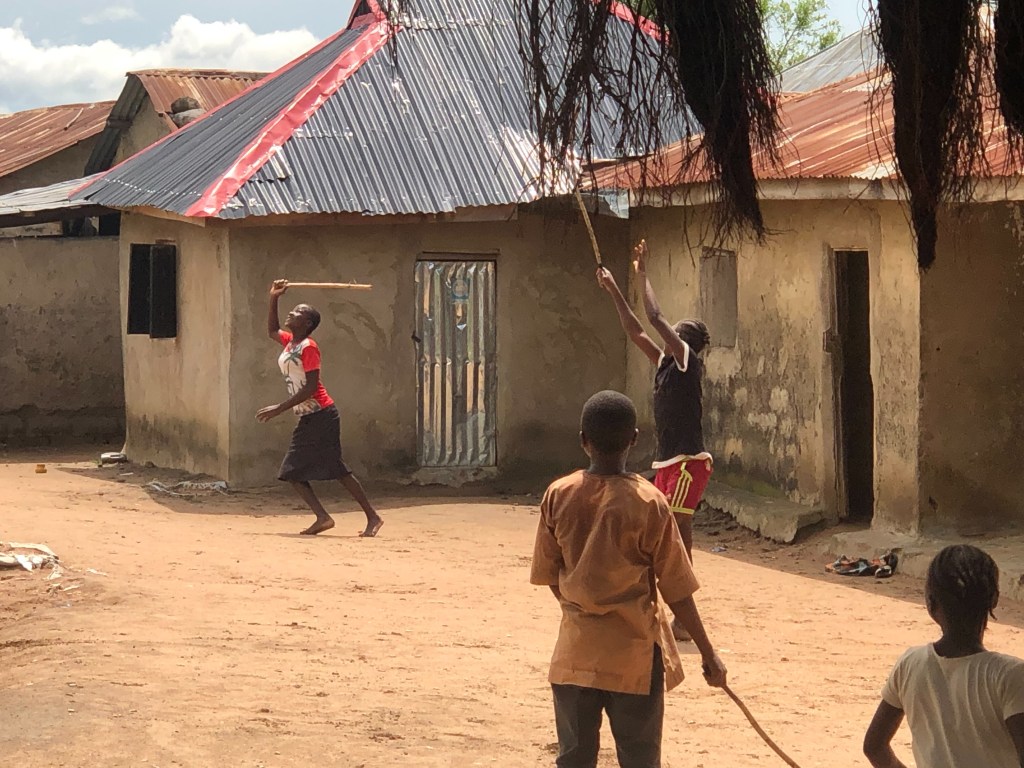
“Come and see the American wonder.” That was the one-liner the band of energetic kids sang. It was the song of an old city magician who had once come to fret coins out of villagers with old card tricks and die games. But the New Yorker thought the song would be useful for what he had to say at the drinking hut, so he had made the excited kids remember the song.  This was a raggedy bunch of kwashiorkor-colonized kids, mostly naked from the top up. They clapped, danced and repeated the line as though it were the sweetest song in the world. Ahead of them, and not far away, was the New Yorker. He too was clapping with all the might in his palms as though he held two cymbals in his large hands, his New Yorker T-shirt sticky with soft sweats of the early morning, moving his thin frame as though the wind would cast him far away from land.

The on-lookers had no idea what the American wonder was, but most were eager to know what the astonishing thing was about America. So, the New Yorker led this gyrating group of kids through rutted village paths, headed for the village square and a drinking shack, where he would exhibit the bare American wonder. Some in the crowd thought he was the one and only American wonder the village had. They felt no urgent need to join the swelling throng of admirers of the circus.

Yet, they were those who felt the man wanted to lay bare some exciting features of America. Two sets of people flowed into the mix: those who assumed the wonder was a man and those who believed the wonder was a thing that had not been sighted in the village of Nkang before. Everyone who heard the shrieking kids was willing to tail them. Anything American was like a commercial hit in the village at any time of the day.

This area of the village was known as the wine groove and some villagers thought the village’s best speaker of high sounding words had perhaps consumed too much fresh wine at the root of a friend’s tree. He wasn’t a known tapster of wine and could only have intoxicated himself through the generosity of other benign villagers. This was the thread of thought held by most villagers, except Pa Okeke. The hut owner had seen the New Yorker before he monkeyed up a palm tree and the New Yorker had told him he wasn’t going to taste any other wine except his at the shack. “Your wine sets my tongue dancing like no other,” he had confessed to the amused old man.

“My palm wine must have a conga drum then,” Pa Okeke returned, forcing the New Yorker to wave him off with a laugh seated in his stomach, as he scanned the groove for the tree to bore a wine hole in.

Up above, at the neck of a tall palm tree, he hung as though a thing woven out of spider webs. He too couldn’t nail what this latest act of the New Yorker was about. If it were magic the man wanted to perform at his shack, he would fail with honors. He wasn’t turbaned like most Indian magicians. He wasn’t dressed in the long tail coats of television magicians, and didn’t bear any resemblance to the famed professor Pellar of Lagos. He hadn’t been to India to learn from the gods of magic. His abracadabra would yield no awesome tricks tonight. That was the tapster’s conclusion. Having drained the tree of its latest intoxicating content, he descended the lanky black and well-juiced palm tree. He would take a shorter route to his shack and lay out his drinking horns for the New Yorker and his crowd of enthusiasts. The day held the fat promise of drama and laughter at the village’s favorite haunt. It would be the night of American wonder by the African New Yorker.

The New Yorker had trimmed his caravan of kids as he went on his way to Pa Okeke’s drinking place. It was too early in the day for kids to wander away from their mothers. He had finished exploiting them and they weren’t allowed to sit in the shack, in any case. He had said to some, “You, off you must go to your expectant mother,” he sprayed them with intense looks of reprimand. “Some of you have not fetched water from the stream yet.” He shooed the kids on their backsides as if they were chickens who had failed to return to their coops on time.

With the kids out of the way, the New Yorker crowded his mind with the wonders he was going to unleash on the swelling crowd at Pa Okeke’s place. The kids had done a terrific job of advertising his presence to the whole village. Though, he was a well-known village lay-about, the New Yorker had needed the kids for a reason.

He needed a fix of wine and the more the crowd at the shack, the greater his chances of free wine. The children had been his talking drum. And they had indeed talked well to guarantee him endless jugs of palm wine from the whole village. The more the wine, the sweeter the tale, the New Yorker believed that; and the greater the intensity of listenership. His captivated audience would be the one to make his tongue set sail on its voyage of storytelling.

The New Yorker sat down at Pa Okeke’s hut. It was on this day and at this time, thinly populated. Well, he had the company of fat green flies buzzing around wine-stained benches and tables and used cups and drinking horns. This wasn’t the sort of company he had dreamt up and desired. He was disappointed.

“The Americans have decided to build a wall through their border with Mexico.”  That was what the New Yorker revealed to his crowd of enchanted listeners. He was seated on a deep green hard bamboo bench, flanked in by drunken men on either side in Pa Okeke’s palm wine-perfumed drinking hut. The long wooden table in front of the gathering was dotted with plastic jugs of dirty frothy white-shy palm wine, and colorful plastic cups and rust-color calabashes circled with giddy giant green flies. Several of the insects were drunk and dead while others had just begun their round of alcoholic somersaults. In a little while, the men in the haunt would be like the insects, each one a mess of retched up gut contents and drunken odour. They would perhaps go home washed down in their own mess since the sky had darkened with impending rain.

The tale spinner had spoken and there was a collective gasp of bewilderment from the house which was by now crowded with onlookers and drunken bunch of villagers. Some kids who had strayed away from their parents had traced the New Yorker to his cherished hut. They stuck their bulging eyes and eager faces in the tiny spaces created between men at the windows, desperate to see some real American wonders. But all they heard was:  “Wall! A wall? A big wall?”

Those were the words that flew around the gathering. The kids were as confused as those who had palm wine floating in their senses. Those villagers who had cell phones with them had begun to call out to absent regulars of Pa Okeke’s place. The gist in town was about the presence of the village’s best story weaver in Pa Okeke’s house. They believed his newest tale was yet another fabrication from his deep well of stories. This can’t be possibly true, many held. Those who had left the village in past journeys to townships had never seen walls between borders of two towns or between Nigeria and her neighbor, Cameroun.  The only embankment many knew of was in the Bible, the walls of Jericho that they had heard about in Sunday schools and catechism classes.

“The Americans can’t do such a senseless thing!” That was the assertion that rose like the sudden burst of water from a pressurized pipe, from somewhere in the crowd. It was from a man with a bloated stomach and face, who also wore the several litres of wine he had being drinking in his eyes. The words had come off his lips with some difficulty as they seemed to have mixed with the wine in his mouth. 

“What is it with these Americans? America, the wonderful!” That was his deep-rooted summary. He shook his misshapen ageing head from side to side, laced his fat lips with a derisive laughter and swallowed a slug of sour wine. “America, America,” he laughed, after the horn of palm wine had freed itself from the claws of his salivary mouth.  He spewed a jet of wine between his legs. “Useless things,” he had chewed on a dead fly. He stamped on the already dead thing with all the might in his spindly legs.

There were some ripples of laughter shooting through Pa Okeke’s hut of revelers.  The wine was working its way slowly through veins. This moved the old man to action as he dug into his hidden drums of wine for the best fermented drink for the house. He went behind and re-emerged in the gathering with a dull black aged gallon of palm wine. It was crusted with overflowing dirty white wine. Its embankment of security was made of fat green toilet flies that had found a permanent home in the drinking hut. They made sure no wine was wasted and knew which cup of wine intoxicated the most. They were the dutiful keepers of the shack and were rarely killed by the regulars. The people saw them as a congenital part of drinking in village huts.

“‘Americans are funny’, I once told us that.” The New Yorker reminded his audience and everyone nodded. Voices rose here and there. There were murmurs that the New Yorker couldn’t discern. Those who had been there when he made his revelation agreed that he was on point while those that hadn’t been there wanted to be told about the comic nature of all Americans, because they held the view that the Chinese were perhaps more comical than the Americans. The overwhelming view was that Jackie Chan was the most humorous and famous Chinese in the world. While Bruce Lee was another popular Chinese, he was seen as too consumed in his fights to want to grant the viewer some moments of humor.  Many had seen clips of the makings of some of Jackie’s movies, where he would fail several times at different acts, to his own amusements.

“Americans can afford the liberty to be funny,” That was Pa Okeke. His voice was aged with wine and his breath perfumed with sugar. “They have the life that we don’t have.” He had something for the gathering of drunken men and puzzled kids.

Pa Okeke deposited the gallon on a dying and Chesnutt-coloured bench in the middle of the room. “This is on me,” he declared with that authority of one who truly owned the house. He rubbed his flabby chest down.  Many shifted on their seats with itchy throats, anticipating the flow of fresh palm wine that was to come from the owner of the hut. This was going to be a night like no other for many. And Pa Okeke was dead certain many of his customers would crawl on their bellies to their various homes when night time fell. Those who wouldn’t be able to claw their paths home would sleep on their vomits, then wake to curse themselves and his wine. He knew they would still return when the clouds of drunkenness cleared from their eyes, because the villagers had once tagged his hut the “home of happiness.” He had believed the tag and had scrawled that in misshapen letters above the door of the hut.

“You want to get us all drunk?” The New Yorker asked without really meaning every word he had spoken. “Isn’t this one much for a gift?” He shot his empty cup towards the table. He rose and reached for the fresh wine which was dotted with dead bees and tiny raffia palms and flies. He shoved the undesired baggage aside with the bottom of his cup. He dug into the liquid with the force of one who hadn’t had a life-saving drink in days. There was a smirk around his lips.

“I want us all to be happy.” Pa Okeke left the scene. But he would return with more palm wine from his seemingly endless drums at the back of the hut.

The New Yorker wanted to be inebriated. He had come to the hut to get himself some drink and reveal the newest brand of wonder to the house. Many had thought he wanted to perform some sleight of hand tricks of some old penniless magician. But this man was from another world from most of his contemporaries. He wasn’t a magician and he just revealed that to his listeners.  He was a moving cinema and a radio whose power never went down and out. And not few had been impressed in great measures. While he was a known village comic, he still had some ears for workings of the wider world. “America wants to cage itself in. Not cage the rest of us out.  She will build a circular wall round all of her borders with her neighbors.” That was the summation of the wonder, the meaty part of his story.

Voices rose anew in the gathering. There were those who thought that was outlandish.  America was a land of the wild and the free, a place where every dream came to life. That was a popular view in the hut. Why would free people want to fence themselves in? Would America erect a wall with her maritime neighbours? That was a question that was thrown the New Yorker’s way from a man who hadn’t been drinking much. “A wall inside an ocean?” That was his question. And before the New Yorker would say a word, the man bolted up and screamed: “Impossible!” He repeated himself.  He drank what was a long draught of wine. He smacked his thin lips and waited for the tale bearer to bear down the fleshy parts of his tale on the house. And talk the garrulous New Yorker did!

“The Americans will build a wall taller than the Berlin wall and longer than the walls of Jericho.” That was how the New Yorker further shocked his crowd of enchanted listeners. “Some other cities will mount individual city gates.”

There was a collective breath of wonderment from the house. Not even the quarrelsome Koreans had erected a wall between each other. Was America at war with all of her neighbours? A question jutted out from somewhere in the crowd. It was from a man who sat with his jaws in his palms, stupefied by what he was hearing. “What is it with these Americans? America the wonderful!” That was his deep-rooted conclusion. “They are crazy! Today it’s a border wall. Tomorrow, they will yank us off the visa lottery list. Has anyone offended these people? I don’t get it!”

There were more ripples of laughter shooting through Pa Okeke’s hut of drunken men. This ignited a move in the old wine tapper. He went behind and reemerged in the gathering with a dull black aged gallon of palm wine. It was crusted with overflowing dirty white wine. The neck of the galloon was laced with fat green toilet flies that had attacked from all directions.

“‘Americans are funny,’ I keep telling people everywhere I go.” The New Yorker reminded his audience and everyone nodded. Some voices concurred while others demurred. There were grumbles that the New Yorker couldn’t understand. “And crazy too like someone has just told us, but Americans are not the only crazy people.” He drank some wine. “They will know what it means to be crazy when they finish that wall. Because some people will chisel that wall until it can let their bodies through. They will claw at it night and day. Sometimes it is better to die in a prosperous land than live in a wretched place.” Some heads nodded, while others drank up.

Pa Okeke deposited the gallon on a bench in the middle of the room. “There is more to come,” he declared. There was a certain audacity to the way he stood, as though he meant to dare someone in the house to a drinking contest. Many experienced drinkers saw danger ahead. He had much of the stale wine in his drums that he wanted to get rid of.

Voices rose again in the gathering. There were those who thought that Pa Okeke wanted them to swim home in alcohol and have their wives lock them out.

Would America stop receiving visitors? That was a question that was thrown the New Yorker’s way from a man who had being processing this latest revelation from the story teller. He even asked the New Yorker the source of his latest news.

“How many of you have a radio?”  The New Yorker began. There was no response to his question.  People just drank wine and adjusted on their seats. He interpreted that in many ways. “These homo-sapiens called Americans are capable of the impossible,” the New Yorker fired at him. “They killed a president that they voted for. They put a man on the moon when others were sending monkeys and tomatoes to the clouds.”

Now, there was a blanket of shock that descended on the house. Many in the gathering didn’t know about that. The New Yorker nodded his head after having drunk some wine. He told them that brutal act of killing a president was akin to children killing their own father. He told them the word for that was patricide!

“Wetin be dat?” Pa Okeke asked. “your grammar don dey too much: homo…wetin, partri…wetin. Abeg small grammar. No be all of us go America like you.”

The New Yorker found that gratifying and funny. Then he explained what the words meant as the hut owner had just reemerged in the scene and leaned on the door frame, his eyes glassy with wine just as his stomach carried more weight than before. He rubbed it down and guffawed. “Now, I get you.” He rubbed his chin. “But how will you enter America if you want to go back there?”

Most people in the hut found that an interesting question. They adjusted on their seats. Some took their cups and drank some more palm wine in anticipation of the response the New Yorker would give. “You don’t belong here with us. You are the only Americana we know.”

The New Yorker was deadpan. He told his listeners that the walls of Berlin and Jericho had since fallen. And he believed the American wall would collapse should it ever be erected. Some in the house didn’t believe his prophecy. Many felt the New Yorker had been drunk all along. Someone even said that to his wine-soaked face. The New Yorker needed to convince the house that he had his memory in place. So he told them to see Joshua 6: 1-16. But no one had the virtue of holding a Bible in the house.

“You have not answered my question?” That was Pa Okeke. He wanted the New Yorker to respond to his question, since he had often boasted that he would return to America any time he desired.

“I will do like the children of Israel did.” The New Yorker shot back, fuming. “I will join with other people and sing and dance and blow horns round the wall.”

Now, Pa Okeke was convinced the story teller had lost it. There was a general wild laugh in the house. “Will you be the priest?” Pa Okeke asked. “There were priests in the Bible.” He shook his head in disbelief. He returned to his large drums of overnight palm-wine behind his hut.

A man who had been sitting with his jaws imprisoned under his palms, emptied his cup, and began drumming on it, singing:

The walls of Jericho fell down flat

When the children of God

were praising the lord

The walls of Jericho fell down flat!

He was now standing and doing a jig. Some other drunken men picked up the lyrics of the popular church song and sang along, the wooden tables serving as superb percussion instruments.  A circle was quickly formed in the hut. The gyration was infectious and had a shocking fraternal spirit, but the New Yorker didn’t join in the song. He just sat swallowing up all the happenings, the scene wavy and distorted in his eyes. He blinked rapidly and washed his face with his left palm. He dug into his trouser pocket for a crescent of kola nut which he popped in his mouth.

The sky had foreshadowed rain all day. Now it began to drizzle and those customers who were outside the hut hurried in and found spaces for themselves. The kids had since left the scene when they realised no magic doves were going to fly off the palms of the New Yorker. The story of the wall around some unknown borders sounded more confusing than a simple equation at school. With more people in the hut, the New Yorker thought this was the break he needed to break out from the hut. He had gulped enough free wine for one day.  He felt some wine didn’t want to go down his throat again. The veins in his eyes had bulged.

“I don’t want this rain to meet me here.” That was the New Yorker. “I left some clothes out on the hanging line.” He meant those words to no one in particular as he was already on his way out by the time he uttered the last word. “Make way, please.” He forced himself through cracks between people.

He had given the whole place a life of its own and many customers were disappointed to watch him go. Nonetheless, different words of farewell escorted him out. Pa Okeke emerged on the scene with two jugs of fermented palm wine in both hands. He said he had brought them for his favorite customer. He too was saddened to learn that the New Yorker had vacated the scene. He left the wine for the house, wondering why the New Yorker had fled his place without informing him.

As the New Yorker staggered home, the lyrics of the song at the hut returned to him. He didn’t sing it the way he had heard it. He made up his own version instead. He began by whistling and clapping his large palms, hopping from one side of the street to the other; then he sang about how the great American wall collapsed when immigrants from all corners of the world gathered round it singing and clawing at it with hammers and crowbars. Those who passed him by suspected Pa Okeke to be the man who brought out the singing talent in Akpan Okom. Many passersby laughed at the man, and went on to tell stories to others that Pa Okeke’s wine had turned the storyteller into an international music maker. Some villagers even embellished what they had seen, adding that the New Yorker had gone mad and was hopping to the market square.

Two weeks passed without the New Yorker at Pa Okeke’s hut. This was a strange thing. Many regulars believed he had gone to America, to the wall at the border. Some who believed the tale about the inchoate madness felt he had indeed made it to the market square. They feared for him because it was a well-held belief among the villagers that any mad person who entered a market would never be healed. Other people felt his absence was because he had drunk too much wine weeks earlier, and had gotten home, vomited and fallen sick.

But several regulars still frequented Pa Okeke’s hut hoping to see the New Yorker and hear about the great border wall. They hoped they wouldn’t have to wait for long before the story teller draped them with the latest tale about the great American border wall.

Steve Ogah is a fellow of the British Council/Lancaster University Crossing Borders online writing program and the Voicesnet USA Poet of the Month (Feb.2002).

.

PLEASE NOTE: ARTICLES CAN ONLY BE REPRODUCED IN OTHER SITES WITH DUE ACKNOWLEDGEMENT TO BORDERLESS JOURNAL
Categories
Review

The Hottest Summer in Years

Book Review by Gracy Samjetsabam

Title: The Hottest Summer in Years

Author: Anuradha Kumar

Publisher: Yoda Press

The Hottest Summer in Years is just one of the two books published in quick succession by the author, Anuradha Kumar. The other A Sense of Time and Other Stories appeared a month before this one. Kumar has authored a number of books  and writes for a number of journals. She has won the Commonwealth Award twice in 2004 and 2010 for her short stories. Earlier in 2021, in an interview, Kumar said that she lives and writes across continents and declared that she was “truly a borderless writer”. The Hottest Summer in Years (2021), is a testimony that upholds her declaration.

This novel opens with the protagonist, Hans Gerter, a perplexed young man caught in between dichotomies, in a world alternating between war and peace in the early 1960s, when India too as an independent country was young. The ‘Prologue’ sets the tone of the story. The protagonist is shown to be part of a German firm setting up the steel industry in a small town in the heart of India, a historical truth fictionalised with skill.

The first chapter starts with the puzzling murder of Ahmed Ali. It encompasses the formal and informal meetings of people, the ploy in the efforts to frame the Raja Sahib, the politics of governance and power play taking shape in a newly born India, the brewing Hindu-Muslim tension with a potential to ignite bigger flames in the future, and amidst all these Gerter’s attempt to protect the Raja’s family even as he whirls between his two worlds of the past and present. Gerter ruminates through the story and reflects on the heat in Africa of his childhood and the mirage-like images of all that happens after the night of the murder which holds the story together in what was supposedly one of the hottest years recorded in India, thus justifying the title of his novel.

Love, lust, and belonging criss-crosse across borders to amalgamate with the history and politics of the period from the 1940s to the 1960s. Gerter’s own history is beautifully linked to the Nazi regime and the German holocaust that followed. Through Gerter’s journey from Germany to his displacement in Rourkela and then to Dharamsala, a narrative that spans continents, Kumar brings out the futility of the big wars and their effect on the mental health of people across generations.

Blending facts and fiction, mesmerising scenes of love, abandonment, and mystery make the book an imaginative and compassionate read. Kumar manages to creatively flit through history wherein she props on the landscape people, forests, forest dwellers, animals, Adivasis, seas, the voyage, the call of the wild at night, the train and the railways. Each character and even the vehicles the Blue Daimler, Gerter’s constant companion, the green Austin or the ship SS Giovanni are brilliantly placed to add to the wealth of the narrative. Gerter battles with the fear of the inner demons that breed from his past and present. His taking up the role of a protector in the process changed him. Memory, love, and freedom drive the story with history and mystery gelled in.  

The cosmopolitanism in the story is starkly evident but subtly worked on. It is interesting to note the nature in which his ideas of home and identity sway with the impact of the places his destiny takes him. Gerter brings out the beauty in being the young edgy global citizen, who is everywhere and yet nowhere, as he describes himself as “always on the margins” and that “no place had been home” despite being in many homes far away from home. With a childhood spent in the west of Africa and, in his early youth having awakened to the truths of war and of his country, Germany in the early 1940s, Gerter sped on greater realisations of people he had met or been with, in different places in time. Despite the despair, madness and gloom, a letter and the fall of the Berlin Wall (1989) shines new hope in towards the end of Gerter’s narrative.

Kumar’s historical novel is a well-packed and well-paced story. It brings forth nightmares, conspiracies, insanity, secrets and fills them with love, hope and aspirations for a better world. The damages of war, the heartbreaks, the longing to mend the wrongs in life and history come together in Kumar’s fiction. In a blend of cultures and history, the story blends genres. Noir and mystery meet history in fiction. Indian writer, Hansda Sowvendra Shekhar, rightly described the novel as “… A noir-ish, brooding read, a book to be savoured delicately…”. Kumar, through Gerter in the novel, brings to light how we share different worlds, how multiple people seem to reside in one person and the varied lives we live. A beautiful cover illustration by Sanjhvi Noul rightly speaks to us on the climate of the book. Kumar’s The Hottest Summer in Years is definitely an all-season book.

.

Gracy Samjetsabam is a freelance writer and copy editor. Her interest is in Indian English Writings, Comparative Literature, Gender Studies, Culture Studies, and World Literature. 

.

PLEASE NOTE: ARTICLES CAN ONLY BE REPRODUCED IN OTHER SITES WITH DUE ACKNOWLEDGEMENT TO BORDERLESS JOURNAL

Categories
Stories

Stranger than Fiction

By Sushant Thapa

Old Mr. Bubble sat in his armchair and observed the passers-by. The city rose in the morning when the clock struck five. The silence gave way to morning sounds.

Women walked and talked on the footpaths about educating their daughters and little sons. They believed every lesson should not be taught more than forty-five minutes. The leader’s inability to rule the country became a conscience of some new job holders. The morning walk seemed to be all about venting such problems.

The road ran across the suburban sight. No cargo trucks were parked in the morning although, the day ran on wheels. The path was spacious, and the children played without being deterred. The road carried buses, vans, students cycling to school amidst flocks of sheep that strayed into the road as they grazed along the greenery that often lined the edges or some abandoned patch of grass under the supervision of shepherds.

The city felt like it had to be observed more closely and that is where characters like Mr. Bubble stepped in. Mr. Bubble was a high school teacher. He lost his son during the civil war period in the army. His son’s memories haunted him and every day he washed the memories with a heavy heart. Every evening Mr. Bubble took a walk on the highway. He had lost spaces in his life. Now he seemed to be filling merely a vacuum. The lack of action in his life made him realise the pauses. Fishes do not think of dying when they are safe inside the water. Mr. Bubble was in his bubble and he was still safe until things started getting out of his hands like the time when his son died. He couldn’t stop his son from dying and that did him no good.  

One evening while he was on his regular jaunt, he discovered a grassland beside the highway. There was a small pond which did not look dry although, the water was slightly muddy. The trees seemed to bear fruit and some looked burnt. The grass seemed to be smeared with chemicals so that they could not grow. If the place was meant to be abandoned why bother spreading chemicals on the grass so that they would not grow? Mr. Bubble was already inside that grassland and away from the road.

The evening sun was on its way to the dark land somewhere behind the moon. It was about to hide itself and let one part of the world be steeped in darkness. The sun knew when to get hot or when to get cold. Mr. Bubble thought that the world was a fabulous discovery till it was over-used by all.

One thing that Mr. Bubble’s pondered was why houses seemed deserted in the grassland? Perhaps nature took matter into its own hands when things were not cared for by humans, this was a fact and not fiction. Fiction, after all, had been manmade although it could contain natural ingredients. How we perceive every other reality can contain details like clockwork as even things have their hours, minutes and seconds that keep ticking. A beating heart has always been a clockwork before it could be forgotten for good.

Mr. Bubble was really alone after losing his son. When the closest people walk away or disappear, we really cannot make friends with inanimate things. There can always be a reality which engulfs the truth which is stranger than fiction.   

A lonely house and again a vast grassland where wind blew alone without a purpose, the sight of an old man and somewhere far, how tides hit the beaches lining the ocean went unnoticed.

Mr. Bubble just waited for another day and another lonely walk away from people’s sight, but he wasn’t running away from himself. Old age was a thing that one could not run away from because death came slowly — speed was only for the escapists. Those who have the time to wait do not worry about the passage of hours, minutes and days…

Sushant Thapa is an M.A. in English Literature from Jawaharlal Nehru University in New Delhi, India, who lives in Nepal. His poems, essays, short stories and flash fictions are published in numerous journals and books.

.

PLEASE NOTE: ARTICLES CAN ONLY BE REPRODUCED IN OTHER SITES WITH DUE ACKNOWLEDGEMENT TO BORDERLESS JOURNAL. 

Categories
Poetry

An Instant

By Mike Smith

AN INSTANT

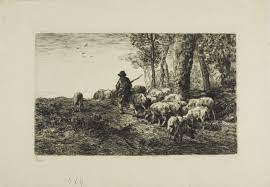
Suddenly we stop, the sheep and I,
Even the squirrel on the wall.
I’m carrying sticks. They’re in the field.

I heard nothing at all
But suddenly we stop, the sheep and I,
As if there were a distant call,
Even the squirrel on the wall,
Suddenly motionless eyes peeled.
I’m carrying sticks. They’re in the field.

Maybe there’s some message on the breeze.
I heard nothing at all.
Perhaps they’re more finely tuned than me,
But suddenly we stop, the sheep and I,
As if some deity had drawn us to a halt,
As if there were a distant call
From one who had authority over us all,
Even the squirrel on the wall.
For a moment we’re like a photograph,
Suddenly motionless eyes peeled,
As if something amazing had been revealed.
I’m carrying sticks. They’re in the field.

And the best of it is,
Maybe there’s some message on the breeze
That I can read too.
I heard nothing at all,
But we all know there are other senses.
Perhaps they’re more finely tuned than me,
Or can see more clearly,
But suddenly we stop, the sheep and I
And I’m included with them all,
As if some deity had drawn us to a halt,
Not with a command but
As if there were a distant call
Addressed to someone out of sight
From one who had authority over us all,
That we just overheard,
Even the squirrel on the wall,
That made us stop and realise.
For a moment we’re like a photograph,
Wondering if perhaps there is some deep intent,
Suddenly motionless eyes peeled,
Hiding behind this pure invention,
As if something amazing had been revealed,
Going about our proper business.
I was carrying sticks. They were in the field.

Mike Smith lives on the edge of England where he writes occasional plays, poetry, and essays, usually on the short story form in which he writes as Brindley Hallam Dennis. His writing has been published and performed. He blogs at www.Bhdandme.wordpress.com 

.

PLEASE NOTE: ARTICLES CAN ONLY BE REPRODUCED IN OTHER SITES WITH DUE ACKNOWLEDGEMENT TO BORDERLESS JOURNAL
Categories
Stories

The Solace

By Candice Louisa Daquin

Chela series by Ruis Pedros(2018) Courtesy: Creative Commons

Usually, it was a time for introspection and loneliness.

Her ex-boyfriend from years ago would write across the static wires enquiring after her in a solicitous way, which bespoke of his own alienation more than his feelings for her. He was always an empty cup; her friends would remind her. Chipped and cold.

Thank the Gods, she’d left him, just as she left her homeland and flung herself out there into the universe to be made anew. She didn’t want to take ghosts with her, she wanted to leave them in their glass cases to gather dust and be forgotten.

Wherever you go, there you are.

Every New Year she thought of the past. The ghosts of who we were hovered.  She wasn’t part of then and she wasn’t part of now. Somewhere in between. Something recreated and lost. She didn’t have a sure footing.

A New Year exposed all her uneven seams. The light got through but so did the dark. She thought of swapping them. Darkness would be her friend. Light, her anathema. But that didn’t work either. We need light to grow.

Maybe she needed darkness just as much. Maybe like the weed on the side of the street where people walked by unnoticing, every single day, maybe that weed thrived as much when the lights went out as it did in the hot sun.

Boy! Did she know about the hot sun? Moving to the desert, she watched the arroyo against the orange setting of the sun — life held its breath until light blurred behind the mountain top. She learned from that. Learned to walk on scalding sand without shoes and to survive without needing to drink … even as she was made of water.

Her boyfriend and her child, they were petrographs on red walls lost to dust storms. He moved on as he stayed still. She moved on as she was lost in a blur of motion. Even as she slept, her legs fidgeted with the longing to run on wet highways until the tarmac was replaced by dust. Her feet were bigger than the rest of her, as if they were just waiting for her to catch up.

The child didn’t even know about her. Maybe that’s why New Years were hard. Another year, another year without… not a death but a life. Somewhere in the world a part of her. Would her son prefer the sun or the dark like her? Would his eyes be coloured like hers or his father’s? Would he speak French or Arabic or …? Would he say nothing at all? And watch the clouds turn black and heavy with rain that never ever came.

He was a mirage to her, something seen in her peripheral. She worked all day like an ant, climbing, climbing, climbing and all the while it didn’t drown a bit of her need out of her. Just a swollen rag inside her chest replacing her charred heart, containing all the water she no longer needed. For she was made of water and she was without ancestors.

Her lovers were ochre and onyx, they held her as if she were made of pins and stars, they turned her when she grew lethargic, they tried to feed her but she remained starving, staring at the sky and its great reach of emptiness. Sometimes it felt as if that emptiness had been poured inside of her like a Long Island tea and turned to tannin and bitter root, not refreshing at all.

She dreamed of the sea. In her dream, the sea was land and land was water and she walked on hot air through the rising waves until she spied him and he ran to her, impossibly, impossibly, yet he did.

Every New Year she recalled his birth, the way he split her open like a song and they tied her back together with strings of sorrow. She played them with a crooked bow and lied about her age, because she wasn’t so old as to have forgotten, she wasn’t too old to have lost the smell of him. She just said those things so they would not ask anything else. Not one more word.

She was younger and she was covered with scars as silver as the night sky crossed with waves and his eyes were always watching in January because that was when he cried for the first time and she heard his howl across the silence and it broken everything in her that had been fractured but not yet crushed. His sound was her release. She played it over and over again until she didn’t know what she was listening to anymore.

The room was quiet, she sat alone on the expensive sofa and stared at the garden, fruiting with abundance despite the month. There is no frost except in my heart. She tasted salt on her lips and her hands clenched into fists beneath her skirts. Her stomach ached like it always did, seeking, seeking, seeking.

The doorbell rang. It might have been a food delivery. It could be flowers from a lover. A carol singer, although they don’t come around in this part of the world. She opened her mouth to say thank you but no thank you, and her mouth forms a perfect ‘O’ as the door let in the light and his silhouette.

How did she know? How did she know?

Their embrace began before they moved, each rooted to the spot in awkwardness, the stretch of years and unsaid things lying like drying guts in the sun. Her rows of flowers, bloomed to be reflected in his dark eyes. Her son.

When she looked down at her hands, there were rings on every finger, no marriage, no need. When she tucked her dry breasts into her brassiere, she felt the pinch of wanting to feed the grasping mouth of an infant. When she felt herself growing roots that defied time and place, she wanted to reach back into his crib, his making, his calcium.

A year later, they walked hand in hand. She was young enough — people weren’t sure. Was she, his mother? His lover? A pretty aunt? His back is straight like a determined waterfall. He’s inherited her thick hair and light gait. They are black swans on water, that mirrors the glitter of their glide as they reach the center of the lotus.

She has a puce birthmark on her breast. He holds her to him and water envelopes them both. She is shouting now, out loud, people are running, machines are bleeping, the crimson bed is losing focus.

She wondered what kind of voice he would have and how he would eat his dinner? With one hand gracefully holding a fork or would he become salt and shift like dancers’ feet through time?

New Year had always been hard but this year she would gather her skirts and bring together her ankles, still nimble and untouched by tears, and whirling around like a firefly raptured by light, find the pockets of heat still playing on the floor before night fall, where he would wait for her, a favourite solace.

Usually, it was a time for introspection and loneliness.

Now they remark at the young woman with prematurely grey hair, stretching down her back like a feral cry, and the bloom of her flowering skirts, edging her effort to be the first winter bird to turn homeward, where familiar things lay, like cast baubles in snow, to be dusted off and hung, beautiful and glittering.

.

Candice Louisa Daquin is a Psychotherapist and Editor, having worked in Europe, Canada and the USA. Daquins own work is also published widely, she has written five books of poetry, the last published by Finishing Line Press called Pinch the Lock. Her website is www thefeatheredsleep.com

.

PLEASE NOTE: ARTICLES CAN ONLY BE REPRODUCED IN OTHER SITES WITH DUE ACKNOWLEDGEMENT TO BORDERLESS JOURNAL.

Categories
Essay

The Malodorous Mountain: A Contemporary Folklore

By Sayantan Sur

On a bleak wintertide morning in January, our story begins with a black taxi and a somnolent rider. The taxi was racing through a maze of concrete towards the southern part of the city when out of the blue, the silhouette of a towering mountain appeared. With a large flock of wings dancing around its crest, the mountain looked surreal. One would naturally be stupefied to come across this elevation as Delhi is supposed to be flat as a pancake. As we closed in, my initial shock was instantly replaced by a strong sense of revulsion, for the mountain turned out to be a ginormous pile of rubbish. This reeking pile, I would later find out, is infamously known as the mountain of garbage.

The mountain is currently as tall as the majestic Taj Mahal, and would soon outgrow the mausoleum. On blazing summer days, spontaneous fires erupt from the methane released from the dump. Encircling its slope, is a small slum of rag-pickers. The local inhabitants who continually breathe in the putrid air often develop severe respiratory diseases, allergies, and asthma. Discarded tires at the dumpsite accumulate rain-water and transform into a haven for mosquitoes. This dump at Ghazipur was instated in 1984 and was to be closed in 2002 when it had reached its capacity, but evidently, that did not happen. The mountain and its ailing people sum up the out-and-out failure of the capital’s waste management system and its lack of operational efficiency.

On average, Delhi produces 10,000 tonnes of waste per day, and less than half of it gets segregated. About 50% of this waste is composed of organic materials, which for the most part comes from individual households. To treat this heap of organic waste, Delhi has only two operational composting and zero vermi-composting plants. The number of such facilities undoubtedly need to be increased. Although organic wastes account for a large fraction of the total waste, it imposes a lesser threat than other inorganic wastes such as plastic.

Plastic wastes make up just about 10% of the total municipal solid waste in Delhi, despite the current blanket-ban on 50-micron plastics. Three fourth of the household garbages are wrapped in single-use polythene bags, which eventually end up in landfill sites. Delhi currently generates the largest quantity of plastic waste in India, which is truthfully shameful. These plastics are practically impossible to segregate at the landfill sites due to the lack of advanced equipment. The only recycling presently being done is by the rag-pickers, who risk their lives to rummage through the rotten dumps and sell the collected plastics to intermediary dealers.

Other countries, however, have addressed this very problem by using advanced scientific methods. Commercially available sorting machines can easily classify the plastic wastes from other garbages, which uncomplicate the task of recycling. These machines employ basic spectroscopy and x-ray techniques to perform macro-sorting, which is far more efficient than manual sorting. Macro-sorting involves the separation of plastic bottles and containers, while micro-sorting deals with smaller bits, such as chopped plastic flakes. The sink-float technique is one of the major methods used to perform micro-sorting; here the materials are deposited in a water-filled tank and subsequently, the lighter materials start to float while the heavy materials sink. This technique works only when the materials have different densities. The plastic wastes can also be used to fabricate usable products, such as hydrogen and carbon-nanotubes, by using a process called two-step pyrolysis. This process uses Ni-Fe (Nickel and Iron) as a catalyst under extreme temperatures, to produce high yields of hydrogen gas. This thermochemical method is remarkably energy-efficient and can be easily practiced to recycle our plastic wastes.

An alternative way to get rid of plastics is through bioremediation. It involves the usage of different microorganisms, which can consume and degrade certain environmental pollutants. Last year, a paper published in the journal, Environmental Pollution has discovered an entirely new species of plastic-eating bacteria (Ji et al. Env. Pol. 258, 113793; 2020). This bacteria, Mycobacterium neoaurum, is the first known bacteria identified to have the ability to degrade 2,6-DMP (2,6-dimethylphenol), which is a widely used plastic monomer. Consequently, M. neoaurum might prove to be a key candidate for the bioremediation of 2,6-DMP-contaminated areas.

Corresponding to this, another paper published in, Science of the Total Environment has unearthed a plastic-eating super worm in China (Yang et al. Sci Total Environ. 708, 135233; 2020) . The larvae of the worm, Zophobas atratus, was proven to be capable of degrading and mineralizing polystyrene. The worms were shown to survive near about a month on the Styrofoam diet alone. Each super worm was estimated to devour 0.58 mg Styrofoam per day, which is four times more than what mealworms can eat. These new findings can change the currents ways of recycling plastic but we have to bear in mind that these scientific methods can only be used when our waste is properly segregated and disposed of in the first place; if the biological wastes are mixed with inorganic wastes, then they become unusable for future use.

The present-day segregation and sorting happen under extremely hazardous conditions and its effectiveness is reasonably low as only valuable discards are segregated from the dumpsite which guarantees a comparatively greater economic benefit in the recycling market. So, it becomes our duty as civilized citizens to ensure that we sort our household trash at our homes and then only it will have a domino effect on the waste management process.

The mountain of garbage is not only a physical body, but it is a metaphor that can be applied to any city with poor garbage disposal facilities. Luckily for us, the final act is yet to be written, and only time will reveal that story.

.

Sayantan Sur is a doctoral fellow at the University of Delhi. He has published numerous scientific articles and has won 2019 AWSAR award for articulating best science story.

.

PLEASE NOTE: ARTICLES CAN ONLY BE REPRODUCED IN OTHER SITES WITH DUE ACKNOWLEDGEMENT TO BORDERLESS JOURNAL

Categories
Excerpt

Akbar: A Novel by Shazi Zaman

Title: Akbar: A Novel of History

Author: Shazi Zaman

Publisher: Speaking Tiger, 2021

Now people began to hear of Badshah Salamat’s close links with the region of Braj. His visit was described in a dhrupad —

Shah Chhatrapati Akbar visits the Braj region,
Kings of the seven islands, nine regions and ten directions tremble.
Cavalry, infantry, elephants, and brave warriors,
With bows, arrows, swords and spears.
Not one blot on the clothes of Humayun’s son,
How formidable was the army of Jalaluddin Muhammad.

The region of Braj was not far from Fatehpur Sikri. It is said that Badshah Salamat, having listened to the poetry of Surdas, asked when he met him, ‘Surdas ji, God has made me powerful and all the talented people sing my praise. Why don’t you sing my praise too?’

Surdas sang the following words in reply: ‘No space in my heart.’

Badshah Salamat thought, ‘Why would he sing my praise? He would sing if he had the greed to seek something from me. He is a man of God.’

Finally, Surdas sang: ‘Seeing God is like nectar for the thirst that the eyes have.’

Badshah Salamat asked him, ‘Surdas ji, you can’t see. How do you know what this thirst is that the eyes have? How come this metaphor?’

When Surdas kept quiet, Badshah Salamat said, ‘His eyes are with God. He sees there and describes what they see.’

Badshah Salamat then thought, ‘He should be given something but he has been initiated into Vaishnavism. He has no desire.’

People say that when Badshah Salamat heard that the Vaishnav poet Govindswami sang very well, he went out to listen to him in disguise.

Badshah Salamat was fond of travelling incognito among people. In the sixth regnal year, corresponding to about 1560–61 ce, a large group from Agra had camped outside the city on the way to the shrine of Salar Masud Ghazi in Bahraich. Badshah Salamat went to their gathering incognito but some petty criminal recognized him and the word began to spread. To convince people otherwise,

Badshah Salamat rolled his eyes upwards. When people saw this they said, ‘Such eyes and expressions can’t be that of an emperor.’

As Govindswami sang the Raga Bhairav, Badshah Salamat was sure he would not be recognized. But suddenly, as he sat listening, these words escaped his lips, ‘Wah, wah!

Recognizing him, Govindswami said, ‘This raga has lost its value.’

At this Jalaluddin Muhammad Akbar said, ‘I am the Emperor.’

Govindswami replied, ‘If you are the Emperor, keep to it. But this raga has lost its value because you listened to it.’

Badshah Salamat then thought, ‘I am the ruler of one country. For him, the grandeur of three worlds is meaningless. Why would he obey my command?’

It is said that Badshah Salamat heard an artiste sing the poetry of the Vaishnav poet Kumbhandas and said, ‘Would there be anyone like him who sees God in this manner?’

The artiste replied, ‘Saheb, he lives even now!’

An excited Badshah Salamat asked for Kumbhandas’s whereabouts. The artiste replied, ‘There is a village near Shrigovardhan called Jamunawat. He lives there.’

When Badshah Salamat’s men reached the residence of Kumbhandas he was in Parasoli. Reaching Parasoli, these men said, ‘Badshah Salamat has asked for you.’

Kumbhandas said to them, ‘I am no servant to the Emperor. What do I have to do with him?’

Badshah Salamat’s men said, ‘How do we know what you have been called for? We are under orders from the Emperor to get Kumbhandas ji. Here is a palanquin and a horse. Please mount and come with us. We have to take you.’

Kumbhandas had no option. Wearing his shoes, he said, ‘Brother! I have never mounted a conveyance. I will go on my own.’ When Kumbhandas reached Sikri on foot, Badshah Salamat

said, ‘Kumbhandas ji, come. Please be seated.’

Badshah Salamat’s elegant tent had precious stones and frills. Even so Kumbhandas felt his home Braj was far better because Shrigovardhannath ji played there.

Badshah Salamat said, ‘Kumbhandas ji, you have written much poetry in praise of Vishnu. That is why we have called you here. Sing for me some poetry in praise of Vishnu.’

Kumbhandas thought, ‘The real patron of my voice is Shrigovardhandhar. But now that I cannot avoid it, I better sing something to ensure he does not ever ask for me. Let me say harsh words. If he minds, so be it.’

Kumbhandas remembered, ‘One who has been adopted by Lord Krishna is always safe. He would come to no harm even if the whole world turns against him.’

Then he recited —

Devotees have no need of Sikri.
One walks one’s shoes threadbare, God’s name forgotten,
And salutes those whose face brings no joy.
O Kumbhandas, without Lord Krishna, these are false destinations.

They say Badshah Salamat felt unhappy when he heard this but said to himself, ‘If he had any greed he would sing my praise. He is a true devotee of his Lord.’

Irritated with Badshah Salamat, Mullah Abdul Qadir Badayuni said, ‘… Hindu infidels, who are indispensable, and of whom half the army, and country, will soon consist and as whom there is not among the Mughals or Hindustani Muslims a tribe so powerful, he could not have enough. But to other people, whatever they might ask for, he gives nothing but kicks and blows…’

When it began to be murmured in Fatehpur Sikri that Badshah Salamat had turned Hindu, Sheikh Abul Fazl was forced to respond,

‘This rumour is spread because His Majesty, being of an open mind, would meet Hindu holy men, raise the rank of Hindus and be kind to them in the interests of the welfare of the country… There were three reasons these rumours spread by evil men gained currency. First, people following different religions gathered in the darbar, and because there was something good in every faith, everybody got some bit of praise. Secondly, because of sulh-i-kul, people of various kinds got spiritual and worldy success. Third, the crooked ways of evil people of the age.’

(Excerpted from Akbar: A Novel of History by Shazi Zaman. Published by Speaking Tiger Books, 2021)

About the book

Conventional historical accounts tend to paper over seemingly minor events related to Akbar’s life, to the detriment of a comprehensive appreciation of one of the most important figures of Indian history. Shazi Zaman fills the gap with this remarkable novel rooted in history.

Akbar’s writ ran from the Hindukush in the west to the Bay of Bengal in the east, an empire his father Humayun and grandfather Babur had only dreamed of. And his religious policy, boldly unorthodox, was as fierce a contest with the clergy, particularly Islamic, as were his military campaigns with his political opponents. Most histories give us Akbar the commander who never lost on the battlefield, and the fearlessly iconoclastic ruler. But we rarely come across the restless, questing soul who wished to reconcile a sensitive and compassionate heart to the sometimes ruthless obligations of statecraft; and the man who, in his struggle for sulh-i-kul, peace with all, could dare to treat as equal not only all faiths—Hinduism, Islam, Christianity, Jainism, Zoroastrianism and others—but all life as well—human or animal.

With a scholar’s rigour and a storyteller’s insight, Shazi Zaman, in this transcreation of his acclaimed Hindi novel, sifts through fact and many an anecdote to paint a complex yet enchanting portrait of one of the world’s great monarchs. There isn’t another book, as vast in scope and as layered, to help us fully understand the phenomenon that was Akbar: the unsparing pragmatist and benevolent ruler; the austere leader and indulgent friend; the unlettered prince and philosopher-mystic.

About the Author

Shazi Zaman started his three-decade-long career in broadcast journalism at Doordarshan and has since then worked with several media organizations. He has had a long association with the ABP News Network as a senior executive producer and as their Group Editor. He has been on the governing bodies of the Film and Television Institute of India, Pune, and the Indian Institute of Mass Communication, Delhi. Akbar is his third novel. His earlier Hindi novels are Prem Gali Ati Sankri and Jism Jism ke Log.

.

PLEASE NOTE: ARTICLES CAN ONLY BE REPRODUCED IN OTHER SITES WITH DUE ACKNOWLEDGEMENT TO BORDERLESS JOURNAL