I first visited Santiniketan at the age of four, I’m told.
If we calculate the date, that would be 1930, or December 1929. Whether it was that December, or the January of 1929, I don’t know. Ma said it was an awfully cold winter. Shivering all the way on our journey there, shivering all the way back.
How amazing! I used to remember my very, very young days very, very well.
Yet now I can no longer recall that first visit.
I can’t be expected to remember, either. For now, I’m in my seventy-fifth year.
For a long, long time, I lived with Ma, Baba, my mamas, mashis, kakas, pishis, Dadu, Didima, Thakurda (only I called him ‘Dada’), Thakuma— all of them.
Not just them. Also Ma’s kaka, jyatha, mama, mashi, and their children and grandchildren. In other words, I lived with relatives of a hundred kinds, our lives closely entangled. For as long as they were with us, there was constant talk. In that buzz of conversation, one heard people say things like:
‘You were four years old then!’
‘When you fell off the tree . . . ’
‘The time you boarded an aeroplane . . . ’
That was how one got to know about one’s own childhood. So many years since Ma left us—to whom can I narrate my tales of childhood now! What I want to say here is that, although my first visit to Santiniketan was something that really happened, it’s an event I know of only by hearsay.
What we learn of by hearsay can also be true, after all. Way back in 1936, I went to Jhargram. Those days, Jhargram was a sea of sal forests.
Like an island within that sea was a house where we stayed. When Baba was transferred to Medinipur, I got to see a great deal of the Gopa, Jhargram, Salbani, Belpahari of those times.
‘Khuku! In Medinipur we spent our happiest days,’ Ma used to say.
I say the same.
Look, I’ll tell you about my childhood. But there’s no one alive now who can understand what I’m talking about.
Never mind. I must talk about the first time I saw Santiniketan.
Baba had probably joined Visva-Bharati as a member. What was his reason?
Visva-Bharati was Rabindranath’s creation, after all!
Well, Baba had seen Rabindranath several times, gone to meet him as well. This time, he had decided to take Ma with him, and us two sisters too.
If I was four at the time, my sister Mitul would have been no more than six months old!
Trains those days had First Class, Second Class, Inter Class and Third Class compartments. We boarded a Second Class compartment. A pair of wide, leather-upholstered berths below, another pair above.
In addition, the First Class compartment had a wall-mounted mirror, and hooks to hang clothes, raincoats and umbrellas. Fixed to the wall between the two bathrooms was a table with no legs. As far as I can remember, these items were absent from the Second Class compartment. The cushioning of the First Class berths was heavier, and the other fittings much superior. White sahebs and brown sahebs, did they all travel First Class? I don’t know.
That they didn’t travel in the same compartment, was something I heard of all the time. The British were in power then. They were the ruling class.
Gandhiji always travelled Third Class, in compartments meant for common people. Incredible, as it seems today, once I saw Gandhiji too; but let that be.
Anyway, it was high winter then. On the train, Ma and I took the lower berth. A gentleman on the berth above us, another on the lower berth opposite. Baba on the upper berth, with Mitul. Ma and Baba had a massive war of words, I’m told.
‘You take the upper berth with Khuku. Mitul is so tiny, let her remain with me.’
‘Aha! You can recline comfortably.’
‘Mitul is so small, she’ll fall off!’
‘How can she, when I’m with her?’
And so, the verbal battle went on and on. The gentleman on the lower berth interrupted from time to time, saying things like:
‘Aha! Please stop this! The children are asleep after all, so why must you . . . ?’ and so on.
Ultimately, at some point, everyone fell asleep. Look, among all the trains of those days—BNR, INR, this Mail, that Mail, some other Mail—which one we were travelling in, I can’t say. I’m told that the moment we arrived at Bhedia station, it was either our co-passengers who declared: ‘This is Bolpur’, or my Baba who decided, ‘This is Bolpur’. How exactly it happened, there’s no way of figuring out now, after a gap of seventy years. From what I knew of my Baba, I suspect he tumbled out of the train, announcing:
‘This is Bolpur!’
Ma recounted how, as soon as he alighted at the station, Baba cried, ‘We’ve got off at Bolpur, so why is this station named Bhedia?’
‘Bhedia’ was the name displayed at the station, on a square glass chimney atop a heavy wooden stand.
Anyway. The station master emerged. He understood the situation and organized a bullock cart for us. It was lined with a thick layer of straw, covered by a shataranchi. You wouldn’t know this, but if you sleep on a thick layer of straw with that chequered rug spread over it, it really keeps the cold at bay. Dumka in 1944, Ghatsila in 1945, I remember them very well. In December, we had travelled to those places from Santiniketan.
In that bitter cold, my parents had climbed on to the bullock cart and eventually arrived at Santiniketan. The house behind the Mandir, which I thought of as the Guest House since 1936, is where I think they had stayed.
In the morning, they set out for an audience with the poet. Seated beside Rabindranath was Ramananda Chattopadhyay. I was terribly precocious, and even more artless. Apparently, I asked Ramananda Chattopadhyay:
‘Are you Robi Thakur?’
Tell me, how was I to blame! Dadu-Didima, my grandparents back home, used the name ‘Robi Thakur’. Thakurda, my paternal grandfather, would say ‘Robi-babu’. I mean, he referred to the Poet as ‘Robi-babu’. Baba, Boromama, Ma, my mashis and pishis — they used the name ‘Rabindranath’. No wonder I had blurted out such a foolish question.
Even that anecdote is a matter of hearsay, after all.
What happened after this episode, I can’t recall.
So those were my first glimpses of Rabindranath, and of Santiniketan.
The Santiniketan I saw six years later, when I went there at the age of ten — that is what remains etched in my memory as ‘our Santiniketan’. Like a dazzling feather that has fluttered down from some unknown place. In my mind it remains, enclosed within a box made of glass. I can turn it this way and that, look at it from any angle, whenever I desire.
I can. It’s something I can do, even now. Still, I have travelled a long distance away from my childhood, so the glass box now seems far, far away. I gaze at it and realize that the colours are fading. I realize that, one day, all the colours will vanish.
Of course, they will vanish. Someday, someone will ask me to write about it, and with my dimming vision I will sit down to write. Sixty-four years now. How long will the feather keep its colours, waiting?
The ‘feather’ stands for memories of childhood.
Memories don’t wait either. Memories grow tired. They want to go to sleep.
About the Book: In Our Santinikentan, the late Mahasweta Devi, one of India’s most celebrated writers, vividly narrates her days as a schoolgirl in the 1930s. As the aging author struggles to recapture vignettes of her childhood, these reminiscences bring to the written page not only her individual sensibility but an entire ethos.
Santiniketan is home to the school and university founded by the foremost literary and cultural icon of India, Rabindranath Tagore. In these pages, a forgotten Santiniketan, seen through the innocent eyes of a young girl, comes to life — the place, its people, flora and fauna, along with its educational environment, culture of free creative expression, vision of harmonious coexistence between natural and human worlds, and the towering presence of Tagore himself. Alongside, we get a glimpse of the private Mahasweta — her inner life, family and associates, and the early experiences that shaped her personality.
A nostalgic journey to a bygone era, harking back to its simple yet profound values — so distant today and so urgent yet again — Our Santiniketan is an invaluable addition to Devi’s rich oeuvre available in English translation.
Mahasweta Devi (1926–2016) was one of India’s foremost literary figures from the late twentieth and early twenty-first centuries—a writer and social activist in equal right. Author of numerous novels, plays, essays and short stories, she received the Jnanpith Award, India’s highest literary honour, in 1996. She was awarded the Ramon Magsaysay Award in 1997 for her ‘compassionate crusade through art and activism to claim for tribal peoples a just and honourable place in India’s national life’.
Radha Chakravarty is a writer, critic, and translator. In 2004, she was nominated for the Crossword Translation Award for In the Name of the Mother by Mahasweta Devi.
.
PLEASE NOTE: ARTICLES CAN ONLY BE REPRODUCED IN OTHER SITES WITH DUE ACKNOWLEDGEMENT TO BORDERLESS JOURNAL
Written in 1910 (15 Ashwin 1317) in Santiniketan, Raatri Eshe Jethay Mesheor where the night comes to mingle was a part of his collection calledGitimalya( A garland of Songs) first published in 1914.
Gitimalya
WHERE THE NIGHT COMES TO MINGLE

You and I met at the confluence when
Night came to mingle with the ocean of day.
There, the shades of black and white formed dark and light —
There, the waves rushed from bank to bank.
A baritone rang amidst the silence of the skies,
The gold line rose out of the deepest of darkness.
My dreams mingled with tears as I awoke
Searching for contentment in vain.
Here is a rendition of the song in Bengali by Dwijen Mukherjee (1927-2018) a renowned singer from the past. His voice seems to capture the cadence of the song and colours it with the freshness of dawn.
.
.
(Trans-created for Borderless Journal by Mitali Chakravarty with editorial support from Sohana Manzoor and Anasuya Bhar.)
.
PLEASE NOTE: ARTICLES CAN ONLY BE REPRODUCED IN OTHER SITES WITH DUE ACKNOWLEDGEMENT TO BORDERLESS JOURNAL
In Conversation with Shazi Zaman, author of Akbar: A Novel of History, published by Speaking Tiger Books
“I profess the religion of love, and whatever direction
Its steed may take, Love is my religion and my faith.”
— Ibn-i-Arabi (1165-1240), Akbar: A Novel of History by Shazi Zaman
These lines were written by a mystic from Spain who influenced Emperor Akbar (1542-1605), a ruler who impacted the world with his broad outlook. Based on such ideology as preached by Ibn-i-Arabi more than three hundred years before him, with an urge to transcend differences and unite a world torn by strife, the great Mughal founded his own system of beliefs. He had few followers. But Akbar chose to be secular and not to impose his beliefs on courtiers, many of whom continued to follow the pre-existing religions. He tried to find tolerance in the hearts of practitioners of different faiths so that they would respect each other’s beliefs and live in harmony, allowing him to rule impartially.
Akbar is reported to have said: “We perceive that there are varying customs and beliefs of varying religious paths. For the teachings of the Hindus, the Muslims, the Parsis, the Jews and the Christians are all different. But the followers of each religion regard the institutions of their own religion as better than those of any other. Not only so, but they strive to convert the rest to their own way of belief. If these refuse to be converted, they not only despise them, but also regard them for this very reason as their enemies. And this causes me to feel many serious doubts. Wherefore I desire that on appointed days the books of all the religious laws be brought forward, and that the doctors meet together and hold discussions, so that I may hear them, and that each one may determine which is the truest and the mightiest religion.” Of such discussions and ideals was born Akbar’s new faith, Din-i-ilahi.
Was it exactly like this? Were these Akbar’s exact words?
They have been put in perspective by an author and a journalist who has written a novel based on his research on the grand Mughal, Shazi Zaman. He tells us in the interview why he opted to create a man out of Akbar rather than a historical emperor based only on facts. He has even mentioned that Akbar might have been dyslexic in the introduction. But Zaman’s admiration for the character he has recreated for us overflows and floods the reader with enthusiasm for this legendary Mughal. Akbar is depicted as a man who was far ahead of his times. He talked of syncretism and secularism in a world where even factions within the same religion were killing each other.
Akbar by Shazi Zaman in Hindi
The novel was first written and published in Hindi in 2017 by the bilingual Zaman, who started his three-decade-long career in broadcast journalism at Doordarshan and has since, worked with several media organisations. Zaman trans created his Hindi novel on Akbar to English to reach out to a broader audience. The whole experience has been a heady one for Zaman as the interview shows but for the reader what is it like? To start with one felt like the Connecticut Yankee in King Arthur’s court, except one was flitting around in the Indian subcontinent of the sixteenth century, with a few incursions to the Middle-East, but mostly within India. Transported to a different age, it takes a while to get one’s bearings. Once that is established, the novel is a compelling read.
The first part deals with Akbar’s developmental years and the second part with his spiritual outlook which helped him create an empire with many colours of people and religions. This is a novel that has been written differently from other historical novels, like Aruna Chakravarti’sJorasanko (2013), for the simple reason that it belongs to a different time and ethos which was farther from our own or Tagore’s times. Akbar has a larger tapestry of people across a broader canvas than Jorasanko and it takes time to grasp the complexities of relationships and interactions. The other recent non-fiction which springs to the mind while reading Akbar is Avik Chanda’sDara Shukoh: The Man Who would be King (2019) about the great grandson of the emperor who lived from 1615-1659. Again, this was a narrative closer to our times and was not a novel, but a creative non-fiction based strongly on history. While Dara’s character painted by Chanda showed weaknesses like an inability to respect the nobility or plan wars, Akbar painted by Zaman is kind but a man of action who ruled and intended to rule well. A leader — one has to remember — is not always the most popular man. Nor was Akbar with his eccentricities and erudition despite his inability to read — the book does tell us why he did not learn to read and how he educated himself. Most of the novel is a work of passion based on extensive research over two decades. As Henry Kissinger had said at a much later date, “The task of the leader is to get their people from where they are to where they have not been.” And the Akbar recreated by Zaman does just that.
Shazi Zaman
Zaman who had been with the ABP (Anand Bazar Patrika) News Network as their Group Editor, was on the governing bodies of the Film and Television Institute of India, Pune, and the Indian Institute of Mass Communication, Delhi. He has worked with Aaj Tak, Zee News, Star News and also with the BBC World Service, London. He has served as the Director, Video Services of the Press Trust of India. Akbar is his third novel. He has authored two novels in Hindi earlier. In Akbar: A Novel of History (2021), Zaman with his journalistic background and his love for literature inherited from his novelist father, Khwaja Badiuzzaman, has done the mammoth task of astutely bringing to life a character who might have been a perfect solution to the leadership crisis that many are facing in the current day.
If you are still wondering how close this novel comes to the Bollywood movie called Jodha Akbar (2008), the major things in common were the grand Mughal’s sense of justice and his ability to tame wild elephants! For a deeper understanding of both the emperor and the book, in this exclusive, Zaman tells us what went into the making of this novel and his journey.
Why did you choose to write of Akbar?
One has to have a bit of Akbar inside oneself to write on him—and to read about him as well. Writing on Akbar was not a conscious decision. By the time I realised that I was going to write a novel of history on Akbar, my sub-conscious was miles ahead. Of course his personality had attributes that appealed to me consciously and sub-consciously, especially his belief in primacy of ‘aql’ (reason) over ‘naql’ (blind imitation of tradition) and his ability to question all orthodoxies.
Do you think Akbar is relevant in the current context?
I believe that his message is so ennobling that it transcends the boundaries of space and time. Across ages and across geographies, and within a geography by various groups and communities, his memory has been kept alive.
There was a book a few years ago called Dara Shukoh: The Man who would be King. Would you say he would be more relevant for our times than Akbar or is Akbar a better choice?
It is difficult to give them a comparative score. Dara could have been a very worthy successor to Akbar. And his initiatives and writings are really inspiring. Robustness of ideas and your resolve to push them are tested when faced with exigencies of statecraft. Sadly, Dara did not get that chance and Akbar did. I find that Akbar could navigate but sometimes be audacious to the extent that his courtier poet-musician Tansen had to caution, ‘dheere dheere dheere man, dheere hi sab kachhu hoye (Slowly, slowly, slowly, all happens at a slow pace)’.How would Dara have navigated while on throne is an unanswered question in Indian history. Having said this, his defeat in the battle of succession should not undermine the originality of his initiatives.
Why did you choose to write this in a novel form? Dara Shukoh was a non-fiction. Have you introduced fiction into this?
History largely tells us what happened. Most often it does not tell us of the state of mind that brought people to the point where we find them take momentous decisions. I think momentous events or actions are rooted in mental journeys. And these journeys are seldom documented. When Akbar faced a mental crisis—‘haalat-i-ajeeb’ (a strange state) as a contemporary called it— in the summer of 1578 on the banks of the river Jhelum, one wants to map what was happening in his mind and what had brought him to that point.
What lay behind the agitation of this man who was one of the mightiest emperors of the world, who had never lost a battle and was at the peak of his power ? Were there some forces testing his patience ? Or as he stood at a place linked to the history of his forefathers, did he wonder about the trauma they had faced ? Or when he dealt a physical blow to a top cleric of yester years, there must have been a mental journey preceding this act. One can try and go into a person’s mind by closely studying his actions and utterances as also that of people and texts that influence him. We all know that people often mean much more than what they choose to say and sometimes, they say one thing and mean the other.
A close examination of this maze can give a glimpse of what was happening inside the great mind. As you try to create a period piece around his state of mind you mine information from all available sources—textual, aural, visual, architectural. For me fidelity to known facts is essential even in historical fiction. But there does come a point when the trail goes cold. Even the best documentary evidence might be insufficient in finding all the pieces of the period piece. For example, we do not know what Akbar was wearing the night he experienced the ‘haalat-i-ajeeb‘ but we have a Mughal miniature in all likelihood of the next morning when Akbar takes an unexpected decision about the great game. Now, it has come down to us that he appeared wearing last night’s clothes. So we know what he was probably wearing at the time he was in ‘haalat-i-ajeeb’ of the previous day. Or we do not know the details of the carpet of the room where he lay dying. Nobody recorded that. Thankfully, some details have come down to us of carpets of those times. I have chosen to use them. After exhausting all means of finding the right pieces of this period piece, I have exercised my imagination. So this is fiction very much rooted in history. If I have been able to do what I had intended, you would feel you have read his mind as also feel that you are actually standing backstage in the Akbarian arena.
In the debate I often encounter about the element of history in historical fiction, perhaps we miss a basic point. Most fiction has history in it. Some have history that is known. Some have history that is personal or unique to the author. It is only when known history figures in your work that the issue of reality versus fiction surfaces. Otherwise, this mingling is not questioned.
What was the kind of research you did? How long did it take you to research and write this book? Tell us about its evolution.
The idea had been simmering under the surface since early years. As I have mentioned in my preface, a childhood incident imprinted Akbar on my mind. During my school days, a member of the education department of the government made a surprise inspection and gave a short introduction to Akbar’s life and his relevance to our times. It left a mark. I was especially blessed to have teachers who stoked my interest. I shall be eternally grateful to my teacher Muhammad Amin–Amin Saheb as he was called at St.Stephen’s College (Delhi University) — to have brought history to life in classroom and sessions outside classroom. Amin Saheb taught us Akbar’s ‘sulh-i-kul’ , which he said stands not for tolerance or co-existence because even these terms denote some separation. He said, Akbar’s ‘sulh-i-kul’ meant harmony. Amin Saheb taught us about Akbar’s desire to build bridges and his respect for diversity. Many like me graduated from the university but never left his class. I feel privileged that for quarter of a century after leaving College I continued to sit at his feet and learn about Akbar. A good teacher teaches and also shows the path to further learning.
My interest in Mughal miniatures took me to various museums within the country and abroad and of course to places like Fatehpur Sikri–a city that Akbar created with a purpose– very often. Over decades I have gathered in my personal collection most of what has been written about Akbar and almost all books published on his art and architecture. I can say that all published Mughal miniatures reside in my study now. So Akbar was a character I had been breathing much before it became the idea of a novel. However, for a period spread over two decades I did consciously try to piece together a story.
How did you create the character of Akbar ?
Akbar was not merely a historical figure. He was also acutely conscious that he was making history. And as a person conscious of this, he left ample footprints.
When you try to get into a person’s mind you piece together all he saw and read (or in case of Akbar, was read to) and experienced; all he interacted with; all he surrounded himself with; all he spoke and wanted to be spoken, read and spread; and all that he created. Foremost, of course, is Akbarnama which was a monumental image building exercise entrusted to a close and trusted courtier, Abul Fazl. Abul Fazl knew what went on in Akbar’s mind. This work is rich in details and is a comprehensive history of Akbar and his forefathers. Akbar also commissioned others who knew his forefathers to write histories that would help Abul Fazl in his work. Akbarnama is an official account. It was vetted by Akbar and tells us how Akbar wanted to be seen by his contemporaries and by future generations. It is extremely useful in giving us the image the emperor aimed to project.
Then there were many others who wrote their histories during his reign. But it is the history called Muntakhab-ut-Tawarikh by a disgruntled cleric, Mulla Abdul Qadir Badayuni, which was written secretly that gives us an unofficial perspective. I am grateful to the anonymous author of the historic Rajasthani work, Dalpat Vilas, for giving an informal and unique access into the emperor’s mind. Anybody studying Akbar feels especially grateful for the elaborate atelier —tasveer khana — as it was called — that the emperor established. Paintings made under his direction and patronage give us a vivid picture of what he thought was worth projecting. If you look closely, Mughal miniatures of his time often have a story and even a back story that gives you an indication of the emperor’s mind.
Akbar built at a huge scale and many of his buildings still stand tall and the stones speak even now of why he gave them the shape that he did. Then of course are works related to his ancestors like Baburnama which Akbar was fond of and later, of his son’s Tuzuk-i-Jahangiri. Akbar’s public contact and communication was prolific. We might well have seen him if we were living in that age. He travelled and interacted widely.
Almost every morning of his half a century long reign he appeared at the balcony so that the subjects could see him. Even those who did not see him felt his presence. Banarsidas, a trader of his time, who also wrote a chronicle, notes the widespread alarm amongst common people when the emperor fell ill. Letters Jalaluddin Muhammad Akbar wrote to Uzbek and Persian kings, the emperor of Spain and Portugal, to nobles and others have been handed down to us. His interactions with religious persons find mention in Vaishnavite, Jain and Mahdawi literature. The letters that Jesuits at his court were writing to their superiors are useful for their perspective as also for the ‘unofficial’ details. Then there were personalities Akbar drew to his court who were poets, warriors, administrators and diplomats who were themselves eminent enough to be written about, or were writers themselves. I closely studied them.
Abdur Rahim Khan-i-khanan was like a son to Akbar and wrote poetry that is timeless in its appeal. Tansen, an eminent poet and musician at his court wrote ‘takhat baitho Mahabali ishvar hoye avtar (the mighty Emperor sits on the throne as incarnation of God)’, which is how Akbar would have wanted to be described. Works written on Raja Mansingh like Mancharit and Mancharitra Raso helped me understand a mighty noble, who again was like a son—‘farzand’—to Akbar. Akbar himself is believed to have been a poet and pieces of poetry deemed to be his have come down to us. His memory resonates even now in folk songs.
In terms of material evidence of personal effects, we have an armour of Akbar which was helpful in ascertaining his approximate height. Of course, this was achieved with the help of experts. Not all that one gathered necessarily went into this work but I tried to gather as much as I could so as to know how Akbar lived, ate, slept, worked, played, deliberated, relaxed, fought and thought and what was the world he inhabited, and also what was the kind of world he wanted to inhabit.
I must say that I tried to access original sources in Persian, Sanskrit and other languages with the help of experts, in addition to what I could read myself in English, Hindi and Urdu.
In your introduction you have said Akbar might have been dyslexic or bipolar. Why? What made you think he might have been dyslexic or bipolar? Could it not be that as a child he was not just into books and therefore did not learn to read?
There has been some academic work on some of the issues Akbar faced. I think his behaviour on the full moon night of the year 1578 on the banks of the river Jhelum and on occasions before that definitely call for more investigations in that direction, though one is conscious that the emperor himself is not available for close examination. As for dyslexia specifically, one can say that the man loved books. He commissioned and collected them at a huge scale but he did not read them. They were read out to him. Historical sources indicate that he could not read or write. Though I have seen copies of his handwriting, they seem laboured. It would be a fair assumption that he was dyslexic. I think he was a great visual learner. That is why no Mughal emperor before or after had as big a tasveer khana as him.
You have repeated this phrase thrice in the book. ‘Hindus should eat beef, Muslims should eat pork, and if not this, fry a sheep in the pan. If it turns into pork, Hindus and Muslims should have it together. If it turns into beef, Hindus and Muslims should have it together. If it becomes pork, Muslims should have it. If it becomes beef, Hindus should have it. A divine miracle would thus happen.’ Why?
More than one account reveal puzzling behaviour and utterances of the emperor. This forced one person to say that this was ‘haalat-i-ajeeb’. Nobody at that time could fully understand his state or his words. I feel that it was reflective of his anguish over religious disputes and religious orthodoxy. An emperor who had never lost a contest was getting impatient. In moments of mental crisis it is possible for a person to say things which have layers of meaning. One has to peep underneath the words to fathom the anguish of a sensitive mind. This was one such utterance.
What is the most endearing quality you found in Akbar? And why?
It is difficult to pinpoint one in a person who embodied numerous qualities. His belief in giving precedence to ‘aql’ (reason) over ‘naql’ (blind adherence to tradition). His spirit of enquiry and his desire to provide space for differing thoughts. He believed—“It is my duty to have good understanding with all men. If they walk in the way of God’s will, interference with them would be in itself reprehensible; and if otherwise, they are under the malady of ignorance and deserve my compassion.”
There is an incident mentioned in the book. The Jesuits who came with the intention of converting Akbar finally despaired because he would give them ample space and ample attention but stop short of conversion. So one evening, they came and sought leave since their embassy had failed in its purpose. Jalaluddin Muhammad Akbar replied, “…how can you say that the time you have spent with us has been profitless, seeing that formerly the Muslims had so much credit in my land that if any had dared to say that Jesus Christ was the true God, he would straightway have been put to death; whereas you are now able to say this, and to preach the same in all security ?”
You wrote the novel first in Hindi and then trans created it to English. Why? What is the difference between the Hindi and the English versions?
The novel Akbar naturally came to my mind in Hindi, a language the emperor would have been comfortable with had he been alive. Having said this, I am grateful to my publishers, Rajkamal and Speaking Tiger, for initiating the idea of an English version. And I did immediately see the need to take Akbar to a wider audience because the novel has an idiom and language rooted in Hindustan but Akbarian thought and vision have an appeal that is wider than the regions he ruled. So the challenge was to take the text, sub-text and the idiom to an English audience. The challenge was also to make Akbar’s 16th century intelligible to 21st century English-speaking world. I have tried my best with help of editors at Speaking Tiger to make it a work English speakers would be at home with. I am sure they would be able to savour the milieu, the plot and the sensibility of 16th century Hindustan in their preferred language. A good translation should in fact be a trans creation and should read like it has been written in the same language.
You have two novels in Hindi. Do you plan to translate those too to English? Why? Why not write directly in English?
I believe that no thought is completely translatable into words and no words are completely translatable into another set of words. Thus the word transcreation. The first two novels Premgali Ati Sankri (The Narrow Alley of Love) and Jism Jism Ke Log (Various Bodies) have intense conversation between characters which is rooted in their shared understanding of an idiom. Translation is desirable and relatable because stories strike a chord across space but works have texts, sub-text and idiom. The problem and the challenge lies in taking the sub-text and the idiom into another language. That is why trans creation requires a deep understanding of the text, the sub-text and the idiom of the original work as also of the sensibilities of the audience for whom you are trans creating. Having said this, I would be happy to translate the first two novels for an English readership. The theme would strike a chord, the idiom would need some fine work.
Will you shuttle between English and Hindi in the future? Are you planning more books?
Shuttling between Hindi and English is an interesting thought. I am already seized by an idea that came to my mind as an English text. It is germinating. As for more books, I have already sent a Hindi novelet for publication which could be thematically seen as third in series after Premgali Ati Sankri and Jism Jism Ke Log. While telling stories to my children, and making them up as I went along, I created a short novel for children which awaits publication. I am also in the process of writing another novel in the genre of historical fiction.
Thank you for your time.
This is an online interview conducted on behalf of Borderless Journal by Mitali Chakravarty.
These are stories written by youngsters from the Nithari village. They transcended childhood trauma and deprivation for many decades. The column starts with a story by Sharad Kumar in Hindustani, translated for us by Grace M Sukanya
Sharad Kumar is a 22-year-old engineer / artist from Nithari, Delhi, currently in the final year of his B. Tech in Information Technology. He has also performed as an actor and singer for various college productions. He has been associated with pandies’ theatre group since 2010. His performance at the American Center, Delhi, with 40 more children from the school Saksham, Nithari, was the audience’s pick. Working with younger children in Nithari, teaching them Physics, Maths and also, how to perform on stage, he hopes to be able to give back to the community he comes from. His desire: quality education and opportunities to children from under-served backgrounds.
Stranger than Fiction
When it had begun, it had seemed it would just be for a short while and would get over quickly. But it had now been three months since the lockdown had been announced.
Mumbai’s streets were so quiet that it seemed the multitudes had been anaesthetised. Only the sound of dogs continued to disrupt the silence of the alleyways. Even the air felt cleaner.
But there was still one pollutant left: the virus.
The corona warriors worked away at their jobs as though this was the battle of Mahabharat. Excepting a few people, everyone was busy waging a personal war.
On national television, people initially behaved admirably. But now they too showed symptoms of being infected by the virus of television rating points.
Mritunjay, an ordinary hawaldar, took time out of his busy schedule to lay out his gamchha and rest on it, as he did every day, and started knitting a dream from the past — his grandfather’s memories.
He traveled back in time to an era when the British Empire extended to almost all parts of the world.
*
Somewhere far away from the Indian sub-continent, Mritunjay’s grandfather, Dirghayu, was a soldier in the British Indian Army. Due to the circumstances of that time, Dirghayu and his compatriots were beholden to do the British’s bidding, waging war in trenches, pits, and holes for their colonial masters.
Meagre rations, living in squalor with rats, snakes, and other parasites, were all part of their war time trials. Standing every day in the cold water and the wet mud of waterlogged trenches had started taking its toll. With each passing day, Dirghayu’s legs were becoming more painful.
Then, one day the commander’s voice had announced the beginning of war, and everywhere cartridges, canons, and weapons poured forth rivers of blood. Perhaps, because of his name, Dirghayu, meaning the long-lived one, the hawaldar’s ancestor had been blessed with good luck and courage. He survived the enemy gunfire, the terrible living conditions, the horror of warfare, and managed to win the British their victory. The Commander was happy with his performance and decided to send him back to his homeland.
Back in the Indian subcontinent, the Jallianwala Bagh massacre had just taken place. General Dyer’s order to fire at point blank range on a peaceful prayer meet had shocked the empire to its core. The cruelty of the British Raj had been increasing since Gandhiji’s successful Champaran Satyagrah. Some political parties had taken to violence and arms, challenging the British to a direct conflict.
The Spanish Flu too, was at its peak. Millions of people had lost their lives. The death count was rising every day. Some scientists had estimated the death toll at as much as 5% of India’s entire population.
Economy and communications had collapsed. The rulers, in an attempt to veil their incompetent handling of the pandemic, had busied themselves in passing a variety of bills and ordinances. The only relief forthcoming from them was a lockdown.
The people in the Indian subcontinent were faced with starvation, unemployment, lack of education, and an utter lack of services.
Seeing the country in this state, Dirghayu realised there were three more battles that he had to face: (i) to provide for the comforts and security of his family; (ii) to take precautions against the spread of the Spanish Flu; (iii) and, to continue to work honestly for the British government without compromising his principles.
One day, Dirghayu’s son asks him, “Why is the Spanish Flu known as the Spanish Flu?”
Dirghayu, who has had a little education, and had gleaned some information from the company of the British officers he served, told him: “It is because the Spanish were the first to report it, but people’s mind-set is such that they started calling it the Spanish Flu.”
Then his son suddenly changed the topic and asked him, “Why are you opposed to Gandhiji and the other freedom fighters?”
Dirghayu, shocked, attempted to circumvent the issue by proffering a false excuse: “Gandhiji has gotten the flu, and he must not be allowed to spread it to other people through these huge public gatherings. This is why I am opposed to them. In any case, my priority is the safety of you people. I have to earn money so I can look after you!”
“So, if you had been there at Jallianwallah Bagh, would you too have fired at the crowd?”
At this, Dirghayu was upset. He scolded his son, telling him to focus on his studies instead of asking unnecessary questions.
A few months later, however, Dirghayu faced a challenge that could lead to his losing all the three battles of his life simultaneously.
Dirghayu was summoned by the senior officials of the British Army. They told him that they had been informed by their secret services that some university students were involved in a massive conspiracy against the Rowlatt Act passed in 1919 to allow indefinite incarceration without a proper trial.
They gave him two options: He could either give up his post in the army and be dismissed in disgrace, losing his right to a pension, or he could arrest the mastermind of the conspiracy: his own son.
Keeping his priorities in mind, Dirghayu chose to give up his post in the army even though he knew he would not be able to support his household without that money. Without the army pension, his fight against the Spanish Flu would also slow down, and he would have to face the problems that the many had to face in the subcontinent.
However, he gave his son some money, and managed to send him to a safe place.
He was brought in for questioning by his own colleagues. They cajoled him, coaxed him, threatened him, even tortured him — but he refused to give up his son’s location. Eventually, the authorities gave up and let him go.
After his wife’s death, he was left alone but he has managed to conquer at least two of the battles he had set forth for himself.
Night and day, like a Spanish Flu warrior, he was engaged in helping people, getting them medicines, arranging food for the poor, encouraging the sufferers to live, and helping them out in any way required as he fought against the devastation wrought by the disease.
But perhaps he could not win this last battle. His name had protected him so far, but he met his end at the hands of the Spanish Flu.
*
Suddenly, Mrityunjay was woken up by the voices of his colleagues.
They were asking him: “What are you dreaming? You seem to be lost in your dreams.”
He said: “Perhaps this is not a dream, but the reality. After all these years, things are still exactly the same.”
Grace M Sukanya is a 28-year-old filmmaker based in Delhi, India. She is interested in creating arts-based educational interventions for children that respond to socio-political issues. She has been associated with pandies’ theatre since 2020.
.
PLEASE NOTE: ARTICLES CAN ONLY BE REPRODUCED IN OTHER SITES WITH DUE ACKNOWLEDGEMENT TO BORDERLESS JOURNAL
Ratnottama Sengupta sings her own paean in which a chorus of voices across the world join her to pay a tribute to a legend called Lata
Lata with Prime Minister, Indira Gandhi and minister of state, NKP Salve, 1984Lata Mangeshkar: Courtesy: Creative Commons
She was a “pint-sized bundel of musical genius,” wrote the TIME Magazine. The melody queen of India was, they said, “a singer with moonlight in her throat.”
Dr Javed Iqbal was the former Principal and HOD (Surgery) in Qaid-e-Azam Medical College, Bahawalpur, the 11th biggest city of Pakistan. Until a week ago I knew its name only because of Bahawalpur House, the mansion of the former monarch in Delhi, which is now the National School of Drama in the Capital’s Mandi House area. But on February 6, 2022, I gained acquaintance with this surgeon courtesy Whatsap. I heard in wonder as he paid a personal tribute to the just demised Nightingale of India. And I bowed my head twice in deference to the legendary singer and then, to the doctor who, by his own admission, was no scholar of music, yet provided a unique significance of Lata Mangeshkar.
Let me translate what I heard him say in Urdu. “As you know, I’m a surgeon. And when I came to Bahawalpur, I introduced a number of new procedures which contributed to my popularity as Principal and professor. So, students came to interview me for the college magazine. They asked me, ‘Sir where did you learn such good surgery?’ I don’t know why but instantly I answered, ‘From Lata Mangeshkar.’
“The students were surprised, ‘How can that be? She’s not a surgeon! How can you master surgery from her?’ ‘Have you heard her sing?’ I asked them. ‘The way she clears the dues of each harf, every letter of the alphabet; the way she conveys the nuances of every word without erring on even a fraction of the note or messing with a beat – this is the artistry that should permeate the work of every artist. Just the way a single stroke of a painter’s brush can make the painting a masterpiece or can mar it, in the same way a single movement of the finger holding the surgeon’s scalpel, a single cut, a single stitch, a single dissection through a cautery can transform the entire operation into an exemplary art or spoil it for life.’
“Many years ago, it struck me that the way Lata Mangeshkar does justice to every inflection of her songs, should be the yardstick to measure any art. Every breath should transform your performance into the best of your ability. If you listen to any song by Lata Mangeshkar, you will realise that, if the word is written with a chhoti-ii (pronounced: ‘e’) then you will hear a short vowel; and if it is a badi-ii (pronounced: ee) you will hear a long vowel. If you hear ain you can tell that it is written with ain/ euyin and if it is the Arabic letter qaaf then you will hear the guttural sound. But at the same time not a single demand of the melody will be ignored. I’m not an expert nor a scholar of music – and in the past few years I have not been hearing her often – but I can say that this is one quality that makes her mumtaz – the Best.
“Today when she has passed away, I feel like sharing this: The reason why humans are distinct from other living creatures is that physicality is the dominant need of other animals whereas humans are driven by the combined needs of physicality, intellect, emotion and spirituality. The creature whose life revolves around physicality alone will end when Death comes. But the more a person’s intellect, emotion and spirituality contributes to his/her actions, the greater will be his/her claim on immortality. Death is inevitable, Death is mighty, but Death is only so powerful as to make the 5-feet-something Lata Mangeshkar disappear from the face of the earth. Death is not so powerful as to end her art and erase her voice and make her songs disappear. Because the Lata Mangeshkar who was a khatun, a 5-feet-something lady has passed away. But the Lata Mangeshkar who made her ‘The Lata Mangeshkar’ will never die…”
*
Kumar Gandharva (1924-1992), the late Classical vocalist whose signature style refused to be bound by gharana traditions, once said that “Often people ask about Lata Mangeshkar’s place in the pantheon of Classical music. In my opinion, this question is redundant, because there can be no comparison between classical music and film songs. While serious development of notes is the constant concern of one, fast beat and fickleness or agility is the main trait of the other.”
At the other end is Nitish Bharadwaj who is still revered for his much-loved evocation of Lord Krishna in the phenomenal serial Mahabharat. The actor has been like a brother to me since he debuted on the Hindi screen with Trishagni directed by my father Nabendu Ghosh. In his homage to the legend, he said, “Since her childhood Lata Didi has lived her life in pursuit of her art, as upasana, contemplation. Her career has not been to amass wealth, it has been as upasak, a worshipper or sadhak, devotee. Which is why she has succeeded in leaving behind thousands of songs for us…”
It is a fact that Lata Mangeshkar has more recordings to her name than any singer in the world. But it is not merely the number, it is the impact of the songs that astounds the world. I will quote an unidentified fan with whom my generation can easily identify. For she writes, “As a child you woke me up with Jago Mohan pyare (Rise my child, Krishna) and lulled me to sleep with Aa ja re aa nindiya tu aaa (Come, Sleep to rest in my baby’s eyes). You made me feel good as you sang Bacche man ke sacche (Children are born pure, with heart of gold). When you sing Humko man ki shakti dena, (Give us the strength to win over our mind) you take me back to my classroom. Solah baras ki bali umar (Sixteen going on seventeen), I experienced in your voice the blossoming of my first crush. Ajeeb dastaan hai ye (What a strange story, this!) stirred the deepest chord of my heart. Aaj phir jeene ki tamanna hai you gave voice to the abandonment of a spirit freed from bonding. And the countless times I heard Aye mere watan ke logon (Cry, O people of my land)tears flowed down my cheeks…”
Three days after Lata Mangeshkar bid adieu to sunlight, Rabindra Sarobar – close to my house in Lake Gardens – offered a unique proof of her abiding life. Let me share it in the words of Mudar Patherya, my secularist friend who initiated a revival of the lake by hosting morning concerts and inculcated pride in one’s neighbourhood by painting icons on otherwise defaced walls.
“DEAR LATA AUNTY,” he wrote on his FB wall, “this morning, for a change, we sang for you. Beginning with Allah tero naam, Ishwar (God are your names too) – we feel you are that too. Then, we went on to Naa jeyo naa (Do not go away), Lag jaa gale (Come, hold me in your arms), Rahein na rahein hum (If I’m there or I’m gone), Piya tose (My eyes have met yours, beloved) and others. We ended with Ai mere watan ke logo.
“We were a few. We took kalam, printouts of the lyrics. We read the words. Emphasised the huroof, letters of the alphabet. Sang from deep within.
“‘Singing for you,’ we said.
“Nobody said Wah wah, Well done. Nor kya gaaya, encore.
“But…
“One Sarobar walker stopped and joined us.
“Another doing his press-ups did not rise, easing into restfulness after the fourth.
“Rowers – members of the Rowing Club next door – came close to where we were sitting, lifted their oars and glided lazily for seconds.
“The lady walking purposefully said ‘Wait a sec’ to her husband and stayed till the end.
“A yogi, engaged in the specific type of controlled breathing called anulom-vilom,, dropped his fingers halfway and meditated.
“A lady, who was a part of our audience, closed her eyes and rocked gently.
“The surgeon who played the harmonium for us shook his head in a gentle parabola as if he’d just comprehended something new.
“The lady with a DSLR to shoot birds capped her lens and sat down.
“The stranger who chanced by perched himself on the durrie and asked ‘Gaaitay paari? Can I join in?’
“Schedules were interrupted, agendas disturbed, focus distracted.
“At the end, someone suggested something radical.
“‘Can we have this for the whole day?’ “
*
Don’t worry dear, I would say in reply. We will — for the rest of our lives.
.
Glossary
Khatun: A woman of rank
Aaj phir jeene ki tamanna hai: I want to live again today.
.
Ratnottama Sengupta, formerly Arts Editor of The Times of India, teaches mass communication and film appreciation, curates film festivals and art exhibitions, and translates and write books. She has been a member of CBFC, served on the National Film Awards jury and has herself won a National Award.
.
PLEASE NOTE: ARTICLES CAN ONLY BE REPRODUCED IN OTHER SITES WITH DUE ACKNOWLEDGEMENT TO BORDERLESS JOURNAL
ANAMNESIS

It is already arranged.
There in the uncluttered portion of my heart
where simple things lay flat like
pressed linen cloth awaiting the weight of the fork.
This year, bruised branches split like dry husks
coughing out their hibernating marrow
against Winter's frosted, relentless betrothal.
You look older, the tugged downturn
of your eyes, gravities Siamese clamour
as time winnows her efforts with
feathering stroke and what is not said
lies dormant like unlit coal in our hearth.
It is written: If you go, I go with you.
We are a chain forged in occidental fate
where night lifts her greying skirts to invite morning.
I watch you turn fitful in your engulfing sleep
all the years flickering like an old 16mm film playing
to sleeping audiences with muted sound.
The click of tape, machine, motion, glossy in dark --
we know what we see by the familiar ache provoked.
Your titan hands lifting me over your head
catching pollen in my assent, drooling joy
like spider’s web will lacquer lustre in dew
moments, so distant, they feel unreal, fiction
forged in time, pockets full of aches, wrapped and stored
like crab apples, promising no worm.
We cannot live with regret so we put it down
and step away carefully, polishing suspended breath
till beckoned back, years hence, your shoulders
dry with prayer, our voices a lament, even
in cold air, where articulation is lost.
I long to protect you, preserve, return,
stave the crease of time from your brow,
repair the hours fallen in ascendance
where memory has devoured, quilts of bright cold,
patched them against coming shriek of wind
blowing relentlessly about recollections, fragile tinder
when we were young and redolent with seeded urge
to climb beyond expectations, arms filled with longing
for what is lost now, has no name
no place. It scatters like time, is brushed away by us
when the room was patterned in 1970's hour
paisley print and cold sheets, wan plants leached of sun.
Your young heart then, unemptied as
my mother's beauty still bore warm flames
possessed of solvent wax and nourished hope.
I stood in the doorway with my toy badger,
watching this paper world unfold in mislaid chapters.
Not once did I think of what would not
still be waiting, as days become decades
we stand on pointe, diminishing photos behind glass
put in drawers, wrecked of momentum
you, almost a stranger in unschooled history
with your thinned lips and stooped back
a flicker yet, one ember, one familiar evocation…
I am that girl again, claiming your strength
lifted over your head, to spin, and whirl and laugh
before they blow the candle wick of flame
before we must, before we cannot
let go.
Candice Louisa Daquin is a Psychotherapist and Editor, having worked in Europe, Canada and the USA. Daquins own work is also published widely, she has written five books of poetry, the last published by Finishing Line Press called Pinch the Lock. Her website is www thefeatheredsleep.com
.
PLEASE NOTE: ARTICLES CAN ONLY BE REPRODUCED IN OTHER SITES WITH DUE ACKNOWLEDGEMENT TO BORDERLESS JOURNAL.
I once had a friend who told me a strange story about what happened to her father in their garden in Tehran. He saw a face peeping at him from among the flowers, a strange yellow face much larger than that of a person. He wasn’t sure if the face was itself a type of gigantic flower. Then it laughed at him silently and rolled its eyes and the father felt chills spread all over him. He retreated to the inside of the house, and it was a long time before he ventured into that garden again. We had been talking about ghosts, so I asked my friend if the peculiar face among the flowers might also be a ghost.
“There are no such things as ghosts!” she said with great emphasis. Then in response to my puzzled frown she added, “There are only genies who pretend to be ghosts,” and she went on to explain that genies are a class of beings unrelated to angels or humans, faster and stronger than people and that few of them are left now. What the one in the Tehran garden wanted can’t be ascertained. Maybe it just wanted to create some mischief. For my friend, it was very important to differentiate it from a ghost.
A ghost is the disembodied soul of a once living man or woman. But in the mind of my friend there was simply no room on the Earth for such spirits. Therefore, if someone sees a ghost, or if you see one yourself, it can’t be a ghost but something else. It must be an entity that only seems to be a ghost. If it looks, walks and talks like a duck then it’s a duck, but this rule doesn’t apply to ghosts. It is a problem for sceptics who don’t believe that the souls of human beings are able to survive death, or who don’t believe that souls exist at all, that they are illogical. Ghosts continue to be seen. So alternative explanations must be found as to what they are. Hallucinations, mirages, electromagnetism, autosuggestion or misinterpretation of something real. Or genies in disguise.
I don’t believe in ghosts and yet I once had a ghostly encounter. I was in a hotel bar with some friends. We had attended the wedding of a student we had been to university with. There were four of us. Apart from the barman, we were the only customers in the place. Suddenly a table in the middle of the room, at least three metres from where we were standing, flipped itself over so that its legs were pointing at the ceiling like those of a frozen dead horse. The barman remarked very casually, “The ghost is early tonight,” and we all just nodded as if this was perfectly fine, as if his explanation made utter sense. It didn’t feel odd, neither the event itself nor the barman’s observation. It just felt normal.
Later when we left the hotel, the four of us stopped and looked at each other. “Did that really happen?” The incident was already acquiring a dreamy aspect, as if it was something remembered from childhood rather than a very recent event. And now the barman’s words hit us with delayed force and became in hindsight as fantastical as one would have expected them to have been inside the hotel bar. This remains my most profound ghostly encounter despite its simplicity. Often, I have discussed it with those who are interested in such things. I developed a theory that I always knew was contrived and whimsical but which I offered as a serious idea anyway, just to gauge the reactions of others who had endured similar cases.
Perhaps there are other universes, an almost infinite number of them, all in parallel, with the most adjacent ones being most similar to ours, differing perhaps in only one detail or so. This is not an original concept by any means, but I wondered if somehow the bar of that hotel was a place where two almost identical universes overlapped. While we believed we were in a bar in our familiar universe, we were actually in a bar in the universe next door, a universe absolutely the same as ours with one difference, namely that ghosts existed there, were normal and nothing to elicit surprise, which is why we had accepted everything so calmly, almost disinterestedly. The moment we left the hotel we were back in our own universe, where ghosts don’t exist, and that’s why we were now surprised.
This idea resonated with people and the unsettling feeling that maybe it was true began to grip me. I was intrigued to discover that many people who’d also had ghostly experiences felt the same way at the time, blasé, aloof, very accepting of the manifestation. They were calm too until after the incident was over. Only then did they question the veracity of the phenomenon and their reaction to it, as we had done that day.
Of course, others offered jocular solutions to the occurrence. We had come from a wedding and were standing at a bar. Clearly, we were drunk! Or were we exaggerating for effect? Not in this instance, no we weren’t. Might I have dreamed the whole thing but thought it was real? Yes, that’s plausible, but that doesn’t change the fact that so many people I spoke to also had a feeling of ‘normality’ when they experienced the supernatural even if the events weren’t really paranormal.
But questions remain. If ghosts are not the spirits of dead people, then they are phenomena of psychology or physics that remain untested. They are a problem that hasn’t been solved, yet the probability is that one day they will be understood. Then sceptics will be able to rest more easily. They already force themselves to rest more easily by dismissing ghosts as an irrelevance in the modern world, but the solving of this problem scientifically will be a blessing. It will remove their need for coercing themselves to disbelieve. All of us are human beings, emotional beasts, including sceptics, and when a ghost appears we jump in fright and our hair stands on end. Even if we don’t believe in ghosts, our goose pimples do. Our rational minds don’t really have sufficient strength to enable us to act in tandem with our sceptical claims.
The incident in the hotel bar was my most remarkable ghostly experience but not the only one. The others were all sensations rather than sights, a feeling that something wasn’t right about the places I was in. Those places were always remote and always locations I encountered on hiking trips. Perhaps tiredness had something to do with my extra sensitivity or maybe it merely muddled my mind a little. Sometimes the unsettling experience happened in the daytime and sometimes at night. I might be looking for a spot to camp and after finding one would settle down. Then minutes later, or an hour later, or many hours later, I would be compelled to pack up again and move on, in a state of near panic.
Near the rather isolated Pwlldu Beach in Gower, South Wales, I heard what sounded like a bell tolling under the sea. I later learned that I was camping in a place called Grave’s End where on November 26th in the year 1760 a ship named The Caesar was wrecked on the rocks with the loss of ninety press-ganged men locked in the hold. The corpses of those unfortunates were buried in a gully that was filled with soil and a ring of limestone rocks was placed on top to mark the site. Unwittingly this is where I had chosen to bivouac. I had to leave and blunder my way through a wood that was pitch dark. Anything was preferable to remaining in that unwelcoming spot. That wood also has a reputation for ghosts and my panic compelled me to keep going until I reached the next beach along, where I slept soundly and happily.
It really does appear that some geographical locations come with a good feeling, some with a bad one. This is indisputable. But surely there are a host of rational explanations for this? I have felt a malevolent presence in a number of areas during these hiking trips and now I avoid those places at night. I regard myself as a sceptical man, yet my actions appear to indicate otherwise.
If we consider the matter closely, it will become plain that the malevolent quality of the atmosphere of those haunted places is an argument against the idea that ghosts are the spirits of dead people. In the unforgettable words of the most famous of all ghost story writers, M.R. James (1862-1936), ghosts are “the angry dead” and yet how can anger be associated with any entity that lacks a body? Anger is an emotion and absolutely requires a physicality in which to exist. It is not that the body is a vessel for anger but that anger itself is a function of a body.
Without a heart to beat faster, without lungs to breathe deeper, without blood to increase its pressure, without the glands to secrete adrenaline, how is anger practical? It simply isn’t. The most that a disembodied soul can feel in this regard is a cold and indistinct intellectual disdain. There are no opportunities for anger in the souls of dead people. And is true malevolence possible without the input of at least some anger?
I suppose that ghosts exist in ways that are tangential to our usual ideas of what they are and where they might be found. I believe they reside not in old castles but on the shelves of our own homes. A friend was talking about ghost stories and why the Victorians were so good at them. It occurred to me that whether or not they were good at them back then is irrelevant, because they are certainly good at them now. What I mean by this is that every story of any kind told by any Victorian has become a ghost story because all Victorians are dead.
Even a light comedy such asThree Men in a Boat (1889)is a ghost story in the present age because when we read it, we are reading the words of a dead man. It may well have been a story told by a living man once, but now it’s a dead man’s tale. A ghost story. In other words, the content of the story might not be a ghost story, but the form of it is. And yet we laugh when we read it. It appears that a story featuring ghosts written by a living person can be spookier than a story featuring men written by a ghost. How strange!
If a dead man whispered words in your ear while you were lying in bed, you would be scared. But when you read a book in bed by an author who is no longer alive, you are reading the words of a dead man, and if the book is a comedy you aren’t scared. Yet in both instances a dead man is communicating with you. In both instances the words of a dead man are going into your mind. It’s the same thing! So don’t laugh when reading Three Men in a Boat. Be scared instead! That book is a direct communication from a dead man to you! When we consider the matter objectively, Three Men in a Boat must be scary. Logic demands this.
So, let’s take logic seriously and always be scared by such books from now on. Because a dead man is communicating with us through it. That’s the very definition of a supernatural experience! When funny incidents happen in the book, tremble with fright. That’s the correct reaction. Shiver with dread. Because a GHOST is TELLING JOKES!
Rhys Hughes has lived in many countries. He graduated as an engineer but currently works as a tutor of mathematics. Since his first book was published in 1995 he has had fifty other books published and his work has been translated into ten languages.
.
PLEASE NOTE: ARTICLES CAN ONLY BE REPRODUCED IN OTHER SITES WITH DUE ACKNOWLEDGEMENT TO BORDERLESS JOURNAL
Title: The Best of Travel Writing of Dom Moraes: Under Something of a Cloud
Author: Dom Moraes
Publisher: Speaking Tiger Books
Travel books that I have read so far, broadly fall into two categories. One is investigative and the other is a spontaneous account of the author’s experience. If one is analytical, the other is immediate. It’s not necessary that the two styles can’t be combined. V.S Naipaul’s A Million Mutinies Now(1990) is a good example of that: a mix of investigation of a place’s past and present through ordinary people’s lives combined with day-to-day travel details. Bill Bryson’s Travels in Small-Town America (1989) is about Bryson’s experience of visiting the towns of America with occasional dosage of nostalgia.
The Best of Travel Writingof Dom Moraes: Under Something of a Cloud falls into the second category – a spontaneous account of events as seen by the author. However, where it’s different from travel books in general (and the ones mentioned above) is that it doesn’t stick to a singular theme. A collection of essays, some autobiographical, some reports, the book takes the reader through a kaleidoscopic journey spanning continents, lives and topics ranging from when the author takes his first steps into the world of writing as a child to the time he is a mature travelling journalist covering topics as diverse as Suharto’s rule in Indonesia to dacoits in India.
If you are familiar with Dom Moraes ((1938-2004) as a poet, novelist and columnist, you will not be surprised by the sheer finesse of writing you encounter as you move from one essay to another, although you may have your own favourites. Regarded as one of the giants of Indian English literature, Moraes won the prestigious Hawthornden Prize when he was just 20 followed by Sahitya Academy Award and a series of other literary awards in England, America and India.
The book starts with an introduction by Sarayu Srivastava recounting the last days of Moreas with detours to his past. The introduction has a morbid element to it, as did Moraes’s life. But, surprisingly, the morbid mood the introduction sets, vaporises in the pieces that follow.
The first two travel pieces are purely autobiographical. ‘His Father’s Son’ (1945) recollects the carefree childhood days of Dom Moraes in Ceylon (now Sri Lanka) where is father, a reporter with Times of India, was posted. There is a strong visual element to how the natural world of these places has been described. Anecdotes about a child – Moraes – discovering this natural world slowly almost reads like the formative pages of a novel. In ‘Figures in the Landscape’ (1955) Moraes is equally carefree, if a little awkward, going through a range of experiences, some writerly, others potentially amorous, in that global capital of arts, artists and sensuality, Paris.
But there is a tragic and frightening aspect to the pieces, too, which appears and retreats only to reappear as if to remind you that life is not just about gambolling. That aspect is the gradual mental deterioration of Dom Moreas’s mother who was given to violence. Her fits of violence form a recurrent theme until she leaves Ceylon and returns to Bombay to stay with her relatives. But even after she departs, her presence constantly lurks in the background. And when she does reappear, either actually or via recollection, the atmosphere of the essay instantly changes.
She, although absent from many other pieces in the collection, casts a shadow on her son such that some of the actions of the son, particularly his introverted and melancholic personality, seem to be coloured by his mother’s tragedy. One can sense in later essays where the author has grown up, how the derangement of the mother would have affected the son. That almost becomes a subterranean subtheme.
The following opening passage of ‘The Chinese at the Doorstep’ is a case in point.
“One recalled the oddest things: I remember a toy-shop in a Knightsbridge arcade where I used to go when very unhappy, during my first days in London, in order to buy small delicate glass toys which I later smashed, one by one, in the fireplace of my flat, with a malediction against anything beautiful.”
Moraes had a complex relationship with his mother. And in the essays that are a throwback to his childhood days, you meet a helpless child unable to make up his mind whether he loves his mother for who she is, or is indifferent to her — seeing her from a distance with a sense of fright and awe.
As the book progresses, the world of Moraes opens up further. ‘The Chinese at the Doorstep’ (1959) is about a sudden journey to Sikkim and surrounding places. There is a tension in the place that it’s abuzz with Chinese spies, and that China is engaged in incursions and military build-up in the Indian border states. The year is 1959 and developments are admittedly a precursor to the things to come in 1962. Written more than half a century ago, the essay reads disturbingly current. The essay’s narrative is much tauter, almost like a spy thriller, than the other essays.
Since the global brouhaha about climate change is not older than roughly a decade and half, we tend to locate all climate disasters to recent times, having settled into the belief that the past generations were coexisting with nature in peace and harmony. However, the subcontinent has always been home to extreme climate events going back to the 18th century.
“Geography as well as history has always been linked to East Pakistan.” When I read this sentence, the first sentence in ‘Death by Water’ (1970), I thought I was in for an account of the atrocities on the Hindu population of East Pakistan during that period but was surprised to find an extremely well-informed report on a cyclone which had hit the region in 1970. The sea level had risen to a great height creating a ‘water wall’, according to eyewitnesses, which had then crashed on the land raging inland with a monster force and then stopping and moving back into the sea. The next day when helicopters were sent to survey the damage, bodies of humans and cattle were found floating in the sea, river and crevices.
In ‘Dispatches from Indonesia’ (1972), Moraes visits a country under the tyrannical rule of General Suharto. The dictator had come to power seven years before his visit through a military coup, and immediately after, there was a crackdown on the intelligentsia. Some were executed and some sent to prison camps. Moraes travels to one such prison camp outside the city and meets two famous prisoners, Suprapto (Soeprapto), the former Attorney General, and Pramudja (Pramudya Ananta Tur), a famous writer. Their lives are a reflection of the losses and tragedies the critics of the regime suffered.
In ‘The Company of Dacoits’ (1981), Moraes withdraws from the world of dictators and devastating floods and enters the rugged terrain of dacoits. We meet Lajjaram, who is dead and whose body is being constantly mishandled by the police, and Lakshman Singh Rathore, alias Lachhi, an eighteen-year-old boy who was thrust into dacoity by his circumstances, first to seek help to avenge his father being deceived, and then to pay for the help received by becoming a fulltime bandit. The rest of the essay is about Lachhi trying to get himself acquitted of the crimes committed by other dacoits in his group.
Likewise, the other pieces also deal with human conditions in varied settings.
The essays are undoubtedly dated, but the subjects they deal with brim with recency: human disaster, tyrannical govt, national expansionism, inaccessibility of justice. Over a period of time, these subjects, of course, have acquired a new lexicon: territorial conflict, climate change, human right excesses and so on.
The collective time span of the pieces is almost 60 years. Dom Moraes’s gaze is that of a writer, rather than of a journalist, always looking out for human tragedies, helplessness and intricacies within bigger narratives of climate disaster, military coups and national conflicts.
.
Indrasish Banerjee has been writing and publishing his works for quite some time. He has published in Indian dailies like Hindustan Times and Pioneer, and Café Dissensus, a literary magazine. Indrasish is also a book reviewer with Readsy Discovery. Indrasish stays and works in Bangalore, India.
.
PLEASE NOTE: ARTICLES CAN ONLY BE REPRODUCED IN OTHER SITES WITH DUE ACKNOWLEDGEMENT TO BORDERLESS JOURNAL
THE TROUT

I see you sliding
over the muddy gold
bed of the shallow river
as it slips into Lake Lugano.

You follow a flittering
shoal of hope, gliding
the thin layers between
the different forms of air.

I’m surprised by your size
as you snuggle into the sheets
of river and light. Lord
of the muddier moments,

king-sized in a peasant course,
you draw me down the line
of the green-grey water
until merging with the unseen.


A FEW SPRINKLED WORDS

"How far is between the stars, how much farther
is what’s right here..."
 -- Rilke

Late August evening,
light pollution a pastel scum
fronging the pre-Alps around Lugano.

I watch stars spell themselves.
The Big Dipper points its paw to Polaris.
Under Cassiopeia, the tail end

of the Perseid meteor show,
the dusty trail of the Swift-Tuttle comet
on its 34-year love loop of the sun.

I see only the last sparks,
as small as grains of sand, spluttering
kisses of the final flares.

I’m not putting words in a god’s
gaping mouth; no sprung
mechanisms in mysterious workings.

I only have, as Einstein said, a
vague idea about that highest truth,
the radiant beauty of the unsearchable

and a sudden awareness
at how fantastically minuscule
my part is.
A few sprinkled words.


HURRY ON


Drifting at the promenade of Desenzano Del Garda,
admiring freshly fallen snow on the mountains
that crown the pointed head of the Alpine lake.
A building north wind promises in waves.
Here is October tightening its chilling dress.

We look down at the orange rock under our feet.
Spun in the dark matter web of irregular lines
a curling ammonite galaxy with ghostly white
shell, a reminder of time flattened in plain sight.
The shell spins and I hear the clocks ticking

trillions of divisions, turning rocks into sand,
caterpillars into butterflies, the hydrogen
atoms into atomic bombs, my young parents
into elderly people remembering their own
parents this age, and me a once immortal boy

now a middle-aged facsimile, puzzled at how
quickly the sand runs. Now back on the promenade,
marvelling at the fossil, pointing it out to friends
who want to hurry on - aperitivo calling, snow
falling, wine to be drunk, the absolute-zero of it all.
Matthew James Friday is a British born writer and teacher. He has been published in numerous international journals, including, recently: Dawntreader (UK), The Dillydoun Review (USA), Verbal Art (India), and Lunch Ticket (USA). The micro-chapbooks All the Ways to Love, The Residents, Waters of Oregon and The Words Unsaid were published by the Origami Poems Project (USA).
.
PLEASE NOTE: ARTICLES CAN ONLY BE REPRODUCED IN OTHER SITES WITH DUE ACKNOWLEDGEMENT TO BORDERLESS JOURNAL
VAGARIES

I have seen houses
that went dark early
and you heard your footfall on the tile
but I did not know I would come to live in one.

Have you seen houses
where the shadows of evening
started after noon
but did you know you would come to live in one?


EMPATHY FOR HUMANITY

I walk down the lonely street.
A breeze is blowing—
which is welcome in this heat.
I know where I’m going.

A man and a woman
are standing on the sidewalk,
staring at someone
at the end of the block.

In the trees that intersect
at the entrance
a worker and I connect
from a distance;

off the repair truck he climbs down
and his red face nods,
he knows I’m down,
he knows the odds.

I head toward the boulevard.
A whiff of garbage bin
hits me in the nose hard
and it’s good…it’s all good again.


IGNORANT MAN

Listening to the music
he wouldn’t know how to put the violins together
how to harmonise their parts

He knows the place
the ensemble came from
but how did they arise from there?

Into it, its refinement
mystifies: he half-gets it
but decides he doesn’t like it

He looks so sad
as only a human can
as only a settled nomad…


OBSERVATIONS (FROM A NOCTURNAL PATIO)

The ivy twists upon
itself on the wrought-iron fence—
summer night.

Where’s the light come from
shining on the tabletop
amidst these shadows?

The tattoo parlor
is open—the church next door
is closed, I presume.

A very slight breeze
wavers the sunflower
drooping from its own weight.

The toppling buses
are gone—one with a single
passenger shies home.

The shadow of one
on the brick floor—alone at
a table for four.

A shaky table
but it doesn’t bother me
in this mood somehow.

Lighted from within
those windows must have a curious
life only glimpsed.

Living the moment
is a cliché except when
it’s not a cliché.

Takes one to know one—
I judge harshly and smugly
overheard rubbish.

Shallowness survives
the shadowy depths of the
most romantic night.

The kinds of laughter—
like crocodile tears—hyenas
also devour.

A shadow-flecked face
rattles on from its mouth like
a worm-eaten hole.

Given half a chance
some people will talk like a
stuck horn or siren.

The lone bicyclist
runs the red light to stay ahead
of the traffic.

Exquisite voices
are rare but a desired voice
has tones on reserve.

Coveting gardens
can make one under-appreciate
the dogwood.

Hoarse from over-talk—
some persons talk as if they’re
always in a bar.

Houses that are close
to an all-night establishment
always seem sad.
David Francis has produced seven music albums, Always/Far: a chapbook of lyrics and drawings, and Poems from Argentina (Kelsay Books). He has written and directed the films, Village Folksinger (2013) and Memory Journey (2018). He lives in New York City.
.
PLEASE NOTE: ARTICLES CAN ONLY BE REPRODUCED IN OTHER SITES WITH DUE ACKNOWLEDGEMENT TO BORDERLESS JOURNAL

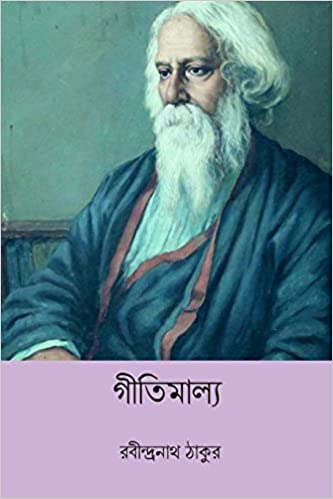
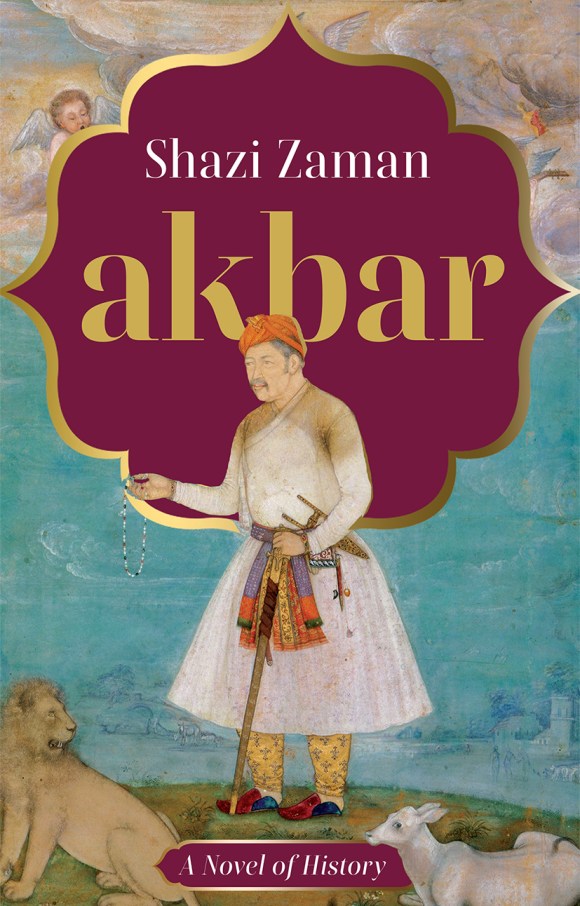
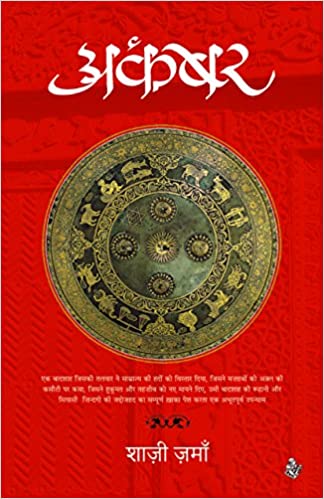

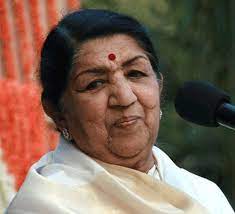
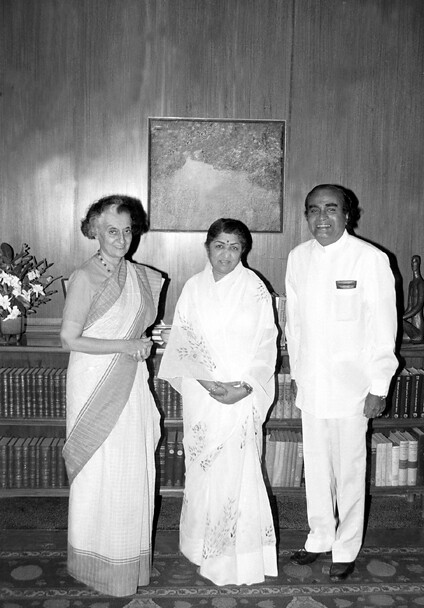
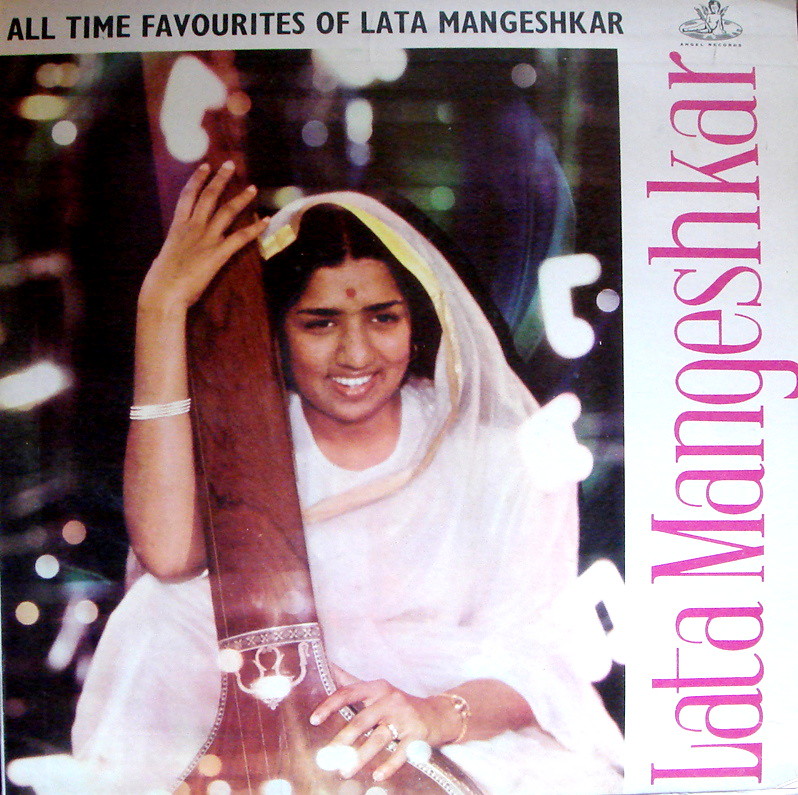



 Borderless