I’m upstate New York, something like a hundred miles south
of Chase Twichell, a Zen poet I greatly admire, and once actually met.
She hated me (some poets will, other poets…?), but that doesn’t matter.
What does matter is, I think, that goldfinch there—the first
I’ve ever seen—on the disc of a sunflower, pecking away at the seeds,
cracking some, dropping others.
That’s the way it is with seeds.
AN ISLAND IN GREECE
Whatever had been there must have fallen among the soft corals … – Donna Masini
A former girlfriend posts a photo of the view from her desk window on an island in Greece—
all that blue …
You could imagine a hero falling into all that blue.
TRUTH
A strange old man Stops me, Looking out of my deep mirror. – Hitomaro (tr. Kenneth Rexroth)
how elevated the Japanese masters apprehending truth
in so few syllables whereas I fill paragraph after paragraph
page after page with words and more words and now and then
some punctuation
QUESTION
If you ask me you’re asking the wrong guy.
But what?
Tim Tomlinson is the author, most recently, of Listening to Fish: Meditations from the Wet World, a poetry-prose-photography hybrid collection concerning the perils facing the world’s coral reefs. He is the director of New York Writers Workshop, and he teaches in New York University’s Global Liberal Studies.
.
PLEASE NOTE: ARTICLES CAN ONLY BE REPRODUCED IN OTHER SITES WITH DUE ACKNOWLEDGEMENT TO BORDERLESS JOURNAL.
When my research partner Yoko proposed that the two of us attend a conference in Cambodia, I said “Yes, but I want to stay in a nice hotel.” Knowing her, she’d book us into a youth hostel, where we’d bunk with strangers, or the cheapest Air BNB available. In Japan, due to the massive influx of foreign tourists and the weak yen, hotel prices had been jacked up significantly. I could barely afford to stay in a capsule hotel on a trip to Tokyo. In Cambodia, I figured we would be able to pay for a decent room.
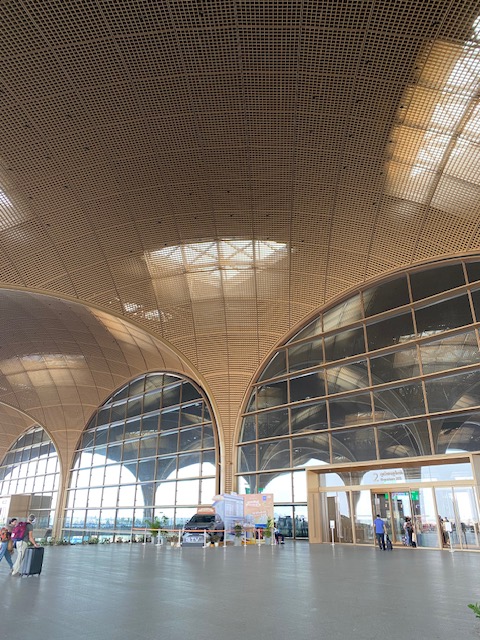
We flew from Osaka to Ho Chi Minh City to Krong Ta Khmau, landing in Cambodia’s newest airport. Modern, cavernous, and clean, it had opened only a few months before. We picked up our luggage from the carousel in baggage claim and proceeded to the exit.
“I’ll let you handle this part,” I told Yoko, as we emerged into fresh air and a phalanx of taxi drivers vying for our services.
This was Yoko’s third or fourth trip to Cambodia, and she had assured me that she knew how to arrange transportation. She’d already figured out how much we could expect to pay. She wasn’t about to get ripped off.
“Thirty dollars to Phnom Penh,” one guy offered.
“That’s too much,” Yoko said. “I’ll give you twenty.”
A deal was made, and we were ushered to a white Alphard Toyota, and introduced to the driver, a young guy, maybe around thirty, in sunglasses. He spoke English.
“To the Harmony Phnom Penh Hotel, please.” I showed him the address on my phone app.
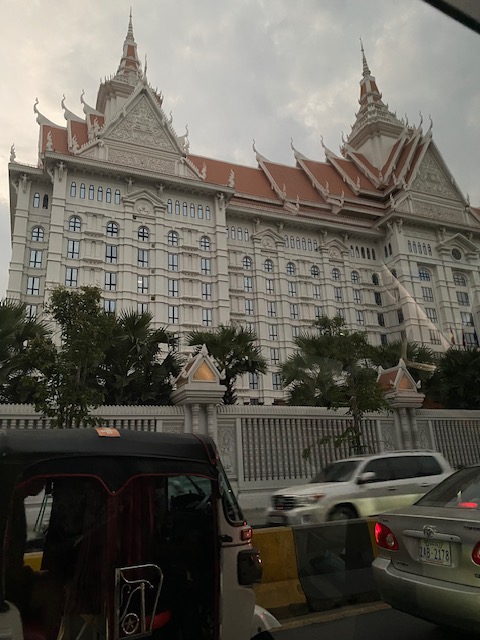
On the hour-long drive, I gazed out the window, eager to soak up new sights. Various construction projects were underway. I spotted a Lexus dealer, and an Aeon Mall. Although much of the signage was in curlicue Khmer, some businesses were labeled in Chinese, Japanese, and English. Shiny new transnational banks rose above structures with traditional architecture. As we entered the city, the traffic became worse. Motorbikes, tuk-tuks, trucks, and cars jostled for space. Many of the cars were apparently Chinese imports. I’d never heard of the brands.
I tried not to distract our driver, whose name was Paekdy, from the business of driving, but we managed to have a conversation. He asked how long we’d be staying and offered his services for our journey back to the airport three days later. I added him to my What’s App contacts. He seemed nice.
“Can you pick me up tomorrow?” I asked.
I would be going on a tour to visit a teacher’s college and a language school. Yoko was planning on spending the day in and around the hotel’s infinity pool. The university where she worked, which was run by elderly nuns, was on the verge of shutting down. Yoko was under a bit of stress.
“What time?” Paekdy asked.
“Early.” I was supposed to be at the university where the conference would be held by 8:30. I asked him to be at the hotel an hour before that.
Yoko helpfully negotiated the fare.
The next morning, I got up, readied myself, and went out in front of the hotel to wait. A man out front was sweeping the pavement. Across the street, vendors were setting up piles of fruit. One woman was hacking at raw chickens. Further down, several tuk-tuks were lined up, awaiting passengers.
My driver was late. I had allowed extra time, so I would probably not be late for the tour, but I was a bit irritated. If I were him, I would have arrived early. After all, he’d had plenty of advance notice, and I had promised him a decent fare. I checked my What’s App messages. Nothing. I texted Paekdy: “Are you coming?” He responded with a voice message. Due to traffic, he was running late.
He finally arrived, and we set off for the university. I asked him questions about his life, and his family. He told me that he had gone to university and studied marketing. He said that it was hard to find a good job in Cambodia if one couldn’t speak a foreign language. In addition to English, he knew some Chinese. He told me that his daughter was learning English.
After our pleasant conversation, my irritation evaporated. When he dropped me off, I asked him to pick me up at 2:30 in the afternoon to take me back to the hotel. He agreed.
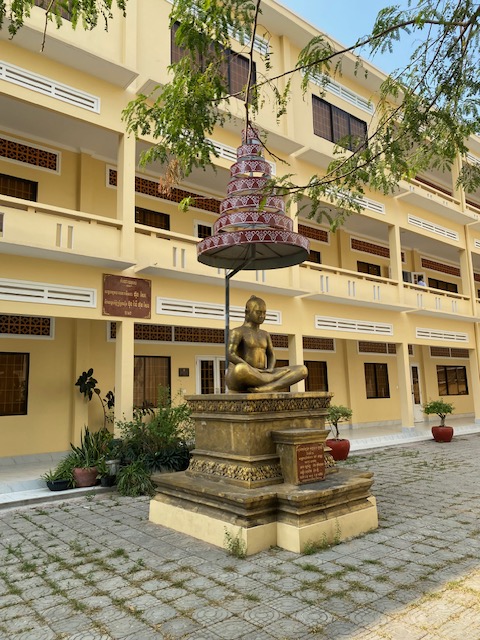
I registered for the conference at one of the long tables set up on the verandah, and picked up the sack containing my breakfast, which consisted of sandwiches and bananas. When it was time for the tour, I got on the bus with the other participants. Over the next few hours, we visited Phnom Penh Teacher Education College, and a private English school. Afterwards, we had a sumptuous lunch at a nearby restaurant. Back at our starting point, I looked for my driver. He was nowhere to be found. Late, again.
This time he sent a message: I am sorry maybe I am late. (prayer emoji) Can you wait for me please?
I sighed, considered hopping onto a tuk-tuk, and then texted, “Okay.” The devil you know, right? I would have a seat in one of the wicker chairs on the university’s verandah and enjoy the slight breeze.
He finally arrived and apologized profusely. The traffic was so bad, he said. Wasn’t it always? I wondered. Wouldn’t he have prepared for that?
“Did you have a lot of fares today?” I asked, in a bid to make conversation.
“Just one,” he said.
Me.
Back at the hotel, Yoko and I discovered that we could get use the Tada app, which was similar to Uber or Grab, to get to and from the conference venue for about $5. My driver was ripping me off, Yoko said, and he was always late. If I called him again, I would only be rewarding his bad behavior, I reasoned aloud. He didn’t deserve my business. If he wanted repeat customers, he would have to learn to come on time.
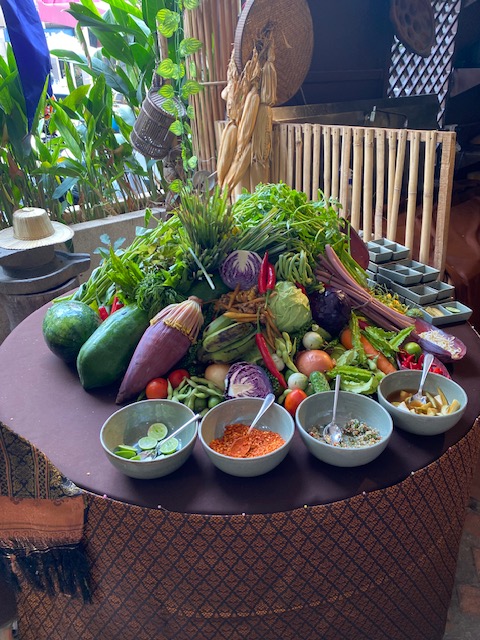
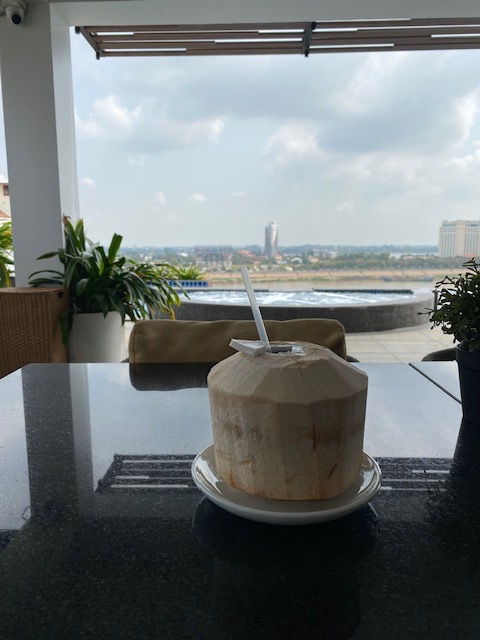
We went to the rooftop where Yoko had spent most of the day and indulged in coconut milk and slices of fresh mango while gazing at boats floating along the Tonle Sap River. European tourists splashed in the pool nearby.
That evening, we called a car via the Tada app and went to the university where the conference began with a ceremony. Cambodian dancing was followed by a display of martial arts, several speeches by invited dignitaries, and a symposium on AI in language teaching. Afterwards, we filled up paper plates at the buffet and mingled with the other conference participants. When it was time to leave, Yoko called for another driver – not Paekdy – with the app.
On the way back to our hotel, it was dark and the traffic was severely congested, as usual. The car crawled along amidst a crush of vehicles of various kinds when…Bam! Suddenly we were side-swiped by a truck. My first thought was, I should have gotten travel insurance! My second was, now we will pull over and everyone will exchange insurance information and call the police. Except we didn’t. The truck surged ahead. The driver did not respond.
“Are you okay?” Yoko asked him.
He laughed it off. “Okay, okay.” His English was limited.
We could still see the truck’s license plate. We could write it down and report it. But maybe things didn’t work that way in this country.
“It’s a good thing that we are in a Toyota,” Yoko said.
Yes, there was something to be said for a sturdy, well-made car. I was happy that we hadn’t taken a tuk-tuk, or that we weren’t on the back of a motorbike.
Still a bit shaken, Yoko overtipped the driver when he dropped us off, hoping he would be able to use the extra funds to fix his car.
After the conference, Yoko and I debated how we would spend our last day in Cambodia. Before my trip, many people had said that I should to Angkor Wat, but Siam Reap was too far away. I felt that I should pay my respects to the victims of Pol Pot by visiting one of the genocide memorials. Since Yoko had already been to the country a few times before, she had been to the Killing Fields and the torture museum. She didn’t really want to go again, and I didn’t blame her. I decided that I would go by myself and meet up with her at the airport.
I wasn’t going to call Paekdy, but he sent me a message the night before, asking if I needed a ride to the airport. Oh, why not? I could ask him to take me to the Choeung Ek Genocidal Center on the way. Maybe he would wait for an hour or so while I toured the site. That way I could leave my suitcase in the car with him. Okay, so he was a little late sometimes, but I trusted him. I sent a text: Please pick me up at 2:00 PM.
The next afternoon, he was on time.
On the way to the memorial, we talked some more. He told me that his grandparents had perished while fleeing Pol Pot. Many people had died of starvation while in hiding. I remarked upon the many construction sites along the way. Paekdy mused that if not for the 1975-79 genocide under the Khmer Rouge, his country would have been further along. Indeed, had it not been for the vicious slaughter of an estimated 1.2-2.8 million people, comprising a quarter of the population, Cambodia might be right up there with Singapore or Thailand. I thought it was just a matter of time before the country caught up. I thought of the new airport I’d be flying out of, which was undoubtedly destined to become a hub.
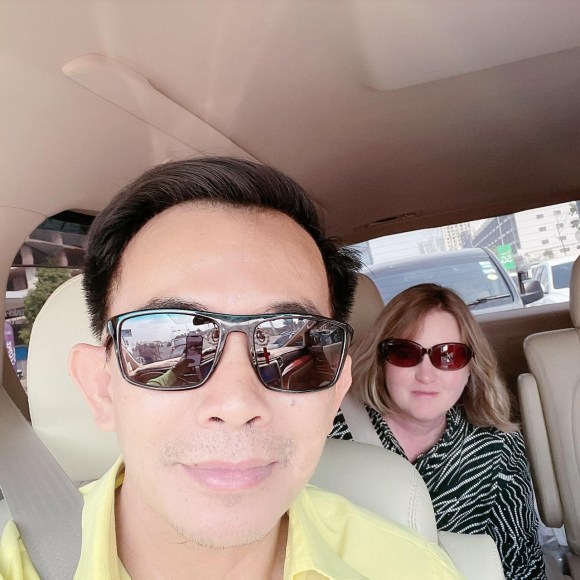
Before we parted, my driver suggested that we take a selfie together. We both put on our sunglasses and smiled for the camera. He sent me the photo the next day, when I was back home in Japan. I realised that although I had enjoyed visiting schools, wandering the palace grounds, and snacking on fresh mangoes by the pool, the most interesting part of my trip had been meeting this taxi driver from Phnom Penh. I still have his contact information on my phone.
Paekdy & Suzanne Kamata
.
Suzanne Kamatawas born and raised in Grand Haven, Michigan. She now lives in Japan with her husband and two children. Her short stories, essays, articles and book reviews have appeared in over 100 publications. Her work has been nominated for the Pushcart Prize five times, and received a Special Mention in 2006. She is also a two-time winner of the All Nippon Airways/Wingspan Fiction Contest, winner of the Paris Book Festival, and winner of a SCBWI Magazine Merit Award.
PLEASE NOTE: ARTICLES CAN ONLY BE REPRODUCED IN OTHER SITES WITH DUE ACKNOWLEDGEMENT TO BORDERLESS JOURNAL
Zihan stirred in his sleep. A chill breath passing over his limbs had awakened him. He strained his eyes, still heavy with wine fumes, and looked around. Where was he? This was not his room and this wasn’t his bed. He was lying in what seemed to be a small, confined space under an ornate gilded ceiling in a bed so soft, his limbs were sinking into its depths. The sky was paling with first light and long beams from a dying moon streamed in through the open window. The fragrance of an unknown flower, wild and sweet, filled the room.
He turned his head towards the window. Something, like an opalescent haze, was obscuring his vision. At first, he thought it was a sheet of mist. Then, before his amazed eyes, it started to take a shape and form. It became a woman. He could see her slender limbs, smooth as white satin, shimmering through the garment that swayed and billowed around her form. Diaphanous as a film of gossamer. So light, it seemed woven out of moonbeams. Her face was swathed in mist.
The figure moved from the window and came gliding towards him. He could see her face clearly now. A perfect oval with apricot shaped eyes, brows like strung bows and hair that fell down her back like a sheet of black silk. He stared at the vision of loveliness so long and hard …his eyes began to hurt. He had never seen such beauty in a woman before.
She stood by his bed for a while gazing into his eyes, then lay down, her body light as a feather against his. Taking his face in her hands, she caressed it with a tenderness that reminded him of his mother’s touch. She drew the silky strands of her floating hair all over his naked body. Across his chest and abdomen, over his genitals, thighs and legs, down to the insteps of his feet. The wildflower scent from her limbs filled his nostrils. Her kisses fluttered on his lips, soft and cold as drifting snow…
The wine, still running in his blood, quivered in his veins. His limbs, untouched by a woman before, heaved luxuriously and his eyes closed in ecstasy. He drifted away…
How long he lay in this state of bliss, he couldn’t tell. It could be minutes. It could be hours. Gradually, an uneasy feeling came over him. Something heavy was pressing against his body. It was squashing his chest and squeezing the breath out of his lungs. He moved aside but the pressure grew in intensity, driving him further and further towards the edge of the bed. And now his heart beat rapidly with an unknown dread. What was happening? Washe still asleep and this a fearful dream? Suddenly his eyes sprang open and what he saw sent currents of ice water rippling down his spine. He felt the hot blood pulsing and pounding in his ears. A muscle twitched and shuddered in his cheek…
The reed-slim body of the woman beside him had bloated to a colossal size. Her eyes, thin slits in the vast globe of her face, glittered with hate. Her mouth was a deep red gash through which yellow teeth, long and sharp as a panther’s fangs, hung to her chin.
The mountain of flesh was growing larger and larger every moment. It was filling the bed. He would fall over the edge any moment now. A scream gathered in his lungs but froze before it could reach his throat…
Suddenly she sprang on him; her nails sharp as claws ripping the skin off his chest and thighs. Digging her teeth into the soft flesh just below the right shoulder, she bit off a large hunk. Zihan’s eyes were glazed with pain and fear. He stared mesmerized as the monstrous creature rose from the bed and swayed and shuffled towards the opposite wall. She wore a garment of sheer white muslin that swelled and surged like waves about her form. Blood dripped from her slavering mouth and fell on the floor as her great body waddled, like a gorilla’s, from side to side. And now, for the first time, Zihan saw the coffin. It was open…
Zihan screamed. Shriek after shriek burst from the throat that had been frozen all this while, hit the walls, and sent fearful echoes all through the house. Then, exhausted and half dead from shock and loss of blood, he lay motionless, whimpering like a child.
Kueilan was a light sleeper and the first to hear the cries. They seemed to be coming from the dead girl’s room. Her heart thudded with fear as she rushed to it and flung the door open. She stood where she was for a while, her eyes glued to the coffin. It stood in the same place but the seal was broken and its open lid rested against the wall. A lily-white hand with long tapering fingers was dangling from the edge. And now the lid began to move downwards. Slowly, soundlessly, it was falling in place. In a few moments it would reach the hand and crush it. A tremor ran through Kueilan’s frame. Her mouth opened in a scream but before she could utter a sound, the hand glided over the edge and slipped into the hollow where the rest of the dead girl lay. Then, before Kueilan’s amazed eyes, the coffin closed, the seal came together and all was as it had been.
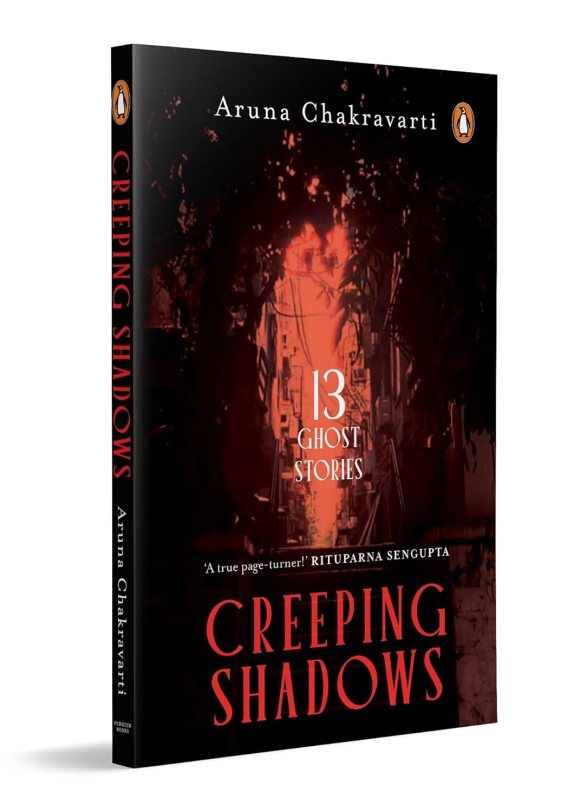
‘Published with permission from Penguin Random House India from Creeping Shadows (2026)’.
About the Book:
The stories in Creeping Shadows are spread over a vast canvas, both in terms of time span and locale. A teahouse in ancient China. A brothel in nineteenth-century Calcutta. A forest lodge in Bankura. An old mansion in Bangladesh. A university campus in today’s Delhi. Beginning as human-interest narratives, they end with sudden, unexpected twists that raise hair ends and send trickles of ice water down the spine. Here are tales of shadows, tingles and chills…
About the Author:
Aruna Chakravarti has been principal of a prestigious women’s college of Delhi University for ten years. She is also a well-known academic, creative writer and translator with eighteen published books on record. They comprise five novels, two books of short stories, two academic works and nine volumes of translation. Her first novel, The Inheritors (published by Penguin Random House), was shortlisted for the Commonwealth Writers’ Prize and her second, Jorasanko, received critical acclaim and became a bestseller. Daughters of Jorasanko, a sequel to Jorasanko, has sold widely and received rave reviews. Her novel Suralakshmi Villa was adjudged ‘Novel of the year (India 2020)’ by Indian Bibliography published in The Journal of Commonwealth LiteratureU.K. Her other well-known works include The Mendicant Prince which has been shortlisted for the Rabindranath Tagore Literary Prize, and Through a Looking Glass: Stories. Her translated works include an anthology of songs from Rabindranath Tagore’s Gitabitaan, Saratchandra Chattopadhyay’s Srikanta and Sunil Gangopadhyay’s Those Days, First Light and Primal Woman: Stories. Her most recent work is titled Rising from the Dust. Among the various awards she has received are Vaitalik Award, Sahitya Akademi Award and Sarat Puraskar. She is also a scriptwriter and producer of seven multi-media presentations based on her novels. Comprising dramatized readings, interspersed with songs and accompanied by a visual presentation by professional artists and singers, these programmes have been widely acclaimed and performed in many parts of India and abroad.
The numbers arrived without ceremony: a small column of figures, neat and confident, delivered through a screen that assumed fluency. There was no preamble, no invitation to feel anything about them. They simply existed—self-contained, conclusive. I stared at them longer than necessary, as though attention itself might persuade them to say something more.
I had been trained to trust measurement. To believe that what can be counted is what can be known, that precision is a form of care. Science has given us extraordinary clarity—the age of the universe, the speed of light, the composition of distant stars. It reduces the world to units small enough to hold without trembling. And yet, faced with those figures, something loosened. Not doubt exactly, but space.
Outside the window, trees moved according to rhythms that resisted instruction. The wind shifted, paused, resumed. Nothing announced itself. Nothing asked to be improved. I noticed this only because the numbers left room for it. They explained something, certainly—but not the sensation of standing there, or the quiet pull of attending to what did not ask to be solved.
The figures were accurate. The method sound. Still, they felt incomplete—not because they lacked information, but because they stopped where experience continued. They could describe a condition, but not what it felt like to inhabit it, or how knowledge settles unevenly into a day.
I began to notice how often I reached for numbers for reassurance. Steps counted. Hours logged. Probabilities consulted. Each promised orientation, a sense of being located within something stable. Yet the more faithfully I checked them, the more sharply I felt what they could not carry: anticipation, curiosity, the pleasure of patterns that were alive rather than abstracted.
The trees continued their unsystematic movement. No pattern held. Nothing corrected itself. They offered no explanation, only presence. Whatever I was leaning toward did not arrive as conclusion. It arrived as attention.
My body seemed to understand this before I did. Breath shifted. Awareness sharpened. These responses did not contradict what the numbers said; they existed alongside them—gathered without instruments, held without proof.
By evening, the figures had settled into their proper place—neither dismissed nor revered. What lingered was the act of noticing: the difference between explanation and understanding, between knowing the parameters of a situation and standing inside it.
Later, I returned to the window. The trees were still there, indifferent to coherence. Light moved across them without emphasis or instruction. It required very little of me—not judgment, not conclusion, only presence.
Some kinds of knowledge arrive complete. Others unfold slowly, through attention. The numbers gave me the first. The rest asked only that I stay.
Tamara-Lee Brereton-Karabetsos is an Australian writer working across poetry and lyric non-fiction, exploring perception, science, and the spaces where language meets what cannot be measured.
PLEASE NOTE: ARTICLES CAN ONLY BE REPRODUCED IN OTHER SITES WITH DUE ACKNOWLEDGEMENT TO BORDERLESS JOURNAL
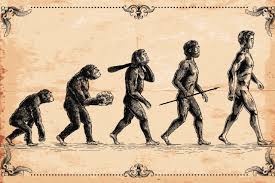
In the evolutionary journey, we have achieved a lot to feel proud of. In the gradual process, we have lost something that could have proved to be an asset. However, there is no human record of regret ever registered to mourn its absence or disappearance. Instead, the actual loss is interpreted as a tangible gain for the entire human race that would have suffered a slowdown if the tail had remained an organic hurdle attached to our lives and bodies. Getting rid of it before we acquired the present shape and structure is, therefore, considered a divine blessing except by some crackpots who indulge in overthinking to find novel ways of making the tail relevant to human lives once again and shift perception in its favour through a robust narrative listing its utility value in a tech-driven world.
The tail remains alive in our vocabulary as many fellow inhabitants from the animal kingdom continue to sport it with style. Some cricketers are called tail-enders and heads and tails phrase is still relevant when it comes to tossing a coin. The aircraft went into a tailspin and so did the share prices – thus, it’s used in popular parlance. We have plenty of examples in various cultures, communities, and languages where the tail is fondly quoted for wisdom and comic relief but the ideas of strength, flexibility, and relevance are always derived from its appearance and existence in other animals, big or small and meek or beastly, to feed our collective imagination.
The tail would have been cumbersome for people already struggling with time management in the fast-paced world. The extra weight and length would have complicated mobility and added to maintenance costs. While there are multiple benefits of being born without a tail, the presence of the long rope-like appendage would have added the excitement of improvisation and made human beings look more animal-like, although they are already fiercely competitive in displaying beastly behaviour. Since nobody finds the time to focus on the aesthetic appeal and the swag the possession of the tail imparts to an animal, the side of beauty of the furry extension gets completely overlooked and the possibility of its attachment to the human body sounds more like a scary proposition rather than a meaningful addition.
Thinking of the tail gives handle to wild ideas. Imagine a ramp walk – or a cat walk – with super models of all genders flashing the latest apparel and strutting the stage with a tail sashaying behind to make them resemble flashy fashion icons. It is just the beginning of how the tail would acquire space in the minds of the young generation and the extent they would go to bring it back to their lives – opting for artificial ones to make themselves look different from the rest. Such a trendsetting development would raise further demand for the tail and the universe would receive messages for its re-introduction.
Losing the tail has cut us off from the animal world but we still tend to commit bestial acts by calling ourselves distinctly different in appearance from other tail-bearing animals. We boast of getting rid of the tail that is common to four-legged creatures such as dogs, donkeys, cats, cows, elephants, pigs, horses, tigers, and lions. The loss of the majestic tail, if one looks intently at animals, stokes feelings of envy and deprivation at times. The movement of the tail reveals a lot: when the dog experiences joy, the wagging of the tail is natural, mirroring how the pet feels inside. But a smiling human face, even that of a close friend, hides true feelings and often misleads. Maybe, the tail attached to human beings would become a true indicator of the state of mind, a kind of lie detector that exposes everything that the human face hides.
The wild horse of imagination is galloping fast. Designers would get the chance to explore innovative ideas of how to cover or style up the tail. Had the prized object been foldable or a wrap-around-the-waist type, unique ideas of carrying it like a belt could have been tried out. For menfolk, the tail would be easier to flaunt as a stylish accessory. For women, having managed long, flowing hair reaching below the waist, they are naturally adept at sporting long tails without fuss. Besides, the tail promised to be a safety weapon. With spikes erupting on its surface to shield the female sniffing danger of any kind. The tail could stiffen at the right time and prevent episodes of harassment in public spaces, inside crowded trains and buses, acting as a preferred, reliable tool of self-defence.
The furry tail could open up new businesses, with the introduction of a new range of tail-care products that include shampoo, oil, cream, and moisturizers. The beauty parlours struggling for more revenue would get clients looking for professional tail grooming sessions. Tail colouring products of the herbal kind, tail combs and glittering tail clips would deluge the market. Colouring the tail to match the outfit would become the new craze. If the same colour provided by nature turned dull and boring or lost its sheen, the person would have the freedom to colour it differently again and again.
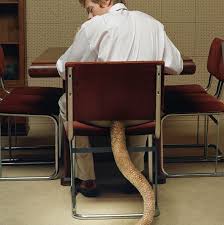
With global temperatures rising, the tail could possibly work as a natural coolant for the body, warmer in winter and cooler in summer, allowing adjustable options. Toilet seats and chairs of all kinds would be redesigned to accommodate the new part of the human body. This would perk up trade and business, with the introduction of newly designed furniture items – chairs for offices, schools and college desks, and benches in courts and eateries giving space to the tail. Travelling inside trains, cars, or flying by airplanes would also involve remodelling of seats, thus providing a big fillip to the global industry.
The tail could assist humans as a sensor to gauge a lot in advance. Maybe the tail would get a vibrational alert of imminent natural disasters and sense earthquakes and tornadoes. If we had a tail, we could also become sensitive and kind to animals. The tail could be short in length or long, depending on the height of the person, and the colour of the tail would be a natural contrast. The tail should ideally be darker if one is fair — giving a pretty fair idea of how black and white can combine at the same time, taking pride in neither and considering colour to be immaterial, subtle or pronounced. Fair-skinned people, both men and women, should get dark tails and vice versa, making this world less unequal, less discriminatory.
In the age of robots, when human look-alikes are designed, it is time for nature to spring a surprise and the tail could well be a surprise in this regard. Recalibration would be required to align with the new shape of human structure and if the new-borns come to life with this new add-on, it could well be a game-changer of sorts, with the adult world clamouring for similar attachments to match with the evolutionary pace of nature even if it leads to reversal.
The fun element of having a tail cannot be sidelined. It amuses a lot to see animals around swishing it in style. When humans get the tail, they would need to adjust accordingly, and find multiple uses to justify its existence for centuries. The fear of the tail getting caught while closing door would be painful for its owner. Banging of doors would stop forever as people would be more careful about anger control. Any injury might prove serious and a replacement of the tail would not be available like other prosthetics designed by medical experts.
Instead of checking the pulse in the traditional manner, the tail would suffice for medical examination. Test vitamin D, lipid, haemoglobin, glucose levels with a prick on the tail instead of drawing blood like a vampire through the syringe. Body temperature and fever could be checked by placing the thermometer on the tail and the soft touch of the fur could reveal the perfect degree.
As everything is basing itself on face recognition, technology could also develop tail-based tests to study life span, DNA, and bring tail recognition tools to conduct psychological tests for memory, and neuron health to study personality types and disorders in the brain. Already, we have doctors who suggest a strong link between gut health and brain health and so the possibility of tail health and brain health would not be ruled out as future researches could reveal a deeper interconnection.
The tail could become a reliable source of support, making animals feel less threatened and closer to humans. The tail could be a unifying factor in this regard. Besides, holding hands and exchanging warm greetings could get replaced by simply wagging the tail. For romantically-inclined types, the shape and movement of the tail could offer compatibility insights. Tying the tails of the couple could be the equivalent of tying the nuptial knot. Covering up the tail in silk, brocade, polyester, or cotton could make it look fabulous. Matching clothes would render it stylish, engaging fashion icons with refined taste to bring out offbeat variants of couture clothing during festive seasons. Instead of shaking a leg, the new mantra would be all about grooving and shaking the tail.
People with fancy tails would become the new normal, exercising better control over their lives as the tail would carry profound secrets of success in life. The tail would have hidden mysteries revealed to those who would understand and respect the tail. Academics and professors would look smart with their restless tails inside the classrooms.
During free hours, the tail could be used as a handy tool swat flies. Dusting off seats in public spaces with the help of the tail would suffice and attaching heavy luggage to the tail instead of dragging suitcases for hands-free comfort would be another big benefit for the future generations travelling across the globe without the fear of theft lurking in their information-loaded minds. With the tail emerging as a clear favourite with immense utility value for people across gender and class, this tale should engage readers to build a strong defence and show tell-tale signs of how this weird demand should gather further momentum even if the appearance or availability of the tail as part of humans remains a fanciful idea for centuries to come.
From Public Domain
.
Devraj Singh Kalsiworks as a senior copywriter in Kolkata. His short stories and essays have been published in Deccan Herald, Tehelka, Kitaab, Earthen Lamp Journal, Assam Tribune, and The Statesman. Pal Motors is his first novel.
PLEASE NOTE: ARTICLES CAN ONLY BE REPRODUCED IN OTHER SITES WITH DUE ACKNOWLEDGEMENT TO BORDERLESS JOURNAL
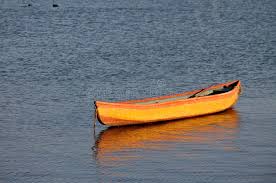
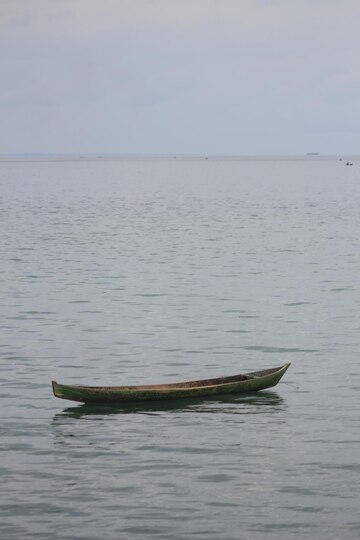
I’m a canoe.
How do you do?
I’m the sleekest
fastest vessel
on the wide ocean blue.


Yes, I’m a canoe
and I haven’t got a clue
how to arrest
my motion if I’m paddled
with devotion
by an energetic crew.


I’m a canoe.
How about you?
Fated by design
to rigorously combine
extreme elongation
with ease of navigation
I’ll pass through
all the sudden storms
and surging waves
that Neptune sends
to test the brave
and save the day.
I’m a valiant canoe.


But I’m no fool.
I have learned my lesson.
I avoid whirlpools,
whether hot or cool,
and grimy monsters
with grave expressions
who bathe in slimy caves
and yearn to take
possession of boats
of any description
or anything else that floats.


I’m a pragmatic canoe
like a sensible shoe,
slim not grim,
modelled for efficiency,
the envy of seagulls,
hoping to travel far
before I am eroded
by the pressure on my hull.


Are you a schooner?
I wish I’d met you sooner.
We can explore
the world together
no matter what the weather
and I will admire
your rudder as we
investigate the other
seascapes that exist beyond
the impenetrable drapes
of mist and fog,
those soggy vapours
that kissed a frog
long ago, so I’ve been told.


I’m a canoe.
There’s a ban on catamarans
where I come from
and that’s why I am single.
Would you care to mingle,
sooner rather than later,
dear schooner, procrastinator,
my seaworthy resistor
of a love that’s true?
I’m a canoe.
From Public Domain
Rhys Hughes has lived in many countries. He graduated as an engineer but currently works as a tutor of mathematics. Since his first book was published in 1995 he has had fifty other books published and his work has been translated into ten languages.
.
PLEASE NOTE: ARTICLES CAN ONLY BE REPRODUCED IN OTHER SITES WITH DUE ACKNOWLEDGEMENT TO BORDERLESS JOURNAL
A group of creatures sat on a wall watching the sunset. The wall had been constructed to stop the sand from the beach blowing over the fields where crops grew. The scene was beautiful.
The hare said, “Let’s jump down and dance for joy.”
And that’s exactly what he did.
The weasel cried, “I’m coming too!” and he also jumped down. So did the fox, cat, monkey, grasshopper and aardvark. They capered in the ruby light and their shadows on the beach were amazingly long. The millipede was scared and remained on the wall.
“It’s a long way down,” he said nervously.
The hare said, “Don’t worry. It won’t hurt if you just bend your knees when you land to absorb the impact.”
“Bend my knees!” exclaimed the millipede. “But it’s almost evening. I don’t have all day, you know!”
BATHTIME FOR MOONS
A crescent moon was feeling tired, so he decided to have a nice dip in the Pacific Ocean. He lay back on his curve and just floated there without a care in the world or a care in the moon.
But an iceberg happened to pass along and when it saw the moon it couldn’t believe its eyes, partly because it didn’t have any eyes and partly because it had no belief. Yet it was amazed.
“Oh my!” it muttered to itself. “Look at the size of that banana!”
NET PROFIT
Drifting along in space, a cosmic spider was explaining to a galactic moth how it caught supper for itself. “First I make a web and then if I wait long enough, I always catch something edible.”
The moth was intrigued. “What’s your favourite food?”
“Planets,” answered the spider.
“Do you catch many of those, I wonder?”
The spider nodded. “So many that I can’t eat them all, so I leave some in storage for a rainy day. We don’t get many rainy days in outer space, but you know what I mean. Anyway, the funny thing is that some of these planets are infested with parasites.”
“Civilisations, you mean?” queried the moth.
“Exactly. And the inhabitants of those civilisations often think that my webs are lines of latitude and longitude. They sometimes use the separate strands for navigational purposes.”
“That’s hilarious!” chuckled the moth.
“Isn’t it?” agreed the spider.
The moth said, “Well, it was nice talking to you, but I’ve got work to do now. I have to circle that star over there a hundred times and then try to extinguish it by flying into it.”
“Good luck. Take care,” said the spider.
NOT A PATCH
A cumulus cloud kept rushing through the atmosphere, north, south, east and west; it never stopped for a moment. A sentient hot-air balloon asked if it had lost something. “I can’t think of any other reason why you should be hurrying through the sky like that.”
“I’m looking for a patch on sunlight on the ground,” said the cumulus cloud, “because I have been told they are worth seeing, but whenever I learn that one has appeared somewhere, it always vanishes by the time I arrive at the designated location. All I get to see is a shadow that happens to be precisely the same shape as me.”
“That’s a weird coincidence,” said the hot-air balloon. “The same thing happens to me but on a smaller scale.”
SWEET TALK
A chimp, a scarf and a hive were debating among themselves which of them had the most beautiful life. “I can peel bananas with my feet,” said the chimp, “and that’s one of the most beautiful things anyone can ever hope to do.” But the scarf wasn’t intimidated in the slightest and shouted, “I get thrown around necks and often my ends just dangle down, but in a strong wind they stick out horizontally; how can any conceivable thing be more beautiful than that?” But the hive laughed and said, “Flying insects live inside me and fill me with honey.”
Beauty is in the ‘i’ of the bee-holder.
JAM ON AN AARDVARK’S NOSE
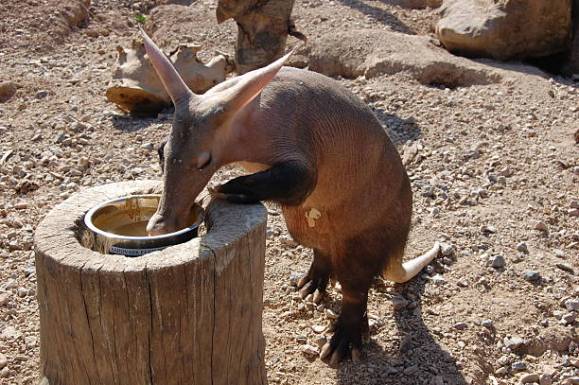
A gorilla was bored and made a private vow that he would do something that nobody else had ever done before, so he travelled for many months until he came across an aardvark asleep in the shade of a tree. “Sorry for waking you,” said the gorilla, “but I’m wondering if you can do me a favour?” The aardvark responded sleepily, “What’s that, my hairy friend from faraway?” The gorilla explained, “Just stay where you are while I spread some apricot jam on your nose.”
The aardvark sighed. “You didn’t have to wake me up to make that request! You could have just gone ahead and spread the jam when I was sleeping and I probably wouldn’t have noticed.” The gorilla accepted this rebuke meekly and opened the jam jar.
When the nose was completely covered in jam, the gorilla stood back to examine his work. “Are you satisfied?” asked the aardvark. “Yes, it’s not bad,” said the gorilla. “Did you want anything else?” questioned the aardvark. “No, that’s sufficient. I’ll go home now. Nice to meet you and thanks for this opportunity. Goodbye!”
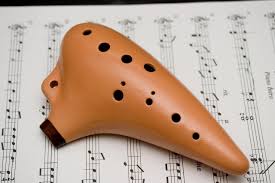
And the gorilla began the journey back home, but when he arrived, he found that his female had run off with an ocarina.
An Ocarina. From Public Domain
ABOVE HIS STATION
A philosopher was travelling on a train from Swansea to Tenby. It was a nice journey, but he wasn’t happy because his mind was a blank. It was his official job to keep having ideas, but not a single new one had come to him for ages. When he reached his destination, he got out of the train with the words, “This is my station.”
As he stood on the platform, he wondered if jumping into the air might help. So he made a pole from the branch of a tree and pole-vaulted over the railway tracks. As he reached the highest point of his immense jump, a new idea finally came to him.
His delight was short lived. On the opposite platform a hippopotamus was waiting for its own train and it happened to be yawning at that exact moment, maybe because it was tired or practicing for a competition. The philosopher landed in its mouth and vanished down its throat and into its stomach, never to be seen again.
Don’t get ideas above your station.
THE ROOK AND THE JACKDAW
A crow that had recently eaten cheese and olives with a scarecrow was interested in unusual friendships. He saw a rook and a jackdaw together in a field and said, “Excuse me, but I’m curious to know why rooks and jackdaws always seem to get on so well. You never mix with ravens or magpies or jays or any other corvid.”
“Rooks and jackdaws are natural allies,” said the jackdaw.
“Yes, but why?” persisted the crow.
“Because we have a shared interest in chess,” said the rook.
The crow was amazed. “Really?”
“Yes, it’s true,” confirmed the jackdaw, “but you won’t see us with a board and we use random objects for pieces. For instance, this twig is the white king and this leaf is the queen.”
“What are the pawns?” asked the crow.
“These little stones here.”
“What about the bishops and the knights?”
“Worms and mushrooms.”
“And the piece that is shaped like a castle? I can’t remember its proper name. What do you use for that?”
“I play that part myself,” said the rook.
APPEARANCE OF THE REALM
A strange face materialised above the bed of a weasel. “What the heck are you?” muttered the trembling weasel.
“An unexplained appearance,” came the answer.
“Is that like a ghost?”
“Yes. Sort of.”
“Well, what do you want?” asked the weasel.
“I need to borrow some cash.”
“Whatever for?”
The appearance sighed sadly and said, “I’m not any old appearance but an appearance of the realm, which is the most significant kind. I lost my bulging wallet in a strong current.”
“Was that a current of water or a current of air?”
“Neither. A landslide of dried grapes.”
The weasel was sympathetic. “Look, I only have £35,000 on me at the present time. Is that sufficient?”
The appearance nodded. “Yes, I think so.”
The weasel handed the money over. “When will you pay me back?”
“Tomorrow,” said the appearance.
Then he dematerialised, leaving the weasel much poorer. “I think I’ve been tricked,” said the weasel to himself.
And it was true. He had. The appearance never returned. And when the weasel checked on Wikipedia, he learned that there was no such thing as an ‘appearance of the realm’.
¶ Appearances can be deceptive.
SILLY GOOSE
A meteorite skimmed low over a pond. “Duck!” cried a heron. All the birds dived under the water except one, who was grazed painfully by the passing of the fiery space stone. “Why didn’t you warn me?” it shouted at the heron. “But I did!” came the response. “No, you didn’t,” insisted the wounded bird. “I shouted out ‘Duck’,” said the heron. “Yes indeed,” was the retort to this, “but I’m a goose.”
A QUICK DRINK
Three friends went into a bar. “I’ll have a glass of brandy,” said the first friend, who was an old fellow.
“Vodka for me,” said the second friend, who was a tomb.
The barman served them efficiently.
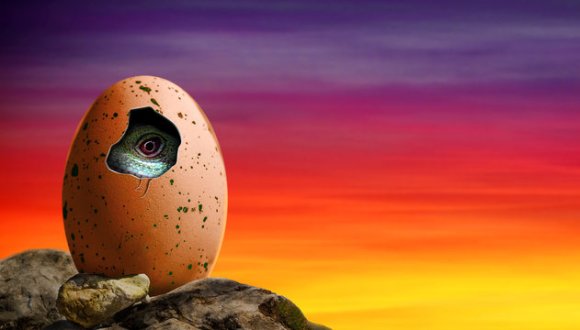
Now it was the third friend’s turn. He happened to be an egg. “Give me a stiff shot of rum!” he ordered.
The barman shook his head. “Sorry. You’re underage.”
“What do you mean?” cried the egg.
“You haven’t even hatched yet!” pointed out the barman.
“Look here,” responded the egg, “I’m much older than my two friends. The old fellow is only ninety-eight years old; the tomb dates merely from 450 BC; but I’m the egg of a dinosaur.”
From Public Domain
Rhys Hughes has lived in many countries. He graduated as an engineer but currently works as a tutor of mathematics. Since his first book was published in 1995 he has had fifty other books published and his work has been translated into ten languages.
.
PLEASE NOTE: ARTICLES CAN ONLY BE REPRODUCED IN OTHER SITES WITH DUE ACKNOWLEDGEMENT TO BORDERLESS JOURNAL
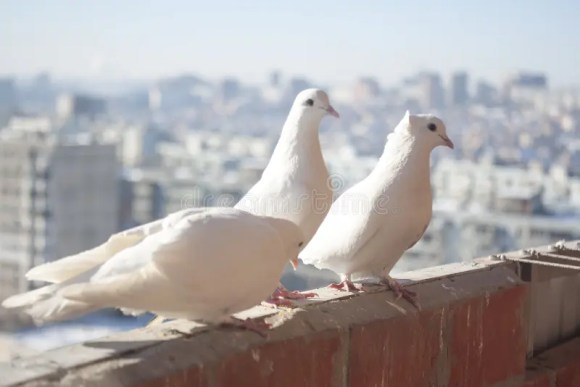
Three doves on the rooftop. Cooing - facing east. Gazing at the sunrise. Tasting the raindrops. For the very first time. Watching the clouds. Three doves on the rooftop. Now facing west. Gazing at the sunset. Wondering what to do. Stay on the roof tiles? Hide under the bushes? Or answer the call of the desert. A dust bath beckons. Something says stay -- Something says go! Three doves on the rooftop, What will they do? They watch the sun, And continue to coo.
Ron Pickett is a retired naval aviator with over 250 combat missions and 500 carrier landings. His 90-plus articles have appeared in numerous publications. He enjoys writing fiction and has published five books: Perfect Crimes – I Got Away with It, Discovering Roots, Getting Published, EMPATHS, and Sixty Odd Short Stories.
.
PLEASE NOTE: ARTICLES CAN ONLY BE REPRODUCED IN OTHER SITES WITH DUE ACKNOWLEDGEMENT TO BORDERLESS JOURNAL
Who are we? What are we doing here? What is the purpose of life? These complex existential questions are best left to thinkers and philosophers. We could instead begin with a more straightforward query: What do we want from life? Though our aspirations are countless and various, the desire for happiness, contentment and peace is familiar to all of us. None of us seek sadness, pain or trouble. But life invariably acquaints us with these negative feelings and experiences.
Our ability to feel the suffering of others as our own and our consequent efforts to alleviate it are integral to the human experience. This has led to the creation of families, communities and organisations. If we were all to look away from the pain of others, none of us would have a shot at happiness. The stories of Chirag and a group of teenagers from Sweden help illustrate the true meaning of compassion.
The word ‘chirag’ means ‘lamp’ and, true to his name, Chirag brought light to corners that were once shrouded in darkness. After being rescued from slavery, Chirag had been brought years ago to Bal Ashram in Rajasthan, our long-term rehabilitation centre for children rescued from child labour, trafficking and slavery.
In 2015, an eleven-year-old boy called Mithun was rescued by my organisation, Bachpan Bachao Andolan[1], and also brought to Bal Ashram. He had been trafficked from his village and taken to the city, where he was forced into begging. When we asked him where he was from, he could only say ‘Bengal’. A case was registered with the West Bengal police, but without adequate details they failed to find his home. So, Mithun continued living and pursuing his education at Bal Ashram.
In 2020, the children at Bal Ashram were celebrating Chhath, a Hindu festival native to the state of Bihar. Mithun remembered that people in his village would also celebrate this festival with great pomp and show. He also said there was a bus stand and market near his home that his elder brother would visit often. Since Chirag was from Bihar, he guessed that Mithun’s village might also be in his state. Chirag then began showing a keen interest in Mithun’s story and could often be seen jogging his friend’s memory for more information. Borrowing a teacher’s phone, Chirag scoured the internet and—after many months of Google searches—found Mithun’s village, a place called Borna in Bihar’s Khagaria district.
When Chirag learnt that Google Earth renders three-dimensional representations of places with satellite imagery, he began using the software to find the bus stand and market Mithun had described. Looking at one of the images Chirag showed him, Mithun’s face lit up. He was convinced this was the bus stand near his village. Mithun also identified a shop he’d often visited with his elder brother. Chirag zoomed in and found a phone number on a board above the shop. When he called that number, the shop owner confirmed that years ago he had heard of a child being kidnapped from a village some 20 km away. He promised to look for Mithun’s brother and bring him to his shop.
The next day, Mithun finally spoke to his elder brother after five years of separation. Bal Ashram burst into celebration. The children lifted Chirag onto their shoulders and showered him with praise. A few days later, Mithun went back to Borna with his brother, who had come to get him. When I asked Chirag why he had tried so hard to find Mithun’s family, he said, ‘If my younger brother or I were lost like this, would I not have done the same thing?’ Today, Chirag is pursuing a management degree in Chennai, while Mithun is studying at a school near his village.
The following story is of a group of students from Sweden. They, accompanied by their teacher Ula Asberg, had come to visit Mukti Ashram several years ago. Mukti Ashram in Delhi is our short stay rehabilitation home for boys who have been rescued from child slavery and child labour. After the students returned home, they discussed among themselves how it was unfair that there was no such home for girls. At the time, the number of boys being rescued was more than girls and we did not have the funds for homes for both. The Swedish students felt it was necessary that girls who faced exploitation should have access to the same kind of help and support the boys did. They shared their intentions with their teachers, and not only did they collect a large amount by pooling their own pocket money and savings, but they also mobilised the teachers to contribute.
A few months later, when I was on a trip to Sweden, the students invited me to their school. They shared with me their wonderful initiative, telling me that they wished the money they had collected could be used to set up a rehabilitation home for girls. When I asked them what had made them do such a thing, they said, ‘Of what value are these krona to us? A few extra treats? But for the girls who are stuck in exploitation, this sum of money means life and freedom.’
I was spellbound by their compassion. After I returned to India, their contribution was used to set up a large rehabilitation home—including dormitories, classrooms, medical care and other rehabilitative facilities—for girls.
The actions of Chirag and the students from Sweden show that compassion exists all around us and that it is not a mythical force to be found only in legends and folktales. The spark of compassion lies within us all.
Think of what connects you and others in a manner that is both pure and profound. Oftentimes, you find the connection is so deep that it not only makes you responsible for another person but also creates an irrepressible desire to alleviate their suffering. This connection can also transcend human boundaries and extend to nature—to the climate, mountains, rivers, oceans, trees and animals. That intuitive expression is compassion.
Compassion is the force borne from feeling the suffering of others as one’s own that drives mindful action to end that suffering.
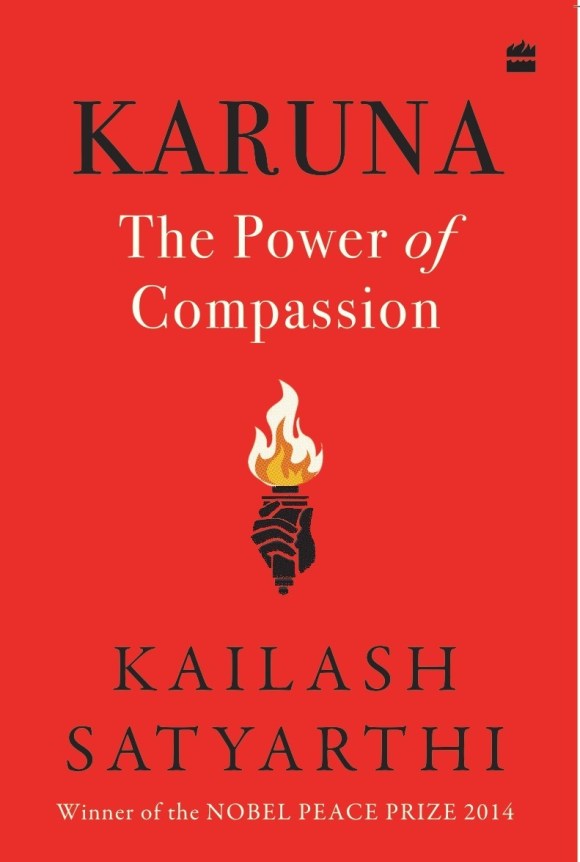
(Excerpted from Chapter 1 of Karuna: The Power of Compassion by Kailash Satyarthi, Published by HarperCollins India)
About the Book:
I see a world where compassion is the only solution. Do you see what I see?
Never before has our world been so wealthy, well-informed and technologically advanced. Yet we are facing an unprecedented crisis: humanity is plagued by conflict, inequality and indifference. It is imperative, therefore, that we rethink our approach to life and society, and that we do so now. The answer lies in karuna, compassion.
Compassion is not a soft emotion but a powerful force for transformation. It transcends borders, ideologies, religions and politics. And it asks only this: Act mindfully, as if the world is all one family—because it is.
Nobel Peace Prize awardee Kailash Satyarthi has fought for the rights and dignity of millions of marginalized people across the globe for the past five decades. For him, compassion is a way of life. In this new book, he shows us how karuna is the answer to our individual, social and global problems, and the key to a better future.
The Author
Kailash Satyarthi, awarded the Nobel Peace Prize in 2014, has dedicated more than five decades to defending the rights and dignity of marginalized children and communities around the world. He believes Karuna—compassion—is the most powerful force for building a just, equitable, peaceful and sustainable world, and one that must guide how individuals, institutions and societies think and act.
The ocean breeze swipes the water page after page turned in waves of succession,
one after another sweeping the air and stirring it in the sounds of coming and going.
The waves move as the wind dictates: some taller, some more shallow, still others less certain.
These are the waves of times, when Fall just begins and the air knows nothing of Summer—
in days blessed by what came but were cursed when they left, with just the newest day now with me,
where only what left is what I wanted— where only waves of its time came and are now over.
Water comes then recedes motion upon motion, each one pulled from the edge of the sea,
each one returned to where it once came. I do not see its subtle direction-change
except its withdrawal, except to see them extracted in distant sentiments of their own.
Can it be that this is what was always meant to be, and did I miss more than I could have remembered?
Did I not notice them when they were there one after another in chances I hadn’t realised were given?
But now I see I was wrong: each day the shore doesn’t forget each wave’s sentiment,
each wave holds its own where there is no end to them, where I’m offered a memory wrapped by the pain
of their leaving, but stays bound to every one where I hold on to the gift each one carried. DESIGNS
so much of what consumes me is mired in redundancy mental gymnastics wound ‘round and ‘round like an old watch spring and even when encased as permanent and making promises of permanence revolve with the earth in an air of inconsistency— both tensioning and reverting
maybe sorrow was designed this way maybe it was honed from some common metal where fissures stayed hidden but are the cause of its denigration over and over daylight comes deepens then fades mired in a cycle where change speaks only to change ‘round and ‘round in steps that hold its own brightness
A STEP AT A TIME
I can’t walk far once sunlight begins leaving, once the sweet music of unnamed birds begins to end, after rain fell again in the morning and clouds regrouped in early evening, the day without a before or after, only itself with two hands giving all I come to breathe— the two of us here in waning sunlight remembering: another day only mine to take, only the day to give— whether I cherished it or had choices when it ended, a day in the light that remains with an intensity of its own.
SR (Salvatore Richard) Inciardi was born in New York City and attended Brooklyn College and New York University. SR Inciardi’s poetry has appeared in the USA and in Europe in various online and print magazines including Green Ink Poetry, Harrow House Journal, Grey-Sparrow Journal, Borderless Journal, Written Tales,among others. He was a contributor to Green Ink Poetry for their publication on Kennings: Equinox Collections: Autumn released on Amazon in October, 2024.
.
PLEASE NOTE: ARTICLES CAN ONLY BE REPRODUCED IN OTHER SITES WITH DUE ACKNOWLEDGEMENT TO BORDERLESS JOURNAL


 Borderless