Earthen bowl painted with green elaborate designs.
I go up with joy as I run down this slope
With the wind ticking my loose hair
As it bids me adieu while rushing upwards,
And the blushing sun secretly peeking at me
Through the fine cracks between the canopies.
I feel the excitement even in my breath
As I float in the air for nano seconds
With my heart beat rising at an elated pace
Jumping up and down cheering me with joy.
I run down this uneven rigid path
Unsure of my each step on the ground
I might make my stiff perfect landing
Or I might trip and fall hurting myself
Yet I don’t fear for I am enthralled
I enjoy this silly risk I am taking
In this predesigned life I claim to be mine
Besides I am closer now, to my sanctuary.
Finally, down and down I go till I suddenly stop
Yes it is my home, I see my safe haven
Waiting with its familiar pleasant smell and
Warm welcoming smile as it senses my arrival
And I go inside leaving my insecurities behind.
.
Anjali V Raj is a natural science researcher from Kerala, India. She currently works as a research assistant at ATREE, an Environmental think tank in Bangalore. She writes poems and short essays based on her thoughts cultivated from observations of nature, lifestyle and society. She started literary writing at the age of 16 and recently she has published few of her works in the Down to Earth, Café Dissensus Everyday, Borderless Journal and Times of India Reader’s Blog. Most of her poems are published in her personal blog in WordPress (Outburst of Thoughts).
.
PLEASE NOTE: ARTICLES CAN ONLY BE REPRODUCED IN OTHER SITES WITH DUE ACKNOWLEDGEMENT TO BORDERLESS JOURNAL.
Exploring the writings of Nabendu Ghosh, his daughter Ratnottama Sengupta shares his life and times and her own journey as a senior journalist, writer and, more recently, a filmmaker.
Nabendu Ghosh on the right at the award ceremony for his Bankim Puraskar, awarded by West Bengal Chief Minister, Buddhadeb Bhattacharya(left), who can be seen conversing with him. Photo source: Ratnottama Sengupta.
Mistress of Melodies is a new book, a translation of Nabendu Ghosh’s stories. Ghosh was an eminent Bengali writer and also a major screenwriter from Bollywood, the award-winning director of the iconic Trishagni (The Sandstorm, 1988). This collection edited by his daughter, a senior journalist, translator and writer, Ratnottama Sengupta, brings out the plight of women ranging from the glamorous Gauhar Jaan to the hapless prostitutes and widows — like Fatima who almost gets pushed into the flesh trade for feeding her hungry child. The story on Gauhar Jaan was written originally in English by Nabendu himself. The man did an excellent job in English too though he wrote in Bengali and Hindi mostly. His writing has cinematic clarity.
In 2018, another collection of his short stories That Bird called Happiness was brought out by Sengupta, who with multiple books under her belt, retired as the arts editor of The Times of India and now she is helping the world uncover the richness of the literary lore of Nabendu Ghosh. In this exclusive, she tells us more.
You are the daughter of a very loved writer, screen writer and filmmaker from Bengal, Nabendu Ghosh, along with being an award-winning journalist and film maker. How much did your father influence your choice of career? What impact did his work have on your childhood?
My father did not at all influence my choice of career as a journalist. As a matter of fact, he believed that journalism was literature in hurry. He was happy that his daughter’s name – byline — was appearing every week, often more than once a week, and across India with enviable regularity. But he would often remind me that, in pursuit of this “short-lived glory”, I was neglecting my potentials as a ‘literary writer’ which, he felt, I had in me…
But let me tell you: I would not be what I am today – an editor, translator, curator and director in addition to being a journalist – if I were not born with Nabendu and Kanaklata as my father and mother. Here’s the Why of this statement.
I must have been five or less when I developed the habit of looking attentively at visual images even before I could discern the alphabets. For, even as a baby I would leaf through the books that were everywhere in our house – in the bookshelves, on the tables, on the beds and even under them. Indeed, every night we would remove the books to make our beds and every morning we would put them back there!
Having always been with books, reading stories and images came most naturally to me. And then, there was the dinner table at 2 Pushpa Colony, my home in Mumbai, which was the camp address for not only my cousins and unrelated uncles from Patna and Malda (the two places my parents came from) who were making a career in films, but also that for writers from Bengal and Bihar: Nirendranath Chakraborty, Santosh Ghosh, Samaresh Bose, Phaniswar Nath Renu, Debabrata Mukherjee…
The result? I grew up listening to discussions on literature and cinema – every aspect of it, from cinematography and editing to music and dance. Through them all, I came to appreciate not only the aesthetic aspects of these art forms but also their technical, economic and other social aspects. Through it all, unknown to me, I had become a film and art critic.
Your father moved from Bengal to Patna at the start of his life. Why? Did it impact his choice of career?
My grandfather Nabadwip Chandra Ghosh, a well-known Kirtan singer, was a much-respected advocate who moved from Dhaka to Patna, then a part of the Bengal Presidency, in 1920. Nabendu was then all of four. But every Durga Puja would find them back in Kalatiya village where he started by playing ‘sakhi’ (a woman’s role) and experiencing the rasa of devotion. In his school days itself Nabendu took to writing and soon was part of the editorial team bringing out a handwritten magazine which was popular in the Bengali society of Patna. From his early years he used to save from his tiffin money to watch movies. He was keen about dance and drama and in his college days he regularly performed – even in towns and cities outside Patna. All in all, he was trained in the Arts from his childhood.
And by 1942 he was already a published author. But what determined his ‘career’ as a writer was the Quit India call given by Gandhiji. It led to an incident that changed his life. A large crowd to assemble at the Government offices including that of the IG Police where Nabendu was then a junior. After witnessing the bloodshed unleashed by the British Police, he started writing a novel that labeled him into being identified as a ‘subversive’ writer. Realising that he would not get a respectable job under the imperialist government, he resigned from that job and again, from Military Accounts – and took to writing as a full time occupation and moved to Calcutta.
Why did Nabendu go to Bombay when he was such a successful and loved writer in Bengal?
We are all social creatures, and we do not realise how much our lives are tossed and turned by political events. Take the Partition of India: It bifurcated the state of Bengal, dividing the reader of books and the viewership of films. By 1947, Bengal was the most established film producing centre in India, and as a young, popular and respected writer endowed with a cinematic vision, Nabendu Ghosh was already writing screenplays for a Hollywood-returned director, among others. But both, the publishing sector and Bengali film industry suffered a humongous setback after Partition – especially as the newly formed Pakistan government decided to enforce Urdu as its lingua franca.
So, when faced with tremendous financial hardship, many successful directors moved to Bombay. Legendary director Bimal Roy too was invited by actor Ashok Kumar to make a film for Bombay Talkies, and he invited Nabendu to join the team as a screenwriter. The rest is a historic change of geography: the Bengali writer moved to the shores of the Arabian Sea but did not cease to serve the ‘Bay of Bengal’, as Sunil Gangopadhyay said in reviewing Eka Naukar Jatri ( Journey of a Lonesome Boat, Nabendu’s autobiography).
Eka Noukar Jatri or Journey of a Lonesome Boat
Here, allow me to quote what poet Nirendranath Chakraborty said at the launch of the autobiography: “It was not with any joy that Nabendu Da left for Bombay at the close of 1940s. The times were such that it was difficult for most of us to eke a decent living. He had a family to look after, the family was growing, opportunities were not. If anything, they were getting curbed. Nabendu Da fulfilled all his responsibilities, including to his family, his friends, and to his first love – literature.”
Recently his telling of Gauhar Jaan has been published in Mistress of Melodies, with some of his translated stories. But Gauhar Jaan was written by him in English — and very well written I must say. Why did he write it in English?
Nabendu was always a keen writer, and politically aware. He wanted to major in History but was advised to take up English. So, he did his MA in English – under British teachers. Naturally he had a firm grounding in the language.
In Bombay of 1950s, directors, actors, producers from different corners had converged. And so, although the discussions in Bimal Roy Productions were held in Bengali and Hindi, he wrote the scripts in English and the basic dialogue, though in Hindi, too was penned in Roman alphabet. So English was always his second language.
Besides, Nabendu had written Swar ki Rani or ‘Mistress of Melodies’ as the first draft for a fuller screenplay that he always planned to write – in all probability, for my brother Subhankar Ghosh who is a graduate from the Film and Television Institute of India (FTII), directed the successful serial Yugantar (Over the ages) for Doordarshan and Woh Chhokri (That Girl) that won several National Awards.
Why did he not make a film out of Gauhar Jaan? It is an excellent story. Any plans to film it now?
Life is a hard task master. Subhankar too has had to go through several twists and turns. He was in Fiji for some years to teach filmmaking at the Fiji National University. That did not give him the scope to direct the film when Baba penned the first draft. If any opportunity comes along, I am sure that ‘Mistress of Melodies’ will be seen on the silver screen – or streamed on an OTT platform.
Nabendu was into script writing in a big way, especially for Bimal Roy. Can you tell us how they started working together?
After Nabendu moved base to Kolkata, Jahar Roy – the celebrated comedian of the Bengali screen who was like a younger brother to Nabendu since their Patna days – introduced him to Bimal Roy who had shot into national limelight with his very first film, Udayer Pathey (In the Path of Sunrise, 1943). The director, an avid reader, had read most of Nabendu’s writings and had observed that his writing had the “visual quality of a screenplay.” In particular he was highly impressed with the allegorical novel Ajab Nagarer Kahini (Tales of a Curious Land). But at that point B N Sircar of New Theatres was travelling abroad, so the project did not take off.
Meanwhile Mrinal Sen, then only a young associate of my father from Indian People’s Theatre Association, was eager to film it. He came up with a producer who unfortunately ran out of money within a few months and abandoned the project. Nabendu went back to Bimal Roy but he had firmed up his plans to shift to Bombay. All of a sudden, over a cup of tea, he asked Nabendu to join his creative team – and the writer was only too happy to get a new opening in the dismal post-Partition world.
Trishagni was an award-winning film by your father. Tell us how it came about and what made him pick the story?
In 1966 after Bimal Roy passed away, my father had started teaching the Direction students at Film and Television Institute of India as a regular Guest Lecturer. Soon the Film Finance Corporation (FFC) was reborn as National Film Development Corporation (NFDC) – and he became one of the revered members of its Script Committee. To create a bank of screenplays NFDC held a script competition and Nabendu won an award. It was not a cash award: NFDC supported the making of the film by way of equipment, editing, lab cost etc. That script became the award-winning Trishagni, based on a story by Saradindu Bandopadhyay, the Bengali litterateur best known as the creator of Byomkesh Bakshi.
Why this particular story? Being a writer himself, Nabendu would always go to literature for the subject of a film. He maintained that a writer puts in a lot of thought in rooting the character, into creating drama, in layering it with social concern. This gives a sturdiness to the visuals and adds to the fabric of the film which, in tinsel town, otherwise tend to become wishy-washy, and short-lived in their stimulation value. So even for Bimal Roy films he would suggest stories by writers like Subodh Ghosh, Narendranath Mitra, Samaresh Bose. These writers he not only read and respected, he would regularly meet them and often discuss the characters while scripting their stories.
Besides, being from Patna, he was fascinated by Gautama the Buddha whose statues in the museums generated “an inner feeling of content and peace”, he once told me. A prince who renounced every comfort, every pleasure in life in search of a truth, a ‘Bodh’ that would help mankind attain peace in his lifetime: this unique vision drew him to the teachings of Buddha. Then, in Maru O Sangha (The Desert and the Convent) he came across the Agni Upadesh, the sermon that outlined that the world is burning with desire, and our mission in life should be to free ourselves from desires that consume life. Only then we can attain a life of tranquility, endless bliss.
His reverence had inspired Baba to write a novel, Bichitra Ek Prem Gatha (A Wondrous Love, 2007) to mark Buddha’s 2550th year. It derived from the Buddhist text ‘Theri Gatha’ to juxtapose the worldly desires and longings with the exemplary discipline and distilled love of Pippali and Kapilani, two newly-weds who were drawn towards the Sakya Muni and took refuge in him. Eventually Pippali turned into Mahakashyap, a ‘lieutenant’ of the Buddha, and Kapilani headed the ranks of nuns – probably the first convent in the world! This turned out to be Baba’s last published novel (while he lived).
While on his Buddha Trail, let me add that Nabendu had earlier been part of Gotama the Buddha (1956), the Bimal Roy Productions documentary that had won director Rajbans Khanna an Honorable Mention at Cannes.
What was the last film he made? And what was the last book he wrote?
The last film he was to make – on NFDC funding – was Motilal Padre, based on a novel by Kamal Kumar Majumdar. Unfortunately, this remained an unfulfilled dream. So, effectively, he directed three films: Trishagni (1989), Netraheen Sakshi (Blind Witness, 1992) for the Children’s Film Society of India, about a visually challenged boy who could identify a killer by his voice, and Ladkiyaan (Daughters, 1997) for the Ministry of Health and Family Welfare.
This again was part of a scheme that saw the Ministry finance films pertaining to a Girl Child’s education (Kairee by Amol Palekar), childbearing and women’s health in a Muslim family (Hari Bhari by Shyam Benegal), and so on. Ladkiyaan was based on a real-life incident that saw three sisters in Kanpur jointly commit suicide when one night, they heard the father threatening their mother, who had conceived again: “No more girls! I want only a boy.”
Kadam Kadam or The Long March
His last completed novel is Kadam Kadam (The Long March), which chronicles the story of a young Indian who joins the British Army, is sent to Singapore, taken POW by the Japanese, joins INA and is transformed. He had just completed it when he had to be hospitalized. I published it at the onset of his birth centenary.
He wrote a book for his grandchildren too. Would you like to tell us about it?
Yes, he wrote Aami ar Aami, translated to Me and I, for his two grandsons, Devottam Sengupta and Devraj Nicholas Ghosh. The racy story about a parallel universe fuses human curiosity about outer space, the stars and galaxies, with a futuristic vision emanating from his faith in humans and a ‘Hindu’ vision of the cosmos…
The germ of the story came from Sudheesh Ghatak, the second brother of celebrated director Ritwik Ghatak, whom I remember from my childhood as a fascinating storyteller and a storehouse of knowledge on the developments in science as well as on the ‘Unbelievable’. One day he had talked about the hypothesis of a group of scientists about twin planets in the cosmos. A few weeks later Nabendu, on a visit to Kolkata, was leafing through old books sold on the pavements of College Street, and came across one that referred to twin planets. That spurred his curiosity, and imagination…
My son, Devottam, started translating the book as part of my effort to improve his Bengali. He believes that somewhere the idea grew in my father from watching his two grandsons. When they were kids Dev and Nick — who now lives in UK — were mistaken for twins. At one time my brother was posted in Germany, and his friends would remark how the cousins resembled each other yet were “somewhat different”. This could have fanned his thoughts about the protagonist and his interstellar twin who were ‘identical yet opposite’. In Me and I, Mukul (which, incidentally, was my father’s pet name) and Lukum “mirror, in a modified way, our experiences of growing up as two brothers separated by what in 1980s was several thousand miles of culture – experiences, of what we were exposed to and how we were brought up in our thinking,” Devottam wrote in his translator’s note.
What do you feel when you translate Nabendu’s work?
You have taken the words out of my mouth. Actually, translating Nabendu Ghosh has been a BIG lesson in creative writing. His stories are rooted in the soil, yet not homilies on traditional lives. They are about the lives impacted by social and political twists that tossed people not only across the Radcliffe Line but from Bengal to Bombay, Madras (now Chennai) to the Himalayas, from villages to the industrialising cities, the lost world of Lucknow’s nawabs to the Bengal heightened by World War II, to the dreamland of Bollywood and the upper crust families homed in Park Street.
Layering a character with socio-political reality makes them both universal and timeless, I learnt as I tried to translate these stories. There’s always a tomorrow to live for, I learnt from them. The more direct your sentence is, the more crisply is the emotion conveyed, I learnt from his sentences. The shorter the sentence is, the more it compels you to walk ahead with the characters into their lives. And, of course, from his use of language I learnt that every word we utter is a reflection of my time, my mood, my upbringing. As Shirshendu Mukhopadhyay said, Nabendu Ghosh is a writer who should be read by every aspiring writer for his grasp over the art of storytelling.
Tell us what was the perception about his writing and its impact on his peers and writers who came after him?
When Nabendu entered the frame, the towering personality of Rabindranath Tagore was no longer on the scene. There were the three Bandopadhyays – Tarashankar, Manik and Bibhuti Bhushan. The three ‘N’s – Narayan Gangopadhyay, Narendranath Mitra and Nabendu Ghosh joined them at this juncture, each with a definite voice and constituency.
On his 90th birthday, litterateur-journalist Dibyendu Palit wrote: “Nabendu Ghosh is among those frontrunners of the post-Kallol era Bengali literature who amazed with the power of their pen. His subjects were rooted in realism, his language was seeking new expressions in aesthetics. His Ajab Nagarer Kahini, Phears Lane, Daak Diye Jaai are memorable creations in the language…”
Sunil Gangopadhyay summed for the Indian PEN Society, what he wrote in reviewing Eka Naukar Jatri: “Your devotion to Bengali literature and your creativity in the language is a matter of great joy for us.”
Last year Shirshendu Mukherjee, speaking at a celebration of Nabendu’s birth anniversary at Starmark said, “Nabendu Ghosh was a ‘star’ among those writing in1940-1950s. He lived a long life — he passed away when he was nearing 91 — and almost until he went away, he was writing. My attraction for his work was formed when I was a teenager reading world literature. There were two names I admired very much Norwegian Nobel laureate Knut Hamsun (1859-1952); and Austrian Stefen Zweig (1881-1942), the most popular novelist of his time. Anyone who read him can’t forget his style of writing. In my view, Nabendu Ghosh shared his trait of riveting storytelling with Zweig. The same focused development of a plot shorn of every trivial and expendable branch, razor sharp emotions, whirlwind passion — I feel writing itself was a passion for him. He did not write with his head alone, his heart bled for the human condition. This I can say without exhausting the considerable list of his writings — 28 novels, 18 anthologies of short stories.”
Nabendu Ghosh
Shirshendu also talked about Nabendu’s remarkable use of language. “One of his stories starts with a word, “Bhabchhi — (I’m) Thinking.” It is a single word that is also a complete sentence, and it has been used as a paragraph in itself. Not many writers of his time were into such experiments. Even some doyens of Bengali literature did not accept to set out on this adventure. Nabendu Ghosh did. He stood apart from his contemporaries in this respect. A part of his mind always ticked away, thinking of how his characters would speak. This has to be done – this tinkering with structure, altering of syntax, or adding to the vocabulary. Words from so many languages — Arabic and Persian and English – have filtered in and become a part of the Mother Language as we speak it today.
“Nabendu was always pushing the boundaries of the language – but he had an amazing sense of the optimum in this matter: he never overdid it. One of his stories, Khumuchis, explores the secret language used by pickpockets. Bichitra Ek Prem Gatha (A Wondrous Love) – published to mark 2550th year of Buddha — uses language that is closer to Prakrit, in that it is devoid of any word that would not have existed before the advent of Islam. He always put a lot of thought into how the characters would speak. This added to the readability of his stories and quickened the pace of the narrative. They were all so racy!
“And this is why he never dated. His writing is the stuff that makes a story universal, eternal. For today’s readers he is a lesson in how to write — they can master how to write a narrative that flows like a boat down a rapid stream. In terms of language, structure, characters and situation, he is a writer who would be relevant to the young readers of not only Bengali but worldwide.”
Chuninda Kahaniyaan: Nabendu Ghosh
Speaking at the launch of Chuninda Kahaniyaan: Nabendu Ghosh (Chosen Stories of Nabendu Ghosh, stories translated to Hindi) the recently demised thespian Soumitra Chatterjee, a Master in Bengali Literature, had said: “Even before I took to studying Bengali literature, even when I was in school, Daak Diye Jai (The Call) was a sensation. His writing was not confined to urban settings and city life, he wrote of the man of the soil too. His characters were always flesh and blood humans too.”
And when his last birthday was being publicly celebrated at the Palladian Lounge in Kolkata, an MA student of Rabindra Bharati University, Saswati Saha had said, “This bright star of contemporary Bengali literature has riveted me with the quiet aesthetics and deep realizations that are germane to his novels. I am a young reader of his art but both Bichitra Ek Prem Gatha and Jibaner Swad (The Taste of Life), both published in 2007, have increased my appetite for his writings. With the alluring simplicity of his language and unhurried descriptions he unfolds harsh realities. Had I not read Nabendu Ghosh, I would have remained ignorant of a large tract of life experience.”
You yourself have made a directorial debut on the life and works of your father. Did that help you understand him better? How did the film do?
And They Made Classics… was made to celebrate his Birth Centenary in 2007 but the interview it came out of was recorded by Joy Bimal Roy and Aparajita Sinha – son and daughter of Bimal Roy when they set out to make Remembering Bimal Roy in his 100th year. ATMC… spoke primarily about the classics of Nabendu scripted for the legendary director. It is a lesson in film appreciation and also in a certain way, about the art of making films in a given social circumstance – in the face of all odds. It seasoned me as a film analyst, really.
Of course, what has given me a greater insight into his life and times is Eka Naukar Jatri, the autobiography that was first serialized by Dibyendu Palit as the editor of Sangbad Pratidin (News Everyday) then fleshed out by the writer for Dey’s Publication. Now, while translating it for Speaking Tiger, it lifts the curtain on how he became a litterateur, virtually chronicling 1940s, the founding decade of our nation. This was a decade that was ushering the future in tumultuous colours and fiery alphabets. Just think of the march of the dead this decade saw: people dying on the streets of Calcutta while the British government was sending away rice to the theatre of war in the North East; people dying in poisonous chemical vapour unleashed through Europe; lives lost in Japan when a new atomic toy was dropped from the air – and later, repeatedly in the Pacific Islands, when millions suddenly were tossed into an identity crisis and an ensuing bloodbath by the Radcliffe Line…
I now understand that he was constantly bothered by questions such as “Is this the new era, the age of Deliverance to be ushered by the mythical avatar, Kalki? Or will this flow of blood and the wails of mothers be lost in the dust? Will the world be green again?” I now understand why the Lifetime Achievement Award citation of Bengal’s literary council, Bangiya Sahitya Parishad reads: “Time and again the strange ironies and mysteries of history have lit up your questioning mind. At the centre of history is Man. History is the conveyor belt that leads Man from past to present, sometimes with affection, mostly through rough and tumble. History never stands still through conflicting turns of events it makes way ahead. You made history stand still in your pages…”
You have written a number of books and translated extensively. What is the difference between your father’s writing and yours? Of course, you are an eminent journalist, and he was a creative writer. He wrote in Bengali and Hindi mainly. And you write in English. But, other than that do you find any similarity in the way you tell a story? Has he impacted your style?
Now you must bear with me as I talk about myself!
Ratnottama Sengupta
I am what I am as a writer because I was born in the household of Nabendu Ghosh – and here I am not talking of DNA or of dynastic inheritance. As I have said before, our house was full of books and I grew up leafing through them even when I didn’t know whether they were in English, Bengali or Hindi. I had a lovely childhood reading Bengali ‘kishore sahitya’ – literature for young readers – as much as Enid Blyton, Mark Twain, Phantom and Amar Chitra Katha comics. At BES School in Dadar, we annually celebrated Saraswati Puja by ‘publishing’ a handwritten magazine of stories and essays by the students – and that was my haatey khari — initiation as a writer. Here too, I would discuss a story idea and my father would tell me how the characters would think or act, never how to write, what language to use or how to structure the story.
Perhaps that is why, although I scored the highest in our school when I matriculated in 1971, securing in 96 and 97 in Science and Math, I joined Elphinstone College, then celebrated for its Arts stream and Mastered in English and American literature, with the added advantage of fluidly moving from English to Bengali and Hindi, Marathi and Gujarati. In other words, through Indian literary traditions as much as the wealth of world literature. That helped me to decide that I will make life either as a journalist or in academics, careers that would see me read and write every day.
It so happened that in 1978, when I returned from England after eight long months of holiday with my brother Dipankar, I applied for two jobs: a trainee sub-editor at Indian Express, and lecturer at the National College in Bandra – both at the instance of my friend Imran Merchant, erstwhile Editor of TV World. As life would have it, I got appointment letters from both, first from the daily, and a month later, from the college. I didn’t know which way to go, so I went to Ms Homai Shroff, then the head of the department for English in Elphinstone. When I told her my dilemma, she retorted: “What! You are already in journalism, and you want to move to academics? Don’t be stupid!” That decided it…
But let me add that eventually I did get to teach as well. Although for a short term, I was guest lecturer at Delhi University’s Kalindi College; I taught young entrants at the Times School of Journalism; I have been Mentor to Mass Com students at Lady Shriram College…
Journalism carried my name to virtually every corner of India. It gave me an opportunity to travel across the globe. It brought me into contact with the biggest names in the world of Arts – painting, music, dance, theatre, literature and of course cinema. All this made Baba happy and quietly proud. But he nursed one objection: “Journalism is short lived and mostly goes into highlighting other people’s achievement. In doing all this, you are expending your time and literary energy. Turn your attention to your own creative writing,” he would urge.
Similarity of style? I don’t think so since we were doing very different kind of writing. But impact, yes, and I have already said how.
What are your future plans? With translations? Films? Your own writing?
All of them. I plan to keep translating, and not just my father’s work. God willing, I will certainly make a few more films. I am halfway through Menaka to Mallika, a documentary study of dance in Hindi films. I hope to make a short feature on trafficking and a full length one on a father-daughter story. As for my own writing, there are talks of publishing them. Ambitious? Perhaps. But like my father I would like to read and write till the last day life grants me.
Nabendu Ghosh with his daughter Ratnottama Sengupta
This interview was conducted online by Mitali Chakravarty.
.
PLEASE NOTE: ARTICLES CAN ONLY BE REPRODUCED IN OTHER SITES WITH DUE ACKNOWLEDGEMENT TO BORDERLESS JOURNAL.
One of mythological scenes carved on the pillars of Sun Temple at Modhera. appears to be Sita abduction scene from Ramayana. Notice Pushpak viman and Jatayu the bird. Photo courtesy: Wiki
Lament of Jatayu*
I heard some cries,
And woke up rubbing my eyes.
I looked up and saw —
My breath suspended in awe —
A giant chariot
Running through the moon-lit clouds,
Like a frightened snake hastening through crowds.
.
I rushed up,
My eyes following the magical chariot.
I was surprised to see
The mighty Ravana*, sweating with anxiety,
Speeding away with grief-stricken Janki *.
.
His eyes were tinged with fear,
His face withered as I drew near.
He mocked me as old and weak,
Struck me on the beak.
I swooped down on his head,
Had him almost wrapped up
In my fierce fluttering wings,
With my claws cutting into his limbs.
.
His golden crown
Tilted and fell down.
Like a wounded lion he roared,
Chopped off my wings with his sword.
He sped away into the southern skies,
And I could do nothing
But only hear her fading cries,
With tears welling up in my eyes.
.
Wounded, defeated, in despair,
Unable to hold myself in air,
I fell down with a thud,
Like a huge heap of blood.
.
Dear Rama*, how I wish
I had saved her from that monster!
To stand mute before such cruelty,
Is against my nature.
I would have done my all,
Even if she were a stranger.
.
O Lord! Let the cord of life snap,
As I lie with my head in your lap.
.
Jatayu*: In the Hindu epic Ramayana, Jatayu is an eagle-like divine bird.
Janki*: Also known as Sita, wife of Ram, the Hindu deity in epic ‘Ramayana’.
Rama*: the major deity of Hinduism, the central figure in epic ‘Ramayana’
Ravana*: the demon-king of Lanka.
Mr. Ashok Suri retired from the Revenue Service in 2014 and is settled with his family in Mumbai. He loves to read and write. He tries to convey in simple words what he wants to say.
.
PLEASE NOTE: ARTICLES CAN ONLY BE REPRODUCED IN OTHER SITES WITH DUE ACKNOWLEDGEMENT TO BORDERLESS JOURNAL.
Rakhi Dalal reviews translated short stories of Nabendu Ghosh, which not only bring to life history as cited in his Bangiya Sahitya Parishad Lifetime Achievement award but also highlights his ‘love for humanity‘
Title: Mistress of Melodies: Stories of Courtesans and Prostituted Women
Author: Nabendu Ghosh
Publisher: Speaking Tiger Books, 2020
Mistress of Melodies:Stories of Courtesans and Prostituted Womenis acollection of six stories by Nabendu Ghosh in translation. It includes three translations by the editor Ratnottama Sengupta (Market Price, Dregs and Song of a Sarangi) and one each by Padmaja Punde (It Happened One Night) and Mitali Chakravarty (Anchor). The titular story was originally written in English by the author for a screenplay.
In the editorial note, Ratnottama Sengupta reflects upon the origin of the word prostitute from Latin word “prostitus” and asserts that its interpretation as “to expose publicly” or as “thing that is standing” does not have the abusive association usually identified with it. She refers to Rudyard Kipling’s short story, ‘On the City Wall’, for the denigrating connotation that the phrase “oldest profession”, a euphemism for the word prostitute, acquired later.
Treated as courtesans, as connoisseurs of arts, the women engaged in this oldest profession enjoyed high social standing in Mughal and Pre-Mughal era. Immensely trained in the fields of classical singing and dancing, their mannerism set a hallmark of etiquettes in society. It was only with the arrival of British that their institution gradually collapsed. The Sepoy Mutiny of 1857 rang the death knell for courtesans’ art. With their wealth seized and places plundered, they were punished for their involvement in the rebellion. The coming of British crown further brought Victorian ideas of morality and women chastity, thereby pushing the courtesans to the lowest rungs of society.
‘Song of a Sarangi’, set in nineteenth century Calcutta some years subsequent to Sepoy Mutiny, effectively brings forth the world of ‘baijis’ (courtesans) who had set up their kothas (business cum residence) in some neighbourhoods and enjoyed patronage of rich seths and babus of the city. Theirs was a world brought to life every evening with thumris sung and dances performed on the thaap of tabla tuned to harmonium and sarangi. Though their art was appreciated during the times, their sustenance in society hanged by the delicate threads tugged in the hands of their patrons. Nabendu Ghosh, through the character of Hasina Bai of Chitpore, places to the forefront the struggle and subsequent misery of a mother after she auctions her adolescent daughter to the highest bidder and plunges straight into a nightmare which upturns her life.
The story ‘Market Price’ illustrates the misery of a young widow Chhaya, who is allured into a fake marriage and betrayed after she willingly gives away her fortune to the man she trusts. Her story against the backdrop of city of Kashi also symbolically represents the ordeal of being a widow in the society. In the story ‘It Happened One Night’, we witness Tagar, a woman forced into the profession, trying to make as much money as she can till she isn’t worn out. For, she cannot end up like ailing Radha who pushes herself to the edge of death to earn little that she could to feed herself. Through this story, the author also focuses on the issue of sleep deprivation and illness, which is a price the women engaged in prostitution pay for their living.
‘Dregs’, written in first person narrative, while chronicling the life of Basana who enters the profession due to hardships that she faced, also very convincingly portrays the detestation which women engaged in prostitution are subjected to in a social system. Set in the 1940s in Calcutta, the story navigates the life cycle of brave Basana who succumbs to the destitution she confronts when her paramour abandons her after she becomes a mother. On the other hand, it also takes the reader through the mind of narrator, revealing his revulsion for Basana which is not only due to her profession but also a result of his own sense of deprivation, originating from his poor circumstances. He desires her but cannot have her so he is repulsed by her presence. It is only towards the end when she appears wretched, that he feels pity for her. This conflict, as experienced by the narrator, is rendered with such subtlety that it allows for an effortless transition of the distinct emotions, leaving the reader spellbound by the sheer brilliance of author’s skill.
In the story ‘Anchor’, Fatima resorts to the profession in order to provide for her son but cannot bring herself to give in to a stranger. Her defiance springs from her strong sense of self respect which she guides with all her might after her husband’s death. Rustam, who comes to Fatima in desperation, lets her go when he notices her helplessness. Here in sketching his character, the author also brings to reader’s attention the sufferings endured by countless people in the aftermath of Bengal famine.
‘Mistress of Melodies’ is written on the life of famous Gauhar Jaan of Calcutta. The author wrote this in English as the first draft of a fuller screenplay. He was captivated by the larger than life persona of first Indian diva of Armenian origin, who was immortalised in the annals of history by being the first ever person to sing for a gramophone record in the country. A highly accomplished woman in the field of classical singing and dancing, Gauhar Jaan enjoyed a privileged life. The author writes about her celebrated life and about the love which left her aching, after the death of her beloved Nimai Sen, till the very end of her life.
These stories of courtesans, of those engaged in prostitution as well as of those pushed to the verge in a society, are not merely the stories of their struggles, sufferings or helplessness but are also accounts of their faith in love and in the inherent goodness of people. It is love which compels Hasina Bai to start life anew with Uday Moinuddin and make Tagar dream of a new life with Shashi, his pimp. It lets Rustam, a wanderer, to finally attempt new beginnings with Fatima, their common grief the anchor which brings them closer.
Remembering Nabendu Ghosh, on his birthday i.e. on 27 March in 2019, renowned writer of Bengali Literature, Shirshendu Mukhopadhyay said:
“I wish I had more Nabendu Ghosh novels back then, in 1940s, for he has written on almost every upheaval of that period: the Bengal Famine, the tram strike, the rationing of clothes, the Direct Action riots, rehabilitation of Partition victims… This was perhaps because he considered Literature to be a way of tackling all that is destructive in society, in life. He was writing out of love for humanity.”
And indeed the stories in this collection, emphatically proffer a testimony of his love for humanity. A love which compelled him to write about the women engaged in the ‘oldest profession’. He wrote to address the many woes that afflicted not only forlorn prostituted women but also well-off Courtesans. With his stories, he portrays the predicament of women dragged into the clutches of prostitution and also paints a world throbbing to the surs of ragas and taals of Kathak whose custodians were also the upholders of culture and its mores in the times bygone. Through these stories perhaps, their legacies and their contribution to culture will be remembered for times to come.
Nabendu Ghosh (1917-2007) was a dancer, novelist, short-story writer, film director, actor and screenwriter. His oeuvre of work includes thirty novels and fifteen collections of short stories, including That Bird Called Happiness: Stories, edited by Ratnottama Sengupta (Speaking Tiger, 2018). As scriptwriter, he penned cinematic classics such as Devdas, Bandini, Sujata, Parineeta, Majhli Didi and Abhimaan. And, as part of a team of iconic film directors and actors, he was instrumental in shaping an entire age of Indian cinema. He was the recipient of numerous literary and film awards, including the Bankim Puraskar, the Bibhuti Bhushan Sahitya Arghya, the Filmfare Best Screenplay Award and the National Film Award for Best First Film of a Director.
Ratnottama Sengupta, formerly Arts Editor of The Times of India, teaches mass communication and film appreciation, curates film festivals and art exhibitions, and write books. Daughter of Nabendu Ghosh, she has written Krishna’s Cosmos, a biography of the pioneering printmaker Krishna Reddy, and also entries on Hindi films for the Encyclopaedia Britannica. She has been a member of CBFC, served on the National Film Awards jury and has herself won a National Award. In 2017, she directed And They Made Classics, a documentary about Nabendu Ghosh. She has recently edited That Bird Called Happiness (2018/ Speaking Tiger), Me And I (2017/ Hachette India), Kadam Kadam (2016/ Bhashalipi), Chuninda Kahaniyaan: Nabendu Ghosh (2009/ Roshnai Prakashan).
Rakhi Dalal is an educator by profession. When not working, she can usually be found reading books or writing about reading them. She writes at https://rakhidalal.blogspot.com/ . She lives with her husband and a teenage son, who being sports lovers themselves are yet, after all these years, left surprised each time a book finds its way to their home.
.
PLEASE NOTE: ARTICLES CAN ONLY BE REPRODUCED IN OTHER SITES WITH DUE ACKNOWLEDGEMENT TO BORDERLESS JOURNAL.
A Nepali poem by Manjul Miteri: Translated to English by Hem Bishwakarma
Manjul Miteri
Orimen*!
Oh, Orimen!
Mouthful of your Tiffin
Snatched by the ‘Little Boy’*!
The Tiffin box, adorned with flowers,
Scattered and spoilt,
Blown out brutally.
A handful of your young breath
In the silence of Hiroshima Peace Museum,
In the depth of this stillness,
Sobs every day and night,
Cascading incessant tears!

Oh, Orimen!
Blown out
With the hot lethal smoke of the Bomb
In the misfortune of your hunger and thirst.
Looking at your Tiffin box that carries
An unuttered scream,
I feel that
In the nooks and corners of this Earth,
By the tremor of the missiles
Blasted in war celebrations,
Your deformed body
that bears the creviced Earth,
Is postured in peace.

Oh, Orimen!
The war slays
Countless innocents like you.
The war deletes many opportunities
For innocents like you.
Then,
As your Tiffin box
Stands on the ruins of life
That is destroyed and slain,
War repetitively writes
Histories of triumph and courage!

The war
In the sky, in the cloud, in the air,
In the rays of the sun and the moon,
In the womb of the Earth,
In the surface of the oceans,
Is trying to pen a ballad
Wiping out the existence of life.

We are out to teach,
The scripts of love, life, peace and harmony
Copied from your Tiffin box
To all the guns that merely write death!

With the same avowal,
I have arrived feeling so frantic
From the land of the Buddha, Nepal,
Striding on the roads fired in war,
To bring this message to you.
Sorry, if I have been too late!
*An innocent boy who lost his life in Hiroshima Bombing during WWII.
*A devastating atomic bomb dropped in Japanese city, Hiroshima during WWII.
Manjul Miteri is a renowned sculptor and poet from Nepal. He is currently working with the biggest sculpture of Gautam Budhha in Asia in Japan.
Hem Bishwakarma is a translator and poet from Nepal. His works have been published in national and international poetry and literature journals and magazines.
First published in Gorkha Times, edited by Borderless to suit our needs.
.
PLEASE NOTE: ARTICLES CAN ONLY BE REPRODUCED IN OTHER SITES WITH DUE ACKNOWLEDGEMENT TO BORDERLESS JOURNAL
Amaya was not to be found in the fields. She wasn’t working. Instead, she was sitting by the banks of the river Godavari.
‘What am I going to do when I grow up? ’ Amaya thought to herself and yet, she could not think of anything that would be more important than picking cotton for a girl of her age.
She was convinced about her higher purpose in life; nobody, not even her parents and her younger siblings knew that her mind was the only thing that kept her company and her imagination was what made her disarmingly attractive.
Amaya had just turned twenty and considering her remarkably bright demeanour, was quite a popular person in Nandigram. There was not a single man, woman or child in the entire village that was not aware of her outspoken nature.
Her grandmother was the only one to support her, irrespective of earning the wrath of the village elders. She had some inkling about Amaya’s secret dreams to have a life that was not ordinary and drastically different from her own.
It worried her, the way her granddaughter was coming along, but strangely she also trusted her, and her faith in this fresh perspective of living a life differently, on her own terms.
Rising reluctantly from her comfortable position, Amaya started to walk towards the fields. It seemed to her that the time had come for her to prove to everybody including her parents that there was more to life than picking cotton. She liked to sing, and craved to possess a sarangi. But she could not, for the life of her, ask her parents for the same. The house was always abundant with all kinds of groceries, rice and spices. Her mother managed to create delicious meals out of ordinary vegetables and the entire household of seven members had their share.
Their clothes were made only once a year, out of the rejected bales of cotton and woven hurriedly into long pieces of cloth serving as sarees for her mother and sisters, and for the men of the household, lungis or the head cloth which saw occasional use. Everything else apart from this, the finery and rare gifts found its way to the large trunk that contained every item of even a slightly higher value than the routine ones.
It was her covert desire to open the trunk and gorge on the beauty of each one of its treasures, but that was not to be as her old grandmother guarded it furiously, coughing away on her little cot, just close by.
She reached the field, with its flowering cotton all around her. Her fingers had started to bruise because of the care with which the flower had to be picked so as not to damage it.
All the village girls between the ages of seven and twenty-three or thereabout worked their way through these fields, which seemed to Amaya, endless. It was considered a woman’s job, just like the other mundane tasks such as cooking, cleaning the kitchen and the outer courtyard, fetching water from the river Godavari and looking after the cattle.
It seemed to Amaya that she was a misfit among these girls, because she did not feel proud of the fact that her basket was full the earliest. There was no elation in her spirit and body while she mechanically plucked the white cotton blooms.
She started to hum a melody she had recently picked up while the temple priest was practising with the devotees. The song was a Sanskrit prayer to Shiva from the Ramayana. Amaya could not understand it. She had no knowledge of Sanskrit, but she had spent many an evening listening to the stories of Ramayana from her grandmother, about the way the beautiful Sita prayed to Parvati to grant her the wish of marrying Lord Ram and the abduction of Sita at Panchvati. While listening to these stories, she would always imagine herself in Sita’s role and the sheer magnitude of her imagination made her reach an entire new realm of heavenly pleasure. This is what she wanted her life to be, extraordinary and out of the pages of an epic.
The simple melody made her task easier and she continued picking cotton, totally oblivious to the world around her, while she craved to have something to sing along. Even though the words were incomprehensible to her innocent mind, just the melody and the haunting notes of the lyric were sufficient to make her sway to and fro and create a harmony of the mind with her body. It was strange what music did to her. Her grandmother’s daily visits to the village temple on the top of a hill made it mandatory for Amaya to accompany her and that is how her mornings became enchantingly musical. The temple priest was a happy, pot-bellied man with a sense of humour. His knowledge of Sanskrit and Marathi was comprehensive enough for their little village with a handful of literate men.
He always recited impeccable Sanskrit, translating it later for the benefit of his ignorantly rapt audience, but all Amaya could think of was how she could put those beautiful verses to music. She imagined herself with a sitar or a sarangi singing the verses in her sweet, evocative voice and holding a captive audience right there in the temple courtyard.
Sometimes the priest sang in Marathi; the verses of Bahinabai devoted to Vithoba were her favourite. She especially liked one particular verse in which the simple woman saint cries out that if she has a woman’s body, how would she attain truth? Amaya felt that the songs of Bahina which the priest recited so simply held the same ordinary principles that her grandmother spoke about in her stories from the epic. The husband and God, both had to be worshipped, and there was very little difference between the two.
“Let’s go home Amaya, it’s time we ate something,” her friend Manjari’s voice interrupted her song. Amaya was amazed at her collection of the cotton flowers and she noticed the reddish hues and rashes on her palms and fingers. She felt that she could come back again but immediately changed her mind. Maybe she would persuade her grandmother to accompany her to the temple again in the evening.
This did happen occasionally. In order to escape the dry heat and sweaty evenings in her room, her grandmother would ask Amaya to take her to the temple where the breeze would calm her mind. She did not know how much her granddaughter enjoyed these sojourns.
The cotton bales waited to be transformed into gorgeous Paithani sarees with bright colours and gold borders but that was after they were bartered for grain, gold and utensils with the traders who came trudging their goods to Nandigram. Weaving their magic into the cotton fabric, the small community of weavers created these sarees. The traders then sold these sarees to the rich landlords whose wives constantly competed with each other for the perfect Paithani.
Village girls had only heard about these fascinating sarees, and few were lucky enough to find such an ancestral heirloom in their families. Amaya knew there were a couple of them in her grandmother’s trunk. However, she was not really fond of sarees, their multiple folds reminded her of bales of cotton piled together, and all she wanted was to rush out to an open field and sing a melody at her own pace, along the precious notes of a sarangi*!
Amaya had been practising a particular song in Marathi. It was about the unspoken dream of a princess who did not want to live like one. She wanted to run in the fields and swim in the river; she did not like her finery and jewels but craved the sound of the waves and the rustle of the forest trees. Amaya felt that she and the princess had a lot in common, that just like the princess, she too wanted to sing among the green fields and play the sarangi to her heart’s content.
Amaya’s father was the only one who scared her. She was too afraid of him to even speak in his presence. His deep gaze and his resounding tone, even when he spoke to Amaya’s mother made everyone around him acutely conscious of his presence. Her grandmother also felt her authority giving way when he was around.
Like all the village girls of her age, Amaya was expected to learn all the skills of becoming an ideal wife, somebody who could turn a home into a heaven. But her father did not know that Amaya was the last person to mould herself into this perfect woman. She could not put her heart into cooking and instead of all the routine chores her friends enjoyed doing, she wanted to do something which made her parents proud of her, of pursuing a dream that she alone had seen, of sailing in a boat to the unknown shores and to sing the way her heart wished to!
Traditionally, the harvest festival was always celebrated in the temple, with women dancing lavanis and the men all dressed up to watch the festivities and praying to God to give them another year of a full harvest. It was natural then, that the priest had worn his dhoti with extreme care and his meticulous rituals made the temple look pious and festive at the same time almost as if even God wanted to bless this charming village with its simple folk and its calm environment.
Amaya had prepared a song with perfection and she had shyly asked her grandmother to take the priest’s permission to sing it at the end of the evening festivities. She had hoped that the majority of the audience would have left by then and those present would be too bored to listen to her beginner’s skills. The function began with the prayers to Lord Ganesha, asking for his benevolence for another year of a good harvest.
This was followed by a lavani, a traditional dance by women wearing colourful nine-yard sarees, tied like a dhoti to their slim waists going round and round in circles, swirling and twisting their bodies in a melodious unison, all the time holding each other with a precise rhythm. Amaya was mesmerized with the song, a beautiful one of a woman’s separation from the beloved and asking for God’s help to unite her with him.
The rest of the evening passed like a breeze and Amaya was surprised that the play on Saint Tukaram and a bhajan to Lord Vithoba would be over so soon. Finally, it was her moment. She began to feel apprehensive as soon as the priest announced her name. What if this turned into a big joke and no words came out of her mouth; would she be able to sing in front of so many people including her father, her family and all her friends?
She prayed to Vithoba silently and touched the priest’s feet before starting her song. With a brief introduction to the song, she began and instantly there was a silence around her. Everyone was enraptured by her melody and her voice rose. She felt, she could take it even higher, and control the musical notes and the lyrical melody perfectly. For the first time in her life, Amaya felt a sense of elation and total freedom. It was exactly the way she had dreamt herself singing and she knew that it was all she wanted to do in her life…
The family and all the villagers blessed her although she could sense her father’s silent gaze on her. The happiest was her grandmother, giving her a warm hug and blessing her effusively.
They had returned home. Amaya was surprised to see that her grandmother had in her hands the keys to the trunk that nobody had ever seen the inside of. She leaned towards the cot and sat down, urging Amaya to open the formidable-looking lock. Amaya was curious and mystified. What was inside the trunk that her grandmother wanted to give her?
The trunk smelled of camphor and a strange musty fragrance filled up Amaya’s nostrils. She opened the first lot of the wrapping of white cotton and inside it was a beautiful Paithani in a rich red and green colour, with the most exquisite gold border she had ever seen. Suddenly, she noticed the polished handle of a long wooden stick just beneath it and she gently pulled it out. It was an old carved sarangi. She could not believe her eyes. The object of her dreams was right in front of her. When she turned her head to see her grandmother’s expression, she noticed that the Paithani was in her grandmother’s hands and she was caressing it lovingly, lost in her beautiful memories of yesteryears.
Amaya knew that the saree was her gift. With a look of extreme gratitude, she wrapped the Paithani back into its cotton wrapping and instead picked up the sarangi. After an initial look of surprise, her grandmother understood Amaya’s desire to take the gift she really wanted. As for Amaya, no other gift would have mattered as much as this. She knew she had found her way.
Dr Gauri Mishrais teaching as Associate Professor in the department of English at College of Vocational Studies, University of Delhi. She likes to dabble in some poetry and short fiction from time to time. She is very passionate about teaching and also heads the placement cell of her college.
.
PLEASE NOTE: ARTICLES CAN ONLY BE REPRODUCED IN OTHER SITES WITH DUE ACKNOWLEDGEMENT TO BORDERLESS JOURNAL.
when she shelters downed fledglings beneath a warm wing
and coos to them softly, unable to sing.
.
What songs long forgotten occur to you now—
a babe at each breast? What terrible vow
ripped from your throat like the thunder that day
can never hold severing lightnings at bay?
.
Time taught you tenderness—time, oh, and love.
But love in the end is seldom enough …
and time?—insufficient to life’s brief task.
I can only admire, unable to ask—
.
what is the source, whence comes the desire
of a woman to love as no God may require?
.
I Pray Tonight
for the mothers and children of Gaza
I pray tonight
the starry light
might
surround you.
.
I pray
each day
that, come what may,
no dark thing confound you.
.
I pray ere tomorrow
an end to your sorrow.
May angels’ white chorales
sing, and astound you.
.
“I Pray Tonight” was originally published by Kritya and has been set to music by the composer Mark Buller and performed at a charity concert for Houston hurricane victims.
First they came for the Muslims
after Martin Niemoller
First they came for the Muslims
and I did not speak out
because I was not a Muslim.
.
Then they came for the homosexuals
and I did not speak out
because I was not a homosexual.
.
Then they came for the feminists
and I did not speak out
because I was not a feminist.
.
Now when will they come for me
because I was too busy and too apathetic
to defend my sisters and brothers?
.
The above poem was inspired by and patterned after Martin Niemoller’s famous Holocaust poem. It has been published in Amnesty International’s Words That Burn anthology, which is used as a free training resource for young human rights activists.
.
Michael R. Burch has over 6,000 publications, including poems that have gone viral. His poems have been translated into fourteen languages and set to music by eleven composers. He also edits The HyperTexts (online at www.thehypertexts.com).
.
PLEASE NOTE: ARTICLES CAN ONLY BE REPRODUCED IN OTHER SITES WITH DUE ACKNOWLEDGEMENT TO BORDERLESS JOURNAL.
By Candice Louisa Daquin, Senior Editor, Indie Blu(e) Publishing
Even the most stalwart historian among us, will attest, it takes living in a country, inhabiting its borders, to truly understand a country. It is no wonder we struggle to truly comprehend the lived experience of people in other countries. America must look very strange to the rest of the world, just as we who live in America may stereotype and miss the nuances of the political landscape of other countries.
But as strange as America may look, it is a strange country to live in too. As an immigrant to America, I have the advantage of knowing what it is like to have lived in three other countries and been resident or citizens of them. It helps in seeing why people hold the perspectives they do.
Obviously, it is a mine field if you say only one side is ‘right’ and everyone else is wrong. That is one of two main reasons Hillary Clinton lost the 2016 election, she called the other side stupid. Whether they are or not, is not the point. The point is nothing is won by calling names and condemning groups on either side. Those groups will rise and show their power. This happened when Donald Trump, against most predictions, won the US election in 2016.
Many were in disbelief that a man who was better known as a hotelier and reality TV show host, could be President. But interestingly it was less surprising for people outside of America, who remembered Reagan and were aware of similar casting among leaders, happening in other countries. Boris Johnson could be compared in many ways to Trump, and has been, and it is certainly not the first time, someone has won a large election, who was not the favorite.
I saw it as old-fashioned backlash. The party of the left wins, next time the party of the right fights to gain a foothold, it goes back and forth, and therefore so often, nothing is accomplished in politics. Many people believed the 2016 election was an extreme because America had just had its first President of colour, Barack Obama and this was a case of ‘white trumping black’. That is not how I saw it. Many of those who voted for Trump did not do so because of his skin colour or gender, they did so because they were Republican. They were responding to their fears of a socialist government under the Democrats and the rolling out of Obama Care.
What is often misunderstood, are the reasons behind why voters vote. They are not always voting based on racism, sexism, or what is in the news at the time. That explains why in 2020, a significant number of Hispanics and Black voters voted Republican. Had it been based upon the news, one would imagine with ‘Black Lives Matter’ dominating the headlines, that every person of colour would have voted Democrat. Neither can this be explained by people of colour NOT voting, aside when Barack Obama won, where more people of colour voted than ever before.
Ultimately then, there are many reasons why people vote what they vote, and to try to predict what those are, is not easy. It is my belief core values make up more of the reasons for votes than transient values. If a core value is ‘thou shalt not take a life’, chances are, you will vote Republican because you are Pro-Life, and this is a core value. Likewise, if your core value is the 2nd amendment, and you live on a farm and have guns, you may vote Republican even if you do not like Trump.
Of course, within that, there are independent voters and swing-voters who WILL be influenced by negative campaigning, smear-attack adverts, misleading accusations, or truisms. Those people will vote based on the emotion of the hour, and they are often the voters most targeted because of their susceptibility. Whether that justifies spending 11 billion dollars on any election is up for debate. My personal view is, it is shameful to spend the kind of money we do, when people need medical help and food. I would like to see this country take money out of politics as others have, but I find it unlikely this will ever happen.
Neither Biden nor Trump are utterly liked or respected by all members of their parties, but they win based on reaching those core values, and the corralling of as many voters as possible. When money and undue influence are powerful elements of any election, you will never know the full story, only the outcome. Whilst people may have been dismayed to have Trump as President, it galvanized many Democrats to come up with a strong viable counter-candidate who could get rid of him in 2020. Unfortunately, this was not proven to be as easy as it sounded. Too many candidates ran, and votes were siphoned off. Tokenism became more important than ever (to have a female President someday, and if not, to at least have a female Vice President, to have another person of colour as President, and if not, to at least have a person of colour Vice President).
It surprised few when Joe Biden, who had originally said he would not run for 2020 ended up doing so. This was borne from his parties’ fear Trump would sweep the election again without a proven Democratic contender to stand in his way. As Biden had been VP to Obama, he seemed the natural choice, albeit older than his years, and not entirely committed at first. Sadly, Kamala Harris and others, did not receive enough popular support to be considered able to beat Trump and maybe some of this was an assumption a woman could not beat a man at this juncture in American history.
Here is one difference between American politics thus far, and many other countries, where female leaders have had a tradition even in countries one might assume to be more sexist than American (India for example). Which begs the question, are our optics even accurate? I would say they could not be if India is able to elect Indira Gandhi as leader and America has yet to have a female President. Of course, there is far more to sexism than whether a female leads a country, but it is a good starting point.
Biden is not initially as popular as some of his precursors, one could even claim he is a candidate of compromise, meaning; Give me ‘anyone but Trump’ in the eyes of some voters. Whether popular or not, is irrelevant until he begins his term and inherits the troubled US economy, set to be the worst since the Great Depression (and statistically speaking, even worse, given our larger population) and the troubles of Covid-19. It is hard to envy him this inheritance because it will be an uphill battle with little reward.
We have a history here in America of blaming leaders for natural disasters, as if they wield the power to change them. Trump has been accused of causing America to have one of the consistently highest rates of transmission and deaths of Covid-19 since March 2020 and to some extent this is unfair, given that most other countries are not far behind and we are all on a steep learning curve. Not wearing a mask or asking others to, certainly could be called irresponsible by any leader, but it’s worthwhile considering that outright accusing a leader of a country of causing deaths, might be going too far, when we look at pre-existing health care infrastructures and how they have not withstood an illness of this magnitude.
One could argue it is the legacy of all Governments who are responsible, because they simply do not plan ahead, or put money into things that need financing, and instead they live for the moment, spending on the immediate. Maybe it is the very essence of politics that is corrupt and puts the immediate ‘reward’ ahead of long-term planning and infrastructure — this is the real issue here. In which case, I do not see things changing, because in a Capitalist country, economic reward tends to outweigh social support. That said, if you compare America’s healthcare system to others, whilst it isn’t socialised and does leave many poor without resources, it also has a lot of money pouring into it, whilst socialised healthcare systems in Europe are floundering. Begging the question, if both do not really work, what is the alternative?
Whatever your political view, if you are in India right now or of Indian heritage, you must be excited to see an Indian woman as Vice President of the US, even if she doesn’t represent your political views. Not only is Kamala Harris half Indian but she is a formidable woman of great accomplishment. Whether you voted for her or not, you may find the appointment of a brown skinned woman as Vice President, a very exciting first, given the history of American white men being Vice President up until now.
But perhaps it is not sufficient to be glad a woman is in this position simply because she is a woman, or that a person of colour is voted to power simply because they are a person of colour. More is surely required. That person must have earned their stripes and be capable of the job. I think few doubt Kamala Harris’s credentials and experience thus far, make her an outstanding mentor for any woman or person of colour wishing to go into politics, which in America at least, is still a very male and white arena. Only time will tell if she can prove herself. I suspect she will.
In some ways this has made me realise that tokenism is not always a negative. Of course I would rather a time where it did not exist, but if you earned the right to equality and the only way you get it is through tokenism then it’s preferable to having no way of getting it. Kamala Harris was given the Vice President’s job because the Democrats wanted a woman and wanted a person of colour, that part is undeniably tokenism, but she earned the role, and she deserves the role and nothing can mitigate that.
So how is America responding to the election results? Well of course, as predicted, it was messy. First it looked like Trump was going to win, then abruptly he lagged because of write-in-votes (by mail) and Biden surged. Understandably, many Republicans wondered how their candidate who was ahead in some states, could suddenly fall behind based on mail-in-ballots alone? The fear that those ballots were tampered with, was discussed at length and many still believe some dirty dealing was done to stuff ballots in favor of Biden.
Whilst this was done routinely in the past, and this is documented, without proof, there is no reason to believe cheating occurred and unless a witness comes forward or ballot boxes are proven to be stuffed. It is reasonable to assume, Biden surged ahead because yes, the majority of write-in ballots by mail were for him. This is not implausible, but it leaves a bad taste in everyone’s mouth because it was not a ‘clean win’ the way both sides had hoped for. On the one hand, Democrats believed they would win by a higher percentage, and on the other, Republicans had their hopes raised and then they fell.
As for the Trump campaign and Trump himself, we are still waiting on his perspectives, but unsurprisingly, he is seeking legal redress in the hope a recount will secure him another term as President. It was said that there would be riots throughout the US if Trump won again, and this may have happened, given recent tensions, but with Biden all but heir apparent, there have been few protests coming from the Republicans. I am personally glad for this period of calm, having had many months of riots throughout this country (often with good reason). Now, seems like it should be a time of reflection and planning for 2021.
Namely, how to rid America (and the rest of the world) of Covid-19 and its hold over us, economically and socially. People have reacted differently than ever before, due to the stressors of this unprecedented time. That said, it is not unprecedented, it has just not happened for a long time, and people forget their history. One thing we can say, is if we all knew our histories better (both politically and socially) we might be in better shape to handle what is coming.
Back to Kamala Harris. What can the first female Vice President do for women throughout America and the world? What can she represent, engender, inspire? And what will having the second person of colour in the second highest position of the land do to helping eliminate racism and racial tensions? In some ways I believe it will be like neighbourhoods. History shows us, when white neighborhoods had people of colour move in, their first response was racism and over time, the racism reduced. It is my hope by having people of colour (and women) in positions of political power in America, it will reduce racism and sexism. And implement more equality. Whether that happens or not, time will tell.
For all the faults his detractors will list, Trump is still a deeply popular man among his core bases. No he is not very well liked by Fox News, the only Republican run media channel in America, nor do some of his fellow Republicans respect or like him, but among the ‘regular Joe’ throughout America, you could see a vast number of people still rooting for him. Democrats would have us believe this is as simple as the divide between those who are racist and those who are not. Respectfully I disagree. I think that is too simplistic an analysis. People who vote for Trump are not always voting for the negative aspects, others may equate with Trump, such as racism, sexism, elitism. They may in fact be voting for Trump because they are afraid of change, they may be voting for Trump because he’s the Republican candidate and they have always voted Republican or they may be voting because they don’t feel they are represented by the other party.
If this is the reason, then it would not be fair to say those people were just ignorant racists. And this is what divides America. The beliefs we hold about each other. As a lesbian woman, as an immigrant, as a Jewish woman, as a mixed-heritage woman, as a female, I check a lot of minority boxes. But I know within those boxes there is are multiple considerations. Consider the situation of a Jew. Jews are dying out (literally) they are the most targeted minority in the US today, Muslim immigration increases throughout the world, it is possible a Jew will vote Republican because they perceive Republicans to be pro-Israel and thus pro-Jew, whilst it is possible they perceive Democrats to be anti-Jewish because of certain Democrats who are Muslim and have spoken strongly against Israel. If this one example can be expanded to fit all possible examples, we can see why it is not as simple as RACIST = VOTING FOR TRUMP.
I neither defend, justify, or condemn either side for mistakes made, because it only inflames people to read condemnation. Rather than criticise, let us look at what does work, and do more of that. It works to consider how to help people, it works to care about people. It works to value diversity because in diversity, we get variety, and that is a good thing. Despite the fact that America is a country built on immigrants, we seem to, once we reach the melting-pot, have forgotten our origins, and gone our own ways. Many immigrants do not ‘become’ conservative, they already hold traditional, conservative views that they continue to hold once they have immigrated. To expect them not to, is to disrespect their culture as much as telling them to change to fit ours. Equally, any immigrant, and I speak as one, should respect the basic tenets of a country they immigrate to. If you hate women and gays, do not live in a country that asks you to respect them. Simple things like that.
We need to learn this and not rely as heavily on obvious tokenism and short-term tactics to gain voters. By doing this, we learn more about what voters really want, what matters most to them and why. We can then have conversations about how to achieve this on both sides, and the polarity in both parties can begin to be reduced, which is a good thing for everyone. As the Republicans still hold the Senate, Biden’s hands will be somewhat tied, and this divide only exacerbates the going back and forth in politics that causes less to happen on both sides. Isn’t the ideal to do more? No matter what party is in office? We should never celebrate that we are so divided, we should seek ways to come closer together.
Nonetheless it is a cause of celebration for Kamala Harris to be Vice President of America and I hope this heralds a time of less friction. It is good to disagree and debate. It is not so good to have hate and erosion. It may seem clear cut. But think of it like this; both sides feel it is clear cut. Not just one. And with such diametric differences, we must find what we have in common again. I do not believe this is impossible. Discounting the true haters, most of us are not bad people, we are just varied, our beliefs, what motivates us, what we fear. A good leader will try to unify. In this Pandemic we have seen we are far from unified, with people refusing to wear masks, whilst others say; ‘let those who are going to die, die, so we don’t ruin our economy’ and this has really brought us to our knees. What better time to rebuild, and find what we can agree upon? I hope we never forget to value human life and each other, irrespective of our differences. Ultimately, we are far more alike than different.
.
Candice Louisa Daquin is a Sephardi immigrant from France who lives in the American Southwest. Formerly in publishing, Daquin is now a Psychotherapist and Editor, having worked in Europe, Canada and the USA. Daquins own work is also published widely, she has written five books of poetry, the last published by Finishing Line Press called Pinch the Lock. Her website is www thefeatheredsleep.com
.
Disclaimer: The opinions expressed are solely that of the writer.
.
PLEASE NOTE: ARTICLES CAN ONLY BE REPRODUCED IN OTHER SITES WITH DUE ACKNOWLEDGEMENT TO BORDERLESS JOURNAL
We are back this month with a collection of poems, stories and essays. Christmas, Hannukah, New Year and more… What will the festivites and the new year unfold? Here is writing with hope and happiness for a better future. It never ceases to amaze how wise and full of fun Bookosmians are! So, at end of the year, we handing over now to the glamorous Ms Sara, our favourite presenter.
Thank you for the compliment. And our festivities continue into December with more fun and dreams that draw us closer to your fantastic ideas. We start with poetry.
Poetry
10 year old Dhriti Keni from Chennai speaks for so many of us, when she talks of the world books unravels for us.
What I find in books
Travelling throughout the world Meeting new people Living the life Being lost all alone In a completely new land.
.
Seeing the tall and high mountains The enormous sky The hot burning lava Visiting new lands.
.
Feeling the happiness Of reading books Meeting kings of the past Saying hello to the green goblins.
.
Dancing with princes and princesses Living at royal castles Solving new adventures Swimming through enchanted oceans.
.
Opening hidden past lives Discovering new doors Solving mysterious adventures.
.
Some say reading Maybe a hobby But for me it’s my life.
.
In unknown lands There are mysteries Awaiting to be solved.
Here is a wonderful nature poem on the ‘ Golden Crowned Crane’ by 8 year old Arkendu Banerjee from Kolkata.
Golden Crowned Crane
A bird from the family of crane,
With a grey coloured crown.
We will call it a grey crowned crane,
With a speciality itself in its name.
.
A bird with grey crown,
Not found in the Indian town.
It’s the national bird of Uganda,
Not less famous than Anaconda.
.
Displays its dance in the rains,
It is omnivorous and eats insects and grains.
And makes a honking sound,
When it moves around.
13 year old Riva Agarwal from Kolkata has something special to say to her dad. Read on.
A father’s love is underrated
We all have seen movies and read books, On how hard our mothers work and cook.
.
It is true, they work hard, but so do our fathers, Their love should be appreciated more often too.
.
I have always wanted to be like my father when I grow, He makes me see the world with a different view.
.
Whenever I have problems he is there to assist, The ways he has helped me, would make quite a list.
.
His wisdom and knowledge has shown me the way, And I am thankful for him everyday.
.
I might not tell him often enough, But he is the one I truly love.
And here are some interesting stories.
Stories
8 year old S.Sanjana from Chennai shares this powerful story to wake us up to the issues of deforestation.
An Old Neem Tree
“Wake up, you are getting late,” said my Mom.
I am a part of a Science Club in my school and my teachers were planning for a visit to the nearby local forest, to help us learn about plants and insects. All of us were excited!
We reached the forest. Our teacher asked us to pair up and we started walking into the woods. The sad part was that we were not able to see much of trees there. We saw some shrubs, bushes and some butterflies. Here and there, we saw some huge trees.
Suddenly, I heard some noise. When I turned back, I saw a tall old neem tree.I continued walking. Again, I heard the same noise.
With confusion and curiosity, I saw the neem tree weeping. I could not believe my eyes. I went near the tree and asked how could it talk, and what was the reason to cry?
The tree said that a gang of people used to come at night and cut down the trees. The people residing near by were not aware of it. If this continued, the forest will be destroyed. “Please help us!” said the neem tree.
After hearing this, I called my friends and told them what had happened, but no one believed me. So I went and informed some people residing there. I asked them to monitor the forest at night.
Next day the same people came to my house and said that they caught the gang and handed over to the forest department. The people appreciated and thanked me.
Next week I went to the same forest with my parents. The old neem tree was so happy and it shed its leaves and flowers on me.
The neem tree said, “Thank you so much, dear. You saved the forest.”
Even now I can’t believe it happened. Did we become so inattentive as humans, that a tree had to come alive and talk to us, to save our own forest?
A powerful story by 12-year-old Karthik S from Bangalore gives a perfect lesson as the COVID vaccine seems likely in the near future. Hoping the execution would be smooth and well thought of, leaving our past differences behind!
COVID Vaccine for Animals
Far, far away in the Gir forest in Gujarat, there lived animals and they all had a meeting for settling the issue of creatures panicking because of COVID-19 and the lockdown started by King Simba in the forest of Gir. So, some animals came and asked for the vaccine.
King Simba announced a forest meeting at his den near the big rock and asked the royal messenger, Mr. Ping to spread the message to the respective administrators– Mr. Sharko, administrator for the sea; Mr. Oogway, Minister of the sea; Mr. Toadhog, administrator for the amphibians; Ms. Bunny, Minister of rodents; Mr. Jerry, Administrator of the farms; Mr. Pete-Administrator of the sky and Ms. Buzz- Administrator of the insects.
At last he called his royal priest, Mr. Ellyvant and his royal minister for the meeting, Ms .Pam Pam. Mr. Goat, who had spoken against King Simba last time was not invited.
They all sat down comfortably near a tree and started discussing the issue.
Elephant: Where is King Simba? Panda: Yeah! Where is he? Shark: We are where he told us to come. Turtle: Let us wait. I think he is getting ready. Lion: ROAR!!!!! I am here. Parrot: At last he is here. Rabbit: King Simba, what were you doing all this time? Mouse: Everyone is getting scared of going out. Camel: No one is coming out for water because of the fear of this virus. We need water supply and the canal is a little far. Bee: None of the insects are coming out. Bees are not making honey as they cannot go out to collect nectar.
Lion: Yes, I understand all your concerns and that’s why I have brought Mr. Ellyvant the elephant. Mr. Ellyvant knows about Ayurveda and he has prepared a vaccine for us. Is it ready Mr. Ellyvant?
Elephant: Yes! Of course, I have prepared it so we can overcome this virus anytime but there is a problem. This medicine needs tulsi leaves and I do not have any. The animals were unsure of what to do. Some of them got scared.
Goat: Wait, there is a small tulsi plant near the farm.
Everyone looked at Mr. Goat in surprise. Wasn’t he banned from the meeting?
King Simba walked slowly towards the goat. The animals were sure the goat would be punished.
Lion: What are we waiting for then? Let us go.
The animals were relieved.
Some things are more important than small fights. They all sat in a nice car and went to the farm for the tulsi leaves. Soon the vaccine got invented and they happily lived ever after.
Here is yet another imaginative story by 8 year old Dia Nanavati from Ahmedabad.
A kingfisher named Lucy
Once upon a time in a forest called Congo, there was a Kingfisher named Lucy. She was the smartest kingfisher in the forest. Her friend was a hedgehog called Hosko. One day Lucy and Hosko went to play in the forest. While they were playing, it started getting dark and they got lost.
Hosko said, “We are lost and we don’t know where to go!” Lucy said, “Don’t worry, we will think of something.”
Suddenly they saw something sparkle like a star on the ground. Lucy picked it up to see what it was and realised it was a magic mirror. “Oh wow!” exclaimed Lucy. “Maybe we can use this magic mirror to home!”, said Lucy. But how?
Suddenly the mirror sparkled and a unicorn came out of it! The unicorn said it was sent by the magic mirror’s fairy God mother. Lucy and Hosko sat on the unicorn and reached home. They were tired so they went to sleep.
Another one of Lucy’s friends Sammy the parrot was passing by when he saw something strange on Lucy’s window. He peeked through Lucy’s window and saw a unicorn! He woke Lucy up excitedly and said, “Why is there a unicorn in your room?”.
Lucy said in a sleepy voice, “How will I know? Let’s ask the unicorn what she is doing here.”
The unicorn told Lucy, “My name is Holly and I’ve come to help you become the smartest kingfisher in the forest.” Lucy was thrilled until she realised, she already was the smartest kingfisher in the forest!
7 year old Ayaansh Patni from Kolkata is taking us off on a creative voyage, to Mars, no less. Vroooom!
A science competition, on MARS!
It was a science competition like no other. The location was Mars!
My friend and I went to Mars in a spaceship. When we landed, we wore a suit so that we would get oxygen and we would not fly away due to lack of gravity. The competition was happening in an alien school.
We showed off our invention- a dustbin that collected all the waste materials automatically. Then we all went to eat in the hostel and the aliens offered me to eat. I bit it and screamed as it hurt my tooth. It was a stone! What strange things aliens eat!
In their city, there were different types of animals that had big noses and ears. Even the sunset and sunrise were very different. Later we both saw something unusual. Plants were walking and talking!
On the trees there were many fruits , chocolates and candies. By just standing under the tree we got one chocolate in our mouth. Candies tasted like juicy fruit in our mouth. The red soil made all the plants, trees bright red. It looked beautiful.
The alien school taught us many different dances and instruments to play music. We were given a translation machine to understand them in a better way. We really enjoyed Mars. It was time for us to come back to Earth. The aliens gave us a lift. We thank our school for giving us this marvelous experience.
Now for some essays…
Essays
What do you want to be when you grow up? 13 year old Moksh Jain from Surat has a ready answer. Read on.
If I Were An Engineer
If I were an engineer, I would be wearing a long, white lab coat with M.E.O. written on it.
M.E.O is the full form of the company I am planning to create- Moksh’s Engineering Organisation. I would also be wearing those weird lightweight plastic glasses that people often wear in labs.
If I were an engineer, would work for the environment. I would make boats with magnets that would calibrate with the earth’s magnetic field and help them propel from one location to another. Think of how much the environment will benefit since no fossil fuels will be burnt!
Next, I would make a device that would absorb greenhouse gases and convert it into oxygen. This device can be used in hospitals for patients on ventilators who require oxygen to breathe.
I would also make a spaceship that would be protected against radiation as the biggest challenge in covering planetary distances is radiation. My idea is to put in a machine that vibrates in a loop and produces electricity which will give it enough power to travel in outer space.
So this in short, is what I would do, if I become an engineer.
13 year old Gofiaa from Chennai writes on Christmas. Gofiaa is a person who loves to explore new things. She always likes to be unique in whatever she does. Her hobby is learning new languages.
All about Christmas
Hurray! December has finally come, which means Christmas time!
This is a joyful time where we give, receive presents, have big feasts, decorate our home with lights and bells, having a wonderful time with our family and friends and of course receiving presents from Santa Claus and singing classic carols like jingle bells.
It reminds us of the importance of sharing, caring, living in peace and harmony with our loved ones. Now, let’s go back and see how it all started. During 6th century B.C in Bethlehem, a baby boy was born in a barn in humble conditions.
Guess who it was? Yes, it was Jesus Christ. So we celebrate Christmas on account of Lord Jesus’s birth. The celebration of Christmas started from Rome but it didn’t become a major Christian festival. Many Christmas traditions started spreading little by little until 9th century. After that it became a major Christian festival.
Now let’s talk about Santa Claus, every kid’s favourite person! It is believed that there lived a monk named St. Nicholas. He gave away all his inherited wealth and started helping the sick and the poor and buying gifts for children during Christmas. He became popular for his kindness. Many people got inspired by him and started helping poor and buying gifts for children. That is where the Santa Claus tradition began.
At first, when Christmas celebrations were started, it was only amongst Christians but now it is celebrated by everyone, no matter who they are or what religion they belong to. On Christmas Eve, preparations are made like Christmas dinner, decorations, buying gifts etc. It is the best time of the year for both kids and adults.
Christmas’s true message is to give up one’s very self, think of only of others, bringing the greatest happiness to others and to unite with every human being around the world. As the pandemic is here, let’s share our wishes and presents from safer distance.
Let us celebrate this Christmas safely and happily.
So, here is Sara wishing you all a fabulous Hannukah, Christmas & New Year! See you again in 2021
This last month has been one full of celebrations. Despite climate change, despite COVID, we as humans have not lost hope. Hope that has been restored and reinforced by not just the festivals we celebrate but by the outcome of the US elections — the return of the climate change friendly faction. With global warming, ice melts and rising ocean levels becoming a reality, we find there is still hope for reversing the trend. Johan Rockstrom, an eminent environmental scientist, based in Stockholm, has said that it is possible to transform the future of humanity in the next decade if we conform to the right policies. Though we are moving away from the “safe tipping points” and towards “destabilising the entire planet”, he stated in a TED talk last month “the next 10 years to 2030 must see the most profound transformation the world has ever known”. The new President elect, Joe Biden has promised not just to support scientists in their attempt to curb the pandemic but has also promised to be climate friendly. That will hopefully move towards restoring the Earth back to health and we, as a race, can continue to survive in an environmentally friendly culture. At least Rockstrom tweeted to that effect: “With Biden the door to ‘well below 2°C/1.5°C’ remains open. Now we have G3 on Climate: G1=EUs net-zero by 2050; G2=Chinas net-zero latest 2060; G3=US net-zero 2050. The three largest economies go carbon neutral in 30 years. Can be the tipping point!”
Full of hope for a happier future, Borderless Journal brings forth its November issue. We had a theme of festivals, climate change and humour. We have fun poetry by Vatsala Radhakeesoon, Penny Wilkes and Rhys Hughes, who has also given us a poem about climate change as have some others, like Kashiana Singh, John Grey,Anita Nahal, Adrian David and more. In prose, our columnist, Devraj Singh Kalsi, weaves in humour as he writes of his travails with tenants. He understates to create an impact. Travel has been covered in a trip to Trieste by Mike Smith of England in a tongue in cheek fashion. There is a musing on climate and man’s impact on the environment, where interestingly, the writer, D V Raghuvamsi, wonders if COVID 19 is a ‘pre-planned act of nature’ to reaffirm that man is not the most powerful creature on Earth — an unsual thought? What do you think? We have a lovely musing on cats during corona by Nishi Pulugurtha and on festivities by Anasuya Bhar too.
Festivals have been taken up in a big way in Sara’s Selections hosted by Bookosmia, Nidhi Mishra and Archana Mohan, with pieces on Halloween, Durga Puja (the landmark festival of Bengalis worldwide) and Diwali. Interestingly the theme of Durga as an icon has found its way to our essay section by the founding editor of Different Truths, a senior journalist, Arindam Roy. He has dealt with not only the legends of Durga but cultures that oppose the legend and glorify the villainous demon the goddess destroyed — and all within the geographical boundary of one country!
On the other hand, Dr Meenakshi Malhotra has taken up Kali, who is worshipped by Bengalis for destroying another demon around Diwali. The myths around Diwali keep astounding me with their variety — different celebrations all around the same time of the year — some related to Krishna, some to Rama and a few to Kali, some of it again captured in our young person’s section. Dr Malhotra’s essay mentions Bankim Chandra Chatterjee’s novel Anandamath (1882) as it centred around the concept of Kali. Some critics, she tells us, claimed he had taken a secular and not a religious stance on the raging independence movement. Having read the book many years ago, I still remember it enough to know that this novel does see religion as part of the movement.
The reason I talk of this is because I wondered why some intellectuals persist in being disconnected from reality — religion is a major part of non-intellectual lives in Bankim’s country. This brings me to the next essay by Pratyusha Pramanik on cancel culture and the Indian intelligentsia. She pretty much explores this distancing of intellectuals from reality. A good essay — I would highly recommend it. I wonder was this distancing also the issue that led to the fall of the Democrats in 2016 in USA?
The theme of women has been reinforced in Bhaskar Parichha’s book review of a translation of Bani Basu’s A Plate of White Marble. He has reflected on the plight of widows and women. This time Dustin Pickering has given us a review on a book by Korean poet, Wansoo Kim — who has earlier contributed poetry to Borderless, poems transcending the line drawn between the two Koreas. Candice Louisa Daquin has reviewed an interesting collection, Lastbench — basically American voices protesting Trump regime. As hope is he will be soon relinquished off his role, this anthology will be of immense historic interest.
Delving into history this time is our book excerpt from The Birth of The Chronicler of the Hooghly by Shakti Ghosal, exploring the evolution of the Bengali festival as we know it, Durga Puja, with the legendary Robert Clive in the eighteenth century. Also brushing into history and mythology, is the multi-layered short story that explores the Ellora caves and the famous Nataraja statue and union with divinity stretching to Manchester United and soccer by Sunil Sharma. He has an interview with us also as the editor of SETU, a journal that bridges across cultures and languages imbibing the best from all.
The other interview is with Aysha Baqir, who other than being a writer, impresses with her stupendous work in Pakistan. From Bangladesh this time, Sohana Manzoor has again raised voices in support of women.
There are a number of stories but our pièce de résistance is the translation of Bengali writer Tarashankar Bandopadhyay’s Daini (witch) by Aruna Chakravarti. Bandopadhyay, a recipient of probably all the major awards possible at a national level, spins out an intense story on witch hunts in early twentieth century Bengal. This narrative has been flavourfully translated and brought to life by Sahitya Akademy winner Chakravarti.
I know I am not able to write about each writer but each piece in this issue is splendid in my opinion. And I would invite readers, who might be more discerning than me, to take the plunge and discover the wonders of our November edition.
Thank you for being there for us dear readers as without you, we have no one to read us.
I wish all of you a fabulous festive season — Diwali, Kali Puja, Thanksgiving et all.

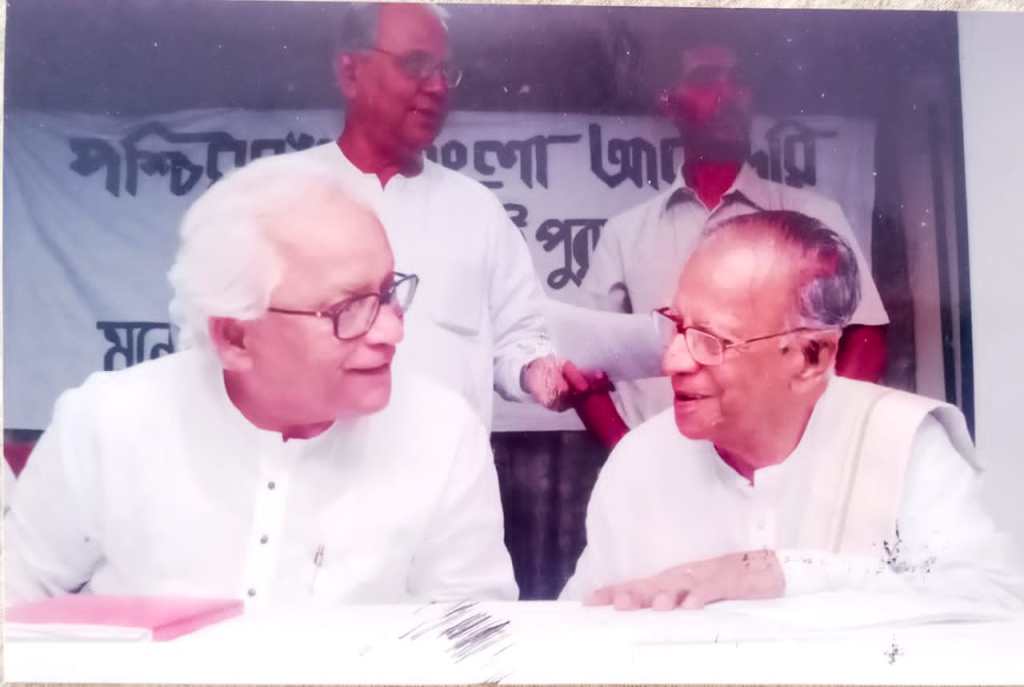
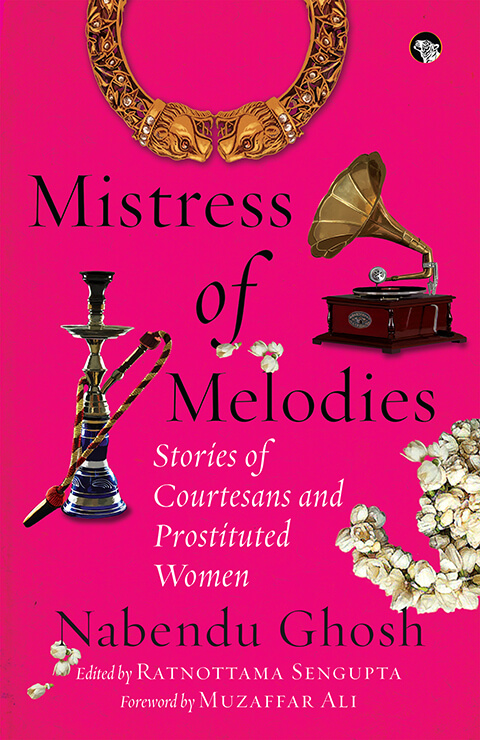
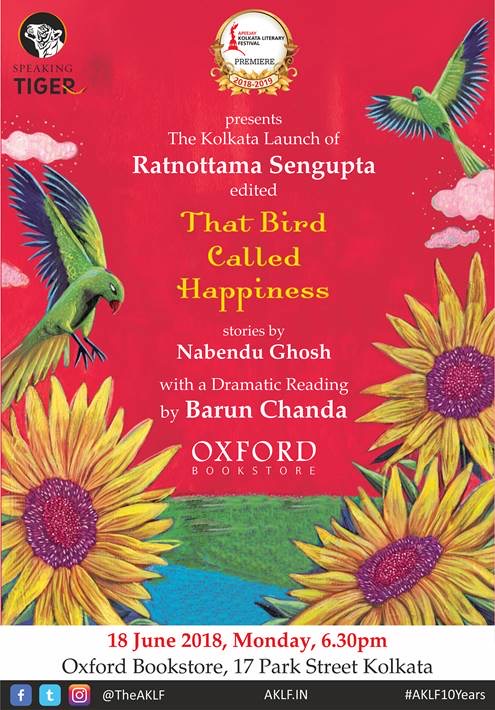
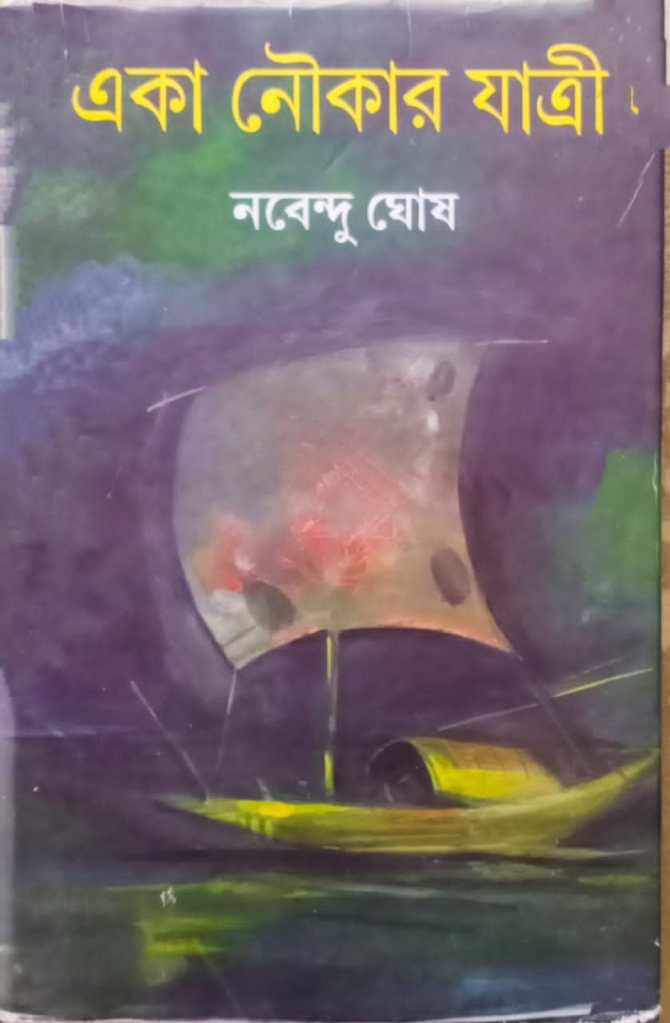
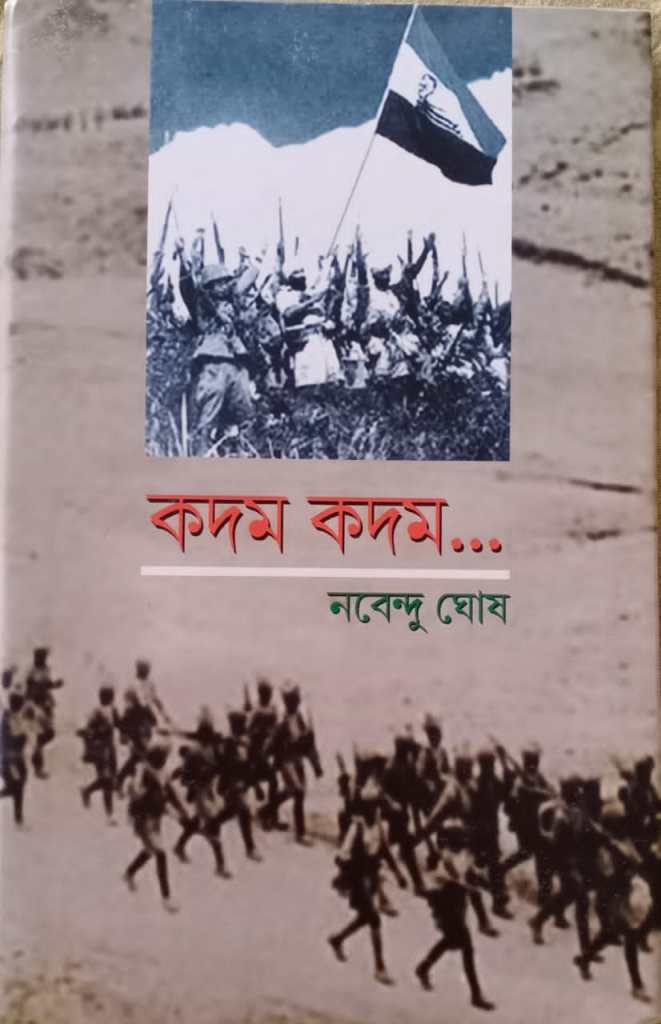
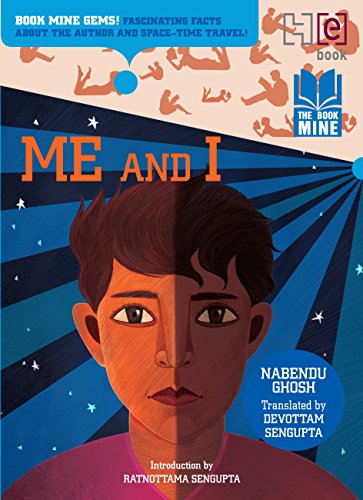
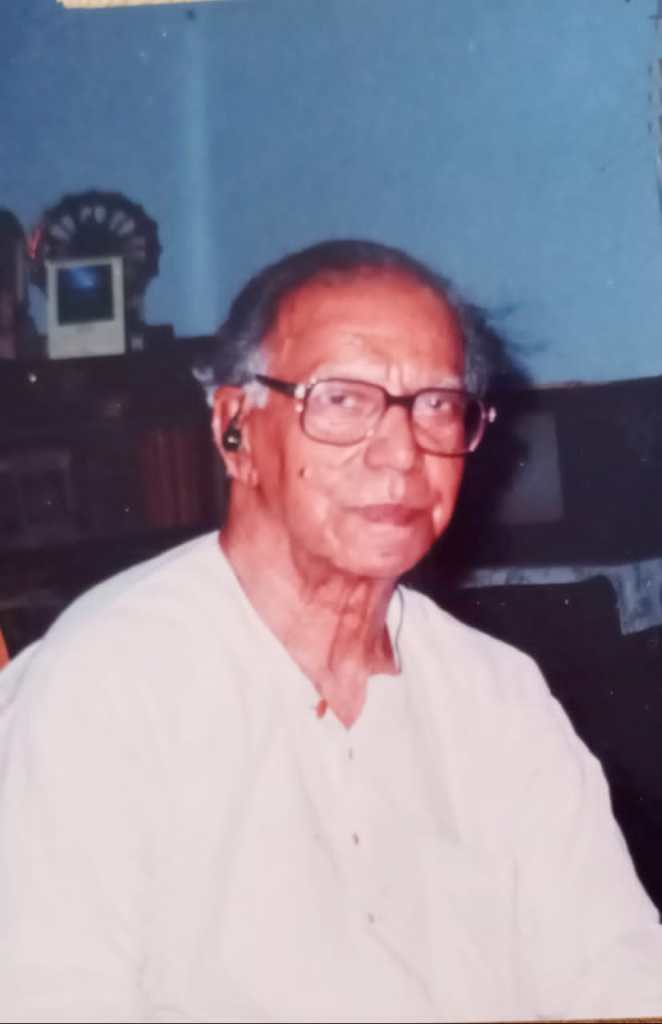
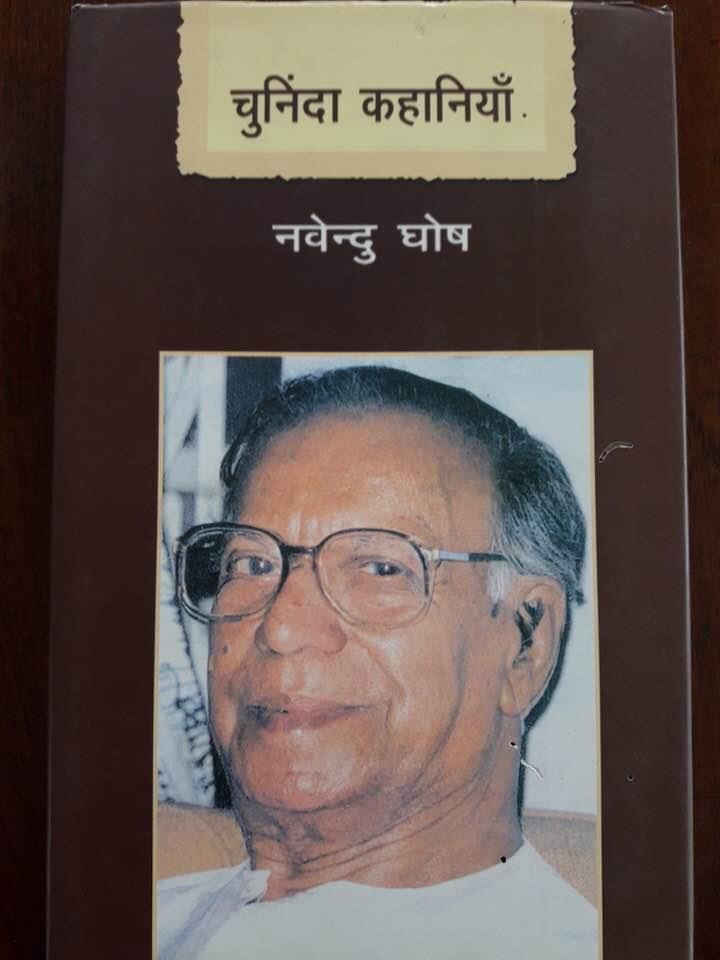
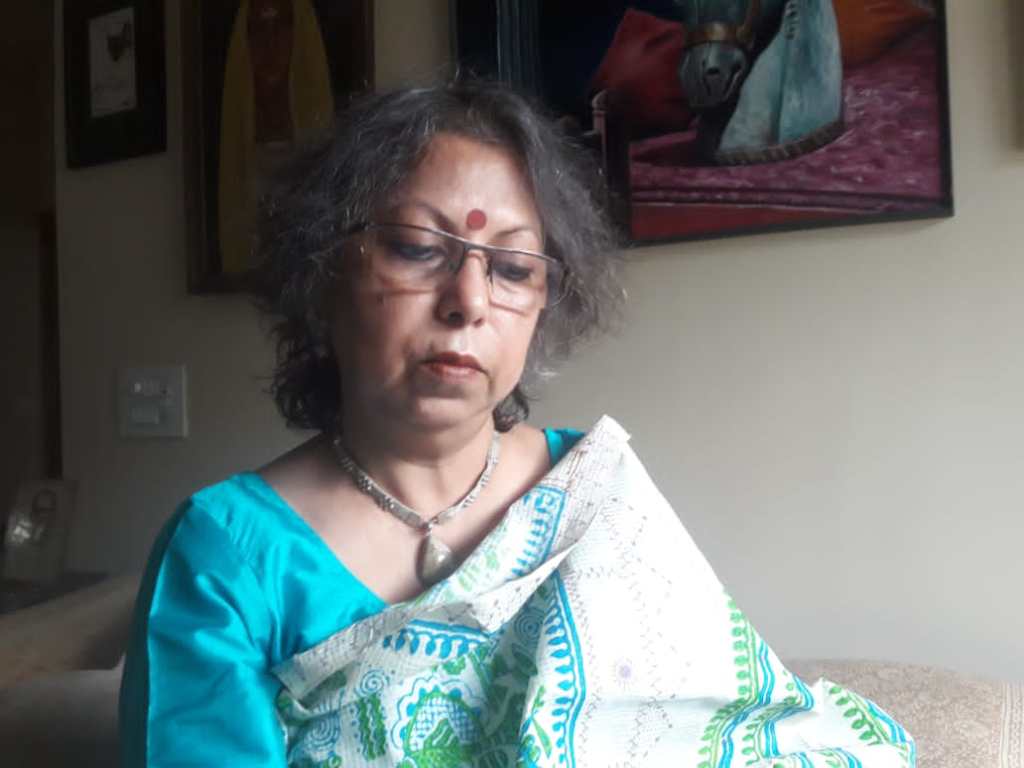
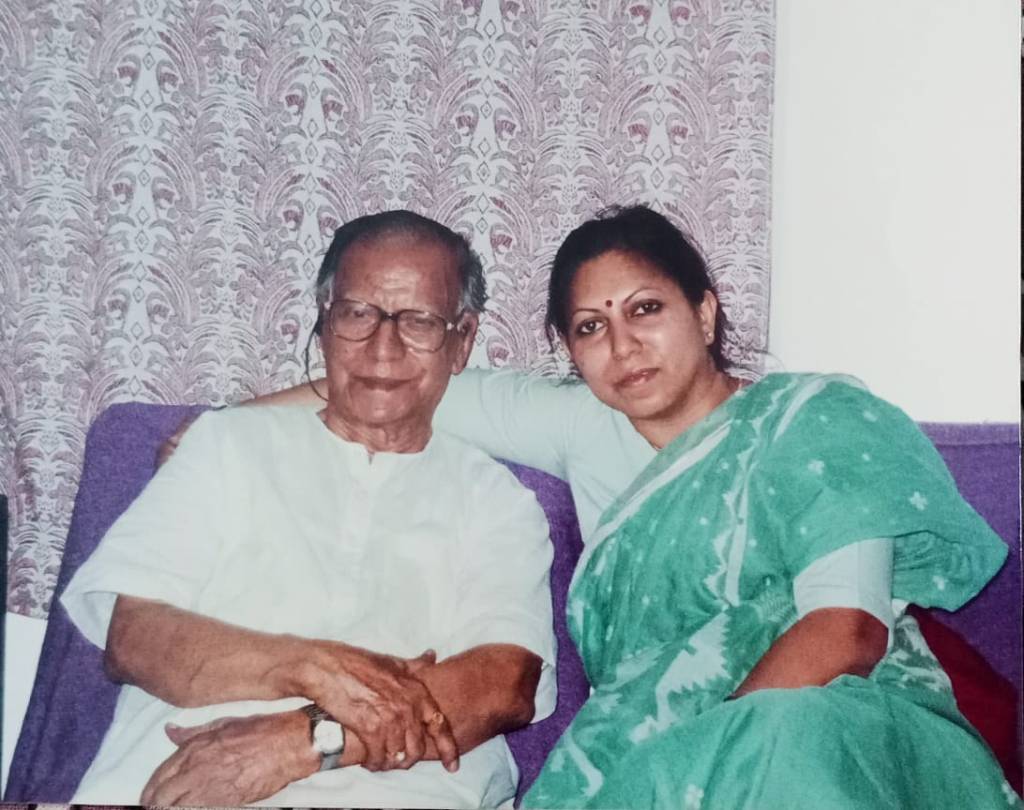
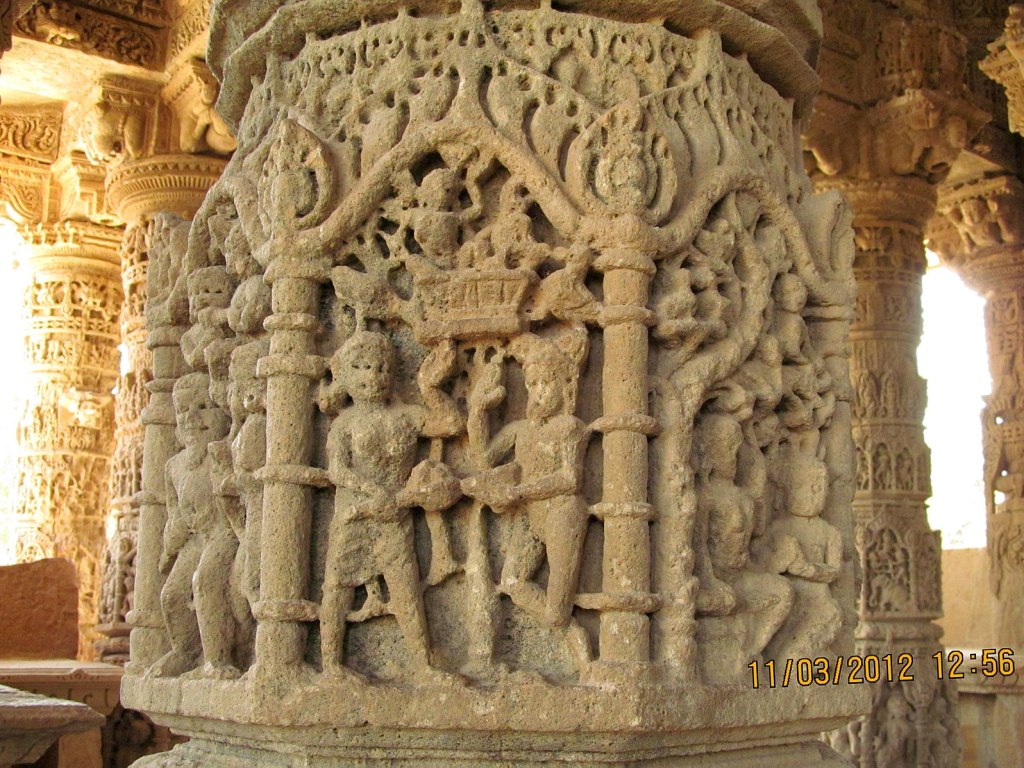


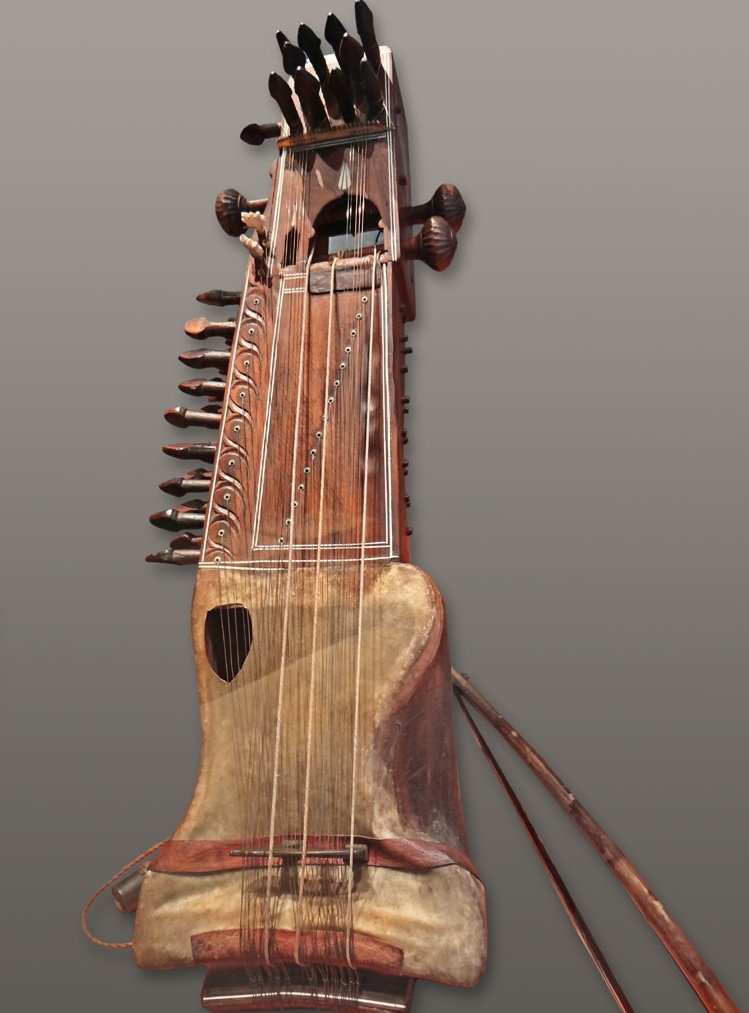



















 Borderless

_(12660029984).jpg)
