In conversation with an American poet,Jared Carter, who has received multiple encomiums like the Walt Whitman Award, the Poets’ Prize, a Guggenheim fellowship and much more. He tells us of his life and how he writes a poem. Click here to read.
In conversation with eminent academic and translator, RadhaChakravarty. Click here to read.
Translations
Two songs by Tagore written originally in Brajabuli, a literary language developed essentially for poetry, has been translated by Radha Chakravarty. Click here to read.
Korean Poetry written and translated to English by Ihlwha Choi. Click here to read.
Poetry in Bosnian from Bosnia & Herzegovina, written and translated by Maid Corbic. Click here to read.
Translation of ‘Dushomoy’ by Tagore, from Bengali to English by Mitali Chakravarty on behalf of Borderless Journal. Click here to read and listen to Tagore’s voice recite his poem in Bengali.
Penny Wilkes takes us Down the Path of Nostalgia with a mix of old and new photography and prose and poetry on how a decade after the end of the Second World War, she started her love affair with photography and nature. Clickhere to read
Marjuque-ul-Haque explores Mughal Lalbagh fort left unfinished in Dhaka, a fort where armies were said to disappear during the Sepoy Mutiny of 1857. Clickhere to read.
Nishi Pulugurtha journeys with her camera on the famed grounds near Fort William, a major historic site in Kolkata. Click hereto read.
Musings of a Copywriter
In Managing Bookshelves, Devraj Singh Kalsi cogitates with wry humour while arranging his book shelves. Click here to read.
Adventures of the Backpacking Granny
Sybil Pretious concludes her adventures this round with a fabulous trip to Generous Indonesia, a country with kind people, islands and ancient volcanoes. Click here to read.
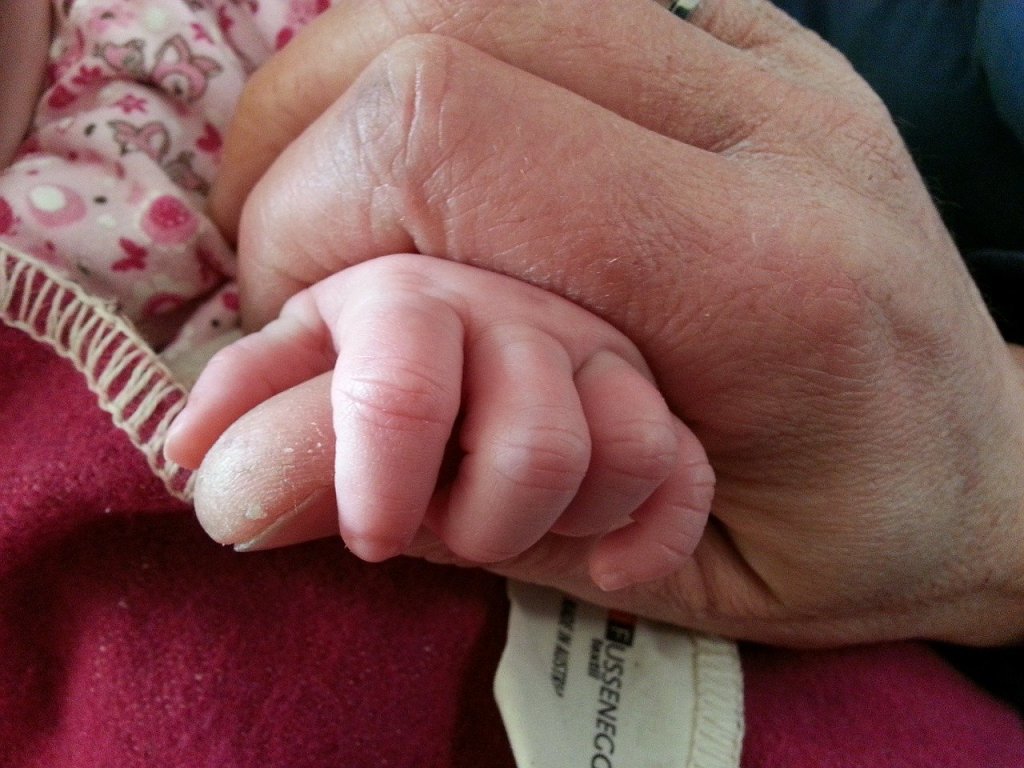
A poignant real life story by Jeanie Kortum on adopting a child. Click here to read
The Literary Fictionist
In Scarecrow, Sunil Sharma explores urban paranoia. Click here to read.
Book Excerpt
The Parrot’s Tale, excerpted from Rabindranth Tagore. The Land of Cards: Stories, Poems and Plays for Children, translated by Radha Chakravarty, with a foreword from Mahasweta Devi. Clickhere to read.
In a tribute to Bollywood legend Dileep Kumar, Ratnottama Sengupta, one of India’s most iconic arts journalists, recollects the days the great actor sprinted about on the sets of Bombay’s studios …spiced up with fragments from the autobiography of Sengupta’s father, Nabendu Ghosh. Click here to read.
“Nothing can be unconditional: consequently, nothing can be free.”


“Liberty means responsibility. That is why most men dread it.”

-- George Bernard Shaw,  Maxims for Revolutionists, Man & Superman (1903)
George Bernard Shaw (1856-1950), a great writer and playwright, used these epigrammatic lines to bring focus on what people thought was liberty or freedom from oppression, from regimes that were dictatorial. While discussing concepts of freedom, one does wonder if political freedom solves all humane issues, occasions we celebrate with great aplomb, like the birth of a nation.
This month started with the observance of July 4th, the date of the American Revolution in 1776 and the publication date of Whitman’s Leaves of Grass in 1855. In between these two years, in 1789, ten days down the line, on July 14th, another significant occurrence has been handed down by history to be celebrated as the Bastille Day— the day prisoners were freed from Bastille, a major event that led to the overthrow of the insensitive monarchy in France, a symbolic resurgence of the common, exploited man that has often been seen as an inspiration for later uprisings to reinforce the concept of democracy or liberté, égalité, fraternité.
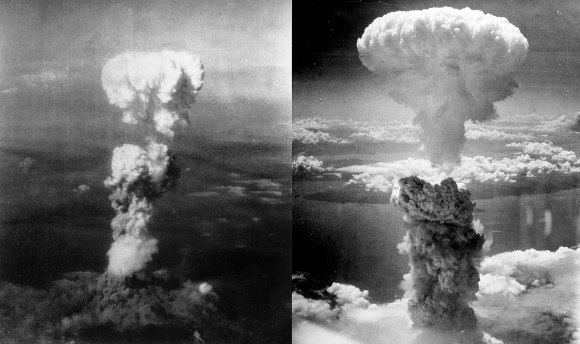
As we move forward in time, towards August, one wonders if liberty attained by these means was good for all fellow humans? France was part of the Allied Forces that with America taking the lead dropped not one but two atom bombs on Hiroshima and Nagasaki on August 6th and 9th, 1945, to end the Second World War. Did the ends justify the means? Reflecting the cry and suffering of these victims, we have poetry from Suzanne Kamata, a well-known writer from Japan. Michael Burch on the other hand has shared poetry with us which shows how the nuclear programme continued unrepentant despite the devastation it caused. One must give kudos to the descendants of the victims of the nuclear blast that they have forgiven the perpetrators, admitted their own hand in the Second World War and moved ahead. In that spirit, we have an essay on peace by Candice Louisa Daquin, who joins the Borderless team as a writer-in-residence.
We have much happening in poetry this time with an interview of American poet Jared Carter, a recipient of number of awards and fellowships, including the Walt Whitman Award and the Guggenheim fellowship. He walks us through how he created the poem ‘Yeti’ (first published in the May edition of Borderless) and talks of the impact of artifacts from China and India on his own thought processes, the impact of Du Fu (712-770) and much more. We have a poem in Du Fu’s style this time by George Freek and an interesting poem with a Chinese title by Carter, a title that can have multiple connotations and yet each seems to fit the poem perfectly.
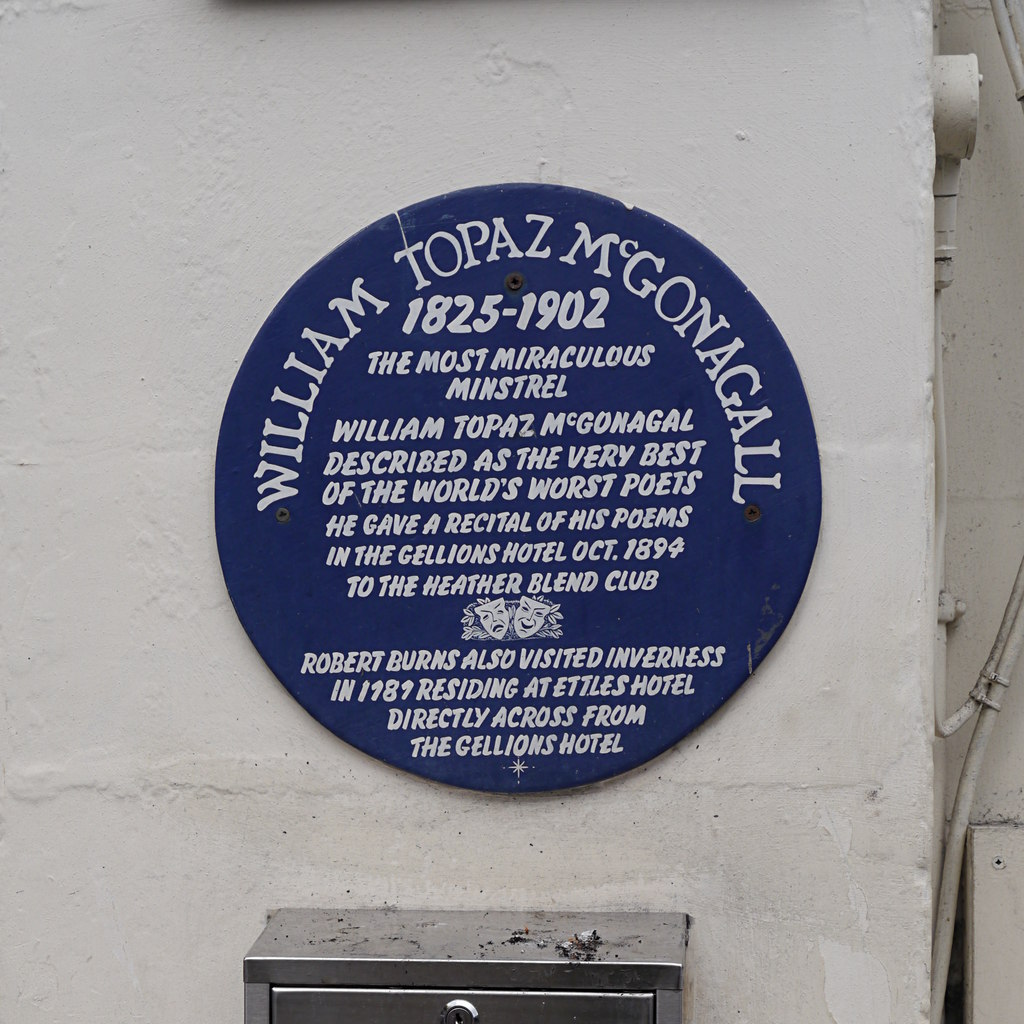
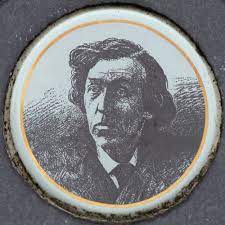
Rhys Hughes has brought humour into our pages with both his poetry and essay on William Mcgonagall, who bore the sobriquet of the worst writer in the world through his life and had things thrown at him when he read his poetry in Dundee. Yet, his work survived the beatings, and he lives on known as the ‘Scottish Homer’.
More poetry by Singaporean poet Marc Nair gives us a glimpse of the little island as viewed by someone who has grown up on it. Poetry is always multi-hued, and we have Lorraine Caputo transport us to a Garífuna village in Honduras. Penny Wilkes takes us ‘Down the Path of Nostalgia’ with a mix of old and new photography, prose and poetry on how almost a decade after the end of the Second World War, she started her love affair with photography and nature. It hovers between poetry and musings, and this time we have a rare musing by Jared Carter too. Devraj Singh Kalsi continues cogitating with wry humour while arranging bookshelves. We also have the backpacking granny visitingIndonesia. Post sharing this trip, our granny — Sybil Pretious — plans a little break from publishing to complete her memoirs.
A riveting flash fiction by Kaiyi Tan celebrates the spirit of conquest in these dark times, weaving into the pandemic lore the quest for personal freedom. Stories this time carry a real life one by Jean Kortum on adoption — her own struggle. But then, stories can be real or unreal – draw a bit from both to reflect bigger truths or create alternates that sink into the human mind as a perceived reality and leave an imprint deep inside the heart, like that of Niles Reddick. My conviction is that some lived experiences of writers seep into each story, whether it is from Bangladesh or India or by our literary fictionist, Sunil Sharma. His narrative continues infused by suspense.
We have a complete translated story of Tagore by Radha Chakravarty as our book excerpt this time. ‘The Parrot’s Tale’, ostensibly part of a children’s collection, reflects Tagore’s response to conventional schooling — a reason for him to start Shanti Niketan perhaps. She has also shared two of her translations of Rabindranath’s songs from Bhanusingher Padabali (1884, Bhanusingh’s verses). Chakravarty generously consented to an interview and has given us a glimpse of her journey as a translator and critic. We also have translated a long poem by Tagore on our pages, a poem that inspires hope, though it was named Dushomoy (1897, Bad Times) finally. The original name had been Swarga Patthe (On the Path to Heaven) as can be seen from a page in his diary. We have been fortunate in finding a recording of his voice reciting the poem in Bengali and the print of a sample page of the manuscript bearing his signature.
We continue with Akbar Barakzai’s poetry translated by Fazal Baloch from Balochi – this time addressed to his daughter reminding for some reason of Nehru’s Letters from a Father to his Daughter — a book I read as a child. In addition, we have translations from Korea and Bosnia & Herzegovina, from where the young poet, Maid Corbic, has taken up the concept of freedom of the self and of the nation, both together.
Keith Lyons from New Zealand in his very brief essay has quoted American novelist William Faulkner, “We must be free not because we claim freedom, but because we practice it.” And perhaps we need to remember this if for no other reason, then, just to maintain our own sanity in these strange, almost unreal times as we attempt to unite as humankind to free ourselves from an unknown and unfathomable virus.
In a more sombre note, last week, untroubled by the virus, a victim of cancer, Bollywood legend Dileep Kumar, aged 98, breathed his last. Ratnottama Sengupta adds an unusual colour to the Borderless Journal with her tribute to this hugely acclaimed actor. In the process, she unfolds for us a brief history of the Indian cinema, and a glimpse of a world that transcends all man made constructs in quest of perfection.
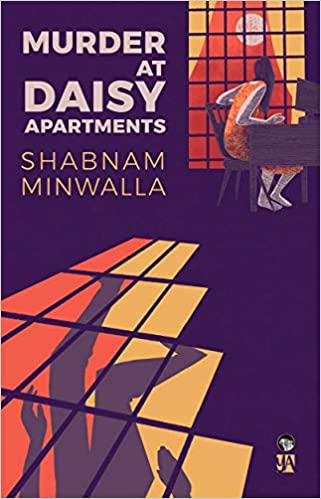
We have an interesting set of reviews this July. Rakhi Dalal has reviewed Anuradha Kumar’s riveting short story collection, A Sense of Time. A murder mystery for young readers, Murder at Daisy Apartments by Shabnam Minwalla, has been reviewed by Gracy Samjetsabam. The Third Eye of Governance–Rise of Populism, Decline in Social Research by Dr N Bhaskara Rao, reviewed by Bhaskar Parichha, seems to be a non-fiction that looks forward to bridging gaps between academia and the real world, a truly felt need. Parichha has also given us an essay on a man who inspired Ian Fleming, the creator of James Bond, to make him a part of his lore, a journalist who moved around all of Asia with equal aplomb and a sense of humour – a truly global citizen called Richard Hughes.
I want to thank all our wonderful contributors for making this edition a reality. And readers, we leave you to explore the unknown… like that place we call outer space. A huge thank you again to not only all our wonderful contributors, our faithful readers but also to the fabulous Borderless team scattered across the world.
Before I wind up, a little bird trills a song of hope in my ear. Business tycoons have started stepping into the mysterious void of space to eventually – let us hope — create affordable travel for common man, though it has started off as an expensive proposition. Will this be an industry that will generate more jobs on and off Earth and find new places for man to inhabit? After all, when George Bernard Shaw wrote his plays and essays, we had yet to cross the frontiers beyond Earth, had never even thought of flying across the world in budget airlines or mining moons!
Will we have a new world, a new outlook and a new set of hopes and aspirations as we stretch the frontiers of our home planet?
Wish you all a wonderful month of reading and thinking.
"Beauty is truth, truth beauty,—that is all
Ye know on earth, and all ye need to know."
Ode to a Grecian Urn, John Keats, 1819
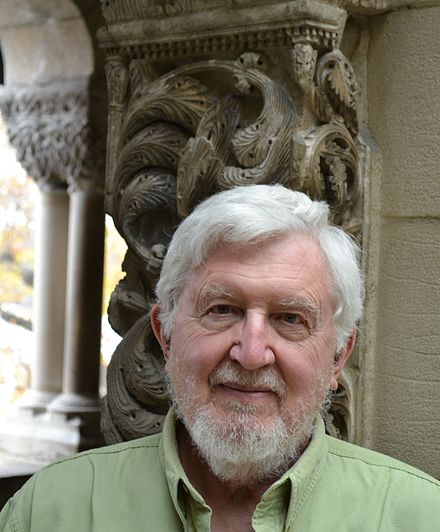
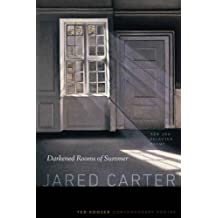
It was a challenge to interview a poet who does not want to talk of his work or of himself. And yet, here was a person whose poetry moved me and from who, I was sure, we had much to learn. I am talking of an acclaimed poet from America, Jared Carter. He permitted me to introduce him with this: “Jared Carter is an American poet who has published seven books of poetry. His volume of new and selected poems, Darkened Rooms of Summer, was issued in 2014 by the University of Nebraska Press. He lives in Indianapolis, Indiana.” If you are more curious about him, his achievements, education and awards, visit his Wiki Page.
Jared Carter
Carter’s poetry is remarkable in giving us glimpses of American life and thoughts, especially as he talks of the wind, the snow and cicadas, as he wrenches poignancy in the hearts of readers bringing out the cruelty in the slaughter of cattle. He draws from the life of common people and their work. At times, he could write of changing a lightbulb and yet create a sense of wonder with his crafting. Despite his obvious Western outlook, he has written of the elusive Yeti – a most beautiful composition. He does tell us in the interview how he wrote it. One would also wonder why he selected to represent ephemerality with such a mythical creature from the East when most of his poems reflect life in America. The poem strangely captures the quality of elusiveness perfectly with extensive crafting.
For him, poetry is more than the first part of the Wordsworthian concept , “the spontaneous overflow of powerful feelings”. It is about working on the concept further “in tranquillity” and making it exquisite, like an artifact. We started this interview by reflecting on artifacts that impacted him. Despite his reluctance to speak of himself, Carter does tell us much about his Victorian upbringing and the impact it has had in making him who he is and writing as beautifully as he does. And perhaps, we can also get a glimpse of why he wrote of the “Yeti”. Let us now step into the world of Jared Carter.
You are fascinated by certain artifacts from India and China. Tell us the story around those. Why do they move you?
I mentioned those two heirlooms — a chess set made of ivory, from China, and a carved wooden box, from India — because they provided my first introduction to those two great cultures, when I was a boy growing up in a small town in Indiana, a state near the center of the United States.
My father had purchased the chess set in September of 1945, in a pawnshop in Chicago, when he was on the last leg of his journey home from serving three years in the war in the Pacific. It was a set of delicate white and red figures, in elaborate costumes, the white side in Victorian dress, the red side in traditional Chinese robes, and on both sides, horses rearing and elephants carrying castles.
If my memory is correct, the attire of the pieces was the very embodiment of colonialism. I was told much later that the set was among several that had been made for the export trade in the nineteenth century.
As a child, of course, I had heard the word “China” and the country was mentioned in school, which I was just beginning at the age of six. But in those days, I had no strong impression of China, nor even much interest in it. In contrast, my father’s ivory chess set was a tangible object that I could look at and admire, and sometimes even be allowed to touch. It had traveled many thousands of miles, from the other side of the world, to be in our home, and was held in great esteem by my father and my older brother, who were both avid chess players.
Once a year, on my father’s birthday, as I recall, they would take down the set from the glass case they had built to display it and play a game of chess with those fantastic pieces. This was always a solemn occasion in our household, and a memorable one. In my young mind, it was an almost ceremonial way of being in touch with a mysterious land that lay far across the seas.
If today, almost eighty years later, I try to think back to my first awareness of China — what it was, where it is, what it might be like — I return to my memory of that chess set. I return to the sight of those delicately carved pieces, in their remarkable formality and fragility, arranged in rows on a chequered board. That image is suspended now, and outside of time, and yet in my mind’s eye, the figures are still waiting to be moved, in ways that will begin once more that most ancient and traditional of games. In this way I was first introduced to the very idea of China’s existence.
By our best estimates, chess was originally invented in India, although I did not know this at the time. In a way, as I look back now, perhaps my memory of the ivory chess set puts me in touch, even now, with something great and lasting about the contributions of both of those cultures.
The elaborately carved box from India had a similar effect on my young imagination. It was a box in which my father’s mother kept her few items of simple jewelry. Sometimes she would let me and my two cousins take it down from her dresser and examine it more closely. There were already a few books in my grandfather’s library about India. We were familiar with the name of that country, and we knew it was quite distant. But the box was an actual object that had come all the way from India, we were told, and that made it special.
The box had been given to my grandmother by her only brother, who was an artist, and who had purchased it sometime in the 1930s, along with a great many other art objects and artifacts with which I would become familiar as I grew older. But this box — again, something made in the nineteenth century — spurred my first awareness of India. I could peer into its carvings of elephants and monkeys and exotic plants and imagine that I was seeing into the heart of that mysterious, far-off place.
India and China of course constitute much, much more than what was suggested by those two objects. But we are speaking of first impressions here, which are precious to a child, and which, in my case, have proved to be lasting.
You had an interesting story about your aunt being in India. Can you tell us about that?
The artist mentioned, my grandmother’s only brother, took as his second wife, in the 1930s, after the death of his first wife, a teacher of English literature, who taught for the Baltimore school system. She had been brought up in India and was evidently the child of missionary parents.
She may actually have been born in India, and most likely left it in about 1923, to attend an American university. She lived until 1959, and I was taken to visit her on several occasions, and when I was old enough to drive, I would ferry my grandmother down to visit her, in a summer studio located in southern Indiana. She spoke with a British accent — perhaps the first I had ever heard — and preferred tea rather than coffee. After the artist’s death, in 1946, she would speak knowingly of his own works of art, and of the various items and artifacts he had collected during his lifetime.
Those things were from many cultures, many eras — a handsome 15th-century refectory table from Italy, a pair of large, nineteenth-century ceramic jars from China, an unglazed wine vessel that may have been Etruscan, a variety of pieces in English pewter, and so on. The spacious, high-ceilinged, two-story building had been a lodge hall before it was converted into the artist’s studio by my father and grandfather. It was utterly chock-a-block with beautiful objects and gorgeous paintings.
On a number of occasions I was allowed to wander through those rooms on my own, and to consider those different objects. There was no teacher, no guidebook, except for the widow’s occasional comment about where this or that artifact had come from, or when he had acquired it. I simply looked at what was there. This was a part of my informal introduction to art, and exotic places, a tutelage that had begun with the chess set and the carved box. If nothing else, the experience may have made me into a lifelong museum goer, especially when museums of art are available.
But you asked about my Aunt Carolyn, as we called her, and her origins in India. She sometimes referred to that Indian childhood, although unfortunately I remember little of what she said. I do recall her speaking of a time in the early 1920s when she witnessed a crowd of Indian nationalists demonstrating in a non-violent manner. Raj policemen carrying lead-weighted wooden cudgels waded into the crowd, shattering the kneecaps of the demonstrators with their clubs. The authorities knew, she said, that a broken kneecap was not a mortal injury, but that it would render a demonstrator unable to walk for months on end, thus preventing that person, for a time, from joining future demonstrations. To say nothing of discouraging him from joining any demonstrations at all. Aunt Carolyn seemed to have a very low opinion of the British.
Are you familiar with Indian and Chinese literature?
Only as a reader and an amateur. In about 1961 a younger sister brought home from college, as a houseguest, an Indian student she had met. He was very polite and serious, and generously gave me a copy of a translation of the Gita, which I still have, and which was my first introduction to the classic literature of India. I’ve been sampling that literature ever since, reading essays and an occasional book, attending a lecture or two, taking in a traveling exhibition. So, I have a layman’s understanding of subcontinent history and culture, but it is no more than that, and I am far from being well-versed.
My introduction to the history, art, and culture of China came slightly earlier and has been a bit more extensive. As an undergraduate at Yale, I studied history of art with the scholar Nelson Ikon Wu. It was an introductory course, but he placed special emphasis on landscape paintings of the Southern Song, and with that influence, in later years, I seem to have gone on to develop an interest in many things Chinese, especially art of the T’ang dynasty.
Also while an upperclassman at Yale, I had the good fortune to make the acquaintance of a young graduate student from Clare College, Cambridge, named Jonathan Spence, who subsequently became a well-known scholar of Chinese history and culture. Over the years, my conversations with Jonathan, and my having read his numerous books, have formed an important part of my informal education.
For two semesters in the 1980s I served as a visiting writer at Purdue University in West Lafayette, Indiana, where I met and talked with Professor Sanford Goldstein, the eminent Japanese scholar and specialist in tanka, who for many years now, following his retirement, has resided in Japan. Thanks to Professor Goldstein, and one of his students with whom I am still in touch, and not immediately, but gradually, my awareness of Japanese literature in translation has increased, along with my curiosity about haiku and tanka in English. I have published a few haiku and tanka, and have corresponded with other scholars in that field, such as Professor Bryce Christensen, who is only recently back from a year of lecturing in Taiwan. By virtue of my acquaintance with these talented individuals, I hope I have developed a better understanding of both Japanese and Chinese literature — especially the poetry of the T’ang dynasty, in translation, for which I have a great liking.
Do you read translations? What is your opinion on the role of translations?
Without translators and translations, we would be utterly lost. For example, whatever I am privileged to know about the poetry of Li Bai (701-762) and Du Fu (712-770, also spelt as Tu Fu) and all of their marvelous contemporaries, I know their poetry only because they reach me through various translations. So, I have accumulated a small library of translated works by the major world poets — Sophocles through Dante, Basho to Neruda. Every serious poet does this. I would like to think we are perhaps the wiser for it.
Any poet writing in English is immeasurably indebted to Arthur Waley for his masterful translations. Another translator I might mention is the American, Kenneth Rexroth, who happens to have been a fellow Hoosier — which means he was born in the state of Indiana. Rexroth emigrated eventually to California, where after World War Two he became an eminent poet, scholar, and translator of poetry from both the Chinese and Japanese traditions.
I possess a number of Rexroth’s books, and thanks to them, and to other translations by many different hands, I have come to have a great admiration for the T’ang poet Du Fu. He is my favourite, perhaps the poet that I return to, most frequently, in my own reading. In the following quotes, Rexroth, in a book published in 1971, employs a transliteration of the poet’s name different from the one in general use today. Rexroth alleges that Du Fu is
in my opinion, and in the opinion of a majority of those qualified to speak, the greatest non-epic, non-dramatic poet who has survived in any language. Sappho, for instance, can hardly be said to have survived. He shares with her, Catullus, and Baudelaire, his only possible competitors, a sensibility acute past belief.
I agree with that, except the part about his competitors, since there are a few more who might be mentioned. But the remark about Du Fu having “sensibility acute past belief” — surely that is apt. And for me, as for Rexroth, there is even more to Du Fu. It is something almost personal. Rexroth attempts to sum it up:
Tu Fu comes from a saner, older, more secular culture than Homer and it is not a new discovery with him that the gods, the abstractions and forces of nature, are frivolous, lewd, vicious, quarrelsome, and cruel, and only man's steadfastness, love, magnanimity, calm, and compassion redeem the night bound world. It is not a discovery, culturally or historically, but it is the essence of his being as a poet.
Rexroth goes on to say how Du Fu’s writing has affected him as a person, an admission with which I happen to agree, and have found to be true in my own life:
I am sure he has made me a better man, as a moral agent and as a perceiving organism. I say that because I feel that . . . the greatest poetry answers out of hand the problems of the critic and the esthetician. Poetry like Tu Fu's is the answer to the question, "What is the purpose of Art?"
What writers do you read? Why?
As a young person, in university and later, dreaming of becoming a writer, I read a great many novels and short stories, and was initially drawn to the work of the American novelist, William Faulkner.. The world he created seemed recognizable to me, and authentic. I hoped to create a similar world. Other American authors I have admired, and tried to learn from, have been Sara Orne Jewett, Willa Cather, and Sherwood Anderson. But there are dozens more, and dozens more European and world writers whom I admire.
I have been fortunate, too, in having known Joseph Love, a prominent historian of Brazilian history, and author of a splendid study of a remarkable moment in Brazilian history, The Revolt of the Whip. He and I were undergraduates together (he was at Harvard), and I have known him ever since, and through his many gifts and thoughtful recommendations, I have been introduced to a great deal of the literature and culture of Central and South America.
In the last few years most of my reading has been in history. I am a great admirer of the British historian Richard J. Evans, whose history of the Third Reich is unrivaled. Another of my favorites is John Julius Norwich and his history of the Byzantine Empire. I am extremely fond of Shelby Foote’s history of the American Civil War. And at the moment I am reading the late Tony Judt’s Postwar, a history of Europe from 1945 to the near present and am finding out how little I knew about that period, even though I lived through it.
These days I spend much more time reading history than either fiction or poetry. I have a large bookcase full of nothing but books about classic Egyptian history and art, and I have a smaller group of books about Meso-American prehistory and culture, and particularly Mayan art. I am simply curious about such matters.
Which are your favourite poets? Why?
I would have difficulty naming even a few. I have attempted to read them all, which of course is impossible, since new ones appear every day, and one is constantly discovering earlier ones. It has never seemed acceptable to me to list the names of poets who “influenced” me or the way I write. There are a few poets whose work I keep at my bedside, and whose books I still read. Two in particular are poets writing primarily in German, Rilke and Hölderlin. Among Americans, Frost. Among the English, Hardy and Larkin.
What do you learn from these writers? Do they impact you in any way?
I really don’t know. They’re just writers that I particularly like, and find myself re-reading, over the years. Kafka is another. So is Flaubert. I continue to read Henry James and Turgenev — all of those persons on whom, as James pointed out, “nothing is lost.”
Why is it you are reticent to talk of your work and poetic sensibilities?
I seem to be naturally reticent, even introverted. As a child I spent a certain amount of time with my grandmother and with a great-great aunt, both of whom were born in the 1870s. Both were thoroughgoing Victorians who exemplified the traditional virtues — thrift, honesty, industry, steadfastness. And perish the thought of anything vainglorious. I think a bit of that rubbed off on me.
I’ve done a little talking about myself in this interview, but only because you asked. My parents, too, taught me that one should avoid talking about oneself to others. It is also a professional attribute — physicians and attorneys traditionally do not advertise or promote themselves — and although I do not consider myself a professional in that sense, I can understand the reasoning. Professionalism in any undertaking is not a matter of office, title, or entitlement; it is a standard to be lived up to.
At university, it was explained to me that in polite society one does not discuss politics, religion, or how one earns a living. Ezra Pound says somewhere that you can always spot the bad critic if he focuses on the poet and not the poems. Add all of that up, and I seem to have little to say about myself or what I do.
I really loved your poem “Yeti”. You had said that while writing “Yeti” you disposed of a number of lines and picked a few. Would it be possible to share this part of your poetic process with us?
Well, again, “poetic sensibilities,” “poetic process” — I am not a critic, scholar, or professor, and I have no insights to offer about such matters. It is not my business to do so. Instead, I make poems, and I have been privileged to have published a few of them. So that our readers will know what we’re referring to, here is my poem “Yeti,” which your journal kindly published, for the first time, in its May 2021 issue. The poem conjures up the mysterious creature of the Himalayas, whose existence has never been verified, but which continues to haunt the imagination:
            Yeti

Tell me again that nothing’s there,
          that never was
At all, except in places where
          things slip, or pause,

Yet register, on some high ridge
          where something moves
And then is gone. As though a bridge
          of snow should lose

Its grip, and drop away, but leave
          a shadow where
Such vanishing might still deceive
          in that thin air.
The first thing one notices about this poem, which is in a relatively new form called an Alexandroid, are its formal aspects — its lines end with rhymes, and it has repetitive stanzas and lines of a predictable length. A second thing one notices is its brevity — twelve lines in all, and a total number of syllables amounting to half of those in a typical sonnet in English. It is a small poem, then, in a range of length favoured by the American poet, Emily Dickinson. Longer than a haiku or tanka, but still very brief.
A third characteristic, perhaps not immediately apparent, is the way in which the “sh” sound in the closing lines — should, shadow, vanishing — suggests the texture of something slipping away. Or the sound of a bridge of snow suddenly collapsing into a crevasse. In certain cultures, it is the same sound we make when we put a forefinger to our lips to signal for silence — shhhh.
That sound is followed by the stark, icy i’s and e’s, at the poem’s very end, of might, deceive, thin, and air. The trail has gone cold, the Yeti has disappeared. That poetry can suggest strange moments like this, with such minimal input, is one reason why I like it so much.
In the making of such a poem there is, literally, no place to hide. Whoever reads it will be affected, consciously or not, by the smallest detail. It goes almost without saying that to make a poem within these parameters, the writer must, to borrow your phrase, “dispose of a number of lines and pick a few”. This is inescapable. There is simply no room in which to say whatever one likes, or to run on interminably. No room for the vainglorious.
Somewhere there may be a poet who can write a similar poem without hesitation, as though copying it out, not pausing to substitute or change a single word.
I suppose I do the opposite. I experiment and try out many different words, many lines, many drafts, in order to arrive at what I believe to be a poem. In doing this I don’t think I am any different from most other poets.
It has been pointed out that one interesting thing about poems is the way they can talk about one thing while implying something entirely different. “Yeti” is presumably about an elusive, folkloric creature, but at the same time it is talking about poetry, and how it disappears even while you are reading it, and sometimes you are not sure about what you have just read. Something still seems to be there, even while it vanishes into thin air.
What is it you look forward to?
I look forward to making more poems, and more books of poems. There’s an old American saying, from the days of vaudeville, which holds that “You ain’t seen nothing yet.”
But clearly I am an old man of the forest now, and I think the best claim from an aging artist, about what can still be accomplished in the years ahead, is by the Japanese painter and printmaker, Hokusai. Since we’re discussing art and culture of the East, I’ll suggest that his marvelous statement, in his colophon to One Hundred Views of Mount Fuji, is a perfect way to end this interview:
From the age of six, I had a passion for copying the form of things and since the age of fifty I have published many drawings, yet of all I drew by my seventieth year there is nothing worth taking into account. At seventy-three years I partly understood the structure of animals, birds, insects and fishes, and the life of grasses and plants. And so, at eighty-six I shall progress further; at ninety I shall even further penetrate their secret meaning, and by one hundred I shall perhaps truly have reached the level of the marvelous and divine. When I am one hundred and ten, each dot, each line will possess a life of its own.
In some translations, Hokusai adds, at the very end, with reference to what he has just affirmed, this invitation: “I beg those who live as long as I to see if I do not keep my word.”
Hokusai lasted until he was 88. That final sentence has always seemed to me to be a blessing he is bestowing on readers and admirers — a wish, for whoever might be listening, that those persons too might have long and fruitful lives.
I would hope Hokusai’s spirit still lingers, and that I might join him in wishing that for you, Madame Chakravarty, and for all of your journal’s most admirable readers, there on the other side of the planet Earth. Thanks to all of you for allowing me to come into your world.
Thank you very much Mr Carter for your kind words.
Click hereto read the more from Jared Carter in Borderless Journal.
(This is an online interview conducted by Mitali Chakravarty.)
.
PLEASE NOTE: ARTICLES CAN ONLY BE REPRODUCED IN OTHER SITES WITH DUE ACKNOWLEDGEMENT TO BORDERLESS JOURNAL
Jared Carteris an American poet with seven books of poetry. He is the recipient of numerous awards, which include the Walt Whitman Award, the Poets’ Prize, a Guggenheim fellowship, and two fellowships from the National Endowment for the Arts.
Three moving poems on the nuclear blasts that ended the Second World War and the lives of many innocents in Hiroshima & Nagasaki on August 6th and 9th, 1945, respectively.
Hiroshima School for GirlsAugust 6, 1945
The day began like any other:
all of us lined up for morning
drills beneath a clear sky,
mock wooden rifles propped against
our shoulders. Suddenly there was a sharp
blue light like a camera flash.
Teacher cried
“Down!”
We tossed our
guns aside, dropped to
the ground, thumbs in
ears, fingers over
eyes to protect
them from damage
just as we’d practiced.
(Published first in Skipping Stones)
At that Moment
I was in the schoolyard
singing the Student Brigade song
when a B-29 flew overhead.
A verse appeared in my mind:
Madness reigned
on the the bloody
battleground of Saipan.
After the flash
silence
the city, destroyed
transformed into ruins.
Next thing I knew
I was sitting in a field
barefoot
gazing at clouds of dust
houses without roofs.
Rain began to fall
drops drumming on
the ground, my body
staining my uniform
with brown spots.
Everything around me was
painted gray.
Burnt people lay along
the riverbanks. A woman
stared from swollen sockets
her hair charred
only a wisp of clothing on
her shoulders. From her
twisted mouth:
My child! My child.
My Daughter
Etsuko left home wearing
baggy pants and a straw hat,
school bag on her back.
At 8:15
flash
explosion
inferno
Men and women
burnt, drooping
drifting from Hiroshima
like sleepwalkers.
We waited.
Etsuko didn’t return.
Clinging to hope we searched
through smoldering rubble
heaps of corpses, among
ravaged victims pleading
for water, begging for help
naked women stooping at
bridge girders.
At 6 p.m.
we headed home.
Someone said, “Etsuko’s here!”
But she was scorched, every
limb swollen, her eyes blinded.
“I was with a friend,”
Etsuko said. “We went
west with the wind
crawled across the train
bridge, came back to Koi.”
I brought her to the
emergency clinic where scores
were treated, died anyway.
The next day, Etsuko
opened her eyes. A miracle:
“I can see!” she said.
”Good. We’ll be going
home soon.”
Etusko gazed at me
and departed this world at
10:15.
(“At that Moment” and “My Daughter” were first published in When Women Waken)
Suzanne Kamatawas born and raised in Grand Haven, Michigan. She now lives in Japan with her husband and two children. Her short stories, essays, articles and book reviews have appeared in over 100 publications. Her work has been nominated for the Pushcart Prize five times, and received a Special Mention in 2006. She is also a two-time winner of the All Nippon Airways/Wingspan Fiction Contest, winner of the Paris Book Festival, and winner of a SCBWI Magazine Merit Award.
.
PLEASE NOTE: ARTICLES CAN ONLY BE REPRODUCED IN OTHER SITES WITH DUE ACKNOWLEDGEMENT TO BORDERLESS JOURNAL
Lucifer, to the Enola Gay

Go then,
and give them my meaning
so that their teeming
streets
become my city.

Bring back a pretty
flower—
a chrysanthemum,
perhaps, to bloom
if but an hour,
within a certain room
of mine
where
the sun does not rise or fall,
and the moon,
although it is content to shine,
helps nothing at all.

There,
if I hear the wistful call
of their voices
regretting choices
made
or perhaps not made
in time,
I can look back upon it and recall,
in all
its pale forms sublime,
still
Death will never be holy again.


Bikini

Undersea, by the shale and the coral forming,
by the shell’s pale rose and the pearl’s bright eye,
through the sea’s green bed of lank seaweed worming
like tangled hair where cold currents rise ...
something lurks where the riptides sigh:
something old, and odd, and wise.

Something old when the world was forming
now lifts its beak, its snail-blind eye,
and, with tentacles like Medusa’s squirming,
it feels the cloud blot out the skies’ ...
then shudders, settles with a sigh,
understanding man’s demise.
.
Michael R. Burchhas over 6,000 publications, including poems that have gone viral. His poems have been translated into fourteen languages and set to music by eleven composers. He also edits The HyperTexts (online at www.thehypertexts.com).
.
PLEASE NOTE: ARTICLES CAN ONLY BE REPRODUCED IN OTHER SITES WITH DUE ACKNOWLEDGEMENT TO BORDERLESS JOURNAL.
William Topaz McGonagall (1825-1902), the son of an Irish handloom weaver, was such a bad poet that he has been hailed as a genius. His knack of bungling every subject he ever attempted, of making even the most tragic events seem funny, is almost unique in literature.
Born in Edinburgh in 1825, McGonagall was drawn to the theatre and first tried his hand as an actor. His performance of Macbeth was a classic of improvisation. Having been run through by Macduff, he refused to die and continued declaiming impromptu verses until a well-aimed kick from the assassin finally brought him to the ground.
His true vocation, however, lay with the written word. He received a fatal bite from the muse of poetry one day in 1877, at the age of 52. “A flame,” he said, “seemed to kindle up my entire frame and I felt so happy, so happy I was inclined to dance.”
This inclination to dance did not impede his literary output. Once he began writing, he found it difficult to stop. His themes were as grand as his rhymes were banal. He bathed daily in pathos and bathos, almost drowning in the tub that he enjoyed thumping. He quickly produced over two hundred poems, nearly all of them about battles, shipwrecks or other disasters, the heroes of which were often squashed.
So on comes the iron-horse snorting and rumbling
And the mountain-torrent at the bridge kept roaring and tumbling;
While brave Carl keeps shouting, The bridge is down! The bridge is down!
He cried with a pitiful wail and sound.
But, thank heaven, the engine-driver sees the red light
That Carl keeps swinging round his head with all his might;
But bang! bang! goes the engine with a terrible crash,
And the car is dashed all to smash.
Whenever human folly was responsible for a catastrophe, McGonagall was quick to point it out. In ‘The Tay Bridge Disaster’, one of the most famous of his creations, he rounded on the architects and engineers with astonishing hindsight, his tone a curious mixture of pragmatic pomposity and melodramatic modesty. The ending of that epic, with its engineering advice, is especially poignant.
Oh! ill-fated Bridge of the Silv’ry Tay,
I must now conclude my lay
By telling the world fearlessly without the least dismay,
That your central girders would not have given way,
At least many sensible men do say,
Had they been supported on each side with buttresses…
In the handful of his poems not concerned with violent loss of life, but only with relatively peaceful loss of life and its aftermath, McGonagall plumbed shallows of solemn profundity rarely waded into before or since. His elegiac but often sadly overlooked ‘Funeral of the German Emperor’ contains one of his most remarkable stanzas.
The authorities of Berlin in honour of the Emperor considered it no sin,
To decorate with crape the beautiful city of Berlin;
Therefore Berlin I declare was a city of crape,
Because few buildings crape decoration did escape.
Unable to find a publisher, McGonagall became his own literary agent and publicist. On one occasion, he even tramped all the way to Balmoral Castle to offer copies of his poems to Queen Victoria in person. But the Queen refused to see him and he had to settle for selling them to the policeman at the gates, one of his few occasions in his career when he earned money from his work.
He spent the rest of his life seeking recognition of his talents. At poetry readings in Dundee, he tormented listeners with his lyrics until they had to resort to throwing peas and other vegetables at him. When these items were abandoned in favour of slushier and harder missiles, he decided it was time to leave Dundee.
I intend to leave Dundee,
Owing to the treatment I receive,
Which does my heart sadly grieve.
Every morning when I go out
The ignorant rabble they do shout
‘There goes Mad McGonagall’
In derisive shouts, as loud as they can bawl
And lifts stones and snowballs, throws them at me.
In the spring of 1890, McGonagall began to suffer headaches. He went to see a doctor who, in the words of a local journalist, “put a tube up his nose and blew into it as if he were performing solo on the trombone”. The trouble was diagnosed as an air cavity blocked by writing poetry. But McGonagall did not take the hint.
McGonagall seems to have remained undaunted by all the adverse criticism he received in his lifetime. He invariably denounced all his critics as “vendors of strong drink”. He was convinced that the world would one day recognise him as the equal of Shakespeare. In some ways, his faith was justified. He has earned the sobriquet ‘The Scottish Homer’ and all his books are now in print.
Indeed, his poem ‘The Famous Tay Whale’ has actually found its way into a respectable anthology. George MacBeth, editor of the Penguin Book of Victorian Verse, defends the poem by insisting that McGonagall “was the first and perhaps so far the only widely known naive poet, and as such he deserves attention”.
McGonagall died in 1902. Many claim that it simply never occurred to him that poetry is an art that demands at least some skill. Others insist that he truly believed he had that skill in abundance. I am inclined to the latter view, but I also sometimes wonder if in fact he knew exactly what he was doing and has fooled us all.
Another consideration: If the purpose of poetry is to entertain, then McGonagall must rank as one of its great masters. There can be no better tribute than the ‘Ode’ composed by the students of Glasgow University in 1891, a deliberate parody of his style.
Among the poets of the present day
There is no one on earth who can possibly be able for to gainsay
But that William M’Gonagall, poet and tragedian,
Is truly the greatest poet that was ever found
above or below the meridian.
Rhys Hughes has lived in many countries. He graduated as an engineer but currently works as a tutor of mathematics. Since his first book was published in 1995 he has had fifty other books published and his work has been translated into ten languages.
.
PLEASE NOTE: ARTICLES CAN ONLY BE REPRODUCED IN OTHER SITES WITH DUE ACKNOWLEDGEMENT TO BORDERLESS JOURNAL
No(For my daughter Laleyn)
I wish on your lips
forever stay the word "No"
It's the word
all glory and delight in life
pour in from
Hearken to the words of your old father
Merrily drink the chalice of love
But to venomous hearts say "No"
To goblets of hatred say "No"
To all tyrants of your age say "No"
Go ahead and embrace the tides
that alter the course of life
But to the rule of death say "No"
Always raise aloft the flag of truth
but to lies and falsehood say "No"
Give a warm welcome to the light
but to the curse of darkness say "No"
I wish on your lips
forever stay the word "No"
It's the word
all glory and delight in life
pour in from
The sweetest melody of nature
It’s the secret of life’s beauty
(“No” was the first word that Laleyn learnt and she continued to utter it for many days. Poet)
Akbar Barakzai was born in Shikarpur, Sindh in 1939. He is ranked amongst the proponents of modern Balochi literature. His poetry reflects the objective realities of life. Love for motherland, peace and prosperity and dignity of a man are the recurrent themes of his poetry. His love for human dignity transcends all geographical and cultural frontiers. Barakzai is not a prolific poet. In a literary career which spans over half a century, Barakzai has brought out just two anthologies of poetry, Who can Kill the Sun and The Lamps of Heads, but his poetry has depth and reaches out to human hearts with its profundity. Last year, Barakzai rejected the Pakistan Academy of Letters (PAL) award, quoting the oppressive policies meted out to his region by the government as the reason.
Fazal Baloch is a Balochi writer and translator. He has translated many Balochi poems and short stories into English. His translations have been featured in Pakistani Literature published by Pakistan Academy of Letters and in the form of books and anthologies. Fazal Baloch has the translation rights to Barakzai’s works and is in the process of bringing them out as a book.
.
PLEASE NOTE: ARTICLES CAN ONLY BE REPRODUCED IN OTHER SITES WITH DUE ACKNOWLEDGEMENT TO BORDERLESS JOURNAL
Murder in Daisy Apartments (2021) by Shabnam Minwalla is a young adult murder mystery story set in Colaba, Mumbai, India during the COVID-19 lockdown days.
Shabnam Minwalla has worked as a journalist with the Times of India. Her debut novel, The Six Spellmakers of Dorabji Street (2012) won the Rivokids Parents’ and Kids’ Choice Awards. She writes children’s fiction now. She has written a number of children’s story books including the Nimmi series, and a forward to an edition of Little Women brought out by Speaking Tiger Books.
Murder in Daisy Apartments starts on the forty-third day of the lockdown when 78-years-old Mr. Sevnani a resident of Lily Apartments, who had a bad heart, and an even worse temper was mysteriously hospitalized. The emergency that led him to be rushed to the hospital did not come as a surprise to the residents. Sevnani’s case was one in which a swarm of men wearing masks and sinister blue safety suits took him away in an ambulance.
But it happened again. On the forty-fourth day, a BMC (Brihanmumbai Municipal Corporation) van drove to the housing complex to pick up a dead body. People grew apprehensive. The shock deepened as residents came to know that Raghunath, a long-time resident of these apartments had been evicted by Baman Marker, the Chairperson of the Daisy and Lily Apartments as he had tested corona positive, and the complex had been declared a containment zone. During such severe lockdowns, movements were restricted.
On the forty-sixth day, Mr. Marker was found poisoned in his apartment. Since he was murdered during the pandemic lockdown, the killing could have only been masterminded by a resident of the complex. Nandini Venkat, a 15-year-old murder mysteries enthusiast, who calls herself and her twin brother as “standard issue South Bombay brats” is glued to the details of this “OMG (o my God) moments” in the history of Daisy and Lily Apartments. She joins the dots to detect and solve Marker’s murder mystery. Honing her investigative skills, with keen observation of people and the chronology of events, Nandini turns into a detective on the fiftieth day of the lockdown. Her sunny, social and festival loving brother, Ved, and her best friend, Shanaya, join her to find out more about this mysterious death.
Who could have murdered Baman Marker? Was it the Kurians, the Carvalhos, the Khambatas, the Habibullahs, the Lambas, the Burmans, the Kapadias, Lina Almeida, Maria, Alfonso, Mr. Shetty or Chemmen Saab? Who was the mysterious man that Mrs. Kurain saw early in the morning of the fateful day? Whose were those “black legs” that Nandini spotted climbing up and down the stairs on the night of the murder? More questions assail Nandini and the air gets thicker with thrill, nervousness and excitement all at the same time. Ved sings in a low voice:
"Beware, beware, he’s out and about,
So be careful ’bout the rumours you monger, the panic you spread.
The Big Bum’s at the door, revenge cooking in his head."
Ved and Shanaya make the best investigating team with Nandini. Nandini’s “LIST OF SUSPECTS—Means, Motive and Rating” tactfully streamlines the possibilities of finding the murderer. The strong suspects in the list includes Mr. Carvalho, Daniel’s father and a physics teacher who took crazily expensive tuitions and has a shady history; Amrita Aunty, Shanaya’s mother, who had had major disagreements with Marker; old and mean retired principal Lina Almeida, the granny gruesome who makes fabulous immunity boosting juices and detox smoothies; Marker’s chartered accountant Ranjit Burman with whom he had a nasty fight some months back; the secretly courageous Rashida Habibullah; and, the aged and immobile Mr. Alimchandani, who had long-buried secrets.
Amidst the fearful environment of death and pandemic in the Daisy and Lily Apartments, Minwalla beautifully brings out the characters of the young investigators and the residents with many details. The role of internet and social media during the pandemic and in the present day is infused in the narrative. For instance, she has highlighted the unavoidable participation in the Apartment’s WhatsApp groups of adults, where daily updates that thrive with rumours or gossips and the Daisy-Lily kids’ group for the children who discuss school, crushes, movies, people and latest information. Nandini and Shanaya discuss TikTok and Instagram followers, zombie teenagers addicted to social media, FOMO, Zoom call with school friends, Netflix and WiFi connections. Nandini on the verge of solving the mystery says, “My mind will be thinking about nachos or the red boots on sale in H&M, while my fingers pick up my phone, click, swipe, click.”
Minwalla also uses subtle humor to make the story a delightful read. This is evident in the children calling Mr. Sevnani “the Abominable Snowman”, or in imagining Baman Marker, the shrewish Chairperson of Daisy and Lily Apartments as “an arch criminal—a sort of Macavity the Cat” or “SoBo version of Kaa the python” and more. Minwalla’s use of phrases like ‘Work from Home’, disowning someone, sealed apartment, social distancing, stay safe, compulsory registry of visitors, tested corona positive, online meetings, and mental deterioration, instantly connects us and sheds light on the shift in the usage of language for depicting the pandemic. Nostalgia, empathy, magic and mystery mingle as one reads with a sense of enjoyment, revelling in the suspense-filled clandestine moves taking the mystery forward.
Murder in Daisy Apartments is entertaining and organically Indian. It gives a flavour of Mumbaikars to those willing to step into a local residential complex and mingle with the residents.
.
Gracy Samjetsabam teaches English Literature and Communication Skills at Manipal Institute of Technology, MAHE, Manipal. She is also a freelance writer and copy editor. Her interest is in Indian English Writings, Comparative Literature, Gender Studies, Culture Studies, and World Literature.
.
PLEASE NOTE: ARTICLES CAN ONLY BE REPRODUCED IN OTHER SITES WITH DUE ACKNOWLEDGEMENT TO BORDERLESS JOURNAL
The whole nation was watching, Guna was sure. He wished that he was home too, holding Eshwari and Rajeev in his arms. But he had a job to do. After this, there were more bodies to be burned. He pushed the thought out of his head. He had to allow himself a moment of respite, or the corpses’ embers would sear his mind permanently. There was no way to go home for the moment. The bodies were waiting, like unmoving lovers who refused to give up their ashen affections for him.
“How long do you think it’ll take before it disappears into the sea?” Chan asked.
Guna shrugged, observing the receding giant figure. “I don’t care as long as it doesn’t come back.” The shadow was slowly shrinking out from view, soon to be flattened within the eyelid of the horizon. Even though it was far away, Guna could still see the gigantic pores of the thing’s skin. Some of them were opening and closing, gnashing like hungry mouths waiting for their next meal. He shuddered, nearly dropping the can of cold coffee he had in his hand. Guna had seen the greenish plumes ejecting out of those holes, engulfing people and entire districts. Some people collapsed instantly, most died within minutes. The worst were those who survived, crying out for an end to their suffering. There were still many more to be attended to. That was Chan’s job, and it was not one that Guna envied. He never wanted to catch sight of those pores again.
“Why do you think it left?” Chan asked.
“Maybe, we asked it to leave nicely,” Guna replied.
“You believe what they said, that we managed to communicate with it?”
“I have no idea.”
The whole country had seen the creature withstand desperate barrages from light firearms, tank cannons and missiles from fighter jets. The armed forces were throwing everything they had to stop its advance but their violence fell on invincible hardened skin. The only thing that kept the creature at bay was its own resting patterns. It would interrupt its streak of poisonous fumes and physical destruction by coming to a complete standstill. Like a misplaced iceberg in an oppressive humid climate, it would stand unmoving for weeks and months. The longest stretch of peace and silence the nation had was six months. The thing slept the sleep of the invulnerable. Nothing would penetrate it, nothing would wake it.
“Daddy, what’s it doing?” Guna remembered Rajeev asking. He didn’t have an answer for his son, so he went for the easiest, “It’s sleeping.”
“Is it going to stay that way forever?”
“I don’t know,” Guna said. He gave his son a lot of ‘I don’t know’s’ during these two years. Why is the creature so big? What are the green clouds coming out of its back? Will it be stopped? Why did his best friend at school Daniel stop showing up to class one day after falling sick? Guna was worried that his son might think he was an idiot for knowing so little about the world.
The people lived in an uneasy tension when the creature froze. Even when the government allowed businesses to resume, there was hardly any cheer. People met loved ones not knowing when they will see them again. On the third day of one of the re-openings, Guna remembered sitting at a kopitiam, watching the channel dedicated to broadcasting the creature live all around the clock. He was observing the patrons around him as he nursed his third and last bottle of beer. Their gazes were chained to the TV screen, their mouths double-locked in silence. No one could get drunk.
Seeing it move again was a terrible sensation. The familiar sense of dread swept through everyone and terror became dangerously monotonous. When Guna read the reports of those he cremated, he came across an entry of a woman who apparently just sat on a park bench as she saw the green fumes coming at her.
She could have run, as the fatal smog took a few minutes to reach her. She just sat there, staring.
The sky turned dark as dusk. The heavens let out a whistle and a pop and bursts of white and red stars appeared above. “It’s starting again,” Guna said.
“What do you think it means?” Chan asked. Guna had memorised the sequence. Red, red, white, red white, white. Over the past month, this specific sequence of fireworks was fired into the air on the Floating Platform in the Singapore River. The fireworks stopped the creature in its tracks and it looked at the flashes as if it were hypnotized. Someone seemed to have figured out that we were able to connect with the creature with colours and sounds. At this moment, no one knew what the sequence meant but there will be plenty of time for that. Guna imagined the conspiracy theories that would be drawn around this mystery. Fake news was another battle for another day.
The blasts and sparkles faded. The national anthem played softly through the public announcement system like an afterthought, as if the entire country suddenly remembered that it was the 9th of August today. The song continued playing when the creature disappeared, and it went on for some time until it was cut off abruptly like an underground party being raided by the police. Chan took this as a call back to work. He stood up and told Guna that he’d see him soon. Guna didn’t hear him. Instead, he stared ahead into the rising night, beseeching it to seal the departing creature forever and always.
.
Tan Kaiyi is on a literary odyssey to unearth the wonders and weirdness within the mundane. His poems have appeared in the Quarterly Literary Review Singapore (QLRS). His play, On Love, was selected for performance at Short & Sweet Festival Singapore. He has also been published in Best Asian Speculative Fiction (2018), an anthology of science fiction, fantasy and horror stories from the region.
.
PLEASE NOTE: ARTICLES CAN ONLY BE REPRODUCED IN OTHER SITES WITH DUE ACKNOWLEDGEMENT TO BORDERLESS JOURNAL.









 Borderless