(1)

when she walks away
she melts the snowflakes
as raphael stares
to draw lines and exhibit
in a gallery in Paris
where woody allen would
direct a film on her untamed
skin before the midnight grows
old and falls down

she causes earthquakes
in multiple planets
with each step marching
forward as eyes gather
to glimpse the art
that inspired raphael
to move away from God
and draw Eve


(2)

If anyone asks you
Who are you?
Tell them
You are violence
The violence of the sickle
That a farmer carries
The violence of the hammer
That a majdoor uses
The violence of words
That Paash vomited
The violence of dissent
That proletariats hold
In their warm hearts

*majdoor is a labourer
*Paash is a Punjabi poet
Sutputra Radheyeis a young poet from India. He has published two poetry collections — Worshipping Bodies (Notion Press) and Inqalaab on the Walls (Delhi Poetry Slam). His works are reflective of the society he lives in and tries to capture the marginalised side of the story.
.
PLEASE NOTE: ARTICLES CAN ONLY BE REPRODUCED IN OTHER SITES WITH DUE ACKNOWLEDGEMENT TO BORDERLESS JOURNAL.
IN THE LAST ANALYSIS
(After Su Tung Po)

The sky is a vast table
I’m hiding under,
but it seems fragile as glass.
Clouds drift through its cracks,
and when night arrives,
another day is lost.
A star flickers. Then
like this fleeting day,
it simply burns away.
It’s what we’re made of.
It does what it was
meant to do. It rises.
It flickers and it dies.
It was only meant
for me to wonder why.
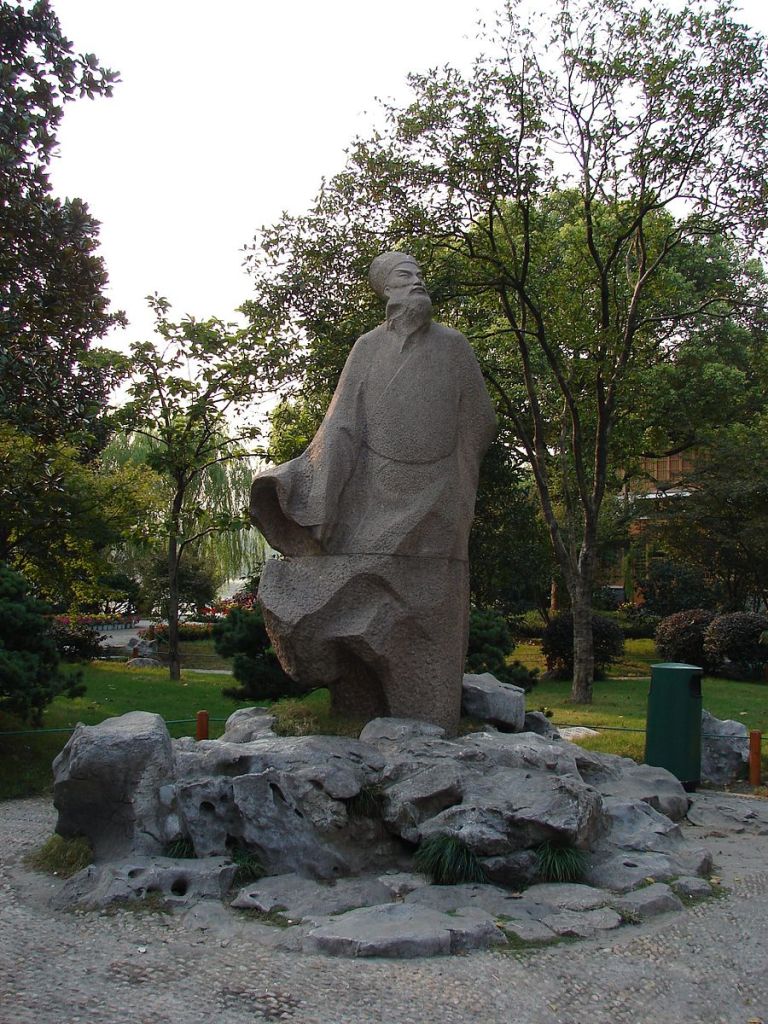
Su Tung Po (1037-1101) Chinese writer, poet and governor. Courtesy: Creative Commons
George Freek’s poetry has recently appeared in The Ottawa Arts Review, Acumen, The Lake, The Whimsical Poet, Triggerfish and Torrid Literature.
.
PLEASE NOTE: ARTICLES CAN ONLY BE REPRODUCED IN OTHER SITES WITH DUE ACKNOWLEDGEMENT TO BORDERLESS JOURNAL
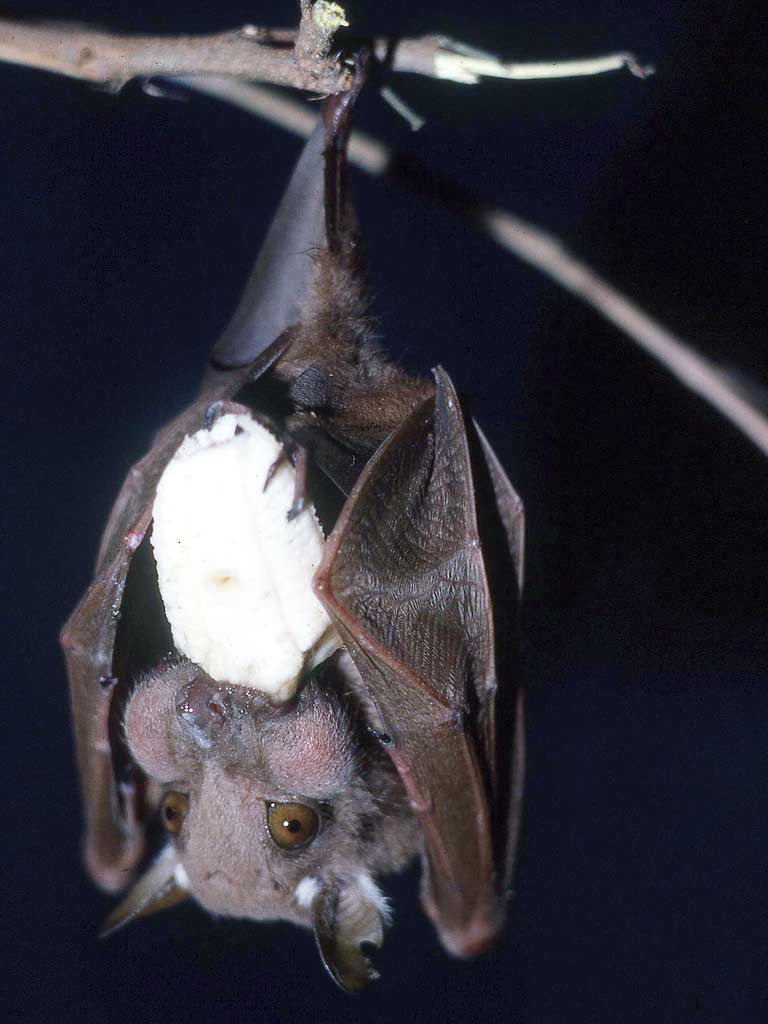
He left the pavilion and strode onto the pitch holding a gigantic banana. We were surprised and frowned as he took his place before the wickets. Most of the spectators fell silent but one of us who had travelled the world muttered that this banana was a totem of the monkey god, Zumboo, and that he hadn’t seen such a thing since exploring Borneo. I wondered what was left to explore on an island that had been inhabited for tens of thousands of years. The very densest jungle, was the unspoken answer. The bowler remained calm, took a slow run up, let loose a ball with a wildly erratic spin, but the banana connected with an audible squelch and the ball flew over the pavilion for a score of six runs. We settled back in our seats confident of a very entertaining innings but before the bowler could launch a second ball, the banana suddenly grew wings and flew out of the batsman’s grasp. We gasped. The umpire insisted that the match be abandoned immediately. We all went home. I am no cricket historian, nor an explorer. I am not even a zoologist. But I knew I had just seen a very unusual thing that fateful afternoon. The rarest species of fruit bat.
There was a king who feared invasion of his lands and defeat but he feared assassination even more. To guard himself from these dangers he moved his throne to the centre of an island in the middle of a large lake. But this lake lay at the centre of a larger island that reared from the waters of a bigger lake. Needless to say, this bigger lake was located at the centre of an island that was the size of a small country and this island could be found in the middle of a lake that was like a small sea. The king believed he had chosen the most secure place in the world and he relaxed just a little but he never slumped on his throne. He remained rigid, peering with his keen eyes in every direction, knowing that any invader or assassin would have to cross many bodies of water alternating with rough terrain in order to reach him, giving him plenty of time to prepare his defences. He had a rifle with an extremely long barrel and a tripod to rest it on and he was able to cover any approach with deadly fire. This is how he passed his days. But at night the moon rose slowly over the horizon and standing on the surface of that celestial object was the true enemy, a giant archer who lurked in the shelter of a crater and drew back his bowstring. The heavy arrow was nocked and he was carefully aiming at his obvious but oblivious target, the king who never looked up but who, sitting there, was a perfect bullseye at the dead centre of a series of concentric circles.
The Milk Truck
Travelling in a taxi from our small apartment in Bangalore to the airport, we hurtled along the highway, our driver weaving through the traffic with skill. We passed a stationary vehicle and at first I thought it had broken down on the side of the road. It was a large lorry, a cylindrical container on wheels. The words Milk Truck were written on the side in blue letters and then I saw an old woman on a stool near the rear of it. She was leaning forward, her gnarled hands reaching for the underside of the huge machine. It was just a glimpse, the merest flash, but I had the impression she was milking the truck’s udders into a bucket. How ludicrous! Sitting in the back of that taxi, I exchanged glances with my partner and I saw in her eyes that she shared my thoughts. We had both seen it. Metallic udders! I turned my head to look back but the truck already was out of sight, obscured by other vehicles. Our driver continued and it was impossible for us to know if he had noticed it too, or whether he would care even if he had. This is all the story, nothing else happened. We reached the airport early and had coffee while we waited but it was black coffee, which is both safer and saner.
Rhys Hughes has lived in many countries. He graduated as an engineer but currently works as a tutor of mathematics. Since his first book was published in 1995 he has had fifty other books published and his work has been translated into ten languages.
.
PLEASE NOTE: ARTICLES CAN ONLY BE REPRODUCED IN OTHER SITES WITH DUE ACKNOWLEDGEMENT TO BORDERLESS JOURNAL
SPRING WAS DELAYED

Winter came early:
the driving snows,
the delicate frosts
that crystallise

all we forget
or refuse to know,
all we regret
that makes us wise.

Spring was delayed:
the pallid rose,
the orchid-like sun,
the wind’s soft sighs,

all we omit
or refuse to show,
whatever we shield
behind guarded eyes.

THERE'S A STIRRING AND AWAKENING IN THE WORLD

There’s a stirring and awakening in the world,
and even so my spirit stirs within,
imagining some Power beckoning—
the Force which through the stamen gently whirrs,
unlocking tumblers deftly, even mine.
The grape grows wild-entangled on the vine,
and here, close by, the honeysuckle shines.
And of such life, at last there comes there comes the Wine.

And so it is with spirits’ fruitful yield—
the growth comes first, Green Vagrance, then the Bloom.
The world somehow must give the spirit room
to blossom, till its light shines—wild, revealed.
And then at last the earth receives its store
of blessings, as glad hearts cry—More! More! More!
Michael R. Burch’s poems have been published by hundreds of literary journals, taught in high schools and colleges, translated into fourteen languages, incorporated into three plays and two operas, and set to music by seventeen composers.
.
PLEASE NOTE: ARTICLES CAN ONLY BE REPRODUCED IN OTHER SITES WITH DUE ACKNOWLEDGEMENT TO BORDERLESS JOURNAL
It was a quiet pleasant evening with an unending essence of hopelessness. Mahi was drained and unable to reply to her own self. It was about six in the evening. The breeze carried a soulful fragrance within its whispers. Mahi was sitting on the edge of Neheng River. The sparkle of the setting sun with the pleasing breeze solaced her and revived her, raising her out of her weariness.
She remembered the sunset when she would sit a little distance away from Hasnain and stare at him. Hasnain was dispirited and was waiting to befriend death. So was death.
Hasnain’s tempting smiles and innocent face were forever visible within her tear-filled eyes. Mahi wandered why like a doomed soul he was unable to adjust himself to dwell in peace.
Mahi closed her eyes and scrutinised the jarring memories that wavered through her mind, remembering all those peaceful moments which were spent with him. The boy had died a year ago. His voice still haunted her. His image still drifted before her eyes. His grief was apparent in such visions and each of his words wafted back to her.
She was bound to suffer. She still heard the voice of his wretchedness as he screamed out loud.
“Is there anyone to free me from this torture-cell? I am suffocated here. I no longer want to resist my own departure from myself. Neither have I had an existence nor a non-existence. I befriended nothingness.”
These words of Hasnain made Mahi suffer till her last breath. She was dead silent after witnessing the misery and soreness of the blue boy as he tussled with death and lost himself.
It was the same day. It bound each life within death. Mahi was submerged with suffering, and she befriended death. So did death.
The graveyard is proud to own deaths that had befriended lives and exposed souls.
.
Munaj Gul Muhammed from Turbat, Balochistan, has been writing since 2017 on various educational, social and gender issues in different newspapers such as The Daily Times, Balochistan Voices, The Baloch News, Balochistan Point and other outlets. He has also won Agahi Award in the category of Human Rights in 2018.
PLEASE NOTE: ARTICLES CAN ONLY BE REPRODUCED IN OTHER SITES WITH DUE ACKNOWLEDGEMENT TO BORDERLESS JOURNAL
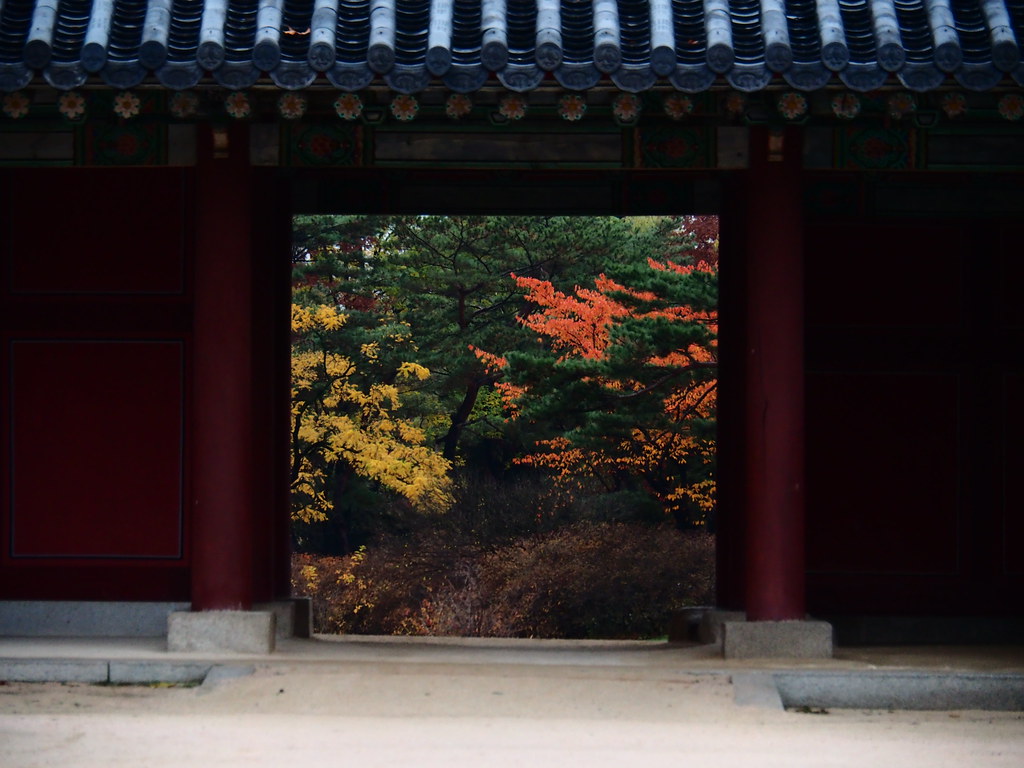
AUTUMN IS LONG

Until the farmers finish their harvest
Until the boats laden with fish reach the harbour
Until the oaks of the hill fully ripen
Until the squirrels finish their storing of winter foods
Autumn stretches long enough
Until all the peppers on the straw mats are dried
Until the drops of sweat on grandma's forehead evaporate
Until the seeds of the wildflowers ripen
Until the migratory birds finish their long journey
Autumn stretches long enough
Ihlwha Choi is a South Korean poet. He has published multiple poetry collections, such as Until the Time, When Our Love will Flourish, The Colour of Time, His Song and The Last Rehearsal.
.
PLEASE NOTE: ARTICLES CAN ONLY BE REPRODUCED IN OTHER SITES WITH DUE ACKNOWLEDGEMENT TO BORDERLESS JOURNAL
Neeman Sobhan is an expat who shuttles between Italy and Bangladesh and writes. She has a knack of making herself at home in all cultures and all spheres. Having grown up partly in Pakistan (prior to the Liberation War in 1971), Bangladesh and completed her studies in United States, she has good words about time spent in all places. Her background has been and continues to be one of privilege as are that of many Anglophone writers across Asia. Her stories have been part of collections brought out to celebrate the fiftieth anniversary of Bangladesh.
One of her most memorable stories from her short story collection Piazza Bangladesh, located around the 1971 war takes on an unusual angle, where the personal seems to sweep the reader away from the historic amplitude of the event into the heart-rending cries of women at having lost their loved ones in a way that it transcends all borders of politics, anger and hate. The emotional trajectory finds home in a real-world event in the current war. The fate of innocent youngsters dying while not being entrenched in the hatred and violence wrings hearts as reports of such events do even now. I find parallels in the situation with the young Russian soldier whose mother did not know he was in Ukraine and who was killed while WhatsApping his mother his own distress at being there. And yet her stories stay within certain echelons which, as she tells us in the interview, are the spheres that move her muse.
When and how did you pick up a pen to write?
I have always written. The written word has always held a powerful fascination for me, which has not dimmed at all. From my childhood through my teens, I was a voracious and precociously advanced reader, as well as a passionate writer of poetry, and a keeper of a daily journal. My poetry was regularly published in The Pakistan Observer’s Junior page. I don’t dare look at them now to even assess whether they were embarrassingly bad or surprisingly good enough to be salvaged and resurrected now! I preserved them as the earliest evidence of my continuing evolution as a writer and a poet today.
During those early days, I also won the first prize in a national essay writing competition sponsored by the newspaper. The Pear’s Encyclopedia I won still holds a precious place on my bookshelf.
English was my favourite subject in school and college, and I knew I would study English literature at university. I started out at Dhaka University in 1972 but by some perverse logic, I actually enrolled in the newly opened International Relations department and not the English Department (in which I had applied and been accepted). The reason, I now recall is because the English department was over-flowing with students, while the International Relations department was something exclusive and admitted a handful of students. However, after a few months I realised I had made a disastrous choice.
Meantime, my marriage was arranged, and I was whisked away to Marlyland, U.S. My husband, Iqbal, an ex-CSP officer (the Civil Service of Pakistan) was a Ph.d student of Economics at the University of Maryland, and in no time I enrolled as an undergraduate student and blissfully went on to study English and Comparative Literature, graduating eventually with a Masters in English Literature.
That I was going to be a writer was for me, even as a teenager, like a pre-ordained and much desired fate. I never wanted to pursue any other vocation.
What gets your muse going?
Anything, and everything. A view, a scent, an overheard conversation, a line of poetry, a memory……If I’m angry and seething, I write; if I’m sad or grieving, I write; if I’m joyous or ecstatic, I write; if I feel aa surge of spiritual bliss, I write; if I’m confused, I write. What form that writing takes is unpredictable. It could become a poem, or a paragraph in my notebook, which later could be part of my fiction, or a column. I wrote a regular column for the Daily Star of Bangladesh.
Writing is my food and nourishment, my therapy, my best friend, my passion. The writer-Me is the twin that lives inside me. It’s my muse and guide that defines my essential self. I am a contented wife of almost 50 years of marriage, a mother of two sons, and a grandmother of four grandsons (aged 5-4-3 & 2). These gratifying roles nourish my spirit, give me joy and inspiration, teach me lessons that help me grow as a human being. But my writer-self exists in its own orbit, proceeding on its solitary journey of self-actualisation, following its inner muse.
You have written of Italy, US and Bangladesh. How many countries have you lived in?
Yes, I have lived in Italy, US and Bangladesh, which makes 3 countries. But, in fact, I have lived in 4 countries.
Remember that I was born not just in the undivided Pakistan of pre-71, when present day Bangladesh was East Pakistan, but I was actually born in West Pakistan, present day Pakistan, in the cantonment town of Bannu, near the borders of the Khyber Pass and Afghanistan, (formerly, the NWFP or NorthWest Frontier Province, presently KPK or Khyber Pakhtun-Khwa). Although my parents were Bengalis from Dhaka, my father’s government job (not in the army but under the Defence department, ‘Military Lands and Cantonments Services’) meant being posted in both wings of the then Pakistan. So, during my childhood and girlhood, I grew up in Karachi (Sindh), Multan and Kharian (Punjab) and Quetta (Balochistan). As a family of five siblings and our adventurous mother, we always accompanied our father on his official tours, by car or train, over the length and breadth of that country.
In the English medium school I was enrolled in, I had to choose Urdu as the vernacular subject, since Bengali was not taught in West Pakistani schools, though the opposite was not true! Anyway, I have no regrets. I am proficient in both Urdu and my mother tongue Bangla/Bengali, which I learnt at home from my mother, who in Quetta actually set up a small Bengali learning school for Bengali Army officers’ children. I am proud of the fact that I carried my mother’s tradition when I taught Bengali to Italians at the University of Rome, many decades later!
What is it like being an immigrant writer? Which part of the world makes you feel most at home? Why?
To start with, and to be honest, I do not really consider myself a true immigrant — someone who bravely and definitively leaves his familiar world and migrates to another land because he has no other options nor the chance or means to return; rather, I feel lucky to be an ex-patriate — someone who chooses to make a foreign country her home, with the luxury of being able to revisit her original land, and, perhaps, move back one day. In fact, I have dual nationality, and am both an Italian citizen, and continue to hold a Bangladeshi passport. I might be considered to be an Italian-Bangladeshi writer. I consider myself a writer without borders.
I feel equally at home in Italy and in Bangladesh. Before the pandemic, my husband and I would make an annual trip to Dhaka for two months from December to February end, since my classes started in early March. Presently, I am back in Dhaka, after two almost apocalyptic years.
Despite the continuing hurdles of mastering the Italian language and trying to improve it constantly, we love our Roman home as much as our Dhaka home. Still, living away from ones’ original land, whether as an expatriate or an immigrant, is never easy, beset by nostalgia for what was left behind and the struggle to create a new identity of cultural fusion within the dominant and pervasive culture of a foreign land. But in this global age, it’s quite usual to live in a mix of cultures and live in a borderless world where ones national or cultural identity is not so clear cut. (I have a daughter-in-law who is Chinese, and another who is half-English, half-Thai! And my grandchildren are the heirs to a cornucopia of cultures and are true global citizens). Nevertheless, in the four and a half decades of my living away from Bangladesh, the eternal quest for that illusory place called home has shaped the sensibility that nourishes my creativity and compels me to write. Often, it’s the pervasive and underlying theme in my columns, stories and poetry. There is a poem of mine, “False Homecoming” which underlines the poignant sense of displacement a person can feel, not in a foreign land but in ones’ own motherland, or the version from the past. After all, many people who live away, exist in a time-warp.So, no matter which part of the world you feel at home in, it’s temporary. For me, as a writer between countries and homes, it is an external and internal odyssey.
It is the endless journey of a writer in constant evolution.
Tell us a bit about your journey.
I realised early on that our real world being increasingly borderless, it’s not a tract of land that makes me feel at home. It’s my writing. The Mexican poet Octavio Paz once said, “Words became my dwelling place.” This has always resonated deeply with me, because for me, too, language and literature have been my sanctuary and true homeland. I have lived in that comfort zone at the heart of my creativity, imagination and writing: my dwelling place of words.
Of course, there are as many shapes to the sheltering place of language as there are literary forms. My nest of words was also feathered by my particular exigencies, followed a particular route and journey.
Though I speak various languages, my mother tongue is Poetry. For as far back as I can remember I have always written poetry, like writing in a journal, considering it to be the shorthand of my heart, a secret language. I am a reticent person, and there are writers like me who are content to use writing, whether poetry or prose, as a tool for self-exploration, self-knowledge, self-definition, with no thought of being published. At least, not my personal poems.
Yet with poetic irony, despite being a private person, my career as a writer started when I was jettisoned into that most public form of literary expression: the world of weekly column writing. At the urging of a friend, the editor of the Bangladeshi national daily The Daily Star, I turned into a public chronicler of the minutiae of my world, my life and times. Now I discovered my professional language, my father tongue if you will, the language of prose and my journey as a writer started.
When one reads your writing, it is steeped in a number of cultures. Which culture is most comfortable for you while writing and which one for living?
There’s no place as beautiful and pleasurable to live in as Italy. Except for two or three months of winter, the climate during the rest of the year is perfect; the natural beauty and historical and artistic richness are unsurpassable, the food is delectable whether it’s based on nature’s bounty or the simple elegance of its distinctive cuisine. But for a writer who is also a housewife, the most comfortable country to write in, for me, is Bangladesh. With the culture of household helps abounding, I often get more writing done in two months of living in my Dhaka apartment than a whole year in Rome. My domestic staff are like family to us, and valued parts of our life. They sustain us and we sustain them, helping them educate their children to stand on their own feet. I miss this support network in Italy.
What are your favourite themes and your favourite genre? Expand on that a bit.
My favourite genre to both read and write is the short story, poetry, humorous essays, travel writing and insightful book reviews. I read fewer novels now, and I have been writing and struggling to finish my first novel for years. I suspect, this is because I am temperamentally more attuned to the short sprint dash of producing a discrete work of imagination than the long-distance run of a lengthy work. But I am determined to conclude this opus before it becomes an unfinished relic.
I never approach fiction-writing through themes. But in non-fiction prose writings, like essays and articles for columns, I love to write about certain topics, or about books, places, and people, from all walks of life. I also love to write about nature, food, history and traditions, about how to improve our world, our lives and our relationships; and the happy, hopeful moments of life. As far as reading goes, I love reading about travel, love and friendship, human compassion, and anything with a happy ending.
You seem to have centred much of your work on people who are affluent. What about the rest — especially the huge population who serve the affluent? Have you written on them? Tell us why or why not.
That is an incomplete picture, and a wrong perception of my writing. To start with, as a writer I am more interested in the richness of the inner lives of human beings, and less so in the outward, economic and class differences. To me, no one is merely affluent or poor, but human and worthy of a compassionate gaze. The diversity and motivations of characters, whichever strata of society they belong to moves my imagination. I do not write to either preach or disseminate ideas of social justice or to right wrongs, but to explore and present the world we live in, in all its complexities and subtleties, the joys and ugliness, the small dreams and grand passions, the disappointments and triumphs of individuals and generations. I like to delve into the psychological or political motivations of human behaviour, especially within the domestic sphere, the family, an ethnic community.
I have many stories about those who serve or are not from privileged classes. My story ‘A Sprig of Jasmine’ is about a sweeper woman at a school in Bangladesh. Then there is the story ‘The Farewell Party’ about a temporary domestic help in a Bangladeshi home in Rome, suspected of stealing. I also have a sequel to that which explores the life of the same Bengali help now working as a nurse-companion to an old Italian woman. These and many more are awaiting to be published soon in another collection.
But I never consciously choose a subject or set out specifically to tell the story of an under-privileged, oppressed, or marginalised person. It can happen that the story turns out to be about them, but for me a story reveals itself randomly, through an image or scent or a view or an overheard conversation, once I witnessed a slap being delivered, etc, and I follow its trail till it leads me to an interesting bend where it starts to shape into a story. I never know how a story will start or end. It grows in organic but unpredictable way. That is the challenge, and adventure of writing a story.
For example, one of my most newest stories, titled ‘The Untold Story’, (published in a recent anthology for Bangladesh’s 50th anniversary, When the Mango Tree Blossomed, edited by Niaz Zaman), is two parallel tales of two Birangonas (‘war heroines’ or raped victims during the Bangladesh liberation war ), but it came to me more as a way to explore the craft of storytelling, which is something that always engages me: how a story is narrated, as much as what the narrative is about.
By and large, I like to write stories about the world I know, and the people in my own milieu because no one writes about the expat society of Europe. I like to write about my world in all its details and extrapolate from its larger truths about humanity in general.
Jane Austen wrote about the landed gentry and her corner of England, but the stories ultimately reach our hearts not merely as stories of the affluent but of human foibles. John Updike wrote about his American suburban world. Annie Proulx writes about Wyoming. Alice Munro about the middle-class world of her neck of the Canadian world. Henry James focused on American aristocrats. But what is human and vulnerable, or worthy or unworthy, transcends class barriers. People are interesting, subtle, unpredictable, noble or wicked, no matter whether they are affluent or of straitened means. Tagore’s tales of women trapped in their roles in rich households are just as moving as those among the poor and underprivileged.
There are plenty of writers with a sociologist’s background who can chronicle the lives of the downtrodden whom they meet. I applaud them. My younger son works with the Rohingyas; my brother-in-law, a doctor worked for years with children of addicts. They have their stories to tell. I have mine. I’m interested in humanity, wherever I find them.
In the little I have read of your stories, Bangladesh is depicted in a darker light in your narratives — that it is backward in values, in lifestyles etc. Why?
I don’t know which particular story or stories you have in mind where you felt that this impression was consciously created. Unless the story was indeed about a backward area, like the dingy alleys and neighbourhoods of old Dhaka in the 60’s and 70’s. Or, the murky values resulting from the explosion of wealth and the rise of corruption, undermining civic and ethical values in the rampantly urbanised zones.
In which case, it’s an unavoidable fact and not a depiction.
However, since I write more in a nostalgic light about Dhaka past rather than the reality of the present, I actually have not really written about the darker sides of the country; and which country or society does not have its seamy side. A good question would have been why I have not depicted Bangladesh in a darker light as contemporary writers of Bengali fiction do, dealing courageously with sinister aspects of politics and corrupt moral values at every level of society.
There is much in the Bangladeshi culture that we are proud of, beautiful traditions, and so much beauty in our natural world. I like to weave these into my narrative. So, I’m surprised that you found my stories to be dark.
What are your future plans?
One of my most urgent projects is to get my novel-in-progress published.
I’m also planning to come out with another collection of stories, and a collection of my columns on travel, and an Italian and Bengali translation of my fiction.
So far, my three published books, and all the stories that have appeared in various anthologies are just a few milestones but do not define my journey as a writer. Daily I grapple with the insecurities of a writer, and daily I learn new things that help me grow towards being the writer I aspire to be. It’s still a long way to a full flowering, but each passing day I dabble in words, I feel the creative petals unfolding, slowly but surely.
Thank you for your time.
(This is an online interview conducted by Mitali Chakravarty.)
PLEASE NOTE: ARTICLES CAN ONLY BE REPRODUCED IN OTHER SITES WITH DUE ACKNOWLEDGEMENT TO BORDERLESS JOURNAL
Where Have All These Birds Gone
Where have all those birds gone now—and those horses --
And the women in those white houses?
Wet with the fragrance of acacias-tinged with golden sunlight
Those birds—and those horses--have left our world behind;
My heart, tell me where -- where have they all gone now?
Darkness, like that dead pomegranate—silence.
On the Pathways for Long…(Prithbir Pothe Aami Bohu Din from Ruposhi Bangla)
Having lived in the world’s pathways for a long, long time
I know many stressful, hidden tales of the heart now.
In forests, branches and leaves sway -- as if
Djinns and fairies conversing! On greying evenings
I’ve seen on their bodies a drop or two of rain dripping down.
Like parched paddy will. White specks of dust soften in rainwater.
A faint scent suffuses farmlands. From frail bodies of Gubur insects
Indistinct, melancholy sounds dip into the dark river water;
I’ve seen them all -- have seen the river immerse in the sloping dark;
Shapmashis fly away; In Asuth tree nests, ravens flutter their wings
Incessantly; someone seems to be standing in the lonely, fog-filled field.
Farther off, one or two straw-roofed houses lie scattered.
Why do the frogs croak on in Nolkhagra forests? Can’t they not stop?
Freshly laid crow eggs slip and slide into the Sheora bushes.
(These translations are from Jibanananda Das: Selected Poems with an Introduction, Chronology and Glossary, translated by Fakrul Alam, published by The University Press Limited, Dhaka, 1999. Republished with permission from the original publisher.)
Jibonanada Das (1899-1954) was a Bengali writer, who now is named as one of the greats. During his life he wrote beautiful poetry, novels, essays and more. He believed: “Poetry and life are two different outpouring of the same thing; life as we usually conceive it contains what we normally accept as reality, but the spectacle of this incoherent and disorderly life can satisfy neither the poet’s talent nor the reader’s imagination … poetry does not contain a complete reconstruction of what we call reality; we have entered a new world.”
Microaggression is a relatively newly used term to describe less direct action that can cause offence. It is a term that has been setting the social media alight for the past few years, sometimes for good, sometimes not so much.
Having just attended another course on this buzz word du jour, it struck me how absurd some of the ‘lessons’ on identifying microaggression were. One could argue, it’s pop-psychology and political correctness, gone awry.
Before we get to the absurd scales over policing microaggression, it’s important to explain why acknowledgement of passive-aggression and gaslighting (confusing a victim with the perceived reality) does matter and should be discussed (if perhaps not exhaustively).
Think back to those days of old where eve teasing in offices was considered du rigor, where a woman of colour with an afro was told it wasn’t an acceptable ‘hairstyle’ and threatened with being fired if she didn’t ‘tone it down’. Think of a Muslim worker being told he couldn’t pray during work hours, a Jewish colleague not being given time off for Hannukah, a black footballer having bananas thrown at him whilst he played, or an Indian politician being called a ‘Paki.’
These all still happen despite being labelled as racism, bigotry, hate and microaggression in the workplace and beyond. They are intolerable and unacceptable and can lead to suicide, depression, financial insecurity and feelings of ostracisation. The laws protecting against these are sometimes hard to enforce. People who do follow through on a complaint, are considered ‘trouble-makers’ and their careers are thwarted by this unfair reputation.
Stereotyping is part of human nature, even as we try to rinse it out. When we are unfamiliar with a culture (sometimes when we are familiar with it), we reduce people to descriptors that can be stereotypical. In my case, I’m often assumed to be English because I have a slight English accent. In incorrectly assuming this, people often ask me if I would like ‘tea’ (I hate tea) or make fun of my accent. Friends from other parts of the world have the same experience. It’s annoying and a constant reminder that I’m not American. I’m an immigrant.
For people of colour, this is even more extreme. If you are light skinned you are ‘assumed’ not to be a person of colour though you might be (many are) whilst if you are dark skinned you are more likely to be ‘assumed’ a person of colour (though you might not be) and if you have African or Asian ‘features’ as considered by (a stereotype of what constitutes ‘being African’ or ‘being Asian’) you are assumed to be African or Asian though you might not be.
However, this is a complete minefield and I want to take a few scenarios to illustrate this point in relation to the trend toward calling out ‘micro aggressions’ – which if you let it go too far, can be every bit as exclusionary/judging/alienating as if we go in the other direction and return to a mass acceptance of bigotry.
Before I share some examples, I should say, there may be a middle ground where we can all be relatively certain of fair treatment, even if this cannot include historical bias and mistreatment of our ancestors in the past. I would say this is the place we want to aim for, but we’re not there yet. My issue with microaggression is it’s a dog whistle that is going off so often that we’re becoming blunted to real outrages in favour of a knee jerk response daily to little errors in our current way of communicating, that also by default, leave us fearful of saying/doing anything for fear of offence. Yes, it is possible to go too far. And before you say I’m coming from a position of privilege — that’s why I’m saying this — no I’m not. That’s an example of what I’m talking about — taking things so far with political correctness that none of us can say or do anything without fear of serious reprisal.
My friend attended the same course on micro aggression. We discussed it afterwards. She is African American. I am mixed-race but have white skin. She noticed the course tended to use examples of black/white characters and wondered why if race and ethnicity were not specifically mentioned in the course. The point of this microaggression course is to point out the varied ways you can be microaggressive without knowing it – and what you could do about it. However, as my friend pointed out, it’s almost a no-win situation.
The first scenario of microaggression is a (seemingly) white-blonde woman commenting on a (seemingly) black woman’s hair and saying “I like your hair”. Why? Because it’s culturally insensitive, it’s fetishising ‘exotic’ hair by the mainstream (white) which can cause the person being complimented, to feel embarrassed, self-conscious or that they’re being stigmatised or singled out for their (non-white) hair.
Ironically, if my friend were not African American could she even say what she thought without being criticised for being microaggressive herself? Fortunately, she is so, this is what she said and she cannot be called out for saying it because she’s African American herself.
“I thought it was a stupid scenario. A blonde woman is just as likely as a black woman to have people comment on her hair. She wouldn’t think it was racist/insensitive, unless the person went too far and started touching it or saying things that were sexually inappropriate like ‘You have really sexy hair’. Most of the black women I know would be happy if someone said they liked their hair and wouldn’t think it was culturally insensitive if that person wasn’t the same race/ethnicity – as much as anything because how can they be sure they’re not (of the same race/ethnicity?). Plenty of people who don’t look mixed-race, are, or their parent may be, and they might be a light-skinned person of colour saying to a darker-skinned person of colour ‘I like your hair’ in which case that cancels out the microaggression, which is assumptive at best. But even if it were a white person saying this, if their motive was simple, ‘I like your hair’ then assuming they mean anything more/less than that, is assumptive, and thus more of a micro-aggression than the original statement.”
My take on it (although by sharing this I can be accused of being micro aggressive because I have light colored skin) is:
“I have told friends of colour (all races/nationalities) ‘I like your hair.’ Never once did I mean anything less or more than that statement. Recently I saw a girl with hair down to her knees. I said ‘Wow! I like your hair!’ She was (seemingly) a white girl with brown hair (though I have no real idea of her ethnicity (nor did I think about this). She was really happy. But according to the microaggression lessons if I say the very same thing to a girl who does look (to me) to be African American or a ‘minority’ (which is kind of racist in its own right, and thus absurd, because how can any of us know for sure what someone ‘is’ and by thinking about it so much, I find this more potentially offensive than to not think of it) I would be being micro aggressive?”
My friend and I talked about this at length until we got to the impossible scenario which is this: two women meet and one says to the other, I like your hair. The other woman says “Thanks! I like your hair also.” One is microaggressive, but the other isn’t?
This is microaggressive because if one of the women is a person of colour (in any way) then the person saying to the (supposed person of colour) “I like your hair” is being micro aggressive because it’s insensitive for a person who is not of colour to say this to a person of colour.
But what if neither knows what the other person is because it’s not clear, or they don’t want to assume (which is a good thing). What if they’re both saying it for the same reason?
Well then according to the course, they could still be micro aggressive because one of the other concerns is someone ‘hitting’ on someone else in some way, or pointing out something ‘personal’ about them, which could make them feel uncomfortable.
Play the scenario again: Two white women (we’ve removed race for the time being because this was one of the ‘issues’ and we want to see if there are any other ‘issues’ in the scenario) meet, and one says to the other, “I like your hair” and the other woman says “Thanks! I like your hair also.” The one who initially said it, could be accused of being micro aggressive because they overstepped the work relationship which should be professional (meaning, no personal comments). The other person may have replied out of feeling they had no choice but had to respond. If one was a boss and one was not, then it could be microaggression of power and if one was richer than the other, it could be a subtle put-down of their income. So, the list goes on.
Find anything absurd yet?
Again, let me ratify this by saying I am all for equality, and treating people compassionately, with dignity and respect and cultural sensitivity. But I think like my friend said, this can go too far and become a minefield of absurdity.
We laughed and then said – what if the two women were wearing t-shirts that said ‘I am heterosexual’ so the issue of sexuality was removed, and both women were white or both women were black, so the issue of race was removed. Would it be okay to say it then? My friend cleverly pointed out that wearing a t-shirt that said I was heterosexual (as stupid as that is) would be deemed offensive to those who were not. So basically, the bottom line is, you cannot win, you cannot stop going down the rabbit hole.
Here’s the truth. If someone comes into work and touches your hair or your pregnant belly without you asking and makes a big fuss, then you might feel they have violated your space. But if they literally said, “I like your hair”, then it would not necessarily mean they were microaggressive. I know a lot of people of colour who compliment each other all the time. If we segregate races to their compliments, we’re dividing not bringing everyone together. If we say only a black woman can say to a white woman “I like your hair” but not vice-versa, we’re creating absurd rules.
Obviously, this is necessary sometimes. Using the “N” word is a word people of colour can and do sometimes use with each other but if person outside their race says it to them, it is racist. That’s true. It is a double standard that stands because of the history of racism and discrimination, murder and hate. I still think anyone using the “N” word, irrespective of their race, shouldn’t use it because of its history but that’s beside the point.
Sometimes a white woman might say something that is derogatory to a black woman and that statement will be wrapped up in a passive-aggressive “compliment” such as “I like your hair.” But until you know the motivation, isn’t assuming this, impossible to prove and thus, impossible to police? By shutting all such comments down, aren’t we dividing each other more? Segregating our language and what can and cannot be said to each other? How does this help if we then become so afraid of saying anything to anyone?
If my colleague who lives alone asks how my New Year was. I say, “Not bad, how was yours? Did you spend it alone?” This is a microaggression because I’m potentially ‘shaming’ my colleague for living alone, whereas in reality, I was asking because they had previously told me they spend New Year alone. Can you see how we’re increasingly walking on eggshells? How does it help relationships to be that stilted and self-conscious? Isn’t it true that we’ll likely offend everyone repeatedly in little ways, but if they ‘know’ us they will know we didn’t mean to and it was a blunder rather than something intentional?
So how do we police and protect when it is intentional? Someone I work with once said to me, “You are a very long-winded writer with lots of detail aren’t you, Candy?” I felt ‘hurt’ because I thought it wasn’t entirely true and a negative characterisation. But were they gaslighting me or simply stating their opinion about my writing? Does everyone I know have to think I’m a good writer? Is it wrong to offer that I could be more long-winded than them? Does it nullify my writing? Or is it simply an opinion? Not wrong, or right? I let it go because I suspected it was not intended to be gaslighting or passive-aggressive and at the same time I considered how I could avoid being too long-winded.
Surely the same can be done in any conversation/interaction without us having to police every single sentence or condemn people for things they may simply not have meant? I hate the statement “you are too sensitive” because it implies there is such a thing as being too sensitive, yet as we all know, there are times when we’re too sensitive to what is being said, and it’s our assumptions of (their assumptions) that hurt us more than what they actually said.
Yes, if someone says “I think people of colour need to comb their hair more and keep it straight” that’s obviously out-and-out racist and awful. It’s unacceptable. But if someone says “I like your hair” they may be saying I really like your hair, because maybe their hair isn’t thick or a nice colour or maybe their hair is lank and lifeless, and they perceive your hair to be beautiful. It may be nothing more than that and why should it be a statement only people in your ethic group can say? I get told “I like your hair” quite a lot, because I have very long hair. Granted I don’t have Afro hair, but my mom does, and she was told “I like your hair” a lot too. She didn’t think it was racist and it likely wasn’t.
Now if she were told “I like your hair and your chest, want to go to bed?” That wouldn’t be okay. Just like “I like your hair – how do you people with afro hair manage it” wouldn’t be acceptable. Are the nuances easy to remember or understand? Especially for the neurodiverse (those who accept diversities) they can be a confusing minefield, and this might be one reason we’re more likely to put rules than try to pick apart nuance, because so many of us are neurodiverse and modes of communication seem to have intricate layers to them that are hard to unpick. Isn’t it simpler then to put rules in place that call someone out for micro aggression? But in so doing, we shame good intentions as well as bad.
Maybe microaggression policing can go a little too far in its zeal to police everything and everyone and we’d be more cohesive if we didn’t impose a multitude of rules on conversation. I’d like to be able to talk to people without fear. I think we can do this again and I can be trusted not to deliberately gaslight or obfuscate or passively-aggressively shame or put down. I know the difference between someone who says, “Oh I like your hair” in a bitchy voice, and someone who simply says, “I like your hair!” I’m not going to treat them both like thought criminals. Or continually watch what I say, I’m going to trust myself to be conscious and listen to others, and in learning what their boundaries are, hopefully most of the time adhere to them. By treating us like we are in a nanny state, we lose the art of communication and coming together. I think we need to get it back – more now than ever before.
.
Candice Louisa Daquin is a Psychotherapist and Editor, having worked in Europe, Canada and the USA. Daquins own work is also published widely, she has written five books of poetry, the last published by Finishing Line Press called Pinch the Lock. Her website is www thefeatheredsleep.com
.
PLEASE NOTE: ARTICLES CAN ONLY BE REPRODUCED IN OTHER SITES WITH DUE ACKNOWLEDGEMENT TO BORDERLESS JOURNAL.
LAST LIGHTS

Some colours glow as darkness falls
Orange of bracken in the last light
The sky’s pink, the grey of walls
Some glories show at the brink of night

Orange of bracken in the last light
Stronger than in mid-day sun
Some glories show at the brink of night
Even in our endings much may be done

Stronger than in mid-day sun
This gloaming will not be for long
Even in our endings much may be done
Listen to the night bird’s song

This gloaming will not be for long
Tho’ blues grow richer as the light fades
Listen to the night bird’s song
Calling the shadows from their glades

And blues grow richer as the light fades
The sky’s pink, the grey of walls
Calling the shadows from their glades
Some colours glow as darkness falls
Mike Smith lives on the edge of England where he writes occasional plays, poetry, and essays, usually on the short story form in which he writes as Brindley Hallam Dennis. His writing has been published and performed. He blogs at www.Bhdandme.wordpress.com
.
PLEASE NOTE: ARTICLES CAN ONLY BE REPRODUCED IN OTHER SITES WITH DUE ACKNOWLEDGEMENT TO BORDERLESS JOURNAL








 Borderless