Categories
Stories

Henrik’s Journey

By Farah Ghuznavi

It was time to give up the fight.

Shifting from the uncomfortable position on her side, Chhaya sat up. There was no way she was getting a nap on this flight.

For her surrender, she was rewarded with a beaming smile from one of her fellow passengers. The man, who had earlier introduced himself as Henrik Something-or-the-other, had not stopped talking – or so it seemed to her – for the past five hours. She was grateful that they had less than two hours of flight time remaining before they landed in Copenhagen.

Reaching the departure gate in Dubai, Chhaya had noticed Henrik almost immediately. Tall and lean, his well-groomed silver hair seemed a little at odds with his flamboyant clothing: a zipper-festooned biker jacket, red tie, white shirt and navy jeans, with a black cowboy hat jauntily perched on the extended handle of his cabin baggage, for good measure.

A short time later, she located her aisle seat, only to find him comfortably ensconced between her and the young Indian man sitting by the window. Curtly acknowledging his introduction, she ignored the twinkle in his eye and dived into a report on refugee relief activities, indicating, she hoped, a total lack of interest in further conversation.

A man dressed like that had to be working his way through some form of midlife crisis, Chhaya figured, albeit one that had arrived late. She had no idea how accurate her assessment actually was. But she was determined not to be a spectator at Henrik Whatnot’s travelling circus. Besides, she was determined to be well-prepared for the donor meeting in Copenhagen.

By the time their meal had been served, Henrik was on first-name terms with all the cabin crew members. He had started by sharing the holiday photos on his phone with Giselle. A tall blonde from Munich, she seemed unaccountably interested in his safari experiences at Kruger National Park. And even Chhaya had to admit that the picture of him bottle-feeding a lion cub was rather cute.

“Was this your first trip to South Africa, sir?” Giselle asked.

“Call me Henrik! Yes, it was, and I am thinking of buying a third home there. Now that I’m retired, my wife and I have more freedom to travel. A doctor’s life isn’t really designed for leisure, but for the last couple of years, we’ve been spending our summers in Denmark and our winters in Thailand, where my wife is from. I’m making up for lost time, so to speak – though my wife’s convinced I travel too much!”

Chhaya concealed an inward shudder at this instance of yet another older white man picking up some young Thai woman on a beach holiday, and taking his submissive Asian flower home to keep him warm in the frozen north. The stewardess, who was probably thinking the same thing, did an even better job of hiding her distaste.

“So you met your wife on your travels, sir – I mean, Henrik?”

“Yes, but perhaps not in the way that you are thinking,” said Henrik, smiling. “I was hiking through northern Thailand, when I stumbled across a village tucked away in the hills. There were no hotels, so I rented a room for the night in someone’s home. The family had a son who was visiting from Bangkok. He was the only one who spoke good English, so he translated our conversation for the others, while we ate the delicious food his mother had cooked for us.

“In the middle of the night, there was a knock on the door, and the young man came in to say that his neighbour’s child was very ill. He asked if I could help. I did what I could, but it was touch and go for a while, because the boy was burning up. I spent the next few days looking after him. He lived with his mother and aunt, who had the unenviable job of plucking and cleaning slaughtered chickens at a nearby poultry farm.

“I ended up staying in that village for three months. That’s how long it took me to persuade the boy’s aunt that I would make a good husband. Even today, my wife Su doesn’t like spending time in Bangkok, so we decided to build a house in her village. You never can tell what fate has in store. My marriage to the world’s kindest woman was built on a foundation of chicken guts, late nights with a sick child, and her determined resistance to the advances of a strange foreigner!”

By the end of his story, they were all smiling, even Chhaya.

She was less impressed when Henrik decided to buy gifts for his beloved wife from the duty-free trolley after dinner. Examining a platinum bracelet stud with diamonds, he asked the steward Jeffery, what he thought of it.

“It’s a bit over the top, isn’t it?” the man said. And then, perhaps remembering that his job was to actually sell things – the more expensive the better – the steward made a quick recovery, adding “Though I suppose it depends on your wife’s preferences. It is a very beautiful bracelet!”

“Yes, but I think you may be right. My wife is a woman of simple tastes. I think she would prefer this one.” He selected a slim gold bracelet cunningly crafted into three interwoven strands, before moving on to the perfumes. “Which of these fragrances do you think she’d prefer?” he asked Jeffery.

“I don’t really know, sir…” he said, hesitating.

“But you must have some preference!” Henrik said. “What would you buy for a woman – for your wife or girlfriend?”

Since Jeffery looked decidedly ill at ease, Chhaya intervened. “Why don’t you ask one of the women Henrik? I’m sure they would be happy to give you some advice.”

The look of relief on Jeffery’s face made Chhaya wonder if perhaps giving away aftershaves was more his style than perfumes. Summoning his co-worker, a petite brunette, to the trolley, Jeffery said, “Marta, this gentleman would like some suggestions about which perfume to get his wife for a special occasion.”

Rolling her eyes at Jeffery, Marta nevertheless obliged. With her more savvy assistance, Henrik finally selected a crystal Baccarat bottle of Guerlain Idylle, spending the tidy sum of nearly 1500 euros on the two items. “I’ve been away a long time, so I have some making up to do where she’s concerned!” he joked.

Appalled at his extravagance, Chhaya couldn’t help thinking about how much better that money could have been spent in the Rohingya refugee camps in Bangladesh, where she and her team found themselves working under increasingly frustrating conditions.

There was no point in making such comparisons, she knew, but it was infuriating when people threw away money like that in a world where others were desperate. And with money to burn, why was this guy travelling economy anyway?

Deciding she had had enough of the strange man and his stories, Chhaya turned on her side, jamming in the earplugs that she had cadged off Jeffery, and willed herself to sleep.

Meanwhile, Henrik turned to speak to the young man on his right, who reluctantly surrendered his headphones and his plans for in-flight entertainment. As Chhaya persisted with her abortive attempt at napping, Henrik proceeded to chat with Sunil, a nerdy youth with well-oiled hair, who was on his way to the US to study Engineering.

“So you’re going on a full scholarship? How wonderful! Your family must be very proud,” Henrik said.

“Yes, they are. I would never have got the scholarship without the sacrifices my parents made for my education,” Sunil said. “But now I am facing some difficulties.”

“Why? What’s wrong?” Henrik said.

“Well, it was my mother’s fervent wish that I get engaged before leaving for America, but I just could not find a suitable girl. My parents tried everything. They matched horoscopes, discussed nice girls with my uncles and aunties, and identified a number of prospective brides.”

“But do you want to get married so soon?” Henrik said.

“Oh yes, I have no problem with having the engagement now and getting married after I return from the US,” Sunil assured him. “It is just that none of the girls was right for me. What I mean is, several of them were beautiful, but there was always something I didn’t like about them. And also, too many of them wore glasses!”

“Ah, but you mustn’t be so finicky, young man! You can’t pick a bride simply for her beauty, and think that’ll be enough to keep you happy. Beauty is all very well, but after a while, its effects wear off. The important things in a marriage are humour, and companionship – a wife who is smart enough to understand what you need, and to tell you what she needs. And the girls who wear glasses are probably the smarter ones!”

“But my wife must be beautiful! You see, I am intelligent, but I am not very good-looking. So when we have children…”

“You want them to have her looks and your intelligence?”

“Yes!”

“But Sunil, as George Bernard Shaw famously pointed out, you must realise that it could also work out the other way around! And if they were to have your looks and her intellect, surely you would want her to be intelligent too?” Henrik laughed. “Not that there’s anything wrong with your looks, of course!” he added cheerfully.

With Sunil as his captive audience, Henrik continued to expound on his theories regarding marriage. Trying to sleep, Chhaya ground her teeth as the sub-standard airline earplugs forced her to listen in; though she had to admit that the older man did make a number of good points.

In the end, Sunil reached the same conclusion, saying “Yes, Mr Henrik, I think you are right. I will take another look at the bio-datas of some of the girls with spectacles.”

In the end, Chhaya gave up all hope of sleeping and sat up once again. Marvelling at Henrik’s powers of persuasion, she decided to try for an attitude adjustment. It helped when the object of her ire turned to ask Chhaya what line of business she was in.

“I’m a development worker, actually,” she said.

“Oh?” Henrik’s eyes lit up. ”What’s your area of specialisation? And if you don’t mind my asking, where are you from?”

Some imp of mischief made Chhaya reply, “Well, where do you think I am from?”
“To tell you the truth, I’m having a hard time figuring it out. I want to say Thailand, because you remind me a bit of my wife, but your name doesn’t sound Thai. Are you Malaysian? Or Nepali?” Henrik said.

“That’s what most people think,” Chhaya said. “But actually, I’m from Bangladesh.”

“Well, that’s a country facing some challenges right now!” said Henrik. “I was surprised when your government decided to let the Rohingyas in a couple of years ago. So many of them too. I just wish European governments were half as generous when it came to refugees!”

“Yes, if only!” Chhaya laughed. “But coping with the influx has presented enormous logistical challenges for those in my line of work. As well as for Bangladesh as a country, of course.

“Actually, that’s why I’m going to Copenhagen right now, to address the donor consortium that funds my organisation.” She gestured at the report she was holding, “So I need to sound informed and authoritative.”

“Have you actually been to the camps yourself?”

“Yes, several times. I was there very recently, just a couple of days ago. Things are a mess right now, but we have to deal with the realities on the ground. And there’s also some talk about this new disease, COVID 19, that’s popped up out of nowhere. It could be disastrous if it makes its way to Bangladesh, given our population density. And people are living cheek by jowl in the refugee camps already!

“To make matters worse, China’s pretty close by for us, so the threat is very real. Unless, of course, it miraculously disappears the way MERS or SARS did. Still, I’m actually quite proud of Bangladesh for opening the borders to the refugees from Myanmar despite what it’s costing us.”

Chhaya smiled briefly before continuing, “As for Aung San Suu Kyi — I can’t understand how, after benefiting from the international human rights movement’s support for decades, she could turn her back on the Rohingya refugees like this!”

“I guess her hands are tied, to some extent,” Henrik said. “The military are still in charge in Myanmar, after all.”

“That’s true, but I don’t understand how she can possibly deny what’s happening there. And it infuriates me when she draws a false equivalence between the elements carrying out this ethnic cleansing, and whatever supposed disruption the Rohingyas have caused in Myanmar!” Chhaya said.

“I can’t argue with you there. But unlike her fellow Peace Prize-winner Mandela, Suu Kyi is ultimately a politician. And to politicians, the most important thing is power – regardless of how they get it.”

“I wish the Nobel Committee had never given her that Peace Prize. She certainly doesn’t deserve it!”

“I suspect the Norwegians are thinking the very same thing!” Henrik said.

Looking into those shrewd blue eyes, Chhaya realised that she had underestimated the older man. He was no buffoon, whatever the reason for his gregariousness. Or indeed, what some might call his garrulousness.

His interest in the challenges posed by the Rohingya presence in Bangladesh, and his awareness of Suu Kyi’s fall from grace indicated a surprising knowledge of global events, something she would not necessarily have associated with the average Dane, given the sheltered lives they led.

Though of course, Suu Kyi’s Nobel Prize had originated in Henrik’s part of the world, in neighbouring Norway. And she had met enough Scandinavian activists and development workers to know that most of them cared passionately about sharing resources to help create a better world.  

“Unfortunately, there is no precedent for stripping someone of the award. So I think we’d have been better off giving her the Ig-Nobel Prize rather than the Nobel!”

“Is there such a thing?” Chhaya asked in disbelief.

 “Oh yes, very much so. They identify recipients for it every year. Not that anyone is eager to be an award winner for that one! But, on a different note, does your organisation accept private donations?” Henrik asked.

“Yes, we do, actually!” Chhaya replied, surprised. “We have a special PayPal account for this campaign, because it’s a humanitarian emergency.”

Henrik took down the details, before taking out his mobile phone. Even as she gave them to him, a cynical part of Chhaya’s mind wondered if this was more of the man’s posturing, or whether a donation would ever materialise. She did not have to wait long to find out.

Jeffery appeared in response to Henrik pressing the call button. “I wonder if you could help me get online for a few minutes?” Henrik said.

Chhaya knew that it was expensive to use the Internet while the flight was airborne, but it didn’t seem to deter Henrik. Jeffery, happier with this request than he had been with the previous one, helped him navigate the process. As Chhaya watched, Henrik entered the staggering amount of five thousand euro, and sent off his contribution.

The remaining flight time passed quickly, as they discussed the situation. And after she had collected her baggage upon landing, Chhaya looked around to say goodbye to her strange companion, and to thank him one last time.  But by then, Henrik was nowhere to be seen.

Chhaya gave a mental shrug. Henrik had asked for her email address, but she doubted she would hear from him again. He had already made his donation, and a generous one at that. It was surely enough to allow him to wash his hands and his conscience clean of the matter.

*

Evelina Morales was having a bad day. After an exhausting flight from the Philippines, she had landed in Copenhagen to discover that her employer was going to be late picking her up. Not that she cared. Despite being tired, she was in no hurry to be reunited with Mrs. Solgaard. Because though her employer liked to insist that Evelina address her as Anne-Karin, the young woman was under no illusion that it made their relationship any less formal.

Anne-Karin Solgaard’s soaring career trajectory meant that Evelina’s services as an au pair made up a key element of her support system. With two young children, Anne-Karin could not have sustained her meteoric rise as a right-wing politician without Evelina’s help at home.

Nevertheless, Evelina could not shake the sense that her employer viewed her as more of a robotic nanny service than a human being. And although Anne-Karin often touted Denmark as an ideal society where everyone, including workers, had good lives and proper weekends off, Evelina noticed that this did not stop her employer from asking her to work on a Saturday or Sunday if Anne-Karin needed her services, as she all too often seemed to.

Nor was Evelina’s job an easy one. The children, both boys under the age of five, displayed a boisterousness that verged on being hyperactive. Danish permissiveness with respect to child rearing made things even harder. So while Anne-Karin fondly referred to her boys as “chaos pilots”, Evelina could not help thinking that she might have been less indulgent if she herself had to deal singlehandedly with the chaos that they created.

But if Evelina could not quite be sure how her employer viewed her, she was left in no doubt of Anne-Karin’s general dislike of immigrants, particularly those who came to Denmark from Somalia and other hotspots. “If only the Muslims would make an effort to integrate!” she was often heard saying to her admirers. “You’d think they would be grateful to have a new life here, but it’s unbelievable how resistant some of these people are to adopting Danish values.”

Evelina made it a point never to react when Anne-Karin made remarks like that, but she drew the line when her employer suggested she read the autobiography of Ayaan Hirsi Ali. “She’s a remarkable woman, you know, Evelina. She identified the threat that Muslims pose to Europe long before most of us were aware of the danger. And she knows what she’s talking about — she grew up in Somalia!”

Aware of Ali’s incendiary views on religion from her conversations with a Somali friend, Evelina could not remain silent. “Thank you, but I find some of her ideas too extreme. I mean, according to her, the Norwegian terrorist Anders Breivik felt that censorship of his writings on Christian superiority left him “no choice” but to commit murder! Breivik massacred dozens of children on Utøya. And this vile man actually expressed admiration for her in his manifesto!”

“I haven’t heard her views on Breivik,” Anne-Karin replied, unruffled. “But she is right to talk about the need to combat Islamic terrorism.”

Despite her own worries about the Muslim separatist struggle in the Philippines, Evelina despised people like her boss, whose populist rhetoric recycled tired stereotypes to score cheap political points. So, though she allowed the statuesque redhead to have the last word, the young Filipina left the book untouched where it lay.

To make matters worse, Evelina knew that quite apart from her hostility to immigrants in general, and Muslims in particular, Anne-Karin’s identity as part of a tiny minority of Danes attending evangelical churches meant that she often viewed other Christians – especially Catholics like Evelina – with a degree of suspicion. And as a Christian herself, Evelina could not help thinking that Anne-Karin and her Pentecostal friends held views that would not pass the litmus test that they were so fond of applying to key life questions: namely asking, “What would Jesus do?”

That this group’s political opinions reflected the general hardening of Danish attitudes towards foreigners did not make her employer’s racist comments any easier for Evelina to swallow. No matter how much she worked, Evelina was regularly subjected to Anne-Karin’s assertion that Denmark was too soft in letting in the migrants “flood in” to exploit its admittedly-generous welfare system.

Evelina’s friend Aaden, a young Somali man who had fled the brutal civil war, certainly had little time for people like her employer. “How’s Ol’ Sunshine today?” Aaden would ask, smiling. It was a long-standing joke that her sourpuss employer’s surname included the word for sun, “sol” — even if it was because she had taken her husband’s name. Such merriment at her expense was probably not the outcome Anne-Karin had in mind when she packed her nanny off to the introductory language course where Evelina had met Aaden.

“If I knew what would make her happy, Aaden, I would do it just to get that look of disdain off her face. You know what I mean?”

“Yes, but nothing you can do is likely to change anything! Let’s face it, she just hates foreigners. What’s worrying is that someone like her is doing so well in Danish politics!”

“I guess she represents all the people who think like her. Such nasty people shouldn’t be the ones making decisions that impact other people’s lives…”

“Well, she certainly seems to have no problem having foreigners around when they’re changing diapers and ‘airing’ the dog!” Aaden said, referring to the literal meaning of the Danish term used for dog-walking.

“That’s because she can’t afford to hire a Dane to do the work that I do!” Evelina retorted.

“Don’t forget, most of them think they’re too good to be doing this kind of work. I’ve never seen so many people who want all the crappy jobs done for them, but don’t want to let in the workers who’re willing to do those jobs,” Aaden replied.

Now, nursing the overpriced cup of coffee she had bought in order to occupy a table at the airport snack bar, Evelina reflected on how unhappy she felt being back in Denmark.

Nobody at home understood. For them, it was a great opportunity to travel and earn good money for what was, after all, a relatively simple job. Too simple, Evelina thought. Was this all that being a straight “A” student throughout school and college was worth?

To add insult to injury, Aunty Nancy kept telling her, “You might even meet some nice Danish man. And then you could stay on there!” Evelina did not have the heart to tell her that marriage was probably the last thing on the average Danish man’s mind. But letting her family down by quitting her job was just not an option. And it did at least allow her to save some money towards a university degree.

Her despondent musings were interrupted by a smiling stranger. As the silver-haired gentleman standing in front of her enquired if he could share her table, Evelina looked around at the lack of available spaces and assented with whatever grace she could muster.

“Are you okay?” the man asked her, after a moment. “You look a little tired.”

The concern in his eyes prevented her from taking offence. “I’m all right. It’s just been a long flight…” And before she knew it, Evelina found herself telling a stranger what she had been unable to share with her family.

He listened patiently, before saying, “I’m so sorry you’re having such a difficult time. This is certainly not the best time to be an outsider in Denmark. But you know, there are many Danes who feel exactly the same way that you do. Especially people working in the development sector, like me, who’ve seen more of the world.”

“Oh, do you travel a lot for work?” Evelina asked.

“Yes, or at least, I have done more of that recently. I’m a doctor, you see. Once I retired, I wanted to do something useful. So now I volunteer to work in countries that are experiencing humanitarian crises – though I’ll admit that I wasn’t brave enough to help with the Ebola outbreak.”

“So where have you been?” Evelina asked.

“All over the place, really,” her companion replied. “In fact, it’s caused a lot of trouble in my personal life. My wife is, understandably enough, fed up with my absences! Still, I didn’t expect…” he paused.

“Is something wrong?” It was Evelina’s turn to ask.

“Yes, well… I was expecting my wife to pick me up, you see. But I just received the text message she wrote last night. She says she’s leaving me. So there won’t be anyone to meet me at the house now – and I was so excited about coming home.”

“I’m really sorry!” Evelina didn’t know what to say. He seemed like a nice man, but she could understand that his wife might get tired of waiting for a husband who was always travelling to faraway, and potentially dangerous, places.

“It’s alright,” he said. “I’ll manage. It’s not entirely unexpected, but I did hope that things wouldn’t come to this. I’ll just go on to my next assignment straightaway. I’m volunteering at the refugee camps in Bangladesh, where they’ve been dealing with the Rohingya people, who are fleeing persecution in Myanmar. ”

“Of course, I’m sure you’ll be fine,” Evelina said, feeling awkward. She didn’t even know the man, but it made her oddly sad to think of him returning to an empty house with a broken heart. Still, it was good to be reminded that not all Danes were as unfeeling or self-absorbed as Anne-Karin.

“This would never happen in your country, would it?” her companion said, making an attempt at humour. “I suppose people aren’t often lonely in cultures like yours – not unless they want to be alone, of course”.

“You’d be hard put to find yourself alone in the Philippines, even if you wanted to be!” Evelina said.

They smiled at each other briefly, before the man continued, “I should head home now. But before I go, could I ask you for a favour?”

Evelina nodded, a little wary. He didn’t look like a creep, but you could never tell.

She waited.

“I bought a present for my wife, you see – and I just can’t bear to carry it around. You’d be doing me a great favour by taking it off my hands…” he said, looking at her hopefully.

Evelina was in a quandary. She did not want to accept a gift from a stranger, but she could understand why the poor man might find the poignant reminder of his changed circumstances too painful.

“Please!” he said, “I would be very grateful.”

Reluctantly, Evelina agreed. Straightening to his full height, the stranger handed her a small duty-free bag. Then he turned and walked away, disappearing into the excited crowds that had gathered to greet their friends and families.

*

Well, that took care of one thing, Henrik thought. He had observed the sad-looking young woman for a while before deciding that she would be the recipient of his duty-free purchases.  Hopefully Evelina would enjoy the bracelet and perfume.

Poor girl, what a nightmare her employer was! But what could you expect from a member of the Danish right-wing? The rising tide of hostility to immigrants in Denmark was part of a wider global picture that Henrik struggled to understand, though he was familiar with the othering rhetoric of “us” versus “them”.

Muslims in particular were often demonised, and when you got down to it, were about as welcome to most Europeans as the Rohingyas were to the Buddhists in Myanmar. It bothered Henrik that his fellow Danes’ commitment to the egalitarian values underpinning their society did not seem to extend beyond their borders.

On the other hand, human beings were complicated creatures, full of contradictions. You just had to look at him to see that, after all.

He had gone from being shy Henrik Ahlberg, to a globetrotting sophisticate capable of talking to complete strangers at great length – even when he wasn’t speaking a word of truth!

Actually, that was not entirely fair: it was true that he was a doctor. And the life story he told was, after all, the life he could have had. If only he had been brave enough to go in search of it before…

As for his imaginary Thai wife, Henrik gave himself points for coming up with such a highly believable detail. His countrymen’s weakness for Thai women was well-known, though Henrik himself would have been happy with a woman from any country, if she had only loved him in the way that he had longed for his entire life.

He had waited patiently for years to meet the woman of his dreams. Preoccupied by his work, and distracted by fantasies about the future, it was too late by the time Henrik realised that the love of his life had stood him up. Unlike him, perhaps she had got tired of waiting. Which meant that now, the woman who should have been his wife was probably having a great life with someone else.

There was nothing Henrik could do about those lost opportunities. But when the unexpected remission from his illness materialised, he decided to use whatever time he had left – and nobody seemed to know exactly how long this could be, since estimates ranged from ten months to as many years – to make up for all the time he had wasted. The South African safari was just the first step in that process.

It was a pity, he thought, that he had never lived up to his dream of working for Doctors Without Borders. Helping people survive disasters in the darker corners of the globe would have been a worthwhile use of a life, and probably far better than what he had used his life for, at least to date.

He had felt a pang when he was describing his dream retirement career to Evelina. But to his younger self, viewed from the safety of Scandinavia, that kind of work had seemed too dangerous. It took his diagnosis to show him just how close to home danger could lurk.

It was inspiring to see people who cared so much about their work, like that girl on the plane, Chhaya. She had been so offended by the extravagance of his duty-free purchases! It was written all over her expressive face, reflected in the furious knitting of those dark brows set over her long-lashed brown eyes.

She had no way of knowing that he was “in character” at the time. Or that money was the one thing that he did have, since both love and time were in short supply.

She was a feisty little thing, that one, Henrik thought, chuckling inwardly. Not that she would thank him for describing her as “little”, he suspected. Even if he did tower over her five foot frame. The encounter with her reminded him of something that his Indian friend Jayesh had said, about a proverb to the effect that small chillies often pack the biggest punch.

And meeting people like her also validated his choice to travel economy, which he preferred because of the diversity it offered, in comparison to the comfortable predictability of business class.

Remembering that he still had Chhaya’s card tucked away in his wallet, Henrik had the sudden thought that medical volunteering might not be such a far-fetched idea, even now. After all, he suspected they needed all the help they could get in those refugee camps.

And if he followed through with his plan, then perhaps on some future flight he would even get to tell his fellow travellers a true story or two.

.

Farah Ghuznavi is a Bangladeshi writer, whose work has been published in Germany, France, Austria, UK, USA, Canada, Singapore, Nigeria, Nepal and India. Her story, ‘Judgement Day’, was awarded in the Commonwealth Short Story Competition 2010. She was also the writer in residence with the Commonwealth Writers website in 2014.

.

PLEASE NOTE: ARTICLES CAN ONLY BE REPRODUCED IN OTHER SITES WITH DUE ACKNOWLEDGEMENT TO BORDERLESS JOURNAL

Categories
Poetry

Poetry by Anasuya Bhar

DUSK
The line of dusk makes itself visible
Not in orangish yellow, but in sullen grey, 
And confused white – 
I yearn towards my tea,
Sip in its golden warmth,
Feel it surging down my parched throat
Along the cold tissues. 
It wizens me -- 
Making me quietly aware 
Of all the days gone by
And how slowly my own sun 
Has passed its noon
And is veering towards its dusky route,
Mostly in grey abandon – 

CODES
There are codes
Unsaid arrangements
Making you act, talk and move
In a pattern specific
Rendering facile, redundant, peripheral
The presence of the other,
Called the outsider,
Who seems to intrude 
Into your closed circles
Of intimacy or conspiracy.  
It is the codes
That determine loyalty and staying – 
Beyond which, there is hardly any saying

DISCOVERY
Again and again
Into the cesspool 
Of confusion, desire and hurt,
Of misgivings and disbeliefs too, 
Sinks the sad heart – 
Until one discovers how
The deliverer is the destroyer. 
Again and again 
One realises
The slips so made and,
In the clarity
One perceives
The dynamics of play. 

Dr. Anasuya Bhar is an academic teaching English literature in St. Paul’s Cathedral Mission College, Kolkata, India. She would also want to be known as a poet.

.

PLEASE NOTE: ARTICLES CAN ONLY BE REPRODUCED IN OTHER SITES WITH DUE ACKNOWLEDGEMENT TO BORDERLESS JOURNAL

Categories
Essay

The Kaleidoscopic World of Satyajit Ray

By Anasuya Bhar

Satyajit Ray in New York. Courtesy: Creative Commons

The last year and a half has seen exhaustive commemoration of the works Satyajit Ray (1921 – 92) as it marked his birth centenary. To us in India and to the world in general, Satyajit is now revered as a filmmaker, primarily. He has become a myth and a legend in the art of filmmaking, so much so that Akira Kurosawa has pleaded that the ignorance of the former’s art is comparable to not having seen the sun or the moon. Nevertheless, it would be highly unjust to his artistic persona if we study him merely as a film maker. He was a polymath intellectual who was versatile in several arts, where literature, visual art and music were only among a few of his talents apart from cinema. Satyajit had re-invented himself severally, in various times of his life and career.

The Beginnings

Born to the illustrious and talented family of the Rays of Gorpar in north Kolkata, Satyajit was grandson to Upendrakishore Ray Chowdhury (1863 – 1915) and the only son of Sukumar Ray (1887 – 1923), whom unfortunately Satyajit lost, when he was merely two and a half years old. The vein of versatility ran high in the family. Upendrakishore distinguished himself as a pioneer in the art of photography and later also in printing technology. In fact, to him we owe the science of half-tone printing and photography. His research papers were published in the prestigious Penrose journals of England. Upendrakishore also distinguished himself as a writer of children’s literature and published not only in Bengali journals like Mukul, Sakha and Sathi (in the nineteenth century), but also founded his own magazine for children in 1913, by the name Sandesh – a name indicative, not only, for a Bengali sweet meat, but also for information and news. Sukumar Ray was primarily a student of science, with a double B.A in Chemistry and Physics honours from Presidency College Kolkata. He, however, went to England to study Printing Technology with the long term goal that he would assist his father in their own press, U. Ray and Sons. Sukumar too, got his research papers published in prestigious scientific journals. He was in England at a time when Rabindranath Tagore, too, had made his visit in 1912 and was a witness to some of the poet’s reading of his poems from Gitanjali (1912) in the company of many influential people in that country. Sukumar returned to Kolkata and was compelled to take up the editorship of Sandesh from 1915, after the death of his father. Sukumar had already started the ‘Nonsense Club’ and his hand written journal Share Batrish Bhaja (Thirty-two and a half Fried Savories) even before he went to England. The vein of the ‘nonsense’ tradition only perfected itself after his return; his own poetry and prose began to see the light of day from the time he began to edit Sandesh. However, and rather unfortunately, his life and career too, came to an abrupt end in 1923. It was only a few years after this that the magazine Sandesh closed down.

Satyajit Ray was largely brought up in his maternal uncle’s home in Ballygunge, from where he completed his schooling at Ballygunge Government School and attained his B.A in Economics (Honours) from Presidency College Kolkata. His mother Suprabha Devi, preferred that Satyajit follow up his education under the guidance of ‘gurudev’ Tagore and hence cajoled him to join Kala Bhavana in Santiniketan in the year 1940. The reluctant Satyajit actually wanted to study ‘commercial art’, but was denied that opportunity in Santiniketan. Nevertheless, he was struck with the brilliance of Nandalal Bose and Binodebehari Mukhopadhyay, whom he got as his mentors in Kala Bhavana. Satyajit was steeped in the nuances of western art, music, films and books; ever since his childhood he was an avid listener of western classical music and a keen viewer of foreign films as they appeared in erstwhile Calcutta.

Santiniketan, for the first time, afforded a glimpse of the beauty of rural Bengal, a gift that he would utilise later when he would make films. While here, Satyajit still felt restless and left after completing only over two years of the course. He returned to Kolkata and joined the advertising firm of D. J Keymar in 1942 as Junior Visualizer, where D.K. Gupta was then Assistant Manager. Among his colleagues were the talented artist Annada Munshi and the younger O.C. Ganguli and Makhan Dutta Gupta. It may be mentioned here that Satyajit, at that point, was rather keen on getting a job and procuring an independent residence for himself and his mother. The scourge of having to labour without a father was quite evident. In 1943, the Signet Press was founded by D. K. Gupta and Satyajit was assigned several books to design. Thus began a career in book designing, which marks an interesting chapter in his artistic career.

The Composite Artist

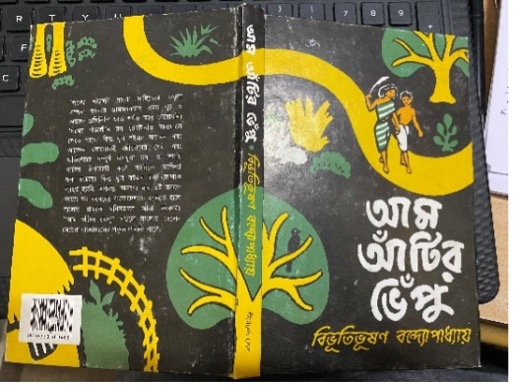
Satyajit Ray has designed as many as over 300 book covers. The repertoire of Ray book covers is extensive and varied; he continued to remain a composite and wholistic artist throughout the span of his career when he evolved as a writer, mainly for children, even while continuing to make films. He designed books for a host of writers beginning with Sukumar Ray to Bibhutibhusan Bandyopadhyay, to Premendra Mitra, Jibanananda Das, to Lila Majumdar, while he worked for Signet, and later even for other publishers. Each of these covers were aesthetic statements linking themselves to the themes and the content within. The frontispiece as well as the illustrations inside, ranged from the linocut / woodcut designs to fine lines and geometric solid shapes. Each one of these designs proved beyond doubt his versatility, talent and uniqueness of vision. Some of Ray’s book covers found pride of place in internationally reputed journals like the Graphis (in 1950).

Book cover by Satyajit Ray from personal collection

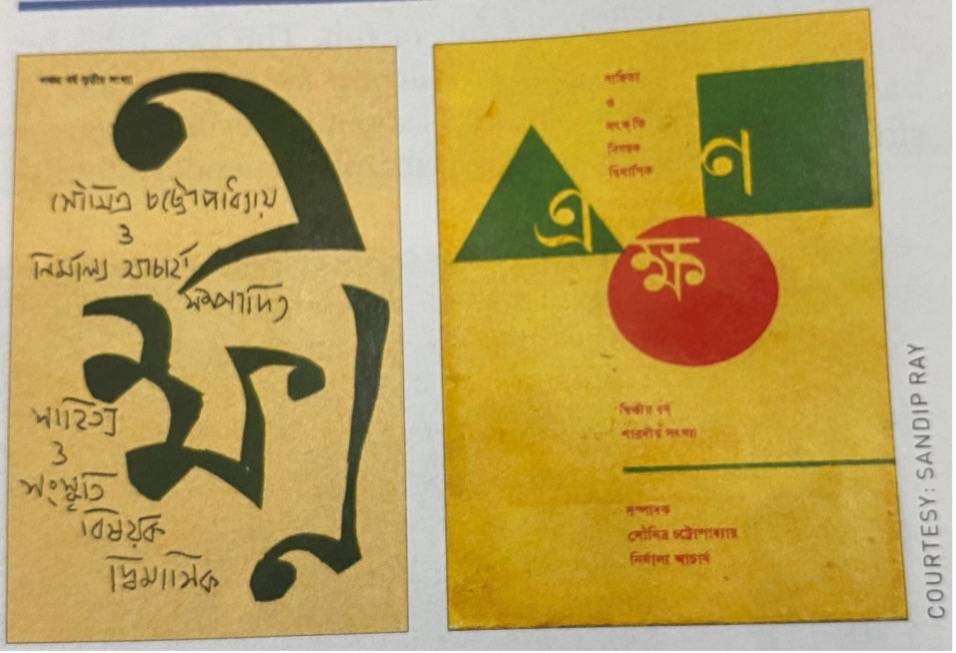
Ray’s artistry found new space in the covers of Ekshan, a Bengali bi-monthly periodical edited by Nirmalya Acharya and actor Soumitra Chattopadhyay between 1961 and 1995. The periodical died an untimely death after the demise of Nirmalya Acharya. Satyajit designed several of its covers and each one of them is a masterpiece of visual jugglery. There are three letters in the title and Ray seems to act as a visual conjuror of these three letters using various planes, letterings, geometry and even characteristics of various art forms.

Ekshan journal, Photograph from Frontline Ray Commemorative Issue, November 2021

The 1950s saw Ray totally emerged in films and his own maiden attempt at a directorial venture took shape in 1955, with Pather Panchali (Song of the Little Road) Ray also designed his film posters, title cards and even fliers, apart from writing the screenplay himself. Later, he also graduated to composing his own music and writing his own stories; seldom do we see such a versatile artist.

It may be pointed out here that while we keenly study the various facets of Satyajit Ray, he was not alone in diversifying the art of design and illustration in books. One may mention here the works of Purnendu Patri, Pranabesh Maity and several others whose works are significantly remarkable in the history of book making. As mentioned earlier, Satyajit has constantly re-invented and adapted himself to the changing face of time. This has allowed him to survive several cultural and historical changes.

The Writer

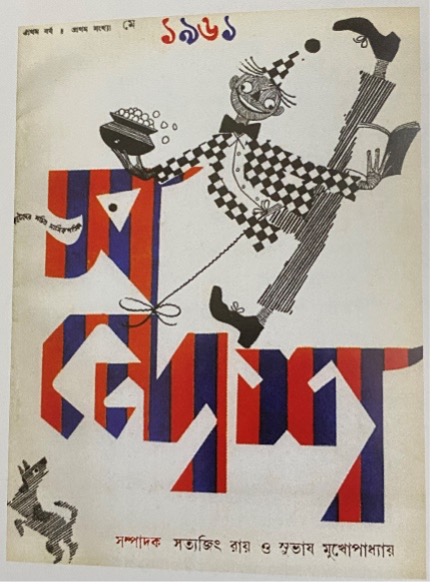
Satyajit began writing consistently from his fortieth year, somewhat out of necessity. Before that he wrote sporadically. That year, 1961, saw the revival of the children’s magazine Sandesh under the entrepreneurship of Ray and his poet-friend Subhas Mukhopadhyay. The magazine, inactive since the thirties, saw a new lease of life when Ray and Mukhopadhyay decided to revive it in 1961. They were also the editors of the new Sandesh. Ray designed most of its covers and like the various letterings of Ekshan, he juggled with the masthead of Sandesh as well.

The magazine continues to be among the leading children’s magazines till date and is currently being edited by Sandip Ray, Satyajit’s son. In the first issue of the new Sandesh, published in May 1961, Satyajit decided to translate some of Edward Lear’s The Jumblies into Bengali, simply as a gesture of participation. The second issue of the magazine carried his first short story in Bengali along with his own illustration. That marked the beginning of a series intriguing literature primarily published in the pages of Sandesh in a Bengali that is modern, contemporary, smart, and attractive to the young and inquiring minds of children. Some of his works were also published in Anandamela, another children’s magazine in Bengali and Target, a children’s magazine in English, which was quite popular in the 1980s. The latter mostly published Ray in English translation, mostly made by himself. Some of his English translations were anthologised in Stories, published by Secker and Warburg in 1987. There are many more translations of Satyajit now available in English; those of the adventures of Feluda and Professor Shonku, and Fotikchand and many others are also published by Penguin.    

Satyajit Ray’s books were a staple to the children of the eighties in the last century. Most of us then, welcomed our teenage with the scientific adventures of Professor Shonku and those of the private investigator Prodosh Mitter alias Feluda. These books were the repository of a variety of knowledge – one emerged cleverer and better enriched after regaling oneself with the exhilarating laboratory experiments of Shonku, while on the other hand, one cajoled one’s brains with the cerebral magic of Feluda. For children like us, Ray’s identity as a filmmaker came second to his writing, as we understood less of that art in that age. In fact, his stories were a rage among our contemporaries then, and we marvelled at his plots, along with his accurate illustrations and cover designs, all of which made him a supreme artist-figure in our childhood. There were also occasions when we connected his films on children with respect to his books. Hence, the adventure tales around the ‘golden castle’ (Sonar Kella, 1974) or those around in Benaras (Joy Baba Felunath, 1978), were only a derivative of what we perused in the books of the same names.

The Ray Generation

It would, perhaps, not be wrong to say that Ray’s writing created a brand in the genre of children’s literature. As contemporary and the immediate consumers of his books, some of us identify a part of our childhood with the Ray literature. He was a master in the handling of the bizarre and the fantastic, the investigative crime thrillers and also the evolution of the science fiction. Again, Ray may not be said to be a pioneer in any of these genres, but he made them highly palatable and attractive to the young minds. One would be guilty of falsification if one does not mention Sukumar Ray himself, or Hemendrakumar Ray and Premendra Mitra, who made, perhaps, the earliest forages into the art of the bizarre, the supernatural or the sci-fi in their own times and generations.

Satyajit Ray’s repertoire as a writer for children is extensive. He is credited to have composed thirty-eight adventures of Professor Trilokeshwar Shonku. In him, Ray creates a familiar Bengali with extraordinary scholarliness who was once a teacher in Scottish Church College Kolkata, but now resides in Giridi. Although his only companions are now his valet Prahlad and pet cat Newton, he has an elaborate family history which the author creates as a back drop for his readers. Professor Shonku’s various travel destinations offer extensive scope for young minds to travel within the safety of their homes. In creating the several marvels of science Satyajit must have surely drawn extensively from the works of Jules Verne, H.G. Wells as well as The Chariot of the Gods (1968) by Erich von Dӓniken – works with which he must have been familiar ever since his childhood. Scholars also propound similarities between Professor Challenger of Arthur Conan Doyle (The Lost World) and Professor Shonku. However, there is also reason to believe that Professor Shonku has a distant antecedent in the character of Professor Hushiyar (Heshoram Hushiyerer Diary) created by Sukumar Ray. With time, of course, Shonku evolves as a more serious and responsible, internationally acclaimed scientist. Ray had also wanted to make a film on aliens, with a sound background on science fiction, but this dream remained unexecuted. The first ever film on Professor Shonku was made by his son in 2019.

The Private Investigator Mr. Prodosh C Mitter first made his appearance in the arena of Bengali detective fiction in the year 1965. The Bengali readership was already accustomed to private detectives created by Niharranjan Ray (Kiriti Ray) and Sharadindu Bandyopadhyay (Byomkesh Bakshi) before Ray launched the career of Feluda, who emerged as a highly identifiable neighbourhood man with his nephew and assistant Topshe and their elderly writer-friend Jatayu. One may again mark the presence of other detectives in contemporary literature like Kakababu (Sunil Gangopadhyay), Gogol (Samaresh Basu) and the boy group of Pandava Goyenda (created by Sasthipada Chattopadhyay), which were also available to the young readers along with the adventures of Feluda. All of them were simultaneously popular among contemporary children, although Ray scored higher because of his razor sharp intelligence and complete artistic and aesthetic package that his books offered. Some, made into films, made him the most popular among children and adults alike. Apart from his series characters like Shonku or Feluda, Ray has created a host of other characters in numerous short stories and novellas, over a period of thirty years or more. There is, quite interestingly, very little adult fiction written by Satyajit, with the exceptions of Nayak (The Hero, 1966), Kanchenjunga (1962) and Pikoo’s Diary (1980), all of which have been made into films.

Ray as Translator and maker of Children’s Films

Ray distinguished himself as a translator as well. The first major translation done by Satyajit Ray was, perhaps, those of a selection of Sukumar Ray’s Aabol Taabol (‘Nonsense Verse’, 1923). About ten such poems were translated / trans-created in the pages of a radical weekly called Now, edited by Samar Sen during 1967-69. These poems were then noticed by P. Lal of Writers Workshop, a pioneering publishing enterprise which patronised (and still does), Indian writing in English, since 1958. They were brought forth as an independent collection by this house in much admiration for Satyajit’s skill in rhyme and meter, in 1970. The edition has remained a popular one and has recently suffered alterations in the fourth corrected and expanded edition in 2019. The text is also prescribed for study in a course on Popular Literature in the undergraduate syllabus of the University of Calcutta, since 2018.

Satyajit also translated some works of Upendrakishore along with other works of Sukumar into English in various times of his career. These are now available with the translations of his own works, in a compendious edition titled 3 Rays (Penguin Books, 2021) and edited by Sandip Ray.According to Sandip Ray, these were mostly done with a view to popularise the works outside Bengal and to a larger audience, mostly as recreational activities, which Satyajit undertook between the shooting of his films.

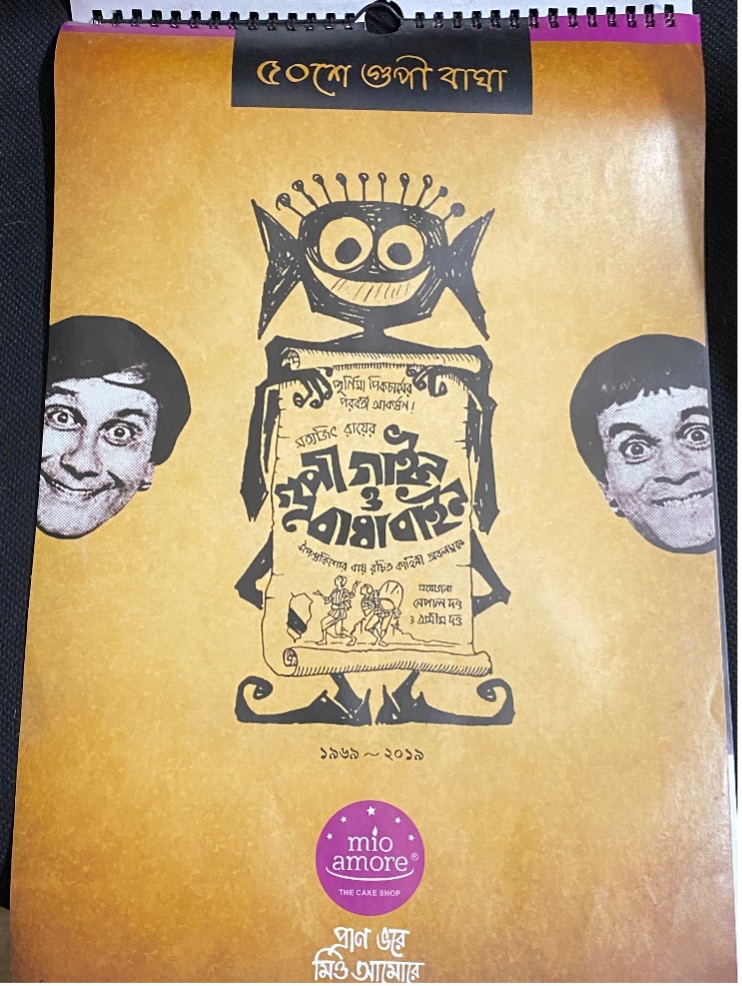
In 1969, Satyajit Ray directed Goopy Gyne Bagha Byne, a novella originally written by Upendrakishore Ray Chowdhury about two rustic simpletons Goopy and Bagha and their careers in music. The occasion was the birth centenary of Upendrakishore and was a result of requests from his teenaged son Sandip, to create something for children. The film was an improvement on the literary text, and continues to be a marvel in the study of the fantastic, given the limited means with which it was produced. Satyajit introduced in the film a dance – the sequence of the ghosts’ dancing – which remains a marvel of cinematography and an example of ingenuous thinking, intelligent editing and deft execution within a limited budget. As always, Satyajit creates a family pattern for Goopy and Bagha, too. They re-appear after a hiatus of ten years in Hirok Rajar Deshe (1980). By this time, the duo has earned fame as extraordinary performers, with magical powers to transfix their listeners and with uncanny powers to unravel the mysteries of state politics. On the domestic front, they are also married to princesses as well as proud fathers.  Hirok Rajar Deshe or ‘The Land of the Diamond King’ is a study on an ugly regime of totalitarianism, where almost all are being brainwashed to worship a power hungry king. The film may be identified as a political satire under the garb of entertainment for children, where good eventually overcomes evil. Satyajit makes extensive use of fantasy and magic as well as creates a world where science is being used to destroy the good sense of people. It is the musical duo of Goopy and Bagha who re-affirm good sense and sanity in an anarchic and dystopian state. The duo returns in Goopy Bagha Phire Elo (Return of Goopy Bagha, 1991) and the setting now is influenced more by a sense of science fiction and fantasy. The last film of the trilogy was directed by Sandip Ray, who re-affirms his presence in a cyclical and metaphorical ‘coming of age’ marking himself as a filmmaker.

The cover page of the Commemorative Calendar celebrating 50 years of Goopy Gyne Bagha Byne

The enormity of the Satyajit Ray papers, letters, manuscripts, posters, notebooks, sketches, as well as his film prints are now being collectively maintained and conserved by the Society for the Preservation of Satyajit Ray Archives. The Society also organises regular lectures and exhibitions and looks to the publication of books on the maestro. It is significant that Penguin India has decided to dedicate a whole collection of books on Ray as ‘The Penguin Ray Library’. One must not fail to acknowledge the scholarship and hard work of his son Sandip Ray and Satyajit-scholars like Debashis Mukhopadhyay and Pinaki De, who mesmerise with their encyclopaedic knowledge on the master. The past year and half have seen innumerable lectures and scholarly interactions on Ray where the two have shone independently. The present author stands in awe of their scholarship.

( Note: All the photographs used in this article are taken by the author, except the one licensed under creative commons.)

References

  1. Frontline – ‘The World of Ray: A Commemorative Issue’, November 5, 2021
  2. Ray, Sandip (ed.). 3 Rays: Stories from Satyajit Ray. New Delhi: The Penguin Ray Library, 2021.
  3. Ray, Sandip (ed.). Sandesh. Festival Numbers 2020 and 2021. Commemorative issues on Satyajit Ray entitled ‘Satyajit 100’. Kolkata.
  4. Ray, Satyajit (trans.). Nonsense Rhymes – Sukumar Ray. Kolkata: Writers Worshop, 2019.
  5. Ray, Satyajit. Shera Satyajit. Kolkata: Ananda Publisher’s Private Limited, 1991.
  6. Robinson, Andrew. Satyajit Ray: The Inner Eye – The Biography of a Master Film-Maker. London and New York: I. B. Tauris, 1989.

Dr. Anasuya Bhar teaches English at St. Paul’s Cathedral Mission College Kolkata.

.

PLEASE NOTE: ARTICLES CAN ONLY BE REPRODUCED IN OTHER SITES WITH DUE ACKNOWLEDGEMENT TO BORDERLESS JOURNAL
Categories
Poetry

Seaside Reverie

By Uma Gowrishankar

3.20 P.M.

the sun on the palm frond breathes 
salt and the breeze sets inland 
the water sweeps in linen tides
waves dither in a band of silver, the cursive script 
scrolls end of the day
the grey of her eyes 
washes a thousand beach moonflowers 
faces pressed on dark silt, their pollen 

star her iris 
gravelly with shots of goldthread the sand rises 
in the silk he holds against her skin 

Uma Gowrishankar’s poems have appeared in online and print journals that include Yearbook of Indian Poetry in English 2020-21, Poetry at Sangam, CityA Journal Of South Asian Literature, Qarrtsiluni, Vayavya, Entropy, Feral: A Journal of Poetry and Art, Curio Poetry. Her full-length collection of poetry ‘Birthing History’ was published by Leaky Boot Press.   

.

PLEASE NOTE: ARTICLES CAN ONLY BE REPRODUCED IN OTHER SITES WITH DUE ACKNOWLEDGEMENT TO BORDERLESS JOURNAL
Categories
pandies' corner

Children of Nithari: A Letter to God

Narrative by Tanveer Hussain & translated from Hindustani by Vritika Thareja

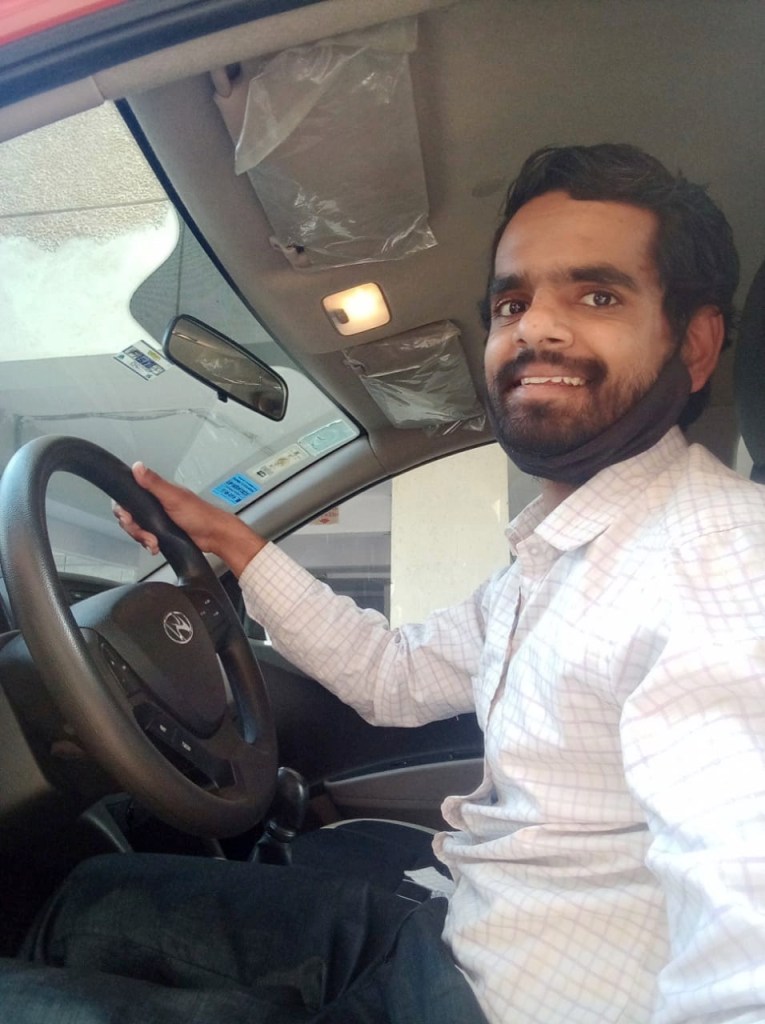
Tanveer Hussain decided to not be a burden on his family at a very young age and worked while pursuing his schooling. Now 27 years old, he has worked at many places and worn many hats.  From being a polio awareness volunteer to a teacher at the Saksham NGO (where he attended the charity school and met pandies volunteers), to a typist and an electrician, he is employed as a driver today. He joined pandies’ workshops (as he started visiting the Saksham school) in 2008 and is remembered as a quiet boy who would unleash a fury of talent when asked to perform in workshops or onstage. He first appeared on the American Center stage in 2011 and has since been a consistent performer. He writes short stories and wants to  learn to write fluently in English before he gets married.

A Letter to God

Dear God,

I hope all is well with you. I wonder where your abode is these days. Are you in the hearts of billions of believers or are you residing somewhere in the beautifully carved and crafted buildings made specially in your name? Everyone I meet, claims to be an expert on you and your location, but no one really seems to know. 

Honestly, I did try looking for you under the peepul tree where many residents of my society go to pray every morning, but I had to make do with blissfully smiling photos of you. I even travelled far and wide into the mountains, thinking maybe just maybe I was misdirected. Well, there too, I was met with a bunch of people reciting your stories. Asked around, searched on the internet. Still couldn’t reach you.

Hey, don’t you think this will break my spirit, God? After all, I am devout and finding you is my mission now — even if I have to wage a war against humanity. There are one too many taking place anyway. Not that one more is going to make a difference, right?

Okay, let’s say I do find you and prove your existence. Let’s say I ensure that every last human being living on the face of the Earth bows down to you. Would I be content? Hell, no! I wouldn’t trust their word for it. Faith doesn’t come easy these days, God. Generations need to feel the impact. It’s not a fool’s game.

Well, God, I heard you can see all of us from where you are. How’s the view? Did you see how bribes have travelled from bureaucratic offices to the temples in your name? Asking favours from you has become a fancy affair? So much in the name of ‘faith’! It’s such a cute little word that means nothing to those who preach it these days, I tell you.

But the smart move was just leasing out your name to the religious preachers. Had you given them a real part of your power, I don’t know what all they would have done. I’m sure you have heard the famous saying, “You offer them a hand, they grab your arm.”

Tell me something, under your watch, after the world has been practically forced to offer bounties to you for peace and prosperity, offer you more than the taxes (or sometimes to just evade taxes), why are people getting murdered, raped, assaulted, looted? I run out of words to describe the horrors, really. I have seen people’s lives turning into living hell.

Are you okay with this? Don’t you think it’s outright unfair? People say you are watching everything and that whatever you do is for our good. I mean, we can’t see what’s in their future but apparently you do, right? So, I assume then you knew how horrible would be the future of any rape victim? But I am conflicted. In a rape case in my village, both the victim and the perpetrator suffered.  The girl committed suicide out of living with the ‘shame’ of facing the extremely moral society we live in. And the rapist, the only earning member of his family, was hanged to death. His family is now crippled for money. The government will provide monetary aid to both the families for some time. But, after that? Then how are they supposed to manage? How are the parents of that unfortunate girl supposed to ever find happiness? What about the wife and daughter of the man who was hanged? What did they do to suffer the shame and poverty that they will now? Who will take their responsibility? I thought you kept all of this in mind before you let things happen here on Earth.

Am I mistaken? Are these just stories woven too deep and wide? Maybe you can’t foresee the future. If you could, I am sure you’d put a stop to this madness.

I am convinced now, that it is we who propagate and spice up the wrongs in this society and then criticise others, assuming a moral high ground ourselves. We don’t stop and introspect for once, the impact our words and actions will have on our children, the generation that will grow up to imitate the very same deeds. A generation that can be moulded towards a more inclusive and positive future is executing the hatred we are sowing with our very own hands. Aren’t I right? After all, a knife is a knife – you can either look at it as a weapon of murder or a tool for slicing fruits – it’s a game of perspectives.

Honestly, God, I feel that we have mastered the art of twisting tales to please ourselves. And it’s not like the entire human race is incapable of being up to any good. As long as people like Kailash Satyarthi and Maanjhi the Mountain Man continue to make a difference, there is still hope. From time to time, we have witnessed people who have risen above and against the common belief to prove that walking against the wind and reading against the grain is a possibility. I refuse to believe those who affirm that destiny will always overpower a man’s free will.

God, I have poured my heart out to you. You are so patient, and I, ever so grateful for you. There’s immense power in believing that you are up there, ensuring all of us are safe and sailing smoothly, especially in times like these where covid has wreaked havoc on the entire planet.

You, the taskmaster of it all, have got it all under control.

Or at least I hope so.

Your child,

Tanveer Hussain

Kailash Satyarthi: An internationally acclaimed child rights activist who fights to put an end to child slavery and exploitation

Maanjhi the Mountain Man: Dashrath Manjhi, a labourer from Gehlaur village in Bihar who carved a path 110m long, 9.1m wide and 7.7m deep through a mountain, single handedly using just a hammer and a chisel, to create a route to give his fellow villagers easier access route to hospitals in the city.

Vritika Thareja is an advertising professional who believes that power lies in the hands of those who dare to tell a story. She has been associated with pandies’ theatre since 2015 and facilitates workshops held with other organisations including Shaktishalini Women’s Shelter Home and Saksham, Nithari.

Categories
Slices from Life

It’s Amazing the Things We can Do

By Erwin Coombs

That’s the title of a narrative that needs explaining. I have to start off by being quite honest: I was raised in a cloud of cynicism and despair. As I’ve already hinted — my upbringing was classically dysfunctional with a broken home at age six and all kinds of attendant problems. Poverty was one. Actually, poverty is never one problem because it has a ricochet effect like shooting a gun in a metal room as it leads to a whole bagful of treats that make life that much more difficult. Apart from the outward signs of misery, there were all kinds of internalised ones.

I am a huge optimist by nature and why I don’t know. It might have to do with a faulty IQ or some brain injury suffered in youth that I can’t recall, for obvious reasons. Mind you, I did fall out of my highchair when I was a toddler in Cairo, Egypt. I don’t know if the highchairs at that time were substandard or perhaps my mother didn’t bother to do up my safety belt, but I went down like a ton of bricks to the non-carpeted floor. I’m sure there was no permanent damage, except for the fact that there is an indent in the middle of the top of my head.

When I was young and had hair, I remember occasionally coming across that indent and thinking “Thank God I have hair to cover THAT thing up with!” But God has a delicious sense of irony and between Him and gravity, or rather with gravity working as his foot soldier, time chipped, or rather pulled away at my hair. And as my hairline receded like a Maple Leaf fan’s playoff hopes, that deformity became a feature of mine. I’m not a vain man, by any stretch, but this was a bit to deal with. Over time, I got used to it.

I recall one day I was helping out in one of my daughter’s grade two classrooms. I was sitting reading a story to several cute little kids when one of the girls asked, in a completely good-natured way, “What’s that big lump on your head?” I wanted to explain that rather than a big lump it was actually a crevice which gave the appearance of a big lump, but how lame would that have sounded? Instead, I did more of that thinking on my feet thing and said, “You see, Ariana, I have so many smart thoughts that I don’t have room for them in my brain. So, I store them there.”

She looked wide-eyed at this new marvel she had never heard of before and I could tell she was impressed. I had turned what could have been a potentially embarrassing deformity for my daughter into a point of admiration. I had new cache as the really smart guy. Score one for Dad.

Thinking back on that highchair fall, there was another potentially brain damaging incident that took place in Cairo. Given that there were two such events it’s amazing I can even remember them. But I guess the damage was fairly minimal, though I’m sure several former teachers of mine would claim otherwise. We had just arrived in Cairo as my father was posted at the Canadian embassy, but our house wasn’t ready yet. That meant a two week stay at the Cairo Hilton on the public coin. Being a toddler, I couldn’t entirely appreciate how cool this was, but my family did and when Dad was at work we spent a lot of time at the pool. I couldn’t walk then but neither could a lot of the guests who made good use of the pool-side bar. My Mum no doubt did, and my siblings were busy playing childish games. I was plopped on the steps of the shallow end of the pool to bake in the sun and hopefully not teeter into the water. Hope is a fine thing, but you don’t want to risk a toddler’s life on it. And sure, as shooting I did the teetering and as with the highchair, toppled to the bottom. The landing wasn’t so bad, it’s just that there was no resurfacing to go with it and so I sat comically at the bottom, no doubt waving my arms and looking wide eyed.

Meanwhile, on terra firma, someone thought to look for me.

“Has anyone seen Erwin?’

If I had a toddler that was missing poolside, I would have phrased it a little more urgently. But the whole family circled the pool until my brother Eddy spotted me at the bottom, now fairly blue through lack of oxygen and called out.

“There he is!” I believe he said it like a child finding a hidden Easter egg in a hunt instead of a drowning sibling. But for all that they did pull me out, dry me off and I was not much the worse for wear. Here’s a funny follow up lest you think that our childhood experiences don’t have some kind of resonance in our adult years. I was never told of this almost drowning incident until I was well into my teens, for some reason. Yet my whole life I had been, and am still, subject to a recurring nightmare where, you guessed it, I am at the bottom of a pool, gasping for breath and I wake up panting. As the song says, take good care of your children. If you don’t they might end up with misshapen heads and poor sleeping habits.

There was a third incident in Cairo involving a camel and the pyramids. My God, but it sounds like I’ve had this exciting life but really most of it has been spent holding onto a channel changer and dreaming of better days. While in Cairo the family decided to take a tour around the pyramids riding camels because, hey, that’s the thing to do there. And it would have been a grand idea except that my Mum had just strapped the baby me onto the camel before she got on when the camel decided that one passenger was enough, and it bolted. Camels are ornery beasts and when they get a mind to something they do it and apparently kidnapping the blonde baby was a bee in its bonnet so off it went. Soon one of the camel instructors leapt onto another camel and chased me down in the Sahara after a few minutes. Had he not, I might well have wound up as a Bedouin being raised in the desert as some sort of a poor man’s Lawrence of Arabia. Looking back on my time in Egypt, it seems clear that my parents had decided to do away with me but lacked the foresight for a proper plan or the energy to keep at it. But I hold no grudge. They did have three other mouths to feed, after all.

Despite all those damages to my brain at an early age I have managed to negotiate this old world with some degree of success. And one of the points I want to make in this narrative is that people are extraordinarily able to do things they think they wouldn’t otherwise be able to do, if that doesn’t sound too convoluted a sentence. In other words, we can accomplish things under the most enormous pressure and under terrible conditions that we think we might not be able to do even under ideal circumstances. What this says about human beings is that we are to be marveled at and not despaired over, as we so often do. We look down on our species and God knows we look down on ourselves countless times a day.

The old ‘pop’ psychology of examining the self is not just a cutesy way of filling up self-help books with advice. Self-help books are generally, a dark alley to visit. They are great at momentary inspiration but generally don’t last beyond the initial reading. That’s why people keep poring over them again and again. And here is one of the problems with self-help books; they tell us what we already know to be true and what should be done. The advice is common-sensical. But following advice is much more difficult than just seeking it out and so we repeat the patterns of dumb behavior. And as long as we are seeking advice from a friend or a book, we get the feeling we are doing something. It calls to mind the Roman emperor Marcus Aurelius who said, “No longer talk about what a good man should be. Be one.” Or in the words of my father, “shit or get off the pot.” I’ve always thought a good title to reveal this problem with self-help books would be Breaking the Self-Help Dependency Cycle: Volume 8.

Returning to my narrative highlighting the amazing things people can do and not even realise they can do it. I have a life and death example from World War II. I knew an old woman whose life had been a series of tragedies. Sure, she had had some joy. She was born in the First World, had children she loved and grandchildren, had friends and all manner of hobbies from knitting to crocheting and everything in between. Mind you knitting and crocheting are close so there might not seem a great deal in between, but there is, and she pursued them, getting a joy out of the little things in life. This despite the fact that she was raised in Nazi occupied Holland, had a brother who died in a Nazi work camp, one of her children was killed in a traffic accident while just a boy, her husband had died of cancer, she had defeated cancer, well, the list goes on. But despite the list of reasons to give up and surrender to despair she found joy where she could, displaying a strength of character that people who have suffered much less and whined much more would do well to learn from.

Here is her story of doing what you think you can’t when circumstances demand you step up and find a solution instead of an excuse. This lady, Gail, was living on a farm near some woods during the Nazi occupation of her country. One of her two brothers had died in that German work camp so the other one who was at the same camp, decided that he was not going to stay. He escaped from Germany and somehow made his way home to the farm. His family hid him, but he had to spend a lot of time living in the woods to avoid the SS (Shutzstaffel) who knew he was there but couldn’t catch him. One day he was at the farm splitting wood when word came that the SS were coming for him. He naturally ran to the woods. Here was the trouble. The Nazis arrived and demanded to know where he was. Gail was the only one home and denied that he had been there for over a year. The crafty head of the unit spied the partially split pile of wood and asked who had been doing this job. Gail calmly said she had, and as the Nazis had taken away the men, she had no choice, now did she? The head of the unit nodded calmly and in an equally calm manner took out his revolver.

“You are doing a very good job. You’re pretty skilled for a little farm girl, aren’t you?”

He looked at her smilingly and gestured to the pile of logs.

“Show me how it’s done. If you can prove it wasn’t your brother who did this, well, that will be fine. If you cannot, you die here and now at the hands of an officer that you’ve lied to.”

He stepped back, keeping the gun pointed at Gail. She told me she had never picked up an axe in her life, but she knew that if there was ever a time to do it and to learn how, this was it. She said that she was trembling inside but knew that that fear had to be kept hidden. She also knew that if she failed and was killed it would redouble the SS man’s commitment to track down her brother. Even when her life was hanging by the swing of an axe, she was concerned with the fate of someone else. And this also speaks to me about the true nature of humanity. Despite the fact that whatever selfish tendencies we have can be played upon to act in more selfish ways by people who make a profit out of selfishness, we are fundamentally a caring species with streaks of unselfishness that are not merely streaks but represent our true colours.

Gail stepped up to the pile, picked up the ax and said a silent prayer of desperation and hope while she put on a brave face,

“Dear God, please, just let me swing this axe true, just this once.”

She had seen others do it and tried to replicate their movements, placing a log on the stand, shifting her hands down the shaft and giving a mighty swing. The log split in two with the softest sound. She hid her own amazement and looked at the man holding his gun and her life in his hands with a bored “See?” sort of expression. The Nazi uncocked his gun and placed it back in the holster.

“Couldn’t have done better myself. Carry on,” and he and his men walked away to continue the search for the brother that I’m happy to say was never successful. That’s the brother whom I knew as a delightful old man who had given me those sharks teeth all those years ago. He, like his sister, was so full of life and happiness despite all they had gone through. Or perhaps not despite but because of all they had gone through. From the wonder of a hundred-year-old shark’s tooth to the smile of their babies in their arms, they loved all that life had to offer because they knew how precious and, surprisingly, readily available joy is in this world.

.

Erwin Coombs is a retired teacher of philosophy, history and literature who has rejected all forms of retirement. He is an avid writer, reader, and observer of life. When not observing and reading and living, he is writing. Erwin has lived in Egypt, Jamaica, England and travelled a great deal but, in his mind, not enough. His writing is a celebration of people and opportunity, both of which life gives in abundance. These narratives are from his, as yet unpublished book, Dusty the Cat: Her Part in My Downfall.

PLEASE NOTE: ARTICLES CAN ONLY BE REPRODUCED IN OTHER SITES WITH DUE ACKNOWLEDGEMENT TO BORDERLESS JOURNAL
Categories
Nature's Musings

Storms & Seas

  Penny Wilkes captures the colours of a stormy sea, sky and birds responses to the weather with her camera and words

Pelicans and seagulls find protection on the edges of cliffs as winds broil. Cormorants rise into the branches of pine trees and preen. A winter sea and sky toy with the colour wheel and capture a view that often defies a camera’s eye.

Paint a storm

Before the storm, the sea flaunts its personalities. During their flights of defiance against the wind, seagulls ripple on the currents like kites. They evade the force as long as possible, wielding magic in the thrust of wings. Pigeons circle in formations, catching the drafts. Subtle changes alert the birds’ radar to seek shelter before intensity could whip them from the sky.

Surreal sea and menacing clouds

The sky provides an opening. Where does it lead?

The sky plays with the sea

As the storm passes, the sky returns to calm the sea and reflect the blue. 

A seagull meeting

Seagulls ready their feathers for flight.

.

Penny Wilkes,  served as a science editor, travel and nature writer and columnist. An award-winning writer and poet, she has published a collection of short stories, Seven Smooth Stones. Her published poetry collections include: Whispers from the Land, In Spite of War, and Flying Lessons. Her Blog on The Write Life features life skills, creativity, and writing:  http://penjaminswriteway.blogspot.com/ . Her photoblog is @: http://feathersandfigments.blogspot.com/

.

PLEASE NOTE: ARTICLES CAN ONLY BE REPRODUCED IN OTHER SITES WITH DUE ACKNOWLEDGEMENT TO BORDERLESS JOURNAL

Categories
Essay

Are Some of Us More ‘Human’ than Others?

By Meenakshi Malhotra

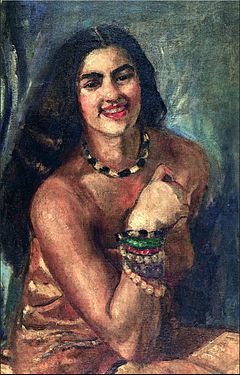
Self-portrait by Amrita Shergil. Courtesy: Creative Commons

Post-humanism and the Anthropocene epoch have undermined the notion of human exceptionalism, the feeling that as a group or a species, human beings are superior to other species. It is time to interrogate the hierarchy of human/animal where we understand the category of the human as undoubtedly superior. One view is to see the human as a posthumous category, not just post-human. Most civilisations and philosophies across the world have privileged one set of values/qualities at the cost of another-thus categories like human-animal, man-woman, reason-passion, good-bad have become binaries where one term is considered better than the other. 

It is in this context that I turn to Catherine MacKinnon’s work, Are Women Human? (2006). In her book, she poses the question of women’s relationship to the category of the human. 

After almost a century from the Universal Declaration of Human Rights, which defined what a human being is and is entitled to, Catharine A MacKinnon asks: ‘Are women human yet?’ If women were regarded as human, would they be subjected to the privations and oppressive practices perpetrated in cultures? Would they, for instance, be sold into slavery and sexual slavery worldwide; would they be “veiled, silenced, and imprisoned in homes; bred, and worked as menials for little or no pay; stoned for sex outside marriage or burned within it; mutilated genitally, impoverished economically, and mired in illiteracy–all as a matter of course and without effective recourse?”

In the wake of recent events which have once again highlighted the scant regard in which women are held across nations and in societies, it is instructive to revisit the fundamental questions posed by Mc Kinnon. The Nirbhaya, Asifa, Unnao, Priyanka Reddy, Hathras  cases in India, events that unfolded recently in Afghanistan and innumerable instances the world over, are traumatic and traumatising as they are instances where violence has been unleashed, consciously and deliberately, on women, children and whole communities. These significant  events can be called ‘critical’ since they raise some crucial questions on the category and definition of the notion of the ‘human’ itself.

The category of the ‘human’, as Yuval Noah Harari and many before him discussed, became associated, in terms of evolutionary biology, with a large brain, an upright gait and other specific characteristics. Whatever its genealogies in scientific or anthropological parlance, the word acquired a specific set or cluster of meanings. The notion of ‘human’ gets associated with a set of inalienable rights(as in human rights), a set or cluster of affect/s such as kindness, compassion and sympathy/empathy. And yet, this is a term we revisit time and again, at important historical conjunctures. Sadly it is a term which emerges more in the breach than the observance. Further, it is one that seems to be taxonomically problematic and perplexing and  shores up the category in a peculiarly  exclusionary way. To substantiate and cite an instance, inter alia, were the Jews admitted in the category of the human by the Germans, the Dalits by upper castes and women by men? The problem here is not just of ‘othering’ but the fact that the persistence of asymmetric power relationships robs one group of a sense of agency and the power to name themselves and their experience. The other group, which calls the shots on how humanity is to be defined, becomes blind to its own oppressive behaviour, perpetuates atrocities and is condemned by posterity. It becomes a case where, in a manner of speaking, all of us are human but some are obviously more human than others. Thus the  suspicion that peppers our mind when we come across liberal terms like ‘equality’ and ‘freedom’ also extends to the ‘human.’   

Working with issues that are sited on the cusp of law and culture and that are a vital aspect of transnational feminism affecting the  status of women, McKinnon in her essays  takes her gendered critique of the state to the international plane. Her book/essays is/are a trenchant critique of the inequalities of international politics, which turns a blind eye to the consequences and significance of the systematic maltreatment of women and its condoning by a skewed system. Her sharp critique points toward fresh ways—social, legal, and political—of  “targeting its toxic orthodoxies”.

McKinnon takes us inside the workings of nation-states, where the oppression of women is the common factor that defines community life and distributes power in society and government. She takes us to Bosnia-Herzogovina for a harrowing look at how the wholesale rape and murder of women and girls there was an act of genocide, not a side effect of war. She takes us into the heart of the international law of conflict to ask—and reveal—why the international community can rally against terrorists’ violence, but not against violence done to women. A critique of the transnational status quo that also envisions the transforming possibilities of human rights, this  book makes us look as never before at an ongoing war too long undeclared, unspoken and relegated to silence..  

It is important to recover voices like that of McKinnon since the self-appointed  custodians of the ‘human’ are more often than not dyed-in-the-wool liberals, paternalists, self-appointed purveyors of law and morality. Most of them are so entitled that they are entirely blind to their own privilege as they declare themselves to be the champions of human rights, having practised and perpetuated the wrongs that need to be set right.

As we ‘celebrate’ the month of the Woman in March, we need to revisit these questions which have gained a new urgency in our time. Only then can we perhaps understand the full implications of the human and work towards making it a truly inclusive category.

.

  Dr Meenakshi Malhotra is Associate Professor of English Literature at Hansraj College, University of Delhi, and has been involved in teaching and curriculum development in several universities. She has edited two books on Women and Lifewriting, Representing the Self and Claiming the I, in addition  to numerous published articles on gender, literature and feminist theory.       

.

PLEASE NOTE: ARTICLES CAN ONLY BE REPRODUCED IN OTHER SITES WITH DUE ACKNOWLEDGEMENT TO BORDERLESS JOURNAL
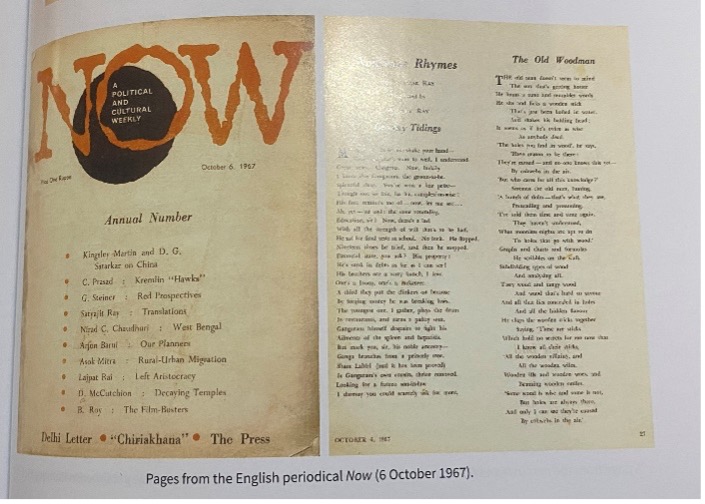
Categories
Interview

From the Himalayas to the Banks of Thames

In Conversation with Sangita Swechcha, a writer from Nepal

Dr Sangita Swechcha

Nepal conjures up images of Himalayas, Mount Everest, Kathmandu and unique cultures. From Nepal, a writer called Sangita Swechcha, moved to United Kingdom. With her she took the flavour of the hills, the stories, the breeze, coloured them with Western veneer to create more literature that mingles the two lores.

Swechha has published a novel, Pakhalieko Siundo (Washed Vermillion), authored Gulafsanga ko Prem (The Rose: An Unusual Love Story),  and co-authored Asahamatika Pailaharu (Hoofmark of Discord) – both collections of short stories. Her short stories, poems, and articles have appeared in various international journals and online portals. She was the guest editor for the ‘Nepali Literature Month – Nov 2019’ held at Global Literature in Libraries Initiative (GLLI), a US-based organisation working towards the visibility of world literature. Two of Sangita’s latest literary works are The Himalayan Sunrise: Exploring Nepal’s Literary Horizon and A Glimpse Into My Country, published by Bookhill International in London. Swechcha, who is now located in London, has been working in the international development sector for more than fifteen years as a Communications Expert outside of her literary commitments.

In her interview, she tells us about her life in the UK and introduces us to the newly-fledged Nepali literature.

Since when have you been writing?

I started writing when I was in school and used to be quite active during college days as well. However, I could not keep pace with everything. Juggling between family life, studies as well as career, I slowly left creative writing. At some point, I stopped. Then it took several years to get back to writing again. Now, I am here to follow my passion once again.

What languages do you write in? Why?

I love writing both in Nepali and English. Nepali, being a native language, I am emotionally connected to it. On the other hand, writing in English gives me wider audience and helps broaden literary landscape where my emotions and words traverse.

I have published a novel, a collection of short stories and several other literary articles and poetry in Nepali. Short stories and many literary write-ups in English have been published in various international portals and journals. I recently edited two anthologies in English and they have been published from London.

You live in England now. How long have you been living here? Does this impact your writing?

I have been living in England since 2007. Living in here has given me more exposure to different cultures and people of diverse backgrounds. It has helped me in my writing as I have learnt more about languages and cultures living outside my country.    

Is life different here from the life you led in Nepal? How?

It is not very different. I live with my family, work as I did in an international development organisation. My work is pretty much the same as it was in Nepal. Yes, I do miss my parents, close friends, family and being surrounded by beautiful mountains. That is something I find different here.

What are the themes you favour while writing? Why? Expand on that.

My writings flow in different directions, and I have written on various themes. My poetry, stories and novels focus on love, friendships, women, individualism, social identity, revenge, power imbalance and struggle, death and dying, family conflicts, trusts etc. In this sense, there is no specific theme I favour. I love exploring different themes and my writings try to capture various aspects of people’s lives.

There seems to be some amount of writing about women in Nepal, including your own. What kind of issues do women face when it comes to education, career as well as other areas?

I think women not just in Nepal but around the world have more responsibilities when they have family, mainly children. Time management becomes the main issue while one tries to balance between family life, career, and other interests. Therefore, prioritising things in life is a challenge.

What is the literary community like in Nepal? Tell us a bit about literature from Nepal.

There are many literary communities, groups, and societies in Nepal. They promote Nepali literature within the country through various programmes, publications, literary awards, workshops, conferences, etc. Some of these groups also host literary festivals where writers from other countries also participate. In today’s globalised world, Nepali writers are spread around the world and various literary circles have been formed in different countries too. In order to bring Nepali writers around the world onto one common platform, an institution like the International Nepali Literature Society (INLS) was established, which has chapters in over 80 countries.

Bhanubhakta’s Ramayana. First Nepali book published in 1887

Literary writing in the Nepali language only began in the 19th century. Prior to this period, Nepali literature was in Sanskrit. The first written literary work in Nepali was Bhanubhakta’s Ramayana (1887). As such, our literature has a history of more than a hundred years. During this time, literature from different genres has been published and proliferated rapidly. Since most of these are written in Nepali, the world outside of the country doesn’t know much about the richness of our literature, although through translation to other languages, we slowly hope to transmit our stories to the world and join the global community.

We see mainly translations in English from Nepal. Do you have major writers who write directly in English like we have English and anglophone writers in other countries?

Not only are the number of Nepali writers who write in English slowly growing, but the translation of literary works from Nepali to other languages is gaining momentum too. Yes, there are several writers in Nepal who directly write in English and contributed to publications of novels, collection of short stories, poetry books, travelogues etc. Especially, the past decade has also seen a significant rise in the number of writers outside Nepal too.

Perhaps the Last Kiss’ by Bhupeen, spoke of how Nepalis went to Chennai to study. Is it a norm that Nepalis go to another country to study? Or is that true only for some?

The trend of going abroad for studies is ever growing in Nepal. Just like people’s movement and migration for better employment opportunities around the world, for better education too, you can see Nepalis moving from villages to cities or to Kathmandu valley or from different parts of Nepal to other countries.

You have published two anthologies in English recently. Tell us a bit about these anthologies.

The Himalayan Sunrise: Exploring Nepal’s Literary Horizon co-edited with Karen Van Drie and A Glimpse Into My Country co-edited with Andrée Roby are my two recent publications.

The Himalayan Sunrise: Exploring Nepal’s Literary Horizon is a unique collection of interviews, book reviews, features on literary books, poetries and artworks that will take you on a virtual trip to Nepal’s literary landscape of indigenous flavours.

A Glimpse Into My Country is a collection of international short stories by writers from Nepal, India, Bangladesh, England, France, South Africa, and Zimbabwe. Both the books have been brought out by Book Hill International.

What are your future projects?

I recently completed a novel. I am revising it to get it published this year or the next. A translated collection of poetry is getting ready too. Hopefully, I can get this printed too.   

Thank you for the time and the interview.    

Click here to read an excerpt from A Glimpse into my Country

(This is an online interview conducted by Mitali Chakravarty.)

PLEASE NOTE: ARTICLES CAN ONLY BE REPRODUCED IN OTHER SITES WITH DUE ACKNOWLEDGEMENT TO BORDERLESS JOURNAL
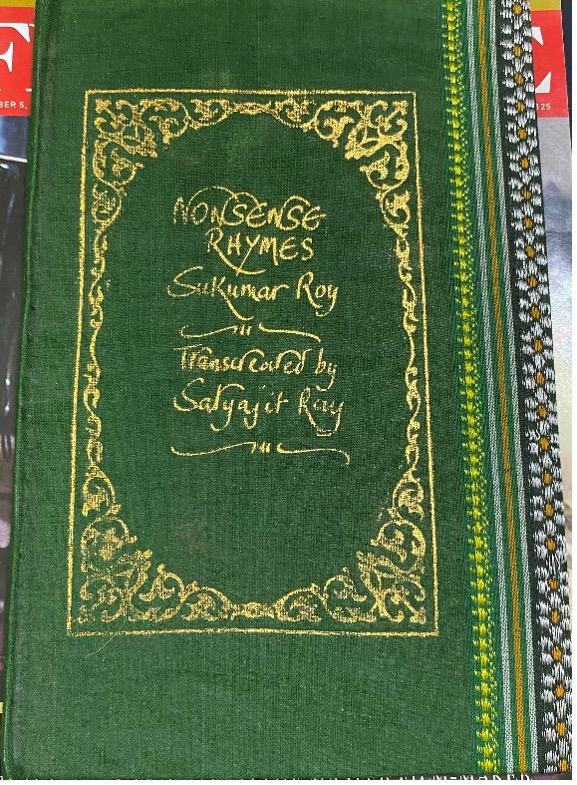
Categories
Review

The Tombstone in My Garden: Stories From Nagaland

Book review by Indrashish Banerjee

Title: The Tombstone in My Garden: Stories From Nagaland

Author: Temsula  Ao

Publisher: Speaking Tiger Books

The problem with any place that’s politically disturbed is that the rest of the aspects of the place – its culture, society, myths, beliefs – are obscured to outsiders. The place comes to be seen only through the prism of the disturbances and not savoured for its characteristics, its turmoils casting an impregnable shadow on its people, myths, its flora and fauna. Slowly even literature gets so obsessed with its ‘issues’ that it becomes difficult to find anything to read on the place which doesn’t talk about them or delves deeper. 

 Temsula  Ao’s The Tombstone in My Garden cuts through that roughage and takes its readers to the soul of Nagaland – to its villages, tribal myths, social practices that have been woven into five short stories that light a torch into every aspect of society in Nagaland.  Without the pretence of being a social observer or commentator, the narratives unfold with the unobtrusiveness of a storyteller who doesn’t highlight social practices judgementally but as ordinary things — unworthy of special attention. The perniciousness can be felt only after they arrive at their narrative outcomes. 

A very significant voice from Nagaland and contemporary Indian literature, Temsula Ao, has won several prestigious awards including the Padma Shri in 2007 and the Nagaland Governors’ Award for Distinction in Literature in 2009. Her Laburnum for My Head, a collection of short stories, won her the Sahitya Academy Award in 2013. 

The opening story, ‘The Platform’, takes us into the world of Nandu, a Bihari migrant to Nagaland who earns his living working as a coolie in Dimapur railway station. Promoted to become a senior among other porters for his hard work and his knowledge of various languages, including Nagamese, one day Nandu picks up an abandoned Muslim boy from the platform. He, slowly, develops paternal feelings for the waif despite a constant tension between the two due to their religious differences. 

But life in a railway station is hardly far from the lives who make a living from vices. As the boy grows up, he falls into the company of Shankar, a pimp. One day a fight breaks out between the boy and Shankar over a prostitute – and it ends in the boy’s carefully guarded religious identity getting exposed. The next day Nandu sees a crowd in the platform. He goes to find out what it’s about – and finds the boy dead. 

‘Snow-Green’, the third story in the collection, is thematically an open-ended story – where enthusiasts of many stripes will find something for them. The fate of the self-centred mistress will warm the cockles of the environmentalist’s heart. When Snow-Green’s trauma starts, the climate enthusiast will feel vindicated about his convictions about human treatment of nature being responsible for our current climate-induced miseries. The turn of the events at the end is impressive. 

In the ‘Saga of a Cloth’, when a brawl becomes the last straw, leading the village Council to expel Imlijongshi from the village, you will feel a bit vindicated: Imlijongshi, the self-destructive fool has finally got what he deserved. However, when the story makes a complete U-turn after that, you will feel you should have held back your judgement.  

“In a small voice almost breaking with grief and perhaps regrets too, Otsu addressed the departing figure, ‘Jongshi, wait, I have something important to tell you which you must know; do not leave me to die alone with this secret’.” 

This passage brimming with suspense is almost a start to another story retreating three generations, to a different time and space, when Otsu was a young girl dating Imdong and being stalked by Lolen unaware of what the future held in store. By the time the narrative descends three generations and returns to Imlijongshi, your feelings about the boy, his fate, his grandmother and the whole business of life — will be much more introspective, much more nuanced, much less stereotypical. 

‘The Tombstone in my Garden’, the title story of the collection, has some similarities with ‘The Saga of Cloth’. Both are long stories spanning generations; both have a woman at the centre suffering because of marriages to men they hadn’t intended to marry. But there the similarities end. Whereas ‘The Saga of Cloth’ has a rural, rustic setting, ‘The Tombstone in my Garden’ has an urban setting. Whereas Otsu is rooted in Naga traditions, Lily Anne is just the opposite, an Anglo Indian who deals with jibes about her dual cultural identity her whole life.  But that is just one aspect of ‘The Tombstone in my Garden’. 

A first-person narrative, the story starts on a suspenseful note, an old lady explaining her relationship with a tombstone, the graveyard of her husband, in her garden.  Using the tombstone as a starting point, she slowly meanders into her story. The reader is kept guessing till her narrative is complete. The story has a feminist touch. 

The stories in The Tombstone in My Garden may be short but they are very unlike short stories. They don’t rely on snappy twists in the tale to keep them going. Instead the plots move at an unhurried speed, one subplot making way for another seamlessly and gracefully. For instance, the  impact of Lolen’s contempt for Otsu’s life riles not so much while reading of the deeds, their immediacy and narrative pace preoccupying the reader, but impacts when Otsu’s entire later life seems mangled by Lolen’s intemperate actions.  Similarly, the reader is miffed not so much by the supercilious indifference of the mistress to the Snow-Green, a flowering plant of rare beauty but how a shallow human need of the mistress — her desire to win the first prize in the annual flower show — towers over the most existential concerns of the flowering plant. 

You may argue this is the nature of all narratives – to take you to extraordinary outcomes through seemingly ordinary occurrences – but where Tombstone In My Garden differs is that it acquaints with the ‘ordinary’ things about a place where we have come to believe the ordinary is always in short supply. 

At the end, almost all the stories have clearly demarcated epilogues narrating the later fates of the characters. This helps remove the conclusions from the immediacy of the preceding story leaving the reader ruminating with the advantage of hindsight and a melancholic feeling, like an aftertaste of a novel.

 As time goes short stories are moving away from their parental identity – the novel. They are getting shorter all the time and are being seen as tools for instant gratification. The current song and dance over flash fiction is an example. Temsula Ao’s collection of short stories makes the reverse journey, taking the short story back to its parental origin – the novel. 

.

Indrasish Banerjee has been writing and publishing his works for quite some time. He has published in Indian dailies like Hindustan Times and Pioneer, and Café Dissensus, a literary magazine. Indrasish is also a book reviewer with Readsy Discovery. Indrasish stays and works in Bangalore, India. 

.

PLEASE NOTE: ARTICLES CAN ONLY BE REPRODUCED IN OTHER SITES WITH DUE ACKNOWLEDGEMENT TO BORDERLESS JOURNAL