Categories
Stories

Faith and Fortune

By Devraj Singh Kalsi

Sardar Randhir Singh wears the turban and a steel bangle – the symbols of Sikh faith. But he does not believe in the Sikh Gurus or the Guru Granth Sahib. Though he identifies himself as a Sikh, he does not visit any Gurudwara. When his son tied the knot, it was the last time he made a reluctant concession. When his son purchased an apartment, the holy book was brought inside during the housewarming ceremony for a few hours one afternoon.    

“When you do not have faith in the holy book, when you follow a cult Guru instead, was it necessary for me to marry in a Gurudwara or carry the holy book for the housewarming ceremony?” Shivjeet asked his father to clarify the duality.   

Sardar Randhir Singh wasn’t prepared for his son to pose this question to him. He couldn’t explain why this was unavoidable. He closed his eyes and scoured the maze of the distant past, remembering his own youthful days when he lit incense sticks and prayed before Guru Nanak, seeking divine intervention to bail him out of debt.

Shivjeet waited for an answer. He had to frame something to the best of his abilities. He scratched his dyed beard and fumbled to explain, “Beta, the entire community is involved and they raise too many questions and doubts.”

“So, you avoid being isolated in the Sikh community. But it confuses us. We do not know the path to follow,” Shivjeet spoke like a schoolboy who had deviated from the right path and was seeking guidance.  

“No, the path is clear. You follow the Living Guru and make your partner walk along the same path. I will take you to Babaji when he visits the city for discourse next month. Remember, we are Sikhs, but we do not feel like Sikhs. At least I do not. You are an engineer, my son, apply your intellect. How can you rationalise the holy book to be the embodiment of Living Guru? Many educated Sikhs are wondering, wandering, and consulting Babaji for salvation. Our spiritual Master is very much alive, and we reject what the Sikh clergy says. Beta, this is just between the two of us,” Sardar Randhir Singh tried his best to pass on this balancing act as the way forward.

The brief conversation on religion was important. Shivjeet was married into a family that believed in the same cult Guru. This was in fact one of the prime reasons why this marriage was formalised. But the daughter-in-law, Nikita, was never comfortable with the idea of Sikh rituals and customs being followed at home. She complained to Shivjeet that it was unnecessary to bring the holy Granth home since none of the family members believed in it: “When we do not subscribe to what is written in it, what is the need of carrying the Granth on your head and bringing it home? Just for the sake of community?” she asked him while stacking up the washed clothes in her wardrobe.  

“I raised the same point of getting rid of this farce with Papa and he explained the logic. Perhaps he is right,” Shivjeet replied, making her jittery about losing her ground.

“Let me know what new logic he applied. It is sheer hypocrisy – nothing else. Our Guru is Babaji – a living one – and we married because of common faith in Babaji. At least your family said it vocally at the time of our marriage. But now your father brings home his hardcore Sikhism from time to time for the sake of relatives. I should have listened to my parents and held griha pravesh, with Panditji performing the puja here,” Nikita trailed off like a seasoned strategist.

“No, no, Papa is not a believer in the Granth. You got it all wrong. To avoid questions and grilling from relatives. You know well we do not visit any Gurudwara and many people keep asking us why we are not present there during important Sikh festivals. This exercise appears an attempt to connect with them. If more Sikhs turn rebels, then it becomes easier to explain our position and reject tradition.”  

“Tell your father clearly, I am not going to raise my son as a Sardar. No way. Your father should be the last Sikh in our family. After that, no Sikhism in our lives, remember that. It is good you are not a practicing Sikh and you do not wear the turban. So, make sure our son also stays away from it and sticks to the path shown by Babaji. If your father intends to make our son wear turban when he grows up, please tell him in advance that we have jointly decided not to raise him as a Sardar. His formal name will also not be some Rajinder or Jatinder. I think we have decided that already, Ambar is nice,” Nikita poured forth to make her stand clear on this issue and expected her husband to stick to that. 

“No need to get hyper, I also do not want our son to be identified as a minority. With turban, you are considered dumb, subjected to all kinds of vulgar jokes. And I hate that. I snipped my hair long ago in high school because of that reason.”

“Was your father okay with that? I mean he could not do it for himself?” Nikita cut in, wondering how the identity issue panned out.

“I told him my friends make fun. He said okay — go ahead, become clean-shaven. There was no discussion or argument,” Shivjeet explained how easy it was for him to chop off his locks. “However, some relatives did object and criticise but the blazing guns soon fell silent when he passed the buck on to me. It was my hair, and I alone had the right to decide what to do with it. He posed helpless in this matter.” 

The next morning Sardar Randhir Singh was ready with his wife, Kulwant Kaur to go to the Dera for community service. He was in charge of shed construction, to oversee its completion before Babaji arrived here to give darshan to his burgeoning tribe of followers. His wife was also thinking of making the son take the spiritual path early, while they were alive.

“Since he stays away for job purpose, he should have Naam from Babaji. I am sure Nikita will also agree,” Kulwant Kaur said, seeking his reaction. “Let us get it formalised this time. I will discuss with her in the evening.”

When they returned home, she asked Nikita to sit with them for a while. “Beta, I have some important matter to discuss with you.”

“Yes, Mummyji,” Nikita said, showing submissiveness without any design.

Beta, we thought both of you should take Naam now. With Babaji’s grace, he has stopped drinking now,” Kulwant Kaur laid the foundation.

For Nikita, this was really good news but she showed fake concern. “I have no issues but after taking Naam, baptism strictures have to be followed. No chicken or meat. Will he turn vegetarian?”

“Turning him vegetarian is all up to you, beta, he will eat whatever you offer and obey your orders,” Kulwant Kaur entrusted this responsibility to Nikita who felt an overwhelming sense of power. “If you are ready, it is enough. He can be moulded.”

Nikita understood her mother-in-law knew his weakness well. It made her realise she had been doing it all these years. Kulwant Kaur was restrained by Sardar Randhir Singh after Shivjeet got married, to let Nikita wield more control. It was a challenge for the mother to overcome the urge to be protective about the only son, but she believed Babaji gave her strength to give up attachment.    

While serving dinner, Kulwant Kaur took the centre stage. Passing the bowl of Rajma, she said softly, “Puttar, take Naam when Babaji comes next month. Both of you.”

“Mummy, I have not thought of it yet,” Shivjeet replied quickly, looking at his wife, gauging her facial reaction to his words.

“Nikita also feels so,” his mother added, to make it easy for him to decide.

“You will have to become totally vegetarian, no meat, no fish,” Nikita said.

He looked at her and wondered if she was actually in favour of taking Naam or not. She had not said anything to him.  

Seeing the blank look, Nikita said, “Yes, Mummyji, we should go for Naam. I have already given order for big portraits of Babaji, framing them for the living room wall.  

Sardar Randhir Singh slowed down his mastication to pick up a cucumber slice from the salad plate and congratulated her, “That’s wonderful, beta, just tell him golden border frame must. So it is final then. Both of you are taking Naam next month. Right?”  

Shivjeet was unusually quiet at the dinner-table. His parents expected a vocal, resounding yes. Giving up his favourite cuisine was a sacrifice he was not prepared for yet.  He knew his father turned vegetarian after the age of sixty, after enjoying all kinds of meat including venison and pork during his hunting expeditions. He was in his late thirties and would lose the chance to indulge in meat-eating forever. This was no challenge for his wife as she was a strict vegetarian like her parents.

Shivjeet broke his silence. Mustering courage, he said firmly, “Will give it a thought. Nikita can go ahead, no issues.” Taking a separate stand for himself surprised Kulwant Kaur who hoped he would do what Nikita would ask him to do. The streak of individualism baffled Nikita who felt her power was tamed by his assertion.

This was not the kind of response Sardar Randhir Singh was expecting from his submissive son but he did not press further. Both of them hoped Nikita would persuade him to accept the proposal.  

At night, after two bouts of making love, Nikita said, “You are away from home most of the time, turn vegetarian when you are here, but eat outside.” This fabulous offer of infidelity came as a surprise from her. A horny stud who came home once in three months was not likely to abstain from sex for that long. Was it a trap by Nikita to know how comfortable he was with this dual arrangement? If he agreed readily, would it give any hint he was disloyal?

Covering her bosom with the floral blanket, Shivjeet peered out of the large window and said, “But this is cheating. Taking Naam and not following the guidelines would be worse. Being a Sikh is better for two reasons at least. Whiskey and chicken. You don’t have to give it up.”

There were many things Shivjeet did outside but his image at home was squeaky clean. He was projected as a man of principles at home. He rejected her ideas as she would suspect he followed flexible morality. He was not prepared to raise doubts in her mind as she would suspect his morality to be wobbly.  

While the family was united in following Babaji, Sardar Randhir Singh knew his elder daughter, married into a Sikh family, was still following the Granth Sahib. He had tried to convince his son-in law but he was unsuccessful on repeated occasions. He hoped he would manage to convince his daughter but not the son-in-law. He wished he should face some challenges and ordeals in life so that he can suggest Babaji as the solution provider.  

The next day, Kulwant Kaur called up their daughter around noon. She got a message when the call was dropped. “In gurudwara,” Kulwant Kaur read the message and showed it to him.  

“What is she doing in gurudwara? She is my daughter,” Sardar Randhir Singh thrummed, losing his calm, and stabbing the slice of bread with butter knife.

“But she is married now and her family believes in something else. Why do you always blame her? We should damage our ties with her,” Kulwant Kaur defended her elder daughter.

Shivjeet walked into the living room, drying his wet face with a towel and spoke in defence of his elder sister though he never liked her or her husband. Sardar Randhir Singh was hurt she was in a gurudwara. When she called back later in the day, his first complaint was related to her gurudwara trip.

“Whenever your mother calls, you are in Gurudwara. Has your husband shifted there?” The acerbic comment was not what a true believer delivers.  

During the telephonic chat, Kulwant Kaur specified that her brother and his wife were taking Naam. “You also come and take Naam along with them,” Kulwant Kaur offered, to please her husband sitting in front though she knew it was just another weak attempt that would be rejected by her elder daughter.   

Guru Granth Sahib is our only Guru and we believe in Nanak,” her elder daughter said loudly and clearly. Sardar Randhir Singh snatched the phone and began scolding her. Shivjeet sat nearby to observe his father fuming at his elder daughter. He never spoke to his son like that. For daughter, the patriarch had a different set of rules.

“Have you gone mad like that crazy husband of yours? How can a book be God or Guru? Answer me that,” Sardar Randhir Singh lambasted her, his flared-up nostrils drawing the attention of his son who drew vicarious pleasure from this feisty exchange.

“Papa, I do not argue on matters of religion. You are free to do whatever you like. We also have that freedom. No question of force. Jo simrey jin simraye,” Harpreet wrapped it up wisely.

 “Yes, I know the bhajan. Don’t teach me, I am your father.”

Sardar Randhir Singh hollered when Harpeet rectified him by saying it was a Shabad, not a Bhajan. Kulwant Kaur grabbed the phone and ended the conversation abruptly, “Acha, beta, talk to you later, bye, love you beta.”

Acha, why do you get so worked up on this issue? We posed as Sikhs when we married her in that family and they believed us though we were not practicing Sikhism. We hid this fact. They are okay with what we believe in and never influence us, so we should also let them do what they like,” Kulwant Kaur tried to sound fair.

Harpreet had many times thought of settling it differently but her husband stopped her from firing salvos that would give Nikita and Shivjeet a valid reason to stop her entry in their home forever. 

“This is precisely why that son-in-law is still hopeless. I regret the day I chose him for my daughter. Let him surrender to my Babaji, seek mercy and then see how he will progress in career like my son. That chap does odd jobs and behaves like a great artist. He is all fake, a big nobody, lives off ancestral property and lectures on Sikh faith. Does he understand the value of hard work? I am sure she will leave him and also give up his faith, end her unhappiness and come back to our Babaji to find bliss. Babaji will definitely bring her to the fold one day and then we all will have the same Guru.”  

“But has she ever said she is unhappy there?” Kulwant Kaur asked.    

“He does not let her come here. He does not meet us. What kind of a relationship is that? In their own world. Nobody else matters. This is no Canada or London. My brothers and sisters all are together. One big family. Even today we call up once every day.”

“I know how close you all are,” Kulwant Kaur said sarcastically, to stall his train of thoughts.

“You could not sell the joint property or convince your brothers to sign in your favour. Nobody likes you but nobody says that in front of you and you think they respect you. Stop believing them.”

“Babaji will decide when it is the right time. I know I have to sell that property and give the proceeds to our son to repay his home loan obligations,” Sardar Randhir Singh revealed his strategic mind in front of Shivjeet who was listening attentively to their conversation.  

Shivjeet could not discuss anything with his elder sister and Nikita also maintained formal ties with her, to keep her at a safe distance from her domestic world. She did not like any interference in her life and had advised Shivjeet to minimise contact with his sisters.  

When Shivjeet went upstairs and told Nikita about the phone chat with Harpreet, she called up her sister-in-law and cleared the ground, “Hello Di, when are you coming? It has been long since you were here. Have some good news to share. Both of us are planning to take Naam when Babaji comes next month. Nice if you could also be with us.”

There was enough gunpowder in her words to trigger an explosion but Harpreet always maintained a stoic calm. Though Nikita knew Harpreet she was not in pursuit of cult gurus and deras, she poked her on this ground to keep the kettle on the boil. 

Being of a wiser strain, Harpreet said, “It is not possible for me to be present there, but I respect your decision and wish you both all the best. Shivjeet heard this exchange but he did not talk to Harpreet except on birthdays and anniversary occasions.

Nanak taught the need to respect all faiths and believers. Harpreet sincerely followed that but she did not think it was right to leave one fold to embrace another or experiment with faith. Religion came to her from parents and disowning it would be disowning parents. Being the eldest child, she had faint memories of her mother doing paath at home. Her father also paid obeisance to Guru Nanak but that was all long ago, more than two decades. A lot had changed in her family since then. Setbacks had shaken the foundation of faith and led Sardar Randhir Singh away from the Sikh fold. It was like a termite attack that hollowed him inside.  

Since the in-laws of Harpreet and his extended family were sincerely following the Granth Sahib as their guru, it was impossible to make them change their path. Her parents said she lacked the power to convince her husband, to change her husband’s mind but she never tried to do that or exercise undue influence. Her husband was following the Sikh norms and she saw no reason to interfere in this aspect and ruin her family life. She was pretty surprised when Shivjeet called her for advice one afternoon.

“Di, all are saying I should take Naam from Babaji but I am not too sure. Can I talk to Jija ji for a minute,” Shivjeet pleaded.

“Oh sure, wait, just a minute, calling him, Suno –” Harpreet summoned him from the reading room. 

Her husband, Daljeet picked up the phone and listened to the full story. He felt tempted to discourage Shivjeet from going ahead. But when he said he was ready to take Naam, it was clear it was just a matter of time and he wanted his help and guidance to find some ways to delay by a decade.

“May I know the reason if it is not too personal, brother.”
Jiju, you know this is not the age to take up the spiritual path. Nikita wants me to take it up though I am not confident. She wants to be sure we have given up Sikhism forever.” He was hopeful that Daljeet would suggest some way to wriggle out of this messy situation for some years at least.

“Since you are okay with joining a Dehdari Guru and your wife is also on the same page, you should do the needful at the earliest,” Daljeet played it safe as he did not wish to worsen his ties with in-laws.

When the call ended, Daljeet spoke his mind.  

“Now your entire family has made an exit from Sikhism. So this is why they did not want a Sikh daughter-in-law.”

“Many Sikh families are now chasing living gurus. It is rather unfortunate,” Harpreet expressed grief and appeared helpless.

“Exactly, these ‘hidden’ devotees are more dangerous for the Sikh faith. They are destroying us from within,” Daljeet added. “These Babajis travel business class, have limos and grab land of villagers to build posh commune. It is a big scam, business idea mixed with religion.”

Harpeet did not argue and let it pass with a mild nod. 

“Next month, there is Mummyji’s death anniversary and there is langar scheduled in the gurudwara. Should I invite my family?” Harpreet sought his permission.

“It is a mere formality. Your parents will not enter gurudwara. Besides, their Babaji is coming next month and they will be busy with their programme,” Daljeet explained the trajectory. 

There was a sudden development as the cult guru cancelled his programme because of court summons regarding a money laundering deal. Most relieved was Shivjeet as the tension of taking Naam was over.

 “Is there a superior power than Babaji helping me out?” Shivjeet thought when he first heard the news from his disappointed father. 

Showing fake interest, Shivjeet asked his father, “When will Babaji come next?”

“Not in the next couple of years. He is going on a world tour – to Singapore and the US soon,”  Sardar Randhir Singh was bereaved to make this announcement.

He cut grass inside the Dera premises to prepare the ground and his hard work was all waste now.  It would again grow to knee-length in two years.   

Shivjeet went to the terrace to share this good news with his elder sister. He did not want any member, not even his wife, to get an idea of unbridled happiness. Harpreet told her brother of the death anniversary in the family but did not ask him to be present. 

Preet did not want her father and mother to be present on the occasion of death anniversary as their sacrilegious behaviour would be tough for her. Besides, she did not want them to poison her ears with repeated proposals to switch to Babaji. Harpreet was happy with formless worship.

The last time she offered karah parshad to her mother, she said it would increase her sugar level and her father refused to have it as it would block his arteries because of ghee (clarified butter). It was surprising for them to hear their daughter prepares karah parshad at home after reciting Japji Sahib.   

When she sent her video of making karah parshad, her mother messaged her nothing, just a smiley emoji. Nikita also sent a smiley.  

When her father heard that, he mockingly said he must talk to her now before she becomes a paathi or raagi.

Nikita dialled her number. Being the connecting link between the father and the daughter thrilled her.  

“Yes, I am learning shabad kirtan and soon sending you video recording of singing shabads in the gurudwara,” Harpreet shared this update with her father who was not happy to hear that but did not say anything to discourage her. He gave the phone to Kulwant Kaur who performed the duty of congratulating her daughter. She knew Harpreet was interested in singing from childhood but Sardar Randhir Singh never allowed that as he did not consider it to be a good pursuit.    

Within a few days, Harpreet recorded one shabad at the local gurudwara and sent the video to her family. When they viewed it, her father had the same mocking tenor while suggesting a career option, “Tell her try Bollywood. These won’t make her famous.”

Nikita messaged the exact words to Harpreet who was hurt to read what her father said. Why was it so hard to utter a word of genuine praise for his daughter when he went gaga over everything his son achieved?    

Her faith was shaken and she wept and prayed to Wahe Guru that He should do some miracle in her life so that these dirty taunts dry up forever.  

Her prayers were answered when she soon got the chance to record a shabad for a Punjabi film. Daljeet had uploaded her video on Youtube and it caught the attention of a Punjabi film-maker who wanted her voice recorded. Sardar Randhir Singh made fun of her shabad singing and the same shabad opened for her the floodgates of success. Her voice found appreciation across the industry and she got multiple offers to sing in Bollywood.

The situation at home changed dramatically for her. The father who ridiculed her was now taking full credit for motivating her.

“See, I told you, she should try Bollywood. It worked. She is my daughter.”

He waited for Nikita and Shivjeet to second him but they were unusually quiet. They never imagined Harpreet would take the lead and prove to be more successful than her brother. She was already a celebrity in her own right. Nikita thought it prudent to be her friend as she would introduce her to her friends in the film industry and she could also fulfill her dream of opening a design studio using her contacts.   

The vocal orchestration of Babaji being superior was finally over. Kulwant Kaur never mentioned Babaji again in front of Harpreet. Sardar Randhir Singh never ridiculed her faith. Offending successful people is an offence and nobody does that. Harpreet and Daljeet thanked Wahe Guru for connecting with the masses. They organised Akhand Paath at their residence to thank the Supreme Lord and invited her family. Surprisingly, they all turned up in full strength.  What was more surprising was Sardar Randhir Singh bowing down before the Holy Granth. The sudden meltdown was attributed to her grand success. Perhaps he had never received such benevolence from Wahe Guru.   

Harpreet was now in a position to help her father and family. She asked her mother if their ancestral property, jointly owned, had been sold. She asked her how much they were expecting. He quoted a fanciful figure he never expected to get. Harpreet expressed the desire to buy his share in the property. Since it was more than the market price, he agreed to transfer it in her name. When Shivjeet heard this from his father, he was glad he would now repay all his loans.  

The entire family was thankful to Harpreet and terribly ashamed of how they treated her and her husband.

Sardar Randhir Singh had been struggling to sort out the property issue but God made it happen through his daughter. Harpreet was happy to see her parents. Seeking karah parshad from the gurudwara, they promised that their grandson would be raised as a Sikh. Nikita now had no problem with that – indeed she was smarter than the chameleon. She wanted to meet film crowds and hobnob with them.

Harpreet and Daljeet were both happy that Sikhism would be revived in Sardar Randhir Singh’s house after almost three decades. The property matter was one prime reason why he drifted away and after a long wait of twenty years, the problem was finally solved amicably with handsome profit coming his way. Sikhs leaving the fold because of materialistic issues return once these issues get resolved. A transactional and reciprocal relationship with Wahe Guru is reflective of their mindset.

Sardar Randhir Singh and Kulwant Kaur started visiting all the Sikh temples and went on pilgrimage to convince their daughter they were really back in the Sikh fold. When Harpreet reminded them that Babaji was coming to the city after a long gap of two years, they feigned ignorance.

Sardar Randhir Singh said, “We are now totally gurudwara focused, beta.”

There were media reports of Babaji being involved in a big scam but he took no interest in the matter, made no attempt to reject it as a conspiracy to defame their Spiritual Master. Perhaps there is no smoke without fire prevailed over his mind.

“God knows the truth. But Nanak is our rakha tey palan haar, our protector and caretaker. He alone can forgive our sins, dear.”

Kulwant Kaur was excited when Harpreet proposed a visit to Kartarpur corridor. Shivjeet and Nikita were also ready to go wherever their elder sister would take them.  

“So let us get our passports ready, beta,” Sardar Randhir Singh declared with enthusiasm, while checking out the validity of the document.  

Glossary

Beta/Puttar – Son

Guru Granth Sahib – Holy text of Sikhs

Griha pravesh – A ceremony for entering a new house

Panditji — Priest

Puja – Payer

Gurudwara – A Sikh Temple

Sardar – A follower of Sikhism

Dera – Camp or a stage set up for viewing

Darshan — An opportunity to see or an occasion of seeing a holy person or the image of a deity. (Oxford Dictionary)

Naam – Initiation

Jo simrey jin simraye — They alone remember Him in meditation, whom He inspires to meditate, a sikh hymn

Bhajan/ kirtan – Devotional songs

Shabad – Hymn

Achha — okay

Paath – Reading the holy texts

Jija ji – Brother-in-law

Suno – listen

Dehdari guru – a living guru

Langar – a Sikh communal free kitchen

Karah parshad – whole wheat dessert offering

Japji Sahib – Sikh scriptures

 Ragi – a Sikh religious singer

Wahe Guru – God described in Guru Granth Sahib

.

Devraj Singh Kalsi works as a senior copywriter in Kolkata. His short stories and essays have been published in Deccan Herald, Tehelka, Kitaab, Earthen Lamp Journal, Assam Tribune, and The Statesman. Pal Motors is his first novel.  


PLEASE NOTE: ARTICLES CAN ONLY BE REPRODUCED IN OTHER SITES WITH DUE ACKNOWLEDGEMENT TO BORDERLESS JOURNAL. 

Categories
Poetry

Lest We Forget…

By Supatra Sen

LEST WE FORGET...

A deadly virus…a feared disease
A catastrophe
Or an enigma
A mirror…
To confront
To seek
Or pause
And ponder…
And wait

Lest we forget…
Smiles are rare
Compassion rarer
Forgiveness is strength
And patience for the courageous
Resurrection is within
Combat with the self
To slow the pace
One needs be wise
Only and only then
From the ashes
Shall we rise…

And so 
The ‘mirror’ cracks from side to side
The human race shadow-battles
A self-inflicted curse...

Every hundred years
It does return
Lest we forget…

Dr. Supatra Sen, Associate Professor, a veteran academician in Botany and Environment is also the founder and Chief Editor of an ISSN peer-reviewed multi-disciplinary academic journal Harvest since 2016. Her tryst with poetry writing and publishing began in 2020 during the global pandemic and in October 2021 her poetry anthology My Autumn Sonata was published.

.

PLEASE NOTE: ARTICLES CAN ONLY BE REPRODUCED IN OTHER SITES WITH DUE ACKNOWLEDGEMENT TO BORDERLESS JOURNAL

Categories
Stories

Sofiemol

By Sharika Nair

The old man hurriedly sliced the few stragglers left from the bunch of cowpea beans. It was nearly eleven, time for Sofiemol to pass by. Picking up the bowl with the neatly diced beans, he walked into the kitchen. His wife was sprinkling masala powders into the sambar, and the kitchen was filled with the heady aroma of the simmering lentils. She was absorbed in her kitchen witchcraft, the mixing and the churning and the frying, in which she was so proficient that with a mere bowl of lentils, a few vegetables and a pinch of spices in her arsenal, she could transform any lowly dish into a treat for the palate. He quietly left the bowl on the kitchen platform and walked back to the dining room, before she could notice him. Taking the cutting board and the knife to the work area, he rinsed them in the sink. Placing them carefully on the sideboard to dry, he heaved a sigh of relief. His chores for the morning were done.

Though living the retired life, the old couple woke up at 6 am to the alarm. Water for their bath was still heated on the soot-blackened aduppu; the gas stove being reserved for cooking. Once morning ablutions were completed, the old woman lighted the brass lamp while chanting her prayers, and left it near the door. The old man helped her with breakfast preparations by grating coconut or chopping onions. After breakfast, the couple conducted the cleaning and moved on to the cutting and dicing for lunch with the stoic flourish of an orchestra, thanks to the assurance gained from years of repetitive chores, working in tandem and mostly in silence. Occasionally the old woman remarked on the quality of the vegetables or passed on some news from the neighbourhood. The old man grunted in acknowledgment. 

Clothes were washed and starched every alternate day. The old man drew water from the well, heaving up the ancient aluminium bucket strung on the creaky pulley. The old woman scrubbed the clothes on the washing stone that glistened in the sun like black onyx. 

The old man did not always wait for Sofiemol’s arrival with the anticipation of an ardent devotee, awaiting the opening of the sanctum for deeparadhana. The first few days that she passed by, more than two decades ago, she was a source of much excitement in the locality, and everyone would come outside their homes to gawk and wave at her. Sofiemol was the bus that first connected the sleepy village of Karipoothira to the country’s intricate bus network. Initially, it was just a coincidence that when the old man stepped out of the house, to stand leisurely near the gate and watch the ebbs and flows of his neighbourhood, the Sofiemol passed by. Over the years, he had started timing his routine to the crossing of the red and yellow bus during her mid-morning trip from Pulikkuttusseri to Kottayam town. On the way back, the blaring horn of the bus would wake him from his afternoon siesta and remind him it was time for tea and banana chips. 

As he stood outside the gate, the old man could see the dust in the distance that signalled that Sofiemol was on her way. Across the road, Manikuttan of the Wadakke house was hurrying towards the bus stop with his wife, Hemalatha. Manikuttan called out to him, “Valliacho, we are going to the town to Anumol’s house. It’s her baby’s choroonu. All fine with you?” The old man smiled and nodded. It seemed just a little while back that Manikuttan’s daughter Anumol had come to pick up fallen mangoes from the garden wearing a bright yellow frock, her hair oiled, washed and tied in neat plaits. 

Soon, Sofiemol passed by and halted at the bus stop further down the road. He stood watching as people got down and Manikuttan and his wife and a few others boarded the bus.

The old couple had moved back to Karipoothira in 1970, after the old man retired from his job at the Ordnance factory board headquarters in Calcutta. Their daughter had been married off to a suitable Malayali boy in Calcutta while their son had acquired the highly sought after ‘Government Job’ with a public sector company and moved to Bombay.

The first few months were spent on the renovation of the ancestral tharavadu. The sitting room had been extended, gleaming mosaic tiles had been laid on top of the red oxide floor, the bathroom had been redone and house was spruced up for the new returnees. 

After that, life appeared to have come to a standstill.

In Calcutta, the days had been disciplined and fast paced. In the mornings, the children would get ready for school and in the later years for college and leave. The old man, who was a much younger man then, would glance through the newspaper, and set off to work. 

He had been much appreciated for the impeccable maintenance of accounts at his office. His first boss, Mr Jenkins would often exclaim, “Mr Pillai what would I do without you?!” while thumping him heartily on his back, deeply embarrassing the mild-mannered accountant. After Independence, Stephen Jenkins had gone back to the empire where the sun had begun to set, and a much younger Indian gentleman had taken over in his place. Debasish Sengupta had quickly recognised his faultless work as well and had become reliant on him on all matters financial.

Evenings in Calcutta had spun by like the pages of a suspense novel, flipped hungrily while barrelling towards the climax, with the children’s homework, trips to the grocery store, the songs on the radio and the occasional socialising with friends all bundled together; several minutes, hours, years of a cluttered life; bits and pieces captured and caged inside the albums in the bedroom cupboard, tiny black and white squares featuring stiff shoulders and dour faces.

Ever since he moved back to Karipoothira, his life back in Calcutta seemed to be from another lifetime. The tram rides to work, the sounds of raucous card games from the neighbour’s house, the bustle of his Gariahat neighbourhood was a different universe compared to the sluggish Kerala village, where the neighbour’s cow giving birth was big news. 

When Sofiemol started shuttling down the road in front of his house, she became a tiny whirlwind, shaking up the stillness of his new world. He had become a tree, rooted to a spot, watching the world go by, but seeing the bus, filled with people, moving with manic energy gave him a reflected sense of purpose. 

Sofiemol had embarked on her maiden journey in 1972. By the following year, Sreelakshmi was running on the same route early in the morning, with a return trip during lunch time. By 1980, Baijumon and Minimol had been added to the fleet. But Sofiemol remained the old man’s favourite, a favoured first-born of sorts; just seeing her go by filled him with a vague sense of pride.

The old man was called valliachan or perappan by his Hindu neighbours and pillaachan or appachan by the Christian ones. His age had made his name redundant but the wiping out of his identity had been both secular and universal. It seemed almost poetic that he had lost his first name first. During his working years, he had been Mr Pillai.

Every alternate summer vacation his children, their spouses and grandchildren arrive for their cherished holiday, a break from the chaos of their cities. Suitcases would pile in the bedrooms and chatter would fill the house. The old woman would go into a frenzy of cooking, overwhelmed with the sudden need for larger quantities of food. She would also never fail to declare once or twice, loudly, lest he fail to hear, “Finally some noise in the house! Otherwise, it is deathly quiet here. You know how achan is. Difficult to get a word out of him.” 

Towards the end of their stay, the old man would neatly pack several packets and bottles filled with jackfruit and banana chips, lime pickles and coconut chutney powder, into cardboard cartons along with raw mangoes and coconuts, for the visitors to take back home. When they left, baggage stuffed into the trunk of the taxi, the children screaming out their goodbyes, excited about their train journey back home he would invariably find himself choked, holding back tears. His parting words would remain lodged in his throat. Dinner that night would be unbearably sombre but the next morning would bring with it a palpable sense of relief at the return of calm and peace.

Four years ago, the old man had taken Sofiemol to go to the bank in Kottayam. Suresh, a distant relative, was the bus conductor then. The old man was seated near the door, and Suresh, standing precariously on the footboard with the effortless nonchalance that all private bus conductors seemed to possess, had enquired about his health, “Perappa sukham alle?” Making small talk, the old man had said, “This bus is in such good condition. Hardly ever breaks down.” Suresh had laughed, “Perappa, this is not the original bus. Do you think a bus will last for over fifteen years on these roads? The old Sofiemol was condemned a year back after the owner bought this new one. It was given the same name for good luck. It’s the owner’s daughter’s name, after all.” The old man had sat in stunned silence for the rest of the journey.

For the past year or so, the old man was waking up earlier than usual. As pale tendrils of sunlight stealthily crept in through gaps in the curtains, the chirping of sparrows on the mango tree just outside the bedroom window would awaken him. As he lay in bed waiting for the alarm to ring, he often found himself remembering a time long gone by, relics preserved well despite the passage of time; his mother’s voice scolding him for climbing trees, the sound of marbles getting knocked together by expert knuckles, the panicked voice of a friend shouting, “Gopala… headmaster is coming…run!”

Last week, the old man had gone to the dispensary for his niggling cold and the nurse had called out his name twice, “Gopalan Pillai”. He hadn’t realised she was calling him, till she tapped him on the shoulder and gently said, “appacha, you can go in now.”

As it is time for lunch, the old woman comes to the door to ask him to cut banana leaves from the backyard. Usually, banana leaves were cut for special occasions. Today, though, for some reason known only to her, the old woman has decided they would eat from the leaves. Maybe she has made a sweet dish, jaggery payasam perhaps, the old man muses hopefully. He hums a cheery tune as he dips his feet in the rivulet behind the house. For all her complaints about his laconic tendencies, the old woman would get irritated if he were to sing inside the house.

He mixes the rice, sambar, cabbage thoran and beans mazhikkuparatti together, making little balls of the mixture and eats them with relish. The old woman reminds him to buy candles from the grocery store in the evening. “The power cut is scheduled at seven this week,” she mutters. Half way through the meal, the old man clears his throat and says, “It’s long since you made chakka ada.” The old woman frowns. Since there is leftover dosa batter, she had been planning to make dosas later in the evening. The ada is a lot of work but the old man rarely makes any demands. So, after lunch, instead of taking a siesta, she goes to the backyard to pluck vazhana ila, bay leaves that grow wild in most yards, for the ada. She makes a dough of jackfruit jam and rice flour, and steams the dumplings after stuffing them in the bay leaves.

Once the jackfruit dumplings are cooked, the old woman pours tea into steel glasses and peeps into the dining room. The grandfather clock has struck four and Sofiemol still has not passed by. No wonder the old man has not woken up yet. Her arthritis has slowed her movements considerably. She trudges slowly to the bedroom and finds the old man on the floor clutching at his chest.  She rushes out to call the neighbours.

Within half an hour, the doctor arrives, examines the old man and officially declares what the group of relatives and neighbours gathered in the house already know. The old woman’s wails ring through the house. “He said he wants to eat chakka ada.. he did not even eat them,” she cries as the other women try to console her.

One of the assembled mourners whispers to his neighbour, a bit self-consciously given the atmosphere of bereavement in the house, “What happened to Sofiemol? The bus is late today.” The other man whispers back, “I heard one of its tyres got punctured. I saw Mechanic Joseph going with the new tyre a while ago.”

Just a few metres away, on the road in front of the house, oblivious to the human drama inside, Sofiemol speeds by on the afternoon trip from Kottayam back to Pulikkuttusseri, setting off a dust storm, that soon settles into the silence of a thousand afternoon siestas, broken only by the occasional wailing from the house.

Glossary

Sambar – spicy lentil and vegetable curry

Aduppu – traditional firewood stove

Deeparadhana – ritualistic waving of lamps in temples

Valliachan – uncle

Mol – endearment for a girl child

Choroonu – baby’s first rice intake ceremony

Tharavadu – family house

Perappan – uncle

Pillachan – a title for elderly man from Kerala’s Nair community

Appachan – term used for father, grandfather or an elderly person by Kerala’s Christian community

Achan – father

Perappa sukham alle? – uncle are you well?

Jaggery payasam – sweet dish

Thoran – vegetable and grated coconut stir fry

Mazhikkuparatti- fried vegetable dish

Chakka ada – jackfruit pudding

Dosa – rice crepe

Vazhana ila – bay leaf

Sharika Nair wrote feature stories on entrepreneurs and women achievers during her stint with YourStory. Her story ‘The Silver Anklet’ won a prize in Deccan Herald’s short story competition in 2018. Sharika recently authored a children’s book titled Tara and the quest for the Cursed Prince. Her short stories have been part of anthologies titled The Other Side, Ether Ore and A Lie on Her Lips. Sharika lives in Bangalore with her family.

PLEASE NOTE: ARTICLES CAN ONLY BE REPRODUCED IN OTHER SITES WITH DUE ACKNOWLEDGEMENT TO BORDERLESS JOURNAL

Categories
Review

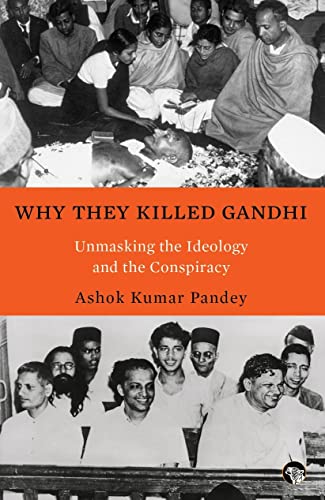
Why They Killed Gandhi

Book review by Bhaskar Parichha

Title: Why They Killed Gandhi; Unmasking the Ideology and the Conspiracy

Author: Ashok Kumar Pandey

Publisher: Speaking Tiger Books

One of the most controversial political assassinations in contemporary Indian history is that of Mahatma Gandhi. Several books have been written on this earth-shattering killing with varied interpretations, and every so often with overt ideological moorings.

Why They Killed Gandhi; Unmasking the Ideology and the Conspiracy by Ashok Kumar Pandey is a fresh and bold account of the assassination of the ‘Father of the Nation’. Translated from the original Hindi version of the book by the same author, the narrative lays bare the facts of the murder, and offers a zealous defence of the Mahatma and his politics. It delivers a trenchant polemic against the ideology of intolerance and perpetual ferocity that killed Gandhi. Delhi-based Pandey is an author and historian whose work focuses primarily on modern India. To that extent, this book has a different explanation.

Reads the blurb: “Three bullets were shot into the chest of Mahatma Gandhi by a certain Nathuram Godse on the evening of 30 January 1948. His true motivations, however, are today actively obscured, and his admirers sit in the Indian parliament as members of the ruling establishment.”

Writes Pandey in the Preface: “Gandhi’s life has never been a mystery. He bared open every aspect of his life, as seen in the ninety-two volumes of the collected works of Mahatma Gandhi and various other books/booklets written by him or people like Mahadev Desai and Pyarelal, who accompanied him as friends and personal assistants, and kept track of every activity of his.

“The details of his death, however, are for most people somewhat obscure. We do, of course, know that a certain Nathuram Godse fired three shots to take his life, but the conspiracy behind it largely remains hidden from greater public scrutiny.”

Divided into three sections and comprehensible chapters on the whole sequence of events leading to Gandhi’s death, Pandey has taken the help of court documents, the Kapur Commission Report, and other relevant papers to substantiate his thesis. He has also tried to show the ideological conflict between the various political forces during India’s struggle for freedom.

Argues the book: “The men who stood trial for the murder of Gandhi claimed that they were acting for a stronger, more united, India. Their 78-year-old peace-loving target, they felt, was the single biggest impediment to achieving that goal. They accused him of dishonesty and treachery; he was blamed for the Partition of India, for appeasing’ Muslims; and condemned for ‘fail[ing] in his duty’ to the people of this nation. To them, Gandhi had to die because ‘there was no legal machinery by which such an offender could be brought to book. Do any of the accusations have any claim to truth whatsoever? If not, what, then, was the actual intention that these arguments made by Godse were attempting to hide?” It further questions: “Was V.D. Savarkar, among others, involved in the conspiracy?

“The last days of Gandhi were ones of disquietude and loneliness. He repeatedly tried to lead an apolitical life. Attempting to provide equal facilities to the poor at a naturopathy center in Poona, or migrating to an unknown village, he was constantly trying to adopt social work as an alternative to politics. He resigned from the primary membership of the Congress in 1934, but after being in politics all his life, politics was not ready to leave him in this period of turmoil.”

In an attempt towards addressing the deficiency of knowledge on the subject, Pandey painstakingly puts the facts in the correct perspective. According to him, “since the conspiracy was not merely a criminal one but had an ideological dimension as well-something that portends greater danger in the long run-the events need to be understood.”

What this 250-page book attempts is to remind us that Gandhi’s killing was “not a random act of a mindless killer”. It was the culmination of a cold-blooded conspiracy. Pandey in this book has tried to dissect the ideology of religious extremism. What Pandey does in this book essentially is to present a narrative based on historical facts and research in ‘the so-called post-truth age’. He intends to rip to shreds the abhorrence emitted against the likes of Gandhi, Nehru and other makers of modern India.

The finest point about this book is its storytelling. The facts, incidents, and references have been woven in such a way that it doesn’t appear as a mere chatterbox. Neither is it loaded with only factoids. Other than mere facts and references, the book also throws light on the paradigm and tries to uncover the bluff which has been existing on the assassination of Gandhi.

.

Bhaskar Parichha is a journalist and author of UnbiasedNo Strings Attached: Writings on Odisha and Biju Patnaik – A Political Biography. He lives in Bhubaneswar and writes bilingually. Besides writing for newspapers, he also reviews books on various media platforms.

.

PLEASE NOTE: ARTICLES CAN ONLY BE REPRODUCED IN OTHER SITES WITH DUE ACKNOWLEDGEMENT TO BORDERLESS JOURNAL

Categories
Poetry

Too Fussy

Poetry by Rhys Hughes

WILLIAM TELL

It’s hell
to be a fussy
William Tell.
He refuses to aim
his crossbow
at the apple
unless it’s peeled.
   But how does one
       peel a crossbow?


ROBIN HOOD

Robin Hood
has a slightly strange quirk.
He could rob a bank
instead of travellers
if he chose to
and many would thank
him for that.
Yet banks didn’t exist
back then:
he would have to
establish one himself
in order to raid it
but he’s afraid of paperwork.


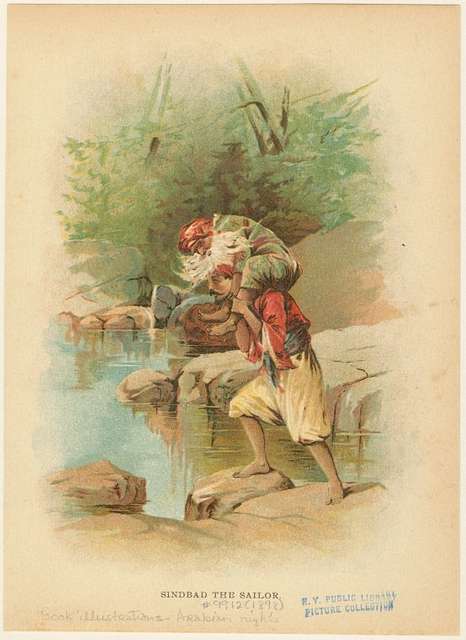
SINDABAD THE SAILOR

His tailor was a failure
and it drove Sinbad mad
that the colourful robes
he ordered to be made
tended to fade when exposed
to just a little salt spray.
“How can I have adventures
in pastel clothes? I want
to wear bolder shades
when I go looking for gold
and gems!” he muttered.
His tailor only smiled in reply
but when Sinbad’s back
was turned, he returned to his
original shape. He was a
gigantic genial green genie.


NED KELLY

Suits of armour
rather do chafe
but they keep you safe
from the bullets
of the Law. If you are poor
and truly believe you need
to rob banks to feed
yourself then taking precautions
is a lot less awful than
being shot into small portions.


DANIEL BOONE

Daniel Boone needed more room
so he went westward
until he came to Kentucky
where he was lucky
to survive all the various dangers.
Easily bored and
a man of few words
he rarely spoke to his friends
but often said howdy to strangers.


HONG GILDONG

He had magic powers
but no pockets on his trousers
So he kept his keys
strapped to his knees with a bowstring.
That was a clever thing
to do because if he was attacked
he simply bent a leg
and shot one of those iron objects
with serrated teeth
into the locks of their shocked looks.
Sometimes a key
ended up in an assassin’s mouth
and unfastened his tongue
and it wasn’t much fun
for that very bad man.

MARTÍN FIERRO

On the pampas
he was hampered
by fate when
he filled a hamper
with picnic foods
but forgot to bring a knife
to cut the bread
and cheese. Sitting
down with a deep frown
and trying to tease
meaning from political
debates while chewing
vast sandwiches
with the local cowboys.
   Gaucho Marx!


JESSE JAMES

He was a bushwhacker
in his youth and the bushes
plotted to whack him back
eventually. And they did
but not with a literal club
when he hid in thorny scrub
one prickly dangerous day.


DON QUIXOTE

His beard is a goatee.
His horse is a bag of bones.
He has no home.
His servant, Sancho Panza,
acts like a panda,
slow and plodding, chewing
often. While he,
chivalrous in a haphazard
frivolous manner,
never clamours for dinner
but only demands
noble and gallant repartee.


TWM SIÔN CATI

A cunning thief and trickster
he once took a leaf
out of his own book and refused
to give it back. Into a sack
of looted treasure it went
while he went into hiding
in the hills near Rhandirmwyn.
Those cursed heights!
Whether or not he read
the words on that stolen page
or not matters not a jot.
Our concise advice is the worst.


HENRY MORGAN

Why is that pirate yawning?
Doesn’t he know
that the golden age
of salty rogues is dawning?
He will do well
come hell or high water
and never give quarter
if he wakes up
in parallel with the zeitgeist,
ropes all spliced
so his sails won’t fail
but billow large and not nice
like a poltergeist
wrapped in the sheets
of a foamy sea. Wait and see!


RASPUTIN

I don’t want these cakes!
I don’t want this wine!
You might say I’m fussy
but I know my own mind.
I won’t dispute in this room
that Rasputin is doomed
but right now I feel fine.
It’s not time to become
just a footnote of mystery
in the annals of history.
No cakes, no wine for me!

DICK TURPIN

The highwayman is hurting
because of a pin
that was concealed within
the bag of coins
offered to him by the hand
of his victim
through the curtain
of a stagecoach window. His
thumb is bleeding
and the carriage is receding
down the rutted road.
He is annoyed
and will take no joy
from the successful robbery
because he is fussy
about injuries at work
and only respects big ones.
That’s his rule
        of ruddy thumb.


PANCHO VILLA

It’s time to retire
from revolutionary thrills
and live in the hills
in a cottage or bungalow.
But just in case
you don’t know
fussy Pancho declines
to dwell in any abode
less swell than a villa
in classical mode
well-stocked with wines.


GERONIMO

Geronimo is learning
to parachute
from one of the newly
invented aircraft
on the off chance
it will help his cause.
Paratroopers
will surely be effective
in future wars.
That’s what he thinks.
But he refuses to jump
out of the plane
unless he is given
a memorable name
to shout as he does so.
Twm Siôn Cati was the equivalent of Robin Hood in Welsh Folklore. Courtesy: Creative Commons

Rhys Hughes has lived in many countries. He graduated as an engineer but currently works as a tutor of mathematics. Since his first book was published in 1995 he has had fifty other books published and his work has been translated into ten languages.

.

PLEASE NOTE: ARTICLES CAN ONLY BE REPRODUCED IN OTHER SITES WITH DUE ACKNOWLEDGEMENT TO BORDERLESS JOURNAL

Categories
Poetry

Oh! My Dear Face 

By Ananta Kumar Singh

Oh! My dear face 
Never be upset 
I didn't come to pimples 
I didn't come to dimples 
Oh! My dear face 
Never be upset 
I didn't come to wrinkles 
I didn't cause the mind to rankle
Oh! My dear face 
Never be upset.

Ananta Kumar Singh is an Indian poet. He hails from Bargarh in the Indian state of Odisha. He is studying English literature at Ravenshaw University. 

PLEASE NOTE: ARTICLES CAN ONLY BE REPRODUCED IN OTHER SITES WITH DUE ACKNOWLEDGEMENT TO BORDERLESS JOURNAL

Categories
Stories

The Man Who got Eaten. 

By Kieran Martin

When I tell people this story they wonder why I can pet a dog at all, much less act as if I like one. 

The truth is, dogs are just animals and their needs are beyond their own understanding. Some of them just get greedy. 

For about four years, between the ages of eight and twelve, I lived next to a kid whose dad was eaten alive. The weird thing was this: it started before we moved in to the street, and didn’t end till long after we moved out. 

If you’ve seen a one-armed man playing ball games with children, you may think you know what R’s front yard looked like on a weeknight. But you’d be wrong. Mr K never seemed to miss his chewed off hands and feet until he tried to use them. When he reached to catch a ball, and saw it sail slowly past the stumps of his arms, surprise was painted on his face. 

It didn’t happen all at once — that was the worst part. In fact, the dog spent the best part of four years chewing on the man. I was about to say ‘that poor man’ but stopped myself: we never talked about him that way. No one could stand the way he joked about it. He’d blame it on the weather, the wind had a bite, or the sun took a drink. Sometimes it was people he worked with — back biters and leeches. He smiled and joked about how he’d been offered to every parasite in god’s creation. 

He never mentioned the dog. 

I remember one summer evening when R and I sat at the train station, waiting to meet his dad from the train. Our mothers had decided to take dinner to the park and our job was to meet Mr K and lead him to the park. After the first two trains arrived and left without him, my Mum appeared at the station and told us both to give up and come play cricket before the light was all gone. R stayed till after dark: we picked him up on our way back home. 

Ahead of us, in the half-light, we saw the dog, looking huge, 

Mr K draped over him like a sack, hands and feet dragging along the path. Without saying a word, we all slowed our steps, giving the dog time to drag him on to the porch. By the time we arrived at the front door the dog was gone. “I got locked out,” he said, smiling weakly. “I’ve been waiting, but I don’t mind. Its a lovely night. Maybe I’ll poach a couple of eggs.” Mrs K was the only one to look at him. 

She banged the gate and lead their kids inside. 

Mr K wouldn’t shake your hand, like others kid’s dads. The only way to tell if fingers were missing was to concentrate very carefully as he patted you on the head. There was no easy way to count the size of the dog’s meal because Mr K would grow the limbs back. He ate huge meals and grew fat but seemed light like a sponge cake. 

I stayed over with R some nights and often heard him wandering the house alone, turning on the TV or fiddling with the computer. The house was as rickety as their cheap lawn furniture and used to shake from one end to the other when the washing machine came to its spin cycle. Yet, Mr K could walk from one end to another without making a sound. 

I heard cancer got him in the end. After all that he was eaten from the inside out. We’re all meals, he’d say, shrugging with a hopeful smile, as if he were waiting for someone to agree. 

No one ever did. At least, no one that I could see. Back then.

.

Kieran Martin wrote a couple of short pieces 14 years ago when living in a very small town. He also writes lyrics, essays and code. His sons taught him how to narrate; one of the many gifts they came to him with.

.

PLEASE NOTE: ARTICLES CAN ONLY BE REPRODUCED IN OTHER SITES WITH DUE ACKNOWLEDGEMENT TO BORDERLESS JOURNAL

Categories
Slices from Life

Messages through Space and Time

Meredith Stephens explores letter writing as an art that can stretch beyond a person’s lifetime and across borders of all kinds

I walked out to the end of the driveway of my Adelaide house, unlocked the letter box, and among the flyers and political brochures, I found a New Year’s card from a Japanese student called Mutsumi. It had been two years since the beginning of the pandemic, and I have been teaching on Zoom ever since. I have never met Mutsumi in person but have taught her for the two years online. When I taught in person in Japan, students would sometimes send a New Year’s card to my local Japanese address, but I had never received one at my Australian address.

New Year is just as important in Japan as Christmas is in my home country of Australia. In the pre-digital age we would send Christmas cards to friends and family destined to arrive on December 24th at the latest. They never arrived on Christmas Day because it was a public holiday. In contrast, in Japan, New Year’s cards are delivered on New Year’s Day and never any earlier. They may arrive later though, as receivers scramble to reply to those from whom they had not anticipated receiving a card. Although I had often received cards as late as the end of the first week in January, I had never received one in February. During the pandemic, international deliveries were experiencing considerable delays and some were even returned to the sender. I was grateful the New Year’s card had traversed the seven thousand kilometres to reach me at the southern coast of the southern Australian continent.

I looked at Mutsumi’s card and realized that the presentation of calligraphy was just as important as the message. Written Japanese is not just a means of relaying a message but also an art form. Primary school children must purchase a calligraphy set and are issued a calligraphy textbook to be used in their weekly calligraphy lesson. Fifteen years ago, when my daughter was in primary school, her homework was to create a piece of calligraphy which read Yama nobori, or ‘Climbing a Mountain’. The image below shows her doing her homework on the kitchen table, carefully pressing the calligraphy brush into the ink before she writes the characters on the rice paper.

English handwriting was also elegant in the writing of our forebears, although it wasn’t written with a brush. Here is a postcard written by my great great grandfather to my grandmother when she was about five, around 1907 when they cost only one penny to send. It reads, “Dear Emilie, Hope you had a good sleep last week and that you are feeling fit for school again next week. Love to all, From Grandfather.”

Although the writing is ornate the content is quotidian. The affection for his granddaughter is revealed not just in the message but also in the handwriting style.

A handwritten postcard, whether it is written in Japanese in 2022 or in English in 1907, may be considered an aesthetic work. Handwriting conveys both the literal meaning of the words and the feelings for the recipient. As Kathleen Parker reminds us[1], the pleasure of receiving a letter is that both the sender and the receiver have touched the same piece of paper. The postcard above has been touched by both my great great grandfather and me, at an interval of 115 years. I am sure that when he was writing to his granddaughter asking after her health in 1907, he never imagined that his great great granddaughter would be touching and reading it in 2022.

I rarely have a chance to put pen to paper these days, other than when writing a shopping list. My fingers fly across the keyboards almost as quickly as I can think, in a qwerty fingertip language. That’s why I appreciate those who take the time to select and purchase a postcard, and choose a fine pen or brush to produce an elegant written message that I may fondly linger over for years to come.

[1] Kathleen Parker, 2010, as cited in Baron, S. (2015). Words onscreen: The fate of reading in a digital world. Oxford University Press.

.

Meredith Stephens is an applied linguist in Japan. Her work has appeared in Transnational Literature, The Blue Nib, The Font – A Literary Journal for Language Teachers, The Journal of Literature in Language Teaching, The Writers’ and Readers’ MagazineReading in a Foreign Languageand in chapters in anthologies published by Demeter Press, Canada.

.

PLEASE NOTE: ARTICLES CAN ONLY BE REPRODUCED IN OTHER SITES WITH DUE ACKNOWLEDGEMENT TO BORDERLESS JOURNAL

Categories
Pirate Poems

Pirate Blacktarn Fights Pollution

By Jay Nicholls

PIRATE BLACKTARN FIGHTS POLLUTION


Pirate Blacktarn, Terror of the Lemon Seas 
Stopped eating his dinner of green, mushy peas. 
“I’m tired of this, I want some fish,”
He complained to the cook, waving his dish. 

“There aren’t any fish,” said Big Bob the Cook, 
“Just go up on deck and take a good look.” 
The crew dangled their nets far over the side, 
But no fish came to bite and the hungry group sighed.
 
“Why is the sea the colour of murk?”
“Well if you ask me, it’s pollution at work,”
Said Bosun Mick, who knew about things. 
He pointed to a bird with sticky black wings. 
“There’s some nasty poison dumped in the sea,
Killing all the fish and it could kill you and me. 
The Lemon Seas are in a gruesome mess, 
I don’t know what we can do unless…”

“What?” asked Blacktarn, thinking of his dinner. 

“Unless we can catch the no-good sinner 
Who’s dropping the poison and spoiling the water 
And causing all this harm and slaughter.”

“Er, that’s a bit much,” muttered Blacktarn in fear. 
“Yes, yes,” yelled the crew, “what a great idea.”

So away they sailed, with a brisk wind behind them,
Hunting for polluters and all set to find them. 
They hadn’t sailed far when they saw dark smoke 
And sniffed a whiff that made them choke. 
Then a dirty old ship came close into view
With a mean and moody and miserable crew. 
Stacked on the deck stood barrels of gunge
All lined in a row and ready for the plunge
Into the sad Lemon Sea, all grimy and greasy. 

But Pirate Blacktarn was feeling uneasy. 
“That ship’s got guns,” he said as he stared. 
“Come on Captain, we’re not scared,”
His crew all called, “STOP YOUR POLLUTION, 
You’ll have to find a better solution.”

“STOP  STOP  STOP  STOP!”

BANG!  Went the dirty ship’s guns in reply, 
BANG! BANG!  And fiery flames shot high. 

Blacktarn quavered, “I think we’d better go.” 

“No,” said Stowaway Fay, “no, no, no.” 
“No,” said the crew, “are you a wimp or what?” 
“A wimp, me? Nonsense of course not. 
But what shall we do? You tell me that.” 

“Perhaps it’s time we had a little chat,” 
Said Parrot Tim and away he flew. 
“What on earth is he going to do?” 
Wondered Bosun Mick as he flew ever higher,
Weaving and swerving to avoid the gunfire. 

Tim reached the dirty ship and perched on the mainstay. 
“I think you’d better listen to what I have to say
Or a horrible harm might come your way. 
You must take those barrels of poison away.” 

The dirty crew laughed, “Let’s shoot that bird, 
In case it thinks we haven’t heard.”
“Your last chance,” said Tim with a warning squawk.
“Huh,” jeered the crew, “this is just parrot talk.” 

“Right,” said Tim and he began to sing. 
Now a parrot song is not a nice thing. 
The dirty crew groaned and covered their ears. 
“Shoot this parrot, it’s reducing us to tears.”

But as he sang, the sea seemed to bubble. 
The dirty crew were worried, “Is this trouble?” 
For a monstrous shadow loomed beneath the waves.
“Get ready,” called Tim, “for your grisly graves.” 

Down in the deeps a strange thing stirred. 
Slowly, slowly, to the surface it whirred, 
And a hideous head burst above the seas. 
The dirty crew trembled, weak at the knees. 
They saw a massive catfish, bigger than the ship, 
All whiskers and fins, from tail to tip. 
All scaly and bumpy 
And ugly and lumpy 
And grimy and grumpy. 
Its big fat lips sucked like a vacuum. 
“Help,” cried the crew, “is this our doom?” 

For the mighty catfish scavenges the seas 
And eats all the dirt to clear the water of disease. 
It opened its great big mouth very wide
And the dirty crew screamed, all terrified. 
WHOOSH! SLURP! The crew vanished inside
The monster’s mouth. “Ow,  help!” they cried 
As they slithered down its throat. 
But the great fish swallowed them and their boat, 
Then began to suck all the sludge from the water, 
Till the filth was gone from every quarter. 

His big belly grew and swelled until 
The mighty catfish had chomped its fill. 
Then with a gentle belch and a sigh
And a slow, slow wink of his muddy brown eye
He started to sink back down to the seabed
To digest his dinner and rest his head. 
And there he would stay until trouble arose
But he is there to this day, as Tim Parrot knows, 
To make sure the Lemon Seas are clean and clear
And poison and dirt never reappear. 

“Wow!” said Blacktarn, most amazed. 
“Well done Tim,” the crew all praised. 
“What luck that we had a catfish to help us 
And mop up pollution before it got worse.” 

“Yes, poisonous dirt gets dumped every day
And in other seas there’s nothing to clean it away,”
Said Rakesh the mate, looking very upset.
“Soon all the oceans will be black as jet.” 

“Well at least we can sail on our clean Lemon Sea
And I needn’t eat one more green mushy pea,
Come, let’s get sailing,” said Blacktarn joyfully.
Courtesy: Creative Commons

Note: The ‘Pirate Blacktarn’ poems were written in the early 1990s but were never submitted anywhere or shown to anyone. By lucky chance they were recently rescued from a floppy disc that had lain in the bottom of a box for almost thirty years. There are twelve poems in the series but no indication as to what order they were written in and the author no longer remembers. However, they seem to work well when read in any order. They all feature the same cast of characters, the eponymous pirate and his crew, including a stowaway and an intelligent parrot. The stories told by the poems are set on a fictional body of water named the Lemon Sea. (Dug up by Rhys Hughes from the bottom of an abandoned treasure chest).

Jay Nicholls was born in England and graduated with a degree in English Literature. She has worked in academia for many years in various student support roles, including counselling and careers. She has written poetry most of her life but has rarely submitted it for publication.

.

Categories
Musings of a Copywriter

Visit to a Book Fair 

By Devraj Singh Kalsi

I went to the local Book Fair and bought ceramic coffee mugs. There was a big stall selling woollen garments. I chose a comforter. Wrap myself in it and sit in the balcony area, holding a coffee mug and a good read. 

I came across another stall selling holidays. A travel and tour agency reviving itself after the pandemic. It offered discount packages to distant places of interest. The nearby places were more expensive. A tour to Bangkok was cheaper than a tour covering North Bengal. The images of reading books on a hammock by the seaside seeded my desire to try out such a holiday. During winter, the package tours to the seaside were also sold out. I took some pamphlets and compared the best value offers that I could browse when I reached home and decide where to unwind in the company of books, where to swing in the delight of reading under the shady palms and bask in the winter sun. Reading was not the concern, the spot for reading was more important. The perfect backdrop for photo albums.

Some stalls were selling casual wear. I made up my mind to try something chic and warm for the winter months. Sometimes, I have to take a selfie while reading and post it on social media handles. I have to be careful about the quality and colour. It should be sober and sombre. I came across a furniture store selling bean bags. I decided to buy one for a cosy corner in the living room. For some weeks, it would become the hangout zone. I booked one as it was offering free home delivery. 

My next stop was a new stall of a branded lens for glasses. It was offering free eye testing facility and a free frame on the first order booked at the fairground. I lapped up the offer of a free computerised eye test without knowing anything about its reliability. The result was disappointing. My vision was faulty. He gave me a slip, asking me to meet the optician at the brick and mortar store within seven days and order progressive spectacles. The onset of bifocal vision was certainly not an indicator of any progress in my vision or career. 

As I was battling this new reality, I came across a stall selling brand new noodles. A free trial offer made me stand in the queue that was longer than a noodle. Accessories matter a lot. Somewhat old-fashioned when it comes to displaying a writing instrument in my shirt pocket, I hovered around the stationery stall selling dot and gel pens, colourful pencils, sharpeners, erasers, and markers, jostling with a group of school kids, reaching out to grab as many as possible from the tempting ‘Buy One Get Free’ baskets before the stock disappeared. I took some notebooks and notepads for portable use, to jot down those fleeting thoughts that assail me during my long walks. There was another section selling cover files. I took some transparent ones to keep the rejection letters intact, just like prized academic degrees. Some were fit to archive the printouts of the sample chapters.

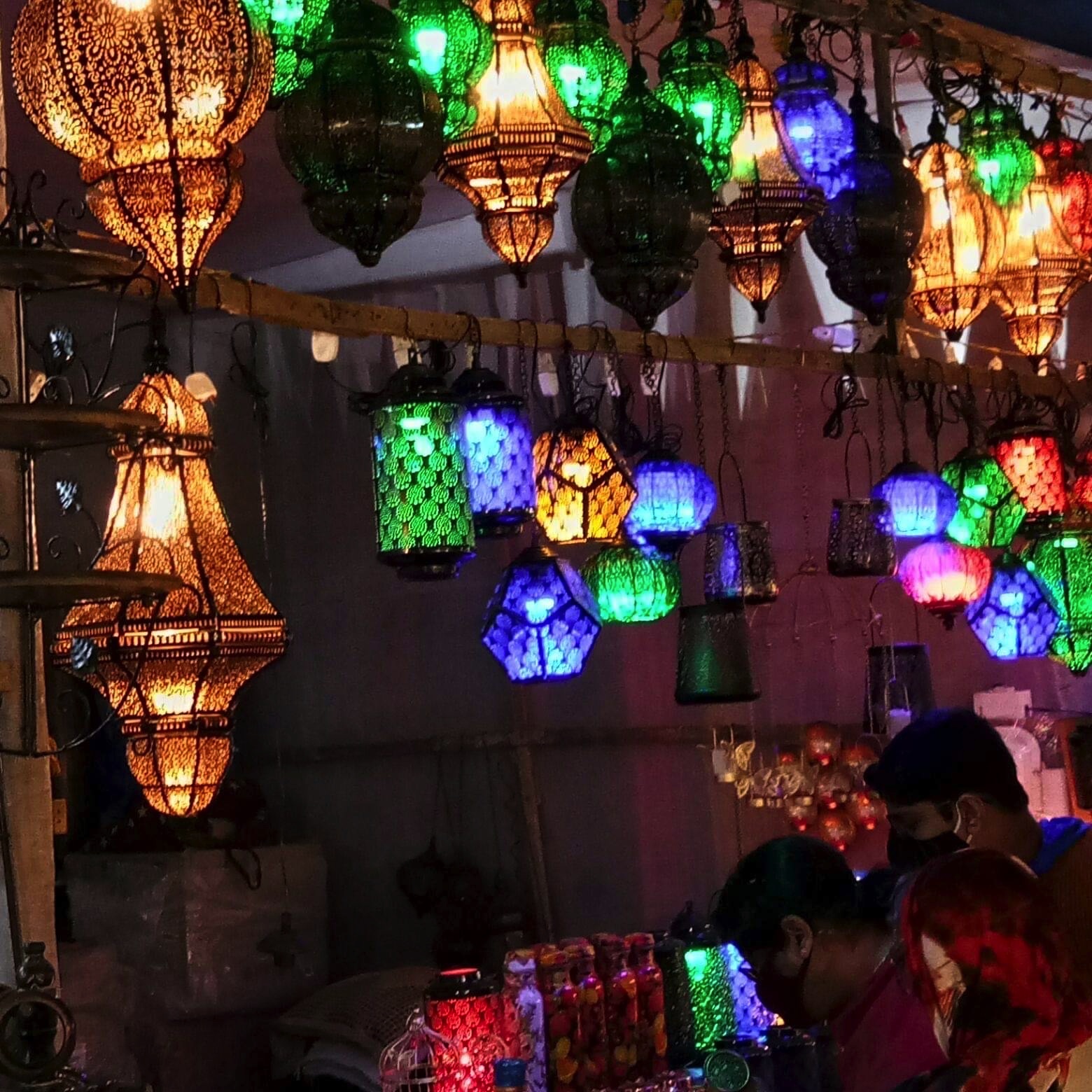
My next stop was a store selling lampshades and fancy reading lamps. My strategy of picking up the profitable buys guided me to opt for a hefty one with a hefty discount. I felt happy to get one for my writing desk, good to place it in a corner. This would brighten up the table though it would occupy a lot of space. Its strong metal base would keep it steady – to resist the winds of change blowing in through the wide window kept open almost the entire day. The dark corners of the imaginative mind would also be lit up well.

I had done lots of impulsive shopping. But thankfully, most of the selected items in my cart were related to books. My last stop was bookstores now. Whatever energy I was left with, I wanted to spend it on books. I visited some book stalls to look for new arrivals. I found no offer better than the online ones. Standing in front of a bookshelf, I checked the discounted price and compared it online. I placed an order online as it was cheaper than the price inside the book fair. But the store gave easy access to find a list of good books. After placing online orders for some fiction titles, I decided to lessen my guilt. By seeking rare titles not found on any online platform. These high-priced books do not sell much. But publishers carry them to the book fair stall. I checked many times and found out-of-stock responses from the online stores. But those books turning yellow were right there in front of me. I stopped myself from buying these because of very low or zero discount.

I was carrying a full shopping bag made of eco-friendly jute but without any books in it. No, I was not assailed with guilt. It was a fully justified and meaningful shopping spree. Most of the things I purchased were related to the reading process. I should not blame myself for wasting money on irrelevant items that one should not buy – not at least from a book fair. 

Near the exit gate, there was a fast-food stall selling egg rolls. I gobbled up a spicy double egg roll really fast, to beat hunger pangs. I quenched my thirst with a bottle of chocolate flavoured drink. Instead of feeding the insatiable hunger for books and quenching the thirst for reading books. I left out books from the list of purchases at the book fair I visited and felt closer to large crowds of people who visited the book fair to buy everything except books.

.

Devraj Singh Kalsi works as a senior copywriter in Kolkata. His short stories and essays have been published in Deccan Herald, Tehelka, Kitaab, Earthen Lamp Journal, Assam Tribune, and The Statesman. Pal Motors is his first novel.  


PLEASE NOTE: ARTICLES CAN ONLY BE REPRODUCED IN OTHER SITES WITH DUE ACKNOWLEDGEMENT TO BORDERLESS JOURNAL.