Categories
Stories

Mister Wilkens

By Paul Mirabile

Courtesy: Creative Commons

 “Indeed, so fierce was this sense of resistance to change, and so universal were the powers ascribed to it, that in reading the Orientalists one understands that the apocalypse to be feared was not the destruction of Western civilisation but rather the destruction of the barriers that kept East and West from each other.

This unreferenced passage was found upon the mangled body of a certain Mister Wilkens after he had thrown himself from a speeding night express from Paris to Madrid. I, riding on that train, and possessing a peculiar nature for the bizarre, decided to investigate rhe reasons for such a gruesome suicide. Fortunately, upon arriving in Madrid, I ran into the Englishman who had shared the compartment in which Mister Wilkens had been travelling on that memorable night. I had seen him on the railway tracks whilst the train officials searched the surrounding embankments for the body of the poor man. Apparently, it had been Mister Wilkens’ travelling companion who had alerted the officials. He knew why Mister Wilkens had killed himself but seemed rather parsimonious with the details when questioned by the police or the press, feigning that he was about to fall asleep when the tragic event occurred, and was only awakened by a terrible laugh or scream. (Which we shall soon learn was a blatant lie!)

When I met him in Madrid by some extraordinary chance and bought him a drink at the famous beer saloon at the Plaza Santa Anna, made famous by its association with Ernest Hemingway who drank and got rowdy there, I offered the man money to divulge the reason for the suicide to me. He bluntly refused. I explained my idiosyncrasies towards the bizarre and he, smiling a wicked smile, promised to tell me only if I would not submit the story for publication or spread its contents orally to the press, friends or family until he authorised me to do so. As to my offer of payment, he suggested two hundred quid would do! I agreed all agog, albeit the amount of money seemed to be rather steep. In any case, I assured him that I had neither friends nor family, and that I had no great love for journalists. His story, thus, would be perfectly safe with me.

This was how I came to be the first to put into writing the nature of Mister Wilkens and the reasons for his suicide. Now if readers ask themselves how I’ve managed to publish the testimony without breaking my solemn oath, I would then have to elaborate on the unforeseeable and tragic end of my informer (whose name, by the way, I never learned). But that is yet another story. Permit me to recount this one first.

*

“We were the only two in the compartment.” My English informant began smugly in a slightly high nasal tone while the air smelt somewhat of that Cambridge midnight lamp oil. “I can genuinely recollect at the train station in Paris that his personality was of a sullen, meek sort, one of a man who had fallen hard, got up, but only to fall again. He wore a tragic, tormented face, and if I recall correctly, every two or three minutes suffered an unsightly twitch under his left eye that made the other eye seem exorbitant. Anyway, once we had left Paris far behind, he engaged in the most singular gambit as regards the way in which he sought to enlist my attention : ‘Have you ever travelled to the Orient ?’ The gambit put so bluntly shook me out of my dreamy thoughts. I noted that his left eye began to twitch as if it sought to put me out even before I ventured an answer.

“‘No I haven’t, although I’ve read many travel writers and adventurers’ tales of the Orient.’

“‘Oh really !’ he snorted in overt contempt. ‘For example ?’

“ ‘Well … there’s Marco Polo.’

“He guffawed : ‘He never left his dingy cell in Venice, the seedy bugger !’ I shrugged my shoulders.

“ ‘I have perused Sir Richard Burton[1].’

“He lifted an appraising eyebrow : ‘Yes, a remarkable polyglot and reader of the Oriental heart ; an ethnologist and anthropologist avant la lettre. He was, nevertheless, a man fraught with prejudices and terribly dogmatic. Alas, a man of his times. Yet, his writings do hold much insight, and so humorous at that. Did he not say that England was just a tiny island ? He secretly despised it for he breathed more spacious air in Asia, Africa and Continental Europe.’ He adjusted his badly knotted tie. ‘Go on …’

“ ‘I’ve read all of Alexandra David-Néel’s novels[2]?’ I pursued with an amused air of a child.

“ ‘Ah ! Now there’s an outstanding, pugnacious explorer ! She outstrips them all — except Burton of course — in intrepidity, intelligence, will-power and writing style. Her sarcasm and irony suit my humour, whilst her practice and research into Buddhism bear the seriousness of any so called specialist or expert.’ He smiled a self-congratulatory smile as if he had brought up the name himself. I must admit that I too was pleased at his overt approval; indeed, to have outsmarted the Brits and the Tibetans through cunning and acumen in order to reach Lhasa on foot safe and sound was a fantastic feat.

“My travelling companion lifted his chin for me to continue my enumeration : ‘Pierre Loti[3] ?’

“He snorted : ‘Please be serious, sir.’ And he yawned.

“‘André Malraux[4],’ I jested.

“He threw up his hands : ‘His novels are wonderful, but his Orient is as imaginary as his imaginary museums.’

“‘Pearl Buck[5] ?’ I countered with excessive decorum as if all this were just a parlour game.

“ ‘Hum … yes, she is the only Westerner who really knew China, more so than the American journalists Louis Strong and Edgar Snow. Read her Nobel Prize speech, it’s an incredible lesson in Chinese literature. Yes, Pearl Buck had a genuine love for the East. Her books plunge us into the remotest depths of twentieth century rural China. The Mother is a sparkling piece of penmanship …’

“ ‘I shall not name all the modern travel-writers to the East whom I have read on my train rides, many of whose narratives are quite dull and stereotyped.’ I rejoined, hoping to put an end to this ridiculous ‘parlour game’.

“ ‘So right you are, sir,’ he beamed. He sat back in his seat fidgeting with the buttons on his vest, some of which were missing. ‘I noted, too ….’

“Our compartment door slid open violently. The conductor practically jumped in demanding our tickets. My heart almost jumped with his jump ! Anyway, we dutifully showed them to him. When he had jumped out, so to speak, Mister Wilkens, although unperturbed by all this jumping about, seemed, none the less, beset by something, his eyes staring blankly at the table aside the window where he had placed a shoulder-bag, perhaps because he had lost the thread of our conversation. He looked up and blurted out: ‘You know sir, I spent over forty years living in the East : Turkey, Syria, Armenia, India, China, Laos, Mongolia, not as a conquering dolt, a cosmopolitan snob or a professional prig, but as a pilgrim in quest of my humane origins.’

“My travelling companion was in a state of unusual excitement. ‘Humane origins ?’ I repeated with a soupçon of irony.

“ ‘Yes, humane origins. I see that you fail to grasp the essence of that formula. Humane is another word for Humanism, my dear fellow. Humane defines our human heritage, the fount of our soul and spirit.’

“Just at that moment several French customs officials slid our door open and asked for our passports. When they were examined and returned, a few minutes later the Spanish police entered and inspected them in the same taciturn manner. As soon as these formalities had been completed we leaned back in our seats.

“I sat politely, absorbed in Mister Wilkens’ rather dark comments, exposed with such bursts of emotion. I swallowed every word he said, albeit the digestion caused me great discomfort. Be that as it may, sceptical at first, I grew somewhat more interested as he rambled on, amused at the man’s gyrating gesticulations, wondering, however, if he had gleaned his monologue from a book or from his own experiences as he so pompously pretended. This being said, I did feel a certain fraternal respect for him, although I will confess that he annoyed me with that composed self-sufficient poise. A poise I had stupidly preened in my old university days at Cambridge; you know, the eloquence of words, however boastful and bombastic, hollowing out dismal logic and stale equations. But I was dead sure that if I hadn’t been to Cambridge, this man would have never even addressed a single word to me. He sniffed out his ‘own kind’ ! But of this ‘kind’ I was particularly sceptical and mistrustful, especially of pedants like him. A sentiment of distrust one encounters in people who throw themselves upon you, spilling out their watered down philosophies or immature phantasies during long hours in trains. To be fair though, I did not detect this incorrigible comportment in Mister Wilkens’ hurried, but measured spurts. His words were solid, linked together like the shiny mail-coats of those fine mediaeval smithies.

“ ‘Are you then not content with your many years spent amongst the populations of Asia ?’ It was a mundane question but… 

“ ‘Disorientation …’

“ ‘What ? Disorientation ?’

“ ‘Yes, disorientation, sir. Look at the word closely : ‘dis-‘ apart from and ‘orient’ … I am separated from the Orient … my Orient ; like dis-order, out of order, or dis-jointed, out of joint. Or how does disease appeal to you : out of or separated from ‘ease’, or disaster, out of the harmonious movements of the ‘astres‘ or stars ? The Eastern stars of course. Have I made myself understood ?’ He sneezed.

“I nodded without conviction. That pedantic tone, plus his semantic shenanigans unnerved me as well as that left eye of his which had been twitching with each jerky gesture of head and hands. He then began wringing those hands of his like some sort of maniac, gazing at the top berth above me, starry-eyed.

“ ‘Were you there on mission ?’ I ventured, hoping to regain his attention.

“ ‘Mission ? Yes, my mission ; not there, but here in Europe. I must relocate my orientation here in the West, if that is at all possible, given the fact that I am completely disorientated.’ He scratched that twitching eye peevishly. ‘So many languages and cultures studied and taught all gone up in smoke. A tragic fire has set aflame my life since returning to Europe; it has turned all my dreams to ashes. All my written and spoken words wrapped in the flame of a setting sun! And I can assure you sir, no phoenix will ever arise from them. Once disorientated, always disorientated as they say.’ He reached for his shoulder-bag, pulled out a soft-covered book, opening it at random with a look of disdain.

“I must admit that I found it painstaking to follow Mister Wilkens’ histrionic tirade with any seriousness. There he sat, lofty and smile-less, his head swaying listlessly from one side to the other like a puppet. His twitching eye had become intolerable to look at; I turned my head away and peered out of the window. Darkness had mantled the low-lying countryside in a softness that diverted my attention momentarily from those inflamed words. During this dream-like state, the darkness absorbing me within her lush, humid vortex, it seemed to me — though I am hardly a psychologist — that my travelling companion had experienced a traumatic relationship crisis with peoples of very alien values to his own European ones, a crisis that exhausted and put to trial his intellectual and emotional limits, exhausting him of any margin of repartee, driving him to self-accusation, even to self-maceration. His ‘Oriental’ experiences hardly broadened his vision of the world; on the contrary, they left him in an utter state of culpability. I felt that all his monologuing, if I may use that ugly word, was a confession pronounced before the hour of death. This may be an exaggeration, but I did sense that Mister Wilkens had been touched by some unknown madness, perhaps a loss of identification or an explosion of a multitude of identifications with which he could not cope … nor wished to cope! He made weird grimaces, sighed, fidgeted about in his seat, ignoring me completely until the train pulled into a station. Three minutes later we pulled out.  Mister Wilkens had not once raised his eyes from that book, which I am sure he was not reading at all.

“If I remember correctly it was a very cold night, the sky, a crisp, obsidian black, the stars, frozen, and the moon, full and bright. I dare say our compartment was so cold that we were forced to bundle up in our overcoats. Mister Wilkens looked up at me several times from his pretended book-reading, though he displayed no desire for conversation. I broke in on him once, rather bombastically, lauding the French railway system. He nodded apathetically, then plunged his pug nose back into those pages. A few moments later the conductor poked his head in to apologise about the heating that, he promised, should be coming on shortly. I sighed in relief for I was freezing.

“Mister Wilkens cast me a cursory glance: ‘Have you studied things seriously, sir ?  I mean the things in life, yourself, for example ?’

“I found the question impertinent, but answered, none the less: ‘Yes I have as a matter of fact … including myself,’ I retorted, holding my head haughtily high. ‘I too have travelled widely.’ He snorted. I remember at that point I had taken off my overcoat, for the heating was slowly coming back on. Mister Wilkens, however, kept his on in spite of the beads of sweat rising to the surface of his high, furrowed forehead. He offered no repartee, thumbing nervously through that book of his.

“I thought to retaliate, judging him an unmannerly upstart: ‘So you consider yourself an Orientalist ?’

“He looked up from his ‘perusing’ and stared at me as if I had insulted him with the grossest of four-lettered words. ‘That is an ugly word,’ he sneered. ‘All your years at Cambridge have taught you nothing.  Anyway, to answer your question: no, I am not an Orientalist. Alas, as I have just finished explaining, everything has gone up into smoke: to have learned all those languages for nothing… to have undertaken all those voyages for nothing; to have taught and written for nothing ! Do you understand, sir … For nothing …’

“ ‘But …’

“ ‘But what ? Please, don’t pretend to console or pamper me, I abhor puerile commiseration. For nothing, sir. Do you realise that besides this train from Paris to Madrid back and forth, back and forth …’  A woman threw open our compartment door to step in, but when she saw Mister Wilkens’ twisted face and his twitching eye, she gasped and slammed it shut. He scoffed, fell mute and turned to the window.  

“Large snowflakes fell. They formed little rims of melting sleet on the window. The wind whipped them about, giving an impression of so many odd geometric configurations. During that uneasy interlude I searched frantically for something to say. I couldn’t bear that slice of silence arching over us, that biting irony of contempt.

“Before I was able to say what I had finally conjured up to say, he burst brusquely into my crowded thoughts: ‘I must tell you a little story about Sandy, a mate of ours at Cambridge with whom we would go out on Saturday nights to “drink up the town” as the Americans say! There we were, a bit tipsy, carousing with the crowd, having a jolly good time, and Sandy, making a perfect bore of himself. So, to enliven the ambience I mustered everyone’s attention to inform them that I had stuck up for Sandy a week ago. Hearing his name suddenly mentioned, he raised his fat face out of the beer mug and looked blankly at me. I turned to Sandy and said : ”Sandy, how ungrateful you are, just think, I stuck up for you the other day, someone said that Sandy wasn’t fit to live with the pigs and I said that he certainly was !” All of us roared with laughter whilst poor Sandy buried his pasty face in the froth of his beer. In fact the whole pub was howling with laughter. It was truly a smashing night out.’

“Mister Wilkens was choking with laughter. He appeared so pathetic to me. He wore such a cretinous smirk on his twitching face. That revolting anecdote of his was cheap and full of childish contempt. Was he doing this purposely to disgust me, to urge me to get up and leave the compartment? He calmed down and eyed me with a sort of conspiratorial smile: ‘Have you ever thought of taking the Leap, sir ?’ He pushed his tortured face forward waiting for an answer. His hysterical tone had shaken me up a bit. I wished only now to be left alone. 

“ ‘The leap ?’ I asked, examining him rather warily. It was an odd word which he emphasised with an accompanying gesture of his hand raised high overhead. He noted the tint of circumspection in my voice. He sneered and threw open our compartment window. Stretching his hand out, he caught the flakes of snow that shone in the half-lit wintry night. I made no move. Cold air rushed into the warmth of the compartment. I nodded towards the window. He feigned to ignore me and his sneer erupted into a series of ugly snickers. I snuggled up in a corner and for an instant thought it best to leave him to his madness. It was becoming frightfully cold, and furthermore, his attitude frightened me, his gestures were nervous, erratic. His face, morose, spiteful. He kept tapping his feet and hands, playing nervously with the frayed ends of the cuffs of his shirt. Was it because of the cold or some inner anxiety? I sensed that he was displeased with the tone of my voice and most probably even disgusted with my company, and was undoubtedly endeavouring to communicate it to me. I sprang to my feet to take leave of him. He grasped my shoulder. His fingers were wiry, hard as steel.

“ ‘Yes, the leap, my good fellow. Leaps are like twilights and rainbows, terribly brief. Do you understand who all those peanuts in a jar are ? No, you have understood absolutely nothing of what I have been saying.’ I stood gaping at him, frozen in terror. He released his grip and in one violent movement pushed me aside against the compartment door. ‘You may plead in my favour that I’ve had my day in the sun; I shan’t disapprove of that banality. But tell me, sir, you, so well cultivated, was it all then just fairy dust ? A forty-year timeless fairy tale existence before … before the plunge into this nightmare, waking up into a dank, grim prison of biological and material utility ? Are we all forbidden to accomplish our dreams ? Must we live out our lives in a stifling cocoon of time- and energy-consuming survival of the fittest ? Well sir, yes, I’ve had my day in the bold, rising sun, but it has since sunk …’ Mister Wilkens threw back his head in the most theatrical fashion, grabbed his book, leapt up on to the table aside the window then rolled out of it without uttering the slightest sound. Confounded, I made no effort to stop him. At length, coming to myself, I ran for the conductor. The rest of the story you know.”

When he had finished his account and his fifth beer (which I had been paying for) I again promised him that I would neither write nor mention this unusual event to anyone. I enquired, however, about  the book he had been reading or pretended to be reading in the train. My informer said that he had tumbled out of the window with it cradled in his arms, but no one, apparently, made any effort to find it. I paid him, and without another word, he stood and left the beer-hall.

At this point the reader is undoubtedly eager to know why I have broken my vow and have divulged the tragic end of Mister Wilkens. Well, let me record without going into details that a similar tragedy befell my English informer some months ago on the December 9, 1976, on a night train between Paris and Madrid, so reported El Pais[6]. A large photo of him reminded me that I had never asked him his name, and it was only by the photo that I knew it was my informer. Perhaps he, like Mister Wilkens, had also made the leap, although I doubt whether he dabbled in the field of Orientalism. This being said, I hope these suicides are not contagious, and that because of poor Mister Wilken’s embryonic virus, I too have been contaminated by his travelling companion! To look at it from another point of view, however, I have often wondered about that book; that is, Mister Wilkens’ book which he had held in his arms when he leapt out of the speeding train. My guess is that it may be the key in understanding the reason for killing himself, that and the citation found on him, which I have put into quotation as an epigraph to my narrative, and unfortunately –I must confess– whose author I have never been able to discover. I’m sure the key to the mystery lies in that name of the book.

[1]    (1821-1890) British military officer, explorer, erudite, writer and polyglot.

[2]    (1868-1969) French explorer, intellectual and writer.

[3]    (1850-1923) French military officer, traveller and writer.

[4]    (1901-1976) French writer, traveller and Minister of Culture under President General De Gaulle.

[5]    (1892-1973) American writer, winner of the Nobe Prize for Literature in 1938, born in China.

[6]   The national newspaper of Spain (The Nation)

Paul Mirabile is a retired professor of philology now living in France. He has published mostly academic works centred on philology, history, pedagogy and religion. He has also published stories of his travels throughout Asia, where he spent thirty years.

.

PLEASE NOTE: ARTICLES CAN ONLY BE REPRODUCED IN OTHER SITES WITH DUE ACKNOWLEDGEMENT TO BORDERLESS JOURNAL

Click here to access the Borderless anthology, Monalisa No Longer Smiles

Click here to access Monalisa No Longer Smiles on Kindle Amazon International

Categories
Poetry

In 1947

By Masha Hassan

Art by Amrita Sher-Gil (1913-1941)
It is the beginning of a saffron day.
She tinges her white salwar with colour.
The walls are thin and we listen,
Offered prayers to Sikh Saints,
Inside a room of crippled faith.
We wait,
We wait for the devotion to finish,
For her to step out,
To tsk at our negligence,
To sigh at us heretics…
Chiffon is what covers her head,
Falls over so elegantly onto her shoulders,
Only to be quickly put back to its position.
She bends over in much pain.
‘Nanak’ she says is the medicine --
Handing out the sacred sweet.
We roll our eyes but stretch our hands,
Whilst scuffling her salwar,
Remembering the sun of 1947
She’d narrate,
 
In silent murmurs and naked
Soles,
 
She had covered miles to feel
Uninhabited,
 
She remembered intervals
On makeshift mornings,
 
Toppling over bodies with
No sound,
 
On footpaths familiar she remembered
Runnels painted with blood,
 
Leaving behind dupattas* and flags,
Flying spirits in the sky,
 
She was certain she’d return,
To unlocked doors,
 
To obscure meanderings
 
To Bitter-sweet memories
Of abandoned and burnt
Homes,
 
Rest assured,
She never did
 
She found refuge in language. 

*Veils or Scarves that are almost the size of stoles
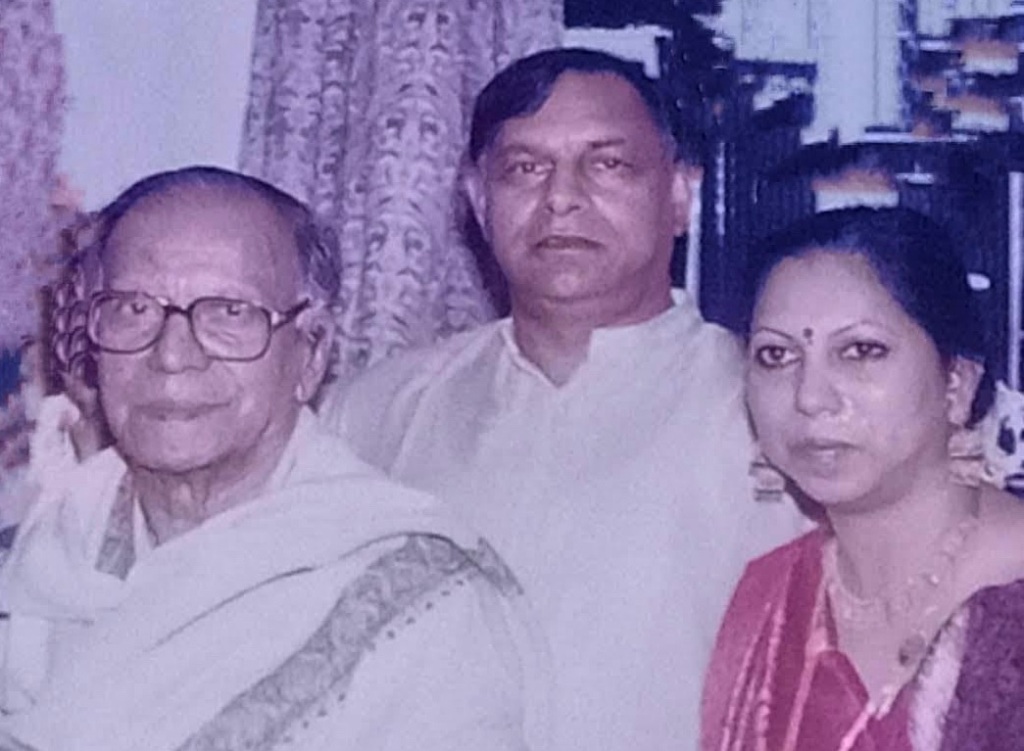
This poem is about the journey made by the late Kuldeep Kaur (seated on the left). She was originally from Rawalpindi (now in Pakistan). As a child, she had to travel on foot, stepping over heaps of dead bodies from Rawalpindi to an army base camp and finally settled in New Delhi, Patel Nagar. This photograph was taken in 1993. She is seated next to her daughter, both of who also witnessed the 1984 Sikh-Hindu riots, another face of fundamentalism. Photo provided by Masha Hassan.

Masha Hassan is a PhD student at the University of Bologna, Italy. Her research entails identity constructions at the margins, the ‘liminal identities’, focusing on the South Asian diaspora.  You would occasionally find her wandering in Kebab shops in Italy talking in Urdu, Hindi or Punjabi with the shop owners, listening to their journeys. Her articles have been published in The Speaking Tree, Times of India, Jamhoor Magazine, and online Italian magazines such as OgZero and connessioneprecarie. Her first poem, ‘Main, Junaid’, (dedicated to Hafiz Junaid who was lynched on a moving train on the suspicion of carrying beef) was published on the cover of a local Marathi magazine called Purogrami Jangarjana, Mumbai, India in June 2017.

PLEASE NOTE: ARTICLES CAN ONLY BE REPRODUCED IN OTHER SITES WITH DUE ACKNOWLEDGEMENT TO BORDERLESS JOURNAL. 

Click here to access the Borderless anthology, Monalisa No Longer Smiles

Click here to access Monalisa No Longer Smiles on Kindle Amazon International

Categories
Essay

The Story of a Land at War with Itself

If religion has bound people of different lands, religion has also crafted gulfs between people who shared the birthplace and spoke the same language. If religious hatred led to the holocaust, religion became the cornerstone of India’s Partition. The crimes against humanity in Bosnia also were rooted in religious intolerance, as Ratnottama Sengupta retraced when her brother, Dr Dipankar Ghosh wrote to her from Bosnia-Herzegovina, as part of the peace-keeping forces in 1996.

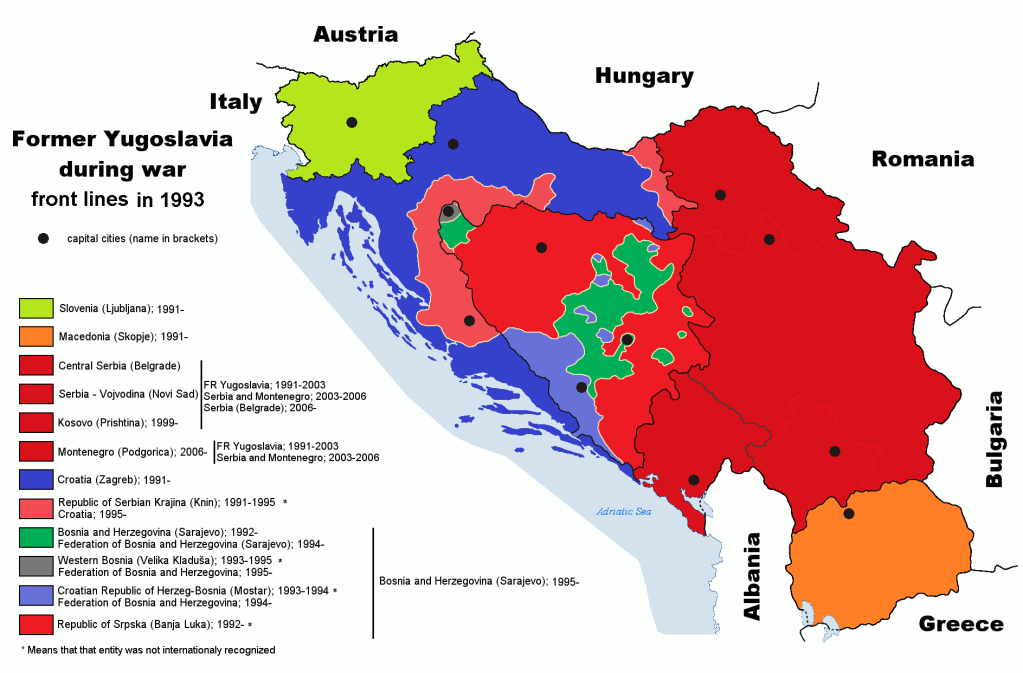
Map of former Yugoslavia in 1993. Courtesy: Creative Commons

The Bosnian War (1992-1995) was an immediate fallout of the break-up of the Socialist Federal Republic of Yugoslavia. It began to disintegrate when Slovenia and Croatia seceded in 1991. Serbia, the largest constituent in the Republic of Yugoslavia, did not want Croatia’s independence as a large Serb minority lived in Croatia. But the rest of the state declared national sovereignty in October 1991 (two years after the fall of the Berlin Wall) and held a referendum for independence on 29 Feb 1992.

Bosnia, the largest nationality, was home to Muslim Bosniaks – they wanted Bosnia to be a unitary multi-ethnic state. The Serbs wanted to be independent if not to unite with Serbia. Likewise, the Croats wanted significant autonomy for their majority areas or secession to Croatia.

The referendum favoured independence, but the Bosnian Serbs opposed this, as they aimed at creating a new state – Republika Srpska (RS) that would include Bosniak majority areas. So, their political representatives boycotted it. And a day before the outcome of the referendum, on 28 February 1992, the Assembly of the Serb People in Bosnia and Herzegovina adopted the Constitution of the Serbian Republic of Bosnia and Herzegovina.

Eventually, the European Union formally recognised the newly constituted Republic, as did the UN. It was inhabited mainly by Muslim Bosniaks, Orthodox Serbs, and Catholic Croats. As this Republic gained international recognition, the earlier Cutiliero Plan proposing a division of Bosnia into ethnic cantons collapsed.

Now the Bosnian Serbs, led by Radovan Karadzic and supported by the Serbian regime of Slobodan Milosevic and the Yugoslav People’s Army (JNA), mobilised their forces inside Bosnia and Herzegovina in order to secure ethnic Serb territory. Soon war spread across the Balkan land, accompanied by ethnic cleansing.

Siege of Sarajevo (1992-1996): The Bosnian Serbs who would settle for nothing less than a new state, Republika Srpska (RS), now encircled Sarajevo, the capital of Bosnia-Herzegovina. With a siege force of 13,000 stationed in the surrounding hills, they assaulted the city with artillery, tanks, and small arms. The army of RS, which had transformed from the Yugoslav Army units in Bosnia, fought the army of the Republic of Bosnia and Herzegovina (ARBiH).

Inside the city ARBiH, which was the Bosnian government’s defence force composed of Bosniaks and Croat forces in the Croatin Defence Council (HVO), was poorly equipped. It could not break the siege and for six months, the population of Sarajevo lived without gas, electricity or water. It is estimated that of the 13,952 killed during the siege, 5434 were civilians.

Within a year increased tension between the Bosniaks and the Croats led to escalation of the Bosnian war, in 1993. Here on, the war was characterised by bitter fighting, indiscriminate shelling of cities and towns, ethnic abuse, forcible transfer and systematic mass rape of Bosniak Muslim women – perpetrated mainly by Serbs and, to a lesser extent, by Croat and Bosniak forces. Events such as Markale massacre and Srebrenica genocide, perpetrated to raze the Bosniak’s morale and willingness to fight, became iconic of the conflict.

Markale Massacre: In February 1994, the open-air market in the historic core of Sarajevo. Mortars were shelled. This act of targeting civilians in the marketplace was carried out, it was later confirmed, by the Army of Republika Sprska (VRS).

Initially the Serbs were militarily superior due to the weapons and resources from the JNA. Eventually they lost momentum as the Bosniaks and Croats allied against RS following the creation of the Federation of Bosnia and Herzegovina in 1994.

The repeat shelling of the Markale Market in August 1995 prompted the NATO airstrikes against Bosnian Serb forces and eventually led to the Dayton Peace Accord. The peace negotiations were held in Dayton, Ohio and signed on 21 November 1995.

Srebrenica Genocide: In July 1995, more than 8000 Bosniak Muslim men and boys in and around the town in eastern Bosnia were killed by the Bosnian Serb Army of Republika Srpska (VRS) under the command of Ratko Mladic. Prior to the massacre UN had declared the besieged enclave of Srebrenica a “safe” area but had failed to demilitarise the area or break the siege of Sarajevo.  By 2012, close to 7,000 genocide victims were identified by DNA analysis of the recovered body parts.

Some Serb accounts say that the massacre was in retaliation of civilian conflicts on Serbs by Bosniak soldiers from Srebrenica. This claim has been rejected by the UN and ICTY as “bad faith attempt to justify the crime against humanity”.

US Inaction: The United States took no action till 1995 against the smuggling of arms that had become rampant. It was widely believed that the CIA funded, trained and supplied the Bosnian Army. EU intelligence sources maintained that the US organised arms shipment to Bosnia through its Muslim allies. Pakistan, for one, ignored the UN ban that declared it illegal for other Muslim countries to supply arms in the war. It not only supplied arms and ammunition to Bosnian Muslims, it also airlifted anti-tank missiles.

Serbia did not fight but supported RS with money, arms and volunteers. Croatia too did the same for Croats.

The war ended with the signing of the General Framework Agreement for Peace in Bosnia and Herzegovina in Paris on 14 December 1995. British soldiers were first deployed in 1992 to protect aid convoys in Bosnia during the vicious civil war. They stayed on for peacekeeping duty.

War Crimes: Radovan Kradzic, the first President of Sprska during the Bosnian war, was a trained psychiatrist who was also known for his poetry. But the co-founder of the Serbs Democratic Party was declared a War Criminal. He was hunted down after 12 years as a fugitive in Belgrade and Austria, and extradited to the Netherlands which was then heading EU. There the International Crimes Tribunal for Yugoslavia (ICTY) convicted him on 11 counts of crimes against Bosniak and Croat civilians. Found guilty of the genocide in Srebrenica, he was sentenced to 40 years imprisonment.

Reportedly hundreds of people had demonstrated in his support. Others pleaded that Bosnia and Serbia could not move ahead economically as long as he was at large.

By 2008 ICTY had convicted 45 Serbs, 12 Croats, and 4 Bosniaks of War Crimes against Humanity. Estimates suggest that around 12,000-50,000 – mostly Bosniak – were raped, mainly by Serb forces. About 1 million people were killed and 2.2 million were displaced. This makes the Bosnian war the most devastating conflict in Europe since the end of World War II.

Net Outcome: The Bosniaks accomplished their goal of independent Bosnia. But the Serbs preserved their territorial gains a change in the demographic and self-rule in Republika Sprska. Also, the ethnic cleansing led to changes in the demographic composition of the Bosnian region – with the Serbs gaining the most.

History of the Conflict: The roots of the Bosnian War lies in the history that dates back to the 6th and 7th century when the region came to be inhabited by Slavic tribes. Bosnia was conquered in 1463 by the Ottoman Turks. Under their rule, large sections of the population converted to Islam while the rest remained either Orthodox Christians or Catholics. The Christian Orthodoxy came to be associated with Serbian nationality and Catholicism with Croat nationality. It is interesting to note that all these people spoke the same Slavic language.

Ethnic violence has been endemic in Bosnia and Herzegovina that had been under Austrian rule (1878-1918) before becoming a part of Yugoslavia. Violence engulfed it during WW2 when it was under Croatia, a puppet of Nazi Germany. In 1943-44, most of Bosnia was conquered by Serb-dominated Communists. Consequently, when WW2 ended, Bosnia became a constituent of the Socialist Federal Republic of Yugoslavia. It was led by Josip Broz Tito (1892-1980), an ethnic Croat who tried  to create a common Yugoslav identity based on adherence to Communist ideology. When that glue wore off, the nationalist separatist forces surfaced again.

*

Dipankar Ghosh, since he went to Pune’s Shivaji Preparatory Military School as a teenager, was mentally equipped to face the tribulations a war brings in its wake. His graduation from Kolkata’s Neel Ratan Sircar Medical College armed him to care for the ailing. And, being the firstborn of celebrated writer Nabendu Ghosh, he had a flair for writing.

All three qualities surfaced whenever the doctor, who retired as a Colonel in Britain’s Royal Army Medical Corp, put pen to paper. And he did that whenever he felt the urge to touch base with his parents in Bombay. From wherever he was camping — Belize, Belsen, Brunei, Cyprus, or in the Gulf War…

In the process, he breathed life into the now lost art of writing letters — which often became travelogues… like this letter to his father:

*

Mrkonic Grad. Photo provided by Ratnottama Sengupta

Lt Col D Ghosh, RAMC

RMO, 1 WFR

SHOE Factory, Mrkonic Grad

BFPO 551.U.K.

5th July 1996

Dear Baba,

I have just received your last letter from Bombay. I was worried about your health, which is why I rang you last night. Sorry it was so late. There was quite a queue for the phone, so I had to wait for my turn, Lt Col notwithstanding! I am reassured that you are okay.  

I am sorry the line was so poor, but it is a satellite line, which travels from Bosnia to the USA then is beamed on to India — hence all the static. Mind you, it is full of static when I speak to Lesley and Children in the UK too. Sadly, it is only an outgoing line, which takes call out, but no incoming calls. If you need to get in touch with me urgently, the best thing would be for you to ring Lesley and she can get in touch with me via the Ministry of Defence. 

We have been out in Bosnia for just over three months now, and the problems here seem to be in a state of very uneasy peace, now that Dr Radovan Karadzic has finally handed over the reins of power (Oh Yes!?). We are somewhat concerned that the proposed elections in September might bring about fresh unease and disturbance, even without Dr Karadzic at the hustings, and we might be, willy-nilly, dragged into a situation of tension to try to maintain peace.  Nonetheless, the Bosnians are making some efforts to keep the peace, albeit because we are waving a big stick whilst holding out a carrot.  

The position is especially delicately balanced for us at the moment, due to the ICFWCB’s (International Commission for War Crimes in Bosnia) declaration of the good Dr Karadzic and his General, Ratko Mladic as ‘War Criminals’ for genocide against the Muslims of Bosnia. There’s little doubt, this is due to pressure from the countries with more than a few spare billions of petrodollar in western banks. We are hoping that we will not need to confront the Bosnian Serbs by having to arrest these two persons (since this was not a part of the Dayton agreement that has laid the framework last year for ending the war ravaging Bosnia for more than three years). These two still hold considerable political sway, and have a significant following in this country. 

It seems likely that we (British Army as well as the Americans, much as they might dislike it) will have to stay on in Bosnia for quite a while longer than we’d initially made allowance for. If the yanks want out, I hope we shall pull out as well. The Serbs seem to prefer having us around, to maintain the peace, than any other European nation, as they feel the British army of IFOR has, so far, been fair and reasonable in their dealings with them. (IFOR, you do know, is the NATO-led multinational peace enforcement force here under a one-year mandate). 

This was not the feeling they had about us last year though!

The biggest single problem at the moment, which might cause a major flare up for us, is Mostar. The people of this divided town straddling the river Neretva in south-east Bosnia have selected a Muslim majority council: this, the minority Croatian population are unwilling to accept, and have been boycotting. So far the town, which is known for its mediaeval arched bridge Stari Most, has been run by a peace committee from the European community with the help of IFOR, but they have threatened to hand over the council and resign from running it. 

This would effectively ring the death knell for the first election in Bosnia. Which would mean that the results of all the country-wide elections, due in September, may be an exercise in futility. 

The sad news this morning is that the iconic bridge, which connected the two parts of the city, was blown up by ‘unknown miscreants’ – very likely to have been Croats. Thankfully, Mostar is in the French sector of IFOR overall, so let’s hope and pray.

*

Now to give you some idea of all the other things that I’ve been up to, here in Bosnia. In May we started what we call a G5 project, a ‘Hearts and Minds’ operation to try and persuade the people at the grassroots about the benefits of Peace. This is in a small village called Podrasnica, with medical logistic support — essentially, medicines — from Medicine Sans Frontier (MSF), an international humanitarian organisation that provides medical assistance to people affected by wars, epidemics or other disasters.

Podrasnica is a village of some 950 people and is, like most places in the Balkans, nestled in a valley, about ten miles from our location in Mrkonic Grad. 

The people are mostly poor agrarians, eking out a living on small land holdings, or are involved in the logging industry. I run a Primary Health Care Clinic here, twice a week. The locals and also some people from the surrounding villages (though they never let on they are from another village!) are very grateful to have this facility, as they are very poor and many of them are unable to afford the price of medicine, or have transport to travel to Mrkonic Grad, and certainly not to their only surviving big hospital at Banja Luka. We do the basic medical care and also provide them with medicines which are given to us by MSF. 

Most of my patients are elderly people and small children, as the majority of young healthy men and women go to other places, bigger cities or towns, to earn a living  as best as they can. I’ve never come across so many people, in such a small community, with so much Hypertension amongst them. How much of that is the result of the stresses of war and how much of it due to the Turkish coffee they drink, would be interesting to investigate.

The majority of people are by and large sick of the war, and this is the first time, in five years, some of them will be able to harvest their own crops. The vast quantity of what they grew in the last few years was either commandeered by their own Army or looted by the opposition (Muslims and/or Croats). 

The clinic is now quite popular, but it is time consuming as we have to use an interpreter, and I am lucky if I can get through more than 15-20 patients per clinic.  

I have a special admirer called Milija (Serbian version of our dear Emily!) who brings us Turkish coffee. She was one of my first patients. She is sixty-two years old, and is a real darling. She doesn’t believe I’m fifty, which is wonderful for my morale! 

Later this month, possibly on the 16th, we will ‘hand over’ the clinic to the local Serbs, to continue the clinic with ongoing Medical support from MSF and support from us, if they want it. If they do take over the clinic completely, I shall miss seeing the patients. I’m hoping that they will be happy to allow me to continue the clinic, at least once a week. 

The clinic work sustains me through the boredom and the non-events (in real life terms) of the remainder of the week. So far I have had one bottle of ten-year-old Brandy, and a bottle of the local firewater called Sliivo — a fruit brandy they make out of plums). I’ve found out the hard way that it is safer to keep a hand over the little glasses they offer the slivovitz in, otherwise it gets automatically topped up! Even better, so that I don’t drink whilst on duty. 

The vegetables are coming on a treat in Milija’s garden, and the palm trees are loaded with fruits, as are the apple trees next to the clinic. Milija thinks they will have a decent harvest, if the peace holds, and she’s trying hard to dissuade her oldest son from drinking too much — otherwise, she says, she will force him to come and see me! 

The men who do not have regular employment, and there’s a lot of them about, have become apathetic. So alcoholism is rife, and hence, I think, Hypertension and Peptic disease. All my boys have now developed a taste for Milija’s Turkish coffee, but I try to dissuade Milija, as I am fairly certain that the coffee beans must cost quite a bit. 

We always have an interpreter for the clinic, who are generally Bosnian girls, or fellers. They are generally chary (maybe even contemptuous) of the local yorkels, as is normal in all developing nations, and certainly in India. But the vast majority of them seem to have developed a special protective shell, to help them cope with the business of dealing with the needs of their poorer country folks, as the vast majority of them (the interpreters) get paid some DM 1000–12,00/ a month. This is eight to ten times what the ordinary folks in the country earn.  

There are some really bright students amongst these interpreters, who have given up career courses in order to take up jobs with IFOR, so that they can look after their families. One of the girls we have with us in Mrkonic  Grad was a second year medical student when the war broke out. Another girl, the daughter of a Chemistry Professor (her mother), is a graduate Electronic Engineer. She is trying to get funds organised so she can do a Master degree, and then probably a PhD. What will happen to all these blighted lives eventually, who knows?

I am constantly amazed how well these girls cope with living amongst all of our sex-starved, often foul mouthed soldiers. Some, of course, cope better than others, the youngest being just over 16 years old! IFOR has arranged a free scholarship for her, to study in the UK after she’s done her stint with the Army.  

It is hard to be surrounded by so much tragedy and not be repulsed by war and the people who lead nations into them. But draw the experiences of N Ireland into the reckoning and you realise that humankind has still some way to go before being called truly civilised. Amongst all this, when one has to cope with the petty point scoring of the self-seeking people, and self-aggrandizement of personalities around you, then it can get somewhat wearying. 

So far I am managing to cope with the changes that have occurred in my life, and find it comforting to accept that “This too shall pass”. Your letter was a solace.

I hope that my dear mother is keeping well. Please convey my pronam and love to Maa. Hope you are both well when this gets to you. I’ve rambled on too long for now. 

With pronam and love, 

Yours, as ever, Khoka

From left to right: Nabendu Ghosh, Dipankar Ghosh and Ratnottama Sengupta. Photo provided by Ratnottama Sengupta.

Ratnottama Sengupta, formerly Arts Editor of The Times of India, teaches mass communication and film appreciation, curates film festivals and art exhibitions, and translates and write books. She has been a member of CBFC, served on the National Film Awards jury and has herself won a National Award. 

.

PLEASE NOTE: ARTICLES CAN ONLY BE REPRODUCED IN OTHER SITES WITH DUE ACKNOWLEDGEMENT TO BORDERLESS JOURNAL

Click here to access the Borderless anthology, Monalisa No Longer Smiles

Click here to access Monalisa No Longer Smiles on Kindle Amazon International
Categories
Poetry

Unanswered by Vernon Daim

Vernon Daim
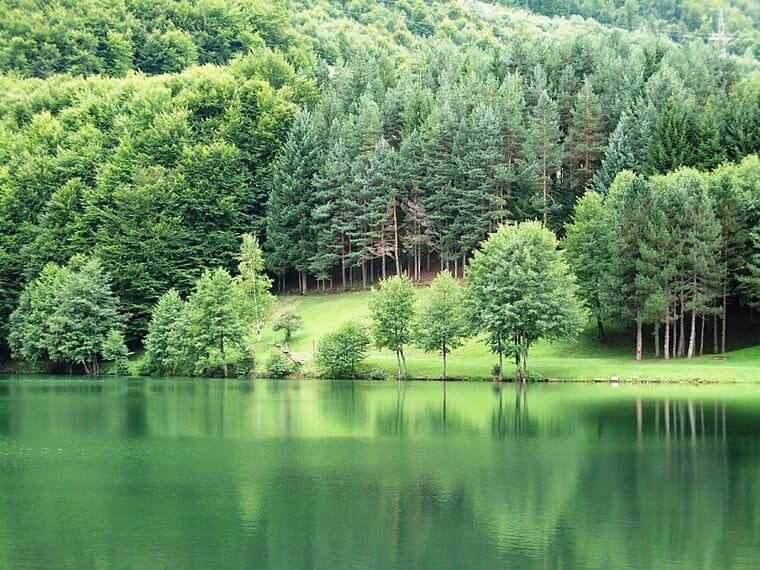
UNANSWERED

In seasons to come, in moons to come,
Each passing month accumulates
Into a full year, each more hopeless,
Drier, deadlier than the last.
Birdsongs fade into oblivion,
Stop colouring the misty mornings,
When rainforests turn asthmatic,
The forest floor caked into drought-scabs.
Frail with hope, laughter is no longer heard
On the beach, now oil-stained,
Now plastic-choked, now fume-shrouded.
Will children see sunrise or taste rain,
The way we did generations ago?
Will they point fingers at the politicians,
God-like, honest, and wise too?

Vernon Daim is a Malaysian writer. His poems have appeared in local and international publications. As an English teacher, he has also presented papers at various ELT conferences.

PLEASE NOTE: ARTICLES CAN ONLY BE REPRODUCED IN OTHER SITES WITH DUE ACKNOWLEDGEMENT TO BORDERLESS JOURNAL

Click here to access the Borderless anthology, Monalisa No Longer Smiles

Click here to access Monalisa No Longer Smiles on Kindle Amazon International
Categories
Notes from Japan

Better Relations Through Weed-pulling

By Suzanne Kamata

Courtesy: Creative Commons

Community weed-pulling is one of the things that produces anxiety in me. At times like this, when we are summoned to the shrine on a Sunday morning, I miss my Japanese mother-in-law. You only have to send one person from your household, and for as long as we lived with her, she was the one to go.

Sometimes my husband takes part, but on this particular weekend – well, most weekends – he was playing golf. (He is the three-time overall champion at his golf club.)

I am an insomniac and an introvert. The evening before, I was thinking about how I would sleep in the next morning, and then I would make a pot of coffee and continue reading this wonderful novel that I had been immersed in.

“Tomorrow is weed-pulling at the shrine,” my husband said. “Sorry. You’ll have to go.”

I must admit that I did not always look at the memos attached to the clipboard circulated in the neighbourhood. (No, we did not have a Facebook group or use What’s App.) The groundskeeping had probably been mentioned, and I had ignored it.

Most of our neighbours are farmers, growing carrots, rice, and smaller amounts of other vegetables such as corn. Many families have lived here for generations, and know each other from helping out at harvest time. My husband and I are educators – him at a nearby high school, me at a teacher’s college. We moved into this neighbourhood to look after my mother-in-law, who has now passed on. I don’t really know most of the people who live in the houses nearby.

The neighbours probably know more about me than I know about them. Before she went, my mother-in-law suffered from mental illness. Her delusions included stories about me – my alleged affairs, my theft of her dishes and other things – which she shared with the neighbours. I always wonder if these rumours come to mind when the farmers look at me. Like, not only is there a foreigner in their midst, but do they also think I’m some kind of Jezebel?

My husband said that weed-pulling would be from eight thirty to nine o’clock. Before leaving very early for golf at his fancy club in the mountains, he laid out a cloth hat with a back flap to keep the sun off my neck, a pair of guntei – white cotton gloves sold in packs and used for all manner of outdoor chores – sleeves for protecting my arms from the sun, and some money – annual “dues” for the neighbourhood committee. He didn’t prepare a gardening tool for me.

I got dressed, had a cup of coffee, and fed the cats. I wondered whether I should carry a mask. Probably, yes. Although the government had put out a statement weeks earlier that pandemic protocols need no longer be followed, and the local newspaper had stopped posting the daily number of COVID-19 cases (which here, in Tokushima, had been zero for weeks at a time), most people still wore those white paper masks. They wore masks while outdoors, washing a car, alone; while driving alone; while shopping; while out walking for exercise. I had pretty much stopped wearing a mask, unless someone asked me to, like while visiting the buffet at a work-related party, but on this occasion, I figured I had better put one on.

I recalled how early in the pandemic, someone in our neighbourhood had returned from a cruise on the Diamond Princess and tested positive for the coronavirus. That person had been pelted with carrots. A window was broken in their home. They’d had to move away, at least until the furore died down. I recalled how our son had been stranded in South Carolina for months, after being kicked off campus during studies abroad. My sister-in-law had sent urgent messages wondering when he would leave her house. Meanwhile, my husband forbade him from returning to our home in Japan. What if he caught the virus en route? We would become pariahs. These neighbours would torment us, too.

I put on the hat, but since I was wearing a long-sleeved red shirt, I didn’t wear the sleeves. When I arrived at the grounds of the wooden shrine, raking and weed-pulling was already underway. Of course, everyone was wearing a mask. Women in aprons and hats similar to mine squatted on the ground, hacking at weed sprouts with small scythes. I realised that I should have brought a tool. A man sitting on the shrine steps was collecting money. I waited while he wrote out a receipt, after which he handed me a plastic bag containing coloured garbage bags (orange for plastics, pink for combustibles) and a bottle of Pocari Sweat.

I decided to take the swag back home and get a tool. Our house is only a few yards from the shrine; it would only take a minute. I thought about not going back; they probably wouldn’t really miss me. But they would notice I had been there and gone, me with my red shirt. Duty prevailed. I found a trowel in the shed and returned. I found a spot.

I’m probably doing this wrong, I thought, as I loosened the soil with my trowel and tugged at weeds. The woman nearest me — a farmer, no doubt – was pulling briskly with both hands. She wasn’t using a tool. Huh. I never did things “correctly” in Japan. There was the time when I was called out for eating curry and rice with a fork instead of a spoon. There was the time when I was helping serve lunch at my daughter’s kindergarten and I was chastised for heaping the rice too high in the rice bowl – as one would prepare a bowl of rice for the dead.

Then, an ambulance appeared. Apparently, in those few minutes when I had been gone, retrieving my gardening tool, someone had fainted or otherwise felt poorly. I looked around and saw an elderly man lying on the shrine steps. He was wearing a mask. I wondered if he had felt faint because he was exerting himself on a warm morning while wearing that mask. I wondered why he didn’t take it off. He lay completely still. From where I crouched, he resembled a corpse with a white handkerchief over his face.

I heard someone say that the man was alright, and he didn’t need to go to the hospital. The ambulance attendants dragged a gurney over anyway and took a look at him. They lingered for a while, then left. The man remained prone on the shrine steps, completely still, the white mask on his face.

The other women seemed to have no problem crouching and pulling, but I had to stand up from time to time to stretch my legs. My cotton-gloved fingers scrabbled at dried leaves and uprooted weeds, which I shook the dirt from and tossed into a net. I kept glancing at my watch. Nine o’clock came and went.

Finally, someone approached and announced that weed-pulling was over. I helped another woman carry the net to a flat-bed truck heaped with leaves. I arched my back, happy to stand up straight, and edged toward the periphery of the group, where a few younger women stood. I was done. I could go back to my book and my coffee.

“From now, we will have disaster training,” a man announced.

Oh, no. This could go on all day.

“Are you going to stay?” one of the younger women asked me.

It occurred to me that I could set an example – maybe not a good one, in the eyes of the neighbourhood committee, but I could give these women the courage to leave. I sensed they were outliers like me. We could be rebels together.

“No,” I said. “I’m escaping.”

They giggled and followed me away from the shrine.

Suzanne Kamata was born and raised in Grand Haven, Michigan. She now lives in Japan with her husband and two children. Her short stories, essays, articles and book reviews have appeared in over 100 publications. Her work has been nominated for the Pushcart Prize five times, and received a Special Mention in 2006. She is also a two-time winner of the All Nippon Airways/Wingspan Fiction Contest, winner of the Paris Book Festival, and winner of a SCBWI Magazine Merit Award.

PLEASE NOTE: ARTICLES CAN ONLY BE REPRODUCED IN OTHER SITES WITH DUE ACKNOWLEDGEMENT TO BORDERLESS JOURNAL

Click here to access the Borderless anthology, Monalisa No Longer Smiles

Click here to access Monalisa No Longer Smiles on Kindle Amazon International
Categories
Poetry

Motherhood: A Tiny Life inside Me

A poem by Sangita Swechcha, translated from Nepali by Hem Bishwakarma

Painting by Bernardus Johannes Blommers (1845-1914). Courtesy: Creative Commons


A purpose in my life,
A reason to survive,
A flower budding inside me
That impatiently cried,
Begging to understand the meaning of life.

The terrible struggle with life --
Hundreds of questions from
A one-day old
Deluged me, 
Exhausted and distressed.

Though life was not that easy--
The flower that desired to flower
Did not want to wither 
Without a struggle.

The amusement in my life,
Lost in strange thoughts 
With silent, helpless emotions,
Tensed, fell down and cried,
With an abrupt pain of separation.

A life as in a story
And a story of life
With hope dared to live.
She, her courage and I --

The entanglement of 
Struggle and pain,
Perhaps, was a trial of restraint. 
A tiny life to chuckle that learned
Living was a novel mesh of affection.

The life that sprouted inside me,
Has patience to contend her life.
There is a desire, and a trust 
For her whole life is a dream that has yet to unfold!


Dr.Sangita Swechcha
has been an ardent lover of literature from an early age. She has published a novel and co-authored a collection of short stories before the collection GulafsangakoPrem (The Rose: An Unusual Love Story) in Nepali. She has many short stories and poems published in various international journals and online portals. The Himalayan Sunrise: Exploring Nepal’s Literary Horizon and A Glimpse Into My Country are her recent publications, co-edited with Karen Van Drie and Andrée Roby respectively. Email: sangyshrestha@hotmail.com, Website: www.sangitaswechcha.com

Hem Bishwakarma is a translator and poet from Nepal. He is an ELT teacher and educator by profession.

Hem Bishwakarma is a translation enthusiast, he also writes poems and reviews.  Email: swarmadhurya@gmail.com

PLEASE NOTE: ARTICLES CAN ONLY BE REPRODUCED IN OTHER SITES WITH DUE ACKNOWLEDGEMENT TO BORDERLESS JOURNAL

Click here to access the Borderless anthology, Monalisa No Longer Smiles

Click here to access Monalisa No Longer Smiles on Kindle Amazon International

Categories
Musings

Should I Stay or Should I Go?

When and how do you know when it is time to change your life, job, relationship, friends, plans or location? Keith Lyons examines the push and pull factors of change

Courtesy: Creative Commons

If you ever feel trapped in a predictable, boring routine, or wake with a nagging feeling that something isn’t quite right with your life, perhaps it is time to take action. But how can you decide to leave your familiar workplace, hometown, or social networks and start a fresh career, move to another place, or find new friends? And what happens if the grass isn’t greener on the other side – and it doesn’t work out? 

These are the dilemmas many of us face at different stages of our lives. The challenge when we’ve got just a bit too comfortable and lazy in our comfort zone. The inner voice that whispers of incredible opportunities in other places. The gut feeling that reminds us that right here and now we aren’t living our best life. 

If most Sunday evenings a sense of dread creeps up on you, and you feel you aren’t able to be your true self, maybe it is time for a change. But how can you escape the harsh circumstances of your life, whether it is your fate or misfortune, largely out of your control? 

I believe there are many aspects of our lives that we can influence. We can be the architects of better lives, authors of inspiring life stories, creators of meaningful existences. 

But first, we need to take stock, and clearly identify what the problem is, so we can find solutions that will work. A useful exercise is to write down all the things which are making us unsatisfied.

A list makes tangible our concerns, showing not just the things which irk us, but also providing guidance on what we are seeking on the other side. Whether it is a relationship, role or place which is the issue, it could be because you don’t feel fulfilled, engaged, valued/appreciated or inspired where you are right now.

For some, it is the negativity of the environment or culture, while others are held back from being their authentic selves by too much drama, toxicity, and hostility. Ultimately it might come to whether you like the person you are right now. 

If you are shrinking rather than growing, and bending over instead of standing tall, it might be time to move on, if you can. Looking back on my life, in my late 30s my significant long-term relationship ended, and as I came to the end of a job contract, I didn’t feel in a good space, living in a damp house, feeling depressed about how things had worked out and the gloom of winter. I thought back to the last location I felt content and happy, and booked a flight to get back to a place where I’d lingered while on holiday. That move — to a place some 10,000kms away — did work out, but I had never imagined previously that I would end up moving to live and work in a very foreign, yet welcoming, country that was a world away from my mundane existence.

Let’s also acknowledge that in some circumstances, you can’t easily extricate yourself from ties, responsibilities, relationships and locations. For example, you might have duties to your family, expectations around obligations to others, or constrains on moving — ranging from financial and political to cultural and social.

Ideally, you want to find your place, your tribe. You want to be surrounded by others who understand and support you. That could mean hoping for a geographic cure, or even finding your community of peers whose values align with yours online. 

The hardest part is overcoming your fears and anxieties going from the familiar to the unknown. You might have the concern that things won’t work out. Or the worry that you will never be happy, and that there is something wrong with you. That’s perfectly normal. No, there isn’t something wrong with you — this is just a reality of our existence. Change is scary. 

Those who’ve made tough choices in their lives report it does take courage to put into action the difficult decisions, but once the first step is made towards a fresh start, it can be liberating and empowering beyond expectation. 

.

Keith Lyons (keithlyons.net) is an award-winning writer and creative writing mentor originally from New Zealand who has spent a quarter of his existence living and working in Asia including southwest China, Myanmar and Bali. His Venn diagram of happiness features the aroma of freshly-roasted coffee, the negative ions of the natural world including moving water, and connecting with others in meaningful ways. A Contributing Editor on Borderless journal’s Editorial Board, his work has appeared in Borderless since its early days, and his writing featured in the anthology Monalisa No Longer Smiles.

.

PLEASE NOTE: ARTICLES CAN ONLY BE REPRODUCED IN OTHER SITES WITH DUE ACKNOWLEDGEMENT TO BORDERLESS JOURNAL. 

Click here to access the Borderless anthology, Monalisa No Longer Smiles

Click here to access Monalisa No Longer Smiles on Kindle Amazon International

Categories
Poetry

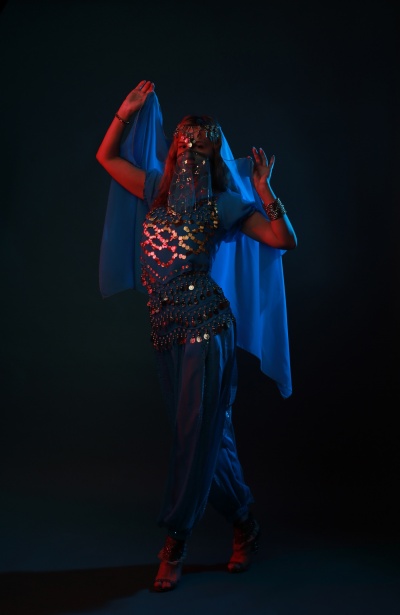
Dancer: A Balochi poem by Bashir Baidar

Translated by Fazal Baloch

Courtesy: Creative Commons
O dancer!
Come and dance
with ecstasy and trance
to set my heart aflame.

This dark and ebony night
may never see dawn's light.
May the jingle of your anklets
never cease into silence,
even for a moment.

As long as lingers the hangover, 
Move forth, stretch out your hands
and see how the colourful cash floats.

Why think of honour and modesty?
You're helpless, so am I.
You're famished, so am I --
You, for a crumb of bread.
I, of an anguished heart.
Who is chaste? Who is wanton?
Who is innocent? Who a sinner?
I know each and everyone.
Sealed are my lips.

These perfidious Masters and Chiefs,
shameless Mullahs and Pirs,
blood sucking oppressors
Are Man's eternal enemies.

Keep shaking your body,
till it crumbles apart
and all your organs shatter
like crystal on the floor.

O dancer!
Come and dance
With ecstasy and trance
And set my heart aflame.

.

Bashir Baidar belongs to the generation of the Balochi poets that emerged on the horizons of Balochi literature in the 1960s. Drawing inspiration from Progressive Writers Movement, Baidar’s poetry is widely cherished for his political undertone. So far, he has published four anthologies of his poetry. This poem is taken from Gowarbam (second edition) published by Pak News Agency Turbat in 2021.

.

Fazal Baloch is a Balochi writer and translator. He has translated many Balochi poems and short stories into English. His translations have been featured in Pakistani Literature published by Pakistan Academy of Letters and in the form of books and anthologies.

PLEASE NOTE: ARTICLES CAN ONLY BE REPRODUCED IN OTHER SITES WITH DUE ACKNOWLEDGEMENT TO BORDERLESS JOURNAL

Click here to access the Borderless anthology, Monalisa No Longer Smiles

Click here to access Monalisa No Longer Smiles on Kindle Amazon International

Categories
Review

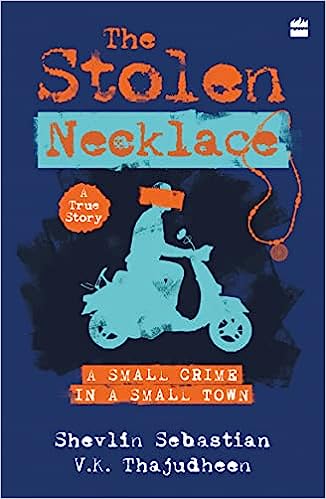
The Stolen Necklace: A Victim’s Saga

Book Review by KPP Nambiar

Title: The Stolen Necklace: A Small Crime in a Small Town

Authors: Shevlin Sebastian and VK Thajudheen

Publisher: HarperCollins India

With an enigmatic cover, reflecting the nature of the content, this is the true story of a small-town crime. A gripping narrative, it is the poignant saga of an innocent citizen, forced to suffer incarceration due to the mishandling of a theft case by the police.

Veteran journalist Shevlin Sebastian, and businessman, VK Thajudheen, are the authors. Thajudheen is the kingpin of this book, and also the victim. The incident took place a few years ago in the historic town of Thalassery in north Kerala.

Shevlin is based in Kochi, which is hundreds of kilometres away, in the south. Shevlin and Thajudheen came together following the media hype. With his impressive credentials, and long-standing in the journalistic field, Shevlin has proven his mettle by publishing more than 4500 feature articles in reputed periodicals. He has authored four children’s novels also.

Thajudheen, around whom the thriller revolves, has his home in Kadirur, a suburb of Thalassery. A middle-class businessman in Qatar, he had left his family of wife and three children at Kadirur. A God-fearing upright man, he is middle-aged and balding. His courage led him to an adventurous love marriage with his teenage sweetheart. Nasreena, being from a financially backward family, the alliance was considered of low status for his wealthy family.

Nevertheless, he had the temerity to ignore and disobey even his patriarchal father, in carrying on his long affair. However, before his secret wedding, his father passed away. Even then Nasreena had to wait for three years to be accepted in his home. That was after the birth of their second child – a son. The arrival of a boy child in his family after a long gap, mellowed his mother and two sisters who changed their hostile attitude against Nasreena.

All this happened years ago. Meanwhile, Thajudheen had a checkered  career spread over different locations, which ended up with a business in Doha. That was when he fulfilled his dream of marrying his daughter to an eligible young man, Shiraz Abdulla.

The tragic turns of events, entangling Thajudheen in the stolen necklace fiasco, commenced a couple of days after the celebration of Thazleena’s wedding. The family was returning from his sister’s home after a sumptuous dinner hosted for the newly-wedded couple.

It was a rainy night. Suddenly, they spotted two police jeeps with eight occupants waiting near their Kadirur home. Three of the men were in uniform. The rest were also from the same genus, it was revealed.  They were from a station outside Kadirur police control called Chakkarakkal. Stopping their car, their leader, approached the family with an expression of “You are all prey. I am a lion looking for a meal”.

Biju, having already earned a name as being reckless in controlling crime, was a known terror. He and his team had arrived armed with a phone evidence showing that Thajudheen was the culprit in a necklace-snatching crime. The incident was reported in his station a few days back. The CCTV camera that showed the purported thief cannot lie, they thought. It showed someone exactly resembling Thajudheen! But was it Thajudheen?

Thus started the ordeal of an innocent family man in the presence of his loving wife, and children. After a heart-breaking scene, near his home, Thajudheen was offered a compromise — pay the price of the stolen necklace and avoid litigation.

The offer was with a friendly ‘advice’: “I heard your daughter has just got married. The reputation of your family is at stake. We will inform the media that you are the thief.”

Anyone with a chicken heart would have yielded, but not Thajudheen, who always admired his late father for standing up to injustice. That was how Thajudheen had to languish in Thalassery sub jail till the story led to the final proverbial ‘happy ending’, nearly seven weeks later.

As a remand prisoner Thajudheen had the most undesirable company of robbers, underworld gang members, sex offenders, political workers, and so forth. At the same time, outside, his shattered family and Abdulla, the father of Shiraz, Thajudheen’s son-in-law, did not leaving any stone unturned to unravel the mysterious crime. They were making all-out efforts to obtain bail as well.

But Sub Inspector Biju was not to give up the big catch that easily. The police were even trying to trap Thajudheen in some other unsolved cases as a possible culprit.

This included even a murder case where the perpetrator was missing.  

Ultimately, when the higher court decided to let him free, the readers, along with Thajudheen himself, are left to wonder about the dispensation of justice by the police in a democracy. It is true that the politicians, the legislature, and even the Chief Minister had to interfere in ensuring proper investigation in this case. But still the question remains: what can one do to enforce timely change in the method of handling of criminal cases by the police?

Imprisonment of innocents and their vindication in the end is nothing new in the annals of ‘crime and punishment’. Fiction being a reflection of fact, such cases are not uncommon in world literature. Inspector Javert of Victor Hugo’s ‘Les Miserables’ (1862) can very well match up with the modern-day Biju, the sub inspector.

Likewise, in Leo Tolstoy’s short story, ‘God Sees the Truth but Waits’ (1872), a young merchant named Ivan Dmitrich Aksionov was accused of a crime he did not commit. One can see the forerunner of Thajudheen! After all, human nature is basically the same whether in France, Tsar’s Russia or India.

Undoubtedly, Shevlin and Thajudheen have succeeded in bringing out the darker side of the police force. However, though the narrative is touching, one wonders at the intent of the book.  Have the authors succeeded in openly projecting the atrocities of the police force to draw the attention of the establishment to prevent such incidents in future? Apart from presenting the insensitive and sadistic attitude of Sub Inspector Biju, little effort seems to be expended to indict the system to which he is linked. The fact that Biju is ‘punished’ for his ‘crime’ by just a transfer and withholding a few increments is an eloquent testimony to the laissez-faire attitude of our society at large.

Dr. KPP Nambiar, formerly a Consultant/Technocrat at the UN Food and Agriculture Organisation, is the author of many scientific papers and books, including a 1500-page Japanese-Malayalam dictionary.

PLEASE NOTE: ARTICLES CAN ONLY BE REPRODUCED IN OTHER SITES WITH DUE ACKNOWLEDGEMENT TO BORDERLESS JOURNAL. 

Click here to access the Borderless anthology, Monalisa No Longer Smiles

Click here to access Monalisa No Longer Smiles on Kindle Amazon International

Categories
Poetry

Rani Pink

By Carol D’Souza

RANI PINK

Oh Lord, trees. How they dress and undress
unhurriedly through geological time!
This one I pass on my way to tea
is presently putting on a blush
of rani pink that stands out so
jauntily against the clear blue
drape of the April sky in Chennai.
Oh, how the colour becomes it!
I stop dead in my tracks every time,
staring anew. Life in hues. So old. So new.

Carol D’Souza lives in Chennai. 

PLEASE NOTE: ARTICLES CAN ONLY BE REPRODUCED IN OTHER SITES WITH DUE ACKNOWLEDGEMENT TO BORDERLESS JOURNAL

Click here to access the Borderless anthology, Monalisa No Longer Smiles

Click here to access Monalisa No Longer Smiles on Kindle Amazon International