In the sky there is a cloud that looks exactly like you. What should I do?
Climb a tall ladder to the highest rung and plant a kiss on your cumulus lips?
Or just wait below for you to snow, then collect your love in a bucket?
The second option resists adoption because cumulus clouds generally produce little or no precipitation.
I will choose the ladder before you pass over and make me a sadder meteorologist than my forecast predicted.
2: Thunder in the Fountains
I have heard thunder in the mountains many times but never before in the fountains of this elegant city.
What a terrible pity you aren’t here with me to share the sonic anomaly and stare at the lightning under the bubbles.
Together we would jump into the booming water and splash among the fashionable flashes of implausible weather.
But you are in trouble, caught in a whirlpool far away, spinning faster every day and poking out your tongue at my unseen concern.
You make me feel like a worm that never learned how to keep my sighs inside instead of a highly qualified climate researcher.
3: Fog in my Throat
The river fog is thick today but come what may I intend to check the barometer as I do every morning and scribble down the readings on potato peelings because I have run out of paper.
The atmospheric pressure is high, compressing the air and inhibiting cloud dispersal: a reversal of the conditions appertaining when we resembled kittens: playful, fluffy and meek, so long ago, maybe even last week.
It is slowly dawning on me that you don’t really want romance with a needy meteorology professor who can’t afford to buy pants. I will cover my legs in dough instead and bake them into bread. I might never be able to forget but every step will involve a baguette.
From Public Domain
Rhys Hughes has lived in many countries. He graduated as an engineer but currently works as a tutor of mathematics. Since his first book was published in 1995 he has had fifty other books published and his work has been translated into ten languages.
.
PLEASE NOTE: ARTICLES CAN ONLY BE REPRODUCED IN OTHER SITES WITH DUE ACKNOWLEDGEMENT TO BORDERLESS JOURNAL
Seniors sit in mute repose our minds gone to sleep - no poems today.
Shining Insects
living secret lives, sung in ancient tongues of empty places, silent and mysterious.
Does Life Imitate Art?
Or is it merely a wish to fulfil
one wants to be the subject of a Rockwell or Renior
would we be the hung hero or the oft – slung political satire?
Sometimes
your actions — create more disturbance for others than they do for you
ice caps melting
water rising, seaside cities
submerged, Atlantians say,
welcome to the neighbourhood!
An Artist
Double vision helped Van Gogh
create heat waves
Poet Laureate for the League of MN Poets, Annette Gagliardi is published in numerous journals in Canada, Sweden, England and the USA. Gagliardi’s chapbook: Caffeinated, won the Literary Titan Gold Book Award for 2024 and an International Impact Award, 2025. She has just won the John C. Rezmerski manuscript award, for her book,Benevolence.
.
PLEASE NOTE: ARTICLES CAN ONLY BE REPRODUCED IN OTHER SITES WITH DUE ACKNOWLEDGEMENT TO BORDERLESS JOURNAL
“My gang members are lookin’ for a score and think there’s money inside a storefront full of old pianos.”
“How’s your gang going to steel a store full of pianos?”
“Those are Steinway pianos and handmade from the finest woods, metal, and copper. We’ll bust ‘em apart and sell the salvaged metal and wood. Get your ass over there and scope out the inside of the store for me.”
“You have until the end of the week or I’m throwin’ you out on the street.”
*
I never expected to find friendship in the most unlikely place, a dusty old piano store on Whittier Boulevard in an East Los Angeles barrio[1].
I stepped inside, greeted by the musty scent of wood and rusting metal. The store was quiet, almost sacred, and I was drawn to a black grand piano in the corner. As I pressed the keys, their voices rang out clear, strong, and unexpectedly comforting.
Suddenly, a head popped up from behind the piano.
“What are you doing here?”
“I just came into look around, Sir.”
“I’m Saul Bernstein, the store’s owner and a piano tuner by trade.”
“I’m Lupe Jimenez.”
“Do you play the piano?”
“No, but I’m curious about all these pianos. Do you sell them?”
“I run an orphanage for Steinways. These orphans are used, broken, abused, and seldom sell. They have souls and require a home just like people.”
“Where do they come from?”
“Some were rescued from burnt out homes, piano teachers with arthritic fingers who could no longer teach, and some from great performers who passed away. I gave them all a name. The gold grand Madame is ‘Goldie’. ’Red’ was owned by a famous singer songwriter who used it in his longstanding Las Vegas act. The others are called ‘Blackie’, ‘Ginger’, ‘Mira’ and ‘Rose’.”
Saul showed me the intricate insides of the Steinway, explaining how each string and key were crafted from beautiful wood and metals. The Steinways, he said, had personalities and stories including joy and tragedy just like lives. I watched as Saul spoke to them, dusted their keys, and shared memories of their former owners. In those moments, the store felt less like a place of business and more like a House of Worship.
Saul beckoned me over to “Goldie”, his hands steady as he opened the lid to reveal the intricate strings and hammers inside.
“Tuning a piano isn’t just about tightening strings. It’s about listening to what each note wants to say.” He pressed the key, and a slightly sour note rang out.
“Hear that? It’s off. Now, watch.”
He placed the tuning hammer on the pin and gently adjusted it, his ear close to the strings.
“You don’t force it. You coax it, like you’re persuading an old friend to sing again.”
He invited me to try. My hands trembled as I fitted the hammer onto the pin. Saul guided my fingers, showing me how to turn just enough, then play the note again.
“Now, listen for the waves resemble a beating sound. When the waves slow down and disappear, you’re in tune.”
I listened, adjusted, and played the note. The sound grew clearer, steadier. Saul smiled. “That’s it…You’re tuning not just the piano, but learning patience, care, and respect for the instrument.”
Saul became my mentor and friend. He taught me how to tune pianos, how to listen to the subtle differences in sound, and how to care for each instrument as if it were alive.
His passion was contagious, and I found myself returning day after day, eager to learn more.
*
My uncle pressed me for information, convinced the Steinways were worth a fortune if stripped for their materials. Torn between loyalty to my family and my growing affection for Saul and his Steinways, I invented stories to delay any plans for theft. Each day, the risk grew, but so did my resolve to protect the store and the friendship I’d found there.
The bell rang above the doorway one day and an ominous looking man with arms of steel, full of tattoos, wearing a red cap embroidered with “Ace” approached the counter. I witnessed that look of desperation in a man’s face many times before and feared for Saul’s safety.
“Where’s Saul?”
“Saul is over here tuning ‘Blackie’. How may I help you?”
“I’m Ace Menendez. You sold me a piano on an installment plan for my little girl.”
“I seem to remember you and a friend came in a big truck and picked up the piano. Is the instrument out of tune?”
“No, Sir. I’ve come to apologize for being three payments behind and ask for more time to bring the account current. My trucking business hauling shipping containers is suffering due to the strike at the port, and all the truckers in the neighborhood are struggling financially. It would break my daughter’s heart if you came to repossess the piano. My wife and I fear that without the discipline and love for the piano; she’ll fall victim to the crime elements in our poor neighbourhood.”
“When you’re ready to settle your account, just stop by.”
“Thank you, Mister Berstein. You have a big heart.”
“Tell that to my family wanting me to sell this joint. Vaya con Dio’s, Ace.”
I came to learn, Saul, ever generous, offered installment plans and low interest rates, caring more about the music and joy the Steinways brought than about profit.
He lived a sparse existence upstairs with only a cot, hotplate, while surviving on canned food, crackers, fruit, and his love for the Steinways sustained him.
Saul shared stories of the Steinways he tuned over the years, each with its own history and quirks.
“Every piano has a soul. And every tuner leaves a little piece of themselves behind.”
With each lesson, I grew more confident not just in tuning, but of myself. The shop became a place of transformation, where the music we coaxed from the old Steinways echoed the changes happening within me.
Saul watched as I gripped the tuning hammer, my knuckles white with concentration. I turned the pin, but the note wavered, stubbornly out of tune. Frustrated, I pressed the key again, harder this time, as if force would tune it into harmony.
“You’re fighting the piano. It’s not about strength. It’s about finesse.”
He took the hammer from me and demonstrated his movements slowly and deliberately.
“Hear those waves? That’s the sound of disagreement between the strings.Your job isn’t to overpower them, but to guide them into agreement.”
He handed the hammer back.
“Try again, but this time, breathe. Turn the pin just a hair, then listen. Let the sound tell you what it needs.”
I followed his instructions, turning the pin more carefully, my ear tuned to the subtle changes. The waves slowed, then faded. The note rang true.
“Remember, tuning a piano is a conversation, not a battle. If you listen, the piano will tell you when it’s ready.”
Saul wasn’t just teaching me about Steinways. He was teaching me patience, respect, and how to listen, not just to music, but to the world around me.
“Let’s tune ‘Mira’ who I rescued from a closed piano bar. She was soaked in decades of spilled booze and witness to trashy cocktail bar conversations.”
Saul watched as I struggled with the tuning hammer, frustration tightening my grip. The note wavered, refusing to settle. He gently placed his hand over mine, stopping me.
He took the hammer and demonstrated, his movements calm and precise. “Tuning a piano is like tending a garden. You can’t yank the weeds or drown the flowers. You have to be patient, gentle always giving each note what it needs to grow strong and true.”
He struck a key, letting the sound linger. “If you rush, you’ll miss the moment when the music is ready to bloom. But if you listen, really listen, you’ll hear when everything comes into harmony.”
He handed the hammer back to me. “This time, treat each string like a seed you’re coaxing to life.”
I breathed, relaxed my grip, and turned the pin with care. The waves in the sound slowed, then faded. The note rang clear and bright.
Saul smiled. “With patience and respect, you help the piano find its voice and your own along the way. Life is much the same. Sometimes, you can’t force things to happen.You have to listen to what life is telling you, make small adjustments, and trust that, with time, things will come into tune.”
I realized Saul wasn’t just teaching me about tuning a piano. Saul taught me how to live a life of harmony.
*
The next time my uncle pressed me for information about the store, I remembered Saul’s advice.“You have to listen to what life is telling you, make small adjustments, and trust that, with time, things will come into tune.”
I paused and listened to my conscience. I could make small, careful choices to protect what mattered. I lied telling my uncle that the store was under CCTV surveillance including a silent alarm system, a warning that steered him away without confrontation.
*
When I struggled at public school, frustrated by lessons that never seemed to stick, I recalled Saul’s metaphor. I stopped blaming myself for not learning as quickly as others. Instead, I adjusted my approach, asking for help, taking breaks, and celebrating small victories. Gradually, things began to make sense, and my confidence grew. I was told I could earn a scholarship to college to study music. I wanted to share the good news with Saul.
After school, I ran to the store and found Saul on his knees gripping his chest. I phoned for help. The paramedics told me Saul suffered a heart attack and invited me to ride to the emergency room with them. Saul gripped my hand and smiled. “I’m as tough as piano strings. I keep a card inside my wallet with my family emergency contacts for the hospital.Remember what I told you, ‘…every tuner leaves a little piece of themselves behind.’I hope a little piece of me is left behind inside you, Lupe.”
The doctor informed me Saul passed away, and the family was on its way. He handed me the keys to the store saying Saul had instructed him to place them in my possession.
Saul took a big piece of me with him to the beyond and the fate of the Steinways hung in the balance. I faced a chorus of doubts and obstacles, remembering,“Don’t force, listen.”
*
I reached out to the community, listened to their ideas, and coordinated efforts with patience and care. I was told to visit the neighborhood parish and speak with the priest who took me to a school for developmentally disabled children.
It was a room of beaten up, out-of-tune, upright pianos with eager students stridently following the teacher’s instructions. Others simply tried their best, pounding on the keys.
“Piano music is a miracle and enables these learning-disabled children to find joy and a sense of accomplishment in playing the piano. I’ll make inquiries with fellow priests, and we’ll pray for a home for Saul’s Steinways. The logistics of moving those heavy Steinways may be insurmountable.”
I learned to trust the process, and to believe that, with time and care, even the most troublesome moments could come into harmony like Saul’s garden metaphor.
*
Night had fallen over Whittier Boulevard. The streetlights flickering outside the dusty windows of the piano store. I stood inside the store, surrounded by the silent witnesses of my transformation, Saul’s beloved Steinways.
My uncle’s voice echoed in my mind, his demand clear:
“Tonight is the night!”
The gang was waiting. All I had to do was unlock the door and let them in.
I gripped the tuning hammer Saul had given me, its weight familiar and comforting. Memories flooded back about Saul’s gentle guidance, his stories, the metaphor he’d shared: “Tuning a piano is like tuning your life. You can’t force harmony; you have to listen, make small adjustments, and trust that, with patience, things will come into tune.”
My heart pounded. I could betray Saul’s legacy, give in to fear and loyalty to my uncle, or I could honour the music, the lessons, and the hope these Steinways represented.
I closed my eyes and listened to the notes from each piano signaling my decision. I imagined more children, their faces alight with joy as they played the rescued Steinways. I remembered Saul’s faith in me, his belief that I could choose a different path.
With trembling hands, I locked the door from the inside and dialed the police. As sirens approached, I stood by the Steinways, ready to face the consequences of my choice.
The gang sped away, but I remained, surrounded by the instruments that had given me a second chance. In that moment, I understood Saul’s lesson fully, “Sometimes, the hardest notes to tune are the ones inside us. But with patience, courage, and a willingness to listen, even the most discordant life can find its harmony.”
*
Without Saul, the piano store no longer felt like a happy orphanage for rescued Steinways but a dark, soulless, graveyard. His family, overwhelmed by grief and unable to afford to move the Steinways, decided to dismantle them for scrap. The thought of those beautiful instruments, each with its own story, each witness to Saul’s kindness being destroyed was unbearable.
Desperate, I remembered Saul’s lesson: “You can’t force harmony; you have to listen, make small adjustments, and trust that, with patience, things will come into tune.”
I reached out again to the community and anyone who might care. The parish priest had found a network of schools inside Mexico in need of pianos. Word spread, and soon a group of neighbourhood truckers led by Ace volunteered their time and their trucks. The plan was bold: we would transport the Steinways to poor schools in Mexico, where children with learning disabilities and limited resources could discover the joy of the Steinways.
*
On the moving day, a procession of battered trucks lined up outside the store. Men and women from the neighbourhood, some who had never set foot in the shop before, worked together to carefully load each piano. The journey was long and uncertain, but the spirit of Saul’s generosity guided us.
The Steinways found new homes in schools where children’s laughter and music filled the halls. I watched as students, many barely able to speak, some communicating only in sign language, sat at the old Steinways and played with wonder and delight. The instruments, once gathering dust, now sang again.
After betraying my uncle and the gang, I couldn’t return home. The priest arranged for me to move into a parochial school with boarding facilities run by a nunnery.
*
Years passed. I grew up carrying Saul’s lessons with me. Eventually, I returned to one of those schools, this time as a teacher. On my first day, I walked into a classroom filled with the very Steinways we had rescued. Their familiar shapes and worn keys greeted me like old friends.
“Hello, class. I’m Ms. Jimenez, your piano teacher. I was once a young person like you sitting in front of a grand piano called a Steinway. Don’t fear it’s size or complexity. Make it your friend, trust it, and it will take you on a journey into happiness you can’t yet realise.”
I realised that Saul’s legacy lived on inside me, not just in the music, but in every child who found their voice through these instruments. The harmony I had sought for so long was engrained inside my soul and spilled into the lives of those who needed it most.
And in the quiet moments, when the sun set over the schoolyard and the last notes faded, I would whisper a thank you to Saul, knowing that, together, we had tuned not just Steinways, but futures.
“With patience and respect, you help not just a piano, but your own life, find its voice.”
Jonathan B Ferrini has published over eighty stories and poems. A partial collection of his stories has been included in Heart’s Without Sleeves: Twenty-Three Stories available at Amazon. Jonathan hosts a weekly podcast about film, television, and music, titled “The Razor’s Ink Podcast with Jonathan Ferrini”. He received his MFA in motion picture and television production from UCLA and resides in San Diego, California.
.
PLEASE NOTE: ARTICLES CAN ONLY BE REPRODUCED IN OTHER SITES WITH DUE ACKNOWLEDGEMENT TO BORDERLESS JOURNAL
Charles Dickens was flying high by 1842. His books, Pickwick Papers and Oliver Twist, and periodicals were selling like hot cakes on both sides of the Atlantic. With so many fans over in America, he decided to pay them a visit. What he saw in the second-largest fan base upset him for two reasons. Firstly, there was the issue of royalty. Publishers in America were printing his work left, right and centre. He received none of the returns due to him. Secondly, he was upset with the level of racism and their cavalier attitude towards slavery, even amongst the northern states.
Dickens could not stomach the dehumanisation of the black Americans. The vocal and expressive writer, who drew his readers to his craft in the first place, wrote in one of his later articles about his trip to America. He did not twist his words when he wrote verbatim in his American travelogues of slaveowners’ advertisements about their runaway slaves. In one of these advertisements, it read, “Ran away, a negro woman and two children; a few days before she went off, I burnt her with a hot iron, on the left side of her face. I tried to make the letter M.”
A few years earlier, Britain had outlawed slavery, so the British felt a bit of moral superiority over the Americans.
The Americans did not take to this kindly. Dickens’ following few publications fared poorly.
Meanwhile, Britain was also changing.
It was industrialising as its Empire ventured far and wide to exotic lands. With that came the increasing gap between the poor and the rich. The poor remained short of money and short of education opportunities. With the development of science, religious belief took a back seat. Catholicism lost its favour. The Puritans were disillusioned with the material world.
The idea of Christmas and family togetherness was losing out. Work took up most of the time. There were no documented Christmas holidays. The ancient midwinter culture of Europeans had lost its lustre. Many of the Christmas iconographies were viewed as pagan in the UK and the US. The Puritans viewed life as hard, and having joy and fun was scorned. A small proportion of people still wanted to revive the spirit of Christmas.
Against this background, Dickens returned home. His following two books received a poor reception from readers. He resumed his social work, helping the marginalised. At that time, the prevailing view in the UK was that poverty was self-inflicted. The society felt that providing aid to the poor was counterproductive; it made them lazy. People deserved to go hungry for producing so many children, and the Malthusian theory that food demand would outstrip supply seemed to be coming true. The 1840s were known as the “hungry 40s.” Famine was looming.
Yet another layer of population, the reformists, took it upon themselves to help the downtrodden. Dickens was one of those souls. In Manchester, after giving an emotional lecture at a fundraiser to feed and educate poor children, he went for one of his famous long walks.
As he walked the streets, an idea struck him. He visualised a man who had lost all his compassion and had to be jolted back into a complete sense of his humanity. The story helped rebuild Christmas and the compassion that had been lost over the years. The rest, as they say, is history. A Christmas Carol reformed Victorian Britain.
Photo provided by Farouk Gulsara
Reference:
From Journey Through Time: 59. A Christmas Carol: The Book That Brought Back Christmas (Ep 1), 25 Dec 2025. Podcast
Farouk Gulsara is a daytime healer and a writer by night. After developing his left side of his brain almost half his lifetime, this johnny-come-lately decided to stimulate the non-dominant part of his remaining half. An author of two non-fiction books, Inside the twisted mind of Rifle Range Boy and Real Lessons from Reel Life, he writes regularly in his blog, Rifle Range Boy.
PLEASE NOTE: ARTICLES CAN ONLY BE REPRODUCED IN OTHER SITES WITH DUE ACKNOWLEDGEMENT TO BORDERLESS JOURNAL
Seasons gently fold into one another Silently, Not making too much noise but Leaving no space for A signature smell of each till finally they could not be told apart.
The secret summer koel sits stiff hidden in the wet boughs Flapping rain off its drenched feathers, Its song gone hoarse in the thunder storm.
Monsoon paper-boats lie cramped in parched puddles Amidst dead dragonflies littered around in a mess.
A sedate autumn, heavy in its Yellow bounteousness, Waits behind the frost-draped trees, Scorched by the day And soaked by the night.
Winter kites struggle Through the smoky warmth Of a sweating sky. Their long curvy tails, Caught in the crisscrossing strips of clouds, Wriggle and writhe and roll clumsily Like flying serpents in many hues.
This is yet another world That experiences terrible mood swings. Seasons blend into one another In obscure irregularity, And the century old pattern of living Goes haywire. Mankind's mood changes too -- Is really life falling apart In this absurd mess?
I wouldn't know, I just sit fixing my aching gaze On the path of another time, For the return of a tomorrow of a foregone age that has shifted from Its course in the anomalous days. But is sure to find its way one day To my waiting window!
LET US MOVE OUT IN TO THE UNKNOWN
Let us move out into the unknown In the smoke of sunlight, Breathing the hollow whispers in the wind, Straining our ears for the morning music That struggles to Wriggle out of the frosty boughs.
When the dwarf days reflect on the Parchment of streets, When the afternoons slant grim on the terrace And hibiscus buds blur on the Misty splotches of glass, It is the time to move into the unknown, Brushing off the patina on the bones And fingers of ice tracing out a Warm tomorrow On the shivering edge of the Season’s map.
Let us move out into the unknown. Who knows, we might discover The stolen moon in some other sky Before a star skewered night Descends in a crumpled heap On the stiff shoulders of time...
Snehaprava Das is an academic, translator and writer. She has multiple translations, three collections of stories and five anthologies of poetry to her credit. She has been published in Indian Literature, Oxford University Press, Speaking Tiger, Penguin and Black Eagle Books.
.
PLEASE NOTE: ARTICLES CAN ONLY BE REPRODUCED IN OTHER SITES WITH DUE ACKNOWLEDGEMENT TO BORDERLESS JOURNAL.
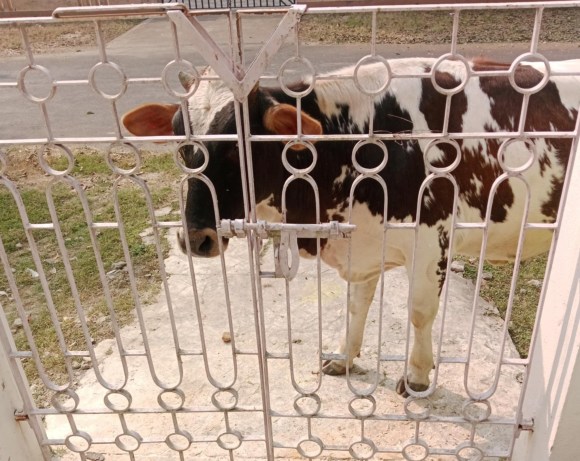
My neighbour, leaning against the boundary wall, informed me that the cow stood waiting for me at the entrance gate for more than an hour. While many people feel delighted to keep others waiting, a sense of guilt pervades me in case I am held responsible for delays. Although my friends never waited for more than five minutes for me, here was a new friend from the animal world telling me there are exceptions. I wore an apologetic look when I opened the gate, with the cow stepping back to grant me the space to enter comfortably with the year-end sale shopping bags.
Our regular bovine visitor stood firm on the hind legs of patience and mooed once or twice to draw my attention to the pending chores. A sort of gentle reminder that the feeding exercise should be marked as a priority since I was back home from the marketplace now. My communication skills with human beings are poor, and here I was faced with the bigger challenge of non-verbal communication. I did not know how to make the cow understand I was really sorry – and keen to make amends by serving her some something special. After the long hour of patient wait, the cow deserved a wholesome treat. Haven’t we all heard the popular saying that the fruit of patience is always sweet? Surely, it extends to other creatures belonging to this universe because the same laws of nature govern the lives of birds and animals as well.
When I returned to the gate, the cow looked at what was in my hands. As I served her a plateful of jaggery chunks, she relished the sweet offering instead of the usual serving of potatoes and vegetable peels. Her slow mastication while establishing direct eye contact with me seemed like an act of gratitude. I stood gazing at her to see if she needed a second helping. She chose to sit down and spread positive vibes. Guessing that she needed something else, I went inside to bring wheat flour or cabbage leaves. The offered items did not make the cow restless to stand up and eat, suggesting that she was already full. She focused on better digestion and exercised self-control unlike human beings who eat excessively and then complain of bloating and over-eating.
Her presence was certainly auspicious but the stray dogs stayed away from the heavyweight cow, lurking in the corner and waiting for their daily quota of biscuits for glucose boost-up to chase cyclists and bikers. As the biscuits descended in their direction like manna from heaven, they ran together for their share while the cow looked at them once and then shut her eyes to concentrate on relaxation techniques, occasionally swishing her tail to make flies maintain a healthy distance from her body. When a cawing jet-black crow flew down and perched on her back, scanning the crumbs lying scattered on the ground to pick up its booty, I stood amazed at the precision with which the bird clutched a big chunk in its beak and flew away to the nearest branch. The dogs kept barking to vent their frustration, to mourn the substantial loss of their share. Oblivious to the chaotic goings-on around, the cow maintained her posture and reminded me of how to stay unperturbed despite chaos and confusion happening around us.
The sight of a composed, unruffled cow was inspirational and it encouraged the dogs to come near and pick up the biscuit crumbs, occasionally keeping a sharp eye on the sudden movements of the cow. Just one quick glance at what these dogs were up to assured the cow that there was no imminent danger in sight. The neighbour, who stood watching this entire spectacle, chipped in with an acerbic comment, sarcastically calling me the chosen one to perform the act of service, blessed with the special ability to match the frequency level of other creatures instead of fellow human beings.
Suspecting it was his clever strategy to duck responsibilities, I urged him to generously feed these creatures whenever he found time from his busy schedule. He said no astrologer had advised him to balance his planetary positions by feeding birds and animals. Attaching a selfish motive to the selfless act meant he saw me as a rank opportunist. Perhaps he felt I was doing it for a short span of time and the bonding exercise would conclude in a month. That this was meant to last much longer was way beyond his imagination and my revealing such grand plans would stoke up further jealousy. It was safer to let him read and interpret everything the way he liked while I should focus on what I was doing – without bothering about how my neighbours reacted to my activities. The day was not far when they would scold and shoo away the birds for turning up at my gate for their dietary needs every day.
As I turned back to enter the house, the birds swooped down in search of foodgrains. While the other species were having their share, sparrows and pigeons pecked around for the leftover stuffs. I replenished the stock on the cemented pavement garden – to enable them to locate the grains with ease. The gentle flock did not raise a flutter, allowing me the time and space to serve them with dignity.
After I came back, their chirping turned high-pitched as they gave a joyous, riotous welcome to the squirrels who came down from the rooftop. What I noticed for a change was some squirrels scoured the area for biscuit bites, suggesting a need for variety in their feed. It was not the staple grain diet but perhaps, they yearned for something sweet and tasty. While some birds were still engaged in pecking the grains, a few rebellious ones joined the troop of squirrels.
As I gained new insight into their dietary preferences, I chose to add biscuits to the menu. Their inclination to have grains looked compromised while the biscuit pieces were polished off really fast. That they were now, with each passing day, getting closer to me, feeling less threatened by human presence, flying over my head at times, and settling down near my feet, came as a pleasant surprise. That I was a harmless creature was certified by their fearlessness.
When the milkman came to deliver, he saw me surrounded by sparrows and wondered at their thriving presence in the mobile-driven world threatening their existence. Their playfulness was evident in their hopping around on the bed of grass. Their landing on the window grille to see the blooming, sun-kissed petunias created a photo-worthy scene and he clicked the fluttering birds on his smartphone before they took flight after this sudden intrusion. Maybe he clicked them mid-flight, in motion, snapping a picture worth sharing with friends and posting across social media platforms to celebrate the closeness.
The tall Asoka trees were where these birds built their nests and most of them disappeared into the green branches after this brief episode of invasion of privacy. That these birds did not have to search hard for food was a good thing since most of their daily needs were met inside the compound. Gaining easy access to eatables was ruining their habit of flying for hours. But to search for food for long hours and then return disappointed was also not a good outcome after a day of hard work. Something that demoralises and compromises the spirit of survival against all odds. The Most cute-looking in the backdrop of the photo frame were squirrels who held the biscuits firmly and took small bites. Being unable to carry them, they split the biscuits into tiny pieces and then rushed off with the booty to the garage rooftop where they could eat without any disturbance and also hoard some bits in the hollow pipes and wall cavities for consumption later.
This day offered a memorable learning lesson – a reminder that I should not leave the house without making provisions for them. I made a new year resolution: not to be casual about feeding these creatures. They should not be forced to wait for the resident to return home. Taking them for granted would amount to bad human behaviour, in line with how the world treats those who do not wield any kind of power. One never knows when their hunger pangs turn severe and when these animals turn up at the gate for their feed and relief. The refreshments should be laid out like a buffet spread – to pick whatever they like to eat, whenever they like to eat.
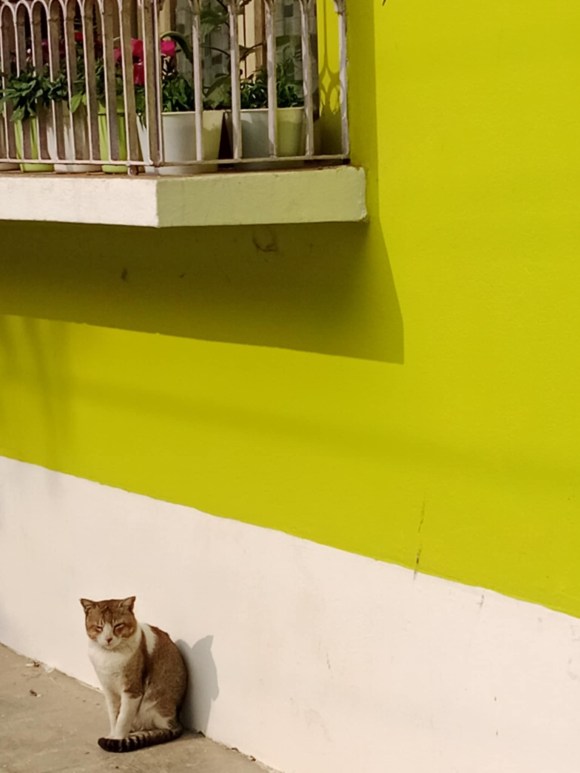
A diverse outdoor congregation cannot be complete without a special guest worth mentioning here: a white furry cat frequents the buffet for milk. The bowl was filled with milk. The cat slowly and cautiously emerged from behind the wall, and began to slurp from the container, taking small breaks to see what the other creatures were enjoying in the garden. Then the cat shook her head quite vigorously to signal the return of fresh energy and stretched her limbs. Spreading herself on the rubber doormat, she looks at my face. Her paws rested on her belly and this perfect chill-mode followed a wide yawn and the need for a post-lunch quick nap.
I disappeared from the scene, leaving the cat alone to enjoy some moments of privacy. Usually, the cat is afraid of dogs, but their presence outside the main gate did not impact her much. They barked a few times to assert their power and she meowed at a competitive pitch in response to register her disapproval during sleep time. Instead of choosing to retreat, the cat remained cosy in her space, and the dogs noticed the royal privilege she enjoyed inside the compound. Their mutual enmity took a backseat for the time being as the dogs chose not to waste their energy on the cat once they found an overloaded motor van to chase on the deserted road.
While they have not become best friends yet, their sense of fear and threat has reduced, giving way to tolerance. When I open the door in the morning, I find the dogs waiting outside and the cat resting on the mat on the stairs. They see each other every morning but they do not disturb each other. The same goes with birds. When the cow arrives, the dogs do not run away, just step aside to allow her space. With their growing acceptance I am more turning more sensitive to their needs.
The bowl meant for the cat has to be washed clean every day before the milk is poured. The grains for birds have to be checked for stones and the jaggery for the cow should be ant-free. No casual disposition but extreme care to ensure the best hygiene practices for them even though these creatures seem to be unaware of consuming clean things alone. Even when there is not much leisure time to serve, my conscience does not allow me to be flippant and finish off everything in a hurry. Cut down on screen time to care for them is what the inner voice urges me to do.
Ever since I chose to have other creatures as my friends, many of my lost friends and colleagues from the past have reconnected with me. Now the time I spend in the company of birds and cats and cows and dogs is claimed by human friends. I do not feel comfortable to invest heavily on my old friends who proved disloyal and seasonal. Finding a delicate balance between animal and human time is the key to keeping people as well as other creatures happy.
When I think of leaving this place, I am tied down by the needs of other creatures. A holiday trip would deprive them of food supplies so I must make arrangements for them, perhaps ask the caretaker to do it for some days. And if I leave this place forever, I must ask the person who comes next to be generous towards these creatures.
With this diversity of my animal family growing, with new members like mongoose and snakes, I am reminded of the need to be kind to all – instead of focusing on their capacity to harm. Let the slithering snake also join in and drink milk kept aside for the cat. I am confident the mixed community will not make it bare its fangs. The poison inside the snake is quite likely to remain saved unless the mongoose comes around for a challenging bloodbath session. Finding snake skin in the garage suggested it was shed recently and the serpent moved out soon after.
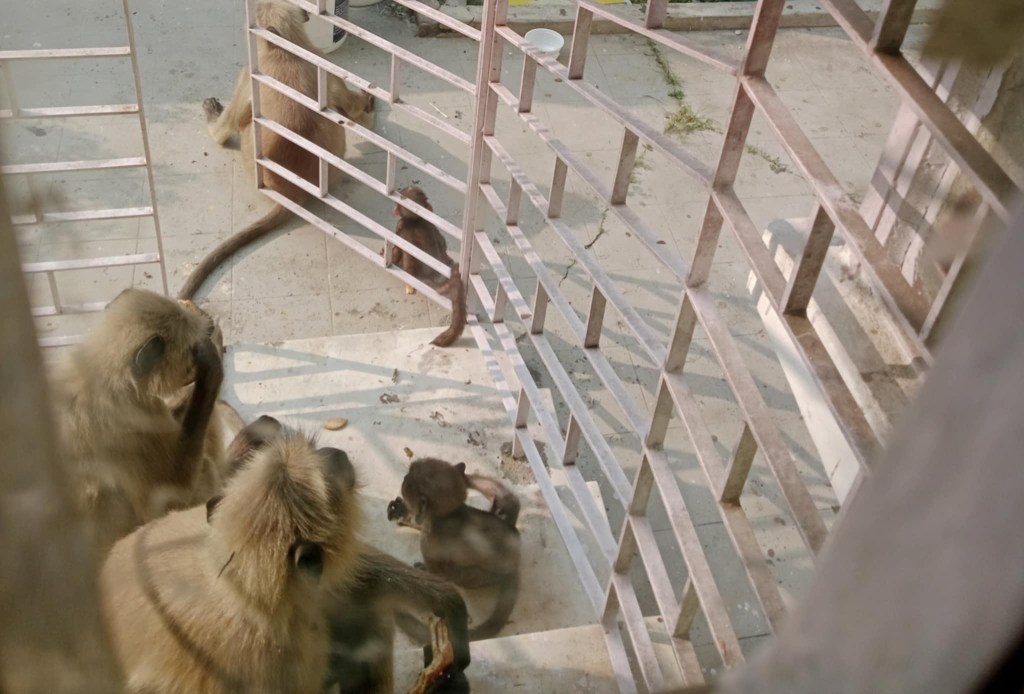
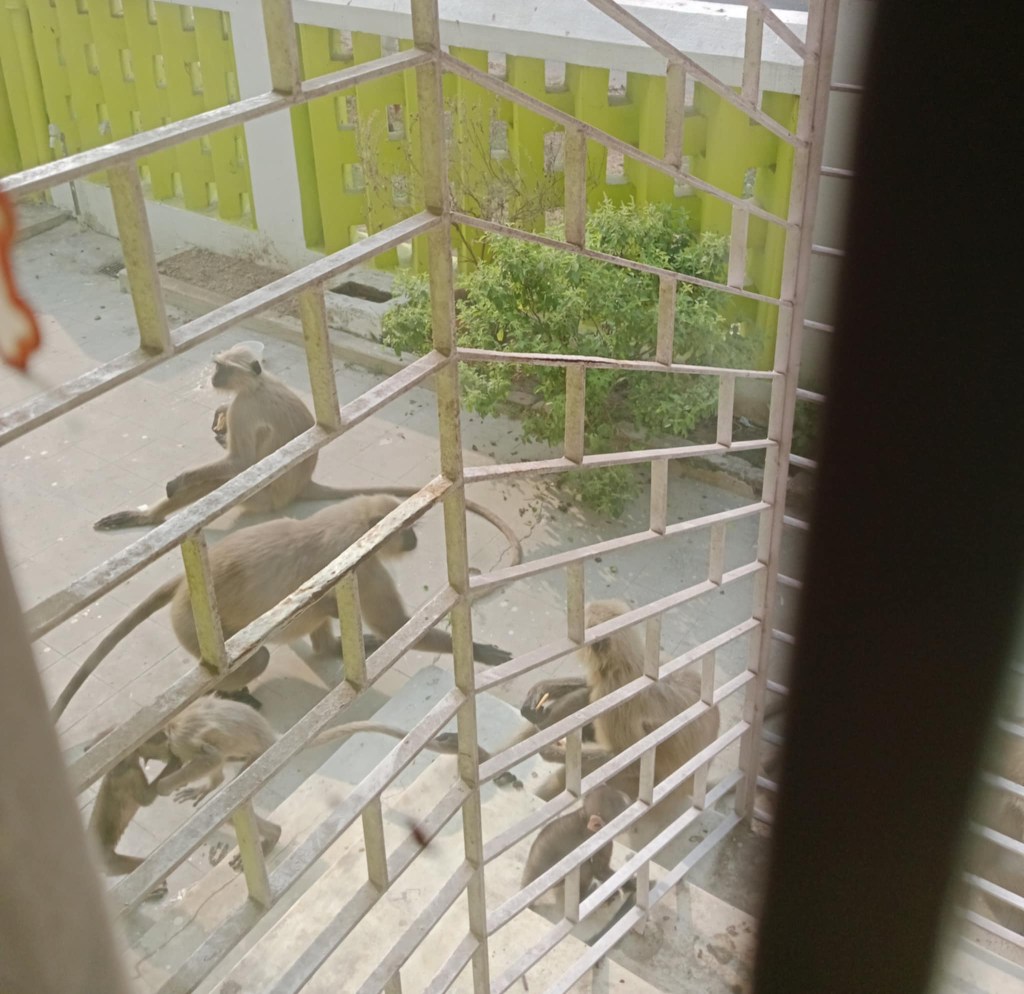
Now the provisions are arranged in advance to last for a month but when there are guests like monkeys trooping in once a week, the stockpile of bananas falls short. The grille gate is their acrobatic zone and they stay suspended to showcase their skills and impress. When I offer them something to eat, they come down fast and grab the eatables without a proper handshake.
Expecting surprises from monkeys is common. As the priest this year was about to perform annual prayer rituals in front of the car, a big monkey came down from the parapet and grabbed the coconut from the plate and cracked it open in front of the bonnet. The priest offered bananas and the monkey walked away quietly like a brave hero strutting the stage with swag. The priest chanted some mantras and stood watching in awe, calling it divine intervention. He said the monkey god had performed the puja successfully and there was not much left for him to do so he rode off on his scooter with mixed feelings. Whenever monkeys visit my humble abode, I am reminded of this incident that has stayed with me. Perched on the branches, they are least bothered by those shouting at them. The ground floor inhabitants do not matter at all. Learning to ignore is vital for survival. With so much to observe about animal behaviour and mannerisms, I realise I am not quite capable of understanding their feelings. The truth that the world has other important, valuable creatures we need to co-exist with becomes a palpable reality.
Devraj Singh Kalsiworks as a senior copywriter in Kolkata. His short stories and essays have been published in Deccan Herald, Tehelka, Kitaab, Earthen Lamp Journal, Assam Tribune, and The Statesman. Pal Motors is his first novel.
PLEASE NOTE: ARTICLES CAN ONLY BE REPRODUCED IN OTHER SITES WITH DUE ACKNOWLEDGEMENT TO BORDERLESS JOURNAL
Akashe Aaj Choriye Delam Priyo (I sprinkle in the sky) by Nazrul has been translated from Bengali by Professor Fakrul Alam
From Public Domain
Dearest, I sprinkle in the sky my lyrics this day.
I’ve woven on my own a garland of songs
From the flowers produced by my words.
Pick it up if you can, please.
Let my tune’s rainbow be a transient joy,
Orchestrating my sense of loveliness,
And embodying sweetness through the passions of its colours.
What does it matter if you fail to note
The tears moistening my eyelids?
My voice quavers because of my tears!
Spreading across the lotus that is my heart,
Lyrics make the round, buzzing like a bee in flight.
Do taste my mind’s loveliness from that bee if you can!
Born in united Bengal, long before the Partition, Kazi Nazrul Islam(1899-1976) was known as the Bidrohi Kobi, or “rebel poet”. Nazrul is now regarded as the national poet of Bangladesh though he continues a revered name in the Indian subcontinent. In addition to his prose and poetry, Nazrul wrote about 4000 songs.
A real life narrative by Sumona (pseudonym), translated from Hindustani by Grace M Sukanya
Songs of Freedom bring stories from women — certainly not victims, not even survivors but fighters against the patriarchal status quo with support from the organisation Shaktishalini.[1]
–Sanjay Kumar (1961-2025), founder of pandies’
What I Don’t Know
If I had to choose a moment that changed everything, it would be when the police rang the bell at Nakul’s house. Or perhaps, when I found out that I was pregnant. But both happened within a few hours of each other so… maybe it was that whole day.
Or maybe it was when I was finally rid of the brothels? I am so glad to be out of it and it was Nakul who helped me do that, no matter what he did otherwise. I am grateful for that.
Or maybe when I found out that Sanjay was married. I didn’t believe it for the longest time. And I lost the only family that had ever cared about me because of that…
The First Mystery: Maybe sometimes it can be an accident?
My older brother was sick. They said someone gave him drugs, mixed in with some chicken, and he became an addict. The drugs ate away at him.
Even when I was a child – he was very sick. And he was the most important person to me in the world; my mother had died, my stepmother drank, and my father did bad things to me at night. (I don’t know whether he did it on purpose or accidentally… maybe he didn’t know what he was doing because he used to be quite drunk too?)
So, I had to save my brother somehow… I asked a pastor in my village to help me find work. He knew a couple in Sikkim, he said, who needed help taking care of their two children. I decided to go.
I was very young then. I hadn’t even started my periods. For the first couple of years, things were okay. I even came back home at the end of those two years, to meet my brother. He was still unwell and my employers had told me they’d send my earnings home as soon as I went back to work.
But when I did go back — the man started abusing me. And not like my father – he knew what he was doing because he told me to keep quiet about it or he’d kill me.
I used to believe him too. Of course, he could me kill me – and no one would know. Or even care. Even if I told anyone, who would believe me? His wife would obviously be on his side. And the pastor would scold me. I was ashamed, and I was scared. So, I kept quiet.
I also needed the money. I asked him to send it to my parents, so my brother could get treated. After a few days he said he had done it. Therefore, I kept quiet.
He used to do things to me so frequently that I was not able to complete my chores. His wife started getting annoyed with me. She started burning me with things. Once she did it with a hot pressure cooker. The burn festered and became large and infected.
It was he who took care of me then… He scolded her on my behalf, told her if something happened to me, they would be held responsible. And I don’t know how but he got the wound to heal faster somehow.
I escaped back to my village soon after that.
I came back and found out that my brother was still sick, despite the Rs. 12,000 [2] my employers had sent to my home for the two years of work I had done in their house. I went and asked the doctor why he had not been treated yet. He told me he had never received any payment for the treatment. Then I found out from others that my step mother had used the money to buy alcohol. I had to look for work again…
I finally told the pastor the truth about the couple. He was angry with them, and at first, I was relieved. But then he decided to call and confront the family, and tell them off. The lady told him that they were on their way to speak to me, and that I should not say anything to anyone else until they met with me.
Sikkim was 3 hours away from my village by car (there were no buses plying on this route) and I was terrified of meeting them.
I ran away from home a second time.
The Second Mystery: Can I have a home in city I don’t know?
There was a girl called Rekha in my village, my age, or maybe slightly older than me. She worked in Delhi and earned fairly well. I asked her if she would help me find work in the city too. I told her I had experience working as a maid and a nanny. She said that I could go to Delhi with her.
So when the pastor told me that my former employers from Sikkim were on their way, I hightailed it out of the village with her.
We reached Delhi around 11 am in the morning. Rekha took me to a building that had a lot of small, independent rooms on a floor. In one room were some young men who did some work with computers. One room had a family with some children. And in one room were some young girls just like us. I thought I was to live with the girls and look after the family.
Within 5-10 minutes of reaching, Rekha told me that we had to go shopping. She took me to a large bazaar — it was bigger than any village market I had been to. There, she bought me a bunch of clothes: a lot of short dresses and skirts, the kind I had never worn before. I was happy to be starting this new phase of my life, and I couldn’t believe someone was buying clothes for me. It made me very happy.
We went back to The Home That Wasn’t. Rekha told me to get ready. As I was tired, I asked her why I was getting ready in the evening? Why could I not start working next morning? She told me I had to get ready right then in the new clothes I’d bought. I didn’t understand then what was about to happen.
I got “ready” in my new clothes, and Rekha took me to a hotel. Some men joined us, drinks were passed around, and then I was sent off with one of them to a room.
I was shocked. I didn’t know what to think or even feel about it. I said nothing.
The next morning, Rekha took me back to The House That Wasn’t and told me to pack my bags. I put all my new clothes in a bag and walked out of there. This time she took me to a tall, narrow building in a congested, crowded street. On the 4th floor of The Tower was a very small, very dirty room, not big enough for even a bed. I was told to get in.
I still didn’t understand what was happening.
There was a man there, Nishant. Rekha spoke to him for some time, then left. When I asked what was happening, he told me that she had left me there to work for him. I still didn’t know what to think (I was 11).
Soon after, an old man came to my room. He was as old as my father. He started forcing me to do things, taking advantage of me. This is when I first had the thought that maybe what was happening to me was wrong…
But it was too late. I was never let out of that room. The door was always locked. There was some space between the bottom of the door and the floor – it was used to slide in food. I don’t know how many years I spent in that room.
I used to dream of the things I would do once I got out. I kept trying to figure out how to get out. But I knew nothing at all – I didn’t know this city, or where I was located, or even the language. How would I ever get out?
Soon, they started sending me out to men’s places. The men were supposed to come pick me up and then drop me back. I didn’t know how to run away and they knew that: my captivity was complete.
The Third Mystery: If my work pays someone else, what am I?
There were always other people who got the money I earned.
After a few years in the city, I was sometimes allowed to visit The Home That Wasn’t. Nishant knew that it was the only place I “knew” (except for the The Tower). If I was sent to work from there, Meera got the money. If I was sent to work from The Tower then Nishant got the money. Rekha I never heard from again (she ran away with all the commission she had earned on my work in The Tower, while I was still locked up in the small dirty room).
One day, I was feeling unwell so I went to The Home That Wasn’t.
They had a frequent customer, Nakul. All the girls there had already been to his place. He insisted on someone “new”. So Meera sent me to him.
He was young, maybe about 25 or 26 years old. He was in the police, I don’t know what post. He was married, he told me, but it had been against his will so he was unhappy and therefore sleeping with other women.
That first day he met me, he asked me whether I was doing this out of my own free will or whether I was being coerced. I told him the truth. He said he would help me. I didn’t trust his offer of help – men often asked me whether I was being coerced, and then offered their help; but no one ever actually did anything to help me.
Nevertheless, I was hurt when Nakul proceeded to take advantage of me – I kept telling him no but he did bad things to me anyway. I was hurt that I had told him the truth about my life and he still treated me badly, like everyone else had.
One day he called his friends over and introduced me to them. They were all drinking and encouraged me to have a cold drink too. But they’d put something in it, and I passed out. When I came to, I knew that his friends had done things to me– and I knew it had been planned and he was in on it. I hated that but I didn’t say anything because he had also promised to save me.
Meera and Nishant called him about 2-3 days after he took me to his place, asking when he’d be bringing me back. I told him to say that I had run away and was no longer with him. They threatened to report him to the police. But he was fearless – he told her that he would them report them for forcing me into prostitution. They backed off after that.
And that is how I became free. Nakul helped me get free. So, I started living with him.
The Fourth Mystery: If my “friend” stands between the whole world and me, am I free?
About a week into staying at his place, he bought me an enormous bundle of clothes and so many shoes!
The shoes were all the wrong size though… he said he would go back and exchange them for the right size.
Two days later, he took me out on a drive at night with three other men, two of whom I knew.
We stopped after some time, and everyone was asked to put their phones in a small polybag. I didn’t understand what was happening. At this point, another man was called to the car. All the four men I had arrived with started beating this man up. Gunshots rang out. I don’t know who fired them. A crowd had gathered. We heard the police siren. Nakul shouted at me to get into the trunk of the car. I jumped in, and I saw him get into the car as well. I could see everything from a crack in the cover.
The police chased us through many streets. The car was being driven very fast and recklessly to lose them. I was starting to feel sick and suffocated; I kept banging around inside the trunk and I was hurt. Eventually, after several hours, the car stopped. I was asked to get out. Only one man was left – the one I didn’t know. He asked me to get into the front seat. He’d managed to lose the police.
I finally felt like I could breathe again. We drove some distance. Dawn was breaking. The man stopped the car and started trying to do things to me. But I had had enough. I felt sick and angry. I did everything I could to stop him. Finally, when I had scratched his face, he stopped and agreed to send me to Nakul’s.
Luckily, we also found Nakul’s phone in the car, maybe he had dropped it by mistake. My phone had disappeared with the polybag. I identified Nakul’s friends’ numbers by their profile pictures on Whatsapp. The man tried these numbers one by one and finally got through to Nakul. He took the address down and booked me a cab home.
I arrived back at Nakul’s place around 7 am. The two other men who had been in the car with us were there, as was a woman I didn’t know.
I shouted at Nakul then about what he had put me through. I knew he didn’t treat me well; I knew he slept with other women; I knew he pimped me out – but I also felt like I had a right over him, that I could shout at him and he would listen to him. Not that he gave me any explanations… I still don’t know what exactly happened that night.
Eventually, the two men left for their homes. Nakul also left with the woman, saying he had to drop her off. By 11:30 am, I was alone in the house.
My brain wasn’t working. I had shouted at Nakul. But I had failed to process anything anybody had said that morning. I felt like I kept swimming in and out of consciousness – not literally… but I couldn’t hear people, I couldn’t process what I was hearing… I felt like my brain had shut down.
That was the state I was in when the bell rang at 11:30 pm that night. I was still alone at home. When I went to open the door, it was the police along with the two men who had been there at the house that morning. No sign of Nakul.
The Fifth Mystery: It is my decision
The police took me to the thana[3] with them and questioned me till about 2-3 am that night. Eventually they understood that I had no idea about what these men had been up to. And also, that I had been taken advantage of. Early in the morning they took me to a hospital. I was tested and I (along with everyone else) found out I was pregnant.
At this, my brain shut down even further. I was taken to court. As a minor, I was put under the protection of the state and assigned a hostel. The police asked me if I wanted an abortion – they even urged me to get one. They told me I was still a child, I would not be able to take care of a baby of my own, that I would find it difficult to lead a life of my own, or move on from everything that had happened if I were to become a mother, that it would be best for my future if I aborted the foetus… But there were also people who told me that the baby had a life too, that if I aborted, I would be killing a life and did I want to be a murderer?
For a long time, I could not think for myself at all. But the police did tell me they’d support whatever decision I made… To be honest, I found them very helpful. It took me over a month to come to a decision. I thought about all the things I would be able to do if I didn’t have a child – get educated, get a job, earn money, maybe fall in love again and get married.
I also thought about what life with my kid would be like and all the things I would do for him / her that weren’t done for me. These dreams also made me happy – but I realised I had no means to fulfill them. How would I feed the kid without a job? How would I educate him / her? Some people kept telling me I could give my child up for adoption but that thought filled me with sadness too… So finally, I decided to get an abortion.
The police, as promised, helped me get it done. It was done at a state hospital. I was four months pregnant. The whole thing took almost a month. Then I needed two more months to recover. I wasn’t getting proper food at the hostel I was in, so at my request, my case supervisor had me transferred to another hostel. And this is where a new life began for me.
The Sixth Mystery: How unconditional is the love of a “family”?
I was sent to another hostel in Delhi NCR, which was quite large.
Sometime after the move, my stepmother turned up at the gates and asked me to leave the facility to spend some time with her. Since I was still under state protection, the hostel had to take clearance from them. When they were called, a woman at the institution told them not to let me out at any cost as my life was in danger: Nakul had managed to break out of prison and would try to kill me to stop me from testifying against him. So, I wasn’t let out to see my stepmother.
Years later, when I asked her how she had found the money to come all the way to Delhi to see me, she admitted that some man had bribed her to lure me out of the hostel…
In the 3 years I was there, my father and older brother passed away. My father was an old drunk so it wasn’t a shock. But my brother – he died terribly. By the end, he had TB, cancer, paralyses. He couldn’t move. And with both of them gone, I had no home to go back to anymore…
The hostel warden and other staff had become my new family. Here, I finally felt accepted and taken care of. After I turned 18, they even made me floor-in-charge for one of the floors of the hostel (since I could not be a resident anymore). They were the only people I felt I could depend on.
Until I fell in love with the wrong man.
Sanjay was significantly older than me – perhaps, by about 15 years, definitely more than 10. He was a shopkeeper near the hostel. I used to go to his shop sometimes to buy some groceries. I never noticed him but he started flirting with me one day.
I didn’t respond to it for some time but he was relentless. Every day, he would propose that we start up with something. Eventually I started talking to him. We exchanged numbers. We started talking all day. I’d even write letters to him.
The hostel people found out and they didn’t approve of the age difference. But I said I was in love with Sanjay and that I intended to marry him. I convinced them that I was serious about it and so was he. Therefore, they went off to talk to his family about the relationship.
They came back and told me something I never expected to hear: it turned out that the man I was in love with had been married for three years; he had one child, and another one was on the way.
I couldn’t believe this. For a long time, I didn’t believe it. Then one day, his wife called me. She had found one of my letters to him. She screamed at me a lot on the phone. And then I could no longer deny the truth of the situation…
All this turned my new family against me. I was asked to leave, and that is how I ended up here at Shakti Shalini. Or maybe it was because you can’t stay in the hostel past the age of 19… But they no longer speak to me.
If I could change one thing in life, it would be this. I wish they’d talk to me once again. I miss them all very much.
The Seventh Mystery: The First Revelation: This is Me
I don’t know why I still find it difficult to let go of the feelings I have for Sanjay when I know that everything he ever said to me was a lie…Or why I always love like it’s a drug… Maybe it’s about finally feeling like I belong somewhere. With Sanjay, I had imagined a whole life together. It’s very painful to accept that this’ll never happen.
And there’s so much more I have learnt about myself in all this time…
I know I can take care of myself. I know I can stand up for myself. I know now when someone’s touch feels wrong. For a long time, I didn’t know how to feel or think about these things… I used to be so shut down. I had no control over what I would eat or drink… I could not make any decisions at all.
But now I can fight for myself and others.
I am grateful I am out of the brothel. I am grateful Nakul got me out of it even if he tried to kill me later. I am grateful I got to experience care at the hostel, even if they don’t speak to me anymore.
And I know now what makes me happy:
Making fried rice and momos for myself and everyone else
Travelling to new places — I went to Jim Corbett with the hostel people and loved it!
Meeting new people, making new friends — like at my new workplace!
Earning my own money — I hope to buy myself a phone soon.
Wearing nice clothes and accessorising how I please — I love matching clothes to jewellery.
Listening to songs – this always makes me smile, and I love the feeling.
Dancing – I dance quite well, and I like learning new steps and choreography.
The way my life keeps changing and moving, no matter what happens; people leave, yes, but new people also keep arriving and isn’t that the best part?
From Public Domain
Sumona (pseudonym) is 19 years old and hails from Darjeeling in West Bengal. Currently she working as a Child Caregiver with a family based out of Delhi. Sumona loves her piping hot momos with spicy chutney and finds peace and solace when she spends time with children.
[1] “pandies and Shaktishalini – different in terms of the work they do but firmly aligned in terms of ideological beliefs and where they stand and speak from. It goes back to 1996 when members of the theatre group went to the Shaktishalini office to research on (Dayan Hatya) witch burning for a production and got the chance to learn from the iconic leaders of Shaktishalini, Apa Shahjahan and Satya Rani Chadha. And collaborative theatre and theatre therapy goes back there. It is a mutual learning space that has survived over 25 years. Collaborative and interactive, this space creates anti-patriarchal and anti-communal street and proscenium performances and provides engaging workshop theatre with survivors of domestic and societal patriarchal violence. Many times we have sat together till late night, in small or large groups debating what constitutes violence? Or what would be gender equality in practical, real terms? These and many such questions will be raised in the stories that follow.” — Sanjay Kumar
Grace M Sukanya, the translator, has facilitated workshops with Shaktishalini through 2020 and 2025, and been associated with pandies’ theatre since 2020 in various capacities.
.
PLEASE NOTE: ARTICLES CAN ONLY BE REPRODUCED IN OTHER SITES WITH DUE ACKNOWLEDGEMENT TO BORDERLESS JOURNAL
Poetry by Dmitry Blizniuk, translated from Ukranian by Sergey Gerasimov
Dmitry Blizniuk
Dmitry Blizniuk is a poet from Ukraine. His most recent poems have appeared in POETRY Magazine, Five Points, Rattle, Los Angeles Review, The Cincinnati Review, The Nation, Prairie Schooner, Plume, The London Magazine and many others. A Pushcart Prize nominee, he is also the author of The Red Fоrest (Fowlpox Press, 2018). His poems have been awarded RHINO 2022 Translation Prize and his folio had been selected as a runner-up in the Gregory O’Donoghue Competition and the 2025 Gabo Prize finalist.
The sky above the highway is low like a cunning dog's muzzle above a steaming saucepan. A one-winged angel of advertising stands by the roadside: Aquafresh, perfect water of gods. And I'm an imperfect verb, just someone in a windbreaker, with pieces of canvas on my head that flap like a pterodactyl. Here's my garden, set back some distance from history, a prehistoric place for ancient bugs, and one of them stands on its hind legs in depression, while the gloomy autumn stares from above.
We've run away from the simmering house like milk that is boiling over. Now I'm single again. The sun hangs behind a ruffled up shed, like a bloody yolk on a cold frying pan until the nightfall dumps it in the garbage, while I'm looking for clean socks, sniffing noisily like a dog with a mallard in its jaws. I've had to leave the city and women behind, make friends with the blissful world of sticks, Like Lorca, I managed to avoid a firing squad. He's grown old, he looks like a grey parrot with an earring, keeps a rapier in his summer kitchen, grows grapes and cucumbers, and something sparkles in his eyes when blood pressure squeezes him like a tube of Aquafresh. If not for the Internet, I wouldn't exist.
A cat called Nostalgia licks his balls on the windowsill. The lampshade is a temple of flies, priestesses of summer schizophrenia. I'm still destined to return, I feel the power of a boomerang within me. It's going to bend my way and carry me back to my youth, otherwise, I don't care where. An eyelid with long lashes has fallen away from the face of a garden doll. The blue eye is unprotected now, and the rubber body under the rain feels so at home in the garden. For how many years will I decompose in the humus in the garden of gods, lie in the ground and see the black earth, black caviar in the eyes of dawn, then stretch up to the sky as a green needle of grass? The smell of the rain that has just stopped is like spilled glue. It's so fresh that I want to run up to the sky, but I can't. A poet in exile is more than just a poet. And a man? -- There is no man anymore.
Sergey Gerasimov is a Ukraine-based writer, poet, and translator of poetry. Among other things, he has studied psychology. He is the author of several academic articles on cognitive activity. His stories and poems written in English have appeared in Adbusters, Clarkesworld Magazine, Strange Horizons, J Journal, The Bitter Oleander, and Acumen, among many others. The poetry he translated has been nominated for several Pushcart Prizes. His books include Feuerpanorama: Ein ukrainisches Kriegstagebuch (dtv Verlagsgesellschaft mbH & Co. KG, 2022) and Oasis (Gypsy Shadow, 2018).
PLEASE NOTE: ARTICLES CAN ONLY BE REPRODUCED IN OTHER SITES WITH DUE ACKNOWLEDGEMENT TO BORDERLESS JOURNAL
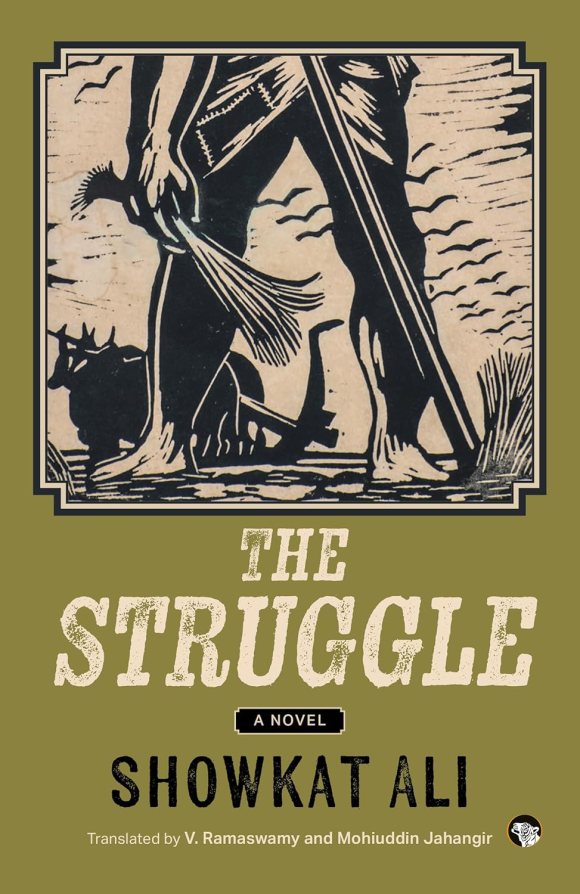
Showkat Ali (1936 – 2018) was a renowned Bangladeshi novelist, short story writer and journalist whose work explored history, class and identity in Bengali society. In 1989, he published a novel called Narai (translated from Bengali as The Struggle) which is set in a remote village in the Dinajpur region of undivided Bengal during the mid-1940s.
The novel is broadly divided into three sections. In the first section entitled ‘A Ploughing Household,’ the author gives us detailed description of an agrarian society where poor Muslim farmers as well as some other lower classes of untouchable Hindus eked out their living primarily through farming as well as other low-paying jobs. The feudal setup of the society is complete with threatening and wily landlords (often Hindus) who are always on the lookout for cheating the sharecroppers of their legitimate dues.
The story begins with a poor farmer called Ahedali who, unable to procure a second bullock to till his field, bore one side of the yoke himself, and soon fell ill and succumbed to death leaving his young wife Phulmoti and a ten-year-old son Abedali behind. The real problem for this widow begins when she is left alone to fend for herself along with a few ducks, chickens and goats. Her fragile world is shattered. People in the village start advising her to get married once again and she gradually finds it very difficult to survive from the ogling eyes and salacious offers from different men in the community. Her son can offer little defense against the men now circling her—neighbours, relatives, even the local cleric—drawn by desire and the lure of her small property. Malek, a kindly bookseller at the local market, too, proves not to be what he seems. It is Malek’s hired hand, Qutubali, who finds himself drawn into her struggles, standing by her in ways that others do not.
The second section of the novel ‘Home and Family’ describes in detail how Qutubali, the simple-minded outsider whose unexpected kindness and fierce loyalty turns into Phulmoti’s unlikely ally. Apparently, he was a senseless and stupid man who provided her benefaction again and again. Much younger to her, he was totally ignorant of standard man-woman relationships and though he often stayed back at Phulmoti’s house, he didn’t express any sort of physical desire for the young widow. He tended to the animals, helped in sowing seeds and worked relentlessly to bring some comfort and peace in the household.
This entire section gives us details of how they come close to each other. Finding no other alternative to live a decent and harmonious life, they go to a mosque where a saint called Darbesh Chacha, who had brought up the orphan Qutubali earlier, gets them married in order that both can live their lives peacefully hereafter. Since then, things gradually changed. If a young widow found a husband, or brought home a ‘ghor jamai’[1], that was definitely news, especially if the man in question was from another village. But people gradually accepted it. Of course, the widow’s suitors fumed with resentment, though even that fire cooled eventually. Qutubali also gradually started learning the tricks of the trade – he had their own land and along with the yield of the sharecropped land, he knew he could become a full-fledged farmer soon. He was sure the days of his misfortune were over. At the end of this section, when Phulmoti announces to the simple-minded Qutubali that she was pregnant, the reader feels that the rest of the story would follow suit in domestic harmony and bliss. The family had a happy air about them. But that was not to be.
The third section of the novel aptly titled ‘We Must Fight!’ begins amid the upheavals of a precarious feudal order and the stirrings of a nation on the verge of independence. Qutubali did not have the time to stay at home. He was never clear about where he went and what he did. When asked, he replied in monosyllables. He started attending sermons. The headmaster of the village school started indoctrinating him and the village folk with the idea of swadeshi.
The politics of the Congress and the Muslim League started to hover on the margins of village life, far removed from their daily battles. But when the tebhaga[2]struggle broke out in Bengal—with sharecroppers demanding two-thirds of the harvest from landlords as their rightful due—Phulmoti and Qutubali stand to lose what little of their lives they had pieced back together.
By that time, she no longer saw Qutubali as a callow youth. He had become a regular, responsible, labouring man but his gradual involvement in the politics could not be avoided. He got involved in the activities of the peasants’ union. The novel remains open-ended with Phulmoti keeping on waiting for her husband to come back from wherever he was even after a decade is over.
Before concluding, a note must be added about the excellent quality of translation. Both V. Ramaswamy and Mohiuddin Jahangir have done a wonderful job in translating this social realist novel from one of the most celebrated novelists of Bangladesh for the benefit of a wider audience to remember a very detailed study of rural Bengal from both social and political angles from the 1940s — a very significant time when amidst the prevailing feudal order of the agrarian society in rural Bengal, the stirrings of a nation on the verge of independence as well as outside forces were gradually creeping in.
[1] In the usual Bengali tradition, a wife moves on to live in her husband’s house after marriage. The situation is reverse when the married man comes to live in his wife’s or in-law’s house and is then called a ‘ghor jamai.’
[2] The Tebhaga movement was significant peasant agitation, initiated in Bengal in the late 1940s by the All India Kisan Sabha of peasant front of the Communist Party of India. It aimed to reduce the share of crops that tenants had to give to landlords.











 Borderless