Categories
Slices from Life

Hooked for Life and Beyond…

By Ravi Shankar

I was hooked! It was my first exposure to a computer though I had read about these in the newspapers and seen them on television. I think it was a Spectrum personal computer popular in the 1980s. My friend, Sanjay and I did a few simple tasks and played a few games on the computer. The games of the 80’s were slow and clunky by today’s standards. In those days however they were interesting and enticing. BASIC was the most popular computer language then. We also had COBOL and a few others. My good friend, Sanjay Mhatre was a bibliophile and a free thinker, and I often used to visit his place and borrow from his vast book collection. However, even in the 1980s there was uneasiness and opposition to computers and the fear that it would replace people and lead to mass unemployment was often mentioned.

The rise of information technology (IT) and the important role to be played by Indian companies was still in the future. I expect artificial intelligence (AI) will also open new jobs in the future. At my medical college in Thrissur, Kerala, India computers were still rare. Communist Kerala had a love-hate relationship with computers and technology. Maharashtra (a western Indian state) was an early adopter of computers, and my tenth- and twelfth-mark sheets were computerised while my MBBS ones were handwritten. During my postgraduation at Chandigarh, computers gained prominence in our conversations. Our head of the department was gracious enough to offer the services of his secretary for typing our research manuscripts when she was free. The only other option was to pay for the service from outside providers. In those days WordStar and WordPerfect dominated word processing. 

Creating slides for presentations was a challenge. LCD projectors were not available, and we had to create physical slides with cardboard mounting. The slides were created on early versions of PowerPoint and photographed using a camera to create the physical ones. My co-guide, Dr Anil Grover (then a cardiologist) at Postgraduate Institute (PGI), Chandigarh mentioned how computers will become increasingly common and encouraged me to learn the Microsoft package of Word, PowerPoint, and Excel. PGI also started offering email facility on a limited basis. You had to write down the details of your email and take it to the IT section who will send your message. We had modems then, which took a while to connect and made a series of sounds with flashing lights while connecting to the internet.

In Pokhara, Nepal at the beginning of the twenty-first century, internet was still a luxury. Manipal College of Medical Sciences used to charge 10 Nepalese rupees to send a message. Faculty could type their message in Outlook and twice a day, the IT person would send and receive messages. In those days, a floppy disk was the most common external storage device, and I soon had a large and colourful collection of floppies. Floppies were not always reliable and sometimes the data on them could not be read. CD-ROMs were another storage device, but CD writers never became commonplace. At Mahendra Pul in the heart of Pokhara, a new cybercafé came up in the early 2000s offering internet browsing at 150 Nepalese rupees per hour. Compared to what we were previously paying, this was a steal!

The college also had an LCD projector though it was not commonly used by faculty members for teaching-learning. This was a large and clunky device. Earlier versions often had compatibility issues. You create your slides and hope for the best. These may or may not open on the laptop and may or may not be projected. One had to have a backup of the lecture on overhead projector (OHP) transparencies, just in case. We did not yet have easy access to computers or laptops. This came only later when the United States Pharmacopeia (USP) set up a drug information and pharmacovigilance centre at the teaching hospital. We got two excellent Dell computers, and the hospital provided us with internet.

The early computers were slow with a big, bulky, and heavy cathode ray screen. They had a blinking cursor and words appeared slowly after typing. The Hollywood movie, You’ve Got Mail (1998), follows the romance between Meg Ryan and Tom Hanks developed through email. The movie is a good introduction to the early days of the internet.  

We had purchased a home desktop computer in 2001 or 2002. This purchase was a financial disaster. The computer required frequent repairs and drained our finances. Google launched its beta version of email, Gmail in 2004, and I was one of the early adapters. I became a fan of Gmail right from the start. It offered significant advantages over the then dominant Hotmail, Yahoo mail and Rediff mail. The storage was larger and there was no need to delete your old emails. Kist Medical College in Lalitpur, Nepal had purchased Dell desktop computers, and these were among the best ones I had used. Fast and responsive with good memory and speed. These had LCD monitors and looked sleek and modern.  

Computer technology has made significant advances. I read that if cars had made similar advances to computers we could drive to the moon and back on a litre of gasoline. Chips started getting smaller and more powerful and are today fought over by the global technology superpowers. A variety of online applications started making their appearance with the spread of the internet. Some of these eventually became the internet giants of today. In India, internet became widely available, and the costs dropped significantly. Mobile technology also made dramatic advances. In India most people access the internet and carry out online tasks using their mobile phones. For around 12000 Indian rupees today you can get a decent mid-range phone. Today mobiles in the palm of your hands have greater processing power than the giants of the 1950s and 1960s. I remember reading a comic strip where a visitor from the future time travels to the present. He laughs on seeing the supercomputer, the most powerful one on earth. When asked why he shows a small ball and introduces it as a computer from his time with much greater processing power than the humungous supercomputer.

One of the major advances has been cloud computing and cloud services. We have Chromebooks that work on web-based applications and needs the internet to do things. Both Google and Microsoft offer a range of services including storage, meetings, messaging, and applications for text, presentations, and calculations. AI is now an integral part of applications. PowerPoint offers the designer option for slides and creates stunning backgrounds. I recently attended a workshop on Copilot, the AI support software from Microsoft that is fully integrated into all their applications. I like the transcribing option for interviews and focus groups offered by Teams and later by Zoom and this makes my life as a researcher easier.

Star Trek, Futuristic computing

When I was growing up, I had no clue about what would soon become commonplace. The world wide web, the ability to browse libraries and art collections, video conferencing, online work processes, applying for government and other services online, online fund transfer and remittance are now at our fingertips. The COVID pandemic shifted a lot of learning and even assessment online. Presently we mainly interact with computers using a keyboard. I am a fan of the sci-fi series, Star Trek, where people interact with computers mainly using their voice. Voice commands are already available and  steadily improving.

I was slow getting into social media. Their judicious use is to be recommended. Facebook keeps me updated on what my friends, acquaintances and former students are doing. LinkedIn is the professional face I present to the world, Twitter (now X) is a concise way to stay connected and YouTube is a major source of entertainment. Computers have changed our life for ever. At a basic level these are based on the flow of electrons through circuits and on the pioneering work in atomic physics done at the start of the twentieth century.

The last three decades have seen developments and changes at unimaginable speed. Who knows what the next three will bring? Will progress continue at an ever-accelerating pace or will we eventually hit a roadblock? We may have to wait for Father Time to provide the answers!

Dr. P Ravi Shankar is a faculty member at the IMU Centre for Education (ICE), International Medical University, Kuala Lumpur, Malaysia. He enjoys traveling and is a creative writer and photographer.

.

PLEASE NOTE: ARTICLES CAN ONLY BE REPRODUCED IN OTHER SITES WITH DUE ACKNOWLEDGEMENT TO BORDERLESS JOURNAL

Click here to access the Borderless anthology, Monalisa No Longer Smiles

Click here to access Monalisa No Longer Smiles on Kindle Amazon International
Categories
Poetry

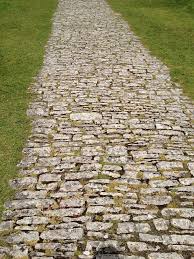
The Stone-Ribbed Lane

By Radhika Soni

THE STONE-RIBBED LANE

This stone-ribbed lane is familiar to me,
I have traveled its air before,
Drawing the whiff of chamomile tea,
Brewing inside a closed door.

Stray notes of a piano in my ears,
Waft from the window across;
From the melody, it appears,
The strain that's playing, is one of loss.

The cars sitting atop the wheels,
Appear to have not budged for long;
The place resounded with laughter
In those times, when children thronged.

How still and silent are its nooks,
Where you and I once strolled,
When stars gleamed from the sky's hooks,
As we sat under a dim lit pole.

The once bustling lane appears to sleep,
As in the distance ships set sail.
Though my feet desire to leap,
The heart still wants to prevail.

Radhika Soni writes in quest of harmony. She is greatly influenced and inspired by the poetry of Percy Bysshe Shelley, Lord Byron, Edgar Allan Poe, Robert Frost, Pablo Neruda, W.H. Auden and William Butler Yeats to name a few. She loves nature walks.

.

PLEASE NOTE: ARTICLES CAN ONLY BE REPRODUCED IN OTHER SITES WITH DUE ACKNOWLEDGEMENT TO BORDERLESS JOURNAL

Click here to access the Borderless anthology, Monalisa No Longer Smiles

Click here to access Monalisa No Longer Smiles on Kindle Amazon International

Categories
Review

Thus Flow the Verses…

Book Review by Malashri Lal

Title: Nadistuti: Poems

Author: Lakshmi Kannan

Publisher: Author Press

The title plunges us into the sacrality of resonant words, the Nadistuti sukta being a hymn in the Rigveda in praise of rivers. Poet, novelist and translator Lakshmi-Kaaveri equates the flow of the waters with ‘the flow of poetry’, the quiet mingling of streams of remembrance and phrases that shape into lines of verse. Her book is dedicated to Jayanta Mahapatra ‘who lives on’ and an exordium titled ‘Naman’ offers gentle tribute to H.K. Kaul, who was among the founders of the Poetry Society of India and passed away during the recent pandemic. Nadistuti is a brilliant and thought-provoking collection of poems that charts the timeless continuums while being aware of the fragility of human existence.

The book begins with a prayer to the River Narmada (meaning ‘the giver of pleasure’), which divides the north from the south of India. Yet the rippling waters have no boundary—a philosophical observation that I find marks much of this remarkable volume. Remembering Ganga, Yamuna, Godavari, Saraswati, Narmada, Sindhu, Kaaveri, devotees recite the shloka[1] at their morning bath seeking the blessings of the rivers. Though such rituals are mostly forgotten in modern times, the climate crisis should remind us of the consequences of such amnesia. The invisible Saraswati is possibly a metaphor for such “forgetting” simply because of her partial invisibility. Lakshmi Kannan’s vibrant lines recall the disappearance of the river as also of Saraswati’s appearance in another form as a revered Goddess invoked by “students, writers, musicians, dancers, painters”. From the Nadistuti I learned the word— ‘potomologist’—the study of rivers, but the book is far greater than an academic enquiry—it’s a recognition of the civilisational bloodline that is linked to the ancient rivers which  were the earliest cradles of humankind.

Some extraordinary and innovative aspects Lakshmi’s book deserve special mention. First, the remarkable prose- poem called ‘Ponni Looks Back’ which stretches the boundaries of imagination in a charming manner.   Ponni is the name of the river Kaaveri in classical Tamil Literature.  It flows through Tamil Nadu and Karnataka and is always perceived as a woman. Lakshmi tracks Ponni’s autobiography as though writing a Bildungsroman, the education and growing up of an innocent girl and her experiences along the way. Therefore, Ponni is born as a small unobtrusive stream on the Mysore-Coorg border. Then she becomes prominent and significant, and a vital witness to history—the Hoysala kingdom, the classical arts of Belur, Halibid, Somnathpur, then carrying on further to wrap around the islands of Srirangapatnam and Srirangam and so on. I enjoyed the autobiographical voice of Ponni reveling in her centuries of testimony to all the changes she has observed and imbibed—till we come to the new politics that is destroying rivers and society today. Ponni says, “One day I heard different voices floating over my waters…they sit around tables, shout at each other and refer to me dryly as the Kaaveri dispute, wrenching my waters apart”. Like yet another goddess, Sita, she chooses to end her journey. Ponni merges with her mother, the Bay of Bengal —her love and amity having completed what tasks she could undertake towards humanitarian goals. The world of manmade disasters is a chapter River Kaaveri would rather not participate in.

My question here is: “Do poetry and politics merge?…  Can poets continue to be as Shelley called them ‘the unacknowledged legislators of the world’?”  This brings me to another significant aspect of Nadistuti: Lakshmi’s brand of subtle feminism. Predictably, I am drawn to the poems that argue against son-preference, challenge gender stereotypes, and poke gentle barbs at unenlightened men.

Second, I cite a longish poem called “Snake Woman” from the section titled Chamundi, because it combines rituals, dream imagery, gender prejudice and the paradox of son preference. The ritual is called Nagapuja and has strict rules of abstinence from certain foods like snake gourd, and it entails hours of prayer—the chant being:

Please grant me a male child
Oh, King of Cobras
I will name him Nagaraja
In your honour.

Something strange started happening that the pregnant woman could never dare reveal to the world. She dreamt every night of a female baby cobra wearing jhumkies (long earrings) and a jeweled girdle and sporting a red dot on her forehead. Well, the baby born was female—and the happy mother, though a little fearful, called her Nagalakshmi. The mother-in-law showed acute displeasure: “She can have any name.  Who cares!”

Another pregnancy, again the rituals of Nagapuja—more stringent than before. No dreams this time. And an eagerly welcomed boy-child is born, enthusiastically named Nagaraja. And guess what? As he grows up, he ‘hissed at is mother’, ‘bared his fangs at his father’ and ‘spewed venom on his sister’.  These are poet Lakshmi Kannan’s vivid vocabulary for the revered son! And the snake woman sister, what happened to her? She sloughed off her skin seasonally, grew strong, capable and emerged as a “lustrous one”.

I selected this poem for more than just Lakshmi’s clever reversal of gender prejudice. Snakes have a central place in the folktales and folklore of India. The word used, “theriomorphic”,  denotes  situations, where animals and human beings interchange  bodies and identities. Snakes are not evil—they are often the progenitors of good deeds and the shapeshifting happens for many commendable reasons.  The figuration of the snake as exclusively evil does not derive from Indian mythology. Lakshmi’s poem, this one and several others, tread this beautiful territory of humans and non-humans sharing a common abode, the Earth, and there is an implied lament that we have ignored this vital connectivity.  

And finally, I am delving into the emotive, personal poems that end the collection. Called  ‘Fireside’, it invites   memories of WB Yeats’ classic lines:

When you are old and grey and full of sleep,
And nodding by the fire, take down this book…

Lakshmi addresses many members of her family; they are named, thanked and remembered for their acts of love and compassion. Because Lakshmi believes in history and continuities, as we have seen in ‘Ponni Looks Back’, and the Nagalakshmi reference, these too are poems about lineage, heritage, respect and love—the attributes that make life worthwhile. Lakshmi’s mother (addressed in the poems as Amma) was Sharada Devi, an acclaimed painter in Mysore and Bangalore whom the daughter remembers with her easel-mounted canvas gently acquiring colours, the landscapes emerging from the contours of her imagination. Today, Lakshmi Kannan, the poet of Nadistuti, looks at a blank sheet of paper and compares that to her Amma’s canvas—the words will surely incarnate. Another poem has a redolent title ‘In Search of Father’s Gardens’, upturning African American writer Alice Walker’s book In Search Of Our Mothers’ Gardens, but for me it’s a tale reminiscent of Lakshmi’s early novel Going Home that I had reviewed decades ago. It was a book about ancestral homes and families breaking up. In the reconfigurations over time, Nadistuti’s final section presents poems to members of Lakshmi’s immediate family, named, but not too personalised, making this an exemplary template for those who hesitate to present the private in public poetry.  With beauty, grace, gratitude, humour, irony—each person emerges as a tributary in the flow of the poet and writer we know and love as Lakshmi- Kaaveri. The last poem ‘If You Want to Visit’ is deeply poignant.  It’s not a farewell poem—instead it’s an invitation to an eternal companionship:

Come
Visit me now
I’ll not have a word of complaint
I’ll gather all of these and leave with you.

Here is the confluence of all that Nadistuti says: the day’s prayer in the morning, the Ponni River encapsulating history, the rituals that pass through many generations, and the legacy of a poet’s words embedded in the annals of time. An exquisite and meaningful collection of poems, Lakshmi has introduced concepts of poetic writing that are evocative of the ancient Rigveda and equally provide the guiding lamps for modern choices.

[1] Holy chants

Malashri Lal, Former Professor in the English Department, University of Delhi, has published   twenty one  books of which Mandalas of Time: Poems, and Treasures of Lakshmi: The Goddess Who Gives   are the most recent. Lal has received several research and writing fellowships.  She is currently Convener, English Advisory Board of the Sahitya Akademi.

.

PLEASE NOTE: ARTICLES CAN ONLY BE REPRODUCED IN OTHER SITES WITH DUE ACKNOWLEDGEMENT TO BORDERLESS JOURNAL

Click here to access the Borderless anthology, Monalisa No Longer Smiles

Click here to access Monalisa No Longer Smiles on Amazon International

Categories
Poetry

‘…The Young in One Another’s Arms…’

By Kirpal Singh

SPRING IN INDIA

I arrive just as Spring begins —
There are the usual songs
And dancing which excite,
Especially, the merry young.

For oldies, like I, it’s nostalgia.
I recall Yeats and his haunting line —
The young in one another’s arms —
What happened in my life?
Where did my youth go?

It’s okay mutters a soft voice —
You have other springs to enjoy!
Excerpted from WB Yeats’s ‘Sailing to Byzantium’ (1927)

Kirpal Singh is a poet and a literary critic from Singapore. An internationally recognised scholar,  Singh has won research awards and grants from local and foreign universities. He was one of the founding members of the Centre for Research in New Literatures, Flinders University, Australia in 1977; the first Asian director for the Commonwealth Writers’ Prize in 1993 and 1994, and chairman of the Singapore Writers’ Festival in the 1990s. He retired the Director of the Wee Kim Wee Centre.

PLEASE NOTE: ARTICLES CAN ONLY BE REPRODUCED IN OTHER SITES WITH DUE ACKNOWLEDGEMENT TO BORDERLESS JOURNAL

Click here to access the Borderless anthology, Monalisa No Longer Smiles

Click here to access Monalisa No Longer Smiles on Kindle Amazon International

Categories
Travel

The Storied Past of Khiva

Narratives and photography by Gita Viswanath

Entrance to Khiva

If you thought time travel was only a captivating concept in science fiction or theoretical physics, try experiencing it in Khiva! Located in the heart of the Kyzylkum Desert in Uzbekistan is the ancient city of Khiva, declared a UNESCO World Heritage Site in 1990.  With its immaculately preserved city walls and stunning monuments, Khiva transports visitors back in time to the days of the Silk Route and the prosperous empires of Central Asia. When five of us planned a trip to Uzbekistan, we knew we would encounter history in every nook and corner of this utterly enchanting country. However, to see it all preserved with so much care and thought was another experience all together. The credit for this goes to Uzbekistan’s first President, Islam Karimov, who took up the task of restoring monuments and returning to the Uzbeki people, their rich and layered history and multiculturalism after years of Soviet rule.

Our guide, Murat led us through this treasure trove of history and architectural marvels with a quiet, thoroughly knowledgeable air. We set out after a hearty breakfast at Zarafshon Boutique Hotel, conveniently located within the walls of the Itchan Kala (Inner City), to walk for the next four hours through its mesmerizing, labyrinthine streets that reverberate with the sounds of a folklore ensemble’s traditional music, tourists’ chatter, guides’ narrations, and shopkeepers’ entreaties to buy their wares.

A city that goes back over two millennia, Khiva was one of the oases along the Silk Route. The Silk Route, an ancient network of trade routes connecting the East and West, spanning thousands of miles across Asia, resulted in the exchange of goods, ideas, faiths and convictions that ultimately transformed and defined history in a way that has an impact to this day. Ever since, Khiva thrived as a centre of trade, commerce, and cultural exchange. It became an important city in the region, famous for its wealth, power, and architectural splendor.

The skyline of Khiva is defined by its walls, reminiscent of Jaisalmer in Rajasthan. Itchan Kala, enclosed inside magnificent mud-brick walls, packed with straw, dates back to the 10th century. Within these walls lie architectural marvels, including the Kalta Minor Minaret, Toshhovli Palace, the Muhammad Amin Khan Madrassah, and the Juma Mosque.

Kalta Minor minaret

The incomplete Kalta Minor, with its arresting turquoise minaret towers over us at 45 meters. Soon, the colour turquoise became so omnipresent in our photo gallery that we needed to use Google Lens to distinguish one from another! Muhammad Amin Bahadur Khan, the Khan of the Khiva Khanate intended the minaret to be the largest and tallest in the Muslim world at 80 meters, exceeding the height of the 73-meter Qutb Minar in Delhi. According to the historian, Mulla Olim Maxdum Hoji, the Khan could not have his way due to his untimely death in a battle near Sarakhs in 1855. Twelve of the sixteen verses inscribed on the minaret are those of Muhammad Riza Ogahi, a poet from Khiva, who was witness to its construction. The writings were pulled down during the Soviet regime, only to be restored after Uzbekistan’s independence. There is a belief that criminals were dragged up to the top of the minaret and thrown down, although there is no historical evidence to support this. It remains a tale told by the guides to tourists who go, “Oh nooooo!”

Tosholvi Palace

Moving on to the Toshhovli Palace, which means ‘Stone House’, we were captivated by the decoration comprising ceramic tiles, carved stone and wood. Built by Alla Khuli Bahadur Khan between 1832 and 1841, it has more than 150 rooms with nine courtyards. The high ceilings of the rooms are designed to keep the place cool in the summer months of this desert region.

Known for his impatience, Allah Khuli insisted that the royal architect, Usto Nur Mohammed Tajikhan, build the palace in three years. When the architect nervously said that it would not be possible, he was impaled and Kalender Khivaki took over along with the famous tile decorator, Abdullah Jin. It took eight years and the labour of nearly a thousand slaves to complete this structure that we, today as tourists, gape at in complete awe. The unfading colours of the glazed tiles owe their lasting quality to a technique called “ishkor,” mastered by the craftsmen of another era.

Embedded within the intricate tile work of the Toshhovli Palace is the hilarious story of how Allah Khuli picked a woman from his harem for each night. The region is known for its large pomegranates, with juicy seeds as red as rubies and Khuli is supposed to have flung one fruit into the quarters of the woman he desired. The fall of a pomegranate through the window, then, alerted the woman! Murat and the five of us had a hearty laugh and one of us even wondered aloud, ‘what if he didn’t have good aim,’ or ‘what if the window was closed!’ Murat shrugged his shoulders, a tad embarrassed.

The austere and monastic, yet splendid wood carved pillars and roof of the Juma Mosque stands as a contrast to the rich colour palettes of the other monuments. According to the Arabian geographer Al-Mukaddasy, the Juma Mosque was constructed in the tenth century. This one-storey brick building with a flat roof was rebuilt over the ruins in 1788 with 25 of its 212 pillars, made of black elm wood, recovered from the original structure. The roof has small openings to let in the light.

Beyond its architectural majesty, Khiva resounds as a living testament to the cultural heritage and traditions of Uzbekistan. In its stark brown desert landscape, the colours of Khiva’s monuments, ceramics and hats stand out in a sharp and endearing contrast. To this day, the bazaars of Khiva are filled with artisans who continue to practice traditional crafts such as carpet weaving, pottery, and silk embroidery, preserving age-old techniques and skills passed down through generations. The great artistic legacy lives on in the silent monuments staring down at you as well as in the bustling bazaars with warm, hospitable people who are especially partial to Indian tourists given their adoration of Bollywood films. In fact, fans of Hindi films, of which there are aplenty in Uzbekistan, rattle off names of stars ranging from Raj Kapoor to Shah Rukh Khan! Parts of the Hindi action film, Yeh Mohabbat Hai (This is love, 2002), directed by Umesh Mehra were shot in Khiva!

The rumble in the belly with all the walking we did brought us back rudely into the moment and we headed straight to a restaurant recommended by Murat.  Food is such an integral part of travel and we did full justice to the spread that consisted of fresh salads, bread called non, straight out of the wood-fired ovens, and the ubiquitous lamb. As Khiva continues to enthrall travellers, it remains a guiding light of history, culture, and heritage in the heart of the Uzbekistan desert. It remains a mute witness to a borderless world of yore.

Gita Viswanath is the author of two novels – Twice it Happened (2019) and A Journey Gone Wrong (2022), , a non-fiction book, The‘Nation’ in War: A Study of Military Literature and Hindi War Cinema (2014), and a children’s book, Chidiya (Bird, 2018). Her short films: “Family Across the Atlantic” and “Safezonerz” are available on YouTube.

PLEASE NOTE: ARTICLES CAN ONLY BE REPRODUCED IN OTHER SITES WITH DUE ACKNOWLEDGEMENT TO BORDERLESS JOURNAL

Click here to access the Borderless anthology, Monalisa No Longer Smiles

Click here to access Monalisa No Longer Smiles on Kindle Amazon International
Categories
Poetry

Less Human Love

By Tapas Sarkar

LESS HUMAN LOVE 

In the early days of my young heart,
I fell in love like other lovers of history.
I saw beauty in a rose believing, ‘it cannot be un-pink’
Even if it is plucked.
Separating my heart from my psyche and self,
I believed in spoken love, desire, and darkness.

What the heart spoke, I agreed.
What love meant, I believed.
There were conditions in love,
Or love in the conditions.
It was like a bird in a cage,
Or a cage without the bird.
In between, I died a thousand times
To be reborn in millions…

From somewhere to nowhere or vice versa.
Still, I believed in fair promises against time.
With a definition of broken love
Eyes departed, lips dried...
Heart spoke less words, beauty spoke nothing,
And, I was blamed for believing in "less human love".

Today, the more I introspect on human love
Being less human,
The more I hear the echoing voices:
“There is always a pause in a journey,
An easy midway, to begin afresh.
There is always an end to an earthly path,
Which yet reminds us to begin anew.”

Tapas Sarkar is a researcher at Mahatma Gandhi Central University, Bihar. Along with his research, he writes poems, short stories, and novels. His debut poetry book is Dancing in Solitude: A Book of Poetic Sense (2023) and has edited a Bengali poetry anthology, Digante Canvas (Canvas on the Horizon, 2020).

PLEASE NOTE: ARTICLES CAN ONLY BE REPRODUCED IN OTHER SITES WITH DUE ACKNOWLEDGEMENT TO BORDERLESS JOURNAL

Click here to access the Borderless anthology, Monalisa No Longer Smiles

Click here to access Monalisa No Longer Smiles on Kindle Amazon International

Categories
Stories

The Buyback

By Devraj Singh Kalsi

Ten years after selling the ancestral house, Anoop returned to his roots – to the small town he was eager to leave, to grow big and flourish where a plethora of opportunities lived. Finding a new building constructed on what was once his inherited land, he stood outside the entrance in awe, pulled out a postcard-size photograph from his shirt pocket, and tried to match the similarities between the past and the present. 

Gazing intently to observe the elements that stood firm despite the ravages of time and circumstances, the heavy iron-gate that guarded the grand entrance to the bungalow was the solitary link to his forgotten past. With a fresh coat of paint of a different shade, it looked ready to embrace visitors with the same warmth that it exuded earlier. As he pushed it gently to enter the premises, the creaking noise that used to irritate him was music to his ears now, capable of bringing a wistful smile to his face that conveyed a lot about his changed mindset.

Trudging along the cobbled path leading to the porch, Anoop decided to thank Girish, the present owner of the property, for showing the rare spirit of preservation. There were several similarities adding up, carving the image of a liberal owner who did not exercise the freedom to overhaul everything for a complete makeover. The jackfruit tree close to the boundary wall and the alcove with the tulsi plant stood green and abundant as it did in the past, offering ample evidence that he maintained a fine balance between legacy and modernity. 

Anoop was sequencing the thoughts he would share as soon as he was welcomed in. A dilemma prevailed over whether he should take time to unfold his actual purpose or quickly get to the agenda that had ferried him here. The tension was palpable as he pressed the doorbell with the arrogance of a feudal landlord who was still not ready to wake up and accept the new reality. 

His roller-coaster journey was a classic example of the story of an unexpected downfall, followed by a meteoric rise in no time. He felt it was his responsibility to erase the era of his decline because the lost ground was recovered. He made it a mission to acquire everything he had lost during the lean phase. With confidence in divine support, he knew a miracle was waiting to happen, to turn the tide in his favour and bestow upon him the status of ownership of this property once again. 

Not quite confident of an enthusiastic welcome, Anoop had come alone to strike a deal that did not carry the support or consent of his family though they shadowed him wherever he went. This would be the first occasion he would get full credit from his wife and son if he achieved success in what appeared to be a challenging task: buying back the house he had sold. 

The question that remained unanswered was whether Girish would agree to sell. Anoop was aware that such a proposal had rarely been made and was unlikely to be accepted. Even though the odds were high, Anoop was prepared to make it lucrative. As a businessman, he believed deals are sealed only when they are attractive and the greed for more money envelopes the wisest. 

Guests and visitors turning up without a prior appointment were fobbed off. The big bang of his arrival was met with a louder response as the afternoon siesta was disturbed. A mumbling, grumbling Girish opened the teakwood door and recognised Anoop standing at the threshold with folded hands. His expression of annoyance changed to a warm, receptive tenor, inviting him in with a quick shower of queries related to the absence of his family. Anoop was accorded the deferential treatment he deserved as a former owner of the property.

“Seems my arrival at an odd hour has impacted your rest,” Anoop apologised after making himself comfortable on the leather sofa.  

“Not at all, brother, I was about to go out for a stroll in the garden before having my evening tea. Now I will have your company,” Girish sounded courteous as he sat opposite Anoop who looked around to admire the aesthetic beauty of the interiors and could not resist asking him whether his spouse had done it all. 

“She is an artist, and whatever you see here is her choice or creation,” Girish attributed the pervasive beauty to his beautiful wife Amla who was waiting to be introduced with a glowing compliment. She emerged from the bedroom in her casual dress and flip-flops, flashing a radiant smile, and reached out to Anoop for a warm handshake. Anoop stood up to greet her while Girish sat cross-legged and kept his fingers crossed while watching their handshake that stretched unduly long. The connection was instant as Amla had a preference for well-dressed men wearing good perfume. His body language suggested he was far superior to the host in every possible way including mannerisms. 

Amla sat on the other side of the couch where Girish spread himself, adjusting her curls and waiting for Anoop to throw a question at her. Before he could ask for anything, Girish ordered Amla to bring tea and snacks for the guest. 

Anoop seized the moment with an offer that compelled Amla to remain seated. Employing sharp, concise language to outline his decent proposal, Anoop opened his briefcase and took out the cheque book. The couple, unable to guess what he was up to, looked at each other with curiosity that was settled once Anoop offered Girish a blank cheque and clarified, “Actually, I am here to buy this property. At the price you quote.”  

Having dropped a bombshell, Anoop waited for some time to see how they reacted. He put on his dark shades to prevent them from reading his mind, reposing full faith in the power of money to deliver the best deal in his favour. The swiftness of the episode was making it difficult for Girish to internalize it. But the reality of a blank cheque was nothing less than winning a lottery. It was a tough contest between the greed of ownership and the greed of wealth – the seller had to resist the temptation of growing richer and the buyer had to get the property at any cost. Anoop did not want to engage local heavyweights to apply pressure tactics on Girish, to compel him to sell. He chose to come to the suburban town to ink the deal with the most lucrative offer Girish could ever get during his lifetime. 

“Other than the price factor, there are aspects you must realise. For example, my willingness matters first. What made you think I was going to sell it in the first place? Did I buy this property from you with the condition of selling it to you after a decade? Even if you shell out the highest price, I will not sell it,” Girish made his decision categorically clear and looked eager to show him the exit door. 

Unwilling to lose the opportunity, Anoop tried to soften his stance with an emotional pitch, citing a bright future in the autumn years. “Stop being a fool. I am paying you as much as you want. Do you have any idea of how much this property means? I did not spend the money to buy in Mumbai or Dubai. This piece of land is of greater value to me. You can take the amount you want and buy a fancy penthouse in any posh project. Wake up and grab it,” Anoop rallied forth like an aggressive dealer. 

“I am well-settled here. My wife and kids are happy. Why should I sell it? Just because you are paying an exorbitant amount? Or simply because you need it now? It appears your memories buried here have become more important after you turned rich. If you did not have excess wealth, I’m sure you would not have bothered to come here again,” Girish went ahead with much greater conviction and candour. 

The abundance of wealth made Anoop keen to get back in touch with his past. Girish was accurate in his analysis and chose to defend his right to refuse the lucrative offer.  

“Let me be honest since you have put it right. I am here because the house, more than a century old, belonged to an illustrious family that had migrated from the Punjab during the British Raj and built an empire. Four generations lived here. Eleven members died here. Fourteen were born here. I am the last survivor with two kids with the burden to preserve the heritage. Something I cannot explain, and you cannot understand. You cannot rationalise a blank cheque for this property that was sold for peanuts to you because the circumstances were different then. You gained because of my misfortune, and you paid much below the market price but I am offering you many times more than the current market price. It is not just another piece of land for me,” Anoop put it bluntly, to make his position clear. 

Girish was a first-generation entrepreneur introduced to wealth in recent years. He rose from a middle-class family background and slogged hard to garner success. He was pricked by what Anoop said to make his accomplishments look tame.  

“You have come unannounced and thrown a blank cheque, with no regard for the thing called consent. This is undemocratic even if you offer the best price, thinking I will not have the choose to refuse because you offer the highest price possible. Remember, you were in debt when you sold this property. You accuse me of paying less than the market price but it was the highest price you got. Exploiting people in trouble is nothing new. We all do it to build our fortune. Before you add another word related to the memory of your ancestors here, just think that my kids are growing up and creating memories for themselves. Tell me, are the memories of the dead more important than the memories of those alive? No compulsion prevails in my life as my circumstances are skewed in my favour. Forget the idea of buyback. Scout for something else. You are possessed by the idea of fixing the past. But this property is not up for grabs,” Girish gave his final two cents.

The conversation was losing mutual respect, with a distinct possibility of unilateral withdrawal. Girish was not sure how long he would be able to essay the role of a good host despite being insulted and lured by the guest who had the singular agenda of securing possession of the property. Amla had been a patient listener throughout the exchange, without interrupting the flow with her opinion. Before Girish asked Anoop to leave the house, Amla chose to engage with Anoop without her husband’s consent. 

Sensing this as a god-gifted opportunity, Anoop took interest in her words. Unlike Girish, she wowed the offer and was glad to get it. Showing her hand to stop Girish from interfering at this point, Amla silenced him and took center stage. “I am his better half, and I must think better. He has grown attached to this house in just a decade and you are naturally attached to this property as you have spent almost your entire life. You have a valid argument in this regard. This is our first property as we lived on rent earlier. But I do not mind selling it since your offer is fabulous. So, let’s do like this. You can issue two cheques – in the name of the husband, and in the name of the wife. You can split the amount equally – 25 crores[1] for each.”

Anoop could not believe this deal would click with her intervention. He did not have to try coercion or anything like that. Amla co-operated and took complete charge while the argumentative Girish was now a meek lamb, unable to utter a word against her decision.  

Anoop wrote the cheques as he was asked to write by Amla. Girish was still unable to comprehend why she accepted the deal with Anoop. He knew Anoop was paying far more than the market price and Amla facilitated it without his consent. Girish had every right to ask her why she did so, but the aspect of marital turbulence weighed heavy on his mind.

“So, you got the property quite unexpectedly. It is a small price for something precious like the Kohinoor. Girish wouldn’t have agreed to sell. It is profit and gains for both parties. We should celebrate it,” Amla proposed, with absolute disregard for her husband who could not recover from the shock of his wife’s unilateral decision. He regretted making his wife the co-owner of the property. 

It would take a month to complete the formalities of transfer and the ownership would return to Anoop. He was eagerly looking forward to the day when he would become its legal owner once again. He had no changes in mind except the installation of the marble statues of his father and mother. He felt this would be the best honour as he thought the only child would make the lineage proud, thanks to the solid principles inculcated during his childhood years. To safeguard the future of the property from his own son, Anoop created a trust to maintain the ancestral property and deprived his son of the right to inherit it. Besides, the price he had paid for its buyback would never become the market price, even in the next hundred years.   

The entire town got to know about the buyback, and how Anoop had returned to strike a deal. Usually, the old gives way to the new but this was an odd case where the new paved the way for the return of the old. The revival of the past caught the imagination of the young and the old. He wanted to be ready with a convincing narrative for those who were interested to hear the story of his turnaround although there would be some skeptics who would never buy the idea of a vision that propelled him to rebuild his life.

The burden of guilt was off his chest and Anoop thanked Amla for making it possible. Trapped in a loveless marriage, she wanted to look at the world with new hope through a firmly supportive financial window. Her reaching out to Anoop helped her fund her dream venture and begin life anew while he got back the property without facing a struggle. The divorce from Girish would happen without a long-drawn legal battle as she would not have to claim alimony from him. Amla realised this was the best opportunity and encashed it. 

In her subsequent exchanges with Anoop, Amla mentioned she had moved to the West to pursue her dreams at forty. Anoop gave full credit for this buyback to Amla who wanted wealth and freedom at the same time. At times Anoop felt bad for Girish who lost his house and wife around the same time, but Amla assured him that Girish was not the kind of person worth shedding tears for as he had hurt many people in his life without a tinge of remorse.

.

[1] Rs 250,000,000 – Crore is an Indian unit for ten million

Devraj Singh Kalsi works as a senior copywriter in Kolkata. His short stories and essays have been published in Deccan Herald, Tehelka, Kitaab, Earthen Lamp Journal, Assam Tribune, and The Statesman. Pal Motors is his first novel.  


PLEASE NOTE: ARTICLES CAN ONLY BE REPRODUCED IN OTHER SITES WITH DUE ACKNOWLEDGEMENT TO BORDERLESS JOURNAL

Click here to access the Borderless anthology, Monalisa No Longer Smiles

Click here to access Monalisa No Longer Smiles on Kindle Amazon International

.

Categories
Poetry

What I Said in My Meeting with the Sea…

By Mary Tina Shamli Pillay

WHAT I SAID IN MY MEETING WITH THE SEA

Oh well, there you are!
Forever sea --
Waving at me, beckoning
Me to come join you in your dance
Infinitely. We are not you.
You are not us. We are friends.
We live lives, we have wives,
Husbands, children, in-laws, families,
You have us. All of us. Plunging
Into the blurred depths of your soul,
Hounding, being hounded, honing
Our thoughts, perfecting our strokes
Clinging onto hope. We cannot
Afford your dance. Our score
Is written, we strut in step,
Finding partners, and keeping beat
Knowing it’s not for perpetuity.

No one beckons. You come,
You go. Master of the shore. Subsiding
At will, rising -- and how! You are
With our burdens, patient and tried.
Those sweeping arms console
And chide. Our hearts swollen
With pride. We cannot come.
We don’t want to go. Our steps recede
We swirl no more. Yet
You repeat, chargeless and
Thrashing about the board.

Mary Tina Shamli Pillay’s poems and stories have appeared on BBC RadioKitaab, Blink-Ink, MeanPepperVine, and other places. Her first book of poems, I met a Feather, was published in 2023. Tina is a teacher, language editor and political enthusiast. She can be contacted at:  mtspillay@gmail.com

.

PLEASE NOTE: ARTICLES CAN ONLY BE REPRODUCED IN OTHER SITES WITH DUE ACKNOWLEDGEMENT TO BORDERLESS JOURNAL

Click here to access the Borderless anthology, Monalisa No Longer Smiles

Click here to access Monalisa No Longer Smiles on Kindle Amazon International

Categories
Essay

Akbar Barakzai: A Timeless Poet

By Hazaran Rahim Dad

Akbar Barakzai (1939-2022) was born in Shikarpur Sindh, Pakistan. He received his early Education from Karachi and later he graduated from University of Karachi. Barakzai  is considered as one of the most defiant progressive voices in modern Balochi literature. His poetry reflects the objective realities of life and ambitions of his people. Boundless love for masses, profound desire for peace and prosperity, and unwavering resolve to resist and defy the tyranny are some of the commonplace themes of his poetry.

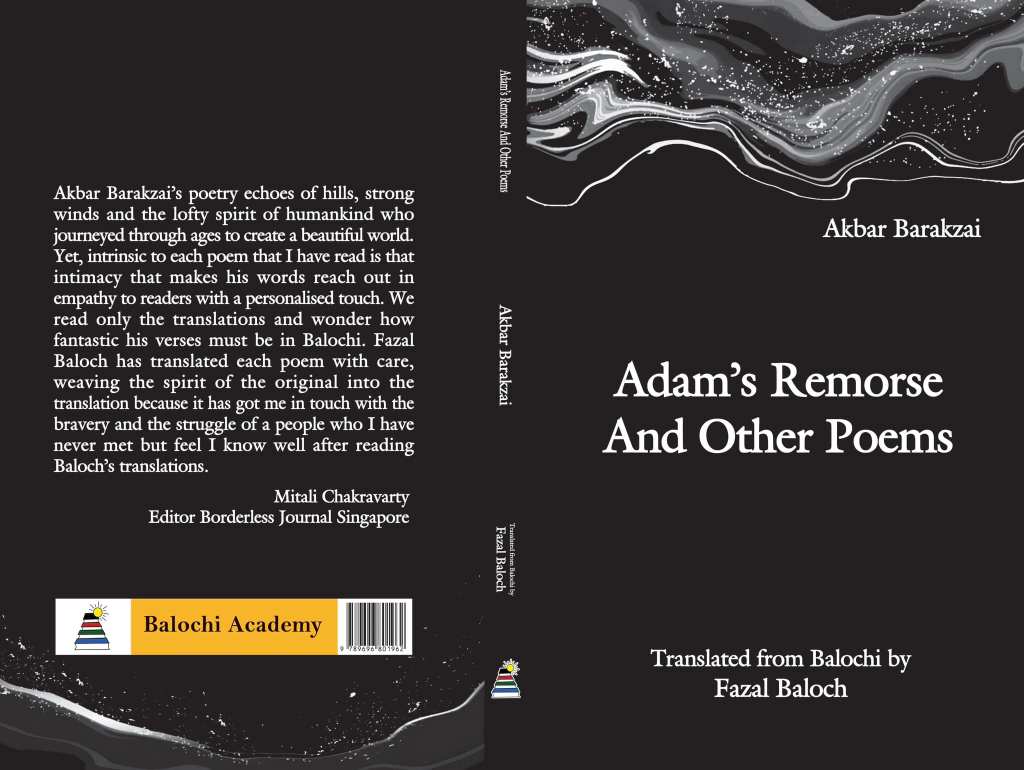
 “Akbar Barakzai belongs to the generation of the poets that witnessed the political and literary activism of Muhammad Hussain Unqa, Sher Mohammad Mari, Mir Gul Khan Naseer and Azat Jamaldini”, writes Fazal Baloch, a renowned translator who most recently brought out the anthology of Barakzai’s translated poems under the title Adam’s Remorse and Other Poems, published by Balochi Academy Quetta in 2023.

In his literary career, which spans over a half century, Barakzai has managed to bring out only two of his anthologies. Some selected poems by Barakzai have been translated from Balochi to English by Fazal Baloch, a college professor in Turbat, and a prominent literary translator.

Akbar Barakzai was an honest and dedicated political and social activist whose aim was progress of Baloch people. He as poet could not only express the human sentiments but could also express their aspirations for their life of Freedom and Dignity. “He served … his people admirably and deserves our respect and love,” says Meer Mohammad Ali Talpur, a Baloch intellectual.

Barakzai’s poems are rich in linguistic and literary expressions. His language is both simple and philosophical. In his poetry, he celebrates resistance, challenges oppression, and expresses a belief in a better future without losing hope. He emphasises resilience to overcome suffering. He writes:

I am the tree of immortality,
O, you tyrant brute!
The more you hew me down,
the more I sprout

The imagery of the tree symbolises the strength and the life cycle of a tree which remains steadfast midst harsh weathers.

In another poem, titled ‘Not Forever’, Barakzai continues to convey themes of resistance and defiance. As he says:

The rule of chains and fetters
Will last only for today, not forever.
The age of tyranny and oppression
Will last only for today, not forever.

He inscribes that the current state of being oppressed or controlled (“rule of chains and fetters,” “tyranny and oppression”) is temporary. Barakzai implies hope for a future where such oppression will end, indicating a belief in the eventual triumph of freedom and justice.

Barakzai sought to reshape the prevailing socio-political views and wrote for freedom and liberty, peace and prosperity and dignity of mankind. His love for human dignity transcends all geographical and cultural frontiers and becomes universal, added Fazal Baloch.

Indeed, Barakzai’s poetry transcends borders and speaks to universal themes. In his poem ‘Who Can Snuff Out the Sun?’ written in response to Che Guevara’s execution, he celebrates Che Guevara’s heroism and the universal struggle for justice and freedom. By acknowledging Che Guevara’s courage and sacrifice, Barakzai connects with a broader global struggle for human rights and liberation.

"Who can snuff out the sun? 
Who can suppress the light?"

And in the last lines of the poem, he notes,

I'm Ernesto Che Guevara
I'm Immortal
Everywhere in the world

“This is not only Barakzai’s most quoted poem, but it is also one of the most remarkable Balochi poems touching the theme of resistance and defiance,” contends Fazal Baloch.

Similarly, in his another poem like ‘I’m Viet Cong’, he expresses solidarity with the people of Vietnam, few lines are written as such:

I'm the spirit of freedom and liberty 
Who can enslave me?
Who can kill me?
After all
I'm Viet Cong I'm Viet Cong.

He might have shown solidarity with Afghanistan in his poem ‘April 1978’. His lines read:

Let's sing for the Saur
Let’s extol the groom
A garden in our heart has bloomed
Doves chant and herald the news
Revolution has arrived
Arrived what we desired

One of the ways in which Barakzai weaves the West and the East into his poetry. He has a poem called ‘Waiting for Godot’. Samuel Beckett’s Godot is emblematic of an ideal that we keep waiting for. Barakzai has captured the essence of the whole play in his poem with his refrain —

Arise! O friends from this deep slumber 
Godot will not, will never show up

In one of his most powerful poems, ‘Word’, Barakzai conveys the power of speaking up for one’s rights and the importance of not remaining silent in the face of oppression. He believes that by voicing one’s grievances and advocating for justice, freedom, and salvation can be achieved, ultimately leading to the end of oppression as these lines indicate:

Don’t ever bury the word
In the depth of your chest
Rather express the word
Yes, speak it out.
The word brings forth
Freedom and providence
Of course, freedom and providence.

In ‘How Long’, Barakzai starts by portraying a bleak situation where life is filled with distress and young people are dying tragically. He inscribes,

For how long
Life will remain in utter distress
Handsome youths keep falling to bullets
And mirror like hearts
Continue to shatter into shards?

Then, he shifts the tone to one of hope and optimism, and writes,

Light-- the very essence of freedom 
Will not forever remain in prison
Life will not suffer distress
The serpent of tyranny
Will vanish evermore
The sapling of envy and hatred
Will wither away.

He suggests that despite the current darkness, better days are ahead. He expresses confidence that “light”, symbolic of freedom, will not remain imprisoned forever. He predicts an end to the suffering and the disappearance of tyranny. The imagery of the “serpent of tyranny” vanishing and the “sapling of envy and hatred” withering away conveys the idea of a brighter future where oppression and negativity are eradicated.

Barakzai’s poetry is a ray of hope in the midst of suffering from atrocities and hatred and envy. His poetry reflects his love for humanity resonating with the voices of the oppressed and for them.

Hazaran Rahim Dad is a poet and writer. She writes on sociopolitical issues focusing on the right of fishermen. Currently she is pursuing her MPhil degree in English literature from Karachi.

PLEASE NOTE: ARTICLES CAN ONLY BE REPRODUCED IN OTHER SITES WITH DUE ACKNOWLEDGEMENT TO BORDERLESS JOURNAL

Click here to access the Borderless anthology, Monalisa No Longer Smiles

Click here to access Monalisa No Longer Smiles on Kindle Amazon International

Categories
Poetry

Human by Manzur Bismil

Translated from Balochi by Fazal Baloch

In the city,
Those who know me,
Look at me through two different perspectives:

"You're peerless,
So pure,
We need souls like yours
To grace our world,
May your shadow endure forever."

"If more souls like yours,
Doomed and dark,
Taint our land,
Our trees will wither,
You're a stain, a blight
On the fabric of our world,
May you end up in shadows unseen."

Yet as I weigh my deeds
And ponder deeply,
A voice echoes deep within me,
Unfurling the truth:
“I am a human,
A fragment of my heart is housed by God
And the devil seeks to take over the rest.”

In this city,
Those who know me
Look at me through two different perspectives.
For if I am truly a human,
How can I be stripped of my share
From either?

Manzur Bismil is a prominent Balochi poet. He emerged on the literary scene in the early 1990s and soon rose to fame, creating a niche for himself in the pantheon of the Balochi poets. He is widely known for his neo-classic style, especially in his verses. So far he has published eight anthologies of his poetry. This poem is taken from the second edition of “Hoshken Kaaneeg” published in 2017.

Fazal Baloch is a Balochi writer and translator. He has translated many Balochi poems and short stories into English. His translations have been featured in Pakistani Literature published by Pakistan Academy of Letters and in the form of books and anthologies. Fazal Baloch has the translation rights of of this poem from the poet. 

PLEASE NOTE: ARTICLES CAN ONLY BE REPRODUCED IN OTHER SITES WITH DUE ACKNOWLEDGEMENT TO BORDERLESS JOURNAL

Click here to access the Borderless anthology, Monalisa No Longer Smiles

Click here to access Monalisa No Longer Smiles on Amazon International