Categories
Essay

The Untold Stories of a Wooden Suitcase

By Larry S. Su

On the first day of college in today’s China, train stations and campuses unfold like a modern spectacle. Students step off high-speed trains, wheeling sleek polycarbonate suitcases or expandable fabric cases, an impressive display of China’s transformation and prosperity—worlds apart from the scene when I started college in the 1980s. Back then, students from the countryside, like me, arrived weighed down by clumsy, hand-built wooden suitcases—boxy, awkward, sometimes nailed shut or painted over in dull brown or red. Despite their lack of style and ease, these suitcases held far more than just clothes and books. They carried the weight of individual and family expectations, sacrifices, and the deep conviction that education was the key to a better life.

I was admitted to college in 1983, just six years after China resumed its national college entrance exam, which was halted during the Cultural Revolution from 1966 to 1976. For an entire decade, higher education had vanished like a dream interrupted.  When it returned, it did so with urgency and hope. Admission rates hovered in the single digits, and every name on the list felt like someone hitting the million-dollar jackpot.  

In my village of 150, tucked between dry hills and narrow paths, I was the first to make it to college. The news spread like wildfire down the dusty lanes, from the threshing fields to the courtyard kitchens. Old friends came by to shake my father’s hand. My mother quietly wiped her eyes with the corner of her apron. For families who had known only toil, harvests, and ration coupons, the word college opened the door of paradise.

For years, we had lived under the gaze of quiet scorn of certain snobbish and well-off villagers. Our poverty was visible in our patched clothes, our sunburnt skin, and our empty grain jars. Other villagers had watched us with indifference or pity. Now my college admission lifted my family’s status in a way nothing else could. I was no longer just a poor farmer’s son; I was a future cadre, or ganbu, with a guaranteed salary, a ration book, and an iron rice bowl that would never crack. No one else in the village had ever crossed that threshold.

For more than a decade, my family had invested everything—hope, sacrifice, and a few Yuan they could scrounge into my education. On days when the journey felt too long or the hunger too loud, they were the ones who kept me going. I remember one winter during high school when I was short of just one dollar of my tuition. My homeroom teacher, stern and unmoved, made me walk five miles home and warned me not to return without the full sum. My parents went from house to house in the village, humbly pleading for a small loan just for a week or two. Most turned them away, murmuring about their own hardships, but a few, out of pity or quiet admiration, handed over a Yuan or two. By late afternoon, the small offerings had added up. I returned to school at dusk, the cold wind at my back and the full tuition folded carefully in my coat pocket. This incident, instead of shaming and destroying me, further strengthened my conviction that no matter what price my family and I had to pay, I would go to college.  

To prepare for my departure to college, my father did something he had never done before. He hired a carpenter from a neighboring village to build a wooden suitcase. It was a costly decision, one that must have weighed heavily on him. We were truly poor. There were days when even salt felt like a luxury, when my siblings and I wore the same mended clothes year-round, and when my mother bartered eggs for school supplies. When unused, our tattered clothes were wrapped in a faded cloth, stored in the corner of the kang, our raised earthen bed connected with the earthen stove.

To have a suitcase made, father first had to find wood for the suitcase.  The lumber did not come from a store, nor from a tidy stack delivered by truck, but from the raw ribs of the mountains five miles away, remote, rugged, and indifferent to human need. It was hewn not with ease, but through toil born of necessity, from a land where poverty pressed against every doorstep like a hungry wolf.

In the villages near the foot of those mountains, the stooped peasants in worn jackets would venture up the steep trails in search of timber, not for craft, not for trade, but for survival. When harvests failed or granaries stood bare, they turned to the forest as their last resort. Trees were cut and sold in the black market for bread. A good haul of wood might mean a sack of corn to keep a family fed for another week.

But obtaining the wood was no simple act. The journey was long and unforgiving. They would rise before dawn, axes slung over their shoulders, climbing through thickets and boulder-strewn paths, deep into the mountain’s silence. There amid the mist and the call of unseen birds, they would fell the chosen trees, their sweat mingling with sap and soil. Because it was illegal to cut down the trees, the peasants had to keep alert not to be spotted by the forestry workers who, though sparse in number, might show up on the roadside, so they often chose dark evenings to carry the lumber home.

The return was even harder. The logs, heavy with sap and sorrow, pressed into their backs. When the burden became too great for one person, they’d cut the timber into several smaller chunks, but even then, each required the strength of two men to carry.  They would strap it to a thick bamboo pole pressured on their shoulders like a yoke of hardship.

Then the carpenter had to be hired.

In the last century, craftsmen were highly revered, especially in rural areas. A person with a particular skill was often treated as an honoured guest. As a result, there were many craftsmen at the time, covering every trade such as stonemasons, carpenters, roof tilers, lathe workers, scale makers, locksmiths, blacksmiths, and so on.

Most rural carpenters didn’t have a permanent workshop. Instead they traveled from home to home, carrying a heavy tool chest on a shoulder pole, often walking long distances between villages. A carpenter might spend days or weeks at a client’s home, eating and sleeping there, crafting everything from furniture to roof beams.

Electricity was rare in villages, so all labour was done by hand. Precision was essential; there was no room for error, and the quality of joints, mortises, and finishes distinguished a true master even though the tools they used were heavy and primitive such as chisels, hand planes, ink markers, hand saws, clamps, files, oiling pads, and so on.   

The carpenter my father hired was an elderly man clad in a worn-out black shirt. He exuded the quiet dignity of a lifetime spent in manual labor. His silver hair was cropped neatly, and his glasses rested securely on his nose, an emblem of careful, measured craftsmanship. Every detail of his posture spoke of experience: His back slightly hunched in concentration, his grip firm yet practiced, and his face calm but focused as he drove a wooden peg into place with a mallet. His labour, a simple wooden suitcase for college, was held together by mortise and tenon joints. Tools lay scattered around him, not as clutter, but as trusted companions making rhythmic movements guided by repetition, trial, and intuition. 

It took him a few days to prepare the timber and to complete the suitcase. It was crafted from elm with a thick lid and slightly raised base. It was built to survive train rides, jostling, and years of storage in dormitories or small rented rooms. He used metal corners and hinges, often made of blackened or rust-resistant steel, to reinforce its solidity. He fixed a metal lock plate to the front where I would attach a small padlock. The box rested on a slightly elevated base, not decorative but practical, to prevent moisture from seeping up through concrete or earthen floors. The inside was unlined, raw wood, rough to touch. It was rectangular and boxy, about 70 cm long, 40 cm wide, 40 cm high, and weighed over 10 kilograms when empty.

When the suitcase was completed, my father carried it on his shoulder to a village a few miles away to have it painted by a painter. Being a painter in rural China in the 1980s was a life marked by ingenuity, hardship, and quiet artistry.  While cities were beginning to modernise and reform under Deng Xiaoping’s opening-up policies, the countryside remained largely poor and traditional. In that setting, rural painters were admired for their skill, often called mister, xiansheng, or master, shifu, yet they were rarely paid well.  Their payment might be in kind—a few eggs, a meal, or a bag of grain. Many painters did manual labor or farming to survive.

These rural painters, to be sure, are not professional artists painting landscapes or portraits for galleries. They were locally recognised for their talent in New Year prints, nianhua, paper cuttings, or village murals. They painted gods, animals, good luck symbols, or local mythologies on temple walls or household altars; they also painted shop names, price boards, wedding banners, walls, furniture, doors, and coffins.

As bleak and barren as the region often felt, the village painters still found ways to infuse life with colour and meaning. With brushes dipped in leftover paint and hope, they adorned rough wooden furniture with scenes that reached beyond hardship. Floral patterns bloomed across cabinet doors. On headboards and chests, magpies took flight, dragons curled in motion, and phoenixes danced in pairs, each stroke a whisper of good fortune, power, or harmony.

The painter who adorned my suitcase turned a rough wooden box into something radiant, almost otherworldly. He coated it in a deep, lacquered red, and on its front panel, he conjured a scene of quiet enchantment: A still pond cradled by green reeds, golden fish drifting in lazy arcs beneath the surface, and birds poised on willow branches, their beaks open in mid-song as if singing to the silence. It was a landscape none of us had ever truly seen, except in schoolbooks or village tales whispered under oil lamps.

When my father brought the suitcase home days later, the sun hit its polished surface and sent a soft glow across the dusty courtyard. The red shimmered like embers, the painted water seemed to ripple in the light, and for a brief moment, the box did not look like something made for travel, but for reverence. It felt as though something sacred had entered our home, something beautiful and too delicate for hands weathered by fieldwork and ash. For most peasant families in the 1980s, such a thing was unthinkable, a luxury far beyond reach.

The day I left for college arrived under a weeping sky. Rain had fallen for weeks without pause soaking the hills and fields. The autumn wheat sowing, so crucial to the coming year’s harvest, had been delayed again and again, the absorbed fields swallowing the farmers’ footsteps as if resenting their labor. The dirt roads had turned into narrow canals of mud, where every step threatened to pull a shoe clean off your foot and suck it into the earth, but that morning there was no time to think of planting. I was to leave for college, six miles from the train station. We had no way to get there but on foot.

Everything I would need for the new life: My quilt and bedding, summer shirts and padded winter coat, two pairs of shoes, a few notebooks, and my admission documents, were packed neatly into the lacquered wooden suitcase, now wrapped tightly in sheets of plastic sliced from emptied fertilizer bags. The suitcase was too large and heavy to carry alone. No buses ran from our village to town; no donkey cart would dare the mire. My elder brother and I did what necessity demanded: We slid a bamboo pole through the knots tying the box, hoisted it between us, and prepared to carry it to the station in the rain.

Father rose early that morning, long before the faintest hint of light broke through the slate sky. He cut two makeshift raincoats for us from the same plastic sheeting, covering them loosely around our shoulders. They rustled with every movement, thin as cellophane, barely enough to keep the water out. For himself, he wore nothing. There was no extra plastic, and we had never owned an umbrella. He insisted on walking part of the way with us.

His cloth jacket was already damp before we reached the edge of the village, his cotton shoes dark with moisture, but he showed no sign of discomfort. He walked beside us quietly, his eyes fixed not on the muddy road but on the box, on the sum of so many sacrifices, so much hope, now swaying with each step as we bore it forward. Eventually, he stopped and said he would go no farther. “It’s your journey now,” he said simply.

It took close to three hours for my brother and me to carry the suitcase to the train station. It rode with me for seven hours to my college. It was indeed a prized possession handcrafted with care, a costly item that had occupied an honoured place in our home, but within days of arriving on campus, my affection for the suitcase began to falter. What once felt like a treasure now felt like a burden, heavy not just in weight, but in meaning. It stood there beside the dormitory beds, squat and old-fashioned, its lacquered wood and painted pond strangely out of place among the glossy synthetic trunks or sleek leather cases of my classmates who came from cities. Its sturdy bulk, once a symbol of care and craftsmanship, now seemed to shout my difference in the echoing corridors.

I had already felt the sting of dislocation—my homemade shirts hung too loosely, my accent turned heads for the wrong reasons, and my soles were so thin I could feel the gravel beneath them. The suitcase, with its rural weight and painted dreams, added another layer to my growing unease.

I dreaded the glances and the unspoken judgments. Would they smirk at the rough wood, the iron clasps, and the makeshift lock? Would the women in our class notice it when they visited our dorm? I imagined whispers, sideways glances, and quiet laughter. The suitcase suddenly seemed not like a carrier of dreams but of shame. It was a marker of poverty, of distance, and of the village accent still in my voice and the callouses still on my palms.

I tried to silence that shame by reminding myself what the suitcase had cost my family not just in money, but in care, pride, and hope. And yet despite my best efforts, a quiet sense of isolation would creep in, uninvited. I told myself to be grateful. Still, beneath gratitude lived an ache: The fear that no matter how far I had come, I would never truly belong.

In graduate school, my relationship with the old wooden suitcase quietly shifted. By then, I was no longer the anxious, self-conscious undergraduate who feared that the worn, bulky trunk might betray my rural background. I was now one of four graduate students sharing a cleaner and bigger dormitory room, markedly better than the ones assigned to undergraduates. The simple fact that I had made it to graduate school granted me a certain dignity and status, something visible in the way others addressed me and in the quiet respect I began to feel in myself. With that change came a subtle emotional distance from the suitcase that had once embarrassed me. It no longer defined me.

I began to see the suitcase not as a social burden but merely as a functional storage box. Its outdatedness did not offend me. I no longer examined it with self-doubt or compared it with others’ modern luggage. It just sat in a corner, silent and sturdy, holding things I didn’t need every day. I had more important things to think about: coursework, research, passion in literature, and my future beyond campus. The emotional weight the suitcase had once carried of family expectations, inferiority, and identity began to loosen its grip. I stopped resenting it.  I told myself it was old-fashioned and coming from a different era, but I was now moving beyond it. I believed, with growing confidence, that better things lay ahead: lighter luggage, freer choices, and a life not weighed down by symbols of poverty but propelled by the quiet strength and sacrifice that wooden box had always represented.

By the time I became a university faculty member, my relationship with the old wooden suitcase had become almost purely practical, stripped of the emotional charge it once held. I shared a dorm room with only one colleague, a considerable upgrade from the four-person graduate setup, and my financial situation had improved dramatically. I could now buy what I wanted like new clothes, books, even a suitcase in any style or color. If I had wanted to replace the wooden trunk with a sleek, fashionable one, I could have done it without a second thought. But I didn’t. I had reached a point in life where I no longer needed to prove anything through objects. I had become what I once dreamed of becoming: A university professor.

After I got married in 1992, my relationship with the old wooden suitcase entered its final, quiet stage. As my wife and I began setting up our new home, one of our first major purchases was a large modular furniture set made up of three sections. The middle part held our television and decorative items, while the tall cabinets on either side were designed for hanging clothes and storing household essentials. It was modern, elegant, and capacious, a clear symbol of how far I had come. The suitcase, once essential, now served no practical function. I placed it in the deep corner of the closet. Its role in my life had come to a quiet close.

Though the suitcase now rests on a shelf, its meaning and the stories it carries remain alive. Remembering it brings back the life my father and his generation endured. My father was born in 1938. When I entered college in 1983, he was 45, supporting a wife and five children, the youngest only seven. By the time I finished graduate school in 1990, he was 52, still living a hard life. I could send home a few hundred to a few thousand Yuan for seeds, fertiliser, or wedding gifts—small relief for him, though never enough. From 1990 to 1997, as a university faculty member in China, I sent as much as I could; life was still tough for him, but at least the family had enough to eat.

When I left for the United States in 1997 to pursue further studies, I lived on assistantships and could send nothing home. I knew they had food but still struggled to afford the most basic supplies. In 2004, when I secured a full-time, tenure-track professorship in an American college, I began sending money regularly. Three years later, in 2007, my father died at 69. I could not return for his funeral, but I sent enough to cover all expenses. I wanted him to be buried with dignity, for without him, there would be no educated professor named me.

Remembering the suitcase, I cannot help but think of my father and the sacrifices he made so I could become educated. He remains an unending source of inspiration. His stance toward life, his defiance in the face of hunger and humiliation, and his resilience against the weight of helplessness guide me every day. The hardships I have endured—four years of boarding school sustained by meagre food brought from home, the inability to pay even a few dollars of tuition, the shame of wearing threadbare clothes in public, and over a decade of isolation from my family while living in a foreign land—are nothing compared to what he faced. Because of him, I have always found the strength to forge ahead no matter the obstacles, carrying in my mind the unwavering gaze of my father as if to say, “If I could do it, so can you.”        

Now, at sixty, I have reached an age when I can slow my pace and begin to savour life. How different my days are from those of my father! As a professor at an American institution of higher learning, I can say without hesitation that I have lived my American dream. I am well-fed, well-clothed, and surrounded by all I need. When I buy food, it is not merely to stave off hunger; I choose wholesome meats, fresh vegetables, and ripe fruits—luxuries compared to the corn, potatoes, and sweet potatoes on which my father and his family relied for more than a decade. For him, the simple gift of wheat bread once a day would have been a source of deep contentment. My clothing, too, tells the story of this contrast: Nike shoes, Ralph Lauren shirts, Banana Republic trousers, each item costing enough to feed my father’s household for half a year or more.

In addition, I have the luxury of traveling internationally. Between the ages of fifty-four and sixty, I have visited France, Italy, Germany, Switzerland, Austria, Hungary, Monaco, the Czech Republic, the United Kingdom, Spain, Portugal, and Turkey. I can say, without boasting, that I have walked the streets of distant lands, savoured their foods, immersed myself in their cultures, and broadened both my horizons and my perspective.

The contrast with my father’s life could not be starker. For most of his years, his movements were limited to the fields near home. Occasionally, he traveled three miles to the rural market to sell produce or buy supplies, and only rarely journeyed twelve miles to the county township to exchange goods for cash. Never did he have the luxury of dining out, attending a show, or taking a day off from the relentless toil of farm life.  Seen in this light, that simple wooden suitcase of his era captures the noble, heroic, and sacrificial spirit of my father and of an entire generation.

Unless someone has lived through such hardships, it is hard to grasp how unforgiving life can be for some. I tell the stories of my school years to my son constantly, and I never fail to mention the wooden suitcase, a thing he has never seen. We brought him to the United States when he was close to five. He never experienced the life of my father’s generation, or even mine. Growing up in one of the richest and most powerful countries in the world, he naturally takes much for granted, and I do not blame him.

Our purpose in coming here was to create a better life for him and for us. On the first day of college in the fall of 2014, my wife and I packed all his necessities into our Honda CR-V and drove him to Northwestern University. He needed no suitcase, certainly not a cumbersome wooden one, yet he never forgot the stories I had told him about my wooden suitcase or the depth of its significance for my family and my generation.

He made the most of his college years, graduating in 2018 with a double major in statistics and economics, fully prepared for the career he now has at a Fortune 500 company. In this way, hardships and difficult journeys become wells that nourish the mind and soul of the next generation. And the stories of the suitcase, like a quiet legacy, will continue to inspire his children and his children’s children.

The wooden suitcase that traveled with me from 1983 to 1992 is far more than a piece of luggage; it is a vessel of hope, a keeper of dreams, and a silent witness to the shifting tides of my family’s life. Built and painted by calloused hands in lean years, it carries not only my possessions but also the love, expectations, and unspoken sacrifices of my family, especially my father. For those of us from villages along dusty roads, such a suitcase embodies the weight of our origins and the transformations we endured. Over time, its meaning deepens. It comes to represent not only my personal journey but also the shared story of a generation of rural college students who, rising from poverty, saw their futures irrevocably changed by the power of education. It also stands as a tribute to the previous generation, who gave everything so their children might leave the parched soil behind and begin anew in the cities. Even now, the worn corners of these wooden suitcases seem to murmur stories of struggle, resilience, transformation, and gratitude—tales not only of my own life, but also of a family, a village, and a nation in motion.

.

Larry S. Su has been a professor of literature and writing for the past thirty years.  He has also been a passionate reader and ardent writer since college.  He writes both in Chinese and English, and his writings have appeared extensively in the Chinese and English publications, mostly in the form of articles and essays. 

.

PLEASE NOTE: ARTICLES CAN ONLY BE REPRODUCED IN OTHER SITES WITH DUE ACKNOWLEDGEMENT TO BORDERLESS JOURNAL

Click here to access the Borderless anthology, Monalisa No Longer Smiles

Click here to access Monalisa No Longer Smiles on Kindle Amazon International
Categories
Stories

A Queen is Crowned

By Farhanaz Rabbani

The grand images of a historic event flashed before her eyes, as 11-year-old Jui, flanked by her sisters, sat still in the dark hall of Gulistan Cinema Hall. There was a great buzz about the new Technicolor documentary on the coronation.

The week before she had heard her elder sisters, Ruby and Shelly trying to convince their mother to let them watch it at Gulistan. For an affluent wealthy Muslim family, allowing girls to watch movies outside was unheard of. But the matriarch of the family, Zubeida, was groomed in a different manner. Born of a renowned family in Munshiganj, she was educated at the Sakhawat Memorial Girl’s High School in the 1920s. Inspired by the values of the Bengali feminist writer and the founder of her school– Begum Rokeya Sakhawat Hossein, Zubeida was an avid reader and extremely aware of the social issues of her times. When she was married at the age of 14, her husband, a renowned physician, encouraged her to read at home.

Zubeida’s sons and daughters grew up reading the latest literary journals and novels written by legendary Bengali writers. Being the third daughter and the fourth among all the siblings, Jui was surrounded by casual conversations of the latest plays in town or the scintillating songs from the All India Radio. Her immediate elder sister Shelly was a huge fan of Dilip Kumar’s songs and was often seen pressing her right ear to the battery driven radio, swaying to the mellifluous melodies of S.D. Burman. But life was not all play in Zubeida’s home.

In the evenings, as soon as everyone completed their Maghrib prayers, the children had to study. Seven children had several different techniques of playing truant during this special time. The eldest son being an avid football player, would often stay away from home playing in tournaments for the Mohammedan team. The next child Ruby looked at life in a more serious manner. She sat on her table with the hurricane lamp illuminating her social studies book. But sometimes, Jui would often see books by Kamini Roy, or Ashutosh Mukherjee or Tagore hidden within the centrefold of the schoolbooks!

Once, their father had just returned from his medical chamber to catch Shelly pressing her right ear to the small battery driven radio intently listening to the latest Dilip Kumar song.

“Ruby’s Maa!” he exclaimed, “These girls will all get married to rickshawallas! All they do, every day, is to waste time. How will they ever pass their exams?”

 While the veteran patriarch was fuming in rage, Ruby’s Maa, Zubeida, appeared to be totally undisturbed by his lamentations. She never worried about the future. With her deep faith in God, she took life one day at a time,

Ruby and Shelly were intently looking at the screen transporting themselves to Westminster Hall amid all the grandeur of the Coronation. The sultry voice of Laurence Olivier wafted through the Cinema Hall of Gulistan as images of a sparkling crown being placed on the elegantly styled head of Queen Elizabeth II mesmerized the audience.

Zubeida, in her usual quiet persuasive way, had convinced her husband to give them permission to watch the famed documentary on the coronation of the new Queen — Elizabeth II. Abu Chacha– their darowan 1 went to great lengths to get 5 rickshaws for the journey from Naya Paltan to Gulistan.

The ladies adorned themselves in their best attires. The older daughters gave special care to apply their homemade surma2 on their eyes. The younger ones were just too excited to have a day out with the ladies of the household. Zubeida wore a beautiful cream coloured saree with a black border, the dark kohl accentuating her dreamy eyes, and she had mouthful of paan that made her lips ruby red. With a splash of attar, the ladies wearing saris got on the rickshaws– all veiled meticulously — so that passersby would not see their faces.

Abu Chacha was relegated with the noble duty of guarding the ladies–perched on a sixth rickshaw keeping track of the ladies at the front. As soon as Zubeida and her daughters reached Gulistan Cinema Hall, Abu Chacha stood on guard at the front of the Hall. He was not interested in the coronation of a foreigner. His life was not affected by the wonders of the colonial rulers. His only loyalty was for Doctor Sahib — who saved his mother from her deathbed. He would dedicate his life to the service of Doctor Sahib’s family.

Jui was silent– perhaps a little overwhelmed by the discipline and formality of the whole affair. She wondered if she would ever break away from the confines of her home and see the world outside. She was always the quiet one. Since she was not as robust as her sisters, she was considered to be docile and shy.  But the 11-year-old girl had a deep-rooted desire for breaking boundaries. The ornate gilded halls of Buckingham Palace flashed throughout the screen. Huge paintings framed in gold and the elegant procession of the Royal Guards clad in red and gold transported the audience to the glamour of the crowning of the new Queen of the United Kingdom. Jui, with her innate curiosity, watched the red canopy covering the Queen as she was anointed with holy oil. She had no idea about the significance of these actions. All she noticed was the splendour of a distant world – where women did not have to travel in covered rickshaws. 

Queen Elizabeth’s calm but firm look seemed to send a message to this little girl thousands of miles away. As she sat on the cushioned seats of Gulistan Cinema, surrounded by her protective sisters, Jui suddenly felt her resolve strengthening. She wanted to know more and see more of the world. She dreamed of visiting the land of the Queen one day. She dreamed of breaking out of the confines of her home one day.

 She would be the queen of her own destiny.

.

  1. Security guard ↩︎
  2. Kohl ↩︎

Farhanaz Rabbani loves to chronicle interesting stories and events that happen around her.  She is an avid listener. Contact: fnazrs@gmail.com.

PLEASE NOTE: ARTICLES CAN ONLY BE REPRODUCED IN OTHER SITES WITH DUE ACKNOWLEDGEMENT TO BORDERLESS JOURNAL

Click here to access the Borderless anthology, Monalisa No Longer Smiles

Click here to access Monalisa No Longer Smiles on Amazon International

Categories
Essay

My Love Affair with (Printed) Books

By Ravi Shankar

The last two years have been especially sad ones for printed books and magazines. Toward the end of 2023, the iconic magazine, National Geographic stopped selling its print issues. And in April 2024, Reader’s Digest stopped publishing. Many other print magazines have also downed their shutters though the online version continues.

I grew up with the Reader’s Digest. My father subscribed to the magazine and each month a copy wrapped in a brown envelope arrived at our door. The envelope partially covered the magazine inside, and you could see the top and bottom of the magazine. The size was small, and this made for easy handling. Reader’s Digest was a magazine you could read comfortably in bed. During the festival of Diwali, there was a special wrapping for the magazine. We had several magazines in our house when I was growing up. My mother used to read many magazines in Malayalam (our mother tongue).

Reader’s Digest provided shortened versions of stories and articles that had been published elsewhere. Their skill was in condensing the material while still retaining the interest. There was a rich collection of reading material. There were also advertisements for other books published by Reader’s Digest. Unfortunately, these were beyond our family budget. I wanted to purchase these when I grew up and became financially stronger. My neighbour who was a scientist had some of these books that I occasionally borrowed.

Another favourite of mine was the National Geographic. My father was a faculty member at a banker’s training college in Mumbai and their library subscribed to National Geographic. He often brought the magazine home. I was mesmerised by the articles and the photos in the magazine. The artistic quality of the photos was superb. The magazine had only three or four articles in an issue but addressed these at great depth. I travelled to faraway places, to the bottom of the ocean, to within the human body and to outer space with the magazine. Later, National Geographic started a television channel, and I would watch the documentaries in the nineties.

We also subscribed to the Illustrated Weekly of India. This was in a large format and again had very good photographs. I still remember the column by the journalist Khushwant Singh titled ‘With malice towards one and all’. I was also a fan of the comics section of the magazine. I had a huge collection of comics and my father purchased both Amar Chitra Katha and Indrajal Comics. Amar Chitra Katha introduced me to the rich history of India. Indrajal comics had superheroes like Phantom, Mandrake, and Flash Gordon. I used to eagerly await new issues. Most of my comics were lost when we shifted houses.   

When the news magazine, India today, made an appearance, we subscribed to it and to Outlook and The week (Indian news magazines). During my school days in May, I used to eagerly await the new textbooks and notebooks for the next class following the results. I used to go with my mother to purchase these from a stationery store near the railway station. The smell of the new paper and the fresh ink was mesmerising. I loved to read some of the easier chapters in these books. Covering the notebooks with brown paper was another major activity. Our school year started with the rains in June.  

My good friend, Sanjay Mhatre had a good library and loved to collect books. I loved to borrow from his vast collection. His collection on physics and cosmology were extensive. In those days, the erstwhile Soviet Union used to have cheap books of high quality for Indian readers. I remember the publishers Mir and Progress and I had several of their collections on science. The Soviet publishers used to hold exhibitions in our college. For twenty or thirty rupees, you could purchase high quality hard bound books. My introduction to quantum mechanics and to chemistry was through one such book.

At Thrissur in Kerala most of our medical textbooks were western and predominantly from the United Kingdom. There used to be an English Language Book Society (ELBS) that published cheaper versions of textbooks for developing countries. With our limited resources purchasing textbooks was a challenge. The two major textbooks published from the United States were those of Anatomy and Pathology. Those days we did not have online textbooks and online sources and were limited to the printed word.   

I used to write for our medical college magazine and eagerly waited for the annual issue to be published. During my residency days at PGI, Chandigarh I was the literary secretary and was very involved in bringing out the annual magazine, The Resident. We also introduced a newsletter, ARDent Voice, with ARD standing for the Association of Resident Doctors.

At Pokhara, Nepal the college library had a good collection of general books and novels in addition to medical books. I used to read a lot of novels and the author, Frederick Forsyth was one of my favourites. His meticulous research blurred the lines between fact and fiction. Sidney Sheldon was another bestselling author. Novels enabled me to travel vicariously to different places and through varied situations.

Today reading has become less common among the younger generation. Reading strengthens creativity and the imagination as you must imagine in your mind’s eye the situation the author is creating. Is it not magical that the author can communicate with you, the reader through squiggles on a page across the boundaries of space and time?

I started writing during my MBBS days. I still remember the versification competition I took part in and won the first prize. I used to participate in different literary events at my college. In Nepal, I combined my triple loves of writing, photography and hiking with articles for the newly started newspaper, The Himalayan Times. I met my writing guru, Don through the magazine, ECS Nepal. Don was the editor of the magazine and a powerful writer with a deep knowledge of Nepal. I learned a lot from his comments and suggestions and the workshops he conducted. I also used to write a medical column for ECS Nepal. ECS Nepal was a beautifully produced magazine with great photographs. Unfortunately, it stopped publishing around the beginning of the pandemic.

Other travel and lifestyle magazines were also published from Nepal but could not sustain themselves. In the Caribbean Island of Aruba, I used to write off and on for a daily newspaper published in English. Again, the newspaper ceased publishing. During the last two decades several print magazines have ceased to exist. I feel it is a great loss.

I do not read much on paper these days. Most of my reading is done online on computers, laptops and tablets. I also have a Kindle reader. Kindle screen mimics the appearance of paper closely, but it is not the same as reading a printed page. You can no longer feel the smoothness of glazed paper, the smell of fresh ink and the vivid colours of photographs. With the closure of the print version of Reader’s Digest, an era in print publishing has ended. The demise was sadly expected. Without printed books, our (my) world may never be the same again!

.

Dr. P Ravi Shankar is a faculty member at the IMU Centre for Education (ICE), International Medical University, Kuala Lumpur, Malaysia. He enjoys traveling and is a creative writer and photographer.

.

PLEASE NOTE: ARTICLES CAN ONLY BE REPRODUCED IN OTHER SITES WITH DUE ACKNOWLEDGEMENT TO BORDERLESS JOURNAL

Click here to access the Borderless anthology, Monalisa No Longer Smiles

Click here to access Monalisa No Longer Smiles on Kindle Amazon International

Categories
Notes from Japan

Kyoto: Where the Cuckoo Calls

By Suzanne Kamata

                        even in Kyoto

I long for Kyoto—
cuckoo!
--Matsuo Basho (1644-94)*

My story begins at Kyoto Station, where I alight after a three-hour bus ride. I am on my way to meet my friend Yoko for dinner in the Kitayama area, and a drink at the Kyoto Hotel Roku. She and I once worked together at the same university in Naruto, but now she is an associate professor at a small women’s college in Kyoto. I head underground, through the Porta shopping center, and get on a subway bound for Kokusaikan. In spite of the crowds up above, the train allows for elbow room, and I easily find a seat. Most of the passengers are glued to their phones, some are masked. My eyes flit to an advertisement for a display of kimono. After several stops, I get off at Kitayama and find Yoko waiting at the wicket. We have a spaghetti dinner at a nearby restaurant, and then hail a taxi via Didi, Japan’s answer to Uber.

The taxi takes us through an upscale residential area featuring traditional homes. Yoko tells me that we are near Bukkyo University, originally an institution of research for monks, but now a university grounded in Pure Land Buddhism offering degrees in a variety of subjects including English, nursing, and social welfare. We are also not too far from my favorite temple, Kinkakuji. One of the first novels that I read upon arriving in Japan was Yukio Mishima’s The Temple of the Golden Pavilion, translated by Ivan Morris, about a deranged monk-in-training who set fire to the gilded temple and burned it down. Surprisingly, none of the visitors from abroad that I have taken to this temple had ever heard of this 1950 incident or the book.

The driver turns down a long driveway and drops us off at the hotel entrance. “Nice hotel!” he says.

I resist the urge to defend our extravagance, to say we are just here for a drink, and then the next day for lunch. I have been commissioned to write an article about the hotel, but I can’t afford to spend the night.

The Roku Kyoto, which opened in September of 2021 when Japan was off limits to foreign tourists, is one of eight of LXR luxury properties worldwide, and Hilton’s first in Kyoto. (Others include The Biltmore, Mayfair in the United Kingdom, and the Mango House in the Seychelles.) Along with a tranquil, storied setting (in the 16th century, it was a community for artists and artisans), the hotel offers bespoke experiences, such as a session of kintsugi with a local master of the craft, using cracked hotel pottery, and traditional papermaking using water from the Tenjin River, which runs through the hotel grounds. Guests can also opt for a New Year’s Eve package including a two-night stay, and a viewing of the sunrise over Mt. Fuji via private plane at a cost of \4,800,000. Nevertheless, the hotel strives to be a place where local residents can come for escape and enjoyment as well as high-flying tourists.

We are greeted warmly at the entrance and shown to the dimly lit bar. Walking along the basin at the center of the hotel complex, I take in the reflection of the full moon on the water. I feel like we should be writing haiku. The veranda would be the perfect setting for filming a period drama.

The day before, I had tried and failed to make a reservation, and assumed that the restaurant was fully booked. However, after verifying that we could drop in for a drink or a cup of coffee without notice, we decided to go ahead with our plans. As it turns out, we are the only ones in the bar at a little after eight.

A small lamp is placed on our table, and the bartender brings us a menu bound in leather. I had been planning on having the Hana-monogatari (flower story) cocktail made from seasonal herbs and flowers from the hotel garden, but the Pear Moscow Mule sounds irresistible. Yoko selects the Frozen Rum Chai, made with amazake (sweet sake). We also order a plate of chocolates.

Ambient music plays softly in the background as we catch up on gossip about former colleagues and update each other on current research projects. We speak softly in the hushed atmosphere which is broken only by the sound of a cocktail shaker behind the bar.

Our drinks arrive with paper straws. Mine has a slice of Asian pear hooked over the edge. The fruit changes by the season, I am told. I take a sip, taste a hint of lime with the kick of ginger: delicious.

“Mmmmm. This is so good,” Yoko says of her drink. We negotiate over the assorted chocolates, which are filled with raspberry and orange peels, among other things. Yoko lets me have the piece topped with gold.

Later, a couple more small groups enter the bar, but the area is spacious. Our privacy remains intact. We talk a bit more, finish our drinks, and agree about where to meet for lunch the next day.

Late the following morning, I take the same route from a bargain hotel near Kyoto Station, weaving between young women in yukata and a foreigner with brightly dyed, intricately braided hair, and get off at Kitayama. This time, as I emerge from underground, I take note of the electronic cuckoo sound chirping from a speaker, and I recall Basho’s famous poem about longing for Kyoto. Nearly 400 years after it was written, I imagine that the poem evokes the same emotion – a longing for the city in days of yore.

I have visited Kyoto many times since I first arrived in Japan. On the first, when I was just beginning to learn Japanese and still didn’t know quite what was going on, I spent the night at the residence where the previous Empress was trained in housekeeping, a rite of passage even for aristocratic girls. As I mentioned, I was partially motivated to come to Japan because of literature, namely the Heian court poetry that I learned about from a class in Asian history. I was enthralled with the idea of courtiers communicating via verse, and as a newly heartbroken nineteen-year-old, I identified with the intense longing in poems by Murasaki Shikibu and Ono no Komachi. Later, I read a novel set in Kyoto –Ransom, by Jay McInerney. What I remembered most about it was the funny Japlish phrases and scenes of karaoke, still a novelty in America in 1985. Flipping through it more recently, I came across this description of the Kamogawa (Duck River):

“From its source the river drained fields and paddies heavily fertilized with petrochemicals and manure. Closer in, the Kyoto silk dyers dumped their rinse tanks. The white herons that fished the shallows had purple plumage one day, green the next—weeks in advance of the women who brought the kimono silk in the shops downtown.”

Can this book really be what made me want to come to Japan? And yet, I also recall being attracted by the cuteness and kitsch, the Disney meets sci-fi vibe prevalent in Bubble Era Japan implied in, for example, Ridley Scott’s film Bladerunner. In any case, nostalgia sometimes leaves out the worst, and things seem to have changed for the better. As we cross the Kamogawa in another taxi, this time by daylight, I see no evidence of pollution.

“There are tons of ducks on the river,” Yoko says. “And ibises.”

“It’s famous.” I have come across many references to it in literature.

We arrive at the hotel a bit early for our noon lunch reservation, so we are shown to a large room with sofas and chairs, where we can drink tea or coffee while we wait. We choose to sit next to a window which looks out onto the basins. The blue sky, the changing leaves, and the still water create a calming tableau.

“I feel like my mind and brain are being purified,” Yoko says.

No other guests are around, and I wonder how many of the hotel’s 114 rooms are currently occupied. Perhaps everyone has already left the hotel for sightseeing.

A strip of moss runs parallel to the basin.

“It’s of better quality than the moss at Kokedera,” Yoko says, referring to another famous nearby temple renowned for its moss garden. “And you have to make a reservation a month in advance and pay \3,000 to visit!”

I write down her words, never having reflected upon the quality of moss before.

“You’d better write ‘as good as,’” she amends, suddenly aware of her sacrilege.

Finally, a gray-haired Japanese woman in a kimono emerges from the hotel and traverses the walkway between the two basins. A few minutes later, I see a Western woman with long brown hair pushing a baby in a stroller. And then a little later, a child wearing a fox mask, saunters across the walkway, slashing the air with a toy sword.

 “He must have gone to Fushimi Inari Shrine,” Yoko says, referring to the popular tourist attraction known for its Instagram-worthy red torii gates.

Moss. Photo Provided by Suzanne Kamata

Just before twelve, we make our way to the restaurant, where we are shown to a table. The Japanese host/sommelier, suggests that we both sit on the same side, facing the window which provides a view of the fall foliage. He brings us the menu, and wine list.

I have already decided that I am having the wagyu burger. A glass of robust red wine would probably suit it best, but I am intrigued by the locally produced orange wine, which I’m told is comparable to a rose. Yoko asks the sommelier a lot of questions. Her partner works in wine in California, so she has visited many vineyards.

“It’s nice to talk to someone who knows so much about wine,” he says.

One of our two code-switching servers, both, as it turns out, from Nepal, pours a swallow of the orange wine into a glass for Yoko. She tastes it, but decides upon the sparkling plum wine, and the lunch course.

My image of plum wine comes from the syrupy homemade stuff we’d once received from my husband’s relative. “For when you have a cold,” she’d said. But this wine is something else – fruity, but light, and effervescent. Yoko asks where she can buy a bottle of it.

The sommelier explains that the hotel’s wines come from the nearby Tamba Winery, which is open to the public for tastings in the fall. It’s a short drive from where we are now. Their wines sell out quickly just in Kyoto and are mainly used by restaurants.

Yoko’s first course is pesto-dipped scallops submerged in vichyssoise made with white beans. She invites me to taste it. I dip my spoon into the shallow bowl. The bright green of the basil is a surprising delight. There is a bit of a crunch.

“What is that crunchy thing?” I ask our server. “And what kind of flower is that?”

“Just a moment,” he says, and ducks away to find out.

The answer: croutons, and linaria.

I am almost regretting that I didn’t choose the lunch course as well, but then my burger arrives, along with a generous serving of fries, and I am glad that I skipped breakfast. I probably won’t need dinner, either.

I’d imagined that all wagyu was from Kobe, but the host tells us that it’s Kyoto beef.

Yoko’s second course is marinated salmon with spinach, potatoes, onion, and amaranth flowers. The server spoons duck sauce around it.

“Is there a lot of duck cuisine in Kyoto?” I ask Yoko, my mind going to the Kamogawa.

“Yes,” she says, “But I don’t think the ducks are from the river.”

Lastly, we have dessert—a fig cradled in a chocolate shell, topped with a dollop of cassis ice cream. The plate is painted with sauces. It is exquisite to both eyes and tongue.

Before leaving the property, we stroll around the grounds taking in the lawn where morning yoga and meditation are held, the orange tree and lavender beside the thermal pool (the peels of the former are used in footbaths at the spa), the exercise room redolent with cedar and cypress with a vista of Takagamine Mountain.

As we prepare to leave, Yoko suggests that next time, we treat ourselves to a hot stone massage in the spa, followed by afternoon tea on the veranda overlooking the stream. We can come in the winter, when there is snow frosting the mountain, for a different view. Yoko says that she might come by bicycle, and I vow to wear sneakers, so that I can walk from the station. Instead of longing for the past, we look to the future.

*This translation is from Kyoto: A Literary Guide (Camphor Press, 2020), translated, collated, and edited by John Dougill, Paul Carty, Joe Cronin, Itsuyo Higashinaka, Michael Lambe, and David McCullough.

Suzanne Kamata was born and raised in Grand Haven, Michigan. She now lives in Japan with her husband and two children. Her short stories, essays, articles and book reviews have appeared in over 100 publications. Her work has been nominated for the Pushcart Prize five times, and received a Special Mention in 2006. She is also a two-time winner of the All Nippon Airways/Wingspan Fiction Contest, winner of the Paris Book Festival, and winner of a SCBWI Magazine Merit Award.

PLEASE NOTE: ARTICLES CAN ONLY BE REPRODUCED IN OTHER SITES WITH DUE ACKNOWLEDGEMENT TO BORDERLESS JOURNAL

Click here to access the Borderless anthology, Monalisa No Longer Smiles

Click here to access Monalisa No Longer Smiles on Kindle Amazon International
Categories
Essay

Trekking to Tilicho Lake

Photographs & Narrative by Ravi Shankar

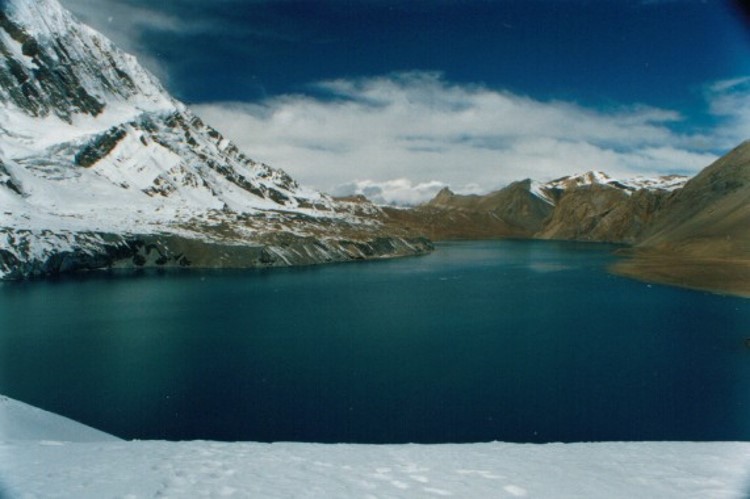
Tilicho Lake

I ran through the dark narrow corridor into the cold night air. I had been having a pounding headache since my arrival and lacked the appetite for my evening meal of spaghetti and eggs. My stomach churned violently, and the bile rose in my throat ejecting the contents into the frozen ground surrounding the lodge. Vomiting always makes me uneasy and brings back unpleasant memories of my early childhood when vomiting accompanied most maladies. Luckily this was the only serious episode of altitude sickness that I had during my high-altitude travels.  

We had broken most rules of acclimatising to the altitude during this trip. We had flown to the Humde/Hongde airport at Manang from the lakeside town of Pokhara, a day before. Pokhara is at around 800 m above sea level while Humde is at around 3400 m. Most flights to Manang are from Kathmandu and many Manangis are rich and sophisticated traders. The pilot did a visual inspection tour walking around the twin otter aircraft. He seemed satisfied and we were soon skyborne. The view of the Annapurna Himal (snow mountain in Nepali) in the morning sunshine was breath taking. We had lunch at the Airport Hotel in Humde and then hiked up to Khangsar at 3800m. We spent a night at a lodge run by a relative of our Humde didi [1] and started walking to the Tilicho Tal[2] after a substantial breakfast of buckwheat bread, late in the morning.

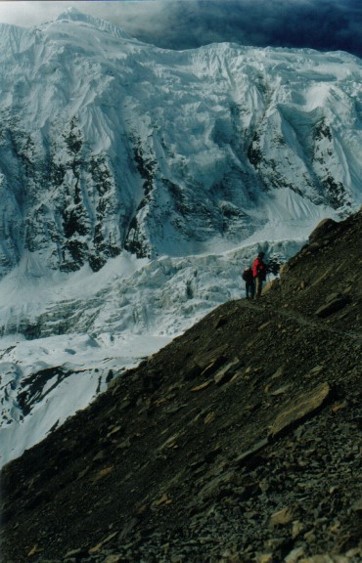
A cold wind was blowing, and the trail wound through scree[3] slopes. The hike was becoming treacherous, and we did some of the worst sections on our hands and knees. The mountain views were becoming spectacular as the Himals closed in on the valley. Our heavy backpacks threatened to unbalance us and push us over the edge to the Khangsar Khola and Marsyangadi river far below. Thorny bushes grew in the arid landscape and snagged our down jackets. We were worried about the condition of these jackets that we had rented in Pokhara. The shop owner was a patient of my fellow trekker, Dr Praveen Partha.    

We could see the Tilicho base camp lodge far below. The descent was along sheer scree slopes. The soil was loose, and the ground could vanish at your feet! Running descents down 45-degree slopes were battering to the knees. Time seemed to stop as we negotiated the vertigo-inducing slopes. Eventually, we reached the valley below and the final stretch was a short level walk. The lodge was dusty and cold. There was some problem with the solar lights and only the dining room was lit.

The next morning dawned cloudy and grey. It had snowed the previous night and I was still feeling nauseous and light-headed. The lodge owner told us about an ultra-marathon race being held that day and that we might meet the runners on our way up. It was a long climb to the lake. The trail initially wound through scree slopes and then climbed more slowly through snowfields. A freezing wind was blowing, and we wore sunglasses with side blinders to protect our eyes from the reflected sunlight and avoid snow blindness. My nose was becoming numb due to the cold. We were struggling at the high altitude (above 4500 m) and in my weakened state, I was finding the going difficult.

The runners were racing through the landscape. Their fitness was astounding. The ones we had met during the early stages of our hike were now returning from the lake. We saw the trail to Yak Kharka[4] and Thorung La[5] in the distance. Our plan was to cross the pass and descend to the holy site of Muktinath and the city of Jomson on the other side.

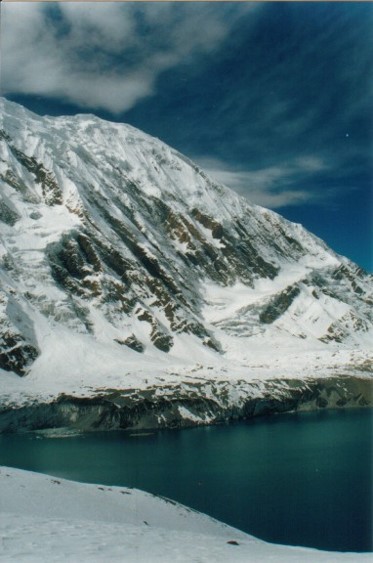
The mountains provided a stark contrast. The north-facing slopes were cloaked in the snow while the south-facing ones were bare. The power of our star, the Sun even at 152 million kilometres was awe-inspiring. We continued climbing. A steep climb along a snow-covered slope and the dark blue waters of the lake could be seen in the distance. The race organizers had set up stations for the runners and race flags and posters were seen on both sides of the trail. The wind was bitterly cold. The snow-cloaked landscape was breathtakingly beautiful. The lake is located at an altitude of 4940 m.  No aquatic organisms have been recorded in the lake.

Snowfields

Tilicho lake is believed by Hindus to be the ancient Kak Bhasundi lake mentioned in the Ramayana. The sage Kak Bhasundi told the epic to Garuda, the king of birds near this lake. The lake was also the location of the highest scuba dive by a Russian team in 2000. A trekking route skirting the lake and reaching Thini Gaon in the Kali Gandaki valley is becoming popular.

This route requires at least a night of camping as there are no lodges (tea houses) after Tilicho Base Camp till you reach Thini Gaon[6]. I have never camped during my travels in the Himalayas. Camping gives you more options but may be more challenging in terms of logistics. Many lodges also have well-maintained camping places.

The trekking lodges in Nepal started as converted tea houses. They were places to have tea, exchange gossip, and eat food. They had been around in the hills for a long time. People hiked the trails for different reasons ranging from trade, visiting family and friends, and pilgrimage. As trekking became more popular many of these started offering travellers a place to sleep. They used to charge only for the food. Later the rooms became more elaborate and private accommodations were created. In big towns and popular locations, some have become hotels.

The cold soon drove us down from the lake and the descent was easier on the lungs. Runners were still running up the slopes. The weather was becoming cloudy, and the sun was soon cloaked by clouds. Light snow started falling. In the mountains, it often snows around noon. I was beginning to feel better but was still weak. It was around four in the afternoon when Dr Partha and I reached the base camp lodge. My appetite was slowly returning.

Climbing to the village of Khangsar

The next morning, we started mid-morning to the settlement of Khangsar and eventually continued to Manang village. The village has some excellent hotels and spectacular views of the Gangapurna glacier. Manang is at 3500 m and the plan was for me to rest here and see how I felt the next morning and then decide whether to continue to do the circuit trek through the pass or return down to the road head of base town of Besishahar.  My bout with altitude sickness had sapped my confidence and we decided discretion was better and slowly headed down. I felt bad for Praveen who was keen to do the circuit before heading off to the greener pastures of the United Kingdom.

The Thorung pass still remains on my bucket list. Hopefully one day I will be able to do it. The Annapurna circuit trek has steadily contracted over the decades as roads have made deeper inroads into the mountains. The trek used to start from Dumre on the Kathmandu-Pokhara highway, then the trailhead shifted to Besishahar, and with the construction of the new road to the district headquarters of Chame. On the other side, there are regular buses from Pokhara and Kathmandu to Muktinath.

Tim Cahill, a travel writer from Montana, wrote, “A journey is best measured in friends rather than miles.” Praveen was perfect company. We gelled well together, we were adaptable and took the rough with the smooth. We did some interesting treks together and I am sure he must be continuing his walks in the cold English air as he thinks about medicine, health, love, happiness, and eternity! 


[1] Elder sister in Nepali

[2] Lake in Nepali

[3] Mountain slopes littered with loose pebbles and rocks

[4] Alpine pasture in Nepali

[5] La is pass in Tibetan

[6] Village in Nepali

Dr. P Ravi Shankar is a faculty member at the IMU Centre for Education (ICE), International Medical University, Kuala Lumpur, Malaysia. He enjoys traveling and is a creative writer and photographer.

.

PLEASE NOTE: ARTICLES CAN ONLY BE REPRODUCED IN OTHER SITES WITH DUE ACKNOWLEDGEMENT TO BORDERLESS JOURNAL

Categories
Stories

Flash Fiction: Saved

A story of 1950s indiscipline related by Brindley Hallam Dennis with a soupçon of humour

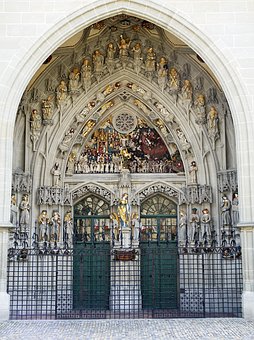
The cathedral doors were massive. They towered above them. Even the keyhole and the iron ring handle were above their heads. And you would think it was the youngsters’ fault, the way they got a severe reprimand when the headmaster and his group arrived on the riverbank. Perhaps he had a word with Mr Stephens too, on the quiet in the coach on the way home.

Sound travelled oddly in big old buildings like that cathedral. Something whispered in one place at the other end of the cloisters could be heard quite clearly, yet something spoken in a quite normal voice above the heads of the children couldn’t be heard in the middle of the nave. What was heard perfectly clearly by the children was the instruction to go back inside through the huge wooden doors because you were with Mr Stephens’ group. And what stuck in the minds of at least one of them for decades afterwards was the shock of seeing that vast, empty grey space when they did. Mr Stephens and his group had simply vanished. Perhaps there was another door out of the building, somewhere down towards the choir stalls, or behind the pulpit.

It was Bryan who poked around behind the candles and the rood screens and in several other gloomy places, but he found no-one. It was Bryan who suggested that they should go back outside and tell the headmaster that Mr Stephens and his group had disappeared. It was Bryan who went outside and came back in saying that the Headmaster and his group were missing too. Then they had all gone outside and stood at the foot of the Cathedral doors wondering what to do.

What memory hasn’t recorded is the life of the city that must have continued to pass by, to and fro, in front of the building where they stood, whatever the Headmaster and Mr Stephens and their groups were doing. All sorts of people must have gone by and noticed the five or six adult-less seven-year-olds huddled against those doors like medieval supplicants denied entrance on account of some unforgivable sin or unacceptable affliction. Perhaps even policemen on their beats passed by without intervening, along with Samaritans and other travellers.

It was Bryan, probably, being a precocious but thoughtful child, who suggested, that they should go down to the river where they were scheduled, after their picnic lunch, to go on a boat trip. Mr Stephens and the Headmaster and their groups would be bound to show up there, obviously. Bryan had a watch, perhaps, or maybe they looked up at the Cathedral clock, if there was one. I think Bryan would have been the sort of boy who would have had a watch. Perhaps several of them did. And perhaps too, children being more observant often, and attentive to adult memes, they had taken in the oft-mentioned half past twelve of the planned lunch break at the wooden tables down by the landing stage.

It would have been Bryan, if anyone, who guessed or even knew that if you want to find a river, going downhill is as good a strategy as any. Or it might have been blind luck of the good sort, as one must suppose the abandonment by Mr Stephens, or the Headmaster, if wilful neglect or lack of attention or plain unruliness in the children were not to blame, had been the bad luck.

Whatever the explanation for the recovery of the situation it came to pass that the children moved safely through that urban jungle and found themselves on the riverbank where boats plied for hire. There they waited the half hour or so that it took for Mr Stephens and the Headmaster and their groups to circumnavigate the city’s ancient walls. Which of these two arrived first, memory does not record but what remains clear is that the Headmaster was very cross and flustered. He may have wished that there had been enough parental volunteers among the group to have prevented the occurrence. Or maybe, he did not.

With a voice sharper than they were used to hearing, the negligent children were told, that, seeing as they had already consumed their picnics, and before the appointed time, he, the Headmaster, would take them personally around the walls as that been the major educational objective of the trip, before they embarked on the boat. This he did at a pace remarkable for such small legs, and the walls passed beneath them in a blur.

By the time they got back to the riverbank, the Headmaster had cooled down, and made it plain that there would be no more mention of the children’s momentary lapse of concentration, and that they should be glad that nothing untoward had come of their irresponsible behaviour. They were advised, for their own sakes, if they wanted such trips in the future, not to talk about their misdemeanour with their friends or brothers and sisters back at school, and certainly not with their parents. Such indiscipline was not to be tolerated, and though it need not be dwelt on, it might serve as a useful lesson to us all.

Going back a lifetime later what was most surprising was how small those Cathedral doors really were.

Brindley Hallam Dennis lives on the edge of England where he writes occasional plays, poetry, and essays. His writing has been published and performed. He blogs at www.Bhdandme.wordpress.com 

.

PLEASE NOTE: ARTICLES CAN ONLY BE REPRODUCED IN OTHER SITES WITH DUE ACKNOWLEDGEMENT TO BORDERLESS JOURNAL