Balochi Poem by Atta Shad, translated by Fazal Baloch
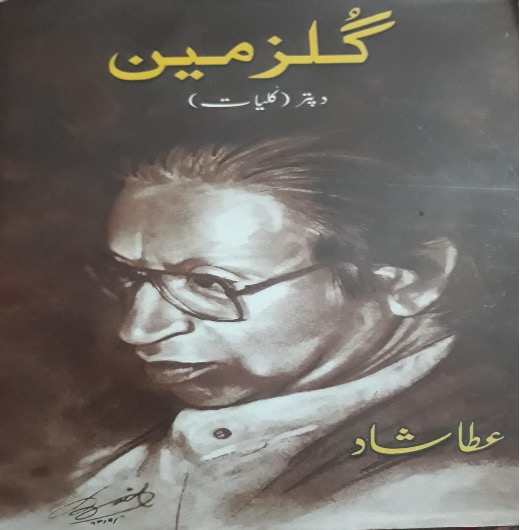
Atta Shad: Photo provided by Fazal Baloch
Atta Shad(1939-1997) is the most revered and cherished modern Balochi poet. He instilled a new spirit in the moribund body of modern Balochi poetry in the early 1950s when the latter was drastically paralysed by the influence of Persian and Urdu poetry. Atta Shad gave a new orientation to modern Balochi poetry by giving a formidable ground to the free verse, which also brought in its wake a chain of new themes and mode of expression hitherto untouched by Balochi poets. Apart from the popular motifs of love and romance, subjugation and suffering, freedom and liberty, life and its absurdities are a few recurrent themes which appear in Shad’s poetry. What sets Shad apart from the rest of Balochi poets is his subtle, metaphoric and symbolic approach while versifying socio-political themes. He seemed more concerned about the aesthetic sense of art than anything else.
Shad’s poetry anthologies include Roch Ger and Shap Sahaar Andem, which were later collected in a single anthology under the title Gulzameen, posthumously published by the Balochi Academy Quetta in 2015. The translated poem is from Gulzameen.
Mahnu, you envy of the moon,
I am a wretched of the earth.
My existence is like a dry and barren field.
Lightning scorched it to ashes.
Facing the wrath of the frigid winters,
Forever thirst-stricken,
Eyes seek the sea of fragrant clouds
At the far and unbeknownst threshold of hope.
May the rain of sublime hailstones set the dry field afire.
May there remain no cluster of marrying clouds
at the far end of the horizons. Nor any desire
in the hearts of waiting maidens.
Mahnu, envy of the moon,
You're oppressed by the night.
I'm a wretched of the earth.
Like you,
I too am lost in the fathomless expanse of loneliness.
Milky-way illuminates your path,
And mine is dark without a star.
Moonlight is the ecstasy of your beauty's wine,
I'm nothing but a sigh.
Like melody everywhere echo the words of your command,
I've shrunk like a suppressed call.
A world yearns for you.
A fake hope is all my life hinges upon.
You soar high like a lover's imagination.
I'm humble like wisdom.
Mahnu, envy of the moon,
Granted you are light,
I'm ash and dust.
Yet, if I survive not these fathomless days and nights
Woes and torments of life,
Then, think awhile,
Who in the world
Will write the songs extolling you?
Mahnu, you envy of the moon,
I am a wretched of the earth.
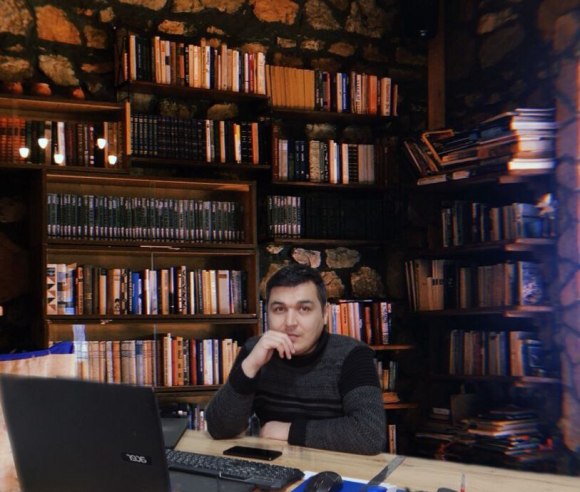
Fazal Baloch is a Balochi writer and translator. He has translated many Balochi poems and short stories into English. His translations have been featured in Pakistani Literature published by Pakistan Academy of Letters and in the form of books and anthologies. Fazal Baloch has the translation rights of Atta Shad from the publisher.
PLEASE NOTE: ARTICLES CAN ONLY BE REPRODUCED IN OTHER SITES WITH DUE ACKNOWLEDGEMENT TO BORDERLESS JOURNAL

Nilufar was overjoyed. Finally, sitting in front of the piano she was able to play the sonata of her favourite composer without a score and without making a mistake anywhere. She was excited as she had not been able to master it for weeks, and no matter how hard she tried, her efforts were in vain. In the end, her relentless and hard work paid off, lo and behold.
Now she could easily perform Rakhmaninov’s famous “re-minor” sonata in a long-waited first concert program without a score. She felt very happy. Sometimes she would go to her red piano, sometimes she would stare at the picture of composers hanging on the walls of the room and she would walk back and forth. She even wanted to dance on tiptoe like a ballerina. But she was ashamed and changed her mind. If her twins had been there, no doubt she would have embraced them, kissed their faces, and shared her joy with them. Unfortunately, they were in a boarding school. They would come during the weekend.
She wanted to share her joy with someone while she was preparing dinner. She could not contain it. That’s probably why she often glanced at the black telephone set on the shelf in the hallway. After a while she went to the phone. She picked it up and dialed the required numbers. Then the connection was restored, and a familiar voice was heard from the receiver.
“I’m in a meeting.”
“Are you coming home early today?” she said, not caring that her husband was at the meeting.
“What’s up?” her husband asked in surprise.
“Everything is good,” she continued. “If you come, I will tell you. I have a wonderful surprise.”
“Okay, I will come.”
Her husband’s voice stopped. She assumed the connection was lost. Although she was a little upset that the connection was lost, she dwelt on her success again and was in a good mood. She smiled contentedly as she looked in the hanging mirror in the hallway.
Nothing and no one could hurt her at the moment. Because she felt she had achieved a huge success for herself. To that day, she could only perform Beethoven’s sonata dedicated to Eliza, Brahms’ waltzes, and two or three of Chopin’s small nocturnes without score. But they were short musical compositions that any amateur pianist could perform. They did not require extra training or talent. Rakhmaninov’s sonata, on the other hand, was longer and more complex structurally. If these two elements was neglected, it would confuse the performer and force her to make a mistake, even when performed with a score.
“What’s the matter?” her husband said.
He had fulfilled his promise and returned early from work. Nilufar saw him and applauded with joy.
She was imagining that on the day of the concert she would be beautifully dressed and with a bouquet in her hands. This dream would soon come true too, she thought. She gently took her husband’s hand and walked towards the room where the piano was waiting. She entered the room and pushed the brown chair close to the piano. She asked her husband to sit on it. Her husband, who didn’t understand anything, sat helplessly in the chair. She stopped in front of the piano.
“I will play Rakhmaninov’s “re-minor” sonata without a score,” she said, sitting in a chair. “Listen carefully!”
She pointed her index finger at her husband like a child, her cheeks flushed with excitement. Then she put her finger in front of her nose and jokingly said “tss” to her husband. Then she began to play the sonata without a score. The mystery of music, which for centuries had shaken the human heart, comforted her and made her happy, embodied her pure love and painful hatred. The notes spread quietly through the room. This time the melody embodied the memories of the past in the human heart. The sonata always reminded her of her childhood. When she was a student at the conservatory, she was included in her personal program in various competitions. She remembered her all those performances during her childhood. It was the same a while ago and yesterday. It is the same now.
She would move her long and slender fingers over the black and white keys and play it flat. And sweet memories of a distant carefree and happy childhood wafted into her mind. Wrapping a white handkerchief around her mother’s forehead and baking hot bread in the oven, her heart sank for a moment as a prelude to memories. As a child, her mother always baked bread in the oven on Sundays. She was carrying a basket that was bigger than she was, and she couldn’t move anywhere near it. After the loaves were toasted and swollen, her mother would cut them up and throw them in the basket. And she would spread them out to make the bread cool faster. In the meantime, Nilufar would put cake bits in the pocket of her jacket. After that, she would enjoy eating these leaning on the apricot tree.
When the sonata reached halfway, the memories became more vivid. Lo and behold, she was tapping on the rotten wire in the street. She was small, like a squirrel. Her hair was blonde. Even then, everyone called her “blonde”. She was counting numbers non-stop, and her friends were hiding. After a while, she was looking for them everywhere. “Berkinmachoq,”* she sighed, her hands, which were constantly moving on the keys, suddenly weakened.
On summer days, she would not come from the street, ignoring the cherries hung by her father on her ears, and waving her hair, which was braided like willow twigs by her mother. She was much more playful.
If it snowed in the winter, it would be a holiday for her. She would make a Father Christmas with the kids in the middle of the street or play snowballs with endless fun. She would be on the sledge her father had brought her until the evening.
Not long after, she went to her uncle’s shop. He sold nisholda*. As a child, during the months of Ramadan, that uncle would always fill her bowl with nisholda . By the time she got home, she was licking the top of the nisholda with her finger. She would have a dirty doll in her arms and shoes with water on her feet.
“It would have been so sweet the nisholda,” she said casually. Then she recalled the days when she would go into every house with the children on the streets on the evenings of the holy month and sing the song of Ramadan.
We have come to your home saying Ramadan,
May God give you a son in your cradle...
They would sing that song. The song was long. Unfortunately, she only remembered the beginning. That’s how it would start. They would say it together with the children. Boys and girls sang Ramadan songs in unison, holding a long tablecloth from the corners, spreading it to collect money, sometimes sweets, fruits given by neighbours. The tablecloth was soon filled with what they had given. Then, sitting on a rock at the corner of the street, the children would evenly share the gifts. She often got apple and chocolate chip cookies. The coins were taken by boys.
Tears welled up in her eyes as the sonata was ending. The tears were for her childhood had that been left behind the parents who had died. Her bereavement was recent.
The sonata made her nostalgic and that is why she felt the need to master it. She had been performing this sonata a lot lately and with passion because she missed her childhood. This was also the reason why she decided to give a concert as a freelance artist. Probably, Sergei Rakhmaninov also missed his childhood in the United States during his years in exile. This is why he performed this sonata many times on tours in American cities and received applause. He deserved recognition. She looked at her husband questioningly after playing the sonata. There was a question in her eyes. The question was not “Did I perform well?” But, “Did you remember your childhood, too?” She also wanted to tell him about her forthcoming concert at the city’s House of Culture. Her husband was ignoring her. There was no interest in his eyes. Maybe, he was anxious or thinking of his own past.
“I play the sonata without a score,” she said with an open face because her husband didn’t speak. “I wanted to tell you that. I also wanted to say that next week will be my first concert in the House of Culture.”
Hearing her words, her husband stood up like a man in despair. He came to her, scratching his forehead and loosening his tie.
“I hate that habit,” he said, pressing the piano keys once or twice as if for amusement. “You always bother me for trivial things. For instance, I will not be able to attend the presentation of our new product tonight. I’m missing such an important event just to satisfy your whim!”
Nilufar sighed and bit her lips hard. She whispered as “I wish they were bleeding”, she didn’t want to let go of her lips between her teeth. Then she laughed sarcastically in her head and closed the piano indifferently. Her hands and red lips trembled. Her husband shook his head when he saw that she was silent and walked towards the door.
“By the way,” he said as he walked out of the door. “I have to go in the morning tomorrow. There will be a wedding at our general manager’s house. So, iron my gray suit. It has been on the shelf for a long time without being worn. It may be wrinkled.”
Involuntarily, Nilufar looked at her husband sadly. There was no trace of the joy that had filled her heart. She did not want to get up, she could not move at all, She felt as if a stone were tied to her legs.
“I’ll iron it until you’re done eating,” she said in a broken voice.
She tried not to hear the sounds ringing in her ears. But it was useless. The happy, spotless, and carefree voices of herself and the children, which had remained under her ear as a child, did not go away.
We have come to your home saying Ramadan,
May God give you a son in your cradle...
Glossary:
*Berkinmachoq: the game of hide & seek
*Nisholda: a sweet made in the month of Ramadan
Sherzod Artikov is from Marghilan of Uzbekistan. He was one of the winners of the national literary contest in 2019. In 2020, he published The Autumn’s Symphony in Uzbekistan. His book was translated to Spanish and English and republished in Cuba. His writing has been translated and published in anthologies from Bangladesh, Egypt, India and Canada.
Nigora Muhammad is from Namangan city of Uzbekistan. She studies at Namangan State University.
.
PLEASE NOTE: ARTICLES CAN ONLY BE REPRODUCED IN OTHER SITES WITH DUE ACKNOWLEDGEMENT TO BORDERLESS JOURNAL
Rebranding
Once in a certain village there lived a young man.
He was so poor that he stole a sheep.
The villagers branded ST -- sheep thief – on his forehead.
The nickname of sheep thief followed the young man.
He was despised and treated coldly.
But he did his best and did his own work in silence.
He also threw himself into hard work in the village.
He was always honest and faithful, regretful of his past faults.
The villagers' attitudes began to change gradually.
With the passage of time, his black hair changed to white.
The villagers began to give him their sincere respect.
The ST on his forehead was no more the initials of a sheep thief.
Every villager regarded the letters as the initials of a Saint.
The young man condemned as a sheep thief
became a grand old man revered as a saint by the villagers.
Ihlwha Choi is a South Korean poet. He has published multiple poetry collections, such as Until the Time, When Our Love will Flourish, The Color of Time, His Song and The Last Rehearsal.
.
PLEASE NOTE: ARTICLES CAN ONLY BE REPRODUCED IN OTHER SITES WITH DUE ACKNOWLEDGEMENT TO BORDERLESS JOURNAL
The bus was rattling. The passengers in the bus were crying as they were frightened. Some of the passengers were making a last bid to make it to the entrance and jump out of the bus hurriedly. The seats and the extra bamboo stools of the bus that had been full were vacant. Perhaps, a few audacious passengers had already jumped off the bus. I could see only either weak and old people or the mothers with their babies on the seats. The bus was shaking like the earth during an earthquake and was running on the street like a drunkard.
I looked at the seat of the bus driver. It was vacant. I could easily guess that the driver must have jumped out of the window just as he realised that he could not avoid an accident. At that time, I had been fast asleep.
“I must do something. If one stays sans any measures even after one predicts the accident, it is nothing more than accepting death quietly,” said a voice within me. I got up quickly and trying to keep my balance. After accomplishing this initial feat, I had the illusion that I had pushed death a bit farther away. Then, I saw my wife’s face till now darkened with terror look towards me with a glimmer of hope in her eyes. She was trying to say something lying on one of the seats in the corner holding her hands around our only son’s head. But her words were entangled in her throat. Sometimes it is quite easy to understand the language of extreme crisis. I had already understood her language.
I had been awake till the time the bus crossed the Narayani River. And in my half sleep, I heard the bus conductor shouting ‘Arunkhola, Chormara’ and knocking at the door. When I woke up, I did not immediately realise where I was. That was not an urgent need either. The most important thing was to survive.
The old people in the bus were chanting the name of God. It felt as if the blood from their heads were making macabre, abstract images on the white piece of cloth that covered the front seat. The predicament of my wife was not an exception. The blood from the cut on her head was falling on the face of the eight-month-old son. Sensing the dreadful noise and the tragic condition of his mother, the baby was crying. He was crying in such a way that he was choked for quite a long time in between.
I took the baby from my wife with lightning speed. I patted him on his back. In a while, our son started to breath normally. This was a relief. But the bus was bouncing on the road like a frantic bull. It was like bull riding in sports channel where matadors try their level best to sit on the bull and continue seated if possible. It was not the time to think of a sport. But I did. Perhaps, I was meant to lie under the bull’s deadly hooves and see the last of the sun. I did not want that.
I held the baby tightly with one hand and walked to the door, supporting myself with the other seats or the rod over the gangway with the other hand. There were no obstacles to moving ahead as the capable ones had already jumped out of the bus, making it almost empty. Compromising with the potential risk, they landed safely.
The bus was moving forward downhill with the glass on the windows clinking. I bent down and had a flickering look at the road but there were no bends nearby. It was a hopeful sign in the time of disaster. A bus without a driver knows not how to turn with the bends.
Trying to maintain balance as much as possible, I reached close to the door and started to plan how I could jump off the bus safely. Through the door, I noticed a canal beside the road and on a little height, I could see a paddy field filled with crops. I thought of flinging the baby as far as the field.
The collage of unpleasant sounds made my mind go blank again. I postponed the task, but the bus that should have stopped was moving ahead downhill humming the song of death.
Managing to move one step closer to the door, I gazed at my son’s countenance. I could not figure out what would be more ruthless – to fling him out or to keep him with me. To my surprise, he was smiling looking at me. Probably he was telling me, “Dad I am not worrying about death because I am on the lap of the most reliable person in this world. Death cannot even touch me on this lap.”
My eyes were full of tears. I lost my self-confidence for the first time in my life and prayed to the Almighty, “Oh god! Please save my child. I cannot see anything around except darkness.” My instincts could sense the start of tragedy, the end, death. But I was struggling to prove that instinct was a lie. I completely abominated the pointlessness of the kiss of the death. The rising smile of my son like the full moon in pitch darkness filled my being with the light of energy. I wanted both of us to be safe.
Coincidently, the vehicles were not visible on both sides of the road. The arrival of any vehicles from any sides of the road in such a terrifying moment could only be break the thread of life from the passenger. The bus was speeding faster singing the monotonous song of the death.
Little further, a bridge and the bank of river could be seen. The overflowing water of the canal that flooded the road was a characteristic of the mid-rainy season. I stepped down on the last step at the door of the bus and prayed for a safe landing.
“I should jump off the bus before we reach to the bridge. There is no other alternative.” The voice echoed into my being and got lost somewhere. I wanted to evade death, jumping off the bus but it would be quite impossible to save the baby as the bus was speeding on the wide and blacktopped road. I again delayed. In no time, the bus reached near the bridge. The roaring flooded river below the bridge was flowing, whirling madly.
Clutching the baby to my chest where potential death reigned, I once again looked at the seat of the bus where my wife was crying and looking at me — as if with solicitation — along with the few remaining passengers. I could hardly read her face as the blood from her forehead blurred her expressions.
She would probably have said, “Go my dear husband. Please jump off the bus with our son and save him. For me, I can accept death in lieu of his life. Please don’t waste even a second to help me. Save our son.”
Or she could also have said, “Please try to save me as well my love. I long to see my son grow up.”
Reading these two possible emotions on the countenance of my wife, I comprehended that I was a selfish husband. I was perplexed with the thought. How had I dared to reach the door with the thought of jumping off the bus leaving her alone. Were our marriage vows about eternal togetherness an illusion? Perhaps, I thought of abandonment to save our son’s life. This thought gave me some solace. I felt pleased about being a selfless husband and a father even just before the last breath.
It was the third year of our marriage. Life had offered us some moments to celebrations. Most of the time, I had been busy teaching and managing our home. She was busy struggling with her married life, establishing a loving identity in her new world and becoming a mother –the best word in the world.
This had had an adverse effect on her studies. Last year she was pregnant, but she took the examination of her bachelor’s degree in Chennai in South India. Unfortunately, she failed one of the subjects. This is the common predicament of all the Nepali women.
This time, I was going to Chennai with her as she had to retake her exam. We were supposed to catch the train next morning. Her parents had been living long in Chennai where she went to university. Our families were originally from the same village in Nepal. We met in the village during their visit, became friends and we got married. I was planning to meet her relatives, enjoy the sea beach, leave mother and child there for few months and get back home. But the accident interrupted our plans on the first day of our long journey.
The bus slowed down as it crossed the bridge. I looked through the windscreen. The bus seemed to be moving uphill. I went back to my seat. I mumbled to myself, “Nothing can separate us.”
“Dying together is better than living alone.” I had a strong sense of determination. The bus started to go downhill again — slowly at first and then faster and faster. As the bus was losing balance, I remembered a sentence from an article on mountaineering — in mountaineering, descending is more dangerous than ascending. My heart said that I was very close to death along with the passengers. I almost died in my heart. But I was still alive in my mind. The mind functions till the last breath.
I was touching my son who was sitting quietly on my lap. I touched my wife and hugged her tightly. And I was ready to face potential death. Finding myself very close to the end of life, I wanted to wail.
There was a loud noise. The rest of the windows of the bus were totally smashed but the bus had stopped finally with a strong quake. For a couple of moments, time froze. We all went back to our seat. The bus had bumped on a big tree beside the road and halted. I kissed my son and wife on their foreheads.
That was not the last kiss of my life.
Bhupeen
.
Bhupeen is an award-winning writer with three collections of poetry, an anthology of essays and a novel. His creations are widely published and known for witty turn of phrases. Bhupeen is one of the founders of the ‘Conservation Poetry Movement’.
Ishwor Kadel is a poet, teacher’s trainer and educator. His published works include Baya, a collection of poems, and Echoes, a novel. He is also a reputed translator.
.
PLEASE NOTE: ARTICLES CAN ONLY BE REPRODUCED IN OTHER SITES WITH DUE ACKNOWLEDGEMENT TO BORDERLESS JOURNAL
Poetry of Munir Momin, translated from Balochi by Fazal Baloch
Munir Momin is a contemporary Balochi poet widely cherished for his sublime art of poetry. Meticulously crafted images, linguistic finesse and profound aesthetic sense have earned him a distinguished place in Balochi literature. His poetry speaks through images, more than words. Momin’s poetry flows far beyond the reach of any ideology or socio-political movement. Nevertheless, he is not ignorant of the stark realities of life. The immenseness of his imagination and his mastery over the language rescues his poetry from becoming the part of any mundane narrative. So far Munir has published seven collections of his poetry and an anthology of short stories. His poetry has been translated into Urdu, English and Persian. He also edits a literary journal called Gidár.
The Beloved City
Bemoan not the silence.
You are still a new arrival here,
Your colour' still brighter than this city’s trees
No one will talk to you yet.
Once the city’s poison
Seeps into your veins and fades away,
A relationship will blossom
And then the city will converse with you.
Look at me,
I’ve travelled all my life
Still my questions remain thirsty for an answer
And dry are the eyes of these stagnant clouds.
If you seek life here,
Look for a few graves on the city’s outskirts
Which are not ruined yet.
On these graves,
Some flowers have blossomed
They often whisper to each other
And there are a couple of pigeons
Whose eyes well up at times, otherwise,
The inhabitants of this city are the kind of people
Who right at the time of their death
Drifted off to sleep.
When they woke up,
The battler was over
And the caravan’s dust had settled.
Fazal Baloch is a Balochi writer and translator. He has translated many Balochi poems and short stories into English. His translations have been featured in Pakistani Literature published by Pakistan Academy of Letters and in the form of books and anthologies.
.
PLEASE NOTE: ARTICLES CAN ONLY BE REPRODUCED IN OTHER SITES WITH DUE ACKNOWLEDGEMENT TO BORDERLESS JOURNAL

Jibonanada Das (1899-1954) was a writer from Bengal, who has now joined the pantheon as one of the greats. During his life he wrote beautiful poetry, novels, essays and more. He believed: “Poetry and life are two different outpouring of the same thing; life as we usually conceive it contains what we normally accept as reality, but the spectacle of this incoherent and disorderly life can satisfy neither the poet’s talent nor the reader’s imagination … poetry does not contain a complete reconstruction of what we call reality; we have entered a new world.”
Motorcar
A motorcar
Fills the mind with misgivings.
A motorcar is always a thing of darkness,
Though its name is the first
Among the children of light
In the bright streets of daylight
And glowing gas lamps at night.
It's a creature of the dark:
In clear dawn light
While walking past green corn fields
I look at a motorcar in amazement
And see a 1934 model --
Glimmering, causing a dust storm,
Rushing on a red brick-built road
Going underneath two hijal trees;
Streets, fields and dew disappear.
The morning light suddenly vanishes,
Like a shy bride
Faced with a contrary view,
The field and river, as if, lifeless,
Suddenly lose poise.
This motorcar is a trailblazer,
It's rushing in the direction
Where everyone is supposed to be going;
The course of a motorcar
Fills the mind with misgivings,
Just like darkness.
In the stands
Beside footpaths
On the East and West sides of the city's main field
Are motorcars;
Soundless.
Heads covered,
Seats decorated and cavernous
Steering wheels and headlights polished;
Why are they so still?
A tree of a Kolkata park is still as well
But for other reasons;
I too am still but for another reason;
The stillness of a motor is for some dark reason
It is a dark thing:
In night's darkness, thousands of cars
Dash past
Paris-New York-London-Berlin
Vienna-Kolkata
On this and that shore of the sea
Like myriads of wires,
Like meteors of night,
Like endless enigmas
And with the endless resolve of men and women
They also run
But where they head to I don't know.
The destination of a motorcar – a motorcar itself
Has always been a mystery to me,
It seems to move towards some darkness.
I don't want to go anywhere so fast;
I have the leisure to walk to wherever I want,
The leisure to wait and lounge for a long time after reaching my destination.
Let other people be excited
About all kinds of amazing feats – I don't feel the need for them!
I am a hopelessly outdated man
In this new century
Underneath the stars!
Rakibul Hasan Khan is an academic, poet, and translator. He is currently pursuing his PhD in English at the University of Otago, New Zealand.This translation was first published in Daily Star, Bangladesh.
.
PLEASE NOTE: ARTICLES CAN ONLY BE REPRODUCED IN OTHER SITES WITH DUE ACKNOWLEDGEMENT TO BORDERLESS JOURNAL
Author & Translator: T. Janakiraman, translated from Tamil by Lakshmi Kannan
Publisher: Orient Blackswan Private Ltd, 2021
T. Janakiraman (1921-82), affectionately known as Thi Jaa, is an iconic, widely read and revered Tamil writer and one of the most influential figures of the twentieth century. Belonging to the Manikkodi movement in Tamil literature, which brought in new ways of writing, with an emphasis on the art of fiction as practiced by the Modernist writers in England, he wrote in a deliberately pared-down style and explored psychological ramifications. It is no coincidence that the hundredth year of his birth is being celebrated in 2021 in a great way. As a tribute to him, Orient Blackswan has just published a second edition of his Tamil novel Marappasu (Wooden Cow) aptly translated by Lakshmi Kannan, the well-known contemporary bilingual writer and poet. A novel quite controversial when it was written, it is basically the portrayal of a strong woman who lives by her own convictions, rejects the institution of marriage, and who remains true to herself, despite social censure.
Narrated in the first person by the protagonist Ammani, it is through her consciousness that the events of the novel are reflected. Divided into two parts, the first section delineates Ammani’s growth from a precocious child to a luminous, spirited young woman. She leaves her natal home for higher education to live with her Periappa and Periamma, her uncle and aunt, and starts living a non-traditional life. The opening sentence of the novel, “Almost anything makes me laugh” vouches for her strange beliefs and behavior. Her headstrong nature coupled with her intolerance of injustice results in her being mired in controversy over and over again. She ‘hardened’ her mind as she “knew there is no meaning in marriage and all that sham in the name of respectability”. She doesn’t wish to steal but wishes to live on her own terms. She spouts communist philosophy and rails against the unjust treatment of the poor by the government. Though financially very poor, she goes and invites the famous singer and musician Gopali to perform at her cousin’s wedding celebrations. Soon Gopali’s charisma draws her into his ambit. He takes her to Madras and also arranges dance lessons for her and moves her into a house he buys for her. Ammani rejects marriage as a bourgeois concept but soon accepts her hedonistic new life and begins her unconventional and volatile relationship with Gopali.
In the second part of the novel, we see Ammani as a woman of the world, divested of all her connections with traditional Brahmin society. Wary of marriage, which she sees as a lifelong imprisonment, she travels around the world giving Bharatnatyam performances. Gradually her relationship with Gopali is strained when he realises that he is not her only male companion. Ammani’s many romantic entanglements provide her with a different view of the man-woman relationship. She gets into a relationship with a man called Pattabhi but laughs it off when he proposes marriage, thus wounding him deeply. Throughout the novel there are many more instances of her waywardness. She poses as a streetwalker in London and picks up a Vietnam war veteran called Bruce with whom she spends three weeks. Initially Bruce is convinced that he “got to know a rare human being”. He tells her, “You may have slept with three hundred people and kissed a few thousand. But you are a very pure woman”. But when he tries to be intimate with her, Ammani states: “I’m a public girl. At the same time, I’m also not public. I can be bought. But I’m also not for sale. It’s possible to stick to me, but it won’t last. Why are you looking at me as if I was an exhibit?”
She explains to him that she has no relations or friends. She drops each friend in their place and moves on. While on a train journey with Gopali, she makes a sardonic assertion that she is not Gopali’s wife and confuses the fellow English passengers travelling with them. Thus, far from adhering to the caste and class hierarchies and morality, the novelist portrays Ammani as a woman who lives by her own convictions and remains true to herself despite social censure. Towards the end of the story however she realises through the marital relationship between her servant Pachiappan and his wife Maragadham that a man and a woman can also be true soulmates, and this renews her faith in the institution of marriage.
The title is based on her perceptions when she sees a dead cow on the street one day. People were wary of the unpleasant task of having to dispose the carcass, even though the cow had provided milk and had borne calves when she was alive. Metaphorically speaking, she perceives herself to be similar to the cow that lacks functionality, and therefore wooden. By disclaiming the institution of marriage, she has been merely a shining curio that has not been of any real value to others.
Translation and its problems are nothing unique and hence critics have even labelled it by terms like ‘transliteration’ and ‘transcreation.’ In Mouse or Rat? Translation As Negotiation, Umberto Eco writes about a postlapsarian movement between different tongues, the perilous attempt to express concepts from one language into another. “Translation is always a shift, not between two languages but between two cultures. A translator must take into account rules that are not strictly linguistic but, broadly speaking, cultural.” By suggesting that translation is a ‘negotiation’ not just between words but between cultures, whether it be a loss or a gain on either side, Eco emphasizes that a translator’s job is to decide what elements are vital and which may be neglected. In another instance, the problems of translation are put forward by Jhumpa Lahiri in her latest novel Whereabouts (which she self-translated from Italian to English) attests to the fact: “Translation shows me how to work with new words, how to experiment with new styles and forms, how to take greater risks, how to structure and layer my sentences in different ways.”
That Lakshmi Kannan decided to re-translate the original Tamil text once again after a gap of nearly forty years vouches for the fact that a translation can never be declared as one and final. What she did in the first edition in 1979 left her dissatisfied and as she herself declared, trying to do a fresh translation of an older piece of work was like wrestling with “a new kind of beast that is hard to describe and difficult to handle”.
By paying more attention to enhance readability for a contemporary audience as well as to preserve the Tamil flavor of the original by retaining many original words in the text and providing a glossary at the end, this revised version has emerged rejuvenated as a new text.
As Anita Balakrishnan rightly points out in her foreword, the author wrote in the distinctive Tamil dialect of the Kaveri delta that created a characteristic style. This made the task of translating even more daunting, for the carrying across of the nuances of the Thanjavur Brahmin register is no mean task. Also, Jankiraman’s technique of interweaving the mellifluous strains of Carnatic music with his pathbreaking themes helped him to ensure his place in the great tradition of modern Tamil fiction. With a good command of both English and Tamil, Kannan’s translation ably captures the nuances of the original text, and she should be congratulated for bringing the works of T. Janakiraman to a pan-Indian as well as global readership. Her unique attempt to re-translate the novel once again by rectifying all the lapses in the earlier translation speaks of her sincerity, integrity and ultimately love for her mother tongue Tamil as well.
Somdatta Mandal is a critic and translator and a former Professor of English at Visva-Bharati, Santiniketan, India.
.
PLEASE NOTE: ARTICLES CAN ONLY BE REPRODUCED IN OTHER SITES WITH DUE ACKNOWLEDGEMENT TO BORDERLESS JOURNAL
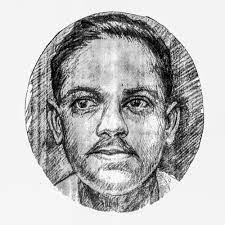
Born in united Bengal, long before the Partition, Kazi Nazrul Islam(1899-1976) was known as the Bidrohi Kobi, or “rebel poet”. Nazrul is now regarded as the national poet of Bangladesh though he continues a revered name in the Indian subcontinent. In addition to his prose and poetry, Nazrul wrote about 4000 songs.
In Which Shore
In which shore has my boat moored today?
What golden village lies ahead?
Why does my boat, on a downstream-drift,
Yearn to move upstream again?
Making Sorrow my helmsman
I had set adrift my broken boat.
Who are you, nymph of my dreams,
Beckoning me on with your eyes?
Snuffing out my room’s lamp
You called me out that stormy night.
Who could you be, my tune’s companion,
Waiting at the gateway of my song?
Oh golden girl of a golden land
Will you be my boat’s pilot?
Row my broken boat onwards
To the Promised Land!
(This poem was first published in Daily Star)
Nazrul’s songs are sung by artistes of renown across the subcontinent. Here we celebrate his lyrics, with a rendition by a well-known Indian singer, Manabendra Mukhopadhyay (1929-1992).
A Poem for the Ol-Chiki
The Bengali script in Bengal
The Odia script in Odisha
I do not know the Bengali script
You do not know the Odia script
Let us agree to one script for Santhali
The Ol-Chiki is our script.
They write in the Roman somewhere
They write in the Devanagari at some places
I do not know the Roman script
You do not know the Devanagari script
One script will unite us all
The Ol-Chiki is our script.
Dear writer, for how long will you
Write your language using
Someone else’s script?
You are dividing our readers
You are making our publishers lose money
Let us all understand this
The Ol-Chiki is our script.
One language, one Script.
This is what will strengthen us Santhals
The talents of so many of us
Scattered for the want of one script
All of us Santhals, let us solve this script issue.
(First published in 100 Poems are Not Enough, Walking Book Fairs)
Sokhen Tudu is a Mayurbhanj, Odisha-based Santhali poet, haiku writer and Santhali script activist. He was involved in spreading the Santhali script, the Ol chiki, among Santhals in Bangladesh.
Hansda Sowvendra Shekhar writes in English and occasionally translates from Santhali and Hindi to English.
Adivasi Poetry
When the sorrow of all the directions
gathers as a whirlwind
rising high as a pillar
scattering
as it reaches the roof of the earth
making the heart shiver,
there emerges Adivasi poetry.
When there is anguish
in jungle, mountain, grasslands
in the bowels of the earth, in the waters of the rivers,
when people leave their mud huts —
like mice escaping a flooded nest —
carrying their handlachaatva*
in the crooks of their waists
in search of land
what rises with the tears in their eyes
is Adivasi poetry.
After a few drops of rain
trucks from the sugar factory
arrive and stare at the empty huts.
We toil, naked, on the earth for months
in the burning sun
without davaduri*.
Do we crush the sugarcane
or does the sugarcane crush us?
It lies like animals
at the edge of the river
on the outskirts of the village.
Just like a dog,
Adivasi poetry.
As the day dawns, standing in queues,
noses lowered, at the crossroads in cities
like cattle in cattle markets
to sell our labour.
All day and night, lying curled up
invisible, with the hungry ones,
Adivasi poetry.
Like the one who carries the weight of the house
rising with the first cock crowing
going to the jungle with axe on her shoulder
walking to the city through five villages
with the wood on her head,
pregnant, but carrying back
one kilo of flour
rice
oil worth Rs 2
salt
chilli powder.
Just like she cooks rotlo for two meals
a day, her blood turning to sweat
Adivasi poetry
is made.
*handlachaatva: Earthen cooking pot and wooden spoon
*davaduri: Medicine
Jitendra Vasava was born in Mahupada on the banks of the river Tapi in the Narmada district of Gujarat. He writes in Dehwali Bhili, one of the few poets in Gujarat writing in a tribal language. Vasava established the Adivasi Sahitya Academy in 2014. As the president of the Academy, he has also edited Lakhara, a poetry magazine dedicated to tribal voices published by Bhasha, Vadodara. Vasava has been awarded a PhD for his research on the cultural and mythological aspects of oral folk tales of the Bhils from the Narmada district.
Gopika Jadeja is a bilingual poet and translator, writing in English and Gujarati. Gopika publishes and edits the print journal and a series of pamphlets for a performance-publishing project called Five Issues. Her work has been published in Asymptote, Modern Poetry in Translation, Wasafiri, The Four Quarters Magazine, The Wolf, Cordite Poetry Review, Cha: An Asian Literary Journal, Indian Literature, Vahi, Etad, etc. She is currently working on a project of English translations of poetry from Gujarat.