A discussion on writing to heal with Swati Pal, author of Forever Young and In Absentia, both brought out by Hawakal Publishers.
Swati Pal Swati Pal’s latest collection of poems
Strength is a badge
Worn by the bereaved.

(The badge of the bereaved)
Swati Pal is an accomplished academic, an able administrator, a much-loved teacher. But most of all she is a resilient mother. Her poetry glows with resilience. It’s honest and endearing… perhaps best described by these lines from John Keats’ ‘Ode to a Grecian Urn’: “Beauty is truth, truth beauty — that is all”. She writes poetry for her late son that makes one weep and feel with her.
If you hear a laugh
Wafting in the breeze
And floating around,
Know that it's me,
Your Diva, Mohan.

(Mohan whispered to me)
She finds him everywhere… he lives on for her.
I can still get
The scent
Of you,
Feel your tousled
Silky hair
And see it
Flying in the breeze.

(A Flower Called You)
What is amazing is that she responded to her loss with a sisterhood, creating a group of poets from grieving women. She brought out with her sisters an anthology on loss, Living On (2022).
Anthology edited by Swati Pal and brought out by Hawakal Publishers
Overriding grief with love and action is tough. But that is something that seems to be woven into her earlier poems in In Absentia (2021) and in her most recent collection, which seems more stark, Forever Yours and Other Poems. As Professor Malashri Lal points out, they “resonate beyond her individual story”. Her poems capture the vastness of the universe with their love and longing. One doesn’t know whether to weep or wonder at the beauty that seems to emerge out of the poems — like a flower that blooms unfolding petal by petal. In this conversation, Swati Pal dwells on her journey of resilience and strength through writing.
When did you start writing poetry? What got/gets your muse going?
I was an oversensitive, expressive kid and teenager and went through the classic angst about life that such humans are prone to, I guess! I was complicated and tended to brood about everything with bouts of melancholia, most really genuine, but some a bit because at that age, it appeared to be most ‘romantic’! So writing was something that I turned to almost naturally and then to poetry by instinct. I used to read a lot of poetry actually and somehow was always captivated by the craft– the rhyme or the rhythm, the play with ideas and images, the words few yet saying so much; it was as if an entire universe existed in the poetic world. And I found the form beautiful, exacting and creative.
It helped too when Jayanta Mahapatra would select poems to be published in the Sunday magazine edition of The Telegraph, and he selected one that I dared to send! My vanity/pride was certainly boosted by what I considered a singular honour and the cheque for a small sum of perhaps 150 rupees (I forget the exact amount) was exciting to say the least– my first earning!
It was then the ideal way to deal with my own inner mess. If my morale was low(‘I am not beautiful’; ‘I can’t do this/ that/ or the other’; ‘So and so is better than me, I can never match up; ‘ Why can’t I have this/that or the other?’) and I was plagued by misery, I would write poetry; sometimes scathing stuff about people and life in scurrilous verse; sometimes light and hopeful like the dappled sunlight playing on the window sill to take my mind away from the negativity and escape into mostly the world of nature.
So poetry, even if it didn’t ever heal me or resolve my doubts and inner conflicts, calmed me. It kept me sane. It kept me rooted. So really, what has always got my Muse going is anything that moves me to tears – not necessarily about myself at all times but even a limping bleeding dog on the road, or a woman in rags and mentally unsound tearing her hair and crying; a leper sitting on the pavement completed dejected with life; pain, grief, loss — whether my own or anyone else’s, keeps my muse going.
Losing loved ones is tough. You dealt with poetry about your losses. How did you channelise your grief into writing?
As I said, I have always done so. Anything I found a hurdle, anything that caused me to be moved, anything that hurt my emotions or disturbed my peace, made me seek a companion — one I could pour my heart to. And seek I did! But misery, as they say has no bedfellows. Those I would vent to would get exhausted if the frequency of my exhortations became excessive (which they might have been). I think my emotional outbursts were fairly overpowering and sometimes the best of my friends and family would evade my searching them out, justifiably! But poetry. She never failed me. She was someone I could turn to in the dead of the night or the wee hours of the morning. She would let me rave and rant hysterically or in a fit of rage and tears and then equally quietly, let me rewrite when I was calmer, without remonstrations.
I lost my father when I was eighteen and it was terribly unfair as I had bided my time (the youngest of four siblings) to finally find my exclusive space in his dominion when poof! he was gone. And I was left feeling unanchored as suddenly everything became topsy turvy. That was the time I took to playing the clown at home, my mask ever in place, speaking ridiculous stuff and acting hilariously hoping that my behaviour could dispel the clouds of gloom that hung low over my home for a good many years after he died. And the more I played the clown, the more I longed to break free and scream out my rage and regret, my hurt at the void left by my father’s passing. In despair I turned to poetry and realised that working on making something beautiful, creating a pattern and a tempo with words, would somehow soothe my raging breast. It would stop me from being unhinged.
Since 2019, I when I lost my son, I lost sleep. And when I lie quietly on one side of the bed so that I don’t disturb my husband with my restlessness, I find myself turning to write poetry (on my mobile phone!) to keep me from holding my breath forever.
How did you form a sisterhood of women while dealing with your losses?
The sisterhood found me! I wanted to run away from everyone! To begin with, my sisters especially the eldest and the third, would come home every single evening those first few excruciating months when the loss made my life seem surreal and my physical self something I wanted to cast off. They would just sit with me; have a cup of tea and a snack they would bring along and chatter gently about the day. If I wept or screamed, they let me, clutching my hand tightly and saying things I shunned but which they spoke anyway. And in this way, through sundry humdrum things, they made the pain, the monumental grief, part of my every day. It is my three elder sisters who first helped me cross the bridge from being a mother with a living son to a mother of an angel with wings. There were others too, some friends since school days, a young sister-in-law, a niece, a young woman who is all but a biological daughter – whose companionship, whose concern in those early days, which soon timed with the Covid isolation, kept me afloat and were a balm to my soul.
And then one day a determined petite young lady was at my doorstep with food and her husband. She had heard about me from a relative, talked to me over the phone and tried to get me to agree to meet her and the support group of grieving mothers which I completely rejected as who on living earth ever wants to join such a group? But she was Radha– and my son is called lovingly, Mohan — and it had to be a Radha who would make me a part of In our hearts forever — a community of sisters and soulmates that are now an integral part of my life.
How can I forget my college students? The young girls with their starry eyes, sometimes brimming with tears when I mention Mohan, hugging me and making me smile with their crazy ways, their unbridled energy, their spontaneous affection — they were step sisters according to Mohan (he always complained that I loved his ‘stepsisters’ more as I spent more time with them!). This was and is a precious sisterhood. A special one.
This is only part of the reality. Lest it not be understood that the world is full of kind people and it is easy to form sisterhoods, I must hasten to add that I actually found, that some of those communities which I thought would form a sisterhood and be my support, turned out to be vicious, toxic and utterly cruel to me — they struck their blows of hatred and malice at a time when I was at my most vulnerable. I now know that I was such a naïve idealistic fool in my expectations! And finally, there were some men too who enabled me, two in particular and it would be so wrong to leave them out of my circle of hand holders.
What led to your anthology, Living On? Tell us a bit about the anthology.
It was Covid time and all my soulmates in the support group as well as myself were feeling desperate trapped withing the confines of our houses with our grief as our only companion. I could feel us all struggling. I suggested we do something to beat the blues and we would meet online with one person taking the lead to share something and make us do something together in a novel way.
I saw the blues being banished, at least for that time when were online. That made me feel I need to do more. That all my sister grief travellers needed to express their grief and shared the same wish as me: to make our child remembered. We were living on without our children, but our heart was nothing save a bleeding wound.
My first collection of poems had been In Absentia and obviously as the name suggests, it was about absence. It was about my Mohan. I knew now that I had to write about how I was living with that absence. I invited the support group members and others outside it who were also suffering from the grief of other losses such as parent/s to write if they wished. I wrote too. And thus, was created Living on — a chance for us to immortalise our loved one, as best as we could. I can only invite all to read it. It has photographs too of the lost ones. It is a truly moving book of recollection, a book of love. Those who wrote said that when they got the books in their hands, they were initially almost unnerved to see the words and pictures jumping out of the page. That they felt a great sense of achievement but also emotionally drained. All this was only to be expected. But it made us stronger, I think.
Has poetry drawn you closer to your sisters in grief?
Yes. They feel I speak for all of us. I know that I do.
How does writing help you cope with your loss?
It stops me from crossing that thin line between sanity and insanity, it gives meaning, at least for a while to my life which seems mostly irrelevant to me now.
You use lot of imagery from nature. It almost feels that you live with the loss all the time. And yet there is a sense of solace in your poems. Would you like to comment on that?
I breathe the pain and loss. It is not forgotten for a single second. Everything in nature reminds me of my son as we spent so much time together, including outdoors. The scent of the flowers in the breeze when we walked at night, the grass on the hockey field where I would time him as he prepped for the 100 meters race which he specialised in, the sound of the birds who Mohan was a bit wary of having been pecked a few times by the eagles and crows.
At first, Nature in fact hurt me as I could not renew myself the way nature does. I would be anguished and did not want to see the flowers blossoming or the squirrels running off the trees for food. But then I learnt that butterflies flitting around the house were a symbol of loved ones who had gone too soon and I began to look out for them. I learnt that feathers, especially pure white ones, were also a sign that our loved ones were hovering around. And that the rain falling on our faces is our loved ones communicating with us, crying with us. Nature does not provide me solace; nothing can and nothing will. But yes, I seek Mohan in nature.
You are a well-known academic and a principal of a college in Delhi University. Does that help in your writerly journey and to build your resilience? Please elaborate.
Well, it certainly makes me more resilient! The experiences I go through even when I battle so many things, do enable resilience, I guess. Writerly journey? I can’t say, I think everything that touches our life shapes the way we think and respond. Including the profession we have. And it is bound to enter into all our communications, including writing.
Would you have turned to poetry if you did not face losses in your life?
Yes, I love it as a form. It stirs me.
Do you plan to experiment with other genres?
Yes, I have already started with short story writing. And within poetry too, I have experimented with modes– trying my hand at Haiku and the tanka.
Do you have any advice for people dealing with loss and looking for resilience?
Clean a cupboard. Seek out people– the more they run away, chase them harder and insist that they cannot leave you alone, that you need them. In other words, do things that bring beauty even through simple acts (writing poetry is just one of the many alternatives; you could equally, scrub the floors!)
People your life. Don’t wait for it to be peopled. Be noisy, without any shame in demanding attention– sometimes people assume you might want to be left alone — let them know that you don’t want the aloneness, that you don’t want to further lose your identity (loss does that you know. When I lost my son, I felt, and still do, that I no longer have any identity). And I have asked myself this question regularly– do I want my son to recognise me for the woman he left on earth? If so, I must keep that woman as alive as possible, even if it kills me. For what would we not do for a great love? I advise young people to tell themselves this when they deal with loss– it will build resilience if nothing else will.
.
(This online interview has been conducted by Mitali Chakravarty)
Title: Thorns in My Quilt: Letters from a Daughter to Her Father
Author: Mohua Chinappa
Publisher: Rupa Publications India
LOSS
4 August 2022
Living Room, Bengaluru
Dear Baba, Today is your shraddho, the puja for your departed soul. Referring to you as a soul seems so distant. Calling you anything but ‘Baba’ seems like two strangers speaking to one another. The purohit is here to do the rituals. The atmosphere is sedate. The room is lit and the flowers in the vases are in full bloom. I am glad we have cousins in the city; otherwise, it would be very lonely for Ma and me. We know very few people who would make the effort to attend a staid function like a shraddho. How does one end a tie so deep with a mere ritual? One can’t. It does feel surreal to watch your photograph with a jasmine garland around the lifeless frame. The sandalwood phonta or tika on your forehead makes you look different. The living room has been cleared. The large antique box has been covered with a white cloth, and your photograph is placed on it in such a way that you are facing the direction that will lead you to the other world. The shraddho among Bengali Hindus is a ceremony that is performed to ensure a passage for the recently deceased to the other world. The rite is both social and religious and is meant to be conducted by the son. But you have no male heir. So I defy tradition and lead the puja. I follow the rites dutifully and chant the mantras, which don’t mean much to me. You are gone. There is no mantra that can soothe my heart. On the floor is a bed, laid out with a pillow and an umbrella for your onward journey to God-knows-where. I follow the purohit. Neel joins me in the ceremony. I feel so anchored, having him next to me. What a loving child he is. He makes life so much simpler for me. After the puja, we put out a plate of your favourite food so that a crow can come and eat it. Leaving the food in the corner of a lane seems ridiculous, but I have decided not to question any of the rituals, for I don’t want Ma to feel that I didn’t do my best. I leave the plate on the ground. There are bottles strewn around, and the ground is not very clean. I don’t turn back for another look. Your photo has now been removed and stands on my marble corner table. I put out the burning incense sticks and remove the flower garlands. It is still sinking in that I won’t be able to hear your voice ever again, calling out to me, asking me for something or the other. As we sit down to eat, Neel reminds me how you discussed Left politics and he argued with you on capitalism, just to rile you up in jest. You had such a wonderful bond with my child. I smile as I hear Neel mimic you and your quintessential Bengali ways of reacting to situations. Those debates between you both. I loved the way you both called each other Dadu. Baba would say, ‘Dadu, you must read about the world and its magnificent history. The great idea of how civilizations emerged, and how revolutions took place in protest against tyranny and oppression. As you read, you will learn that the world is a beautiful study of humanity and historical events.’ And Neel would say, ‘Na, Dadu, I will only read books that emphasize the profit and loss of capitalist businesses. Whoever cares about art and philosophy?’ Neel knew how you would go red in the face. And you would say, ‘No businessman ever built a nation; it is the thinkers and the dreamers who created a world of equal opportunities.’ This camaraderie you both shared remains the most beautifully preserved and poignantly pure memory of you with your grandson. I remember those days when you constantly waited to hear from Neel, and how the Sundays were marked aside to have your long-awaited conversations with him. You truly were a wonderful grandfather to my son. I feel empty as the furniture in the living room is rearranged to how it was before. Like nothing has happened, and no one is now gone forever. It looks as if you will come back in a minute, ask for a cup of tea and brood with your arms crossed over your chest. I think just being there to watch me do everyday things made you feel calmer. I don’t know. But I hope someday, I will understand the silence between us. Comfortable spells of silence, and some very terrifying ones. Like your death.
Love
Manu
*
5 August 2022
Bengaluru
Dear Baba, The vermilion has been removed now. The parting is stark white the hair oiled tied into a braid of acceptance. The grey mixed with the leftover black strands falling carelessly on her shoulder. I had seen her one lonely noon take a pair of scissors cut off her locks Like Samson and Delilah. She was at war A war with her own existence Her identity has been shaken Her oar is cracking open along with her broken sail. She sets to the seas but the land is far away on the horizon shining like the crystals found on a crown lost in a war lying forlorn for the head of the right king but now Samson is dead the Philistines have left too the palace has been torn down but parts are intact. Her locks sheared from guilt for being alive. Will she find her shore with her broken boat and tattered sail hoping the seas take her in or the fire of her breath is gutted before it becomes wild like a forest fire burning the little birds coloured kites stuck between branches and her capsizing boat too lost in the new world!
Love,
Manu
About the book:
Thorns in My Quilt: Letters from a Daughter to Her Father is a series of letters written by a daughter to her father after he passed away. Unspoken thoughts, unshared memories and unsaid words combine in this searing and poignant account of a relationship filled with joy, but with equal moments of sorrow.
Mohua Chinappa (Manu) loved her Baba, who was as kind as he was cruel, as well-read as he was unworldly, as loved as he was unloved. His dearest Manu recollects her childhood in Shillong, infused with the aroma of vanilla essence that went into the butter cookies he baked. She reminisces about her father holding her little hand while helping her through the undulating, rain-drenched roads. Mohua returns to Delhi, where she spent a part of her growing-up years, and revels in the memory of a government house with a harsingar tree. She writes to him about her broken marriage, recalls how her parents left her side, and how she reinvented herself. The letters are often selfish yet strangely cathartic.
Her father’s kidney failure prompted a daughter to confront the demons within—the loss, the doubts, the emptiness, the guilt of saying things, and the angst of not saying things.
About the author:
Mohua Chinappa is an author, a columnist, a renowned podcaster in India, a TEDx speaker, a former journalist and a corporate communications specialist.
The Mohua Show, a podcast she started in 2020, has close to 2 million downloads. She contributes regularly to various national dailies and magazines, including The Telegraph, Deccan Herald and Outlook. She is regularly invited as a speaker on TEDx and Josh Talks.
Mohua’s other initiative—NARI: The Homemakers Community—provides a platform for homemakers to voice their everyday challenges.
Her book—Nautanki Saala and Other Stories—was awarded the PVLF Best Debut Non-Fiction (in English) Award 2023. She also has two poetry collections to her credit—If Only It Were Spring Every day and Dragonflies of My Dreams.
PLEASE NOTE: ARTICLES CAN ONLY BE REPRODUCED IN OTHER SITES WITH DUE ACKNOWLEDGEMENT TO BORDERLESS JOURNAL
Dhruba Hazarika is a novelist, short-story writer and columnist. The Shoot is his fourth published book, the previous three being two novels and another collection of stories. He has also been a columnist for 40 years, writing for The Telegraph, The Sentinel and The Assam Tribune. He divides his time between Guwahati and Shillong.
In The Shoot, Dhruba Hazarika offers a remarkable collection of seventeen stories set largely in the landscapes of Assam, where the lines between the human and the wild blur with lyrical precision. These are stories in which rivers, forests, and animals are not merely setting or backdrop, but players in a drama as emotional as it is elemental as we can see in the titular story. Through a careful balance of violence and tenderness, Hazarika conjures a world where the rawness of nature mirrors the inner lives of his characters, and where the most subtle gestures—a bird taking flight, a child stroking an injured animal—carry quiet revelations.
The collection is defined by this tension: the everyday friction between cruelty and compassion, solitude and connection. Hazarika’s Assam is not a romanticised escape into the natural world, but a lived-in, at times harsh territory where poachers and foresters share space with schoolchildren and aging widows. Yet amid the reality of rifles, hunting dogs, and worn-out boots, there is also grace—brief but luminous moments of understanding between humans and animals, or between people themselves.
The story, ‘The Hunt’, anchors the collection in this interplay of brutality and regret. A group of men set out into hills to hunt a deer. The thrill of the chase and the shared camaraderie are abruptly fractured when they confront the full weight of what they’ve killed—a doe carrying unborn fawns. It is a moment as visceral as it is symbolic, capturing how deeply the act of taking life reverberates, especially when one is already grieving. The story unfolds with a slow, almost meditative pace, allowing space for both awe and horror.
In ‘Elephant Country’, a herd of elephants blocks the only road to a village. As the local magistrate faces pressure to use force to reach the village because a woman is in labour, the narrative unfolds with quiet tension, exploring the fragile boundary between human authority and the natural world’s quiet resistance. While the elephants stand as a living barricade, guarding newborns in their midst, the magistrate’s ultimate decision—not to intervene—signals a moment of alignment of human instincts with nature. It is a moment when the animal and human worlds come into uneasy but essential dialogue—reminding us that the miracle of life demands not dominance, but deference.
Another story, ‘Ghostie’, revolves around a group of boys who mercilessly torment a stray dog. The tale, told with an unflinching gaze, does not moralise but instead allows the violence to unfold naturally, in all its thoughtless cruelty. What lingers is not just the fate of the dog, but the haunting change in the narrator—who comes to see, far too late, the cost of such disregard. Here again, Hazarika proves masterful in using small, personal episodes to hint at larger truths: the slow erosion of innocence, the gradual awakening of empathy.
One of Hazarika’s most distinctive strengths lies in his depiction of the natural world. Forests, rivers, birds, and animals are not incidental; they pulse with presence and meaning. A snow-white egret momentarily lifts the spirits of a tired clerk. A solitary crow returns night after night to the same veranda, evoking a sense of memory and mourning. These encounters are never mystical in a fantastical sense, but they carry the weight of the intangible—grief, love, regret, and occasionally, hope.
Woven through many of the stories is an awareness of the political and cultural fabric of Northeast India. Hazarika never foregrounds these themes, yet the region’s complex history—its insurgencies, its marginalisation, its uneasy relationship with mainstream Indian narratives—simmers beneath the surface. There is a sense of a land both remote and familiar, with its own rhythms, codes, and forms of resistance. The occasional reference to tribal customs, local deities, or community rituals further grounds the stories in their specific cultural soil.
Hazarika writes with a light, unobtrusive touch. His sentences are lean and quiet, yet they resonate. He gives space to silence, to gesture, to the unsaid. The characters, too, are often defined more by what they withhold than by what they reveal. A doctor mourning his wife, a boatman with a flute, a young boy who can’t understand his own cruelty—these are not heroic figures, but deeply human ones, faltering and flawed.
Amid the more solemn tales, there are a few that flirt with whimsy or absurdity. These diversions offer tonal contrast without ever straying too far from the book’s central themes. Even the lighter moments carry a trace of melancholy, as if joy in Hazarika’s world is always tinged with loss.
This is not just a collection about the Northeast or about the wilderness. It is about what it means to be tender in a world that wounds, and what it means to live ethically in the shadow of violence—whether that violence is inflicted on others, on animals, or on ourselves. In that sense, The Shoot is both rooted and universal, intimate and expansive.
Rakhi Dalal is an educator by profession. When not working, she can usually be found reading books or writing about reading them. She writes at https://rakhidalal.blogspot.com/ .
.
PLEASE NOTE: ARTICLES CAN ONLY BE REPRODUCED IN OTHER SITES WITH DUE ACKNOWLEDGEMENT TO BORDERLESS JOURNAL
Based on Paul Gauguin’s life is a book by Somerset Maugham[1] called Moon and the Sixpence[2], a novel about a stockbroker who abandons his profession to become an artist. Gauguin[3] was a stockbroker turned artist, and Maugham was trained a physician but opted to write books and became a famed novelist. While earning a living as solely a writer has become increasingly difficult through the world unless you make it very big like JK Rowling[4], and therefore, most writers opt for being part time writers while holding full time jobs, we do have a few strange aberrations. One of them is Dr Kiriti Sengupta, who turned to publishing and poetry abandoning his profession — that of a dentist.
Kiriti Sengupta: Photo Courtesy: Bitan Chakraborty
He ran away from his home and started writing in a small, rented accommodation in 2011-2012. And now he writes, works as a director in one of India’s top upcoming publishing concerns, Hawakal, and rolls out poetry. Sengupta describes his former profession with, an underlined sense of irony, and perhaps with tongue-in-cheek humour:
I prefer patients who are edentulous. I dread
a tooth will wrangle my expertise, and I’ll fail
to make an impression.
(Rituals, 2019)

Wisdom
the third molar adds
to the surgeon’s expertise
(Oneness, 2024)
He writes about water and the environment:
Water has many colors,
smudging pebbles
along its path

(‘Spectrum’, Water has Many Colours, 2022)


Feed the earth water
she flows in abundance.
Allow the planet to breathe:
the air is her consort.
(‘Hibiscus’, Water has Many Colours, 2022)
He writes for and about women:
How many mujras dwell in a kotha ?

How many neonates hew to a bordello?

Like her admirers
God is silent.
In her sinews
hides a hint of soil
from the yard of courtesans.

*Mujras are courtesan’s song and dance performances
*Kothas are brothels
(‘When God is a Woman’, Rituals, 2019)
And yet critiques stances with a twisted questions:
You define women as Durga
or Kali. Are you a believer? Are you
being kind? You could have convinced
them to fight the evil.
Instead, when you imply the goddess,
do you illustrate
sisterhood with many limbs? Would you
like men to act as Shiva—the destroyer?

(‘Primordial Learning’, Oneness, 2024)
Underlying all of Sengupta’s poetry, is a strong sense of irony which like a veil drapes words with double entendres. While the poems are layered, he dwells on human frailties too… like procrastination with a soupçon of sarcastic humour as in ‘From Being Late in Calcutta’ (Rituals):
As soon as you mark me
I’ll talk about events
that guide me to the records
you maintain.

I’d say crowded buses invite passengers
from unscheduled halts.
I’d emphasize the number of speed-breakers on road,
and their poor performance in preventing accidents.

I’d tell you trains run late.
Signals are laggy between stations.
I won’t forget to mention how
a sudden protest
makes the train stand still for hours.

I’d discuss about the day I reported late,
owing to instantaneous suspension
of underground train services
as a man killed himself on the railway lane.

I’d ask you to remember why I came late the other day.

If you can recall,
I had indigestion despite eating at home.
I blamed farmers for sprinkling pesticides on crops.
I pointed at my salary that failed to buy organic veggies.

And then,
I’d invariably argue about maintenance and population.

I’d appreciate China, one-child policy, and their claim on
how the government prevented four hundred million births.
And how India thrives on the revenues earned
from selling nicotine and condoms.

I’ll explore other issues
the next time I reach late.
He pours out lines on stars, film stars and politicians. Sengupta responds to life with poetry, often terse, brief… sometimes with a wry sense of humour. But in the brevity, lies a depth of mystery, which you can mull and cogitate over endlessly. A flickering of spiritual beliefs and a seriousness of intent despite the apparent lightness of words create a conversation within the poems. In this exclusive, an award-winning author of more than fourteen books, Kiriti Sengupta takes us on whirlwind tour of his life, his ideas and his work.
When and how did you start writing poetry? Why did you switch professions — from a dentist to a poet-publisher? What compulsion made you turn from a lucrative to an uncertain profession? Were you sure you’d succeed? Please share your story with us.
First of all, thank you for inviting me to Borderless for a heart-to-heart, Mitali. I greatly appreciate your dedication to literature, especially quality work. Coming to your first question (a bundle of questions, actually), I don’t remember when I first wrote a poem. Coming from a dentistry background, I never imagined that I would write poems. Until then, I was well acquainted with journalistic articles, critical responses, cultural essays, and, of course, scientific papers. Poetry was out of the question. I believe in karma. Maybe I was destined to write poetry. It wasn’t a deliberate choice. It wasn’t a spontaneous stance either.
I was passing through an obnoxious personal crisis that compelled me to reconsider my career in dentistry. I was comfortably placed in a government institution, enjoying a considerably thick monthly salary. In early 2012, I decided to leave my job and spend some time with myself. However, as you can understand, it was risky, as I was the only breadwinner in my family, which consisted of my wife and son. I had no career options to pursue.
I was new to social media back then. I had the opportunity to become involved with a virtual group, Indies In Action (IIA), run by Stephen L. Wilson. They were raising funds for the victims of the devastating earthquake in Oklahoma. I contributed a few poems to the literary anthology Twist of Fate(ToF), which Steve edited. It was hugely successful, and all proceeds went to the May Tornadoes Relief Fund, managed by United Way. For the promotion of the book, I interviewed a few eminent contributors, such as Bill Lantry, Terry Lucas, Colin Dardis, Marshall G Kent Sr., Allison Bruning, Maggie Rascal, Don Martin, Linda Bonney Olin, Maria Edwards (the then President of the American Authors’ Association), Ency Bearis, among others. Honestly, they all helped me become familiar with the world of poetry.
In 2013, my first book, The Unheard I, was published. It was released simultaneously in India by Dhansere Prakashan and in the United States by Inner Child Press Limited. It was non-fiction, although it contained two chapters dedicated to poetry. In his commentary, Stuart Aken remarked, “It is a scholarly [collection] that will appeal to those with an interest in poetry, particularly spiritual poetry expressed as literature, as well as [to] those who have a leaning toward or a significant interest in Indian myth and religion.”
Even then, I had no plans to pursue writing (or publishing, for that matter) as my career. Gradually, I evolved, and here I stand today. Do I call myself successful? I’m not sure whether I have turned into a consummate writer. Since I write poetry in a niche market worldwide, it is challenging to become a “successful” poet and earn enough royalties to sustain my family. As a publisher, oh yes, Hawakal has emerged as a leading traditional press that has published several writers and poets and enjoys its presence in New Delhi, Kolkata and Nokomis (Florida).
How long have you been in the literary framework? Was it a tough journey moving from dentistry to writing? How did your family respond?
My first essay was published in 1995 in the college magazine. I remember it was written for students suffering from anxiety and family expectations. While studying dentistry at North Bengal Dental College, I joined the All-India Freelance Journalists Association (AFJA, Chennai). My senior colleague, Dr. Falguni Maji and I were commissioned by Uttarbanga Sambad to write an article on the pottery art in Matigara (Siliguri). I was a regular contributor to “The Third Law” in The Telegraph (India). Later, I regularly wrote health-related articles for Ganashakti.
As I said before, I was initiated into poetry quite late. It was a challenging move as I had no formal training, but I was immensely blessed to have a few mentors who honed my skills and taught me the basics of writing poetry.
My family suffered badly from my career-shift. They had to compromise on their living standards. The initial years of becoming a full-time writer were dreadful, to say the least. From only one wholesome meal a day to just a pack of instant noodles for the day — I have personally experienced it all. I ensured that my family didn’t starve, nor did my son lose his schooling. However, their ceaseless support enabled me to survive as a writer and publisher.
How many books have you authored/translated and how many poetry collections, and within how many years? Do you see yourself more as a poet or as a publisher/editor?
I have written fourteen books of prose and poetry, and as a translator, I have two full-length collections of poems. I have also edited nine literary anthologies, including Shimmer Spring, an all-colour, hardback coffee-table book published during the pandemic, which addresses our perceptions of light.
Honestly, I see myself as a patron of Indian arts, literature and fine arts (painting, sculpture, etc.). I’m an admirer of Indian textiles, too! I love buying drapes, be it a saree, a shawl, or a dhoti, in rich fabrics. Bitan and I have plans to start a men’s brand of drapes. We are working on it.
You claim you are a slow writer, and you isolate yourself in a ‘studio’. Tell us about your poetic process. How do you write? What inspires you to write? Are you influenced by any writers/musicians, or artists?
You know, Mitali, we have two studios in India: one in Kolkata and the other in Delhi. These ateliers are essentially stations where we work on the submissions from authors — we read, select, edit, and design the books we publish. We invite authors and readers to have a one-on-one. Readers also drop by to buy a book or two they want. You see, these studios are not meant for our writing. I say “our” because Hawakal is the collective enterprise of Bitan Chakraborty (the founder director) and me. While Bitan oversees the Bengali department, I supervise the English-language division of Hawakal.
It’s difficult to describe how I write. Anything that stirs my imagination or fancy, whether a line from a song, an incident, or a tragedy, often inspires me to pen my thoughts. I am fond of ekphrastic poems and frequently visit art exhibitions to catch a thread or two. However, it takes days or weeks to write a poem, although most of my poems are short or very short. I believe in condensing my thoughts, which is a time-consuming affair.
Your first collection of poems, Healing Waters Floating Lamps (2015), was largely spiritual, while your latest, Oneness (2024), covers multiple aspects of life that may not be purely spiritual. Some of the poems in your later works are also ironic or verge on humour. A gap of nine years and multiple publications reside between the two books. Has there been a change or a progression in your poetry through your journey? Do you feel your poetry has changed?
Healing Waters marks my debut full-length collection of poems. Prior to this, I released 4 books, including My Glass of Wine (2013), which featured autobiographical poetry. My journey as a poet has led to a noticeable evolution. Scholars are more suited to examine these transformations. Some observe that my language and craft have become significantly more refined. They argue that my recent works display a level of sophistication. Conversely, others suggest that my earlier poems felt more spontaneous and grounded. Embracing evolution is crucial; without it, my growth as a writer would stagnate.
You translate from Bengali. Tell us who all you have translated. Have the translations impacted your own poetry. Do you feel translations should be literal or more focussed on capturing the essence of the language?
As I said before, I translated two volumes of Bengali poetry into English: Sumita Nandy’s Desirous Water and Bibhas Roy Chowdhury’s Poem Continuous—Reincarnated Expressions. I am delighted that these books have received rave reviews in India and overseas. Moreover, Hawakal recently released the 10th-anniversary edition of Poem Continuous, which has garnered critical appreciation.
Other than these books, I have translated a few contemporary Bengali poets as well: Ranadeb Dasgupta, Gourob Chakraborty, Rajeswari Sarangi, to name but a few. I can confidently tell you that translating Bengali poems has hardly influenced my work.
Whether translations of poems should be literal or more focussed on capturing the essence of the original is debatable. However, it is even more critical to ensure that the translated piece qualifies as poetry in the first place. If the piece does not read like a poem, regardless of the sincerity of the translator, the labour of translating the original work goes into vain. Every language comes with its own nuances. So, the translator should possess an excellent understanding of both the source and target languages.
Hawakal is regarded as one of the most important publishing houses for poetry in India. When and how did you join Hawakal as the director of the English section? How did you meet Bitan? Could you tell us about the journey?
Thank you for your kind comments on Hawakal, Mitali. Bitan Chakraborty established Hawakal in 2008 in Kolkata. He published numerous Bengali poets until I joined him in 2015. A common friend Kishore Ghosh introduced Bitan to me. Ghosh, a Bengali poet of some renown and a journalist, urged Bitan to publish a collection of literary criticism based on my work and that of Sharmila Ray. The book was titled Rhapsodies and Musings: poets in the mirrors of other eyes and authored by Ketaki Datta and Tania Chakravertty. So, we started our collaboration. Eventually, Bitan induced me to become one of the Directors of Hawakal.
Where do you see Hawakal travels as a publishing concern? What is the scenario like? Do you only bring out writers of Indian origin, or are you open to writers from other backgrounds? What does Hawakal look for in writers to publish with you?
For the past few years, Hawakal has been more focussed on fiction and non-fiction manuscripts. There is no dearth of poetry submissions, though. However, it’s challenging to find an authentic voice. We have published American poets like Dustin Pickering, t. kilgore splake, Marshall G. Kent Sr., Gary Manz, and others. Ethnicity isn’t a limiting factor for someone who wants to get published by Hawakal.
We really want to establish a steady foothold in the United States. Our tiny outlet in Nokomis is currently managed by Dr. Robertson James Short II. It has to grow big. Hawakal seeks original work, and we yearn for quality submissions.
Do you have any suggestions for young writers?
Aspiring writers or poets should read more and be well-versed with the works of contemporary authors. It is important to get published in journals, and accepting rejections from the editors is equally beneficial. Getting published should be a slow process. As the saying goes, there is no shortcut through the forest of life…
Translated by Shams Afif Siddiqi, edited by Shams Afif Siddiqi and Fuzail Asar Siddiqi
Publisher: Niyogi Books
The Stopped Clock
By Siddique Alam
The hands of the clock had stopped permanently at 13 past two and two seconds. Sitting on the bench under the shed, I am trying to understand the oval dial of the clock, the Roman letters of which had become dimmed and its edges covered with spider webs. I wonder when the clock might have stopped. I am 35 years old. Is there apparently any difference between us? Just like the clock, I have also stopped for a while because there was no announcement about the arrival of my train, its departure time being four hours ago.
I am trying to survey the place with wide open eyes. It is a usual day and an ordinary station that we are accustomed to see.
I have bid farewell to the city of my birth. I am leaving the city like a failure. But it seems after relinquishing me, the city, with a feeling of guilt, now wants to take me back. Its first step in this direction is to delay my train for an indefinite amount of time.
Despite being in the midst of a city, a station is free from its clutches. I am enjoying that freedom with a one-way ticket in my pocket. A bit of patience, I tell myself, and I would be far away. Nobody can stop me, neither by erecting obstacles in the way of the railway tracks nor by stopping the hands of the clock. Maybe I am a loser, but the journey of my life is yet to end. I am only 35 years old. I have to go far away from this place. The most important thing is that I am satisfied that the address I am carrying in my pocket is not my last destination.
It is a temporary waiting place that can help me make a new beginning. After all man is born free. The sun does not select a particular spot to shine, nor is every wave that dashes against the shore the last one, losing which the boatman would have to wait all his life for another wave.
An old coolie, wringing khaini[1] in the palms of his hands, passes by me. He is clad in a white banian and dhoti, his red flannel shirt thrown on his left shoulder.
‘Since when has the clock stopped?’ My question stops him in his stride. He turns around, his tired, thoughtful eyes staring at me. A sense of shame overpowers me. He may be an illiterate coolie, not a station employee who is answerable for such a question. ‘I am sorry,’ I quickly add, ‘I should not have put the question to you. I take back my words.’
‘Why sir?’ he stands by the side of the bench, and looks at me with a sense of intimacy. ‘People will be asking questions about a stopped clock, isn’t it? They cannot to be blamed. The story of the stopped clock is well known but only the signal man Gocharan Ray has the right to tell its tale. He had spent all his life showing green and red flags to trains and has retired today.’
‘Who has replaced him?’ my question betrays my foolishness. My imprudence had always entangled me in thoughtless acts.
‘Why don’t you ask the station master?’ The coolie moves away. ‘It’s a question that requires an answer; otherwise, you will regret it all your life.’
I was not ready for such an unexpected turn of events. I thought that my relationship with the city had been cut off forever. What do I make of a station that has ignored me, as if the ticket in my pocket is of no worth? Once again, I look at the dial of the clock hanging from the shed. It had stopped at 13 past two and two seconds. What might have happened when it stopped? Did an accident take place at the station? Had any incident of murder taken place? Was it at the time of the departure or arrival of an important leader? An attack by Naxalites? Or was the place the site of a communal incident?
The coolie returned again. This time he was wearing his shirt. ‘Unless you hear the story,’ he says, ‘your train will not arrive. This is the rule here. It may take weeks, months, or even years and you have to move from one platform to another with your suitcase. Once, a passenger alighted here to board another train. He faced a similar dilemma. He asked the same question about the clock but I do not know what happened and why he refused to listen to the story. Do you know what happened to him?’
‘How can I?’ I replied impatiently. ‘The city hardly gave me any time so that I could listen to stories.’
‘You are becoming irritated unnecessarily, Sir,’ he said. ‘I want to tell you about the man. The fact is nobody knows much about him. Some say he went to the city and did not return. Others say he took another train that never reached its destination. Some may even tell you that a prostitute took him to her house by the railway tracks where he developed leprosy and is slowly dying there. There is also no dearth of people who say he is still moving, suitcase in hand, amidst platforms, difficult to spot in the teeming crowd of passengers.’
‘You mean to say he can be anyone, even me?’
‘Did I say that, sir?’ He was on the verge of leaving. ‘It seems you have tasted bitter gourd.’
I was staring at the departing coolie’s back. The constant use of the flannel shirt had not only exposed its fibres, it had also thinned the material exposing the bones of the man’s neck. I have no hesitation in saying that I did not believe him. Since the time when suitcases developed wheels, the number of coolies has dwindled in stations. The last nail was the introduction of the backpack. Either passengers drag their suitcases on wheels, or carry luggage in their backpacks, leaving the coolies with little work. So, this may be their way of passing time.
About the Book
Dealing with love and loss, dreams and reality, as well as history and violence, this is a collection of best 19 short stories that encompasses the whole gamut of human experience, seen through the eyes of current Urdu writers from Kolkata.
Stories from Kolkata are often assumed to be about bhadralok culture and the Bengali way of life. But Kolkata is a city with amultiplicity of stories to share. Contemporary Urdu Short Stories from Kolkata highlights the diversity of recent Urdu short stories fromthe city. In one of these stories, a writer trying to escape the city wants to find the reason why the railway clock has stopped working, in another, a new friendship sours as soon as it blossoms, while some other stories show how the complexity of human relationships is explored. There is an experiment in abstraction, and legend and reality are brought together when three sleepers of an earlier civilization wake up in the modern world.
About the Editor and Translator
Shams Afif Siddiqi, former Associate Professor of English (WBES), author, short story writer, and literary critic, was born in 1955 in Kolkata. He taught in government colleges of West Bengal for 35 years and was a faculty member at MDI, Murshidabad. Khushwant Singh selected his short story for publication in The Telegraph in the 1980s. His publications include The Language of Love and other Stories (2001), a critical look at Graham Greene’s novels, Graham Greene: The Serious Entertainer (2008), and an annotated edition of G.B. Shaw’s Arms and the Man (2009).
Fuzail Asar Siddiqi is currently a PhD candidate at CES, JNU, New Delhi, researching on the modernist Urdu short story, in general, and short stories of Naiyer Masud in particular. The founder/editor-in-chief of an academic editorial services company, he has been an Assistant Professor of English at Gargi College, New Delhi.
Ratnottama Sengupta has known Ruchira Gupta for more than 40 years. But reading I Kick and I Fly has made her see in a new light the young journalist who has become a force of change in the global fight against human trafficking.
Ruchira Gupta
Kiddy. Ruchi. Journalist. Documentary filmmaker. Emmy Award winner. Founder President, Apne Aap[1]Women Worldwide. Social activist. Agent of changes to international laws. Sera Bangali[2]. Ekta[3]Award winner. Professor, NYU. Cancer survivor. Essayist. Exhibited artist. Published novelist…
“What next?” I could have asked Ruchira Gupta. And without waiting for her to reply I could add, “Member of Rajya Sabha? The first step to even higher offices on the world stage.” Because? This kid born to Rajni and Vidya Sagar Gupta has dedicated her life-breath to ensure that not a single child is either sold or bought for sexual gratification in exchange of a few rupees.
Hardly surprising that when she picked up her pen while recovering from Covid in her family home in Forbesganj, she penned a novel like I Kick and I Fly. “A book that is a MUST READ for one and all who are interested in fighting, tackling, and – not or – ending sex trafficking,” as Anjani Kumar Singh, Director, Bihar Museum said at the launch in Patna. Because? It is a story of optimism as Heera the protagonist, overcomes unimaginable obstacles to emerge a path breaker in the Nat community who believed it was the fate of its girls to sell their body at puberty, or even earlier, for the welfare of their family.
Inspirational. And in the most absorbing way. Read this excerpt from the novel to understand how a message becomes engrossing read.
"My name is Heera. I am from a town named Forbesganj, in a state called Bihar, in northern India, very close to Nepal,” I begin. My voice is shaking along with the rest of me. But I go on. “My brother and I are the first people in our family to ever go to school, and I have grown up believing that being sold for prostitution is my Destiny. That there are few doors open to me as a child of an oppressed-caste family. Our people used to be wrestlers and performers. But overnight we were told we could not do those things anymore, that our entire way of life was illegal.”

My voice is shaking less now and I manage to look at people in front of me. “How do people survive when they are not allowed to do the work they know and love? For my family of nomads, it meant asking people for a place to live, and then doing just about any job they told us we could do. One of these jobs was having sex with people for money.

“These children and women had no choice but to sell their bodies in exchange for a place to live. For food to eat. And for their husbands to be given work. And though people say that times have changed, they must not have changed everywhere, because I have been told since I was a little girl that selling my body was what I had to do to support myself and my family. And I believed it. Many in my family believed it too.

“Finally early this year it was my turn to be put up for sale. My family was in a tight spot, in debt to the wrong man. I grew up in a red-light area, so I knew what it involved. There are no secrets kept from kids where I come from. So, I said No, and we tried to get around it.

“My mother paid back our loan, but the traffickers came for me anyhow. The first time I got away. The second time they got me, but I was rescued by my brother and teacher.

“When I was stuck in a tiny room with my traffickers outside the door, I asked myself why had they kept coming for me even when they had no claim, no right? And that’s when I fully realized that they believed my body belonged to them, and I knew for certain it did not. It was kung fu that helped me understand this. Because it is through kung fu that I learnt, my body would do what I told it to. That my body listened to me – and only me.”

I take a breath. “There is power in my body. My body connects me to my cousin, my aunt, my grandmother who were all sold for prostitution. But kung fu also connects my body to my ancestors, who were champion wrestlers. If both these things lived within me, could I choose which course I wanted to take?”

I look up now, realizing that I have memorized the final words on the page. “For most of my life, the answer to that was NO. But suddenly I felt that maybe there was another possibility. I didn't do it on my own: I needed my family to stand with me, and most importantly, a cheerleader who made me believe that safety could be mine. Rini Di taught me kung fu and opened the doors of the world to me. And that is how I have come to stand before you now.”
Heera stands before her teachers and her friends, other survivors of trafficking as an example who not only fights, successfully, the might of traffickers but who actually saves another trafficked girl. Who, even more importantly, instils faith, and courage, and dream… In her brother, her mother, and her father. Her brother Salman who always stood by her even as he studied for a better future. Her Mai who broke stones for a livelihood and gathered enough courage to take a loan to put in place a roof over their head. Her Baba who stands as a loser but accepts change and even starts to nurse a dream — for his daughter as much as for his son.
And so, when the Martial Arts Foundation awards Heera and her co-fighter friend, Connie, a scholarship to train for one full year in New York, along with admission to a local school, Heera too starts dreaming. Of a future, perhaps only twelve months down, when her family would be dwelling in a pink-bricked three roomed house. When Salman would study in a residential school in Siliguri. When Mai would have a betel shop. When Baba would be a porter at the railway platform. When her cousin Mira Di would be a seamstress with a tailoring shop of her own in the very backroom where she was forced to service men. When the corrupt policeman, Suraj Sharma, and the trafficker, Ravi Lala, would be in jail, no longer on the prowl in Girls Bazaar.
“It’s not a dream,” says Ruchira , reiterating the clinching line of I Kick and I Fly. “I have seen this transformation actually take place in Forbesganj. “There were 72 home-based brothels in the lane when Apne Aap started. Today there are two. Girls no longer sit outside waiting for customers. The two sisters who were locked up in the hut have finished school. One is a chef, the other is a teacher. The girl who was kidnapped is a karate trainer. Someone like Mai really has a betel paan leaf shop and someone like Mira Di is a seamstress. The cattle fair is no longer allowed to bring dance or orchestra groups.”
This was the perfect time to strike a conversation with Ruchira Gupta, I reckoned. And so I decided to shoot…
Me:How – rather, why – did you start writing I Kick and I Fly?
Ruchi: I started writing this story when a fourteen-year-old girl just like Heera won a gold medal in a karate championship in Forbesganj. She was being groomed for prostitution with other girls in her lane. A lane just like Girls Bazaar.
Her journey was not easy, it was heroic. I saw how she and her friends overcame hunger, fought off their fear and stood up to traffickers with grace and gusto. An annual cattle fair used to claim girls from that lane every year. When my NGO, Apne Aap, opened a community centre and a hostel there, we were constantly attacked by men like Gainul and Ravi Lala. They would stalk the mothers, the daughters, and me. They hurled abuses, threw stones, stole from our office and even kidnapped girls. We built higher walls around the hostel to prevent traffickers from jumping over. I posted guards outside my home, hired lawyers, filed police complaints and cases in court. Just like Mai, some mothers in the lane disobeyed their husbands even though they were beaten up. Their daughters were the first batch of girls in our hostel.
Me:Are all the characters real? Is the hope real? Do people in real life change the way Baba does?
Ruchi: Most of the events in the book are inspired by real people, places, events. To give you one example: A trafficking survivor from Indonesia told me how she was locked up and how she escaped from a brothel in Queens, New York, by disguising herself in a burqa. She is now a global leader in the struggle against trafficking. In my novel, Heera uses the same device to rescue Rosy.
Baba, Heera’s father, is also based on real-life fathers in the Nat community of Forbesganj. They would actually auction off their daughters to the highest bidder when the mela came to town! But as I began working in the red-light area I saw that they were not black and white criminals but human beings desensitised through decades and generations of oppression. Of course, there was no excuse that they did not try to fight back. I did see some fathers change when they saw their daughters succeed. Until then the possibility of a different future had not even occurred to them.
When hope unfurls in a downtrodden human being, it is like a tendril. I saw it in the eyes and actions of some fathers in the red-light area of Forbesganj when their daughters won gold medals in karate.
Me:You have not learnt kung fu. Why did you project Rini Di – clearly your alter ego – as a kung fu teacher? It is a physical art of self-defence. How precisely does that connect with, or help, girls who are in the river of flesh?
Ruchi: I still remember, it was early morning when a boy came to my home with his mother to seek help. His sister and cousin were locked up by traffickers to stop them from coming to the hostel. We had to mobilise the police to get them out. I noticed then that the girls were badly bruised while the traffickers were unscathed. I wished that the girls were able to fight back.
Our Apne Aap women’s group met that afternoon at the centre. Everyone was afraid that we would be beaten in retaliation for the police raid. That’s when I suggested martial arts classes. The women loved the idea. I used to see a couple teach karate teacher near the rice fields to boys in a private school. We hired them and the classes began. Soon the bullying in schools stopped.
As the girls started to win competitions, something changed. The very townspeople who had agitated to urge the principal to expel our red light children began to respect them. And the fathers in the community began to see value in their daughters. The biggest change was in the girls themselves. They began to own their bodies and value themselves. As they gained self-esteem, they began to do better in class. Soon more mothers began to stand up to the traffickers and even to their husbands in the lane, saying they would send their daughters to school.
Me: How did Apne Aap help change the picture at the ground level?
Ruchi: Today Apne Aap has educated more than 3,000 girls from red-light areas through school and college and is still continuing to do so. They are in jobs as animation artists, teachers, doctors, lawyers, chefs, managers of pizza parlours and of gas stations too.
Our NGO’s community has become a safe space to hold meetings, share stories, get food, do homework, and plot against traffickers. Women, very much like Mai and Mira Di, meet regularly in the centre to solve their problems. They fill out forms with the help of Apne Aap workers to access government entitlements like low cost housing, ration and loans. They go collectively to talk to the authorities when there are delays.
The Apne Aap legal team helps victims to file police complaints, testify in court and get traffickers convicted. The real Gainul and the real Ravi Lala are in jail. In 2013, Apne Aap survivor leaders and I testified in Parliament for the passage of section 370 IPC, a law that punishes traffickers and allocates budgets for services to the prostituted and the vulnerable.
Before these could happen, I had shown my documentary and testified to the UN and to the US senate for laws that would decriminalise the victims; increase choices for vulnerable and trafficked girls and women; and punish the traffickers and sex buyers. I can proudly say that my testimony and inputs contributed in the passage of the UN Protocol to end Trafficking in Persons and the UN Trafficking Fund for survivors as well as the passage of US Trafficking Victim Protection Act.
Me: Ruchi you come from an established, politically aware, well connected and much respected family. You grew up in the metros and now live an international life, mostly abroad. You won a coveted award for The Selling of Innocents. You helped in the making of Love, Sonia. Why did you not continue to make films? In short, what compelled you to start Apne Aap Women Worldwide?
Ruchi: As you know, I started as a journalist right after graduation. I learnt to ask questions, and I listened. The question that changed my life was: Where are the girls?
I was researching a story in the hills of Nepal when I came across rows of villages with missing girls. I had asked this to the men playing cards in the villages in Nepal. I followed the trail and found that a smooth supply chain existed from these remote hamlets to the brothels of India. Little girls, perhaps only twelve, were locked up in cages in Kolkata, Delhi and Mumbai for years and sold for a few cents night after night.
All the girls were from poor farming families. Many, like Heera, were from nomadic indigenous communities or marginalised castes. Like her, they were either not sent to school, or bullied until they dropped out, or pulled out by their fathers and sold into prostitution.
I was sad, then angry, and finally determined to do something about it. That’s how I ended up exposing the horror in my documentary. When I was on the stage in Broadway receiving the Emmy in 2013, all I could see beyond the glittering lights were the eyes of the mothers who had broken their silence to save their daughters. I decided in that instant to use my Emmy not to build a career in journalism but to make a difference.
I did two things. I dubbed it in six languages and I travelled across the world with it. I screened it in villages to show parents what the brothels were like. I showed it to the UN and the US Senate when I testified against the crime that is human trafficking. It contributed to a global push by activists that led to a new UN protocol to end trafficking and the first US anti-trafficking law, the Trafficking Victims Protection Act (TVPA).
Me: What was your magic wand?
Ruchi: I had no magic wand. I didn’t even have experience to stop the kidnapping of girls, or knowledge about how to put traffickers in jail. I was an English literature student from Kolkata’s Loreto College who joined The Telegraph while pursuing my honours degree graduation. But as a journalist, I saw the reality and invented ways to move forward.
Something had happened while I was filming the documentary. A pimp had stuck a knife to my throat. I was in a small room. There was nowhere to run. Suddenly, I was encircled by the 22 women I was interviewing. They told the pimp that he would have to kill them first. He knew it would be too much trouble to kill so many women, so he slunk away. I was saved. That moment changed my life.
The Emmy award money helped me start Apne Aap Women Worldwide with the women who had bravely spoken up in my film. I listened to the women who said they had four dreams: Education for their children; a room of their own; an office job; and punishment for those who bought and sold them. That became my NGO’s business plan.
I learnt that the best solutions came from those who experience the problem. The idea of the hostel, the idea of food in the community centre, and even the idea of karate came when we sat in a circle in the mud hut that is our community centre. It evolved into a grassroots approach which we call asset-based community development – ABCD or the 10 Asset model. Every woman or girl who becomes an Apne Aap member gains ten assets – both tangible and intangible. These are: a safe space, education, self-confidence, the ability to speak to authorities, government IDs and documents, low-cost food and housing, savings and loans, livelihood linkages, legal knowledge and support, and a circle of at least nine friends.
Each of these assets is a building block in an unfolding story of personal and community change. I wrote this novel to share with you that change is possible.
Me:Ruchi you had come up with the art-documentation, The Place Where I Live is Called Red Light Area. You got the girls to make a series of videos about different aspects of their life. You supported a documentary on the scheduled tribes. What inspired you to shun Art For Art’s Sake and pursue Art as Activism?
Ruchi: I learned in a very practical way the power of women’s collective action and the importance of sticking by one another. I promised myself I would never give up on those women’s dream. As a result, today thousands of girls have exited the prostitution systems from brothels across the country. There is more awareness about sex trafficking globally. And there are better laws and services for victims like Mira Di in over 160 countries.
Me:But we still have miles to go before we sleep…?
Ruchi: Yes, because the truth is that there isn’t one but many, many more Heeras. Girls Bazaar still exists in many parts of the world, including the USA. The brothel in Queens is real. The International Labour Organisation estimates there are more than 40 million victims of human trafficking globally with hundreds of thousands of victims in the US alone. Human trafficking is the second largest organised crime in the world, involving billions of dollars, according to the United Nations Office for Drugs and Crime (UNODC).
Me:So, what more actions would you suggest to tackle the issue? Through IKAIF, an upbeat tale of an underdog’s rise to victory, you have shown that ‘lost girls’ earmarked for ‘the oldest profession’ can erase their ‘destiny’ through education, and reliance on their own inner strength. What other positive actions would you suggest?
Ruchi: Heera’s is a story of hope in spite of great odds. It’s about our bodies — who they belong to, the command they can give us. It is about friends who make changes you want in your life. It is about a community that resolves to make change contagious, and succeeds.
You too can ‘Join The Movement’ to create a world in which no child is bought or sold. You can do that in so many ways. You can 1) Sign the freedom pledge on my website Ruchiragupta.com.
2) Learn more about the issue by reading I Kick and I Fly, and by watching The Selling of Innocents on my website.
3) Create further awareness by sharing the book, the movie and the pledge on your social media handles.
4) Volunteer and intern with Apne Aap or a local NGO in your town.
And you can Sponsor a girl like Heera on apneaap.org!
[2] The Best Bengali – An award given by the Ananda Bazaar Patrika group
[3] Unity: The Ekta Award is a National Award from India
Ratnottama Sengupta, formerly Arts Editor of The Times of India, teaches mass communication and film appreciation, curates film festivals and art exhibitions, and translates and write books. She has been a member of CBFC, served on the National Film Awards jury and has herself won a National Award.
.
PLEASE NOTE: ARTICLES CAN ONLY BE REPRODUCED IN OTHER SITES WITH DUE ACKNOWLEDGEMENT TO BORDERLESS JOURNAL
A writer, a painter, an actor too? Which of these have I known in my friend, Bulbul Sharma? Ratnottama Sengupta ponders as she reverses the gear in the time machine
Bulbul Sharma
I have never formally ‘interviewed’ Bulbul Sharma. That’s because I was editing her writings even before I met her, became friends with her, with her brother Dr Ashok Mukherjee, her sister-in-law, Mandira, whose brother-in-law, Amulya Ganguli, was a much-respected political commentator including with The Statesman and The Times of India which I joined after I shifted to Delhi.
There were many journalists in her family. Bulbul herself was a columnist with The Telegraph when I joined the ‘handsome’ newspaper. Her columns on ‘Indian Birds’ would always come with her own illustrations. These later combined to become The Book of Indian Birds for Children – and now she’s penning stories for neo-literates. So I have never been able to separate the two souls of Bulbul – a writer whose books have been translated into French, German, Italian, Finnish, and an artist in the collection of National Gallery of Modern Art, Lalit Kala Akademi, UNICEF, Chandigarh Museum, Nehru Centre, London, National Institute of Health, Washington.
Bulbul, born in Delhi and raised in Bhilai, studied Russian and literature at Jawaharlal Nehru University before going to Moscow for further studies, in 1972. When she returned a year later, she decided to pursue her other love and made a career in art. So, in mid 1980s, once I shifted to Delhi, I got to know the artist Bulbul at close quarters. By then she was an active graphic artist who worked in the Garhi Artists’ Studio.
She would do papier mache items – sculptures, or of day-to-day usage. Then, she was teaching art to children of construction site workers left in the care of the Mobile Creche. Soon she was handholding me in creating monoprints in printmaking workshops, while my son started taking serious interest in art even as he keenly participated in her storytelling sessions.
Paper mache sculpture: BowlAubergines & Onions: Etching from Ratnottama Sengupta’s collectionArtwork by Bulbul Sharma: Photos provided by Ratnottama Sengupta
And then one day Bulbul invited me to join her and Dolly Narang of The Village Gallery in Hauz Khas, to do a workshop with the inmates of Tihar Central Jail, one of the toughest in Asia, which had started off on its reformation trail under the no-nonsense IPS officer, Kiran Bedi, who dreamt of giving convicts “the hope for a better future once they stepped out as free people.”
The other avtar of Bulbul is the one you are most likely to encounter online. A gifted narrator who depicts people and places she has known and seen in person, styled with little complication, to bring out the beauty in everyday life. Her first collection of short stories, My Sainted Aunts (1992) had bewitched me as much as my son, then in his pre-teen years. For, it etched with endearing affection the reality in a Bengali household that abounded — especially in my childhood — with pishimas[1]and mashimas[2] who were eccentric yet lovable. These aunts are easily identifiable and not easily forgettable though few aunts today are widows in white, eating out of stoneware, shunning onions, or an ‘outsider’: caste, creed, chicken and dog — all were barred.
A few years down, Bulbul, a naturalist who grows herbs in her orchard in the folds of Himalaya and often etches carrots and onions, came out with The Anger of Aubergines (1997) which had cuisine and recipes layering the text. It is a collection of stories about women for whom food is passion, or obsession. “For some it is a gift, for some a means of revenge, and for some it is a source of power,” as Bulbul herself might summarise. Once again, my gourmet family loved it.
Food is the most elementary aspect of human society and culture. And Bulbul has repeatedly capitalized on this multi-contextual significance of food. Not surprising, when I was editing an Encyclopedia of Culture, for the publishing house Ratna Sagar, I directly went to Bulbul for the chapter on ‘Cuisine’. In quite the same way, when a literature festival in Amritsar’s Majha House got Bulbul and me together on a panel, it was to talk about food as an expression of culture. “Learn everything you can, anytime you can, from anyone you can. There will always come a time when you will be grateful you did…” Bulbul once told a classful of students what she herself has practiced through life.
But with all this, I had virtually forgotten that Bulbul had acted in a film by Mrinal Sen[3]. Bulbul herself reminded me of this after reading my interview with Suhasini Mulay[4] occasioned by the ongoing birth centenary of the director of watersheds in Indian cinema like Bhuvan Shome[5]. I promptly wrote to her asking her to remember the salient ‘truths’ she had learnt by acting in the first of Sen’s Calcutta Trilogy[6].
Interview (1971) was a slim tale – a uni-linear storyline that unfolds on screen as a non-linear narrative. Stylistically it was the opposite of Calcutta 71 (1972), the second of Sen’s Calcutta trilogy, which built on stories by eminent authors like Manik Bandopadhyay, Prabodh Sanyal, and Samaresh Bose. Interview was about Ranjit, whose love interest Bulbul, was enacted by Bulbul Sharma.
The story went thus: A personable, smart but unemployed Ranjit is assured, in Calcutta of the post-Naxal years, of a lucrative job in a foreign firm by a family friend – if he shows up in a suit. It can’t be such a big ‘IF’, right? Wrong. He can’t get his suit back from the laundry because of a strike by the labour union. His father’s hand-me-down doesn’t fit him. He borrows from a friend but, on his way home, a fracas ensues in the bus and the net result is Ranjit is without a suit to appear in for the critical Interview. Will he, must he, go dressed in the hardcore Bengali attire of dhuti-panjabi?
Just the year before, Pratidwandi (1970) had been released, and it too had an interview at the core of the script. The first of Satyajit Ray’sCalcutta trilogy[7], it had cast newcomer Dhritiman Chatterjee, who would play the pivotal role in Padatik (1973), the clinching film in Sen’s trilogy. But Interview had cast another newcomer who was crowned the Best Actor at Karlovy Vary for playing Ranjit. In subsequent years, he became a megastar of the Bengali screen whom Ray too cast in his penultimate film, Shakha Prosakha (1990). And even as he was scoring a century in films, Ranjit Mallick’s daughter, Koel, was scaling heights as a lead actress.
Bulbul Sharma and Ranjit Mallick in Interview: Photo provided by Ratnottama Sengupta
Contrast this with Bulbul: She did not pursue a career in acting. So how had she come to play the Bulbul of Interview? Let’s hear the story in her own voice.
Bulbul Sharma: I was visiting my cousin sister Sunanda Devi — Banerjee who was a very renowned Bengali actress in the 1950s. She had featured in New Theatre’s Drishtidan[8] (1948), directed by Nitin Bose; Anjangarh[9](1948), directed by Bimal Roy; opposite Uttam Kumar in Ajay Kar’s Shuno Baranari[10](1960) and Chitta Basu’s Maya Mriga[11](1960).
Sunanda Didi and her husband[12], who was a film distributor, had produced Mrinal Sen’s first film, Raat Bhore[13](1957). Mrinalda had come to her house to discuss something with her husband and he saw me. He asked my cousin if I would like to act in a Bengali film. I was 18 years old and a student at JNU then. I was thrilled but my parents were not keen at all. However, though reluctantly, they agreed since it was Mrinal Sen. By this time he had won national and international awards with Bhuvan Shome.
Me:How did you prepare for the character? Did Mrinalda brief you? I don’t think he had a script in hand…
Bulbul: I did not do anything to prepare. My name in Interview is ‘Bulbul’, and Ranjit Mallick is ‘Ranjit’. Mrinalda said, “Be your natural self. Don’t try to act.” In fact I am an art student in the film. The only problem was that since I had lived all my life in Delhi, my Bengali accent was not very good. He often teased me about it. “Keep that smile for my camera,” he would say to me.
Me:Tell me about your co-actors Bulbul. Do you recall any incident that stays on in memory?
Bulbul: I remember my co-actor, Ranjit Mallick, was a serious, very quiet person. I think he got fed up of my constant chatter. He asked me once if everyone in Delhi talked so much. I was not surprised that he became one of the biggest stars in Bengali cinema but we did not keep in touch, alas.
Me:Why did you not think of pursuing acting as a career?
Bulbul: Acting was not something I had ever thought of doing. This film just happened by chance. Painting and creative writing was my passion and still is. But don’t lose hope! Recently I was offered a role of a grandmother. I might just do it!
Me:How did you respond to Interview when it released more than 50 years ago? And how do you respond to it now?
Bulbul: When I saw the film almost fifty years ago I don’t think I really understood what a brilliant film it was. I was 18 and just happy to see myself on the big screen.
Now when I saw Interview again, I really admired the way the everyday situations in a middle class Bengali home are played out. The scene when Ranjit’s mother, the great actress Karuna Banerjee – who had played Apu’s mother in Pather Panchali – searches for the dry cleaner’s receipt is just heart breaking.
The interview scene itself is so sensitively done. You want Ranjit to get the job but you know it will not happen. There is such understated humour, anger and sadness in that scene. I wish I could tell Mrinalda all that today!
Me:Interview, the first of Mrinalda’s Calcutta Trilogy, is considered a milestone in his oeuvre because of its socio-political content as well as its naturalistic form. How does it compare with the other two films of the Trilogy – Calcutta 71 and Padatik?
Bulbul: Unfortunately I have not seen these two films.
Me:Would you compare it with Ray’s Pratidwandi which also centred on a job interview?
Bulbul: Yes, Ray’s Pratidwandi also deals with the theme of unemployment during that turbulent period – 1969 to 1971 – in Kolkata. Yet they are not at all similar.
I think Mrinalda’s slightly impish, dark humour is lacking in the other film. Both are amazing films by our most brilliant directors. Films you very rarely get to see now.
Silk Painting with Kantha stitch by Bulbul Sharma Photos provided by Ratnottama Sengupta
Okay Bulbul, now my son and I will both wait to meet your onscreen Grandma avtar!
[6] Three films by Mrinal Sen: Interview (1971), Calcutta 71 (1972), Padatik (The Guerilla Fighter, 1973)
[7] Known collectively as the Calcutta trilogy, The Adversary (1970), Company Limited (1971) and The Middleman (1975) documented the radical changes Calcutta.
Ratnottama Sengupta, formerly Arts Editor of The Times of India, teaches mass communication and film appreciation, curates film festivals and art exhibitions, and translates and write books. She has been a member of CBFC, served on the National Film Awards jury and has herself won a National Award.
.
PLEASE NOTE: ARTICLES CAN ONLY BE REPRODUCED IN OTHER SITES WITH DUE ACKNOWLEDGEMENT TO BORDERLESS JOURNAL
An innovative rap contest between Gandhi and Martin Luther King, Gandhi as a stand-up comedian, his life as a musical, and at least seventeen actors portraying him across numerous films. No other political and spiritual leader has influenced our cultural discourse as much as M.K. Gandhi. This despite Gandhi’s deep-rooted aversion to cinema and theatre. Shantanu Ray Chaudhuri looks at the legacy of Gandhi in films, plays, songs and TV shows.
“Slim be a combination of an actual kamikaze and Gandhi.” This is Eminem, seventy years after the Mahatma was assassinated, in a song from his 2018 album Kamikaze, that also became the theme song of the Marvel film Venom. It is interesting to conjecture what the bhajan-loving apostle of peace and non-violence would have to say about being referenced by the hip-hop rapper in a song whose very next lines talk of killing and use the F-word.
Probably no other political leader anywhere in the world has been part of popular culture – films, songs, music videos, animation shows, graphic novels – as much as Mohandas Karamchand Gandhi. Newsreels on him run into hundreds of hours. A China-based journalist, A.K. Chattier, put together one of the first celluloid versions of the Mahatma’s life and times from archival material available, sourcing rare footage. Unfortunately, both the print and the negative have been lost.
Beginning with the American feature documentary Mahatma Gandhi: Twentieth-century Prophet in 1953, to The Gandhi Murder, a conspiracy theory film on the assassination, in 2019, he has been part of at least thirty films. Even the Marvel film Age of Ultron has his footage. As many as seventeen actors have played him onscreen: J.S. Casshyap, Ben Kingsley, Sam Dastor, Jay Levey, Yashwant Satvik, Annu Kapur, Rajit Kapur, Mohan Gokhale, Naseeruddin Shah, Surendra Rajan, Mohan Jhangiani (voiced by Zul Vilani), Dilip Prabhavalkar, Dr Shikaripura Krishnamurthy, Avijit Datta, S. Kanagaraj, Neeraj Kabi and Jesus Sans.
Of these, Sam Dastor featured as the Mahatma in Lord Mountbatten: The Last Viceroy (1986) and Jinnah (1998), while Surendra Rajan has donned Gandhi’s garb as many as six times, in Veer Savarkar (2001), The Legend of Bhagat Singh (2002), Netaji Subhash Chandra Bose: The Forgotten Hero (2005), the TV movie The Last Days of the Raj (2007), the short film Gandhi: The Silent Gun (2012) and Srijit Mukherji’s Gumnaami (2019).
Gandhi and Early Indian Cinema
It was common in the 1930s and 1940s for film hoardings to have life-size pictures of Gandhi over the photographs of the stars. The protagonist of Kanjibhai Rathod’s mythological Bhakta Vidura (1921), the first film to be banned in India, resembled Gandhi, cap and all. Ajanta Cinetone’s Mazdoor (1934), written by Munshi Premchand, too was banned, and promoted as ‘the banned film’, as it dealt with Gandhian principles. Produced by Imperial Film Company and directed by R.S. Chaudhary, Wrath (1931) had a character called Garibdas who fights untouchability. The censors cut out many of its scenes and renamed it Khuda Ki Shaan. Vinayak Damodar Karnataki’s Brandy Ki Botal (1939) took up Bapu’s campaign against liquor and referred to Gandhi as ‘azadi ka devta’.
The Feature Biopics
The most well-known of these is Richard Attenborough’s 1982 film. In the making for over twenty years, it remains, warts and all, the definitive film on Gandhi. And though Attenborough made the cardinal error of falling prey to what Nehru had warned him against at the outset when the director had met him with the proposal in 1963 – “Whatever you do, do not deify him … that is what we have done in India … and he was too great a man to be deified” – there is no doubt that this is an epic labour of love that delivers a series of spectacular set-pieces of great emotional heft.
As the filmmaker himself observed, “It took me 20 years to get the money to get that movie made. I remember my pitch to 20th Century Fox. The guy said: ‘Dickie, it’s sweet of you to come here. You’re obviously obsessed. But who the f***ing hell will be interested in a little brown man wrapped in a sheet carrying a beanpole?’” As it turned out, the whole world was, as was the Oscar committee. And Ben Kingsley set a benchmark for the onscreen Gandhi that has been impossible to top over forty years later. So complete was the identification that a few years later a popular Hindi film, Peechha Karro (d: Pankaj Parashar, 1986), had a character swear by Ben Kingsley instead of Gandhi.
Ben Kingsley
Surprisingly, despite the many incarnations of the Mahatma on cinema, Gandhi is only one of two full-length feature films to deal with his life. The other one being Shyam Benegal’s The Making of the Mahatma (with Rajit Kapoor essaying the role), which as its Hindi title, Gandhi Se Mahatma Tak, suggests, deals primarily with his experiences as a barrister and in South Africa. Several biopics on national leaders of the freedom movement feature Gandhi in important cameos. These include Sardar (d: Ketan Mehta, 1993, Annu Kapoor as Gandhi) and Jabbar Patel’s Dr B.R. Ambedkar (2000, with Mohan Gokhale as Gandhi), probably the first time the Mahatma was shown in a negative light. There was also the 2011 film Dear Friend Hitler, based on his correspondences with Adolf Hitler (played by Raghubir Yadav).
These biographical films include Gandhi, My Father, which deals with his tortured and tumultuous relationship with his son, Harilal Gandhi. Based on the latter’s biography Harilal Gandhi: A Life by Chandulal Bhagubhai Dalal, the film was directed by Feroz Abbas Khan, who had earlier helmed a stage version, Mahatma Vs Gandhi (based on Dinkar Joshi’s Gujarati novel Prakashno Padchhayo), starring Naseeruddin Shah and Kay Kay Menon as Gandhi and Hiralal respectively. The film version starred Darshan Jariwala and Akshaye Khanna as father and son respectively.
The Adversarial Gaze
Existing with the eulogies are a handful of films that portray the world of his adversaries – people like Nathuram Godse and Veer Savarkar, in particular. Unfortunately, none of these have the rigour of the works of Richard Attenborough and Shyam Benegal and have been rightly dismissed as sensationalist. Ashok Tyagi’s 2017 short film Why I Killed Gandhi, which released in early 2022, became controversial for allegedly showing Godse as a hero, forcing its lead actor to apologise for playing the role of Godse. In the same vein is Ved Rahi’s Veer Savarkar (2001). Kamal Haasan’s Hey Ram (2000), a fictional tale of the moral dilemmas facing a would-be assassin of Gandhi, is in comparison a more nuanced take, though Naseeruddin Shah is probably the healthiest Gandhi onscreen ever.
Naseeruddin Shah as Gandhi
But by far the more interesting fiction came close to sixty years ago. In 1963, around the time that Attenborough was talking to Pandit Nehru about his film on Gandhi, Nine Hours to Rama created quite a flutter for its purportedly ‘sympathetic’ take on Nathuram Godse. Narrating the last nine hours of the life of Gandhi’s assassin, this one is a strange beast. Dismissed by academic Ravinder Singh as “a heady concoction of a little history and too much fiction”, the film shows Godse involved in an affair with a married woman and even an encounter with a prostitute. Godse tries to lure the former into sharing a room with him, describing the sexual encounter likely to follow as ‘dessert’ after a meal. No wonder, the film, as well as the novel of the same name by Stanley Wolpert on which it was based, faced protests from both Congress and Godse’s supporters, and an eventual ban.
A laughable enterprise in all respects – the only thing it probably gets right are the three bullets, and even that scene is followed by a ridiculous one where Gandhi forgives Godse who is shown as repenting his act immediately afterwards – what is surprising about it are the credentials of the people involved with the project. The director Mark Robson is well known for Hollywood blockbusters like The Bridges of Toko Ri, The Harder They Hall, Peyton Place and Von Ryan’s Express. The screenwriter Nelson Gidding scripted critically acclaimed ones like The Haunting and Andromeda Strain. And among the cast, we have respected actors such as Jose Ferrer (who essayed the definitive Cyrano de Bergerac on stage and screen) and Robert Morley.
What makes this somewhat of a curio are the smattering of Indian actors in cameos, including David as a policeman, Achala Sachdeva (as Godse’s mother) and P. Jairaj as G.D. Birla. By far the most interesting and innovative aspect of the film is its credit titles – comprising the ticking of an old-fashioned pocket watch – designed by Saul Bass, which is deserving of a full-length article.
The Shadow of Gandhi: Gandhigiri
Gandhi’s life and philosophy have cast long shadows, particularly in Hindi cinema. Almost all films that show a police station invariably have his photograph up there on the wall as part of the background décor. However, it is in the subtle messaging of Hindi cinema that his influence is most strongly felt, particularly the way our films have for the longest time made a virtue of being poor, equating money with all evil.
Possibly the one film that epitomises the enduring legacy of the Mahatma and was instrumental in reintroducing him in popular discourse is Raju Hirani’s Lage RahoMunna Bhai (2006). In a stroke of genius, the filmmakers have a goonda hallucinating about the Mahatma, who inspires him to ‘Gandhigiri’ (the term caught on in a big way, leading to a 2016 film starring Om Puri titled Gandhigiri) instead of gundagiri as a tool to get your way
Munnabhai and Gandhi
Though not as influential as the Munna Bhai film, Jahnu Barua’s Maine Gandhi Ko Nahin Mara (2005) is as important. The film, about a retired professor whose dementia-wasted mind begins to believe that he was accused of killing Gandhi, is a metaphoric exposition of what Gandhi and the values he espoused mean today, how he has been reduced to a statute, a road and a stamp. If Munna Bhai has the two goondas recalling Gandhi only from his photo on currency notes and on account of 2 October being a dry day, Barua’s film highlights how we remember the man only on two days – 2 October and 30 January
Gandhi’s influence on the national psyche has been part of many other films tangentially. The 2009 film Road to Sangam is the story of a Muslim mechanic entrusted the job of repairing an old V8 ford engine, little knowing that the car had once carried Gandhi’s ashes to the sangam for immersion. While Shah Rukh Khan’s character in Swades is named Mohan, and the film, according to Mahatma Gandhi’s grandson Tushar Gandhi, “epitomises Gandhi’s values”, A. Balakrishnan’s Welcome Back Gandhi (2012) imagines the leader returning to contemporary India and dealing with a country he barely recognises.
Girish Kasaravalli’s Koormavatara (2011) tells the story of a government employee who is selected to portray Gandhi in a TV series, owing to his strong resemblance to the leader. Having never acted before and not a believer in Gandhian principles, he resists before reluctantly taking up the assignment. Reading on Gandhi and his philosophies transforms his life as people start flocking to him and he must negotiate the tricky terrain of being regarded as a modern-day Gandhi.
Different Strokes
Imagine Gandhi and and civil rights champion Martin Luther King Jr engaged in a battle of rap! That is exactly what Keegan Michael Key and Jordan Peele did in the popular web series Key and Peele, which has Gandhi and King going the hip-hop way to decide who is the better pacifist.
While the inspiration behind the name of the Canadian punk rock band, Propagandhi, is not hard to ascertain, the animated TV series Clone High, made by Phil Lord, Christopher Miller and Bill Lawrence, imagined teenage versions of legends, among them Gandhi, who is shown as a ‘fun-loving, hyperactive teenage slacker’. An episode in the popular TV show Seinfeld has a character claiming to have met Gandhi and having an affair with him. In the TV series FamilyGuy, Gandhi shows up as a stand-up comedian while South Park has a character meeting Gandhi in hell.
Following in the footsteps of Mahatma Vs Gandhi and Lillete Dubey’s Sammy, from Pratap Sharma’s play (the title derived from the word ‘swami’ which was used by South African whites as a demeaning term for Indian workers), Danesh Khambata went the Broadway-style musical way with his theatrical production, Gandhi: The Musical. The play covers the leader’s life through sixteen songs, a dozen dances, featuring a cast of over forty dancers, incredibly introducing song-and-dance routines into the Mahatma’s life.
The impact that playing Gandhi has on an actor and the process that it involves also need to be explored at greater length as it provides insights on how influential he continues to be. Joy Sengupta, who portrayed Gandhi in Sammy, says, “It changed my perspective in life. I was all revolutionary and fashionably loathing Gandhi. I had even directed a play on Bhagat Singh, taking pot-shots at Gandhi. Sohail Hashmi told me not to do that, as Gandhi was the only and the most powerful secular symbol surviving in India. That kind of opened a few clogs in my head regarding what secularism is, whether it could coexist with spiritualism, etc. Ten years later, Sammy happened. I gave up all mainstream work for four months to focus on the play. I went to every Gandhi institution I could, pored over every photograph to imbibe the body language. Every films division reel to get his body rhythm. Recording of his speeches gave me his intonation and pitch. I switched to a Gandhian diet and lost 12 kg. I travelled by local transport. I took in all the hardships and drew strength from the Gandhian perspective of using your negatives by turning them into your strengths. This is something I had read when I was a kid in a school textbook, and it had remained with me. Now it became my full-blown philosophy – hardships and punishment can go on to make you a better man. I did not go for any complicated process – Gandhi believed in simplicity and executed everything in its simple organic form (something the intellectual Nehru found difficult to understand). It was simple. Be transparent, rely on truth, accept faults and do penance, forgive others, do it yourself, and always look at the poorest and most vulnerable as a consequence of your actions. Most importantly, listen to your inner voice for guidance. If you really mix all that, you get a simple childlike man who was always busy doing simple things to improve his inner being. I aimed for his essence, focussing on catching his spirit on stage and not mimicking him.”
Songs eulogising Gandhi are dime a dozen in India, of course. These include the reverential non-film ‘Suno-suno ae duniya waalon Bapu ki ye amar kahani’(Mohammad Rafi) and ‘Gundham hamare Gandhiji’ (S.D Burman).
While the celebrated ‘De di hamme azadi bina khadag bina dhal, Sabarmati ke sant tune kar diya kamal’ (Jagriti, 1953) spoke of Gandhi as someone to look up to, to emulate, Lage Raho Munna Bhai’s sensational ‘Bande mein tha dum’ made Gandhi cool, a buddy you can count on when in trouble, giving us a Gandhi for Generation Z.
For someone who has been such an integral part of popular culture, and for someone almost deified for his pacifism, Gandhi’s views on cinema are stridently illiberal. In fact, some of his pronouncements almost echo those of the bigoted ‘right’ that keeps calling for bans and boycotts. Describing cinema as a ‘sinful technology’ and a ‘corrupting influence [as bad as] a drinking bout, he said, “If I was made prime minister, I would close all the cinemas and theatres…” and “if I had my way, I would see to it that all cinemas and theatres in this country were converted into spinning halls”.
He watched just two films in his life, and hated both. The first one was Mission to Moscow (1943), which Miraben insisted he watch. The film, based on the memoirs of Joseph Davies, the US ambassador to Russia, featured scantily clad women in a few dancing scene. Horrified, Gandhi admonished the people there ‘for showing such nude dances’ to him. Soon after, he happened to watch Vijay Bhatt’s production Ram Rajya, at the insistence of the film’s art director, Kanti Desai. Extremely reluctant, Gandhi agreed only because, as he said, “I will have to see an Indian film as I have made the mistake of watching an English one.” And contrary to popular opinion, as industrialist Shanti Kumar Morarje mentioned, he disliked it ‘especially because of the shouting and uproar in the film’.
Such was his abhorrence for cinema – “The cinema, the stage, the race-course, the drink-booth and the opium-den – all these [are] enemies of society …” – that industry stalwarts like Khwaja Ahmad Abbas and Baburao Patel wrote open letters and editorials to Gandhi, articulating “the positive contribution of cinema to entertainment and its utility as a tool to further the cause of Indian freedom movement.” Patel wrote: “Let this champion of Daridra Narayan come down and meet us and we shall try to convince him, or be convinced. Surely as workers in the film field, we are not worse than the poor untouchables for whom the old Mahatma’s heart so often bleeds. And if he thinks we are, the more reason why he should come to our rescue.”
But to no avail. Gandhi remained unmoved. As he said, “I refuse to be enthused about [cinema] and waste God-given time [on it] … in Ahmedabad children get headaches, lose power of thinking, get fever and die … The disease is caused by going to cinemas.”
The dislike defied all logic and was so deep-rooted that it probably needs a psychiatric assessment. Or better still, a film that addresses the great man’s aversion to cinema.
(Parts of this essay was first published in The Telegraph)
Shantanu Ray Chaudhuriis a film buff, editor, publisher, film critic and writer. Books commissioned and edited by him have won the National Award for Best Book on Cinema twice and the inaugural MAMI (Mumbai Academy of Moving Images) Award for Best Writing on Cinema. In 2017, he was named Editor of the Year by the apex publishing body, Publishing Next. He has contributed to a number of magazines and websites like The Daily Eye, Cinemaazi, Film Companion, The Wire, Outlook, The Taj, and others. He is the author of two books: Whims – A Book of Poems(published by Writers Workshop) and Icons from Bollywood (published by Penguin/Puffin).
PLEASE NOTE: ARTICLES CAN ONLY BE REPRODUCED IN OTHER SITES WITH DUE ACKNOWLEDGEMENT TO BORDERLESS JOURNAL
In a medium that is known for its regressive content, Gajra Kottary, novelist and short-story writer, has time and again gone against the tide and broken taboos. Shantanu Ray Chaudhuri looks at five shows she has written that went against the grain and emerged triumphant…
Growing up in the 1980s, one of the many pleasures of a less cluttered and leisurely time was the birth of the TV series. Many people I know would swear by the fact that the first of these represented the best of Indian television. Even close to forty years later, I can still rattle off the days on which each was telecast: Karamchand on Mondays; Hum Log[1]and then Buniyaad[2] on Tuesdays and Saturdays; Khandan[3] on Wednesdays; Ados Pados[4]on Thursdays; Yeh Jo Hain Zindagi[5]on Fridays. You had stalwarts like Satyajit Ray, Mrinal Sen, Shyam Benegal and Basu Chatterjee make fine works for the television.
Sometime by the end of the decade kitsch entered in the shape of Ramayan and Mahabharat. I moved on and lost touch. A resurgence of sorts happened with the coming of cable television, and we had path-breaking shows like Shanti and Tara. And then it became increasingly difficult to keep track of TV shows. The shows changed beyond recognition. Led by the likes of Kyunki Saas Bhi Kabhi Bahu Thi,[6] they became more and more ridiculous in the worlds they represented. One word came to be bandied about regularly with respect to soap operas: regressive.
However, like all generalised judgements, a blanket application of the word is unfair to a number of serials that tried to, and often succeeded in breaking taboos, while operating within the limitations dictated by the medium and the grammar of its narrative. And the one writer who has time and again bucked the trend, gone against the tide, is Gajra Kottary, the creator of historic shows like Astitva: Ek Prem Kahani[7]and Balika Vadhu.[8]
Gajra Kottary with Shantanu Ray Chaudhuri. Photo provided by Shantanu Ray Chaudhuri
Journalism and Fiction Writing
One of the reasons Gajra manages to break new ground in her television narratives might have something to do with her training as a journalist. “IIMC [Indian Institute of Mass Communication] was a tough course to get into and we had a few fresh graduates like me, and a whole lot of older and established professional journalists from other non-aligned countries studying with us, a great mix,” she says. It provided her with a grounding in fact-based narratives while polishing her skills as a writer, of which she had provided glimpses in college, when two stories she wrote got published in Eve’s Weekly, along with two fiction-style middles in TheTimes of India. “The IIMC stint helped because as I have observed over the years, I have more respect for the sanctity of facts even while taking my flights of fancy than others in the business. I take fewer creative liberties than others. I have done more realistic shows on television which helped forge a distinct identity for my writing.” But it also left her confused since political and economic writing held no interest for her and Delhi offered avenues only for those.
Destiny intervened in the form of Cupid. Falling in love with Sailesh Kottary, a “hotshot and hardcore journalist”, she moved to Bombay. It was here, as a “stay-at-home mom”, that she gave wings to her imagination and honed her writing skills. Watching serials like Saans[9] and The Bold and the Beautiful might also have helped imbibe certain aspects of writing for a visual medium. Her first work of fiction, Fragile Victories, a collection of stories, led to her first assignment in television. She had sent a copy of the book to Mahesh Bhatt, who passed it on to Soni Razdan. Impressed by the collection, the latter signed Gajra up for the story and screenplay of her first TV production, Hamare Tumhare[10](2000), which marked her TV debut, before Astitva made everyone sit up and take notice.
If IIMC shaped her in some ways, another skill-set that has held her in good stead probably came from her experiments in writing fiction. Fragile Victories was followed by another collection of stories, The Last Laugh, and the novels Broken Melodies, Once Upon a Star, Girls Don’t Cry and Not Woman Enough. These helped her to keep to a discipline that could go missing in the never-ending juggernaut that is the TV soap opera. They also are testimony to her willingness to push the envelope when it comes to narratives and characters. Not many know that much before Indian writers, particularly women, began addressing issues of sexual identity and same-sex relationships, Gajra had written about these in her fiction. As she puts it, these themes “continued to ‘consume’ me”. Not Woman Enough may have been published as an e-book only recently, but it evolved from a story that she had published way back in 2003. “I felt that I hadn’t done justice to the theme in the short format, so I wrote a full-length novel titled Not Woman Enough and felt finally relieved of my obsession.” Another story, ‘Two Gold Guineas’, evolved to her third novel Girls Don’t Cry, a pun on the expression ‘boys don’t cry’ and “an ode to the bravery of women and the friendship between a grandmother, mother and daughter”.
What is startling about these works of fiction is her ability to address taboos. Not Woman Enough not only deals with a same-sex relationship, but Gajra has the audacity to set it in rural Rajasthan as opposed to an urban setting, where it would have probably been just another story. She has the perspicacity to understand that the stakes are so much higher for first-generation characters experiencing the forces of social liberation while battling age-old customs. It is the same acuity that she brings to bear upon her iconic TV shows, which have time and again shown what is possible in a medium that allows little leeway for out-of-the-box thinking.
Astitva: Ek Prem Kahani (2002-2006, Zee TV)
Running 668 episodes, over a period of three-and-a-half years, this is the series that launched Gajra into the big league. Today, twenty years after the first episode was aired, an older woman-younger man relationship might appear staid. But back then it was bold, and Indian television had not seen anything like it. It made an icon of its lead, Niki Taneja, who plays a doctor who falls in love with a man ten years younger. What stood out is the maturity with which the series unfolds, largely devoid of the excesses that came to mark television in later years. “The first TV show maker I decided to call upon was Ajai Sinha, who had directed shows like Hasratein[11]and Justajoo[12]. He had been planning a show called Astitva with a bold theme and my timing was bang-on. It spoilt me enough to believe that television too was conducive to the kind of work I felt happy doing.” That this show managed to hold its own against a raging Kyonki[13], speaks volumes of the writer.
Balika Vadhu (2008-2016, Colors TV)
2167 episodes! Yes, you read that right. One of the longest-running shows on Indian television, this cemented Gajra’s reputation as a writer. Here again, Gajra was going out on a limb addressing a much-abused tradition prevalent in large parts of India. And sure enough, the press wasn’t flattering. It is one show that divided opinion like few others. “Yes, we received some negative press, because Anandi was this irrepressible kid, a happy child who kept bouncing back despite dealing with the dark consequences of child marriages of the past playing out in the present. It was a calculated approach as child marriage is a dark and gloomy issue. It was a conscious decision here as we needed to keep the cheer, but critics felt that we were glorifying child marriage. I think they were missing the woods for the trees.”
One possibly needs to understand the medium and its viewership to get a sense of what Gajra means. Unless the packaging is glossy enough – colourful clothes and jewellery – audiences might have been put off entirely by what is a repulsive subject. “And that would mean we would not be able to get across the underlying message of the show. These tactics are important due to the challenge of the medium of television, and the terror of the remote control. It was a classic case of the sugarcoated pill doing its work.”
Apart from the writing, the series was also recognised for its iconic performances and comments on several social issues that ail Indian society, which were woven in organically without being preachy. It also had an authentically rustic feel thanks to Purnendu Shekhar, whose concept it was. Those decrying the glossy packaging forget that the issues the series addressed included girl child education; peer, sibling and parental pressure to do the best; child labour; the begging racket; forced prostitution behind a legal façade; quacks and medical malpractices; date rape; adoption; alcoholism; divorcee and widow remarriage; trafficking in women; surrogacy; juvenile delinquency and teenage crimes, among others. From the comfort of our air-conditioned condos and offices, far removed from these realities, it was easy for the elitist press to criticise the series.
One standout episode dealt with the protagonist’s first experience of menstruation. This is a subject still, despite Padman and the increased conversation around it, spoken of in hushed tones. It is fascinating to hear Gajra’s take on this: “I remember how we involved Avika’s [the child actor who played Anandi] mother to explain to the child privately about menstruation before we shot the scene showing a young girl’s trauma when it happens to her as a bahu in a conservative household. Lots of people wrote to us about delaying the marriages of their girl children after watching Balika Vadhu. There was a girl who was emboldened enough to annul her marriage that had happened as a child when she turned eighteen. We received mails even from parents of city girls who were now reversing their decisions to get their girls married by the time they were sixteen.”
There was of course the flipside of popularity, when the writer received a death threat on Twitter if she dared to kill off the character of Shiv (played by Siddharth Shukla). “Those were the early days of social media, so real people started to write in with their reactions which were usually very intense and sometimes downright ridiculous.”
This series, spanning 55 one-hour episodes, was a huge challenge, involving as it did a historical figure, and one of the most important religious figures of the world. But trust Gajra to approach the subject from a refreshing point a view: as she points out, in school textbooks we go straight from the story of Gautama leaving home to being under the Bodhi tree and achieving enlightenment. But his experiments to arrive at the truth had many stages to it. As she says, “What it did was to dispel my own myths about the Buddha’s life. I had always felt disturbed about his abandonment of his wife and child for his own spiritual search.”
It helped that the show came to her at a point in life when the strong opinions and idealism of youth, both professionally and personally, had given way to the realisation that nothing is or can be ‘perfect’. By the time the show was done she too had evolved to accept that the Buddha had to be true to his heart’s calling. “I understood the ‘larger purpose’ of his life. I came to terms with the ‘abandonment’, though my heart still bleeds for Yashodhara and Rahul. What also helped was learning about Yashodhara’s evolution, albeit painfully, to want to join his sangha voluntarily, and him helping her find her ‘larger purpose’.” The series focuses on aspects of his life after the Enlightenment that many are not aware of. It is this larger view that shapes the series, making it a departure from the dime-a-dozen ‘mythological/religious’ shows with ‘special effects’ that blight our senses.
Extramarital affairs are the oxygen to the beast that is the TV serial. Offhand, I can think of not one serial that does not have a million and more permutations and combinations of the theme. So, it takes a really perceptive writer to give this tired trope a new perspective, and Gajra manages that in Silsila, upending the traditional way that extramarital affairs are portrayed. “Is the ‘other’ woman necessarily a femme fatale, a super-cool career woman, and the wife a boring domestic goddess or could it be the other way round also?” she asks.
The series provides further proof of her ability to give a new spin to a theme that’s been done to death. As she says, “I am emotional about this show as it was inspired by what happened with some close friends and associates. I needed a relief from all the social stuff in Balika Vadhu. Also, I believe that an author’s voice in terms of standing for the right thing can and should reflect in any kind of story, even if it’s not apparently one on a social issue. The classic extramarital affair with the eternal conundrum is a fascinating aspect of human relationship … does a third person enter the picture because a marriage is already collapsing or does the entry of a third person lead to the collapse of a marriage. Is it the cause or effect?”
Molkki (2020-2022, Colors TV)
After Silsila, it was back to a classic social issue for Gajra. At the heart of this show is the tradition of bride-buying in Haryana, which in turn has its roots in the scarcity of brides due to female feticide/infanticide. As Gajra says, “Molkki was a Covid baby, my second project with Ekta Kapoor and it was made keeping in mind all commercial considerations.”
Female infanticide is a recurrent theme in several of her stories. She writes about it in her novel, Girls Don’t Cry, while Not Woman Enough, published as an e-book by Juggernaut, has this as a strong strand, being part of the protagonist’s backstory impacting her psyche. Again, what needs to be noted here is the writer’s willingness to explore issues that contemporary television is not known for, even if the execution falters given the demands of the medium.
Addressing the Regressive Nature of Television
But Gajra does agree that on the whole, television is regressive. Though it is described as a writer’s medium, there’s only so much that writers can do in terms of trying to infuse new ideas and nuanced storytelling in the face of TRPs[16] and other market considerations and entrenched beliefs that ‘bas yahi chalta hai’[17]. So, writers take the easy way out, churning out what the studio executives want. “For the handful of people prepared to take the risk and at least try to do things differently, there are scores of others who would like to use every gimmick in their book and keep regurgitating bad content.”
In terms of audience profiling too, what’s happening with television is that most of the intelligentsia has shifted to web shows. The television viewership class has gone lower down in the social scale. So when content is being made and consumed by a non-thinking class, it also starts reflecting in the TRP studies. The classic chicken-and-egg syndrome.
Looking Ahead
Gajra is currently basking in the success of her latest show, Na Umr Ki Seema Ho,[18] which recently celebrated its hundredth episode. The show is being hailed as ‘different’ by many. As she says, “The most heartening comment that I often get to hear is that ‘it’s the first TV show I have started watching after many years’, from people who had switched full time to watching web shows.”
Shantanu and Gajra with the lead actors of Na Umr Ki Seema Ho. Photo provided by Shantanu Ray Chaudhuri
Any grand obsession, a show she would like to write? “As far as TV goes, I have always dreamed of doing a version of one of my all-time favourite films, Abhimaan[19], with or without the music background. The subject becomes more and more relevant every decade. Frankly, no channel wants to touch it. Though the people one speaks to share my admiration for the story, the ‘system’, they say, is not conducive to making it. I also want to adapt my first novel, Broken Melodies, as a web show or film. It’s the story of a girl growing up in the seventies, torn between the values and stifling world that her classical musician father [an autobiographical element given that Gajra is the daughter of the classical maestro Pandit Amarnath] represents and the liberation that the English education sponsored by her mother affords her.”
One can only say, more power to writers like her, and the breaking of glass ceilings and taboos.
(Originally published in The Telegraph, Kolkata)
Addendum
Shantanu: You grew up in Delhi in the 1980s. That was the birth of the TV era with Hum Log, Buniyad, and all those glorious serials. Did any of these influence you?
Gajra: You’re so right, Shantanu, they hugely did, except that there was no plan that I had then, to actually use that impact to write something similar. I loved both these shows purely as a viewer. HumLog did tackle social issues, for example, dowry, but why I liked it was that it showed the clash of values within a family with different generations, and through that, it entertained and made one feel and think – the sensitization process as its termed. Later, I learned that Hum Log was inspired by the Sabido method (originating in Mexico) where TV is used as a medium to bring about positive social change by making viewers ‘feel and think’ rather than preaching to them.
I loved Buniyaad for a purely sentimental reason. My parents were from Lahore and Multan respectively and had come as refugees to Delhi, so we had grown up hearing stories of Partition and here was a show that brought that era alive for me in an extremely moving and entertaining way. So maybe subconsciously both these shows did impact my psyche – as in it was possible to talk emotions that were universal, even while having a responsible author’s voice.
Shantanu: What do you attribute the change in the style and content in TV soaps, first with Tara and Shanti, and then Kyunki Saas Bhi…
Gajra: Tara and Shanti were the first movers, coming in like a breath of fresh air after the DD days which were associated with somewhat stodgy storytelling, Buniyaad etc., being the shining exceptions. Tara and Shanti were great in terms of revolving around thinking and evolved women, but perhaps were ahead of their times…they still are, given where TV storytelling has gone.
By the time Kyunki Saas came to TV screens, middle- and lower-middle-class homes could afford a TV set, so there was a genuine need for TV to go more middle class in its appeal. So, we had a plethora of shows with joint families and generations under one roof, which truly was the reality of such homes, and which therefore connected with the masses easily. Ekta Kapoor also upped the drama quotient hugely, so there was no way it wasn’t going to work with the masses.
Unfortunately, however, everyone went about copying the formula and there was the overdose factor. So, TV honchos were afraid of trying different subjects and worlds and that for a very long time became the bane of TV writers.
Shantanu: On Buddha: ‘dispel your own myths, you say …’ What apart from his abandonment of his wife and child haunted you. Do you reconcile with the abandonment once you had done the writing for this? Did it make sense now?
Gajra:Buddha, the show, came to me at a point in life when the strong opinions and idealism of youth – both in professional and family life – had given way to some acceptance and the realisation that actually nothing is or can be ‘perfect’. And certainly not any decisions of life that we might make. So, we might as well make the decision, and accept and live with the consequences as positively as one can. I know that that’s so ‘anti’ the way today’s youngsters think!
So yes, from his wife and family’s point of view his decision seemed ‘selfish’ but he had to be true to his heart’s calling and that so-called ‘selfishness’ of his is what made him give so much to the world to make it a better one. I understood the ‘larger purpose’ part of the Buddha’s life after I started researching more and more while writing the story for the show. I came to terms with the ‘abandonment’, though my heart still bleeds for Yashodhara and Rahul, when I think about them. What also helped was me learning the historical truths about how Yashodhara evolved, albeit painfully, to want to join his sangha voluntarily at some point, and him helping her find her ‘larger purpose’.
Also, what I realised is that in school textbooks we go straight from the story of Buddha leaving home to being under the Bodhi tree and achieving enlightenment and uplifting the world. This had been my myth too. But, in reality, the Buddha’s many experiments to arrive at the truth had many stages to it. He went through extreme deprivation, abnegation, self-loathing and much else, before he arrived at the eight-fold path – the most practical and fair way to lead life in any time and space.
And he certainly did not advocate renunciation for all or even the perception of Buddhism as a religion. His was the ultimate live-and-let- live approach to life – just that his methods helped his followers lead a life of peace and equanimity within their chosen path. Through writing the show I realised that there could be no other way of life that was so compatible with the modern way of thinking and doing. So I am not a ‘Buddhist’ but I still try to recall the eight-fold path at various difficult points in my life and it really helps me.
Shantanu Ray Chaudhuriis a film buff, editor, publisher, film critic and writer. Books commissioned and edited by him have won the National Award for Best Book on Cinema twice and the inaugural MAMI (Mumbai Academy of Moving Images) Award for Best Writing on Cinema. In 2017, he was named Editor of the Year by the apex publishing body, Publishing Next. He has contributed to a number of magazines and websites like The Daily Eye, Cinemaazi, Film Companion, The Wire, Outlook, The Taj, and others. He is the author of two books: Whims – A Book of Poems(published by Writers Workshop) and Icons from Bollywood (published by Penguin/Puffin).
An exhaustive essay by Shantanu Ray Chaudhuri, one of the best film critics from India, an editor and writer along with an interview with the writers of the book, The Ultimate Biography, on the film legend and genius called Kishore Kumar
Kishore Kumar
Introducing the Genius of Kishore Kumar
Singer, composer, lyricist, director, writer, actor — Kishore Kumar was all this and more. Apart from Satyajit Ray, I can think of no other person in cinema whose talents ranged across so many departments. As a playback singer, he had no parallels – not Mohammad Rafi, not Hemant Kumar, no one came close. As an actor, he was almost surreal in comedies like Half Ticket and Chalti Ka Naam Gaadi[1]. It is only because we do not view comedy as an artform at par with tragedy and melodrama that his contribution as an actor has not been acknowledged. As a director and writer, he balanced the almost surreal Badhti Ka Naam Dadhi[2] with the minimalist Door Wadiyon Mein Kahin[3]. It is immensely sad that he did not have more films and songs to his credit as a composer and lyricist.
Take a look at these dialogues —
Kya dekh rahe ho, Prashant?
(What are you seeing Prashant)
Uss raaste ko jo duur pahariyon ke beech kho gaya.
(I lost myself in that distant road among the hills)
Haan, musafir aur raaste ka gehra sambandh hai. Shayad uss raaste ko dekh kar tum apni naye safar ke shuruwat ke barey me soch rahe hogay.
(Yes, the traveller and the road has a deep relationship. Perhaps seeing that road, you are thinking of a new start for yourself)
Jindegi ek safar hai, Joseph sahab, aur uss raaste ka koi anth nahin. Har purani raah ek nayi raah ko janam deti hai aur manzilon ke silsile kabhi khatam nehi hote. Sirf uska saath denewale musafir badal jatein hai.
(Life is a journey, Joseph sahab, and that way has no ending. A new path is born of old roads and the stories never end. Only the traveller changes.)
Theek kaha tumney, Prashant. Saath denewala musafir hamesha badal jatey hain. Magar na jane kyon log phir bhi jazbaati ho jatein hai. Darasal zindagi ka maqsad hai zindagi ka saath nibhana, par tum in raston ka saath nibhakar chaltey ho. Aisa kyon?
(You are right, Prashant. The travelling companions always change. But people for some unknown reason become emotional. Actually, the goal of life is to be with life, but you walk along the paths. Why?)
Unhi raaston mein hi toh zindagi hai, Joseph sahab … kahin khushi, kahin ansoo, kahin dukh, kahin hahakar, kahin itni bhook aur lachari ki insaan par zindagi bhari hain, aur kahin itni khushiyan ki aadmi sambhal hi nahin sambhalta. Hamein in sab ka saath nibhatey chalna hai … uss anjaney andekhe path par … jiska koi anth nahin…
(Those paths is where you find your life, Joseph Sahab… Our Life is full of happiness, tears, sorrows, despair, sometimes it is full so much hunger and desperation that life becomes a burden and sometimes there is so much happiness that it spills over. That unknown, untrod path knows no end.)
So entrenched is his reputation as a comic star that it might come as a surprise that this exchange above was scripted, directed and acted by Kishore Kumar in one of his most atypical roles.
In the wake of his madcap antics in Chalti Ka Naam Gaadi (1958) and Jhumroo (1961), and the sustained lunacy of Half Ticket (1962, where he plays Vijaychand vald Lalchand vald Dhyanchand vald Hukumchand alias the child Munna, as also his own mother, in a performance that has no parallel in Hindi cinema), Door Gagan Ki Chhaon Mein[5](1964) was probably what audiences and critics of the era might have least expected from Kishore Kumar.
Why only audiences and critics? As film folklore has it, even elder brother Ashok Kumar was sceptical of his ability to deliver the emotion required for serious songs. Composer Chitragupt had reportedly composed the beautiful ‘Itni badi yeh duniya’[6](Toofan Mein Pyar Kahan[7],1966) only with Kishore Kumar in mind and even recorded it. Only to have the star of the film, Ashok Kumar, on whom the song was to be picturized, veto it. Ashok Kumar felt that his younger sibling did not have it in him to give the song the pathos it required and that only Mohammed Rafi could do it justice. The song was recorded again, this time by Rafi who did a brilliant job.
And yet in his directorial ventures, Kishore Kumar time and again presented a facet of himself that other filmmakers never tapped and no other producer had the vision to explore. Which is why each of these films had the singer multitasking as producer, director, actor, writer and composer.
Door Gagan Ki Chhaon Mein
Based on the 1958 Western The Proud Rebel, starring Alan Ladd, Door Gagan Ki Chhaon Mein is the story of a soldier, Shankar (Kishore Kumar), who returns from a war to find that his wife and father have perished in a fire that has destroyed his house. The trauma has robbed his ten-year-old son Ramu (Amit Kumar in his maiden film appearance) of his voice. Shankar sets out on a quest to treat his son and restore his voice. On the way, they are waylaid by a villainous Thakur (Raj Mehra) and his thuggish sons (played by Iftikhar and Sajjan). They are rescued by the kind-hearted Meera (Bengali superstar Supriya Devi), who shelters them and becomes a surrogate mother to Ramu.
It is unlike any film that Kishore Kumar had starred in (barring probably Hrishikesh Mukherjee’s Musafir[8]). And though the inspiration may have been James Edward Grant’s story directed by Michael Curtiz, it is the influence of Satyajit Ray that is apparent in the making. The singer-director had reportedly watched Ray’s Pather Panchali[9] thirteen times before embarking on his directorial debut. The setting is rural (barring one sequence set in the city) and the director gives us a close look at the landscape, the ramshackle hutments, the swaying fields, the water rippling in the ponds, even the dog that follows Ramu every step of the way.
The film is of course now part of Hindi film legend because of its songs. Kishore Kumar himself wrote that ultimate father-son anthem ‘Aa chal ke tujhe’, a sequence that in the bonding between the two recalls the final sequences of Ray’s Apur Sansar[10]. Shailendra penned the other classics, including Koi lauta de meray[11]and Jin raaton ki bhor nahin hai[12]and two Asha Bhosle gems. But it is in the way that Kishore Kumar eschews all trappings of his comic persona to capture the little moments around the characters that the film stands out in the midst of the fluffy entertainers that characterised the era. Interestingly enough, Iftikhar, who plays the main villain, also designed and painted the film’s title cards.
The film was critically well-received, with even the impossible-to-please Baburao Patel of Filmindia calling it a film that “just misses out on being a classic”. Though not a big commercial success, the film did well enough, and Kishore Kumar had the last laugh vis-à-vis another film at the time which was expected to be a blockbuster. As Kishore Kumar narrated in his now-cult interview with Pritish Nandy, “It started with an audience of 10 people in Alankar. I know because I was in the hall myself … Even its release was peculiar. Subhodh Mukherjee, the brother of my brother-in-law, had booked Alankar for 8 weeks for his film April Fool[13], which everyone knew was going to be a blockbuster. My film, everyone was sure, was going to be a thundering flop. So, he offered to give me a week of his booking. Take the first week, he said flamboyantly, and I’ll manage within seven. After all, the movie can’t run beyond a week. It can’t run beyond two days, I reassured him. When 10 people came for the first show, he tried to console me. Don’t worry, he said, it happens at times. But who was worried? Then, the word spread. Like wildfire. And within a few days, the hall began to fill. It ran for all 8 weeks at Alankar, house full! Subodh Mukherjee kept screaming at me but how could I let go the hall? After 8 weeks when the booking ran out, the movie shifted to Super, where it ran for another 21 weeks! That’s the anatomy of a hit of mine. How does one explain it? … Can Subodh Mukherjee, whose April Fool went on to become a thundering flop?”
With Door Ka Rahi (1971), Kishore Kumar goes a step further with his character. Hindi cinema seldom has a drifter as the protagonist. As a people, we do not take to characters who do not have a definite goal in life – in the world of Hindi films that either means pursuing the girl you love or avenging the death of your family and loved ones. Prashant (Kishore Kumar) is unlike any hero in Hindi cinema. He does not have a love interest. He has no family of his own. He refuses to settle down at one place. Prashant reminds me of Larry Darrell, the protagonist of Somerset Maugham’s Razor Edge[15].
The film opens with a sequence of an old man trudging his way through the snow before collapsing. As he breathes his last, he reminisces about his life and the many people he has known and whose lives he has touched. There’s Karuna who wants to set up home with him, there’s a group of orphans he takes care of, there’s his friend Vimal (Abhi Bhattacharya) and his family that includes his wife and her brother Jeetu (Amit Kumar) who are being exploited by their local zamindar and moneylender. In the final episode of the film, he comes across a widow Monica (Tanuja) and her father-in-law Joseph (Ashok Kumar). He reminds them of George, Joseph’s son and Monica’s husband. Even as Joseph proposes that he stay back and make a life with Monica, Prashant has to take a decision on the larger calling that beckons him.
If one thought that Door Gagan Ki Chhaon Mein would be a hard act to follow musically, Door Ka Rahi goes one better with what are possibly the finest philosophical numbers in any Hindi film ever. No other Hindi film in my view has songs that so evocatively capture the essence of a film. If Shailendra’s ‘Chalti chali jaaye[16]’, rendered by Hemanta Kumar in a splendid baritone, echoes the eternal journey that is life, Irshad’s words in ‘Panthi hoon main’, ‘Khushi do ghadi ki’ and the ephemeral ‘Beqarar dil tu gaaye ja’ evoke a spirit that few lyricists in Hindi cinema have managed. There’s also Manna Dey’s ‘Ek din aur gaya’ and the Kishore songlet ‘Mujhe kho jaane do’.
Door Wadiyon Mein Kahin
While Door Gagan Ki Chhaon Mein and Door Ka Rahi marked a break from the standard film fare of the times and Kishore Kumar’s image as an actor, Door Wadiyon Mein Kahin (1980) demonstrated his penchant for experimentation – one that earned the filmmaker plaudits from none other than Satyajit Ray himself.
He not only did away with songs – in itself a huge creative decision given his stature as a singer – he decided to shun music altogether in the film. Thus, you have that rare Hindi film that does not have a background score. Instead, there is a remarkable array of natural sounds filling in – the crunch of feet on snow, the rustle of leaves, the soughing of the breeze, and silences which accentuate the bleak and forlorn ambience of the film.
The film begins with an extreme close-up of a pair of eyes watching a bird in flight against the vast expanse of the sky, accompanied by the azaan[17] on the soundtrack. The camera pulls back to reveal a man holding on to the bars of a prison window. Aslam (Kishore Kumar) is serving a term in this jail set in the middle of inhospitable mountainous terrain. He talks to the warden (Raza Murad – who is nameless in the film and is always addressed as ‘Inspector Sahab’) about how suffocating imprisonment can be for a man, and how envious he is of birds. At the first opportunity he gets, Aslam makes a run for it with his prison mate Ghulam Ali.
While Ghulam Ali dies during the escape, Aslam finds himself in a farm inhabited by a mother-daughter duo, Olivia (Bindu, in quite a turn with her grating voice, in one of her rare starring roles) and Jennifer (Shyamalee). His presence sets off a chain of events involving the women, both of whom take a fancy to this man from nowhere. Interestingly, if in Door Ka Rahi, Prashant is a free spirit refusing to be tied down to one place or any human attachment, in Door Wadiyon Mein Kahin, Aslam seeks to break free but fails. The escape from the prison only leads him to another one in the form of Olivia and Jennifer’s house. As he tells the inspector at the end, the world, life itself, is a prison. The only difference with his erstwhile prison is in scale. And the only escape lies in death.
The last of these atypical films that he directed was his final outing too – Mamta Ki Chhaon Mein (1989). Unfortunately, Kishore Kumar passed away while the film was in production and it was Amit Kumar who completed it. Unlike the others in this list, Mamta Ki Chhaon Mein is not a very distinguished piece of filmmaking with a dated story celebrating the greatness of motherhood that belongs more to the hoary 1950s. It is surprising that Kishore, who broke away from established mores in the other films, zeroed in on this hackneyed theme for his swansong, which looks more like a love-letter to wife, Leena Chandavarkar.
The film tells the story of Gauri (Leena Chandavarkar) who brings up her son Niranjan (Amit Kumar) single-handedly. She nurses a secret about Niranjan’s father which forms the crux of the film. Niranjan grows up with the question about his father haunting him all his life. He travels to the nearby town for his higher studies, and it is here that he comes in contact with a man (Raj Babbar) who claims to know Gauri and gives Niranjan an unsavoury take on her past. Niranjan confronts his mother, but she refuses to divulge her secret, leading to the two falling out. The rest of the film deals with the story of Gauri’s past and Niranjan’s realization that he has been unfair to his mother.
It’s a poor film in every respect but it’s impossible not to feel nostalgic about a film that recreates one of Kishore’s cult crazy songs, ‘Allah Allah … Bhagwan bhagwan’ (Hum Do Daku[19], 1967). Or one that has what is probably Kishore’s last playback for Rajesh Khanna (who has a cameo in the film), aptly titled ‘Mera geet adhoora hai’[20]. It was reported in the media at the time that the director had wanted Amitabh Bachchan in the role. However, the star was not forthcoming and that affected the relationship between the two. Kishore in fact hinted at this in an interview at the time and named Manmohan Desai as the one responsible for the rift between him and the star whose voice he was.
Then there is the music of course. A standout album, this has some of Kishore’s most lovingly crafted songs. He himself sings two gems while Amit Kumar has four numbers which count among his best, including ‘Main ik panchhi matwala re’ [21](which he had earlier rendered in Door Ka Rahi) and the life-affirming ‘Beeti jaaye’ [22](the mukhda[23] of which harks back to the antara[24] of one of his hits from Jhumroo, ‘Ge ge ge geli jara Timbuktoo’[25]. The composer in Kishore Kumar could not have asked for a better album to bid adieu.
The Call of the Distant Horizon
There are certain aspects that one finds in common across these films. An old man looking back on life. A loner as the protagonist – a man with a love for the road as well as the road less taken. A man with a unique philosophy of life. Time and again in these films you have the protagonist articulating that he does not know who he is, nor where he comes from or is bound for. As the character in Door Ka Rahi says – door ko apne qareeb bula leta hoon aur khud ko apne se door kar leta hoon (I embrace that which is faraway while I distance myself from me). There’s a lingering sense of the fleeting nature of life, a longing for a lost past. These lines from the film that Kishore hums hold true for almost all the protagonists across these films:
There’s an affinity for birds and the freedom they epitomize, for animals roaming in the wilderness, and for people at the margins, for example, the madman who befriends Ramu in Door Gagan Ki Chhaon Mein. And a genuine feel for harmony. It says something that the protagonist in Door Wadiyon Mein Kahin is a Muslim (the climax has a beautifully understated sequence where Aslam offers namaz while the police officer waits to arrest him) while Christians are pivotal characters in two of these films.
None of these films is set in a city. The cinematography (Aloke Dasgupta in the first two and Nando Bhattacharya in the rest) captures the everyday sight and sound of the countryside. There’s a song in a bullock cart in each of these films (barring Door Wadiyon Mein Kahin) which articulate a philosophy of life and that of the film – Door Ka Rahi and Mamta Ki Chhaon Mein begin with such a song. There’s a feel for the topography that is very ‘Western’ in its look. Parts of Door Ka Rahi evoke Shane[27]as the man rides from one destination to the next (Shane was probably a favourite of the singer as his unfinished film Neela Aasmaan[28]has a song, ‘Akela hoon main is jahan mein[29]’, inspired by Shane’s theme). Door Gagan Ki Chhaon Mein is of course based on a Western and Kishore invokes the look of the original at many places. Door Wadiyon Mein Kahin stands out for some breath-taking shots of the barren snowy terrain against which the drama plays out.
These film of Kishore Kumar may not have been great commercial successes. And his craft as a filmmaker may not secure him a rank among the best. There is however no denying his desire to go out on a limb and give us films that leave you with something to reflect on. He was seemingly unperturbed by the fact that the films wouldn’t run. As he told Pritish Nandy, “I tell my distributors to avoid my films. I warn them at the very outset that the film might run for a week at the most … Where will you find a producer-director who warns you not to touch his film because even he can’t understand what he has made.”
And yet he made them. Why? “Because,” as he said, “the spirit moves me. I feel I have something to say.”
On the evidence of these films, despite their flaws, the spirit behind them has the power to move the viewer too.
Book Review of The Ultimate Biography
Given the range of his contribution and the eccentricities that defined his personal life, a biography of Kishore Kumar that adequately covers his life and times is a tall ask. Anirudha Bhattacharjee and Parthiv Dhar’s exhaustive biography of the legend, audaciously titled The Ultimate Biography, pulls it off – well, almost.
For one, it is a pleasure to come across a biography of a legend like Kishore Kumar that does not seem like an armchair hack job (refer to, say, Aseem Chhabra’s book on Shashi Kapoor, Yaseer Usman’s on Guru Dutt, Rajeev Vijaykar’s atrocious ones on Laxmikant-Pyarelal and Dharmendra and the many banalities that go for biographies these days). At close to 600 pages, this one is a painstakingly researched tome. And it does not even talk about his repertoire as a singer in that great a detail. As co-author Anirudha Bhattacharjee tells me, “If I were to make a selection of even a hundred of his songs – an impossible task – and talk about them, this book would have gone beyond 2000 pages.”
Despite that, what the book covers by way of the trajectory of Kishore’s life is commendable. The authors have gone to great lengths to get first-person accounts, supplementing that with a great eye for trivia and other obscure facts. They incorporate all of this in bite-sized chapters, most of them three to four pages long, so that the reading never gets tedious. It also gives the book that essential quality in an era of short attention spans: you can open to any page and start reading. Though it does come at the cost of a detailed analysis of any one aspect.
And it is a delight to have such detailed indexes – a general one and a song index – in a book. Most publishers have abandoned the index to cut costs.
If I say the authors ‘almost’ pull it off, it is because the language leaves something to be desired. It could have done with a more rigorous copy-edit. The book gets off to an unfortunate start with the preface whose first paragraph had me scratching my head. And the inelegancies continue to haunt the careful, close reader off and on, with erroneous words, wrong sentence construction, often the syntax at odds. The authors seem to get carried away with the information they have to share, and some passages are a trifle overblown.
One would also have loved to see the authors playing it a little less safe, assessing Kishore Kumar vis-à-vis his contemporaries, or providing a more comprehensive reading of his directorial ventures. Or for that matter talking of what accounts for his popularity in the years after his death. During my growing years, I distinctly remember reading about him being dismissed offhand – Naushad’s comments are part of cinematic folklore (he in fact left the jury when it was decided to honour Kishore with the Tansen Samman). I grew up with people who swore by Rafi and Manna Dey, Naushad and Madan Mohan. And Kishore, despite his popularity, was someone who always came off second best in these conversations. Something shifted in the last thirty years. It would have been fascinating to understand what did. In response to my question on this, Parthiv Dhar says, “Nothing changed. Naushad was an aberration.” He goes on to mention the crowds at Kishore’s funeral. Which is not the issue here. Something in the way we consume music has led to a Kishore and RD [30] fandom like it probably never existed during their lifetimes. Why is it that with the opening of the airwaves, so to say, Kishore and RD have ruled almost all channels broadcasting music? None of their contemporaries – not Rafi, not Laxmikant-Pyarelal, definitely not Naushad or Mukesh – have enjoyed the kind of revival they have.
The authors do not leave anything out – but the text often tends to become a chronological litany of facts. Fascinating, no doubt. And invaluable. But I could never shrug off the feeling that a book that has so much history and offers such delights, with authors who know the subject so well and don’t stint on research, should have been a little more.
Interview
Tell us something about the process of writing the book. Given that all the dramatis personae are long gone, how difficult was it to put information together.
Parthiv Dhar: Anirudha-da and I go a long way. In fact, around 2004-05, we started a campaign for the Bharat Ratna for Kishore Kumar, and did quite a fair bit of work. Probably it was at that time that writing a book on Kishore Kumar crossed our minds. I remember, we were clueless on the structure of the book owing to the multidimensional persona that Kishore was. My visit to Khandwa in 2010 and Anirudha-da’s book on R.D. Burman (with Balaji Vittal) winning the national award provided the much-needed impetus. Graduating to Kishore was a natural progression.
The visit to Khandwa made me realise that it would be a crime not to write a book on him, given the paucity of knowledge. Kishore himself did not help matters much by being extremely economical with the press. The Khandwa and Indore visits brought me close to his friends and their families, his caretaker at the Ganguly House, his college professors who went out of their way in sharing with us breath-taking anecdotes and documents. Fittingly, the book is dedicated to Khandwa. Apart from that we had a fantastic time at Bhagalpur, interacting with his relatives like Ratna-di, daughter of his cousin Arun Kumar, getting a treasure trove of unknown events related to his maternal side. Meeting his secretary Abdul was also a high point in the making of the book.
The decision to structure the narrative by ragas and their times: dawn, afternoon, evening. You slot Aradhana[31] in the evening. I found that interesting.
Anirudha Bhattacharjee: The structure with ragas developed organically given the enormous amount of material we had. The first draft was over a 1000 pages long. Giving it the structure enabled us to get clarity. As for Aradhana appearing under an evening raga … Madhubala passed away in 1969. That was probably a setback. His mother too passed away after a year. Kishore’s tenure as a hero had almost come to an end. He was forty. If we go back in time, K.L. Saigal passed away at the age of forty-two. Critics were urging Lata to stop singing in the late 1960s. She withdrew from the Filmfare awards after 1969. Hence, we equated the time with the evening of their lives. And extrapolated it to Kishore Kumar’s as well. Kishore had great strength of character and turned the tide … but that’s another story.
Would you say that Kishore was the one true maverick genius of Hindi cinema, maybe even Indian cinema? The only other person who comes to mind is Satyajit Ray.
Parthiv Dhar: Kishore Kumar was a phenomenon, the likes of whom you rarely encounter. He was perhaps the only person in showbiz whose reel and real lives were mirror images of each other. Precisely why there was no reason for him to ‘act’. You never knew whether he was acting on screen or being his own self. That held true even for his real life. His ratio of hits to total songs composed must be one of the highest in the world. He tried everything that the camera and the studios offered but unfortunately there were occupational hazards that clipped his wings. Had some of his unreleased songs and movies seen the light of day, he would have been unassailable. That he did all these only by pure observations and without any formal training made him a genius. As Rama Varma told us in a chat, he had the ability to identify shortcomings in a particular guitar string in the midst of a session without even looking at the guitar or the guitarist. Genius would be too small a word for him. However, we have not assumed much in the book and left the readers to judge for themselves.
What in your view is his greatest contribution to the art of playback singing in India? The one thing that sets him apart from all the rest.
Parthiv Dhar: Definitely the fact that he made singing appear so easy that emulation became an everyday affair. The clones would, of course, realise that the songs were after all not everybody’s cup of tea. But everyone would attempt a Kishore song. The very fact that he was an actor made him think like one when he would playback. Also, he was perhaps the only one to develop his texture and baritone with infrastructural progress each decade after independence. This led to him being probably the only one to realize that tragic songs need to make the audience cry, not the singer.
Anirudha Bhattacharjee: All our male singers except Bhupinder and too some extent Yesudas have been tenors. Maybe the timber has varied, but they are tenors, nevertheless. In my opinion, K.L. Saigal, Kishore Kumar and Pankaj Mullick were tenors who had a unique quality in their voice: ‘dhaar’ and ‘bhaar’ (sharpness and weight). This they used to great advantage. For other singers, it was a case of either/or. Hence, Kishore could playback for Dev Anand using his ‘dhaar’ (Hum hain rahi pyaar ke[32]), complement it with some ‘bhaar’ and ‘mizaaz[33]’ when he sang for Rajesh Khanna (Kuch toh log kahenge[34]), and use his ‘bhaar’ when he sang for Amitabh Bachchan (O saathi re[35]). He also had a strong swarranth[36], which gave the songs resonance. Plus, his flux density was unique. Even with such a heavy voice, it would remain steady when negotiating long notes, something very difficult to achieve. I know from experience as I sing.
He sang Saigal’s ‘Dil jalta hai’ [37]in reverse, set the Malthusian theory to tune, introduced scatting, yodelling, nonsense/gibberish words (bam chik chik) to music in India … where would you place these innovations in his output? Do you think his comic genius came in the way of him being taken seriously as a singer for the longest time?
Parthiv Dhar: He was born to innovate, and his childhood is testimony to that. Lateral thinking and he went hand in hand. Domesticating jackals, singing in reverse, giving nicknames to almost every friend, composer … the list is endless. How he handled the goof-up in Baap re Baap[38]is a terrific example of his innovation. Similarly, making a wardrobe malfunction in Badhti Ka Naam Dadhi the reason for executing anything and everything as a director’s prerogative could be another.
However, it is probably not true that his comic persona had anything to do with his singing. He started his career with several serious songs while simultaneously making people laugh in his movies. He gained recognition as a serious actor courtesy his roles in Bandi[39] and Naukri and was known as a sufficiently good actor. He sang for all the top music directors till as late as 1958. That he had a long gap after that could be attributed to his preoccupation with Madhubala’s health.
Let’s talk about him as an actor … would you agree that as a comic he had no parallels in India? It is only because comedy is not regarded as a genuine art form in India that there has been little recognition of him as an actor.
Parthiv Dhar: A very difficult question and not proper to say that he had no parallels. It should not be forgotten that he was a hero in almost 99 per cent of his films, a fact renowned actors would be proud of. While reviewing Bandi, critics had placed him above his more famous brother (in those days). As mentioned earlier, he did not enact comedy, it was in his DNA although by nature he was an equally serious person. His comedy was a mix of slapstick, mimicry, antics. Very few would enact comic role as a hero for the entire length of time without appearing stale. Kishore Kumar had that quality.
Where would you rank him as a filmmaker? Do you think he tended to overcompensate for his madcap image with his own films which were ‘serious’? Door Wadiyon Mein Kahin is a rather daring experimentation, even if the execution is amateurish. Even Ray commended its sound design. Your comments.
Anirudha Bhattacharjee: As a filmmaker, he was a lateral thinker. He tried unique subjects. But the issue is that he got entangled in too many activities at the same time and could never devote himself properly to making films. Had he concentrated only on filmmaking, he might have made some great films. Door Gagan Ki Chhaon Mein and Door Wadiyon Mein Kahin could have been classics.
You devote an entire chapter to Laxmikant Pyarelal. His songs with LP are not spoken of as much. You correct that, though you focus on their early collaborations…
Anirudha Bhattacharjee: We focused on Mr X in Bombay[40], Sreemaan Funtoosh[41]and Hum Sab Ustaad Hain[42] primarily because these films gave him the dimension of a singer first and a hero later. Till then Kishore was viewed as an actor who also used to sing. People forgot Mr X in Bombay (it was a bad film) but remembered ‘Mere mehboob qayamat hogi’[43]. Ditto for SreemaanFuntoosh and Hum Sab Ustaad hain. Most did not even see these films. But ‘Yeh dard bhara afsana[44]’ and ‘Ajnabee tum jaane pehchane se lagte ho’[45] became classics. So, on one side, Kishore emerged as a singer, while the actor gradually faded into the background. LP had a key role in this transformation.
(Originally published in The Telegraph, Kolkata)
Shantanu Ray Chaudhuriis a film buff, editor, publisher, film critic and writer. Books commissioned and edited by him have won the National Award for Best Book on Cinema twice and the inaugural MAMI (Mumbai Academy of Moving Images) Award for Best Writing on Cinema. In 2017, he was named Editor of the Year by the apex publishing body, Publishing Next. He has contributed to a number of magazines and websites like The Daily Eye, Cinemaazi, Film Companion, The Wire, Outlook, The Taj, and others. He is the author of two books: Whims – A Book of Poems (published by Writers Workshop) and Icons from Bollywood (published by Penguin/Puffin).
[1] 1958 movie produced by Kishore Kumar, also the lead actor.
[2] 1974 movie directed by Kishore Kumar, also the lead actor.
[3] In the Distant Valleys, 1980 film directed by Kishore Kumar, also the lead actor.
Let me loose myself from the sight of the world
Where no one can find me:
No voices reach me, no tears be shed for me,
No straw, no inklings trace my thoughts.
Drape my body in a white shroud.
Even spirits should lose sight of me --
My being should only waft in the breeze…
Shantanu Ray Chaudhuriis a film buff, editor, publisher, film critic and writer. Books commissioned and edited by him have won the National Award for Best Book on Cinema twice and the inaugural MAMI (Mumbai Academy of Moving Images) Award for Best Writing on Cinema. In 2017, he was named Editor of the Year by the apex publishing body, Publishing Next. He has contributed to a number of magazines and websites like The Daily Eye, Cinemaazi, Film Companion, The Wire, Outlook, The Taj, and others. He is the author of two books: Whims – A Book of Poems(published by Writers Workshop) and Icons from Bollywood (published by Penguin/Puffin).

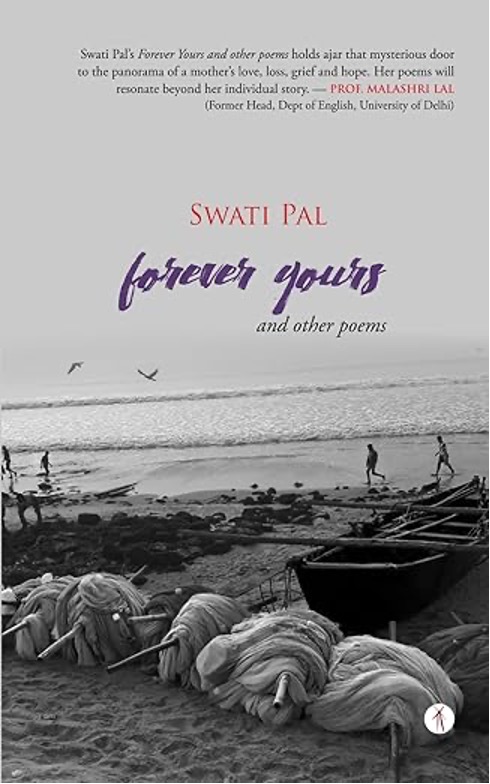
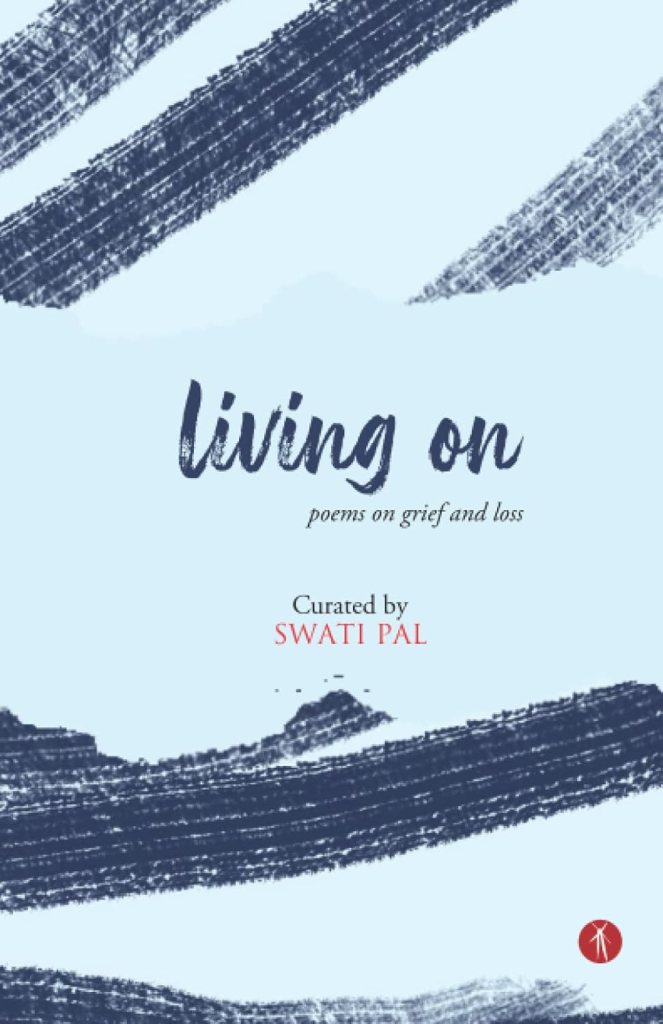
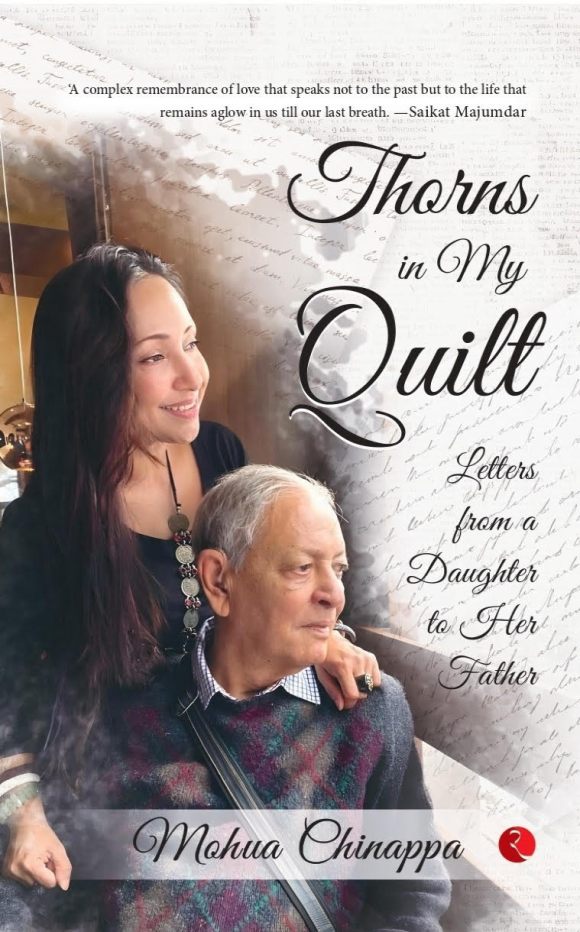

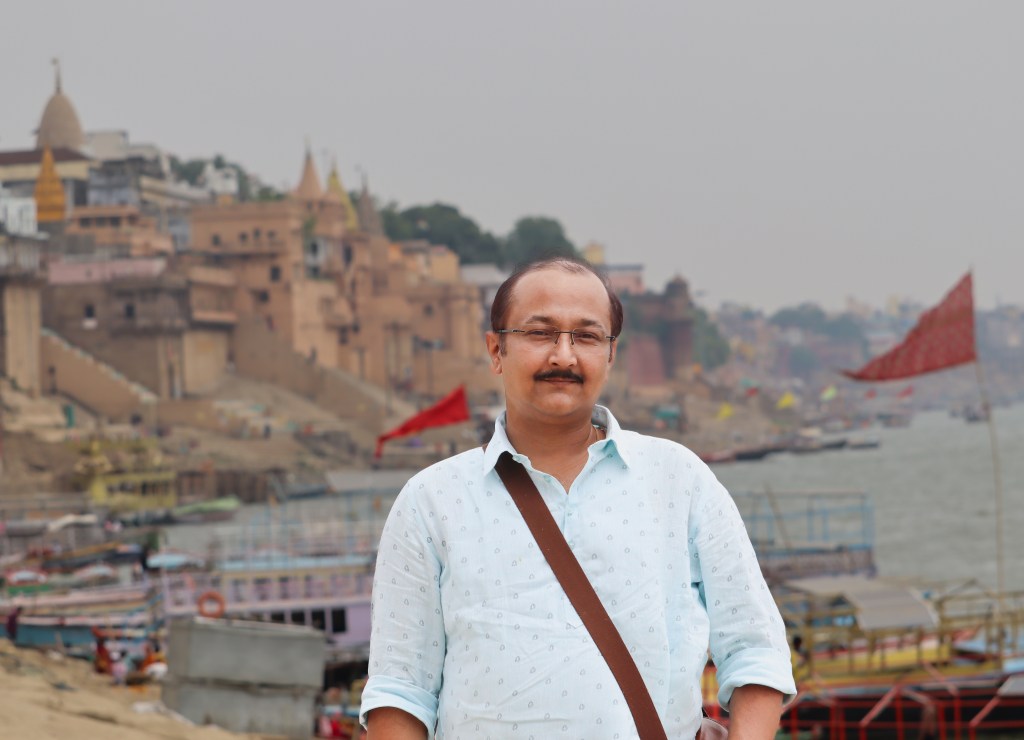
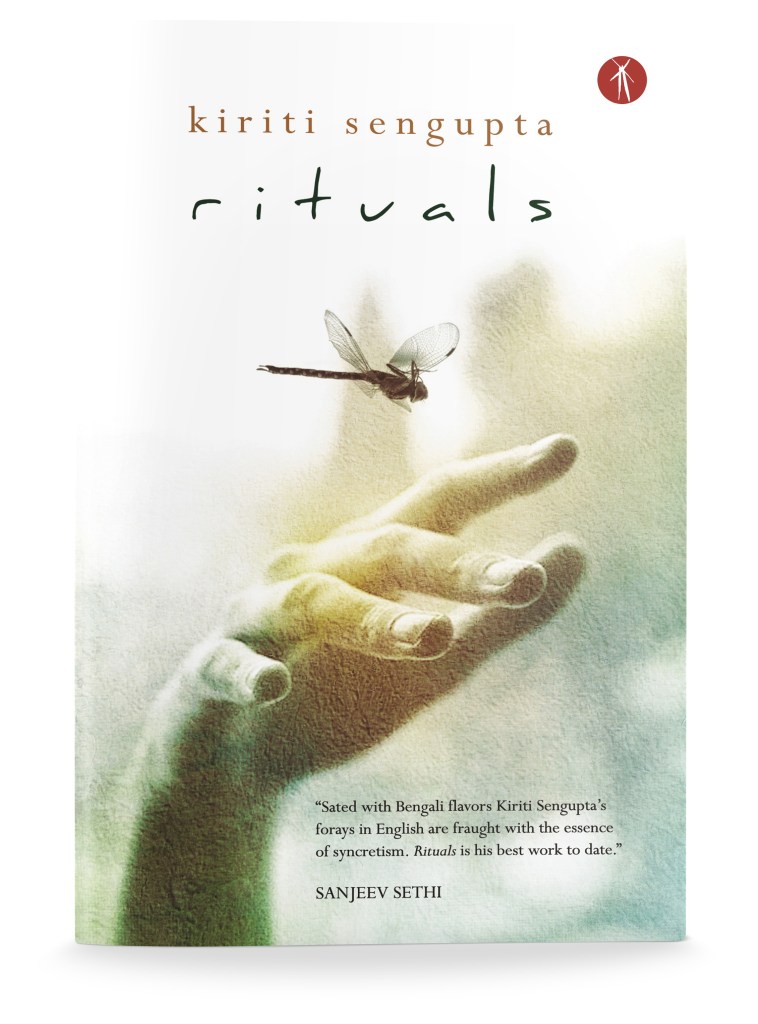

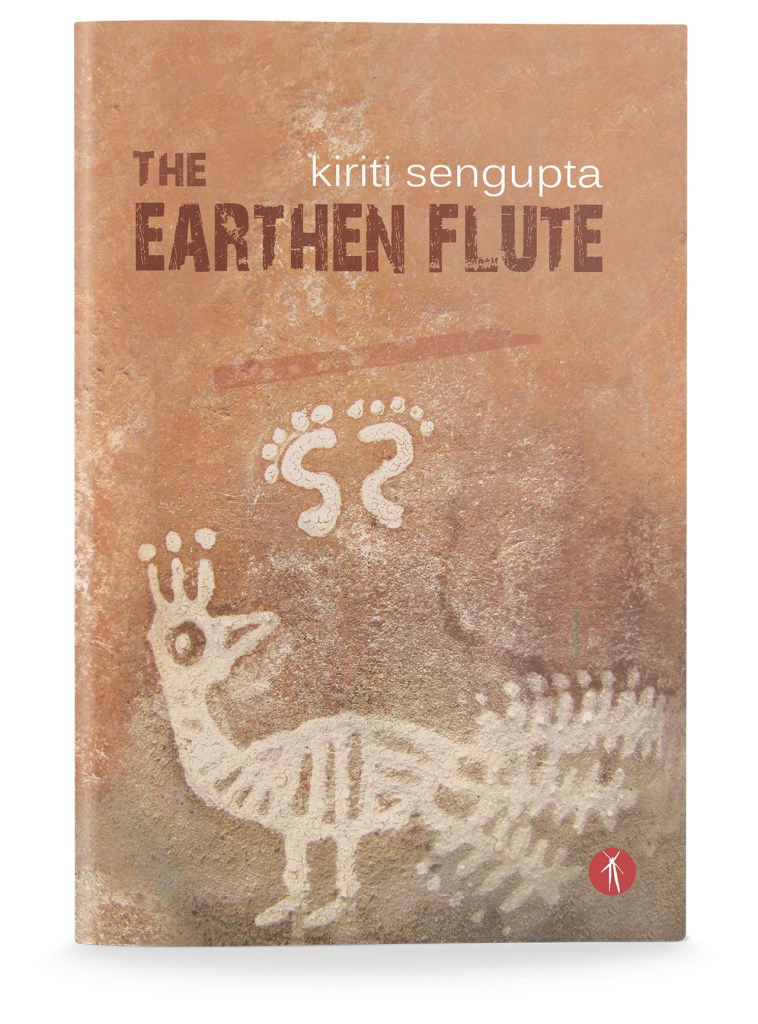
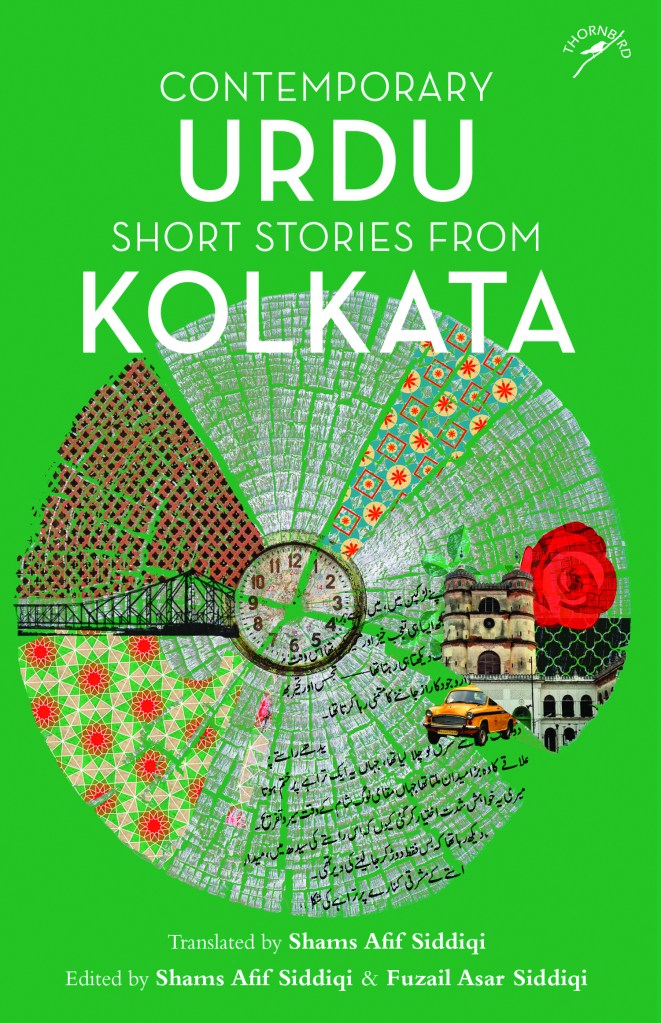

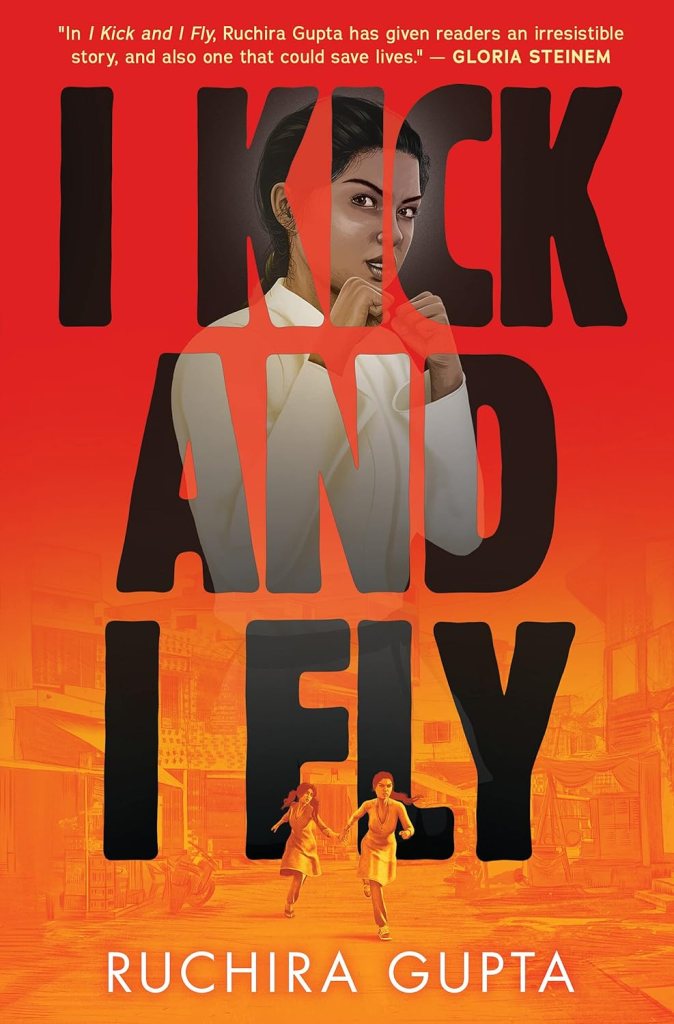


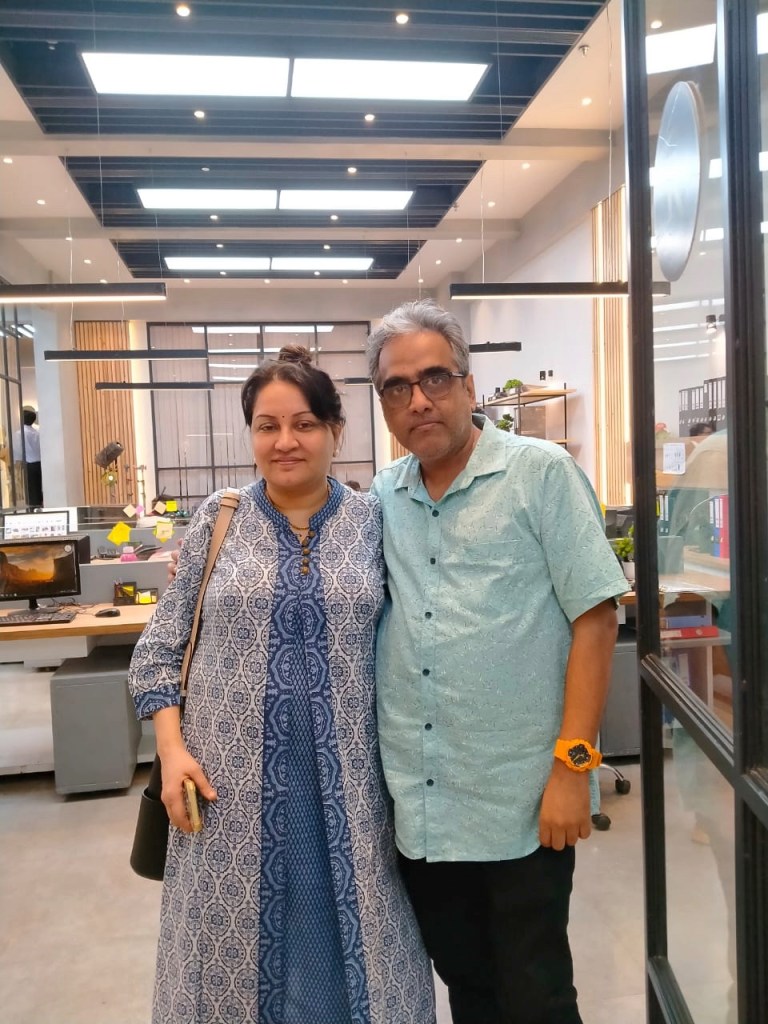
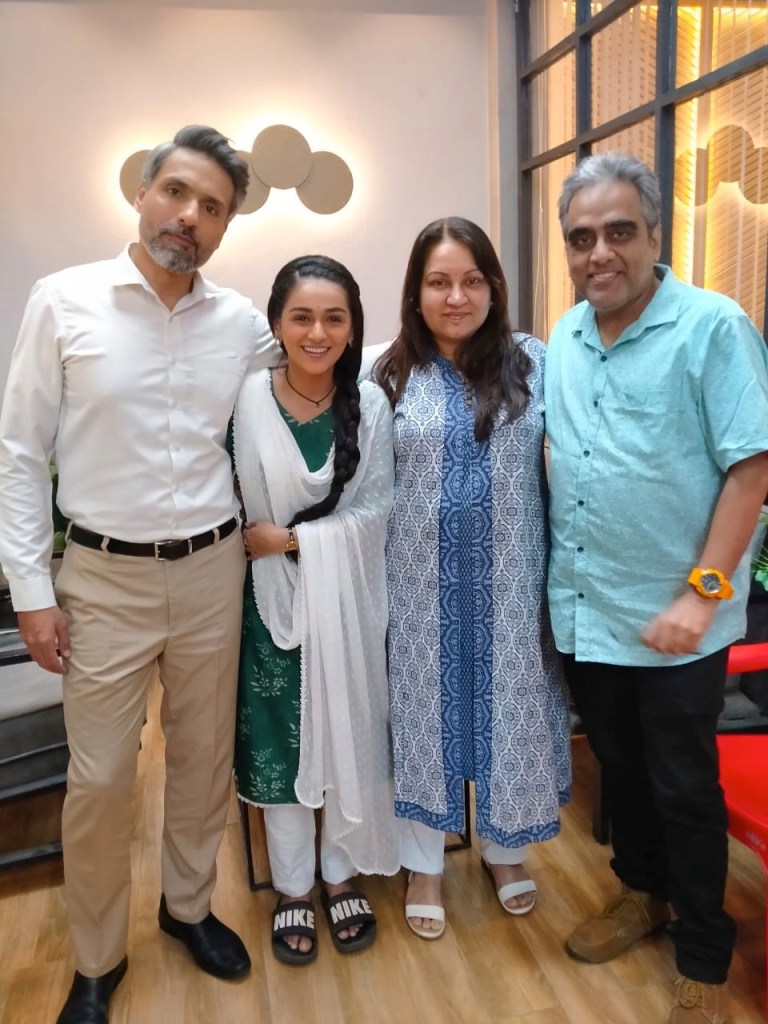
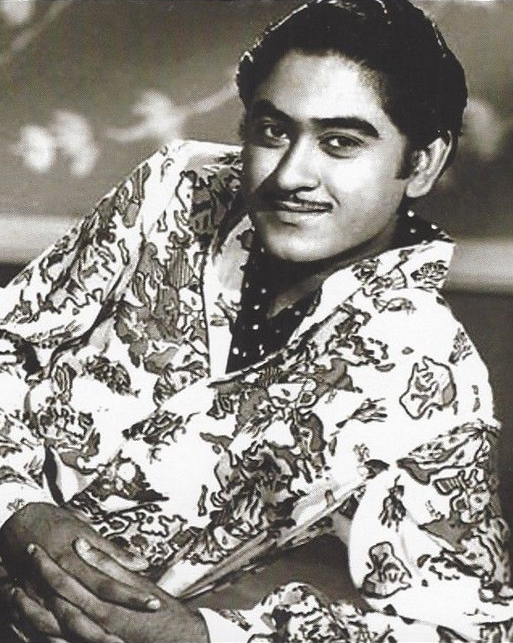
 Borderless