Categories
Stories

Going to meet the Hoppers

By Fiona Sinclair

The announcement of a ‘major retrospective’ sent Alice’s friends giddy with excitement. Reviews in The Guardian raved.  The five stars awarded barely seeming adequate.  

Alice remained silent. In truth she had never heard of the American artist. Her tastes were more European; Turner, Vermeer, Caravaggio.

Some friends raced to become early bird visitors. They had joined queues like static conga lines and came away gushing with praise.  But to Alice, the Hoppers became like an irritating family, who mutual friends declared “You will love’.  However past experience had taught her that when introduced, she had found no common ground.

“We must put it on the list,” declared Julia.  Her closest friend and partner for any such cultural initiatives.  Julia hated finding herself on the back foot at parties when the latest event was mulled over by guests who had already taken it in.

Alice nodded noncommittally, changed the subject by drawing attention to a stylish pair of shoes in a store window.  

Fortnightly visits to the Maudsley psych hospital in southwest London had become routine to her now. A years’ worth of psychotherapy was succeeding in untangling her past. She no longer entered the outpatients with eyes fixed on the squares of carpet tiles. A ploy in those early days to avoid any interaction with the human flotsam that mental health had beached in the waiting room.

But over time she saw that this was a place where calmness was carefully curated. Pictures of flowers bloomed on the walls.  The décor was always spruce and the staff — from receptionists to psychiatrists — treated the patients, however ramshackle, with respect.  

Now she and her therapist Margaret would chit chat as key codes where punched into pads, in order to gain admittance to each level of the labyrinthine building. The sounds like birds of prey that issued from the acute wing no longer made her start.

This particular Monday morning, her appointment was at a bleary eyed 8 am. Fine if she lived in London — however she was a two hours train ride away so her alarm clock blared reveille at 5 am.

Her session was finished by nine. “You’ve got the rest of the day to yourself,” Margaret remarked as she shouldered the final door whose second line of defence seemed to be that it always stuck.  Alice was at a loss as to how to spend this time. London brimmed with museums and galleries, but nothing tempted her. “You know what Dr Johnson said,” grinned her therapist.

“When a man is tired of London, he is tired of life,” responded Alice. “Probably not the best sentiments to quote in Maudsley,” they both agreed.

Since the peak hour ticket had been expensive Alice felt the outlay should reward her with more than counselling. She was not in the mood for aimless shopping.  But scrolling from memory through the current exhibitions, she found there was a dearth, except of course for the Hoppers at the Tate. It was a short tube ride away. “Well there’s always cappuccino and cake in the café afterwards.” She consoled herself.

On the Victoria line, as the train jolted to a halt at each station, her carriage never fully aligned with hoardings that trumpeted the event. And as the tube accelerated away, she only got a zoetrope impression of images that did nothing to ignite her enthusiasm.

“If it’s crowed,” she decided, “I won’t bother.” Envisaging hordes of retirees, school parties and tourists mobbing the entrance, all waiting for 10am like a starting gun.

In truth most exhibitions only admitted a hundred or so visitors every hour. But even so,  from past experience, she knew there would be a funeral pace past each picture as if it was laying in state.

Alice blamed those headphones that explained each painting down to the final daub. Visitors planted themselves in front of the picture until the recording told them to move onto the next image. “Just look and form your own opinion,” she would mutter whilst craning to catch a glimpse of the artwork.

The Thames accompanied her towards the Tate. There was a Monday morning feeling in this part of London, as if the area was drawing breath after a busy weekend. The district was dedicated to tourism with The Globe and The Turner being near neighbours.

The gallery was housed in a decommissioned power station designed by the architect Sir Giles Gilbert Scot, in a time when even functional buildings were given an aesthetic flourish. The conversion to art gallery had retained the original deco building but also made sympathetic modern additions. The brickwork was cleaned back to its original red and the towering chimney advertised itself on the London skyline.

With the internal machinery removed, the empty core allowed for spacious galleries ideal for art on an ambitious scale. The turbine hall alone was so vast that it dwarfed the escalators that bore visitors up to the galleries. Here even Michelangelo’s’ 17 ft David would look lonely.

Alice was quite accustomed to taking herself off to the cinema, theatres, exhibitions alone. Most of her friends were married, therefore had commitments. She was often too impatient to wait whilst they managed the logistics of their domestic lives, to find time to accompany her.

There was a freedom in being on her own, a spontaneity that meant she could hop on a train, and head to London whenever she felt inclined.

Friends found her ease at flying solo incomprehensible. “You’re so brave,” they would remark in tones that simultaneously managed to be admiring but also patronising, “I could never do anything like that on my own.”

“It’s practice,” she would explain. As an only child she had grown up used to her own company. Moreover, without a partner now, the fact was if she wanted the rich cultural life she craved, Alice had to take matters into her own hands.

Over time she had developed strategies that gave her confidence. Aware that even in the 21st , a single woman going to the theatre or cinema on her own still  garnered curious glances, she was, therefore, always accompanied by a book.

Arriving at the Tate’s ticket desk, Alice was surprised to find only a dribble of people. 10 am on a Monday morning was apparently too early even for the keenest of visitors.

Consequently, with extraordinary timing she had the luxury of being the only person in the exhibition. Grinning at her good fortune she placed herself in the centre of the largest room. She then made a 360 degrees turn to get an overview of the Hoppers before moving in on specific images that beckoned to be examined.

What she saw utterly contradicted her preconceptions of the artist and his work. These were not the cosy representations of American life she had expected.  

Human loneliness was delineated in every scene. There were no cosy family meals or girlfriends gossiping. Indeed, these people seemed to possess no faculty for laughter. Married couples who had run out of things to say to each other long ago, now gazed off into their own private horizons.  Solitary men sat on stoops smoking with blank expressions as if they had given up on thinking. Many eyes were cast down, or concealed beneath hats, so that all emotional cues were transferred to their body language whose droop spoke of hopelessness.

This despair was not confined to cityscapes. There were landscapes too, where forests growled at the edges of civilisation, and unkept grass prowled up to the stoops of solitary white wooden houses. These homes were personified as if conveying by proxy the emotions the characters in other pictures could not. Doors screamed and windows gaped.

Above all she had never seen an artist paint silence so effectively. It emanated from the pictures, seeming to seep into the gallery itself. 

In all the years of visiting exhibitions she had never seen one that reflected back her own experience of life. The images did not bring her mood down rather she felt exhilarated that she was able to look these pictures in the face without flinching.  

Alice returned home buzzing with a convert’s zeal. As a result, her friend hastily cleared a Saturday. She farmed her kids off to their cousins for the day and left a ready meal for her husband in the fridge. Of course, Alice was champing to revisit the exhibition, although she was savvy enough to understand that she would never be able to recreate the timely conditions or the wonder she had experienced on first seeing the pictures.

The two women arrived at the gallery early enough for there to be a lunchtime lull.  From past experience she knew her friend did not work her way methodically through an exhibition but liked to see the artist’s greatest hits first. Juila made for the voyeuristic 

‘Night Windows’, where a woman is observed in a bedsit,  her back to an open window from which curtains billow, a favoured image for fridge magnets and coasters.

Alice felt the same rush of enthusiasm for the pictures. She was desperate to enjoy again images that had particularly affected her, but good manners tethered her to Julia’s side. Nevertheless, she could not help breathlessly pointing out details in ‘Night Windows’ that had struck her before. Alice’s words tumbled out in her desire to share the image with her friend. However, Julia seemed to have left her enthusiasm with her coat in the cloakroom. She regarded the painting in silence. Alice grimaced inwardly wondering if her effusiveness was deterring her friend so turned off her gush of words.

Julia still did not engage with this painting or indeed any others. She paused before each image briefly without comment. Alice trailed behind her at a loss. She wondered if her friend had suddenly become unwell. There was a precedent for this when she had once passed out from a UTI at the theatre. And she knew her friend well enough that if she hated an exhibition, she was quick to speak her mind.

“Are you feeling okay?” she whispered.

“I’m fine,” Julia responded. But the ‘fine’ was loaded with a subtext Alice could not at that moment fathom.

Julia stood briefly before the artist’s other well-known pictures as if mentally ticking them off.  Alice desultorily picked out a detail here and there like offering titbits to someone who had lost their appetite. Her friend merely nodded or squeezed out a ‘hmmm’.

From her peripheral vision the paintings she ached to enjoy again beckoned to her. Finally, she made her way to them, hoping that by giving her friend some space she might find some way into the works. However, looking over her shoulder she saw Juia had begun to move past the paintings without pausing, barely glancing at the images. Eventually feeling as if she was abandoning her friend at a party of strangers she returned to her side. They had reached ‘Night Hawks’. “Surely she’ll respond now,” she thought. Her friend did but not with appreciation, instead she raised her hand to her eyes as if shielding her gaze. Alice was reduced to foolishly gesturing ‘the famous one’ as if trying to chivvy a child’s interest.

“Well I think we’ve seen enough,” Julia suddenly found her voice again, “Let’s get out of here.”  And without waiting for Alice, she bolted through the exit and plonked herself in a comfy armchair in the coffee shop and took a deep breath as if the atmosphere in the gallery had tried to choke her. In an effort to raise her friend’s spirits, Alice brought her a double shot cappuccino and a slab of cake. Seated by a large picture window looking down on the Thames, Alice commented on a few landmarks by way of breaking the silence. It was still a one-way conversation though until revived by the food, Julia began to join in.

Clearly there was not to be their usual post event discussion.  This was unprecedented. They could not even agree to disagree as they had many times before if they could not even discuss the exhibition.   During this smallest of small talk, Alice tried to make sense of her friend’s reaction. She began to feel as if she had forced Julia to accompany her. Then remembered it was actually her friend’s agency that had brough them to the Tate. Reasoning to herself that they couldn’t spend the rest of their lives avoiding all reference to the Hoppers she brushed the small talk aside, took a breath and blurted out, “Did you not like the exhibition?”

Julia paused before speaking, “Look, I know you love them but for me, there was no beauty in there.” She gestured with her head towards the gallery they had come from. “They are so dreary.” Her tone verged on whining as if the exhibition had got her there under false pretences. Alice was quick to point out that they had seen other exhibitions genuinely devoid of conventional beauty  — Rothko, Warhol, Gilbert and George. None of whose work could have comfortably inhabited a sitting room.

“But I know what to expect with abstract art,” her friend pointed out.  “I can stomach geometric shapes and dribbled paint because they engage my mind not my emotions,” she paused, “also somehow they don’t reflect real life.” The caffein had clearly loosened her tongue. “I expect at least some beauty in representational art.” She began to list Hopper’s faults. “Why are there so few people in the city? It looks post-apocalyptic. And they are so miserable. That picture of the psycho house seems to sum up the whole collection.” She added as a last shot.

Alice felt as if her friend’s criticism was aimed at her as well as the artist. She attempted to put her case for the paintings. “But don’t you see that they reflect the isolation of modern life?” Her friend’s face remained adamant. Alice searched for a comparison then had a brain wave, “Look’ we both studied TS Eliot at uni. Can’t you see it’s ‘The Waste Land’ translated into art?” She felt rather pleased with her analogy.

But Juila shook her head. “You can distance yourself from words, but pictures,” she grimaced. “Nothing erases an image, once seen it gets trapped in your mind.”

Alice pondered the two divergent responses to the Hoppers. Both were extreme in their own ways. She wondered if the roots of their reactions lay in their backgrounds. Her own history, even her therapist agreed, verged on the Gothic. Whereas Julia had enjoyed an Enid Blyton childhood. Throughout her life she had been adored by her father and encouraged by her mother. Her marriage to Jim was that rare thing, a pairing that lasted without a whiff of infidelity. Admittedly their life together had not been entirely charmed — ill health, a father’s dementia — redundancy had been faced down over time. Now their reward was a very comfortable life.

Her friend seemed to have read her thoughts. “I know I have a good life compared to most,” Juila admitted. “And I know there’s ugliness in the world. I just don’t want to be reminded of it on a day out.” 

Alice began to understand that the pictures were an uncomfortable reminder of less kind lives. Whilst they were not in the face brutality of war, instead they showed men and women recognizably modern whose lives were the playthings of circumstance and as such had visibly given up.

They seemed to have awakened some existential fear in her friend, perhaps a dread of feeling hopeless. The Hoppers were a reminder that even middle-class lives could falter and fall if fate gave a push.

Julia suddenly changed the subject with a hand brake turn. She gave a round up of her daughters’ careers and love lives, her husband’s progress on the kit car he was building. She seemed in this way to be deploying her family as a buffer against the images she had just seen.  

Making for the exit, it was usually part of their ritual to visit the gift shop. But whilst Alice turned to enter, eager to buy more Hopper related merchandise, Juila swept passed deep in describing  the minutiae of her family’s next trip to Italy . Alice shrugged, “I’ll pop in next time,” she thought.

.

 Fiona Sinclair has had several collections of poetry published by small presses.  Her short stories have been published in magazines in the UK, US and Australia. 

.

PLEASE NOTE: ARTICLES CAN ONLY BE REPRODUCED IN OTHER SITES WITH DUE ACKNOWLEDGEMENT TO BORDERLESS JOURNAL

Click here to access the Borderless anthology, Monalisa No Longer Smiles

Click here to access Monalisa No Longer Smiles on Amazon International

Categories
Review

Saga of Palestinian Identity

Book Review by Bhaskar Parichha

Title: My Palestine: An Impossible Exile 

Author: Mohammad Tarbush 

Publisher: Speaking Tiger Books

“The theme of this book is Palestine and its history, and the displacement and exile of its people. But it is, above all, a human story… My father’s story makes the basic point that, like all people, the Palestinians are made of flesh and blood and their children feel the agony of pain as strongly as they enjoy the warmth of happiness.”

—Nada Tarbush (Son of Mohammed Tarbush) in the ‘Foreword’.

Mohammad Tarbush was born in Beit Nattif, located in proximity to Jerusalem. In 1988, he assumed the role of managing director at Deutsche Bank, subsequently moving to UBS. He has authored multiple books, including Reflections of a Palestinian. His articles concerning Palestine have been published in various esteemed outlets, such as the International Herald Tribune, The Guardian, and the Financial Times among others.

 As a child, he and his family were compelled to leave their village along with the entire community following the Zionist victory that resulted in the formation of the State of Israel. This upheaval marked a profound turning point in their lives, as they were forced to abandon their homes, their memories, and the land that had been their ancestral heritage for generations. The trauma of displacement was palpable, as families were torn apart and communities fragmented, leaving behind a deep sense of loss and longing.

Subsequently, as displaced refugees in the West Bank, the family fell into a state of poverty. The harsh realities of refugee life were stark — they struggled to find adequate shelter, access to education, and basic necessities. The once vibrant community they had known was replaced by a life of uncertainty and hardship, where every day was a battle for survival. The children, including him, were often caught in the crossfire of political tensions, their dreams overshadowed by the weight of their circumstances. Yet, amidst the adversity, a resilient spirit emerged, fostering a sense of solidarity among the displaced families.

During his teenage years, Tarbush departed from home, ostensibly to visit relatives in Jordan; however, he embarked on a year-long hitchhiking adventure across Europe. This journey was not merely a quest for adventure but a profound exploration of identity and purpose.

As he traversed the diverse landscapes of Europe, he encountered a myriad of cultures, ideas, and perspectives that broadened his worldview. Each hitchhike brought new experiences, from the bustling streets of Paris to the serene countryside of Italy, and he absorbed the lessons of resilience and ambition that he witnessed in the lives of others.

Ultimately, he achieved great success as an international banker, navigating the complex world of finance with skill and acumen. His rise in the banking sector was marked by a blend of hard work, strategic thinking, and an innate ability to connect with people from various backgrounds.

Despite his professional accomplishments, he remained deeply aware of his roots and the struggles of his people. He became a significant, albeit discreet, advocate for the Palestinian cause, using his influence and resources to raise awareness and support for those who continued to suffer from the consequences of displacement and conflict.

Through his advocacy, Tarbush sought to bridge the gap between his successful life in the West and the harsh realities faced by his community back home. He understood that his journey was not just about personal achievement but also about giving voice to the voiceless and fighting for justice. His story became a testament to resilience.

In My Palestine, Mohammad Tarbush intertwines a moving personal narrative with sharp political and economic analysis, reflecting on the significant events that have influenced the history of Israel, Palestine, and the contemporary Middle East.

The sturdy book offers a profound exploration of the Palestinian experience, capturing the essence of resilience that defines a people who have faced immense challenges and adversities. Through a lens of deep empathy and insight, the narrative delves into the multifaceted struggles and triumphs of the Palestinian community, illustrating how they navigate the calamities that have profoundly impacted their lives.

 At its core, the narrative serves as a heartfelt and poignant testament to the ingenuity of the human spirit. It highlights not only the hardships endured but also the remarkable ways in which individuals and communities adapt, innovate, and find strength in the face of overwhelming odds. The stories woven throughout the narrative reflect a rich tapestry of cultural heritage, personal sacrifice, and unwavering hope, showcasing how the Palestinian people maintain their identity and dignity despite the challenges they encounter.

The book chronicles the everyday realities of those living in a region marked by conflict and uncertainty. It emphasises the importance of storytelling as a means of preserving history and fostering understanding, allowing the voices of the Palestinian people to resonate with authenticity and depth.

Through vivid imagery and compelling accounts, the narrative underscores the resilience that is not merely a response to adversity but a fundamental aspect of the Palestinian identity.

Bhaskar Parichha is a journalist and author of Cyclones in Odisha: Landfall, Wreckage and Resilience, UnbiasedNo Strings Attached: Writings on Odisha and Biju Patnaik – A Political Biography. He lives in Bhubaneswar and writes bilingually. Besides writing for newspapers, he also reviews books on various media platforms.

.

PLEASE NOTE: ARTICLES CAN ONLY BE REPRODUCED IN OTHER SITES WITH DUE ACKNOWLEDGEMENT TO BORDERLESS JOURNAL

Click here to access the Borderless anthology, Monalisa No Longer Smiles

Click here to access Monalisa No Longer Smiles on Amazon International

Categories
Review

In the Footsteps of the Man Who Walked From England to India in 1613

Book Review by Rakhi Dalal

Book Title: The Long Strider in Jehangir’s Hindustan: In the Footsteps of the Englishman Who Walked From England to India in the Year 1613

Authors: Dom Moraes and Sarayu Srivatsa

Publisher: Speaking Tiger Books

During the years, in the early seventeenth century, when East India Company began a search for the possibilities of trade with India via sea route, Thomas Coryate of the village Odcombe in Somerset, England, made an ambitious plan to travel to the Indies, as he called it, on foot. This wasn’t his first undertaking. Having travelled across Europe on foot before, writing a travelogue Crudities on his experience which brought him some fame, he now wished to travel to a place no Englishmen had gone before. Motivated by the thought of gaining more fame with this venture so as to win the affection of Lady Ann Harcourt of Prince Henry’s Court, even the idea of traversing 5000 miles on foot as compared to 1975 miles that he did in Europe did not dissuade him.   

Known as ‘the long strider’, in 1612, Coryate set for his journey to the Indies from London. And in year 1999, more than three hundred years later, his journey and subsequent struggles, somehow inspired Dom Moraes to traverse the same route to correlate Coryate’s experience in the now altered places and its people. Coryate travelled alone, Moraes took the journey with Sarayu Srivatsa, the co-author of this book.

Dom Moraes, poet, novelist and columnist, is seen as a foundational figure in Indian English Literature. He published nearly thirty books in his lifetime. In 1958, at the age of twenty, he won the prestigious Hawthornden Prize for poetry. He was awarded the Sahitya Akademi Award for English in 1994. The Long Strider in Jehangir’s Hindustan was first published in the year 2003. Moraes passed away in 2004.

Sarayu Srivatsa, trained as an architect and city planner at the Madras and Tokyo universities, was a professor of architecture at Bombay University. Her book, Where the Streets Lead, published in 1997 had won the JIIA Award. She also co-authored two books with Dom Moraes: The Long Strider, and Out of God’s Oven (shortlisted for the Kiriyama Prize). Her first novel, The Last Pretence, was longlisted for the Man Asian Literary Prize, and upon its release in the UK (under the title If You Look For Me, I am Not Here), was also included on The Guardian’s Not the Booker Prize longlist.

Srivatsa, who travelled with Moraes to all the places Coryate passed through, writes diary chapters coextending the same routes subsequently. So, each fictive reconstruction of a period and place of Coryate’s travel by Moraes is followed by a diary chapter for the same place by Srivatsa. In that sense the book becomes part biographical fiction and part memoir. 

Coryate, son of a Vicar and dwarfish in stature, was seized by this desire to gain fame and respect. What desire seized the imagination of Moraes, eludes this reader. It, however, doesn’t escape the notice that both the writers shared somewhat similar plight towards the end.

Some of Coryate’s writing during the period did not survive as it was destroyed by Richard Steele, but the rest was sent to England and was posthumously published in an anthology in 1625. Basing his research on such sources, after extensive three years of investigation, Moraes managed to create an account of Coryate’s demeanour, his lived life in a new land with diverse people and customs at different places which he found both shocking and fascinating.  Coryate found the people of India loud and violent but he was also touched by their generosity and kindness. He witnessed the disagreements between Hindus and Muslims, the caste system where the upper caste oppressed the people from lower caste, sati, and the ways of Buddhist monks, Sikhs, pundits of Benaras and Aghoris[1], the lifestyle of Jehangir and the city of Agra before Taj Mahal. He was fortunate to have an audience with Jehangir, the main reason of his travel, but he failed in securing his patronage or enough money to continue to China which he had been his original intent.

In Moraes’ writing, the era comes alive. Vivid imagery and description makes the struggles and sufferings of Coryate palpable on one hand and on the other offer a view on the unfolding of history in a country where these many hundred years later, the echoes of a past similar to the present can be heard. In the preface, Moraes posits one of the reasons to take on the book — to compare the India then with the country during his times. As the reader proceeds with the story, the comparison becomes apparent in Moraes’ construction vis-a-vis Srivatsa’s entries.

Towards the end, an ailing Coryate succumbed to his illness and his body was buried somewhere near the dock at Surat. He could not make a journey home in 1615, but in 2003 a brick from his supposed tomb was sent back to the church in Odcombe by Srivatsa where a ninety six year old vicar waited patiently for the only famous man from Odcombe to return home. The epilogue by Srivatsa gives an account of Moraes’ own struggle with cancer and his demise in 2004, a year after the book was published. It is but right that the soil from his grave in Mumbai also found a resting place in Odcombe.    

[1] Devotees of Shiva

Rakhi Dalal writes from a small city in Haryana, India. Her work has appeared in Kitaab, Scroll, Borderless Journal, Nether Quarterly, Aainanagar, Hakara Journal, Bound, Parcham and Usawa Literary Review

.

PLEASE NOTE: ARTICLES CAN ONLY BE REPRODUCED IN OTHER SITES WITH DUE ACKNOWLEDGEMENT TO BORDERLESS JOURNAL

Click here to access the Borderless anthology, Monalisa No Longer Smiles

Click here to access Monalisa No Longer Smiles on Kindle Amazon International

Categories
Review

Artificial Intelligence in a Human World 

Book review by Bhaskar Parichha

Title: Faking It : Artificial Intelligence In a Human World 

Author: Toby Walsh

Publisher: Speaking Tiger Books

AI, or Artificial Intelligence, has become an integral part of our daily lives. It has revolutionised industries, from healthcare to transportation and manufacturing. However, some people may seek to artificially enhance AI to deceive others. This is called “faking AI”. There are several reasons why someone might fake AI.

Faking AI can enable individuals to impersonate someone else or appear as experts in a particular field. This can have negative consequences, such as fraud or phishing scams. Creating AI from scratch can be complex and time-consuming. By pretending to have AI, individuals can save time and effort while still achieving their desired results. In some cases, individuals may prefer to keep certain aspects of their AI-driven projects confidential. Faking AI can provide privacy and discourage further investigation.

One of the most common methods of fake AI is to manipulate data. By selectively choosing or modifying data, individuals can create artificial patterns or results that seem AI-generated. Another approach is to use pre-trained models, which are AI systems based on large datasets. These models can be repurposed and fine-tuned to deliver specific results without significant effort.

Machine Learning as a Service (MLaaS) platforms enable individuals to create AI models without technical expertise. These platforms often offer pre-trained models to generate fake AI results. Fake AI APIs, or Application Programming Interfaces, can simulate AI functionality. These APIs provide AI-driven responses or data but rely on predetermined algorithms or scripts.

While pretending to have AI may have certain advantages, it also has several disadvantages. Faking AI can mislead consumers about AI quality and authenticity. This can erode trust in AI technology and hinder its widespread adoption.

Faking AI may violate ethical guidelines and legal requirements. The use of AI without disclosing its true origins or limitations can contribute to legal consequences, including breach of contract or fraud. Faking AI can result in inaccurate predictions and decisions. This can lead to serious consequences in industries where AI plays a significant role, such as healthcare or finance.

Faking It: Artificial Intelligence In a Human World by Toby Walsh goes into the subject. A world leader in artificial intelligence, Walsh has spent his life dreaming about and researching how machines think. Scientia Professor of AI at the University of New South Wales and Fellow of the Australian Academy of Science. Toby is passionate about ensuring AI improves, not harms, our lives. He authored It’s Alive! From the Logic Piano to Killer Robots, which was named one of the year’s best books by the New Statesman. Toby contributes to American Scientist, New Scientist and The Guardian.

The blurb says:Faking AI has become an increasingly prevalent concern in today’s digital age. It is crucial for individuals and organizations to be aware of the methods and motivations behind faking AI and take appropriate measures to detect and protect against it. By implementing best practices and promoting transparency, we can build trust and preserve the integrity of the AI-driven world. Artificial intelligence is, as the name suggests, artificial and fundamentally different to human intelligence. Yet often the goal of AI is to fake human intelligence. This deceit has been there from the very beginning. We’ve been trying to fake it since Alan Turing answered the question ‘Can machines think?’ by proposing that machines pretend to be humans.

As Walsh argues in his book, we are on the verge of developing artificial intelligence that can be used to deceive us. ChatGPT is an example of an artificial intelligence that is capable of fooling us into believing that it is intelligent and blurring the line between what is real and what is not. The truth is that they are devoid of true understanding, sentience, and common sense.

In spite of this, they are still capable of making a difference in the world. He raises fundamental questions in the book, including: Can artificial intelligence be creative? Can they be moral? What can we do to ensure they are not harmful?

Toby Walsh takes us through all the ways artificial intelligence mockups human emotion in this exciting and fascinating book. Also, he examines the implications of this for humanity in the present and the future of our planet.

.

Bhaskar Parichha is a journalist and author of UnbiasedNo Strings Attached: Writings on Odisha and Biju Patnaik – A Political Biography. He lives in Bhubaneswar and writes bilingually. Besides writing for newspapers, he also reviews books on various media platforms.

.

PLEASE NOTE: ARTICLES CAN ONLY BE REPRODUCED IN OTHER SITES WITH DUE ACKNOWLEDGEMENT TO BORDERLESS JOURNAL

Click here to access the Borderless anthology, Monalisa No Longer Smiles

Click here to access Monalisa No Longer Smiles on Amazon International

Categories
Review

No Doomsday Narrative

Book Review by Bhaskar Parichha

Title: Climate Capitalism: Winning the Global Race to Zero Emissions

Author: Akshat Rathi 

Publisher: Hachette India

Climate capitalism combines economic growth and environmental sustainability. This approach leverages market forces and capitalist principles to address climate change. Climate capitalism aims to create a system where businesses can thrive while reducing their carbon footprint and promoting clean technologies. A key driver of climate capitalism is the belief that the market will drive innovation and investment in sustainable practices. The transition to a low-carbon economy can be accelerated by creating economic incentives for companies to adopt clean technologies.

There are many strategies and policies involved in climate capitalism. Carbon pricing mechanisms, such as carbon taxes or cap-and-trade systems, put a price on carbon emissions to create a financial incentive for companies to reduce their emissions. The development and deployment of clean technologies can also be supported through subsidies or grants.

Climate capitalism also integrates environmental considerations into corporate decision-making. Sustainable business strategies include setting greenhouse gas emission targets, adopting environmentally-friendly practices throughout operations, or incorporating sustainability goals into business strategies. Climate capitalism advocates argue that businesses can drive economic growth while also contributing to climate mitigation and adaptation. A more sustainable and prosperous future can be achieved by aligning financial incentives with environmental objectives.

Critics, however, are concerned that greenwashing may result in superficial attempts to appear green. Climate capitalism may not go far enough in addressing the systemic changes necessary to address climate change, and more radical action is needed. Economic development and environmental sustainability are reconciled by climate capitalism. By harnessing market forces to create a more sustainable future, it acknowledges the role that market forces can play in driving change. Whether climate capitalism can deliver on its promises and effectively address climate change challenges remains a subject of debate.

In this context, this book is an excellent addition.Climate Capitalism: Winning the Global Race to Zero EmissionsbyAkshat Rathi is a fascinating book that sheds a fresh look at the issue. Akshat Rathi is a senior reporter at Bloomberg News. Bloomberg Green’s Zero podcast is hosted by him. A PhD in organic chemistry from Oxford and a BTech in chemical engineering from IIT Mumbai, he has worked for QuartzThe Economist and the Royal Society of Chemistry. His writings have also been published in NatureThe Hindu and The Guardian

According to the blurb: “Our age will be defined by the climate emergency. But contrary to the doomist narrative that’s taken hold, the world has already begun deploying the solutions needed to deal with it. On a journey across five continents, Climate Capitalism tracks the unlikely heroes driving the fight against climate change. From the Chinese bureaucrat who did more to make electric cars a reality than Elon Musk, to the Danish students who helped to build the world’s longest-operating wind turbine, or the American oil executive building the technology that can reverse climate damages, we meet the people working to scale technologies that are finally able to bend the emissions curve.”

Through stories that bring people, policy and technology together, Rathi reveals how the green economy is possible, but profitable. This inspiring blend of business, science, and history provides the framework for ensuring that future generations can live in prosperity. It also ensures that progress doesn’t falter.

Which economic policies are most effective at reducing greenhouse gas emissions and combating climate change? Climate Capitalism examines the economics and politics of market-based climate change solutions. It is essential reading for all students and teachers, unionists and business leaders, grassroots activists and politicians.

.

Bhaskar Parichha is a journalist and author of UnbiasedNo Strings Attached: Writings on Odisha and Biju Patnaik – A Political Biography. He lives in Bhubaneswar and writes bilingually. Besides writing for newspapers, he also reviews books on various media platforms.

.

PLEASE NOTE: ARTICLES CAN ONLY BE REPRODUCED IN OTHER SITES WITH DUE ACKNOWLEDGEMENT TO BORDERLESS JOURNAL

Click here to access the Borderless anthology, Monalisa No Longer Smiles

Click here to access Monalisa No Longer Smiles on Kindle Amazon International

Categories
Essay

Farewell Keri Hulme

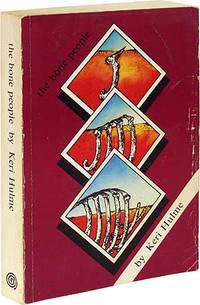
Author Keri Hulme (1947-2021) was the first New Zealander to win the prestigious Booker prize for the bone people*. Keith Lyons recalls times he spent in a remote coastal settlement with the humble writer, who remains a divisive enigma.

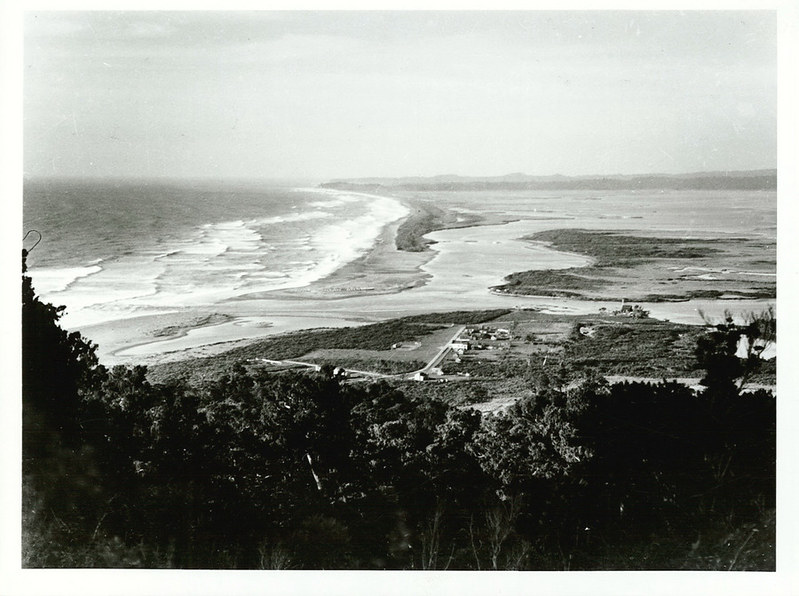
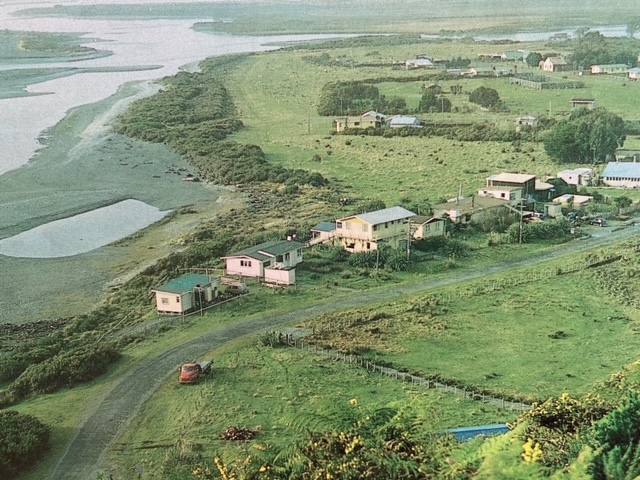
Okarito, home of Keri Hulme. Courtesy: Creative Commons

“You want to know about anybody? See what books they read, and how they’ve been read…” Keri Hulme

I was in high school when I heard the news that Keri Hulme’s the bone people had won the 1985 Booker Prize, literature’s most prestigious award for a novel in English. At 38 years old, she was the first New Zealander to receive the prize. Hulme became the first author to win with their debut novel. Later, in 2013, Eleanor Catton became the second Kiwi, the youngest winner of the Man Booker Prize, and also holds the record for the longest novel, 832 pages.

The following summer while hitchhiking around the South Island, I visited the small settlement of Okarito on the West Coast, where Keri had built her own house and lived since the 1970s. A converted schoolhouse in the former 1860s gold mining town was the main accommodation available: a youth hostel with bunk beds. I’d been attracted to the area because of the rugged coastline, placid tidal lagoon, mountain views and the elegant white herons which nested in the nearby forest.

Even though I’d struggled through an early edition of the bone people, I wasn’t as enthralled about the book as some of my fellow travellers who occupied bunk beds in the spartan hostel. Several European visitors carried copies of the book, which had been translated into many languages, several with different covers. It seemed that every day I went out walking along the main street of the settlement (population: 13 permanent residents), there would be an earnest woman from Cologne clutching Unter dem Tagmond or a young couple from Aarhus plodding along the road in the hope of finding Keri’s octagonal tower two-story house. Visitors wandered over the sand dunes desiring to encounter the acclaimed pipe-smoking author, beach combing for driftwood or gemstones washed up on the high tide.

There for the scenery and sanctuary of the coast, lagoon and native forest, rather than to spot the world-famous author, I did locate her house further along the settlement’s main road. A sign on the gate read “Unknown cats and dogs will be shot on sight”. The hostel warden Bill Minehan, who lived next door to Keri, told me she didn’t really like the attention or surprise visitors. Some of the other residents, protective of the community’s drawcard, would give wrong directions, so visitors after sightings of the elusive author could be seen pacing up and down the rutted grass airstrip — signposted Okarito International Airport and flying the Okarito Free Republic flag — or sidestepping around sheep grazing on the settlement’s rough golf course.

Often, after rains, Keri’s front yard flooded, creating a moat to protect her from rubberneckers. The Okarito Free Republic flag sometimes fluttered from a flagpole at Keri’s house, along with an alternative New Zealand flag, with a stylised spiral fern frond, made by Austrian painter and artist Friedensreich Hundertwasser. She moved to Okarito after winning a ballot for a section of land in 1973, building the house herself, lining bookcases with some 6,000 books, and setting up her writing desk with views out to the sea.

Keri was increasingly portrayed as reclusive. Rumours were that she’d spent all her Booker Prize thousands on alcohol from the Whataroa Hotel, some 25 km away. She didn’t like meeting strangers. She was reluctant to give interviews, and very rarely did she allow anyone into her house. She preferred solitude. “A large part of my life is the surge of the sea, listen to the sea, the pulse of the sea,” she once said.

I did catch a glimpse of Keri on my last day when returning a key to Bill — she was wielding a hammer, fixing the side of her house. The sweet aromatic scent of pipe tobacco floated in the humid air. Then I realised it was probably her I’d seen surf-cast fishing while on a long coastal walk towards the lagoon’s outlet into the Tasman Sea.

Bill let slip that Keri was formidable, but not unbeatable, at Scrabble. Having told him I had been at a Catholic boys’ school in Christchurch, and that I was also a writer, he asked if I knew any good high-scoring Scrabble words. I gave him ‘exorcise’ and ‘queazy’.

One of Keri’s favourite Scrabble words, I later found out, was ‘syzygy’, meaning the alignment of three celestial bodies. Three main characters make up ‘the bone people’. Keri said the characters for her book first came into her imagination when she was eighteen years old. After dreaming about a mute child with strange green eyes, she mused over the vision, eventually developing it into the character of the shipwrecked boy Simon Peter, whose life is intertwined with what one critic described as ‘his child-battering stepfather and a virgin feminist’.

The eldest daughter of a carpenter, whose parents came from Lancashire, and a mother who came from Orkney Scots and Māoris, she grew up in my hometown Christchurch. Her father died when she was aged eleven. After leaving school she dropped out of university part way through a law degree. She worked as a tobacco picker, in a woollen mill, delivering mail, cooking fish and chips at a takeaway shop, as a pharmacist’s assistant, a proofreader at a local newspaper, and in television production.

It took her almost two decades to finish the novel. She spent a dozen years trying to find a publisher. All New Zealand’s main publishing houses rejected the manuscript outright or insisted on extensive heavy re-writing before they would consider taking on the book.

In the end, it was published by a small obscure three-woman feminist collective (it was only the second book they produced), and typeset by students at a university newspaper, with an initial print run of just 2,000 copies. The book, which contained numerous typographical errors, was launched at an event at a teacher’s training college.

The year after its humble beginnings, the bone people won the Oscars of world literature, against the odds and against such literary heavyweights as Peter Carey, Doris Lessing and Iris Murdoch. The somewhat controversial win showcased writing from New Zealand to an international audience, who would perhaps only be aware of the likes of modernist short story writer Katherine Mansfield or Janet Frame, who explored madness and language.

Hulme’s contribution, blending indigenous myth and Celtic symbology, and set in a distinctly wild coastal New Zealand setting, is described as “an unusual story of love”’  or in the Amazon blurb “a true evocation of loneliness and attempts by deeply flawed people to connect to each other”. The main character of three, part-Māori artist Kerewin is convinced that her solitary life is the only way to face the world. How autobiographical is it, you ask? The more you delve into it, the more you find similarities with the unusual literary star, who increasingly got dubbed “reclusive” by the media because she wished to remain out of the limelight.

Part of the legend around Hulme is about the surprising success of her debut novel. She didn’t fancy her chances of winning the Booker Prize, so was in the US when the awards ceremony was held in London (plumes of cigarette smoke swirled up in the film footage) — she was the only contender not in the audience at London’s Guildhall. When she was called in her Salt Lake City hotel room during the event, she didn’t believe the news down the phone line. “You’re pulling my leg, aren’t you?” she said, “Oh, bloody hell.”

She was full of self-doubt. The literary world had a mixed response to her breakout novel. “Set on the harsh South Island beaches of New Zealand, bound in Māori myth and entwined with Christian symbols, Miss Hulme’s provocative novel summons power with words, as a conjurer’s spell,” wrote one New York Times review. “She casts her magic on three fiercely unique characters, but reminds us that we, like them, are ‘nothing more than people’, and that, in a sense, we are all cannibals, compelled to consume the gift of love with demands for perfection’.

Another review in the same publication was more critical. “It’s not so much that the novel offers ‘a taste passing strange’ as the author notes in the preface — interior monologues, disjointed narratives and vulgar language, after all, are hardly news these days. It’s more that the novel is unevenly written, often portentous, and considerably overlong.” The Guardian described the bone people as “a morass of bad, barely comprehensible prose.”

Even one of the Booker Prize judges, Joanna Lumley, was against it being picked as the winner, saying its subject matter was ‘indefensible’. A recent article described the bone people as one of the most divisive novels in Booker Prize history. The four words to sum up the book were violent, disturbing, poetic and striking.

While dismissed by some as unreadable and pretentious, in New Zealand the novel combining reality with dreams was seen as a masterpiece by others with its vision of a society regenerated by the adoption of Māori values and spirituality. For some, it challenged their worldview and sense of place at home in the world. Author Joy Cowley wrote, “Keri Hulme sat in our skulls while she wrote this work . . . she has given us — us.”

Keri said she wanted the novel to harmonise New Zealand’s two major cultural influences, indigenous Māori and European-descendent settlers (she herself shared both heritages). If you were to discover other authors who have explored in new ways what it means to be Māori, look up works by Patricia Grace and Witi Ihimaera, or for a raw look at the debilitating effect urban life has had on Maori, Alan Duff’s Once Were Warriors.

By the time I returned to Okarito the following August holidays to write a story for the Youth Hostel Association, the secluded hamlet had grown in population with the addition of a few more hardy souls and holiday houses, I only saw Keri a few times. One time, after gutting some snapper, she was off to clear the mailbox and collect the newspaper at the highway junction (there was no shop in the township). Another time she was cleaning a gun, bespectacled, and wearing her trademark red bush shirt. Like Hemingway, Keri liked hunting, (she favoured a .22 Ruger rifle among her collection of guns, swords and knives), and often took to the forest in search of deer.

Another time she was assembling poles, screens, nets, waders and buckets for the official start of the white baiting season. My father had worked in marine administration for decades, which included the monitoring of whitebait jetties and official seasons, so I knew a few things about the obsession. “Are the whitebait running yet?” I asked as she made the finishing touches to repairing nets. “Any day now,” she replied, looking expectedly towards the clouds billowing in the west. The season officially started the following day, and she had already checked her favoured locations for a 5am start. Normally a night owl and late riser, even her writing routine was swept aside for the ten weeks of the season when she was out trying to catch the coveted tiny fish. While throughout the year she might be catching rig or kahawai in the surf, netting for flounders in the lagoon, or trying to land salmon or trout in the rivers, her main springtime preoccupation was catching whitebait, the prized juveniles of migratory Southern Hemisphere fish.

I helped Bill load up driftwood onto the back of his vehicle before the rains set in, for use as firewood at the hostel (with a load for Keri too) and found some fool’s gold in quartz rock. Bill confirmed my folly. I gave him some more Scrabble words: Quartzy and Quickly.

That next summer I returned again to ‘The Big O’, hitching on the dusty corrugated gravel road to the coast with its pounding surf, driftwood sculptures and star-filled nights. Just before Christmas, with Bill away, Keri asked me if I could look after things at the hostel and check her place while she visited relatives on the other side of the South Island. The only other person staying medium-term was a German dwarf actor, who joked with me that he was a big man in European television and movies. Before she left, she dropped off a carton of a dozen beer, and some frozen whitebait, silvery eyes glistening through the plastic bag, with advice on how to make a batter for fritters with beer, flour, salt, and fresh parsley growing outside the hostel. “You could spice it up with some chilli pepper,” she said, pointing to a half-full jar of pepper left behind in the communal pantry by a Chilean backpacker.

Later, as we drank beer and watched the sunset from the old wharf, I mentioned to Manfred that even though Keri showed typical West Coast conviviality, we never once talked about writing. We’d talked about the moods of the weather, birdcalls from creatures seldom seen, what remedies protected vegetable gardens from slugs, and strange things which washed up on remote beaches. Having lived in that place for so long, she had plenty of stories about incidents, characters, or her own eccentric foibles. And I think that seeing her as a three-dimensional person (almost ignoring that she was a Booker Prize winner) rather than a 2-D writer made a difference, because it took away the pretensions and the expectations. She was direct, and also had a dry sense of humour. Manfred liked her rugged independent spirit, and kindly nature, not just because she had given us a box of beer. “She is like a good Kiwi bloke, yah?”

However, in the literary world, there was an expectation that a second novel was due. Her debut novel was on track to sell over a million copies. She’d retained the film rights, as its form couldn’t be easily adapted to the big screen. She believed that some stories work best ‘behind human eyes, not in front of them’. Surely she wasn’t going to be a ‘one-hit wonder’ like the band who sang the Macarena, Harper Lee’s To Kill a Mockingbird or The Catcher in the Rye by J. D. Salinger?

She finally announced her second novel, about fishing and death, she finally announced. And it would be called BAIT. She published a second collection of poems in 1992, and two collections of short stories appeared in 1986 and 2005. As for BAIT, it later would be published along with its twinned novel, On the Shadow Side.

She once declared she didn’t believe in writer’s block. “I know about distractions, laziness, daydreaming, stressful events that push writing to the background, and the sheer enjoyment of doing other things for a change … I am a slow, but very, very persistent writer.”

I can’t exactly recall when the last time it was I saw Keri. I just remember seeing her heading out on a fishing trip, along the windswept beach towards the lagoon and its ever-shifting outlet to the sea. She gave me a nod, and gradually faded into the misty greyness of the day and the distance. That night, after sunset at the beach, I witnessed the rare phenomena sometimes seen when the surf glows neon-blue from a bioluminescent algal bloom or plankton. Above it and beyond, the stars twinkled.

A decade ago, after almost forty years at Okarito, Keri left to move to the other coast, where she felt more at home. She had been dismayed by the development with ‘very ugly McMansions’ holiday homes visited by outsiders who would fly in by helicopter or plane. Her council rates were becoming unaffordable. She was also suffering from arthritis in her hips, back and elbows.

A few years ago, I went back to Okarito with a friend, but it felt different without her being there. We both hold the wish to buy her house, mainly in memory and tribute to Keri’s life and work, and also, to inspire our own writing. Though we both admit that Keri has fished all the best words, and woven the most compelling tales.

The much-anticipated second novel was never published, nor was the promised third. She died in late December last year. A family representative said she wasn’t after fame or fortune. “There were stories of her being this literary giant. It wasn’t really something that she discussed. It was never about fame for her, she’s always been a storyteller. It was never about the glitz and glam, she just had stories to share.”

*Please note ‘the bone people’ all lower case is the correct version of her title

 A view over Okarito and its lagoon and beach. Photo Courtesy: Keith Lyons

Keith Lyons (keithlyons.net) is an award-winning writer who gave up learning to play bagpipes in a Scottish pipe band to focus on early morning slow-lane swimming, the perfect cup of masala chai tea, and after-dark tabs of dark chocolate. Find him@KeithLyonsNZ or blogging at Wandering in the World (http://wanderingintheworld.com).
.

PLEASE NOTE: ARTICLES CAN ONLY BE REPRODUCED IN OTHER SITES WITH DUE ACKNOWLEDGEMENT TO BORDERLESS JOURNAL

Categories
Musings

To Infinity & Beyond!

By Candice Louisa Daquin

Inclusiveness seeks to bridge gaps between peoples and places. Too often our parochial approach in life, leaves us alienated and estranged. But speaking of aliens … in the 2000’s it seems we are at last coming to the point in time where humans will begin to, if not live off world, then visit in greater numbers. Space travel? That’s truly borderless. How exciting to imagine traveling the universe and having our eyes opened to the immense possibilities of space!

Though the elites enjoy space travel, the question remains, will the human race en mass ever truly reach the stars and expand beyond Earth? With this in mind, I posit the following questions;

Is it viable?

Back in the 1950s there was a contagious worldwide fervour to go to space, fuelled by the fantasy of sci-fi writers and films that made this achievement seem imminent. Maybe after the two world wars and the fatigue of poverty contrasted with the hopefulness of better days ahead, we were finally able to dream. In a way, space travel has always been the purview of the dreamer. The Soviets launched the world’s first satellite, Sputnik I, in October 1957. The competition and fear between America and the Soviet Union no doubt accelerated the development of space exploration during this time. Additionally, the cessation of world wars made this logistically more possible, and the knowledge gained from those wars was utilised to create space worthy ships. The race to get to space was a Cold War competition between the United States and the Soviet Union to develop their respective aerospace abilities and send satellites, space probes, and humans up into space. But the whole world was involved, with astronauts, scientists and researchers working together as much as they competed with each other.

In April 1961, Soviet cosmonaut Yuri Gagarin entered Earth’s orbit, in Vostok I, a space craft for one person, becoming the first man ‘in space’. In the 1960s, the US reached the moon (unless you believe that this was faked, in which case, film maker Stanley Kubrick made a faux film of reaching the moon, information on this can be found in the revealing documentary Room 237, by Rodney Ascher made in 2012!). If indeed the moon was reached, it seemed back then, this was just the beginning. There was a palpable obsession with the future. Technology that would get us to space gripped the United States and deeply influenced the cultural artefacts of the time. In 1955, Walt Disney paid consultants who worked on space-related projects to help him design the rocket ship rides of Disney’s Tomorrowland. Songs about space, art and fashion relating to space were all fascinations that beget the drive forward. Stanley Kubrick‘s film The Shining (1980) is supposed to have secret references to the faking of the lunar landing. Whether faked or real, the world believed humans landed on the moon and in a way that’s what counts most — perception.

Then wham! Our predictions of where we’d be by the 2000’s seemed vastly optimistic. For a plethora of reasons, not least, the sheer magnitude and cost of space travel. We were not riding on space elevators or darting around the universe by the 2000’s – so all those old shows predicting we’d be there by now, seemed to be just fantasy. Some people point to the Challenger explosion as the beginning of the end of American at least, space adventure. Cost, danger, the environment, many reasons can be ascribed but do not explain the extreme and total diminishment of interest. Once upon a time people pressed themselves to store fronts to watch old TV’s displaying live rocket takeoffs and now nobody seemed to care if America has abandoned her search for the stars. Was the interest just an epoch in time that has been replaced with other technologies and obsessions? How does this explain other countries who continue to fund and grow their space programmes? How can something as crucial as endeavouring to reach another world, be shelved in favour of the latest iPhone?

Astronauts have spoken out claiming the reason humans have only just returned to the lunar surface since 1973 (China just landed in 2020) isn’t based on science or technical challenges, but budget and political hurdles. This is easy to believe if you consider the American technology that landed them on the moon had less ‘tech’ than a modern-day scientific calculator. I remember going to Houston and seeing the original ‘space control’ and how tiny everything was and wondering how on earth they landed men on the moon and returned them safely. To advance that technology for further space exploration is both expensive, daunting and involves consistent agreement among politicians. Makes you wonder how it was ever made possible! The reason America funded the space race initially was because it was a point of pride (beating the Soviet Union) which as pathetic as that seems, seemed to gear up enough people to make it happen. Without that impetus, politics drowns the scientist and astronauts wish to advance space exploration.

The mother of invention isn’t just necessity, it’s also fantasy. Artists have long influenced inventors – think Star Trek and the low-tech ideas they had, which have been replicated more recently in flip-phones and video-chat. Sci-Fi writers and thinkers have influenced those who seek to go to space as much as anyone else. It could be argued there is no real delineation between fiction and reality in this case, owing to their mutual influence. If we could create a lunar base, scientists believe this base could evolve into a fuelling point for future further-flung missions into deep space. It could also lead to the creation of improved space telescopes and eventually enable us to live on Mars. We need to push ourselves to the next level of exploration – having relied upon ageing technologies that we have not funded sufficiently to advance. Now, billionaires like Elon Musk push for space tourism, rather than chronically underfunded agencies.

One of the biggest impediments, is how to pay and guarantee safety. NASA is under-funded and receives a tiny percentage of the overall US budget. Priorities go to the military and other immediate programs that are deemed more essential. Since this is political, it’s up to the public to generate an interest in space travel. Sadly, even when the Apollo program was at its greatest; after Aldrin and Neil Armstrong stepped onto the lunar surface, only 53% of Americans said they thought the programme was worth the cost, according to a report in the Insider.With politicians changing too frequently to see through long-term investment space projects, this stymies those who believe space exploration should be prioritised. Buzz Aldrin has been strategising to get to Mars for over 30 years, as he lamented the lack of support space exploration receives. Aldrin and other experts agreed it must involve international cooperation: “A US-led coalition would include Europe, Russia, India, Japan and China, as well as emerging space nations the United Arab Emirates, South Korea and Saudi Arabia,” Aldrin said in an article in The Gaurdian. “We can afford to go to Mars but we must have fiscal discipline. We must focus our limited resources on only those things that are really necessary to get to Mars. In my view, we are currently spending over $6bn on programs we do not need to get to Mars. We need reusability, every element of the system.”

It’s nearly 2022 and we’re still not there en mass or reaching further. We’re told it’s possible but technologically there are hurdles to overcome, not least the effect of long-term space travel on the human body, or the effects of uncontrolled radiation from the (belt) or the methods by which we fuel vessels for such long-haul trips. Space radiation is one of the greatest risks for astronauts. “Determining astronaut health consequences following radiation exposure involve very complex processes,” stated Tony Slaba, Ph.D., NASA research physicist in a government website. “It’s difficult to quantify exactly how radiation is interacting with tissues and cells – and more complicated to quantify and determine what long-term outcomes are going to be in terms of the potential diseases and biological system effects.”

And that’s without touching on putting people into statis or some kind of sleep. We have great ideas and history tells us great ideas eventually become reality, but it’s taken us longer than we anticipated back then. Technologies like magnetic and water shielding have only gone so far and need to be prioritised if we’re to live off-planet. Another real threat, alien microorganisms, prions or diseases humans have zero exposure or immunity to. If we imagine what Covid-19 has wrought, it’s easy to see why bringing ‘space-bugs’ back to earth or exposing astronauts to unknown elements, could be fatal. Finding unbreakable ways of protecting everyone will prevent the science fiction horror stories from coming true. But what’s more likely? Thinking about potential dangers being brought back to Earth, or the excitement of exploration?

What does it bring us if we achieve it?

The people who will benefit from space travel won’t be you and I. It will be the trillionaires who can fund projects and much like early explorers they will exploit natural resources and profit from them. Whether they find planets made of diamonds or copper or other expensive minerals it will be they with their reach, who like plantation and slave owners will come out on top. One can argue this is a replication of the exploitation of the Earth, and those people working for the giant industries. I would agree. Does this mean all space exploration is without value? There is always value to reaching further, but it generally comes at a cost and requires exploiting the masses by the few. Pluses could include sending people off world to ease the burden on the planet as we become overpopulated. We might be able to terra form, and create liveable planets that can sustain life, although predictions suggest this would take lifetimes. One idea has been generation ships; where ships are able to manufacture a way to self-generate power and travel for long distances and time. Those in the ship may live their entire lives onboard and it may be their children or grandchildren who reach the final destination. The idea of sacrifice always exists when considering far-flung exploration, and this was often the case when people got into little wooden boats centuries ago in quest of unknown continents.

Can we learn from the mistakes made by early explorers? Or will we repeat history because it’s our nature? If we cannot create planets that are self-sustaining then we rely upon earth to supply those planets with food and water etc. and that’s less sustainable than not going off world. Potentially if we could make this work, it would be years in the future, but might give the human race the opportunity to significantly grow due to increased resources. Without this, we are stymied by the resources of one planet, which we are using up rapidly. Whether it’s a good thing to increase the human race throughout a galaxy or universe, remains unknown. We could be viewed as cockroaches or explorers, that’s up to the interpreter and our choices should we become a race of space farers.

A 2018 Pew Research Center poll showed the tide is turning, with the majority of voters saying NASA space exploration is necessary but majority want the skies scanned for killer asteroids. Maybe the way we get to space will change, in that we have to think of modern day, pragmatic methods of funding space travel, even if its in the guise of space tourism or tagging on the back of projects to protect the planet against killer asteroids. Maybe it will take another tragedy like an asteroid hitting the Earth to advance our current knowledge, as this seems to be the only way humans operate. We are less inclined to prevent disaster as to respond to it. Sadly, if the environment continues to be eroded, we may have no choice but to seek off-world options, and we don’t want to leave that option till it is too late to act. With dramatic weather pattern changes throughout the world, it’s never been more essential to protect Earth but we’ve not doing a very good job if the oceans and air pollution are anything to go by.

What are the potential down-sides?

It isn’t possible to talk about this without considering the many side-effects of space travel. Many I’ve already touched on but it’s worth really to reconsider history which has shown the penchant of humans to dominate and disrespect other cultures. Humans often consider themselves the ultimate alpha, the top dog, but in truth they could be replaced tomorrow depending on weather and climate and natural disasters, just as the dinosaurs were. We shouldn’t let our hubris make us forget our responsibility to our planet. Some argue space travel is a waste of resources and money because it’s looking beyond us rather than at what we already have. Shouldn’t we be fixing our home-grown problems before we focus on the skies? Others say we should look at the ocean before we consider space. Home grown issues include the devastation human beings have wrought on Earth, which most of us are familiar with.

Given we are reckless with our inventions. They benefit us but not necessarily the natural world around us. Is it any wonder to guess why expanding the human race can be a matter of concern? I’m not one who believes humans are the apex and that we are entitled to be. I predict one day we’ll give up our throne. But there’s the other side of me filled with the wonder of imagining what is out there. I mean, if space is infinite, which they have agreed upon, that means it never ends, a concept few of us can even understand or relate to. Imagine? Infinity. What does that even mean? When we humans begin-middle-end and everything around us does the same. It’s the true sense of forever, something larger than we will ever be. I’m filled with a fascination for a universe that doesn’t end, how do I wrap my head around that and comprehend the myriad possibilities this entails!

What I do know is if something never ends there literally are eternal possibilities meaning every possible eventuality must occur, because of the law of replication. There are only a certain number of creations that come from a universe containing certain components and those creations if given affinity, will reproduce in varied forms, but also replicate. I think this is where the concept of parallel universes comes from. Rather than a literal slice in time dividing one notion of reality from another similar but not the same version of reality. A universe that has no end, will eventually ‘play out’ every scenario, a little like you could crack any code if you had long enough to go through the permeations – but we don’t have time, so we don’t do that. The universe, however, does have time, infinite, so all that can be created will be, and all that has been created (including us) will be created (again) in shades of similarity. This I believe is where we get the concept of a parallel universe, although that’s not quite what it is.

If we add to this the concept of space and time, how time is not a set notion but rather, a perception based on humanity, the same goes for our understanding of the material world. In other words, we’re limited by our own physical presence and lifespan in our understanding of what is beyond us. For those like Steven Hawkins or Ashwin Vasavada (Project Scientist for NASA’s Mars Rover Curiosity, in charge of a team of 500 researchers), they can see beyond what is literal and imagine like any great thinker, beyond what we know and assume, and extrapolate. This extrapolation includes quantum physics and the breaking away from normal modes of thinking to include things we’re only beginning to understand.

If time is not mutable, if concepts of reality really don’t exist as we assumed they did, then it throws everything into question. Is what we perceive as reality even remotely real? Or just a flawed, human-centric bias? And if the latter, the universe’s secrets are closed to the limitations of our minds? This is why some who have taken psychedelic drugs have said, sometimes the doorways of perception (Aldous Huxley’s The Doors of Perception, written about his experiences with mescaline in May 1953) must be opened differently. Huxley was in turn influenced by the poet William Blake who wrote: “If the doors of perception were cleansed then everything would appear to man as it is, Infinite. For man has closed himself up, till he sees all things through narrow chinks of his cavern.”

Science, logic, mathematics, will probably provide us with many answers but in order for us, as sentient but limited-sentient beings, to evolve perceptively, we may need a further key to elucidate things beyond subjective perception. Some evaluation of psychedelic drugs as facilitators of mystical insight with great potential benefits for science could be that missing link.

Having read a great deal of science fiction, I wonder if I would think like this had the ideas not been implanted by some of those great science fiction tomes and operas. I suspect we build on what we learn, so nothing is entirely original, but in building on others, we may come closer to answers than if we operated in a vacuum. This is also true with making science fiction a reality. But just as our urge is to explore, we should be mindful of past mistakes as a race (human) and not repeat the colonialist model that only caused pain. Otherwise, life could be no more than a petri dish with us experimenter or experimented upon. There is more to life than conquer or absolute knowledge. There is the humility of experience and growing from it, which is something we often diminish. Perhaps spirituality and hard science are not after all, so incompatible.

Will it actually happen?

The development of nuclear-thermic powered propulsion systems to enable long-haul space-flight is essential to reduce crews journey time and make travel to Mars and beyond realistic. Heat shields to ensure landing is safer on unknown planets, would cut down on landing fatalities. Next generation space suits that are flexible and livable would allow explorers to spend more time in their suits than the suits of old that were not invented for long term use. There would also need to be a nuclear fusion style power system that enabled those landing on planets, to tap into power whilst on planet, and not fear running out. Radio systems used currently, can take up to nine years to send transmissions from say, Mars to Earth, so the development of technology like lasers to send information and communications rapidly would be essential. Scientists like Sharmila Bhattacharya (Director of Research in the Biomodel Performance Laboratory of the Space Bio-sciences Division, NASA) are spending decades researching the effects of the human body in space to understand how to survive, even thrive in space.

I’d love to think our progeny will reach space in a way we have yet to. Why? Because there is something fantastic about imagining us getting off-world and exploring. I think human beings are innately curious but like cats, their curiosity can be destructive. I would like a more utopian future, where we learn from prior mistakes and if we do reach space, we do so ethically. I don’t know if that’s possible, but anything less will be just another belching coal mine, suffocating those who work in it and those who live around it and that is not a dream I share.

Why is going to space so bewitching when we have unexplored oceans that we’re contaminating rather than exploring (Eight million metric tons: That’s how much plastic we dump into the oceans each year. That’s about 17.6 billion pounds — or the equivalent of nearly 57,000 blue whales — every single year. By 2050, ocean plastic will outweigh all of the ocean’s fish.). Without the ocean, the planet dies Is space travel selfish when starving people here on Earth need immediate help rather than pouring money into space flights that are at this time, only for the privileged? I think we all share a bigger dream of being ‘more’ than simply Earthlings. If a God exists maybe they don’t want us to go beyond these confines, or maybe they do. If a God doesn’t exist, then it seems obvious we’d want to go as far as we could, because again, this is our nature. It’s how we do it. And if we do it because we’ve ruined this planet, that’s a pretty good determinant that we’re going to make the same mistakes in space.  

Finally, is it necessary?

This is perhaps the most important question because we do a lot of things that are not strictly speaking necessary. Ever noticed how when someone gets money, they spend a lot of it on ‘unnecessary’ things? Why don’t some of these uber-rich people put money into worthy causes with the same intensity as frivolous? Why do those with money often need more? Why is the accumulation of material gain, so addictive? All this relates to a bigger question, a moral question. What is necessary versus what is not? For a rich person they go well beyond what is necessary in an ordinary sense because their wealth gives them more opportunity. Interestingly those who win the lottery are often said to be less happy after winning than before. Perhaps money is a double-edged sword. There is something to be said for adversity and earning our own way in the world, and a realistic measure. A bit like when you spoil and ruin a child because you indulged them and they no longer have a sense of the true worth of things.

We are very entitled when we get into those vaunted positions and perhaps things we think are necessary, are not. So how do we decide? Is it right for us to be a moral judge and tell others their dreams and excesses are not allowed? Realistically we could never control excess, so it’s not an option. There will always be people who live on different levels and have excesses the ordinary person cannot imagine. Those people may use up the resources we have to share, in greater quantity, which is bad. Or they may inadvertently propel our collective aspirations further. By having some of us who are capable of making dreams come true, the rest of us are swept along by the excess and the dream. In this sense, dreams are necessary, as they give us all something to aspire to, even if we may not literally be the one possessing the outcome of the dream.

I think it is necessary to have aspiration and fanciful dreams that aren’t strictly speaking practical or entirely pragmatic. Sometimes we just want to dream bigger than we are, because we know we are all going to die eventually, and we want something astounding. For some of us this may be God, for others it may be space (or it may be both). Without this, we revert back to the star gazers of the past, who probably also hoped their progeny would reach those stars but didn’t have the means to make it come true themselves. If you have the means, maybe you should use them, just as if you have the ability to invent and conceptualise, you do so. Maybe it’s an intrinsic collective wish that we should not neglect, by being entirely sensible. Maybe we won’t save the planet by aiming for the stars, but we might find a little magic.

Candice Louisa Daquin is a Psychotherapist and Editor, having worked in Europe, Canada and the USA. Daquins own work is also published widely, she has written five books of poetry, the last published by Finishing Line Press called Pinch the Lock. Her website is www thefeatheredsleep.com

.

PLEASE NOTE: ARTICLES CAN ONLY BE REPRODUCED IN OTHER SITES WITH DUE ACKNOWLEDGEMENT TO BORDERLESS JOURNAL.

Categories
Musings

Leo Messi’s Magic Realism

By Saurabh Nagpal

Though it emerged as a political response to Eurocentric, objective forms of literature, magic realism is a postcolonial literary mode, which in its most elementary sense, fuses the fantastic, the magical, the mythical, the imaginary, the supernatural with the realistic, displaying the unbelievable in everyday, modern society in a very normal and acceptable manner. Unlike surrealism, this literary form does not make grandiose claims of transcending reality and unlike realism, it does not aim to represent one absolute Truth, rather it seeks to amplify the scope of and incorporate variant realities. One way in which magic realism functions is that it strives to defamiliarise the mundane, that is, to open alternatives, differing points of view on commonplace things and phenomena for its audience, thereby presenting newer realities. This literary form aspires to heighten the awareness of life’s connectedness or hidden meanings for its reader.

German intellectual, Franz Roh, coined the term ‘magic realism’ in 1925, however, the sense in which he used the term differs mightily from the literary genre that was responsible for the Latin American literary boom of the 1960s and 70s, and the revival of the novel form. The genre of magic realism finds its essence and context in the socio-political reality of Latin America. Alejo Carpentier, in his essay, On the Marvellous Real in America, delineates that in magic realism “improbable juxtapositions and marvellous mixtures exist by virtue of Latin America’s varied history, geography, demography, and politics – not by manifesto.” Gabriel García Márquez, a champion of this form, often elucidated that magic realist writings were unfathomable or were things to marvel at for a Western or a non-Latin-American reader, but for the natives, the so-called magical or imaginary was merely a part of their reality.

Lionel Andrés Messi, born on June 24, 1987, in Rosario, Argentina, hails from the land of literary giants and masters of the magic realism genre like Jorges Luis Borges and Julio Cortazar. Anyone who even has an inkling of football would have, most certainly, heard the name of Messi. Those more familiar with the beautiful game would be aware of the ridiculous records that he has set, the feats that he has achieved, the trophies that he has won, individual and collective, and so forth.

While his achievements are quantifiable, to a limited extent, in terms of goals, assists, trophies, and in the numerous new forms of statistical and analytical data catalogue tools that are emerging with the speed of light in the football industry, his greatest accomplishments still remain in the qualitative and emotional realm – he is a professor of joy and jubilance; a distributor of dreams; an inspiration to millions; a poet of bodily, sporting, and physiological aesthetics.

Messi’s astonishing or as the commentator Ray Hudson might put it, “magisterial” goals and moments of sheer excellence on the greens of a football turf are unforgettable and hence, very well documented, whether it be the dribbling wondergoal against Getafe in 2007 or against Real Madrid in the 2011 Champions League semifinal or against Athletic Bilbao in the 2015 Copa Del Rey final or that herculean header against Manchester United in the 2009 Champions League final or the outrageous chip against Real Betis in La Liga in 2019 or against Bayern Munich in the 2015 Champion’s League semifinal or the motley of searing free kicks that he has scored over the years. Honestly, the list is unending.

However, I want to emphasize that there is magic present in most, if not all, games that Messi plays in; that this magic is his every game reality; that he, in a way, defamiliarises football through his ability and body. This magic does not only exist in the dumbfounding, jaw-dropping goals that he scores or the killer assists that he makes (although it is most perceptible in such moments) but it also percolates through his whole manner of playing. It even resides in the seemingly less productive or significant things and movements that he performs on the field.

He stands at 5 feet 6 inches and visibly does not have the towering physique of an ultra-athlete that is fast becoming the norm of the game. He often slouches, bides his time by walking during a game, but his strolls are purposeful. While sauntering, he usually reads the game, mentally maps his surroundings, and acquires a nuanced kinesthetic awareness of his region. He does not have one of the fastest brains in the game for no reason.

Messi speaks the loudest when he has the ball at his feet. One of my friends said that his feet possess a strong spiritual connection with the ball. With the ball, he behaves like a child who just would not let go of his favourite toy. The thirty-four-old has championed the skill of dribbling and demonstrates it in its easiest, simplest form. He hardly performs flamboyant tricks, rather he makes efficient use of speed, time, and space by cunningly manipulating them. He can accelerate and stop dead and go again with rapid quickness. He shimmies, skims, skitters, skips, scampers with the ball at differing speeds and intensity in differing contexts, but is always oriented to solve some footballing problem. Repeatedly, with a drop of a shoulder or a twist of his body or a sudden change of direction, he opens newer perspectives and avenues to exploit on the field, making the viewer feel like a fool for not perceiving earlier that this move was also a possibility, that this route could have also been a reality. Similarly, the range of passes that he pulls off combined with his incisive vision that again and again opens the football field, like it is mozzarella on a pizza, show the diversified points of view that are visible to him, and with actions, he makes them visible to others as well. This is what is meant by defamiliarising events on a football field.

From his interviews and social media presence, Messi comes across as a shy, humble, quiet person in his private life but on the pitch, he is La Pulga Atomica, which translates as The Atomic Flea. A week after the start of 2021 Copa América, Jonathan Liew wrote in The Guardian, “Even at his (Messi’s) advanced age, is there a more purely expressive footballer in the world right now? A footballer with a richer or more varied vocabulary? Perhaps it’s no surprise that when you can perform something to the proficiency and complexity of language, a lot of people will confuse it with talking.” Like Liew, many others have also stated that Messi talks and expresses through playing football. I would like to take this notion further and assert that – like many postcolonial (among others) authors who understand language’s limitedness and its inability to express something fully, yet they seek to expand the scope of language by using innovative ways and choosing genres like magic realism (among others) – Messi too, through his style of play, his movements, his use of his body, in a way, tries to broaden the scope of footballing language.

Pep Guardiola once said, “Don’t write about him, don’t try to describe him, just watch him.” While Guardiola was implying that the genius of Messi was beyond description, he was also, through words and language, paradoxically describing the Argentinian. Articulating through paradoxes and by breaking binaries is another deconstructionist, postcolonial technique that writers regularly resort to when employing the conventions of the magic realist genre. And to comprehend what Messi does on the field, we are forced to make avail of paradoxes, contrasts, metaphors, and extra-terrestrial epithets because simple language fails us, even though he simplifies and unwraps football.

Eduardo Galeano, in his book, Soccer in Sun and Shadow appropriately pens, “The technocracy of professional sport has managed to impose a soccer of lightning speed and brute strength, a soccer that negates joy, kills fantasy, and outlaws daring.” However, Leo Messi, Barcelona and Argentina’s magical reality, drops his shoulder, shifts his body weight, and gracefully ballets pasts this assertion to stand for everything Galeano was longing for. Even in this contemporary football industry, Messi makes us feel the sport with such an intensity, such a passion that we are moved to express his play while, simultaneously, failing to do justice to it in our expression. 

Saurabh Nagpal is an aspiring sports journalist who loves cricket, football, and tennis, but a lot more than that also, beyond the field of sports. Follow him on Instagram @SportMelon_, Facebook @SportMelon, and Twitter @saurabhnagpal19

.

PLEASE NOTE: ARTICLES CAN ONLY BE REPRODUCED IN OTHER SITES WITH DUE ACKNOWLEDGEMENT TO BORDERLESS JOURNAL