A writer, a painter, an actor too? Which of these have I known in my friend, Bulbul Sharma? Ratnottama Sengupta ponders as she reverses the gear in the time machine
Bulbul Sharma
I have never formally ‘interviewed’ Bulbul Sharma. That’s because I was editing her writings even before I met her, became friends with her, with her brother Dr Ashok Mukherjee, her sister-in-law, Mandira, whose brother-in-law, Amulya Ganguli, was a much-respected political commentator including with The Statesman and The Times of India which I joined after I shifted to Delhi.
There were many journalists in her family. Bulbul herself was a columnist with The Telegraph when I joined the ‘handsome’ newspaper. Her columns on ‘Indian Birds’ would always come with her own illustrations. These later combined to become The Book of Indian Birds for Children – and now she’s penning stories for neo-literates. So I have never been able to separate the two souls of Bulbul – a writer whose books have been translated into French, German, Italian, Finnish, and an artist in the collection of National Gallery of Modern Art, Lalit Kala Akademi, UNICEF, Chandigarh Museum, Nehru Centre, London, National Institute of Health, Washington.
Bulbul, born in Delhi and raised in Bhilai, studied Russian and literature at Jawaharlal Nehru University before going to Moscow for further studies, in 1972. When she returned a year later, she decided to pursue her other love and made a career in art. So, in mid 1980s, once I shifted to Delhi, I got to know the artist Bulbul at close quarters. By then she was an active graphic artist who worked in the Garhi Artists’ Studio.
She would do papier mache items – sculptures, or of day-to-day usage. Then, she was teaching art to children of construction site workers left in the care of the Mobile Creche. Soon she was handholding me in creating monoprints in printmaking workshops, while my son started taking serious interest in art even as he keenly participated in her storytelling sessions.
Paper mache sculpture: BowlAubergines & Onions: Etching from Ratnottama Sengupta’s collectionArtwork by Bulbul Sharma: Photos provided by Ratnottama Sengupta
And then one day Bulbul invited me to join her and Dolly Narang of The Village Gallery in Hauz Khas, to do a workshop with the inmates of Tihar Central Jail, one of the toughest in Asia, which had started off on its reformation trail under the no-nonsense IPS officer, Kiran Bedi, who dreamt of giving convicts “the hope for a better future once they stepped out as free people.”
The other avtar of Bulbul is the one you are most likely to encounter online. A gifted narrator who depicts people and places she has known and seen in person, styled with little complication, to bring out the beauty in everyday life. Her first collection of short stories, My Sainted Aunts (1992) had bewitched me as much as my son, then in his pre-teen years. For, it etched with endearing affection the reality in a Bengali household that abounded — especially in my childhood — with pishimas[1]and mashimas[2] who were eccentric yet lovable. These aunts are easily identifiable and not easily forgettable though few aunts today are widows in white, eating out of stoneware, shunning onions, or an ‘outsider’: caste, creed, chicken and dog — all were barred.
A few years down, Bulbul, a naturalist who grows herbs in her orchard in the folds of Himalaya and often etches carrots and onions, came out with The Anger of Aubergines (1997) which had cuisine and recipes layering the text. It is a collection of stories about women for whom food is passion, or obsession. “For some it is a gift, for some a means of revenge, and for some it is a source of power,” as Bulbul herself might summarise. Once again, my gourmet family loved it.
Food is the most elementary aspect of human society and culture. And Bulbul has repeatedly capitalized on this multi-contextual significance of food. Not surprising, when I was editing an Encyclopedia of Culture, for the publishing house Ratna Sagar, I directly went to Bulbul for the chapter on ‘Cuisine’. In quite the same way, when a literature festival in Amritsar’s Majha House got Bulbul and me together on a panel, it was to talk about food as an expression of culture. “Learn everything you can, anytime you can, from anyone you can. There will always come a time when you will be grateful you did…” Bulbul once told a classful of students what she herself has practiced through life.
But with all this, I had virtually forgotten that Bulbul had acted in a film by Mrinal Sen[3]. Bulbul herself reminded me of this after reading my interview with Suhasini Mulay[4] occasioned by the ongoing birth centenary of the director of watersheds in Indian cinema like Bhuvan Shome[5]. I promptly wrote to her asking her to remember the salient ‘truths’ she had learnt by acting in the first of Sen’s Calcutta Trilogy[6].
Interview (1971) was a slim tale – a uni-linear storyline that unfolds on screen as a non-linear narrative. Stylistically it was the opposite of Calcutta 71 (1972), the second of Sen’s Calcutta trilogy, which built on stories by eminent authors like Manik Bandopadhyay, Prabodh Sanyal, and Samaresh Bose. Interview was about Ranjit, whose love interest Bulbul, was enacted by Bulbul Sharma.
The story went thus: A personable, smart but unemployed Ranjit is assured, in Calcutta of the post-Naxal years, of a lucrative job in a foreign firm by a family friend – if he shows up in a suit. It can’t be such a big ‘IF’, right? Wrong. He can’t get his suit back from the laundry because of a strike by the labour union. His father’s hand-me-down doesn’t fit him. He borrows from a friend but, on his way home, a fracas ensues in the bus and the net result is Ranjit is without a suit to appear in for the critical Interview. Will he, must he, go dressed in the hardcore Bengali attire of dhuti-panjabi?
Just the year before, Pratidwandi (1970) had been released, and it too had an interview at the core of the script. The first of Satyajit Ray’sCalcutta trilogy[7], it had cast newcomer Dhritiman Chatterjee, who would play the pivotal role in Padatik (1973), the clinching film in Sen’s trilogy. But Interview had cast another newcomer who was crowned the Best Actor at Karlovy Vary for playing Ranjit. In subsequent years, he became a megastar of the Bengali screen whom Ray too cast in his penultimate film, Shakha Prosakha (1990). And even as he was scoring a century in films, Ranjit Mallick’s daughter, Koel, was scaling heights as a lead actress.
Bulbul Sharma and Ranjit Mallick in Interview: Photo provided by Ratnottama Sengupta
Contrast this with Bulbul: She did not pursue a career in acting. So how had she come to play the Bulbul of Interview? Let’s hear the story in her own voice.
Bulbul Sharma: I was visiting my cousin sister Sunanda Devi — Banerjee who was a very renowned Bengali actress in the 1950s. She had featured in New Theatre’s Drishtidan[8] (1948), directed by Nitin Bose; Anjangarh[9](1948), directed by Bimal Roy; opposite Uttam Kumar in Ajay Kar’s Shuno Baranari[10](1960) and Chitta Basu’s Maya Mriga[11](1960).
Sunanda Didi and her husband[12], who was a film distributor, had produced Mrinal Sen’s first film, Raat Bhore[13](1957). Mrinalda had come to her house to discuss something with her husband and he saw me. He asked my cousin if I would like to act in a Bengali film. I was 18 years old and a student at JNU then. I was thrilled but my parents were not keen at all. However, though reluctantly, they agreed since it was Mrinal Sen. By this time he had won national and international awards with Bhuvan Shome.
Me:How did you prepare for the character? Did Mrinalda brief you? I don’t think he had a script in hand…
Bulbul: I did not do anything to prepare. My name in Interview is ‘Bulbul’, and Ranjit Mallick is ‘Ranjit’. Mrinalda said, “Be your natural self. Don’t try to act.” In fact I am an art student in the film. The only problem was that since I had lived all my life in Delhi, my Bengali accent was not very good. He often teased me about it. “Keep that smile for my camera,” he would say to me.
Me:Tell me about your co-actors Bulbul. Do you recall any incident that stays on in memory?
Bulbul: I remember my co-actor, Ranjit Mallick, was a serious, very quiet person. I think he got fed up of my constant chatter. He asked me once if everyone in Delhi talked so much. I was not surprised that he became one of the biggest stars in Bengali cinema but we did not keep in touch, alas.
Me:Why did you not think of pursuing acting as a career?
Bulbul: Acting was not something I had ever thought of doing. This film just happened by chance. Painting and creative writing was my passion and still is. But don’t lose hope! Recently I was offered a role of a grandmother. I might just do it!
Me:How did you respond to Interview when it released more than 50 years ago? And how do you respond to it now?
Bulbul: When I saw the film almost fifty years ago I don’t think I really understood what a brilliant film it was. I was 18 and just happy to see myself on the big screen.
Now when I saw Interview again, I really admired the way the everyday situations in a middle class Bengali home are played out. The scene when Ranjit’s mother, the great actress Karuna Banerjee – who had played Apu’s mother in Pather Panchali – searches for the dry cleaner’s receipt is just heart breaking.
The interview scene itself is so sensitively done. You want Ranjit to get the job but you know it will not happen. There is such understated humour, anger and sadness in that scene. I wish I could tell Mrinalda all that today!
Me:Interview, the first of Mrinalda’s Calcutta Trilogy, is considered a milestone in his oeuvre because of its socio-political content as well as its naturalistic form. How does it compare with the other two films of the Trilogy – Calcutta 71 and Padatik?
Bulbul: Unfortunately I have not seen these two films.
Me:Would you compare it with Ray’s Pratidwandi which also centred on a job interview?
Bulbul: Yes, Ray’s Pratidwandi also deals with the theme of unemployment during that turbulent period – 1969 to 1971 – in Kolkata. Yet they are not at all similar.
I think Mrinalda’s slightly impish, dark humour is lacking in the other film. Both are amazing films by our most brilliant directors. Films you very rarely get to see now.
Silk Painting with Kantha stitch by Bulbul Sharma Photos provided by Ratnottama Sengupta
Okay Bulbul, now my son and I will both wait to meet your onscreen Grandma avtar!
[6] Three films by Mrinal Sen: Interview (1971), Calcutta 71 (1972), Padatik (The Guerilla Fighter, 1973)
[7] Known collectively as the Calcutta trilogy, The Adversary (1970), Company Limited (1971) and The Middleman (1975) documented the radical changes Calcutta.
Ratnottama Sengupta, formerly Arts Editor of The Times of India, teaches mass communication and film appreciation, curates film festivals and art exhibitions, and translates and write books. She has been a member of CBFC, served on the National Film Awards jury and has herself won a National Award.
.
PLEASE NOTE: ARTICLES CAN ONLY BE REPRODUCED IN OTHER SITES WITH DUE ACKNOWLEDGEMENT TO BORDERLESS JOURNAL
In a medium that is known for its regressive content, Gajra Kottary, novelist and short-story writer, has time and again gone against the tide and broken taboos. Shantanu Ray Chaudhuri looks at five shows she has written that went against the grain and emerged triumphant…
Growing up in the 1980s, one of the many pleasures of a less cluttered and leisurely time was the birth of the TV series. Many people I know would swear by the fact that the first of these represented the best of Indian television. Even close to forty years later, I can still rattle off the days on which each was telecast: Karamchand on Mondays; Hum Log[1]and then Buniyaad[2] on Tuesdays and Saturdays; Khandan[3] on Wednesdays; Ados Pados[4]on Thursdays; Yeh Jo Hain Zindagi[5]on Fridays. You had stalwarts like Satyajit Ray, Mrinal Sen, Shyam Benegal and Basu Chatterjee make fine works for the television.
Sometime by the end of the decade kitsch entered in the shape of Ramayan and Mahabharat. I moved on and lost touch. A resurgence of sorts happened with the coming of cable television, and we had path-breaking shows like Shanti and Tara. And then it became increasingly difficult to keep track of TV shows. The shows changed beyond recognition. Led by the likes of Kyunki Saas Bhi Kabhi Bahu Thi,[6] they became more and more ridiculous in the worlds they represented. One word came to be bandied about regularly with respect to soap operas: regressive.
However, like all generalised judgements, a blanket application of the word is unfair to a number of serials that tried to, and often succeeded in breaking taboos, while operating within the limitations dictated by the medium and the grammar of its narrative. And the one writer who has time and again bucked the trend, gone against the tide, is Gajra Kottary, the creator of historic shows like Astitva: Ek Prem Kahani[7]and Balika Vadhu.[8]
Gajra Kottary with Shantanu Ray Chaudhuri. Photo provided by Shantanu Ray Chaudhuri
Journalism and Fiction Writing
One of the reasons Gajra manages to break new ground in her television narratives might have something to do with her training as a journalist. “IIMC [Indian Institute of Mass Communication] was a tough course to get into and we had a few fresh graduates like me, and a whole lot of older and established professional journalists from other non-aligned countries studying with us, a great mix,” she says. It provided her with a grounding in fact-based narratives while polishing her skills as a writer, of which she had provided glimpses in college, when two stories she wrote got published in Eve’s Weekly, along with two fiction-style middles in TheTimes of India. “The IIMC stint helped because as I have observed over the years, I have more respect for the sanctity of facts even while taking my flights of fancy than others in the business. I take fewer creative liberties than others. I have done more realistic shows on television which helped forge a distinct identity for my writing.” But it also left her confused since political and economic writing held no interest for her and Delhi offered avenues only for those.
Destiny intervened in the form of Cupid. Falling in love with Sailesh Kottary, a “hotshot and hardcore journalist”, she moved to Bombay. It was here, as a “stay-at-home mom”, that she gave wings to her imagination and honed her writing skills. Watching serials like Saans[9] and The Bold and the Beautiful might also have helped imbibe certain aspects of writing for a visual medium. Her first work of fiction, Fragile Victories, a collection of stories, led to her first assignment in television. She had sent a copy of the book to Mahesh Bhatt, who passed it on to Soni Razdan. Impressed by the collection, the latter signed Gajra up for the story and screenplay of her first TV production, Hamare Tumhare[10](2000), which marked her TV debut, before Astitva made everyone sit up and take notice.
If IIMC shaped her in some ways, another skill-set that has held her in good stead probably came from her experiments in writing fiction. Fragile Victories was followed by another collection of stories, The Last Laugh, and the novels Broken Melodies, Once Upon a Star, Girls Don’t Cry and Not Woman Enough. These helped her to keep to a discipline that could go missing in the never-ending juggernaut that is the TV soap opera. They also are testimony to her willingness to push the envelope when it comes to narratives and characters. Not many know that much before Indian writers, particularly women, began addressing issues of sexual identity and same-sex relationships, Gajra had written about these in her fiction. As she puts it, these themes “continued to ‘consume’ me”. Not Woman Enough may have been published as an e-book only recently, but it evolved from a story that she had published way back in 2003. “I felt that I hadn’t done justice to the theme in the short format, so I wrote a full-length novel titled Not Woman Enough and felt finally relieved of my obsession.” Another story, ‘Two Gold Guineas’, evolved to her third novel Girls Don’t Cry, a pun on the expression ‘boys don’t cry’ and “an ode to the bravery of women and the friendship between a grandmother, mother and daughter”.
What is startling about these works of fiction is her ability to address taboos. Not Woman Enough not only deals with a same-sex relationship, but Gajra has the audacity to set it in rural Rajasthan as opposed to an urban setting, where it would have probably been just another story. She has the perspicacity to understand that the stakes are so much higher for first-generation characters experiencing the forces of social liberation while battling age-old customs. It is the same acuity that she brings to bear upon her iconic TV shows, which have time and again shown what is possible in a medium that allows little leeway for out-of-the-box thinking.
Astitva: Ek Prem Kahani (2002-2006, Zee TV)
Running 668 episodes, over a period of three-and-a-half years, this is the series that launched Gajra into the big league. Today, twenty years after the first episode was aired, an older woman-younger man relationship might appear staid. But back then it was bold, and Indian television had not seen anything like it. It made an icon of its lead, Niki Taneja, who plays a doctor who falls in love with a man ten years younger. What stood out is the maturity with which the series unfolds, largely devoid of the excesses that came to mark television in later years. “The first TV show maker I decided to call upon was Ajai Sinha, who had directed shows like Hasratein[11]and Justajoo[12]. He had been planning a show called Astitva with a bold theme and my timing was bang-on. It spoilt me enough to believe that television too was conducive to the kind of work I felt happy doing.” That this show managed to hold its own against a raging Kyonki[13], speaks volumes of the writer.
Balika Vadhu (2008-2016, Colors TV)
2167 episodes! Yes, you read that right. One of the longest-running shows on Indian television, this cemented Gajra’s reputation as a writer. Here again, Gajra was going out on a limb addressing a much-abused tradition prevalent in large parts of India. And sure enough, the press wasn’t flattering. It is one show that divided opinion like few others. “Yes, we received some negative press, because Anandi was this irrepressible kid, a happy child who kept bouncing back despite dealing with the dark consequences of child marriages of the past playing out in the present. It was a calculated approach as child marriage is a dark and gloomy issue. It was a conscious decision here as we needed to keep the cheer, but critics felt that we were glorifying child marriage. I think they were missing the woods for the trees.”
One possibly needs to understand the medium and its viewership to get a sense of what Gajra means. Unless the packaging is glossy enough – colourful clothes and jewellery – audiences might have been put off entirely by what is a repulsive subject. “And that would mean we would not be able to get across the underlying message of the show. These tactics are important due to the challenge of the medium of television, and the terror of the remote control. It was a classic case of the sugarcoated pill doing its work.”
Apart from the writing, the series was also recognised for its iconic performances and comments on several social issues that ail Indian society, which were woven in organically without being preachy. It also had an authentically rustic feel thanks to Purnendu Shekhar, whose concept it was. Those decrying the glossy packaging forget that the issues the series addressed included girl child education; peer, sibling and parental pressure to do the best; child labour; the begging racket; forced prostitution behind a legal façade; quacks and medical malpractices; date rape; adoption; alcoholism; divorcee and widow remarriage; trafficking in women; surrogacy; juvenile delinquency and teenage crimes, among others. From the comfort of our air-conditioned condos and offices, far removed from these realities, it was easy for the elitist press to criticise the series.
One standout episode dealt with the protagonist’s first experience of menstruation. This is a subject still, despite Padman and the increased conversation around it, spoken of in hushed tones. It is fascinating to hear Gajra’s take on this: “I remember how we involved Avika’s [the child actor who played Anandi] mother to explain to the child privately about menstruation before we shot the scene showing a young girl’s trauma when it happens to her as a bahu in a conservative household. Lots of people wrote to us about delaying the marriages of their girl children after watching Balika Vadhu. There was a girl who was emboldened enough to annul her marriage that had happened as a child when she turned eighteen. We received mails even from parents of city girls who were now reversing their decisions to get their girls married by the time they were sixteen.”
There was of course the flipside of popularity, when the writer received a death threat on Twitter if she dared to kill off the character of Shiv (played by Siddharth Shukla). “Those were the early days of social media, so real people started to write in with their reactions which were usually very intense and sometimes downright ridiculous.”
This series, spanning 55 one-hour episodes, was a huge challenge, involving as it did a historical figure, and one of the most important religious figures of the world. But trust Gajra to approach the subject from a refreshing point a view: as she points out, in school textbooks we go straight from the story of Gautama leaving home to being under the Bodhi tree and achieving enlightenment. But his experiments to arrive at the truth had many stages to it. As she says, “What it did was to dispel my own myths about the Buddha’s life. I had always felt disturbed about his abandonment of his wife and child for his own spiritual search.”
It helped that the show came to her at a point in life when the strong opinions and idealism of youth, both professionally and personally, had given way to the realisation that nothing is or can be ‘perfect’. By the time the show was done she too had evolved to accept that the Buddha had to be true to his heart’s calling. “I understood the ‘larger purpose’ of his life. I came to terms with the ‘abandonment’, though my heart still bleeds for Yashodhara and Rahul. What also helped was learning about Yashodhara’s evolution, albeit painfully, to want to join his sangha voluntarily, and him helping her find her ‘larger purpose’.” The series focuses on aspects of his life after the Enlightenment that many are not aware of. It is this larger view that shapes the series, making it a departure from the dime-a-dozen ‘mythological/religious’ shows with ‘special effects’ that blight our senses.
Extramarital affairs are the oxygen to the beast that is the TV serial. Offhand, I can think of not one serial that does not have a million and more permutations and combinations of the theme. So, it takes a really perceptive writer to give this tired trope a new perspective, and Gajra manages that in Silsila, upending the traditional way that extramarital affairs are portrayed. “Is the ‘other’ woman necessarily a femme fatale, a super-cool career woman, and the wife a boring domestic goddess or could it be the other way round also?” she asks.
The series provides further proof of her ability to give a new spin to a theme that’s been done to death. As she says, “I am emotional about this show as it was inspired by what happened with some close friends and associates. I needed a relief from all the social stuff in Balika Vadhu. Also, I believe that an author’s voice in terms of standing for the right thing can and should reflect in any kind of story, even if it’s not apparently one on a social issue. The classic extramarital affair with the eternal conundrum is a fascinating aspect of human relationship … does a third person enter the picture because a marriage is already collapsing or does the entry of a third person lead to the collapse of a marriage. Is it the cause or effect?”
Molkki (2020-2022, Colors TV)
After Silsila, it was back to a classic social issue for Gajra. At the heart of this show is the tradition of bride-buying in Haryana, which in turn has its roots in the scarcity of brides due to female feticide/infanticide. As Gajra says, “Molkki was a Covid baby, my second project with Ekta Kapoor and it was made keeping in mind all commercial considerations.”
Female infanticide is a recurrent theme in several of her stories. She writes about it in her novel, Girls Don’t Cry, while Not Woman Enough, published as an e-book by Juggernaut, has this as a strong strand, being part of the protagonist’s backstory impacting her psyche. Again, what needs to be noted here is the writer’s willingness to explore issues that contemporary television is not known for, even if the execution falters given the demands of the medium.
Addressing the Regressive Nature of Television
But Gajra does agree that on the whole, television is regressive. Though it is described as a writer’s medium, there’s only so much that writers can do in terms of trying to infuse new ideas and nuanced storytelling in the face of TRPs[16] and other market considerations and entrenched beliefs that ‘bas yahi chalta hai’[17]. So, writers take the easy way out, churning out what the studio executives want. “For the handful of people prepared to take the risk and at least try to do things differently, there are scores of others who would like to use every gimmick in their book and keep regurgitating bad content.”
In terms of audience profiling too, what’s happening with television is that most of the intelligentsia has shifted to web shows. The television viewership class has gone lower down in the social scale. So when content is being made and consumed by a non-thinking class, it also starts reflecting in the TRP studies. The classic chicken-and-egg syndrome.
Looking Ahead
Gajra is currently basking in the success of her latest show, Na Umr Ki Seema Ho,[18] which recently celebrated its hundredth episode. The show is being hailed as ‘different’ by many. As she says, “The most heartening comment that I often get to hear is that ‘it’s the first TV show I have started watching after many years’, from people who had switched full time to watching web shows.”
Shantanu and Gajra with the lead actors of Na Umr Ki Seema Ho. Photo provided by Shantanu Ray Chaudhuri
Any grand obsession, a show she would like to write? “As far as TV goes, I have always dreamed of doing a version of one of my all-time favourite films, Abhimaan[19], with or without the music background. The subject becomes more and more relevant every decade. Frankly, no channel wants to touch it. Though the people one speaks to share my admiration for the story, the ‘system’, they say, is not conducive to making it. I also want to adapt my first novel, Broken Melodies, as a web show or film. It’s the story of a girl growing up in the seventies, torn between the values and stifling world that her classical musician father [an autobiographical element given that Gajra is the daughter of the classical maestro Pandit Amarnath] represents and the liberation that the English education sponsored by her mother affords her.”
One can only say, more power to writers like her, and the breaking of glass ceilings and taboos.
(Originally published in The Telegraph, Kolkata)
Addendum
Shantanu: You grew up in Delhi in the 1980s. That was the birth of the TV era with Hum Log, Buniyad, and all those glorious serials. Did any of these influence you?
Gajra: You’re so right, Shantanu, they hugely did, except that there was no plan that I had then, to actually use that impact to write something similar. I loved both these shows purely as a viewer. HumLog did tackle social issues, for example, dowry, but why I liked it was that it showed the clash of values within a family with different generations, and through that, it entertained and made one feel and think – the sensitization process as its termed. Later, I learned that Hum Log was inspired by the Sabido method (originating in Mexico) where TV is used as a medium to bring about positive social change by making viewers ‘feel and think’ rather than preaching to them.
I loved Buniyaad for a purely sentimental reason. My parents were from Lahore and Multan respectively and had come as refugees to Delhi, so we had grown up hearing stories of Partition and here was a show that brought that era alive for me in an extremely moving and entertaining way. So maybe subconsciously both these shows did impact my psyche – as in it was possible to talk emotions that were universal, even while having a responsible author’s voice.
Shantanu: What do you attribute the change in the style and content in TV soaps, first with Tara and Shanti, and then Kyunki Saas Bhi…
Gajra: Tara and Shanti were the first movers, coming in like a breath of fresh air after the DD days which were associated with somewhat stodgy storytelling, Buniyaad etc., being the shining exceptions. Tara and Shanti were great in terms of revolving around thinking and evolved women, but perhaps were ahead of their times…they still are, given where TV storytelling has gone.
By the time Kyunki Saas came to TV screens, middle- and lower-middle-class homes could afford a TV set, so there was a genuine need for TV to go more middle class in its appeal. So, we had a plethora of shows with joint families and generations under one roof, which truly was the reality of such homes, and which therefore connected with the masses easily. Ekta Kapoor also upped the drama quotient hugely, so there was no way it wasn’t going to work with the masses.
Unfortunately, however, everyone went about copying the formula and there was the overdose factor. So, TV honchos were afraid of trying different subjects and worlds and that for a very long time became the bane of TV writers.
Shantanu: On Buddha: ‘dispel your own myths, you say …’ What apart from his abandonment of his wife and child haunted you. Do you reconcile with the abandonment once you had done the writing for this? Did it make sense now?
Gajra:Buddha, the show, came to me at a point in life when the strong opinions and idealism of youth – both in professional and family life – had given way to some acceptance and the realisation that actually nothing is or can be ‘perfect’. And certainly not any decisions of life that we might make. So, we might as well make the decision, and accept and live with the consequences as positively as one can. I know that that’s so ‘anti’ the way today’s youngsters think!
So yes, from his wife and family’s point of view his decision seemed ‘selfish’ but he had to be true to his heart’s calling and that so-called ‘selfishness’ of his is what made him give so much to the world to make it a better one. I understood the ‘larger purpose’ part of the Buddha’s life after I started researching more and more while writing the story for the show. I came to terms with the ‘abandonment’, though my heart still bleeds for Yashodhara and Rahul, when I think about them. What also helped was me learning the historical truths about how Yashodhara evolved, albeit painfully, to want to join his sangha voluntarily at some point, and him helping her find her ‘larger purpose’.
Also, what I realised is that in school textbooks we go straight from the story of Buddha leaving home to being under the Bodhi tree and achieving enlightenment and uplifting the world. This had been my myth too. But, in reality, the Buddha’s many experiments to arrive at the truth had many stages to it. He went through extreme deprivation, abnegation, self-loathing and much else, before he arrived at the eight-fold path – the most practical and fair way to lead life in any time and space.
And he certainly did not advocate renunciation for all or even the perception of Buddhism as a religion. His was the ultimate live-and-let- live approach to life – just that his methods helped his followers lead a life of peace and equanimity within their chosen path. Through writing the show I realised that there could be no other way of life that was so compatible with the modern way of thinking and doing. So I am not a ‘Buddhist’ but I still try to recall the eight-fold path at various difficult points in my life and it really helps me.
Shantanu Ray Chaudhuriis a film buff, editor, publisher, film critic and writer. Books commissioned and edited by him have won the National Award for Best Book on Cinema twice and the inaugural MAMI (Mumbai Academy of Moving Images) Award for Best Writing on Cinema. In 2017, he was named Editor of the Year by the apex publishing body, Publishing Next. He has contributed to a number of magazines and websites like The Daily Eye, Cinemaazi, Film Companion, The Wire, Outlook, The Taj, and others. He is the author of two books: Whims – A Book of Poems(published by Writers Workshop) and Icons from Bollywood (published by Penguin/Puffin).
In conversation with Barun Chanda, an actor who started his career as the protagonist of a Satyajit Ray film and now is a bi-lingual writer of fiction and more recently, a non-fiction published by Om Books International, Satyajit Ray:The Man Who Knew Too Much
“[O]ne would like to remember Ray as one of the last truly great renaissance men of Bengal, moulded much in the tradition of Tagore, in the sense that his genius manifested itself in manifold directions: film-making, photography, writing, composing poetry, limericks, music, designing, drawing, developing new typefaces, you name it.
“For a long time, he was also our most distinguished cultural ambassador to the world.”
This perhaps is the one of the most apt descriptions of a man whose films were legendary in our lifetime and a part of the concluding chapter in The Man Who Knew Too Much by Barun Chanda. The book is an exhaustive account of Ray and his major films, how he made the films, what were the influences he had, how he directed the films and how versatile he was. Chanda is clearly impacted by this giant of Bengal renaissance, which started with Raja Ram Mohan Roy in the eighteenth century and encompassed Tagore.
The book is as much a memoir by Chanda about Satyajit Ray as it is a narrative about his films. Structured unusually, this non-fiction has an introduction sandwiched between two sections, the first being Chanda’s own interaction with Ray as a hero of his award-winning film, Seemabadha[1](1971), and the making of the movie; the second being the narrative that covers the titular content (borrowed from Alfred Hitchcock’s famous 1956 thriller), The Man Who Knew Too Much, about the genius of Ray as a filmmaker. Chanda shows us how Ray was truly unique and very gifted. He would remember all the dialogues and be intent on being involved with every part of film making, from costumes to camera, lighting and makeup — which is probably why his films had a unique touch so much so that he has to date been the only Indian filmmaker to win an honorary Oscar which Hollywood actress Audrey Hepburn, collected for him as he lay sick in bed (1992) breathing his last, saying: “Dear Satyajit Ray, I am proud and privileged to have been allowed to represent our industry in paying tribute to you as an artist and as a man. For everything you represent I send you my gratitude and love.”
And this note has been quoted by Chanda to bring out the uniqueness of a man who counted luminaries like Arthur C Clarke, Jean Renoir, de Sica, Kurusawa, Cartier-Bresson among his friends. He has unveiled the unique persona further. “As Ray was wont to say, everything that he had done earlier in his career, helped prepare him to be a complete filmmaker. His sense of framing stemmed from his knowledge of still photography. His deep love of Western and Indian classical music helped shape him as a music director. His sense of art direction came from his earlier stint at D.J. Keymer. His power of illustration helped him design the sets of Hirak Rajar Deshe[2]and Shatranj ke Khilari[3], both marvellous instances of art direction. And a combination of these two factors facilitated his making of some of the most original and impressive cinema posters ever.”
Chanda goes on to describe the full genius of Ray’s film making which even stretched to scripts, songs — both the lyrics and music often, and of course his ability to visualise the whole movie beforehand. Ray is quoted as having said: “I have the whole thing in my head at all times. The whole sweep of the film.”
Interspersed with anecdotes about the films, the text highlights the eternal relevance of some of the dialogues and lyrics that Ray wrote himself. For example, listening carefully to the lyrics of ‘Ore Baba Dekho Cheye[4]’ (Goopy Gyne Bagha Byne, 1969), one could see it as a comment from a current pacifist in today’s war-torn world. This book actually seems like an eye opener not only to understand Ray’s films, but also to find out what the world needs from the media, an important comment in times of false news and sensationalism.
However, the book is not all adulation. It is also a critique of the persona of a visionary who could risk all for realising his vision. Chanda tells us how to attain perfection, Ray could risk necks: “There was an element in Ray bordering on ruthlessness. To get a certain effect on the screen he wasn’t averse to taking risks, at times to dangerous levels.”
New perspectives are brought in from unpublished interviews: “In an unpublished Bengali interview of Ray which is in the possession of Abhijit Dasgupta, one-time chief of Doordarshan, Kolkata, when asked about his film Sadgati[5], the maestro is quoted to have said: ‘One needed to make a film on this story immediately. As a Marxist, Mrinal Sen would have probably made it differently, more angry … Had this film been angrier I’m not sure it would have served the purpose any better. I don’t think display of anger alone can lead to much of an achievement. To my mind a truly politically angry film hasn’t been made so far. Until now what has been done is to shoot at safe targets. It hasn’t made any difference to establishments in any way. If one were to achieve this kind of a thing, I would sooner be a political worker than a filmmaker.’”
While looking at the maestro through an objective lens, Chanda finds it hard not to express his affection for the giant who impacted not just him but a whole generation of movie goers, film personnel and the world. His last sentence says it all:
“As far as I’m concerned, he [Ray] is always present. Not past. Not even past perfect.”
Chanda, a man who started his life working in the same advertising agency as Ray and dreaming of being an actor, with four books and multiple films under his belt, himself mesmerised audiences as a protagonist in Ray’s award-winning film and then suddenly withdrew from the industry for two decades. Why would he do that? Let us find out more about him and Ray in this interview.
Barun Chanda
First of all, let me tell you I am very honoured to be interviewing a Ray hero from a film I have watched multiple times. So, tell me, why did you act only in one Ray film, have a hiatus of twenty years and then go back to acting with Hirer Angti[6] in 1992, the year Ray died. Did it have anything to do with Satyajit Ray’s presence or influence?
No. I’ll tell you what – after Seemabadha, I got a cluster of film offers, nine-ten offers and I did not accept anyone of them because they did not seem to be significant enough. I wasn’t interested in making money out of films or becoming a film star. I was interested in acting in good films. If they came my way, I would do. If they didn’t come my way, I wouldn’t. I would go back to my profession which is advertising. I was very happy there.
So, these offers that came didn’t quite satisfy me. And Manikda[7] did not call me back again for whatever reasons. The other significant filmmakers like Tapan Sinha, Mrinal Sen and Ritwick Ghatak – they did not call me. I suppose I was branded as a capitalist actor. Or Imperialistic actor! I suppose it became ingrained in their mind I was an executive and nothing else. They felt they could not bend me into the roles in their film. A pity!
Is this your first non- fiction? What led you to think of writing a book on Satyajit Ray?
Yes, it is my first non-fiction. I had harboured this thought for a long-long time but there is a natural reluctance about writing anything. I am, by and large, a lazy person and there were a whole lot of things that were pretty personal, and I thought, you know, let it be stored in my mind. Maybe, I could narrate to my close friends’ circle certain stories and certain things that happened between me and him. But not for everyone. Even in this book, I have not mentioned a whole lot of things that are too personal, which he confided to me in good understanding that I will not tell another. I won’t speak about it.
Then the centenary year came, and many asked me why I did not write my out my memories. Shantanu Ray Chaudhuri was one of them. He said the time is right and you have such wonderful anecdotes and experience, put it down for posterity. When I did the first part, I realised it could not just be my experiences but also something larger – in the sense what kind of a man was he in real life.
I was also dissatisfied with the books I have been reading about Ray and his works — starting with Marie Seton[8], who was supposed to be a gospel on Ray. I found it was a narration of his films in chronological order and what she thought of them. It was film-based assessment, not of the man himself or his qualities separated from the films. So, I decided to explore his persona. This book is quite different from any written on him. I have sections on music, editing with a whole lot of films but not in a chronological order. That is passé. The second part started with what has not been done. As I progressed, newer sections dawned on me – a whole lot of sections I have not used. I wanted a chapter on “The Rise and Fall of the Ray Empire” – but then thought I’d rather not finally. It would have been terrific, but I did not, perhaps want to spoil the public feeling about Ray. I did not want to criticise. I did do a chapter though — “Director or dictator”.
Absolutely. Your book is dispassionate but has no scandals or any unfair criticism. In fact, it seems to be based on not just your memories but also many interviews and lot of research. Can you tell us what went into the making of this book in this context? What kind of research and who all did you interview? How much time went into the making of the book?
I used Ray’s experiences with actors who are no longer alive – like Chabbi Biswas or Tulsi Chakraborty. I have used Aloknanda Roy who happened to work with Chabbi Babu in Kanchenjunga[9]. I used the living actors. I did not interview Soumitra Chatterjee – I know his feelings on Ray. So, I did not interview him separately. But there is a lot in the book about how Soumitra da perceived Ray or his equation with Ray.
The book worked well for me – I would have gone to a madhouse but for this book. You have to believe me. For it helped my sanity, writing this book during the Covid period[10]. The eighteen months—closer to two years. I could really concentrate on something as I am an outgoing person – not that I am a club person – but I would like to meet my friends, lead an active life. Suddenly, I felt imprisoned – it was like house imprisonment. So, I turned my attention to writing this book and whatever I could get out of YouTube, whole lot of other’s books, Ray’s interviews. One gentleman, Abhijit Dasgupta, who was the head of Kolkata Doordarshan, had conducted an interview. He gave me part of it which I found very intimate. You could do a book on Ray and Mrinal Sen dispassionately –Mrinal’s films would be of historical importance but not of relevance otherwise whereas Manikda’s films can be watched again and again because it touches your heart.
That is so true. Your book is structurally unusual with an introduction in the middle of two parts. Why did you follow such an unconventional format? Do you feel it helped your presentation in any way?
Yes. Because I was writing a different book. No one has written a biography in two parts. In a way it is not a biography, but it is trying to understand and appreciate Ray as a filmmaker. That’s what the book is.
I was in an advantageous position to write on Ray. Actually, Dhritiman Chatterjee could have done the same. I admire Dhriti for his thinking, but I guess there is an innate laziness. He did interview Manikda but I do not know where the tapes are.
I felt the way I did it was the right way. The book came naturally to me. For somethings, I went out of my way — like the titling.
To this date, no Indian director has made a film where the title is relevant to the film. The film follows from the title. The thought is not there. But it is there in the West. That is why you have people like Saul Bass. Ray wanted to do things himself – that might have been why he did the titling too. He would draw and present to the art director who would work further on it. I should have had a whole lot of drawings in this book, but it was not readily available.
I continue to feel I could embellish certain chapters, especially on music. Debojyoti Mishra, a film music director, has written a book in Bengali which actually traces from where Ray has borrowed what piece of Western Classical music. It is not unlike Tagore – there are analogies in the use of music between the two.
Ray spent a few years in Santiniketan when he was young, I think around 1940. Was he impacted by Tagore? Can you tell us about it? Did he meet Tagore or have any conversation with him as it was a year before Rabindranath passed on?
He did not actively seek out Rabi Thakur. He was a very shy person. There is no mention anywhere in his writings about seeking out Tagore, knowing very well Tagore held his father and grandfather in great esteem. His mom knew Tagore well. But he never sought him out. It is rather difficult to understand why he did not utilise the time speaking with Tagore. Maybe, Tagore was inaccessible. I could have asked him, but I never did. I do not know why I never asked.
Why would you borrow from Alfred Hitchcock to name probably one of the last of the Bengal renaissance men? Can you please elaborate?
I thought that the title was absolutely apt. As a director he knew more than any director did. It described him to perfection. He would draw, give music and work with his basic idea with the rest of the team.
What would you say is Ray’s most major contribution to the world?
The brilliance of Ray’s portrayal of the village was outstanding. You watch the film and think you cannot improve on it. And Ray knew it and has said it.
Does Ray continue to impact current trends in cinema?
Ray was a classicist. The film making style has moved away from that. He would not move the camera unless it became imperative to his film. But now, cameras are handheld, and they have fast shooting. Film making has transformed with the emergence of the web series. Shooting has become so much easier and quick, though they work very hard. There is something more raw about web series. The feature film is more stately, more crafted. Films have enough time. You cannot get a good film if the actors are not brilliant. You cannot shoot a good film in ten or twelve days as they do for web series. That is not physically possible. In the West, they take eighty to ninety days to shoot a film.
Ray wrote many novels on Feluda and Professor Sonkhu. Yet made few films on them. He made films of others’ books rather than his own. Can you tell us why?
Maybe, the writing part started late in his life. It was propelled by his need to feed Sandesh[11] and he had to supply stories to Desh[12] — one per year, for the puja[13]special. His writing came as an offshoot – it was an accident. But the preparation was there – if you read his scripts or lyrics, they are fantastic. The scripts he wrote were brilliant. There is much to admire and respect about him. He was a writer too.
You are known to be a writer too. Are your books impacted by your association with Ray?
What I learnt from him was how to write dialogues. The publisher of my Bengali books, Tridib Chatterjee, said he found my dialogues “smart”. Ray’s writing was very tight. I tighten my descriptions. I do not expect the readers to read a book like Tom Jones[14].
Can you tell us about your other books? Coke (2011) interestingly, is available in both Bengali and English. So, which came first — the Bengali book or the English? Are they both your handiwork? Tell us a bit about your novels?
I wrote it in Bengali first and then wrote it in English later. Actually, it was not a direct translation. I write in both the languages. Another one which is in English is Murder in the Monastery. The second edition is being brought out by Rupa, should be available on Amazon soon hopefully. Post-Covid, people have gone into hibernation. So, many have complained they cannot get it.
I have two books in English, Coke and Murder in the Monastery. The others are in Bengali.
Which genre is preferable to you — murder, mystery thrillers or non-fiction like this one?
I get my high writing fiction, especially crime.
Are you giving us any new books in the near future?
Yes, a collection of short stories in Bengali, probably after the pujas. I have created a character called Avinash Roy. He is learned and intelligent but not overtly brilliant like Sherlock Holmes. My favourite character [fictional] among detectives is that of Inspector Morse – I have seen the TV series but not read the books. He was very human. Absolutely brilliant. But coming back to my current book, it is also facing delays, but I am hoping it will be out this October.
Thank you for giving us your time and answering our questions
Ratnottama Sengupta, formerly Arts Editor of The Times of India, teaches mass communication and film appreciation, curates film festivals and art exhibitions, and translates and write books. She has been a member of CBFC (Certified Board of Film Certification), served on the National Film Awards jury and has herself won a National Award.
A conversation about an eminent screenwriter and author, Nabendu Ghosh. His daughter, senior journalist Ratnottama Sengupta, unfolds stories about her father. Clickhereto read.
Eminent film journalist, Ratnottama Sengupta, converses with legendary actress, Deepti Naval, on her literary aspirations at the Simla Literary festival, Unmesh, in June 2022. Click hereto read.
Ratnottama Sengupta introduces Bulbul Sharma to converse with her on Mrinal Sen, the legendary filmmaker, reflecting on Bulbul Sharma’s experience as an actress in his film, Interview.Click here to read.
Ratnottama Sengupta presents the first hand account of the war in Bosnia-Herzegovina (1992-1995) from a letter from her brother, who was posted there as part of the peace-keeping troops. Click here to read.
Ratnottama Sengupta shows the impact of Gandhi and his call for non-violence on Nabendu Ghosh as she continues to emote over his message of Ahimsa and call for peace amidst rioting. Click here to read.
Ratnottama Sengupta explores the poetry in lyrics of Bollywood songs, discussing the Sahityotsav (Literary Festival) hosted by the Sahitya Akademi. Clickhere to read.
Ratnottama Senguptagives a glimpse of the life of Zohra Sehgal, based on the book Zohra: A Biography in Four ActsbyRitu Menon, and her own personal interactions with the aging Zohra Sehgal. Click here to read.
Ratnottama Sengupta,comments on the current situation in Ukraine while dwelling on her memorable meeting with folk legend Pete Seeger, a pacifist, who wrote ‘Where have all the Flowers gone’, based on a folk song from Ukraine. Click here to read.
Ratnottama Sengupta writes of a time a palace called Bardhaman House became the centre of a unique tryst against cultural hegemony. The Language Movement of 1952 that started in Dhaka led to the birth of Bangladesh in 1971. In 1999, UNESCO recognised February 21 as the Mother Language Day. Click here to read.
Ratnottama Sengupta sings her own paean in which a chorus of voices across the world join her to pay a tribute to a legend called LataMangeshkar. Click here to read.
Ratnottama Sengupta muses on an NGO who has won a Magsaysay Award for his work with cloth distribution in India contextualising it against the issues raised in Give Me a Rag, Please by Nabendu Ghosh. Click here to read.
In a tribute to Bollywood legend Dileep Kumar, Ratnottama Sengupta recollects the days the great actor sprinted about on the sets of Bombay’s studios …spiced up with fragments from the autobiography of Sengupta’s father, Nabendu Ghosh. Click here to read.
Ratnottama Sengupta recalls her experiences of the Egyptian unrest while covering the 35th Cairo International Film Festival in 2012. Click here to read.
Ratnottama Sengupta journeys to show how past and present are interlinked in art and pays tribute to a polyglot, Maniklal Chatterjee. Click hereto read.
Ratnottama Sengupta discusses how translations impact the world of literature. Click hereto read.
Translations
Gandhiji, a short story by Nabendu Ghosh, has been translated from Bengali by Ratnottama Sengupta. Click here to read.
A translation from Nabendu Ghosh’s autobiography, Eka Naukar Jatri(Journey of a Lonesome Boat), translated by Dipankar Ghosh, from Bengali post scripted by Ratnottama Sengupta. Clickhereto read.
Down the stairs by Nabendu Ghosh, a gripping story exploring the greyer areas of ethical dilemmas, has been translated by Sarmishta Mukhopadhyay with editorial input from Ratnottama Sengupta. Click here to read.
Give Me A Rag, Please:A short story by Nabendu Ghosh, translated by Ratnottama Sengupta, set in the 1943 Bengal Famine, which reflects on man’s basic needs. Click here to read.
Ratnottama Sengupta translates Bengali poet Michael Madhusudan Dutt’sBijoya Doushami. Click here to read.
Colour the World: Rangiye Diye Jao, a song by Tagore, transcreated by Ratnottama Sengupta. Click hereto read.
Yet, Forget Me Not…: Short story by actress film-maker Aparajita Ghosh translated from Bengali by Ratnottama Sengupta. Click here to read.
Across Time: Ratnottama Senguptatranscreates three poems from Bengali. Clickhereto read.
An August Account of ‘Quit India’ Movement: Ratnottama Sengupta translates from Bengali the excerpts recorded by Sandhya Sinha (1928-2016), who witnessed an upsurge in the wake of the Quit India Movement, part of India’s struggle against colonial rule. Click here to read.
The Magic Spell of Scheherazade’s Nights: Translated by Ratnottama Sengupta, these are reflections by Sandhya Sinha (1928-2016) on the magic of storytelling in Arabian Nights. Clickhere to read.
The Awaited Mother’s Day: Translated by Ratnottama Sengupta, a short story by Sandhya Sinha (1928-2016). Click here to read.
Rupali Gupta Mukherjee visits a restored palace in the heartland of Bengal
The Courtyard of Rajbari Bawali. Photo Courtesy: Rupali Gupta Mukherjee
From time immemorial, rajbaris, or the palatial homes of zamindars, have been a part of Bengal art and architecture, although many such splendid mansions have fallen into ruin owing to ownership issues or lack of conservation. Some are being converted to hotels, like the rajbari at Bawali. Located sixty kilometers from Calcutta, the palace-hotel enthralled with its restored regal rhythm, glamour and enduring legend. We were transfixed, bemused and in love with the aesthetic elegance.
“The daunting task of restoring the crumbling historic manor into a lavish hotel was a mammoth task. An exclusive 300-year-old colonial mansion transformed into a stunning luxury heritage boutique estate”, said the proud Resident Director of the property, Ms. Mrinalinee Majumdar. Once an imposing abode of the aristocratic zamindar family, The Rajbari Bawali undoubtedly, has revived an integral part of Bengal’s glorious history and culture.
Mr. Ajay Rawla discovered the 18th century palace in a state of ruins in 2006 and tried his best to reconstruct its history. Mr. Rawla, the Chairman, spent around seven years restoring the Rajbari’s past glory. The restoration work received acclaim, award of excellence by INTACH [Indian National Trust for Art and Cultural Heritage]. The restored Rajbari Bawali has also been featured by Conde Nast UK on their hot list of “Top 50 Hidden Destinations of the World’. The Duke and the Duchess of York were guests at the Rajbari during their visit to India.
Bawali Rajbari has a remarkable history, dating back to more than four hundred years, starting with the Mughal Emperor Akbar. The name “Bawali” can be traced to its first settlers, forest dwellers from the Baul. Initially, this place was known as “Bowali” but over the years this has changed to “Bawali”. This erstwhile swampland, once part of the Sundarbans, was handed over as a reward to Shoba Ram Rai, an army officer under Maharaja Man Singh of Jaipur, the commander-in-chief of the Mughal Emperor. History tells us that the Mondols of Bawali were originally Roys. Their dominance in the fringes started way back in 1710. Later, the royal family prospered under Haradhan, who enjoyed the benefaction of the East India Company.
350-year-old Radha Krishna Temple built in the traditional aat-chala style. Photo Courtesy: Rupali Gupta Mukherjee
It was autumn, just before Durga Puja, when we planned a day trip to explore the rajbari at Bawali. As we moved towards the entrance of the rajbari, more than three-centuries-old, Radha Krishna temple, opposite the palace, caught our attention. An arched alley made of red bricks and pillars with Victorian floral motifs. The temple steeple stands out from the rest of the architecture. It has delicate terracotta etching outside, with moss and plants growing in cracks. We were amazed at the rich intricate structural motifs. This is another heritage site that desperately needs restoration, we felt. The West meets the East in the lofty temples and the palace of Bowali. The European style columns that hold up the temples in the village are atypical in the rest of the state. Beautiful gardens dotted with fashionable statues of Italian marble and a sinuous water turret weaves a flowing reverie. It’s really sad that most of the structures are in ruins and on the verge of collapse.
Finally, we found ourselves in front of the main entrance leading to Rajbari Bawali. The welcome was grand with the beating of the dhaak, the traditional drums, and women in traditional attire, clad in red bordered white saris, welcoming guests with the traditional smear of tika on the forehead, flowers and sweets. We were overwhelmed by the antique fixtures, after stepping inside the courtyard which revived the bygone era of the zamindars, nawabs and their lifestyles steeped in grandeur. The welcome drink was refreshing and the entire property was a visual delight, a photographer’s paradise.
The Terrace café, with a part of the vestiges from the roof took us back to the primeval past. A striking segment of the palace merges the new with the ancient, keeping the antiquity alive. Apart from exploring the huge chattels we enjoyed the sumptuous traditional Bengali lunch. The royal lunch was served with utmost warmth and hospitality. The food was exceptionally delicious, was flawlessly soaked in conventional recipe and served in a stately style. Burnt clay plates lined with banana leaves served lip-smacking kochur loti chingri, kassa mangsho, Bhetki Paturi. The dessert was mouthwatering and elaborate, I loved the misti doi. The ongoing melodious live concert on the lush green lawn adjacent to the dining arena was definitely scintillating.
It was an astounding experience for us; something, undeniably beyond expectation, we started our journey with the thought of exploring a historical site but we were overwhelmed by the exclusiveness of the palatial structure, antique display, hypnotic charm of the ‘Zamindari Raj’ and the warmth of the employees. I was in a trance for weeks after visiting the elite ‘khazana’ of the colonial era and was keen to know more about its imperial past. My quest brought to light many hidden facts.
Unrestored Part of the Rajbari. Photo Courtesy: Rupali Gupta Mukherjee
The ruins of the rajbari and its surrounding relics was also the memorable shoot venue preferred by renowned film director Mrinal Sen for his Shabana Azmi, Naseeruddin starred movie Khandhar. It was screened at the 1984 Cannes Film Festival. Later after restoration of the Khandhar, in 2003 Rituparno Ghosh selected the same setting, Bawali Rajbari for his National award-winning film Chokher Bali, an adaptation from Tagore’s novel of the same name. This also bagged the Chicago International Film Festival Award [2003] The rajbari is an extraordinary architectural masterpiece about 60km away from Kolkata, steeped in convention and opulence, a heritage boutique resort
It had been more than a month now, but still the spell of the Greco-Roman style Rajbari, the dungeon, jailkhana, cellar storing liquors from 1858, antique decor portico, fax machine and gramophones of archaic fashion, well-ventilated thakurdalan, spacious grand piano room, exquisite chandeliers in the dining hall and the faintly lit vestibule will take you, beyond doubt, to a baffling pensive world of romance!
Antique Fax machine
The bottles in the cellar of the ‘Jailkhana’ with labels of East India CompanyGramophone in the thakurdalanObjects from the past displayed in the hotel. Photo Courtesy: Rupali Gupta Mukherjee
Glossary:
kochur loti chingri — Prawn
kassa mangsho – goat meat
bhetki paturi – fish
misti doi – sweetened yoghurt a Bengali speciality.
Rupali Gupta Mukherjee has a passion for reading, writing and reciting poetry. She is a nature enthusiast, loves to travel and has a zeal for photography.
.
PLEASE NOTE: ARTICLES CAN ONLY BE REPRODUCED IN OTHER SITES WITH DUE ACKNOWLEDGEMENT TO BORDERLESS JOURNAL
These contemplations have come out of Ruhaniyat-e-Aam, an online festival of migrating music. Hosted by Indus Band, its focal theme was ‘Reconstructing the Silk Route’. A webinar was the finale of the concept that was put into practice long before ‘COVID’ entered the Oxford dictionary – in 2018 when Somali Panda, founding head of the Kolkata-based Band came up with the novel concept of connecting online with performers in Greece. They played their music, we joined them with my reading, Tamal Goswami’s painting, and Somali’s songs.
Subsequently, during the pandemic, “when the world was compelled to stay indoors, the importance of connecting with the rest of humanity forcefully struck us,” says Somali. She then went on to host this series of interactions with musicians, artists, filmmakers and academicians from Greece, Czech Republic, Egypt, Iran, Kazakhstan and India — all participating in a celebration of the Human Migration that established bonding amongst nations, cultures, civilizations, and created a global community long before the term had come into existence.
The prime purpose of reconstructing the Silk Route — philosophically, ideologically, conceptually – was to forge a measure of friendship. Friends they became – Labros Kantos, singer from Greece; Saimir Bajo from the Czech Republic; Mesbah Kamal, academician from Dhaka; Sharofat Ara Bova, filmmaker from Tajikistan; Arqavaneh Folklore Ensemble from Isfahan, Iran; Mohamed Abu Zid from Cairo, Egypt; Sarower Reza Jimi, playwright from Lisbon, Portugal… Because music connects people most readily since it overrides the barrier of language, “and it gives inner peace and solace,” Somali adds.
By the time it ended, Ruhaniyat-e-Aam had traced the cultural exchange from the time of Alexander and helped to understand how Hellenic Culture became Hellenistic through synthesis. Most of us know that after Alexander conquered the Persians, he established the city of Alexandria (339 BC). A little more detail: this was in the Fergana Valley of Neb – around modern-day Tajikistan. Leaving the wounded warriors behind Alexander moved on, and in time the Macedonians intermarried with the indigenous populace creating the Greco Bactrian culture that flourished in the Seleucid Empire after his death.
*
This festival of Migrant Music set me on a virtual journey down the Silk Road, the 6,400 km caravan tract that was actually an ancient network of trade routes. Formally established during the Han Dynasty of China, it linked in commerce the regions from China to Mesopotamia – should I say modern day Iran? – through India, Asia Minor, Egypt, the African continent, Greece, Rome and Britain too — between 130 BC and 1453 AD. Originating in Xian – now famed for its Terracotta Army – it followed the Great Wall of China to its northwest, bypassed the Takla Makan Desert, climbed the Pamirs, crossed Afghanistan, went on to the Levant region from where merchandise was shipped across the Mediterranean Sea.
What many of us don’t realize is that the Silk Route was not one single road. There were some that were longer and safer; some were shorter and more difficult. Some had been journeyed on much longer and thereby had witnessed more exchange than some of the shorter, more precarious roads and pockets like, say, Bhutan. And few travelled the entire length of the road: goods were handled in a staggered progression by middlemen.
The greatest value of the road lies in the exchange of culture it effected. Art, religion, technology, language, science, architecture — indeed, every other element of civilization was exchanged on these roads, along with the commercial goods that merchants traded from country to country
With the loss of Roman superiority and rise of Arabian power, the Silk Road became more and more unsafe. However, during the rule of the Mongols/ Mughals, Venetian explorer Marco Polo (1254-1324) travelled right up to China along the road that is now supposed to have been the main artery along which travelled the bubonic plague bacteria responsible for the pandemic of Black Death that decimated the Byzantine capital of Constantinople.
The network was used regularly till about 1453 when the Ottoman Empire boycotted trade with the west and closed the routes. By this time Europeans had become used to goods from the east, and so merchants set out to find new trade routes – over the oceans. That, as we know, led to the discovery of the New World and of new civilizations and forging of new cultures. In sum, we may say that laid the groundwork for the modern world.
*
What many of us don’t know: Part of the Silk Road still exists as a paved highway connecting Pakistan and the Uygur, an autonomous region of Xinjiang in China. It had given UN the impetus to plan a trans-Asian highway, and a railway counterpart of the road too had been proposed. The road had inspired cellist Yo-Yo Ma to found the Silk Road Project in 1999 in order to explore cultural traditions along its route and beyond, as a means for connecting arts worldwide, across cultures.
But why look back on the Road that has little to do with how it existed 2000 years ago? Forget the zeros – it is probably not like it was even two and half years ago! So what is its importance?
To my mind, the importance lies in the layers of history lining it. Glancing backward we realize that we stand on the shoulder of giants. Every visit into the past unearths stories of human civilization. And whenever I have done that – as I did in Kazakhstan as part of an ICCR effort in 2009 – I have got answers to questions like:
A) Where was the Road going and why?
B) Why was it such a life transforming journey?
C) The road traversed through remote parts of the world, especially a huge part was ice covered desert. Then, why did the horse become such an important part of the journey on this road?
D) Horse was only one of the animals that were traded on the route. So, who named it Silk Road and why?
Arabian Nights
It was so named by Ferdinand von Richthofen in 1877 CE because silk was a treasured part of the trade – indeed it was the primary attraction that started off the trade but few travellers walked the entire length of the road. They came to different posts on the route, exchanged goods, food, plants, and ideas along with spices and tea. Stories of The Arabian Nights give us an idea about the exchanges that were taking place in city like Baghdad. And we realise that the flying carpet was not a mere figment of imagination, it became a metaphor for journeying from one world to another.
*
Enough of history? Well then, let’s take note of the cultural exchanges closer to our life and times. Since Ruhaniyat-e-Aam was about Migrating Music, what we naturally traced was the commonality of instruments like sarod, santoor and violin… How come the last named string instrument most associated with Western Classical music gained such acceptance and became inseparable part of music in Iran and in South India’s Carnatic music? Was rabab, the folk accompaniment most widely associated with Afghanistan, the precursor of India’s sarod, internationalized by Ustads such as Ali Akbar Khan and Amjad Ali Khan? Indeed, it was from them that I learnt there have been several versions of the rustic musical instrument that was honed, refined, perfected and sophisticated until it became the sonorous voice of Indian classical music.
Again, our santoor has a close affinity with instruments in China, Persia, Greece, and so many other places. I remember my visit to China for the Festival of India under the aegis of the Ministry of Human Resources, then headed by Arjun Singh. As part of that government-to-government initiative, I visited some music schools and was amazed to see how much our santoor — once called shatatantri or hundred stringed veena — had in common with the Chinese hammered dulcimer, yangqin. There have been many versions of it – in Iran, Iraq, Greece, Armenia. I noticed that the music played on the Chinese instruments were a bit more staccato; in India I learnt from maestros closely identified with santoor — primarily Shiv Kumar Sharma and Bhajan Sopori – that strings have been added to get the murchhana or greater resonance so that the notes linger on…
If we go on to visual arts, the first name that comes to my mind is of Nicholas Roerich (1874-1947). The Russian lawyer-painter-archaeologist-philosopher born in St Petersberg had developed an abiding interest in Eastern religions, in Theosophy and Buddhism as much as Ramakrishna and Vivekananda, Tagore, Vedanta and Bhagavad Gita. His spiritual leanings took him across the Himalayas and make his home in the Himachal town of Naggar where he breathed his last.
Of greater consequence to Ruhaniyat-e-Aam was the fact that in mid-1920s the Roerichs together with their son and six friends went on a five-year-long Asian Expedition that started – in Roerich’s words – “from Sikkim and went through Punjab, Kashmir, Ladah, the Karakoram Mountains, Khotan, Kashgar, Qarashar, Urumchi, Irtysh, the Altai Mountains, Oyrot regions of Mongolia, the Central Gobi, Kansu, Tsaidam and Tibet…” A decade later he was to return to Mongolia and Manchuria to collect seeds of plants that prevent soil erosion.
In plainer words, because of these travels Roerich intimately knew not only the Himalayan range but a lot more of the Silk Road. This armed him with a scintillating palette of colours that painted mesmerizing mountains that are bold yet lyrical, rather mystical, even spiritual. I was absorbed by the tranquility that imbues the hypnotic series of 36 immersive images of the Himalayas preserved in the Roerich Gallery at the Chitrakala Parishath in Bangalore.
Roerich’s journeys along the Road had also prompted him to talk of preventing the destruction of art and architecture and work toward preserving the cultural wealth of the world. This had led to his nomination for the Nobel Peace Prize in 1929.
Deb Mukharji, a retired member of India’s Foreign Services, has also travelled through its hardy folds – and extensively photographed the Abode of Snow. The keen photographer who has authored Kailash and Mansarovar and exhibited Tall Tales of the Himalayas — among many others — is concerned about the ecosystem of the rugged and culturally rich Himalayas. “It is threatened by the highways that are being built through the mountains, either to promote religious tourism or for other purposes, he says after treks that took him from Garhwal to Nepal and Kailash to Manas.”
Cinematographer-director Goutam Ghose has journeyed through the Silk Route to make the ten-part documentary, Beyond the Himalayas. His project had started in 1994 and initially he had travelled with only 5-6 members who drove in a jeep and through the countries. “Our purpose was to look back from here and now in order to connect all the yesterdays that have transformed life and made us what we are today,” the celebrated filmmaker had said to me then.
So many stories of the exchanges enrich our literature too. Saradindu Bandopadhyay, author of many Bengali classics, had penned a story titled Maru O Sangha – The Monastery in the Desert. This was turned into a film, Trishagni/ Sandstorm (1989) by Nabendu Ghosh, another celebrated Bengali writer who became a legend as screenwriter of Hindi films. His film revolved around a monastery in Central Asia, somewhere on the Silk Route. It showed traders who came to the monastery with a ration of food, clothes and other essentials. Those were days when people could not fly in in a helicopter and drop supplies… it took months for these traders travelling in groups to reach from one stupa to another. There was a focus on the lifestyle of the times. Buddhism was the first organized religion, and monastery being the centre of Buddhism was thus the centre of such exchanges 2000 and more years ago. These monasteries subsequently became the prototype for Islamic Madrasas and before that, of Christian universities: they were built along the lines of the monasteries which dotted Central Asia. And it is believed that the Stupa also gave the concept of the gumbad, the round top of so many masjids and forts too.
Another important exchange that was happening came to light when Trishagni was screened in many international film festivals outside India – in Tehran, Cairo, Thailand… One of the questions that cropped up was this: “You are talking about Buddhism but why are the men (and women) dressed like they dress in Islamic countries? Islam wasn’t there then!” It had to be pointed out that philosophy – and religion is a part of that – and ideas travel but Geography moulds what we wear. Because of the weather, when there was no air conditioner or even fans around, people in some parts of Africa wore no garments and in some parts of the Asian desert men wore long robes to cover the body from head to toe from the hot flying sand particles. They started covering their heads and ears and part of the face, and that wisdom became a convention and then a tradition.
Thus, geographical reality moulded why people in certain parts of the world dress in certain ways. And with the journey of religion, these dress codes also journeyed. The Romans did not wear silk because they admired the style in which the Chinese wore it but because of the inherent quality of silk. Cotton was also much in demand on this route since it was hot in the desert. So was indigo – native to India, primarily, and sought in Mediterranean countries as pigment for dyeing, medicinal and cosmetic use.
These exchanges which are now history happened largely because of geography. Why? I got the answer in the course of a seminar where artistes and academics had come from Azerbaijan and Uzbekistan, Tajikistan and Turkey. I started realizing that people were travelling from China down to Northern tip of Africa or the Mediterranean country, certain lifestyle changes were taking place. These landlocked pockets that had no access to the sea, had little green and only animals to live off. Naturally, many turned their attention to what was going on the Silk Road. Two very interesting things happened:
1) Many became bandits who would rob these caravans.
2) Many did the opposite: they offered themselves as guards to protect the goods in the caravans from bandits.
So, the same problem generated two different approaches to life, two different lifestyles. Those who became guards would travel with the caravans and they became warriors. They became warriors because they were living in very tough terrains, and they became skilled warriors because they were fighting off bandits to protect the caravans. Before long these men turned aggressive. Wars between tribes became endemic – and many of the lands strived to find stability and prosperity for their people by going into the lands of other people. (Once again, geography and history came together to define lifestyle and culture.)
We find versions of this later when people set out from Europe and landed up in America, and a new culture and civilizational evolved. Another such change took place when people were forced to travel from the Queen’s England to Australia. All these migrations and journeys have influenced the arts, ideas, religion, food habit… Why is it that in India’s Northwest – Afghanistan, to be specific — people cook meat and roti in tandoor ovens while in Bengal well-being is synonymous with ‘maachh-bhaat’ – fish curry and rice? Once again the answer lies in the history of geography – that is, geography moulding tradition and shaping history.
*
In 1892 Rabindranath Tagore wrote Kabuliwala, a story that touches the heart of humans everywhere in the world even today. It pivots on a peddler from Kabul who comes to Calcutta each year to sell dry fruits, and befriends a child, Mini. Circumstances force him to go to prison on charges of stabbing a debtor. On his release he goes to meet Mini and finds she is getting married. Rahman realizes that his daughter, now grown up, will also not have any recollection of her father – and he starts on his return journey, towards home.
This story has been filmed in India in Bengali by Tapan Sinha (1957), in Hindi by Hemen Gupta (1961), by Kazi Hayat of Bangladesh (2006), by Anurag Basu for a television channel (2015), by Deb Medhekar in 2018. It has been reimagined in totally different contexts. Bioscopewala, set in 1990s, had Minnie going to Afghanistan where her father has died in a plane crash. In another script French Afghan writer Atiq Rahimi sets the story after the destruction of the Balmiyan Buddhas. This man from Kabul spells another exchange of ideas: he comes because this part of the world believes in reincarnation — and he is seeking his little girl who died during the destruction of the Buddhas!
Taking her cue from this same story, Sharofat Imam Arabova of Tajikistan made a lilting film where an Indian vendor selling things in that land strikes a friendship with a little girl. Desirous of paying a tribute to the author, the FTII-trained director approached Somali Panda to incorporate Tagore’s music in the script. “And when we did that using a santoor, it was so strikingly in sync!” says the music-maker from Kolkata who extensively used Raag Bhairavi. “That is the power of music – and also the bonding of migrant music,” she adds. And even as she spoke, I was reminded of Mrinal Sen’s Neel Akasher Neechey/ Under the Blue Sky (1959) wherein a Chinese hawker, Wang Lu, sold silk on the streets of Calcutta of 1930s, when India was under British rule. His life changed forever when he met Basanti, a housewife who gets arrested for her involvement in politics.
So what’s common between these stories? What connects the diverse players? Human situation where a man has travelled for work and struck friendship, an equation with a child – the most basic, most innocent form of humanity.
*
This is the importance of revisiting the Silk Route and renewing acquaintance with migrant music: that human beings everywhere in the world have been migrating. Individually too we have migrated. My grandfather migrated from East Bengal – Dhaka – to Patna, then a part of Bengal Presidency. Now Dhaka is a different country, and Patna is part of Bihar, a different state from West Bengal. My father ‘migrated’ from Patna to Calcutta to Bombay Presidency which became two states – Maharashtra and Gujarat. I was born in Bombay, which has become Mumbai, lived in Delhi which was earlier a Union Territory and now has become a state. At present, I live in West Bengal. My brother who was born in Patna studied in Pune, graduated in Medicine from Calcutta, lived in UK and worked in Germany, Brunei, Cyprus, Bosnia… So many migrations!
Today technology has opened new highways, new vistas of connecting with the world. And even as we speak (or read, as in this case) we are crossing boundaries almost every minute of our day. Within families to, a child goes out to study in London or New York, makes Singapore or Sidney his workplace, his family perhaps lives in Delhi, and he travels to Johannesburg to Rio, Texas to Tokyo, Moscow to Hong Kong, Sweden to Israel. So many outposts of civilization – just as people on the Silk Road once did, for their trade.
The crux of it? Stories that tell us about human lives and human emotions highlight one simple thing: Humans are the same everywhere. They are all born of their soil – geography. And geography moulds our history. Because we are creatures of these two forces, periodically we need to look back and trace our commonalities in order to transcend the schisms in society.
.
Ratnottama Sengupta, formerly Arts Editor of The Times of India, teaches mass communication and film appreciation, curates film festivals and art exhibitions, and translates and write books. She has been a member of CBFC, served on the National Film Awards jury and has herself won a National Award.
.
PLEASE NOTE: ARTICLES CAN ONLY BE REPRODUCED IN OTHER SITES WITH DUE ACKNOWLEDGEMENT TO BORDERLESS JOURNAL


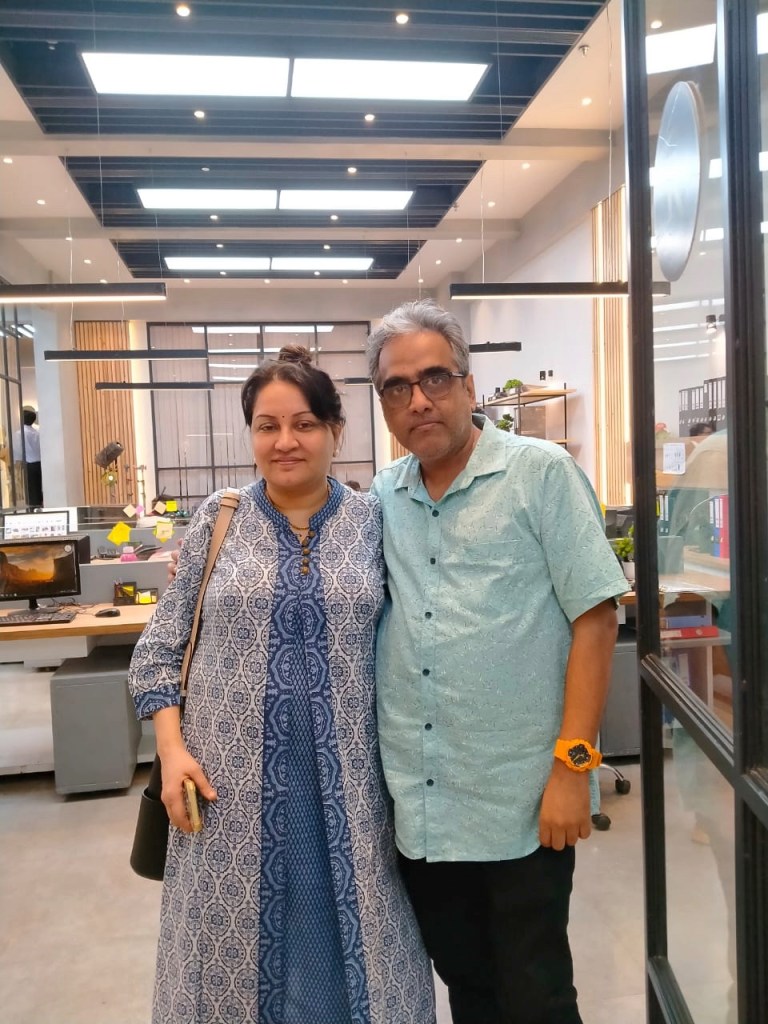
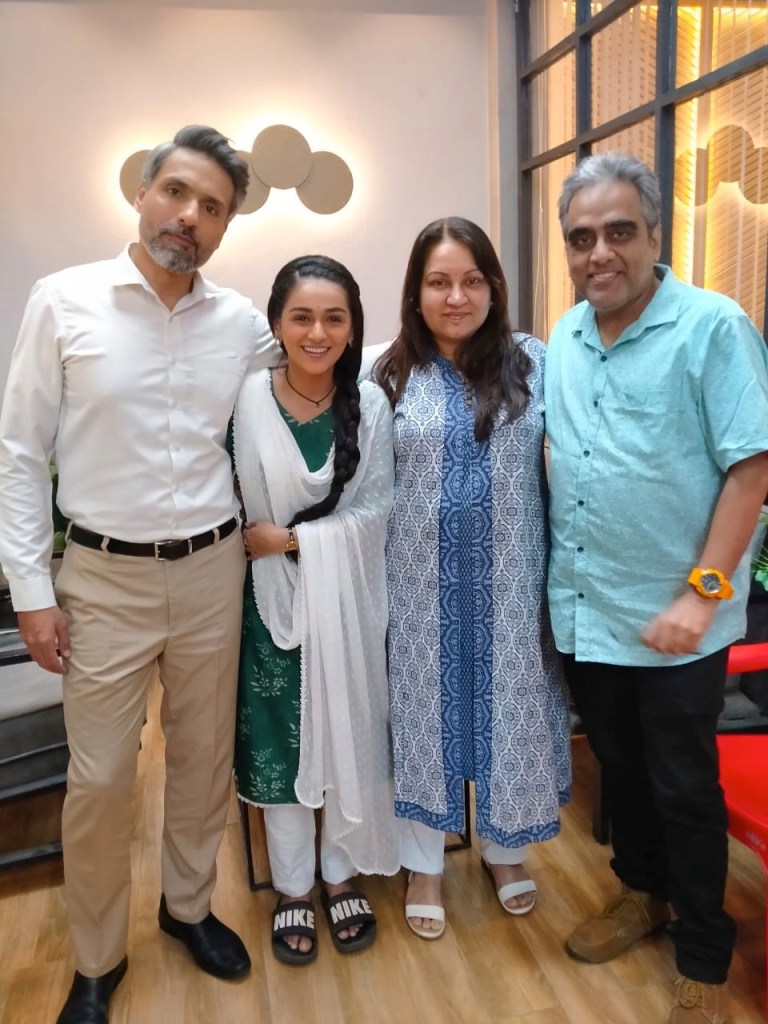
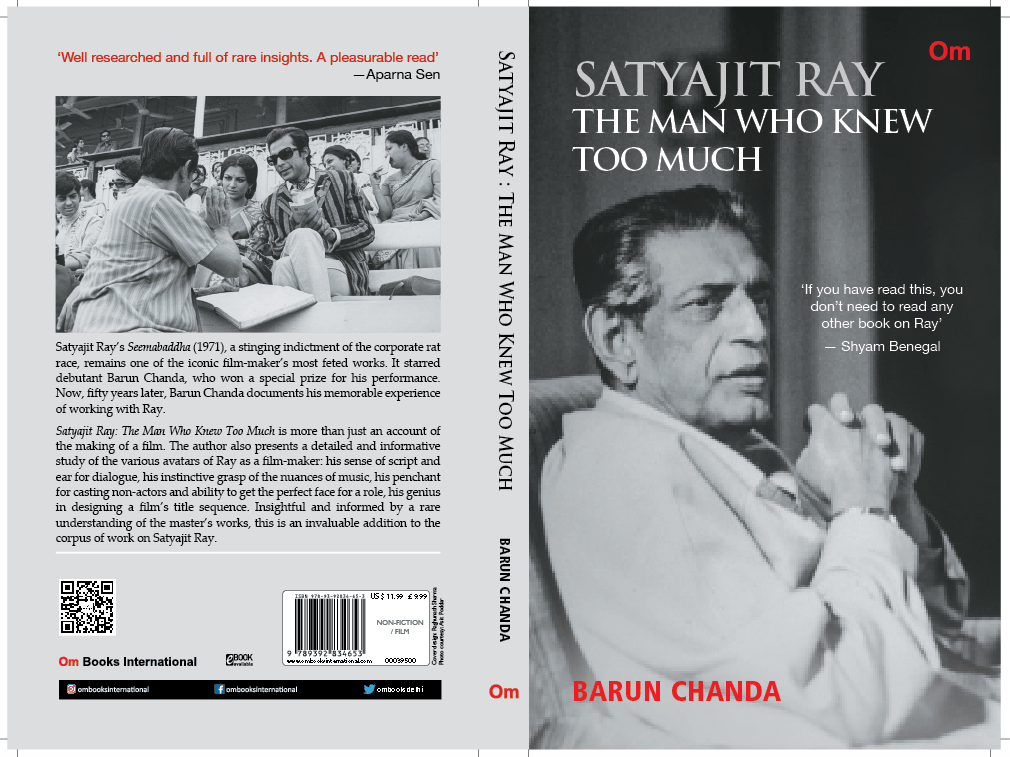

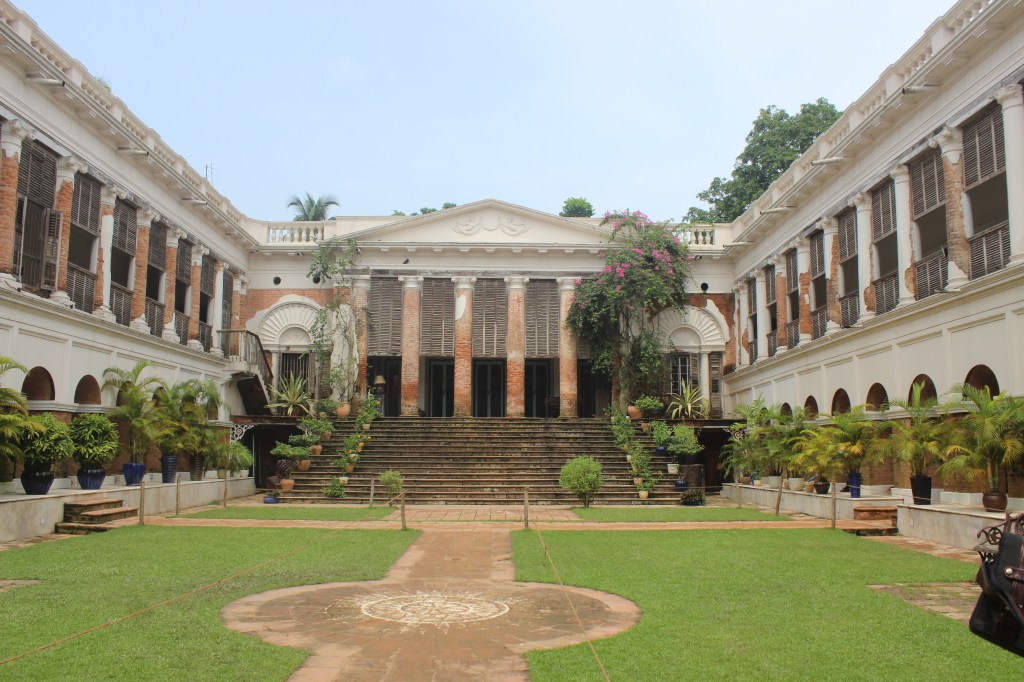
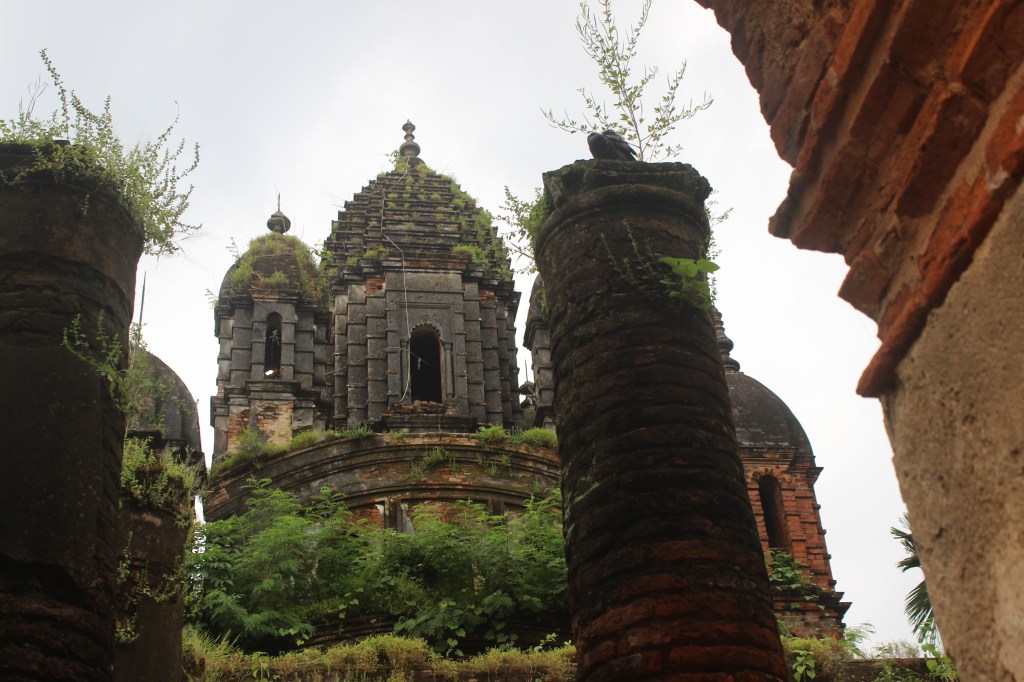
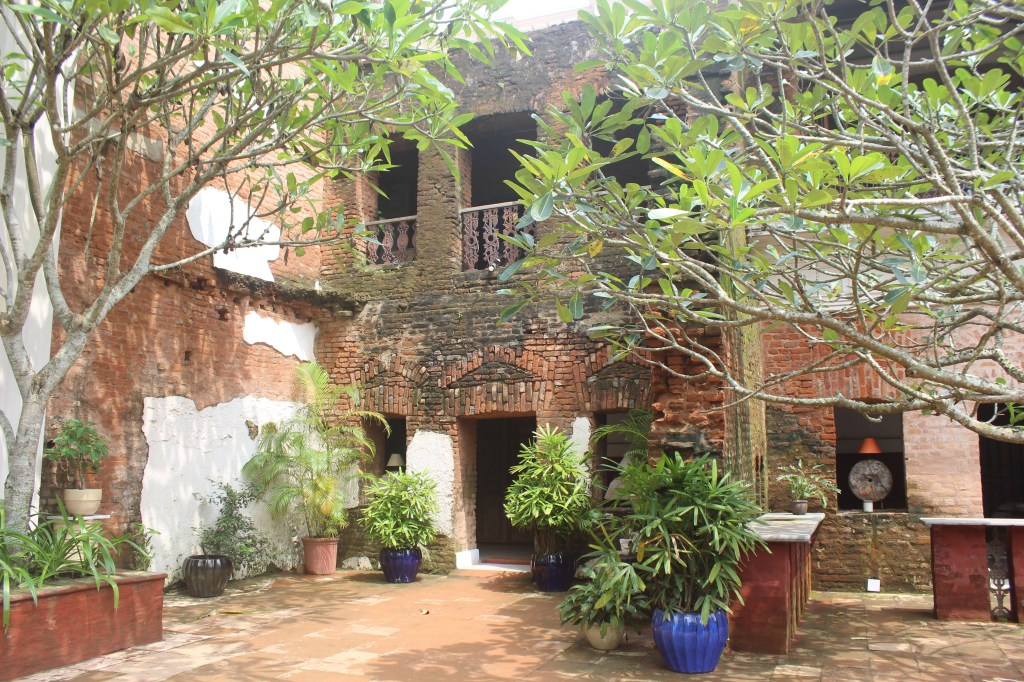
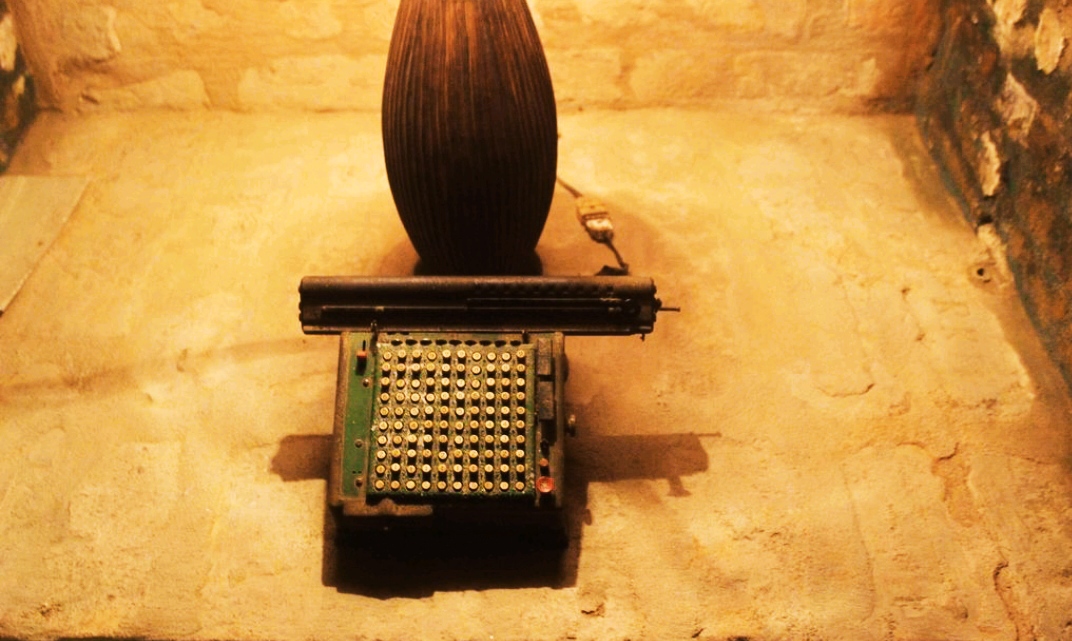
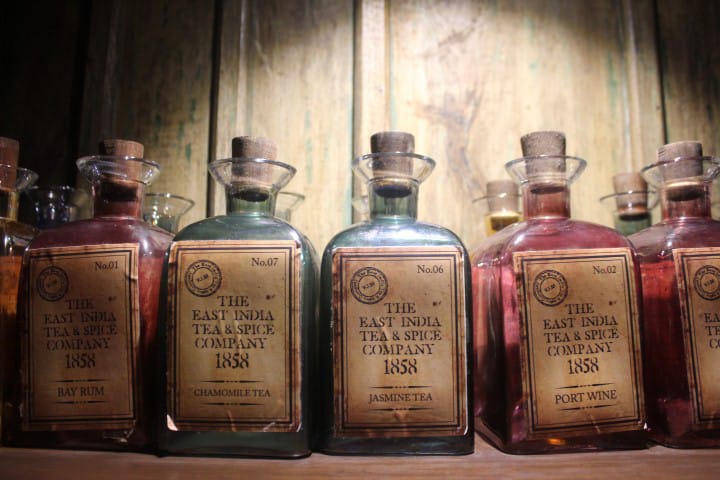
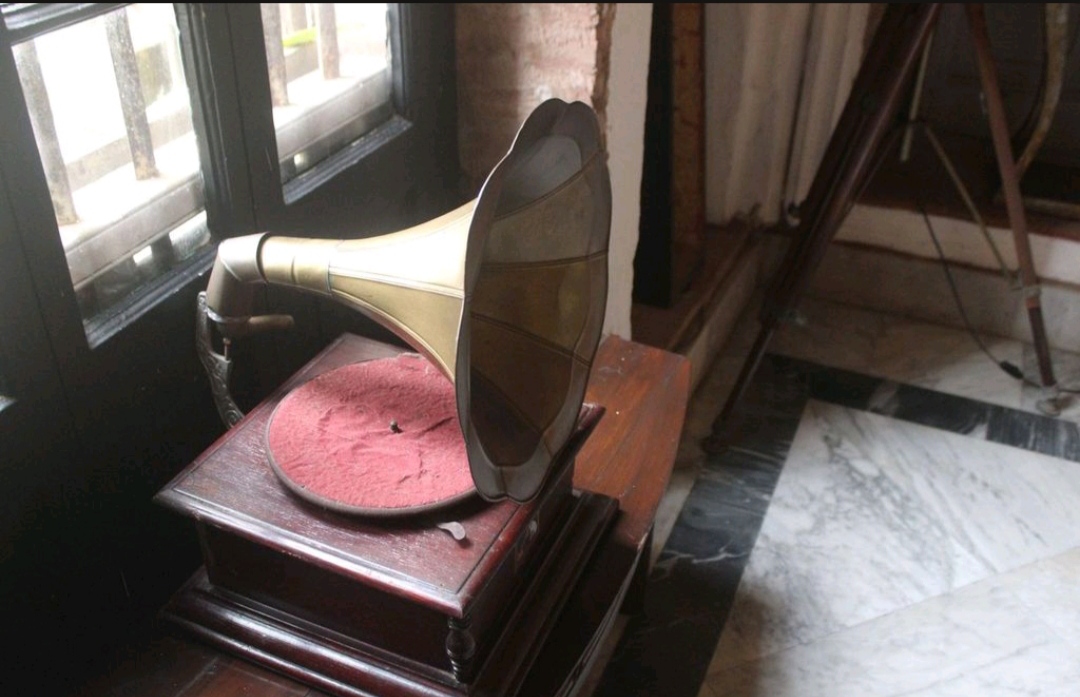
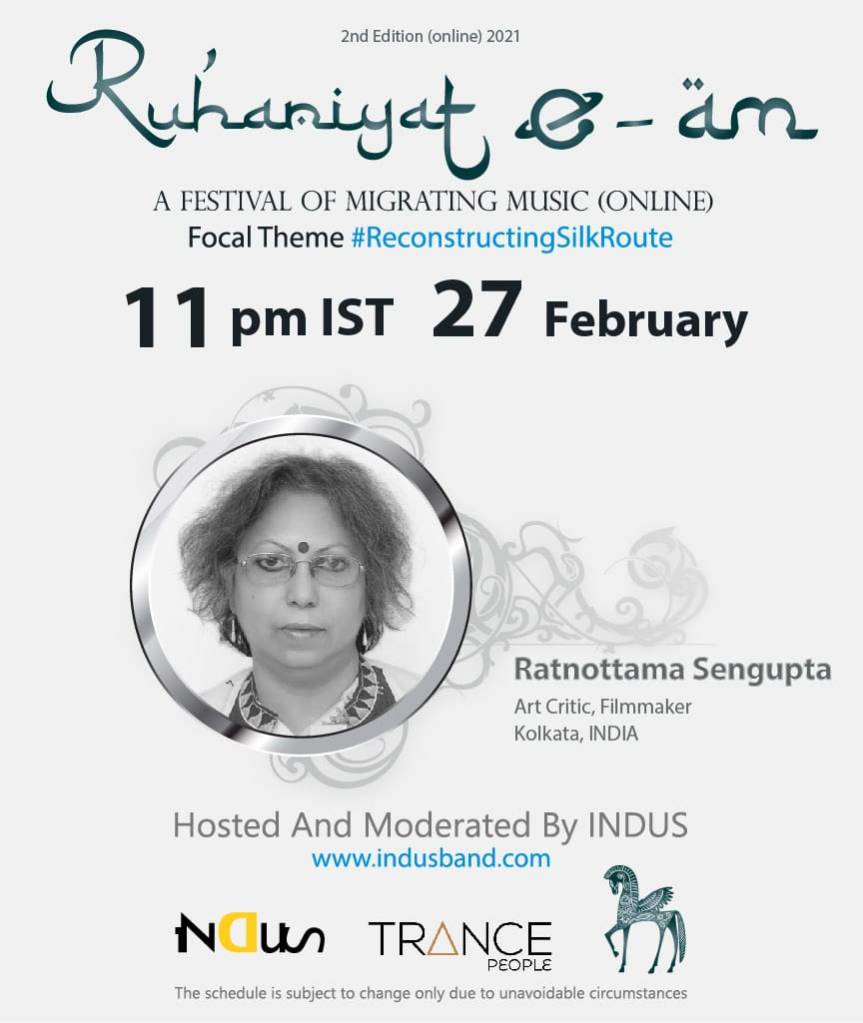
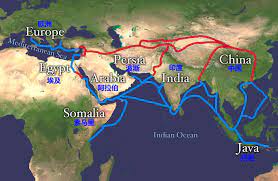


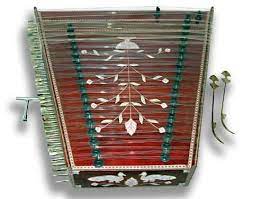

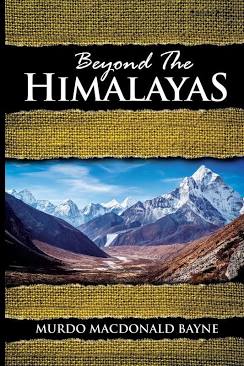

 Borderless
