By Farouk Gulsara
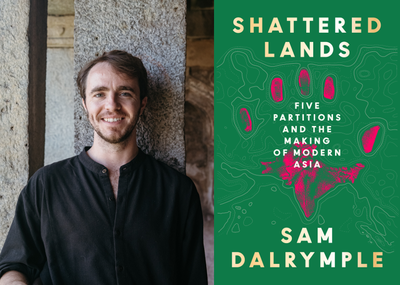
When the word ‘Partition’ is mentioned, it is always assumed to refer to the 1947 Partition of India and Pakistan. In fact, the Partition of the British Raj occurred five times.
Not so long ago, as recently as 1928, a vast expanse of land from Aden in the West to Rangoon in the east was united as the Indian Empire, all under British rule. It was the zenith of the British Empire, and it seemed the sun would never set on the Empire. A quarter of the world’s population lived here, from the Red Sea to Southeast Asia, and they all used the Indian rupee. One would travel across the span with an Indian passport. By 1971, in just 40 years, this Empire had been shattered five times, resulting in 12 nation-states.
We should learn to tell stories by listening to how housewives gossip. They narrate intimate personal stories about their neighbours, with vivid detail, as if they were there in the target’s bedroom. It becomes more believable when real characters are added. The same advice applies to telling history, his-story. Sam Dalrymple’s Shattered Lands: Five Partitions and the Making of Modern Asia does exactly that. A dry subject like history is turned into an unputdownable book by giving human faces to the people making difficult decisions at the administrative level and to those who have to bear the brunt of those decisions. Perhaps the author’s filmmaking background pushed him towards this style. That makes it very engaging.
The author, Samuel Hew Tantallon Darymple, is a scholar of Sanskrit and Persian, as well as a historian, author, activist, and social media influencer. He co-founded Project Dastaan[1], a peace-building initiative that uses digital technology to reconnect people displaced by the 1947 Partition of India with their childhood communities and villages.
The five Partitions mentioned in this book are: the separation of Burma from India in 1937; the reclassification of Aden as a British protectorate; the formation of Pakistan; the dissolution of the 550-odd princely states; and, finally, a bloody civil war that led to the formation of Bangladesh.
The Indian idea of ‘Bharat’ is traditionally shaped by the ancient Hindu geography of Bharatvarsha, a triangular landmass stretching from the Himalayas in the north to the Indian Ocean in the south. Notably, Afghanistan, mentioned in the Mahabharata, and Burma, known as Brahmadesh (Land of Brahma), do not fall within this framework. The city of Kandahar in Afghanistan is apparently named after Gandhari, the blindfolded matriarch of the Kaurava clan.
After the 1905 Partition of Bengal and the 1919 Jallianwala Bagh massacre, calls for self-governance grew louder. To pacify the Indian public, the Crown sent a group of seven, known as the Simon Commission[2], in 1928 to implement constitutional reforms. It did nothing to advance Indian independence but demarcated Burma as a territory quite separate from British India, and its inclusion in India was an error.
Coincidentally, this was the aftermath of the 1928 Depression. Before this, Burma was a melting pot of cultures. Its capital, Rangoon, one of the busiest commercial cities in Asia, was labelled the ‘Paris of the East’. It is said that in 1920, there were more traders in Burma than in New York. Rangoon port was an important harbour for the export of rice, teak and petroleum. Its banking services drew people from many regions. It was a multilingual and multicultural city, shaped by large-scale migration. People were heard speaking Bengali, Gujarati, Tamil, Marwari, Urdu, Chinese, English, and other languages.
The turn of the economic tide and the disparity in economic status between the ethnic Burmese and the sojourners sparked a series of unrest. The Chettiars and Bengali houses and shops were targeted. Indians were systematically excluded from Burma, forcing rich traders to become refugees and make a beeline for India. This long march over the Patkai hills to India became a feature again as Japanese soldiers (and the Indian National Army under Bose) advanced during World War 2. The experiences of Mariappan, a Tamil shopkeeper who fled to Tamil Nadu to start anew in Burma because of his lowly caste, and had to run again because of Burmese nationalism, are heart-wrenching. Then there is Uttam Singh, who had to endure a treacherous long march home to Punjab across the hills. Losing everything, it was a miracle that he and his family made it in one piece. Little snippets like these are the real reasons this book grows on readers.
Caught in the middle are the Naga people, whose land lies precariously between Burma and India. Although its leaders rallied for an independent Naga state, a fifth of the region fell under Burmese control. For decades to come, insurgency remained an issue. On April 1st 1937, Burma was carved out of British India, leaving many unanswered questions and triggering years of attempts to usurp power within Burma, followed by years of military rule and turmoil.
After its capture by the British East India Company, Aden was governed as part of the Bombay Presidency. It was an important coal station for ships. The administrators regarded Arabs as fundamentally different from Indians. To increase efficiency, the British decided in 1937 to rule the port of Aden as a British colony and its hinterland as a protectorate, much to the dismay of many in the Indian community there. The rise of Arab nationalism that followed, with the emergence of dynamic leaders such as Gamal Nasser of Egypt, who promoted Arab patriotism, meant the former Arabian Raj kingdom would no longer be associated with Indians. Indians, once regarded as cultured and civilised, were soon viewed as competitors. By the late 1950s, a reverse exodus began. Indians with deep roots in these Arab lands, including property, businesses, and connections, had to flee helter-skelter back to India and the UK. The Ambanis were one such family affected by this.
Although Jinnah initially joined the Indian National Congress, his affiliation with the Muslim League grew stronger as he felt that Gandhi was leading the party and the nation towards a more Hindu-centric direction. The way the Congress conducted its meetings was as if they were at a religious ceremony, with chanting of mantras and singing of religious hymns. Muslims began to question how they would be treated in an independent India with Congress at the helm of power. Even though Jinnah appeared as an icon of Hindu-Muslim unity, later events propelled him and other Muslims to push for a two-state solution for post-independent India.
In a way, as Gandhi promoted his Hindu agenda, the Burmese, with their Buddhist practice, also increasingly felt more detached from India, further fuelling Burmese nationalism.
The post-WW2 era saw many changes in India. Britain was in debt, and the push for independence and a separate nation for Muslims was in full force. The third Partition was about to take place, but it was preceded by mindless killings and violence in the areas destined to be part of Pakistan. The Bengal region witnessed brutality on Direct Action Day, led by Suhrawardy and his acolyte, Mujibur Rahman, who would later be instrumental in the formation of Bangladesh. Things were no better in Punjab. The confusion created by Radcliffe’s arbitrary carving of the country left people unsure which country they belonged to, even one month after the ‘tryst with destiny’ speech.
There was then a scramble to recruit the 550-plus princely states to join Pakistan or India, or to stand alone. This was the 4th Partition. Recruitment reached feverish heights in states such as Junagadh, Kashmir, and Hyderabad. Junagadh housed two sacred Hindu sites, Dwarka and Somnath, but was ruled by a Muslim Nawab. Kashmir had a Hindu king, but his subjects were predominantly Muslims. The situation was reversed in Hyderabad.
The shattered subcontinent of India has been in constant flux even after attaining self-rule. It has to deal with internal squabbles and hostile neighbours. The situation becomes complicated as the world divides itself into the blue corner of capitalism and the red corner of communism. Marxism and Maoist ideology spread across its states, creating skirmishes here and there.
Pakistan, too, had its own problems. The insistence on using Urdu as the national language was not taken lightly by the Bengali-speaking East Pakistanis. The discord reached a tipping point in 1971, when the Bengali Awami League won the Pakistani elections. Civil war broke out when West Pakistani leaders refused to accept the election results. India sent in its troops to squash West Pakistan’s army and effectively completed the Fifth Partition, the creation of the country of Bangladesh.
The recurring theme throughout the book is that people continue to help one another, regardless of the day’s political climate. Despite ideological differences, people help people. The book highlights numerous heart-stirring accounts of the extraordinary resilience and compassion of everyday people. These ‘unity in diversity’ stories emerge from small acts of kindness that transcend religious, social, and economic boundaries.
It remains to be debated by future historians whether the colonial masters can be blamed for shattering the land that spanned the Arabian Gulf to Southeast Asia. Given the insatiable appetite of human greed for land, wealth and power, are these sequelae inevitable anyway?
[1] https://samdalrymple.com/project-dastaan
[2] https://www.britannica.com/topic/Simon-Commission
Farouk Gulsara is a daytime healer and a writer by night. After developing his left side of his brain almost half his lifetime, this johnny-come-lately decided to stimulate the non-dominant part of his remaining half. An author of two non-fiction books, Inside the twisted mind of Rifle Range Boy and Real Lessons from Reel Life, he writes regularly in his blog, Rifle Range Boy.
PLEASE NOTE: ARTICLES CAN ONLY BE REPRODUCED IN OTHER SITES WITH DUE ACKNOWLEDGEMENT TO BORDERLESS JOURNAL
Click here to access Wild Winds: The Borderless Anthology of Poems
Click here to access the Borderless anthology, Monalisa No Longer Smiles
 Borderless