Categories
Editorial

Colours of the Sky

A riot of colours starts the day
with happiness, vibrancy and hope,
dispelling the winter of discontent
with whispers of new lores…
Courtesy: Sohana Manzoor

Devi (The Goddess) is a 1960 Satyajit Ray film, based on a story by a writer called Prabhat Kumar Mukhopadhyay, that showcases nineteenth century India, where the silence of a young girl who is deified, wreaks havoc in her home, village and life. In an interview, Satyajit Ray contended that the film was to make people rethink ‘messiahdom’. The exact words he used to state this was that the film was against ‘religious dogmatism’ as the film and story literally dealt with the deification of a young bride. Tagore had similarly questioned blind deification in a number of his poems and plays. These (as Ray spelt out in his interview) did not address religion per se but malpractices, among them, the tendency to worship an idol to a point where flaws are justified, accepted and emulated. Satyajit Ray and Tagore were both Brahmos — which can be seen as a reform movement. These two were not criticising religion but talking of rising above gawky hero worship to think logically and arrive at logical conclusions. When we talk of characters from the Ramayana, the Mahabharata, other mythologies or substitute the adulated with stars, writers, politicians and businessmen who run huge concerns, we tend to idolise them. But these were and are all characters with flaws, whether fictitious or real. We can well learn from their mistakes, rather than deify and worship them to justify bad behaviour by quoting instances from lives of past legends or prominent persons in the current world.

Akbar Barakzai, a poet exiled from Balochistan, talks in a similar vein in his interview. You can see it in his poetry too — some of which can be found translated by Fazal Baloch in our pages. Barakzai talks of transcending barriers we draw for ourselves in the real world, of writing with honesty and sincerity. He has shared vignettes of his life as he changed countries to continue his work. Baloch has also brought to us another excellent poet in translation, Munir Momin. A major poem by Nazrul (the ‘bidrohi kobi’), ‘Bidrohi or Rebel’ has wound its way to our pages translated by Professor Fakrul Alam. We are honoured and grateful that Prof Alam chose to share this excellent translation with us. We have more translations: Jibonananda’s ‘Motorcar’(1934) by Rakibul Hasan Khan, a Korean translation by Ihlwha Choi, another short story from Nepal and Tagore’s powerful poem,Morichika or Mirage’, which is a wake-up call for the inert affluent who hold themselves aloof from common masses. We have also interviewed a major prose translator of Tagore, Professor Somdatta Mandal. With much to share on Santiniketan, Nabanita Deb Sen and many interesting anecdotes, Mandal talks of her extensive work with her translations spanning many more writers from the past.

We have a colourful ensemble this time almost as vibrant as the autumnal colours that have invaded nature in some parts of the Northern Hemisphere. Michael R Burch has given us beautiful poems on autumn, including the autumn of life. We have a poem in a similar vein by George Freek whose work continues influenced by Liu Yong (1719-1805), an influential minister and calligrapher in the Qing Dynasty. Ryan Quinn Flanagan touches on Leonardo Da Vinci’s Mona Lisa in his poetry. Rhys Hughes has given us humour in both his poetry and his column. Our other humorist, Devraj Singh Kalsi has given us darker, more caustic black humour in his narrative. We have lovely photographs from Penny Wilkes with her verses in Nature’s Musings. It is amazing the way she photographs birds in flight. Stories from Malaysia, Bangladesh, India and America add to the richness of our oeuvre. Sunil Sharma has given us an avant-garde telling of Odysseus’s voyage in the modern world, transcending the borders of time and ethnicity.

A well-known senior journalist, Ratnottama Sengupta, has also travelled through time to give us a recall of her experience at the 35th Cairo Film Festival one November, nine years ago. Her narrative about the time that the Shariat law was adopted by Egypt reminds me of the way things moved in Afghanistan few months ago and what is even more stunning is the way in which organisations dubbed extremists earlier are allowed to run countries now. Is it really not yet time to get rid of messiahs and look for one world?

We conclude our travels in Burma with John Herlihy and his friend, Peter, this month. And start a column with Candice Louisa Daquin, The Observant Immigrant. Her essays always draw much discussion. An experienced psychotherapist, she has looked into our value systems. We have books excerpts from Arundhathi Subramaniam’s Women Who Wear Only Themselves and CJ Fentiman’s award winning book, The Cat with Three Passports. Himadri Lahiri has done an in-depth review of Somdatta Mandal’s ‘Kobi’ and ‘Rani’: Memoirs and Correspondences of Nirmalkumari Mahalanobis and Rabindranath Tagore. It is amazing how much we can learn about a person from their letters. Suzanne Kamata has shared her review of Iain Maloney’s Life is Elsewhere/ Burn Your Flags. Reviewed by Meenakshi Malhotra, Shylashri Shankar’s Turmeric Nation: A Passage Through India’s Tastes, sounds like an erudite read that spans thousands of years of history. Anita Agnihotri’s Mahanadi –The Tale of a River, translated from Bengali by Nivedita Sen, has been reviewed by Bhaskar Parichha. The narrative sounds like a powerful voice weaving together the lores around the river.

Do pause by and find many more authors who dot our November edition. As usual, naming each one will keep you away from our delectable reads for longer. We thank all our readers for their continued patronage, and I would like to thank my fabulous team who are now even providing visuals to brighten our pages. A huge thanks to Sohana Manzoor and Sybil Pretious, who write as well as they paint. Thanks to all our wonderful contributors for making Borderless a reality.

Wish you all sunshine and laughter!

Best,

Mitali Chakravarty

Borderless Journal

Categories
Essay

Renewal

By Jayat Joshi

“…most lawns within
the limits of the municipality
are to be grown
on billiard tables—
fertilized by the organic matter
that is commonly
trapped in pinball machines
when the marbles
sit on their commodes.”
-- Marjorie Hawksworth, Urban Renewal

When my home grew old, its windows started chattering in the wind like teeth. My younger siblings would remember it only as they would a distant grandparent near twilight years. They would remember the impressions of dusted off termite nests looking like brown, dried-up river routes on a map. I was impatient with such memories. I liked to reminisce the angsty drawings I painted at whim in my teenage years on the walls, or scribbles made by my sister when she was five, both of which had gotten layered over with whitewash. In memories younger than mine, home was a description of what it would turn into.

Even neighbours who came to live in houses vacated by older neighbours from my childhood had relatively young memories. There was a real estate dealer who remembered everyone’s homes in terms of what they would fetch when the nearby flyover to the highway was constructed. When he saw someone strolling in the street, he would hint the value he put on their plot with the width of his smile. There were also other people concerned with this make-believe flyover. Some folks whose ancestors had missed out on the land grab of the early years in the city and who had now been compelled to build up from benami land as a collective, and who had now declared this place a small ‘village’ with its own municipal councilor, were preparing to lobby shifting the flyover by a few yards, so it just missed stomping out someone’s house. The optimal outcome was to make the construction cut through a nearby square plot which made everyone suspicious. This patch had a boundary circumscribing it with names of four different owners in white chalk on each side. Benami: under no one’s name. Here, under more than one name.

Most real estate projects in the city had an underbelly that lay bare like a demo surgery for medical freshers, but concealed in plain sight. The underbelly of our home, the surrounding apartments, the real estate broker’s house, and the old and new neighbours’ homes was the settlement along the bottom edges of the area of migrant labourers from faraway states, dragged here on the same wind that entices investment in real estate.

Successive winds had made these populations denser, trickling their living spaces down precarious slopes where land descended into ravines of seasonal rivers. These rivers overflowed with mud and plastic in the monsoon, taking with it a limb or two of these makeshift settlements, like the sea dilutes the durability of a sand castle with every wave. From them, our homes sourced domestic helpers and those who wanted to build more homes sourced their workers. They were the gears of going-on-ness. A well-intentioned administrative servant had, before retiring, laced the margins of the enclave with bamboo plantations. Bamboo roots kept soil steadfast. Bamboo was a mute saviour for informal settlements. Below the bamboo shoots, iron rods jutted into the ground to lay foundations of large infrastructure, like a bed of a thousand arrows from the Mahabharata. The imposing character of Bheeshma breathed his last on a similar bed amid the battlefield. He had the boon of dying only when he willed. 

When my home grew old, the sight outside its windows became weak. The eye could not wander far without colliding into a concrete block, manifestly an apartment structure called either ‘Mountain View’ or ‘Mount View’. Most of the flats in these apartments came in the way of each other’s view. For a couple or more square kilometres, residential complexes grew competing for the remaining thin sliver of sight of the nearby hillock.

Higher-end, dissatisfied customers then began shifting closer to the mountains to catch a better glimpse. Younger memories are not tempered with the punitive side of things. Between widening smiles of brokers and narrowing views of mountains, the remembrance of harrowing disasters is dissolved. In fact, the dissolution is all the more profitable. The aftermath of a natural disaster is a levelled playing field for real estate and repair to begin its game anew. Its anticipation marks the desire for a smarter city, a renewed city, a resilient city, a city that has gone on record trying to be the best version of itself.

Old houses in this city are nails in the imagination of the future. The people who own them refuse to ‘develop’ them—adding a floor, remaking the shape, clubbing two plots, encroaching extra space through a fence, rejigging the drainage, and so on. The view, finally, can be of state-of-the-art high-risers as good as the mountains themselves, often a cause of envy for them because they house more greens, lawns and gardens.

Bamboo, and many species of trees growing on sloping land have a packed network of rhizomes in the soil. These roots ought to tell us something; when the land yawns and shifts, all these interconnected rhizomes cling and stay. For narrow rods that penetrate deep, like flimsy taproots, the slightest tremor will send up magnified vibrations that reinforced concrete may be too rigid to bear. It could move when shaken. Or stand still and fall.

The city bureaucracy is like Mahabharata’s Bheeshma—of lofty character, having trained in the academy not far from here, and unwavering in commitment to the law, the Dharma, the golden rule of do unto others. The Dharma calls for moulding a supercity out of this virgin land, this plot-sized town at the scale of the nation. Uproot these cobweb-like rhizomes from the soil, make some fancy wood-furnished cafés from the barks, provide them with a natural aesthetic, and carpet the remains with rubble and concrete. Chase away the birds and install some ambience music, pigeons can stay, and someone will need to be employed to clean their droppings from the massive glass windows. Someone not from here, preferably — who share no votes here. The visionary gentle people who gave us ‘Mount View’ can give us our own sequestered enclave, replete with trees so our domain is secure at least.

Land title is presumptive in India. No one knows if you do own a plot, if you do, you may have some papers, these may be real or fake. The public record registers a few transfer transactions. The rest is too hard, too long, too complex, too silly. There is no land to give and take. Everything is already transacted. Unless the government seeks to flatten another forest. Land is assembled by real estate, by law, by settlement, by business, by the bureaucrat, minister, broker, resident, worker, shopkeeper, caretaker, priest and peddler. No one knows if someone else owns a plot, yet everyone continues to own more. When my home grew old, many people started pouring in to see if in fact they were the ones who owned it all along. Or if they could. Or if they couldn’t but wanted to. When my home grew old it became a thing to be cross-checked with our older memories, to see if it had been there at all. The second-guessing might prove too much for us.

Jayat Joshi is a researcher of urbanisation, especially the politics of land in India. He is pursuing a Master’s in Development Studies from the Indian Institute of Technology Madras.

.

PLEASE NOTE: ARTICLES CAN ONLY BE REPRODUCED IN OTHER SITES WITH DUE ACKNOWLEDGEMENT TO BORDERLESS JOURNAL

Disclaimer: The opinions expressed are solely that of the author and not of Borderless Journal.

Categories
Essay

A Season of Magical Mellow Wistfulness

Meenakshi Malhotra demystifies the autumnal celebration of Durga Puja as a time of homecoming for married daughters through folk songs that are associated with the festival

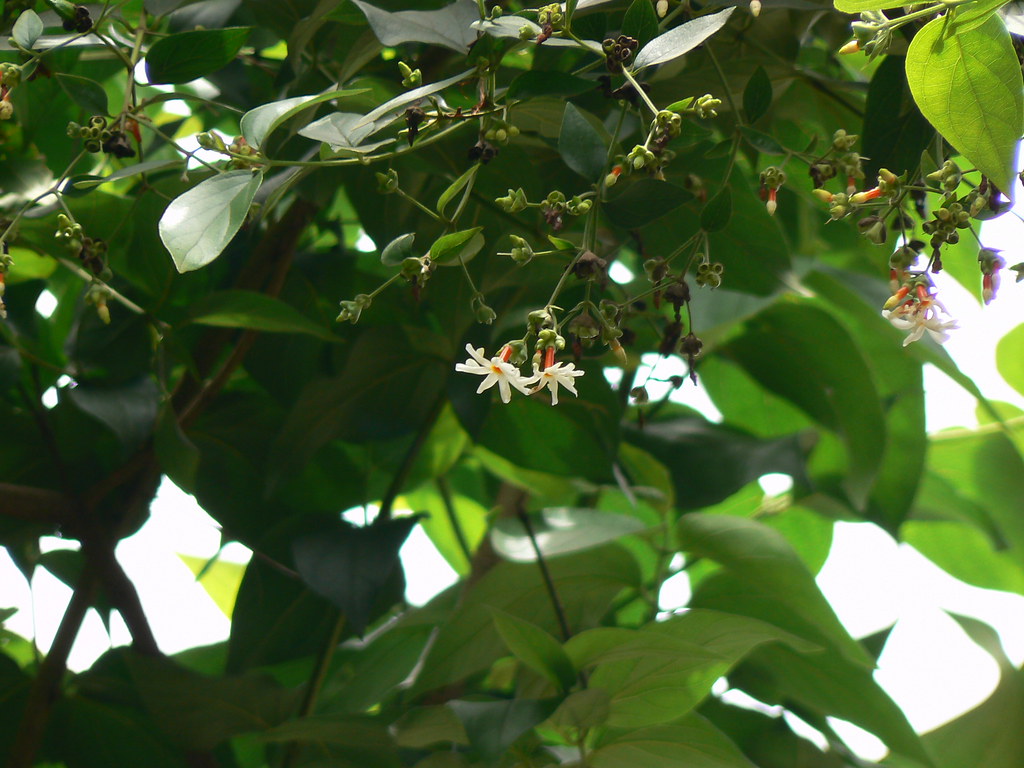
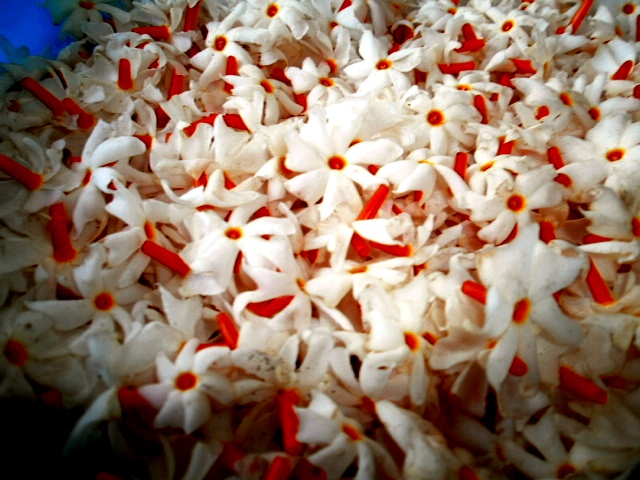
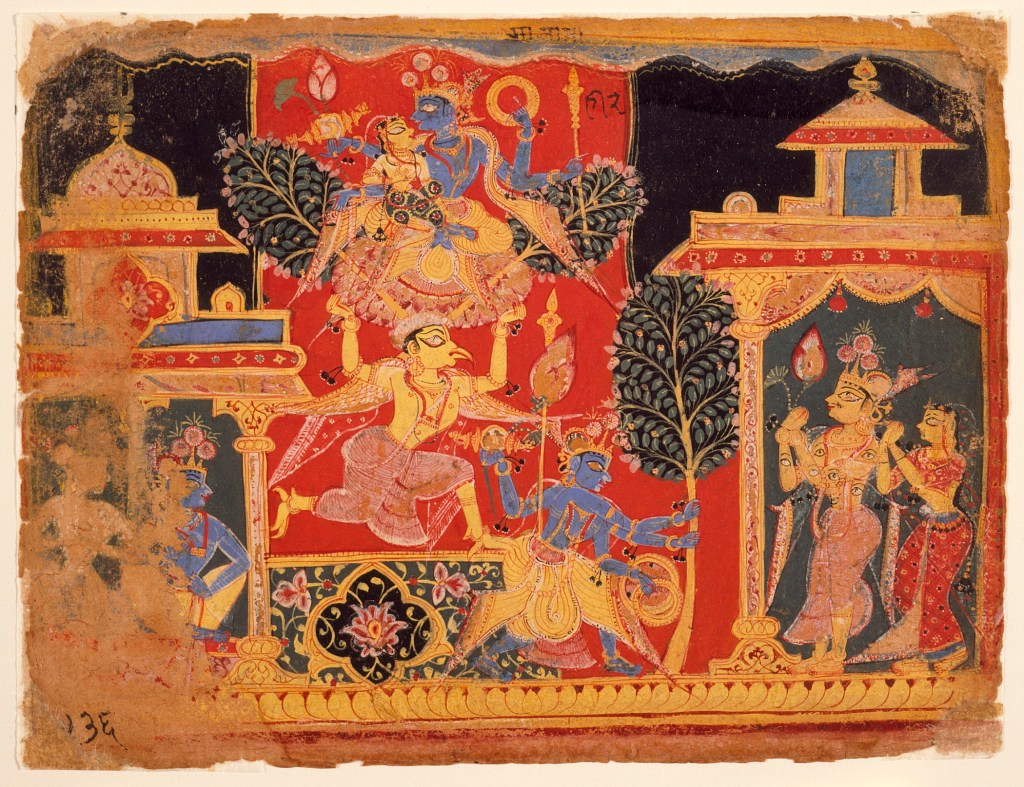
It is that time of the year again… a time of magic and enchantment when the air comes wafting with the fragrance of shiuli flowers, a species of night-flowering coral jasmine also known as the parijat. Legend has it that this flower is from a heavenly tree  that was brought to Earth  by Lord Krishna, one of the central gods in the Hindu pantheon. Interestingly, in a somewhat unusual twist, this tree is considered so sacred that its flowers picked up from the ground are also deemed appropriate for worship, to make sacred offerings. This is rare, given that flowers offered for worship are usually to be plucked from the tree and not picked up from the ground.

In Hindu mythology, the parijat tree is the tree of the universe which is owned by Indrani, the consort of Indra or the king of the Gods in Hindu mythology. Apparently Krishna stole it from Indra’s consort, Indrani and planted it in a region located between heaven and earth. The tree, also known as “kalpa-taru” or wishing tree, is one which grants all objects of desire.

From the sacred texts like Bhagawat Purana, the Vishnu Purana and the Mahabharata, we  learn that the elaborate process of samudra manthan (churning of the ocean of milk) yielded the  parijat tree as one of the three valuables.  This tree is said to have blossomed atop Mount Meru, the garden of paradise. It was claimed by Indra when  it rose to the surface and emitted its fragrance.

Krishna steals the Parijat tree from Mount Meru. Water colour India, app 1525-1550 CE. Courtesy: Creative commons

This is only one of the many gifts of nature, the exquisitely fragrant flowering tree which sheds blossoms and carpets the Earth  around it. Autumn, that season so famously invoked as the time of “mellow fruitfulness”, carries hints of ripening and a mature fecundity. For many sections of Indians, it is the time of the goddess, a time that a lot of us associate with the advent of the goddess Durga, who signifies the triumph of good over evil. In Durga, we have the divine represented both in terms of mythic abstractions and the material everyday, as power and poetry, as divine and human, as mother and daughter. Similarly the goddess Durga’s descent on Earth for the days of the festival, is also the advent of the daughter to the house of the mother, a moment which overflows with affection, feelings and emotions.

The event happens at a certain time in the Hindu calendar and participates in linear time, as well as being a part of time imagined as part of a larger ongoing cycle of temporality. Similarly, it  participates in mythic and magical time or eternity as it were. For the daughter, longing to be enfolded in the mother’s arms, who counts  the days till she can go back to her natal home, albeit for a few days, this is also a special time indeed.

It is this note of longing, dispossession and exile that is captured in the folk songs in the Bengali or Bangla language, which were documented in the 18th century. These songs are called Aagamoni which translates into advent, here referring to one who arrives. Why this gains a certain poignancy is that girlhood in Indian and many traditional cultures was viewed as a fleeting and fugitive time, haunted by transience. Female children were in the past often regarded as temporary occupants in their natal homes and were  characterised as ones who do not belong or belong to someone else, whose real home is with their in-laws.

Durga Puja celebrations
Courtesy: Creative Commons

In the Hindu pantheon, Durga, Uma or Parvati is a prominent mother goddess, the consort of Shiva. Her names refer to split roles of the feminine imaginary. As Durga she is the fiery slayer of demons. But– and this is the central theme here– she is also the gentle daughter Uma. It is in her form of the daughter who is separated from her parents, that the songs of Aagomoni and Bijoya emphasise. Bijoya translates as victory and starts with the return of the Goddess to her spouse, Shiva. Aagomoni and Bijoya are genres of Bengali folk songs celebrating the return of the Goddess Durga/Parvati to the home of her parents on the eve of the autumn festival of Durga Puja. The Aagomani songs describe the return of Parvati to her home in rural Bengal, not as Goddess but as daughter, and are followed by Bijoya songs which describe the sorrow of parting three days later as Parvati returns to her husband ShivaAagomoni songs can be interpreted as an expression of collective feelings, experiences and aspirations, another way of rethinking or reimagining the self-inscription of a collectivity.

In one of the best known and common Aagomoni songs, ‘Ogo amar agomoni’ (‘The Advent of Durga’):

The Advent of Durga

I herald the advent of the Goddess 
With the lighting of my lamps 
During the autumn whirlwinds.
At the end of night, the sun bursts forth.

In the swirling storm, 
At the end of the night,
The light in my path is turned off.
The beacon of my life has turned off. 
I herald the advent of my Goddess.

The lamp that reveals my path,
Brightens my life by pouring 
The nectar of your presence. 
I am lost in the blackness of fear. 
When you come in your radiant chariot, 
Your refulgence will shatter the 
Deep darkness in all directions.

Play the aubade of aurora.
It will all be divine. 
I herald the advent of my Goddess 
With the lighting of my lamps.
I herald the advent of our Goddess. 

(Translated by Mitali Chakravarty)

The song is full of the imagery of light and refulgence. My goddess “light of my life’’ could be both a reference to the divine mother, as well as to a daughter, who was very often  referred to as ‘Ma’ as a term of affection. While this song maps the emotional link between the mother and the daughter and can be seen in terms of affect, the focus is on her refulgence and divinity. The reference to the goddess in terms of the mother/ daughter trope is much more evident in other songs, which narrates the saga of dispossession — the fair  princess who has to live in disorderliness and poverty.

Go Get Gouri

Go, go Giriraj
To fetch your daughter Gouri
Uma is in deep sorrow
Uma has cried for her mother
Living in misery

Bhang consuming Shiv
Ash-smeared and wild
Sold off her finery
All her jewellery
To fund his addiction 

Bhola revels in intoxication 
He has collected hashish from 
The three realms….heaven, hell and earth.

Bhola put the intoxicant, bhang
Made with crushed
Datura seed on my Uma’s face.

Go lord of the mountains go
Go to fetch Gouri
Uma has cried herself hoarse.

(Translated by Mitali Chakravarty)

In another evocative song, the mother cries –“Ebaar Uma ele/Aar pathabo naa ( This time when Uma comes/ I will not send her back)”.

When My Uma Returns…

This time when my Uma comes,
I will not send her back. 
If people call me bad, let them. 
I will not listen to anyone. 
This time when my Uma returns,
I will not send her back, 
This time when my Uma comes.

If the conqueror of death comes
To talk of taking Uma back, 
If Mritunjaya comes
To talk of taking her back, 
We, mother and daughter, 
together will quarrel with him.
I will not agree because 
he is my son-in -law       
 
This time when my Uma returns,
I will not send her back, 
This time when my Uma comes...

The poet says 
Can life tolerate such wounds?
Shiva roams the cremation grounds,
And does not think of his own home. 

This time when my Uma comes,
I will not send her back. 
If people call me bad, let them. 
I will not listen to anyone. 
This time when my Uma returns,
I will not send her back, 
This time when my Uma comes...

(Translated by Mitali Chakravarty)

Here, the mother vows not to send Uma back to her wild and undomesticated husband when she comes visiting. This articulates a resolve uttered by the mother not to jeopardize or endanger her daughter by ‘giving’ her to an undeserving husband. The anxiety, insecurity and fear for the daughter’s safety is clearly evident in these lines. Maternity and maternality is here described as a tortuous and beleaguered  state. In all these lines, we see a shift from the narrative account of arming and empowerment of the goddess to a more human and humble register. Begging, cajoling, importuning-the mother’s pain and anxiety for the daughter, married to that strange and alien  figure, the untamed and undomesticated God Shiva, is evident in every line.

The narrative of mother and daughter pining for each other, appears to have similarities with  the Greek myth of Demeter and Persephone. In some,  the daughter is imagined as asking her husband for permission to visit her mother: “It has been so many days since I went home and saw my mother face to face ceaselessly… she weeps for me…” (Bhattacharya, in Mc Dermott 2001:132). The men ( both father  Giriraj and husband Shiva ) emerge as emotionally unreceptive. (Kaul 2022:9) We hear Menaka bemoaning an emotionally unresponsive husband who won’t fetch the daughter:

“Whom can I tell
the way I feel for Uma?"

Thus the story of the festival of Durga embraces not only the radiant, refulgent and resplendent image of the goddess; behind it lurks the secret sorrows of generations of mothers and daughters caught in the inevitable dance of life as they play out sagas of dispossession. As autumn is the season of liminality poised between summer and on the cusp of winter, the goddess visiting her natal home, is poised between humanity and divinity, both as a daughter in exile and as a slayer of demons. From this paradox, this spectacle that hovers between the majestic and the everyday, a sublime beauty is born.   

.

  Dr Meenakshi Malhotra is Associate Professor of English Literature at Hansraj College, University of Delhi, and has been involved in teaching and curriculum development in several universities. She has edited two books on Women and Lifewriting, Representing the Self and Claiming the I, in addition  to numerous published articles on gender, literature and feminist theory.       

.

PLEASE NOTE: ARTICLES CAN ONLY BE REPRODUCED IN OTHER SITES WITH DUE ACKNOWLEDGEMENT TO BORDERLESS JOURNAL

Categories
Review

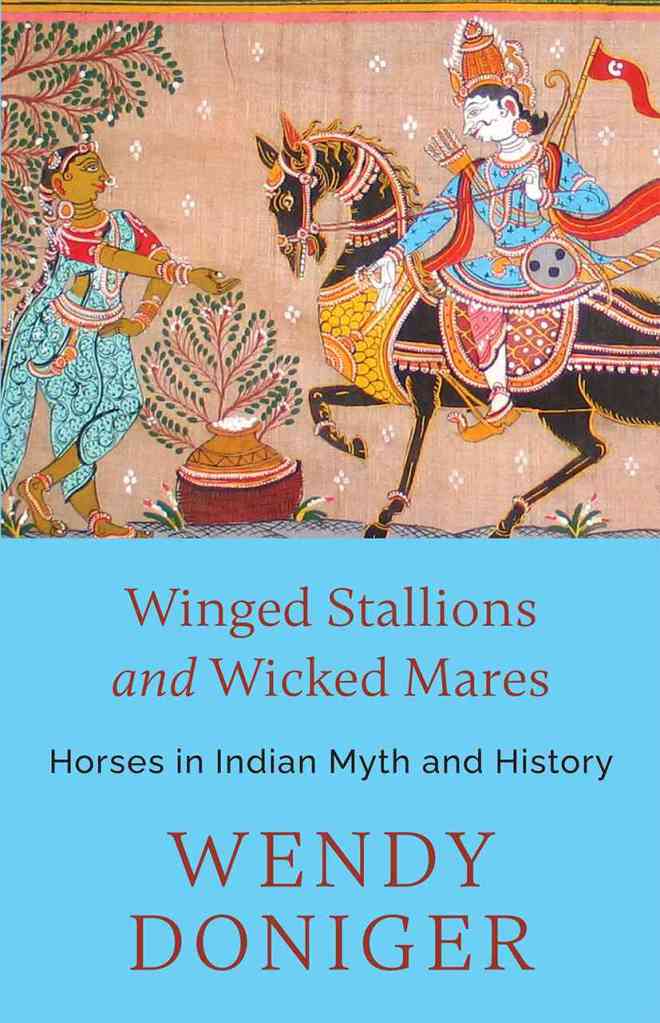
Winged Stallions and Wicked Mares

Book Review by Bhaskar Parichha

Title: Winged Stallions and Wicked Mares; Horses in Indian Myth and History

Author: Wendy Doniger

Publisher: Speaking Tiger Books, 2021

Horses have a captivating and curious existence in India. Stallions have been graciously carved into the Indian landscape in a variety of ways. To view the subcontinent’s past through the prism of the horse is to be swept back in its power and propriety. Horses have a galactic connection to Indian history, mythology, art, literature, folklore and also popular belief.

The political symbolism of the horse, its vital function in social life, religion, sport and war, its role in shaping economies and forging crucial human bonds is too obvious to point out.

Emergence of local breeds such as the Kathiawari and the Marwari, the Zanskari and the Manipuri is an interesting tale of gallantry. In India’s modern history, there were fabulous horsewomen too, Chand Bibi, Maratha princesses and women polo players among them. Horses have an intimate connection to grooms, blacksmiths, breeders, traders and bandits.

Rana Pratap’s legendary Chetak, Ranjit Singh’s much-contested Laili, Pabuji’s cherished black mare and those horses captured in paintings and equestrian portraits are riveting. This glorious age of the horse met its painful decline with the onset of colonial rule and automation.

Winged Stallions and Wicked Mares; Horses in Indian Myth and History by Wendy Doniger is an engrossing book not only for the subject but also the research. In this inspiring and scholarly book, Doniger — who has been called the greatest living mythologist — examines the horse’s significance throughout Indian history, from the arrival of the Indo-Europeans, followed by the Greeks, the Turks and Mongols (who imported Arabian horses) and the British (who imported Thoroughbreds and Walers). 

Along the way, she delves deep into the rituals of horse sacrifice in the Vedic age. She rummages through the stories of warring horses and snakes in the Mahabharata. She digs into   tensions between Hindu stallion and Arab mare traditions; imposing European standards on Indian breeds; the reasons many Indian men ride mares to weddings; the motivations for murdering Dalits who ride horses; and the enduring myth of foreign horses who emerge from the ocean to fertilise native mares.

Doniger combines erudition with storytelling and gives the reader a persuasive account on the horse in Indian culture just as she does it in her other books on Indian mythology. 

Quoting from the book: “The horse is not indigenous to India, except in a few small pockets. Even after it was brought to the subcontinent sometime between 2000 BCE and 1500 BCE by the Indo-Europeans. It played almost no part in the lives of ordinary Indian villagers, being too expensive for all but the most privileged people to own. In India’s folklore, epics and popular culture horse stories abound and there are some brilliant images of the animal.”

Doniger’s ride through four millennia of Indian legend and folklore is full of sacrificial horses, horse-headed gods, transformations and couplings. Like Doniger’s other works on Indian mythology and history, this book  is astonishingly accomplished with the threads of mythical narratives woven into a meaningful depiction of the Indian imagination.

Author of classic works like The Hindus: An Alternative History and Hindu Myths, Wendy Doniger has two doctorates, in Sanskrit and Indian studies, from the universities of Harvard and Oxford. She has taught at the School of Oriental and African Studies, University of London and the University of California, Berkeley, and is currently the Mircea Eliade Distinguished Service Professor of the History of Religions at the University of Chicago. Her other books include Siva: The Erotic Ascetic; Dreams, Illusion and Other Realities; The Mare’s Trap: Nature and Culture in the Kamasutra.  

The Vedic ritual of the sacrifice of a stallion is balanced by the myth of a goddess who takes the form of a mare named Saranyu (Fleet). Doniger retells the story thus:

“The blacksmith of the gods gave his daughter, Saranyu, in marriage to the Sun, and she gave birth to twins, Yama and Yami. Then the gods concealed the immortal woman from mortals; they put in her place a female of-the-same-kind (Savarna) and gave that look-alike to the Sun. Saranyu took the form of a mare; the Sun took the form of a stallion, followed her, and coupled with her. From that were born the twin equine gods called the Ashvins. She abandoned them, too.”

Doniger takes us on the trail of the horse into and within India. What follows is a surprising and exhilarating journey, covering caravan-trade routes originating in Central Asia and Tibet, sea routes from the Middle East, and the dominions of different sultans and Mughal emperors, the south Indian kingdoms as well as the Rajput horse-warrior states. 

Doniger professes her earliest exposure to India and the horses was in 1963 when she was twenty-two years old. Her meeting with Penelope Betjeman — daughter of Field Marshal Sir Philip Walhouse Chetwode who was the head commander of the British forces in India from 1928 to 1935 — gave her an introduction to these creatures. Doniger has dedicated the book to Penelope who died accidentally in 1986 in the Kulu Hills.

Winged Stallions and Wicked Mares has about a dozen chapters — most of which have a throwback to the Vedic and Puranic times. It is only in the last two chapters where she writes the horse saga of modern India. With a slew of illustrations and profound research, the book makes for a gripping read. 

.

Bhaskar Parichha is a journalist and author of No Strings Attached: Writings on Odisha and Biju Patnaik – A Political Biography. He lives in Bhubaneswar and writes bilingually. Besides writing for newspapers, he also reviews books on various media platforms.

.

PLEASE NOTE: ARTICLES CAN ONLY BE REPRODUCED IN OTHER SITES WITH DUE ACKNOWLEDGEMENT TO BORDERLESS JOURNAL