This Could Be a Love Poem for You by Ranu Uniyal, is her fifth collection of poems. Uniyal is a passionate bilingual poet at heart, a retired professor of English literature by profession and an inspiration to many budding poets. Across the Divide (2006), The Day We Went Strawberry Picking in Scarborough (2018), December Poems (2012) and Saeeda Ke Ghar (In Saeeda’s home, Hindi, 2021) are some other significant contributions made by the poet.
“Poetry and beauty are always making peace. When you read something beautiful, you find co-existence; it breaks walls down.” A quote by Mahmoud Darwish is reflective of Dr Uniyal’s poignant portrayal of human existence layered with love, grief, crises and relationships with the One (Self) and the World.
The collection is an aesthetic delight that traverses the heart of the readers with astute directness and a distinct confessional tone. It has three segments: ‘Dust My Regrets’, ‘Be a Good Girl’ and ‘Thy Eternal Grace’. Collectively, there are 62 poems in all.
The poems start from the personal and move to the universal with their intricate details. The poetic sensibilities take us to the female imaginary of the physical, psychological and spiritual domains. If Kamala Das in the 20th century introduced the readers to her brazenness in poetry, then Ranu Uniyal in the 21st century coerces her readers to travel from the common routine to the coveted spiritual abode found in the creative doctrine of poetry. The poetic depth can also be inferred through the rhythmic structure, the play with the words through alliteration and rhymes introduce jibes in poems such as ‘The Shop and the Shutter’.
The themes of love, identity, self-expression, language and power, old age, body’s fragility, vulnerability, precarity, loss, women and domesticity, motherhood, death and memory are persistent throughout the collection. She poetically contours the theme of human existence and its distinct flavours like WB Yeats in Sailing to Byzantium with — “That is no country for old men.”
The poetic pondering over the question of ‘Self’ or recurrent declaration of ‘I’ is developed through linguistic, racial, and geographical temporal identities. For example, the poet’s ‘Garhwali’ identity is camouflaged with the the more modern Anglophone identity. The declaration of the personal “self” and dedication to some personalities like Mohini Mangalik, S. A. Hamid and Amma takes us to the glints of the poet’s biography in the most poetic manner. Gulzar once uttered that, “we poets are errant grains of dust… life takes us and tosses us, we do not know where it will end.” The poems hail the essence of life’s evolutionary journey, especially the one of experience and the mature years of life.
Her poems present multiple binaries: of love and grief, seller and buyer, life and death, through picturesque imagery. Additionally, the poet familiarises the readers with the references to the pagan myths from diverse cultures, Christ, Nachiketa, Yama, Isis, which also introduce us to the eco-folklorists’ traditions which is a delight to explore.
She writes in aphorisms at times and critiques the personal and public crises. The poem, ‘Only Grief’, provocatively emotes the climate crisis as an apocalyptic warning through a distant voice from the future, wherein, critiquing the war-torn present world and the catastrophic space left for the progeny of the future.
We sang dangerously of the failure.
Of our prodigal ancestors.
Another poem, ‘From One Life to Another’, reflects a similar concern about the cataclysmic/tragic climate situations left for the future:
Sparrows and crows have
been hushed to silence.
The once-green acacia shrieked
as they chopped her limbs.
Nature and motherhood hold each other’s hands in sharing the identity of exploration and exploitation. Furthermore, the intricate details through the lens of the ecofeminist poetic sensibilities highlight the diversified literary corpus in the anthology. The same poem states further:
I was once a tree- all green.
Very tall, bobbing in the wind.
I had leaves, branches.
And occasional flowers.
I, too, had a name.
A woman. A mother.
Once a tree.
I brush them aside,
My tears, an upright foliage
Lying heavy on my chest.
Dr Uniyal can be set alongside the “literary greats” like Kamla Das and Sujata Bhatt.
The usage of the colloquial vernacular Hindi words and phrases makes it more personal, tinctured with cultural aesthetics.
The eponymous poem in the anthology, ‘This Could Be a Love Poem for You’ is raw and personal between the one waiting for the other partner far away from a distance is the talisman of the relationship, the theme that finds its way again and again in the poet’s poetic oeuvre. This colourful and mature anthology glossed with distinct sonorous imagery could indeed be a reflective love poem for the present and for our progeny, the rightful claimants, who would reminisce over the past. It’s a love poem about resilience and human existence that shall follow the hearts of the readers for a long, dialogic course of expressions and insights.
Gazala Khan teaches in the Department of English at Doon University, Dehradun, India. She has published poetry in magazines such as Setu, Borderless, and The Fictional Café and has been consistently working on creative and literary projects.
.
PLEASE NOTE: ARTICLES CAN ONLY BE REPRODUCED IN OTHER SITES WITH DUE ACKNOWLEDGEMENT TO BORDERLESS JOURNAL
Ratnottma Sengupta revisits an exhibition full 25 years later
Images from exhibits at Anadi . Provided by Ratnottama Sengupta
On November 1 of 1956 was born a state in Central India called Madhya Pradesh. And 44 years later, on exactly the same day of November 1, in the year 2000 it was remapped. A new state — Chhattisgarh — was carved out of the land that had been home to the oldest Indians: the men and women who had peopled the caves at Bagh and Bhimbetka.
Standing at the threshold of that new beginning, I had curated an exhibition titled Anadi – that which has no beginning and, therefore, no end. The exhibition card was designed by M F Husain who came on the inaugural day in Delhi. The next day was graced by the presence of Madhavrao Scindia, scion of the royal family that continues to throw up political leaders. I was fortunate to have friends like collectors Anand Agarwal and H K Kejriwal, bureaucrats Bhaskar Ghose and Sarayu Doshi, art lovers like poet Gulzar and artists like Yusuf Arakkal. Happily, then, the exhibition travelled to Birla Academy in Kolkata to Chitrakala Parishath in Bangalore to the National Gallery of Modern Art in Mumbai. And with it travelled a batch of youngsters who were soon to be among the most sought after names in Indian Contemporary Art.
What made that exhibition so special? The card? The multi-venue display? The star viewers? The exhilarating combination of tribal paintings, figurative sculpture, and abstract images? Twenty five years later, I will look back to find an answer.
Images from exhibits at Anadi . Provided by Ratnottama Sengupta
At the intersection of two millennia I was amazed to note there was no rupture in continuity. Anadi offered a fresh look at a continuum that lives on beyond the geopolitical redefinition, because it began at a time when Chhattisgarh was not Madhya Pradesh, nor the Central Province of the Raj. Bhopal, Indore, Raipur, Jagdalpur, Sanchi, Vidisha, Malwa… these cities had no chief minister back then, nor a Prime Minister. Why, there were no Begums nor a Buddha. No Baj Bahadur loved a Roopmati nor did Kalidasa send a Cloud as Messenger. It was a time when the intrepid fingers that harnessed stones and hunted hides also painted rocks to sing of life. In the process – around 10,000 BCE – they crafted the rockbed of Indian Art at Bhimbetka, the UNESCO World Heritage Site mere miles away from Bhopal.
Bare lines that captured with only a twist and a turn the vigor of hunting and the verve of dancing, rock art is that elusive genre which is narrative, figurative and abstract – all at one go. And that is a characteristic common to the tribal stream of art which flourishes in the state from a forgotten past. There is a story in every figure painted by Bhuri Bai or Sukho Korwa. She paints a cart and tells you of the festival day when on its wheels it goes round habitats, collecting all the bimari and driving illness out of the village. He paints a bird that pounces on a snake which devours a rat, recounting the lifecycle that sustains ecological balance. But where is the third dimension? Where’s the likeness to the world of five senses? We see no effort here to evoke either. Instead, there is a stylization which is unique to the region that is home to the Bhil, Gond, Sahariya, Baiga, Saur and other tribes. A stylisation that abstracts the essence of the physical reality they celebrate through colour and line.
Images from exhibits at Anadi . Provided by Ratnottama Sengupta
Dots and crosses, circles and squares all come into play as the vivacious blues and reds, yellows and greens acquire life. A line is not simply a straight line or curve: that would be an unappetising repetition. The quest for variety and individuality finds Kala Bai, Lado, Sumaru break up the lines into an intricate arrangement of countless motifs. When the subject is the same, as too the colour, it’s the dots and crosses, dashes and stars that give the work the imprint of individuality. In the process, these artists who work in a community and send off their creations to markets in distant cities, have worked out a way of ‘patenting’ artistic property. Tradition did not require them to ever sign off a work with their names. In the age of copyright awareness and intellectual property rights, they might put their signatures on the canvas – but the unmistakable imprint of the artists lie in the manner of their assembling the familiar patterns.
That, make no mistake, is the sign of a master, be he in the tribal mould or a modernist. For corroboration, we have only to look at a painting by Maqbool Fida Hussain, N S Bendre or Syed Haider Raza. Madhuri or Mahabharat, Gandhi or Indira, M F Husain constantly painted figures. Eminent and easily recognised ones at that. And yet, they lived not in the details of their features but in the lines and colours that spelt ‘Husain’ to seasoned viewers. Likewise Bendre’s forms had little concern for photographic realism. In Raza’s case, it is the arrangement of colourful geometrical bindus (circles) and squares alone that speaks of the artist. So, regardless of whether or not there is a ‘McBull’ or ‘Bendre’ inked on the canvas, we readily identify these masters who, incidentally, all came from this same state of Madhya Pradesh.
Images from exhibits at Anadi . Provided by Ratnottama Sengupta
Note one more thing about these names. Each of them had set new watersheds for Indian contemporary art. All of them had opened up new avenues for artists who came after them. Bendre, the first to head the art education at the Maharaja Sayajirao University of Baroda, gave not just one more centre for mastering the brush. He gave shape to an institution which still assimilates the best of the home and the universe, giving the MSU artists a rare acceptability in India and in the West. Raza, who lived in Paris for years and years, did not sever his umbilical cord with this soil, yet carved a niche for Indianness in the Mecca of contemporary art. And Husain? The life as too the art of this ‘Picasso from Indore’ had become a legend in his own lifetime. Who else but MF could raise the high water mark at auctions, again at again, at home and abroad? Who but him could open up the markets for Indian artists, including those who preceded him like Jamini Roy?
Images from exhibits at Anadi . Provided by Ratnottama Sengupta
Talking of the masters who opened vistas, especially in the context of Madhya Pradesh, one comes to J Swaminanthan who facilitated a two-way transaction. While holding the reins of Roopankar Museum in Bhopal, he assimilated tribal art to such an extent that he could understand it, explain it, talk about it, write about it and paint after them, using their earth colours, and the bareness of their lines. At the same time, the outsider who became an insider gave, through Bharat Bhavan, all of Madhya Pradesh a new standing in the realm of contemporary art. Artists from all over the country would congregate in Bhopal with their art, exhibit it, discuss it threadbare in seminars, impart it to those keen to learn. Small wonder, the state boasts a host of artists like Akhilesh and Anwar, Seema Ghuraiya and Manish Pushkale, Yogendra and Vivek Tembe, Jaya Vivek and Jangarh Shyam. Artists who steal the attention of the world today.
This breed, which was born with the emergence of the state, came of age in artistic terms as the province consolidated its presence on the marquee. And an overwhelming number of them express themselves in just lines and colours. They care not for things like market – which seems to have an insatiable appetite for figurative art. Nor for the narrative tradition of the forefathers who painted on rocks. These neo-masters are all distilling forms, extracting experiences, working out their own equations with abstraction.
But, come to think of it, isn’t this exactly what the original artists of this land – and every other land on earth – set out to do when they picked up the sharpened tool that was millennia away from the paint brush?
Ratnottama Sengupta, formerly Arts Editor of The Times of India, teaches mass communication and film appreciation, curates film festivals and art exhibitions, and translates and writes books. She has been a member of CBFC, served on the National Film Awards jury and has herself won a National Award.
.
PLEASE NOTE: ARTICLES CAN ONLY BE REPRODUCED IN OTHER SITES WITH DUE ACKNOWLEDGEMENT TO BORDERLESS JOURNAL
The story of Hawakal and a conversation with the founder, Bitan Chakraborty, whose responses have been translated from Bengali by Kiriti Sengupta.
Hawakal Publishers grew out of the compulsive need young Bitan Chakraborty had to express and connect. This was a young man who was willing to labour at pasting film hoardings to fund his dreams. An Information Technology professional by training, Chakraborty realised early he did not want to tread on trodden paths and started his journey as a creative individual. Now, he not only writes and publishes but also designs the most fabulous covers and supports local craftsmen.
Over the last nearly two decades, the brand Hawakal has become synonymous with traditional poetry publication from India. They do not offer buy back deals or ask to be paid like most publishers but pick selectively. No one seems to know what it is they look for. All Chakraborty says is – “We aimed to introduce a fresh wave in publishing.”
First Bengali book by Hawakal: Ut Palaker Dairy – Diary of a Camel Herder published in 2009First book in English published by Hawakal in 2015
Chakraborty writes fully in Bengali which is why the dentist-turned-writer-turned-publisher, Kiriti Sengupta, had to chip in with the translation of his responses in Bengali. Their friendship matured over the last decade when Sengupta approached Chakraborty to publish a book of critical essays, which along with essays on Sharmila Ray’s poetry homed critical writing on his too. This was the first English publication of Hawakal.
Sengupta had given up dentistry by then and was living in a hostel on a packet of Maggi a day to indulge his creative passions. A skilled poet with a number of books under his belt, he eventually joined Chakraborty to run the English section of Hawakal. He also translates from Bengali to English. We have one of his translations of Chakraborty’s short story, Disappearance. A powerful reminder of social gaps that exist in the Subcontinent, it’s a poignant and frightening narrative, the kind someone writes and imagines out of a passion to reform.
Some of Bitan’s works are available in English. His style — by the translations — seems graphic. The deft strokes make the landscape and the stories almost visual, like films.
Chakraborty worked with ‘Little Magazines’ for some time. Then he made his way into publishing full time. Though he found it hard to make ends meet, he started his adventure without compromising his beliefs. He wanted to take books to readers and, with that spirit, they started the Ethos Literary Festival, where they host writers published by them. In fact, in the 2025 festival, Hawakal sold more than 400 books in seven hours! Who said poetry doesn’t sell?
Bookstall at Ethos Litfest 2025Packed House at Ethos Litfest 2025Glimpses from Ethos Literary Festival 2025. Photos provided by Hawakal
Chakraborty and Sengupta have yet another hallmark. They wear matching clothes. These are tailored with material sourced from handloom weavers. They resorted to this when they found that commercialisation was killing the traditional homeborn handlooms. In that spirit, they started a clothes venture too, Mrinalika Weaves.
Chakraborty is an unusual person – as the interview will reveal – humble, stubborn with aims like no other publisher or writer in this day and age! He doesn’t talk of money, survival, politics, awards or glamour, but what matters to him. He is direct and straightforward and perhaps, his directness is what makes his outlook appealing. He translates a few to Bengali for his own growth. But these are poets who are known for their terse writing. Maybe, that is what he looks for… Let’s find out!
Conversation
Bitan Chakraborty. Photo Courtesy: Kiriti Sengupta
Bitan, you are a multifaceted person: a writer, an artist, a photographer, and, most importantly, a publisher for all writers. What is it you most love to do and why?
I need to talk. What I observe or learn from my experiences compels me to express myself. Therefore, regardless of the medium I use, I strive to convey meaningful messages. Nevertheless, the range I enjoy in weaving words is unparalleled.
What sparked your interest in writing? Please elaborate. Do you only use Bengali to communicate with others? Do you translate from other languages to Bengali?
I felt emotionally down when I began writing. What a dreadful time it was! I believe it must be the emotional turmoil of my youth. However, writing has never left me since then. It’s more accurate to say that I have never managed to rid myself of my urge to write. During the early period, my writings contained more emotion than substance. In my college years, I was engaged in student movements that helped me discover the purpose of words. Society, socio-economic status, politics, and human dissatisfaction are the themes that run through my stories. Bengali is my mother tongue: I think, speak, dream, and curse in Bengali. I find it challenging to derive the same pleasure from using another language; it is my shortcoming.
Nevertheless, when I meet outstanding works in English, I attempt to translate them into Bengali. Not everything I read, but I have translated poems by Sanjeev Sethi and Kiriti Sengupta. I have consistently translated Gulzar into Bengali, but it has yet to be published in book format. Translation is a mental exercise; it particularly helps when I am experiencing writer’s block. I read poetry when I wish to untangle my thoughts, and when I come across fine poems in another language, I try to make them my own — bring them into my culture through translation.
Do you write only prose or poetry too?
I have been writing stories and essays for the past fifteen years. Interestingly, I began with poems, but they turned out to be junk. Therefore, I focussed on writing fiction.
Many of your stories focus on the Bengali middle class. What inspires your muse the most? People, art, nature, or is it something else?
I grew up in a lower-middle-class environment. Poverty, unemployment, and debt were parts of my formative years. I witnessed how this economic disparity allowed a particular segment of society to insult and humiliate others. Consequently, I have developed a strong affinity for those who are underprivileged. Later, when I began writing fiction, my political awareness enhanced my observations — I was able to merge the existing economic inequality with the nation’s political perspectives. The lessons I have learned over the years motivate me to write.
You design fabulous book covers. Do you have any formal training, or is it a natural flair?
When I entered the publishing industry, I had no funds to commission professionals for book covers or layouts. I had been involved with Little Magazines since my college days. I used to spend hours with the printers, meticulously observing how they designed cover spreads and interior text files. This experience proved useful when I began producing books. For the past several years, I have frequented bookstores, picking up a book or two — I also purchase books online, especially those that help me stay abreast of recent developments in book architecture. In my early years, I was unable to learn design formally due to financial constraints.
When and why did you decide to go into publishing? Could you tell us the story of Hawakal?
From 2003 to 2008, I was involved with four Little Magazines. Bengali Little Magazines thrive on minimal funds. Therefore, we (the team) managed everything necessary to publish a little magazine. We oversaw printing, distribution, book fairs, and other activities. By the middle of 2007, I realised I wasn’t suited for a day job. I understood that I would struggle to survive the conventional 10 am to 5 pm career. During that time, my family was in financial difficulties. Suddenly, we had the opportunity to publish Kishore Ghosh’s debut collection of poems, Ut Palaker Diary. It was published under the banner of the little magazine I was actively working with. As we worked on the book, I learned that publishing a magazine and publishing a book were entirely different endeavours. A little magazine is primarily sold through the efforts of its contributing writers and poets, while a book is sold through the combined efforts of the author and the publisher. I decided to pursue publishing as my career after we successfully sold 300 copies of Ghosh’s book in 10 months. That was the beginning.
Why did you opt to name your firm after a windmill — Hawakal in Bengali? Please elaborate.
We spent days selecting a name for our publishing concern. Finally, we chose the title of one of Kishore Ghosh’s poems as our company name. Hawakal, in English, means windmill. It signifies an alternative source of energy. We aimed to introduce a fresh wave in publishing. As an independent press, we have consistently operated ahead of our time. From developing a fully-fledged e-commerce hub (hawakal.com) in 2016 to producing the highest number of books during the pandemic (2020-2021), Hawakal has accomplished it all.
The first logo of Hawakal designed by contemporary artist, Hiran Mitra and then modified over time by Bitan Chakraborty.
You have boutique bookshops in Kolkata, Delhi — any other places? I believe you started a collaboration to get your books into the USA? Could you tell us a bit about your outlets and how you connect writers with the people? Are your boutique shops different from other bookshops? Do they only stock Hawakal books?
As you know, Hawakal has two functional ateliers in Delhi and Kolkata, while our registered office is located in New Delhi. We do not have any plans for an additional studio in India. We also have a bookstore in Gurgaon called Bookalign. There is a small outlet in Nokomis, Florida. It is a new unit in the United States. We primarily stock books published by Hawakal and its imprints (Shambhabi, CLASSIX, Vinyasa). However, we carefully select titles from other publishers for our store. We have sufficient seating in the store, allowing readers to browse the books before making a purchase. Since we publish non-mainstream authors, readers need to make a conscious choice. This not only benefits the authors we publish, but it also helps us evaluate the effectiveness of our selection process.
You started as a Bengali publisher, if I am not mistaken, and then forayed into English; now you are bringing out a translation in Hindi? How many languages do you cover? Do you plan to go into publishing in other languages?
We initially focused on Bengali books. Our venture into English titles began when Kiriti Sengupta joined Hawakal as its Director. Publishing a Hindi book was unexpected. However, we will not release books in other languages that we cannot read or speak. It is essential, as a publisher, to be well-versed in the language of the books we publish.
What kind of writers do you look for in Hawakal?
Would you like me to reveal the truth? We expect more than just satisfactory work from our writers: we want writers who will value their work passionately and take the necessary steps to reach a wider readership. Please don’t assume that what we expect from our authors is not something we adhere to ourselves. We expect this because we understand what it means to be truly passionate about one’s writing.
I heard that Hawakal was diversifying into textiles. How does that align with your writerly and publishing journey?
We opened our first kiosk in Mathabhanga, North Bengal, back in 2016. We simultaneously sold books and sarees from that small outlet. We had to close the shop due to a lack of staff. Kiriti Sengupta has long cherished the dream of representing the fine textiles of Bengal. Our family has grown larger. Bhaswati Sengupta and Lima Nayak have joined the team; they are the ones who established Mrinalika, collaborating with artisans from remote regions of India to showcase their creations to a wider audience.
Where do you envision yourself and Hawakal, your most extraordinary creation, ten years from now?
We aim to publish fifty timeless books over the next decade.
Thanks for your time and for the service you render to readers and writers.
Cinema’s Artform edited by Bitshok BhattacharyaCovers designed by Bitan Chakraborty
‘So what is it like being the son of Bimal Roy[1]?’ Ratnottama Sengupta asked the author of Ramblings of a Bandra Boy
Ratnottama Sengupta and Joy Bimal Roy. Photo Courtesy: Debashish Sengupta
Rambling, when used for writing – or speech – implies unmapped, confused or, at worst, inconsequential flow of thoughts. In another usage, the word applies to walking in the countryside for sheer pleasure. It is in this second sense that Joy Bimal Roy’s digitally published text, Ramblings of a Bandra Boyis a perfect match of form and content. For, its sweeping take hops from landscape to landscape and life to life of persons who have peopled the world of the author born in a typical Bandra household precisely 70 years ago.
Why typical Bandra household? Because Bandra – derived from the word bandar, meaning harbour – is the Queen of Mumbai’s suburbs. This pocket of history in the heart of the Financial Capital of India is also the home of VIPs, of Bollywood and of political variety too. As the time-weathered Bandra Fort overlooking the Arabian Sea vouches, Bandra predates the British ownership of the Seven Islands gifted to the Crown when Charles II married Princess Catherine of Portugal. Indeed, St Andrew’s Church, in existence since 1575, came up on the strength of Jesuit Priests who won over Koli fishermen winning Christians a stronghold in this part of coastal Maharashtra, much like in Goa.
In the 21st century, Bandra is where Mehboob Studios and Lilavati Hospital stand. Where the Bandra-Kurla Complex defines the dreams of the rich and the rising, overshadowing Asia’s biggest shanty town, Dharavi. And where the awe inspiring Bandra-Worli Sealink bridges the southern extreme of ‘Bombay’ with its ever growing ‘suburbs’.
But all through my lifetime, Bandra has been better recognised as the home of celebrities. Bollywood thespians, Dilip Kumar and Sunil Dutt, to Shah Rukh Khan and Salman Khan; art personalities, KK Hebbar to Kekoo Gandhy; actors, Rekha to Raakhee; directors, Nitin Bose and Hrishikesh Mukherjee, writer Gulzar and cricketer Sachin Tendulkar; umpteen fashion designers and models too have boasted 400050 as their Pincode.
Joy Bimal Roy’s Ramblings takes you on a multi-stop tour of this ‘port’ of India’s social fabric. For, as you skid from one story to another, in no predetermined chronology or thematic order, you get to meet his Yusuf Uncle (Dilip Kumar of Devdas[2] fame) and Bhoba Kaka (Ritwik Ghatak of Madhumati[3]fame), Lata Bai (Mangeshkar) and the Dutts — father Sunil and daughter Priya — who have represented North West Bombay in Parliament even as one member of that family slogged in a jail.
Take a quizzical look at Bollywood divas and peep at actors in their skin labouring on in a posh gym. Get a warm handshake with Shashi Kapoor and gift a sari to Sanjana. Riveting tales of travels to Lebanon, Beirut, Abu Dhabi, Greece, Switzerland, England, San Francisco and San Jose – they’re crowned by nuggets like “I delved into my sister’s recipe book… it has taken the place of Bhagvad Gita in my life” and “I do wish food wasn’t such an important feature in my life. Because it directly correlates to my expanding waistline.”
That’s not all. Here’s a reverential insight into what constituted Shyam Benegal’s greatness — and several irreverent accounts of the crème de la crème schools and colleges that have shaped the author who could have been a top notch contemporary artist, a charming singer, an enviable fashion designer, or an accoladed filmmaker.
Joy Bimal Roy chose not to be either of these. Instead, he stitched together Imagesof Kumbha Mela when he chanced upon the footage that were to be Bimal Roy’s last film. And he directed Remembering Bimal Roy[4]when his father’s birth centenary came around. He has mounted a series of world class exhibitions to showcase the photography of his mother, Manobina Roy, who, along with her twin Debalina Majumdar, was one of India’s earliest woman photo artist. And in her memory he has installed an imposing sculpture of two hands raised in prayer, ‘Requeim’, at the Bandstand promenade. He has got a road named after his venerable father. He has designed the career of musical talents like Alisha Chinai. He has up-cycled heritage saris and jewellery to support hospices. And he has been editing a newsletter chronicling the life of Bandra, the neighbourhood he was born in, grew up in, and continues to breathe life into.
Now Joy has given us Ramblings, a compilation of his posts on social media between 2017 and 2020. These slices of life “served without any extra seasoning or fancy garnish” as he puts it, have been described by Rachel Dwyer, professor of Indian Cultures and Cinema at SOAS[5], London, as jottings in kheror khata, the traditional cloth bound notebook that Satyajit Ray — and his father Sukumar Ray before him — used to pen down thoughts and visuals that are world’s treasure. In this exclusive, he converses about his book and his life.
What is your earliest memory of being the son of Bimal Roy?
Finding out in school from classmates that my father was famous!
What is the strongest impression you retain of 8th January 1966 – the day Bimal Roy passed into eternity?
I remember hearing a song from the basti[6] behind our house while I was taking a bath. That song still haunts me. I wasn’t allowed into the living room where Baba’s body was kept, so I peered in through the slats of the back door of the living room. We lived in an old Parsi Bungalow where the wooden doors were 8 ft high and had moveable wooden shutters. The room was packed to capacity but there was pin drop silence. Time stood still. It hadn’t yet sunk in that I would never see Baba again.
Did you develop a deeper understanding of what Bimal Roy was, in the process of makingRemembering Bimal Roy?
Absolutely. It was a cathartic and moving experience to hear the memories of people he had worked with over 60 years ago. Not only Tapan Sinha, who was with him in New Theatres; poet, lyricist, director Gulzar who had started as assistant in Bandini; Sharmistha Roy, daughter of his art director Sudhendu Roy; and his accountant Amrit Shah – even next generation personalities like Javed Akhtar and Ashutosh Gowarikar remembered him with so much love and respect that it brought tears to my eyes. I discovered anew that Baba was not only a superlative filmmaker but also a wonderful human being.
Did you likewise get to know Manobina Roy a little more through her photography?
Not really. I was fortunate to have her presence for 46 years of my life. So I grew up being photographed and seeing her photos. But it was only after her death that I discovered from a Bengali book called Chhobi Tola that she and her sister Debalina were two of the earliest known women photographers of India.
Has the insight into Bimal Roy films equipped you to be a responsible filmmaker? Or did you gain greater practical experience as an understudy/ through your interactions with Shyam Benegal, Girish Karnad[7], Basuda[8], and Hrishi Kaku[9]?
I had no interaction with Basuda and Girish in connection with film making. What I learned after watching the making of Chaitali[10] — the last film made under the banner of Bimal Roy Productions, nine years after Baba passed away — was how NOT to make a film.
Whatever I learned about filmmaking was from watching Baba’s films and my work experience with Shyam Benegal.
I wouldn’t really describe myself as a ‘filmmaker’ after making one documentary on Baba. However it is true that I have very high standards and living up to them was a big responsibility. After all, I am my father’s son. He was a perfectionist and so am I. It took me six months to edit a one-hour film simply because I was striving to do the best possible job with the material I had in hand.
Before you got into films you have ‘dabbled’ in fashion designing, worked with HMV[11], and now you are a most absorbing and prolific writer. Personally, I have always admired your painting (which I seldom see you do now). And I know you have mesmerised your college events with your singing. Which of these is your natural calling?
All of them unfortunately, which is why I didn’t know which one I should follow. As a result I have been a ‘dabbler’ — to use your own word. You could accuse me of being a dilettante but as I said before, I have high standards. So whatever I did, it was with all my heart and soul.
Tell me about the joys and woes of assisting Shyam Benegal.
That is impossible to describe as one question in an interview. It would be an entire interview! You can, however, get some answers in my book.
Which of the film stars of Bimal Roy’s team have you been closest to?
None. Because I was not even eleven when Baba passed away. But we did keep in touch with Yusuf Uncle. He was incomparable.
What difference in the work culture or cinematic ethics have you noticed between these two legends?
Baba and Shyam? I can only judge Baba from his films, but I worked with Shyam. It’s a difficult question to answer.
Please tell us about Uttama, Papri, Roopu, Sharmistha (Buri?), Aloka – essentially, about the extended Family of Bimal Roy?
That’s what all of them were and are: Family. One accepts and embraces them as they are.
What led you to the Ramblings which has been described as ‘social document of our times’?
My Facebook friends led me to Ramblings. They drove me mad demanding a book. I did it more to oblige them and make them stop making demands.
What next — cinema a la Bimal Roy — or books after Monobina Roy, who, besides being an ace photo artiste and a fabled cook, wrote Jato Door Tato Kachhe?[12]
A Bengali translation of Ramblings of a Bandra Boy.
[2] Hindi movie, 1955, Dileep Kumar (1922-2021) played the titular role
[3] Hindi movie, 1958, written by Ritwick Ghatak (1925-1976)
[4] Joy Bimal Roy lost his father filmmaker Bimal Roy when he was 11 years. Joy remembered very little of his father. ‘Remembering Bimal Roy’ made by Joy Bimal Roy is the search of a son for his father.
Ratnottama Sengupta, formerly Arts Editor of The Times of India, teaches mass communication and film appreciation, curates film festivals and art exhibitions, and translates and write books. She has been a member of CBFC, served on the National Film Awards jury and has herself won a National Award.
.
PLEASE NOTE: ARTICLES CAN ONLY BE REPRODUCED IN OTHER SITES WITH DUE ACKNOWLEDGEMENT TO BORDERLESS JOURNAL
Ratnottama Sengupta, an eminent senior film journalist, converses with Divya Dutta, an award-winning actress, who has authored two books recently, Stars in my Sky and Me and Ma at a litfest in Odisha. Sengupta directs us with her questions to a galaxy littered with Bollywood snippets and emotional stories about life.
Divya you are in this literature festival organised by Shiksa O Anusandhan (SOA)[1], Bhubaneswar with your second book, Stars in My Sky[2]. But your life as an author started with Me and Ma[3]. So your first book was on your personal life. Didn’t your publishers want to know more about your professional life first?
l never had any motive to become an author, you know! My life has been very organic. Things have just happened. Me and Ma wasn’t planned either. My biggest fear was, l didn’t want to lose my mother. Life teaches us that we don’t lose anyone. They may stop living outside of us but they stay on inside us. In our heart. And we have the security that they won’t go away from there. But l wanted to celebrate my parents.
Many a times our dreams don’t match our parents’. Some 25 years back, it was impossible in a doctor’s family to imagine that l would be an actor. There are many parents who force their children to do what they want, they don’t care to understand their children’s dreams or interests. But my mother did.
I would often flip through the pages of Stardust, a magazine which was very popular then. One day an advertisement for a talent hunt caught my eyes. l applied with two amateurish photographs clicked by my brother and never expected to get selected. Much to my surprise, l got selected. So I told my mother, l have to go to Mumbai for an audition.
Both, my brother and I were standing in front of her, our eyes downcast, pin drop silence in the room. My mother said, “You have your second year exams…” And l said, “l promise l will work very hard.” She said, “Look at me.” I looked up. She asked, “Are you sure?” There was a few seconds’ pause. And in those few seconds l realised that this is what l want to do in life.
My mother said, “Okay fine, I am with you.” At that moment happiness filled my heart. And l knew l can never let down this parent because she has believed in me and stood by me, come what may. When she was in the hospital l thought to myself, “Shall l cry or shall l celebrate her?” And l realised l wanted to celebrate her.
So I called Penguin and told them l wanted to write about my mother. They said, “It sounds beautiful, please go ahead. What do you call it?” Till then I had not even thought about what to call it! The title that came out of my heart was Me and Ma because it is the story of a mother and a daughter.
As you said, The Stars in My Sky is commercially attractive but nothing can be more fetching, more precious than your mother. So to me Me and Ma was a bestseller from the outset. I could connect with the readers through the book, through the audio book and now the Hindi version is also out.
Words from the heart!
You see, we don’t build friendship with our parents – neither do our parents. This book is about diminishing those gaps. Children, talk to your parents. And parents, don’t think that you are older, your children should listen to you. Parents too should listen to their children though they may think differently.
I was very fortunate to have outstanding parents. So whenever people told me they had read the book l would call my mother to say, “Mamma l love you.” Many a times we do not say that. We take our parents for granted, and perhaps rightly so — other than our parents, whom can we take for granted? But having said that, I will repeat: We certainly need to convey our love.
The same way parents should convey their love to their children?
Everything in life is mutual but parents, especially a mother’s love is unconditional. Many times when we are in a rush we tell them to “hang up”. Now, when she’s no more, l think, “Whom do l call up when l want her to pick up the phone!”
You touched the core of my heart. When my mother passed away, the first thought that crossed my mind was, “l can never call her again!”
I do call her, and we talk. The bell rings from my heart and we have fun talking, bade majje ki baat hoti hain.[4]
You wrote for your school and college magazines but at which point did you realise that expressing with words rather than emoting is what you want to do? Of course younger yearsare more about being in front of the camera – later, with your pen dipped in experience, you turn reflective.
All these things are gifts from the universe. When l was writing in my school and college magazines, those were not coming out of experience but were full of sincerity, from my heart. My first love always was to face the camera –- perhaps because l am an ardent fan of Mr Bachchan[5]. I saw him on the screen when l was four or five and was mesmerised. I wanted to belong where he was, which world is it? l wanted to go there.
Remember the song, Khaike paan Banaraswala?[6] I would tear my mother’s dupatta or sari and wrap it around my waist over my kurti. Paan wasn’t allowed, so I would stain my lips with maa’s lipstick. I would invite the neighbourhood kids and tell them that, if they clapped louder after my performance, they would get sweets-and-savoury and rooh afzah[7]too. I loved the claps, the appreciation, the acknowledgment but above all the performance was what l loved most.
As a student too I loved to entertain my class between two periods. I was the head girl but l was the naughtiest in the classroom. My friends would ask me to perform and l performed. So performance is what l always enjoyed. Alongside I wrote. Perhaps I had been experiencing the magic of words.
Emoting beautiful words penned by others is an actor’s job. Beautiful words always touch our hearts. I experienced the magic of words as an actor. When l started writing it wasn’t for a film, it was for me. And it was to find a different world that resonates with me. So, both go parallelly.
Both writing and acting are based on lived experiences. You write about experiences in your life; you also portray a character from your life experience. Let’s hear how your life moulded your characters.
Sure! Let me tell you about Isri Kaur in Bhaag Milkha Bhaag[8].
My mother was a Doctor in a rural area. If the ladies who came for treatment were asked, “How are you?” They would cry. “You are fine?” and they could cry. They’d cry for everything. After school l used to sit in my mother’s clinic and watch everything. I would wonder why these ladies wouldn’t speak but only cry!
Cut to Bhaag Milkha Bhaag. When Rakeysh Omprakash Mehraji cast me he said, “You don’t have much of dialogue. But you must speak through your eyes.”
“No problem,” I replied.
Now let me tell you about the power of costume. I had gone in jeans for a rehearsal of the scene where I’m washing the utensils, but things were not going right, there was a gap somewhere. Then Rakeyshji asked me to wear my costume.
I said, “l’m absolutely comfortable Sir!”
He said, “I insist.”
I changed into a salwar kameez, draped the dupatta behind my ears and then wrapped it around myself — and magic happened. I was washing as if l were a pro! The Director later told me l’d put my hand on burning coal and got burnt, but l don’t have any recollection of that.
Suddenly, l recognised Isri Kaur! She could be the lady who’d come to see my mother. She was there in my subconscious, and tears just trickled down my eyes.
Scenes from Bhag Milkha Bhag. Photo provided by Ratnottama Sengupta
At the end of the scene, l was hugging Milkha. Rakeyshji said, “Give it your end.” So l thought to myself, “Should the end be so clichéd! Brother and sister hug each other, and that’s it?!” All of a sudden l realised that the roles we play, the characters, also have subconscious memories. I remembered Isri Kaur had, as a child, seen Milkha saluting his father, “so do it!” I don’t know where the voice came from but it did. I left that embrace and saluted him just like he did. The entire set fell silent. Every person in the team was crying and that became a cherished moment. This is the power of the subconscious!
Now my eyes are moist! But just as ocean gives back what it takes, so does the ocean that’s life.
Beautiful. So aptly said!
Divya you have two books to your credit. Me and Ma is so personal, and The Stars in My Sky probes your connection with the outer world. What was the difference in writing these two books?
There’s a big difference between writing and acting. Each has a different feel altogether. In acting you part with yourself and allow the character to come in.
You internalise an outsider.
You have put it beautifully. Yes, writing is extremely personal — as personal as my experience with my mother. But Stars in My Sky is my experience with the people l have encountered on the sets. People l shared my movie journey with: Amitabh Bachchan, Shabana Azmi, Irrfan Khan, Javed Akhtar, Gulzar, Shahrukh, Salman…
In the course of making a movie we meet so many people. We cannot say, ‘This person has given me this character,’ or ‘this person has made me a star’. But each of them did something beautiful which l will always remember. Something that brought a smile to my face at that moment. So l thought, l should write about those moments — and you cannot capture those without being personal.
And when you write something on a director or a writer you need to share it with them. These were my personalised accounts. But I’ve had the most overwhelming experience sharing the chapters with them. I saw actors and directors alike cry on reading their chapters. One person l was sharing with over the phone fell silent. He did not speak, nor did I. And l realised that, many a times we don’t say, ‘l like this thing of yours’ or ‘what you did for me made a big difference in my life, thank you.’ So this silence was most rewarding.
It’s so very important to let people know they’ve made such an impact! Now, since we are in a lit fest – which is a celebration of words – l’d like to ask you: what is the thrill in holding a printed book in your hands? Let me elaborate: Today so many things are online. We type or key-in more than we write with pen on paper. Yet I always want to touch the book. After retiring from The Times of India, much of my writing got published online. Some of these got published as an anthology, Monalisa No Longer Smiles[9]. I was thrilled to hold a copy of that book. Why?
l can certainly tell you about scripts. These days many directors and producers say, “Shall l mail you the script?” I tell them, “Please send me a bound script.” It imparts a sense of belonging, like the power of hugging. When we hug our book, we can feel the power of touch. So I hug my script, my copy, with my name written over it… It’s fun turning the pages rather than scrolling with your finger. The smell of paper, the sound of flipping the pages, maybe reading while eating had left a spot of turmeric… All these give me the feeling, it’s mine. The touch, the smell, of a new book will always remain my first love.
You just said you’ll write stories. Will you also write scripts, and direct them?
I’m in love with acting. And, people who write good screenplays should do that. At the same time, we should be open to life. I never knew l would be an actor, I never knew l would be an author, l don’t know what l will be in future. So l say ‘Yes!’ to what life offers us.
Right – Life is a journey, not a destination.
I will go back a little bit to Stars in My Sky. You have mentioned and we also know that Rakeysh Omprakaash Mehra, Yash Chopra, Shyam Benegal, Shabana Azmi who has written the Foreword, are important parts of your career. Can we peep into that world?
I have been fortunate to work with some brilliant and legendary directors. Let me tell you some stories.
Shyam Benegal is one of the most approachable and humble directors ever. When l came to Mumbai from Punjab, no one said ‘No’ in this industry. Who knows when you will require whom? So when l visited production houses they all said, Yes, they will work with me. And i believed them all. And l called Ma to say l was doing 22 films. Of these, 20 never happened and two were made with other heroines, not me. So I was heartbroken.
During that time l met Shyam Benegal at the premier of Train to Pakistan. I said, “Sir l want to meet you.” He said, “Okay. This is my number, call me.” By then I had become cynical, I thought, ‘Is it that simple?’ But I went to Shyam ji’s office – and he was truly honest. “My film’s casting is done,” he said, “but there is one sequence of folk dance. Will you do that?” I said, “Of course Sir.” The film was Samar. He said, “l will need seven days.” Seven days? Then l will have to learn dance and a lot of things, I thought.
On the very first day he asked me, “What’s your hobby?” I said, “Cooking Sir, l love cooking.” “Okay,” he said, “go to the kitchen, with your co-stars, and make something you like.” I was surprised – when will the dance rehearsal start? But l went to the kitchen, there were Seema Biswas, Rajat Kapoor and others. I used to call Seema Biswas Ma’am. In the process of cooking the formality gave way to familiarity and warmth. Suddenly I found myself saying, “Didi pass me the salt, the paratha is getting burnt!” So Ma’am turned to Didi — and that translated into my chemistry with them in front of the camera. Unassumingly it moulds you into the character, without you being aware of it!
Then he told me, “Go to the folk dancers and watch them dancing.” I went, I saw them dancing, and came back. “Now listen to the song,” he told me. I listened, and responded, “The song is beautiful Sir!” “So choreograph it,” he said. “Me Sir!” I squeaked. Here was Shyam Benegal, who could get any choreographer to do it, but he asked me, all of 18, to do that. Was I nervous! I couldn’t sleep that whole night. But more than nervousness or excitement was the feeling of responsibility: none other than Mr Benegal had asked me to choreograph the song. And when I did it, he asked me to teach it to the dancers. The next day went by in teaching them their dance only!
In Welcome to Sajanpur directed by Shyam Benegal In Irada (Intention) directed by Aparnaa SinghDivya Dutta in various roles. Photos provided by Ratnottama Sengupta
What a wonderful way to groom a talent!
The day after was the shoot. A night shoot. The entire crew, cast and the villagers were there to cheer me up. There was a 7-camera setup shooting the dance at one go but l was looking at one person alone – Mr Benegal: he was telling me, “Do it, do it.”
I did it to loud cheer. l was scooped up by my co-stars. I felt so beautiful, and so confident. With gratitude l turned around to thank Shyam Babu, but he had left for the next shot! Nothing mattered to him, but he had left behind a girl who had learnt how to take responsibility. A girl who now knew she had it inside her.
Fabulous! This is what make them icons!
Divya Dutta (born 25 September 1977) is an Indian actress and model. She has appeared in Hindi and Punjabi cinema, in addition to Malayalam and English-language films. She has received many awards including a National Film Award, a Filmfare OTT Award and 2 IIFA Awards.

Highlights in Acting:
1) *Shaheed-e-Mohabbat Buta Singh*/ Punjabi/ 1999
2) *Welcome to Sajjanpur*/ 2008/ Director: Shyam Benegal
3) *Delhi-6*/ 2009/Director: Rakeysh Omprakash Mehra
4) *Stanley Ka Dabba*/ 2011/ Director: Amole Gupte
5) *Bhaag Milkha Bhaag*/2013/ Director: Rakeysh Omprakash Mehra
6)*Irada*/ 2017/ Director: Aparnaa Singh
*Divya Dutta got National Film Award for Best Supporting Actress in Irada*

-- (Compiled by Ratnottama Sengupta)
[1] Studies and Research (translation from Hindi). SOA is a deemed University in Bhuwaneswar.
[2]Stars in My Sky: Those Who Brightened My Film Journey (2022)
[9]Monalisa No Longer Smiles: An Anthology of Writings from across the World (2022), Om Books International
.
Ratnottama Sengupta, formerly Arts Editor of The Times of India, teaches mass communication and film appreciation, curates film festivals and art exhibitions, and translates and write books. She has been a member of CBFC, served on the National Film Awards jury and has herself been the recepient of a National Award.
.
PLEASE NOTE: ARTICLES CAN ONLY BE REPRODUCED IN OTHER SITES WITH DUE ACKNOWLEDGEMENT TO BORDERLESS JOURNAL
Eminent film journalist, Ratnottama Sengupta, in conversation with legendary actress Deepti Naval, on her penchant for words at the unveiling of her memoir, A Country Called Childhood, at an international literary festival in Shimla, India.
Ratnottama Sengupta in conversation with Deepti Naval at the Simla Literary Festival. Photo courtesy: Ratnottama Sengupta
“Where’s the session?”
That was the question on every lip as I entered the beautifully restored Gaiety Theatre – the Gothic architecture that was designed 135 years ago by an English architect following examples of Victorian Britannia, to be the Opera in the Town Hall complex built for the British rajas who’d shift the capital from Delhi to Shimla to escape the oppressive Indian summer.
It was the second day of Unmesh[1], and I was to conduct a conversation with Deepti Naval whose appearance on the Hindi screen with Shyam Benegal’s Junoon[2](1978) had given every young girl like me a new icon – one we could readily identify with, since the doe-eyed beauty was so Indian! Not overwhelmingly dolled up, not westernised, not running around trees mindlessly, the personas she essayed were so close to life! If anything, here was an actor who’d come back from the US armed with a training in Fine Art – but spoke like us.
The literary face of Deepti Naval is not so well known, though. In fact, some of the youngsters in the audience – which was studded with stars of Indian Cinema like Sai Paranjpye, Goutam Ghose and Atul Tiwari – didn’t expect the actress to be there, in the International Festival of Literature organised by the Sahitya Akademi, and hosted by the Ministry of Culture to mark 75 Years of Independence. “Who’s this writer? The actor Deepti Naval? Didn’t know that!”
So, although I cherish every memory of Miss Chamko in Chashme Baddoor (1981, As Far be the Evil eye); of Sandhya Sabnis in Katha (1982, Stories); of Mahatmain in Damul (1985, Bonded Until Death); of Ek Aur Panchavati (1986, One More Panchavati[3]) where she acted with my father, Nabendu Ghosh; of Memories in March (2010) and Listen..Amaya (2013), I decided to ignore the actress and bring to the fore the writer Deepti Naval, of whom Gulzar wrote in the Preface to Black Wind and Other poems (2004), her poetry collection: “She has her brains in her heart, or her heart in her head. She lives the experience twice. First, when she actually lands in a situation and takes the full experience of life. The second, when she filters it, takes the essence in a poem and relives it.”
RS: I’ve heard some of your poems on YouTube; I’ve read some of your stories, and though we don’t have the visa yet, we will soon have entry into that country when your memoirs are launched: A Country Called Childhood — I love the name!
All your stories and certainly your poems come out of your lived life. Is it always your own life or does your aesthetics sometimes follow what happened to another person? I know you’ve directed a television serial, so – d’you sometimes become the camera and simply watch the characters in action?
Deepti: Yes, all my stories come from real life. Most of the stories are my own experience and the rest either happened to friends or I heard the story, perhaps three sentences, that has stayed with me for some reason. It has registered and never left me. So, when I got down to writing, I thought, ‘Why don’t I recreate what could have happened?’
Obviously, there’s an element of imagination in recreating the stories but they’re real episodes that have happened to real people. There’s only one story – The Morning After – which is completely fictional. The rest of the stories are all somebody’s or the other’s experience.
RS: Just taking up on that expression — completely fiction: Does ‘fiction’ come out of the air or does it come out the soil?
Deepti: Always from somewhere — in life, in this world. Something has got rooted in your mind, and you feel that you can develop it. If you write about it, you can share.
RS: I know at least one story that I read – ‘Thhulli’[4]– has come out of the homework you did for a film that probably never happened.
Deepti: No, the film never got made. The film, Red Light, was to come out of a script that was given to me by Vijay Tendulkar. It was about a girl who stands under the lamppost in a red-light district, and then whatever happens… I was to play that girl. So, I felt I should do some homework.
Actors love to indulge in things like that. So, I went to a red-light district with three of my colleagues. And that experience, of that one night in Kamathipura, the red-light district of Bombay, what happened that whole night… How I met this girl called Thhulli, up in one of the brothels. How I pursued her — I wanted her to give me time. I wanted to sit and chat with her, and that was managed. I got that space with her — until things got a little rough. The whole ambience became very tense, and I had to be salvaged from that situation into getting out. It was an eye-opener.
RS: The portion that first grabbed me was your first encounter with Kamathipura.
Deepti: Yes, I’m particularly drawn to this one experience. It was a dark monsoon night when we first stepped into that area. And you know what the monsoon in Bombay is like — if it starts to pour, it is unending. So, it was one of those nights and we’re in my Ambassador car. We were just cruising along the red-light district. You don’t see many people because it’s pouring, and it’s very late in the night.
Reading from ‘Thulli’ by Deepti Naval
The street we had now entered was completely dark, the only source of visibility being the headlights of our car. It was an eerie feeling driving through a lane where you could see nothing, just the sense of something not being right. We drove slowly into the uncanny silence of the waterlogged avenue, broken only by the sound of ripples caused by the whirring of car tyres.
‘Something tells me we should turn back,’ Tanvir spoke gravely. No one said a word. Inayat drove cautiously up to the end of the lane, then switched gears. Slowly the Ambassador started to swerve, heavy with the water in its wake. This is when I began to get my bearings.
Thrown suddenly into the floodlights as the car made a gurgling U-turn, on both sides of the street, were women – standing behind the bars, their powdered-to-white faces alternately Illuminating in the shifting light. They were neither soliciting customers nor bargaining. They just stood there, languid, confined within their cages, each occupying a separate, dark world.
“Why are they locked behind bars?” — I spoke under my breath, not believing what I saw.
“These are cages,” answered Tanvir. “Women here are not allowed to get out.’
‘They’d be killed if they did,” declared Inayat.
“My God! So, they do exist, the famous Cages of Falkland Road!”
Excerpted from The Mad Tibetan: Stories from Then and Now
RS: But let me read a few lines from the portion where you’re recognised as an actress. That must be quite a common experience for you…
Reading from ‘Thulli’ by Ratnottama Sengupta
“No, no more Ikkey! Go…go! No more! The girls are tired and sleeping. I cannot wake them up now.”
“It is not a customer Thhulli!” he said in a hushed tone, then moved aside to reveal me standing nervously behind him. The woman saw me, and for a moment there was in her eyes… not instant recognition, as I had expected, but disbelief.
She suddenly looked perplexed. “She is… she is…”
“She is a film star…” and he whispered my name to her, bending real low, as if he was the only person who knew about my dark secret.
“She wants to talk to you. They want to make a film on your life.”
I shot a glance at him — a clever little fellow, I thought.
“At this time?”
“Just for a few minutes…” I quickly pleaded, the ‘please’ carried forward with my eyes.
The woman relented. The man stepped aside allowing me to enter through the half gate. “Yeh Thhulli hai!” he said, introducing me formally to the woman from the window.
The greater part of the room was in darkness. I walked into my grim surroundings, grateful for being let in at this unearthly hour.
I looked about the room. It was just a single room, very small, cramped with two giant sized wooden beds with bright coloured curtains hanging around them. Underneath the beds, sprawled all over the floor were girls. Nine of them, Thhulli informed me as she asked me to follow her.
She adroitly crossed over to the other side; I hesitated a bit, looking at the bare legs zigzagging the floor. Knees jutting into knees, hair enmeshed with hair, the girls slept soundly, huddled into each other. I followed Thhulli avoiding placing my foot on braids collaged against the burnt grey cement floor.
Suddenly, I stood face to face with a distorted version of myself in the huge mirror tilted against the green wall. Appearing strange in this setting, I saw myself slanted in the mirror — a cotton stole wrapped around my head, blue jeans and a white top, wearing my trekking shoes, the old olive Timberlands that refuse to wear out. A low night lamp turned to lime green the corner where the cupboard was cemented into the wall. Both of us now stood in the only space left in the room — the window.
“Baitho[5],” said Thhulli, looking around for something for me to sit on.
From under a heap of bedsheets she pulled a red plastic stool spilling sleazy magazines about the floor. I tried not to look. She dusted the stool with it, then fixing her own hair in the mirror, moved down on the floor, gracefully. I looked at the stool at first, then, decided to sit down on the floor next to Thhulli — at the window.
Thhulli curled up and smiled, the innocent smile of a child. A woman of thirty or so, she looked older than her years. Her face had great beauty, I could see, with clear skin and gentle features. “Assamese?” I inquired. “No, Nepali,” she replied, her legs pulled up against her chest.
For a long awkward moment we looked at each other, then she spoke in awe, “You are very famous.” Her Hindi had a falling forward tilt to it. “I have seen you,” she said gently.
“In a film?” I asked, my hopes rising. This was my chance of connecting with her instantly.
“No, not in film. On the wall, on a poster… and on that!” She pointed towards a small television set, a grimy fourteen-inch B&W[6] perched on a heap of aluminium trunks at the other end.
“You were singing,” she said shyly.
“Singing?” I tried to restrict my voice to a whisper.
“Yes, under a waterfall… with… with Mithoon Chakraborthy… your song Uthaile ghunghata… chand dekh le!” [7]
“Oh my God! You watch that stuff!”
“The girls watch it all the time! They love that song. They love seeing films. We get to watch them in the afternoons. The minute they wake up, they switch on the TV set. I let them… they are young.”
“And you don’t go to the cinema hall?”
“We hardly go out!” Thhulli became quiet almost as soon as she said that. Dressed in a lungi and kurta, her knees pulled up on one side, she was far from the pan-spitting, hard faced kaddak madams of kothas[8] that we see in Hindi films. This was a face you would never expect to see in a brothel. I quickly revised my pre-conceived notion of prostitutes.
Excerpted from The Mad Tibetan: Stories from Then and Now
RS: The rest of it is also full of sensitive moments. And this is a story that we would not hear if she were not an actor. The amazing thing is this seems timeless! Recently we saw a similar situation in Gangubai Kathiawadi, which is set at least half a century ago, in Nehru’s time. There too the girl says, “We see the actors only on the posters, because we are never allowed to go out.”
Deepti: That’s a hard-hitting reality. They Are Behind Bars… and never allowed to go out!
RS: Deepti you’ve travelled widely, across the globe. After your studies you came back to Mumbai. You’ve travelled across India. You’ve also travelled through the arts. You’ve studied Fine Art in New York, you’ve seriously done photography, you’ve been in films, you’ve taken to writing. Lamha Lamha (Moment to Moment), your first book of Hindi poems, came out almost 40 years ago?
Of course, I’m going to ask you to recite one of your poems. Again, I won’t ignore the actress all together. In fact, one of my favourites is about Smita and you. It’s again an experience that you can share only with another actor.
Deepti: Smita and I? That’s from my second book of poems, Black Wind[9]. By the time it came out, I had lived life. Lamha Lamha was all about romantic ideas about life, about love, those tender feelings you have before you really start living the harsher realities of life. And Black Wind came out in 2004 – it was a dark period, when things were not going well. So, the poems turned out… a bit dark (smiles). But there’s this nice poem addressed to my friend Smita Patil. It kind of describes Smita’s and my relationship. I wrote this poem after she was gone.
SMITA AND I

Always on the run,
Chasing our dreams…
We met each time
At baggage claim
VIP lounges
Check-in counters.
Stood a while together
Among gaping crowds.
Spoke unspoken words.
Yearning to share
Yet afraid,
Afraid of ourselves.
All around us people
Cheering, leering…
And we, like spectacles
Amidst the madness.
Trying to live a moment,
A glance, a touch,
A feeling to hold on to –
And move on…
The last time we sat together
Waiting for a flight,
I remember I'd said,
“There must be another way
Of living this life!”
For a long time you remained silent.
Then,
Without blinking,
Without turning,
Said,
“There isn't.”
Today
You're gone
And I’m still running…
Still trying
To prove you wrong.
R.S Deepti, you’re a woman. And by that very definition you’re an artist. An artist who speaks in many voices. Do you still do photography?
Deepti: That’s taken a back seat since writing took over. But painting I still do, yes.
RS: So, in the title story of the collection, The Mad Tibetan, you’re relating your experience of travelling in Ladakh with the camera. You’re looking at your protagonist through the camera aren’t you?
Deepti: When I first went to Ladakh in 1993 there weren’t too many Indians there. Leh was full of foreigners. It was as if I’m in Europe. As a photographer it had fascinated me. About four years later, I wanted to see that landscape during winter. In summer you see these patches of green, a cultivated green patch between two houses. I thought, let me see how the landscape changes in winter, how it turns grey and brown and black.
So, after a Film Festival at Siri Fort [Delhi] I got onto a flight with some faujis – military men flying there from Jammu. Then I looked for a taxi. In summer I’d seen many tourists – foreigners toh bhare pade thhe[10]. But now I didn’t see a soul, taxis too were difficult to come by. So one fauji said, “Ma’am you wait here, we’ll organise a vehicle for you. Where d’you want to go?” “Leh,” I said. But Leh was deserted. No hotels in sight, the streets were deserted. I knew one co-actor, Phunsook Ladakhi, lived in Stok, some 13 kms away. I asked if they could take me there.
Phunsook was not there but his wife, her sister and a child were there. I stayed with them. They didn’t speak Hindi and I didn’t speak their language, but we could communicate. There I would take my camera, take some rajma — kidney beans — rolled in a dry roti in the pocket of my parka jacket, and go around Stok and Choglamsar. There I saw this Tibetan man in an open tent by the river Indus. I found it fascinating that a man was living in a tent that didn’t have a roof – it was tied down with bamboo poles but had no roof! ‘This is weird’ I thought and started taking photos. Pictures of him. A few kids were playing around him, calling out ‘Nyonba! Nyonba!’ – the word means crazy.
Meanwhile it started to snow. I was taking pictures – and I realised that in that wide open, with the kids gone, I was alone with the camera and this man! He was then posing for me with animated gestures, and I thought, “Wow! What a study for a photographer!” Then, once I realised that there was something off with the man, I started to retreat and get back on the tar road which is the old highway. And he ran after me for quite a bit. But he ran up to the point where there was a barbed wire. Perhaps that was symbolic: I managed to pull it up, got under it and came out on the tar road. He stayed there, and his expression was one of a child. Like, ‘Now you were playing with me, and now you’re running away! Game over?’
In the night, in the place I was staying in Stok, I could hear some sound: Ta-tar-tar-ta… It was a scary sound that I’d been hearing over the past couple of nights. I came down and didn’t see the women or the kids. I knocked on their door and got no response. There was no sign of life. And the sound had come really close. So, I said to myself, “No good being scared.” So at three at night, I opened the window and tried to confront the source of the strange sound. “Who’s there, trying to bother me?” I called out.
And then I see this Nyonba. The mad Tibetan had strung together a whole lot of Coca Cola cans and was dragging them on the tar road like a rattle – going this way and then going that way…!
It was an amazing sight, and sound. I ran for my camera, but it was nighttime, there was hardly any light on the road, and I was on the first floor. So, I said, forget the camera, let me just be in this moment. The camera cannot capture all the beauty that we experience!
RS: Sometimes we don’t have the time – or the opportunity – to read but the experience is shared when the screenwriter narrates it so vividly like you just did. And clearly you have the eye for details. We see this in all your stories. Also, as I have already mentioned, most of your stories are about women – as was the series you directed, Thoda Sa Aasman[11].
I was touched by the story, ‘Sisters’, about the two pre-teen siblings who live with their alcoholic father because their mother has left them. And the father decides to shave off their hair because it’s full of lice. And the agony the loss of hair causes – only a woman can realise what it is to be forcefully deprived of their hair! It’s not vanity, it’s something deeper, it’s the crowning glory of an Indian woman.
Deepti: Yes, this story is set in Joginder Nagar, a small place in remote Himachal Pradesh where my mother had lived. When the father shaves off all their hair, and they have to walk back bald-headed, they are so embarrassed. Everybody is staring at them, the other kids are jeering at them. These Pahari women had beautiful long hair and now they were takla munda, a shining bald pate! The humiliation of being heckled at, the agony, is too much.
RS: But even at that tender age, and in such a disturbed state, the girls are so sensitive! They plan to leave their father and go away to the city where he won’t find them…
Deepti: They try to take the last train at night and get away from the misery of facing their neighbours after the unbearable loss. But then they think of their father, so forlorn without them. One of them gets on the train, but the other says, “Wait… what if mother comes back?” So, they both stay back!
RS: But Deepti, there’s at least one story – ‘Bombay Central[12]’ – which is entirely from the male perspective. It’s also happening primarily between two men. It’s not only a man’s point of view, it is a masculine experience too. How did you come by it? It was also the first story I read because, being born and bred in Bombay, I was lured by the title – I expected to see some of my city in it.
Deepti: I’d heard the story from an Assistant Director(AD) during one of my film projects. We were talking about who came to Bombay – now Mumbai — from where and how. This AD told me later, “I couldn’t bring it up in front of everyone, but I was only fifteen when I came to Bombay. And something strange happened…”
This boy was on the train coming from some place in Madhya Pradesh. Sitting across him in a starched white kurta-pyjama was this very proper slim man who kept looking at him, as if sizing him up. “Why is he staring away at me?” the boy started to wonder. As the train approached the Bombay Central station, the man started to make small talk with the boy. The conversation continued and when they alighted at the station, he brought the boy home.
The boy gets his first glimpse of Bombay, its downtown area, and is struck by it, and the house where he lands up. And through the night he spends there, he realises that he was brought home by the man for his wife! It so happens that she kind of seduces him – and he is made to sleep with her while the man is in the verandah across, lying on charpoy with his face the other way while the full thing happens here! The boy realises that he is probably impotent, but he loves his wife so much that he doesn’t want her to leave him… so he brought home a naïve young person who wouldn’t fight!
When I heard this, I felt I had to write it. I wrote some of it from imagination, building some of the description on what I was told – whatever he had conveyed to me… Yes, it is a male story!
RS: But as I finished reading it, I thought to myself, what if we change the gender? Would anyone be surprised if an elderly woman takes home a naïve young girl for her husband? I think we’ve all heard some such thing happening, being experienced so many years back and perhaps even now. But this was so startling, it reminded me of Roald Dahl.
I must mention two other things about the story. First, this is also happening on a monsoon night – the boy decides to stay in the man’s house because it is pouring when he arrives in a new city late in the night…
Deepti: Yeah! My stories are full of the Bombay monsoon! The rest are all in the pahar, mountains…
RS: The other thing is that the boy was also lured to the city by the moving images of the tinsel town on the silver screen. Of course, this guy was not coming to be an actor…
Deepti: No, he was coming to assist in filmmaking, to learn to eventually be a director and make his own movies…
RS: And what was the final resolution in life? Did he achieve his dream?
Deepti: Yeah, he became a filmmaker and made three-four decent films (laughs).
RS: Wonderful to know that Tinsel Town is not always heartbreaking, full of shattered dreams! Now, with A Country Called Childhood, we are in Amritsar…
Deepti: Yes, we will go there but before that – I will go back to my book of poems, Black Wind and Other Poems. There’s a section here called The Silent Scream. This came out of my curiosity, and deep interest in psychology and the aberrations of the so-called sane mind.
While I was writing these poems, I was also writing a script called Split. This was about an actor who gets a script where she has to play a mentally disturbed woman. I wrote about how the actor goes into that role for which she’s shooting in Ranchi. How she goes to the asylum, spends time in the women’s ward, comes to know some of them and imbibes all that into her work. But eventually her own ghosts start popping out from the closet – and in a cathartic moment she breaks down in front of the camera.
Yes, it turned out to be a dark script. Nobody wanted to put in money on a subject like this – so that got shelved. But what happened is that despite writing that script, there were many images that were floating around in my head, “this hasn’t been woven in… that too got left out…” Those came out in the form of these 22 poems.
What happened was, when I was shooting Hip Hip Hurray for Prakash (ex-husband Prakash Jha) I came to know that there’s a very big mental institution there – Ranchi Mansik Arogyashala.
At this time, I was offered a role by Amol Palekar in Ankahee where I play a girl who is slightly off the rocker. I told Amol, “I can’t do the scene – hallucinating, convulsing and all that. I need to see how some of the patients behave.” Amol said, “No no don’t – you’ll come up with all kinds of strange ideas.” But since I was in Ranchi, I decided to go. On one occasion, I went with Goutam Ghose – I wanted him to direct the film.
I went in planning to go there 2-3 days, and I spent 23 days. After the first four hours I spent there, I was so zapped, so enervated! I felt, “My god! Just one visit and I’m feeling so drained – what if I were to do an entire 30 days of shoot! What would it do to me as a person? And if an actor has to stay for 30 days in that character’s state of mind, would she remain unaffected? That was the seed of the script Split. The mirror image, but there’s a split.
So, I took permission and spent the whole day inside the ward, on the verandah with all the women. I came to know them at close quarters and ended up with a deeper understanding of their minds. Some of the women were clinically not even mad, but if someone came and wrote “her mind is not stable,” they can put you there. He can go frolicking and nobody comes to take the girls back. They can be excluded from property and everything, totally discarded. There were so many girls like that.
So, here’s a girl I used to watch every night. I’d be sitting in the verandah and she’d come out – I could see her trying to deal with herself…
OUT ALONE

She stands at one end of the verandah,
A naked bulb glows at the other end
Staining the dark floor with dull yellow light.
Beyond the empty ward
Drag echoes of the autumn night.
From pillar to pillar, in severe silence
Skulk slithering shadows.
Out alone in the cold she stands
Night after night
Fighting her demons!
Her body, frail and brittle,
Flaps leaf-like, on two glass feet.
The torched face, broken
Then tacked together, so bluntly
The ragged joints show.
Hounded eyes that do not blink
Frozen in a deathlike glaze.
Her fragile spirit, splintered.
These are not the features
She was born with.
This is the face we gave her.
Another poem is about a girl who’s different from the rest of us. She’s different, but delightfully confident. She has this flight of mind which the world doesn’t easily accept…
GODDESS

‘I’m DURGA! I’m KALI!
The GODDESS!
No one can conquer me!’
She pulled the crown off the idol’s head
And wore it on herself.
The crowds were aghast!
They swore at her,
Chased her with sticks, stones, screams…
But she slipped into the wilds
Flying beyond their reach.
At the magic hour
When sun and rain dazzle the earth,
She danced and skipped,
Jumped and leaped,
Chasing a single rainbow…
Light-footed, she glided
Through the celestial landscape
Wearing her cheap silver crown
She tripped the light, luminous.
“I am DURGA! I am KALI!”
A frog leapt in the slush –
She lunged towards it, caught it!
Croaky frog twitching in her left hand
Stick in the right,
A tinsel crown aslant her forehead
She was one with the elements.
With earth, with sky, with slush,
With trees, with breeze…
Dancing! Mesmerising her Gods!
Her laughter gurgled in the wind
Her feet spinning the good earth.

And then the villagers got her.
Caught her by her feet
Dragged her through the sludge.
Frog, stick, crown dragged behind,
Straggled on the muddy track.
‘She’s too dangerous to be left free!’
They signed on a piece of paper,
Dumped her in the loony bin,
Wiped the vermilion off her forehead
Chopped the long black hair
Razed it to scalp
Locked her behind the solid grill.
Left her squalling, on the cold dank floor.
Now, when the sky is overcast
And the earth is wet and brown,
She walks down the courtyard,
Blue-templed and dead-eyed,
The cardboard crown trails behind her,
None make a sound.
There’s another aspect to this. I was working on the script, taking notes, talking to the women. And there was one girl, she was mad on seeing me there. She was livid, she just didn’t want me there. She would come up and tell me, “Chiriya ghar hai kya? Is this a zoo? Ka dekhne aaye ho, tamasa? Have you come to see a spectacle?”
I knew what she was feeling. She thought – and it wasn’t tamasha, people just walk in to see us, “What are we? Creatures to be stared at?” She would confront me whenever she got a chance. Her state of mind I have tried to put down in this poem which is addressed to me – the so-called sane world.
THE STENCH OF SANITY

There’s something rotten inside of you.
In your flesh, the stench of sanity!
It breathes in your eyes, this thing…
Something decadent in your flesh
Decaying…
It will be too late,
You will die of it.
This thing that sleeps with you
Night after night,
Like an ageing wanton woman,
Spent, but not quite spent.
And she waits for you to dump her
In some dark street corner.
Yet she follows you, drunken whore!
There’s no getting away for you
You will die of it,
This thing, that breathes…
Inside of you, in your flesh
The stench of sanity!
The anthology Black Wind got its name from the lovely poem of that name. That was at a time when everything I was going through was dark. Between 1990 and 1995, I was going through depression, and suicidal attacks. It’d come every 20-25 days and I had to fight it. And I did!
Deepti Naval recites a poem from Black Wind
One has gone through all kinds of ups and downs in personal life, so my poems are autobiographical. There’s not much to hide – nothing that I am embarrassed of, nothing that needs camouflage. What I was reluctant to talk about, that is also in this new book, so I’m very comfortable with myself now.
RS: So now it is time for celebration… We’re about to enter A Country Called Childhood. What made you think of this title?
Deepti: I was writing and sharing my chapters with my editor, David Davidar of Aleph Book Company. Somewhere I’d written a sentence that these were the sound, the smell, the feel of a country where I grew up, a country called ‘Childhood’. He caught on to that phrase and said, “This will be the title of your book.”
Yes, childhood is a country where we’ve all been and at some point, we leave that country – ‘that museum of innocence’, as Goutam Ghose just mentioned – for good. And we leave with no return ticket! We only live with the memories of that place.
Deepti Naval and Goutam Ghose at the Simla Literary Festival. Photo credit: Ratnottama Sengupta
RS: Surely your childhood was in an actual geographical landscape?
Deepti: My entire childhood was spent in Amritsar. That’s where I was till I turned 19, then I went to America. But all the 18 years until then had been spent in Amritsar and growing up there left vivid imprints in my mind. The rest of it I’m a little vague. Sometimes a colleague says, “Arre we were there in such-n-such festival, together we did this, or that.” And I think, “This person remembers all this so distinctly, but I don’t!” But my childhood I remember.
The first four chapters were written 20 years ago, and since then I’ve been jotting down even the smallest incident that comes back at odd moments. Later on, I would recall it and write it the way I remember it.
Then of course there was this whole element of research. Because family history se jo suni-sunai baat hai — all that I’d heard or was part of family lore — had to be cross-checked to make sure they have a foothold on the ground. There was a lot on the Partition, there was the Japanese Invasion of Burma during WWII when my mother’s family walked over the Assam Hills and came into India over months. All these stories rooted in historical events needed cross checking.
And looking for photographs! From whichever source I could think of, any relative I met, I’d say, “Aunty you must be having some pictures? Please look for them!” “Y-e-s, there are some lying somewhere upstairs!” I’d coax them and chase them and get them to bring down the suitcase from the attic or wherever, dust it, tease them out of envelopes… And if I saw anything that was of interest to me, I’d plead, “Give this to me, I’ll get it professionally scanned… and cleaned!”
This went on endlessly. Off and on, I was also involved in [film] shootings. Only when the publisher came into the picture some five years ago that I said to myself, “Now this is a project, I have to complete it before I do anything else.” I did a couple of web series and a film too, but these were a distraction for me. I was dying to get back to the book. Because when you’re writing, if you do anything else, it takes so much more effort to pick up from where you left. Woh wapas itni aasani se nahin hota — it’s not easy to get back to the same state of mind. It’s a discipline I have to learn from people like Atul (Tiwari) here. Sai (Paranjpye) also has written her memoirs — A Patchwork Quilt, is a wonderful book. Sai’s the sole reason for people knowing me as Miss Chamko – that’s why my writing has been overshadowed by my on-screen essays (smiles).
RS: Is there anything on Sai in A Country Called Childhood?
Sai Paranjpye with Deepti at the Simla Literary Festival. Photo credits: Ratnottama Sengupta
Deepti: No, my next book will have a huge chunk on Sai. This is only about my childhood. I started to write it as a homage to my parents. But it took me so long to finish this book, they have both gone. That’s the only thing that’ll hurt me about this book.
RS: Are you a single child?
Deepti: No, I have an older sister and a younger brother in America.
RS: So what will you read out to us today?
Deepti: Let me read the opening of my book. I’ve tried to recreate my childhood as vividly as possible, the way I remember it visually. And I want the reader to come with me… through my childhood.
Prologue — Reading by Deepti Naval
Memory rushes back. At times it pulls me by my finger, eggs me on, saying, “Come, let’s go inside those dark chambers where you stood in the light, rejoicing a life yet to unfold.”
It’s getting dark in the city of Amritsar. Shops are shutting down, street lamps come on, casting dim, yellow light. Rickshaws and bicycles hustle to make their way home. A handcart loaded with gunny bags wobbles down the street. Even Dwarka’s wine shop is closing. The old salwar tailor pulls his rickety shutter down, gets on his bicycle and paddles away. Shahani’s voice can be heard – she’s urging her buffaloes home. Grubby little boys, the mochis[13], play outside in the gully and behind the threshold of the phatak, the big iron gate, two little sister, Bobby and Dolly go about their lives…
This scene seems like it is from hundreds of years ago but it actually dates back to the year 1956. It’s one of my earliest memories, in which I’m almost four years old. It’s the street I remember the most, the street on which I lived.
So now I go into third person and I see myself there.
A litte girl darts out of a house, crying, “I want to go to my Mamma.”
“Your Mamma has gone to the cinema. You get in here at once.”
“I will also go to the cinema,” she retorts and runs down the street.
Suddenly something stirs in the air. There’s a muffled grunt in the sky and the breeze changes. The sky turns red. Tin sheds begin to flap and rattle. The smell of wind on earth. It’s a dust storm. Stray pieces of paper littering the ground outside the book binders shop fly up and float in the air. Bicycles fall in a slow, studied motion along the wall of the cinema hall. The wooden shutter of Gyan Halwai’s[14]shop tilts and slips out of its clamp. He stands with his arms outstretched, holding it with all his malai lassi strength against the wind, his lungi threatening to fly off. A rickshaw puller pedals backwards and sideways. The world seems to slant at the edges. Dust storms the streets.
My Sardi’s voice cuts through the mayhem. “Stop, I say. Get back girl. It’s dark!” she yells.
The girl is not coming back. She runs all the way to the end of the street and suddenly finds herself in the middle of Katra Sher Singh Chowk in front of the Regent Talkies, surrounded by huge cinema posters. The posters begin to tear from the whiplash of the wind. Sarr… sarr… sarr… faces of actors and actresses fold up and slap against the dry whitewash of the decrepit cinema.
Unable to keep her eyes open from the dust, wind and tears, the little girl hides her face in her sleeve. At her feet swirl particles of dust-torn scraps of paper; bright orange and pink trimmings from the tailor’s shop gather momentum. She stands still for a while, watching the little merry-go-round go around her dotted booties, until her eyes fall upon something.
Across the street, the Plotwala is doing a Tandav[15]. He’s the skinny man who sells little leaflets with the plot and songs of Hindi films printed on them. A strong gust wisps away the sepia-coloured leaflets from his hands and flings them into the wind. They soar in the air, going up and up in circles, dodging the poor man’s attempts to retrieve them. Tossed into the wind, the yellowed sheets somersault, now diving to his feet, now rising as if in sudden applause. He leaps and plunges by the side of the road, flapping his arms around, hurling himself at the musical notes. One leap slips into two and two into four till the songs dance above his gaunt, lanky frame. He dances with the songs, the poor Plotwala, trying in vain to hang on to his only means of livelihood as it slips away into grainy air.
No one notices the little girl as she stands in the middle of the road, enthralled by the dance of songs. Her large eyes filled with tears but she forgets to cry.
“There you are Marjani!” – my Sardi steps forward, scoops me…Now I’m back to first person: … scoops me in one sweeping movement, lodges me onto her hip, strides down the street, puts me back inside the house where I belong.
As we enter, my grandmother rises from a chair, pointing a finger at me, “No little girls from good homes go out to cinemas on the street.”
Excerpted from A Country Called Childhood by Deepti Naval
RS: One question in the mind of those who’ve been hearing you: Is poetry closer to your heart, than prose/ fiction?
Deepti: Writing is close to my heart. I look at life through both. I’m always looking for the little things that make life so interesting. At the end of the day, I would like to be known as an artist. Somebody who just felt compelled to express herself any which way, whichever form comes in front of me. Work is joyous, interesting work more so.
RS: One of our listeners here feels that the actor in you is talking when you are writing – because your writing is very vivid and visual. Does it come from your experience as an actor? Do you pay greater attention to details in life because you have to act?
Deepti: I think being an actor does train us to observe life. And when you notice something, you grab that and keep it somewhere in your emotional reservoir – perhaps for future use! But as a child too, I was very observant. I used to observe my mother very keenly. So yes, looking into the shadows helps me be Miss Chamko, and definitely it helps me in my writing.
RS: So which expression is more satisfying to the artist in you – acting or writing?
Deepti: It is immensely satisfying for me to put down something in writing. Because, as an actor I’m carrying to the audience a concept that is the director’s, and the writer’s. Then there’s an editor there who has put it together in the best way to take the emotion of the moment to the audience. I’m a tool in chiseling the portrait – Miss Chamko – that people love…
But we – artists — continually interpret life through our work. Even acting. Acting isn’t a camouflage either, you have to bare yourself, your inner self. There’s no work that is not autobiographical. Writing is perhaps more so.
Deepti Naval and Ratnottama Sengupta at the launch. Photo credit: Ratnottama Sengupta
[1] Translates from Hindi as ‘Awakening’. This is the name of the festival in Simla in June where Deepti Naval’s book was launched in 2022 June.
[2] Film based on Ruskin Bond’s A Flight of Pigeons (1978), set in 1857 against the backdrop of the revolt.
[3] The forest where Rama built a hut and stayed during his exile in Ramayana
Ratnottama Sengupta, formerly Arts Editor of The Times of India, teaches mass communication and film appreciation, curates film festivals and art exhibitions, and translates and write books. She has been a member of CBFC, served on the National Film Awards jury and has herself won a National Award. Ratnottama Sengupta has the rights to translate her father, Nabendu Ghosh.
.
PLEASE NOTE: ARTICLES CAN ONLY BE REPRODUCED IN OTHER SITES WITH DUE ACKNOWLEDGEMENT TO BORDERLESS JOURNAL
Indian President Pranab Mukherjee presents the Swarna Kamal Award to Shantanu Ray Chaudhuri at the 60th National Film Awards ceremony in New Delhi in 2013. Photo provided by Shantanu Ray Chaudhuri
Sandman, the mythical dream maker from Scandinavia, is said to sprinkle magical sand on sleeping children’s eyes to inspire beautiful dreams. What could Sandman have in common with a much-fêted editor who has worked with many celluloid stars and writers?
They both vend dreams – one makes dreams for children and the other is tries to fulfil dreams of writers attempting to create a beautiful book. Meet one such seeker of serendipity Shantanu Ray Chaudhuri, an eminent award-winning editor, who has brought out books on and by film personalities of India as well as assisted less-known writers find a footing in the tough world of traditional publishing. His magical sand is impeccable editing and an open outlook that stretches beyond the superficial glitter of fame and delves deep to look for that hidden well from which he draws out the best in a writer.
Books commissioned and edited by him have won the National Award for Best Book on Cinema twice and the inaugural MAMI (Mumbai Academy of Moving Images) Award for Best Writing on Cinema. In 2017, he was named Editor of the Year by the apex publishing body, Publishing Next. He has worked with famed writers like Gulzar and Arun Shourie as well as Bollywood stars like Rishi Kapoor and with the prestigious Satyajit Ray Archives. He has a book called Icons from Bollywood (2005) with Penguin on films, a set of fifteen essays. And he writes wonderful pieces on films for various sites like Cinemaazi, an archival film website,and Free Press Journal regularly.
But, Ray Chaudhuri is not just a film buff as he tells the world. He has a well-kept secret like ABBA’s ‘Nina Pretty Ballerina’, who would wear dancing shoes after work and turn into a phenomenon. He emotes beautiful poetry but hesitates to publish…He does have a book of verses though called Whims brought out by the Writers’ Workshop. In this exclusive, Ray Chaudhuri, who has worked in Penguin and Harper Collins and now is the Editor-in-Chief of Om Books International, tells us how he turned from a dry accountant to a seeker of serendipity and what it takes to publish with traditional publishers.
Please tell us what started you out on your journey as an editor and writer.
I have always loved the word serendipity. It accounts for whatever good I have experienced. I loved reading of course but went on to become an accidental editor. I started very early – loved books. Went through the age-specific lists – Hardy Boys, Alfred Hitchcock and The Three Investigators, and Tintin (which I love still), then slowly to Conan Doyle and Agatha Christie and P.G. Wodehouse, Satyajit Ray, Feluda and Shonku, Somerset Maugham, Camus and others.
In fact, I remember, during summer vacations, my mashis [aunts] would often ask to pluck grey hair from their heads and would pay me at Re 1 per hair. So, if I managed 25, I would have money to buy a Tintin. Or novels that were sold in second-hand shops at Rs 10-15. I wanted to study literature and humanities but at the time the stream was looked down upon. People whose opinions we respected kept saying, ‘Will you be a schoolteacher after studying humanities?’ I wish I had said yes at the time.
Anyway… Science I was sure I wouldn’t take. And humanities I wasn’t allowed to. So, I took up commerce, graduated, did my M.Com, studied for chartered accountancy and cost accountancy. Then for years worked in accounts and finance. And hated it. I would leave jobs and go off quite regularly.
Meanwhile, I had started writing poems and on films (as a means of escaping the drudgery of accounts and finance). These were published in magazines regularly. In fact, I won the Filmfare Best Review Award that they had every month a few times. Then, Writers Workshop published my first book of poems. And by this time, nearing thirty, I had had enough of accounts. I realised that any creativity in accounts would lead to jail! And I was damned if I could put up with another day of matching debits and credits. I enrolled for a mass communication course at XIC Mumbai, then started a magazine on cinema on my own, and subsequently moved to publishing and editorial.
What pushed you into publishing others over writing yourself for we can see you are an excellent writer too?
I have often asked myself: do I have anything to say that will make a difference to someone reading? Can I ever write an opening sentence as eloquent as Camus’s The Outsider? Or create a character like Larry Darrel in Maugham’s Razor’s Edge? Or one line like Rilke’s ‘For the Sake of a Single Poem’. Or, in fact, a draft of an unpublished novel a young friend of mine, Ramona Sen, asked me to read recently to comment on editorially – it is so good … could well be the next big thing in publishing. And the answer has always been ‘no’.
I look at what goes for writing today. It dismays me that books have become all about posting your picture with the cover and getting likes – it has to be more than getting FB likes, more than announcing your book as bestseller on social media. I would be mortified about unleashing anything as mediocre as these on anyone.
And then there’s also the question of what being a ‘writer’ means for you as an individual. Some of these authors and poets I meet are so conceited … I have doubts about myself as a person … you know, as Matthew 16:26 says: For what will it profit a man if he gains the whole world and forfeits his soul? These doubts about whether my writing amounts to anything, whether it says anything about me as a person have kept me from writing and more importantly publishing my writing – barring of course my columns and features on cinema.
Editing and publishing other people’s work is more impersonal – I can keep myself out of the equation. Though when you really like a book, you do tend to get emotionally involved.
You have authored a book of poems, Whims, and IconsfromBollywood. Tell us about these.
I guess both came off just like that – I wonder if there was a case of wanting to show off at the time I had published them. Today, I would think twice. The book of poems, Whims, was published by Writers Workshop, and I was rather proud at one time that Professor Lal deemed it worthy of being published. I often told myself that some of the best Indian poets began with Writers Workshop. I just sent it off to him on a whim.
Iconsfrom Bollywood was a more organised affair. I was working at Penguin at the time. Its children division was doing a series of books on icons – the arts, science, music, etc. Since everyone knew my interest in cinema, I had even met a few of the icons, the publisher, Sayoni Basu, asked me and I agreed. Eventually as no two people could agree on the ten names for the book – all the books in the series had ten icons – this ended up having fifteen names, the only book in the series with fifteen essays. It did rather well, got some good reviews in Dawn and Guardian and a few others.
Is authoring a book more challenging than editing and publishing for another? Or is it the other way? Please elucidate.
Of course, writing a book is more challenging. When you edit, you are working on adding some value to what a writer has already put down. You are not creating the world. At best, you help the author develop his work. It is challenging because often you are the first reader outside the author’s circle and your opinion also shapes the book. But writing is way more difficult. You are literally creating something out of nothing. Even writing a single line of good poetry is tougher than editing.
Tell us what moves your muse for poetry and prose?
That’s tough. It could be anything. For instance, in my college days DTC buses used to have a single passenger seat right at the front. I would often look at it and imagine how lonely it might feel. I eventually wrote a poem on that. Or when my folks narrated the story of Gulzar’s film Lekin to me, I was moved enough to write a poem. The sight of a battered old man, dead-drunk, lying by the roadside led to a story – what if that man had a past when there was hope and love in his life. Being in love has been a muse: I once wrote 21 poems for a beloved friend’s twenty-first birthday. The sight of my son’s sleeping face, his soft breathing, when I wake up at night and look at him. Even hate inspires you. The sense of disillusionment I felt about a ‘great’ poet’s pettiness and hypocrisy led to one of my best poems. My own frailties. The light at dusk, a tired day going to sleep. Lost friends … lost ideals. A good film. A bad film. Anything really.
We have read a lot of film pieces by you. When did your interest in writing for cinema start and how did it take off? Did it ever stray to film industries in other countries?
I think the love for cinema developed once I started studying commerce. The subjects bored me. Films offered me an escape. It helped that there were 4-5 cinema halls within walking distance of both my home and my college. I would often get away from college and make my way to a theatre. In the three years of graduation, I watched 169 films in halls. I watched the first-day-first-show, 12-3, and then would make my way to the evening one 6-9. I used to make a list and write down synopsis of what I felt. This was the 1980s, theatres were in awful shape, a really bad time for films and so most of what I watched were utter crap. But that was a lesson in itself. And I really enjoyed the escape to another world, even if a trashy one.
Slowly, with the coming of cable TV, there were more options. The VCR had come in and with that a few more options. Pirated prints from Palika Bazar. I had meanwhile written a few reviews for Filmfare and won a series of best review awards. That boosted my confidence in both my writing and my understanding of cinema. I also did a course in film and TV from the XIC, Mumbai. I started contributing to journals. I ran and wrote for the journal I started in Bombay, Lights Camera Action. But things took off after I started writing on Bengali cinema for Film Companion. And then with my association with Cinemaazi. I must thank Anupama Chopra and Sumant Batra for this. Couldn’t have happened without them.
I publish primarily on Bengali and Hindi cinema but write on a lot of international films for my own self. It’s tough finding time to watch, write, while keeping to the demands of a regular job and other freelancing assignments that one needs to do to keep the home fires burning. I envy the people who have money to spare, don’t have to worry about a job, and can keep churning out books.
Please tell us a bit about Cinemaazi – is it a website founded by you? It seems to be an archive, there is mention of an encyclopaedia?
Cinemaazi is the kind of serendipity I have been looking for as editor and film lover. It’s an initiative to document the history of Indian cinema across languages under the umbrella project Indian Cinema Heritage Foundation, a public charitable trust. The Foundation is also creating a freely accessible digital archive and encyclopaedia of Indian cinema and its people. No, I am not the founder. It’s entirely the brainchild and vision of Sumant and Asha Batra. Sumant is the kind of collector you can only be in awe of. I met him first at the Kumaon Lit Fest that he runs. And we shared a common love of cinema. In 2019, he started talking of a site to document the history of Hindi films, using his huge collection of film memorabilia. My only contribution, if you could call it that, was suggesting we make it a site on pan-Indian cinema, not just Hindi. He agreed and I worked on getting some material on Bengali and some other languages. Also kept contributing to it with articles and some video essays – we did a six-hour-long oral history project with Dhritiman Chatterjee. Cinemaazi got off to a very good start in January 2020. But by March 2020 we were all locking down. And it affected an endeavour taking its first steps. But it kept on working thanks to a small dedicated team. And now it’s poised to take off in a big way. I would have been very happy to engage in a bigger way with Cinemaazi, but as Sumant says, ‘he can’t afford me’, whatever that might mean. Sigh! I guess one ceases to be useful after a time. I am happy to have been a part of it in a small way in its first years.
You have worked with many icons of the Indian film industry like Rishi Kapoor, Satyajit Ray, Gulzar. Please share with us a few of your more interesting experiences.
Shantanu with film star Rishi Kapoor and his wife Neetu SinghShantanu And Rishi Kapoor Photos provided by Shantanu Ray Chaudhuri
The big names I worked with like Gulzar and Rishi Kapoor and Arun Shourie were like perks of the job. Yes, they were FB like/share moments except that I seldom shared those days. I miss Rishi-ji a lot … and often go through the WhatsApp messages he sent me… With Gulzar-ji, it was all about poetry and translations. Never worked on a book of films with him, though I did commission a series of monographs on three of his films that came out after I had left the publishing house.
Shantanu Ray Chaudhuri in conversation with Gulzar and Meghna (Gulzar’s daughter) in Jaipur Literary Festival
The Satyajit Ray association was immensely satisfying. We ended up publishing five very rare books that I think not many editors would have dared to – imagine doing a book on Satyajit Ray’s unmade film on Ravi Shankar! The ones I really enjoyed were the first-time authors I was privileged to publish, people like Balaji Vittal, Anirudh Bhattacharya, Akshay Manwani, Rakesh Bakshi, Parthajit Baruah … and so many. They had no reason to trust me as editor and publisher. I have never been a big-name editor. But to have had them trust me with their books, books that did well, was quite humbling.
I was privileged to have someone like Vishal Bhardwaj trust me with his first book of poems in English. And through Vishal, I came to know Rekha and worked on a series of festival appearances with her – she has so many stories that she should do a book. With Sharmila Tagore, I worked on a book on Mansur Pataudi that did very well. Authors like Krishna Shastri, Sathya Saran and Gajra Kottary became close friends. Rakhshanda Jalil … whom I love and admire – she did a wonderful book on Shahryar with me and a couple of other translations of Gulzar and Kaifi Azmi. There was Nasreen Munni Kabir and her book on Zakir Hussain…
The more interesting encounters are the ones that ended badly. An author, who again published first with me and went on to publish 4 more, turned on me because I took on his rabid right-wing wife on the CAA and their obnoxious reference to ‘urban naxals’ … I was abused and received a lot of threatening messages and calls … I lost a friend and an author, but I am glad I could take a stand on a matter on which many of our ‘liberal’ friends and authors remain silent. Another ‘great’ poet, someone I considered God, turned out to have feet of clay and whose behaviour I find traumatic even today. But those are for my memoir! They taught me a better lesson than anything else could.
You have worked with big multinational names like Penguin and HarperCollins and even brought out collection of books on films. And now you have moved to working with one of the oldest and most iconic publishers from India. Is the experience any different?
Well, the best thing about not being with an MNC is that one is not part of the toxic environment they breed. It was killing after a point. And often they wouldn’t take on an idea just to spite you, even though some of the books that got commissioned were unbelievably bad, had me scratching my head, wondering what I had missed. And they can be very demeaning to authors. And short-sighted too. I remember signing up Rahul Rawail’s memoir of Raj Kapoor. And the publishing house actually reneged on its commitment after sending him an offer. It put me in such a bad place with him. Thankfully, I could get him another MNC publisher. And the book is now getting such rave reviews.
Yes, it’s challenging working in a smaller space. You have nothing going for marketing – not that the biggies do anything much on this either, unless you are already a big name which makes it easy to market. Then you don’t have budgets for advances and for marketing. So, immediately your commissioning acquires a different take. But that also makes you look for good young talent. I am glad I have found quite a few, thanks to agents like Suhail Mathur and some goodwill I might have built up in the last few years. Authors I am sure I wouldn’t have been allowed to publish in the MNCs. Now, whether they sell and work in the market is a gamble.
Writers find it challenging to use traditional publishing. In an attempt to make their writing visible, many are turning to self-publishing and publishing with independent small publishers. What do you think of this trend?
I think it does take a little more time in going the traditional publishing route. Self-publishing is quicker. But then authors also need to be patient. Traditional publishing can give them benefits of a good editor. Give them more time to polish their text. However, it seems more and more authors are in too much of a rush to publish. Getting FB likes and shares is more important than working on your text. Authors don’t feel like they need good editorial intervention. Publishing is all that matters, whatever be the quality of writing.
Unfortunately, traditional publishing too has failed to give good editorial inputs. Some of the stuff I read by the MNC publishers are atrocious. I think everyone wants a book out too quick. When I started out as an editor, we had months to work on a book. These days, authors tend to ask for a marketing plan even before they have completed the first draft of the text. And publishers are only too willing to get on the treadmill. And the post-publication efforts of MNCs also operate on the 90-10 principle: 90 per cent of marketing budget is spent on 10 per cent of the biggies. So, I guess self-publishing works. Some of the most successful mass-market writers we have today started with vanity or self-publishing, then were picked up by the traditional publishers. And the writing continues to be as bad.
Can you tell us as a publisher, what do you look for when you accept or reject a piece of writing?
I don’t think any publisher has figured out what makes a book work. Most of them go by herd mentality: mythologicals are selling, let’s do them, in trilogies, since it’s fashionable these days. Short stories don’t work. Fitness/self-help, yes, let’s do.
Basically, one looks for (i) is the content engaging (ii) is the writing interesting. Take, Akshay’s book on Sahir … I found the content wonderful. And so well done. Or Balaji-Anirudh’s book on RD Burman … the research was impeccable. And though people were sceptical, saying these people had been dead for decades, one felt that these books had that special something. Or more recently, the anthology on motherhood that Om is publishing. I was immediately interested in the theme and the variety of essays on offer – to have Kamala Das and Mannu Bhandari, Shashi Deshpande and Shabana Azmi between the same covers is…. There’s a collection of essays on the pandemic that I have commissioned, coming out soon – again, from Shashi Tharoor and Vidya Balan to an anonymous gravedigger and migrant worker – the range is incredible. The book that we are doing with Borderless Journal, for example. What a wide variety of international writing! Or the book on cybersecurity. Or for that matter, Suman Ghosh’s Soumitra Chatterjee book, which gave some fascinating insights to the director-actor relationship. I knew people would think it niche, but what if we could make it big? It has the potential.
Thank you for that. What is your vision as a publisher and writer of the future of publishing and writing?
I am too small fry to talk of the future of publishing. It’s a tough time for publishers. At the end of the day, all those 500 likes on FB won’t help if those liking don’t buy books. Social media reach is no guarantee of either good writing or good sales.
The way Westland folded says a lot about how untenable big advances are. Authors must realise that. While publishers must make efforts to sell more of the books they publish so that even if advances are small, the royalty on sales works out.
I think there’s also a lot of snobbery around English-language publishing in India. On the part of publishers, authors, translators, agents, literary festivals. I know an agent, one of India’s most successful, who doesn’t deign to pitch books to me because I am not with the top MNC publishers. Though apart from a hefty advance, there is nothing I cannot deliver that the biggies can. One of the most popular cover designers, who worked closely with me when I was at Penguin and Harper, just put me out to dry when I approached him for a cover on the Soumitra Chatterjee book. He couldn’t be bothered even to respond given that I was with a smaller publisher now. The most popular translator won’t give me time of day, though I edited his/her first book. There’s this author couple I published after both their individual books had been rejected at other publishers. But once they realised that prosperity lay in ingratiating themselves with what they perceived were other more popular and powerful editors … though none of their books have worked in terms of sales so far in the last ten years.
Most editors I have come across give off vibes like they are god’s gift to the language. I mean, not even two per cent of the population engages with the work you do. What are we so uppity about? The local cobbler attends to more people than what your average book gets as readers.
And this snobbery impacts the kind of publishing we do. We are suckers for big names, big advances. We have to move out of that. And out of this herd mentality of publishing. Give new writers, new themes a chance. At the same time, new young authors need to reflect on their work and not rush into becoming a ‘published’ author. It’s not instant noodles or coffee. Books and authors take time to develop. We need to give books that time.
Thank you for giving us your time and also taking on our anthology.
With Sandip Ray &Sharmila TagoreWith Soumitra ChatterjeeWith Amitabh BachchanShantanu at various launches and events with Indian films’ glitterati. Photos provided by Shantanu Ray Chaudhuri
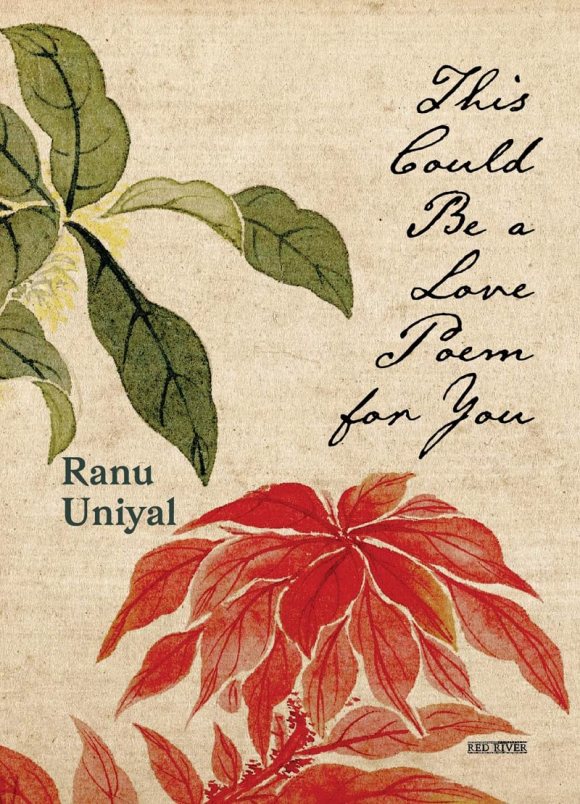
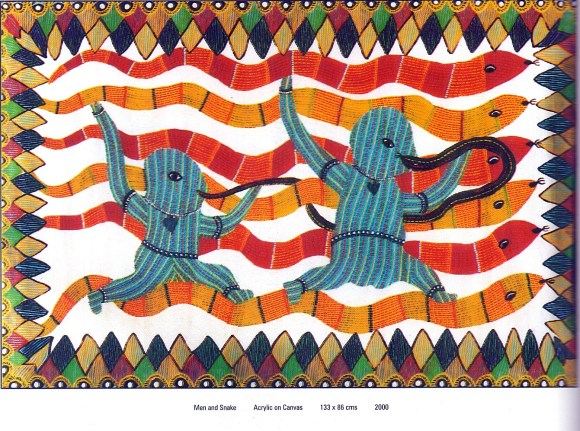
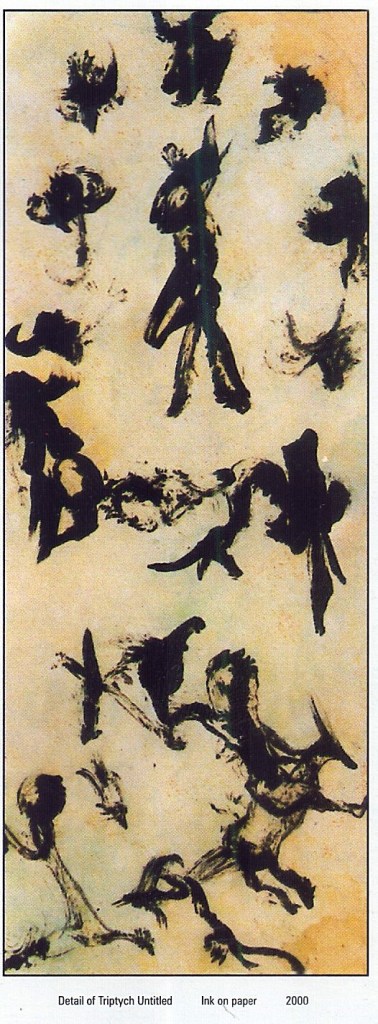
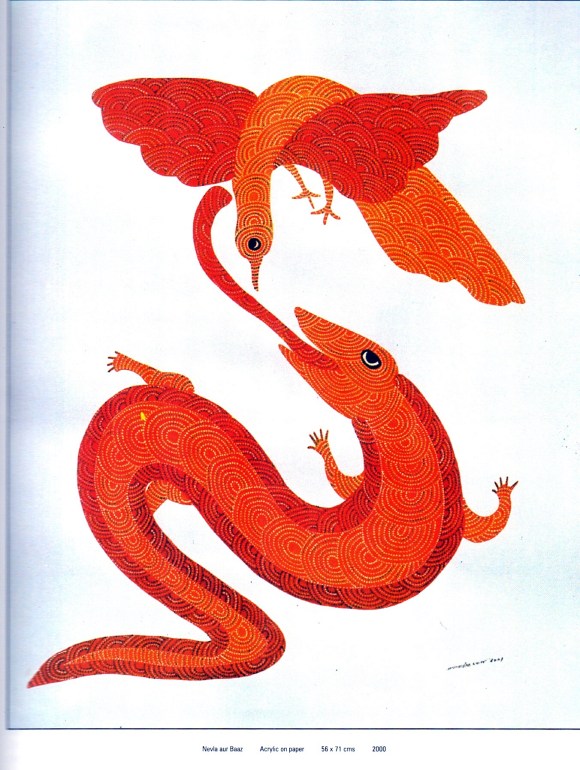
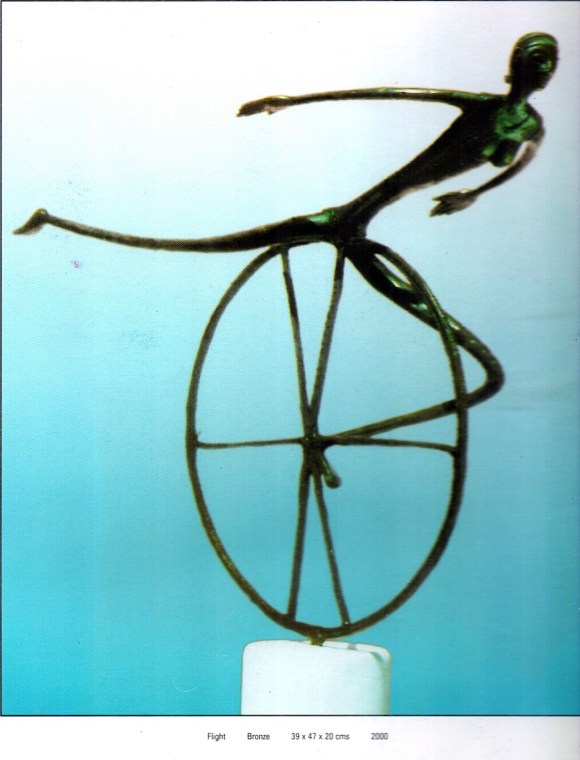
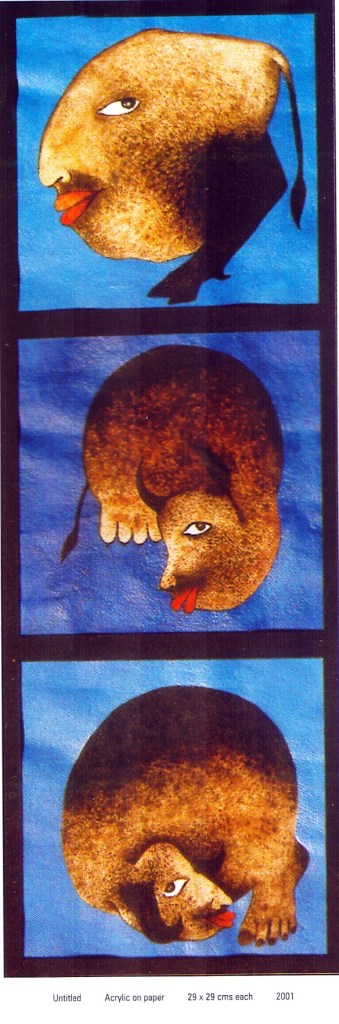
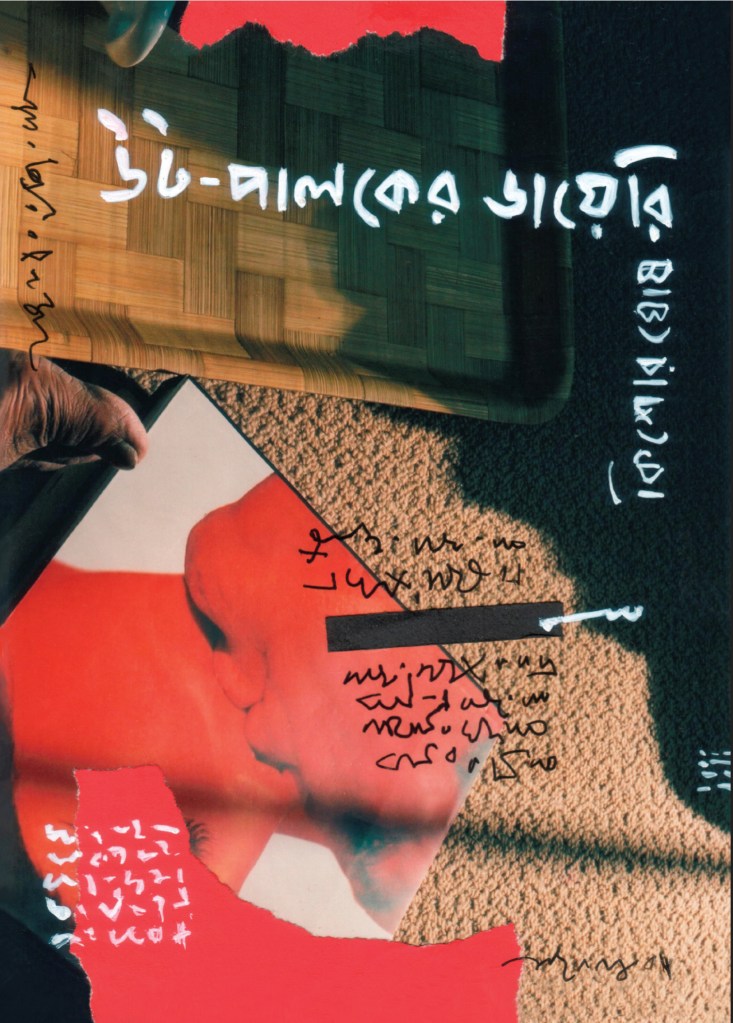
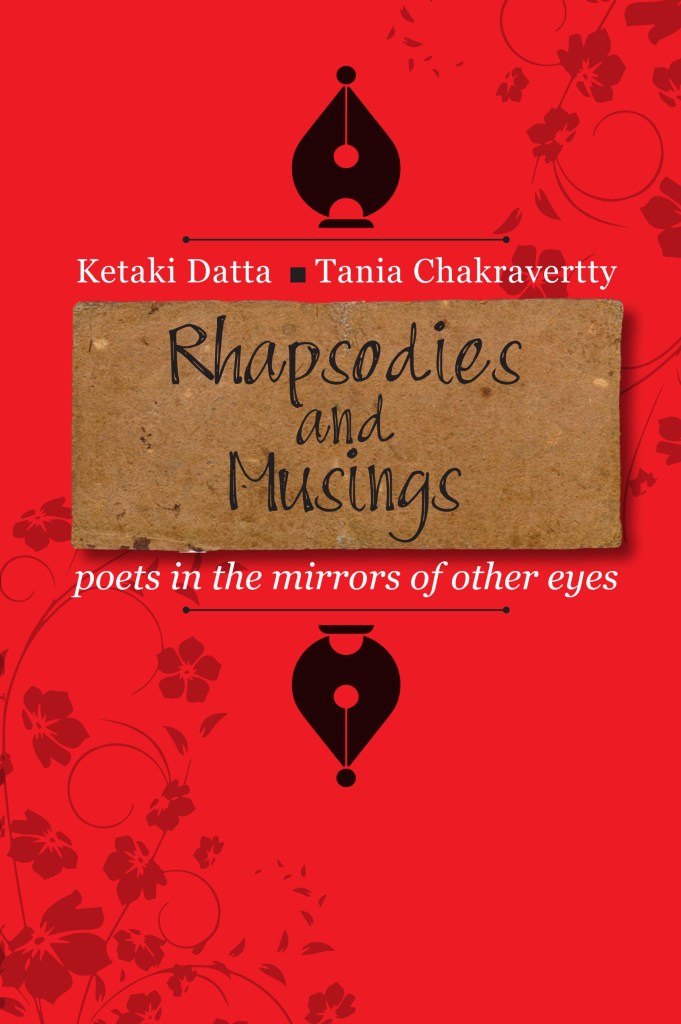
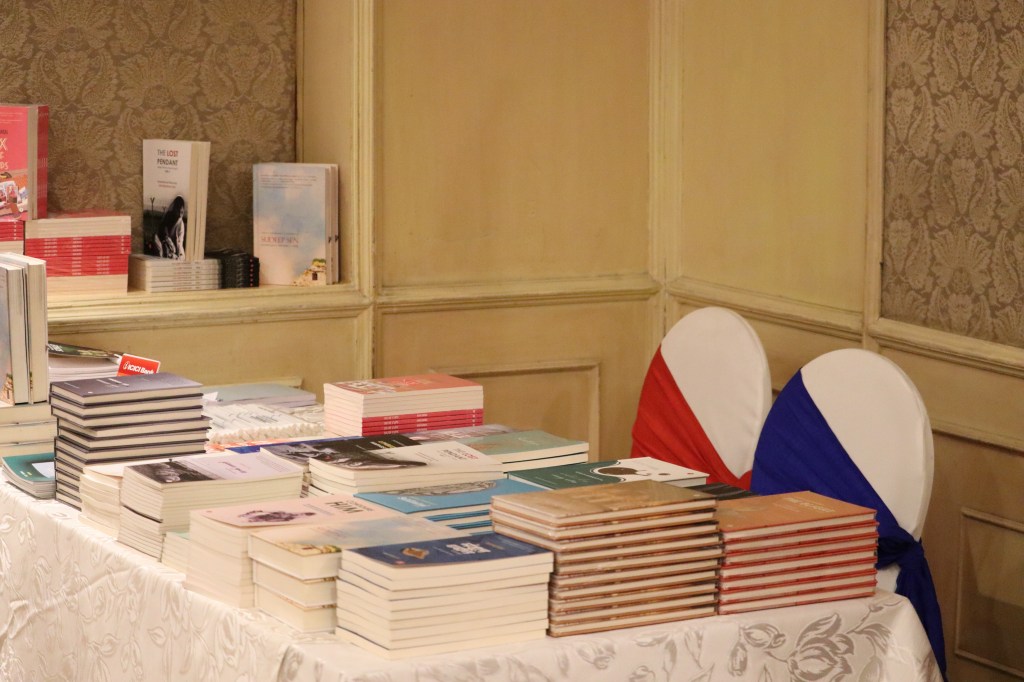
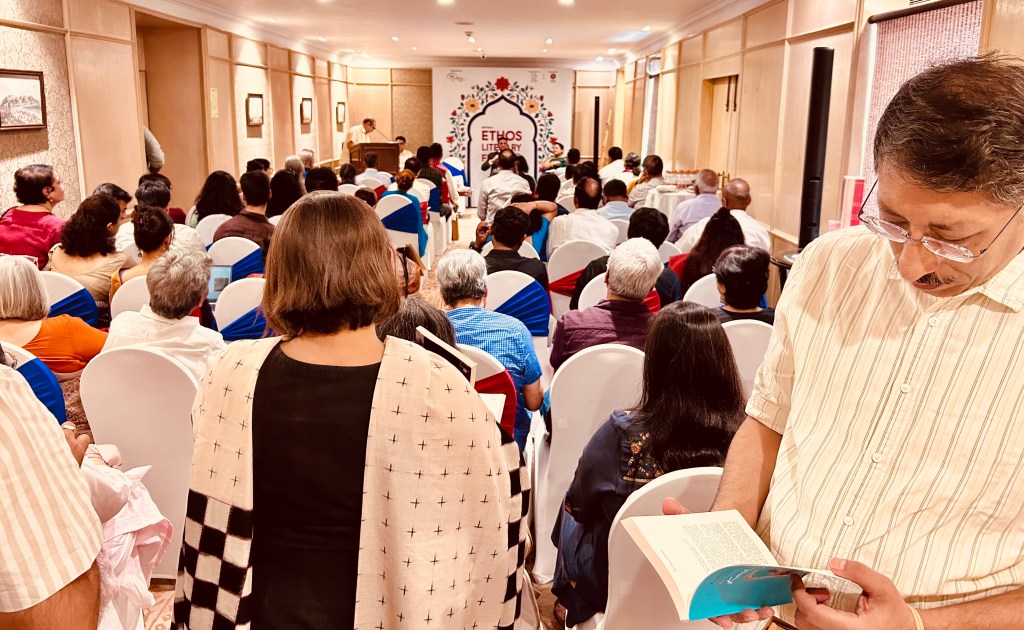


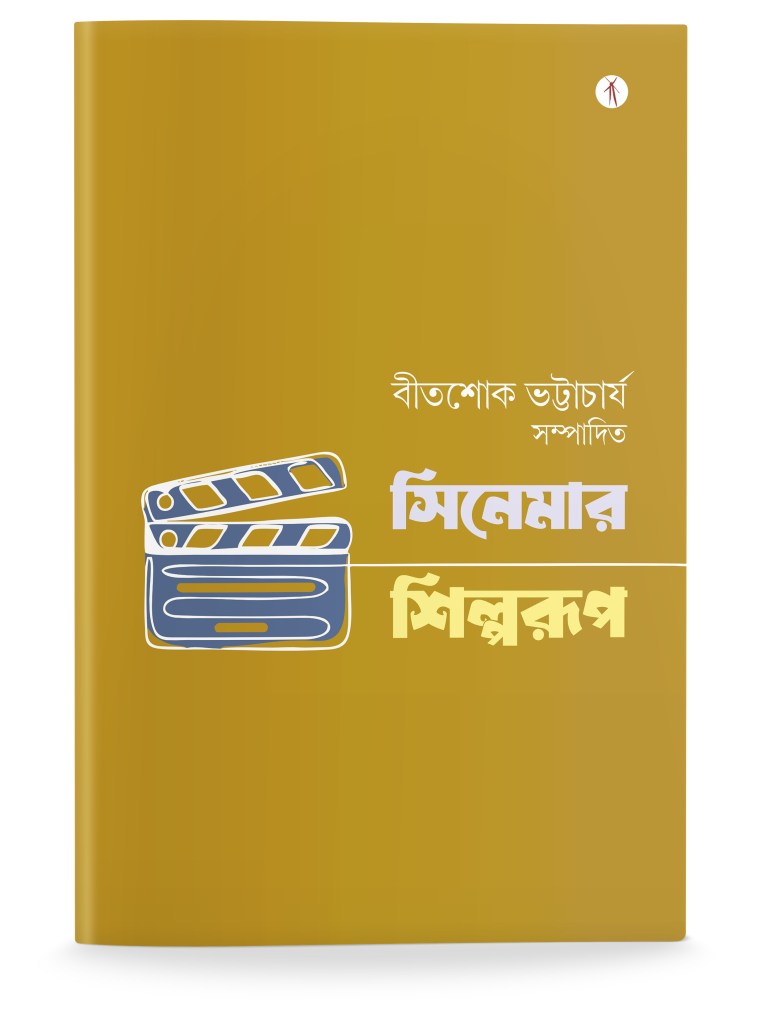
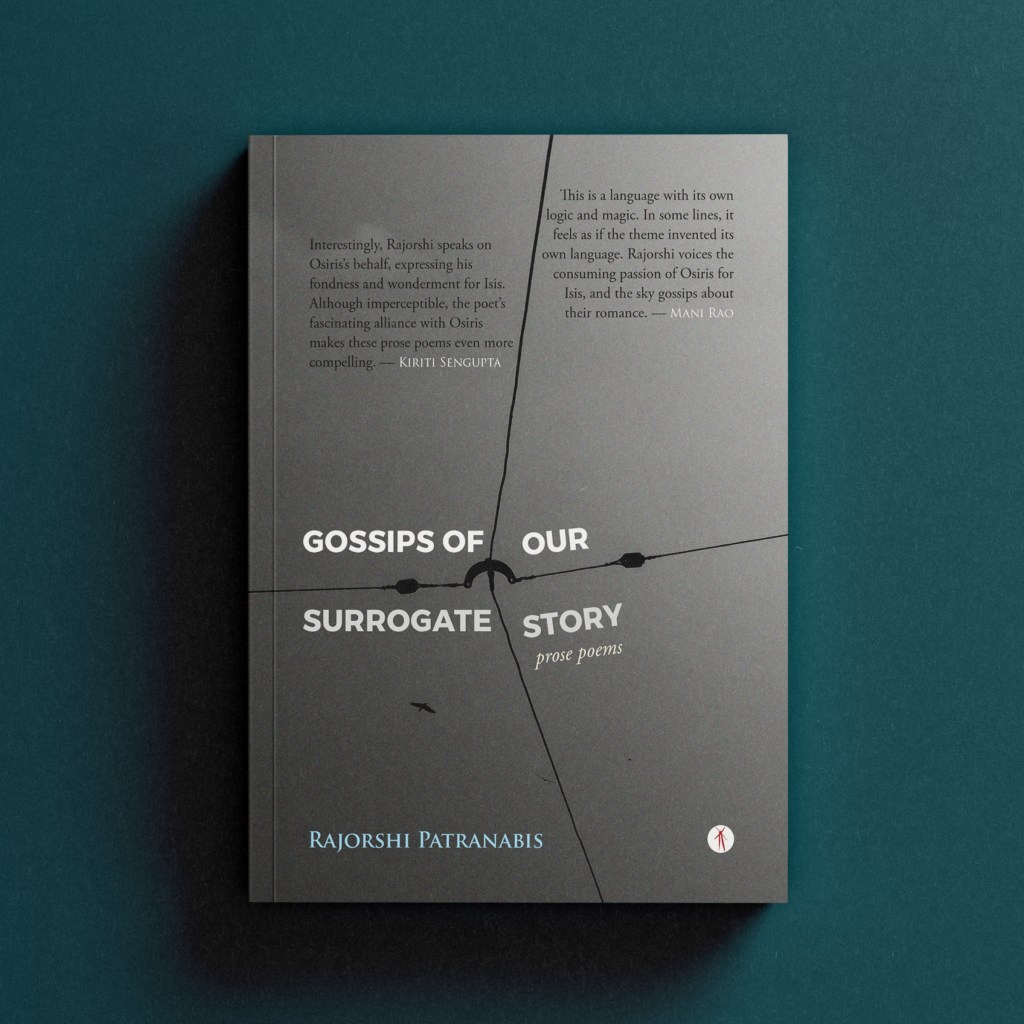
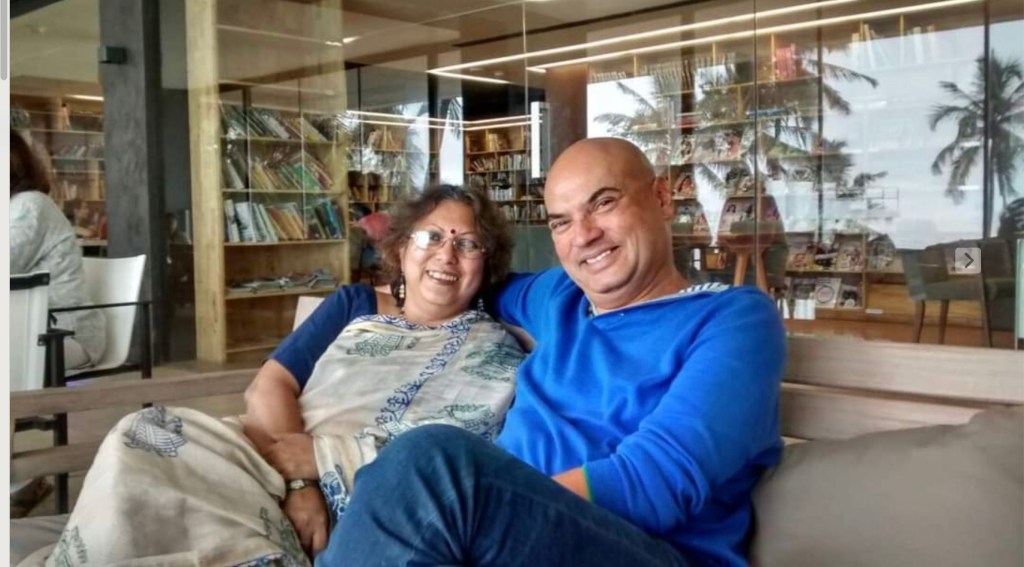
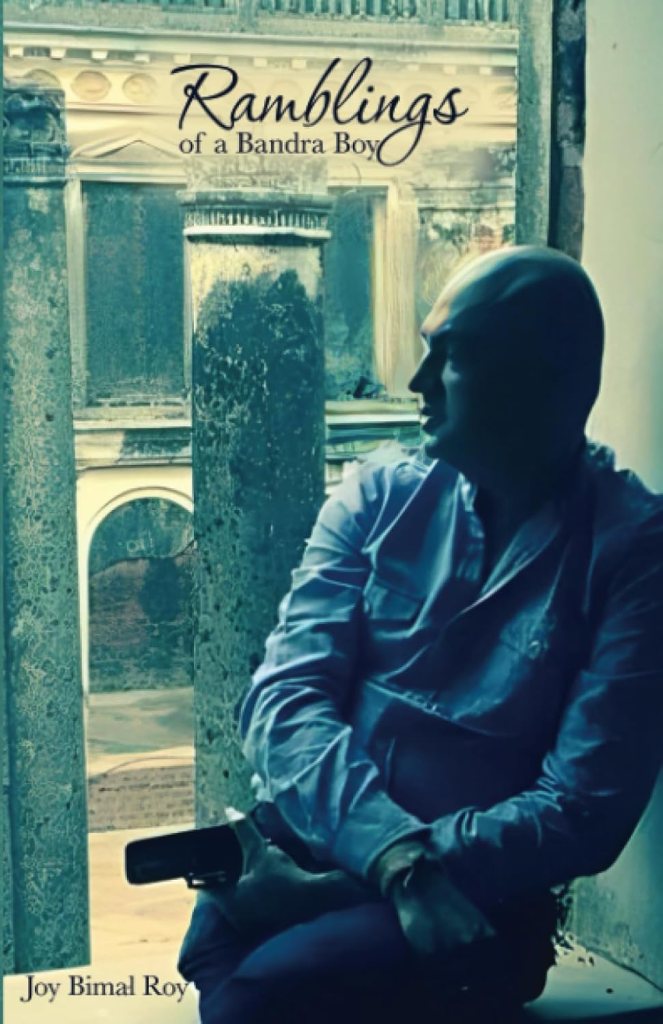

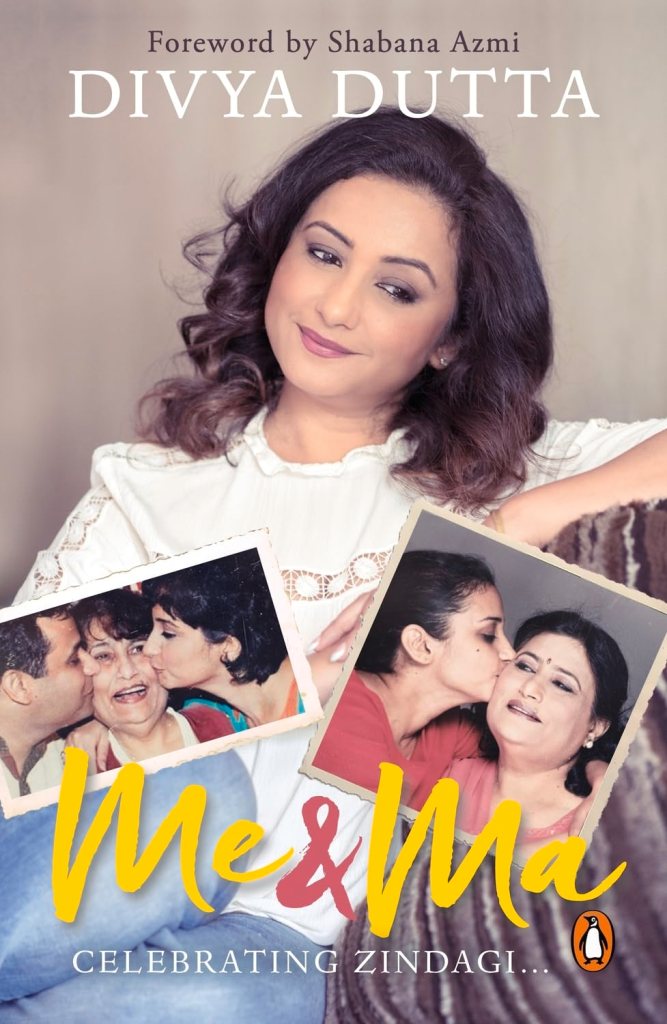
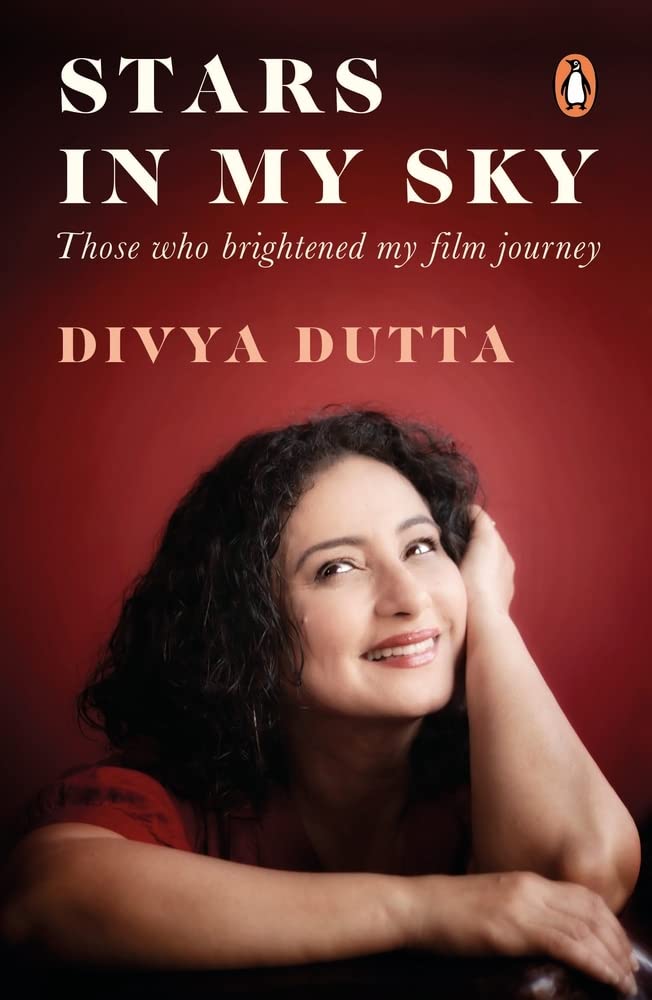
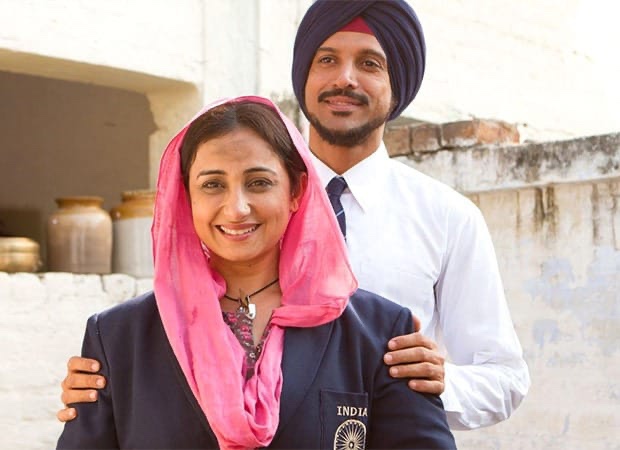
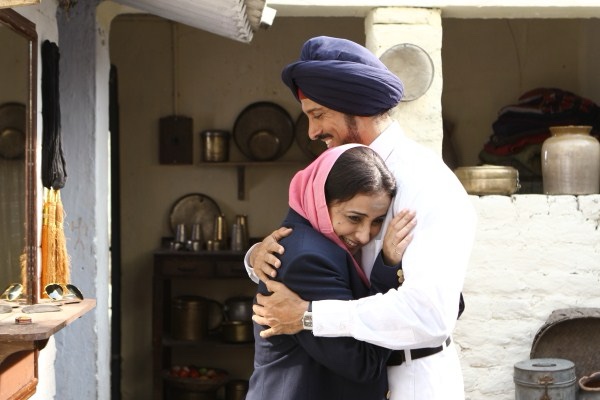
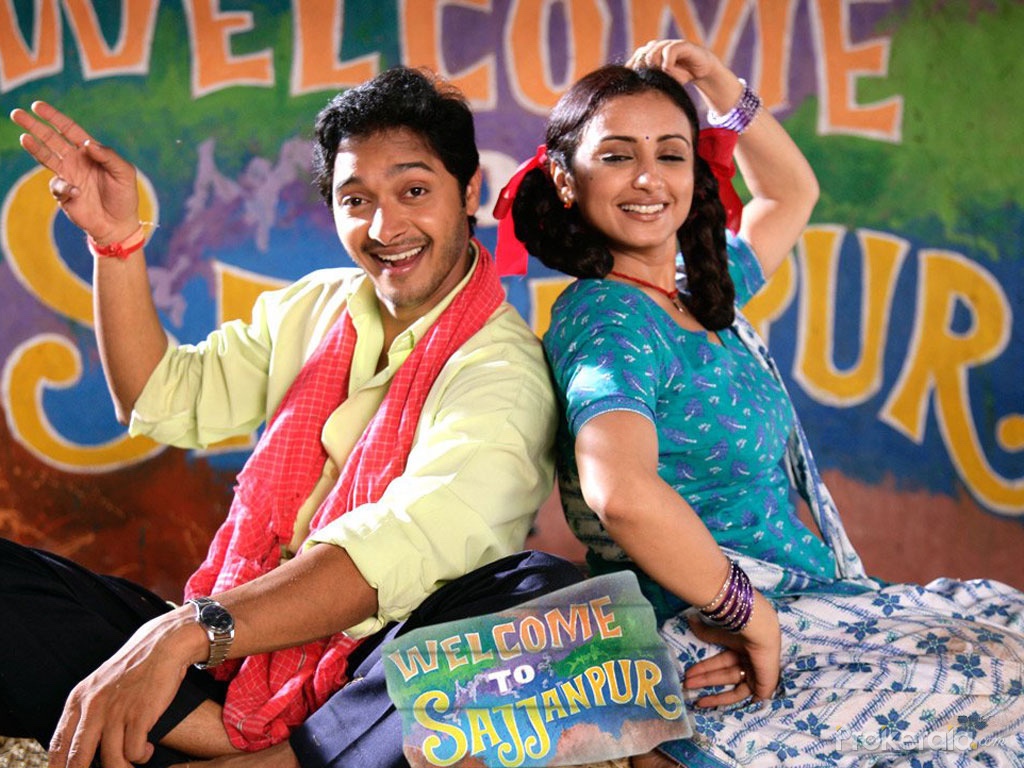



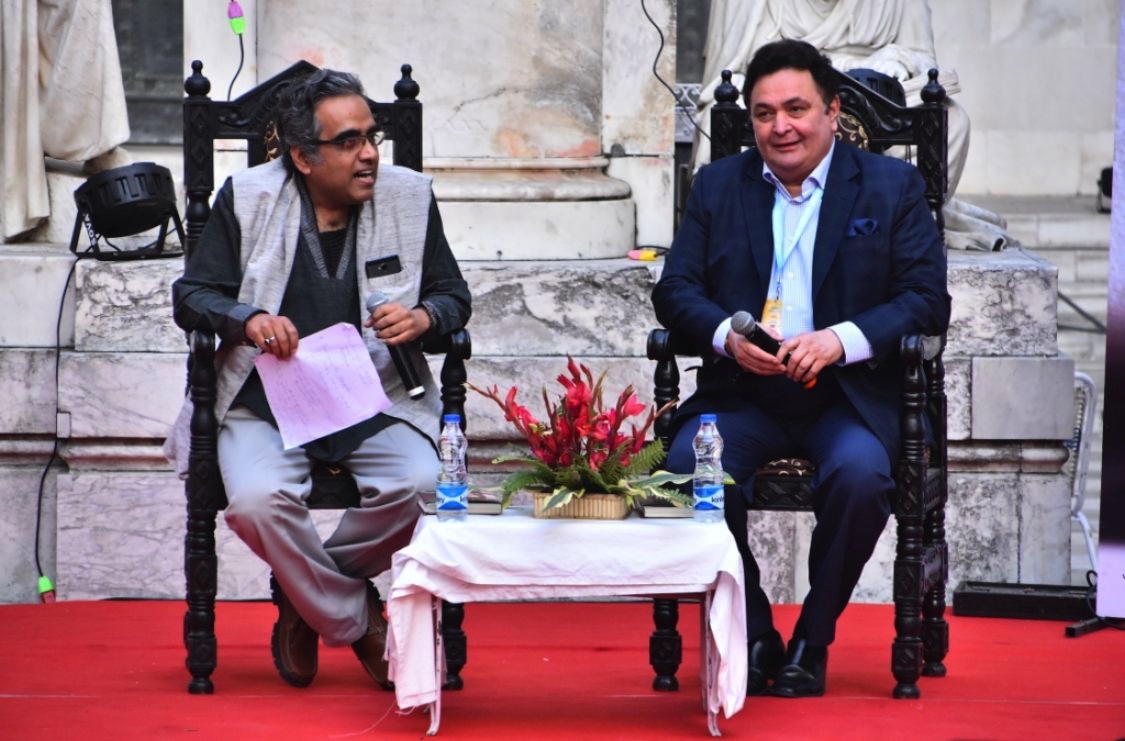


 Borderless