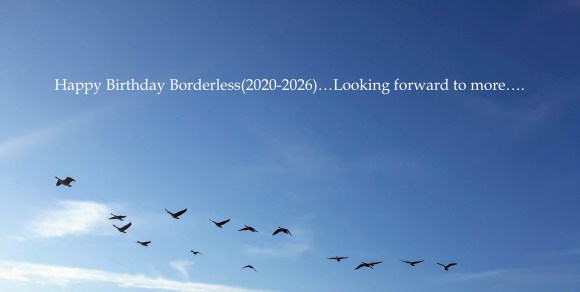
Six years ago, a few of us got together to bring out the first issue of Borderless Journal. We started as a daily blog and then congealed into a monthly journal offering content that transcends artificial borders to meet with the commonality of felt emotions, celebrating humanity and the Universe. Today as we complete six years of our existence in the clouds, we would like to celebrate with all writers and readers who made our existence a reality. We invite you to savour writings collected over the years that reflect and revel in transcending borders, touching hearts and some even make us laugh while exploring norms.
In this special issue. we can only offer a small sample of writings but you can access many more like these ones at our site…Without further ado, let us harmonise with words. We invite you to lose yourselves in a borderless world in these trying times.
Poetry
Click on the names to read
Jared Carter, Snehaprava Das, Manahil Tahir, Ryan Quinn Flanagan, Luis Cuauhtémoc Berriozábal, Saptarshi Bhattacharya, John Swain, Ron Pickett, Saba Zahoor, Momina Raza, Annette Gagliardi, Jenny Middleton, Afsar Mohammad, Rhys Hughes, George Freek, Mitra Samal, Lizzie Packer, Shamik Banerjee, Maithreyi Karnoor, Hela Tekali, Rakhi Dalal, Prithvijeet Sinha, Asad Latif, Stuart MacFarlane
Isa Kamari translates his poems from Malay in The Lost Mantras. Click here to read.
Two of her own Persian poems have been written and translated by Akram Yazdani. Click here to read.
A Poet in Exile by Dmitry Blizniuk has been translated from Ukranian by Sergey Gerasimov. Click here to read.
Refugee in my Own Country/ I am Ukraine… Poetry by Lesya Bakun of Ukraine. Click here to read.
Sukanta Bhattacharya’s poem, Therefore, has been translated from Bengali by Kiriti Sengupta. Click here to read.
Amalkanti by Nirendranath Chakraborty has been translated from Bengali by Debali Mookerjea-Leonard. Click here to read
Ye Shao-weng’s poetry ( 1100-1150) has been translated from Mandarin by Rex Tan. Click here to read.
Rebel or ‘Bidrohi’, Nazrul’s signature poem, ‘Bidrohi‘, translated by Professor Fakrul Alam. Click here to read.
Manish Ghatak’s Aagun taader Praan (Fire is their Life) has been translated from Bengali by Indrayudh Sinha. Click here to read.
Tagore’s poem, Tomar Shonkho Dhulay Porey (your conch lies in the dust), has been translated from Bengali by Mitali Chakravarty as ‘The Conch Calls’. Click here to read.
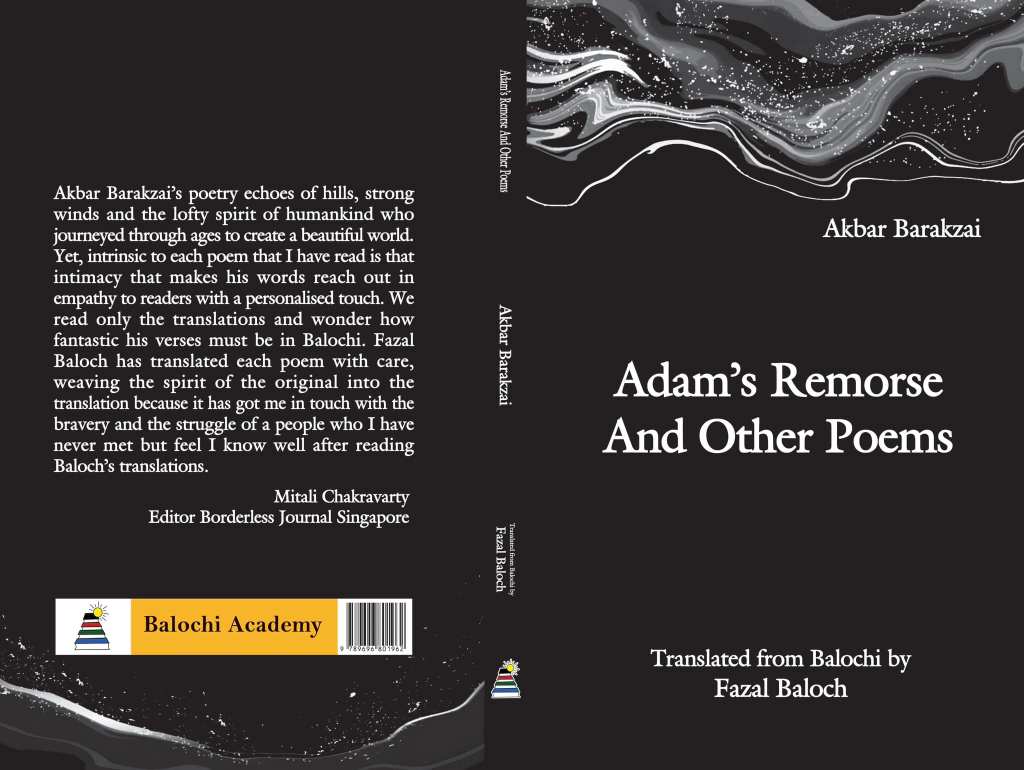
Waiting for Godot by Akbar Barakzai; Akbar Barakzai’s poem has been translated by Fazal Baloch. Click here to read.
Ihlwha Choi spent some time in Santiniketan and here are poems he wrote in reaction to his observations near the ‘home of R.Tagore’, as he names Santiniketan and the Kobiguru. Click here to read Nandini.
Fiction
Flash Fiction: Peregrine: Brindley Hallam Dennis tells us the story of a cat and a human. Click here to read.
Rituals in the Garden: Marcelo Medone discusses motherhood, aging and loss in this poignant flash fiction from Argentina. Click here to read.
Navigational Error: Luke P.G. Draper explores the impact of pollution with a short compelling narrative. Click here to read.
Henrik’s Journey: Farah Ghuznavi follows a conglomerate of people on board a flight to address issues ranging from Rohingyas to race bias. Click here to read.
The Magic Staff , a poignant short story about a Rohingya child by Shaheen Akhtar, translated from Bengali by Arifa Ghani Rahman. Click here to read.
A Cat Story : Sohana Manzoor leaves one wondering if the story is about felines or… Click here to read.
Pus Ki Raat or A Frigid Winter Night by Munshi Premchand has been translated from Hindi by C Christine Fair. Click here to read.
American Wife: Suzanne Kamata gives a short story set set in the Obon festival in Japan. Click hereto read.
Hena, a short story by Nazrul, has been translated from Bengali by Sohana Manzoor. Click here to read.
A Queen is Crowned: Farhanaz Rabbani traces the awakening of self worth. Click here to read.
A Penguin’s Story: Sreelekha Chatterjee writes a story from a penguin’s perspective. Click here to read.
Disappearance by Bitan Chakraborty has been translated from Bengali by Kiriti Sengupta. Click here to read.
The Sixth Man: C. J. Anderson-Wu tells a story around disappearances during Taiwan’s White terror. Click here to read.
Looking for Evans: Rashida Murphy writes a light-hearted story about a faux pas. Click here to read.
Used Steinways: Jonathan B. Ferrini shares a story about pianos and people set in Los Angeles. Click here to read.
The Beaten Rooster, a short story by Hamiruddin Middya, has been translated from Bengali by V Ramaswamy. Click here to read.
The Onion: JK Miller brings to us the story of a child in Khan Yunis. Click here to read.
Santa in the Autorickshaw: Snigdha Agrawal takes us to meet a syncretic spirit with a heartwarming but light touch. Click here to read.
The Untold Story: Neeman Sobhan gives us the story of a refugee from the 1971 Bangladesh Liberation War. Click here to read.
The Wise Words of the Sun: Naramsetti Umamaheswararao relates a fable involving elements of nature. Click here to read.
The Headstone, a poignant story by Sharaf Shad has been translated by Fazal Baloch. Click here to read.
Sandy Cannot Write: Devraj Singh Kalsi takes us into the world of adverstising and glamour. Click here to read.
Musalmanir Galpa (A Muslim Woman’s Story) Tagore’s short story has been translated by Aruna Chakravarti. Click here to read.
Non-Fiction
Haiku for Rwandan Girls: Suzanne Kamata writes of her trip to Africa where she teaches and learns from youngsters. Click here to read.
Menaced by a Marine Heatwave: Meredith Stephens writes of how global warming is impacting marine life in South Australia. Click here to read.
‘All Creatures Great and Small’: Devraj Singh Kalsi writes of animal interactions. Click here to read.
One Life, One Love, 300 Children: Keith Lyons writes of a woman who looked after 300 children. Click here to read.
When West Meets East & Greatness Blooms: Debraj Mookerjee reflects on how syncretism impacts greats like Tagore,Tolstoy, Emerson, Martin Luther King Jr, Gandhi and many more. Click here to read.
The Day Michael Jackson Died: A tribute by Julian Matthews to the great talented star who died amidst ignominy and controversy. Click here to read.
Amrita Sher-Gil: An Avant-Garde Blender of the East & West: Bhaskar Parichha shows how Amrita Sher-Gil’s art absorbed the best of the East and the West. Click here to read.
Dramatising an Evolving Consciousness: Theatre with Nithari’s Children: Sanjay Kumar gives us a glimpse of how theatre has been used to transcend trauma and create bridges. Click here to read.
Potable Water Crisis & the Sunderbans: Camellia Biswas, a visitor to Sunderbans during the cyclone Alia, turns environmentalist and writes about the potable water issue faced by locals. Click here to read.
T.S Eliot’s The Waste Land: Finding Hope in Darkness: Dan Maloche muses on the century-old poem and its current relevance. Click here to read.
My Love for RK Narayan, Rhys Hughes discusses the novels by ths legendary writer from India. Click here to read.
Travels of Debendranath Tagore : These are travel narratives by Debendranath Tagore, father of Rabindranath Tagore, translated from Bengali by Somdatta Mandal. Click here to read.
The Comet’s Trail: Remembering Kazi Nazrul Islam: Radha Chakravarty pays tribute to the rebel poet of Bengal. Click here to read.
From Srinagar to Ladakh: A Cyclist’s Diary: Farouk Gulsara travels from Malaysia for a cycling adventure in Kashmir. Click here to read.
Baraf Pora (Snowfall): This narrative gives a glimpse of Tagore’s first experience of snowfall in Brighton and published in the Tagore family journal, Balak (Children), has been translated by Somdatta Mandal . Click here to read.
In The Hidden Kingdom of Bhutan: Mohul Bhowmick explores Bhutan with words and his camera. Click here to read.
The Day of Annihilation: An essay on climate change by Kazi Nazrul Islam has been translated from Bengali by Radha Chakravarty. Click here to read.
Reminiscences from a Gallery: The Other Ray: Dolly Narang muses on Satyajit Ray’s world beyond films and shares a note by the maestro and an essay on his art by the eminent artist, Paritosh Sen. Click here to read.
The Bauls of Bengal: Aruna Chakravarti writes of wandering minstrels called bauls and the impact they had on Tagore. Click here to read.
The Literary Club of 18th Century London: Professor Fakrul Alam writes on literary club traditions of Dhaka, Kolkata and an old one from London. Click here to read.
From Madagascar to Japan: An Adventure or a Dream: Randriamamonjisoa Sylvie Valencia writes of her journey from Africa to Japan with a personal touch. Click here to read.
250 Years of Jane Austen: A Tribute: Meenakshi Malhotra pays a tribute to the writer. Click here to read.
The Chickpea That Logged More Mileage Than You: Ravi Varmman K Kanniappan gives an interesting account of the chickpeas journey through time and space, woven with a bit of irony. Click here to read.
The Day the Earth Quaked : Amy Sawitta Lefevre gives an eyewitness account of the March 28th earthquake from Bangkok. Click here to read.
Where Should We Go After the Last Frontiers: Ahamad Rayees writes from a village in Kashmir which homed refugees and still faced bombing. Click here to read.
The Last of the Barbers: How the Saloon Became the Salon (and Where the Gossip Went): Charudutta Panigrahi writes an essay steeped in nostalgia and yet weaving in the present. Click here to read.
That Time of Year: Rick Bailey muses about the passage of years. Click here to read.
The Untold Stories of a Wooden Suitcase: Larry S. Su recounts his past in China and weaves a narrative of resilience. Click here to read.
Adventures of a Backpacking Granny: Sybil Pretious recalls her travels across the world post sixty, including Kiliminjaro. Click here to read.

 Borderless