Categories
Contents

Borderless, August 2024

Art by Sohana Manzoor

Editorial

A Sprinkling of Happiness?… Click here to read.

Conversation

A review of and discussion with Rhys Hughes about his ‘Weird Western’, The Sunset Suite. Click here to read.

Translations

Two Songs of Parting by Nazrul have been translated by Professor Fakrul Alam. Click here to read.

The Snakecharmer, Shapuray by Nazrul, has been translated from Bengali by Sohana Manzoor. Click here to read.

Leaving for Barren, Distant Lands by Allah Bashk Buzdar has been translated from Balochi by Fazal Baloch. Click here to read.

Loneliness has been translated from Korean by the poet, Ihlwha Choi. Click here to read.

Tagore’s Olosh Shomoy Dhara Beye (Time Flows at an Indolent Pace) has been translated from Bengali by Mitali Chakravarty. Click here to read.

Poetry

Click on the names to read the poems

Michael Burch, Arshi Mortuza, Jason Ryberg, Saranyan BV, Koiko Tsuuda, Jane Hammons, Noopur Vedajna Das, Adeline Lyons, George Freek, Naisha Chawla, John Grey, Lakshmi Chithra, Craig Kirchner, Nia Joseph, Stuart MacFarlane, Sanjay C Kuttan, Nilsa Mariano, G Javaid Rasool, Ryan Quinn Flanagan, Rhys Hughes

Musings/ Slices from Life

Breaking Bread

Snigdha Agrawal has a bovine encounter in a restaurant. Click here to read.

That Box of Colour Pencils

G Venkatesh writes of a happy encounter with two young children. Click here to read.

The Chameleon’s Dance

Chinmayi Goyal muses on the duality of her cultural heritage. Click here to read.

Musings of a Copywriter

In Godman Ventures Pvt. Ltd., Devraj Singh Kalsi looks into a new business venture with a satirical glance. Click here to read.

Notes from Japan

In In Praise of Parasols, Suzanne Kamata takes a light look at this perennial favourite of women in Japan. Click here to read.

Essays

The Comet’s Trail: Remembering Kazi Nazrul Islam

Radha Chakravarty pays tribute to the rebel poet of Bengal. Click here to read.

From Srinagar to Ladakh: A Cyclist’s Diary

Farouk Gulsara travels from Malaysia for a cycling adventure in Kashmir. Click here to read.

Bottled Memories, Inherited Stories

Ranu Bhattacharyya takes us back to Dhaka of the 1930s… and a world where the two Bengals interacted as one with her migration story. Click here to read.

Landslide In Wayanad Is Only The Beginning

Binu Mathew discusses the recent climate disaster in Kerala and contextualises it. Click here to read.

Stories

The Orange Blimp

Joseph Pfister shares a vignette set in the Midwest. Click here to read.

A Queen is Crowned

Farhanaz Rabbani traces the awakening of self worth. Click here to read.

Roberto Mendoza’s Memoirs of Admiral Don Christopher Columbus

Paul Mirabile explores myths around Christopher Columbus in a fictitive setting. Click here to read.

Book Excerpts

An excerpt from Syed Mujtaba Ali’s Shabnam, translated from Bengali by Nazes Afroz. Click here to read.

An excerpt from Maaria Sayed’s From Pashas to Pokemon. Click here to read.

Book Reviews

Somdatta Mandal reviews Upamanyu Chatterjee’s Lorenzo Searches for the Meaning of Life. Click here to read.

Meenakshi Malhotra reviews Shuchi Kapila’s Learning to Remember: Postmemory and the Partition of India. Click here to read.

Rakhi Dalal reviews Namita Gokhale’s Never Never Land. Click here to read.

Bhaskar Parichha reviews Malvika Rajkotia’s Unpartitioned Time: A Daughter’s Story. Click here to read.

.

Click here to access the Borderless anthology, Monalisa No Longer Smiles

Click here to access Monalisa No Longer Smiles on Amazon International

Categories
Editorial

A Sprinkling of Happiness?

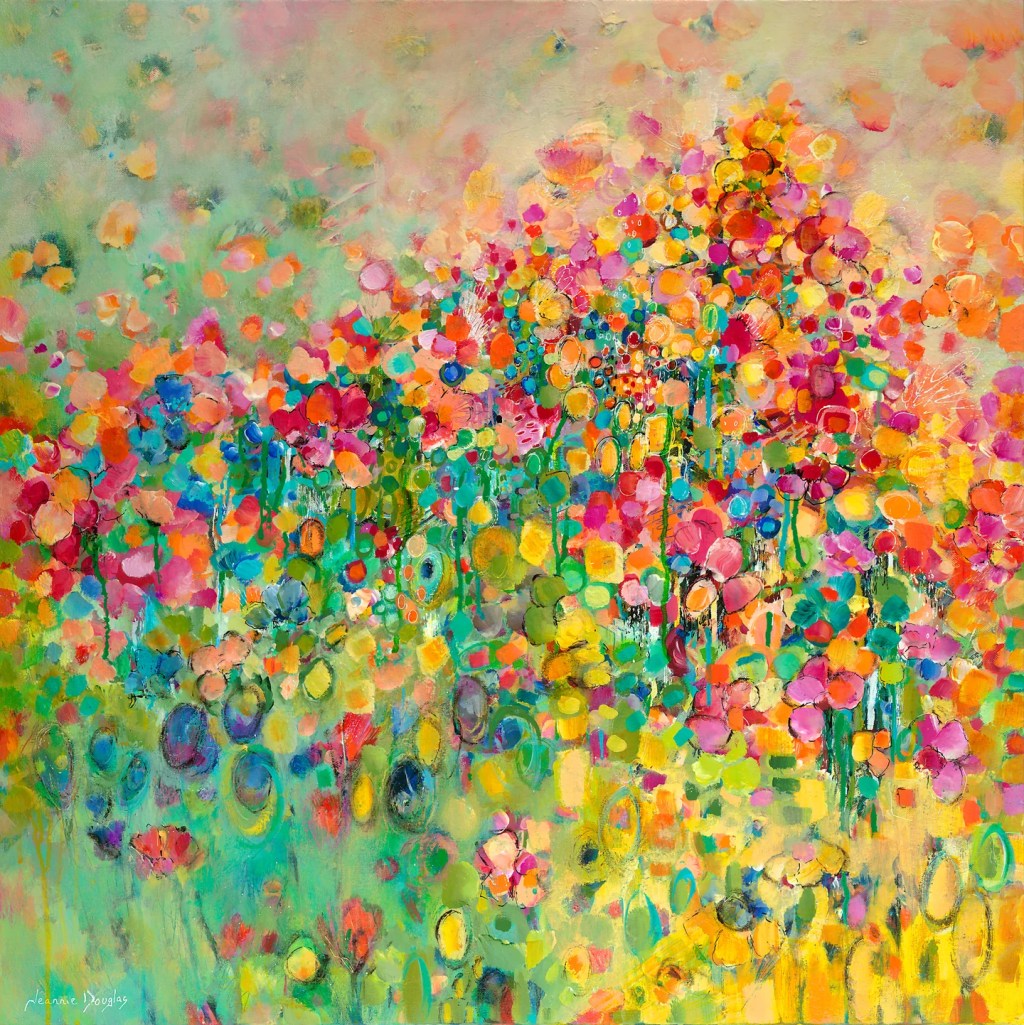
A Pop of Happiness by Jeanie Douglas. From Public Domain

Happiness is a many splendored word. For some it is the first ray of sunshine; for another, it could be a clean bill of health; and yet for another, it would be being with one’s loved ones… there is no clear-cut answer to what makes everyone happy. In Harry Potter and the Half Blood Prince (JK Rowling, 2005), a sunshine yellow elixir induces euphoria with the side effects of excessive singing and nose tweaking. This is of course fantasy but translate it to the real world and you will find that happiness does induce a lightness of being, a luminosity within us that makes it easier to tackle harder situations. Playing around with Rowling’s belief systems, even without the potion, an anticipation of happiness or just plain optimism does generate a sense of hope for better times.  Harry tackles his fears and dangers with goodwill, friends and innate optimism. When times are dark with raging wars or climate events that wreck our existence, can one look for a torch to light a sense of hope with the flame of inborn resilience borne of an inner calm, peace or happiness — call it what you will…?

It is hard to gauge the extreme circumstances with which many of us are faced in our current realities, especially when the events spin out of control. In this issue, along with the darker hues that ravage our lives, we have sprinklings of laughter to try to lighten our spirits. In the same vein, externalising our emotions to the point of absurdity that brings a smile to our lips is Rhys Hughes’ The Sunset Suite, a book that survives on tall tales generated by mugs of coffee. In one of the narratives, there is a man who is thrown into a bubbling hot spring, but he survives singing happily because his attacker has also thrown in packs of tea leaves. This man loves tea so much that he does not scald, drown or die but keeps swimming merrily singing a song. While Hughes’ stories are dark, like our times, there is an innate cheer that rings through the whole book… Dare we call it happiness or resilience? Hughes reveals much as he converses about this book, squonks and stranger facts that stretch beyond realism to a fantastical world that has full bearing on our very existence.

Poetry brings in a sprinkling of good cheer not only with a photo poem by Hughes, but also with more in a lighter vein from Ryan Quinn Flanagan, Michael R Burch, Arshi Mortuza, Jason Ryberg and others. Sanjay C Kuttan has given a poem dipped in nostalgic happiness with colourful games that evolved in Malaysia. Koiko Tsuuda, an Estonian, rethinks happiness. George Freek, Stuart MacFarlane and Saranyan BV address mortality. Nilsa Mariano and G Javaid Rasool have given us powerful migrant poetry while John Grey, Craig Kirchner, Jane Hammons, Nia Joseph, Noopur Vedajna Das and Adeline Lyons refer to climate or changes wrought by climate disasters in their verses.

A powerful essay by Binu Mathew on the climate disaster at Wayanad, a place that earlier had been written of as an idyllic getaway, tells us how the land in that region has become more prone to landslides. The one on July 30th this year washed away a whole village! Farouk Gulsara has given a narrative about his cycling adventure through the state of Kashmir with his Malaysian friends and finding support in the hearts of locals, people who would be the first to be hit by any disaster even if they have had no hand in creating the catastrophes that could wreck their lives, the flora and the fauna around them. In the wake of such destructions or in anticipation of such calamities, many migrate to other areas — like Ranu Bhattacharya’s ancestors did a bit before the 1947 Partition violence set in. A younger migrant, Chinmayi Goyal, muses under peaceful circumstances as she explores her own need to adapt to her surroundings. G Venkatesh from Sweden writes of his happy encounter with local children in the playground. And Snigdha Agrawal has written of partaking lunch with a bovine companion – it can be intimidating having a cow munching at the next table, I guess! Devraj Singh Kalsi has given a tongue-in-cheek musing on how he might find footing as a godman. Suzanne Kamata has given a lovely summery piece on parasols, which never went out of fashion in Japan!

Radha Chakravarty, known for her fabulous translations, has written about the writer she translated recently, Nazrul. Her essay includes a poem by Tagore for Nazrul. Professor Fakrul Alam has translated two of Nazrul’s songs of parting and Sohana Manzoor has rendered his stunning story Shapuray (Snake Charmer) into English. Fazal Baloch has brought to us poetry in English from the Sulaimani dialect of Balochi by Allah Bashk Buzdar, and a Korean poem has been self-translated by the poet, Ihlwha Choi. The translations wind up with a poem by Tagore, Olosh Shomoy Dhara Beye (Time Flows at an Indolent Pace), showcasing how the common man’s daily life is more rooted in permanence than evanescent regimes and empires.

Fiction brings us into the realm of the common man and uncommon situations, or funny ones. A tongue-in-cheek story set in the Midwest by Joseph Pfister makes us laugh. Farhanaz Rabbani has given us a beautiful narrative about a girl’s awakening. Paul Mirabile delves into the past using the epistolary technique highlighting darker vignettes from Christopher Columbus’s life. We have book excerpts from Maaria Sayed’s From Pashas to Pokemon and Nazes Afroz’s translation of Syed Mujtaba Ali’s Shabnam with both the extracts and Rabbani’s narratives reflecting the spunk of women, albeit in different timescapes…

Our book reviews feature Meenakshi Malhotra’s perspectives on Shuchi Kapila’s Learning to Remember: Postmemory and the Partition of India and Bhaskar Parichha’s thought provoking piece on Malvika Rajkotia’s autobiographical Unpartitioned Time: A Daughter’s Story. While both these look into narratives around the 1947 Partition of the Indian subcontinent, Rakhi Dalal’s review captures the whimsical and yet thoughtful nuances of Namita Gokhale’s Never Never Land. Somdatta Mandal has written about Upamanyu Chatterjee’s latest novel, Lorenzo Searches for the Meaning of Life, which is in a way a story about a migrant too.

When migrations are out of choice, with multiple options to explore, they take on happier hues. But when it is out of a compulsion created by manmade disasters — both wars and climate change are that — will the affected people remain unscarred, or like Potter, bear the scar only on their forehead and, with Adlerian calm, find happiness and carpe diem?

Do pause by our current issue which has more content than mentioned here as some of it falls outside the ambit of our discussion. This issue would not have been possible without an all-out effort by each of you… even readers. I would like to thank each and every contributor and our loyal readers. The wonderful team at Borderless deserve much appreciation and gratitude, especially Manzoor for her wonderful artwork. I invite you all to savour this August issue with a drizzle of not monsoon or April showers but laughter.

May we all find our paths towards building a resilient world with a bright future.

Good luck and best wishes!

Mitali Chakravarty

borderlessjournal.com

Click here to access the content’s page for the August 2024 Issue.

.

READ THE LATEST UPDATES ON THE FIRST BORDERLESS ANTHOLOGY, MONALISA NO LONGER SMILES, BY CLICKING ON THIS LINK.

Categories
Excerpt

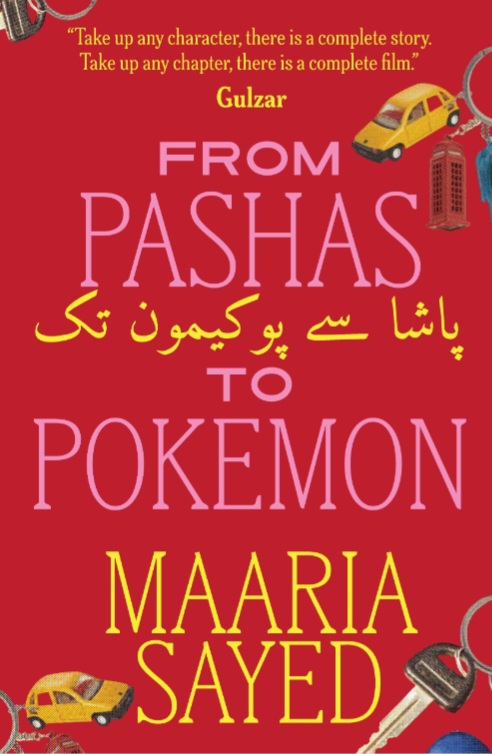
From Pashas To Pokemon

Title: From Pashas To Pokemon

Author: Maaria Sayed

Publisher: Vishwakarma Publications

    Both the doors were locked. We knew Ammi must have locked the main door on her way out, but the emergency door wasn’t opening either. Yusuf and I jumped into our flat through our exceptionally large windows. We were accustomed to swiveling our fingers until we reached the latch hidden on the inside of the window. We’d pivot the hook and squeeze our pinky fingers through the tiny hole between the plastic orifices in the windowpane. Ammi had gone over to Nani Jaan’s house, and we were not expected back for another few hours. Rashid, my brother’s friend was reprimanded by his mother and grounded in his house to study. There was a limit to how much time Yusuf and I could spend at Rashid’s house eating sev puris with his mother. We sighted an excuse to get away and return home. But as Abbu says, fate has its way of creeping into the unlikeliest of places, so it did. The sunset remained hidden behind the mass of clouds, just like the rest of the month of November, and brought with it its own woes. Yusuf and I had expected to be jumping into an empty house, but were taken aback to see our living room filled with a score of giant men dressed in white kurtas. Abbu sat at the centre looking disheveled in his unkempt hair and crumpled lungi. It was an oddly monstrous sight. We had never seen so many men gathering at home when it wasn’t an Eid celebration. We were also not accustomed to seeing men with beards as long as these men had.

     Nani Jaan had a personal assessment about the length of men’s beards that we had internalized over the years. ‘When it is longer than your fist, you know the intention is intimidation,’ she’d say in a spinechillingly confident tone. ‘We don’t live amidst Jalaaluddin Rumis and Nostradamuses anymore. The only inspiration the men could possibly be hiding under their beards would be a horde of lice.’ Thus, I had developed a quaint habit of mentally calculating the length of the beards I saw as I walked. Within the split second when I glanced around our living-room, I knew all their beards were much longer than their fists. I wondered how Abbu fit in with this forest of mens’ hair, because Abbu always remained clean-shaven, save the Sunday stubble Ammi would pester him to get off. On that particular day too, Abbu’s facial skin remained exposed.

   The visual was threatening far beyond the beards when we saw what the men were concealing below their cloth bags and our pillow covers —— big black and brown guns. On our news channels, such guns were called AK 47s —— Yusuf identified the type almost instantly. We looked at Abbu helplessly, rummaging up a response, a conjecture, a remark, hint, and something —— anything. My single most gigantic fear was that Abbu was in deep trouble. Yusuf looked at me from the corner of his eye, gesturing to me to be tight-lipped and non-reactive. Abbu stared at us pale-faced, without uttering a word. He introduced us in a point-blank manner as his children.

    ‘Here, Yusuf is the naughty one I’d told you about. And his elder sister, my first born, Aisha.’ Abbu pointed at me and his index finger poked me like the razor-sharp edge of the blade Ammi used to carefully slice the dead skin off her feet.

    Both Yusuf and I hated being introduced to the strangers we clearly despised. We took a seat in the corner of the room as Abbu directed us to. The next few minutes were a blur as my mind wandered into nothingness, like the blurry images of a super eight camera unable to focus on any particular sight. It just moved from beard, to table, to Abbu, to slippers, to window, to teacup, and back again to the beard. The next few moments were nauseating, like the time I tried my first mushroom drug. It was in an open field, a few hours away from Mumbai, on top of a blue car bonnet. I felt my shivers as I cascaded back and forth, breaking the continuum of time and space. I was sick for the next few days, but all Abbu and Ammi ever knew was that I had terrible food poisoning. Whenever Yusuf uttered the word mushroom in front of our parents to provoke me, I simply smiled, knowing that Ammi had decided never to cook mushrooms at home ever again. Abbu had subjected me to a sly smile as if he were fully cognizant of what was happening to me. Like various other things in my family, this was another one we buried under our carpets so I could sleep peacefully.

   The bearded men bid their salaams to Abbu, smiled at us coldly, and hid their guns inside their oversized black kurtas before they left our home.

     I was sixteen, Yusuf was thirteen, and we had seen what most people never get to see in a lifetime. Abbu forbade us from asking questions, demanding answers, or telling anyone what we had seen, ever. When we asked Abbu if Ammi knew what he was up to, he asked us to abide by our oath of complete silence regarding what we had witnessed. As anxious, hormone-charged teenagers, we naturally argued our way through the conversation with Abbu. He sat on the edge of the sofa, staring at the floor like a victim with nothing to back up his conscience. When Yusuf saw a discreet tear trickle down Abbu’s cheek, we stormed out of the room with an uneasy feeling eating away our guts. We loved to drive our parents up the wall, so long as we knew it was our doing. But the moment we sensed the involvement of another hand, it made us lament uncontrollably. Abbu and Ammi’s story about their engagement period was folklore for us. In our heads, they weren’t three-dimensional beings like the rest of our family. I clearly recall the morning Abbu, Ammi, Yusuf and I tried making pancakes for the very first time after Abdul Chachu, Abbu’s cousin, had written to us saying it was their daily breakfast ever since they relocated to Detroit. Of course, Abbu had responded saying he didn’t fancy pancakes, but nudged Ammi to hunt for the recipe since he desperately wanted to taste what his cousin had substituted scrambled egg with. Pancakes, in Abbu’s mind, became the recipe to success; he envied how his cousin had started from scratch and managed to make a respectable living in a foreign land. That morning, when we ate pancakes for the very first time, we looked at each other, trying to gauge if the one seated opposite us really liked them. Ammi sat opposite me and I remember seeing her gulp hers down with long sips of sherbet. We all disliked them, but we never admitted this to each other. Probably the one who disliked them the least was Yusuf, but I could tell that he would never substitute our scrambled eggs for what seemed like a cross between South Indian dosa and Maharashtrian pooran poli with a whole lot of Nutella.

ABOUT THE BOOK

At 25, Aisha has seen more than many people do in a lifetime and has understood one thing: no matter who you are and where you are from, there are things that you can study and others that you can actually learn from and grow.

Lively tales from family history and everyday life in a Mahammad Ali Road colony in Mumbai form the background of Aisha’s internal journey. Childhood memories mingle with her experiences while studying in London, and are woven into a sharp commentary on the transformations in India over 20 years as she ponders her place in this ever-changing world. The novel narrates the story of many journeys. It is a journey of growing up: the journey from childhood to adolescence, youth to old age, from one culture to another, and a glimpse of past to present times.

ABOUT THE AUTHOR

Maaria Sayed is an Indian filmmaker and writer whose work focuses on the sexual and spiritual liberation of women, evolving Muslim identities, and South Asian life. She has been supported by Cineteca di Bologna, Sharjah Art Foundation, and Busan Film Commission, among others, and was a delegate and jury for the UN-backed Asia Peace Film Festival in Pakistan. She regularly holds workshops on cinema for students and teaches intercultural communication to executives of multinational companies. She is a graduate of literature and cinema, and obtained her fellowship on Asian media production and collaboration in South Korea. She is passionate about Sufi poetry, folk music, Indian theatre and cats- big and small. This is her debut novel.

.

PLEASE NOTE: ARTICLES CAN ONLY BE REPRODUCED IN OTHER SITES WITH DUE ACKNOWLEDGEMENT TO BORDERLESS JOURNAL

Click here to access the Borderless anthology, Monalisa No Longer Smiles

Click here to access Monalisa No Longer Smiles on Kindle Amazon International