The year1955 is precious in the annals of Indian cinema. That year had seen the release of the Bengali classic, Pather Panchali in August and the Hindi evergreen, Devdas, in December. The opening month of that very year, a certain Mandakini Nursing Home in Bandra, the western suburb of Bombay had seen Manobina, wife of director Bimal Roy, give birth to a son, and Kanaklata, wife of writer Nabendu Ghosh, give birth to a daughter.
“Mita (Friend) Bina was expecting after three daughters and Kanak Boan (sister) was also in labour for the fourth time, after two sons (her first born had gone within months). And we were all praying that Mita should have a son, and Kanak should have a daughter – not the other way around!” This family lore comes from Mary Jethima, wife of music director Arun Mukherjee, first cousin of thespian Ashok Kumar.
So, every time the month of January came around, I would wonder, what if the Roys had a fourth daughter and the Ghosh family a third son? I have wondered but never needed an answer. Because? I have been ever grateful to the powers that be to have Joy as my virtual ‘twin’ born six days apart.
This bonding was forged years before our birth – when Nabendu Ghosh had watched Bimal Roy’s directorial debut, Udayer Pathey[1], in a theatre in Rajsahi, now in Bangladesh; and Bimal Roy had read Nabendu’s allegorical novel, Ajab Nagarer Kahini[2], wanting to film it before Pehla Aadmi[3]became a reality. “Never have I seen a film like this!” Nabendu had echoed what hundreds, thousands, were saying when Udayer Pathey released in 1944. And he had prayed, “If ever I get to work with this director, my dream will be fulfilled!”
Bimal Roy, on his part, had said to him, “Your writings have a graphic visual quality that is so important for cinema.” And when he took up Ashok Kumar’s offer to make Maa for Bombay Talkies, and moved to Bombay in 1951, he invited Nabendu to join him as his screen writer.
That momentous journey has moulded our lives.
*
My earliest memory of the Roys at Godiwala Bungalow on 5 Mount Mary Road is of a toy horse-drawn carriage that had come from some distant land, and a life-size doll – both properties of Joy. I would take turns to ‘drive’ the carriage through the giant hall. And the doll? It opened its eyes and shut them too and even said ‘Maw!’
Outside the bungalow was the garden, a beautiful landscape hemmed in by boulders that created nooks and corners where we children could play hide and seek. But wait, there was a swing and a seesaw too, and I had all the time in the world! There was a spoilsport well at the far end of the garden that I stayed as far away from as I could. “There are ghosts in the well!” – I remember Joy telling me in a hushed tone that was perhaps meant to fool me. But when Joy said something, could I ever doubt it?
The aforementioned giant hall indoors was dominated by an imposing photo of Jethu foregrounded by 11 identical statuettes. These dancing ladies, I later learned, were the coveted Filmfare awards he had won in his illustrious career studded with unforgettables like Do Bigha Zamin[4], Devdas, Madhumati, Sujata, Bandini. As long as he lived and for years after that, Bimal Roy was the sole ‘owner’ of that many ‘Black Ladies’. But, to a girl yet to grow up, more attractive were the Japanese beauties in colourful kimonos adorning another end of the hall. However, what struck even greater awe was a ‘mosaic’ image of Madonna that Joy had crafted while in school — at age 12? It still adorns a part of his world at 6 Mount Mary Road.
Joy had a natural gift for drawing cats: One large O, another horizontal O, a curve that was an inverted C, two bright eyes and perked up ears… How effortlessly he breathed life into the lines! Joy and Bubundi’s house is now overrun by cats but back then only two brown dogs ruled, Toto and Burikin.
*
Joy was the reason I trailed into a shooting floor for the first time in life. We were maybe seven when Benazir[5] was under production at the now-extinct Mohan Studios. As the producer, Bimal Roy need not have stood next to the camera when Meena Kumari, half lying on a mehfil-style chaise lounge, would sit up, sing a single line of a tarana, discant, and the director would say ‘Cut!’ Since the fans would all stop whirring as soon as a voice called ‘Action!’, every ‘Cut!’ was followed by the make-up person trotting up to the diva and retouching her beautiful face. How many ‘Cut!’ did we survive before Joy and I skittered off the floor? No idea. But to this day I remember the deep affection in the eyes of Jethu[6] who became an icon when Joy and I were yet to outgrow the tenth year of our lives.
We were not yet teenagers when Teesri Manzil[7] released in Bandra’s New Talkies which normally screened Hollywood films. Ma and I arrived when Joy, Bubundi and friends were heading for an evening show. I got included naturally. The super hit entertainer had smashing songs in a tautly constructed suspense tale – yet I was not floored. When I said this to Jethima[8], she said, “You are speaking like a critic Uttama!” Unknown to me, that comment had perhaps set me on the course of dissecting a film like an initiated viewer.
After our school finals, Joy took to studying Commerce at Sydenham College, while I marched on with the Arts. So, I joined the Elphinstone College where all the Roy sisters – Rinkidi, Tatudi and Bubundi – had studied English Literature. Bubundi – Aparajita is her bhalo[9] name — was in the final year of BA when I joined the institution. And after she graduated, I inherited all her books and notes. With her benign presence she has been the Didi I never had in the Ghosh house, I realised in the process of preparing the short Aparajita, for her 70th birthday.
The Ghosh’s and the Roys at a family wedding. Photo provided by Ratnottama Sengupta
And when she got married, just like Joy I missed classes for days and weeks. More so because my elder brother, Dipankar, married Lesley Christine around the same time. Consequently, both Joy and I were least prepared for our MA exams. Together we shared our doubts with Mouni Baba, our spiritual guide who had come from Ujjain. “Do not entertain any doubt or fear,” Baba had drilled into us. “If you utter the word ‘No’ you say that to your inner self, and you will not succeed.” This priceless lesson has been my ‘Kindly Light’, leading me on at every turn of life.
*
* Jethima passed away when the 33rd International Film Festival of India was celebrating seven accounts of Devdas in Indian cinema, in 2002. In the chill of Delhi’s winter, Joy and I sat down in the Siri Fort lawns, clung to each other and howled away, oblivious of the curious stares darting in our direction.
* Joy was in Italy when Baba passed away in December 2007. The biggest bouquet at his funeral had come from Joy.
* Along with Aparajita and Yashodhara – that’s Tatudi’s formal name – Joy had completed Remembering Bimal Roy, a centenary tribute to their father. He had commenced its shooting with Nabendu Kaku, the most authentic and reliable resource person, having been with his father from Maa (1952), through Parineeta ( Wedded, 1953), Biraj Bahu (1954), Naukri (Job, 1953) and Yahudi ( The Jewess, 1957), till the very last Bandini (1964). There was another reason, as Joy himself wrote on Baba’s 90th birthday in March 2007. “He has expressed faith in my abilities even in my darkest moments of self-doubt and always encouraged me to come out of shell and move ahead in life.”
* Year 2008. Bimal Roy’s birth centenary was round the corner. Joy and I met my friend Neelam Kapur. As director, she lost no time in scheduling the tribute in the IFFI [10] at Goa. Serendipity! That very year, IFFI also paid a homage to Nabendu Ghosh who’d passed away the previous year.
The screenings, the press conferences, the purchases, the idling on the beach – more than all of these, I recall the time we spent on a boat that had ladies from Commonwealth of Independent States dancing away to glory. While most of the guests toasted with whiskey or wine, Joy and I sipped on our mineral water. Because? It happened to be a Sunday, the one day in a week we were enjoined by Mouni Baba to forego every food except one salt free vegetarian meal before sunset!
*After Remembering Bimal Roy had been feted internationally and enhanced Joy’s fan following at home, he said to me, “Here’s the entire conversation with Nabendu Kaku. I’ve used only a few minutes of it. I’ll be glad if you can use it.”
I can never thank him enough for this generosity. For, I culled 20 minutes out of the 2-hour conversation, added clippings, posters, stills, book covers, letters, reviews and critical comments to the hour-long documentary And They Made Classics… This centenary tribute traces the unique bonding Nabendu Ghosh shared with his Film Guru.
*
But let me circle back to the birth of a Bundle of Joy and the Best of Jewels in the Roy and Ghosh families respectively.
Days before 21 January 2015 Tatudi called me up. “Joy is turning 60, and how can the celebration be complete if you are not there?” Needless to add, I put on hold my preparation to retire from The Times of India just five days later, and boarded a flight bound for Mumbai. I alighted with just enough time to change into a joyous outfit, for I’ve always revered Tatudi’s good taste and Joy’s flair for dressing just right for any occasion. And was I glad I did so! For, when I reached the venue, I was speechless.
Filmmakers Behroze Gandhy and Dilesh Korya’s documentary,Kekee Manzil – The House of Art offers a glimpse into the interiors of a heritage home, shedding light on its iconic residents Kekoo and Khorshed Gandhy. Kekoo established the only picture-framing company in Asia in the 1940s and later opened the city’s first contemporary art gallery, Gallery Chemould, now known as Chemould Prescott Road, run by his daughter, Shireen Gandhy. The documentary captures how Kekoo and Khorshed displayed compassion during challenging times, stayed true to their secular ideals, and remained engaged civically, while building frameworks within which art could grow in post-colonial India.
What did I admire most? The heritage Kekee Manzil overlooking the Arabian Sea? The gathering of friends and family, including Gen-X of Bimal Roy’s team? The drinks, the amsatta paneer, the grand Birthday Cake? All of this, yes. But most of all, I will cherish for the rest of my life the taste of another cake that Tatudi and Bubundi and Joy had got. Inscribed on it were these words: “Happy Birthday Uttama!”
Some bondings start with our birth, but they live on beyond our life.
Ratnottama Sengupta, formerly Arts Editor of The Times of India, teaches mass communication and film appreciation, curates film festivals and art exhibitions, and translates and writes books. She has been a member of CBFC, served on the National Film Awards jury and has herself won a National Award.
.
PLEASE NOTE: ARTICLES CAN ONLY BE REPRODUCED IN OTHER SITES WITH DUE ACKNOWLEDGEMENT TO BORDERLESS JOURNAL
(Excerpted from Ramblings of a Bandra Boy by Ratnottama Sengupta)
Joy Bimal Roy looks back at the many 21 Januarys, his birthday, that have dotted 70 calendars
On 6th February 1950 Baba and Nabendu Kaku arrived together in Bombay to work on Bombay Talkies’ Maa. I wasn’t born then, so I can only wonder if either of them, or their illustrious fellow travellers Hrishikesh Mukherjee and Asit Sen even imagined what a life changing experience that journey would be for each of them and, ultimately, for Indian Cinema.
This small but immensely talented and visionary team — Baba as director, Nabendu Kaku as screenplay writer and Hrishi Kaku as editor — created some of the best loved and most remembered classics of the golden ’50s and early ’60s: Do Bigha Zamin, Devdas, Madhumati, Sujata and Bandini.
When I was born on 21st January 1955, this team was already well established and feted in Bombay film industry. Co-incidentally (or perhaps not, because is there any such thing as coincidence?) six days after my birth, a daughter Ratnottama — Uttama to me — was born to Nabendu Kaku and Kanak Kakima in the same, Mandakini Nursing Home in Bandra. Uttama and I instinctively formed a bond which continues till today and seems to strengthen over the years. For me this became the link between our two families.
*
Some silly astrologer told my parents that they should not celebrate my first seven birthdays — else, ill-luck would befall me. So I grew up going to birthday parties of other children and wondering why I never had one.
That could explain why to date I hate my birthdays. It is a day of introspection and soul searching, assessing the past year of my life for gains and losses. No wonder I am more depressed than usual by the end of the day.
All that changed on my 40th birthday thanks to Sriram, my college classmate, and my sister, Aparajita, who was in Mumbai from Kolkata at that time. Together they conspired to have a small celebration at home. Sriram, ever generous, brought the champagne and glasses as well because he was not sure we had any.
Paradoxically it was possibly the worst time in our lives. We had lost the eviction suit our landlords had filed against us in the Small Causes Court, and had been given four months to vacate the premises, of which two months were already up. My birthday was on 21st January and three weeks after that, on 14th February, we were supposed to vacate our home of 46 years — unless we got a Writ Petition admitted in the High Court.
Plonk in the middle of this mess, the thought of celebrating my birthday had not even crossed my mind. But when Sriram entered holding the champagne bottle aloft like a trophy, along with his petite and demure wife Enakshi, and my classmates Divyakant and Ajay, their love and concern were so palpable that suddenly my spirit soared and I felt free as a bird. If I was blessed to have friends like them, Life couldn’t be so bad after all.
It’s not that I celebrated every year after that but I was no longer traumatized on my birthdays.
*
The first birthday we celebrated after moving into our cottage was my 50th birthday. It doubled as a housewarming party, so it was a riotous affair. Everyone got high thanks to the ministrations of a bartender called Greenville and danced to blaring music like whirling dervishes. Our neighbours complained and the cops turned up.
Not bad for someone who started out in life with no birthday celebrations at all, eh?
*
When my 60th birthday dawned I was not feeling particularly celebratory. But my sister was coming down, this time from Hyderabad, my niece from Dubai and my nephew from England, and I didn’t want to disappoint them.
Our home at that time was overrun with cats and the garden was a mess, so I looked for a more welcoming venue. The only place I could think of was Kekee Manzil, home to our old family friend Kekoo Gandhy, founder of Chemould, India’s first commercial Art Gallery — and his daughters Rashna, Behroz and Shireen. I asked hesitantly but they agreed enthusiastically and I will always be grateful for that.
Kekee Manzil is an elegant and gracious villa, a heritage structure overlooking the Arabian Sea at Bandstand. At one point of time the Gandhy family also owned the adjacent property which once went by the name of Ville Vienna and housed Baba’s mentor Nitin Bose — and now is famous as Mannat, owned by Shah Rukh Khan.
The venue was the hero on that evening filled with friends, food and fun, not me. Because I was feeling singularly ill at ease about my appearance.
I hadn’t had the time or the bandwidth to figure out what to wear for this milestone birthday, so I had to settle for the only new kurta I had. Unfortunately it looked like tent on me. To make matters worse I had burgeoned to 95 kilos, so I felt like a beached whale.
I made a mental resolution. I HAD to lose weight that year. But as they say, the way to hell is paved with good intentions. So my resolution remained just that — until months had gone by…
*
But before the year dovetailed into my 61st birthday, by sheer synchronicity I stumbled into the right dietician for me — and in eight months I lost 16 kg. Cereno, a trendy batch mate, told me about Zara and gave me a style tip for my hair. He said I would look much better if I had a very short haircut, like a crew cut. I didn’t like the idea of a crew cut but I realised I needed a makeover to go with my new clothes.
At the end of it all my reflection in the mirror was unrecognisable. A strange bald man looked back at me. My sister shrieked when she saw me but she was mollified by the favourable reaction of Cereno and other classmates.
The coup de grace was when a poker-faced Cereno borrowed my phone, fiddled with it, and handed it back to me saying he had put my profile on a dating app. “Just wait for five minutes,” he said, “and you’ll get your first hit.” Sure enough, after five minutes my phone went beep!
So in my 60th year I reinvented myself. Better late than never?
About the Book
Ramblingsof a Bandra Boy is a compilation of Joy Bimal Roy’s posts on social media between 2017 and 2020. These slices of life “served without any extra seasoning or fancy garnish” as he puts it, have been described by Rachel Dwyer, professor of Indian Cultures and Cinema at SOAS, London, as jottings in kheror khata, the traditional cloth bound notebook that Satyajit Ray — and his father Sukumar Ray before him — used to pen down thoughts and visuals that are world’s treasure. It covers life in the glitzy Bandra where most of the Bollywood crowd resides… giving glimpses of real life of the giants peopling the cinema screens.
About the Author
Joy Bimal Roy is the son of legendary Indian filmmaker, Bimal Roy, and one of India’s pioneer woman photographers, Manobina Roy. He started his filmmaking stint as an assistant director to Shyam Benegal.
‘So what is it like being the son of Bimal Roy[1]?’ Ratnottama Sengupta asked the author of Ramblings of a Bandra Boy
Ratnottama Sengupta and Joy Bimal Roy. Photo Courtesy: Debashish Sengupta
Rambling, when used for writing – or speech – implies unmapped, confused or, at worst, inconsequential flow of thoughts. In another usage, the word applies to walking in the countryside for sheer pleasure. It is in this second sense that Joy Bimal Roy’s digitally published text, Ramblings of a Bandra Boyis a perfect match of form and content. For, its sweeping take hops from landscape to landscape and life to life of persons who have peopled the world of the author born in a typical Bandra household precisely 70 years ago.
Why typical Bandra household? Because Bandra – derived from the word bandar, meaning harbour – is the Queen of Mumbai’s suburbs. This pocket of history in the heart of the Financial Capital of India is also the home of VIPs, of Bollywood and of political variety too. As the time-weathered Bandra Fort overlooking the Arabian Sea vouches, Bandra predates the British ownership of the Seven Islands gifted to the Crown when Charles II married Princess Catherine of Portugal. Indeed, St Andrew’s Church, in existence since 1575, came up on the strength of Jesuit Priests who won over Koli fishermen winning Christians a stronghold in this part of coastal Maharashtra, much like in Goa.
In the 21st century, Bandra is where Mehboob Studios and Lilavati Hospital stand. Where the Bandra-Kurla Complex defines the dreams of the rich and the rising, overshadowing Asia’s biggest shanty town, Dharavi. And where the awe inspiring Bandra-Worli Sealink bridges the southern extreme of ‘Bombay’ with its ever growing ‘suburbs’.
But all through my lifetime, Bandra has been better recognised as the home of celebrities. Bollywood thespians, Dilip Kumar and Sunil Dutt, to Shah Rukh Khan and Salman Khan; art personalities, KK Hebbar to Kekoo Gandhy; actors, Rekha to Raakhee; directors, Nitin Bose and Hrishikesh Mukherjee, writer Gulzar and cricketer Sachin Tendulkar; umpteen fashion designers and models too have boasted 400050 as their Pincode.
Joy Bimal Roy’s Ramblings takes you on a multi-stop tour of this ‘port’ of India’s social fabric. For, as you skid from one story to another, in no predetermined chronology or thematic order, you get to meet his Yusuf Uncle (Dilip Kumar of Devdas[2] fame) and Bhoba Kaka (Ritwik Ghatak of Madhumati[3]fame), Lata Bai (Mangeshkar) and the Dutts — father Sunil and daughter Priya — who have represented North West Bombay in Parliament even as one member of that family slogged in a jail.
Take a quizzical look at Bollywood divas and peep at actors in their skin labouring on in a posh gym. Get a warm handshake with Shashi Kapoor and gift a sari to Sanjana. Riveting tales of travels to Lebanon, Beirut, Abu Dhabi, Greece, Switzerland, England, San Francisco and San Jose – they’re crowned by nuggets like “I delved into my sister’s recipe book… it has taken the place of Bhagvad Gita in my life” and “I do wish food wasn’t such an important feature in my life. Because it directly correlates to my expanding waistline.”
That’s not all. Here’s a reverential insight into what constituted Shyam Benegal’s greatness — and several irreverent accounts of the crème de la crème schools and colleges that have shaped the author who could have been a top notch contemporary artist, a charming singer, an enviable fashion designer, or an accoladed filmmaker.
Joy Bimal Roy chose not to be either of these. Instead, he stitched together Imagesof Kumbha Mela when he chanced upon the footage that were to be Bimal Roy’s last film. And he directed Remembering Bimal Roy[4]when his father’s birth centenary came around. He has mounted a series of world class exhibitions to showcase the photography of his mother, Manobina Roy, who, along with her twin Debalina Majumdar, was one of India’s earliest woman photo artist. And in her memory he has installed an imposing sculpture of two hands raised in prayer, ‘Requeim’, at the Bandstand promenade. He has got a road named after his venerable father. He has designed the career of musical talents like Alisha Chinai. He has up-cycled heritage saris and jewellery to support hospices. And he has been editing a newsletter chronicling the life of Bandra, the neighbourhood he was born in, grew up in, and continues to breathe life into.
Now Joy has given us Ramblings, a compilation of his posts on social media between 2017 and 2020. These slices of life “served without any extra seasoning or fancy garnish” as he puts it, have been described by Rachel Dwyer, professor of Indian Cultures and Cinema at SOAS[5], London, as jottings in kheror khata, the traditional cloth bound notebook that Satyajit Ray — and his father Sukumar Ray before him — used to pen down thoughts and visuals that are world’s treasure. In this exclusive, he converses about his book and his life.
What is your earliest memory of being the son of Bimal Roy?
Finding out in school from classmates that my father was famous!
What is the strongest impression you retain of 8th January 1966 – the day Bimal Roy passed into eternity?
I remember hearing a song from the basti[6] behind our house while I was taking a bath. That song still haunts me. I wasn’t allowed into the living room where Baba’s body was kept, so I peered in through the slats of the back door of the living room. We lived in an old Parsi Bungalow where the wooden doors were 8 ft high and had moveable wooden shutters. The room was packed to capacity but there was pin drop silence. Time stood still. It hadn’t yet sunk in that I would never see Baba again.
Did you develop a deeper understanding of what Bimal Roy was, in the process of makingRemembering Bimal Roy?
Absolutely. It was a cathartic and moving experience to hear the memories of people he had worked with over 60 years ago. Not only Tapan Sinha, who was with him in New Theatres; poet, lyricist, director Gulzar who had started as assistant in Bandini; Sharmistha Roy, daughter of his art director Sudhendu Roy; and his accountant Amrit Shah – even next generation personalities like Javed Akhtar and Ashutosh Gowarikar remembered him with so much love and respect that it brought tears to my eyes. I discovered anew that Baba was not only a superlative filmmaker but also a wonderful human being.
Did you likewise get to know Manobina Roy a little more through her photography?
Not really. I was fortunate to have her presence for 46 years of my life. So I grew up being photographed and seeing her photos. But it was only after her death that I discovered from a Bengali book called Chhobi Tola that she and her sister Debalina were two of the earliest known women photographers of India.
Has the insight into Bimal Roy films equipped you to be a responsible filmmaker? Or did you gain greater practical experience as an understudy/ through your interactions with Shyam Benegal, Girish Karnad[7], Basuda[8], and Hrishi Kaku[9]?
I had no interaction with Basuda and Girish in connection with film making. What I learned after watching the making of Chaitali[10] — the last film made under the banner of Bimal Roy Productions, nine years after Baba passed away — was how NOT to make a film.
Whatever I learned about filmmaking was from watching Baba’s films and my work experience with Shyam Benegal.
I wouldn’t really describe myself as a ‘filmmaker’ after making one documentary on Baba. However it is true that I have very high standards and living up to them was a big responsibility. After all, I am my father’s son. He was a perfectionist and so am I. It took me six months to edit a one-hour film simply because I was striving to do the best possible job with the material I had in hand.
Before you got into films you have ‘dabbled’ in fashion designing, worked with HMV[11], and now you are a most absorbing and prolific writer. Personally, I have always admired your painting (which I seldom see you do now). And I know you have mesmerised your college events with your singing. Which of these is your natural calling?
All of them unfortunately, which is why I didn’t know which one I should follow. As a result I have been a ‘dabbler’ — to use your own word. You could accuse me of being a dilettante but as I said before, I have high standards. So whatever I did, it was with all my heart and soul.
Tell me about the joys and woes of assisting Shyam Benegal.
That is impossible to describe as one question in an interview. It would be an entire interview! You can, however, get some answers in my book.
Which of the film stars of Bimal Roy’s team have you been closest to?
None. Because I was not even eleven when Baba passed away. But we did keep in touch with Yusuf Uncle. He was incomparable.
What difference in the work culture or cinematic ethics have you noticed between these two legends?
Baba and Shyam? I can only judge Baba from his films, but I worked with Shyam. It’s a difficult question to answer.
Please tell us about Uttama, Papri, Roopu, Sharmistha (Buri?), Aloka – essentially, about the extended Family of Bimal Roy?
That’s what all of them were and are: Family. One accepts and embraces them as they are.
What led you to the Ramblings which has been described as ‘social document of our times’?
My Facebook friends led me to Ramblings. They drove me mad demanding a book. I did it more to oblige them and make them stop making demands.
What next — cinema a la Bimal Roy — or books after Monobina Roy, who, besides being an ace photo artiste and a fabled cook, wrote Jato Door Tato Kachhe?[12]
A Bengali translation of Ramblings of a Bandra Boy.
[2] Hindi movie, 1955, Dileep Kumar (1922-2021) played the titular role
[3] Hindi movie, 1958, written by Ritwick Ghatak (1925-1976)
[4] Joy Bimal Roy lost his father filmmaker Bimal Roy when he was 11 years. Joy remembered very little of his father. ‘Remembering Bimal Roy’ made by Joy Bimal Roy is the search of a son for his father.
Ratnottama Sengupta, formerly Arts Editor of The Times of India, teaches mass communication and film appreciation, curates film festivals and art exhibitions, and translates and write books. She has been a member of CBFC, served on the National Film Awards jury and has herself won a National Award.
.
PLEASE NOTE: ARTICLES CAN ONLY BE REPRODUCED IN OTHER SITES WITH DUE ACKNOWLEDGEMENT TO BORDERLESS JOURNAL
Ratnottama Sengupta in conversation with Sohini Roychowdhury, who uses dancing to build bridges across cultures
“Meet my daughter Sohini,” Uma Di was introducing the dancer who then lived in Madrid. And my first response was, “Why isn’t she in the movies?!”
Sohini Roy Chowdhury. Courtesy: Sohini Roy Chowdhury
Tall, fair, lissome, agile, Sohini Roychowdhury is the stuff beauty queens and show stoppers are made of. That wasn’t surprising: after all, Uma Roychowdhury herself is the picture of perfection in aesthetics.
It didn’t take me long to realise that, much like the well regarded sculptor’s bronzes, her daughter too was made of enduring stuff. One day she was teaching Bharatanatyam to French, Spanish, and Italian enthusiasts. The next day she was lecturing on mythology in New York. One day she was dancing to ‘Jai Ho![1]’ for the director of the Oscar winning Hollywood movie[2]. Another day she was delineating Durga in an Anthropology Museum…
None of these saw her run out of breath. Nor does she, ever, run out of time. When she’s not holding her fingers in a dance mudra, she is holding a metaphoric pen. This month she unveiled her second book, Dance of Goddess Kali. Yes, she has rings on her fingers and bells on her toes — and wherever she goes, there’s dance on the cards!
Here is what she had to say when I spoke to her:
The Dance of Kali follows Dancing with the Gods. How are the two books different?
Dancing With the Gods and The Dance of Kali are two distinct works, each focusing on different aspects of my artistic and spiritual journey.
Conceived by Monideepa Mukherjee and Sutapa Sengupta, featuring photos from Sohinimoksha
Dancing With the Godsis a pictorial, coffee-table book stemming from my journey as a classical Indian dancer with a multinational dance troupe. Its vivid visuals showcase my onstage performances and behind-the-scenes moments. These are highlights of my career as a dancer, both solo and with Sohinimoksha World Dance and Communications[3].
This visually captivating book focuses on imagery and aesthetics. It offers glimpses into my artistic expression through dance, celebrates my journey around the world, and highlights my life-mantra of connecting civilisations through my craft. This tracing of Sohinimoksha’s journey is for a broader audience: Indian dance enthusiasts, art lovers, and individuals interested in my achievements. The aim is to inspire through visually compelling storytelling.
In contrast, The Dance of Kali is a treatise on the ethos of Goddess Kali and Shaktism. It delves into the deeper spiritual and philosophical aspects associated with the goddess, exploring Kali’s symbolism, mythology, and significance within the context of Shaktism, a Hindu tradition of worshiping the divine feminine energy. The tone of this work is contemplative, as it delves into the profound symbolism and the spiritual aspects associated with the Goddess. It incorporates scholarly research, analysis, and interpretations from various perspectives. Hopefully it offers readers a deeper understanding of Kali’s significance in Hindu spirituality.
May I point out here that The Dance of Kali is not a religious book. It is for readers with a specific interest in Hindu mythology, spirituality, or the myths and legends around the resident Goddess of Kolkata. Those seeking a deeper understanding of Kali’s symbolism and philosophical underpinnings within the context of Shaktism, will find this book dispels disrespectful misrepresentations and unfounded Western misconceptions surrounding the images of Kali as a demonic goddess.
To sum up: both the books reflect different facets of my artistic and spiritual journey. However, they differ significantly in their subject matter, focus, tone, and intended audience. One celebrates my achievements as a dancer through captivating visuals. The other is an academic tome exploring the profound symbolism and spirituality associated with Goddess Kali.
What prompted you, an international dancer, to pick such a rooted in mythology subject?
I have always had a personal affinity with or inclination towards Goddess Kali. Many artistes draw inspiration from their own beliefs, experiences, and cultural backgrounds when choosing subjects for their work. I am no different. For me the depiction of the Goddess is an opportunity for artistic exploration. Kali, with her complex symbolism and multifaceted persona, offers rich material for creative interpretation through the arts, be it dance, literature or visual arts.
This book also celebrates India’s rich mythological heritage and the way it connects to other ancient cultures, in Mesopotamia, Egypt, Spain and France. Kali, with her global soul sisters Ishtar or Sara La Kali, holds significant cultural and religious importance, not just in Hinduism, but other cultures as well, particularly within the contexts of worshipping Mother Goddesses. I delve into Kali’s mythology and symbolism to honour this aspect of Indian life, and its universal resonance.
Yes, Goddess Kali is rooted in Indian mythology. But the themes she embodies — feminine power, transformation, and liberation —transcend cultural boundaries. I hope this book will serve to explore universal themes of empowerment and spirituality. It also aims to provide a deeper understanding of Hindu mythology, and the symbolism associated with the Dark Goddess. Effectively I seek to promote intercultural dialogue and foster greater appreciation for diverse religious traditions. Most significantly, I hope to dispel the uneducated interpretations of Kali as a horrific, savage, demonic goddess. How often she is typecast as a symbol of evil — in popular Western films, books and even as Halloween costumes for disrespectful celebrities like Heidi Klum!
I have witnessed your performance as Durga in an anthropology museum in Madrid. I have noted your commitment to meaningful, even profound themes in your endeavours. What has been your grooming in dance?
I started dancing at a young age under renowned Bharatanatyam Guru, Thankamany Kutty. Later I learnt from Kalamandalam Venkitt in Kolkata. I received rigorous training in Bharatanatyam, the dance that originated in the temples of Tamil Nadu. My dedication to classical art led me to delve deep into its nuances. I mastered intricate footwork, expressions, and storytelling techniques. Over the years, I refined my technique and expression through consistent practice and performance and came to embody the essence of Bharatanatyam.
Your father was a renowned sitarist living in Germany. Your mother is a reputed sculptor of Kolkata. Why did you, an only child, not take to any of these streams of creative expression?
Indeed I was born into a family of accomplished artists. My father, Pandit Subroto Roychowdhury was a renowned sitarist, and my mother, Uma Roychowdhury, is a reputed sculptor. But I chose a different path for myself.
As an only child, I was exposed to various forms of creative expression. But my passion for dance was ignited after watching a riveting performance by Yamini Krishnamurthy when I was about four years old. While I deeply respect my family’s artistic legacy, I followed my own calling and embarked on a journey to carve my niche in the world of dance.
What are the values you have imbibed from them individually?
My father’s sitar schools in Germany have produced hundreds of students — including distinguished sitar players. From him I imbibed a profound appreciation for music and rhythm. I learned discipline, dedication, and the importance of perseverance in mastering an art form. From my sculptor mother I inherited a keen love for aesthetics and eye for details. I learned the importance of expressing emotions and stories through visual and performing arts.
Together these values have steered me towards excellence and innovation in my journey as a dancer and communicator.
Mixed genre performance by Sohini Roychowdhury. Courtesy: Sohini Roy Chowdhury
You have lived in Moscow and Madrid. You are guest professor in far-flung Universities, in America and Columbia. You have danced Bharatanatyam and you have danced to Jai ho! at the premiere of Slumdog Millionaire. What have you gained through your international exposure?
My international exposure has enriched me both personally and professionally. Living in cultural environments as diverse as Moscow and Madrid have broadened my perspectives and deepened my understanding of global arts and communication.
More than 2000 students have ‘graduated’ through my two dance schools in Spain — Casa Asia and Sohinimoksha Artes de la India. In Moscow, more than 80 Russian students performed with me on stage at the Embassy of India and Nehru Centre at the end of their course. As a guest professor in universities across Europe, USA and Latin America, teaching dance, Natyashastra [theory of dance] and Indology, I have not only shared my expertise — I have learnt from students, artistes and scholars from different backgrounds.
Through my performances of Bharatanatyam, and collaborations with international artists, have bridged cultural divides. My dancing to Jai Ho! at the European premiere of Slumdog Millionaire showcased the universal appeal of Indian dance and music. It highlighted its ability to connect with people across borders. Today I can confidently claim to have promoted cross-cultural exchange globally.
Coming from an aristocratic, old Calcutta background, what merit do you see in Bollywood dancing?
Despite coming from an aristocratic background rooted in old Calcutta, I recognise the merit in Bollywood dancing which has become a global phenomenon. Not surprising. For, characterised by vibrant energy, expressive movements, and fusion of multiple dance styles — from Salsa to Tango, Twist to ChaChaCha – Bollywood dancing holds mass appeal. It serves as a platform for artists to showcase their talents to diverse audiences and has contributed to the popularization of Indian culture worldwide. It is rooted in traditional Indian dance forms, yet embraces modern influences. And it reflects the evolving tastes of contemporary audiences.
Since the 1960s, Bollywood has drawn inspiration from various musical traditions across the world. This imparted its films a rich tapestry of global influences. This fusion of world music and dance enriched the aesthetic of Bollywood — and in turn contributed to its cultural significance and global appeal.
In the 1960s, Indian cinema underwent a transformation with the emergence of filmmakers like Guru Dutt and Raj Kapoor, who infused their films with elements of Western music and dance. The most iconic example of this is seen in the song Mera joota hai Japani [my shoes are Japanese] from Shree 420 (1955): here Raj Kapoor’s character sings about wearing Japanese shoes, English pantaloons, and Russian caps — all of which symbolised the growing influence of the West in post-colonial India. And yet, as the song stresses, at core these films are Hindustani — Indian.
Throughout the ’60s, ’70s and ’80s, the industry witnessed the rise of dance and music directors who played a pivotal role in incorporating world music and dance forms into Hindi cinema. Composers like OP Nayyar, Shankar Jaikishan, SD Burman, C Ramachandran, Kalyanji Anandji, RD Burman, Laxmikant-Pyarelal, and Bappi Lahiri experimented with disparate musical styles. These ranged from rock-n-roll, rumba, flamenco to disco, reggae and jazz. This infused their compositions with international flavours.
Similarly, choreographers Sohanlal, PL Raj, Herman Benjamin, Suresh Bhatt, Saroj Khan, Chinni and Rekha Prakash, Shiamak Davar, Farah Khan, Remo D’Souza, Terence Lewis, Vaibhavi Merchant, and Prabhu Deva have blended Indian classical dance with Western styles. This has created the unique dance style that is now identified as Bollywood dancing. It has homogenised movements from hip-hop to salsa and contemporary dance.
Soon stars like Shammi Kapoor, Helen, Asha Parekh, Hema Malini, Rishi Kapoor, Mithun Chakraborty, Jeetendra, Govinda, Hrithik Roshan, Madhuri Dixit, and Sridevi became synonymous with Bollywood’s larger-than-life dance numbers. For, it showcased their versatility and flair for different dance steps. Embracing the twist and turn era of the ’60s to the disco craze of ’70s and the hip-hop-inspired moves of the 2000s, Bollywood stars captivated audiences with their energy and charisma.
Along with Western influences, Bollywood also drew from traditional Indian dances. Its choreography incorporated elements of Bharatanatyam, Kathak, and Odissi. Dance sequences like Dola Re Dola from Devdas (2002) and Pinga from Bajirao Mastani (2015) exemplify the fusion of classical and contemporary dances, blending intricate footwork with dynamic movements and expressions.
In recent years, Bollywood has continued to evolve, reflecting the changing tastes and preferences of global audiences. Directors, like Sanjay Leela Bhansali and Farah Khan, have pushed the boundaries of traditional filmmaking, creating visually stunning spectacles that showcase the diversity of world music and dance. Stars like Priyanka Chopra, Deepika Padukone, and Ranveer Singh have embraced this eclectic mix of styles, bringing their own unique interpretations to the screen.
Spanish, Bulgarian and other European dancers from my own troupe, Sohinimoksha World Dance, have performed specially choreographed fusion dance items set to popular Bollywood tracks. Kristina Veselinova danced toMere Dholnafrom Bhool Bhulaiya; Violeta Perez and Lola Martin to Senorita! from Zindagi Na Milegi Dobara and Maria Sanz on Padmavat’s Ghoomer on stages across India and the world. So I readily acknowledge the significance of Bollywood dance in preserving India’s cultural heritage while adapting to changing times.
Would you say our films are taking our dance traditions to votaries abroad? Just as Indian musicians of the 1960s had taken our ragas to the West?
In the 1960s, Ravi Shankar, Ali Akbar Khan and other maestros played a crucial role in initiating the West in the rich notes of Indian classical music — and that had enriched the global cultural landscape. My own father, Pandit Subroto Roychowdhury, spent more than 40 years in Germany and other European countries, spreading and popularising Indian classical music through concerts and classes. Today Indian films, particularly Bollywood, are carrying forward this legacy. They are showcasing the wealth that is Indian dance — often fused with world dance influences. Just as our musicians shared the wealth of ragas with the West, Bollywood films are spreading the infectious exuberance of Indian dance to enthusiasts around the globe. This is fostering cultural exchange on an international scale. Small wonder that Bollywood is now acknowledged as India’s most potent soft power.
What, in your opinion, is needed to make GenNext learn from our past traditions?
If we want GenNext to learn from our past traditions, we must provide them with comprehensive exposure to our rich cultural heritage. For this, we must integrate our arts and cultural practices into educational curricula. We must foster appreciation through interactive experiences — workshops, performances, cultural events. Additionally we must leverage modern technologies and platforms to disseminate information. Let’s make traditional arts more accessible and engaging for the young. Let’s cultivate mentorship programs and intergenerational exchanges. For, we must bridge the gap between past traditions and contemporary lifestyles, to ensure their relevance and continuity for the generations to come.
Sohini I have seen you at close quarters, as a mother, wife, daughter, and daughter-in-law even as you criss-cross the world for your dance. How do you still find time to write, which is such a demanding, reflective expression?
I am fortunate to be able to balance my roles as a mother, wife, daughter, daughter-in-law, and a performing artiste. My experience as much as my dedication to my craft honed my time-management skills. Despite crisscrossing the world for performances, lecture tours, and other professional commitments, I carve out time to write, for I recognise its significance as a reflective form of expression.
To effectively manage my time, I set priorities, create schedules, and maximize productivity during the available windows of time. I designate specific periods for writing, be it early mornings, late evenings, or during travel downtime. I try to integrate writing into my daily routine, seizing moments of inspiration and reflection to jot down ideas or draft passages.
My passion for writing is a driving force — it motivates me to make time for it amidst my busy schedule. Writing provides a creative outlet for introspection, and intellectual exploration. It complements my artistic endeavours and enriches my personal and professional growth.
I am grateful for the support I receive from the network of my family, friends, and collaborators. They play a crucial role in facilitating my writing pursuits. My latest book, The Dance of Kali, was co-written with my son Rishi Dasgupta, an Economics MSc from the University of St Andrews, UK.
However, at the end of the day, that I find time to write amidst my multifaceted life, reflects my passion for engaging in reflective expression. Because? It contributes to my holistic development as an artist and an individual.
[1] A song from the 2008 Bollywood movie, Slumdog Millionaire
[3] A dance troop started by Sohini Roychowdhury with presence in Madrid, Berlin and Kolkata
.
Ratnottama Sengupta, formerly Arts Editor of The Times of India, teaches mass communication and film appreciation, curates film festivals and art exhibitions, and translates and write books. She has been a member of CBFC, served on the National Film Awards jury and has herself won a National Award.
.
PLEASE NOTE: ARTICLES CAN ONLY BE REPRODUCED IN OTHER SITES WITH DUE ACKNOWLEDGEMENT TO BORDERLESS JOURNAL
Gandhi (1869-1948)The victims of the 1946 riots in Calcutta (now Kolkata)
The sun went down.
One after another the lamp posts in the winding lane sprung to life. Their brilliance was dimmed by the smoke from the homely clay oven, sigri. The darkening sky above got dotted by a glittering star or two. And that is when Ratan’s feet became unruly like a wild steed. Donning a mulmulkurta he got ready to go out for the evening.
Jasoda had entered the room to pick up something. She came to an abrupt halt.
“Off?” she asked, her voice laced with sarcasm. “Can’t stay put at home any longer, can you?”
Solemnly Ratan nodded his head. “Yes, just need to take a round.”
Jasoda knitted her brow, “Just take a round? Chhee! Don’t do that. Pour some down your throat too, okay?”
“Jasoda!”
“Why? Am I saying something wrong, haan[1]? Something not quite done?”
Ratan did not utter a word in reply. He only glared at Jasoda for a second before walking out in rapid steps.
He didn’t stop until he reached Jatin’s house. His friend Jatin who sells fish every morning and evening. He has no family save his aged mother – he had married but his wife died years ago, and he made no attempt to have another after that.
They all gather in his house – Haaru, Potla, Jaga, Radhu and a few others. Since most of them are in the business of selling fish or meat, they have cash in their pockets. They easily turn uproarious as mutton chops and prawn cutlets stream in to enhance the pleasure of downing country liquor.
In a room foggy with fumes of cigarette, they settle down to a few games of card. They play as long as they feel like; when they don’t want to, they storm the cells of Gendi or Bunchi in the dark of the night. Or, when they are told to, they dive into the alleys of the Muslim neighbourhood and toss a few hand grenades.
Yes, the responsibility to curb the riot – a euphemism for hunting down Muslims – has suddenly come to rest on their able shoulders. They didn’t anticipate or expect it to, but it did. All of a sudden the wealthies of their end of the city started to pamper them. They raised funds through donations, to arm Ratan and his friends with small weapons so that they could protect the prestige of the Hindus, and of the womenfolk.
The way things were going, this was bound to happen. They had outdone everyone in severing head from the torso of walking talking men.
*
They were all there. Haaru, Potla, Jaga, Radhu – all of them had showed up. Ratan lent the final touch.
“Come in saala[2], come!” Jatin affectionately welcomed him.
Laughter and banter followed.
There was a sudden lull in the spate of riots that had been on sporadically for a year since the Direct Action Day, and had got a spurt when the country won its freedom on 15th August. But God knows what went wrong? All of a sudden the darkness of hatred started to melt, and the two warring units that had been at each other’s throats, suddenly saw themselves in the mirror: they embraced each other in brotherhood.
Since that day their ‘work’ had gone down. Further calm has descended since Gandhiji appeared in the city. He is camping in Beliaghata. He has been saying that he will not go anywhere until there is peace. Why, he has even staked his life! He will give up his life if he has to, to stop the riots! That is why Ratan and his company are spending more hours in downing liquor and visiting the sluts in the forbidden quarters, singing in their hoarse voice and walking with unsteady steps.
The chops and cutlets from Nitai’s shop were hot off the oven. The air thickened with the smell of blended oil. And their eyes sparkled with the spirit.
“Abey Jatin, get the bottles out…” Ratan urged.
“Haan bey,” Jatin was most willing to oblige.
A bitter-sharp smell spread through the room. The earthen cups filled to the brim were emptied in no time. The world before their eyes started dancing like a flame. Nasha… stupor.
“Bring out one more bottle, saala…” Ratan nudged Jatin.
“Haan bey, I will…”
“Arre call for more chops and cutlets.”
“O-K-K Sa-a-la…”
Jaga suddenly sprung to his feet. “I’m off, bye…”
“Where to?” Jatin wanted to know.
“To Bimli’s…he-he-he…”
“Get back to your chair” – Jatin barked at him. “We will all go in a group.”
Jaga wasn’t too pleased, but he sat down again. “Okay baba, that’s what we will do. Meanwhile let me have a bite of the cutlets…”
The room was filled with the odour of country liquor and smoke. Reddened eyes and numbed responses. Tidbits dropped on the floor, empty bottles and used cups and dishes piled up. Vegetable salad and sauces dripped to stain their clothes. None of them cared to wash their hands, silently they went on downing the liquid fire. Periodically they pulled their faces and uttered satisfaction, “Aah!”
“Hear that?” Ratan turned to gaze at Jatin.
“What?”
“All of you here can hear this?”
Potla shook his head, “How can we hear if you don’t spit it out, saala…”
Ratan crinkled his face, “This Gendo[3] of yours has thrown a spanner in the wheel, re…”
A gentle murmur coursed through the room. Almost as if a gentle breeze had rustled dry leaves.
Gandhi – yes, Gandhi! Superannuated Gandhi, old rascal Gandhi. This Gendo chap is a fraud. He is in cahoots with the Muslims, enemy of the Hindus, foe of the Bengalis…
“Yes, he has thrown us off-gear,” Jatin spoke through gritted teeth. “But for how long can he stymie us? He can’t get away with his bujruki, his hoax …”
Jaga spoke in a tired voice, “I just want to see Bimli for a while…”
“Sit, you owl!”
“Whatever you may say,” Haru spoke in a soft voice, “Gandhiji is a good soul, hanh?”
“Good soul?” Ratan roared out a nasty abuse, “My foot! All of us can sing bhajans and paeans to Ram if we had a life of comfort like him, buddy! And this guy alone is responsible for the Muslims daring to go so far as to demand a separate land. But this can’t go on! Now we have gained Independence. This is Hindustan – we will put an end to the last Muslim standing here!”
“Right! Right you are!!” they chorused in their boozy voice.
“Riot! We must hack every invader, every single Yavan!”
“Listen!” Jatin ran his eyes over them, “What Ratan is saying is hundred percent correct. Gendo can’t have a run of the state. No. D’you know what that chap is up to now? He’s saying he will bring back every single Muslim and rehabilitate them in the bustee[6]at Beliaghata. Why, I ask you dear, why couldn’t you say this to our people? What did you, all told, achieve in Noakhali?”
Ratan nodded in agreement and let out a mouthful of smoke. “No, such humbug will no longer work here. Enough. The guy wants to unite Ishwar and Allah[7]! As if you can do that at will!”
“Shut up bey!” Jatin cackled.
“Tomorrow. We will rake it up tomorrow itself. The Babus had sent for me today – everything is fixed.”
“All fixed?” Ratan’s face brightened at this, “Good. I’m relieved.”
“Oh, good. Come on, baba Jatin…” Haru called out, “bring out another bottle Jatin!”
“Die, you pests!” Jaga stood up and spoke in excitement, “None of you are sober. I’m off to Bimli’s.”
“Saala can’t wait to get there,” Ratan chuckled. “Arre baba, we’ll all go with you…” They all got to their unsteady feet.
*
Ratan couldn’t contain his glee. As he strode forward he kept thinking, “So there’ll be riots again – good!”
The lull in the violence these past few days was most irritating. He simply couldn’t take it anymore. He had tasted blood – and that is a dangerous addiction. For years, he had been a butcher and beheaded goats and lambs. But the thrill of killing a man, a live human being, was something else.
The first day he stabbed a man he understood that this was the king of highs. Day after day, he had sought out Musalmaans and delighted in putting the knife into them – and now it had spread through his veins. Now he felt out of depth on the days when he did not snuff out a life. He felt rather unwell.
He had a faint recollection of one particular afternoon.
He was sipping tea in Bipin’s tea stall.
All of a sudden some boys dragged in a young Muslim fellow. They told Ratan, “Now you have to finish the job Dada[9]. We are exhausted.”
Ratan grinned, “What’s so tough, idiots?”
“You’re mistaken bhai[10]…” the young man broke into tears. “I’m a Hindu!”
“Really?” Ratan laughed uproariously. “I’ll check that out once I’ve finished with you.”
The youth was dragged to a dark end of the lane and done with. After the job was over, a curiosity gnawed Ratan. He was absolutely certain that the kid had claimed to be a Hindu out of sheer fear. Still… He bared the body and checked the genitals of the naked corpse. “Shhuh, I got fooled!! This guy was actually a Hindu…”
They were outside Bimli’s door. There was no one else in the gully but them. The entire city was holding its breath, too scared to breathe in the riot-torn air. And then, it was late in the night. The gaslight was casting eerie shadows. Silence ruled.
*
Jatin’s words came true. The riots broke out the very next morning. And there was severe rioting. But this time around it was the Hindus who were aggressive, not the Muslims. The bombs and sten guns resounded across the sky and the air was rife with fear.
Ratan finished one round and returned home. Aah ! He felt somewhat relieved today.
But Jasoda was furious and would not relent. “So! You do have to come home to Jasoda, yeah? So liquor and sluts are not your cup of tea round the clock!”
“Jasoda!”
“But why are you losing your cool? I’ll get it for you – after all, you have been doing so much work! Boozing… whoring… killing…”
“Jasoda I’ll knock your head off!”
“Don’t I know that?” Jasoda’s fiery eyes bored through him, “The day you will fail to find a human to stab, you’ll twist your knife into me to satisfy your thirst for blood…”
Jasoda walked out of the room.
After a while she sent a khullar[11] of tea through her little boy but she herself stayed away.
Ratan was displeased. He spent the rest of the afternoon sleeping. Let the others take the responsibility to keep the fire aflame; now that it has been lit again, it will spread on its own steam.
That’s exactly what happened. By nightfall the riots took a sinister turn. Tension gripped the air of the city, dread filled the dark of the eyes. There was hardly any footfall in the streets.
*
When they met in the evening, Jatin said, “See how easy it was to rekindle the flame! But…”
“But?”
“It seems that Gendo chap is fasting since morning.”
“Fasting! Really?”
“Yes. Crazy, this man is. He will fast unto death, he won’t eat a morsel until the riots stop, he has said.”
“Arre let him!” Ratan hissed. “Let the oldie die. This is how he has been pampering the Musalmaans. Forget him – he should die!”
“Right you are,” Jatin nodded in agreement, “let him die. You come with me, there’s work to be done.”
A while later the sky lit up with the blaze of a burning slum. The fire brigade rushed to the spot with sirens blaring. The city cowered, trembled with fear, as the sound of bombs rent the air every now and then.
Coming home, Ratan was again subjected to the tongue lash of Jasoda. What is this vixen, a virago? No fear in her soul!
“So you’ll kill him? You will kill Gandhiji?”
“And what if I kill him?”
“What if you kill him! Are you a human being? You’ll kill a sage like him? You’ll rot in hell if you do that, understand? You’ll burn in hellfire…”
“Piss off! Just shut up and go. Get lost — ”
“Chhee! What are you, a man?”
“Jasoda!”
“What? You’ll kill me too? Go ahead, do that!”
But what good was silencing Jasoda? Ratan simply couldn’t sleep that night.
That Gandhi has gone off food?! What stuff is the man made of? If I kill two men, you’ll fast yourself unto death? What a dissembler. But otherwise the man has done so much! That the country has gained independence – it is largely due to this man, they say. So what? Why must he pamper the Muslims to this extent? If he’s really so bothered, why doesn’t he go fast to stop the riots in Punjab? Humbug. Let him rot.
*
The same story repeated itself the next day. The sacrificial fire kept devouring human flesh.
“What a hassle,” Jatin grumbled. “This Gendo simply won’t eat a bite, I hear! He’ll kick the bucket day after if not tomorrow.”
“All this is willed by Goddess Kali, d’you realise Jattye?” Ratan added with a wave of his hand, “It’s best he shuffles off his mortal coil and drops dead.”
Stray incidents filled the day. Then it started to pour. They couldn’t do very much after that. When the rain stopped, Ratan stepped out to stretch his legs. He noticed that people were gathering here and there, reading newspapers, discussing something in a grave voice. Gandhiji, the name, kept recurring. They all looked worried, sounded concerned, crestfallen.
All his countrymen genuinely worshipped Gandhi. He has actually done a lot – gone to great length to gain independence for the people. Not just the Lord Saheb, even the King of the British rulers held him in deference!
Suddenly Ratan hastened his pace. Why not go upto Beliaghata and take a look at Gandhi? To this day he had not set his eyes on this man, what was the harm in sizing him up? Ratan was not enamoured of Gandhi, he didn’t care two hoots whether he lived or died. Still, a peek at the man would do no harm. All said and done, he’d made a name for himself, perhaps even a place in history.
Ratan was overcome by a strange emotion. Inscrutable. Without much thinking he showed up in Beliaghata for the evening prayers. There was a large crowd waiting outside the house. He nudged and pushed to wend his way and find a footing in the front row. After a long wait he got to see Gandhiji.
A short statured, dark complexioned ageing man with the radiance of a child on his face. Bare bodied, Khadi-clad, he had a meditative calm about him. So this was the magnanimous Gandhiji!
A tremor passed through Ratan. It was as if he had suddenly come face to face with a morning sun. As if he was standing on the shore of the Pacific Ocean, as deep as its boundless expanse.
In a flash something happened deep within Ratan. Everything turned topsy turvy as if shaken by an earthquake high on the Richter scale. He realised he had finally encountered a magnificent personality. One who would not bow his head to anything unjust or immoral. One who would not daunted by guns and bullets.
As he looked on, Ratan turned misty eyed. Who said Gandhi was a pygmy? To Ratan he seemed like the Himalayas piercing the sky. Ratan trembled, he panicked, he fled.
All kinds of thoughts beset Ratan and he became restless. He headed straight for Jatin’s house. He felt like settling down with bottles of the fiery stuff. As he felt the liquid sear down his throat, the daze cleared somewhat.
“Know what Jattye?” he tried to draw his friend’s attention.
“Seems a sadhu, right? Yes, the fellow has actually done a lot for the country…”
“That’s what I hear. So many times he has been incarcerated and been to the jail. So much suffering he has put up with…”
“But that one failing! He has spoilt all his good actions by pampering and mollycoddling the Muslims, over-indulging them…”
“You have hit the nail on its head!”
One by one the others joined them. In no time the place was abuzz with food from Bipin’s Stall and bottles of country liquor. Downing the liquid in rapid succession they were quite a boisterous crowd.
“Follow me, Ratnya?” Jatin slurred, “this…”
“Unh?”
“Gendo is fasting, let him. He won’t kick the bucket in a day or two, will he? Old bones are sturdy – he’ll last. Meanwhile, in two days we’ll clear out all the ragheads, won’t we?”
“Yes Jatye, spot on…”
“Here, some more… f-o-r youuu…”
“Yeah… g-i-v-e mee…”
Ratan could not walk straight when he reached home.
“Why?” Jaosoda came at him like a bull at a gate, “Why are you back here? Was there no space for you in Chandravali’s love nest?”
“Shut your trap Jasoda!”
“The frigging bastard won’t let me be in peace.. Maa-go!”
Ratan flopped in his bed and murmured, “Q-u-i-e-t Jasoda! Shut up and keep quiet bhai…”
“Bhai! Bro? Shame upon you, no-good burnt-face monkey! You see a brother in me?”
Jasoda kept on muttering long after Ratan had started snoring.
*
Next morning the rioting picked up in momentum.
Ratan and his chums returned to action big time, complete with sten guns. From the rooftops, on the streets, wherever they were, they kept firing towards the Muslim shanties. After almost three hours there was a lull in the firing. The police and military forces had arrived and by afternoon things were quiet again.
Vans with loudspeakers were blaring that, unless the riots came to a stop, Gandhiji would cease to be. He would end his life.
The peaceniks took out a procession. The violence started to wane.
“That was quite a blast, wasn’t it Ratnya?” Jatin was smiling ear to ear when they met in the evening.
Ratan simply nodded.
Jaga returned from the paan[14] shop with a fresh stock of bidis[15]. “Folks have you heard this? Gendo is about to snuff out!”
“Who said that?” Ratan was startled.
“The newspapers have headlined, it seems, that Gendo has refused to relent in his fasting because there’s no let-up in the riots.”
“Ohh!”
“Arre that’s bullshit!” Jatin reacted. “Two more days of action at this level and all the Mullas will be shown their place.”
“Hunh!” Ratan nodded unmindfully, “but Gandhi is in such a poor shape, he’ll conk out, they’re saying…”
“Arre forget it! Rumour – that’s all it is. Come, let’s have a toast.”
“Well then, let’s go.”
*
Ratan joined Jatin to open a liquor bottle long before sunset. The tumult in the morning had left him exhausted. A few drops of hard core liquor might just be the tonic. But Gandhiji? There’s something about him… a halo. He had touched the heart of thirty crore men and women. Ardently they cried out, “Mahatma Gandhi ki jai [16]!” All-pervading emperors and powerful lords had not succeeded in intimidating him. Mahatma Gandhi!
At this point Madhu ran up to them. “Hey guys, come fast! I’ve cornered one of them…”
“What?!”
“Bastard!”
Suddenly the thirst for blood got the better of him. Sitting bolt upright Ratan said, “Come on Jattye.”
The three of them strode forward. Jaga, Haru and Potla were waiting round the corner, a middle-aged Muslim in their grip. They’d got the better of the man who was walking down the street lost in thought.
“Please let go of me bhai !” the man pleaded.
“Let go of you?” Jaga laughed out loud, “Why? Are you my wife’s brother, saala? Does your sister sleep with me?”
In silence Ratan went up to the man and grabbed him by his hand. Agitation tinted the blood that was coursing through his body. Blood! Unless he spilled blood his head might burst!
“Who’ll twist the knife in – you?” Jatin asked. Ratan nodded, “Yes.”
“How many will this be in your count of heads?”
“Maybe a score and half…”
“Well then, go on. Get over with it.”
“You’ll kill me?” The man wailed out, “Please let go of me baba – I implore you! Believe me, I have a son at home who is critically ill – I came out only to buy some medicine for him…”
“Shut up!”
Just then a voice floated across from a loudspeaker being played from a van: “Gandhiji is in a critical condition…”
Ratan pricked up his ears. Jatin looked towards the van, “Hey, what are they saying?”
“Gandhiji’s priceless life is in your hands today…” the voice was faint but the words were clear. “If you don’t stop killing, Gandhiji will not return to life. Stop now – and bring Gandhiji back to life…”
The voice receded in the distance.
“Go on, finish the job at hand Ratnya,” Jaga spoke, “or leave it to me.”
Ratan looked at the man.
Instantly the man smiled. “You’re determined to kill me, Baba?”
“Abey why are you showing your teeth?” Potla rudely demanded.
“Kill me,” the man said. “But don’t forget, killing me means stabbing Gandhiji.”
“Shut up!” Jaga roared, “not a word more…”
Still the man went on, “Listen to me Baba, now I’m not speaking for myself. Don’t kill me – let Gandhiji live!”
“Enough! Don’t want to hear the devil quote scriptures – hold your tongue.”
“Kick the rascal!”
“Go for it Ratnya!”
‘What’s holding you Ratnya??’
“Go go go…”
Unexpectedly Ratan turned around. He stood in front of the Muslim guy and said in a determined voice, “No.”
“Meaning?!” Jatin was stupefied, “What’re you saying Ratnya?”
“You heard me right Jatye — I’ll let this man walk.”
“Nope.”
“Yes, I’ll let this fella go Jatye. If you try to stop me, you’ll have to fell me first.”
All the others moved back a few steps.
“Have you gone out of your mind ?!” Jatin couldn’t make head or tail of it. “What’s the matter, I say?”
Ratan didn’t reply. Instead he addressed the man, “Come Mian[17], let me take you to the high road.”
The two of them took a few steps forward.
“Bah ! Won’t you even tell us why you’re letting him off? Hey Ratnya?”
“Ratnya! Hey bugger!”
Without a pause in his walk Ratan said, “Don’t call out to me.”
After escorting the fellow to the safety of the main street Ratan headed home.
*
Soon the night set in. The curfew hour started. The roads emptied out. From the lane they could make out that the military trucks and police vans were whizzing around the city. Some light escaped the windows of neighbouring houses. A handful of faces peeped out now and then. Swiftly, a dopey silence engulfed the habitat. The city seemed to be drained of vigour. The yellow gaslights on barren roads imparted a ghostlike ambience. The night deepened.
Jasoda noticed the worry lines on her husband’s visage and frequented her rounds of the room.
Out of the blue she even asked him, “What’s the matter with you, go[18]?”
“What? Nothing!” Ratan responded.
“Today you didn’t down bottles of liquor. Such good fortune!” She grinned at him, then wondered, “Why, you’re not even angry!”
“Hunh !”
“Feeling unwell, are you? So you’re missing your Chandravali Brigade! Care for a cup of tea?”
“Get it.”
Jasoda left to get the tea. Today Ratan was happy to see Jasoda.
Amazing! Something was the matter with him surely. He just could not bring himself to stab the man! One man’s life is so precious? People were correct about him. They worry for him, to protect him. To save his life, they appeal to all and sundry, even to strangers!
Yesterday he had visited that One Man. Short of height, dark of complexion, an octogenarian with a halo about him. A man like the Ocean, like the Himalayas, like the Sun. Boundless his sacrifice; immense his patience, unending his hope. Forgiveness, compassion, truth, love, ahimsa [19]– he defined all these virtues.
Magician, he was! He had crazed thirty crore men and women who chanted in unison ‘Gandhiji Ki Jai! Victory for Gandhiji!’ He has made them fearless, and independent. Yesterday he saw his Ram with his own eyes. It was all rubbish, he was no one’s enemy. He was ajatshatru, his enemy had yet to be born. Everyone in the country was his child, his progeny. He did not punish one for the failings of another. The punishment due to everyone he placed on his own head – a crown of thorn.
The night deepened and darkened.
Lying in his bed Ratan started to leaf through the album of his life. Alcohol, meat, women, neglect of a wife like Jasoda, butchery, rioting and killing more than a score of lives… And that enlightened Old Man? He had won the country, the world, in the brief bracket of a lifetime.
The night rolled on, towards sunrise.
At daybreak Ratan rose from his bed. He searched through his house and pulled out every piece of hand grenade, bullets, knife, and tied them into a bundle. Jasoda was still not up. Ratan cast a silent look at her and stepped out of the house.
The sky had not yet lit up, but the curfew hours were over. A handful of souls had stirred out on the streets here and there. A few cars had set out for some destination.
Ratan took full strides eastward. That’s the direction from which a red sun would rise. But Ratan was not headed towards that sun. He was thinking only of the sun fasting in a dilapidated house in Beliaghata. Ratan would go to him and lay down the bundle of his sins at his feet and pray to him, “Oh sun! Please end the fasting soul within me and light up the inner soul so far deprived of light…”
Nabendu Ghosh’s (1917-2007) oeuvre of work includes thirty novels and fifteen collections of short stories. He was a renowned scriptwriter and director. He penned cinematic classics such as Devdas, Bandini, Sujata, Parineeta, Majhli Didi and Abhimaan. And, as part of a team of iconic film directors and actors, he was instrumental in shaping an entire age of Indian cinema. He was the recipient of numerous literary and film awards, including the Bankim Puraskar, the Bibhuti Bhushan Sahitya Arghya, the Filmfare Best Screenplay Award and the National Film Award for Best First Film of a Director.
.
Ratnottama Sengupta, formerly Arts Editor of The Times of India, teaches mass communication and film appreciation, curates film festivals and art exhibitions, and translates and write books. She has been a member of CBFC, served on the National Film Awards jury and has herself won a National Award.
From Nabendu Ghosh’s autobiography, Eka Naukar Jatri / Journey of a Lonesome Boat, translated by Dipankar Ghosh, post scripted by Ratnottama Sengupta
Eka Naukar Jatri or Journey of a Lonesome BoatNabendu Ghosh at work. Photo provided by Ratnottama Sengupta
By now it had become common knowledge in the Bombay film community that Bimal Roy had brought along a “writer” with his group, and apparently he was quite a decent writer. Just as, at one time, Urdu writer Sadat Hasan Manto had come to Bombay Talkies, and Urdu writer Krishan Chander too had come on the scene. There was a feeling that there might be a chance of acquiring a decent storyline from Nabendu Ghosh. Naturally, for a while quite a few producers and film directors contacted me. Story sessions were held at Van Vihar, or at the offices of the producers concerned. but there seemed to be a lack of appreciation from these people to stories that came from the mind of an alumni of the Progressive Writers Association. They were all of the opinion, “The idea is great Ghosh Babu, but it is too idealistic. Dada we want to make movies with Dev Anand and Geeta Bali, accompanied by Johnny Walker and Yakub (comedians of the time). Please tell us stories where we can incorporate them, rather than literary stories.”
Realisation soon dawned on me that the Hindi ‘filmy kahani’ was a different genre of stories. What kind of stories? In short, stories that would be appreciated by 90 percent of viewers from different states, with different tastes, all over India. Hence even a highly educated producer like S Mukherji heard the story of Baap Beti and said: “It’s a nice story but I won’t make it – I’m a businessman”! In other words the businessman had a different slant on dramatic arts: they might well say that “Bicycle Thieves is a great film but an undoable story, I’m a businessman.”
Later, on one occasion I had asked Mr Mukherjee, “You said ‘No’ to Baap Beti, yet you wanted to film the literary story, Mrit Pradip. Why was that?” Mr Mukherjee laughed. “If there is an indication of high literary merit in a story then it might well be conducive to our business, and might turn a ‘hit’ picture into a superhit.” I asked, “Does that mean a ‘hit’ is quantifiable?”
“Of course it is!” he replied. “Just as any tasty dish needs some specific spices to make it tasty.”
“But what about the healthiness of the dish? Isn’t that a consideration?”
“Nabendu Babu, I am not into the medical business.”
“Does it follow that you will cater to the mass’s addiction for entertainment without upholding the essential ideals of life?”
“I do that Nabendu Babu but in very low doses,” said S.Mukherjee. “I follow the principles of dramatic arts as laid down in Natya Shastra but I don’t profess to be a saintly sadhu. I am a very ordinary person in pursuit of happiness.”
He guffawed loudly for a bit. Then he said, “The spices I need for my ‘cinema-dish’ are these. First, the story: usually should be about love. Second: five or six memorable ‘love scenes’ or warm situations, full of fun, lovers tiffs, misunderstanding, separation and reunion. Third: obstacles to love, by a person, family or enemy. That contributes to tension or anxiety. Fourth: four to five moments of suspense: some conspiracy, someone chasing the lovers, trying to kill them. Fifth: comic moments, not mildly humorous but uproariously funny so that people roll around in bouts of laughter. Sixth: moments of tear-jerking sadness. Seventh: Fight scenes, each being individual in itself. Eighth: five to six melodious songs, of which two or three should be such that even persons with no music sense can sing them. Ninth: appropriate selection of actors and actresses. Tenth: a good director and a good music director. Finally: the right planetary configuration for audience’s applause.” Mr Mukherjee laughed out loud.
His words got entrenched in my mind. The successful ‘formula’ for a Hindi film! In other words it was the formula of a Hindi village Nautanki, no different from the Jatra formula of rural Bengal. Of a hundred films made by that formula, even if two managed to enlighten the mind or uplift the spirit, that would be an icing on the golden cake – “sone pe suhaga”. And if there was no icing, the gold that clinked in would be good enough gain, and two and a half hours will pass away in laughter and tears, in suspense and romance, with joyous humming of a few bars of melody as viewers return home to deep slumber, dreaming of the handsome features of a hero or heroine that will tickle their fancy and prove the worth of the newly invented form of art – cinema. In particular, the magic of Hindi movies.
Therefore, I decided to write or adapt stories and ideas to comply with the mandates of the Formula. Whatever good ideas came along, whether in five pages or five hundred, I would fit into two and a half hours, either by extending or shortening in a fast flowing format that would leave the viewer wondering what’s next at every turn. In other words, I would write screenplays of a different kind.
And since I was unable to uphold the higher ideals of literature on the silver screen, I would compensate for it by writing for literature. I would thereby absolve myself of my sense of guilt.
In 1952, when Nabendu Ghosh was narrating his story, Baap Beti, Sashadhar Mukherjee (1909-1990) was a highly successful producer who had set up Filmistan Studios in 1943 along with his brother-in-law, the legendary actor Ashok Kumar; Rai Bahadur Chunilal, father of music director Madan Mohan; and Gyan Mukherjee, director of the superhit Kismet. These personalities had broken away from Bombay Talkies after the death of its founder, Himanshu Rai.
Later in the 1950s, S Mukherjee independently started Filmalaya, noted for films like Dil Deke Dekho (1959), Love in Simla (1960), Ek Musafir Ek Hasina (1962) and Leader (1964). He is also recognised as the patriarch of the distinguished Mukherjee clan of Bollywood that boasts actors like Joy Mukherjee, Deb Mukherjee, Tanuja, Kajol, and Rani Mukherjee.
And Baap Beti? It got made into a film produced by another highly successful producer of the times, S H Munshi. Directed by celluloid master Bimal Roy, it had brought a host of child artistes who went on to become big names of the Hindi screen: Tabassum (1944-2022), who passed away in November; Asha Parekh (2 October 1942), who was bestowed with the Dadasaheb Phalke Award last year, and Naaz (1944-1995), besides Ranjan (1918-1983), the swashbuckling actor from the South.
As he writes in his autobiography, after this conversation Nabendu Ghosh took a conscious decision to write his own realisations as literature, and to adapt stories by other writers for the screen. That is why we find that less than 10 per cent of the films he scripted are from his own stories. But some major directors did draw upon his stories – as Bimal Roy did for Baap Beti; Gyan Mukherjee for Shatranj (1956), Satyen Bose for Jyot Jale (1973), Mohan Sehgal for Raja Jani (1972) and Ajoy Kar for Kayahiner Kahini (1973). Only one classic that used his story but did not credit it to Nabendu Ghosh was Guru Dutt’s Kaagaz Ke Phool (1959).
Nabendu Ghosh with his son, Dipankar Ghosh, & daughter, Ratnottama Sengupta
Nabendu Ghosh’s (1917-2007) oeuvre of work includes thirty novels and fifteen collections of short stories. He was a renowned scriptwriter and director. He penned cinematic classics such as Devdas, Bandini, Sujata, Parineeta, Majhli Didi and Abhimaan. And, as part of a team of iconic film directors and actors, he was instrumental in shaping an entire age of Indian cinema. He was the recipient of numerous literary and film awards, including the Bankim Puraskar, the Bibhuti Bhushan Sahitya Arghya, the Filmfare Best Screenplay Award and the National Film Award for Best First Film of a Director.
Dipankar Ghosh (1944-2020) qualified as a physician from Kolkata in 1969 and worked as a surgical specialist after he emigrated to the UK in 1971. But perhaps being the son of Nabendu Ghosh, he had always nursed his literary side and, post retirement, he took to pursuing his interest in translation.
.
PLEASE NOTE: ARTICLES CAN ONLY BE REPRODUCED IN OTHER SITES WITH DUE ACKNOWLEDGEMENT TO BORDERLESS JOURNAL
Between 1990 and 2017 one in seven people in India suffered from mental illness ranging from depression and anxiety to severe conditions such as schizophrenia. However, the depiction of this in cinema has been poor and sensationalist contends Shantanu Ray Chaudhuri.
‘In a lot of films there is the underlying message that all the patient really needs is love and affection. There is a tendency in films to try and normalise mental illness by saying that patients don’t need treatment, they need love. The audience gets the two extremes and what we are not getting are portrayals of people with chronic illness.’ – Dr Cleo Van Velsen, psychiatrist
A poet loses his mental balance on seeing his beloved fall to her death. And what do his family members do? They approach a dancing girl in a brothel to marry him in a bid to get him cured. In a fit of madness, he even rapes her, and she becomes pregnant. But the typical ‘good Indian woman’ that she is, she perseveres in her effort. A few convoluted plot-turns later, the poet gets into a brawl with the villain, resulting in the latter falling to his death, much like his lover. Lo and behold! He is cured, though now he has no memory of the dancing girl.
A nurse in a mental hospital is asked to take care of a patient as part of an ‘experiment’ that its dictatorial army doctor president wants to conduct. The patient is cured but it affects the nurse’s emotional stability. Insensitive to her turmoil, the doctor, preening with the ‘success’ of his experiment, more or less browbeats her into another one with a new patient. With disastrous consequences. Not only is the science/medicine of it dodgy (romantic love to cure a person), it also has the doctor spouting a line like ‘there’s nothing like a woman’s love and care to heal an unstable mind’, while the inmates going around the institute are, in the words of writer and critic Madhulika Liddle, the quintessential Hindi-film, “singing-screeching-long-haired lunatics in films like Khilona, Pagla Kahin Ka, Anhonee, etc”.
These are two of Hindi cinema’s most celebrated films, both huge commercial and critical successes: Khilona and Khamoshi. And both equally and criminally unaware of what mental health entails. Over fifty years later, on the evidence of films like Atarangi Re, Hasee Toh Phasee, Judgemental Hai Kya, Bhool Bhulaiyaa, Anjana Anjani, Tere Naam (in Hindi) and Hridpindo, Habgi Gabji and Bela Shuru (in Bengali), films continue to be as clueless about mental health conditions (MCHs) and how to deal with them.
As Vidushi Duggal, clinical psychologist and co-founder of Accept, says, “Mental health issues are grossly misrepresented in Hindi cinema. First, there is a tendency among filmmakers to select only the more overt (and hence the more ‘dramatic’) MHCs for portrayal, such as schizophrenia, bipolar disorder, dissociative identity disorder to name a few. Second, the lack of proper understanding and research, coupled with creative liberties aimed at sensational dramatisation, manifests as misinformed content.”
Her colleague and co-founder of Accept, Nikita Ramachandran, also a clinical psychologist, adds, “The depiction of mental health, despite advancement in literature, conversations and growing awareness remains largely uninformed. The core of this depiction is a viewing of mental health from the lens of chronicity and severity of illness. The scope of mental health has largely been limited to insidious mental health conditions such as depressive disorders, OCD, schizophrenia, with some focus on developmental disorders such as intellectual disability, autism or learning disorders. This depiction itself poses a problem, due to the association of mental health with illness/disease. The illness-lens fails to consider a fundamental truth – that mental health exists by virtue of being human.”
Leave alone such classic portrayals as A Streetcar Named Desire, Ingmar Bergman’s Persona and Hour of the Wolf, going back to the 1950s and ’60s, to more contemporary ones as One Flew Over the Cuckoo’s Nest, What’s Eating Gilbert Grape, A Beautiful Mind, Silver Linings Playbook, one would be hard-pressed to find one Hindi or Bengali film which addresses the theme with any verisimilitude till almost the new millennium.
There was the odd Mahesh Bhatt film like Arth and Phir Teri Kahani Yaad Aayi. One character that might escape attention when we talk of MHCs is the tenacious cop played by Boman Irani in Jijy Philip’s My Wife’s Murder, which has an interesting and understated subtext linking a food fetish with subtle melancholia.
Over the last couple of decades, films depicting mental illnesses have proliferated, sadly, with little responsibility and almost no understanding. While it is interesting that the films that managed to get some of it right were all made in the new millennium – reflecting a greater awareness about MHCs and greater acceptance in popular discourse – it is equally frustrating that some of the most pathetic films too have been made in the last two decades. As Vidushi Duggal says, “They depict an oversimplified and skewed portrayal of the MHCs in question, replete with stereotypical and insensitive portrayals that are magnified for dramatic effect.”
But this has been par for the course from, say, a Pagla Kahin Ka in 1970 and other films of the era which showed electroconvulsive therapy (ECT) as the cure for all symptoms of ‘madness’, to Krazzy 4 in 2008, where four patients suffering from every disorder possible escape the institution they have been committed to. Their experiences and conditions are then played out for laughs in a manner that is not only insensitive but also offensive.
The Films That Got It Partly Right
Dear Zindagi: That this Gauri Shinde film has been feted in the India media despite its problematic therapist-client relationship says a lot about how starved we are of responsible content. It needs to be applauded for its very nuanced take on mental health (Alia Bhatt[1] is a revelation), with none of the cliches that we are used to. It is also one of the few films that has its protagonist seeking therapy and that depicts sessions with a psychiatrist. As Vidushi Duggal says, “I can think of no realistic psychiatrist in Indian cinema. SRK’s[2] character may come close to a halfway decent portrayal of a psychotherapist in practice, but it too has problematic elements.” One major problem pertains to the relationship between the client and therapist with the latter even taking the former out to the beach for ‘sessions’ and talking about his own failed marriage and relationship with his son. A strict no-no as far as therapy is concerned in real life. As Anupama Chopra pointed out, the film offers a “Vogue version of therapy – a lovely expansive Goa house, sessions during walks on the beach, cycling together and dialogue like har tooti hui cheez jodi ja sakti hai[3]. It’s manicured and pat.”
Taare Zameen Par: This much-lauded film gave us the very real world of a dyslexic child and his relationship with a teacher who recognises his problem and inspires him and people around him to come to terms with and understand the very real gifts the child possesses. Though the child’s trouble with simple arithmetic is more a trait of dyscalculia than dyslexia, it remains a rare Hindi film that has found mention in peer-reviewed academic journals like Annals of Indian Academy of Neurology and Indian Journal of Psychiatry. These journals have praised the film for its general accuracy in depicting dyslexia which “deserves to be vastly appreciated as an earnest endeavour to portray with sensitivity and empathetically diagnose a malady”, blending ‘modern professional knowledge’ with a ‘humane approach’ in working with a dyslexic child. However, it needs to be mentioned that dyslexia is a learning disability and not a mental illness. That the filmmakers club it with other mental illnesses shows how mental health is not correctly understood.
15 Park Avenue: The story of a woman, Mithi (Konkona Sen Sharma[4]), conjuring a utopia in her mind – an imaginary house, 15 Park Avenue, that gives the film its name, happy mother of five imaginary children, wife of an imaginary husband – and living with it, Aparna Sen’s [5]film, shattering and affecting in equal measure, addresses mental illness with a sensitivity and accuracy that almost all Indian films lack. The telling moment when Mithi’s sister (played by Shabana Azmi[6]) tells the psychiatrist (Dhritiman Chatterjee[7]), “What right do we have to take away the happiness she gets from her imaginary world?”, raises an issue that is rarely addressed, the subjectivity of reality: hallucinations can be just as compelling as ‘reality’. Just because someone’s perceptions of reality is at variance from ours, does it give us the right to term the former ‘abnormal’ or object to it?
Death in the Gunj: Konkona Sen Sharma’s directorial debut is another rare film that addresses the unravelling of a fragile mind over a family holiday. Given that the film is set in 1979, an era when there was no conversation around the subject, there is no overt mention of mental health. Also, though Shutu (Vikrant Massey[8]) may be the one who comes across as prone to what could be called mental health issues, the film strips the veneer off the ‘loving family’ to show how we are complicit with our toxic masculinity and bullying in driving a frail mind off the rails.
Other films that got aspects of it right are Black, which despite going over the top in many crucial sequences offers a very nuanced understanding of Alzheimer’s, and Kartik Calling Kartik, one of the first Hindi films dealing with schizophrenia.
The Bad and the Ugly
Tere Naam: Leading the list would be this Salman Khan [9]starrer that featured a mentally unstable protagonist whose head is shaved, and who is tied in chains. The mental hospital sequence in the film is a gratuitous misrepresentation. In a gross failure of messaging, like Shah Rukh Khan’s Rahul in Darr, Radhe Mohan’s obsessiveness, in keeping with the tradition of ‘heroes’ stalking women in Hindi films, is presented as worthy of emulation. One aspect of Hindi films dealing with mental health issues that needs to be called out is the manner in which they position unrequited love/obsession as a trigger, often portraying that as a fashionable antihero statement. Which of course harks back to Saratchandra Chattopadhyay’s Devdas, the original ‘antihero’ who could have done with psychiatric consultation.
Vidushi Duggal says, “While many films have gone on to give this impression, I would be wary of making that connection as it is yet another example of misinformed sensationalisation. Mental health issues are complex and have multiple causal factors – genetic, biological, psychological and social/environmental. Nikita Ramachandran adds: “The depiction of someone unravelling or descending into a breakdown or developing a mental health condition is an inaccurate portrayal, as well as an overgeneralisation that caters to the general theme of love, attempting to add an ‘interesting’ dimension or layer to this portrayal of love. Equally problematic is the manner in which mental health has been pathologised for a long time. Behaviour seen as deviant, classified as ‘abnormal’, characters depicted with mental health issues were villainized. The violent death has been an age-old trope of a satisfactory ‘The End’, where closure has been synonymous with death and a general depiction of ‘good over evil’.”
Bhool Bhulaiyaa: A psychological horror comedy (!) that ostensibly deals with dissociative identity disorder (DID), this colossal hit makes a series of missteps about mental disorders. Hypnosis as a cure for DID, ‘treatments’ rooted in superstition (including a psychological condition that is cured when the doctor slaps the patient), ‘psychiatrists’ who applaud themselves as godmen – it is an endless list of shocking distortions. Akshay Kumar [10] as a psychiatrist. Need one say more?
Atarangi Re: ‘I am a psychiatrist, and I know women.’ That’s a dialogue a doctor mouths and that’s the level of discourse around mental health this film stoops to. In another sequence the doctor clubs together people with bipolar, psychiatrist disorders and schizophrenia in a manner that’s downright offensive. In one sequence, the ‘imaginary’ character Sajjad, a magician, is supposed to make the Taj Mahal disappear and fails to do so only because the patient has popped a pill immediately before the ‘act’. Filmmaker Aanand L. Rai is a serial offender when it comes to woeful depiction of mental health issues, with the protagonists of Tanu Weds Manu Returns shown consulting a marriage counsellor in an asylum! The man describes his wife’s irrational behaviour as an example of bipolarity to which the doctor responds: “In that case, every woman is bipolar.”
Anjana Anjani: Writing about the ‘hollow space in my heart’ that made her use the term ‘death thoughts’, Therese Borchard says in her blog, “The most difficult thing I will ever do in my lifetime is to not take my life.” That is everything that is wrong Anjana Anjani, where two adults battling life crises enter a pact to take their own lives. A hugely problematic representation that romanticises suicide, it makes a mockery of the breakdown that drives people to such despair.
Hasee Toh Phasee: The protagonist here, described as ‘mental Meeta’ in the film’s promotional material, blinks her eyes incessantly, twitches her nose, is extremely jittery – all of which are shown as symptomatic of ‘madness’. She is constantly popping pills to control these sensations which lead to odd situations.
The Situation in Bengali Cinema
Such is the paucity of characters dealing with MHCs in Bengali cinema that a few filmmakers I reached out to, could not come up with a single film on the subject. One pointed out Aparna Sen’s Paromitar Ekdin for its realistic and heartfelt delineation of the character of Khuku, a girl with intellectual disability who is referred to as ‘schizophrenic’ by other characters in the film. Uttam Kumar’s[11]1955 film Hrad, based on a novel by Bimal Kar, is another instance of a film that places its protagonist in an asylum. He seems to have forgotten parts of his life and behaves in a manner that make people feel he is ‘mad’. There’s of course Deep Jwele Jaai, the Bengali original of Khamoshi.
Three recent films stand out as examples of how clueless writers and filmmakers are when it comes to depiction of MHCs. Shieladityo Moulik’s Hridpindo is the story of a woman who, because of an accident and the brain surgery that follows, is left with her fourteen-year-old self, with no memory of her life after, including her husband. However, her pronounced lisp and the way she behaves, constantly demanding attention, leaves you wondering if she is a child of seven! Not to mention that a film dealing with a brain surgery is called Hridpindo.
Raj Chakraborty’s Habgi Gabji, the title a take-off on PUBG, addresses the very relevant theme of gaming and mobile addiction and its frightening consequences on young minds. Bolstered by a good turn by child actor Samantak Dyuti Maitra, the film, despite its noble intentions, suffers from the same problems that beset many other films of the genre. The child is taken to a psychiatrist. However, the session does not take place in a professional space but in the doctor’s drawing room. There is little emphasis on understanding, prevention and cure, with a large part of the meandering script devoted to the child’s violence and alienation. Which is disappointing given that the WHO has defined gaming disorder as a “pattern of behaviour characterised by impaired control over gaming, increasing priority given to gaming over other activities” and has flagged the escalation of gaming as a major health risk.
Bela Shuru, one of the biggest successes of 2022, is a high-intensity melodrama with a social message, typical of films by the filmmaker duo Nandita Roy and Shiboprasad Mukherjee. It addresses the onset of Alzheimer’s in the elderly but the symptoms that the wife displays – smearing her face with vermilion, among others – is more in tune with lunacy than the more insidious effects of Alzheimer’s. It is obvious that the filmmakers opt for the overdramatic and take creative liberties in the depiction of mental health issues, dumbing down the narrative, in the process bracketing different illnesses under the same umbrella and distorting the truth.
The lack of proper representation in Bengali cinema is also surprising given that its biggest icon, Satyajit Ray, introduced the world to many unheard-of mental health issues in his stories. Nakur Chandra Biswas in the Shonku books, for example, is a psychic who experiences flashes of the past and future. Barin Bhowmick-er Byaram is the story of a kleptomaniac who has been through therapy. The protagonist of Bipin Chowdhury-r Smritibhrom suffers from a curious case of memory loss, while Fritz explores the childhood trauma of its 37-year-old protagonist. In the Feluda story, Dr Munshi-r Diary, we have a patient who suffers from a persecution complex, an irrational fear or feeling that one is the object or target of collective hostility and persecution. What is fascinating is that Ray wrote about these conditions decades before they became part of the public discourse in India. However, none of these were adapted into cinema.
The Responsibility of Filmmakers and Writers
It is critical to note that cinema plays a significant role in shaping, creating and developing one’s understanding of reality. Films have of late started investing in an intimacy director/coordinator. Maybe it is time to have good psychiatric consultants too. Nikita Ramachandran says, “Mental health and emotional well-being are nuanced, and every story is different. It is challenging to depict the many layers, and also portray these in ways that will resonate or connect with the larger audience.” Vidushi Duggal is of the opinion that, “While acknowledging that an exhaustive depiction of all nuances of mental health is beyond the scope of a time-limited medium that is essentially designed for entertainment, as a community we need to remain cognizant of the potent and pervasive influence of cinema on creating awareness and developing/shaping attitudes. This calls for responsible filmmaking that involves adequate research on the mental health issues being portrayed.”
(Note: For Vidushi Duggal, who listened. Nikita Ramachandran, thank you for your inputs.)
A shorter version of this essay was published in Telegraph earlier
Shantanu Ray Chaudhuriis a film buff, editor, publisher, film critic and writer. Books commissioned and edited by him have won the National Award for Best Book on Cinema twice and the inaugural MAMI (Mumbai Academy of Moving Images) Award for Best Writing on Cinema. In 2017, he was named Editor of the Year by the apex publishing body, Publishing Next. He has contributed to a number of magazines and websites like The Daily Eye, Cinemaazi, Film Companion, The Wire, Outlook, The Taj, and others. He is the author of two books: Whims – A Book of Poems(published by Writers Workshop) and Icons from Bollywood (published by Penguin/Puffin).
Dadamoni: The Life and Times of Ashok Kumar by Nabendu Ghosh (1917-2007) is a reflection on the Hindi film industry as much as it’s a biography of the legendary actor. An eminent scriptwriter in Bollywood and director, Ghosh was an award-winning Bengali writer whose oeuvre of work includes thirty novels and fifteen collections of short stories. As a script writer, he wrote the scripts in Hindi for iconic films like Devdas, Bandini, Sujata, Parineeta and many more.
Ashok Kumar (1911-2001) was a part of both the small and the big screen in India while he lived. Was Ashok Kumar a star? What was his position in the Hindi film industry? When did he become a character actor? Was he a good actor? These questions are very easy to answer about others but when it comes to ‘Dadamoni’, as he was fondly called, the answers become nebulous.
Ashok Kumar started his career in the early 1930s which makes him senior to stars like Raj Kapoor, Dilip Kumar and Dev Anand who made their debuts and attained stardom when Ashok Kumar was already a reigning star. Ghosh knew Ashok Kumar personally for many years. And the personal touch comes through in many places – through anecdotes and because of the regard that shines through the narrative. The jokes that Ashok Kumar cracked from time to time, the things the thespian told the author, all find place in the book. There is also a visible attempt to protect Dadamoni’s reputation against any allegation of vices generally attributed to stars. Ghosh, who had gone to Bombay as part of Bimal Roy’s team, constantly tries to establish Dadamoni as a gentle, thoughtful and educated person.
But this gentle, thoughtful and educated person didn’t have it easy in the world of films. Ashok Kumar had a shaky start. A shy and retiring person, he had gone to Bombay while studying to become a lawyer in Calcutta — to become a director. The ambition was idealistically driven – films, a new medium then, could be a means of educating people. But fate intervened. The person supposed to play the hero’s role in Achhut Kanya(Untouchable Maiden, 1936) had gone missing and the search for a replacement was on.
One day, Ashok Kumar, an employee of Bombay Talkies then, discovered the owner of the studio, Himanshu Rai, quizzically looking at him. Rai had found the replacement for the hero of Achhut Kanya. But for the hero, it was beyond belief that he could act in a movie. The most endearing part of the book is how this diffident hero finds his footing in the industry becoming its earliest and biggest star. And the most poignant part is the gradual decline and death of the studio system even as its product – Ashok Kumar – rose to new heights.
As the narrative draws to a close, one is left wondering what is Ashok Kumar’s position in the legion of Bollywood stars? This has been answered exhaustively in the ‘Afterword’ by Ratnottama Sengupta, eminent film critic and Ghosh’s daughter, who brings in not only personal lore but also her own experience. She tells us Ashok Kumar served “as a textbook for actors wanting to perfect characterisations, voice control, timing, gestures postures” and that he transformed “the acting style in Indian cinema from theatrical to naturalistic – which is still the cinema language worldwide.”
Naming him the “Elder brother of the industry”, Sengupta asserts, “I’d say he is the one personality who symbolises Indian cinema’s journey from Bombay Talkies to Bollywood.” She brings in his stories of interactions with film stars, his hits and directorial ventures, his launching of major actors and his deep links with them, including his acclaimed brother, Kishore Kumar, with more anecdotes from multiple eminent actors like Shammi Kapoor, Moushumi Chatterjee, David Lean and his associates and family ties that stretch to embrace actors from different religion and race. Bharti Jaffrey, Ashok Kumar’s daughter, who has written a heartfelt forward for this edition, is married to actor Saeed Jaffrey’s elder brother.
What makes this book unique is that Ghosh wrote this book in English himself and it has been republished posthumously[1] with the addition of a forward and an exhaustive afterword by the well-known daughters of the two film icons. It also has classic photographs of Ashok Kumar. Both the emotionally charged forward by award-winning actress Bharti Jaffrey, and the afterword by Sengupta, a national film award-winning journalist, explore further the enigma that was Ashok Kumar. By the end of the ‘Afterword’, one realises how deeply tied and organic are the Bollywood families and how much they do to try and create bridges and close gaps – the Ashok Kumar Foundation being one such effort. The whole package – the forward, the narrative, the photographs and the afterword — leaves one spellbound.
[1] First published in 1995 by Harper Collins – mentioned in the ‘Preface’ written by Ghosh in 1995 and reproduced in this edition published by Speaking Tiger Books.
.
Indrasish Banerjee has been writing and publishing his works for quite some time. He has published in Indian dailies like Hindustan Times and Pioneer, and Café Dissensus, a literary magazine. Indrasish is also a book reviewer with Readsy Discovery. Indrasish stays and works in Bangalore, India.
.
PLEASE NOTE: ARTICLES CAN ONLY BE REPRODUCED IN OTHER SITES WITH DUE ACKNOWLEDGEMENT TO BORDERLESS JOURNAL
Title: Dadamoni: The Life and Times of Ashok Kumar
Author: Nabendu Ghosh
Publisher: Speaking Tiger Books
Wordsmith Sarat and Tell-tale Ashok
The child Ashok Kumar was highly imaginative and could tell stories to his maternal grandfather, Raja Shib Chandra.
‘Come on boy, tell me a new story,’ the Raja would demand with a smile.
The five-year-old great grandson would gravely start, ‘You see great grandpa, yesterday I was walking through the jungle –‘
The Raja narrowed his eyes, ‘At what time?’ he interrupted.
The boy did not lose his nerve. ‘Yesterday, when you were having a nap after your lunch,’ he kept up the grave tone.
‘And where was the jungle?’ the Raja quipped.
The boy smiled, ‘On the bank of the Ganga.’
‘Carry on,’ said the Raja.
‘As I walked through the jungle,’ little Ashok went on, ‘there were birds chirping and peacocks dancing. I was feeling fine when suddenly I heard a tiger roar. I stopped. The birds stopped chirping, the peacocks flew fast and in panic. I turned around. And there it was standing, the tiger. It was a huge tiger, snarling at me and thrashing its tail on the ground…
‘Trembling in fear, I broke into a run. The tiger roared and sprang at me. I ran and ran hard. The tiger chased me. It almost reached me, it would soon fall upon me, grab me, swallow me. What shall I do? Oh, how shall I save myself? I prayed for wings and they sprang out of my two shoulders and I flew upward through the trees and escaped in the air. The tiger roared and roared and roared on…’
Little Ashok looked at the Raja for a due appreciation.
But the Raja looked at him with disbelief in his eyes and asked, ‘So you can grow wings out of your shoulders?’
The boy stared at him and nodded, ‘Yes, I can.’
‘Show me,’ the Raja demanded.
Undaunted, the boy said, ‘You become a tiger and I will show you my wings.’
The Raja roared with laughter. ‘Bravo my little one, bravo!’ he conceded.
Two servants peeped in at this moment on hearing the Raja’s laughter. The Raja beckoned one of them in.
‘Jagai, go to Upen Ganguly’s house and house and call that dark chap – you know –‘ Raja Shib Chandra ordered.
‘Yes, master.’
Soon a young man came there. He was dark but attractive, with handsome features and exceptionally bright, penetrating eyes.
The Raja welcomed him, ‘Come here, my lad. Do you know my great grandson, Ashok?’
‘No sir – but now I will know him,’ the dark young man smiled at little Ashok and added, ‘Ashok is the name of an Emperor.’
The little boy smiled back at the compliment.
Shib Chandra said to the young man, ‘Look here, my great grandson is no less than you — he can also tell stories. Tell him a story Ashok.’
Before starting to narrate a story Ashok looked at the young man and asked, ‘Have you ever eaten silver rice and fried silver parval?’
‘I will eat them when I find them.’
Many many years later when the cinema houses displayed a ‘House Full’ board everytime an Ashok Kumar film was released, New Theatres of Calcutta invited the actor to join the concern. It had earned the reputation of producing quality films — and to this day the name remains nonpareil in the history of Indian cinema.
Ashok Kumar agreed to meet them to discuss the matter. When he met Birendra Nath Sircar, the managing director, in his office there were some other directors and a dark man with silvery hair and sharp burning eyes.
Mr Sircar introduced the gentleman in dhoti-kurta by saying, ‘Mr Ganguly, he is our pride — Shri Sarat Chandra Chatterjee, the great novelist.’
Startled, Ashok Kumar turned towards the legend and bowed low.
Sarat Chandra smilingly asked, ‘Do you remember me?’
Ashok shook his head, ‘No sir — sorry.’
Sarat Chandra laughed and said, ‘Try and you will remember that you used to narrate stories to me — of silver made rice and fried silver parval.’
And the scene came back to Ashok Kumar. So, he used to narrate to this great magician — story writer Sarat Chandra!
Every one had a hearty laugh when Sarat Chandra narrated the story from the past. In his tum Ashok Kumar narrated how Sarat Chandra’s uncle, the writer Upen Ganguly, would regretfully say, ‘This chap, my nephew Sarat, does nothing! I am worried about him.’ This unleashed another round of laughter.
Ashok Kumar finally acted in only one film, Samar. He did not join New Theatres. It was Bombay Talkies that had groomed him and made him what he was. He would never leave Bombay Talkies.
(But, in 1953, after Bombay Talkies closed its shutter for good, he bought the rights to Parineeta. It was the first film of Ashok Kumar Productions.)
(Excerpted from Dadamoni: The Life and Times of Ashok Kumar, Speaking Tiger Books 2022)
About the Book:
Ashok Kumar (1911–2001), fondly known as Dadamoni, is one of the great icons of Hindi cinema. This warm, intimate biography traces his remarkable journey, from reluctant actor to Bollywood’s first superstar and, in his later years, a much-loved presence on national television.
Born in Bhagalpur (then in the Bengal Presidency), Ashok Kumar was enthralled by the ‘bioscope’ as a child. In his twenties, he quit his law studies and came to Bombay to become a film director. But life—rather, Himanshu Rai, the founder of Bombay Talkies—had different plans for him. Despite the director’s reservations, he was cast in the lead role opposite Devika Rani in the 1936 film Jeevan Naiyya when the original hero went missing. The same year, Ashok Kumar was paired with Devika Rani again in Achhut Kanya, which was a blockbuster. The transformation of the accidental hero into a charismatic star-actor had begun. Over the next six decades, he proved himself to be a master of the craft, playing cop and thief; genial grandfather and sly matchmaker; villain and hero; heartbroken lover and suave rake with equal ease in numerous films, including Kismet, Mahal, Parineeta, Kanoon, Gumrah, Chalti Ka Naam Gaadi, Aashirwad, Mamta, Jewel Thief, Khoobsurat and Khatta Meetha. But as Nabendu Ghosh writes, Ashok Kumar’s world was much larger—he was also a charming conversationalist, mentor, homeopath, astrologer, painter, linguist, limericist and, above all, loyal friend and devoted husband and father. This book is also a mini-history of the early decades of Bombay’s Hindustani cinema, and its pages are rich with little anecdotes featuring legends like—besides Devika Rani—Saadat Hasan Manto, Sashadhar Mukherjee, Leela Chitnis, Dilip Kumar, Dev Anand, Meena Kumari and B.R. Chopra. Sarojini Naidu and Jawaharlal Nehru make brief appearances too, as does Morarji Desai.
For anyone interested in the Hindi cinema of yesteryears—in its cosmopolitanism, camaraderie and charm—this thoroughly engaging book is a must-read.
About the Author:
Nabendu Ghosh (1917–2007) was a dancer, novelist, short-story writer, film director, actor and screenwriter. His oeuvre of work includes thirty novels and fifteen collections of short stories, including That Bird Called Happiness: Stories and Mistress of Melodies, edited by Ratnottama Sengupta. As scriptwriter, he penned cinematic classics such as Devdas, Bandini, Sujata, Parineeta, Majhli Didi and Abhimaan.
Translated by Ratnottama Sengupta from Bengali, Nabendu Ghosh’s short story brings out the absolute deprivation of basic needs of the common people during the Bengal Famine of 1943.
Courtesy: Creative Commons
Old man Ekkori was closing in on sixty. For two years his sight has been halved by cataract – in fact he’s as good as sightless. By doing this the Preserver of People’s Dignity had protected Harimati from the indignity of standing in the nude before her father-in-law – even her husband Teenkori admitted this.
Nude? Yes, what else but nude? The two saris that Harimati had been alternating on a daily basis had become so threadbare that, forget outings, it would be tough to maintain decorum even indoors if her father-in-law still had his power of vision. And this, even though they’re not gentlefolks, they’re mere peasants.
Harimati didn’t step out of the house until sundown. Fetching water, doing the dishes, washing the clothes – everything had to wait until darkness sets in. Yes, they’re from the lower strata but her sense of decorum and shame was not a mite less than that of a refined woman belonging to genteel society. It could actually be a bit more since Harimati had always been proud of one thing: Her father had studied till the Minor (primary) school examination – something beyond her husband Teenkori and his father Ekkori.
Still, she was managing. She was determined not to be bothered by embarrassment or chagrin. But things came to a head when an uninvited guest showed up with the claim of an uncalled for kinship. There was a time when a guest was worshipped as God but those times were long past. Time had taken that culture too with it. Now if things came to pass, a father disowned his son, a husband abandoned his wife, a mother sold her offspring. Even that could be excused – they may not have had any other option.
In a peasant’s family, even dire poverty did not deprive them of a coarse variety of rice and some greens that grew in their own courtyard. The bottle gourd climbing up their fence was about to blossom, the other end of the narrow stretch fenced off had a drumstick tree that caught attention with its healthy growth.
A distant cousin from Nandangachhi had showed up unannounced. Teenkori’s maternal aunt’s paternal cousin’s son Nandalal. Some work had drawn him to their town – he would go back the same evening. He was accompanied by a helping hand – belonging to the Tili community, a notch lower than them in social standing.
That wouldn’t be a problem. They’re guests for half a day – they could and would be taken care of. They would even be served a bowl of milk – borrowed from Tarini Mondal’s family who lived next door. But trouble arose when it came to serving them lunch.
It had been decided that Teenkori’s eleven-year-old sister Protima – the motherless Pooti – would serve the meal. But when it was time to seat the guest on the floor mats, she left on the pretext of fetching water from the nearby pond. Fact was, she too felt shy. A tense Harimati had called out to her two or three times but the girl didn’t look back. Consequently Harimati couldn’t avoid the task she was planning to all this while: she had to take upon herself the onus of serving food to the guests.
Teenkori started fidgeting halfway through the meal. A glance at his wife, and the food stuck in his throat. An old old sari soiled with time, torn in places and patch-worked at spots – she was trying to cover her body with the rag. Teenkori hasn’t forgotten the pedigree of the sari. Before the War broke out, before his stillborn son came into the world, when Harimati was given a shower in the seventh month, he had purchased a pair for two rupees and one anna. One of the duo had gone months ago, this one was worn occasionally and so had lasted a while longer. Since the last year, she was reduced to wearing it every single day, and now it was threadbare. Harimati had carefully draped it over her body, yet you could clearly make out the contours of her body. Her arms, her shoulder, fleshy bulge near her chest — they refused to be subdued by the rag. Had she the cover of a chemise, she would not feel so discomfited. But in a family where procuring a coarse sari barely five yards long was itself a feat, a chemise was a luxury they did not waste time thinking about.
Teenkori’s fidgeting could be traced to one more reason. All the men seated to lunch were focused on the meal, but the eyes of the boy accompanying Nandalal were restless, untamed. Even as he was gulping the mouthfuls, his oblique stare was devouring every part of Harimati’s body. She may not have been an eyeful, nor was she repulsive. Her youthful healthy body had an innate appeal. Earlier, she was even more healthy, even more sprightly. But the efforts to evade the decimation of the horrendous famine had taken a toll. She has withered, shrunk.
There was another reason. The famine that spared not a grain of rice, no food, not even greens that could sustain them, took with it the cynosure of her eyes, her two-year-old Khokon. But if Death is an inevitable truth, so is Life. Hence Harimati lived on. And at twenty-two she is not old enough to think of Death. So, youthful vigour was still overflowing her body. Naturally Nandalal’s helping hand would eye her every now and then. The effort to hide her nudity seemed to add to her appeal for the boy.
Harimati also realised that. That is why when she came in with the repeats, she took care to drape her father-in-law’s worn out gamchha over her chest. Teenkori looked at her, it seemed to him that tears had welled up in her eyes.
*
Precisely so.
Harimati did not touch her food. She was waiting for Teenkori. The minute Nandalal left with his help, and old man Ekkori surrendered to his siesta, Teenkori went indoors. Harimati came out of the kitchen and stood before him. The tears that she had so far kept within the guard of her eyelids now flowed over.
Teenkori took Harimati’s hand in his own. Trying to stem the hot spring of unhappiness with the palm of his right hand he asked, “What’s the matter bou?”
Harimati bit her lip so as not to break the silence.
Teenkori suddenly felt irritated. It was the monsoon month of Sravan halfway through the English month of July. There was so much left to do in the fields. It was just that there were guests at home, else he would have spent the whole day in tending to the fields. They held the key, the hope and happiness for the rest of the year. Rest, the unhappiness of the womenfolk, the need to love and be loved – now was not the time for all this. His debt was mounting at he moneylender’s who could now claim every hair on his head. With barely two rupees left to pull along till Diwali in November, he would have to borrow some more. Was this the time to cry?
“Why don’t you spit it out, woman?”
“Don’t you know what’s the matter? Can’t you see with your eyes?” – Harimati hissed at him like an angry serpent. She found it difficult to keep a hold on herself since their son died. At such times, the usually quiet woman terrified Teenkori.
“What? What’s the matter? How will I know if you don’t tell me, am I omniscient?”
“Your cousin’s help was gobbling me with his indecent eyes – didn’t you see that?”
“I did,” Teenkori hung his head low.
“Then do something about it. It’s better to go around nude than to be covered in revealing clothes!”
“What can I do about it?” Teenkori didn’t want to understand. And what could he actually do even if he did understand?
“Sari! Sari!!” Harimati impatiently stretched out her arms to her husband, “give me a piece of cloth, a sari… It’s so long since I asked you for one, don’t you remember? It is more than a year since you gave me one, for the pujas – can it last an entire lifetime? So many times I brought up the subject, you kept postponing it, ‘Not tomorrow, day after surely!’ ‘It’s very costly, prices have gone up, once the prices come down I’ll get you on…’ Words, words, words to fill in for inaction. You’ve caused me to go around semi-naked. Now? Now it’s impossible to go around. You get me a sari at any cost.”
The force of her words made Teenkori lose track of his thoughts. An indescribable impatience made him angry. So he spurned logic and picked on a phrase of Harimati, to vent his bitterness. With reddened eyes he glared at Harimati, “I’ve caused you to go around semi-naked?” he roared.
“You, you, you have. You’re the man of the house, can’t you get me a sari?”
“Where will I bring it from if there’s none in the market?” he demanded..
“I don’t care where you’ll get it from – just get it. I MUST HAVE IT. Issh! What an able husband, mine! Don’t they say…”
Tthaash!
Before she could say another word, Teenkori slapped Harimati hard on her cheek – he simply couldn’t take it any more.
“Hit me..! You hit me?!” Harimati’s fury fizzled out like water poured over a stove. Only tears streamed down her cheeks.
“Yes I hit you.” Teenkori grit his teeth and sat down to rummage through their trunk.
Old man Ekkori’s voice floated in, “What’s on with you guys, hunh?!”
“Nothing – go to sleep.” Teenkori shouted back at him.
“If you say so, son!” The old man’s voice echoed the dejection of the Blind King Dhritarashtra of the Mahabharat.
Teenkori extracted a few coins wrapped in a piece of rag kept safely in one corner of the trunk. They added up to some seven rupees, he counted before stashing them away in his waist. Then without a word he stepped out of the house.
*
But soon as he stepped out, he caused another uproar.
Pooti had just returned with a pitcherful of water poised on her hip. She was draped in an old gamchha around her waist, covering only the lower half of her body. That was all.
The sight of her stoked his asperity. Where was the need for the lass to go fetch water? Always evading work, always looking for fun.
“Pooti!”
“Yes?”
“Come here.”
Pooti put down the pitcher on the kitchen veranda and walked up to him. She could not fathom the reason for the summon in a grave voice.
The minute she stood by him, Teenkori traced the outline of all his five fingers on her cheek. “Where did you disappear, you brat? Didn’t your boudi tell you not to go, hunh? Went to fetch water!! Why did you go, hunh? WHY??”
The unexpected slap stunned Pooti. Pain and hurt choked her voice. She could not say a word in reply, only tears welled up in the large eyes like a dumb animal.
The reply came from Harimati. She was trembling with rage.
“So what if she had gone, why are you bossing?”
“Why should I not?”
“No, you cannot. You don’t have the right to. If you can, cast a glance on her chest.”
Teenkori cast a glance. It made Pooti swiftly retire into the kitchen. But that momentary glance was enough for Teenkori to ralise something that made him shut up.
He’d forgotten that Pooti has completed eleven. He’d forgotten that, in Bengali homes, this age spelt a lot of metamorphosis in a female anatomy. He only remembered that Pooti was his younger sister, much younger to him, even now.
But Teenkori does not know that there are glances other than a brother’s – glances that pierce through layers of clothings, so what to say of bare bodies. These glances do not make any concession for the innocence of a pre-teen girl.
Harimati chewed out every vowel, “She’s no longer a lass, she’s on her way to becoming a maiden. At this green age she’s more shy than I. Don’t you realise that?”
“Ayn?!”
Teenkori scurried out at the speed of an arrow released from the bow.
*
Teenkori walked some way at a very fast pace. Why, which way, he’d not stopped to think. He was still fuming in his mind. If his head were made of clay, then it might have let out steam into the air. Fortunately for all, his head was not made like an earthen pot.
Nibaran Dutta’s son Manish was walking down the mudpath. A young man of about twenty-six or –seven, he’d been incarcerated for five years for his involvement in the Nationalist movement. On his release three years ago he’d returned to the village. He still engaged in Nationalist activities. Dressed in a pleated Khadi dhoti, a half-shirt and a leather sandal on his feet, he had a cross-chested bag dangling by his side. It always held an assortment of books and papers. Every now and then he summons them, discusses various things about their well being, about the country’s well being. During the recent Famine and the epidemic he worked so hard – amazing! This was something to remember him by forever.
They – Manish and his partymen – were also agitating about the rationing of cloth, Teenkori was aware. At that moment he was like light at the end of a tunnel for Teenkori.
“O Manish Babu!”
“What’s new, brother?” – Manish smiled at him.
“I need something,” Teenkori’s vice bubbled with agitation.
“Tell me. But before that, come under the shade of that tree. I’ve been walking a long way you know, all the way from … Nimdanga.”
They walked under the banyan.
“Tell me what you want.”
“It’s become impossible to do without a sari.”
“That, I do know,” he smiled feebly. “That is exactly why I am going in every direction. Tomorrow we will take out a procession. All the boys and girls from poverty stricken families in the neighbouring villages will walk to the city to file an application. You must also join us without fail.”
Teenkori could not wait to communicate his own woes, he broke in, “Yes yes, I will but I must have one right away Manish Babu.”
Manish looked at Teenkori without speaking a word.
“You’re doing so much for the nation, and you can’t do this much?” – Teenkori’s voice lost its bite and sounded pathetic.
“Nation?” Manish smiled. “Yes, I am striving for the nation but Teenkori, it is still not swadesh, my country.”
“It might be so but you have to do this favour to me Manish Babu. You simply HAVE TO. If you don’t believe me, just go and take a peep at Pooti and her boudi.”
“No need,” Manish protested. “I don’t wish to add to your woes and humiliation. But what is the matter – haven’t you been to Fakir Miya’s yet?’
Fakir Miya was the president of the Union Board and secretary of the Food Committee. He’s the one who gives out the permit for clothes.
“Yes I’ve been to him. Several times. My shoes have worn out, so many visits I’ve made. But I haven’t got the permit.”
“Really? Come with me, let me see what can be done.”
*
At every step Teenkori thought to himself, “Something will surely materialise now.” Because, like everyone else in the village, Fakir Miya also had a lot of respect for Manish.
But nothing worked out.
Fakir Miya shook his head and said, “There’s no way to give a permit, because there is NO CLOTH.”
“Nothing at all can be done?” Manish asked with gentle smile.
Fakir Miya took a deep puff of his hookah and said, “How can it be? You’ll understand once you hear me out. There are 813 families in the village and the total of dhotis and saris we have received is 65. Now you tell me, who do I give and who do I deprive?”
“Whom have you given?”
“Those who came first.”
“And those who have references, and influences, isn’t it so?” Manish softly added with a grin.
A reddish tint played on Fakir Miya’s visage for an instant. He gave a gentle twist to his mehdi-tinted goatee, then said, “See Manish, I really hold you in deep regard, that is why I am not taking any offence at what you just said. But you have indeed spoken the truth. That is why I have decided that I will distribute the next lot only among the destitute and the needy. I will care for the poor first. This time I can’t help you – you really have no idea how helpless I feel.”
Manish smiled again. “I do understand, everything. I hope you will actually carry out what you are planning to do next time. Never mind: for the time being, do give me a permit, whether you have the stock or not. I have promised it to Teenkori, let me at least keep my word to him. Besides, his family is really finding it difficult to continue in society.”
Fakir Miya glanced at Manish, then at Teenkori who was waiting pale-faced and in all humility. Fakir Miya said, “I’ll honour your word Manish. I’ll write a permit.”
Manish went homeward. And, with the permit in his hand, Teenkori raced towards Chhaganlal’s shop, his heart beating fast, now with hope and now out of fear.
*
Chhaganlal Marwari has come to this village all the way from the deserts of Rajputana. From that distant corner of the land too he had learnt about the shortage of clothes in this unmapped village of Bengal – and in answer to that he had come via Kolkata with one lota and a bundle of clothings. In the weekly fairs that dot this and so many outlying villages, he personally carried such bundles of saris and dhotis for four full years. Then gradually, with the blessings of the Elephant-Faced God with a Big Belly he earned the benevolence of Goddess Lakshmi and prospered enough to own a double-storey building at the very front of the market – just like the Englishmen who came to trade with one ship full of goods and eventually built Fort William at the mouth of the Bay of Bengal.
This very Chhaganlal was reclining on a bolster post-lunch. Having loosened the knot of his dhoti around his tummy, he was glancing through the previous day’s accounts.
“Sethji!” – Teenkori called out softly.
Sethji looked up, “Yes? What is it?”
Teenkori brought up the permit, with the deference of a devotee offering flowers at the feet of a deity.
“What d’you want?” Sethji demanded again.
“Cloth – I mean a sari.”
“There’s none.”
“Here’s the permit. Fakir Miya himself gave it.”
Extremely irritated, Chhaganlal stood up. “So what if Miya has given a permit? If there is no sari in the stock where can I materialise it from? Leave now – come back next month.”
“I can’t go without one Sethji, please give me one.”
“Have you gone out of you mind, ayn? None – there is not a single sari, don’t you see all the almirahs are absolutely empty?”
“Yes I see that. Still, do give me one – it will be a big favour.”
“D’you want me to take off what I’m clad in and go naked?”
Teenkori could say nothing. He could think of nothing to say, he only looked around him vacantly.
His eyes fell on the colourful saris displayed from the hook at the shop window.
“Those – those are handloom saris?”
“Yes.”
“Price?”
“The lowest priced one costs twelve rupees and four annas.”
“Can’t you give for less than that?”
Chhaganlal lost his cool. “Go, leave now, go home right now… This isn’t a vegetable mandi, just go.”
Teenkori couldn’t buy a sari.
*
He walked some way, then sat down under a semul tree. The sun was strong. His temper was mounting too. Sitting there, under the semul tree, he tore up the permit into tiny pieces. In the depth of sorrow he felt like laughing. It wouldn’t be wrong on his part to laugh aloud – all the others who were passing that way were probably laughing at him! The difference was that Teenkori’s laughter was a distorted version of crying.
The village priest Mahesh Bhattacharjji was coming his way. He proudly displayed the twisted, unwashed sacred thread around his neck, his pigtail too was bobbing happily to declare his unadulterated Brahminhood. But he was clad in a lungi. Quite an example of how dearth helps people break tradition and adapt to new ways!
“Bhatt’charjji Sir, regards – pranam!” Teenkori strode up to him.
“May you prosper son! What news Teenu, all well?”
“How can things be well Sir?? But what’s this – Bhatt’charjji Mashai in a lungi!”
Bhattacharjji shook his head and smiled, a wan smile born of pain. His voice shook with emotion. He wanted to drape his wife’s sari but she warned him, “This is dearer than gold and gems now, it’s not for you to even touch.” Naturally he had to resort to this way of preserving his dignity – “can’t go out without a stitch on you, can you? And is this inexpensive? I had to kowtow to Manik Miya, go on pleading ‘Big Brother – you’re like my father!’ Only then I got it for four and half rupees. But I am not ashamed Teenu – the God who makes a lame climb mountains and a mute speak reams, is the same almighty who’s making a Brahmin dress like a Mullah!”
“Why, don’t you get offerings of sari and dhoti when you conduct pujas?”
“Ashes! Bananas!” Mahesh Bhattacharjji waved his right thumb in the air. “How many people organise pujas at that scale where you offer saris and dhotis? And even if they do, they just pay eight annas or a rupee saying, ‘Please buy yourself a cloth Sir!’”
Teenkori, though in deep anguish, couldn’t help but laugh.
They kept walking side by side. One of the village elders, Kalimuddin Sarkar was coming their way with something wrapped in a gamchha held under his armpit.
“How d’you do Morol {headman}? Where are you coming from?” Bhattacharjji hailed him.
“From the bazaar,” Kalimuddin grinned.
“You are laughing because I am in a lungi, aren’t you? Well, go on, laugh. But what’s that in your armpit, eh? So carefully you are clutching it – what’s it?” Bhattacharjji narrowed his sharp eyes.
Kalimuddin hesitated a bit before replying, “You won’t tell anyone, will you?”
“No dear, no –“
“Just bought a pair of dhoti from the Marwari.”
“Let’s see – let’s see –“ Bhattacharjji and Teenkori both said at once.
A pair of ordinary mill-produced dhotis.
“Did you get a permit?” Bhattacharjji enquired.
“Hunh!” – Kalimuddin pulled a face. “The permit is still in my pocket. This I bought in the black market. That too because he is known to me. These days you don’t get these even if you have the money.”
“How much did he charge?”
“Fifteen for the pair. He’d asked for twenty rupees.”
“Bastard! Thief!!” Bhattacharjji’s face went pale.
“And d’you know the price of saris? The mill-made ones are for 25, 30… the handloom ones are no less…”
Teenkori let out a sigh. If one had the money to pay for it, one could buy everything even when the situation was to the contrary. One who did not save money had to go without food and clothing – this is what Lord Almighty had ordained. At least in today’s world!
He would organise some money.
But money wasn’t for the asking!
The moneylender Ramkanta shook his head. “Ten rupees you want – but what else do you have to mortgage? Have you kept track of the balance still due to me? When will you clear that?”
“I remember – five rupees six annas. Apart from the interest.”
Teenkori went to many other people. Everyone shook his head just like Ramkanta. “No.”
Experiences and realisations build up the philosophy of our lives. Hence Teenkori had no hope, only hopelessness; no happiness, only unhappiness. Hence his life view was tragic, wrapped in a cover of ink-smeared darkness.
Manish turned grave on hearing the full account. He kept silent for quite a while, then said, “This is why we will take out the procession tomorrow. Be patient for some more days brother – there has to be some resolution.”
Teenkori spent the rest of the day going hither and thither. The whole day was wasted. There was work to be done in the fields – all had been undone. The next day also he would not be able to attend to the work, he had to join the procession. The nationalists were right: neither Teenkori by himself nor others like him – alone they could gain nothing. The strength of the poor and the deprived lies in their union, their coming together.
The procession would not draw immediate result; joining a party or raising slogans would not get Teenkori a sari for his wife. Still, would it all be wasted effort? Everyone would hear, everyone would know that nudity was forcing them to shed tears day and night.
*
Teenkori felt small going home. After darkness, he returned like a thief, stealthily. He felt relieved. Nandalal and his page had left in the evening.
Harimati entered the room after a while. Teenkori did not have the will to lift his head. Harimati fixed him with her gaze, then laughed a satirical smile and said, “Didn’t get it, did you? If you simply can’t, then this rag will have to be carefully donned – for a year, what d’you say?”
Slowly she walked out of the room.
Teenkori’s humiliation and remorse went up manifold at night. Harimati shut the door to their room, turned down the lamp and said, “Turn your face the other way.”
“Why?”
“There’s a reason…”
In the darkness she peeled off the torn yardage clinging to her body. With great care she folded it up and carefully she hung it on the clothes rack. She covered herself with the discarded gamchha of her father-in-law and came to bed.
The moment his hand touched Harimati he exclaimed, “What’s this?”
In a grave voice Harimati replied, “Can’t you imagine what will happen to the rag if I sleep in it?
Teenkori started sweating in the depth of the night.
*
At daybreak Teenkori showed up in the school playground. That’s where everyone was to assemble.
Manish was already there, and another 150 villagers. A few elderly women and a handful of girls too were in the crowd. People from the lowly communities of Bagdi, Jele (fisherfolk), Tili, poor peasants from both Hindu and Muslim communities were present. The dearth of clothes and of food did not differentiate on religious grounds.
Before setting out Manish and another young man gave them placards – slogans mounted on bamboo sticks. In English and Bengali, they said more or less the same thing: ‘We want clothes’ ‘Down with hoarders!’ ‘End the Shame of Nudity’ ‘Down with Black Market’ ‘Perish, Profiteers!’
Minutes later they started the march.
Intermittently they bellowed – “We want Saris! We want Dhotis!”
One voice shouted out: “Hoarders!” All others refrained: “Perish! Perish!”
“Down With…”
“Hoarders! Profiteers!”
While crossing the market Teenkori looked at Chhaganlal’s shop. It had yet to open, but along with others who sought to be entertained, Chhaganlal too was crowding the balcony. A sly smile of disdain hung from the corner of his lips. The bright beams of the baby sun shone brightly on the gold chain around his neck, casting an aura around him.
As they kept progressing, four or five other groups from two-three surrounding villages joined them. Their numbers now totalled at five hundred. It took about an hour to reach the city. It was almost eight by then.
Manish with all his men arrived at the bungalow of the District Magistrate. A policeman had joined forces with the watchman at the gate.
“Raise your voices brothers!” Manish urged. Before anyone else could respond Teenkori screamed, “We want cloth!” Everyone else joined in, “We want Cloth! We want Cloth!”
“Profiteers must perish!”
“Stop the black market!”
“Magistrate Sahib, give us justice!”
“We want clothing! Give us cloth!”
The policeman and the durwan barked something in unison. But, just as a river’s song would drown in the roar of the ocean, so too was their command drowned by the “We want clothing!” demand of the crowd.
At that moment District Magistrate Carter was discussing international politics with his wife and daughter. The slogans reached him like the sound of waves breaking on a distant shore.
“What’s that dear? Let me check,” Mrs Carter said.
“The same old story of naked men – they want clothing,” Carter replied.
Mrs Carter parted the green raw silk curtains and peeped outside. Their daughter Joanna came and stood behind her. Beyond the green lawn fenced by rose bushes, beyond the iron gate, a crowd of uncouth, underclad men were clamouring loudly. What were they crying out for? Mrs Carter and her daughter could not comprehend. But the numbers and the loud expression of their want filled them with panic.
“How pitiable!” Mother and daughter both agreed.
Durwan Ram Singh came in and saluted them.
“What is it Ram Singh?” Carter enquired.
“They’re asking for clothes Huzoor!”
“Why here?” Mrs Carter flared up. “Is this a shop for clothes?”
“Father is not a Marwari cloth merchant!” Joanna commented. “Ask them to go to the shop.”
Carter stood up. “Let’s go,” he said, lighting up his pipe.
Mrs Carter stopped him. Her blue blue eyes gleamed from fright. The August of 1942 was still fresh in her mind. “Carry your pistol darling,” she pleaded.
“Yes daddy,” Joanna echoed her, “do take that.”
“Nonsense!” Carter laughed. “People who don’t lift a finger even when they die of hunger, surely will not kill me for clothings!” He went off laughing.
Mrs Carter wasn’t pleased. These days you can’t trust Indians any more – the’ll go to any limit. What ought she to do? The sound of slogans was gradually rising outside.
“Mom – Mamma!”
“Yes?”
“Call the police please!”
“Right dear. I was also thinking of doing that.”
The sound of the phone being picked up filled the room.
Mr Carter stoutly stood at the gate. His pipe was ceaselessly blowing out the strong smell of tobacco while his other hand was twisting a white kerchief. On either side, stood a policeman and his personal guard, Ram Singh.
The assembly burst out like thunder, “Give us clothings!”
“Chup raho, silence!” Mr Carter roared at them. “Tell me peacefully what you want.”
“Clothings – that’s all we want,” they bellowed again. “Just organise that…”
“What?” Carter scanned the faces. “Aye you – come here, HERE…”
Teenkori was at the forefront, he was shouting his lungs out. Carter summoned him. With a high jump Teenkori tried to lose himself among the crowd at the back. Gora Sahib! Englishman!! Magistrate!!! Oh God!
Manish strode forward in his place. Carter scanned him from head to toe and asked, “Are you the leader?”
“I am not a leader, but I will tell you what they are here to tell you.”
“Then say – tell me.” Carter put the pipe back in his mouth.
No good came out of the effort. Meaningless assurance was all Carter could give them – they had to go back with the vague assurance that something would be done. But when? What? No word on that.
Teenkori wasn’t pleased. Walking the distance, shouting at the top of his voice – what result did that yield? They ambled through the city’s thoroughfares for another hour and then dispersed. It was almost 10 by this time.
Teenkori thought to himself, “I should try the city shops, may be I’ll get something within my means.”
But that wasn’t to be either. The black market crafted by profiteers and cheats had created a stock that was not available to anyone who did not have a certificate stating “My Candidate”. And what was available to those privileged was beyond his pocket.
Teenkori returned home empty handed.
*
Pooti was down with fever in the evening. Malaria. She was lying in a delirium, wrapped in a torn quilt.
After lunch, Teenkori went off to the fields with his bullocks. The sight of them brought tears to his eyes – both shrivelled, their ribs showing through their hide, they were unlikely to survive too long. What will be their fate then? Perhaps the Master of their Destiny too has no idea.
Harimati was in a jam. The dishes needed to be washed, there was no water at home, and Pooti was in the clutches of fever. No option but for her to go out.
But draping a piece of cloth doesn’t cover everything. The bulge of the breasts stands out, and the abdomen? That too remains visible.
Of course the pond wasn’t too far. Harimati didn’t go to the one frequented by most of her neighbours. Shame! She chose the one less frequented so that she could be away from human gaze. It had rained plenty in October, the ponds were still overflowing. She only had to reach out.
She’d almost finished washing when someone wolf-whistled right behind her. Startled, Harimati turned around. The good-for-nothing village loafer Avinash was oggling the exposed parts of her body with wolfish eyes.
Harimati tugged at one end of her sari to cover herself but the old wornout fabric gave way.
“Ahaha!” Avinash cackled, “you just tore your sari out of shame!”
“I’ll beat you lame, you monkey! Let Pooti’s brother come home from the fields…” Harimati retaliated.
Avinash cackled some more. “Damn all he can do. Why? What wrong have I done? I’ve not embraced you, not said anything indecent to you. I’m only gazing. God has given me eyes, and you have given things to gape at – so I’m looking. What’s wrong?”
Harimati swiftly gathered the vessels, filled up the bucket and took to her way.
Avinash called after her, “You need a sari, and I can get you one. Will you take it? Hear me!”
Harimati broke into a run, “God! Oh God!” she kept repeating.
The entity thus addressed did not reply.
Harimati started howling.
*
Teenkori’s veins were about to burst. “Quiet!” he said, not a word more! Just be quiet.”
Harimati’s wailing gave way to yelling. “Quiet?! What d’you mean, ‘Quiet’? I won’t shut up until you get me a sari.”
“How can I get one? Steal?”
“Do that.”
”All right, that’s what I’ll do.”
Teenkori stomped out of his house. It wasn’t too late at night, in fact they had not had their dinner yet. Only old man Ekkori had finished his dinner and gone to bed after dusk.
He actually went off?!
Harimati wiped off her tears, then went and stood outside. “Where are you?” she called out. “Where have you gone? I beg of you, come back and have your dinner.”
*
Teenkori did not ever come back to dinner.
In the middle of the night he was caught trying to steal a sari in Chhaganlal’s house.
Chhaganlal raised a huge hue and cry and gathered a large crowd. What a lynching Teenkori got! Slaps and kicks and boxing – it left him almost lifeless. The villagers who had gathered felt ashamed and sheepishly went back to their homes. In their heart they could not support Chhaganlal but openly they couldn’t let off Teenkori. All said and done, he had turned into a thief!
At daybreak Chhaganlal’s men took Teenkori all tied up to the police station. In that state he was left in their custody. His misery and despair had dried up his tears. His dejection and gloom made him only want to tear his hair.
*
The news reached Manish around 9 in the morning. “The docile, peaceable Teenkori could not keep a hold of himself!”
A few of the villagers pleaded with him to do something in the matter. Manish felt sorry for Teenkori. He felt it was his duty to do something, he hurried out.
When a man keeps asking for something basic and does not get it, what else can he do? Millions and zillion years of civilisation has taught him otherwise — today, how can he forget all that and accept nudity as normal? And, in terms of law too, how has Teenkori ‘erred’? How can age-old norms hold sway over changed circumstances and dire needs?
Manish went directly to Chhaganlal. He heard him out but refused to acquiesce. “That is not to be Manish Babu. He’s a thief, he ought to be jailed.”
Manish stood up, his eyes raining fire. “Don’t try to give a lesson in right and wrong. For the last time I’m pleading, with folded hands Chhaganlalji. Poor man, the lynching he has suffered has been punishment enough, please don’t send him to jail. If you destroy a family it will not bide well for you. Besides, I can prove that you are responsible for all this.”
Chhaganlal heard Manish speak and pondered over it. He has also been following the political trend, perhaps from afar, out of sheer curiosity, but yes, he has been following the trend. All of a sudden he felt that if the circle of time brings changes in history, when the present rule is over, perhaps he would find himself standing before these very people with folded hands. On that future date, it would not help to have these men as his opponents.
Chhaganlal also stood up. “Okay Manish Babu, I will do as you say, and let go of him. Come.”
Together the two went to the police station.
Not there. Half an hour before they got there, Teenkori had been transferred to the court.
Manish implored and took Chhaganlal with him to the court.
*
On hearing the news old man Ekkori had beseeched his neighbour Tarini and gone to the thana. The infirm, near-blind man had leaned on his walking stick and walked behind Tarini all the way to the police station and faced the policeman. He even met Teenkori. The son did not utter a word, only shed silent tears.
The station officer said, “How can I let him go, tell me? There’s a case filed against him. You better go to Chhaganlal.”
Oldman walked to Chhaganlal’s shop. Chhaganlal had just gone out.
Old man went back home, flopped on the floor and wailed, “I couldn’t, dear girl, I couldn’t bring him home!”
Harimati sat still like a corpse.
Ailing Pooti called out to her from inside, “Boudi I am starving. Give me a handful of puffed rice.”
Harimati made no reply. She went to the kitchen and tried to light a fire. She couldn’t, she just gave up. No fumes rising from the clay oven but her eyes were hurting, flooding with tears.
Harimati could almost see with her eyes that Teenkori had been sentenced to a long imprisonment. In the family that was already in dire straits, there was no one to bring home anything by way of livelihood. An emaciated father-in-law, a baby sister-in-law, she herself with no capability. She had no mother or father, no brother, no one to fall back on. She had only her husband, now he was gone. Even if she mortgaged all she could, it would not sustain them for long. The nudity would have to come into the open. The hyena eyes would feast on her, the indecent proposals would go up manifold. One man’s adversity emboldens the beast in other men: this is an eternal truth as the history of mankind shows. Many will offer her a bellyful of meal and a cloth to wrap her body in but in lieu she’ll have to lose her all — dignity, home, fidelity.
What good would be such a life?
*
Manish returned at sundown with Teenkori. Yes, he had succeeded in freeing him.
As soon as they drew near Teenkori’s house, they could hear wailing and commotion.
The minute they stepped into the courtyard, they could see Harimati’s semi clad body lying on the floor. Her dead eyes were wide open. She was surrounded by two-three elderly women, some men and a few children. Pooti and Ekkori were on the veranda.
Tarini was also present. He spoke, “She hung herself in the backyard of the Mukharjees. I found her an hour ago, on my way back with the cattle from the fields. Madhu has been dispatched to inform the police.”
Manish was speechless.
Teenkori was swaying.
Blind King Dhritarashtra had cried for a hundred sons – Ekkori was crying more than him for his only daughter-in-law. His weather-beaten face was swamped in tears.
Manish was immersed in thought. Are men and women governed by colonial rulers any better than dogs and wolves? So weak, so helpless, so pitiably helpless! Such tragedy befell them for the want of a piece of rag?! He turned his face away. The wailing, the howling, the half-naked body of Harimati – they were all taunting him, ridiculing his leadership, mocking his manhood.
A savage look had set in Teenkori’s eyes, the sort that descends in the eyes of soldiers when they confront their enemies. Many countless invisible enemies seemed to have aligned against him. His muscles swelled up. A desire to tear those enemies tingled at the tip of his fingers…
No, Teenkori would not cry.
Glossary
Anna — Currency. 1/16 of a rupee.
Gamchha — Coarse cotton cloth used like a towel.
Bou — Wife
Puja — Durga Puja
Boudi — Elder sister-in-law
Mandi — Market
Durwan — Security guard
Nabendu Ghosh’s (1917-2007) oeuvre of work includes thirty novels and fifteen collections of short stories. He was a renowned scriptwriter and director. He penned cinematic classics such as Devdas, Bandini, Sujata, Parineeta, Majhli Didi and Abhimaan. And, as part of a team of iconic film directors and actors, he was instrumental in shaping an entire age of Indian cinema. He was the recipient of numerous literary and film awards, including the Bankim Puraskar, the Bibhuti Bhushan Sahitya Arghya, the Filmfare Best Screenplay Award and the National Film Award for Best First Film of a Director.
Ratnottama Sengupta, formerly Arts Editor of The Times of India, teaches mass communication and film appreciation, curates film festivals and art exhibitions, and translates and write books. She has been a member of CBFC, served on the National Film Awards jury and has herself won a National Award. Ratnottama Sengupta has the rights to translate her father, Nabendu Ghosh.
.
PLEASE NOTE: ARTICLES CAN ONLY BE REPRODUCED IN OTHER SITES WITH DUE ACKNOWLEDGEMENT TO BORDERLESS JOURNAL
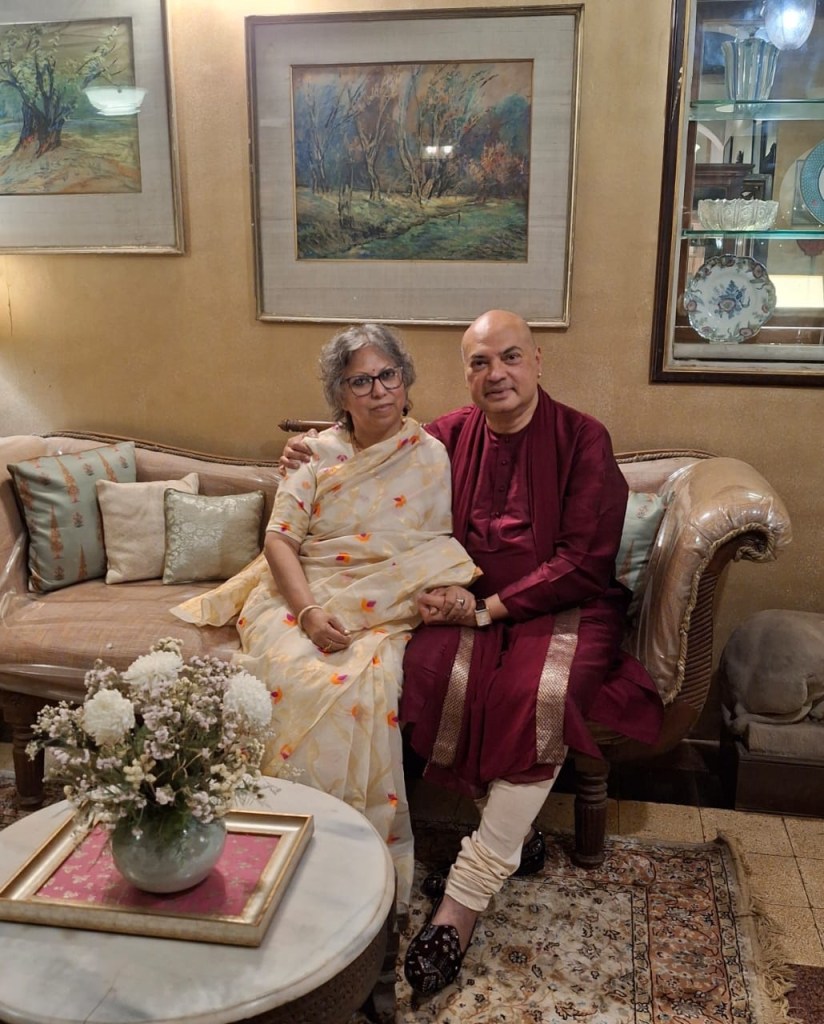
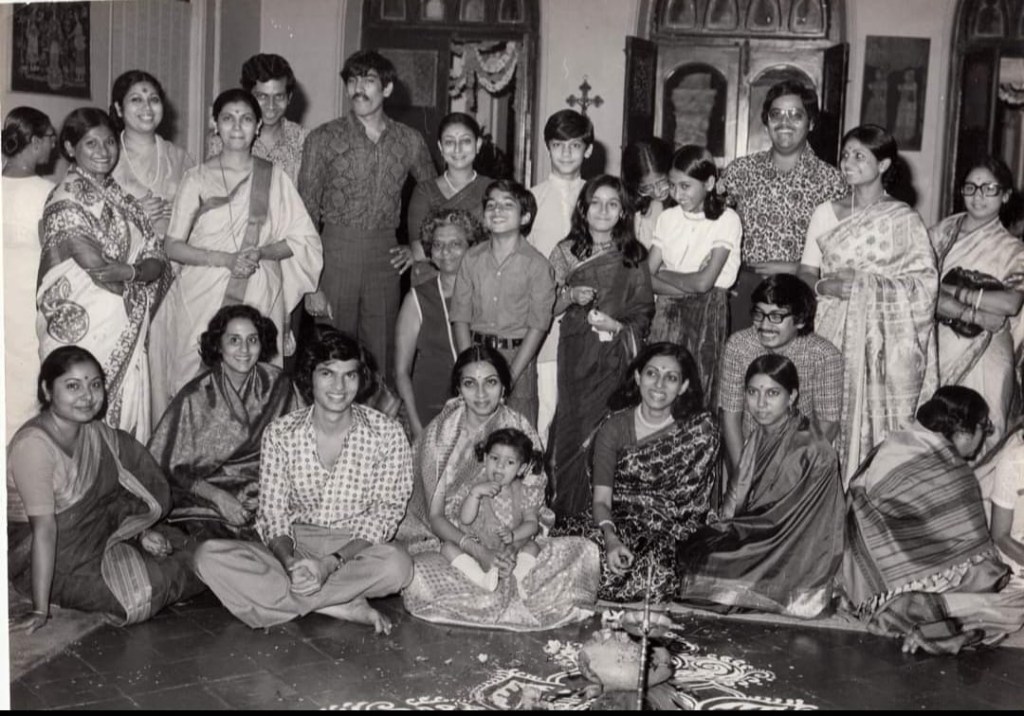
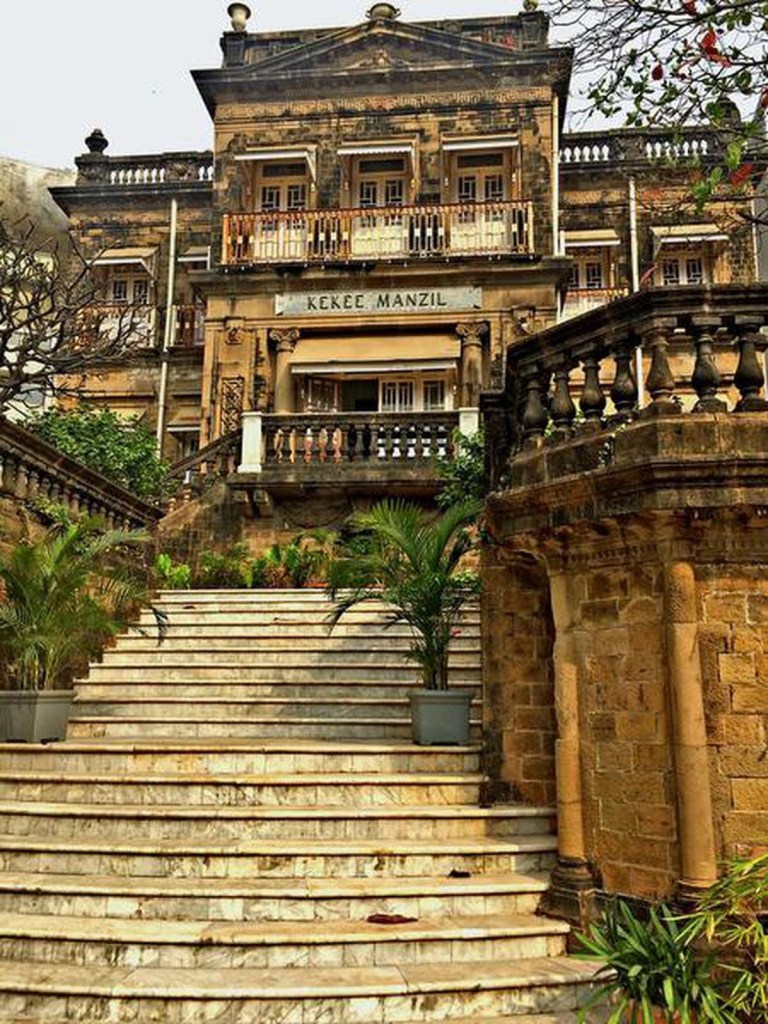
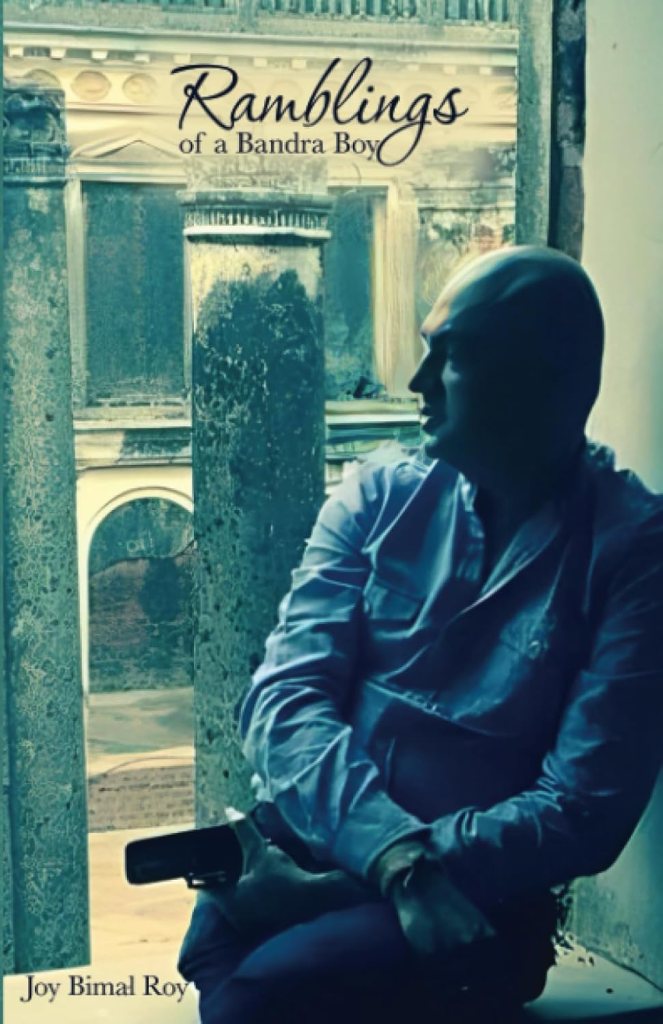
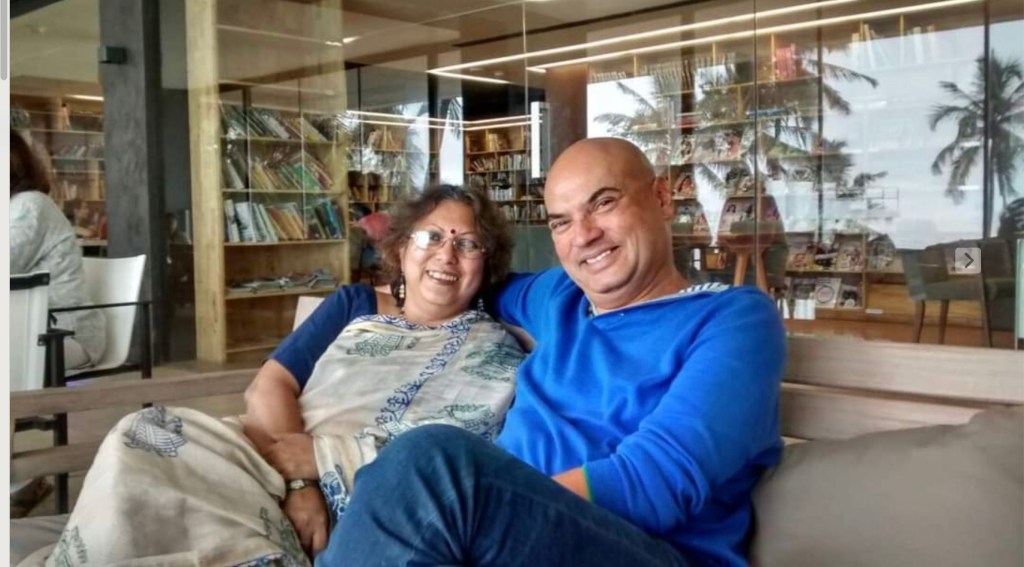


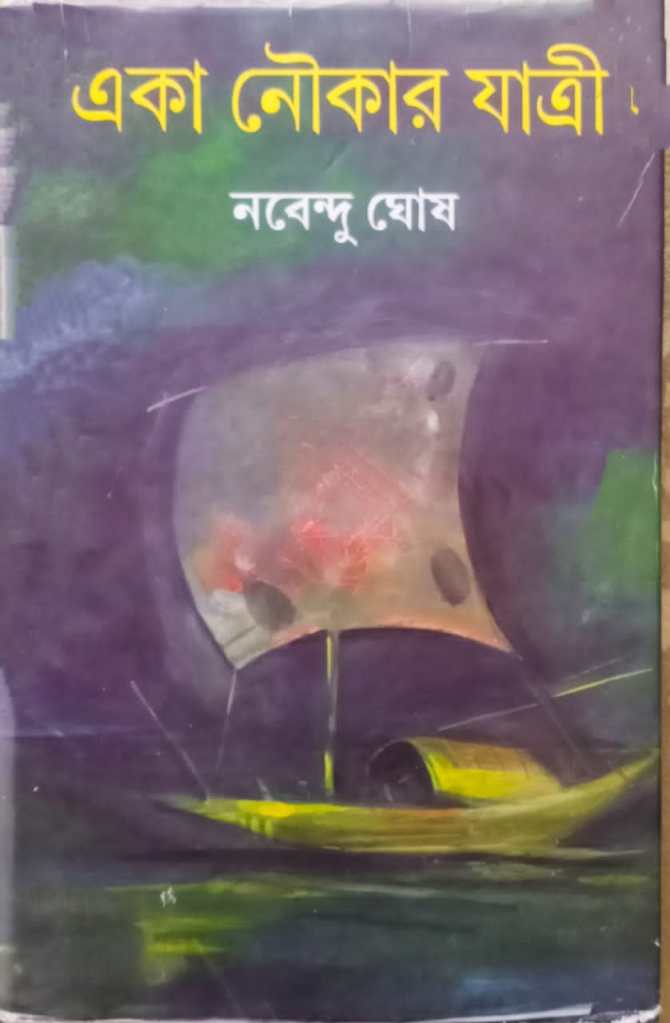
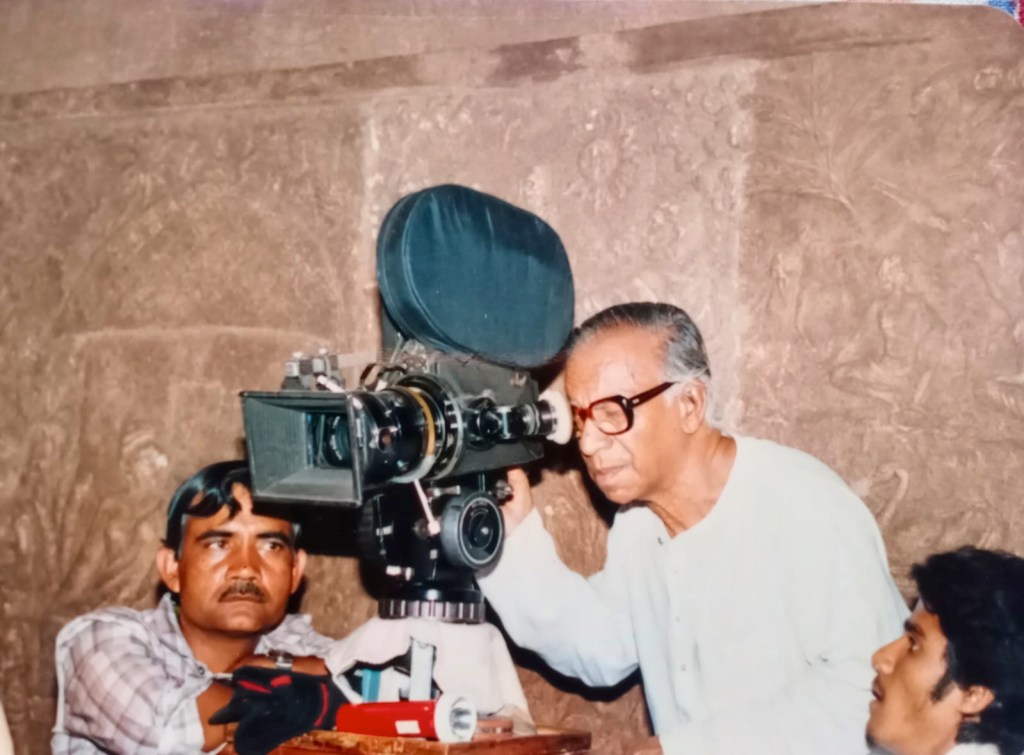


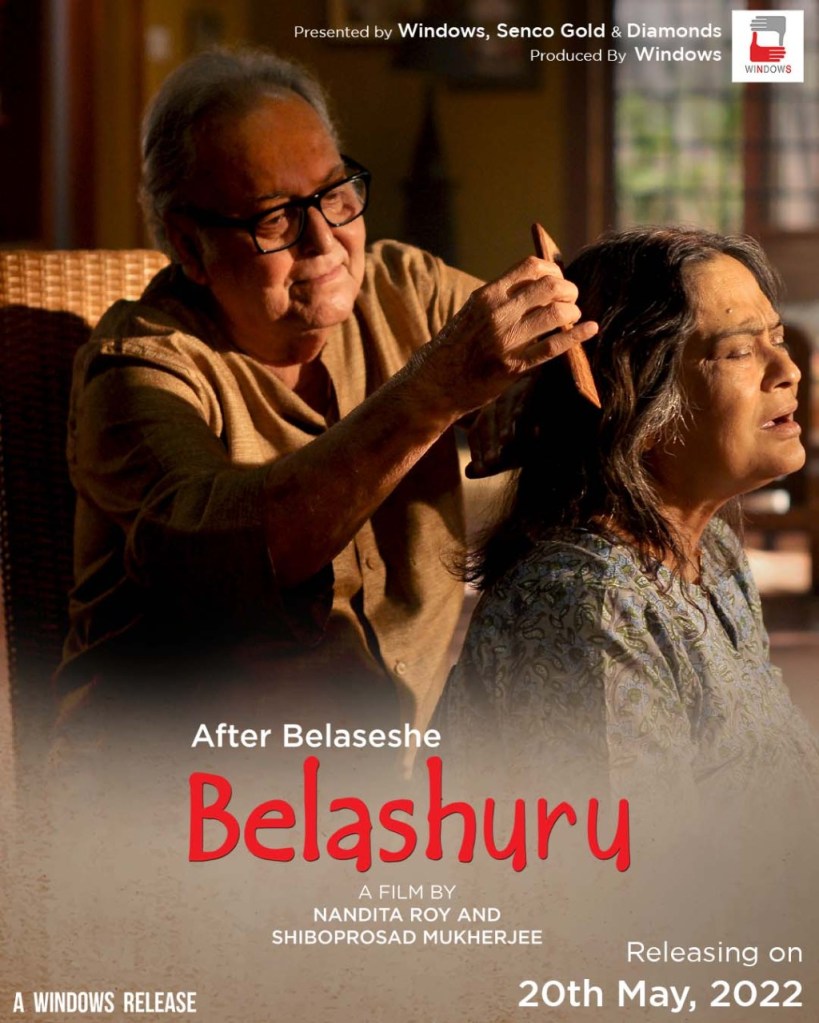
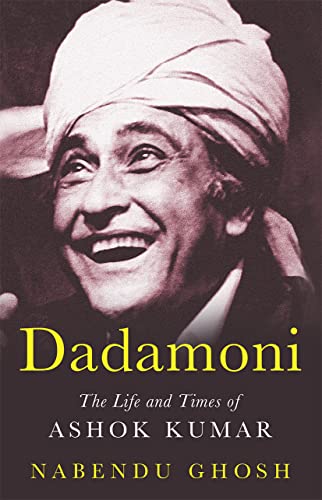
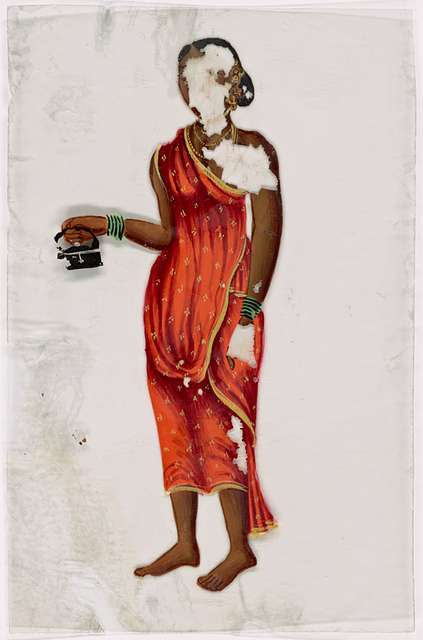
 Borderless