Categories
Discussion

Bridging Cultures across Time and Space

In Conversation with Translators

Translators are bridge builders across cultures, time and place. We have interviewed five of them from South Asia. While the translators we have interviewed are academics, they have all ventured further than the bounds of academia towards evolving a larger literary persona.

The doyen of translation and the queen of historical fiction, Aruna Chakravarti,  and poet, critic and translator, Radha Chakravarty , feel their experience at bridging cultures has impacted their creative writing aswell. Somdatta Mandal, is prolific with a huge barrage of translations ranging from Tagore, to women to travellers, despite being an essayist and reviewer, claims she does not do creative writing and views translations as her passion. Whereas eminent professor and essayist from Bangladesh, Fakrul Alam tells us that translating helped him as a teacher too. Fazal Baloch, translator and columnist from Balochistan, tells us that translation is immersive, creative and an art into itself. We started the conversation with the most basic question – how do they choose the text they want to translate…

How do you choose which texts to translate?
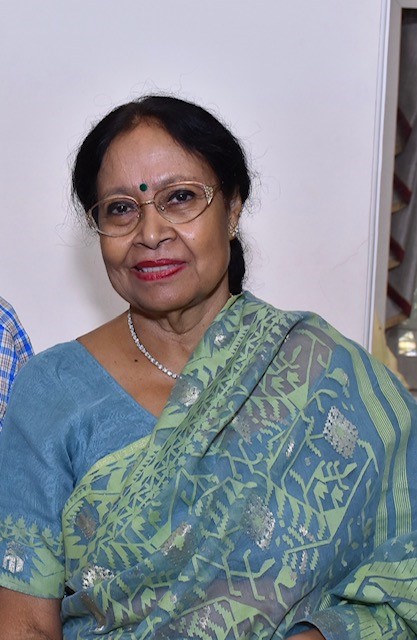
Aruna Chakravarti

Aruna Chakravarti: A translation is an attempt at communication on behalf of a culture, a tradition and a literature. Choosing an author and, more importantly, the most significant areas of his or her work are the first steps towards this communication, because it is only through translation that masterpieces from a small provincial culture become universal ones. Since I come from Bengal, I have always chosen the best of its literature for translation. My first translation was of Rabindranath Tagore’s lyrics. Rabindranath once said that even if all his other work fades to oblivion, his songs would remain. Saratchandra Chattopadhyay, a leading writer of 19th and early 20th century Bengal, considered Srikanta the best of his novels and the most suited to be conveyed to a global readership. I translated Srikanta. Sunil Gangopadhyay is hailed as the most eminent writer of present-day Bengal.  My translations of his novels and short stories are extraordinarily well received by non-Bengali readers, to this day.

Radha Chakravarty

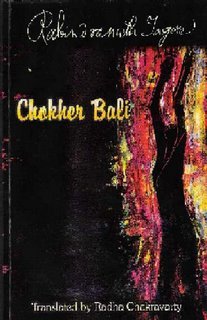
Radha Chakravarty: Every occasion is different. Sometimes a text chooses itself because I feel compelled to translate it. Sometimes I select texts to translate, in response to suggestions or requests from editors, readers and friends who read. Several of my books in translation evolved alongside my research interests as a scholar and academic. For instance, Vermillion Clouds, my anthology of stories by Bengali women, developed from my general interest in feminist literature and my desire to bring texts from our own culture to the English-speaking world. My translations of Mahasweta Devi’s writings, especially the stories on motherhood in the collection titled In the Name of the Mother, happened when I was working on a chapter about Mahasweta for my PhD thesis. Our Santiniketan, my translation of her childhood memoir, emerged from my interest in her writings, as well as my admiration for Rabindranath Tagore. The translations of Chokher Bali1, Farewell Song (Shesher Kabita) and Four Chapters reflect my special fascination with Tagore’s woman-centred novels, for this was also the subject of my post-doctoral work. Later, I developed this research into my book Novelist Tagore: Gender and Modernity in Selected Texts. For my edited anthology Shades of Difference, a compilation of Tagore’s works on the theme of universality in heterogeneity, the selection involved a great deal of thinking and research. And translating Kazi Nazrul Islam’s essays turned out to be an incredible learning experience.

Somdatta Mandal

Somdatta Mandal: I have been translating different kinds of texts over the last couple of decades, and I have no fixed agenda of what I choose to translate. Usually, I am assigned some particular text by the author or a publisher, but sometimes I pick up texts which I like to do on my own. Since I have been working and researching on travel writing for a long time, I have chosen and translated several travel texts from Bengali to English written by women during the colonial times. I have also translated a lot of Rabindranath Tagore’s essays, letters and memoirs of different women related to him. Recently I translated a seminal Bengali travel text of a sadhu’s sojourn in the Himalayas in the late nineteenth century. I have a huge bucket list of texts that I would love to translate provided I find some publisher willing to undertake it. Since copyright permissions have become quite rigid and complicated nowadays, I have learnt from my own experience that it is always advisable to seek permission from the respective authorities before venturing into translating anything. Earlier I was naïve to translate stories which I liked without seeking necessary permission from the copyright holder and those projects ultimately did not see the light of day.
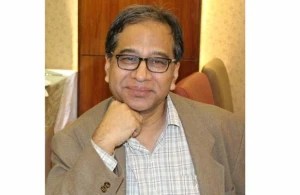
Fakrul Alam

Fakrul Alam: I have no fixed policy on this issue. Sometimes the texts choose me, so to speak. For instance, I began translating poems from Bengali when I first read Jibanananda Das’s “Banalata Sen”. The poem got hold of me and would not let go. I felt at one point an intense desire to translate it and read more of Jibanananda’s poems. Translating the poem elated me and having the end product in my hand in a printed page was joyous. The more poems I read by Jibanananda afterwards, the more I felt like rendering them into English, as if to share my delight and excitement at coming across such wonderful poems with readers who would not have read them in Bengali. That led to my first book of translations, Jibanananda Das: Selected Poems (Dhaka, UPL, 1999). As I ended my work on Jibanananda I thought: why not translate some poems by Rabindranath too? I had climbed one very high mountain satisfactorily and so why not venture forth and climb the topmost peak of Bengali literature?  And so, I began translating Rabindranath’s poems as well as his songs. I had grown up with them, but till now had never imagined I could render them into English. Kumkum Bhattacharya, a dear friend who at that time was in charge of Viswa-Bharati’s publishing wing, Granthana Vibhaga, had seen samples of my work and told me to think of an anthology of his translated works to be published in Tagore’s sesquicentenary year for them. This led me to the poems, prose pieces and songs by him that I translated for The Essential Tagore (Cambridge, Mass, Harvard UP, 2011 and Kolkata: Viswa Bharati, 2011), a book that I had co-edited (with Radha Chakravarty). My last book of translations, Gitabitan: Selected Song-Lyrics of Rabindranath Tagore (Dhaka: Journeyman Books, 2023) alsocame out of this same compulsion of translating works in Bengali. This particular work is a book of translations of nearly 300 songs that I love to listen to again and again—songs that made me feel every now and then that I had to translate them, especially when I heard them sung by a favourite Tagore singer. My translations of a few Kazi Nazrul Islam’s poems and some of his songs are also the result of such compulsive feelings. 

However, I also translated some works because I was requested to do so by people who knew about my Jibanananda Das and Tagore translations and who felt that I would be a competent translator of works they felt were worth presenting to readers in English versions of Bengali books very dear to them. My three translations of works by Sheikh Mujibur Rahman, The Unfinished Memoirs (Dhaka: UPL Books, 2012), The Prison Dairies (Dhaka: Bangla Academy, 2017), and New China 1952 (Dhaka: Bangla Academy, 2021) were all outcomes of requests made to me to translate them. Translating Ocean of Sorrow, the epic 1891 novel by Mir Mosharraf Hossain, has been the most challenging translating work I have had to undertake till now (Dhaka: Bangla Academy, 2016). I would not have dared take on the task of translating such a long and demanding prose work if Shamsuzzaman Khan, the Director of the Bangla Academy of that period, had not kept requesting me to translate this classic of Bengali Literature.

I will end my response to this question by saying that every now and then I translate poems and prose pieces by leading writers who are my contemporaries and who keep requesting me to translate them. Occasionally, I will also translate poems by major poets of our country of the last century—poets like Shamsur Rahman and Al Mahmud—because a poem or two by them had gripped me and made me feel like venturing forth into the realm of translation.  
Fazal Baloch

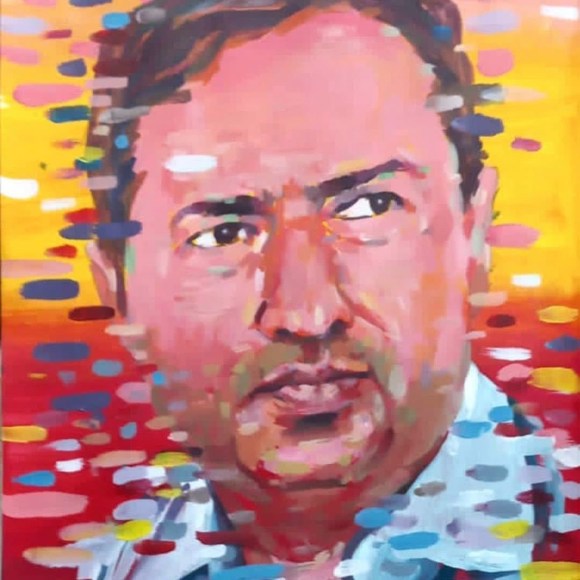
Fazal Baloch: Translating poetry and prose are two very different endeavors. Poetry often makes an immediate impact. Sometimes just a few lines strike me powerfully on the first reading, creating an atmosphere that sets the translation process in motion. In other words, I tend to translate the verses that stir something in me or resonate deeply.

Prose translation, by contrast, works differently. It usually unfolds after a longer process and often requires multiple readings of the text. At times, it even calls for a more deliberate, conscious effort.

Does translating impact your own writing?

Aruna Chakravarti: Yes, it does.  While translating the great masters of Bengali literature I have learned much that has impacted my own writing. From Rabindranath I learned that prose need not necessarily be dry and matter of fact. It could be imbued with lyricism without appearing sentimental and over emotional.  Saratchandra taught me the importance of brevity and precision. Search all his novels and you will not find one superfluous word. I try to follow his example and shun over-writing. From Sunil Gangopadhyay, I learned the art of dialogue. His direct, no-nonsense style and use of colloquialisms work best in dialogue.  

Radha Chakravarty: Yes indeed. As I have just indicated in my answer to your previous question, my translations often take a course parallel to my research, and the two strands of my work sometimes become inseparably interrelated. In my critical works on Indian literature, I remain conscious of bringing these writings to an audience beyond India. Hence an element of cultural translation infuses my analysis of texts by Indian writers. In my own English poetry, when I write about Bengali settings and themes, bilingual overtones often seep in.

Somdatta Mandal: No, not at all. I am not a creative writer per se, so there is no way that translation can influence my own writing.

Fakrul Alam: I will start answering the question by saying that apart from translating and writing nonfiction essays in the creative mode, I have not authored literary works. I am first and foremost an academic. Inevitably, translating Rabindranath’s works have impacted on me academically. By now I have at least one collection of essays on various aspects of Rabindranath’s life and enough essays on him that can lead to another such book. No doubt coming to know Rabindranath so intimately through the kind of close reading that is essential for translation work has made me more sensitive to him as a thinker, educator and visionary, as well as a poet and writer of prose and fictional works. Reading literary creations by him, his letters and lectures that I came across because of my involvement with his work has also lead me to editing; the work I did as co-editor of The Essential Tagore is surely proof of that.

Let me add that my translations have also impacted on my teaching. I am now able to draw on comparisons with Bangladeshi writers and Bengali literature for comparison and contrast in the classroom when I teach texts written in English to my students.  Reading up on the authors I have translated has also equipped me to be more aware of Bangladesh’s roots and national identity formation. This has led me to essays on these subjects.   

Fazal Baloch: Translation is not separate from the process of creativity. Through it, we enter a new world of meaning and explore the experiences of others through a creative lens. As a writer, I find translation essential for nurturing and enriching the mind. It is also worth noting that translation is not partial or fragmentary but a complete and holistic act. When I translate, I move with its current just as I do when I write. Both processes unfold in their own rhythm without obstructing one another. In fact, it is through translation that I have come to recognize and understand great works of creativity in a deeper way.

What is the most challenging part of translation? Do you need to research when you translate?

Aruna Chakravarti:  Yes, since a major part of my translation work was set in 19th century Bengal, I needed to understand and imbibe the ethos and ambience of the times. Being a Probasi Bangali who has lived outside Bengal all her life, this was important. Consequently, a fair amount of research was involved. This has stood me in good stead in my own writing.

Speaking about challenges there are many. The more divergent the two literary traditions the greater the dilemma of the translator. But the test of a good translation is the absence of uncertainty, hesitation and strain. Since translation undertakes to build bridges across cultures it is important that it reads like a creative work. The language must be flowing and spontaneous; one that readers from other languages and cultures don’t feel alienated from. One that they are willing, even eager to read. One they can sail through with effortless ease.

On the other hand, readability or beauty of language cannot be the sole test of a good translation. If the translator becomes obsessed with sounding right in the target language, he/she could run the risk of diluting and distorting the original text which would be a disservice to the author. The reader should hear the author’s voice and be conscious of the source language and culture, down to the finest nuance, if the translation is a truly good one. A good translator is constantly trying to keep a balance between Beauty and Fidelity. No translation is perfect but the finer the balance…the better the translation.

Radha Chakravarty: When translating from Bengali into a culturally distant language like English, the greatest challenge is to bring the spirit of the original alive in the target language, for readers who may not be familiar with the local context. Literal translation does not work.

The need for research can vary, depending on the nature of the text being translated, the purpose of the translation, and the target readership. Some texts travel easily across cultural and linguistic borders, while others need to be interpreted in relation to the time, place and milieu to which they belong. The latter demand more research on the part of the translator, who must act as the cultural mediator or interpreter. When translating Tagore’s writings for my anthology The Land of Cards: Stories, Poems and Plays for Children, I found that these works speak to all children without requiring too much explanation or contextualization; very often the context becomes clear from the writing itself. But Boyhood Days, my translation of Tagore’s childhood memories in Chhelebela, required greater contextualization, for present day readers to grasp unfamiliar details of life in old-world Kolkata.

Somdatta Mandal: The most challenging part of translation is to maintain the readability of the text which I consider to be of foremost importance for any text to communicate with its readers. However, this readability should not be achieved at the cost of omission or suppression of portions of the original. Instead of rigidly following one particular criterion, usually my focus has been to choose what best communicates the nuances of the Source Language [SL]. Sometimes of course when it is best to do a literal translation of cultural material rather than obfuscate it by transforming it into an alien idiom taken from the target language resulting thus in a significant loss of the culture reflected in the original text.

As for doing research when I translate, the answer depends on what kind of text I am working on. If it is a serious academic piece, then occasionally I must consult the dictionary or the thesaurus for the most suitable word. Sometimes contextual or historical references need special attention and background research but such instances are occasional. What really attracts me towards translation is the inherent joy of creativity – of being free to frame the writer’s thoughts in your own words.

Fakrul Alam: The most challenging part of translation is getting it right, that is to say, conveying the words and feel of the original as accurately as possible.  But “getting it right” also means being able to convey the form and tone of the original as well as is possible.  In every way the translator must carry on his translating shoulder the burden of accuracy whenever and whatever he or she is into translating. In this respect a translator like me is different from creative people who take on the task of translating ready to take liberties to render the original in distinctive ways that will bear their signatures. They do not feel constrained like translators of my kind who never dare to move away more than a little distance from the original in order to convey the tone and the meaning as imaginatively and creatively as is possible for them.

I have a simple method when it comes to translating. My first draft is the result of no aid other than printed and/or online dictionaries. If there are allusions I come across when readying the first draft, I Google. Lately, AI has been very helpful in this regard—it even gives me the English equivalence for quite a few Bengali words when, for instance, I type the title in English of a Bengali song-lyric by Rabindranath. Then I compare my translation with that of other translations available online to see if my version is deviating to much from the ones I see.

Occasionally, I will need to do research on the work I am translating. In translating Mir Mosharraf Hossein’s epic novel, for example, I kept searching on the net to know more about the characters and situations of history he had rendered into his narrative than I knew from his writing. I will also do a lot of research if and when I feel a poem or prose work needs to be contextualized and footnotes or end notes needed by readers to understand what is being depicted fully. Thus, for Jibanananda Das’s “Banalata Sen” alone I had to Google a number of times to understand fully the imaginative geography of the piece and get a feel of the real-life equivalents of the places and characters mentioned. In particular, for the first stanza of the poem I had to look for glossaries I intended to provide on words like Vimbisar, Vidarbha, Sravasti and Natore for overseas readers.

Fazal Baloch: Translation is not simply the process of transferring of text from one language to another; it is more like a conversation between cultures, a process through which they come closer and begin to understand one another.

For me, the most challenging part of translation is working with idiomatic and metaphorical expressions. Every language has its own unique idioms and linguistic frameworks, and these are often difficult to carry over into another language. To meet this challenge, I often need to conduct research and explore the etymological roots of words.

What is more important in a translation? Capturing the essence of the work or accuracy?

Aruna Chakravarti:  Capturing the essence of the work is certainly more important than accuracy.  Translators shouldn’t translate words. They should convey the spirit, the intent of the work. There are some authors so obsessed with their own use of language… they want translators to find the exact equivalent for each word they have written. This is a bad idea. Firstly, it is simply not possible to find exact equivalents. At least, not in languages as diverse as Bengali and English. Secondly, the job of the translator is not to satisfy the author’s ego. It is to transfer a literary gem from a small readership to a larger, more inclusive one. If one is unable to do so, the author revered in his own country will fail to speak meaningfully across the language barrier and the onus of the failure will fall on the translator.

Radha Chakravarty: A literary text is a living reality, not a corpus of printed words on the page. It is this living spirit that needs to animate the translated text, rather than precise verbal equivalence. The popular emphasis on fidelity in translation is misplaced. For literary translation cannot be a mechanical exercise. It is, in its own right, a creative process, which depends, not on rigid verbal ‘accuracy’, but on the translator’s ability to recreate, in another language, the very soul of the original. Perhaps ‘transcreation’ is a good word to describe this.

Somdatta Mandal: Regarding translation, it must be kept in mind that though something is always lost in translation, one must always attempt to strike the right balance between oversimplification and over-explanation. Translation is also creative and the challenges it poses are significant. The intricate navigation between the source language and the translated language shows that there are two major meanings of translation in South Asia – bhashantar, altering the language, and anuvad, retelling the story. Without going into major theoretical analyses that crowd translation studies per se, I feel one should have an equal grasp over the SL and the TL [Translated Language] to make a translated piece readable. I translate between two languages – Bengali and English. Sometimes of course, cultural fidelity must be prioritised over linguistic fidelity.

Translating has caught up in a big way over the past five or six years. Now big publishing houses are venturing into publishing from regional bhasha [Language] literatures into English and so the possibilities are endless. Now every other day we come across new titles which are translations of regional novels or short stories. Translating should have as its prime motive current readability and not always rigidly adhering to being very particular about remaining close to each individual line of the source text. The target readership should also be kept in mind and so the choice of words used, and glossary should be eliminated or kept to a minimum. The meaning of a foreign word should as far as possible be embedded within the text itself. All these issues would make translating an enjoyable experience. Way back in 1995, Lawrence Venuti popularised the term ‘foreignized’ so that readers can get access to the source culture as well. He used the term to explain the kind of translation that ‘signifies the difference of the foreign text by disrupting the cultural codes that prevail in the target language.’ Thus, the idea of translation is not to just communicate the plot but also to make readers familiar with the traditions, rituals, and world views of the other.

Fakrul Alam: To me the most important goal is to come as close to the original in every possible way. This means aiming for accuracy, but surely it also means coming as near as possible to the essence of the original. In other words, as far as I am concerned, accuracy will lead to essence. But as I indicate above, most creative writers doing translation will go for the essence and forego accuracy. But knowing something will be lost in translation I will try to minimize the loss by sticking close to the original in every possible way—word meaning, the rhythm of speech, sound elements and imagery. Of course, a man’s reach should exceed his grasp but what else is going to bring the translator close to cloud nine? 

Fazal Baloch: Both essence and accuracy matter, but in poetry translation, the limited space to maneuver often makes essence the priority. As I mentioned earlier, the goal of translation is not only to carry over the meaning of the words but also the rhythm, tone, emotion, and cultural context that bring the original to life.

In practice, this means the translator has to balance several tasks at once: preserving cadence and rhythm, maintaining poetic flow, and ensuring semantic clarity. Yet above all, the translator must not lose the spirit of the original when choosing between essence and accuracy.

Prose, on the other hand, offers more freedom. Because it allows greater room to preserve meaning, accuracy tends to matter more, though essence still plays a role.

In short, poetry often gives more weight to essence, while prose allows essence and accuracy to work together more harmoniously.

  1. Best friend from Childhood, literally Sand from the Eye ↩︎

Bios of Featured Translators:

Aruna Chakravarti has been the principal of a prestigious women’s college of Delhi University for ten years. She is also a well-known academic, creative writer and translator. Her novels, JorasankoDaughters of JorasankoThe InheritorsSuralakshmi Villa and The Mendicant Prince have sold widely and received rave reviews. She has two collections of short stories and many translations, the latest being Rising from the Dust. She has also received awards such as the Vaitalik Award, Sahitya Akademi Award and Sarat Puraskar for her translations.

Radha Chakravarty is a poet, critic and translator based in Delhi, India. She has published over 20 books, including translations of major Bengali writers such as Rabindranath Tagore, Bankimchandra Chatterjee and Kazi Nazrul Islam, anthologies of South Asian writing, and several critical monographs. She has co-edited The Essential Tagore (Harvard and Visva-Bharati), named Book of the Year 2011 by Martha Nussbaum. She was Professor of Comparative Literature and Translation Studies at Ambedkar University Delhi.

Somdatta Mandal is the Former Professor of English and Chairperson at the Department of English & Other Modern European Languages, Visva-Bharati, Santiniketan. Somdatta has a keen interest in translation and travel writing.

Fakrul Alam is an academic, translator and writer from Bangladesh. He has translated works of Jibonananda Das and Rabindranath Tagore into English and is the recipient of Bangla Academy Literary Award (2012) for translation and SAARC Literary Award (2012).

Fazal Baloch is a writer and translator. So far, he has published seven English anthologies and one Urdu collection of his translations. His. works include “God and the Blind Man: Selected short stories by Munir Ahmed Badini (Balochistan Academy of Science and Research, 2020), The Broken Verses: Aphorism and Epigrams by Sayad Hashumi (Balochi Academy Quetta 2021), Rising Stars: English Translations of Selected Balochi Literature by the Writers under the Age of Fifty (Pakistan Academy of Letters Islamabad 2022), Muntakhib Balochi Kahaniyan (Pakistan Academy of Letters Islamabad 2022), Adam’s Remorse and Other Poems by Akbar Barakzai (Balochi Academy Quetta 2023), “Why Does the Moon Look So Beautiful?: Selected short stories by Naguman” (Balochistan Academy Turbat, revised edition 2024) and “Every Verse for You”: Selected Poetry by Mubarak Qazi (Balochistan Academy Turbat, revised edition 2025). His translations have also been included in different anthologies such as ‘Silence between the Note’ (Dhauli Books India, 2019), Unheard Voices: Twenty-One Short Stories in Balochi with English translations (Uppsala University Sweden, 2022) and ‘Monalisa No Longer Smiles: An Anthology of Writings from across the World (Om Books International, 2022). He also contributes literary columns to various newspapers and magazines. He lives in Turbat Balochistan where he serves as an Assistant Professor at Atta Shad Degree College Turbat.     

(The interviews were conducted via email by Mitali Chakravarty)

PLEASE NOTE: ARTICLES CAN ONLY BE REPRODUCED IN OTHER SITES WITH DUE ACKNOWLEDGEMENT TO BORDERLESS JOURNAL

Click here to access the Borderless anthology, Monalisa No Longer Smiles

Click here to access Monalisa No Longer Smiles on Kindle Amazon International

Categories
Essay

Moving Images of Tagore


By Ratnottama Sengupta


Rabindranath Tagore spells different things to different people: National Anthems; the Nobel, Rabindra Sangeet, a veiled woman, Sriniketan or Santiniketan. A cineaste might think of Charulata or Kabuliwala, Chokher Bali (Best Friend) or Kadambari. But the subject ‘Tagore and Cinema’ would mean talking of Tagore’s exposure to cinema, his interest in the medium, the fate of his involvement with celluloid, the films based on stories penned by him, their interpretation in a world that is so far removed from his, in historical, economical, and cultural terms… In other words, it would mean talking of what about Tagore endures — and why it reaches out to the wide world of humanity.

To me, it is Tagore’s awesome, inspiring humanism that offers us immense scope to transcreate, reinterpret, relocate the socially relevant developments and rooted characters again and again onscreen. Like Shakespeare, his works are universal in terms of age, geophysical location, terrain of the mind and tugs of emotions…

Rabindranath was almost seventy when he exhibited his paintings that were so radically different from the style associated with the Tagore family artists, Abanindranath, Gaganendranath, Sunayani Devi, or Nandalal Bose. For, if the Bengal School looked East and sought inspiration in delicate miniatures, Chinese watercolours or the sparseness of Japanese zen, Tagore absorbed the boldness of German expressionism and created a unique style. It’s impossible for someone so open to avant garde trends to take no interest in cinema, the 20th century art form that was silently taking its juvenile steps in India when Tagore won the Nobel.

When he visited Russia, he watched Battleship Potemkin, the classic ‘handbook for editors’ (to quote Phalke winner Hrishikesh Mukherjee) that influenced a long line of filmmakers in India too. By 1931, the year when Alam Ara (Hindi) and Jamai Shasti’(Bengali) turned ‘movie’ into ‘talkie’, Tagore was in the last decade of his life. So, when he directed Natir Puja (The Dancing Girl’s Worship) at New Theatres, he was substantially assisted by Premankur Atorthi, who was the first to direct a film based on a Tagore composition. This was the only time when the Renaissance personality directly interacted with the celluloid medium. His nephew Dinendra wrote the screenplay, albeit under Tagore’s guidance, and students of Santiniketan acted in it. More importantly, Tagore himself essayed an important role in the dance-drama which was shot with a static camera over four days. However, the result was more a staged play than cinema. A greater tragedy is that the reels perished within 10 years, when a fire ravished the New Theatres Studio in 1941.

Atarthi’s own direction of Chirakumar Sabha (1932) set off a tradition that received a robust boost, first in the 100th year of the poet’s birth, and again in 2011, when he turned 150 and further. If literary treasures like Gora (1938) and Chokher Bali (1938) were adapted onscreen by Naresh Mitra and Satu Sen, they were remade and reinterpreted by Rituparno Ghosh who veered towards Tagore rather than Saratchandra, the more popular litterateur of Bengal who was a staple of Tollygunge for years. In fact all major names of Tollygunge, from Nitin Bose, Agradoot, Tapan Sinha, to Purnendu Pattrea, Partha Pratim Chowdhury and Rituparno Ghosh have announced their coming of age in cinema with a film based on a Tagore composition. 

It is interesting to note that when Tagore visited Russia in September of 1930 members of the Cinema Board who had a conversation with him regarding his “new film stories” were deeply impressed by the short versions of the stories (as narrated) by the Poet, and they met him at his hotel to discuss in detail the possibilities of filming them. Tagore himself had enough interest in cinema to visit the Amalgamated Cinema Union, where he was received by its president M Rutin and was shown Eisentein’s Battleship Potemkin and portions of Old and New, we learn from his Letters from Russia

Although evoking the Bengal of his time in divergent hues, Tagore’s stories continue to inspire man to go beyond divisions of nation, religion, caste or gender, perhaps because they explore how society shapes our love and relationships. This essay dwells on films that highlight the pervading themes of feminism, humanism and universalism in Tagore’s literary works.

Not Slave, Nor Goddess

The champion of women tells us to enunciate aami nari, I am a woman … with pride, because a woman is not a slave nor needs to be the other extreme, a goddess. That it is right for a woman, whether young, maiden, or widowed, to be a person of flesh and blood. That Tagore empathised so deeply with his women characters that today’s social historians are talking of an androgynous strain in the humanist.

* When Satyajit Ray filmed Ghare Bairey (The Home and the World), we got a glimpse of the regressive practices that ailed even the wealthy and educated households. However the most symbolic scene was the one where Bimala is inspired by Nikhilesh to step out of the inner quarters of the zamindar’s household. Even Sandip, the false god, hails it as a ‘social revolution’. Tagore the author goes on to criticise the pseudo rebel but at no point does he criticise Bimala — not even when her sister-in-law cautions Nikhilesh about the freedom his wife is abusing. We find a repeat of this theme in Char Adhyay (Four Chapters) – but we’ll come to that later.

* Chokher Bali, first filmed in 1938, turned the spotlight on the deprivations young widows were subjected to even after the reformist crusades of Raja Ram Mohan Roy and Ishwar Chandra Vidyasagar. Very sympathetically, and most aesthetically, it held a brief for their sensuality — even sexual needs, especially when Rituparno Ghosh filmed it in 2003. But even here, before Mahendra’s mother dies, she urges that in her memory he should host a feast for widows — “people feed Brahmins, beggars, even animals, but never for the unfortunate widows,” he underscores.

* Nitin Bose’s bilingual Noukadubi was probably the first to take Tagore to Hindi cine-goers. Incidentally Rituparno and Subhash Ghai’s Noukadubi were also bilingual. In 1944, Milan afforded Dilip Kumar opportunity to mature as an actor, for here Ramesh upholds the flag of humanism. After being boat wrecked he comes home with Kamala, the ‘bride’ he has not deigned to look at, and realises that she is in fact someone else’s wife. The gentleman in him decides to take her to a convent and give her not just protection (from a par purush, stranger) but also proper education — even at the cost of his own spotless reputation and his chances of finding happiness with his beloved, Hem Nalini. 

* In Charulata (1964), although Satyajit Ray continues to unfold her story from Amal’s point of view, his sympathy without reservation lies with the lonely wife. For half a century and more viewers have no doubt that Charu was an alter ego for Tagore’s Natun Bouthan – his sister-in-law Kadambari Devi, who took her own life. This story has inspired Bandana Mukherjee’s Srimati Hey and Suman Ghosh’s Kadambari (2015). Ray underscores this aspiration aspect in the film when Charu writes, gleaning from her experiences, and her writings are published in a magazine. This was unthinkable in the 19th century — and only a deeply humane soul could understand that a woman too needed to express her intellectual and creative self. (This aspect is completely missing in Charulata of 2011,  directed by Agnideb Chatterjee, although it unfolds from the woman’s perspective and unabashedly speaks of her physical intimacy with Amal.)

* For Tagore, perhaps the stifling of this intellectual self was as great a tragedy as the ‘burying’ of her potentials within the walls of domesticity. In the poem ‘Sadharan Meye’ (Ordinary Girl), he urges his contemporary Sarat Babu to write a novel where the protagonist — a scorned woman — goes on to study, travel abroad, re-valued by several admirers, including the man who ditched her for being an ‘ordinary’ woman. The core thought of this poem had inspired a script by Nabendu Ghosh, an altered (and unacknowledged) version of which was made by Hrishikesh Mukherjee as ‘Pyar Ka Sapna’ (Dream of Love, 1969). In recent times the theme has been most successfully revisited in Vikas Bahl’s Queen (2014).

* In Megh O Roudro (Clouds and Sunshine), Rabindranath’s short story creates a protagonist  whose struggle to affirm her dignity in the British ruled 19th century prompts her to read and write under the tutorship of a stubborn law student who is jailed for constantly challenging the discriminatory ways of the imperialists. By the time he is released, she is a prosperous widow who courteously acknowledges his role in her achieving self-confidence. In 1969, Arundhuti Debi, herself raised in Tagore’s ethos at Santiniketan, chose this for her second outing after Chhuti (Holiday) and her lyrical treatment brought her recognition as a director of substance.

* But what happens when a woman cannot fulfill her destiny, as in Streer Patra (A wife’s Letter, 1972)? How did Rabi Babu want his Mejo Bou — haus frau — to behave when the acutely male dominated household turns a blind eye to the injustice of marrying off the hapless orphan Bindu to a lunatic? Not drown her woes in the vast ocean at Puri but to slough off, in a moment of illumination, the shell of ‘Mejo Bou’ and become Mrinal, a woman with .her own soul and individual identity Why must she end her life like his Natun Bouthan — “Meera Bai didn’t,” he points out. And to us, even by today’s standards, it is the ultimate expression of feminism. 

* Perhaps because of the class she belonged to, and with the support of a rebellious brother, Mrinal could do what Chandara couldn’t in Shasti (Punishment, 1970). Tagore knew that neither his ‘Notun Bouthan’ nor his own wife Mrinalini got the opportunities enjoyed by his ICS brother’s wife. Far from it: Chandara’s husband Chhidam places the burden of his Boudi’s death at the hands of his elder brother on his wife. In the prevailing patriarchal society it wasn’t unthinkable: a wife was expendable because you could get another, but not a brother. But the unlettered Chandara has her own estimation of the sanctity that is the conjugal bond. When her husband comes to meet the wife condemned to hang, she denies him the right of visitation by disdainfully uttering a single word: “Maran!” How should we read it today? Go, drop dead or go hang yourself!

* Jogajog (Connection) was written in 1929 in a society where there were caste/ class distinctions even amongst zamindars. Tagore had first-hand experience of this within his family. His crude protagonist is a johnny-come-lately who seeks revenge by marrying the educated and cultured Kumudini. He cannot stand any expression of respect for her brother and feels belittled at the slightest hint of will in his wife. Matters go so far that in the 2015 film, director Sekhar Das can effortlessly trace moments of marital rape in their conjugal discord.

* Chitrangada had poised the question: where lies a woman’s true beauty – in her outward appearance or her inner worth? Should the princess, raised to be as good as a prince, deny her essential self to please a man? Or is she wrong to sacrifice her being for one she loves? In 2008, Rituparno Ghosh gave a whole new androgynous reading of the dance drama, with Madan/ Cupid becoming a psychoanalyst. 

Child — The Father and Mother of Man

Robi, who immortalised his childhood in Chhelebela (Boyhood), could never forget the restrictions imposed by adults and the suffocating effect it had on an imaginative soul. Therefore in Ichhapuran (Wish Fulfillment,1970), directed by Mrinal Sen for the Children’s Film Society of India, he effected a role reversal whereby their bodies get swapped. The naughty child Sushil becomes the father and the senior who covets the youthfulness becomes the free spirited son.

The comical confusion this ensues in the village leads both to realise the importance of their individual positions in life. They get back to their original self with the profound lesson for humanity – that each one of us has a place in the world no one else can ever fulfill.

* Of course the best known child in Rabindra Rachanabali (Creations of Tagore) is Amal. Essentially Dakghar (Post Office) was a testimonial against the crushing of childhood Tagore suffered. In the recent past actors Chaiti Ghoshal and Kaushik Sen have proved the enduring appeal of Dakghar — she in the form of a recorded audio play (CD); he on stage. Chaiti Ghoshal interprets the protagonist she had played with Shambhu and Tripti Mitra not as a Rabindrik character but as any child today, familiar with cricket and computer. Manipur’s Kanhailal has used elements of dance and drama to reinforce this message of freedom beyond frontiers. And, following the 2007 police firing in Nandigram (that killed 14 persons who were opposing state officials on land acquisition drive), Kaushik Sen had interpreted Amal’s desire to send a letter as a message to every household to raise awareness. 

Sen’s Dakghar, then, was not about death but about liberation from life in bondage. “Perhaps that’s why, a day before Paris was stormed during WWII, Radio France had broadcast Andre Gide’s French translation of the play,” Kaushik had said while staging the play. “Around the same time, in a Polish ghetto, Janus Kocak had enacted the play with Jewish kids who were gassed to death soon after.” After such multi-layered readings of the text, Dakghar as filmed by Anmol Vellani in 1961 remains a simplistic viewing — perhaps because it was made for the Children’s Film Society.

* In The Postmaster the child – an illiterate village girl in this instance – metaphorically becomes a mother and a priya , or beloved, of the pedantic city boy who is stirred by beauty of the moon but can’t wait to go back. When he falls critically ill she dutifully serves him and cares for him like a wife. When he is set to depart by simply tipping her with silver coins, the child with a maturity beyond her years refuses to say goodbye. Rejection doesn’t need words: she can negate his very existence by her silence.

* Samapti (Finale) the concluding story of Teen Kanya (1965) remade by Sudhendu Roy as Upahaar ( The Gift, 1975), builds on the flowering of a woman in an unconventional girl child. Mrinmoyee is certainly not a Lakkhi Meye…a good girl , she’s a scandal in rural Bengal of 100 years ago. She escapes her wedding night by climbing down a tree, she spends the night on her favourite swing on the riverbank, she snatches marbles from her friend, a boy… When they try to tame her by locking her up in a room she throws things at Amulya. But when he returns to Calcutta and she’s sent back to her mother’s, she realises grown up love for the man she’s married to, and sneaks into his room by climbing the same tree!

* Buddhadev Dasgupta had woven Shey from Tagore’s late novel written for his granddaughter, and then scripted a feature based on 13 poems by the bard. When we read a poem, certain images arise before our mind’s eye. The director interprets Tagorean poetry through such images and experiences. “It is about how a poet responds to another poet,” he explains.

Of Zamindars and Servants

Robi, the ‘good for nothing’ youngest son of Debendranath, had to prove himself in his father’s eyes by successfully performing the job he was entrusted with – that of collecting taxes, ‘khajna’, from the ‘prajas’, subjects, no matter how impoverished they were. We all know that in doing the job he came across a vast cross section of people of the land whom he would not otherwise get to know so intimately. And while he could not be lenient as his father’s representative, he created caring characters like the zamindar in Atithi ( The Guest) who brings home a vagabond, gives him education, and even prepares to give his daughter in marriage to the free spirited boy whose restless soul drives him away…

* But having seen the reality of the lives of the subjects Rabindranath also created uncaring zamindars like the one in ‘Dui Bigha Jami’ (Two Bighas of Land) that had inspired the Bimal Roy classic Do Bigha Zamin (1953), set in a post-independence India that was rapidly industrialising. Debaki Bose attempted a more literal visualisation as part of Arghya, his Centenary Tribute to Tagore, along with his poem ‘Puratan Bhritya’, (Old Retainer).

* Robi, the motherless child who was raised in a large household in the rigid care of servants, said ‘Thank You’ to them through characters like Kesto, the old family retainer who refuses to leave even when he’s dubbed a thief or driven away. Instead, he saves his master from small pox at the cost of his own life. Tagore, in fact, goes a step further in his short story, ‘Khokababur Pratyabartan’. The trusted servant even raises his son to eventually give him up as the master’s child lost to a landslide in the river! 

Oppression of Religion

Pujarini (Worshipper) was immortalised by Manjushri Chaki Sircar’s dance. Although set in the revivalist times of Ajatshatru who was set upon putting the clock back and wipe out the Buddhist tenor of his father Bimbisara, we can easily identify with Rabindranath’s condemnation of any excess – violence in particular – in the name of Religion. Visarjan (Immersion) too raises consciousness against violence in any form, against even animals, in the name of religion.

* Nor can we overlook instances where he raises his angst ridden voice against the inhuman treatment of humans on grounds of caste or creed. In Chandalika, the untouchable gets a new mantra to live by when the Buddhist monk Ananda says “Jei manab aami sei manab tumi kanya (You, lady, and I are part of the same humanity).” The act becomes a beacon for Sujata, the eponymous protagonist of Bimal Roy’s film, who is on the verge of ending her life (following casteist discrimination).

* Tagore’s poem called ‘Debatar Grash’ (God’s Greed), lashes out against the cruelty people can unleash through the heart rending plight of the mother whose child is snatched from her and thrown into the raging waters to appease the villagers superstitious belief in god’s wrath. Shubha O Debatar Grash (Shubha and God’s Greed, 1964) remains a signature film of Partha Pratim Chowdhury.

* Tagore questioned the very concept of belonging to ideological boxes. His time-transcending novel, Chaturanga (Four Quartet), points out that human experiments (like, say, Communism) have failed because they put ideology in watertight boxes that do not have any room for flexibility. This inspired Suman Mukhopadhyay to film it in 2008. Tagore, who himself created walls and broke them, questions this through Jyathamoshai, his uncle, and Sachish, who invite Muslim singers and feed them at shraddha or funeral as much as through Damini, whom Sachish wants to domesticate much against her wish. She even questions her husband’s authority to will her away along with his property, to his religious guru. Tagore uses the graphic imagery of a hawk and a mongoose that Damini has as her pet (it is well known that these animals cannot be domesticated).

Nationalism to Internationalism

‘Where the world has not been fragmented by narrow domestic walls, and the clear stream of reason has not lost its way into the dreary desert sand of dead habits: into that heaven of freedom’ Tagore, forever and always, wanted his compatriots to awake. That is why Nikhilesh, in Ghare Bairey, does not condone violence even in the name of nationalism. That is why he decries Sandip, who uses the passion of young freedom fighters and the wealth of the poor to fill his coffers.

Beware the false god: Tagore repeats the criticism in Char Adhyay. In 2012 Bappaditya Bandopadhyay revisits the novel filmed by Kumar Shahani in 1997, the golden jubilee of Independence. But Ela’s Char Adhyay review it for its politics, its backdrop of ultras and violence, for the debate that acquired a new validity in the world after 9/11. Tagore was much in favour of non-violence, so much so that he criticised the nationalist movement too when it turned violent. How much of a visionary he was to ask a full century ago: “What will be the state of the nation that is based on violence?”

Young filmmakers are amazed by Tagore’s vivid criticism of the deterioration of party structures although he himself never belonged to any party. Sarat Chandra’s Pather Dabi (Demands of the Path), written about eight years before Char Adhyay, had taken a populist stand while Tagore didn’t hesitate to say through the protagonist Atin, ‘I am not a patriot in the sense you use the term.”

* That Rabindranath was against any form of regimentation is well established. His play, Tasher Desh or the land of cards, perhaps, written to criticise the submission of the conscience in Hitler’s Germany, remains the ultimate critique of regimentation. Directed by Q in 2012, the text layers his criticism of contemporary society by “trippy” visuals. By Q’s own submission, it is a “quirky” retelling of the Tagorean allegory.

* Gora (directed by Naresh Mitra in 1938) goes further: He bows to his adopted mother, hails her as his Motherland and says, every child is equal for a mother, she does not differentiate on any ground. Tagore here gives us a blueprint for an ideal Republic where a hundred flowers can fill the air with a hundred different colours.

* Perhaps the ultimate example of Tagore’s humanism is Kabuliwala, directed in Bengali by Tapan Sinha in 1958 and in Hindi by Hemen Gupta in 1961. An Afghan selling his wares in a Calcutta 150 years ago and striking a friendship with a child who reminds him of his own daughter back home, is a story that will strike a chord in anybody, anywhere in the world, at any given point in time — even in a world swamped with internet, chat rooms, mobile phones and multimedia messaging. 

All of this reiterates the ‘forever-ness’ of Tagore. It also redefines the need to interpret his farsightedness, his comprehensiveness, his universality for our own times, in our own terms. Tagore himself had observed in a letter: “Cinema will never be slave to literature – literature will be the lodestar for cinema.” So we may conclude that since Tagore was primarily delving into human emotions, into the psyche of men and women placed in demanding situations that forced them to measure up to social, political, cultural or gender-based challenges, films based on his stories not only continue to be made but find an ever-growing audience in the globalised world.

(Courtesy: Tagore and Russia: International Seminar of ICCR 2011 held in Moscow. Har Anand publications, 2016. Edited by Reba Som and Sergei Serebriany)

.

Ratnottama Sengupta, formerly Arts Editor of The Times of India, teaches mass communication and film appreciation, curates film festivals and art exhibitions, and translates and write books. She has been a member of CBFC, served on the National Film Awards jury and has herself won a National Award. 

.

PLEASE NOTE: ARTICLES CAN ONLY BE REPRODUCED IN OTHER SITES WITH DUE ACKNOWLEDGEMENT TO BORDERLESS JOURNAL

Click here to access the Borderless anthology, Monalisa No Longer Smiles

Click here to access Monalisa No Longer Smiles on Kindle Amazon International


Categories
Travel

Of Palaces and Restorations

Rupali Gupta Mukherjee visits a restored palace in the heartland of Bengal

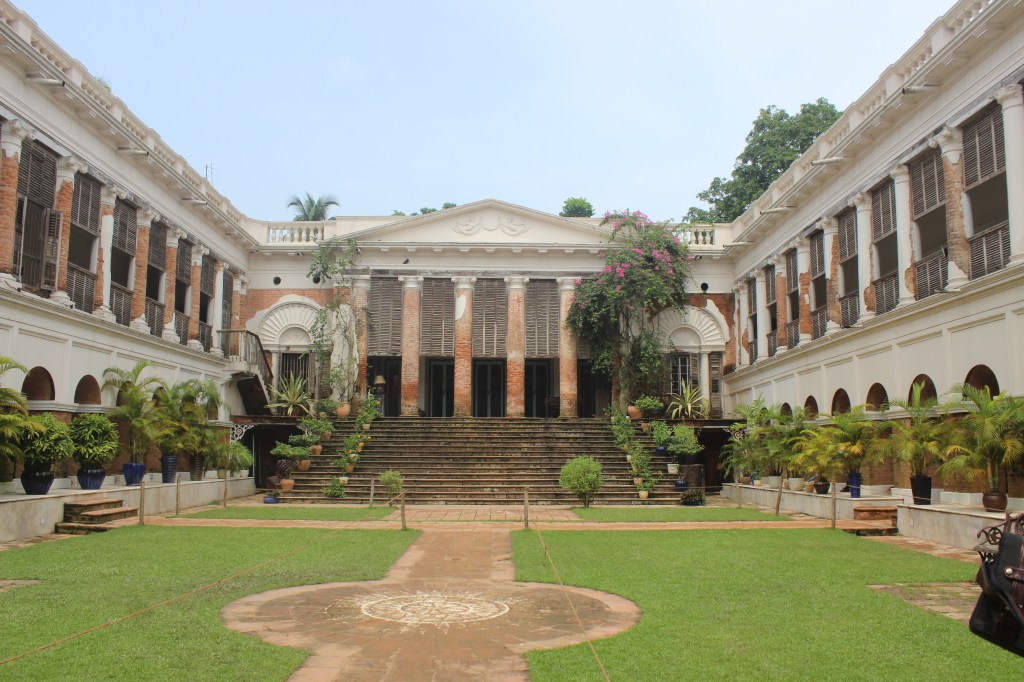
The Courtyard of Rajbari Bawali. Photo Courtesy: Rupali Gupta Mukherjee

From time immemorial, rajbaris, or the palatial homes of zamindars, have been a part of Bengal art and architecture, although many such splendid mansions have fallen into ruin owing to ownership issues or lack of conservation. Some are being converted to hotels, like the rajbari at Bawali. Located sixty kilometers from Calcutta, the palace-hotel enthralled with its restored regal rhythm, glamour and enduring legend. We were transfixed, bemused and in love with the aesthetic elegance.

“The daunting task of restoring the crumbling historic manor into a lavish hotel was a mammoth task. An exclusive 300-year-old colonial mansion transformed into a stunning luxury heritage boutique estate”, said the proud Resident Director of the property, Ms. Mrinalinee Majumdar. Once an imposing abode of the aristocratic zamindar family, The Rajbari Bawali undoubtedly, has revived an integral part of Bengal’s glorious history and culture.

Mr. Ajay Rawla discovered the 18th century palace in a state of ruins in 2006 and tried his best to reconstruct its history. Mr. Rawla, the Chairman, spent around seven years restoring the Rajbari’s past glory. The restoration work received acclaim, award of excellence by INTACH [Indian National Trust for Art and Cultural Heritage]. The restored Rajbari Bawali has also been featured by Conde Nast UK on their hot list of “Top 50 Hidden Destinations of the World’. The Duke and the Duchess of York were guests at the Rajbari during their visit to India.

Bawali Rajbari has a remarkable history, dating back to more than four hundred years, starting with the Mughal Emperor Akbar. The name “Bawali” can be traced to its first settlers, forest dwellers from the Baul. Initially, this place was known as “Bowali” but over the years this has changed to “Bawali”. This erstwhile swampland, once part of the Sundarbans, was handed over as a reward to Shoba Ram Rai, an army officer under Maharaja Man Singh of Jaipur, the commander-in-chief of the Mughal Emperor. History tells us that the Mondols of Bawali were originally Roys. Their dominance in the fringes started way back in 1710. Later, the royal family prospered under Haradhan, who enjoyed the benefaction of the East India Company.

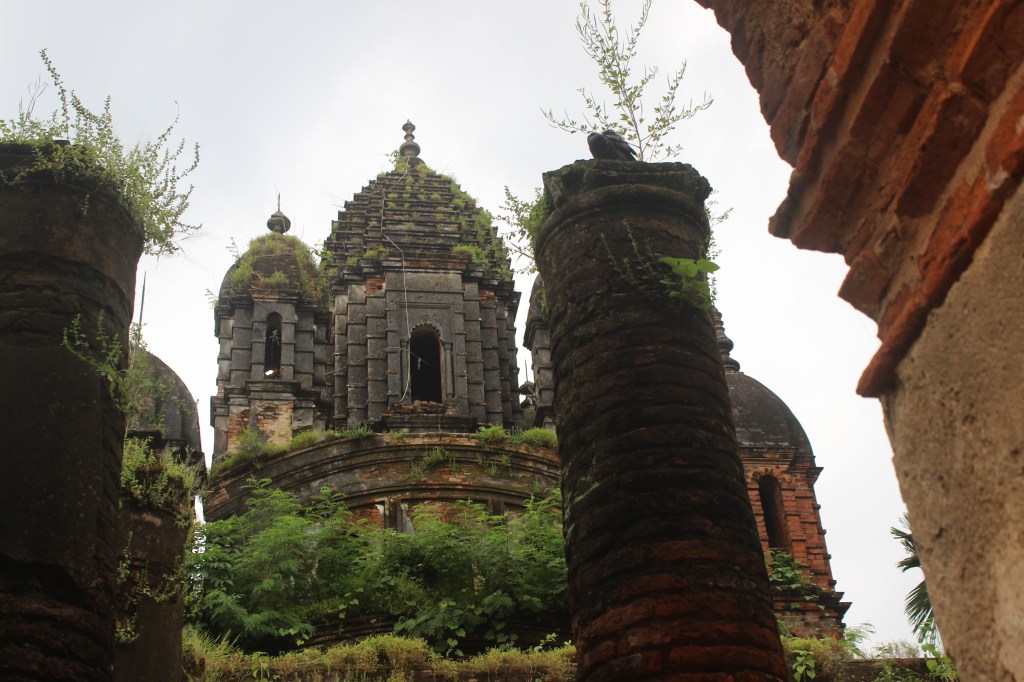
350-year-old Radha Krishna Temple built in the
traditional aat-chala style. Photo Courtesy: Rupali Gupta Mukherjee

It was autumn, just before Durga Puja, when we planned a day trip to explore the rajbari at Bawali. As we moved towards the entrance of the rajbari, more than three-centuries-old, Radha Krishna temple, opposite the palace, caught our attention. An arched alley made of red bricks and pillars with Victorian floral motifs. The temple steeple stands out from the rest of the architecture. It has delicate terracotta etching outside, with moss and plants growing in cracks. We were amazed at the rich intricate structural motifs. This is another heritage site that desperately needs restoration, we felt. The West meets the East in the lofty temples and the palace of Bowali. The European style columns that hold up the temples in the village are atypical in the rest of the state. Beautiful gardens dotted with fashionable statues of Italian marble and a sinuous water turret weaves a flowing reverie. It’s really sad that most of the structures are in ruins and on the verge of collapse.

Finally, we found ourselves in front of the main entrance leading to Rajbari Bawali. The welcome was grand with the beating of the dhaak, the traditional drums, and women in traditional attire, clad in red bordered white saris, welcoming guests with the traditional smear of tika on the forehead, flowers and sweets. We were overwhelmed by the antique fixtures, after stepping inside the courtyard which revived the bygone era of the zamindars, nawabs and their lifestyles steeped in grandeur. The welcome drink was refreshing and the entire property was a visual delight, a photographer’s paradise.

The Terrace café, with a part of the vestiges from the roof took us back to the primeval past. A striking segment of the palace merges the new with the ancient, keeping the antiquity alive. Apart from exploring the huge chattels we enjoyed the sumptuous traditional Bengali lunch. The royal lunch was served with utmost warmth and hospitality. The food was exceptionally delicious, was flawlessly soaked in conventional recipe and served in a stately style.  Burnt clay plates lined with banana leaves served lip-smacking kochur loti chingri, kassa mangsho, Bhetki Paturi. The dessert was mouthwatering and elaborate, I loved the misti doi.  The ongoing melodious live concert on the lush green lawn adjacent to the dining arena was definitely scintillating.

It was an astounding experience for us; something, undeniably beyond expectation, we started our journey with the thought of exploring a historical site but we were overwhelmed by the exclusiveness of the palatial structure, antique display, hypnotic charm of the ‘Zamindari Raj’ and the warmth of the employees. I was in a trance for weeks after visiting the elite ‘khazana’ of the colonial era and was keen to know more about its imperial past. My quest brought to light many hidden facts.

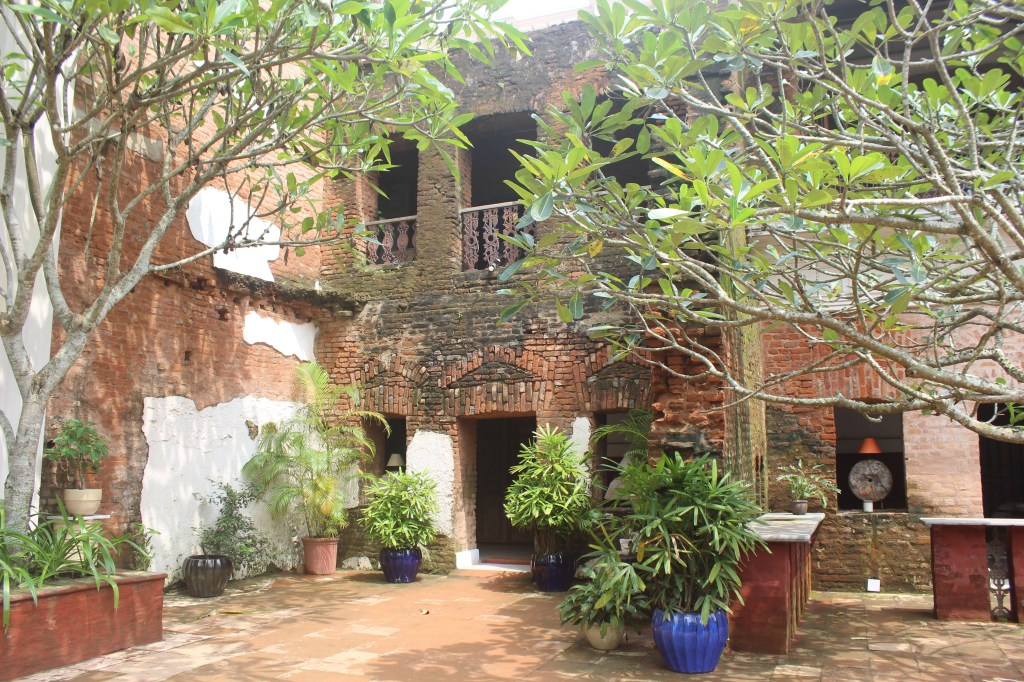
Unrestored Part of the Rajbari. Photo Courtesy: Rupali Gupta Mukherjee

The ruins of the rajbari and its surrounding relics was also the memorable shoot venue preferred by renowned film director Mrinal Sen for his Shabana Azmi, Naseeruddin starred movie Khandhar. It was screened at the 1984 Cannes Film Festival. Later after restoration of the Khandhar, in 2003 Rituparno Ghosh selected the same setting, Bawali Rajbari for his National award-winning film Chokher Bali, an adaptation from Tagore’s novel of the same name. This also bagged the Chicago International Film Festival Award [2003] The rajbari is an extraordinary architectural masterpiece about 60km away from Kolkata, steeped in convention and opulence, a heritage boutique resort

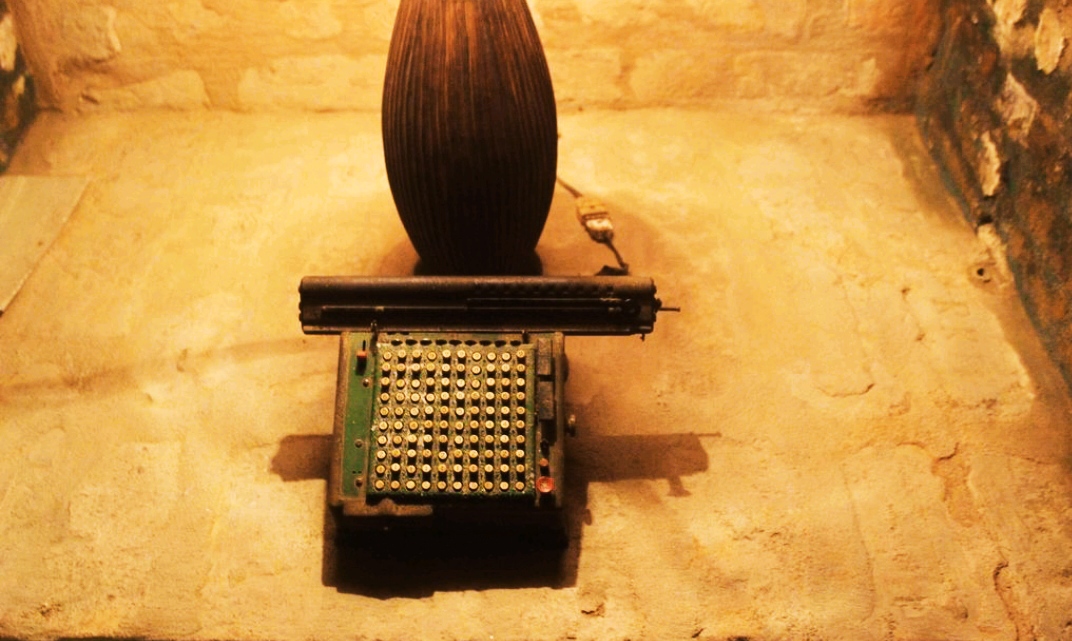
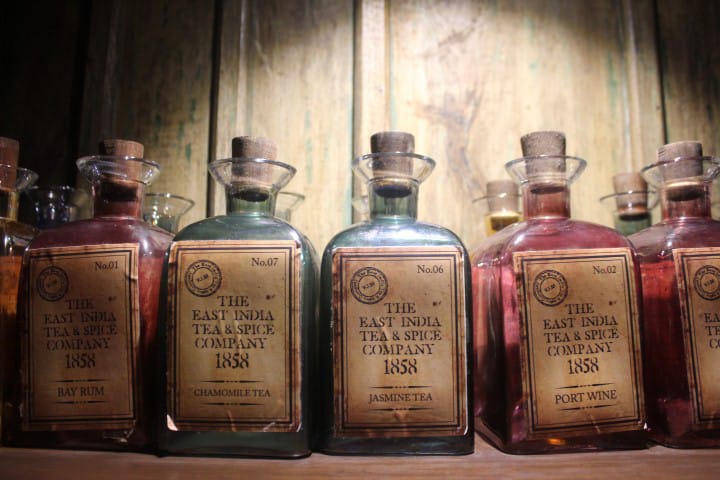
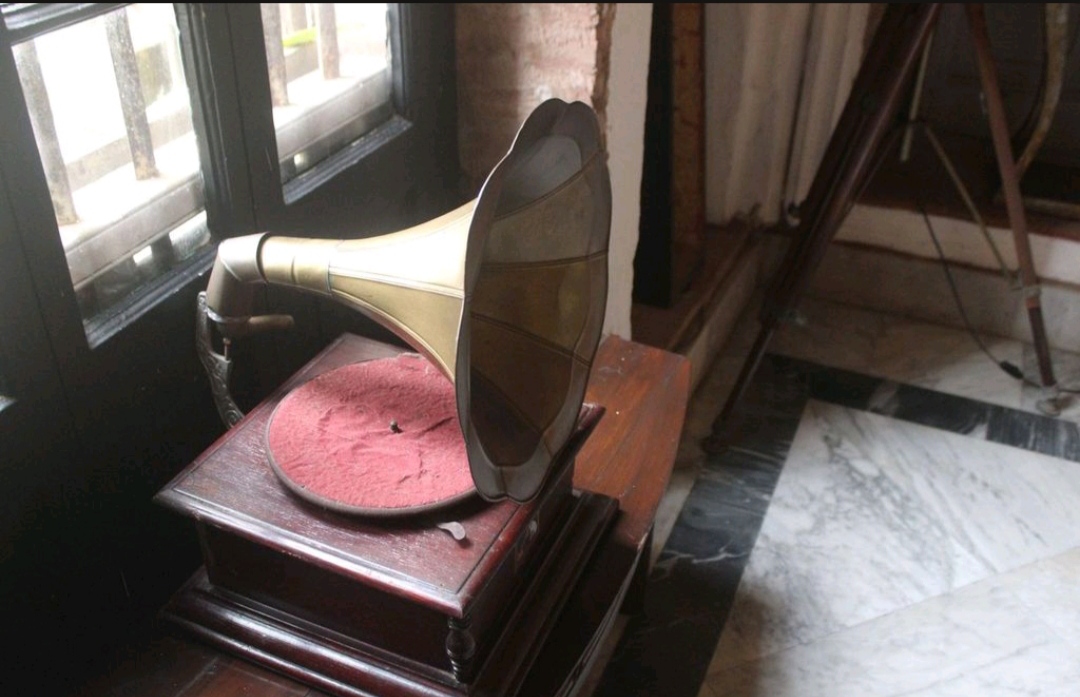
It had been more than a month now, but still the spell of the Greco-Roman style Rajbari, the dungeon, jailkhana, cellar storing liquors from 1858, antique decor portico, fax machine and gramophones of archaic fashion, well-ventilated thakurdalan, spacious grand piano room, exquisite chandeliers in the dining hall and the faintly lit vestibule will take you, beyond doubt, to a baffling pensive world of romance!

Glossary:

kochur loti chingri — Prawn

 kassa mangsho – goat meat

 bhetki paturi – fish

misti doi – sweetened yoghurt a Bengali speciality.

Rupali Gupta Mukherjee has a passion for reading, writing and reciting poetry.   She is a nature enthusiast, loves to travel and has a zeal for photography.

.

PLEASE NOTE: ARTICLES CAN ONLY BE REPRODUCED IN OTHER SITES WITH DUE ACKNOWLEDGEMENT TO BORDERLESS JOURNAL

Categories
Essay

At Home in the World: Tagore, Gandhi and the Quest for Alternative Masculinities

By Meenakshi Malhotra


In exploring the question of Rabindranath Tagore (1861-1941) and alternative masculinities, it is important to keep in mind the multiple contexts and registers in which this question can be explored. One is obviously Tagore’s critique of and take on man-woman relationships in his books and stories throughout his life, which he had observed at close quarters in an extended/joint family context. Many of his short stories, like “The Exercise-Book”, and novels like, Chokhher Bali (A Grain of Sand), show a keen sympathy for women’s aspirations and the situation of that unaccommodated woman, the young widow. Tagore demonstrates his sympathy, even empathy, with the young widow, Binodini, while recognizing that she might pose a threat to social stability within the household of Mahendra and Asha, his girl-wife. The second register is the intertwining of creative writing and androgyny (the latter being a necessary attribute for an author, according to Virginia Woolf), and how Tagore in his capacity as a creative writer had qualities of empathy and sensitivity, which he drew upon to forge unusually close emotional bonds with women. This theme  has been discussed by writers and critics under the rubric of Tagore and the feminine or Tagore and women. However, this article seeks not just to explore Tagore’s views on women but his search for a calibrated and balanced way of being in the world without falling into the binaries of imperial and colonized masculinities, and to shape the contours of a self which makes the world its home and is at home in the world.

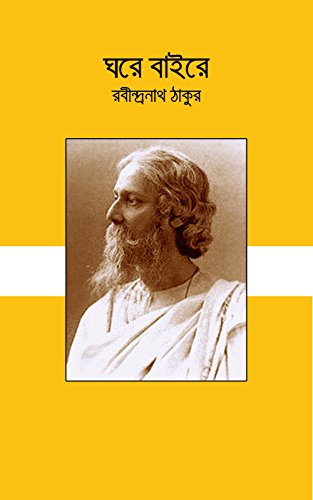
In his novel Ghare Baire (The Home and the World), we come across a criticism of extremist politics and jingoistic nationalism. A tripartite narrative about the growing political consciousness of Bimala, her failure to understand her liberal husband, Nikhilesh, a landlord and his friend Sandip, a fiery nationalist and a turbulent petrel, who storms the bastions of their household and marriage. Sandip’s brand of militant nationalism appeals to Bimala, who had once harboured feelings of inferiority because of her birth in an ordinary family, and who feels elevated and special under Sandip’s scrutiny. Sandip singles her out for special attention and calls her the “Queen Bee’’ and his muse and inspiration leading her to ignore Nikhilesh’s more mature and balanced views. Early in the novel, Nikhilesh who often functions as a mouthpiece for Tagore’s views in the novel, says that though he loves his country/nation, he cannot place nationalism over humanity. Reflecting Tagore’s views, which espouses internationalism and humanitarianism, Nikhilesh is not understood by his politically immature wife and ignored by his self-serving and unscrupulous friend.

Central to the formation of Tagore’s political views and suspicion about nationalism was his ideological debate with his own niece, his sister, the novelist Swarnalata Debi’s daughter, Sarala Debi Chaudhurani. A keen and fiery nationalist and patriot, Sarala was deeply impressed by the physical culture of imperial masculinities. She was particularly enthused/motivated by the concept of uplifting the nation through encouraging the growth of a physical culture. A statement that resonated with her was the idea of national character and she quotes lines from the ‘Educationist’:

“Physical weakness is a crime-against yourself and those who depend on you. Weaklings are despised and a weakling nation is doomed. The decline of ancient Greece and Rome which fell rapidly from the pinnacle of supreme civilization was due to physical neglect and abuse of the inflexible laws of nature. A physically weak nation is drained out mentally, its feet are on the downward path and it will end upon the scrap-heap if it does not act before it is too late.”

She also quotes a proverb which pronounces that the “battles of England are fought and won in the fields of Eton” (Chapter 18,129).  Her interest in and involvement with the politics of the freedom movement led her to initiate the celebration of Birashtami (festival of heroes to celebrate martial prowess, bravery and courage)) to mark courage and martial valour. Her belief in developing a physical culture and strengthening the national character made her revive certain traditions, re-invent rituals in order to paint a glorious version of India’s past. In doing so, she encouraged celebrations of Birashtami and invoked and revived the ‘braveheart’, Pratapditya, a landlord with questionable antecedents since he was also guilty of killing his father. In elevating such a figure to a status of a nationalist war-hero, she elicited mixed responses, particularly from her Brahmo family and her uncle, Rabindranath Tagore.

Rabindranath Tagore, among others, strongly objected to Sarala’s invocation of the figure of a parricide as a martial hero. Such a figure could act as a dangerous precedent since it would seem to encourage untrammeled and uncontrolled aggression and blur moral boundaries and ethical codes. This blunting of all moral and ethical codes and boundaries, the danger lurking in a militant and violent nationalism was, as indicated above, represented by Tagore in his novel, Ghare Baire but also in his essays on nationalism. In the novel, the conflict between a rational civic and humanitarian nationalism which eschews violence is embodied by the idealized figure of Nikhil and the primordial reactionary chauvinistic version of nationalism which endorses violence by his ‘friend’, Sandip. After casting a spell (metaphorically speaking) over the impressionable Bimala, whose affection he then misuses to drive a wedge between the couple and then to extract money from her to fund his terrorist activities.

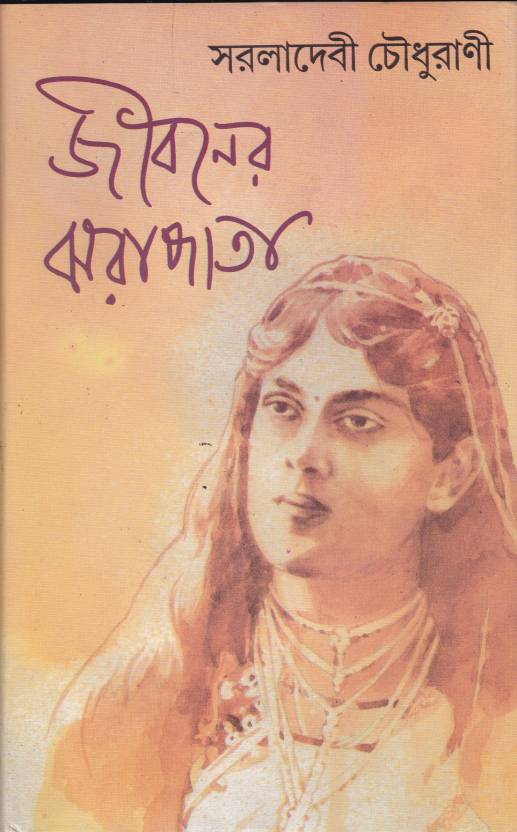
The Scattred Leaves of my Life By Saraladebi Chaudhurani

Rabindranath’s indictment of Sandip could be viewed as his response, a sort of extended debate and dialogue with an ideological viewpoint diametrically different from his own, which was represented by his niece.  The increasing rift and estrangement between the two — Rabindranath and Sarala — might explain the wistfulness and occasionally melancholic and autumnal tone of Jibaner Jharapata (The Scattered Leaves of My Life) Saraladebi’s autobiography. A proud and self-respecting person, Sarala was probably conscious of the slur or aspersion of effeminacy that the British had cast on the Bengali character. She felt the humiliation and indignity too keenly to accept such descriptions and attributions quietly.

Gandhi and the Crafting of Political Masculinity

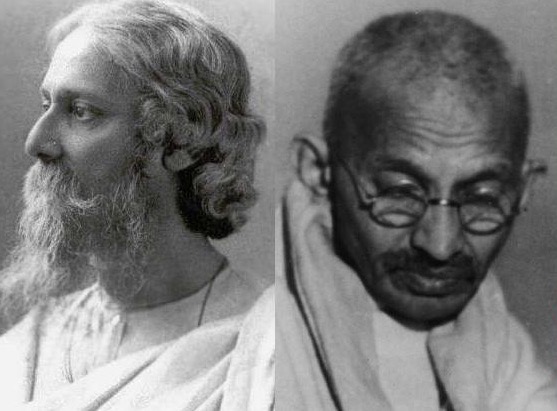
One common threadthat runs through the work and writings both these towering personalities of Tagore and Gandhi, is a critique of existing, culturally prescribed and sanctioned models of masculinity as they prevailed in the eastern (Tagore) and western (Gandhi) extremities of India. Both these great men, as public personages, were conscious that they were thought leaders and role models and that examples set by them would be emulated.

In the case of M.K. Gandhi(1869-1948), a great national leader who was instrumental in India’s throwing off the yoke of colonialism in 1947, there is a conscious experimentation with the “truth’’, presumably of one’s inner self, to oppose certain culturally sanctioned models of masculinity. Interestingly, his great-niece, Manu Gandhi referred to the ageing Gandhi as “Gandhiji, my mother” in her diaries, which were translated into English in 2019. When we focus on his corporeal politics, we see in Gandhi’s “experiments with truth” a series of experiments to do with the body which express both a consciously crafted gender ambivalence and throws a challenge to the concept of the manly body of the colonizer. Here my point is that Gandhi was consciously deploying his self, his body identity/ies and attendant subjectivities, in order to make a political point. He used his body and body-politics to establish his difference from the colonially attributed native body and also to mark his distance from colonial models of masculinity. While in one sense, this fluid body seems almost gender ambivalent, it is also an invitation to re-imagine and revision stereotypical notions of gender which circulate in cultures.

  Both of these thinkers were probably conscious of the import of the political masculinities espoused by them, particularly under the yoke of imperialism, at a specific historical conjuncture. This conjuncture is the first two decades of the twentieth century, when the models of masculinity available can be broadly conceptualized as imperial, colonial and ascetic masculinities.

The imperial masculinity model is based on the white imperial ‘master’, the civil servant, the ‘pukka saheb’, the kind extolled by Kipling and criticized by E. M.Forster. Coincidentally, this Kiplingesque masculinity, often caricatured, found its takers in people who extolled the muscular, strong masculinity of imperial cultures, like Sarala Debi, Tagore’s niece. The Forsterian view that the English public school culture shaped “well developed bodies, under-developed minds and undeveloped hearts’’ was not known to her, nor would it have found favour. This model also made its way into Indian discourses where it becomes linked with questions of national character and patriotism. In his book, The Intimate Enemy (1983) Ashis Nandy proffers the view that the Indian elite in the 19th century perceived the British as agents of progressive change and accepted the ethos of aggressive imperial masculinities.

According to historians and critics like Indira Chowdhury, Mrinalini Sinha and Chandrima Chakraborty, there was a developing discourse of de-masculinization and emasculation among the British, where they denigrated the Indian middle class and particularly the Bengali men as weak and effeminate and this also led some political leaders to move in the direction of defining and conscious crafting of alternative masculinities.    

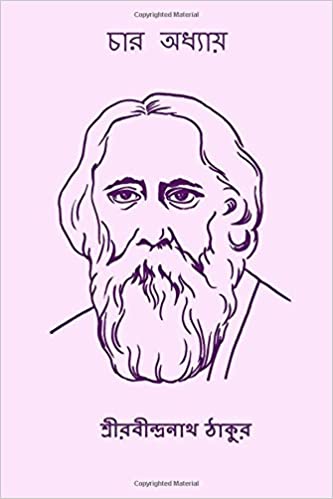
Four Chapters by Tagore

The third or ascetic model is available in Ananda Math by Bankim Chandra Chatterjee and Char Adhay ( Four Chapters, 1933), the last and thirteenth novel by Tagore along with real life characters such as Swami Vivekanand (1863-1902) and Sri Aurobindo (1872-1950), albeit delineated with some ambivalence. Chandrima Chakraborty in her book on Masculinity, Asceticism, Hinduism: Past and Present Imaginings of India (2011), highlights the “conjunctural alignment of asceticism and masculinity in Indian political history,” in order for its transformation into a strident symbol of Indian nationalism.

Interestingly, there is a further dimension and  addition to this narrative. Jibaner Jharapata is not the only source of Sarala’s life story. She is described in Rajmohan Gandhi’s biography as Gandhi’s “spiritual wife”, because he felt strongly drawn to her, seeing in her a woman who possessed a unique combination of education and emotional strength. To Gandhi, she was a woman whose love for the nation was equally strong as his, although it followed and developed along different trajectories. In a peculiar role-reversal, we find Sarala Debi, who spent her formative years in Tagore family mansion at Jorashanko, inverts the models of “colonized masculinity” to promote and propagate militant nationalism. Tagore and Gandhi, whose spheres of influence she existed in, do not seem to have brought about much of a change in her. The great men eschewed and turned away from existing models of masculinity and moved towards the crafting of new masculinities, drawing on asceticism and spiritualism to do so.

References

Chakraborty, Chandrima(2011)Masculinity, Asceticism, Hinduism: Past and Present Imaginings of India. Delhi: Permanent Black

Chattopadhyay, Bankimchandra, Anandamath or The Sacred Brotherhood.Trana Julius Lipner, New DelhiOUP

Chaudhurani, Sarala Debi(2007)Jibaner Jharapata, Calcutta, Dey’s Publishing.(Bengali) All references in the text are to this edition,with translations by the author of this paper

Gandhi, Rajmohan (2006) Mohandas: A True Story of a Man, his People and an Empire. New Delhi:Penguin/Viking.

Kumar, Radha (1993) The History of Doing: An Illustrated History of Doing. New Delhi, Kali for Women

Malhotra, Meenakshi (2018) A Dark Goddess for a Fallen World: Mapping Apocalypse in Some of Bankim C.Chatterjee’s Novels in Unveiling Desire: Fallen Women in Literature, Culture and Films of the East eds Devaleena das and Colette Morrow. New Brunswick: Rutgers University Press

Ray, Sangeeta (2000) En-Gendering the Nation: Women and nation in Colonial and Postcolonial Narratives Duke UP

Dr Meenakshi Malhotra is Associate Professor in English at Hansraj College, University of Delhi and has been involved in teaching and curriculum development at several universities. She has edited two books on Women and Lifewriting, Representing the Self and Claiming the I, in addition  to numerous published articles on gender and/in literature and feminist theory.

.

PLEASE NOTE: ARTICLES CAN ONLY BE REPRODUCED IN OTHER SITES WITH DUE ACKNOWLEDGEMENT TO BORDERLESS JOURNAL