Categories
Contents

Borderless, November 2023

Art by Sohana Manzoor

Editorial

Counting Colours… Click here to read.

Conversation

Banjara author Ramesh Karthik Nayak discusses his new book, Chakmak (flintsone), giving us a glimpse of his world. We also have a brief introduction to his work. Click here to read.

Translations

Demanding Longevity by Quazi Johirul Islam has been translated from Bengali by Fakrul Alam. Click here to read.

Moonlight, a poem by Bashir Baidar, has been translated from Balochi by Fazal Baloch. Click here to read.

Maithili Poetry by Vidyanand Jha has been translated from Maithili by the poet himself. Click here to read.

The Window and the Flower Vase has been written and translated from Korean by Ihlwha Choi. Click here to read.

Tagore’s Tomar Kachhe Shanti Chabo Na (I Will Not Pray to You for Peace) has been translated from Bengali by Mitali Chakravarty. Click here to read.

Poetry

Click on the names to read the poems

Michael Burch, Aineesh Dutt, Stuart McFarlane, Radhika Soni, David Mellor, Prithvijeet Sinha, John Grey, Ahana Bhattacharjee, Ron Pickett, Suzanne AH, George Freek, Arshi Mortuza, Caroline Am Bergris, Avantika Vijay Singh, Ryan Quinn Flanagan, Kisholoy Roy, Rhys Hughes

Poets, Poetry & Rhys Hughes

In A Parody of a Non-existing Parody: The Recycled Sea, Rhys Hughes uses TS Eliot’s ‘The Waste Land’ to create a new parody. Click here to read.

Musings/Slices from Life

The Theft of a River

Koushiki Dasgupta Chaudhuri tells a poignant truth about how a river is moving towards disappearance due to human intervention. Click here to read.

In Quest of Seeing the Largest Tree in the World

Meredith Stephens writes of her last day in California. Click here to read.

Beyond Horizons: A Love Story

Sai Abhinay Penna shares photographs and narrative about his trek at Chikmagalur. Click here to read.

Musings of a Copywriter

In Crush on Bottles, Devraj Singh Kalsi inebriates his piece with humour. Click here to read.

Notes from Japan

In Address Unknown, Suzanne Kamata shares a Japanese norm with a touch of humour. Click here to read.

Essays

Peeking at Beijing: The Wall

Keith Lyons travels to The Great Wall and writes of the experience. Click here to read.

Cinema, Cinema, Cinema!

Gayatri Devi writes of the translation impact of cinema, contextualising with the Tamil blockbuster, Jailer. Click here to read.

Coffee, Lima and Legends…

Ravi Shankar explores Lima, its legends and Peruvian coffee. Click here to read.

Stories

Jonathan’s Missing Wife

Paul Mirabile sets his story in a small town in England. Click here to read.

The Tender Butcher

Devraj Singh Kalsi weaves a story around a poetic butcher. Click here to read.

Book Excerpts

An excerpt of The White Shirts of Summer: New and Selected Poems by Mamang Dai. Click here to read.

An excerpt from Ramesh Karthik Nayak’s Chakmak. Click here to read.

Book Reviews

Somdatta Mandal reviews Ali Akbar Natiq’s Naulakhi Kothi, translated from Urdu by Naima Rashid. Click here to read.

Ranu Uniyal reviews I am Not the Gardener: Selected Poems by Raj Bisaria. Click here to read.

Anita Balakrishnan reviews Lakshmi Kannan’s Guilt Trip and Other Stories. Click here to read.

Bhaskar Parichha reviews Akshat Rathi’s Climate Capitalism: Winning the Global Race to Zero Emissions. Click here to read.

.

.

Click here to access the Borderless anthology, Monalisa No Longer Smiles

Click here to access Monalisa No Longer Smiles on Amazon International

Categories
Editorial

Counting Colours

Look around you and expand your heart. 
Petty sorrows are insignificant.
Fill your vacant life with love for humanity. 
The Universe reverberates with celestial ecstasy. 

— Anondodhhara Bohichche Bhubone (The Universe reverberates with celestial ecstasy), Tagore, 1894

Some of the most beautiful colours in this universe are blended shades— colours that are born out of unusual combinations. Perhaps that is why we love auroras, sunrises and sunsets. Yet, we espouse clear cut structures for comprehension. As we define constructs created by our kind, we tend to overlook the myriads of colours that hover in the gloaming, the brilliant play of lights and the vibrancy of tints that could bring joy if acknowledged. That ignoring the new-born shades or half-shades and creating absolute structures or constructs lead to wars, hatred, unhappiness and intolerance has been borne true not only historically but also by the current turn of events around the globe. While battles are never fought by the colours or beliefs themselves, they can harm — sometimes annihilate — rigid believers who are victimised for being led to accept their way as the only one and hate another. Perhaps, this has echoes of the battle between the Big Endians and Little Endians over the right way to break eggs in Jonathan Swift’s Gulliver’s Travels (1726). As the book is mere fiction, we can admire, agree and laugh at the content. However, in real life, watching newsreels has become a torture with destruction and violence being the main highlights. These detract from life as we knew it.

Writing or literary inputs seem to have become a luxury. But is it really hedonistic to play with words? Words used effectively over a period of time can impact readers to think peace, acceptance and love and also help people heal from the ensuing violence. That can be a possibility only if we self-reflect. While we look for peace, love and acceptance in others, we could start by being the change-makers and bridge builders ourselves. That is the kind of writing we have managed to gather for our November issue.

Building such bridges across humanity, we have poems on the latest Middle Eastern conflict by Stuart McFarlane and David Mellor, which explore the pain of the victims and not the politics of constructs that encourage wars, destruction of humanity, the flora, the fauna and our home, the Earth. Michael Burch writes against wars. Prithvijeet Sinha and Ahana Bhattacharjee write about refugees and the underprivileged. Reflecting colours of the world are poems from Ryan Quinn Flanagan, Suzayn AH, Radhika Soni, Ron Pickett, George Freek and many more. Rhys Hughes has brought lighter shades into his poetry by trying a new technique while reflecting on yetis and mermaids. His column tries to make a parody of a non-existing parody, using TS Eliot’s century old poem, ‘Wasteland’, with amazing results!

Our translations are all poetry too this time. Professor Fakrul Alam has translated a poem discussing human aspirations by Quazi Johirul Islam from Bengali. Another Balochi poem of hope by Bashir Baidar has been brought to us in English by Fazal Baloch bringing into play the moonlight.

For the first time, we are privileged to carry poetry from a language that has almost till now has eluded majority of Anglophone readers, Maithili. Vidyanand Jha, a Maithili poet, has translated his poetry for all of us as has Korean poet, Ihlwha Choi. Winding up translations are Tagore’s ultimate words for us to introspect and find the flame within ourselves in the darkest of times – echoing perhaps, in an uncanny way, the needs of our times.

Our conversation this month brings to us a poet who comes from a minority group in India, Banjara or gypsies, Ramesh Karthik Nayak. In his attempt to reach out to the larger world, he worries that he will lose his past. But does the past not flow into the future and is it not better for traditions to evolve? Otherwise, we could all well be living in caves… But what Nayak has done — and in a major way — is that he has brought his culture closer to our hearts. His debut poetry book in English, Chakmak (flintstones), brings to us Banjara traditions, lives and culture, which are fast getting eroded and he also visits the judgemental attitude of the majoritarian world. To give you a flavour of his poetry, we bring to you an excerpt from his book, livened beautifully with Banjara art and an essay by Surya Dhananjay that contextualises the poetry for us. Our excerpts also have a focus on poetry for we are privileged to have a few poems from Mamang Dai’s The White Shirts of Summer: New and Selected Poems. Mamang Dai is a well-known name from the North-eastern state of Arunachal Pradesh for both her journalistic and poetic prowess.

We are happy to host Ranu Uniyal’s beautiful review of I am Not the Gardener: Selected Poems by Raj Bisaria. Bisaria among other his distinctions, was named “Father of the modern theatre in North India” by the Press Trust of India. The other reviews are all of prose. Somdatta Mandal has written of Ali Akbar Natiq’s Naulakhi Kothi, a fictional saga of gigantic proportions. Anita Balakrishnan has reviewed Lakshmi Kannan’s short story collection, Guilt Trip. The book that gives hope for a green future, Akshat Rathi’s Climate Capitalism: Winning the Global Race to Zero Emissions has been reviewed by Bhaskar Parichha. Parichha contends: “Through stories that bring people, policy and technology together, Rathi reveals how the green economy is possible, but profitable. This inspiring blend of business, science, and history provides the framework for ensuring that future generations can live in prosperity.”

The anti-thesis to the theme for a welfarist approach towards Earth can be found in Koushiki Dasgupta Chaudhari’s poignant musing titled, “The Theft of a River”. Meredith Stephen’s travel to California and Sai Abhinay Penna’s narrative about Chikmagalur have overtones of climate friendliness. Ravi Shankar writes further of his travels in Peru and Peruvian coffee. Keith Lyons takes us peeking at Beijing and the Great Wall. Gayatri Devi adds to the variety by introducing us to the starry universe of South Indian cinema while Devraj Singh Kalsi brings in the much-needed humour with his narrative about his “Crush on Bottles“. Suzanne Kamata has also given a tongue-in-cheek narrative about the mystique of addresses and finding homes in Japan. We have fiction from Paul Mirabile located in England and Kalsi’s located in India. Pause by our contents page to view more gems that have not been mentioned here.

Huge thanks to our team at Borderless Journal, especially Sohana Manzoor for her fabulous artwork. This journal would not have been as it is of now without each and every one of them and our wonderful contributors and readers. Thank you all.

Wish you all a wonderful month as we head towards the end of a rather tumultuous year.

Mitali Chakravarty

borderlessjournal.com

Click here to access the contents page for the November 2023 issue

.

READ THE LATEST UPDATES ON THE FIRST BORDERLESS ANTHOLOGY, MONALISA NO LONGER SMILES, BY CLICKING ON THIS LINK.

Categories
Musings

Beyond Horizons: A Love Story

Narrative and Photographs by Sai Abhinay Penna

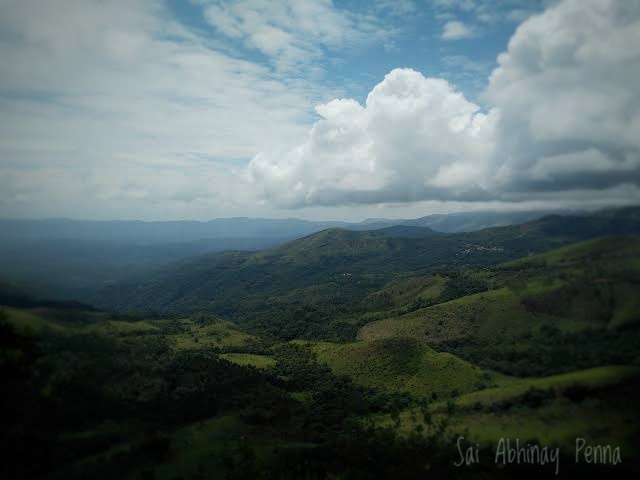
 As the first rays of the morning sun arose from beyond the distant hills, their gentle touch painted the sky with hues of warm gold, igniting a symphony of colours that kissed the vast canvas of the mist-laden valleys of Chikmagalur.

Mist laden valleys of Shishila

Veiled within the ever-shifting embrace of the drifting clouds, the resolute peaks of the Kudremukh Mountains played a tantalising game of hide-and-seek with the heavens. Each passing moment held the promise of a fleeting revelation as I embraced nature’s games.

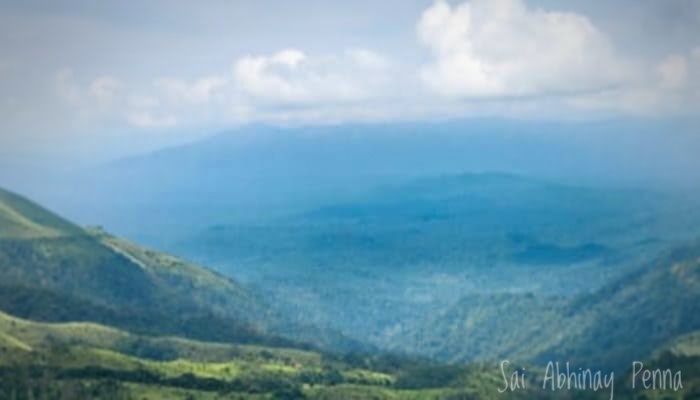
Shishila Valley

All at once, like an artist’s brushstroke on nature’s canvas, the Shishila Valley appeared from its shroud — a spectacle sending a shiver of awe through my being.

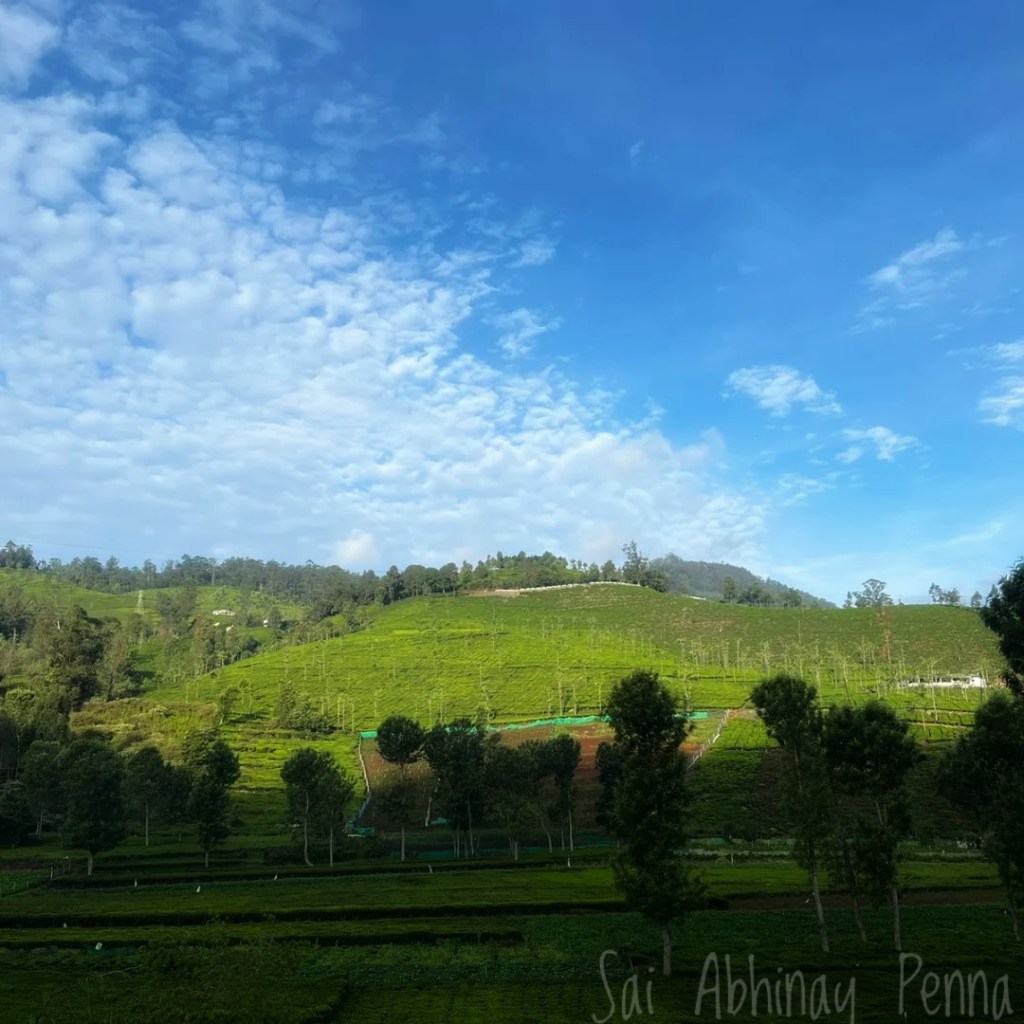
As I walked through the winding paths lined with coffee plantations, the rich aroma of the beans seemed to be woven into the very fabric of the place and filled the air to the brim. The scent, as I stepped through the intricate trails of the estate, thrilled the heart of a coffee maven like me.

Coffee plantations with varied shades of green

The emerald leaves of the coffee plants glistened with dewdrops that captured the sun’s rays, resembling precious gemstones. Each step was an immersion into a world where nature’s palette had painted every hue imaginable.

From the coffee plantations, I trekked through the unexplored trails of the long-lost Ballalarayana Fort built in the twelfth century. In the heart of the wilderness — I found myself surrounded by the rhythmic symphony of the forest.

Ballalarayana Fort trail

The dense vegetation enveloped me like a shroud of mystery, and the air carried the earthy scent of history as if the very soil held the secrets of generations. The crumbling stones and weathered walls of the fort emerged from the undergrowth, standing as silent witnesses to the passage of time. Here history seemed to come alive, the stones carrying the burden of stories now carved into every crack and crevice.

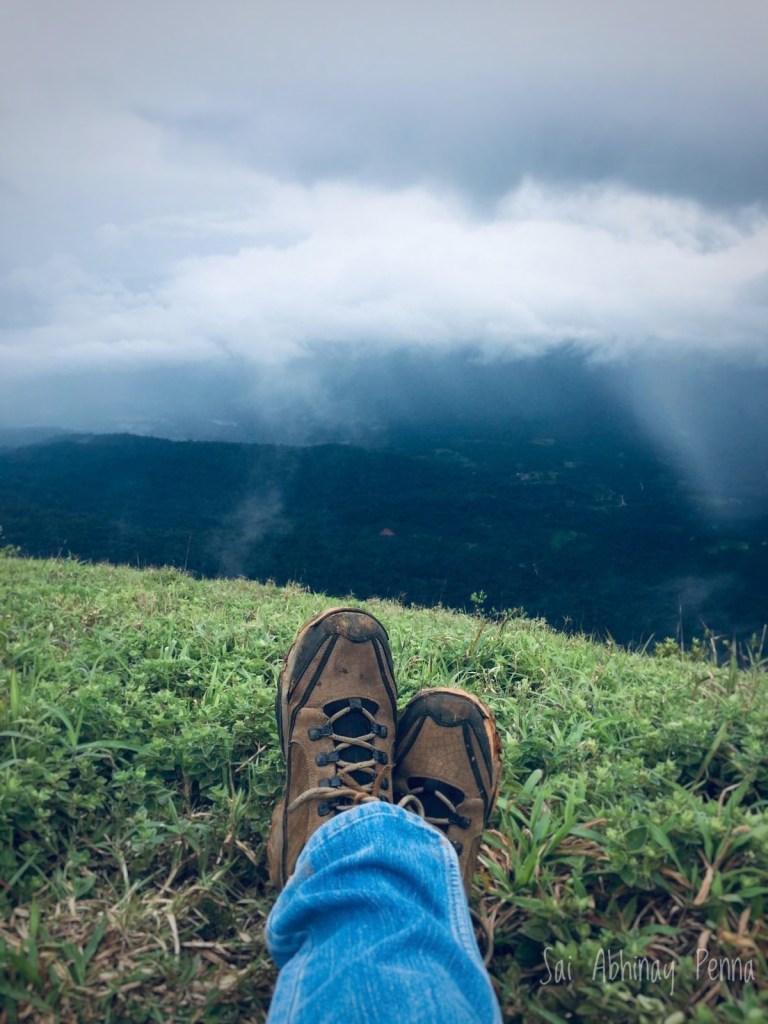
As I ascended the rugged trail, the panorama that unfolded in front of my eyes was breath-taking. Rolling hills, verdant valleys, and mist-shrouded peaks stretched out in every direction — the lines between earth and sky were thin. I felt like I was one among the clouds.

The feeling of being suspended in this vast expanse was humbling and revitalizing.

Descending from the highest peak of Karnataka, I ventured into Baba Budangiri, the sacred mountain with its mystical aura that captivated me to surrender myself to its embrace.

The shrine of Dattagiri, nestled atop the hills, stood as the tangible proof of the spiritual sanctity of the place. A small conversation with the priest from the Dattagiri shrine opened my eyes to the history behind this place. The shrine has been made to resemble a meeting place between Sufism and the Hindu Avudutha tradition.

As I humbly paid my respects, the echoes of devotees’ chants intertwined with the tranquil symphony of nature, weaving an ambience of enlightenment that seemed to touch the very soul of the surroundings.

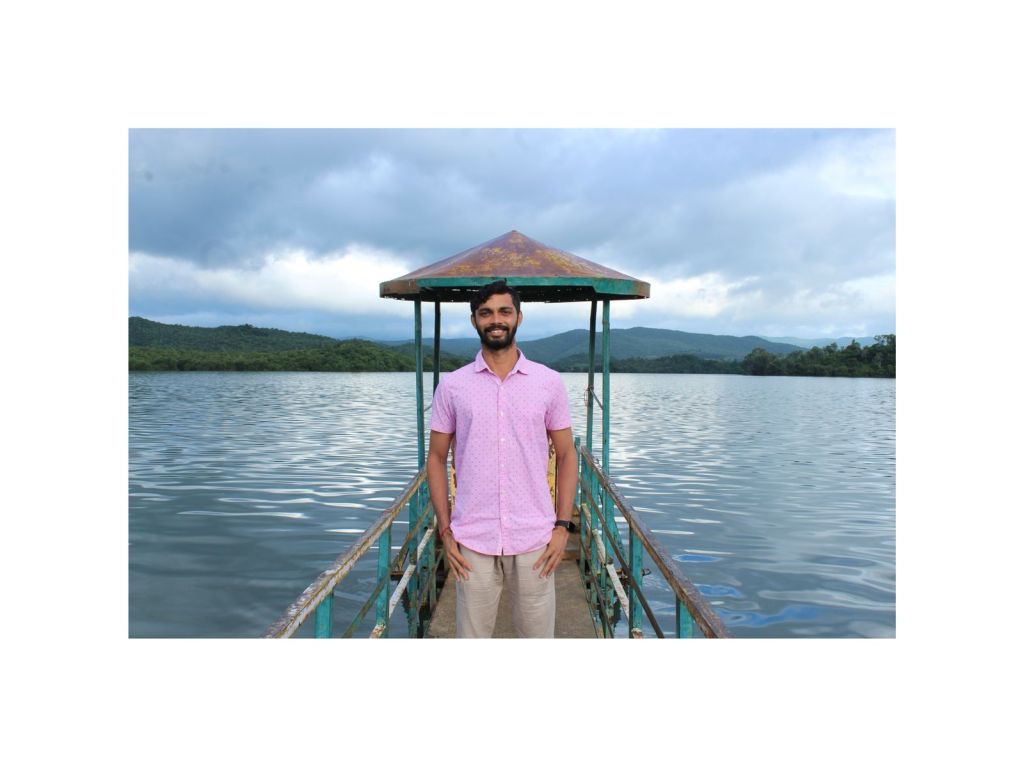
The lake’s surface transformed into a canvas of reflection, capturing the heavens above as if they had found their home in its depths. Hirekole Lake in the evenings was a sanctuary of tranquility, a haven; where the world seemed to hold its breath, inviting me to step away from the rush of life and savour the sheer magic of the present moment.

The author at the lake. Photo provided by the author

The ambience was one of unhurried contentment as if time had chosen this place to slow its pace, allowing all the on-goers to submerge into that beautiful moment.

As I navigated the winding pathways through the dense woods, my anticipation grew with every passing curve. The whispering leaves and dappling sunlight seemed to guide me toward the elusive waterfall, the Hebbe Falls.

As I walked towards the waterfall, the distant murmur of cascading water gradually intensified, and it felt like a symphony of nature’s melody in my journey. Nature’s music, I must say.

Finally, as the foliage parted, I beheld the spectacle: a magnificent cascade of glistening white that descended like a celestial curtain. The mist kissed my skin, carrying the essence of the falls, and I couldn’t help but marvel at the timeless masterpiece sculpted by nature’s patient hand.

Hebbe Falls

In a final blaze of glory, the sun slips beneath the edge of the Shishila Valley, leaving behind a trail of stars, a full moon, and a sky that glows with the memory of its fiery embrace.

 As the star-studded canopy, a symphony of crickets and the soft murmur of rustling leaves painted the air with an orchestration of nature’s melodies. It was as if the very fabric of the night had come alive, crafting a captivating masterpiece for my senses.

A myriad of stars shimmered like diamonds carelessly strewn across the inky canvas. The mountains stood as solemn sentinels, their peaks silhouetted against the night sky, seemingly whispering secrets to the heavens. A gentle breeze carried whispers of pine and earth, infusing the air with an invigorating freshness, and the faint fragrance of wildflowers lingered, an exquisite freshness that filled my lungs.

In the embrace of Chikmagalur’s undulating hills, veiled valleys, calming lakes, and tranquil panoramas, I uncovered a profound truth: the odyssey that stretches beyond familiar vistas is not merely a voyage of the body but a stirring expedition of the soul.

.

Sai Abhinay Penna is a professional cricketeer and writer based in Chennai.

.

PLEASE NOTE: ARTICLES CAN ONLY BE REPRODUCED IN OTHER SITES WITH DUE ACKNOWLEDGEMENT TO BORDERLESS JOURNAL

Click here to access the Borderless anthology, Monalisa No Longer Smiles

Click here to access Monalisa No Longer Smiles on Kindle Amazon International