Categories
Essay

My Love Affair with (Printed) Books

By Ravi Shankar

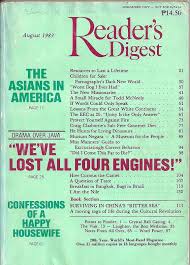
The last two years have been especially sad ones for printed books and magazines. Toward the end of 2023, the iconic magazine, National Geographic stopped selling its print issues. And in April 2024, Reader’s Digest stopped publishing. Many other print magazines have also downed their shutters though the online version continues.

I grew up with the Reader’s Digest. My father subscribed to the magazine and each month a copy wrapped in a brown envelope arrived at our door. The envelope partially covered the magazine inside, and you could see the top and bottom of the magazine. The size was small, and this made for easy handling. Reader’s Digest was a magazine you could read comfortably in bed. During the festival of Diwali, there was a special wrapping for the magazine. We had several magazines in our house when I was growing up. My mother used to read many magazines in Malayalam (our mother tongue).

Reader’s Digest provided shortened versions of stories and articles that had been published elsewhere. Their skill was in condensing the material while still retaining the interest. There was a rich collection of reading material. There were also advertisements for other books published by Reader’s Digest. Unfortunately, these were beyond our family budget. I wanted to purchase these when I grew up and became financially stronger. My neighbour who was a scientist had some of these books that I occasionally borrowed.

Another favourite of mine was the National Geographic. My father was a faculty member at a banker’s training college in Mumbai and their library subscribed to National Geographic. He often brought the magazine home. I was mesmerised by the articles and the photos in the magazine. The artistic quality of the photos was superb. The magazine had only three or four articles in an issue but addressed these at great depth. I travelled to faraway places, to the bottom of the ocean, to within the human body and to outer space with the magazine. Later, National Geographic started a television channel, and I would watch the documentaries in the nineties.

We also subscribed to the Illustrated Weekly of India. This was in a large format and again had very good photographs. I still remember the column by the journalist Khushwant Singh titled ‘With malice towards one and all’. I was also a fan of the comics section of the magazine. I had a huge collection of comics and my father purchased both Amar Chitra Katha and Indrajal Comics. Amar Chitra Katha introduced me to the rich history of India. Indrajal comics had superheroes like Phantom, Mandrake, and Flash Gordon. I used to eagerly await new issues. Most of my comics were lost when we shifted houses.   

When the news magazine, India today, made an appearance, we subscribed to it and to Outlook and The week (Indian news magazines). During my school days in May, I used to eagerly await the new textbooks and notebooks for the next class following the results. I used to go with my mother to purchase these from a stationery store near the railway station. The smell of the new paper and the fresh ink was mesmerising. I loved to read some of the easier chapters in these books. Covering the notebooks with brown paper was another major activity. Our school year started with the rains in June.  

My good friend, Sanjay Mhatre had a good library and loved to collect books. I loved to borrow from his vast collection. His collection on physics and cosmology were extensive. In those days, the erstwhile Soviet Union used to have cheap books of high quality for Indian readers. I remember the publishers Mir and Progress and I had several of their collections on science. The Soviet publishers used to hold exhibitions in our college. For twenty or thirty rupees, you could purchase high quality hard bound books. My introduction to quantum mechanics and to chemistry was through one such book.

At Thrissur in Kerala most of our medical textbooks were western and predominantly from the United Kingdom. There used to be an English Language Book Society (ELBS) that published cheaper versions of textbooks for developing countries. With our limited resources purchasing textbooks was a challenge. The two major textbooks published from the United States were those of Anatomy and Pathology. Those days we did not have online textbooks and online sources and were limited to the printed word.   

I used to write for our medical college magazine and eagerly waited for the annual issue to be published. During my residency days at PGI, Chandigarh I was the literary secretary and was very involved in bringing out the annual magazine, The Resident. We also introduced a newsletter, ARDent Voice, with ARD standing for the Association of Resident Doctors.

At Pokhara, Nepal the college library had a good collection of general books and novels in addition to medical books. I used to read a lot of novels and the author, Frederick Forsyth was one of my favourites. His meticulous research blurred the lines between fact and fiction. Sidney Sheldon was another bestselling author. Novels enabled me to travel vicariously to different places and through varied situations.

Today reading has become less common among the younger generation. Reading strengthens creativity and the imagination as you must imagine in your mind’s eye the situation the author is creating. Is it not magical that the author can communicate with you, the reader through squiggles on a page across the boundaries of space and time?

I started writing during my MBBS days. I still remember the versification competition I took part in and won the first prize. I used to participate in different literary events at my college. In Nepal, I combined my triple loves of writing, photography and hiking with articles for the newly started newspaper, The Himalayan Times. I met my writing guru, Don through the magazine, ECS Nepal. Don was the editor of the magazine and a powerful writer with a deep knowledge of Nepal. I learned a lot from his comments and suggestions and the workshops he conducted. I also used to write a medical column for ECS Nepal. ECS Nepal was a beautifully produced magazine with great photographs. Unfortunately, it stopped publishing around the beginning of the pandemic.

Other travel and lifestyle magazines were also published from Nepal but could not sustain themselves. In the Caribbean Island of Aruba, I used to write off and on for a daily newspaper published in English. Again, the newspaper ceased publishing. During the last two decades several print magazines have ceased to exist. I feel it is a great loss.

I do not read much on paper these days. Most of my reading is done online on computers, laptops and tablets. I also have a Kindle reader. Kindle screen mimics the appearance of paper closely, but it is not the same as reading a printed page. You can no longer feel the smoothness of glazed paper, the smell of fresh ink and the vivid colours of photographs. With the closure of the print version of Reader’s Digest, an era in print publishing has ended. The demise was sadly expected. Without printed books, our (my) world may never be the same again!

.

Dr. P Ravi Shankar is a faculty member at the IMU Centre for Education (ICE), International Medical University, Kuala Lumpur, Malaysia. He enjoys traveling and is a creative writer and photographer.

.

PLEASE NOTE: ARTICLES CAN ONLY BE REPRODUCED IN OTHER SITES WITH DUE ACKNOWLEDGEMENT TO BORDERLESS JOURNAL

Click here to access the Borderless anthology, Monalisa No Longer Smiles

Click here to access Monalisa No Longer Smiles on Kindle Amazon International

Categories
Essay

In Search of the Perfect Dosa

Ravi Shankar trots around the globe in quest of the perfect dosa

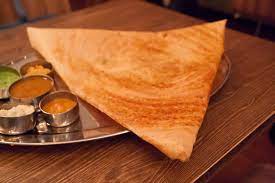
Dosa is a speciality of South Indian cuisine. Courtesy: Creative Commons

I was intrigued by the filling of the masala dosa. I had never come across a beetroot-based filling before. The dosas of my childhood used potatoes coloured yellow with large doses of turmeric as the filling. The dosa (a thin pancake made from a batter of fermented lentils and rice) was nice and the strong coffee enhanced the flavour. Indian Coffee House (ICH) is an institution in the Southern Indian state of Kerala though they have a few branches outside. The coffee workers’ cooperative operates over 400 outlets in India. The dosa is good and the chain serves decent food and has an old-fashioned vibe with turbaned servers and solid wooden furniture. There are several restaurants run by ICH in the town of Thrissur (Kerala’s cultural capital). There has been one operating for several years at the Government Medical College campus and two at the Swaraj Round in Thrissur.

Bharat is today a very popular hotel in Thrissur, Kerala, and is packed from morning till evening. People crowd all around you as you eat, waiting for you to finish and vacate your table so that they can enjoy their repast. I find this very disturbing and am unable to enjoy my food when someone is waiting in the wings. Bharat had introduced a triangular dosa in the nineties and they offered a good selection of chutneys and powders to accompany the dosa. The huge crowds mean that the server may not always be able to bring your dosa to the table at the optimum temperature.

Dosa should be served at the perfect temperature. Within a minute or two it should be on your plate from the griddle. Too long a wait and the dish become cold and soggy. Not all establishments are able to commit to this tight time frame. Serving a dosa at large gatherings may be challenging as people have to wait patiently for fresh dosas. Creating a perfect dosa requires expertise, commitment, patience, talented people, and maybe a little bit of magic.

In my opinion, there are two main varieties. The restaurant one is crisp, thinner, and larger while the home-made variety is thicker, smaller, and less crisp. There can be a variety of batters ranging from white rice, a combination of different varieties of rice and pulses and millets among others. Making dosas can be a tough task in hot climates. The kitchen is hot, the griddle is sizzling and the flame a glimpse of the fires of hell. Hot weather is needed for fermenting of the batter. Chefs in cold climes face challenges in this regard.

I have always preferred dosas right from childhood. My mother used to make one from a batter consisting of different types of rice and pulses and the thick dosa went well with spicy chutneys.

A dosa uses the nutritionally sound combination of cereals and pulses used by humans throughout the planet since ancient times. The oil required to roll out the dosa from the pan could be a worry for some. But with non-stick pans, the amount of oil required can be very much reduced.  

Our hostel mess at Thrissur used to make good dosas though we often had to rush into the kitchen to get it piping hot. We also visited a local tea stall where we had the more homely variety with onion chutney and coconut chutney. Pathans, an old restaurant and hotel in Thrissur serves great dosas as do several other hotels.  

Neer dosa with chicken curry. Courtesy: Creative Commons

During my residency in Chandigarh, I was introduced to more unconventional fillings. In sector 11 next to the Postgraduate Institute there was a restaurant that served a chicken dosa with a spicy filling. Punjabis love their chickens. For a brief period, the hospital canteen at Manipal, Pokhara, Nepal was run by a group from Mengaluru, India. I got to taste the neer[1]dosa that goes well with spicy chicken curry. Neer dosa uses water, true to its name. In Nepal, Marwaris carry on the Indian food tradition but their dosas usually are not up to my standards. I used to visit Coimbatore in Tamil Nadu, India as a FAIMER[2] fellow and faculty and this city has a rich tradition of dosa making. The PSG[3] Guest House has a famous dosa maker whose skills and reputation are legendary

The island nation of Aruba in the Caribbean may not be in your mind when you think of dosas. However, the Taj Mahal Indian restaurant in the capital, Oranjestad, would serve dosas every alternate Tuesday. The masala dosas were quite good and filling. I visited with my colleagues from the University. In Saint Lucia in the West Indies, the college canteen made good dosas and these were available in the mornings and afternoons.

Ragi dosas Courtesy: Creative Commons

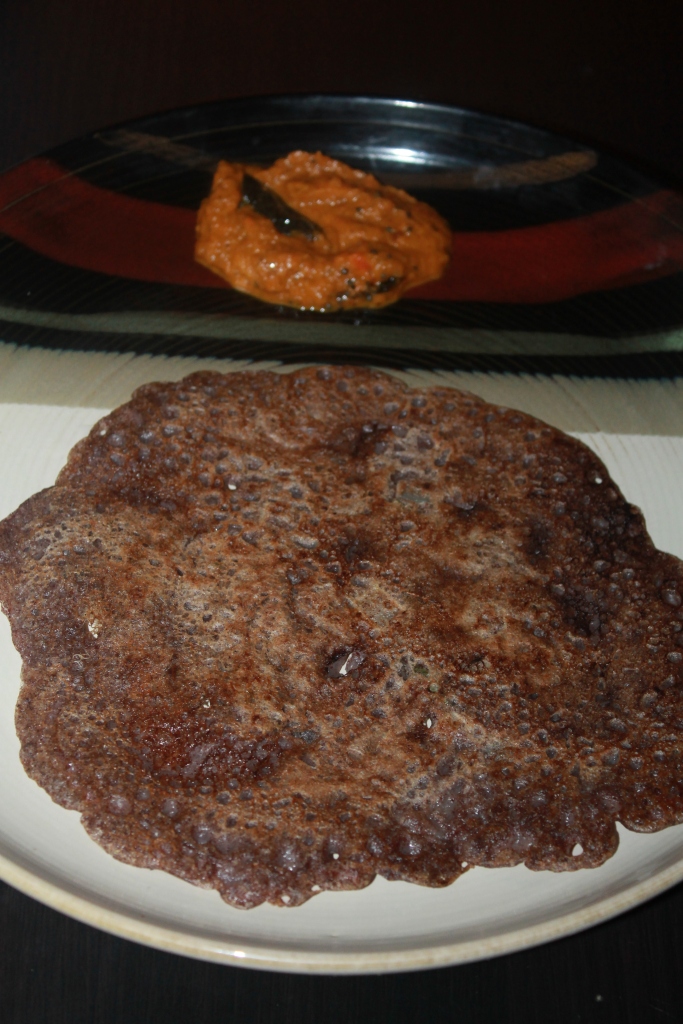
I was introduced to the ragi dosa in the town of Kolar in Karnataka, India. Ragi and millet have gained a formidable reputation as miracle foods. The ragi dosa is darker in color than its rice cousin, thicker, and may be more filling. I really enjoy ragi dosas. These days I occasionally go to MTR[4] in downtown Kuala Lumpur to enjoy this treat. The MTR ragi dosa plate has two delectable pieces with a small dollop of clarified butter and two chutneys and sambar. Filling and nutritious!In KL, I usually ate dosas for breakfast at the Sai Canteen in the International Medical University. The dosas are crisp and go well with the freshly ground chutney. The Indian restaurants in Brickfields in downtown KL serve very good dosas. Saravana Bhavan, Adyar Ananda Bhavan, and Sangeeta are a few examples. There may be a shortage of servers and the dosas may not always reach you piping hot and ready to eat. Making and serving dosas is labour intensive.

In Mumbai, the Udupi restaurants usually serve good quality dosas and these restaurants have become synonymous with South Indian food. I recently had a Mysore dosa at the Ram Ashraya restaurant in Matunga Mumbai. The Mysore dosa has a spicy lining on the inside and is a delightful concept. The waiting lines were long, and the restaurant was old-fashioned. I felt distinctly uncomfortable. The dosa however was delicious.

Pesarattu is a dosa mainly from Andhra and Telugu-speaking areas of south India made of green gram, ginger, cumin, and chillies. I was first introduced to this delight during lunch at PSGFAIMER, Coimbatore. Each afternoon there were specialties from a particular South Indian state. In KL, I can taste pesarattu at the Green Chillies restaurant near my apartment.

The accompaniments play a huge role in enhancing the taste of the dosa. A perfect sambar with drumstick and other vegetables, different types of chutneys, chamandi (a thick condiment made from chillies, coconut, ginger and a variety of other ingredients) and idli powder (termed gun powder). Chutneys can be made from red chilies, green chillies, and mint. There is also a gunpowder dosa, where a paste of gunpowder is smeared on the inner side of the dosa like a Mysore dosa.  

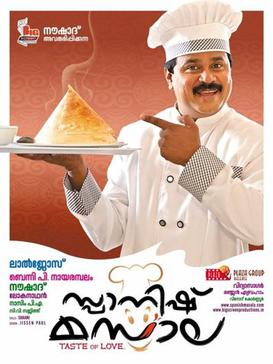
Spanish Masala movie poster

I remember watching the dosa-making skills of the actor, Dileep, in the Malayalam film Spanish Masala. Dileep was an illegal immigrant in Spain and invents a new filling for the dosa and names the dosa Spanish Masala. With a dosa batter, a hot griddle, cooking oil, clarified butter and passion you can create magic in the form of a rich, thin, crackling dosa. In many ways, the dosa is as adaptable as a pizza. Various fillings and batter can be used, and the dish can be adapted for various tastes. However, maintaining a dosa piping hot may be more challenging, which may account for its lesser popularity as a takeout item. I may have tasted perfection in a dosa only around twenty times in my life. Often, the dosa was not crisp enough, was not served at the optimum temperature, the accompaniments were not of good quality, or the place was too crowded. I often dream of the perfect dosa, thin, crisp, dark brown, and piping hot, just waiting to melt in the mouth!    

.

[1] Tulu word for water

[2] Foundation for Advancement of International Medical Education and Research

[3] PS Govindswamy

[4] Mavalli Tiffin Rooms, a restaurant chain started in 1942

Dr. P Ravi Shankar is a faculty member at the IMU Centre for Education (ICE), International Medical University, Kuala Lumpur, Malaysia. He enjoys traveling and is a creative writer and photographer.

.

PLEASE NOTE: ARTICLES CAN ONLY BE REPRODUCED IN OTHER SITES WITH DUE ACKNOWLEDGEMENT TO BORDERLESS JOURNAL

Click here to access the Borderless anthology, Monalisa No Longer Smiles

Click here to access Monalisa No Longer Smiles on Kindle Amazon International

Categories
Editorial

The Sky

The sky is, was and will be.

It stretches without borders, without interruptions, without contentions, unifying all under its life-giving ambience. We live nurtured by the sky, the water and the Earth. If we think back to times before humans made constructs and built walls to guard their own, to times when their ancestors roamed the Earth and moved to meet their needs, the population was not huge, and resources were abundant. Our species lived in consonance with nature. People revered natural forces and found trends that evolved into traditions and constructs which eventually made their progeny forget that the sky, water and Earth did not belong to them. These belong or perhaps exist for some reason that we do not comprehend despite the explanations given by science and religions. Being merely transient passers-by through these, humanity, unlike dinosaurs, has an urge to survive and be like the sky — with a past, present and future and a sense of the eternal. Though we all have short lives compared to the sky, Earth or universe, we continue to find ourselves in a homo centric world that considers all else to be made to meet their aspirations. But there was a time, when humans lacked this arrogance. They just tried to survive. And move with shifting rivers in an unbordered world.

Exploring such times, is Anthony Sattin’s profound book, Nomads: The Wanderers Who Shaped our World. He converses to reinforce reviving the concept of asabiyya or bonding between humans so that they find it in their hearts to move forward with necessary changes to avoid following in the footsteps of mammoths. A change maker who redefined constructs for humankind, a devdasi’s[1] daughter who rose to become a pioneering doctor and activist a hundred years ago, is Dr Muthulakshmi Reddy. We have an interview with her recent biographer, R Devika, who authored Muthulakshmi Reddy: A Trailblazer in Surgery and Women’s Rights.

The books reviewed this time include one featuring the writings by the greatest change maker in cinema — Satyajit Ray. Bhaskar Parichha has reviewed Satyajit Ray Miscellany: On Life, Cinema, People & Much More while Professor Somdatta Mandal has given us a candid opinion on BM Zuhara’s The Dreams of a Mappila Girl: A Memoir, translated from Malayalam by Fehmida Zakir. Taranath Tantrik and Other Tales from the  Supernatural by Bibhutibhushan, translated from Bengali by Devalina Mookerjee brings unexplored dark mysterious forces into play and has been reviewed by Basudhara Roy. We have an excerpt from the titular stories of Tarantath Tantrik. Bibhutibhushan Bandopadhyay(1894-1950) was a legendary writer from Bengal. He wrote stories and novels, some of which were immortalised in cinema, such as the Apu triology by Satyajit Ray. The other book excerpt is from a translation from Kannada by an upcoming voice that needs to be heard, Maithreyi Karnoor. She has brought to the anglophone world Shrinivas Vaidya’s Handful of Sesame.

In our section on translations, we are privileged to carry voices that remain relevant to date, Tagore and Nazrul. Nazrul’s poem on poverty, Daridro, has been translated by Professor Fakrul Alam and we have a transcreation of Tagore’s inspiring lyrics (Aalo Amar Aalo) to energise one’s life with the refulgence of light. Rosy Gallace’s poetry has been translated from Italian by Albanian writer, Irma Kurti. Korean poet, Ihlwha Choi, has translated his own poem on peace for us. And a Tamil short story by S Ramakrishnan, has been rendered into English by B Chandramouli. It is an interesting potpourri as is our poetry section, which even features poetry from Iraq by Ahmad Al-Khatat. We also feature poems by Michael Burch, Kirpal Singh, Ryan Quinn Flanagan, Jonathan Chan, Ron Pickett, George Freek, Gayatri Majumdar, Vandana Kumar, Mike Smith and many more along with the inimitable witty ditties of Rhys Hughes which not only make us laugh but also wonder…

Evoking humour is not easy, but we do have a few such writers who manage it very well. Hughes has given us a tongue-in-cheek piece on the dateline, which has more than humour. And Devraj Singh Kalsi has shared his discovery that laughter is the best medicine to shrug off a dentist’s drill. He has also visited the colours of Durga Puja which, with its spirit of inclusivity, transported visitors in one marquee near Kolkata to the iconic Malaysian Twin Towers. Thus, bringing festivals in October into our purview. Candice Lousia Daquin has actually explored why we celebrate festivals and the God gene… Did you know we have a biological need for spirituality?

Suzanne Kamata has introduced us to Mount Bizan, which houses a writer by the surname of Moraes – Wenceslau José de Souza de Moraes, an expat writer who lived in Japan at the turn of the twentieth century. Wonder if he could have been related to the Anglo Indian writer, Dom Moraes? Aditi Yadav has also given us an essay on the Japanese philosophy of Wabi-sabi with its world view centred on imperfections and transience. Ravi Shankar has suggested walks for all of us, sharing his experiences in the Himalayas, the Caribbean island of Aruba and in many more places. Meredith Stephens has written of sailing to Tasmania.

The essay that brought back a flavour of home for me is one by Asad Latif, now a journalist in Singapore but long ago, he was an icon in India. We are very privileged to have his writing on what borders do for us… a piece exploring the idea on which we base our journal, also perhaps with a touch of Anthony Sattin’ s asabiyya. ‘Pandies’ Corner‘ starts another run, showcasing women’s tryst for freedom. Amreen’s ‘Moh-Reen’, her own story, translated from Hindustani by Janees, is a brave start to the series. The voices ring out asking for a change, to heal social norms to accommodate love and kindness with the backing of Shaktishalini and Pandies as does the unsupported solo voice of an older woman from Balochistan, Ganji Baloch, brought to our notice by Ali Jaan Maqsood.

We have fiction from Sohana Manzoor – again bringing to fore strange stories of women rebelling against social norms. Paul Mirabile explores death and the sea in a horrific story. Sunil Sharma’s fiction explores madness and ideators, making a social comment on recent happenings. As the sky stretches out to accommodate all kinds of writings, all creatures great and small, we try our best to give voice to a fair cross section from around the world as we have done this time too.

There are as usual pieces that we have not mentioned in this note but they are all worth a read. Do drop in to check out our contents in this October issue. We are truly grateful to our contributors who continue to connect with words and thoughts that waft along with clouds. We would like to thank Sohana Manzoor especially for her wonderful artwork. The journal would not be a possibility without the support of the whole team and our valuable readers who make writing worth the effort. It is lovely to be read and remembered for the words we write.

Wish you all a wonderful October.

Mitali Chakravarty

borderlessjournal.com


[1] A woman ‘married’ to Gods and forced to live as a mistress to mortal men.

Categories
Poetry

This Grey Morning

By Marianne Tefft

THIS GREY MORNING

This grey morning
I get to study the ceiling bemused
Hoping the long-awaited repair
Has stemmed the active leak at last
I do not have to scan the terrible clouds 
Praying what rains from the grim sky
Will not drown me and my daughter today

This grey morning
I get to pause Saturday’s Long Read
Set my warm cup in its saucer
And push up from my table
Heeding the scraping of my hungry dog at the door
I do not have to raise a broken chair from the rubble
Against those who want the putrid scraps
I have made my own 

This grey morning
I get to wallow in bed
Nursing my broken heart
I do not have to lie on frozen earth
Hands pressed to my chest
Sticky and red
Bravely sighing this is how love ends

Marianne Tefft, born in the U.S. and raised in Canada, is a poet, lyricist, teacher and voiceover artist on the Caribbean island of Sint Maarten. Her first poetry collection, Full Moon Fire, is slated to appear in Summer 2022.

.

PLEASE NOTE: ARTICLES CAN ONLY BE REPRODUCED IN OTHER SITES WITH DUE ACKNOWLEDGEMENT TO BORDERLESS JOURNAL