I am British and the British are a lazy race. This must be true because our own governments keep telling us it is. They have been saying the same thing for as long as I can recall. They never grow weary of loudly declaring it, despite the constant effort involved in berating us, thus contradicting the meaning of their message with the method of delivering it.
I think they mean that we should work harder for their benefit, so they can take the opportunity to be more lazy. Because, yes, they are just as indolent as the people they accuse of laziness, if not more so. If national characters really exist (I am not sure they do) then laziness is certainly part of ours. How can this be possible? We wandered the world invading and colonising and that requires drive and vigour, surely? Not necessarily. I suspect we did all that because it was an easier option. Less effort to take than make. But I wish we had been just a little lazier and not even bothered to take.
As the philosopher Emil Cioran pointed out, lazy people cause less trouble than busy ones. Almost all the artificial crises of history are the result of active, busy go-getters, whether they be warlords, emperors or irresponsible inventors. Another thinker, Paul Lafargue, published a book in 1883 called The Right to be Lazy which sets out comprehensive arguments as to how decreasing one’s own workload is the best way forward for the entire human race. This book ought to be read by everyone. It opens with an exquisite quote from Lessing, “Let us be lazy in everything except in being lazy.”
Laforgue suggests that the stated desire of socialist governments for ‘full employment’ is a mistake. More working hours means more servitude, misery and frustration. It might mean more pay too, but what is the use of pay when it is paid for in time? That is self-defeating. And the stated desire of conservative governments for ‘greater competition’ is also a mistake. Effective competition requires more work, and so we are back where we started, in a world where the only thing that radically different political systems agree on is that the innocent people they rule over should be toilers.
It is leisure time that is the fruit of progress, free space in which one can be creative, joyful or just peaceful. Automation is key to making the utopia happen, and when I was young we were promised a future of leisure in which computers would do all the hard thinking and robots all the heavy labour, and we could be released into freedom, visiting friends, taking siestas, writing poetry, composing music, or floating on our backs in the clouds thanks to silent anti-gravity motors and communing with birds and rainbows.
The promise was broken. Automation gave us more free time, but that free time was flooded with more work, at the urgings of the high lords of capitalism. And now the computers and robots write poems, compose music and create art, while we drudge and toil in ever worse conditions, with ever greater pressure on the hulls of our souls, as if we are organic submersibles sinking irreversibly into the deepest depths of the oceans of degradation. One day we must be crushed, a flattened populace, compressed to shadows on the seabed of our aspirations and dreams. The high lords will have triumphed.
Therefore, I regard the laziness of the British nation with affection. And yet I recently saw a map that has been produced from statistical data revealing that not all Britain is equally lazy. On the contrary, some regions are very productive indeed, over-productive in fact. I studied the map and saw that where I lived for many years was in one of the lazy zones. I heaved a sigh of relief. It is good to know that I did not fail to fit in with my environment back then. It reassures me, and we all need reassurance, even lazy people.
Map provided by Rhys Hughes
But my main reaction to viewing the map was to wonder how peculiar it must be to live right on the border that divides an over-productive zone from an under-productive one, especially with your left half in one zone and your right half in another. One of your legs and arms would be moving much faster than the other arm and leg, and presumably you would then rotate in a circle, as you paddled yourself around, which would mean all parts of you would take turns to be basted in both laziness and industriousness!
That was my first thought. But then I realised that I had been quite lazy in the details of my speculation. Actually, you would not rotate in a circle in that manner. You would rotate first one way, then back the other way, as different sides of your body came under the influence of the over-productive zone, and so you would move more like an alternating current than a windmill. Whether this would be an improvement or not, I do not know.
.
Rhys Hughes has lived in many countries. He graduated as an engineer but currently works as a tutor of mathematics. Since his first book was published in 1995 he has had fifty other books published and his work has been translated into ten languages.
.
PLEASE NOTE: ARTICLES CAN ONLY BE REPRODUCED IN OTHER SITES WITH DUE ACKNOWLEDGEMENT TO BORDERLESS JOURNAL
I had a jigsaw of a map of India but it wasn’t a proper map. It had the names of cities on it but it was covered in pictures too, scenes of ‘typical everyday life’ for people who lived in various parts of the country. This jigsaw introduced me to India. I saw lots of elephants and tigers and women picking tea and men drinking the tea and coconut trees and mountains and a few deserts. The trees, elephants, tigers, women and mountains were all the same size. Sri Lanka was included in the map and because it is a much smaller landmass it only had room to show one elephant and one woman picking tea.
This jigsaw was one of several jigsaws that I had in the same series. They were all the same size too, so that I came away with the mistaken impression that India, Australia, New Zealand, Japan and South America were all as large as each other. I have checked just now and I see that these jigsaws were made by Waddingtons and called ‘jig-maps’ and now I also learn that the Indian one didn’t contain Sri Lanka after all. The fallibility of memory! Looking at it for the first time in almost fifty years I discover that Bangalore is represented by a man playing a flute to two cobras in a basket while a wise mongoose looks on. Was Bangalore ever really like that? Was it like that when the jigsaw was made? Clearly a lot has changed in half a century.
The jigsaw was only the starting point of my intellectual discovery of the Indian subcontinent. Films augmented my growing awareness. Films showed me that the meaning of India could be found in elephants, tigers and women picking tea, not to mention men drinking tea, coconut trees, mountains, deserts. The place seemed marvellous. I decided to go there one day. But when? The thing to do was to consult a proper atlas, not a jigsaw, in fact a battered old atlas bound in ripped green cloth that dated from the 1920s and was probably a book once owned by my great-grandfather.
India seemed far away, yes, but not as far as Australia, and because I had cousins in Australia who had come to visit (bringing me a boomerang as a gift), I knew the voyage was feasible. First, I would reach France, that was the first step, and I felt confident I could walk to France. There was the inconvenience of a stretch of open sea between Britain and France, but I believed I could construct a raft from driftwood and sail across without too much trouble. Once I arrived in France the remainder of the journey would look after itself. I equipped myself for the walk. I took a penknife and a flask of orange squash, and I set off. There was woodland near the house where I grew up and I walked for ten minutes or so before meeting a boy I knew who was unsuccessfully trying to climb a tree. He came down with a crash, asked me for a drink and I obliged. Half the squash went down his gullet and I knew I could never hope to reach France on a half empty canteen. I returned home.
But I never abandoned the quest to reach India, I merely postponed it. The country had snakes in baskets! How could I resist that? Where I came from, the only stuff you found in wicker baskets was laundry. Boring in comparison! The snakes in India were musical and loved flute melodies. That also was amazing. It occurred to me that snakes were flute-like themselves and perhaps had even evolved from flutes (or vice versa) which explained the association. What if the strong resemblance led to a flautist accidentally trying to play a snake instead of a flute? The question alarmed me for days.
Maybe the music produced as a result would be the best ever heard by any human ear? Or perhaps it would be the worst! Yet another thing to find out for myself when I got to India. In the meantime, to continue my research, I spent a lot of time with a toy called a ‘View-Master Stereoscope’ that showed images on slides in 3-D. It was a plastic box with two lenses and a lever that rotated a disc on which the images were fixed.
One of the discs in my possession was an arrangement of “spectacular views” from around the globe. It included Banff in Canada, the Golden Horn in Turkey (those are the only other two I remember) and yes, a frontal view of the Taj Mahal. I studied the Taj Mahal carefully. It was vast and white. What clues could I glean from it? I wasn’t sure. Someone told me it was constructed by elephants. I accepted this but wondered what use elephants had for such a grand monument. It wasn’t edible. It wasn’t a bun.
On a school trip I was taken on a bus to Bristol Zoo, which seemed to lie at an extraordinary distance from the small town where I lived. We were shown an elephant and informed by a teacher that it was an Indian elephant, because it had small ears. Those ears looked vast to me and from that moment I had no choice but to regard the teacher as incompetent, a fool who didn’t know the difference between big and small. The incompetence of adults was something I learned the hard way, like most children. For instance, another teacher told us that crude oil was ‘liquid gold’ but I knew he was wrong. Oil was black and gold was golden, they couldn’t be the same. He had neglected to explain it was a metaphor. That might have helped his credibility.
My grandmother knew a little about India because one of her uncles was a sailor and had been there. He came back full of stories about it. People in India were able to levitate cross-legged, he had told her, after studying a thing called yoga. But yoga was dangerous. Some men had tied themselves in knots doing it and couldn’t be untied. They had spent the rest of their lives as a knot. Only the lightest men could levitate as far as the ceiling. Occasionally one of them would go up the chimney and drift away on the breeze. He had sometimes been far out at sea and watched them drifting over his ship. He had waved to them but if they broke their concentration they would come back down and make a splash, so his cheerful greetings were ignored. No offence taken, he said, he understood their predicament. Well, that was India for you.
In Calcutta he had seen a magician with a rope who had thrown it up high in the air and it had become rigid. Then he climbed it and vanished at the top. It was an impressive trick but he couldn’t see the point of it. He preferred the men who slept on nails instead of mattresses. Had he actually seen any of these chaps himself? No, not exactly. Nails grew on trees in that country and during his stay there had been a drought and a bad harvest and there weren’t enough nails to spare and those magic men had to sleep on porcupines instead. It was better than nothing, he supposed. My grandmother passed these tales onto me, uncritically and with evident approval. She always regretted not being born a man and going to sea herself. She wanted to be a pirate.
My grandmother’s uncle knew all about curries but I didn’t and I waited a long time before I tasted my first. It blew off the roof of my mouth, but looking back, I imagine, it was a very mild curry. Like most British men I soon acquired a taste for spices and eventually I became what is known in common parlance as a ‘chilli head’, going so far as to munch on the spiciest raw chillies available and insisting through a forced grin that they were “nothing special”, but that was later. My first curry was an eye opener. On second thoughts, it was more of an eye shutter, as I squeezed back the tears into my ducts. Yet this experience is a necessary rite of passage for all British males. It is the ‘test of fire’ and no less important than ‘the test of liquid’ (one’s first beer in a pub) and the ‘test of hair’ (the first shaving of the chin). These are the three essential tests, although there might be some others of lesser importance.
It must also be admitted, and I don’t say this cheerfully, that Kipling had a deep influence too on what I thought I knew about ‘India’. He is a problematic author now, one who made too many assumptions about how acceptable it was to work within the rigid structures of an imperialist system and only petitioning for greater humanity within that system. We can look back now and chide him for not opposing the system itself, but as a young British boy, I had no thoughts about systems of any kind. I was unhistorical despite my interest in history. The past was a place of knights bashing each other with maces, the distant past was a place where cavemen bashed each other with clubs. The present could never be history because it wasn’t the past, a simple equation in my head, and when Kipling wrote of his contemporary India, I received his impressions in my own time. Therefore, his India became mine too. ‘Gunga Din’ was exactly the sort of chap one might meet in the streets today. It never occurred to me that Kipling was a relic, an antique, for the reason that his books stood on my bookshelves now, and thus had contemporary relevance.
My sister’s best friend at school was an Indian girl, Joya Ghosh by name, but because we lived in a small town in Wales, I don’t think it registered in my mind that her parents had come from elsewhere. I didn’t think about the matter very much, if at all. She was merely a person with a deep laugh, much deeper than the laugh any child ought to have, thinking back on it now. It rumbled. It was the sort of laugh I later came to associate with hearty men with big beards, Captain Haddock or Taras Bulba types. She didn’t have a big beard or even a small one, at least I don’t recall seeing one.
She once courageously interceded in order to stop a pillow fight between myself and my sister. Her diplomacy in maintaining her neutrality as she did so impressed me considerably. But I never asked her anything about India. Maybe she wouldn’t have known much, but that is beside the point. I never even made the attempt. Nor do I remember meeting her parents or siblings, though I surely must have. She was here and India was elsewhere, so no connection could be logically made. The Jungle Book cartoon film filled in all the gaps anyway. I learned that in India wolves held conferences, that monkeys had kings, and that vultures were willing to join forces with humans to frustrate the machinations of tigers. This seemed perfectly reasonable.
When I was 14 years old, a brief article on Buddhism in an encyclopaedia captured my imagination. I wanted to know more about this philosophy. Where should I turn in order to find out more? There were no books on the subject in my local library, which was the only source of reading material in the town, and no adults I asked knew anything about it. The Buddha had found enlightenment under a tree in India. Would I have to travel to India to find enlightenment about his enlightenment? That seemed probable. My grandmother’s uncle hadn’t said anything to her about it, strangely enough, so I had to extrapolate from that one encyclopaedia article. It mentioned reincarnation and I liked this idea. To get an opportunity to be every other animal under the sun! To understand that already I had been many of those animals. Sublime!
The deeper aspects of the philosophy were passed over in that article. But my mind was made up, I would henceforth be a vegetarian, and I have been one ever since. There was familial opposition to my decision, of course. If I was no longer going to eat meat, what would I eat? British food back then was famous for being terrible (some would say it still is) and there was no tradition of tasty vegetarian meals. A vegetarian meal was simply an ordinary meal but without a lump of meat included, in other words a plate of boiled potatoes, boiled carrots, boiled cabbage, sprinkled with salt and pepper. This was years before the Curry Revolution that shook our island nation to the core, threw out our complacency and shattered our culinary blandness.
I now decided that I was a Buddhist and would go to live in a monastery in the mountains when I was older. Unlike my first attempt at walking to India, my second attempt would see me equipped with more than just a penknife and flask of orange squash. I would go equipped with inner tranquillity. That was the idea anyway. If I met with an accident during the journey, savaged by wild beasts or attacked by bandits on mountain slopes, it wouldn’t matter too much because I would be reborn as some other animal, maybe a squirrel or goose, and have an interesting life in a new form. I might even be reborn as an animal with enough strength to turn the tables on my attackers. A rhinoceros or hippopotamus. That would be fun and I regretted that I wouldn’t be there to see what happened, even though in another sense I was there…
But I kept putting off the day of my departure. There were too many other things to do first, such as pass my school exams and save enough pocket money to buy a new bicycle. Also, I didn’t want to shave my head. Time and tide wait for no man, or so they say, and weeks turned into months, months into years, and then I lost interest in walking seven thousand kilometres overland because I had started to go on hiking trips with friends and was learning what distance really meant to legs and feet. My first proper manly hike was 28 Km through forested hills and my feet were blistered on the soles so badly that for the next three days I walked on tiptoes like a conspirator but while making noises that no conspirator would make, “Ouch!” and “Yow!”
I grew up even more than I already had, went to university, graduated and travelled. I had friends who went to India and came back and they told me tales of their adventures. These adventures were suspiciously devoid of canyon rope bridges and cobras swaying to flute music, and equally suspiciously full of ghee-laden sweets and cheap beer. I eventually made it to India, but I went first to Sri Lanka, for reasons too complicated to outline in an article of such a short length. Yes, there were ghee-laden sweets and cheap beer shortly after I landed in Bangalore, but I think that was just coincidence. As for canyon rope bridges I still haven’t encountered any, but I did see an incredibly rickety broken bridge when I went to Coorg, absolutely the sort of thing one finds in old adventure novels or in the films adapted from them.
And now I sit under a magnificent banyan tree and consider how all my current knowledge about India deviates from what I thought I knew about the country in my distant youth. I think I have only really learned one thing, which is that India is simply too large to comprehend. There is too much of it, and it is full of people doing things, and those things are baffling even when explained because the explanations, no matter how lucid they are, are also baffling. This is a complicated way of saying I haven’t found any snakes in my bed yet, no bears in my bathroom, and I still haven’t been eaten by a tiger and reincarnated as a mongoose. But anything at all can happen.
Rhys Hughes has lived in many countries. He graduated as an engineer but currently works as a tutor of mathematics. Since his first book was published in 1995 he has had fifty other books published and his work has been translated into ten languages.
.
PLEASE NOTE: ARTICLES CAN ONLY BE REPRODUCED IN OTHER SITES WITH DUE ACKNOWLEDGEMENT TO BORDERLESS JOURNAL
I thought that I didn’t like India Pale Ale until I came to India. I wasn’t pale at the time but I was certainly ale (and arty)[1] because I had just spent three months in Sri Lanka and had acquired something of a tan. Maithreyi, my companion, took me to a place that sold ‘craft’ beers and I changed my mind about the merits of India Pale Ale and my mind has been changed ever since.
The notion of a ‘craft’ beer is one that intrigues and baffles me. I think of a craft as something involving working with wood, chiselling it, shaving it like an orthogonal chin with a plane, drilling it, fitting it together into a chair, table, ark for animals, or something beautiful but useless that looks like furniture but also might conceivably be a petrified tree stump.
Therefore, how can one ‘craft’ a beer? The foam on the surface of the brew once it has been poured into a glass can be removed with a flat tool, the blade of a knife or a metre long ruler or even a credit card. Yes, that is plausible and once or twice I have seen it done. But what other crafty actions remain to be taken in regard to the beer in order that it should be regarded as ‘crafted’? Drilling a beer is a futile exercise. We have all done that with our noses and understand the lack of permanent effect. Who among us has never surrendered to the temptation to dip our noses into the meniscus of our beers?
Let me adjust that hasty statement. Many or at least some of us have done that with our noses, at one time or another, probably long ago when we were the callowest of youths, students at some college or other and fairly new to the rite of drinking beer. The dipping of the nose might even have been accidental. Who can be a harsh judge in such circumstances?
So, it is settled that beer can’t be drilled, nor can it be sawn in half. We have all heard the wise saying that the optimist regards the glass as ‘half full’ and the pessimist regards it as ‘half empty’ and we instinctively know that the liquid in those philosophical glasses is beer. What kind of beer is less clear. If it is totally unclear then it must be a dark beer, but I suspect it is only unclear with a foggy opaqueness, which tends to lead me to conclude it is India Pale Ale. It becomes easier now to picture the scene in the drinking den, whether that den is posh and plush or crude and rude. We see the optimist and the pessimist, good friends but mismatched, holding up their depleted glasses.
Both are drinking India Pale Ale and have consumed exactly fifty percent of the contents of what once were brimming vessels. The optimist looks down at his glass with a large smile, “Ah, it is still half full. What excellent luck!” while the pessimist looks at his own glass with a deep frown, “It’s half empty already, what a blasted nuisance the world is!” But something strange has happened, and we have only just noticed it. We suppose that a ‘half empty’ glass contains beer in the bottom half and air in the top half.
Because this is a vision we are having, and visions aren’t subject to all the laws of physics, especially not gravity, we are amazed to peer closer and see the beer in the pessimist’s glass is confounding our (unreasonable) expectations. It contains the air at the bottom and the beer at the top. The optimist is impressed and cries, “What marvellous luck! You don’t need to tilt your glass at a steeper angle anymore in order to receive the India Pale Ale into your mouth. You can slurp it up from the summit of the glass.”
I am sure the pessimist will object to this positive interpretation of a beery situation and find some convoluted reason why this defiance of gravity is a bad outcome. But I am weary of these two fellows now. Let us leave them in peace to get drunk together, the optimist thinking that being drunk is good, his friend concluding that it’s not as good as he was led to believe it is, and head to a quite different location for a drink of our own.
The place Maithreyi took me to that sells ‘craft’ beers, including the India Pale Ale that is the subject of this small essay, was somewhere in Bangalore not far from Blossom Book House. We had bought books in that house, as we often do, a decent haul, and went to celebrate with beer and nibbles, and later, when we were just a little tipsy, we hurried back to Blossom Book House and bought more books. But this isn’t an article about books. It’s an article, or what passes in my mind for an article, about beer, specifically about the type of beer that is known as India Pale Ale. Where was I?
Oh yes, I was in that place that sold craft beers, and I have decided at this point to stop writing the word ‘craft’ in inverted commas. There were too many craft beers on offer for an easy selection to be made, so we ordered a sampler of many kinds, and they came on a big tray. They were in small glasses, dark beers and golden, reddish beers and greenish, fizzy beers and still beers, and perched on the end of the rectangular tray, two glasses of the mythic India Pale Ale. My reluctance to try these hangers-on is comprehensible when one considers how dreadful a non-craft India Pale Ale can be.
Back in Britain, decades ago, when first I allowed beer to pass the gates of my lips without turning it back, IPA was fairly popular among those unfortunate drinkers who lacked taste buds. Why they lacked taste buds was never explained to anyone’s satisfaction. Presumably they had lost them overboard while sailing from the Far East on packet steamers. It was a long time before I knew that IPA was an acronym for India Pale Ale. I assumed it was a word in its own right and that its own right was wrong. I would say that most beers sold in pubs in Britain in the 1970s were abominable, but this suggests that the Abominable Snowman would like them, and I doubt that he would.
I have done a little research (a very little, almost too little to be regarded as anything other than mildly faffing around) and I learn that India Pale Ales were once a noble style of beer, invented in the 18th Century for export by the sneaky imperialists of the East India Company. It was flavoured with hops, lots and lots of hops, more hops than a kangaroo would do, if it had a chance, and the adding of these extra hops had some effect that meant the ale would mature or whatever the word is during the difficult sea voyage.
I don’t really understand the chemistry of it, and I don’t really want to, I am merely repeating what I found out just now. IPA was an EIC product, proving to my own satisfaction that acronyms aren’t relatively modern inventions but have been around for a very long time. The decline in the quality of IPA, and all beers for that matter, during the 20th Century, is perhaps a mysterious one or maybe it has something to do with the big breweries rapaciously wanting to increase their profits by using less lovely ingredients and processes. I don’t especially like the taste of hops at the best of times. At the worst of times hops make me wince and frown like some kind of wincing frowner, a very lazy comparison, true, but my powers of simile and metaphor are temporarily on hold, for I haven’t recovered from a rather severe bout of acutely remembering the IPA and other beers of my early days on this gracious planet of ours.
A strongly hopped beer tastes, to me, like mouldy bread. The IPA of those long-gone days tasted like a sack of mouldy loaves swung around the head of a gorilla and used to bash one on the bonce. My powers of simile and metaphor, such as they are, seem to have returned. And yet when I took a cautious gulp of the IPA in the place that Maithreyi had guided me to, my preconceptions and established prejudices melted with the delightfulness of the taste that confronted me. What a magnificent India Pale Ale! I tried the other IPA on offer. Golly, this was even more wondrous! Let’s order more!
I say, my dear, we have bought books in our favourite bookshop. Isn’t it an astonishingly beneficial way to pass the time, obtaining books? And it’s not as if we buy them but never read them. We read them! Wouldn’t it be a jolly romp to return to the bookshop, once we have consumed more beers here, and engage in the act of purchasing more books? Indeed!
A final observation from an unobservant chap (myself). Any British fellow who guzzles IPA with gusto and ends up with a sodden moustache and beard as a consequence can be regarded as a ‘Pale Ale Face’ which is what ‘Indians’ in old Westerns almost called cowboys on occasion. Anyway, this essay appears to be over now, and the page on which this final paragraph has been written is an empty glass at last, the brew of its words fully consumed by your eyes, leaving only the dregs of a footnote at the bottom.
[1] Hale and hearty, a description used frequently in my youth, but which seems to have fallen out of favour. Falling out of favour is easily done if the speeding favour brakes to a sudden halt and the thing that was in favour isn’t strapped in properly. When it falls out of favour it often lands with a painful bump and favour drives off with a monstrous laugh. Even flavours can fall out of favour or back into it.
Rhys Hughes has lived in many countries. He graduated as an engineer but currently works as a tutor of mathematics. Since his first book was published in 1995 he has had fifty other books published and his work has been translated into ten languages.
.
PLEASE NOTE: ARTICLES CAN ONLY BE REPRODUCED IN OTHER SITES WITH DUE ACKNOWLEDGEMENT TO BORDERLESS JOURNAL.
I climbed Sri Pada on the 10th of January of the year 2023. I was still calling the mountain Adam’s Peak when I went up it, but on the way down I decided that it was more respectful to call it by the name the locals use. I had first glimpsed the mountain during my first visit to Sri Lanka, a year earlier. I saw it through a car window in the distance. “One day I will return and climb it,” I told myself, but I never imagined that I would do so just twelve months later. I often create lists of ‘things to do’ and items on those lists tend to remain on those lists for decades. I can be slow at compiling these lists and I found myself in the position of having to scratch out the words ‘Climb Sri Pada’ before I had even added them. Life is full of such ironies, luckily or unluckily.
Climbing mountains is one of the greatest delights of my existence, but the number of mountains I climb per year is low, on average just one, and I attribute my lack of drive to the typical mountaineer’s ‘peak lassitude’, which isn’t like the ‘peak performance’ of other kinds of athletes. You go up a mountain, stand on the summit and take a good look, then you climb down and look up, to see where you have been, and it is the theory of the climb, which has just been done in practice, that seems to be so exhausting. That’s my theory, anyway, or maybe it’s not quite deserving of the name ‘theory’. Perhaps it’s just a speculation or an excuse. But as I’ve always said, an excuse is as good a reason as any. I climbed Sri Pada and am still enjoying my fatigue.
Having arrived in Colombo by modern jet aeroplane, as one usually does, I caught a bus to the village of Maskeliya in the Central Province of the island, or rather a series of buses, as I couldn’t work out how to catch a direct bus there.
In fact, I first went to Kandy, a city on the way, or almost on the way, and stayed in a pleasant and cheap hotel for one night. I went to the Royal Bar for a meal and a drink, one of my favourite pubs in the world, and a place with strong nostalgic overtones for me. It’s a restored colonial building and I often feel like a restored colonial man, so it matches me perfectly. What I mean by this is that I’m getting old and cranky, but my foundations are solid, and my façade can be regarded as a noble one. There was a power cut while I was sitting at a chair on a balcony that overlooks an inner courtyard and the chef wasn’t able to prepare hummus in the dark, so I made do with chips and ketchup.
Sri Lanka was still reeling from the effects of economic mismanagement. I was expecting food and fuel shortages and disruption of public transport, as well as frequent power cuts, but I experienced little inconvenience, and I wouldn’t complain even if I had. Stiff upper lip and all that. A few days later, my British legs were stiffer than any lip has any right to be. But now I am jumping ahead. I couldn’t jump anywhere when my legs were stiff. I could hardly walk. But now I am drifting off the point, just as I drifted off the route when I was hiking to the base of the mountain. I am jumping ahead again. Let me go back a little and let me explain that all the inconvenience I didn’t experience because of economic mismanagement is still there, adversely affecting the people of the island, even if visitors don’t notice it. It’s important to be aware, even if the only thing we’re aware of is that we aren’t really aware.
From Kandy I caught a bus to Hatton. Every seat of this bus was occupied, and I had to stand. I wasn’t alone in standing, many other passengers were doing the same thing, and it was only the pressure from all these other standing bodies that prevented me from falling over on the winding road to the town of Hatton. I say ‘road’ but in fact it was just a series of bends that climb higher into the hills, an impressive drop on one side, no barriers, and a driver who liked to accelerate on those bends, presumably to teach them a lesson, or to teach us a lesson, about inertia and maybe some other laws of physics. It is cheaper than paying to use a rollercoaster and rather more sociable.
But the landscapes are beautiful. Tea plantations on undulating slopes with mountains in the background, and plenty of lakes. We reached Hatton and I tried to find another bus that would carry me the remaining distance to Maskeliya but I failed in this endeavour and caught a tuk-tuk with a talkative driver who acted as a tour guide on the way. “That’s a mountain over there, don’t know its name, and down there you can see a lake, not sure what it’s called, and reflected in the water is that very mountain. Imagine!”
At the time I had no idea that Hatton was the birthplace of one of my mightiest heroes, the explorer Eric Shipton, a man who climbed for real all the mountains I just gape at in picture books, and who probably found genuine evidence of the yeti, unless he was playing a prank and made the footprints himself. Who knows?
The tuk-tuk arrived in Maskeliya, which turned out to be a small place in which all the restaurants were closed, and it was impossible to secure a cup of tea or coffee. The fact we were surrounded by tea plantations and innumerable coffee bushes meant little, for all the tea and coffee was exported to Britain. I should have had a cup before I left my own country, I was informed. I replied that I had come from India where tea and coffee are daily occurrences, or even hourly occurrences, if necessary. There are numerous similarities between India and Sri Lanka, but also some differences. No snow-covered mountains on the island, for instance, therefore no yetis.
My tuk-tuk driver dropped me off on a dusty street full of holes over which his vehicle had been bouncing like a distorted rubber ball, and I found the place where I was staying. I was warmly greeted by my hosts and their two dogs. My room was above a garage and this building was the very last one in the village. I was given a pot of tea and a plate of biscuits to celebrate my arrival in such an obscure location. So, there was tea to be had in Maskeliya after all! I found it to have a pleasant but unorthodox flavour.
After I had drunk half a pot of the stuff, I was told it was coffee. So, there was coffee to be had in Maskeliya after all! Coffee that tastes like tea. Or rather, coffee that tastes like tea that doesn’t taste quite like tea. I learn something new every day, or nearly every day, even if it’s only that I don’t learn something new every day but only once a week. Does that make sense? I won’t say the altitude had affected my mind, because although we were quite high, we weren’t really very high. Maskeliya has an elevation of approximately 1205 metres. Nothing to write home about. But I only have an elevation of 1.74 metres, so who am I to pass judgement? I drank more of the tea.
For a few days, I prepared myself mentally and physically for the coming climb. I played with the dogs and read some books. One of the dogs had a habit of sunning himself on the roof of the house and I couldn’t work out how he got up there, onto the corrugated iron. Maybe he turned into a monkey by the light of the moon and turned back to a dog once he reached the roof. Magic is always a useful explanation for such mysteries.
At least it is useful until we know better. And often that ‘better’ turns out to be worse. Whatever the solution to the mystery, he was a nice dog and that’s what ultimately counts. An abacus also counts, but rarely ultimately, because it is limited by the number of beads on its wires. I went for a walk at a waterfall on the far side of the enormous lake that dominates the region horizontally, in the same way that Sri Pada dominates the region vertically. That was also part of my preparation. I drank more coffee.
During my walk to the waterfall, it began raining and I ran for shelter. It’s a terrible thing to get wet on the way to a plummeting column of water that fills the air with spray and wets the onlookers. Almost as if the sky is trying to spoil the surprise. I found shelter too, in a lookout point with a roof. Two young men were sheltering there and they had a drum with them and they invited me to play it, which I did, while they did a peculiar dance. Perhaps it was the opposite of a rain dance? I didn’t think to ask, but I should have. The rain stopped. We left the shelter and went our separate ways. I ambled along a narrow path to the top of the waterfall and looked down.
Lots of gushing water making a roar. The world is God’s bathroom and he had left the tap on. That’s what it was like, a little anyway. I ambled back the way I had come and caught a bus to Maskeliya. An old man waiting at the stop thanked me for being British. It was the British, he told me, who brought tea to Sri Lanka. Before we came along, they only had mango juice and coconut water to drink. Appalling! I am uncomfortable when I am thanked for being British, and it does happen, more often than one might suppose. When the bus arrived, he was too emotional to board it and decided to wait for the next one. Personally, I like mango and coconut.
The day of the big climb arrived, or rather the night, for I had to depart my comfortable room at 2:30 in the morning and sit in a less comfortable tuk-tuk for an even less comfortable ride to a mountain that I could very uncomfortably climb to the top. I later wrote a poem about my climb which asked the question, why do I climb mountains at night in order to see the sunrise? The punchline of my poem was that I didn’t know the answer until I reached the top and then it dawned on me. Many or most poems don’t have punchlines, mine do. But this doesn’t mean mine are in the right. Sometimes I imagine they are punch drunk and that’s surely wrong. Punch can be made with mango and coconut as added ingredients, but probably not with tea.
The tuk-tuk stopped and I dismounted and began my hike to the base of the mountain. There are several routes to the base of Sri Pada. Some are easier than others, and some of the easier ones are much longer than the harder ones, making them harder in some ways. That’s mountains for you. I walked up a stony path and into a forest. I began to suspect that this was the dry bed of a stream rather than a proper path and I thought of my own dry bed in my room in Maskeliya. Too late, I was committed to the climb. It was a forest where leopards and elephants roam, but I didn’t know that until later, for there was no sign of them as I trudged up the inclines.
After a few hours I wondered if I had taken a wrong turn. The mountain should have loomed above me, but it wasn’t to be seen. That was weird, but I am used to getting lost on hikes and climbs. I even get lost in cities when I have maps. I’m not saying that I am a terrible navigator, but I would be very unlikely to employ myself as a guide to anywhere. I decided to push on in order to see how lost I actually was. The only way of doing this efficiently is to become even more lost and then compare the degrees of lostness, if lostness is a real word, which probably it isn’t. Ah well! I noticed a light far ahead that was a beacon of hope, and I increased my speed.
The light belonged to the isolated hut of a tea picker. At least I assumed the hut was a worker’s shelter, but it might have been something else, of course. I had hiked out of the forest and into a tea plantation. Yes, I had taken a wrong turn somewhere, and now I needed to go back and find that somewhere. But if I looked for it, I probably wouldn’t find it. Best not to look for it and stumble on it by pure chance. That was my strategy.
And it worked. I wandered off the path again, the wrong path, and luckily managed to end up by accident on the right path. The Buddha told us to follow the middle path, but there were only two paths here. I would worry about this at the top of Sri Pada, where there is a shrine to him. Incidentally I am extremely interested in Buddhism, it’s a religion I find most compelling, the one with the most reasonable ideas, but what do I know?
I can’t honestly say that my attempt to climb Sri Pada was a pilgrimage as well as a minor adventure. It would be nice to make that claim, but it would be dishonest. Maybe one day I will return in a more spiritual frame of mind and try again. I finally reached the 5500 steps that led up the side of the mountain and I climbed them and was rather astonished to find tea shops on the way, tea shops open all night. So, this is where the tea really went! Then I asked myself, how are these shops supplied? The tea must be carried up on foot, step by step, as there’s no other way of doing it, unless it is dropped by parachute, which is so improbable an option we can disregard it.
Five thousand five hundred steps up and five thousand five hundred steps down makes eleven thousand in total, and that’s a lot of steps. At first it seemed easy, because it was easy, then it began to seem more difficult, because it was more difficult. When things are exactly the way they seem, I find that it focuses my mind acutely. My legs were tired halfway to the top, but I told them to take heart and not let down the other parts of my body, which still wanted to get to the summit and were relying on them. I also told my heart to take heart. It didn’t really require that advice, as it happens.
Finally, I reached the top. The sun came up. It came up effortlessly, without the need for steps. The sun is five billion years old but acts like a youth, setting a good example to us all. Funny how it sets this example when it is rising. But I am wandering off the point, and the point is not a path. I took off my boots and approached the shrine, which stands on a small area at the very apex of Sri Pada and overlooks the other mountains and hills in every direction. Inside this shrine is the footprint, but it has been covered over with a golden seal in the shape of a foot and I can’t report on what it actually looks like. I also rang the bell that has been provided for the use of summiteers.
I don’t know if ‘summiteers’ is a real word. I could check but I worry that it might not exist in the lexicons and then I would feel obliged to change it, and I don’t want to do that. Musketeers is a real word, so I don’t see why lexicons should feel a need to pick on summiteers. If they picked on musketeers, they’d soon be sorry! The bell at the summit of Sri Pada should be rung the number of times the ringer has climbed the mountain. I rang it once. Then I began the long descent. I found this harder than the climb because my knees were sore, and my legs were shaky. They wibbled and wobbled like jellies in the shape of limbs, a very cunning pair of jellies no doubt, but a feeble set of legs. Nonetheless, down I managed to go, slowly, surely, puffingly.
On the descent, two boars crossed my path. They were very casual, a more nonchalant couple of wild pigs can hardly be imagined. They trotted out of the undergrowth on one side, stopped to admire the view, then carried on into dense undergrowth on the other side. I noticed that their legs didn’t wibble or wobble. It’s true that I might not be able to tell a wibble from a wobble when it comes to a pig because I’m not a trained vet. I’m not even a wild vet. I am no kind of vet. That goes without saying. I went without saying too, downwards again, until at long last I reached the bottom, exhausted.
All the photographs have been provided by Rhys Hughes
Rhys Hughes has lived in many countries. He graduated as an engineer but currently works as a tutor of mathematics. Since his first book was published in 1995 he has had fifty other books published and his work has been translated into ten languages.
.
PLEASE NOTE: ARTICLES CAN ONLY BE REPRODUCED IN OTHER SITES WITH DUE ACKNOWLEDGEMENT TO BORDERLESS JOURNAL.
How do you define India to an erudite person or to a layman? This huge subcontinent with its multifarious regions, climate, culture, and history, is simply awesome to define in simplistic terms. Among the different ways in which the history of a nation state can be defined, visual anthropology and ethnographies of material studies for analysing histories of archaeology seem quite unique. This 688-pageA History of India Through 75 Objects by Sudeshna Guha provides a panoramic view of the rich histories of the subcontinent through a curatorial selection of objects from the prehistoric ages through twenty-first century India. It follows the trend of studying ‘object-driven’ history books that has been gradually gaining popularity since the last decade. Doing away with the traditional division of the terms Ancient, Medieval and Modern, they do not constitute historiographic markers of a periodisation. They have been simply used as convenient reference points, and have no bearing, whatsoever, to equivalence with a Hindu, Muslim, or British historical period for India.
It is very difficult to classify the 75 objects described in this book under neat categories. Some of them, like the Eastern Torana of Sanchi, the Ajanta paintings, the Didarganj Yakshi, The Sarnath Buddha, the 11th century Nataraja of Tamil Nadu are well known, but many objects allow us to recall histories that have been sidelined. Thus, the Akluj Hero Stone, Monkey Skull, Pabuji’s Phad painting and Sidi Sayyid’s Jaali in a mosque highlight the histories of pastoralist and tribal societies, oral traditions and slave trade, and the importance of situating them within the mainstream and popular histories of India. For instance, the Jadelite Necklace of Mohenjodaro that is displayed in the National Museum in New Delhi found during the excavations of 1925-26 conveys the erasure of histories in nation-making. The Necklace, divided and restrung into two for India and Pakistan, therefore appears in the book as a historic object affected by the Partition of 1947.
The Chintz rumaal or handkerchief tells the story of the fashioning of a transcultural object and provides a glimpse of the social histories of mercantilism that are often overlooked within the histories of the East India Companies and exhibits the transnational nature of things often used for crafting national histories. Also, the looted and rescued sculpture of the Yogini Vrishanana from the 10th century commands critical enquiries into collecting practices, as they entail removing things from situated places and complicate the issues of securing provenance.
Of the objects that have accrued value as particularly Indian, the Temple Sari, or the ‘Kanjivaram Silk’ to use a colloquial description, documents the invention of old traditions in modern times, while the Ambassador Car highlights the anomaly of heritage making that overlooks the manpower that creates the heritage objects. Non-Indian objects also appear in the book as they relate to histories of India, and one such example is the handheld Tibetan Prayer Wheel which recalls the efficacy of Indians as human instruments in the British imperialist projects of ruling the East.
Lesser-known things which feature include an 1857 bed with an image of the Relief of Lucknow, and native histories of antiquarianism, especially of the Mughal emperor Jahangir. Among the ancient artefacts mentioned we have the Pallavaram Spear Head, the Prehistoric Art Gallery of Bhimbhetka, the Sarai Khola Jar at Burzahom, an Indus Scale, a Daimabad Bronze, a Copper Anthropomorph, a portrait of Kanishka I, the Pompeii Yakshi, Samudragupta’s Gold Coin, Fortuna Intaglio, Kharoshthi Tablet and the Chandraketugarh Plaque of Harvesting. One interesting entry comes in the form of a Chenchu Flute (the picture of which adorns the cover of the book too) and this flute evokes the travails and tribulations of the Chenchu tribe, a hunting-gathering and foraging community now living largely in the Nallamala Hills of Telengana who claim inalienable rights to the forest lands they inhabit.
Apart from Garuda’s and Jagannatha’s rathas (chariots), there are several entries that relate to the Mughal times. These include Jahangir’s meteorite knife, a Mughal wine cup, and more. Among books and manuscripts mention is made of the copy of the Ashtasahasrika Prajnaparamita inscribed on palm leaves, Kalhana’s Rajatarangini (where the entire history of the Kashmiri kings, from antiquity to the 12th century is inscribed). The Baburnama, Akbar’s Razmnama, Jatashur, the Millstone of Caste (being one among the sixteen cartoons that were created by Gaganendranath Tagore, one of India’s foremost modernist painters sardonically lampooning the greed, hypocrisy and malpractices of the Brahmins and priests of contemporary Bengal), Bharatuddhar: A Proscribed Print (from a series of prints that were produced in one of the first offset presses in Calcutta in 1930) add to the value of the book. A Kashmiri novel, Munnu is Malik Sajad’s debut graphic novel as a cultural artefact of the political world and is an intensely poignant tale of all the munnus, or little ones, of Kashmir who grow up in war and who hope to forget history that only rationalises the punishments they are subjected to.
Closely related is also the series of ‘Company Paintings’, namely the painting of India commissioned by Europeans from the late 18th century onwards which were done for European consumption and hence obliterated many histories, including those of the contributions of native artists who produced them. The Tanjore paintings that depicts a politically powerless monarch who created the resplendence of Tanjore, and which provides a view of the ways in which collections endowed enlightened powers to their royal collectors also deserves a significant mention.
Several interesting entries relate to popular culture as well. The game board of ‘Snakes and Ladders’, the Godrej Lock (this springless device is still continuously produced till date and in it we see the enduring legacy of the Indian design technology for building a decidedly Indian entrepreneurism), The Quit India Pamphlet (the flyers printed with phrases of Hindi and Urdu prompting reflections of the practices of collecting documentation and archive-making to exemplify the need for careful ethnographies), The Refugee Map (created in December 1941 as a rare surviving example of the shortest and safest routes over land from Burma to India that was most certainly reserved for the exclusive use of the British – their military men and civilians – and the small cadre of European elites who lived in Burma), the LIC Logo (bearing the image of two hands protecting the flame of a diya or an earthen lamp that appear ubiquitous in India and every Indian possibly knows that it symbolizes jeevan bima or life insurance), the Film Poster of Mother India (created in 1980 with the re-release of the film, speaks of an abiding classic that is memorialised to date as a national epic that conveyed the hopes, courage and struggles of the young nation), the many lives of India’s first aircraft carrier INS Vikrant, and the ubiquitous Amul Girl Billboards first created in 1966 (the charming, impish, smart, intelligent moppet in a pigtail and dress of polka dots, she being the only brand ambassador of a product that has also come to represent the uniquely milk-marketing system based on farmer cooperatives), along with the Electronic Voting Machine (the veneration of which as objects to worship, to which one may do puja, illustrates the uniquely Indian social lives of many modern technologies) speak of different kinds of Indian representation in more contemporary times.
The brief essays in this collection detail not just objects but the histories of their reception: examining how with the passage of time people also change their attitudes in responding and interpreting the past. Photographs or illustrations, as well as a list of reference books at the end of each entry, make this volume not a mere coffee-table book focusing on a medley of objects, but a serious academic enterprise as well. Thus, A History of India through 75 Objects inspires us to interrogate our own notions of a knowable past and fixed national history. The essays focus on the continuous processes by which histories are constructed whether the objects are either of value or not. They highlight the inaccuracies of historicising essentialisms, including an essence of the Indian culture and tradition. What is the most unique selling point of the author’s theory is how simple objects often become historical sources and though discussion about each of the seventy-five entries is impossible within the purview of a review, this book definitely guides the reader to see that history is not static but is always in the making.
This volume therefore evaluates in great depth how objects, whether ‘authentic’ or reflected through reproduction or representation, fashion experiential and social effects, thereby highlighting the importance of engaging with their powerful materiality and their multiple and changing meanings in the scholarship of history. Thus, in this superbly arranged and delightfully illustrated book, Sudeshna Guha uses her scholarship and engagement to show how select objects illuminate the complex histories of India. The range of artefacts encompassed here demonstrates that objects’ significance shifts across boundaries, alters with time and place, and can never be reduced to a dominant story of nation or creed. It demonstrates the many ways in which they construct multiple and changing meanings, and thereby illustrates the historic flaw of ascribing immutability to a nation’s history by fixing such a valuation as an innate object of cultural heritage. Once again, we see how with the lithographs, posters, and graphic novels, photographs too bring us to note the inordinate power of visual histories for resisting moves of authoritarianism. A wonderful read indeed.
Somdatta Mandal, critic and reviewer, is a former Professor of English at Visva-Bharati University, Santiniketan, India.
PLEASE NOTE: ARTICLES CAN ONLY BE REPRODUCED IN OTHER SITES WITH DUE ACKNOWLEDGEMENT TO BORDERLESS JOURNAL
This is a delightful book for two reasons: One, it is a reminiscence of a civil service official with the princely state of Mysore and Gwalior, and later with the government of British India. Secondly, the stream of language and the lucidness with which the author has penned his recollections is remarkable. What is more, it reflects on the administrative practices of the former princely states of India.
M.A. Sreenivasan (1897-1998) lived through almost the entire 20th century and was among the very few people who witnessed at close quarters the enormous changes that took place in India during this period. Born in Madras, he belonged to a family that traced his subsequent generations of Pradhans (ministers) of successive kings of Mysore for 150 years. Sreenivasan joined the Mysore Civil Service in 1918 and, after a varied career both with the Mysore Government and the Government of British India. He became a Pradhan of the Maharaja of Mysore in 1943. In 1947, he was invited by the Maharaja of Gwalior to become the Dewan of that State. During that momentous year, he was a member of the Constituent Assembly of India and in regular touch with many of the leading figures (including Mountbatten) involved in the transfer of power from British to Indian hands.
Much more than an autobiography, the bookis a rare portrait of India during and immediately after the British Raj. The princely States of India have been neglected by scholars, many of whom have tended to be unfairly critical. There is much in this book on the effectiveness of administration in two major princely States. It redresses the balance and makes the book a valuable document on the subject. Further, Sreenivasan provides sharp insights into the negotiations that led to the end of the Raj, and into the new polity that emerged after Independence.
Writes Sreenivasan about Louis Mountbatten: “I had seen and talked to Mountbatten at lunch parties in Viceroy’s House and meetings of the Chamber of Princes. Tall of stature, with an enviable reputation as Supreme Commander of the Allied Forces during the War, he impressed everyone with his fine personality and pleasing manner. Standing on the dais that day, wearing his bright, white naval uniform, festooned with medals and decorations, he addressed the gathering as Crown Representative of His Majesty, the King of Great Britain, his cousin, and spoke of the King’s concern for the Princes of India with whom the Crown’s long-standing associations and obligations were soon to come to an end.”
Elsewhere in the book he writes about Sir CP Ramaswamy Iyer: “He was a remarkable man. Endowed with a fine personality and a keen intellect, he was learned and brilliant, an eloquent speaker, and a brave and dynamic administrator. In his early years, he was a much sought-after lawyer and one of the first, most ardent, champions of Home Rule for India. CP, as he was called by friends, was among the leaders and statesmen whose views were sought by successive British missions. He did not, however, take part in the Constituent Assembly or its committees. I knew he had plans of making Travancore an independent maritime State. I had always held him in esteem as a distinguished elder statesman and called on him at Travancore House in New Delhi, asking him why he had not agreed to the accession of Travancore.”
Write Shashi Tharoor in the foreword: “This book is simultaneously an exploration of the region’s glorious past and present and a memorable personal history, tracing Sreenivasan’s life and career, which was as challenging as it was deeply interesting. From the ups and downs of local politics to navigating the bureaucracy of nascent independent India, not to mention moving forays into Sreenivasan’s home life particularly relating to his beloved and constantly supportive wife, Chingu, there is little that is not covered. The reader follows the author through his myriad journeys, from Mysore to New York and London, to the Chambal Valley and beyond.”
The last few chapters of the book are notable. Whether it is the merger of the princely states or Prime Minister Nehru, Sardar Patel and the two Nobel laurates- CV Raman and Dalai Lama – Sreenivasan’s chronicles make for an absorbing read.
In the epilogue, he writes: “The years have witnessed revolutionary changes in India. There has been impressive progress in many directions and many remarkable achievements. The scourge of smallpox and plague has been eradicated. The shame of human beings carrying night soil has ended in many cities and towns. Infant mortality has been reduced, and life expectancy enhanced.
“The production of food grains and other needed crops has vastly increased. Thanks to generous foreign aid and increased revenues, huge dams and reservoirs have been built. Hydro-and thermal power generating stations installed. An industrial revolution has taken place. Thousands of mills and factories turn out myriads of products, from cotton cloth and silk to telephones, television sets, computers, locomotives, motorcars, and aeroplanes. Transport and communication have also been revolutionized. Scores of universities, hundreds of engineering and medical colleges and research institutions have been started and equipped. India can boast of having perhaps the largest surplus of scientists and technologists in the world for export. But progress has not come with both hands full. With great gains have come great losses. An irreparable loss is the grievous vivisection of India.”
This captivating life story will be of particular interest to students and scholars of modern Indian history as well as the general reader.
Bhaskar Parichha is a journalist and author of Unbiased, No Strings Attached: Writings on Odisha and Biju Patnaik – A Political Biography. He lives in Bhubaneswar and writes bilingually. Besides writing for newspapers, he also reviews books on various media platforms.
.
PLEASE NOTE: ARTICLES CAN ONLY BE REPRODUCED IN OTHER SITES WITH DUE ACKNOWLEDGEMENT TO BORDERLESS JOURNAL
Rishi Sunak’s appointment to 10 Downing Street has made people aware of the significant presence of Indians in the African Continent. Indian-African cultural and trade exchanges had been ongoing as early as the 7th century BC. Africans are also mentioned to have significantly influenced India’s history of kingdoms, conquests and wars.
The second wave of Indian migration to Africa happened mainly in the 19th century with British imperialism via the indentured labour system, a dignified name for slavery. It is all semantics. What essentially happened at the end day is a large Indian diaspora in countries like South Africa, Mauritius, Uganda, Kenya, Tanzania and many more. Many of the Indians who made their way there as labourers, over the generations, began to play significant roles in the economy and professional representations in these countries.
A certain famous Indian diva born in Zanzibar to British colonial civil service who kicked a storm in the rock and roll is, of course, Freddy Mercury (1946-1991) as Farrokh Bulsara.
Statue of Freddy Mercury in Montreux, SwitzerlandFreddy MercuryCourtesy: Creative Commons
Idi Amin declared himself the President of Uganda after a coup d’état in 1971. The first thing that he did was to expel Indians from Uganda. His reasoning is that the South Asian labourers were brought in to build the railways. Now that the rail network was completed, they had to leave. They had no business controlling all aspects of Ugandan wealth.
In Mira Nair’s Mississippi Masala (1991), the protagonists, Jay, Rinnu and young Mina, had to uproot themselves from Kampala overnight when Amin decreed that all Indians were no longer welcome in Uganda. With a single stroke of the pen, they became refugees.
By 1990, they are shown to have become residents of Mississippi. The 24-year-old Mina is entangled with a local Afro-American man. This creates much friction between the two families. That is the basis of the movie.
It is interesting to note many Asiatic societies complain that the rest of the world practises discriminatory, racist policies against them. In reality, they are quick to differentiate each other within their community — the high-heeled, the aristocratic ancestors, their professions, the fairness of the colour of their skins, you name it. And they call others’ racists. For that matter, everyone is a racist. The Europeans subclassify their community by economic class. The seemingly homogenous Africans also differentiate themselves by tribes. Remember Rwanda with their Tutsi and Hutu civil war? Even the Taiwanese have subdivisions. China and Russia have varying ethnicities across the vast span of their lands.
Interestingly, the politics of the oppressed is much like what we read in George Orwell’s Animal Farm (1945) and saw in the South Korean 2019 Oscar winner Parasite. Like how some animals are ‘more equal’ than others, the maids of the Parks feel more entitled than the freeloading dwellers of the bunker. Even amongst the oppressed, there is a class consciousness to sub-divide the oppressed.
Photo provided by Farouk Gulsara
Race-based politics is so passè. In the post-WW2 era, when the people of the colonies needed to unite to reclaim their land, it made a lot of sense to join under race. Past that point, it did not make any sense for the dominant ethnicity within the nation to claim the country as theirs. At a time when purebreds are only confirmed to be prized pets, it is laughable that politicians are still using racial cards to get elected. Each nation’s survival depends on its competitiveness, anti-fragility, and ability to withstand a Black Swan event. Race does not fall into the equation. With changing social mingling at school and the workplace, interracial unions are the norm. How is race going to be determined anyway? The fathers? The mothers are not going to take that lying down, of course!
The Afro-Americans were emancipated in 1863 after the Civil War, after generations of living as slaves. The black community, at least, still complained that they had received an uncashable cheque from the Bank of America for insufficient funds. Many Indian (and other races, too) labourers were no longer labourers by the second generation and had managed to springboard themselves out of poverty to occupy important positions in society. What gave? Did the coveted American dream slip them by?
Coming back home to Malaysia, it appears that we will forever be entangled in race politics. In an era when minions around us who were basket cases decades ago have leap-frogged by leaps and bounds in science and technology, our leaders and people stay inebriated in the intoxicating elixir of race superiority. Imagine starting a political party in the 21st century where only people of a certain race can hold critical positions. In day-to-day dealings, expertise is compromised to maintain racial purity. Intertwined with race these days is religion.
Farouk Gulsara is a daytime healer and a writer by night. After developing his left side of his brain almost half his lifetime, this johnny-come-lately decided to stimulate the non-dominant part of his remaining half. An author of two non-fiction books, ‘Inside the twisted mind of Rifle Range Boy’ and ‘Real Lessons from Reel Life’, he writes regularly in his blog ‘Rifle Range Boy’.
.
PLEASE NOTE: ARTICLES CAN ONLY BE REPRODUCED IN OTHER SITES WITH DUE ACKNOWLEDGEMENT TO BORDERLESS JOURNAL
Disclaimer: All the opinions stated in this article are solely that of the author.
I went to Kerala for Christmas, travelling from Bangalore on the night bus. It wasn’t the first time I had taken a night bus in India. The first time was when I went to Madikeri, high in the hills of Coorg. That bus was one with berths that one can lie completely flat on. In fact, you have no choice but to lie flat because there are no seats. It should be more comfortable than sitting upright all night, and I am sure many passengers find it so, but the vibrations of the engine made my body vibrate in sympathy and every bend in the road made me slide around the berth uncontrollably and when the bus climbed a slope all the blood rushed to my head, which was oriented towards the rear of the vehicle. I decided never to use this restful method of travel again.
This is why I chose a more old-fashioned style of bus in order to journey to Kerala. I understand seats. Your head is always up and your feet always down, and if this happens not to be the case then it quickly becomes obvious that some disaster has happened. Head up, feet down, seems to me the natural order of the universe when travelling a great distance. It was a twelve-hour journey. In India that might not be so remarkable, but I come from a small country where twelve hours on a bus is sufficient time to drive right across the land and a fair way out to sea. “Captain, there seems to be a bus overtaking us!” “Have you been at the rum again, bosun?” The immensity of India is something I doubt I will ever get used to. It is big even in terms of bigness.
Not that the bus with seats was completely free of problems. The seats had a lever by the side of them, and if this lever was pulled, the seats reclined. I was expecting something of this nature, but I was completely taken by surprise at the extreme angle they adopted. They reclined to an excessive degree. All was fine for the first fifty kilometres or so, then the young lady in the seat in front of me decided it was bedtime. She reclined the seat so precipitously that it whacked on my knees, and I was given no choice but to stare directly at the top of her head which was almost touching my chin. The only solution was to recline my own seat. I did so and heard a yowl from behind. I had taken my turn to crush some other innocent knees. And so I lay in this absurd position, sandwiched between two sleepers as the hours slowly passed.
The bus was soon filled with snorers and all of them were out of time with each other. I am a jazz aficionado, I love music with complex rhythms, and I also love polyrhythms, but the point of such intricate music is that there is resolution at some point along the melody lines. The contrasting rhythms ought to come together at least sometimes, in order to provide structure, but the snoring was far too avant garde for that. It was atonal and without time signatures. A man in a forest of lumberjack gnomes probably feels the same way I did, as the sawing takes place and the trees topple with a crash. There was no crash for me during that night, thank goodness, but plenty of jolting as the bus ran over potholes in the highway or swerved around unseen obstacles or accelerated to overtake rival night buses also full of snoring passengers.
Well, all this is a nuisance but one that is necessary for travellers to endure. I reached my destination safely and that’s what really counts. It was morning in Kerala and the heat was already intense. Bangalore is at altitude and altitude is a restrainer of temperature. The landscape shimmered and the port city of Kochi pulsated under the sun. No matter! Time to find my hotel and rest for a while in order to catch up on all the sleep I had missed on the night bus, whose motto is ‘sleep like a baby’, which turned out to be accurate, for I slept not at all and felt like wailing for hours. I went to the correct address and found that the hotel had been closed for the past two years. Ah well!
We are always advised to expect the unexpected, and we do this well, but I don’t think we are ever prepared for the types of unexpectedness we encounter. I was ready for the bus to break down, or for me to lose my way in the narrow entangled city streets, or for crows to swoop and peck my head. I wasn’t ready for a hotel to not exist. I soon found another and it was a better establishment with two ceiling fans instead of one, a balcony, even a fridge that was on the verge of working. That fridge later held two bottles of beer and cooled them from hot to lukewarm, and I drank them one evening and regretted it because I have no stomach for beer. Because of that warm beery incident, I missed out on sampling the palm wine that Kerala is so famous for.
The old part of Kochi is picturesque and labyrinthine. I wandered where I would and ended up somewhere, but I’m still not sure where. Christmas lights were strung between the buildings, large glowing stars had been erected on the summits of walls, on roofs, or dangled from gables. One church I passed had a façade in the form of a gigantic angel. This was really quite surreal. We tend to think of angels as radiant beings with a human form, perfect men and women, but if you read the Bible you will soon see that most angels have an appearance that is not human at all. The highest rank of angels, the Ophanim, resemble sets of interlocking gold wheels with each wheel’s rim covered with eyes. They float through the air without needing wings. A church façade based on one of these angels would be an example of experimental architecture. But the church in the shape of a personable angel was endearing.
I walked past another church and saw a fleet of Santa Clauses mounted on bicycles about to set off. Is ‘Clauses’ the plural of ‘Claus’? I have no idea, for it has never occurred to me that there might be more than one of them. This fleet consisted of children in costume and I have no notion of where they were going or what they would do when they arrived. I strolled onwards and they rode past me, guided by two men on a scooter, one steering and the other holding in his arms a loudspeaker and facing backwards, like a Pied Piper who has entered the Electronic Age. One by the one, the Santa Clauses pedalled past, laughing, waving, generally enjoying themselves.
Photos provided by Rhys Hughes
This was Christmas at its most gentle, innocent and benevolent, a far cry from the Christmas ritual I witnessed exactly thirty years ago in Prague, where the tradition involves a saint, an angel and a devil chained together who stalk pedestrians in order to give them lumps of coal that represent the sins of the year. Prague was freezing, Kochi was broiling, and I know which I prefer, but the beer in Prague is certainly better. I reached the waterfront and sat under a tree and wondered if the mass migration of Santa Clauses I had seen was truly a fleet. Maybe it was an armada instead, or a division? Is there a collective noun for Father Christmas? A Splurge of Santas?
Kochi is riddled with waterways, and it feels like an excellent location for a port, which it is. No wonder it was established at that spot. I felt a small connection to the ancient mariners who had sailed here from the West long ago, from Europe and around the tip of Africa and across the Indian Ocean. One day I will travel from this very place to the islands of Lakshadweep. This has been a dream of mine for a long time, since I was eight or nine years old. I had entered a competition run by the Twinings tea company and I won. A map of the Indian Ocean was given with the names of islands removed and the entrants had to fill in those missing names. I consulted an atlas to do this, as I imagine every other entrant did, but I had an unknown advantage.
My atlas was very old, a green battered thing, and the Lakshadweep islands were marked by that very name. In other atlases the island chain was apparently named as the Laccadives. The administrators were looking for Lakshadweep and that is how I won a year’s supply of tea. It came regularly via the postman in an endless series of little tubs, Earl Grey, Lapsang Souchong, Peach Oolong. But in the end, this endless series finally ended, and my tea luck turned out only to feel inexhaustible rather than to be so. I have never won a competition since or even come close. But I have had a fondness for tea and Lakshadweep ever since, so it is imperative that I sail to those islands one day.
During my time in Kochi, I travelled on a boat only once, from Fort Kochi to Vypin Island. A battered rusty ferry crammed with foot passengers, cars and motorcycles. Cost of ticket? The equivalent of three British pennies. This is far cheaper than the cost of any ferry I have ever been on, with the exception of the occasional free ferries that I have encountered around the world, such as the one that takes passengers across the Suez Canal from one side of Port Said to the other, or the ferry that travels back and forth between Mombasa, which is on an island, and the African mainland. Sea travel is something special and I have done too little of it in my life. If I could have sailed back to Bangalore, I would have. As it happens, I went back on another night bus, but this time the person in the seat in front of me only reclined their seat to a reasonable angle. My knees were not crushed, and in return I did not crush the knees of the person behind me. I like and admire reasonable angles. They make geometry sweet.
.
Rhys Hughes has lived in many countries. He graduated as an engineer but currently works as a tutor of mathematics. Since his first book was published in 1995 he has had fifty other books published and his work has been translated into ten languages.
.
PLEASE NOTE: ARTICLES CAN ONLY BE REPRODUCED IN OTHER SITES WITH DUE ACKNOWLEDGEMENT TO BORDERLESS JOURNAL.
The right to exist with freedom to choose is threatened when dictatorial regimes try to erase a culture or linguistic group as we can see in the current conflict that rages between Russia and Ukraine. In 1971, Bangladesh came into existence over a similar issue. The colonials had divided the Indian subcontinent on the basis of religion — not culture. Before this division, Bengal was a whole. In 1905, Tagore had marched against the British directive to divide Bengal and Lord Curzon, the Viceroy of India. In 1911, Bengal was reunited to be slashed again in 1947 and made a part of Pakistan with Urdu as its national language. Bangladesh fought a war to find the right to exist as an entity outside of Pakistan — adopting their favoured language Bangla. Throwing off the yoke of Urdu, Bangladesh came to its own. On 16th December, the battle against cultural hegemony was won with warplanes drawing to a halt.
Celebrating freedom from oppression, we have an article by Fakrul Alam giving the historical background of the struggle. A musing from across the border about the 1971 refugee exodus into India has been written by Ratnottama Sengupta. Asad Latif muses on the need to identify with a culture. We have translations of poetry by Nazrul to add a dash of seasoning.
The Birth of Bangladesh & the University of Dhaka: Professor Fakrul Alam takes us through the Partitions of Bengal which ultimately led to the creation of Bangladesh, with focus on the role of Dhaka University. Click here to read.
Joy Bangla: Memories of 1971: Ratnottama Sengupta recaptures a time when as a teenager she witnessed a war that was fought to retain a culture. Click here to read.
Inside the ancient haveli[1]a young girl, the great granddaughter of a Mughal nobleman forced into Her Majesty’s Service, moved slowly as if she sensed my presence.
The city had fed on the foam-white sprays of the surging Himalayan waters, and swelled from the invasions and intermarriages between the Persians, the Arabs, and the Mongols. By the time the British arrived, a fortress of thick walls hid a maze of winding lanes jammed with narrow red-brick, stone, wood-worked havelis and long, deep stalls of silks, spices, silver, gold, and gems. Time pushed forward relentlessly, tides receded, wars were fought and lost, and the river shrunk and shrivelled into grey, brown sludge promising revenge. The shaded streets of the bazaars darkened and despair closed in like a swarm of locusts. The dwellers with means and motives, packed their belongings, and struck out towards concrete and glass housing schemes. Some tottered and fumbled like drunkards, unsure whether to venture out or hide within.
Every day, except Sunday, the girl woke up early for the call to prayers. She scrubbed, washed, cleansed, and dressed for her last prayer of the day. She ignored the rubbery slice of white bread and the blob of blood-red jelly on the dusty breakfast table, pocketed her mother’s medicine prescription and slipped out of the door with a backpack and a day bag. Hidden under the burqa, she walked swiftly and left the winding lanes behind in minutes. A grey car with tinted windows waited for her at the deserted crossing. She sat in the car and pulled out her phone. When she connected, I tapped into her.
Half an hour later the car stopped. The girl squinted at the tall glass tower that caught molten fire from the morning sun. She stuffed the burqa in her backpack before alighting. She wore a smart black and white suit, something she had picked out from one of the swanky mirrored shops in the mall. When she snapped a selfie, I saw and saved it. Whatever was online, was mine.
The girl had made herself up to please. Her round hazel eyes, set off by a dark liner, glinted under the bronze shadow. Her lips were pale but glossy. Her thick straight hair brushed her shoulders. She had cleared the six-month training with the highest score. No one could tell she wasn’t a bank executive.
She climbed up the wide marble stairs and the glass door with a metal latch sprang open. She cleared the security designed to recognise her thumbprint. There was no room for breach, not in this business. She entered the massive foyer adorned with wall mirrors and glossy planters, turned left, and pressed the button down to the basement. In a few minutes, she strode down a passageway and opened another door. The dim lights and murky matting matched the nature of the business, but she would have worked here for free to hide from the changing moods and madness of the city.
The room was mostly empty except for a few men behind the glass cabin who never left the office. She made her way to her workspace. It was bare. She had no mugs, photographs, or other belongings. The less people knew about her the better. The only equipment that sat on her desk consisted of one dark screen and the worn out keyboard. She pulled up her chair and pressed the button.
I sprang up, awake and alert. She fed in her details and hit enter. A vibe. A buzz. The girl jumped back feeling a current, something alive that pulsed and circled her. I smiled when she frowned. She felt me. I wanted her to feel my power. Within seconds her work order popped up, generated every morning at 6 AM for the morning shift and 6 PM for the evening shift. She had a busy day. She had to cover three areas, one park, one school, and the sabzi mandi, the wholesale vegetable market. The numbers rose and the lines of poor grew every day, and some even bribed to jump the cue. Who wanted to work when there was an easier way to make more money?
Her boss, Mr. K Shah, boasted of the brainwave he had while attending a six-week training on social entrepreneurship at a global leadership institute. Before sending him on the course, his father had urged him to make a difference to his constituency, his ancestral lands, and to uphold the honour of his ancestors, the revered Sufis who had travelled from Iran to the Subcontinent.
Karim Saab quickly grasped that there was opportunity in the chaos that fed upon millions of poor in his country. He discovered a win-win. For him, for his company, and the poor. In that order. He had asked himself three questions. How much money did the country make? How much of it was lost on the streets? How much could he get back?
He had returned to his country and funded an algorithm and business to do exactly that. He housed the business in the basement of the company he owned, and rumours ran that he made more money in the basement than in the bank. The business harnessed the poor across the city and then set them out on the streets. It ran upon a network of the drivers and guards belonging to the few hundred of the flagrantly wealthy and upon the millions of beggars, runaways, and ragpickers. The business model was built on detailed, precise communication and organisation in which the company excelled. The poor were happy to get a fixed income each day — three times higher than the national minimum wage. The calculations made sense even as the economy crashed, and the terror escalated. Even on the darkest days the numbers made sense. The more the people lost, the more they feared, and the more they gave.
The girl’s mind ran over the calculations. Fifty some beggars in one area per shift, add two shifts per day and then multiply it by over two hundred and fifty areas in the fast expanding city and the numbers swelled to a grand total of twenty-five thousand beggars per shift. With the average earning per beggar per shift coming to over two hundred rupees even on a bad day the total company revenue rocketed to over five million rupees per day. The costs were minimal.
There were problems. Sometimes, the children went missing. Part of running the business, shrugged Karim Saab. There were many more to take their place. The girl pushed back her chair and glanced around the empty, endless rows. In another few minutes they would be full. There were three rooms in total, one for each business. The model spared no one, not even the very young. There were rumours of a project up for a bid. Karim Saab said they had to keep innovating otherwise others would catch up. So now they focused on street children. The city that once exported cotton, silk, and gems, now sold something else.
Aysha Baqir founded a pioneering not for profit economic development organization, Kaarvan Crafts Foundation, with a mission to alleviate poverty by providing business and marketing training to girls and women in low-income communities. and has authored a novel based on her experiences called Beyond the Fields.
PLEASE NOTE: ARTICLES CAN ONLY BE REPRODUCED IN OTHER SITES WITH DUE ACKNOWLEDGEMENT TO BORDERLESS JOURNAL.


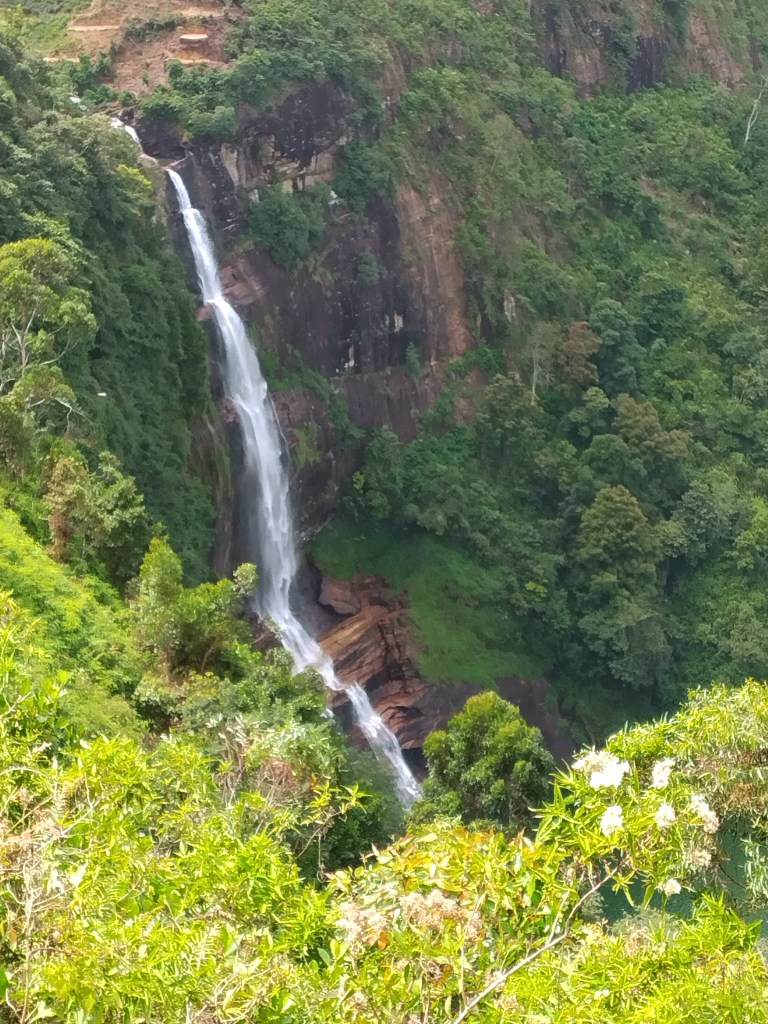
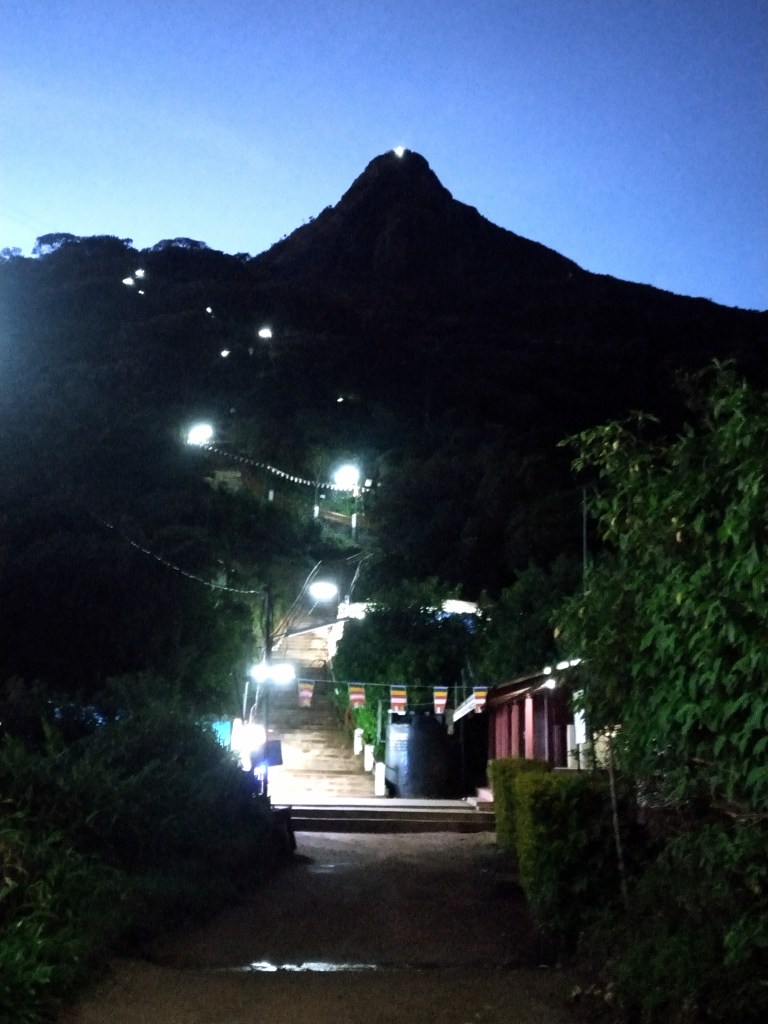


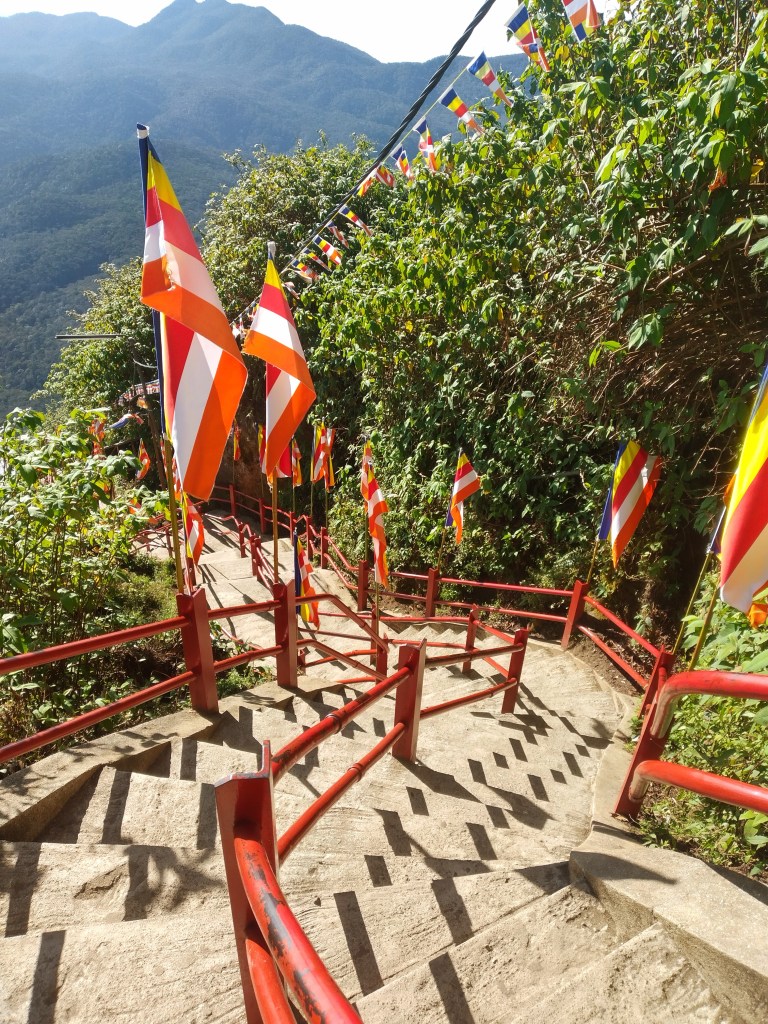

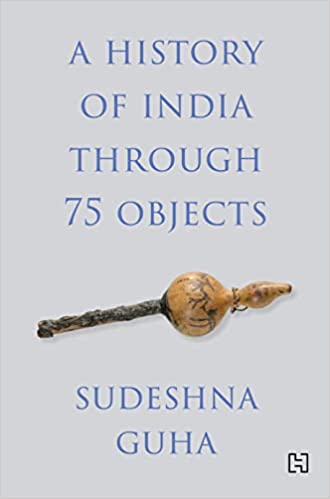


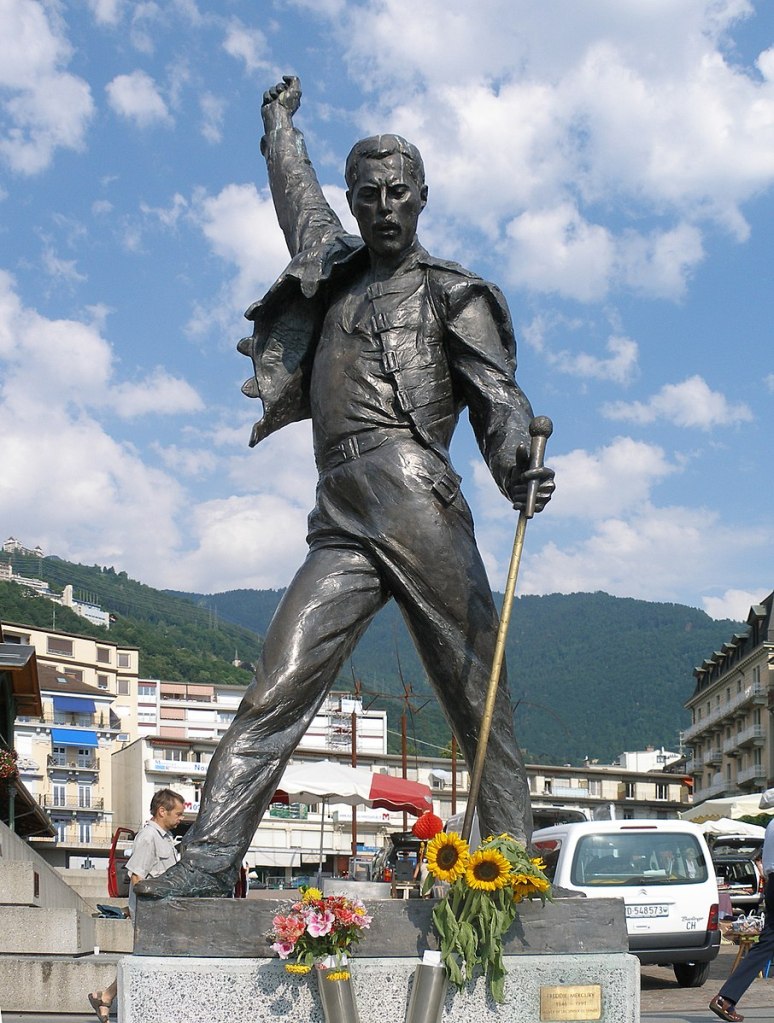


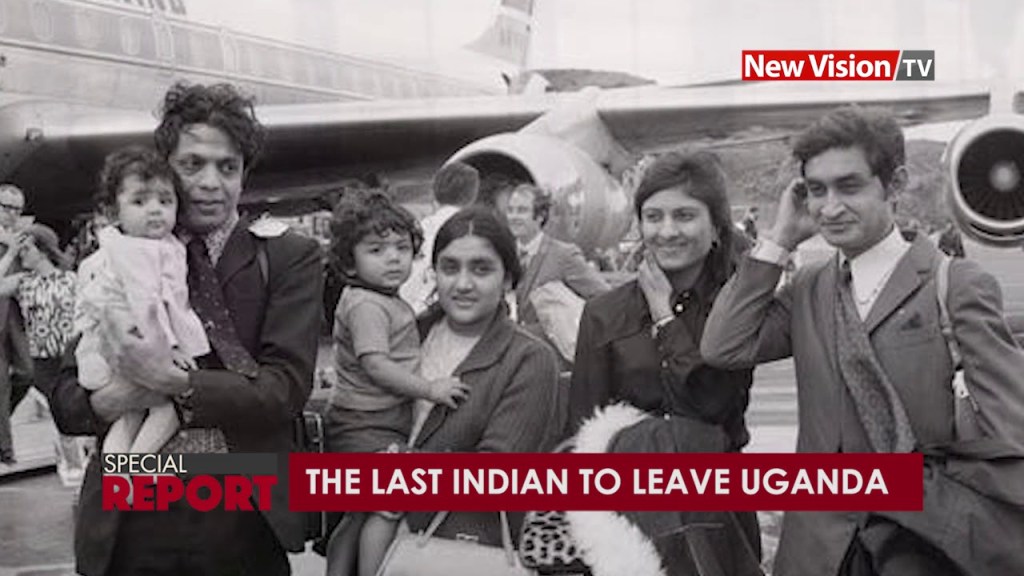
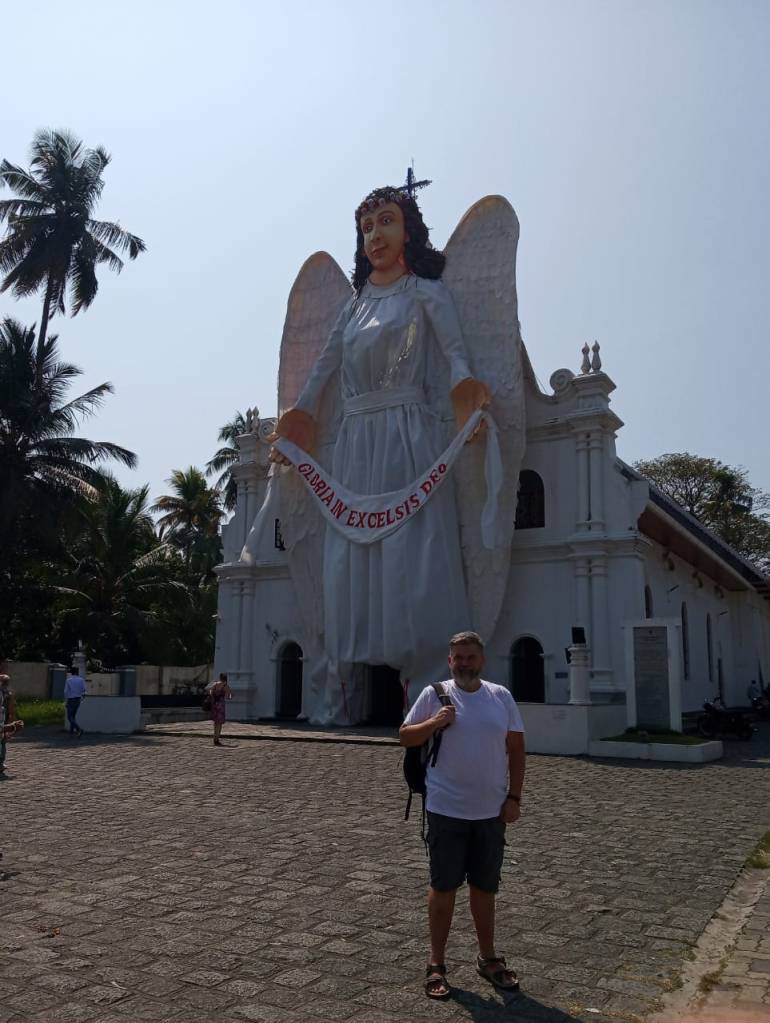
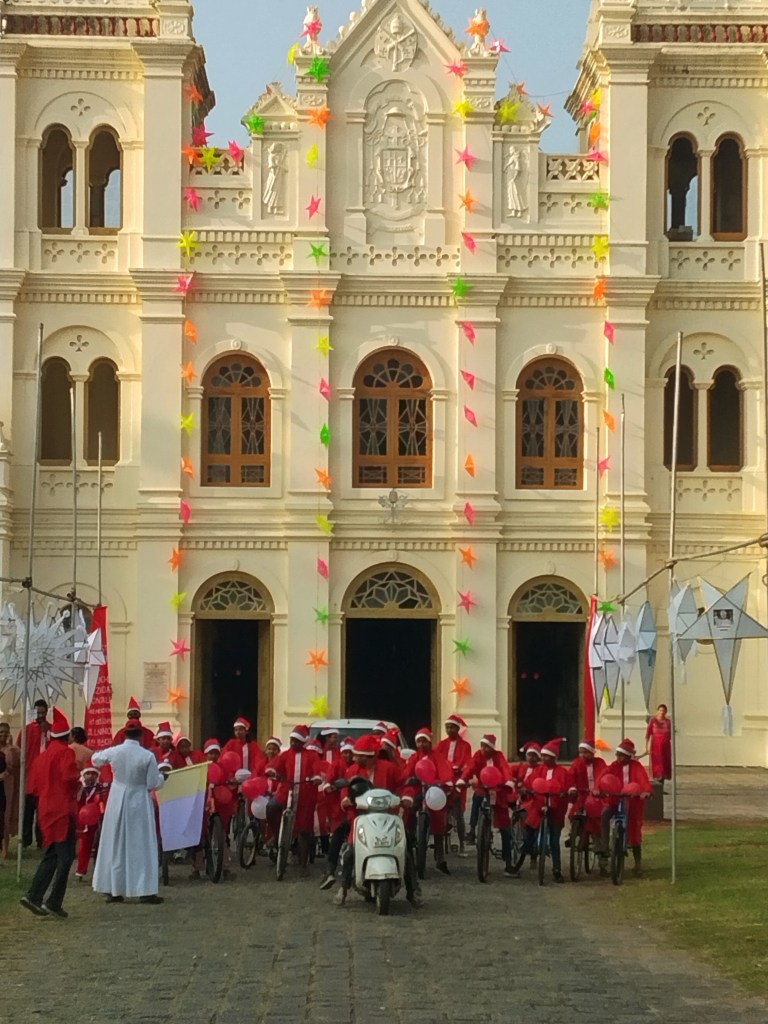
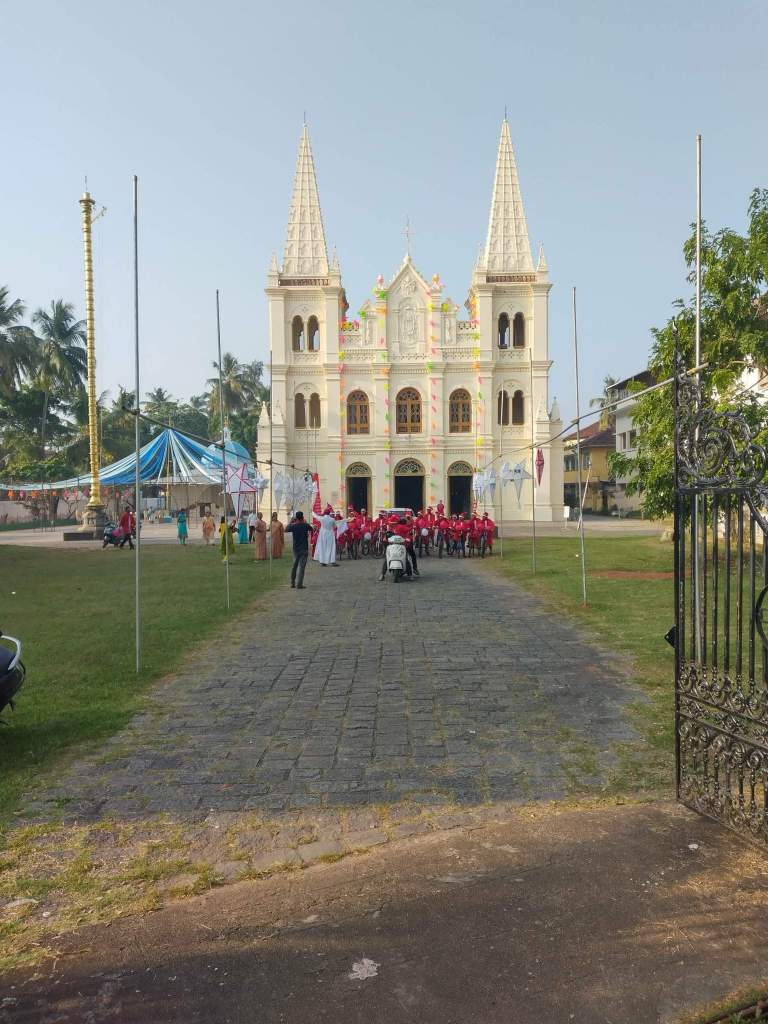
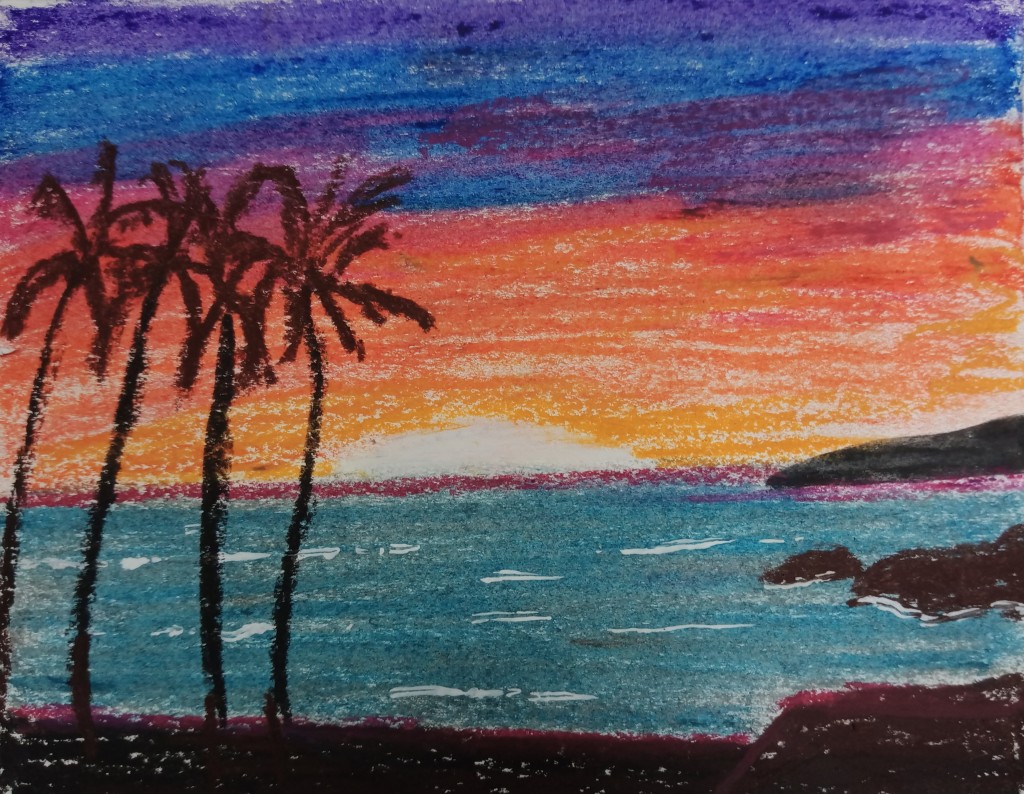

 Borderless