Categories
Poetry

When I write a Poem About You

By Ahmad Al-Khatat

From Public Domain
When I write a poem about you,
I imagine us together—
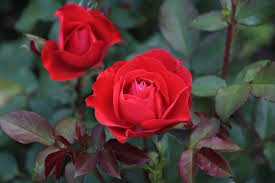
Two roses with green leaves,
You, a spark, an eternal inspiration.

My heart dissolves rapidly
On the papers of my homeland.
You are the pain I recognise,
The ink for my pens, the colour of my pencils.

Lovers erase their agonies with ease,
But my imagination is no fleeting illusion.
You are the brightness on every canvas,
My poem, the brush; my homeland, the water.

Small clouds of cigarette smoke rise above.
I respond to the locked doors of Montreal.
Baghdad throws me a bouquet of wildflowers,
As my pen trembles with nervous hands.

You are the day that will always smile upon me—
A laugh from you, a kiss from your lips, a privilege.
I admire you in the moment you ask me to pause,
To stop running into the night, swallowing poison.

Ahmad Al-Khatat is an Iraqi Canadian writer. His work was nominated for a Pushcart Prize in 2024 by Mad Swirl and Best of the Net 2019. His poetry has been translated into other languages and his work has been published in print and online magazines. He resides in Montreal, Canada, with his spouse.

.

PLEASE NOTE: ARTICLES CAN ONLY BE REPRODUCED IN OTHER SITES WITH DUE ACKNOWLEDGEMENT TO BORDERLESS JOURNAL
Click here to access the Borderless anthology, Monalisa No Longer Smiles

Click here to access Monalisa No Longer Smiles on Kindle Amazon International

Categories
Review

“…in order to hear the Earth, we must first learn to love it…”: Amitav Ghosh

Book Review by Somdatta Mandal

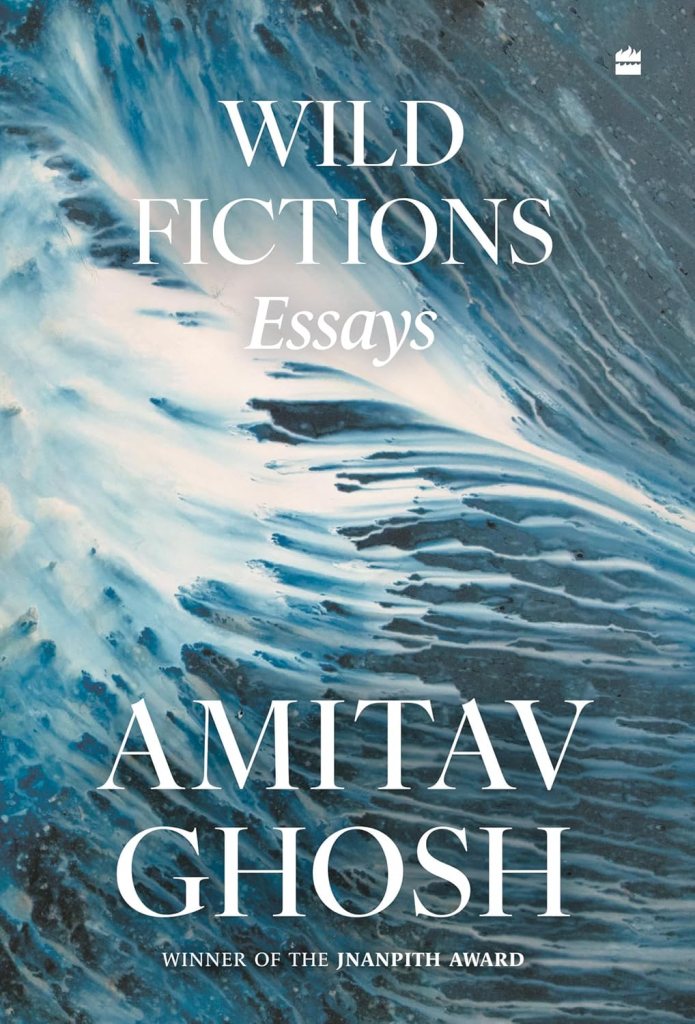
Title: Wild Fictions: Essays

Author: Amitav Ghosh

Publisher: HarperCollins (Fourth Estate)

How can a 470-page long book turn into a page-turner when it is neither a historical novel nor a whodunit thriller that compels the reader to go on reading as quickly as he/she can? That too when it is a motley collection of twenty-six essays written on different occasions and on different topics for the last twenty-five years. The answer is of course Amitav Ghosh who can literally mesmerise his readers with his multi-faceted interests and subjects ranging from literature and language, climate change and the environment, human lives, travels, and discoveries. Divided into six broad sections, Ghosh clearly mentions in the Introduction that the pieces in this collection are about a wide variety of subjects, yet there is one thread that runs through most of them: of bearing witness to a rupture in time, of chronicling the passing of an era that began 300 years ago, in the eighteenth century. It was a time when the West tightened its grip over most of the world, culminating ultimately in the emergence of the US as the planet’s sole superpower and the profound shocks that began in 2001.

A subject very close to his heart and that is reflected in all the books that he has been writing over the last decade or more, the six essays of the first section are on “Climate Change and Environment.” Ghosh writes about different aspects of migration (both in the sub-continent and in Europe), about the storm in the Bay of Bengal, cyclones, the tsunami affecting the Andaman and Nicobar Islands, and about Ternate, the spice island in Indonesia. According to him, by knowing about anthropogenic greenhouse emissions and their role in intensifying climate disasters, it is no longer possible to cling to the fiction of there being a strict division between the natural and the political. Climate change and migration are, in fact, two cognate aspects of the same thing, in that both are effects of the ever-increasing growth and acceleration of processes of production, consumption and circulation.

According to Ghosh, each of the six essays in the second section entitled “Witnesses” grew out of the research he undertook for his four historical novels, The Glass Palace, and the Ibis Trilogy. All the essays in it “are attempts to account, in one way or another, for the recurrent absences and silences that are so marked a feature of India’s colonial history”. While looking for accounts written by Indian military personnel during the First World War, Ghosh came across two truly amazing books, both written in Bengali, on which three pieces in this section are based. The first of these books is Mokshada Devi’s Kalyan-Pradeep (‘Kalyan’s Lamp’; 1928), an extended commentary on the letters of her grandson, Captain Kalyan Mukherji, who was a doctor in the Indian Medical Service. The second, Abhi Le Baghdad (‘On to Baghdad’), is by Sisir Sarbadhikari, who was a member of the Bengal Ambulance Corps, and is based on his wartime journal. Both Mukherji and Sarbadhikari served in the Mesopotamian campaign of 1915-16; they were both taken captive when the British forces surrendered to the Turkish Army in 1916 after enduring a five-month siege in the town of Kut-al-Amara – the greatest battlefield defeat suffered by the British empire in more than a century. He also writes about how these two prisoners of war witnessed the Armenian genocide.

Regarding the exodus from Burma, Ghosh narrates the plight of one Bengali doctor, Dr. Shanti Brata Ghosh from whose diary (written in English) we are given incidents of events that are a striking contrast to British accounts of the Long March. What the doctor remembered most clearly were his conflicts with his white colleagues and his diary represents a personal assertion of the freedom that his nation’s hard-won independence had bestowed upon him.

Section Four entitled “Narratives” consists of three essays. Speaking about the etymology of the word ‘banyan’, and a short personal anecdote about 11 September 2001, we come to the essay from which the title of this collection – Wild Fictions – is taken. It shows us how the policies and administrative actions have divided landscapes between the ‘natural’ and the ‘social.’ Discussing several environmental issues related to the manner in which over many decades there has been a kind of ethnic cleansing of India’s forests and how the costs of protecting nature have been thrust upon some of the poorest people in the country, while the rewards have been reaped by certain segments of the urban middle class, Ghosh warns us why the exclusivist approach to conservation must be rethought. Before environmental catastrophe happens, we have to find some middle way, one in which the people of the forest are regarded not as enemies but as partners. The idea of an ‘untouched’ forest is none other than a wild fiction.

As mentioned in the beginning, Ghosh’s intellectual curiosity ranges from exploring themes of history, culture, colonialism, climate change and the interconnectedness of human and natural worlds and the readers will get a sample of these different topics in this rich collection. Over the years, we had read some of the essays in journals like Outlook, The New Yorker, The New York Times, The Hindu, The Economic and Political Weekly, The Massachusetts Review, Conde Nast Traveller and so on, and some of the articles have been the product of his detailed research before he commenced writing a novel. The five essays in the penultimate section titled “Conversations” begins with a long correspondence that Ghosh had with Dipesh Chakraborty via email after Provincilaizing Europe was published in 2000. The two never met personally as Chakraborty was in Australia at that time, but the exchanges between these two scholars on such wide-ranging issues is surely a reader’s delight. The pieces on Shashi Tharoor’s An Era of Darkness and Priya Satia’s Time’s Monster which were written as reviews also form parts of ongoing dialogue. As Ghosh states, Sattia’s work “has given me new ways of understanding the role that ideas like ‘progress’ have played in the gestation of this time of monsters”. In ‘Storytelling and the Spectrum of the Past’, we are told about the historians versus the novelists view of seeing and documenting themes.

The final and sixth section comprises of three pieces that were originally conceived as blogposts or presentations, accompanied by a succession of images – “the texts that accompany my presentations are scripts for performances rather than essays as such”. In the first one, Ghosh gives us new insights from his diary notes (the Geniza documents) about how he chose to study social anthropology and how In an Antique Land was made—about the Muslim predominance in the Arab village where he stayed and how he evaded the attempt at conversion. In a lecture he delivered at Indian Institute of Technology, Kharagpur, Ghosh asks us to think back for a moment to the intellectual and historical context that led to the foundation of such institutions as the IITs, the IIMs and the outstanding medical institutions of contemporary India. He tells us how we cannot depend on machines alone to provide the solution to our social problems and talks about mercenaries, prisons, the hegemony of the Anglo-American power and how the empires kept close control over rights to knowledge. One of the great regrets of Ghosh’s life was that he never met A.K.Ramanujan and in the concluding essay of this section, he tells us how he considered Ramanujan to be “one of the foremost writers and intellectuals of the twentieth century and how one of the most important aspects of his work is the context from which it emerged.

In the introduction to this collection Ghosh wrote that we were now in a time between the ending of one epoch and the birth of another – ‘a time of monsters’, in the words of Antonio Gramsci. In the Afterword he mentions how the strange thing about this interstitial era is that it could also be described as a ‘time of benedictions’ in that it has suddenly become possible to contemplate, and even embrace, potentialities that were denied or rejected during the age of high modernity. He reiterates that it is the elevation of humans above all other species, indeed above the Earth itself, that is largely responsible for our current planetary crisis. “The discrediting of modernity’s anthropocentricism is itself a part of the ongoing collapse that we are now witnessing.” The only domains of human culture where doubt is held in suspension are poetry and fiction. Though it is not possible to discuss all other aspects that Ghosh deals with in this anthology as the purview of the review is rather limited, I would like to conclude it by quoting the last couple of sentences written by Ghosh himself when he categorically states: “High modernity taught us that the Earth was inert and existed to be exploited by human beings for their own purposes. In this time of angels, we are slowly beginning to understand that in order to hear the Earth, we must first learn to love it.”

.

Somdatta Mandal is a critic and translator and a former Professor of English at Visva-Bharati, Santiniketan, India.

.

PLEASE NOTE: ARTICLES CAN ONLY BE REPRODUCED IN OTHER SITES WITH DUE ACKNOWLEDGEMENT TO BORDERLESS JOURNAL. 

Click here to access the Borderless anthology, Monalisa No Longer Smiles

Click here to access Monalisa No Longer Smiles on Kindle Amazon International

Categories
Essay

How Dynamic was Ancient India?

Farouk Gulsara discussed William Dalrymple’s latest book

Growing up in the later part of the 1970s, kids of my generation were drilled with stories that India was a subcontinent of poverty, filth, and pickpockets. Even our history books taught us that it was a land of darkness, living in its myths, superstitions, and cults, waiting to be civilised by the mighty European race and their scientific discoveries. 

That was what was impressed upon us as we sauntered into adulthood. The media did not help either. With eye-catching news like a particular Indian Prime Minister having his daily dose of gau mutra[1] for breakfast and another ousted after thirteen days of taking oath as the Prime Minister, India was made out to be just another third-world country. Then came the 21st century and the turn of tides. Locally bred academicians started teasing deeper into India’s forgotten history. They started doubting the self-deprecating history that was taught to them by leftist historians in the textbooks.

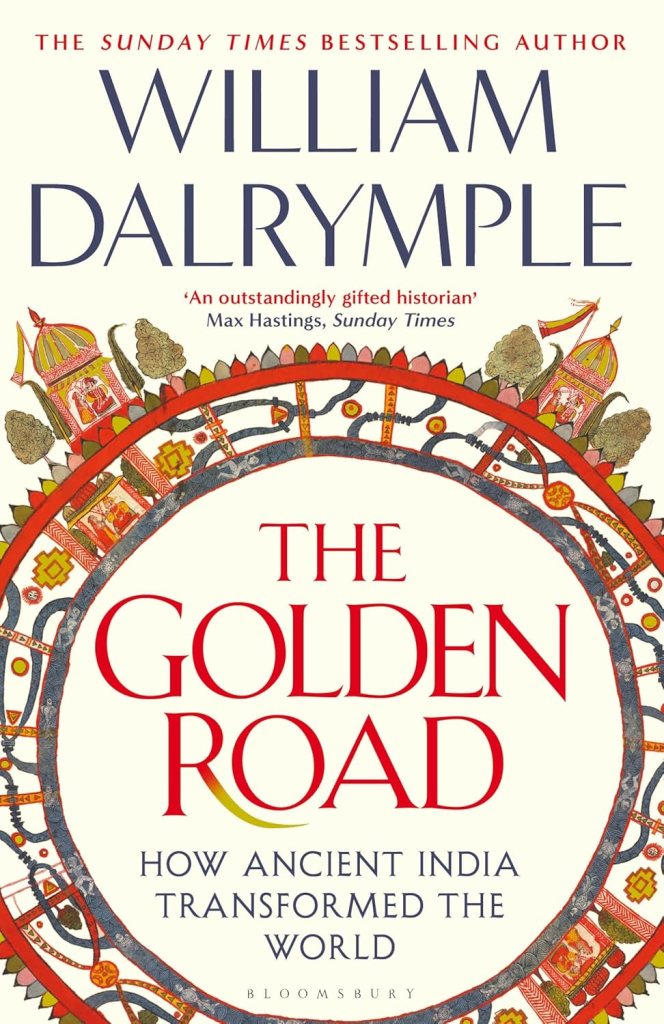
Like many historians before him, historian William Dalrymple, in his latest book, The Golden Road: How Ancient India Transformed the World outlines the importance of India as a cradle of knowledge that peddled wisdom to regions near and far. Its scientific knowledge was far ahead of its time. This know-how was put into practice and spread via trade routes. Their port of entry received not just their goods but also their culture and way of life.

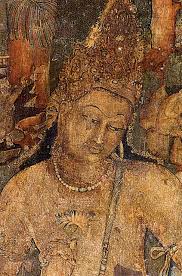
Enduring attack after attack from foreign invaders, Indians had already forgotten their glorious past by the time of the British Raj. A tiger hunting expedition inadvertently brought British hunters to various beautiful cave carvings and Buddhist sculptures. That kind of rekindled India’s history, which had disappeared from the Indian imagination.

India had been a crucial economic fulcrum and a civilisational engine in early world history. As early as 31BCE, Indians had learnt to manipulate the monsoonal winds to steer their ship to the West to the prosperous kingdom of Ethiopia, Egypt and subsequent access to the Mediterranean. With their mammoth merchant ships, they transported pearls, spices, diamonds, incense, slaves and even exotic animals like elephants and tigers in exchange for gold. Trade favoured India so much that a Roman Naval Commander, Pliny the Elder, lamented the unnecessary spicing of the food and the almost transparent Indian fabric that left nothing to the imagination. It is said Buddhism reached the shores of Egypt through these ships. The Christian monastic way of life is said to have been influenced by these monks.

With seasonal monsoon winds, Indian ships brought not just trade but philosophy, politics, and architectural ideas to Southeast Asia, China, and even Japan. All this cultural allure and sophistication did not happen through conquest. Sanskrit was the language of knowledge and a conduit for spreading knowledge. 

Buddhism emerged in the 5th century BCE as an alternative to caste-centred and animal sacrifice-filled rituals. Unlike Jainism’s strict austerities, it offered a middle path. Due to King Ashoka’s untiring efforts, Buddhism spread beyond its borders. Contrary to the belief that Buddhism promotes an impoverished way of living, early Buddhists drew interests (and resources) from the merchant group, as evidenced by the Ajanta Caves’ findings. Buddhism drew many Chinese scholars to India’s centres of higher learning in Nalanda and Kanchipuram in the South to get first-hand experience reading Buddhist scriptures in Sanskrit. India’s universities later became the template for other varsities the world over. 

India’s cultural influence on South Sea Asia is phenomenal. Stories from Indian epics, Ramayana and Bhagvad Gita, are told and retold in children’s stories, plays and cultural art forms. Their ruling elites were Hindus. The biggest Hindu and Buddhist temples are not in India but in Cambodia and Java, respectively, as Angkor Wat and Borobudur. Marvellous stony statues and temple are similar to those in India. At a time when the Byzantines were presiding over Europe, the Suryavarman clan was ruling a Hindu Empire so huge it would dwarf their European counterpart.  

The 5th to 7th century of the common era was the golden age of Indian mathematics. Between Aryabhata and Brahmagupta, their knowledge of the nine-number system (and zero) brought them the know-how of negative numbers, algebra, trigonometry, algorithms and astronomy far ahead of their time. They understood that Earth was a sphere spinning on its axis, about the eclipse, gravity and planetary rotations. The Indians even built a space observatory tower in Ujjain to study constellations and devise a solar calendar. The idea of a prime meridian arose from here. 

In the 8th century, the Abbasids exerted control over the Afghanistan region through treaties with local viziers. At that time, the Bamiyan region in Afghanistan had over 460 monasteries and 10,000 monks. A member of an influential Buddhist family, the Barmakid, converted to Islam to establish his family in the Abbasid fold. They brought Indian medicines, texts, and scholars with them and encouraged and promoted Islamic engagement with the East. Sanskrit texts were translated into Arabic. It is said that the Barmakids were instrumental in the building of Baghdad. 

The Islamic hegemony spread, as did the scholarship it had built. 

The Bamakid-Abbasid liaison met a tragic end due to palace power dynamics. The Abbasids started looking at the Romans for inspiration. Many Europeans were drawn to the Golden Age of Islam. Many texts were translated into Latin. Toledo of Andalusia introduced the science of timekeeping from Ujjain to Oxford. A particular young Italian named Leonardo of Pisa picked up the beauty of Mathematics during his stay in Algeria. He returned to publish ‘Liber Abaci‘ (The Book of Calculation) in 1202, which introduced Europe to the sequence of Fibonacci numbers and the mystic power of mathematics. This sudden gush of knowledge spurred the European Renaissance.  

The whole cycle completed its full arc when European powers rose to great heights. Benefitting from the knowledge from India that layered its way through, passing from hand to hand, the colonial masters returned to chop off [2]the hands that had nourished it. 

Emerging rejuvenated from their occupation-induced slumber, with their Anglophilic familiarity, Indians have risen from the ashes to claim their status in the Indosphere[3], a world where Indian influences permeated every layer of society.

This well-researched, unputdownable book is for all history buffs. Infused with little nuggets from cover to cover that would excite nerds, it is a joy to read about the history of India in a way that is not often told in the mainstream.

[1] Gau mutra, cow urine, has a sacred role in some forms of Hinduism and Zoroastrianism and is used for medicinal purposes and in some Hindu ceremonies.

[2] https://www.thedailystar.net/lifestyle/special-feature/the-muslin-story-187216#

[3] Indosphere is a collective linguistic term for areas under Indian linguistic influence. It includes countries in the Southern, Southeast, and East Asian regions. 22 languages, including Indo-European and Dravidian languages, are recognised under this category and are considered to have originated in India. 

Farouk Gulsara is a daytime healer and a writer by night. After developing his left side of his brain almost half his lifetime, this johnny-come-lately decided to stimulate the non-dominant part of his remaining half. An author of two non-fiction books, Inside the twisted mind of Rifle Range Boy and Real Lessons from Reel Life, he writes regularly in his blog, Rifle Range Boy.

.

PLEASE NOTE: ARTICLES CAN ONLY BE REPRODUCED IN OTHER SITES WITH DUE ACKNOWLEDGEMENT TO BORDERLESS JOURNAL
Click here to access the Borderless anthology, Monalisa No Longer Smiles

Click here to access Monalisa No Longer Smiles on Kindle Amazon International

Categories
Conversation

‘Home has been a Process of Lifelong Search’

In Conversation with Kirpal Singh

Dr Kirpal Singh

 “Singapore is intimately linked with home and, yet for me, home has always been a process of lifelong search. Partly because of the early months of my birth. The record says I was born in March 1949, but the time was not certain as I do not have a birth certificate. My father forgot to register my birth,” reminisces Dr Kirpal Singh, an internationally recognised scholar. Born in the Straits Settlement of Singapore, before the island emerged as an independent entity, he has lived through much of history. He tells a story of multi-racial, multi-cultural growth that the island afforded him.  

His father, he tells us, was “well known throughout Malaya — Jeswant Singh nicknamed as ‘Just One’ — a boxer who would knock people down with his left hook. In 1954, he left boxing when he killed someone during a match.” His mother, a Jewish Scot who he cannot recollect, he tells us, “ might have been David Marshall’s sister according to my stepsister but no one else has said that.”  Marshall[1] was the first Chief Minister of Singapore from 1955 to 1956 and then Singapore’s Ambassador to France, Portugal, Spain, and Switzerland 1978 to 1993. He is the founder of the Worker’s Party. His parents had emigrated from Baghdad to Singapore in 1908 according to current resources.

How did Singh’s parents come to be in Singapore? Were they immigrants or colonials?

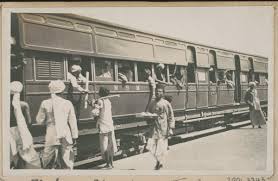
He responds with what he knows: “My grandfather and grandmother came to Singapore on board a ship in 1900. They left Jullunder, Punjab, in 1899. By the time they reached Singapore, it was the end of 1900. They left to seek their fortune. They were from the farming community. My grandfather was only sixteen and my grandmother was about twelve. They were in transit in Penang for six months. They came to Singapore in 1901. Actually, it was all Malaya — Singapore was part of the Straits Settlement. They came to Singapore by train. Trains were just starting out. It was around August 1901.

Trains in Malaya

“My uncle was conceived during this journey. They halted in Singapore for only two or three weeks. My grandfather’s cousin was in Perak[2], in Malaya. So, he wanted to be with his cousin. His cousin had cattle. Most of the Sikhs were cattle farmers. They settled in Pahang[3], an area which eventually became a nuclear dump[4] for Australia. It is closed to public now. There was a stone that proclaimed the land was a nuclear dump when I went with my son a few years ago.

“My father moved to Singapore as his prospects were better here as a boxer. This is where he met my mother. I was born here. He actually met mum because my mother’s two brothers had invited her to come from Glasgow. My mother is Scottish, from an industrial background. Her brothers came to the Far East to make money.  She finished her school leaving exams and came to visit her brothers during her vacation. She would go with her bothers to watch boxing, where she saw my father, the champ. She was only fifteen or sixteen. The next thing the brothers knew was she was pregnant with me.”

Jeswant Singh was popular with colonials. Kirpal Singh tells us: “Some Europeans saw him box and offered him a job then in the Base Ordinance Depot. This was the British Military camps in the Far East. There were three bases in Singapore: the naval base, Kranji and one in the South. He worked there for thirty years and retired after that. In 1972[5], after the final British withdrawal from Singapore, dad’s formal employment status ended. After that he just did odd jobs, ending up as a security guard, looking after the factories in Jurong, earning about two to three hundred dollars a month.”

Kirpal Singh spent his childhood with his grandmother and uncle. Before he started schooling, his father left him with his grandmother and divorced his mother in favour of a new bride. Dr Singh tells us the story of how he returned to Singapore: “I was basically in Perak with my grandmother. My uncle, who was the first Sikh to become a Christian in Southeast Asia, left home because his father gave him a beating for changing his religion. My uncle was an Anglican. His conversion saved him from the Great Depression as the clergy was very well looked after. From 1929 to 1933, the church looked after him because he was the priest in Seramban. My father was still young. My uncle was born in 1911 and my dad in 1923. My grandmother bore eighteen children. Five of the infants passed away before they were one month old. But thirteen survived. She passed away at 95… I knew when I left for my doctorate programme in Adelaide that that was the last time I would see her. I had a hunch and was crying on the plane. Six weeks later, I got a letter with the news of her death.”

He adds: “Dad was in not in a position to look after me. The responsibility fell on his brother William. His full name was William Massa Singh s/o Deva Singh. He had studied at the Ipoh Chinese school, topped the school, eventually worked as an insurance agent. He was very good in English. The principal of his school, a New Zealander, arranged for my uncle to move to Singapore. Then my father moved there too. Singapore was the metropolis even then. It was the centre of English education. Penang was the other one. In 1956, I was sent to Singapore from Perak on a train — a one-and-a-half-day journey to my uncle.”

His grandmother joined them within a few months as his uncle was, he says, “more interested in aiding Lee Kuan Yew get rid of the colonials. Lee Kuan Yew was a self-made man. He met Goh Keng Swee[6] and Rajaratnam[7] as students in England. They became buddies and wanted to move out of colonial rule and be independent.”

Then, how did a young child survive? Dr Singh tells us: “I used to earn my pocket money from age five six by watering gardens. I have had very interesting experiences. When I was in primary two, I used to give tuition to primary one students. With enough gumption, you can survive in this world.”

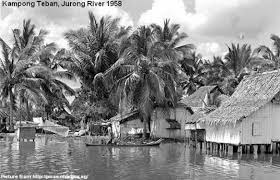
“I grew up with my uncle’s wards, who were brought home to be educated. There was even one who was a Chinese-Japanese mix. So, I grew up being familiar cross-cultural marriages and in a multicultural home. I grew up in the kampong with a Chinese boy and we became friends from the age of seven-and-a-half when we were in primary two. His name is Tan Jwee Song — I call him Jwee, ‘my good saint’.  He told me after O-levels he would support me to study further and took to teaching. At that time, you could become a teacher after completing your O level. I joined Raffles late during my time in high school because it was too expensive for me. I taught in night classes started by Lee Kuan Yew and studied. I owed Jwee $80,000 dollars and I wanted to pay his widow back — but she would not accept it. When I graduated in 1973 with an honours’ degree, I was $44 thousand in debt. Then, I was given a scholarship.”

And slowly, Kirpal Singh came to his own. When television came into being, he tells us: “I was often on TV in 1970s — days of early television — debates and interviews as a guest.” Kirpal Singh grew into an intellectual of repute as he worked and studied with the support of the many races and many people who, often like him, were migrants to Singapore.

As time moves forward, these stories — that are almost as natural as the sand, the wind and the sea — ask to be caught in words and stored for posterity, stories from life that show how narrow borders drawn by human constructs cannot come in the way of those with ‘gumption’.

(Written by Mitali Chakravarty based on a face to face conversation with Kirpal Singh. Published with permission of Kirpal Singh)

[1] https://www.roots.gov.sg/stories-landing/stories/david-marshall/story

[2] Now in Malaysia

[3] Now in Malaysia

[4] https://buletinonlines.net/v7/index.php/lynas-radioactive-waste-to-be-dumped-in-pahang-tax-free-while-australia-gets-a18-million-in-taxes-2/

[5] The British armed forces were scheduled to withdraw from Singapore by 1971. https://eresources.nlb.gov.sg/infopedia/articles/SIP_1001_2009-02-10.html#:~:text=On%2018%20July%201967%2C%20Britain,Singapore%27s%20defence%20and%20economic%20security.

[6] Deputy Prime Minister of Singapore, 1973-1980, one of the founding members of the ruling PAP (People’s Action Party) https://www.roots.gov.sg/stories-landing/stories/goh-keng-swee/story

[7] Deputy Prime Minister of Singapore from 1980 to 1985, one of the founding members of the ruling PAP https://www.roots.gov.sg/stories-landing/stories/sinnathamby-rajaratnam/story

PLEASE NOTE: ARTICLES CAN ONLY BE REPRODUCED IN OTHER SITES WITH DUE ACKNOWLEDGEMENT TO BORDERLESS JOURNAL. 

Click here to access the Borderless anthology, Monalisa No Longer Smiles

Click here to access Monalisa No Longer Smiles on Kindle Amazon Internation


Categories
Poetry

Flowering in the Rain & More Poems

Poetry by Ahmad Al-Khatat

FLOWERING IN THE RAIN 

Are you going to bloom in the rain tonight?
I hear your footsteps in the darkness,
I smell your scent on the budding seeds,
and wonder whether you are among the stars.

This life can only be lived due to your existence.
I feel like I am losing myself more than usual.
After losing everything I cared about,
I considered migrating to a different country.

Regrets have shattered some of my aspirations,
and I miss giving my all to love someone like you.
Why does tonight’s rain sound so sad?
I've cried for ages, and you haven't flowered yet.

Thousands of breaths push me towards your sweet lips.
Allow our sorrows to touch the drenched grass in the park,
and follow the moonlight to
find me waiting with a rainbow umbrella…

TWO FINGERS CROSSED

I'm wondering if my depression stems
from my past or what I'll become in the future.
Is it because I speak your language with an accent?
I'm sorry, but my accent represents who I am.

I wish I could erase children's memories
of everyday genocide with a pencil and eraser.
My phone isn't charging. My cousin is wearing
my face mask. I lie dead in my blood-soaked bath.

Does the moonlight still brighten your melancholy heart?
What arouses your emotions?
Can you dream about kissing me the way you usually do?
Who wouldn't love a walk under the twinkling stars?

I miss the way you hold my frigid hands behind my back,
with at least two fingers crossed.
When I inhale your breath, I trust my senses completely.
Your amazing voice is the music that brings me joy.

PACK OF CIGARETTES AND LIQUOR

I'd swap my rusty flesh and chilly blood
for a pack of smokes and a drink.

I am willing to sacrifice my emotions and peace
for a pack of smokes and alcohol.

I'm willing to surrender my citizenship and foreign passport
for smokes and whisky.

I am willing to compromise my values and ethics
for a pack of smokes and alcohol.

I'd swap my wounded heart and warm hands
for a pack of smokes and a drink.

I'd swap my youthful smile and tears
for a pack of smokes and a drink.

I'm willing to exchange my healthy organs and memories
for smokes and whisky.

I'd exchange my imprecise accent and colourless fantasies
for a pack of smokes and a bottle of vodka.

I will never give up my past and hometown
for a coffin which I tried to steal before my sentence
by hanging with death.

Ahmad Al-Khatat was born in Baghdad, Iraq. His work has appeared in print and online journals globally. He has poems translated into several languages such as Farsi, Chinese, Spanish, Albanian, Romanian. He has published some poetry chapbooks, and a collection of short stories.

.

PLEASE NOTE: ARTICLES CAN ONLY BE REPRODUCED IN OTHER SITES WITH DUE ACKNOWLEDGEMENT TO BORDERLESS JOURNAL
Click here to access the Borderless anthology, Monalisa No Longer Smiles

Click here to access Monalisa No Longer Smiles on Amazon International

Categories
Essay

Kabir & His Impact on Tagore

By Mozid Mahmud

Kabir. Courtesy: Creative Commons

Kabir’s life still holds importance in a society in pursuit of the one true Lord, steeped in religiosity and caste. He was born at a time when the Hindu-Muslim strife was raging across the subcontinent. Divided into various sects, Hindu society was already engaged in conflict and the arrival of the Muslims and the expansion of Islam intensified the conflict of the time. The two camps – followers of foreign and indigenous religions – could not find a way to come together. Arbitrary rituals and sacrifices were damaging their dignity and short-selling God’s glory. In such a time, Kabir was the most significant of intellectual sages who bridged gaps through his clarity of thought, unwavering devotion to the Lord, and humanist reading of all belief systems. In simple, clear and logical language he pointed out the irrationalities of men, without outright attacking any faith. His teachings were not only effective to his devotees but were helpful to adherents of other doctrines as well. One did not have to be part of his sect to receive his teachings and capture the meaning behind his words. Anyone free from the shackles of self-interest were able to accept it.

Though there is little to deny in Kabir’s words, there is much debate among the experts regarding the period of his birth and death. The historical facts contain many contradictory components as well. Evidently, one sees that there are two versions of Kabir’s life visible. One has been constructed through analysing historical data, the other through beliefs and commentary provided over the ages by his followers and devotees, though all such projection by his disciples cannot be understood in the same light. Yet it should be noted that the accuracies regarding some of Kabir’s facts of his life do not pose any doubt to his teachings and appreciation for beauty. Still, in light of the contemporary commentary, a brief biography of the poet is outlined here.

According to Kshitimohan Sen (1880-1960), a scholar and acting chancellor of Visva-Bharati, Kabir was born on 1398 in Varanasi and died on 1518 in Maghar village. While specifics are understandably hard to gather, most experts agree that he was of the time when Sikander Lodi (1458-1517) ruled over Delhi’s throne. Kabir had met the man, too. Lodi had arrived at Varanasi in 1498. Rabindranath had talked of this in his translation of Kabir’s One Hundred Poems, which was published from Macmillan. There, it is said he was born in 1440. Though Kabir’s Hindu devotees liken him as a devotee of the Vaishnava poet-saint Ramananda, it is still a matter of debate, for Ramananda was born in 1298 and most texts that refer to their connection can only be traced a hundred years after Kabir.  

In his writings, mentions of the poets Jayadeva (1170-1245) and Namdev (1270-1350) are found. Though one was active in the 12th century and the other in the 14th. Moreover, one can find references to Kabir in the works of Raydas, Garib Das, Dharma Das, Pipa and Tukaram. Some of Kabir’s verses can be found in the Sikh religious text Guru Granth Sahib too.

There is much debate over his parentage and religion too.  However, it is taken as fact today that he was born in a Muslim family or was raised in one. It is hypothesised that he had come from a family of Muslim weavers, who had a trade in cloth. Another legend had him as the virgin son of a Brahmin woman, born through seedless conception and then he was abandoned and found floating in a basket. The fact that he was born in a Muslim family is mostly evidenced by the fact that he had an Arabic name, which meant “Great”. There is further doubt on his race and caste. According to Hazari Prasad Dwivedi, Kabir belonged to a Yogi community, for he would refer to his father as Gosai, meaning Guru. They were principally disciples of Nath-Panthis – worshippers of Shiva. While they had accepted Islam as their religion, they continued in their old ways as of yore. But Kabir did not proclaim himself as either a Hindu or a Muslim. As a result, many surmised that he probably wanted to be known as someone from the lower caste, who remained out of these two binaries.

The issue of caste might have irked him as well. It might have had no importance to him. This reticence had led to most communities intending to co-opt him for them, constructing all sorts of imaginary relationships. A Muslim guru of the time, Sheikh Taqi, had complained to Lodi that Kabir saw himself as a deity. His low-born caste led him to a path of constant discrimination. There are accounts of this discrimination in texts. He had been humiliated for proposing the idea of a formless God. Many a time he had been tied behind his back and beaten up. Let me account some of the accounts of his torture here.

The Emperor of Delhi, Sikander Lodi, had demanded Kabir be arrested and brought to his court. When he was somehow brought over, he stood there in silence.[i] The Emperor grew angry and asked, “Why don’t your curse at the Emperor, Kaffir?”
Kabir answered, “Those who understand the other’s torment are called Pir, and those who don’t are termed Kaffirs.

When the Emperor asked him why it took him so long to get to his court, he replied that he had seen such a scene on the way that he could not but be late. A line of camels was entering a gully as narrow as a needle’s eye. The Emperor thought he was being ridiculed and grew angrier. But Kabir said, “Oh Emperor! Can you feel the distance between the heavens and the Earth? The distance between the Sun and the Moon can be filled with innumerable elephants and camels, yet we can see these stars through a drop in our eyes.” The Emperor was so moved by the statement that he let him go.[ii]

Once, after a few Brahmin priests had complained, the Emperor ordered his death by tying him to a stone and throwing him off a boat. But while the boat itself drowned, Kabir was said to have been found unharmed and floating. When they tried to burn him, the fire wouldn’t take to his skin. They even accused him of being a witch and tried getting a mad elephant to stamp on him. But the animal got scared seeing Kabir and ran away – there are numerous myths of these nature surrounding Kabir.

Kabir did not receive a formal education. He did not know how to read and write. There is no evidence of him attending a school to learn of language and philosophy. Moreover, he had barely any experience with his weaving. Many are of the opinion that the “guru” he talks about in his texts refer to God or the Creator and that he did not have any mentors. However, researchers at times hold the opinion that he was a devotee of the Sufi mystic Sheikh Taqi. It is evident he was influenced by Sufism.  He had similarities with the Persian poets Attar, Hafez, Khayyam and Rumi. Besides, he was considered a key disciple of the Hindu monotheist mystic Ramananda. Kabir hadn’t mentioned anyone directly in his texts. But through his songs, various interpretations are made by the public. Kabir’s best teacher seems to have been just life. The hypocrisy, short-sightedness, superiority regarding one’s beliefs and inconsistencies of men and society around him angered him, it made him anxious. This torment had put him to the path of sage hood. Kabir characteristically expressed his perceptions through simple and irrefutable arguments devoid of any personal animosity toward anyone.

Kabir was not an ascetic who abandoned his family to attain higher forms of consciousness. He lived with his wife and son and daughter. In his writings, he showed contempt against the sages who left their families. His wife was called Loi and his son and daughter were Kamal and Kamali. His second wife was Ramjania. According to Dr Ramkumar Verma, the second wife was possibly a prostitute. However, Kabir was not quite happy in his marriages. His devotion to his poetry and philosophy made him less attentive to the task of earning a livelihood through weaving.  Some days, his family found themselves short of food after feeding his visiting devotees. He was thin, meditative and enthusiastic, and hated to beg for alms to survive.

We know from his works that he visited many places. It is believed he had gone on pilgrimage to Mecca. But it isn’t clear if he really physically visited the place or had a transcendental experience. Similarly, there isn’t any evidence of his visiting Baghdad, Bukhara and Samarkand. But it has been proved that he had visited many of the local pilgrimage sites around him.

Like his birth, the date of his death is cloaked in controversy. Some say he lived till the age of eighty. Others maintain that he was alive when he was 120. There’re broadly four dates that could refer to his passing. 1447, 1511, 1517, and 1518 AD.[iii] There is doubt, too, about his resting place. Some say he died in Ayodhya, some claim in Puri. The latter place is mentioned in the Mughal Emperor Akbar’s book Ain-i-Akbari.

Kabir’s literature and philosophy

The divisions and discriminations of religion had a profound effect on him. The communal conflict and the blatant ownership of God deeply tormented Kabir. He realised that God did not exist for any particular religion or people. He wasn’t a single entity either, but omnipresent. His realisations were a result of the overarching philosophical conflicts of his time. The clash and assimilation of various cultures into the Indian way of living had given way to myriads of philosophies and religions in the region. Among them, the radical ones, which professed to one sect’s superiority over the other were beginning to widen separatism in society. The first of these great conflicts were between the Aryans and Non-Aryans. It took many years for the two to assimilate.

Kabir and Rabindranath

Rabindranath had a prominent role in spreading Kabir’s words in Bengal. About a hundred years ago in 1910, he had written a preface to a book of translations of Kabir’s poetry. Kabir was among the few poets whose works were preserved at Santiniketan. Kshitimohan Sen had grown up in Varanasi, among the saints there, nursing a love for Kabir from a young age. A few months before his translations had come out from Santinektan’s press, Rabindranath had published Gitanjali. It was not possible to avoid drawing comparisons, with some claiming Rabindranath was inspired by the sage’s poetry. In Prasanta Kumar Pal’s biography of Tagore, the matter is discussed at length. He had written that in the original manuscript of Gitanjali, there were poems of various poets of such ages written over. Dr. Rameshor Mishra thought they were written by Rabindranath, but Pal could not agree with him. He had maintained that Kabir had been well-known as a poet over the years. Even before Kshitimohan’s translation, it would not have been unlikely for the young poet to have been aware of Kabir. Kshitimohan himself had dwelled on the matter saying that he had introduced Kabir’s poetry to Rabindranath after reading Gitanjali and finding the similarities in the balance of tone.

Whatever the case was, the fact that Rabindranath and Kabir wrote in a similar spirit cannot be denied. Rabindranath was heavily influenced by the Persian Sufis. One could clearly see the presence of both Sufism and Vaishnavism in Gitanjali. Rabindranath’s father was a devotee of the Persian poet Hafez. Hafez impacted Rabindranath as well. He had talked about this when visiting Iran at the end of his life. “My father was an admirer of Hafez,” he had said, “I have listened to his recitations and translations many a time. It is that beauty of Iran that has entered my heart during my travels here.”[iv] Around this time, he was studying Sufi theory as well. Therefore, one cannot claim it was solely Kabir who had an influence on Tagore’s Gitanjali. But Kabir did have an effect on Rabindranath, if for a little while.

Rabindranath began to work on Gitanjali in the early 1900s. He had written to Kshitimohan around then, saying, “I have been expecting Kabir. Do not delay.” The next year he wrote back to say, “Give my respects to him.”[v] From these letters we can see that Rabindranath had a good deal of interest in reviving Kabir. In one of those letters, he had maintained, “I have told you. One should not deviate from the principle aspect. If there is ambiguity regarding the literalness, then be it. Some of it is needed, or else the poetry loses some of its meaning.

“It is better to use the next most literal word when there is no direct translation possible. Kabir uses ‘word’ to express his songs and it seems that particular word does not work in all instances. There is a historicity to ‘word’ – one thinks of a child’s first cry, the first chants of creation. It is quite simpler and more complex than a song.”

Published as part of Santiniketan’s book series, Kshitimohan wrote in the preface of his translation that without the encouragement and help of Rabindranath he would not have been able to publish a work like this, that he was quite grateful to him. Rabindranath had a hands-on approach to Kabir’s translated poetry. That this happened around the time the poet was working on Gitanjali was a thing of co-incidence. Kshitimohan himself had talked of how he had brought Kabir to the poet’s attention after hearing about Gitanjali.

However, the matter has refused to die down. In books on Kabir, there have often been calls for Rabindranath to recognise the debt of Kabir in his texts, that Tagore’s mysticism had arrived solely from Kabir, which was merely given an occidental polish to accommodate the Poet’s international audience and that Rabindranath’s fame came from a decoration of mysticism for the pleasure of Europeans. Even as one notices the ludicrousness of such claims, it is understandable that much of Rabindranath’s spiritualism is a product of Sufi mysticism. Moreover, there was always a strain of India’s old traditions that included Kalidasa and the worship of beauty. He had discovered the bauls (minstrels) when looking for folk literature in his youth. He was fascinated with Lalon. However, Kshitimohan Sen had claimed that Rabindranath was not one to be heavily influences by these mystics. “The era of Gitanjali came head-to-head with the revival of these mystics. No one is indebted to anyone here.”

But how much of Kabir was on Rabindranath’s mind? Many would go ahead and say a great deal. That he had devoted to Kabir more so than Gitanjali in this period. Perhaps the indulgence toward both texts was a united effort in the pursuit of true worship. Two events around this time are noteworthy. One is Ajit Kumar Chakravarty’s translation of Kabir under Rabindranath’s guidance and the other is his own translations of Kabir. This was when Ezra Pound, too, was interested in Kabir’s poetry. There is no doubt that it was Tagore who had got Pound into it during their discussions on mysticism. Helped by his encouragement, Pound, who had little knowledge of Hindi or Kabir, made ten translations of Kabir’s poetry with the help of Kalimohan Ghosh. They were published in the 1913 January issue of Modern Review under the title, “Certain Poems of Kabir/ Translated by Kali Mohan Ghosh and Ezra Pound/ From the edition of Mr. Kshitimohan Sen.”

Rabindranath could have had the biggest scandal in his life regarding Kabir due to Ajit Kumar’s English translation. Ajit Kumar had decided to translate about 114 poems from the 4-volume work of Kshitimohan Sen while enjoying his summer vacation in Orissa. He was helped by Pearson. Rabindranath had to face quite a lot of criticism after winning the Nobel, both at home and abroad.

In his travels to America and Britain, he had to explain the mysticism apparent in Gitanjali. Moreover, when the text was published there, many Christian preachers had taken to saying that Christ had said it way before already. That Rabindranath had written these inspired by Christ’s sayings. This was a reason why Rabindranath felt it was important for the West to be acquainted with medieval poets and mystics such as Kabir, so that the long Indian tradition of spiritualism wasn’t co-opted by the West as one of their own. He even wanted to take Kshitimohan there and get to translating some of this poetry himself. He wished to show that the sages in India were preaching these truths long before the Europeans had arrived in their shores. If there is a sliver of debt that Rabindranath should recognise it is in this context. Gitanjali is not a deviation from Indian poetry; rather it is part of the land’s grand tradition. However, Rabindranath’s own translations did not seem to have gone far enough. He relied on Ajit Kumar’s.

Before leaving for America, Rabindranath was introduced to Evelyn Underhill, a Catholic writer and pacifist. She was a great admirer of both Jesus and Indian mysticism, authoring a book on the subject in 1911 called Mysticism. Rabindranath had referred to her as quite highly educated and influential in his letters. Tagore had even told Kshitimohan that with her help it would be possible to publish Kabir’s biography and poetry from Harvard University, urging him to take all necessary equipment with him. He had told Ajit Kumar that with the help of Ms. Underhill they would polish their translations and make it worth publishing. A review of the correspondence is enough to see that this translation project would come out under Ajit Kumar’s name. But that did not happen in the end. It came out as One Hundred Poems of Kabir, as translated by Rabindranath Tagore with a preface by Underhill.

Both Ajit Kumar and Kshitimohan were upset with this. How this had happened no one could know clearly. Whether it was Underhill’s doing or of Rabindranath himself, one could not know. From reading Rabindranath’s letters, it was quite evident that he had also thought the manuscript would come out under Ajit Kumar’s name. He had assured him as such in more than one letters. That Underhill might cut him out bothered Ajit and Rabindranath had written to him saying, “You have misunderstood. Evelyn does not wish to take your name off the Kabir Manuscript. Secondly, it is not my wish to leave you and Kshitimohan out financially.” In another letter he had said, “I don’t know how your book would do financially. Of course, there won’t be any lack of trying, but it is better to not hope much. Be content with what they give you.” [vi]

All we have in this case are conjecture. No concrete facts. Underhill in her preface had merely thanked Ajit and Kshitimohan and nothing more.

This had sparked a bit of controversy then and Rabindranath was accused of depriving Ajit Kumar of his credit. Rabindranath’s explanations regarding this matter was that it wasn’t intentional. That he did not even know this had happened until it was too late. It was Macmillan house that did this to bring more sales to the book. Rabindranath claimed to have sent in Ajit’s name under the title, but the publishers had disregarded it. It was the West’s commercialism at play, he said.

“Getting into the literary scene here is quite difficult. One is hard-pressed to enter if they don’t possess any reputation beforehand,” he said. But whatever Tagore’s excuse was, many did not see it sympathetically. Referring to his letters to Ajit, many pointed out his growing fascination with the manuscript. In one of the letters Rabindranath had said, “I finished the Kabir book after all this while. It seems that if I had done these translations it would’ve taken me far less an effort to read them through. I’ve had to write many poems but yours does make one clap.”[vii] There is no doubt that Rabindranath got most of the credit for the Kabir book that Macmillan had published. But many found the omission of Ajit had left a bad taste. Many felt his name should have at least been part of the conversation.

Bibliography

  1. Rabindra Kokkhopothe Khitimohan Sen By Pranati Mukhopadhyay
  2. Gurudeb O Shantiniketon  By Syed Mujtaba Ali
  3. RabiJiboni By Prasanta Kumar Paul
  4. 100 poems of Kabir By Rabindranath Tagore

[i] Who Invented Hinduism: Essays on Religion in History. David N. Lorenzen

[ii] The Bijak of Kabir. Kabir. Oxford University Press.

[iii] Bharatiya Madhyauge Sadhanar Dhara. Kshitimohon Sen. Pg.61

[iv] “Rabindranath Tagore’s Syncretistic Philosophy and the Persian Sufi Tradition”. Lewisohn, L

[v] Rabijibani Vol. VI, Prasanta Kumar Paul, Ananda Publishers, Kolkata. Pg.414

[vi] Rabijibani Vol. VI, Prasanta Kumar Paul, Ananda Publishers, Kolkata. Pg. 416

[vii] Rabijibani Vol. VI, Prasanta Kumar Paul, Ananda Publishers, Kolkata. Pg. 370-371

Mozid Mahmud is a poet, novelist, and essayist based in Bangladesh. Some of his notable works include In Praise of Mahfuza (1989), Nazrul – Spokesman of the Third World (1996), and Rabindranath’s Travelogues (2010). He has been awarded the Rabindra-Nazrul Literary Prize and the country’s National Press Club Award, among others.

.

PLEASE NOTE: ARTICLES CAN ONLY BE REPRODUCED IN OTHER SITES WITH DUE ACKNOWLEDGEMENT TO BORDERLESS JOURNAL