Categories
Musings Stories

Dhruba Esh & Amiyashankar

Ratnottama Sengupta introduces a prolific, popular and celebrated Bengali writer and an artist

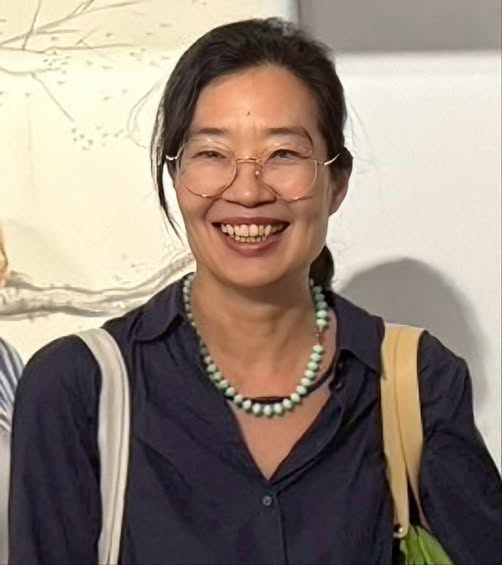
Dhruba Esh; Courtesy: Kamrul Hasan Mithon


Dhruba Esh, born 1967, is a full time cover designer – and a part time writer. He has authored stories for children and thrillers for grown-ups. A total of 40 books — or maybe more.”

This is from the cover flap of one of the artist’s published works. Cryptic? Yes. But it does not fail to convey the whimsy every Dhaka-based publisher and poet identifies with the name, Dhruba Esh. Read what Humayun Ahmed (1948-2012), a prolific author, dramatist and director of unforgettable films like Ghetuputra Kamola[1], saysabout the designer in Chaley Jaay Basanta Din[2]. “Must get hold of Dhruba Esh. For some unknown reason he’s been out of reach. Pasted on the front door of the flat he lives in is an A4 sized paper. It is adorned with the sketch of a crow in flight and is signed off with these words in Dhruba’s handwriting: ‘The Bird has Flown the Nest.’

“What I need to do is this: Throw away that A4 sheet and replace it with another, inscribed by these words: ‘Come back, Birdie!’

“Dhruba Esh might not know, but a bird that takes to its wings always returns to its nest. Only the caged bird has nowhere to fly off to. Its only reality is to stay put in one location…” 

Why am I taking a serious note of what Humayun Ahmed wrote? Not only because Dhruba Esh has penned the biography, Tumi Achho Kemon, Humayun Ahmed? More so because this custodian of Bangladesh literary culture, who continues to be a top seller at Ekushe Book Fair[3], is one of the cornerstones of modern Bengali literature on either side of the barbed wires.

Dhruba Esh is himself a legend in the Bangla literary firmament, I learn from Kamrul Hasan Mithon, a photographer turned publisher cum writer has been instrumental in reconnecting me with my father, Nabendu Ghosh’s roots in Kalatiya, once a village in Dhaka district that is now a suburb of the capital city. Bhaiti, as I affectionately address him, has been writing a column, Dyasher Bari (Ancestral Home), in Robbar (Sunday) magazine published online from Kolkata. Featured in it are all the major names of Bengali art, literary and cinema world — from Suchitra Sen, Mrinal Sen, Paritosh Sen to Ganesh Haloi, Miss Shefali, Sabitri Chatterjee and not forgetting Baba.

“Dhruba Esh is just one of his kind. He does not have a wife, no mobile, nor a Facebook page. He does not even ride a bus or train. If a destination is too long to walk, he travels only by rickshaw. He is most indifferent to money matters. But he is most enthusiastic about painting and designing. 

“Starting in 1989, when he was still a second year student at the Dhaka University, he has designed nearly 25,000 book covers. In addition he has designed music albums – and T’s too! Three years ago he was bestowed with the Bangla Academy Literary Award for his contribution to Children’s Literature – with titles such as Ayng Byang Chang [4] and Ami Ekta Bhoot[5].”

I fell for ‘Amiyashankar…’ at the very first reading. How effortlessly the surreal narrative etches a contemporary reality obtaining in the land of my forefathers!

Amiyashankar Go Back Home

Story by Dhruba Esh, translated from Bengali by Ratnottama Sengupta

Subachani or Bar footed Geese flying over Himalayas: From Public Domain

Amiyashankar Go Back Home!”

“That’s the title of the book?”

 “Yes Sir.”

“Is there a poem by this name?”

“No Sir. There’s no mention of Amiyashankar in my poetry.”

“No mention at all? Oh!”

“Can I send you some of my poems?”

“You may send.”

“Can you do the cover within this month?”

“Not this month. You’ll get it on the 12th of the next month. Only sixteen days to go now.”

He started laughing.

He’s a small town poet. A young professor. I have been to the town where he teaches in a girls’ College. It’s like a watercolour painting. There’s a river to the north of the town. Blue mountains in the distance complete the view.

The geese of Subachani had flown over this town on their journey towards the Manasarovar to restore Ridoy to his human size. The poet was unaware of this. He has not read Buro Angla[6].

“What is the book about? Birds?”

“You can find the PDF on Google.”

“Thanks. I will read it.”

Two days later he called. “Reading Buro Angla has sparked some fireflies in my mind. I’d not read the book until now.”

He was given my number by Rasul Bhai, a poet and a cricketer from the same town. He just about looks after the family publishing business. A good person. Last year I had done the cover for his book of poems, Lake Mirror of the Full Moon.

The poet had emailed his poems. He had said he’d send some poems, instead he had sent the PDF of the complete book. On the basis of Divine Selection I read 13 poems. He cannot be faulted for not reading Buro Angla. This poet writes good poetry. In two days I readied the cover for his book.

*

“Is Amiyashankar a friend of yours?”

“No.”

“Why are you telling him to go back home?”

“Because he is Amiyashankar.”

“What?”

“His wife waits for him.”

“He has no one of his own but his wife?”

“He has kids. One son, one daughter.”

“What does he do?”

“He’s a teacher in a government primary school.”

I was startled. Subhankar, Tushar, Amiyashankar, me — we are childhood friends. Our Amiyashankar is a teacher in a government primary school. He has a son and a daughter. The poet who lives in another town has never been to our town. He is not likely to have set his eyes on or made an acquaintance of Amiyashankar. Or, is a person likely to know another person through social media?

“I am not on social media,” said the poet.

“Why?”

“I get disoriented. Confused.”

“Oh. Your Amiyashankar’s wife is named Mitra?”

“Mitra. Yes, I did not tell you, sorry. Amiyashankar’s son is called Arnab, his daughter is Paramita.”

“Why are you creating Amiyashankar?”

“I have no friend.”

Our Amiyashankar’s wedded wife is Mitra. His son is Anu, Miti his daughter.

I call him.

“Hey, what’s the proper name of Anu and Miti?”

“Here — Anu is Arnab…”

“And Miti is Paramita?”

“Yes. You know it already.”

Really tough to suffer this.

I mentioned the poet. Amiyashankar did not read or write poetry. He had never heard of the poet.

“A modern poet?” he was curious.

“A post-modern modern poet.”

“Now what is THAT? Good to eat or wear?”

“Eat. Wear.”

“Does it hide your shame?”

“It covers your shame.”

“Good if it hides all.”

“Yes. Right. Where are you now?”

“I’m here, at Moyna and Dulal’s stall, sipping tea.”

“Aren’t you cold? Go back home.”

Amiyashankar, go back home.

*

On the 12th I sent the EPS file of the cover to the poet.

“If you don’t like it you may discard it,” I messaged.

Reply: “Will you design another cover then?”

Reply: “No.”

Reply: “This will do. I like it. There’s no Amiyashankar but one can visualise him. Thanks. Do I pay you online through bKash?”

I sent my bKash number. He sent the money.

End of give-and-take.

*

I blocked the poet’s number. I deleted every bit of communication in the mail. We had an Amiyashankar in flesh and blood. The poet had concocted an identical Amiyashankar. That Amiyashankar did not live and breathe – how’s that? Such convolution and complication! I was fed up of continuously, endlessly, unendingly living in complexity.

Better to shut my eyes and think of uncomplicated glow worms in my mind.

.

[1] A 2012 film by Humayun Ahmed centring around the exploitation of ghetupatras – young boy performers, Komala being a ghetupatra.

[2] The spring day passes

[3] Known as Eternal Twenty-first Book Fair is the largest organised by the government in Bangladesh.

[4] Bang is frog in Bengali. The rest are fun rhyming words.

[5] I am a ghost

[6] Book by Abanindranath Tagore (1871-1951, nephew of Rabindranath Tagore) published in 1953. Buro Angul is Thumb in Bengali. This is the humorous story about a mischievous boy, Ridoy, who was shrunk to the size of a thumb. He had to journey to the Mansarovar in Himalayas to regain his original size and meets various creatures, including the geese referred to here.

Dhruba Esh, born 1967, is a full time cover designer — and a part time writer. He has authored stories for children and thrillers for grown-ups. A total of 40 books — or maybe more. This story was first published in Bengali in a hardcopy journal called Easel.

Ratnottama Sengupta, formerly Arts Editor of  The Times of India, teaches mass communication and film appreciation, curates film festivals and art exhibitions, and translates and writes books. She has been a member of CBFC, served on the National Film Awards jury and has herself won a National Award. 

.

PLEASE NOTE: ARTICLES CAN ONLY BE REPRODUCED IN OTHER SITES WITH DUE ACKNOWLEDGEMENT TO BORDERLESS JOURNAL

Click here to access the Borderless anthology, Monalisa No Longer Smiles

Click here to access Monalisa No Longer Smiles on Amazon International

Categories
Stories

The Year the Fireflies Didn’t Come Back

By Leishilembi Terem

(This is in loving memory of my friend, Ethan Henkholen Doungel and my cousin, Nungsibi Sangdonjam, both of whom lost their lives to this conflict.)

The mist in those Imphal mornings clung to the world like a mother’s embrace, pooling in the hollows where night lingered longest. I can still feel it swirling around our bare ankles — mine pale as rice flour, Lalen’s golden like sun-warmed honey — as we raced through the dewy grass toward the river. Our bags would tangle in our haste as we stumbled over roots still drunk with midnight’s shadows. The damp hemp of our bags smelt of earth and childhood.

We’d arrive breathless at the water’s edge just as the first monsoon drops began to fall. Lalen would throw his head back, his laughter skipping across the river’s skin like the kingfishers we loved to chase, his tongue catching raindrops with the solemn concentration of a temple priest receiving blessings. I’d giggle until my stomach ached, until the cold water found its way down my collar in tickling rivulets that made me shriek. I remember how it fell in fat, warm drops as Lalen and I raced through the fields, our school bags abandoned by the roadside. We would catch fireflies as they buzzed over us…. We were fifteen that May of 2023, old enough to understand the tensions simmering around us, young enough to believe it wouldn’t touch us.

Our families were woven together. Every Sunday, Lalen’s father would arrive at our household carrying jars of wild honey, his laughter booming through our courtyard. My mother would press a steaming cup of tea into his hands while scolding him for leaving mud tracks on her freshly swept floors. Both our dads would sit on the porch sharing a single bottle of Yu (wine), and hamei (rice cakes). Their voices blending as they argued about football and nothing at all.

“To start off another season,” Ipa[1] would say, his eyes crinkling at the corners as he was cheering on for Northeast United, in the new ISL season kicking off.

“To the fools who can’t hold their liquor,” Lalen’s father would counter, making them both laugh until their shoulders shook.

As I was lost in these thoughts… a voice from behind broke the silence!

“Heyy, wait!” Lalen’s voice floated through the downpour as he slipped in the mud. I turned just in the nick of time just to see him crash into me, sending us both tumbling into the flooded field. The water was warm as blood against our skin.

That was the same evening, our fathers sat on the porch watching the news reports with grim faces. Two communities — the Kukis and Meiteis began protesting against each other. The first roadblocks appearing along the highways. Still, back home our father’s still shared their usual bottle of rice wine, their friendship stubborn as ever.

“Things will calm down,” Ipa said, his voice steady.

“This is all politics,” Lalen’s father agreed.

They were wrong.

By June, the valley smelled of burning. No one knows who attacked whom first. Maybe it was the Kuki villages in the hills — we’d wake to columns of smoke staining the morning sky. Then the retaliatory attacks began in Meitei neighbourhoods. The day they burned our school, Lalen and I stood on the ridge watching the flames consume the building of our school.

This was also the night, when our fathers had perhaps argued for the first time. The voices were loud:

“They’re burning our churches!” Lalen’s father shouted, his usual warmth gone.

“And your people are attacking our temples!” Ipa countered.

“They killed my neighbour last night,” Lalen whispered. His hands were shaking. “Said he was storing weapons.”

“My cousin disappeared at the protest yesterday,” I admitted.

We didn’t say anything besides this. The space between us had become a minefield.

The next morning, Lalen wasn’t waiting by our gate. His bicycle sat unused in their yard, its tires going flat with each passing day. People say his family moved back to Churachandpur. I did not think much of it then, but yes, I did miss him a lot.

But none of that mattered when the monsters came on August 3rd. This date I will never ever forget the date — Ima’s[2] birthday. She’d just pulled her pineapple cake from the oven, the sweet coconut scent wrapping around us like one of her hugs. Then the air turned sharp with kerosene.

Through our kitchen window, shadows moved wrong. Not the dancing light of lamps, but torch flames licking at night. Men — no, not men, shapes with black masks where faces should be. Their boots kicked over Ima’s potted marigolds as they came.

“Run to the back!” Ipa shouted as bullets zoomed through the window and exploded.

I remember the exact shade of orange the flames consumed my mother’s best silk phanek[3]. The sound Ipa made when the bullet found him — not a scream, just a soft “oh” of surprise. I ran until my lungs burned, until the screams faded behind me, until I collapsed in a drainage ditch with the taste of mud and blood in my mouth.

The Assam Rifles Refugee Camp at Moirang was a nightmare of flapping plastic tarps and wailing children. At night, I’d lie awake listening to the old women whispering about which family had been wiped out that day. When the news came about Lalen’s village, I didn’t cry. They said the militants had locked the doors before setting the houses ablaze. They said you could hear the screams from three kilometers away.

I turned sixteen in a makeshift tent, eating stale rice with fingers that still smelled of smoke. I wondered where Lalen would be now…

The day I saw him again was April 2024. Nearly more than a year since we’d last spoken. I was digging through the ruins of the market, searching for anything salvageable, when I felt eyes on me.

He stood between two gutted shops, taller than I remembered, his features hardened by hunger from what I could tell. Then something caught my eyes, and I could not believe it. The Kuki national army (KNA) armband on his sleeve was frayed at the edges. KNA is a prescribed terrorist outfit by the Government of India, and I never expected my best friend to wear their uniform… He is around the same age as me… The rifle in his hands looked too heavy, yet he carried it like an extension of himself.

“Wait … you…?” He called out and took my name. However, this time, my name sounded foreign in his mouth now, stripped of all the friendly warmth.

The jar of turmeric in my hands slipped, shattering at our feet. The yellow powder bloomed between us like a poisonous flower. “You’re alive.”

His knuckles whitened on the rifle. “No thanks to your people.”

The air smelled of rotting fruit and something worse beneath. A body, probably. There were always bodies now.

“They weren’t my people,” I whispered. “The men who killed my parents — your people killed my family. You are wearing the uniform of the people who killed Ipa and Ima…” I flinched as I could not express myself.

“Does it matter? What about what you all have done” His voice cracked. “Your cousin was in the mob that burned my sister alive. I saw his face.”

The words punched through me. I hadn’t known.

The rifle trembled as he raised it. I saw the exact moment his finger found the trigger — the way his breath hitched, the way his eyes flickered to the scar on my left wrist from when we’d both fallen out of the mango tree.

“I should,” he whispered. “For sis… For my parents.”

I didn’t close my eyes. “Then do it.” After all, what’s the point of living, when I do not have my family or even now my friend with me?

The seconds stretched. A drop of sweat traced the new scar along his temple. The rifle had slipped from his now trembling fingers like that of a dying man’s last breath hitting the dirt. The metallic clang as it fell, echoed through the ruined marketplace and the rubble of what was left, bouncing off bullet-riddled walls in a way that made my stomach twist.

His hand moved toward his pocket and my body had already reacted before my mind could catch up — a full-body flinch that sent pain shooting through my half-healed ribs. Every instinct screamed that he was reaching for another weapon, that this was some cruel trick. After everything we’d seen, after all the betrayals, how could I believe otherwise? But what he pulled out wasn’t a weapon.

A scrap of blue cloth, frayed at the edges. The Kangla emblem I’d clumsily stitched back in third grade — the symbol of kangleipak[4]  — still visible beneath the stains of gunpowder and blood.

My breath caught. That stupid handkerchief. The one I’d given him when he scraped his knee falling off his bicycle. The one he’d pretended to lose when the boys teased him for keeping a girl’s gift.

“Don’t…” My voice cracked. “After everything… why would you still have this?”

His fingers trembled around the fabric. When he spoke, his words were barely audible over the distant gunfire.

“Because it was the last thing that ever smelled like home… And most importantly it reminded me of you…”

Then his other hand moved- too fast, too practiced-and suddenly I was staring down the barrel of his pistol. The standard-issue 9mm that people say were smuggled from Myanmar. The same weapon that had executed twelve Meitei civilians just last month.

I didn’t scream. The girl who would have screamed died the night I watched my parents being killed helplessly.

The shot never came.

Instead, the pistol’s muzzle tilted-just slightly-toward his own temple. His eyes locked onto mine one final time, and in them I saw the boy who used to share his tiffin with me under the Bonsum tree.

The explosion of gunpowder was deafening.

The shot echoed through the ruined market as Lalen collapsed. I caught him without thinking, his blood immediately warm against my chest. His lips moved against my ear, forming words lost to the ringing in my ears.

When the light left his eyes, I realised I was rocking him like a child. The handkerchief lay between us, with crimson everywhere.

The fireflies had never returned to Imphal valley after that. The monsoons still come, but the rain tastes different now — metallic, like blood. Some nights I swear I can hear our fathers laughing on some distant porch, their voices carried by a wind that no longer blows here.

What does it take to make a child point a gun to his best friend's head?
What does it take for neighbours to douse each other in gasoline?
What does it take for a land to forget how to love its own?
Most importantly, where is my country? Did everyone forget Manipur existed?

This is Manipur.
This is what happens when hate wins.
These are the children we sacrificed.

Till then its silence, just pure silence.

Bonsum tree, the state tree of Manipur. From Public Domain.

[1] Father

[2] Mother

[3] Sarong

[4] Manipur

Authors Note:

This is a work of fiction, but the horrors it describes are all too real. The violence in Manipur has torn apart communities that once lived as neighbours, friends, and family. What was unthinkable years ago has become commonplace- children recruited into militancy, villages burned to the ground, and lifelong bonds shattered within just months.

I did not write this story to take sides or point fingers at who is to blame. War has no heroes- only victims. The Kuki and Meitei people have both suffered unimaginable loss. Friends have become enemies, and children have been robbed of their futures. I wrote this therefore, not to sensationalise, but to mourn. Most importantly I hope that this would force us to confront what happens when hatred is allowed to fester. To remember that behind every headline from Manipur, there are real people-mothers, fathers, children-whose lives have been destroyed.

Leishilembi Terem is a student from Manipur with a quiet love for growing things– whether nurturing plants in her garden or stories in her notebook. When she isn’t studying plant biology or digging her hands into soil, she writes about the world she sees: the fragile beauty of her homeland, Kangleipak, the political storms that shake it, and the ordinary people caught between.

.

PLEASE NOTE: ARTICLES CAN ONLY BE REPRODUCED IN OTHER SITES WITH DUE ACKNOWLEDGEMENT TO BORDERLESS JOURNAL. 

Click here to access the Borderless anthology, Monalisa No Longer Smiles

Click here to access Monalisa No Longer Smiles on Kindle Amazon International

Categories
Stories

The Stranger

By Jeena R. Papaadi

I was sure I had kept a ten rupee coin ready. But, when he came around a second time, I was still fumbling. I looked up at him, embarrassed, shame-faced, and quickened my search. My hand travelled the same paths within my handbag that it had toured a few seconds ago, again encountering nothing.

He had no reaction. He had been at this job fa​r too long. Seen far too many people. Heard far too many excuses. Listened impatiently to far too many stories. He looked away and moved on. Destiny would bring him back though. He would persevere until my journey ended. Then I would be erased from his mind and some other deviant passenger without exact change, with a bagful of tales, would take my place.

I gave up and pulled out a hundred rupee note. Something you should never wave at a city bus conductor. I was doing the unthinkable. I had no choice. My ten rupee coin had vanished within the folds of my bag, liberating itself from its inevitable fate. With one hand grabbing the railing for dear life as the bus dashed across the city, this was the best I could do. If one could pause life long enough, one would admire the lesson in philosophy thus presented before oneself. But one was busy going rather red before the conductor’s stern gaze.

No change, I muttered, my words and eyes dripping with apology.

He could shout. He could yell. He could ask me to leave the bus. No, he couldn’t, but he certainly could make us believe he had enough power in the world to extinguish our lives with one flick of his hand. No wonder small children aspired to be bus conductors.

He decided against violence and sighed deeply. The burden of the entire human race rested on his shoulders that morning.

Out of nowhere, a hand appeared between the conductor and me, with a sparkling, crisp ten rupee note crackling between the fingers. My eyes fell on it and on the hand holding it, and traced it back to the man who owned both. 

For one long instant, all eyes of the people on the bus – except the driver, luckily – were on the man with the receding hairline and he began to look a tad uncomfortable at the attention. 

It’s okay, he said, seeing me hesitate. It’s okay.

Now all pairs of eyes transferred themselves to me because it was my turn. He was offering to pay my ticket, to save me from the hundred rupee note embarrassment and possible eviction from the bus. 

The conductor, still expressionless, leaning against a seat, immune to the insane race of the bus, waited for my response. To take the money or not to take it? He didn’t have all the time in the world. He had tickets to dispense and other things to do, I’m sure.

You can pay me back later, said the ten-rupee-note-man. Or not, he added hastily. 

So I nodded, unsure of the etiquette and expectations in such a situation. I wasn’t taught how to behave when a stranger on a random bus showed generosity or kindness. Should I accept it? Should I be offended? Should I presume that he had ulterior motives? Should I refuse and go back to unearth my delinquent ten rupee coin? Or stubbornly insist that the conductor give me exact balance for my hundred?

The conductor sighed again. I was wasting his time more than the ten rupees demanded. 

Everyone, and the bus itself, seemed to be holding their breath. I had to satisfy them all.

I took the ten rupee note, and handed it to the conductor whose patience was fast wearing thin, fairly certain that whatever I chose at this moment, I was going to regret later.

The situation defused, and everyone exhaled and went back to their own businesses of staring out the window, as the vehicle shot across the city.

I turned to my saviour and said, I’ll buy you tea. 

He had an easy smile, one that makes you want to see it again. Oh, that won’t be necessary. But if you insist…

My eyes did insist, I suppose.

People seated next to this developing scene of action were listening without appearing to, some clearly appearing to, and hopping to conclusions on where this could lead.

I’ll get my change for hundred too, I explained, showing the note. This was mostly for the benefit of the listeners.

Of course, he said.

We now had a solid reason to have tea together. 

So we got down at the stop where the ten rupees had led, and found a tea shop nearby. He was easy to talk to, easy to confide in, easy to befriend. He did not bore me to death with his stories, like most men did. He knew when he lost me, when to stop and when to pay attention.

One week later, we had dinner together. The strangeness had passed and we were comfortable as though we had been married for years. 

And then it happened, on the third date… When he lost himself and I was abandoned, the gaps began to reappear, and the cracks which were merely glossed over, never fixed, broke open.

Just as it was when we had been married.

Another failed experiment. Come, let’s be strangers again…

If you change nothing, nothing would change.

.

Jeena R. Papaadi is an author of fiction and poetry. Her articles and stories have appeared in several publications including The Hindu Open page, Kitaab, European Association of Palliative Care, Aksharasthree, etc.

.

PLEASE NOTE: ARTICLES CAN ONLY BE REPRODUCED IN OTHER SITES WITH DUE ACKNOWLEDGEMENT TO BORDERLESS JOURNAL

Click here to access the Borderless anthology, Monalisa No Longer Smiles

Click here to access Monalisa No Longer Smiles on Kindle Amazon International

Categories
Stories

The Opening

By Naramsetti Umamaheswararao

From Public Domain

In Parvatipuram, there lived a merchant named Sunanda. He used to run his business by fulfilling the needs of the people. He had two sons – the elder one, Anand, and the younger one, Vinay. Anand completed his education at the gurukul and returned home, while Vinay was still studying.

Anand told his father that he didn’t want to work under anyone, and instead, he wanted to start a profitable business of his own—one that would also provide employment to others. Hearing this, Sunanda was very happy and made arrangements to help Anand start a business in a nearby town.

He chose an auspicious time for the opening and invited Anand’s guru, Medho Nath, to bless the occasion. The guru, moved by his affection for Anand, came for the inauguration. In the presence of his guru, Anand performed the rituals and made his first sale.

To show his respect, Anand offered silk clothes and thamboolam (a traditional token of respect) to his guru and bowed to him. Accepting them, Guru Medho Nath blessed him saying, “May your business grow like the saying—three types of goods, six kinds of deals. But for that, you must follow three conditions. First, you must come and go without being seen. Second, receive with one hand and give with the other. Third, always eat five-course feasts. Follow these, and you will reach great heights in business, my son!”

“Yes, Guruji! With your blessings, my business will flourish just as I dreamed,” Anand replied happily.

Standing beside them, Sunanda could not understand the meaning behind the guru’s blessing. The conditions seemed strange to him. “What kind of blessing is this, filled with such odd conditions?” he thought to himself.

Guru Medho Nath sensed this and turned to Anand, asking, “My son, did you understand the deeper meaning of my blessing?”

Anand replied, “Yes, Guruji, I understood it clearly.”

“Then explain the meaning of these conditions to your father,” the guru instructed.

Anand nodded in agreement and turned to his father. “Guruji’s first condition was to go and return without being seen,” he began.

Sunanda interrupted, “How is that possible? When going out for business, you meet many people. Business means interacting with customers. How can one go unseen?”

Anand smiled and said, “Listen to the deeper meaning. He meant that I should leave for work at dawn and return only after sunset. If I go late in the morning, I’ll see many others along the way, and by then, other merchants would already have done a lot of business. But if I start early, I’ll have more time and more opportunities.”

“I see! That makes sense. What about the second condition—receiving with one hand and giving with the other?” asked Sunanda.

Anand explained, “Customers often try to buy on credit. If we keep giving goods on credit, the business won’t survive. Later, when asked to repay, some customers avoid us. That’s why Guruji advised me to take cash with one hand and deliver the goods with the other—no credit.”

“That’s very sensible. And what about the third condition? He told you to always eat five-course meals. Is that practical? If you eat like that daily, you’ll lose money—and it could even cause indigestion!” said Sunanda.

Anand laughed and replied, “Guruji didn’t mean literal feasts. He meant that I should work so hard that I feel truly hungry before eating. When someone is really hungry, even a simple meal feels like a royal feast. So, work hard, earn your hunger, and only then eat. That was his advice.”

Satisfied with his son’s explanation, Sunanda’s face lit up with happiness.

Guru Medho Nath then praised Anand, saying, “Well done! You have truly proven yourself my disciple. You’ve understood the essence of my message.”

Sunanda expressed heartfelt gratitude to the guru who had shaped his son into such a wise man.

In time, Anand not only earned great profits through his clever business sense, but also gained respect and fame.

.

Naramsetti Umamaheswararao has written more than a thousand stories, songs, and novels for children over 42 years. he has published 32 books. His novel, Anandalokam, received the Central Sahitya Akademi Award for children’s literature. He has received numerous awards and honours, including the Andhra Pradesh Government’s Distinguished Telugu Language Award and the Pratibha Award from Potti Sreeramulu Telugu University. He established the Naramshetty Children’s Literature Foundation and has been actively promoting children’s literature as its president.

.

PLEASE NOTE: ARTICLES CAN ONLY BE REPRODUCED IN OTHER SITES WITH DUE ACKNOWLEDGEMENT TO BORDERLESS JOURNAL

Click here to access the Borderless anthology, Monalisa No Longer Smiles

Click here to access Monalisa No Longer Smiles on Amazon International

Categories
Stories

The Last Metro

By Spandan Upadhyay

The platform was empty. My footsteps echoed back at me as if mocking this sterile, hollow space. I had been here a thousand times before, but never like this—never in the aftermath of such a disaster. 9:30pm, and the metro hadn’t shown up yet. I sat down, unsure of where else to be. The evening had been a slow car crash — every minute at that poetry reading had scraped away at my dignity. Each time I glanced up from my notebook, I caught the same expression on people’s faces, that slightly bored politeness, the kind reserved for an artist you’ll never remember.

I loosened the strap of my satchel and rubbed my shoulder, trying to push the night out of my mind, but it stuck, like the words of my poems, lingering. Why had I called them ‘Words Left Unspoken’? It seemed so pretentious now, as if I was grasping for some profound truth when, really, they were just words no one cared to listen to. I saw my reflection in the mirror on the platform. Green kurta, brown sandals and black rimmed glasses, I didn’t really command much attention. Why would anyone care to listen to me anyway?

I glanced around the station. It felt unreal, like some purgatory where time stretched on forever, with nothing to look forward to. The fluorescent lights flickered, and the only sound was the occasional distant rattle of a train that would never come. Or at least it felt like it.

This city, Kolkata—it was once a place where artists mattered, where poets walked down College Street with a cup of tea in one hand and a burning idea in the other. Now? Now, the city didn’t care about poetry. It cared about money, about practicality, about getting from one station to the next as fast as possible.

I checked my phone again. Though there wasn’t really much to check. The poetry circle WhatsApp group was silent, like the station itself. No one had said a word about my performance. Probably because they were all too busy posting Instagram stories from some hipster café by now.

My eyes wandered to the far end of the platform. That’s when I saw her.

She was standing under one of the dim lights, a woman in her late forties, maybe early fifties, her face lined with age and fatigue. She had a basket of flowers slung over her arm—wilting roses, chrysanthemums, marigolds, all tired-looking, much like their owner. I’d seen her here before, always in the same spot. She was a fixture of the station, but I’d never paid much attention.

Tonight, though, there was something about her that pulled at me, maybe because she seemed as out of place as I felt.

I stood up, more out of curiosity than anything else, and walked toward her. My footsteps sounded loud in the silence, but she didn’t seem to notice.

“Flowers at this hour?” I asked, my voice echoing off the walls.

She glanced at me, her eyes sharp, measuring me up. “Metro or no metro, people still need flowers. Weddings, funerals, who cares? Life goes on.”

Her voice was raspy, like someone who’d spent years yelling into the wind. And yet, there was something calm about her. Resigned. It felt familiar.

I shrugged. “Strange place to sell them, though.”

She didn’t look at me this time, just adjusted the flowers in her basket, fingers working methodically. “It’s quieter down here. Besides, I’m not here for the regular crowd. I’m here for people like you.”

“Like me?” I frowned.

“Late. Alone. Waiting for something that’s probably not coming.”

The words hit me like a slap, sharper than I expected. There was a tired smile on her lips when she finally looked up, and in her eyes, I saw something I didn’t want to acknowledge—recognition.

I smirked, though I didn’t feel like it. “I guess that makes two of us then.”

She chuckled softly. It was a strange sound, not of amusement but of knowing. She leaned back against the wall, the flowers now forgotten at her side. “You’re one of those types, aren’t you? The ones who think too much.”

I should’ve been offended, but I wasn’t. She was right. I was one of those types. I lived inside my own head more than I lived in the real world. “I suppose I am.”

Silence enveloped us, thick and uncomfortable, but I didn’t move away. Maybe it was because I had nowhere else to go, or maybe it was because this was the first time in a long while that someone had spoken to me without the usual pretence. The usual platitudes.

“What about you?” I asked, breaking the silence. “What’s your story?”

Her eyes flicked to me again, and for a moment, I regretted asking. It sounded cheap, like I was trying to force a connection where there wasn’t one. But she didn’t seem to mind. If anything, the question seemed to amuse her.

“My story?” she repeated, almost as if tasting the words. “My story is this city. I came here when I was a girl, like so many others. Thought I’d find something—maybe love, maybe money. Instead, I found nothing. Just a city that takes everything and gives you nothing back.”

I nodded, though I wasn’t sure why. I wasn’t anything like her. I wasn’t scraping by selling flowers at a metro station. But her words felt true, as if they could just as easily be mine.

“I know that feeling,” I said quietly, more to myself than to her.

She tilted her head, her eyes narrowing slightly. “Do you? What did the city take from you?”

I swallowed. How do you explain to someone that the city hadn’t taken anything tangible? It hadn’t taken my house or my livelihood. It had taken my belief, my sense of purpose. It had eroded me slowly, bit by bit, rejection after rejection.

“I wanted to be a poet,” I said, almost ashamed of how small that sounded in comparison. “But it turns out, poetry doesn’t pay the bills.”

The woman smiled — a slow, tired smile, but a smile nonetheless. “Ah, poetry. That’s a different kind of hunger.”

She stood up straight then, looking at me with something like pity in her eyes. “And has the city fed that hunger? Or has it starved you?”

I felt my throat tighten, that familiar ache creeping up again. The answer was obvious, but saying it aloud would make it too real.

“Starved me,” I whispered.

She nodded, as if she already knew. As if that was the only answer she had ever expected. “This city has a way of doing that,” she said softly. “But you’re still here, aren’t you? Still waiting.”

I couldn’t look at her anymore. The sound of a train rumbled in the distance, but it didn’t matter. I wasn’t waiting for the metro. Not anymore.

*

The rumble of the approaching train faded, leaving only the familiar, dead silence behind. I stared at the woman, still leaning against the grimy wall, and realised how little I knew about her—this strange fixture of the metro station who spoke with such familiarity about a city I thought I understood.

I glanced at her basket of wilting flowers. The roses, once bright and promising, now drooped sadly, much like everything else in this place. I wanted to ask her something more meaningful, but I wasn’t sure where to start. Every time I opened my mouth, it felt like I was playing a part in a scene I hadn’t rehearsed for.

“How long have you been selling flowers?” I asked, almost awkwardly, knowing it wasn’t the right question, but asking it anyway.

She looked at me, then down at the basket as if only just remembering the flowers were there. “Long enough,” she replied with a wry smile. “It’s been… what, twenty years?”

“Twenty years?” I repeated, surprised. “At this station?”

She chuckled, shaking her head. “Not here, no. I used to sell near Howrah Bridge. It was better business back then. People actually bought flowers to take home. Now, people are too busy for things like that. They’re always in a rush—running to catch a train, running to get home. Nobody stops anymore. But down here, there’s time. The waiting… it slows everything down.”

Her words struck me in a way I hadn’t expected. The waiting—it was something I knew all too well. I wasn’t just waiting for the metro; I had been waiting for years, for something that never came. For recognition, for understanding, for someone to care about the words I scribbled on pages night after night.

“You said you came here when you were young. What brought you to Kolkata?” I asked, sensing there was more to her story than just flowers.

She hesitated, her eyes shifting toward the empty tracks. For a moment, I thought she wouldn’t answer. But then she sighed, the weight of the years settling into her voice. “A man,” she said simply. “A musician. He played the harmonium—beautifully, like he could make the city itself sing. I followed him here, thinking we’d make a life together. I was just a girl, then. What did I know?”

The way she said it—so matter-of-fact, without a trace of bitterness—made it seem like she had long ago accepted the futility of it all. But I could hear something else beneath her words, a kind of nostalgia wrapped in pain. Her story wasn’t unfamiliar; I had heard versions of it before. Hell, I had lived it, in my own way.

“What happened to him?” I asked, not sure if I was overstepping.

She smiled, but it didn’t reach her eyes. “What happens to all men like that? He left. One day, he just… disappeared. No note, no goodbye. Just gone. I waited for him—days, weeks—but I knew. Deep down, I knew he wasn’t coming back.”

She let the words hang in the air between us. I didn’t know what to say. What could I say? There was no way to ease that kind of loss. It wasn’t the kind you could fix with words. It just stayed with you, like a dull ache you learned to live with.

I shifted uncomfortably, memories of my own failed relationships creeping in, uninvited. I had been left before, too. Not in such a dramatic way, but in small, gradual steps. I had been with someone once—Megha, a girl who loved art, who loved the idea of poetry as much as I did. We would sit together in the old cafés of College Street, drinking endless cups of tea, talking about books and writing and the meaning of life.

But my ambition had killed it. She grew tired of waiting for me to be someone, tired of the rejection letters, the endless nights where I’d stay up writing instead of being with her. She had wanted a future, something stable, something real. I couldn’t give her that. I couldn’t be practical. And so, just like the woman’s musician, Megha had left.

I cleared my throat, trying to push the memory away. “Why did you stay here? In the city, I mean. After he left?”

She looked at me, surprised by the question. “Where else was I supposed to go?” Her voice was soft, as though the answer should have been obvious. “Once you come to this city, it doesn’t let you leave. Not really.”

I nodded, understanding more than I wanted to admit. Kolkata did that to people. It pulled you in with its promises of art, of culture, of something greater than yourself. But once you were here, it chewed you up and spit you out. And yet, you stayed. You stayed because there was something about this place, something that kept you hoping, even when you knew better.

“I stayed because this is where everything happened,” she continued, her voice barely above a whisper. “This is where I loved, where I lost. And I figured if I left, it would all disappear, like it had never happened. The city… it holds the memories.”

She looked away then, her gaze drifting toward the tracks again, as if waiting for something that wasn’t coming.

I understood her in a way I didn’t expect to. I had stayed for the same reason. I had stayed because leaving would mean admitting that none of it had mattered—my poems, my dreams of becoming something more than just another face in the crowd. As long as I stayed, I could pretend that maybe, one day, things would change. Maybe one day, someone would listen.

The sound of another train rumbled faintly in the distance, but neither of us moved.

*

I stayed quiet for a while, letting her words sink in. The idea that Kolkata held memories—it was strange how true that felt. The city never let you forget. Every street corner had a history, every old café carried the weight of conversations long past. And if you had been here long enough, like I had, those memories started piling up on you, like layers of dust on an old book you no longer bothered to open.

The woman shifted, the flowers rustling in her basket. She wasn’t looking at me anymore; her eyes were somewhere far away, back in whatever time she was remembering.

“We used to walk,” she said suddenly, her voice softer now, almost wistful. “All over the city. He used to play his harmonium on the ghats by the river, you know. I thought… I thought we’d stay like that forever.”

I could almost picture it: her and this mysterious musician, strolling through the old streets of Kolkata, full of hope, maybe even a kind of reckless love. The kind of love that felt invincible when you were young, when the world hadn’t yet shown you its teeth.

“And you believed in him,” I said, not as a question, but as a statement. Because of course she did. That’s what love did—it made you believe, even in the most absurd dreams.

She nodded. “Yes. I believed in him. I believed that the music would carry us through. I believed in the city, too. I thought this was the kind of place where people like us could thrive, where art mattered.”

Her words echoed something I had thought once. Maybe still did, deep down.

“And now?” I asked.

She didn’t answer right away. Her fingers traced the edge of one of the wilted flowers, and for a moment, I thought she wasn’t going to say anything. But then she looked up, her eyes meeting mine. “Now, I don’t know. I think… maybe I was wrong. Maybe this city only cares about those who already have something. If you come here with nothing, you leave with even less.”

That hit me hard. I thought of all the nights I had spent in tiny cafés, hunched over my notebook, scribbling out poems with the belief that this city—the same one that had raised writers like Tagore and Ghosh — would eventually recognise me. I thought of all the open mikes I had attended, all the rejection letters I had collected over the years. The city had taken my words, my effort, and it had given me nothing in return.

But, like her, I had stayed. I had stayed because I didn’t want to believe I was wrong. I didn’t want to admit that maybe this city wasn’t what I had imagined it to be.

I rubbed my face, trying to shake off the feeling that was creeping up on me. “I used to believe too,” I said quietly. “When I first came here… I thought Kolkata was the place where dreams happened. I thought it would embrace me.”

I wasn’t sure why I was telling her this. I hadn’t even said it out loud to myself before. But there was something about the way she spoke, the way she seemed to understand without judgment, that made it easier to confess.

She didn’t respond, but there was a look in her eyes that said she understood.

“I came here to be a poet,” I continued, feeling the weight of those words more heavily than I had before. “I thought I had something to say, you know? I thought people would listen.” I laughed, though there was no humour in it. “But the city doesn’t care. No one listens. They just… move on. Poetry doesn’t matter to them.”

“Poetry matters,” she said softly, surprising me. “It’s just that most people don’t realise it does.”

I wanted to believe her. I really did. But it was hard, after all these years. I couldn’t even remember the last time someone had genuinely cared about what I had written.

The silence between us thickened, and I found myself drifting back to a time when things were different. The early days, when I had first arrived in Kolkata. I remembered the excitement, the feeling that the city was alive with possibilities. I had been younger then, full of optimism. And I hadn’t been alone.

There was Megha.

The memory of her came back so suddenly, it was like a punch to the gut. I hadn’t thought about her in a long time—not really. Not in any meaningful way. But now, in this quiet station, with this woman who reminded me too much of lost things, Megha’s face rose to the surface.

I could see her as clearly as if she were standing in front of me: dark hair that always fell into her eyes, a quick, teasing smile, the way she’d sit across from me in a café, her hands wrapped around a cup of tea, listening intently as I read her some new poem I was working on. She had loved words as much as I did. Or at least, that’s what I had thought.

We had met during my first year in the city. She was a literature student at Presidency, full of fire and ideas, always debating something, always questioning. She was the kind of person who seemed like she could change the world if she wanted to. And for a while, I thought we could change it together.

We spent hours in each other’s company, walking through the narrow lanes of College Street, visiting the old bookstalls, talking about poetry and art like they were the only things that mattered. I had never felt so alive, so full of potential. With Megha, everything seemed possible.

But ambition has a way of turning on you.

I had wanted to be a poet so badly, wanted to make my mark in the world of letters. I spent every waking moment writing, trying to create something that would last. I thought Megha understood, but slowly, I could feel her slipping away. She grew tired of waiting for me to “make it,” tired of the uncertainty, the nights where I chose my poems over her. She wanted stability, something I couldn’t give.

The end had been slow, like a candle burning itself out. One day, she was just… gone. She hadn’t left like the woman’s musician, without a word. But when she said goodbye, I knew it wasn’t just the end of us—it was the end of the belief that love could coexist with art. Not for me, at least.

“Are you thinking about someone?” the woman’s voice broke through my thoughts, pulling me back to the present.

I blinked, surprised that she had noticed. “Yeah. Someone I lost.”

She nodded, as if she knew that feeling all too well. “Funny how they never really leave us, isn’t it? Even when they’re gone, they stay here.” She tapped her chest lightly, right where her heart was.

I didn’t reply. I didn’t need to. The station was silent again, except for the faint hum of the city above us, always moving, always forgetting.

The air felt heavy with all the things we hadn’t said yet. The train wasn’t coming, but neither of us seemed to care anymore. I glanced at the woman — this flower seller who seemed to know the city better than anyone I’d ever met — and wondered how many stories like mine she had heard over the years, how many late-night conversations had she had with strangers, all of us waiting for something.

“It’s funny,” I said, breaking the silence again. “I’ve been in Kolkata for years now, but I still feel like a stranger. Like the city doesn’t really belong to me.”

She looked at me, her expression unreadable. “The city doesn’t belong to anyone.”

Her words settled over me like a cold wind. Maybe that was the truth I had been avoiding all this time. Kolkata wasn’t mine. It wasn’t anyone’s. It just was, moving forward with or without us. And yet, somehow, I had convinced myself that it owed me something.

“I guess I’ve been waiting for it to recognise me,” I said, feeling a little foolish even as the words left my mouth. “Like, if I just wrote the right poem, if I just found the right words, then maybe…”

“Then maybe you’d matter,” she finished for me.

I nodded. There was no point in denying it. That’s exactly what I had been chasing—validation, recognition, something to prove that my words weren’t just disappearing into the void. But the truth was, no matter how many poems I wrote, no matter how many nights I spent scribbling away in dimly lit cafés, the city didn’t care.

She sighed, her shoulders sinking a little as she leaned against the wall. “This place… it makes you think you’re special. It makes you believe you’re destined for something more. But it’s just a city. It’s not listening.”

Her words hit harder than I expected. For years, I had clung to the idea that Kolkata was different—that it was a city that nurtured art, that it understood poets and dreamers. But the truth was, Kolkata wasn’t a living thing. It was just a backdrop. The stories we told ourselves about it were just that—stories.

“Do you ever regret it?” I asked. “Staying here, I mean.”

She didn’t answer right away. Instead, she looked down at the wilting flowers in her basket, running her fingers over the petals as if considering their fate.

“Regret?” she echoed, almost to herself. “I don’t know. I think, after a while, regret doesn’t mean much. You just… accept things. You stop fighting.”

There was a kind of peace in her voice, but it wasn’t the kind I wanted. It was the peace of someone who had given up on the fight. And that scared me.

“I don’t want to stop fighting,” I said, the words coming out more forcefully than I intended. “I don’t want to just… accept that this is all there is.”

She smiled softly, but there was something sad in it. “Then don’t. But the city won’t fight with you. It doesn’t care. You’re the only one who does.”

That was the hardest part to accept—that the city wasn’t an adversary or a friend. It wasn’t anything. All these years, I had been projecting my own desires onto it, waiting for it to give me something that it had never promised.

I ran a hand through my hair, frustration gnawing at me. “I don’t know. Maybe I’ve just been deluding myself this whole time.”

“Maybe,” she said simply. “Or maybe you’re just waiting for the wrong thing.”

I frowned. “What do you mean?”

She looked at me, her dark eyes sharp, searching. “You’re waiting for the city to recognize you. But what if that’s not what matters? What if… it’s about finding someone who sees you, instead?”

Her words lingered in the air between us, and for a moment, I didn’t know what to say. It wasn’t something I had thought about before. I had always assumed that if I could just succeed—if I could just make a name for myself—then everything else would fall into place. But what if I had been chasing the wrong thing all along?

“Someone who sees me…” I repeated quietly.

She nodded. “Isn’t that what we all want? To be seen, to be heard? Not by the world, but by one person who understands.”

Her words brought back the memory of Megha again. She had seen me once, hadn’t she? She had believed in me, in my poetry, in my passion. But I had let her slip away, too caught up in my own ambitions to realise that she had been the one who understood me.

I swallowed, the weight of that realisation settling in. All these years, I had been chasing after something abstract—recognition from a city, from an audience that didn’t even know me. But maybe what I had needed all along was something simpler. Someone to see me. Really see me.

“Did he see you?” I asked, my voice barely above a whisper. “The musician?”

Her eyes flickered with something I couldn’t quite place—pain, maybe, or longing. “He did. For a while.”

She didn’t say anything more, and I didn’t push. There was no need. I could tell by the way she looked at me, by the way her hand absently touched the petals of the flowers, that it was a wound she still carried. A wound that had never fully healed.

The sound of another distant train rumbled through the station, but it was faint, almost like a ghost passing through. We both stood there, lost in our own thoughts, the silence between us heavy but comfortable.

I felt something shift inside me, like a door that had been locked for years had finally creaked open. I didn’t know what was on the other side yet, but for the first time in a long while, I felt like maybe… just maybe, I was ready to find out.

*

The low rumble of the metro echoed through the station, growing louder with each passing second. But neither of us moved. The sound seemed distant, like a reminder that time was still flowing, even though it felt like we had stepped outside of it for a while.

I glanced at the woman. She wasn’t looking at me, or at the approaching train. Her eyes were fixed somewhere just past the tracks, as though she could see something I couldn’t. Maybe she was thinking about her musician. Maybe she was thinking about the life she’d imagined but never had. Whatever it was, I felt like I shouldn’t disturb her.

The train arrived, its brakes screeching as it slowed to a stop. The doors opened with a mechanical hiss, and for a moment, I considered getting up, walking toward the train, letting this conversation fade into memory like so many other late-night encounters in this city.

But I didn’t move.

I didn’t want to leave just yet. Not until I figured out why this conversation—this woman—had gripped me so intensely. I felt like there was still something left unsaid, something hanging in the air between us.

The woman turned her head slightly, her eyes meeting mine, and for the first time since we started talking, I saw a flicker of emotion there. Not just the weariness she had shown earlier, but something else. Something deeper.

“You’re not getting on the train,” she said, not as a question but as a statement.

“No,” I replied quietly. “Neither are you.”

She smiled faintly. “No. I guess not.”

We sat there for a few moments longer, the train doors still open, inviting us in, but neither of us made a move. The platform was empty except for us now. Everyone else had either left or never showed up. It was just the two of us, waiting for something we couldn’t quite name.

Finally, the doors slid shut, and the train began to pull away, leaving the station once again in silence.

“Why didn’t you get on?” I asked her, genuinely curious.

She shrugged, her gaze returning to the empty tracks. “I wasn’t waiting for the train.”

I frowned. “Then what were you waiting for?”

She didn’t answer right away, and for a moment, I thought she wouldn’t. But then she looked at me again, and this time, there was something in her expression that made my chest tighten.

“I’m not waiting for anything,” she said softly. “Not anymore.”

Her words hung in the air, heavy with finality. I didn’t know what she meant, not fully, but something in the way she said it made me feel like she had already made peace with whatever it was she had been waiting for all those years.

I wanted to ask her more—to pry open the door she had just cracked, to understand what lay behind her cryptic words. But I couldn’t. I felt like asking would break whatever fragile connection we had built, and I wasn’t ready to lose that yet.

Instead, I turned the conversation back to something I understood—something that had been gnawing at me since we started talking.

“Do you ever think about why we create art?” I asked, almost to myself. “I mean, why we bother with it at all? When no one’s listening, when no one cares, why do we keep going?”

She tilted her head, considering my question. “I don’t know,” she admitted. “But maybe it’s because we’re afraid of disappearing. Of being forgotten.”

I nodded slowly, the truth of her words sinking in. That was it, wasn’t it? The fear of being invisible. The fear that if we stopped creating, stopped putting pieces of ourselves into the world, we would just vanish.

“Maybe,” I said. “But sometimes it feels like we’ve already disappeared.”

She smiled at that, a small, sad smile. “Maybe we have. But it doesn’t stop us, does it?”

“No,” I said, shaking my head. “It doesn’t.”

We sat in silence for a while, the hum of the empty station filling the space between us. I thought about all the poems I had written, all the nights spent hunched over my notebook, convinced that the next line, the next stanza, would be the one that finally made people see me. I thought about Megha, about how I had pushed her away in my pursuit of something that had never materialised.

And then I thought about this woman, sitting here beside me, selling flowers at a metro station in the dead of night. She had loved, she had lost, and yet she had stayed. Not because the city had given her anything, but because… well, maybe because she had nowhere else to go. Or maybe because leaving would have meant giving up on the idea that this place still held something for her.

“What will you do now?” I asked her, unsure if I was talking about tonight or her life in general.

She glanced down at her basket of flowers, then back at me. “I’ll go home. Get some sleep. Tomorrow, I’ll come back here and sell more flowers. And the day after that.”

Her words were simple, matter-of-fact, but there was a weight to them that I couldn’t quite shake. It was like she had accepted her place in the world, and I wasn’t sure if that was comforting or terrifying.

“And you?” she asked, her eyes locking onto mine. “What will you do?”

I didn’t have an answer. Not a real one, anyway. I could say I’d keep writing, keep chasing the dream of being a poet in a city that didn’t care. But suddenly, that felt hollow. I wasn’t sure I believed in it anymore—not the way I had when I first came here.

“I don’t know,” I admitted. “I guess I’ll just… keep waiting.”

She nodded, as if that made perfect sense. “We all wait for something. Sometimes, we don’t even know what it is until it’s too late.”

The station fell quiet again, and I realized that this was it. This was the moment when I had to leave, when the night would end and I’d go back to my small, cramped apartment and try to make sense of everything that had happened. But something still held me there, some invisible thread connecting me to this woman and her basket of wilted flowers.

“I don’t even know your name,” I said, almost an afterthought.

She smiled—a real smile this time, not the sad, resigned ones from earlier. “It doesn’t matter,” she said. “Names are just another thing the city forgets.”

I opened my mouth to argue, to tell her that names did matter, that they were part of what made us real, what made us seen. But before I could say anything, the faint sound of another train approaching echoed through the station.

This time, I knew I had to go.

I stood up, slinging my satchel over my shoulder. “Goodbye,” I said, though it didn’t feel like enough.

She didn’t say anything, just nodded, her smile fading as the train grew louder. I turned and walked toward the platform, the noise of the approaching metro filling the space behind me. I didn’t look back, though I wanted to.

As the train doors opened and I stepped inside, I realised something strange. I had come here tonight feeling more lost and disconnected than ever, and yet now, leaving this woman behind, I felt a sense of closure. Like something had ended, even if I wasn’t sure what.

The doors slid shut, and the train began to move. I leaned back against the seat, staring out at the dark tunnel ahead. I didn’t know where I was going. But for the first time in a long while, that didn’t bother me.

.

Spandan Upadhyay is a new writer whose work captures the vibrant nuances of everyday life. With a deep appreciation for the human experience, Spandan’s stories weave together subtle emotions and moments of introspection. Each of his stories invite readers into a world where ordinary occurrences reveal profound truths, leaving a lasting impact.

.

PLEASE NOTE: ARTICLES CAN ONLY BE REPRODUCED IN OTHER SITES WITH DUE ACKNOWLEDGEMENT TO BORDERLESS JOURNAL. 

Click here to access the Borderless anthology, Monalisa No Longer Smiles

Click here to access Monalisa No Longer Smiles on Kindle Amazon International
Categories
Stories

The Ritual of Change

By Parnika Shirwaikar

Ira’s mornings followed a ritual, one she would never compromise on. There was something grounding in the familiarity, the routine that made her mornings feel like a soft, warm blanket. Every weekday, she would stop by the small café across the street from her office, nestled between a quaint bookshop and a flower shop. It wasn’t the coffee itself that she adored, though it was undoubtedly good; it was the sense of community, of being part of something small yet significant.

The barista, Sana, knew her order before she even had the chance to speak. She could almost feel the warmth of the cappuccino in her hands before it was handed over, the foam expertly swirled into a delicate, lacy pattern on top. The air was always filled with the smell of freshly baked bread and coffee which was rich and inviting. She could hear the sounds of chatter rising and falling, a perfect background hum to her quiet moments. There was always someone new she would bump into, from the elderly Parsi lady in her mid-seventies, who came in for a muffin and a tea, to the young man who had just started bringing his dog along. It was the little things, the casual greetings and shared smiles with strangers who had become familiar faces, that made Ira’s mornings feel less like a rush and more like a soft, unhurried rhythm.

Her favourite part, though, was the corner table by the window. That spot was hers, as much a part of her morning ritual as the coffee itself. She’d been coming to the café for months, and every time she arrived, the corner was waiting for her. The way the sunlight filtered through the window at just the right angle made it the perfect seat, just warm enough for her to relax in, but not hot enough to make her uncomfortable. It offered the best view of the street outside: the bustling pedestrians, the cars honking, the kids running to school, the dogs barking as they tried to get to each other first whilst their owners tried to make them behave. In that little space, Ira could watch the world move without being part of the frenzy. Her seat was a kind of stillness in the middle of chaos. It was where she felt most herself. Centered, grounded, and ready for whatever the day ahead would bring.

 But today, things were different.

Ira walked into the café a few minutes later than usual, but that wasn’t the problem. As she stepped in, the smell of coffee already hit her, and her eyes instinctively scanned the room for her usual seat.

 The seat, her seat, was taken.

A young man, probably in his mid-twenties, with tousled brown hair peeking from under a beanie, was sitting at her spot. He was hunched over his laptop, fingers moving absentmindedly over the keyboard. His presence was so casual, so comfortable, as though he had claimed that corner for months.

Ira hesitated for a moment, gripping the strap of her bag a little tighter. The seat wasn’t reserved, she knew that, but it didn’t matter. It was like an unspoken rule, almost sacred that the seat belonged to her. The feeling of disappointment washed over her in an instant. She exhaled sharply, forcing herself to take a breath before marching up to the counter.

“Morning, Ira!” greeted Sana, the barista, already reaching for a cappuccino cup.

“You let someone sit in my spot,” Ira deadpanned, raising an eyebrow.

Sana snorted. Her laughter was infectious. “You didn’t call for a reservation,” she shot back, a playful glint in her eye.

Ira huffed, rolling her eyes. “It’s just that I always sit there. It’s my spot.”

Sana slid the coffee across the counter and gestured to the only other open table, near the door. “Well, you’ll have to make do with that one today.” She pointed, and Ira glanced over at the small table with a resigned sigh. Ira had no choice but to sit there. She took the cup in hand and made her way to the table near the door.  After a long pause, she lowered herself into the chair and took a long sip of her cappuccino. The coffee was as good as always, but something was missing.

Minutes passed, and Ira tried her best to focus on drafting her work email, but her gaze kept drifting back to her usual corner. The guy was still there, hunched over his laptop, utterly unaware of the territorial crisis he had caused. She could see his fingers flying over the keyboard, absorbed in whatever he was doing. His focus seemed so intense, so at ease. He was clearly one of those people who could work anywhere, in any environment, without needing the perfect surroundings. And yet, Ira couldn’t shake the feeling that he didn’t belong there. It was as if his presence had intruded on her space, one that was supposed to be quiet, hers, a part of her morning ritual.

Then, as if sensing her gaze, he looked up. Their eyes met, and Ira froze for a moment, her thoughts racing. She wasn’t prepared for him to smile and wave at her.

“You keep looking over,” he said, his voice light and teasing. “Do I have something on my face?”

Ira blinked, caught off guard. “Oh, no. Umm… you’re in my seat.”

His eyebrows shot up. “Oh,” he said slowly, “I didn’t see a reserved sign on it.”

“There was no reservation,” Ira admitted, her voice softer now, feeling a little awkward. “But I always sit there.”

The guy leaned back in his chair, looking thoughtful. “Huh. And what happens if you don’t?” He tilted his head slightly. “What changes?”

Ira frowned, trying to make sense of his question. “What?” she asked, her voice not quite hiding her confusion.

“If you don’t sit here,” he said, gesturing to the chair beneath him, “what changes?”

Ira opened her mouth, then closed it again. What was she supposed to say to that? Her instinct was to reply with something dramatic, something like, “Everything changes.” But that would sound ridiculous.

She wasn’t sure why this seat mattered so much, but it did. Instead, she shrugged, choosing to settle for a more composed answer. “It’s just part of my routine,” she said. “I like watching the street from that window. The sunlight is nice there. It feels just right.” She said it all quickly, almost to herself, trying to justify why it meant something.

He considered her words, his gaze steady. “Maybe you just like the idea,” he said after a moment and a thoughtful look crossed his face.

Ira narrowed her eyes, slightly annoyed. “What is that supposed to mean?”

He raised his eyebrows, taking a slow sip of his coffee. “We attach meaning to things because they’re familiar, not because they’re irreplaceable. You think you need this seat, but really, you just need a seat. Any seat. This one or that one.” He gestured to the seat across from him. “What difference does it make? Same coffee, same café. Same morning.”

Ira felt a mix of frustration and curiosity, not sure if she was just annoyed or if he actually had a point. She studied him for a moment, taking in his casual demeanor, the way he spoke with such ease and conviction. “I don’t know,” she said slowly. “I just like the comfort of it.”

He smiled, a little half-smile that seemed to carry a deeper understanding. “Maybe comfort is overrated.”

Ira rolled her eyes. “Are you a philosophy major or just insufferable?”

He leaned back in his chair, smiling wider now. He tapped his pen against a book and gestured at an empty bench across from him. “If you want, you can sit here. Different angle, same coffee.”

Ira studied him for a moment, while stirring her coffee before shaking her head. “No, its fine.”

The guy chuckled. “See? Change isn’t that bad.”

With a sigh, Ira picked up her bag and coffee cup and walked over to the bench across from him. As she sat down, she took in the new view. The street still moved as it always did. People came and went, a rush of morning traffic blurring by, but now from this angle, she could see the entire café. She noticed things she hadn’t seen before. The way Sana spilled some coffee on the counter as she wiped it. The line of people waiting to place their orders. The man on the phone, his voice hushed as he hesitated to answer a call. The woman across from her, turning her ring on her finger as she stared off into space, lost in thought.

Ira smiled to herself. Maybe change wasn’t so bad after all.

Maybe tomorrow she’d try a different seat again. Or maybe, just maybe, she’d get here early enough to reclaim her corner.

The coffee, however, still tasted the same.

From Public Domain

Parnika Shirwaikar is a law student with keen interest in literature and storytelling. When not studying she immerses herself in books, movies, music and everyday moments seeking inspiration for her next story. 

.

PLEASE NOTE: ARTICLES CAN ONLY BE REPRODUCED IN OTHER SITES WITH DUE ACKNOWLEDGEMENT TO BORDERLESS JOURNAL. 

Click here to access the Borderless anthology, Monalisa No Longer Smiles

Click here to access Monalisa No Longer Smiles on Kindle Amazon International

Categories
Stories

Going to meet the Hoppers

By Fiona Sinclair

The announcement of a ‘major retrospective’ sent Alice’s friends giddy with excitement. Reviews in The Guardian raved.  The five stars awarded barely seeming adequate.  

Alice remained silent. In truth she had never heard of the American artist. Her tastes were more European; Turner, Vermeer, Caravaggio.

Some friends raced to become early bird visitors. They had joined queues like static conga lines and came away gushing with praise.  But to Alice, the Hoppers became like an irritating family, who mutual friends declared “You will love’.  However past experience had taught her that when introduced, she had found no common ground.

“We must put it on the list,” declared Julia.  Her closest friend and partner for any such cultural initiatives.  Julia hated finding herself on the back foot at parties when the latest event was mulled over by guests who had already taken it in.

Alice nodded noncommittally, changed the subject by drawing attention to a stylish pair of shoes in a store window.  

Fortnightly visits to the Maudsley psych hospital in southwest London had become routine to her now. A years’ worth of psychotherapy was succeeding in untangling her past. She no longer entered the outpatients with eyes fixed on the squares of carpet tiles. A ploy in those early days to avoid any interaction with the human flotsam that mental health had beached in the waiting room.

But over time she saw that this was a place where calmness was carefully curated. Pictures of flowers bloomed on the walls.  The décor was always spruce and the staff — from receptionists to psychiatrists — treated the patients, however ramshackle, with respect.  

Now she and her therapist Margaret would chit chat as key codes where punched into pads, in order to gain admittance to each level of the labyrinthine building. The sounds like birds of prey that issued from the acute wing no longer made her start.

This particular Monday morning, her appointment was at a bleary eyed 8 am. Fine if she lived in London — however she was a two hours train ride away so her alarm clock blared reveille at 5 am.

Her session was finished by nine. “You’ve got the rest of the day to yourself,” Margaret remarked as she shouldered the final door whose second line of defence seemed to be that it always stuck.  Alice was at a loss as to how to spend this time. London brimmed with museums and galleries, but nothing tempted her. “You know what Dr Johnson said,” grinned her therapist.

“When a man is tired of London, he is tired of life,” responded Alice. “Probably not the best sentiments to quote in Maudsley,” they both agreed.

Since the peak hour ticket had been expensive Alice felt the outlay should reward her with more than counselling. She was not in the mood for aimless shopping.  But scrolling from memory through the current exhibitions, she found there was a dearth, except of course for the Hoppers at the Tate. It was a short tube ride away. “Well there’s always cappuccino and cake in the café afterwards.” She consoled herself.

On the Victoria line, as the train jolted to a halt at each station, her carriage never fully aligned with hoardings that trumpeted the event. And as the tube accelerated away, she only got a zoetrope impression of images that did nothing to ignite her enthusiasm.

“If it’s crowed,” she decided, “I won’t bother.” Envisaging hordes of retirees, school parties and tourists mobbing the entrance, all waiting for 10am like a starting gun.

In truth most exhibitions only admitted a hundred or so visitors every hour. But even so,  from past experience, she knew there would be a funeral pace past each picture as if it was laying in state.

Alice blamed those headphones that explained each painting down to the final daub. Visitors planted themselves in front of the picture until the recording told them to move onto the next image. “Just look and form your own opinion,” she would mutter whilst craning to catch a glimpse of the artwork.

The Thames accompanied her towards the Tate. There was a Monday morning feeling in this part of London, as if the area was drawing breath after a busy weekend. The district was dedicated to tourism with The Globe and The Turner being near neighbours.

The gallery was housed in a decommissioned power station designed by the architect Sir Giles Gilbert Scot, in a time when even functional buildings were given an aesthetic flourish. The conversion to art gallery had retained the original deco building but also made sympathetic modern additions. The brickwork was cleaned back to its original red and the towering chimney advertised itself on the London skyline.

With the internal machinery removed, the empty core allowed for spacious galleries ideal for art on an ambitious scale. The turbine hall alone was so vast that it dwarfed the escalators that bore visitors up to the galleries. Here even Michelangelo’s’ 17 ft David would look lonely.

Alice was quite accustomed to taking herself off to the cinema, theatres, exhibitions alone. Most of her friends were married, therefore had commitments. She was often too impatient to wait whilst they managed the logistics of their domestic lives, to find time to accompany her.

There was a freedom in being on her own, a spontaneity that meant she could hop on a train, and head to London whenever she felt inclined.

Friends found her ease at flying solo incomprehensible. “You’re so brave,” they would remark in tones that simultaneously managed to be admiring but also patronising, “I could never do anything like that on my own.”

“It’s practice,” she would explain. As an only child she had grown up used to her own company. Moreover, without a partner now, the fact was if she wanted the rich cultural life she craved, Alice had to take matters into her own hands.

Over time she had developed strategies that gave her confidence. Aware that even in the 21st , a single woman going to the theatre or cinema on her own still  garnered curious glances, she was, therefore, always accompanied by a book.

Arriving at the Tate’s ticket desk, Alice was surprised to find only a dribble of people. 10 am on a Monday morning was apparently too early even for the keenest of visitors.

Consequently, with extraordinary timing she had the luxury of being the only person in the exhibition. Grinning at her good fortune she placed herself in the centre of the largest room. She then made a 360 degrees turn to get an overview of the Hoppers before moving in on specific images that beckoned to be examined.

What she saw utterly contradicted her preconceptions of the artist and his work. These were not the cosy representations of American life she had expected.  

Human loneliness was delineated in every scene. There were no cosy family meals or girlfriends gossiping. Indeed, these people seemed to possess no faculty for laughter. Married couples who had run out of things to say to each other long ago, now gazed off into their own private horizons.  Solitary men sat on stoops smoking with blank expressions as if they had given up on thinking. Many eyes were cast down, or concealed beneath hats, so that all emotional cues were transferred to their body language whose droop spoke of hopelessness.

This despair was not confined to cityscapes. There were landscapes too, where forests growled at the edges of civilisation, and unkept grass prowled up to the stoops of solitary white wooden houses. These homes were personified as if conveying by proxy the emotions the characters in other pictures could not. Doors screamed and windows gaped.

Above all she had never seen an artist paint silence so effectively. It emanated from the pictures, seeming to seep into the gallery itself. 

In all the years of visiting exhibitions she had never seen one that reflected back her own experience of life. The images did not bring her mood down rather she felt exhilarated that she was able to look these pictures in the face without flinching.  

Alice returned home buzzing with a convert’s zeal. As a result, her friend hastily cleared a Saturday. She farmed her kids off to their cousins for the day and left a ready meal for her husband in the fridge. Of course, Alice was champing to revisit the exhibition, although she was savvy enough to understand that she would never be able to recreate the timely conditions or the wonder she had experienced on first seeing the pictures.

The two women arrived at the gallery early enough for there to be a lunchtime lull.  From past experience she knew her friend did not work her way methodically through an exhibition but liked to see the artist’s greatest hits first. Juila made for the voyeuristic 

‘Night Windows’, where a woman is observed in a bedsit,  her back to an open window from which curtains billow, a favoured image for fridge magnets and coasters.

Alice felt the same rush of enthusiasm for the pictures. She was desperate to enjoy again images that had particularly affected her, but good manners tethered her to Julia’s side. Nevertheless, she could not help breathlessly pointing out details in ‘Night Windows’ that had struck her before. Alice’s words tumbled out in her desire to share the image with her friend. However, Julia seemed to have left her enthusiasm with her coat in the cloakroom. She regarded the painting in silence. Alice grimaced inwardly wondering if her effusiveness was deterring her friend so turned off her gush of words.

Julia still did not engage with this painting or indeed any others. She paused before each image briefly without comment. Alice trailed behind her at a loss. She wondered if her friend had suddenly become unwell. There was a precedent for this when she had once passed out from a UTI at the theatre. And she knew her friend well enough that if she hated an exhibition, she was quick to speak her mind.

“Are you feeling okay?” she whispered.

“I’m fine,” Julia responded. But the ‘fine’ was loaded with a subtext Alice could not at that moment fathom.

Julia stood briefly before the artist’s other well-known pictures as if mentally ticking them off.  Alice desultorily picked out a detail here and there like offering titbits to someone who had lost their appetite. Her friend merely nodded or squeezed out a ‘hmmm’.

From her peripheral vision the paintings she ached to enjoy again beckoned to her. Finally, she made her way to them, hoping that by giving her friend some space she might find some way into the works. However, looking over her shoulder she saw Juia had begun to move past the paintings without pausing, barely glancing at the images. Eventually feeling as if she was abandoning her friend at a party of strangers she returned to her side. They had reached ‘Night Hawks’. “Surely she’ll respond now,” she thought. Her friend did but not with appreciation, instead she raised her hand to her eyes as if shielding her gaze. Alice was reduced to foolishly gesturing ‘the famous one’ as if trying to chivvy a child’s interest.

“Well I think we’ve seen enough,” Julia suddenly found her voice again, “Let’s get out of here.”  And without waiting for Alice, she bolted through the exit and plonked herself in a comfy armchair in the coffee shop and took a deep breath as if the atmosphere in the gallery had tried to choke her. In an effort to raise her friend’s spirits, Alice brought her a double shot cappuccino and a slab of cake. Seated by a large picture window looking down on the Thames, Alice commented on a few landmarks by way of breaking the silence. It was still a one-way conversation though until revived by the food, Julia began to join in.

Clearly there was not to be their usual post event discussion.  This was unprecedented. They could not even agree to disagree as they had many times before if they could not even discuss the exhibition.   During this smallest of small talk, Alice tried to make sense of her friend’s reaction. She began to feel as if she had forced Julia to accompany her. Then remembered it was actually her friend’s agency that had brough them to the Tate. Reasoning to herself that they couldn’t spend the rest of their lives avoiding all reference to the Hoppers she brushed the small talk aside, took a breath and blurted out, “Did you not like the exhibition?”

Julia paused before speaking, “Look, I know you love them but for me, there was no beauty in there.” She gestured with her head towards the gallery they had come from. “They are so dreary.” Her tone verged on whining as if the exhibition had got her there under false pretences. Alice was quick to point out that they had seen other exhibitions genuinely devoid of conventional beauty  — Rothko, Warhol, Gilbert and George. None of whose work could have comfortably inhabited a sitting room.

“But I know what to expect with abstract art,” her friend pointed out.  “I can stomach geometric shapes and dribbled paint because they engage my mind not my emotions,” she paused, “also somehow they don’t reflect real life.” The caffein had clearly loosened her tongue. “I expect at least some beauty in representational art.” She began to list Hopper’s faults. “Why are there so few people in the city? It looks post-apocalyptic. And they are so miserable. That picture of the psycho house seems to sum up the whole collection.” She added as a last shot.

Alice felt as if her friend’s criticism was aimed at her as well as the artist. She attempted to put her case for the paintings. “But don’t you see that they reflect the isolation of modern life?” Her friend’s face remained adamant. Alice searched for a comparison then had a brain wave, “Look’ we both studied TS Eliot at uni. Can’t you see it’s ‘The Waste Land’ translated into art?” She felt rather pleased with her analogy.

But Juila shook her head. “You can distance yourself from words, but pictures,” she grimaced. “Nothing erases an image, once seen it gets trapped in your mind.”

Alice pondered the two divergent responses to the Hoppers. Both were extreme in their own ways. She wondered if the roots of their reactions lay in their backgrounds. Her own history, even her therapist agreed, verged on the Gothic. Whereas Julia had enjoyed an Enid Blyton childhood. Throughout her life she had been adored by her father and encouraged by her mother. Her marriage to Jim was that rare thing, a pairing that lasted without a whiff of infidelity. Admittedly their life together had not been entirely charmed — ill health, a father’s dementia — redundancy had been faced down over time. Now their reward was a very comfortable life.

Her friend seemed to have read her thoughts. “I know I have a good life compared to most,” Juila admitted. “And I know there’s ugliness in the world. I just don’t want to be reminded of it on a day out.” 

Alice began to understand that the pictures were an uncomfortable reminder of less kind lives. Whilst they were not in the face brutality of war, instead they showed men and women recognizably modern whose lives were the playthings of circumstance and as such had visibly given up.

They seemed to have awakened some existential fear in her friend, perhaps a dread of feeling hopeless. The Hoppers were a reminder that even middle-class lives could falter and fall if fate gave a push.

Julia suddenly changed the subject with a hand brake turn. She gave a round up of her daughters’ careers and love lives, her husband’s progress on the kit car he was building. She seemed in this way to be deploying her family as a buffer against the images she had just seen.  

Making for the exit, it was usually part of their ritual to visit the gift shop. But whilst Alice turned to enter, eager to buy more Hopper related merchandise, Juila swept passed deep in describing  the minutiae of her family’s next trip to Italy . Alice shrugged, “I’ll pop in next time,” she thought.

.

 Fiona Sinclair has had several collections of poetry published by small presses.  Her short stories have been published in magazines in the UK, US and Australia. 

.

PLEASE NOTE: ARTICLES CAN ONLY BE REPRODUCED IN OTHER SITES WITH DUE ACKNOWLEDGEMENT TO BORDERLESS JOURNAL

Click here to access the Borderless anthology, Monalisa No Longer Smiles

Click here to access Monalisa No Longer Smiles on Amazon International

Categories
Stories

The Bequest

By Naramsetti Umamaheswararao

From Public Domain

Sundaram and Sumathi lived in Nagur. They had only one son named Shiva. They raised him with love and care. At that time, Shiva was studying in sixth grade. Every day, he went to school obediently and studied attentively. In his free time, he would play with other kids on the school ground.

When Shiva came home from school each day, his mother Sumathi would prepare some snacks for him. He liked to take the plate and sit on the stone bench outside their house, enjoying his snacks.

As he ate, he liked watching the puppies running around the courtyard, the birds perched on the tree in front of the neighbour’s house, the chickens pecking at grains, and the cows chewing fresh grass in the shed next door.

One day, when Shiva came home from school, Sumathi gave him sesame seed balls made with jaggery. As usual, he sat outside on the stone bench and began eating them.

Just then, Shankar, a boy from the same street, came by.

Standing in front of Shiva, he asked, “Hey! Will you give me one?”

Shankar’s father worked as a laborer in an onion shop, and his mother worked in the fields.

“Nope… I won’t give you one,” replied Shiva.

“Come on… just one! Next time I get some, I’ll share with you,” pleaded Shankar.

“I won’t give. Go ask your mom,” Shiva said.

Sumathi, who was inside, overheard their conversation.

She immediately came to the doorstep and said, “Shiva, give one to Shankar.”

“Why should I give? Tell him to ask his mom!” replied Shiva.

“You shouldn’t eat without sharing with others. Give one to Shankar,” insisted Sumathi.

“Instead of telling me, you could just take one from the jar and give it to him,” grumbled Shiva.

“I told you to give it to him so that you learn the joy of sharing. If you give one to Shankar, I’ll give you two more,” she promised.

Hearing that, Shiva cheerfully said, “Here, take this,” and handed one sesame ball to Shankar.

Sumathi smiled with satisfaction, seeing the sparkle on Shankar’s face when he received the treat.

After Shankar left, Sumathi brought two more sesame balls and gave them to Shiva.

Sitting beside him and gently patting his head, she said, “We’re human beings, so we should help others. Shankar’s family doesn’t have much money. His parents can’t always afford treats like we can. That’s why you should share what you have with children like Shankar. If your friends ask for help, you should always be willing to help.”

Just by looking at his face, Sumathi understood that Shiva wasn’t entirely convinced by her words.

“Why should I do what you say? Their parents will buy for them, won’t they?” he asked.

Sumathi believed that good habits and values must be taught from a young age. She paused for a moment, wondering how best to make her son understand.

Just then, she noticed a crow sitting on the wall of the house across the street.

She went inside, brought a chapati, and, while watching the crow, tore it into pieces and threw them into the courtyard.

“Shiva, watch what happens now,” she said.

The crow flew down, picked up one piece of chapati, then flew back to the wall and loudly cawed. Hearing its call, other crows from around the area came and picked up the remaining pieces and flew away.

“Did you see how united the crows are? The first crow took only one piece. It didn’t try to hide or hoard more just because there were leftovers. It called its fellow crows and shared the food so that their hunger could be satisfied too. When even birds can think in such a noble way, we, as humans, should do even better. That’s why you must also share with the kids around you and help in whatever way you can,” explained Sumathi.

Shiva nodded, showing he had understood.

“I’ll do what you said,” he replied happily.

Sumathi’s words made a deep impression on Shiva’s mind. From that day on, whatever food his mother gave him, he made it a habit to share some with his friends. Sumathi was overjoyed to see this change in her son.

Naramsetti Umamaheswararao has written more than a thousand stories, songs, and novels for children over 42 years. he has published 32 books. His novel, Anandalokam, received the Central Sahitya Akademi Award for children’s literature. He has received numerous awards and honours, including the Andhra Pradesh Government’s Distinguished Telugu Language Award and the Pratibha Award from Potti Sreeramulu Telugu University. He established the Naramshetty Children’s Literature Foundation and has been actively promoting children’s literature as its president.

.

PLEASE NOTE: ARTICLES CAN ONLY BE REPRODUCED IN OTHER SITES WITH DUE ACKNOWLEDGEMENT TO BORDERLESS JOURNAL

Click here to access the Borderless anthology, Monalisa No Longer Smiles

Click here to access Monalisa No Longer Smiles on Amazon International

Categories
Stories

Nico Finds His Dream

By Paul Mirabile

From Public Domain

Vasiliki and Nico boarded the passenger steamer for Burgaz Island at Sirkeçi pier at Istanbul. As the steamer moved out slowly from the crowded port, Nico gazed at the dreamy silhouette of this storiedcity where for four days they had woven in and out of lanes and alleys, gardens and markets, prayed in the Greek churches.

They had left Hydra six days ago by boat and bus, arriving in Istanbul after a night spent in Thessaloniki. Now they were off to Vasiliki’s island of birth. He had never been back since his departure at the age of twelve, and the thought of returning excited him. “Look grandpa at the setting sun over Topkapı Palace,” shouted an elated Nico. And indeed Nico’s elation was not feigned.

The cypress trees and domes of the mosques and minarets were outlined against a sky alive with streaks of reddish flames whose reflections could be discerned in the unruffled waters of the Marmara Sea. The crenelated walls of Topkapı Palace undulated eerily in the ruddy, pastel twilight as did the silhouettes of the many domed mosques that embossed the mighty palace with a pinkish tinge. Nico stood hypnotized at the stern imagining himself as part of one of the yarns of A Thousand and One Nights. A sensation of estrangement, of magical transport had arrested his movements. Suddenly a flock of seagulls descended screaming into the wake of the steamer, snatched as many fish as possible and flew off towards Galata Tower, which they circled and circled until vanishing in the evening shadows beyond the hilly banks of the Bosphorus Strait, the yalıs[1], Dolmabahçe[2] and Berlerbeyi Palace.

“A fairytale city, Nico.” Vasiliki said, interrupting his grandson’s spellbound state.

“Yes, grandpa. It looks like one of the coloured pages of my A Thousand and One Nights.

 Vasiliki chuckled. “Perhaps it is, my boy.” And they both contemplated that marvellous city until it, too, disappeared under the orb of the sea …

They disembarked two hours later …

“Burgaz ,” sighed Vasiliki, stepping foot on to the soil of his birth. He took Nico’s hand and hurried him from the throngs of the port into the quiet of the main plaza where the statue of Saït Faïk greeted them. “There he is, Nico, one of the finest poets and short-story writers of the Turkish language.” Nico moved closer :

“He looks very thoughtful, grandpa. What do you think he’s thinking about?”

“That’s a good question. But for now we have to get a horse-drawn carriage to Zorba’s home before nightfall.”

For some unknown reason Nico’s thoughts roamed back to his Nefteli. “Do you think the Nefteli lay anchor at this island on her voyage to China, grandpa?” Vasiliki knitted his brows.

“I’m not so sure. She would have taken a more westerly route.” Nico nodded, unable, however, to imagine his beautiful Nefteli never having moored at this beautiful island with such a famous poet standing so thoughtful in the middle of the plaza. Whilst the boy ruminated these thoughts, Vasiliki hailed a horse-drawn carriage, and in broken Turkish directed the driver to take them to Soknar Sokak [3]located on the western side of the island.

“You speak good Turkish, grandpa,” Nico commented.

“My parents spoke it at home, but when we left Burgaz to settle in Greece, they chose to speak more Greek than Turkish. The Greeks never took a liking to us Greeks who lived in Turkey.”

“Why?”

“Oh, that’s a long and sad story. I’m too happy to be here on Burgaz to tell you now.” So Nico was left unsatisfied. “My brother’s friend’s name is Zorba,” Vasiliki continued. “He’s in the textile business in Istanbul. He comes to Greece often. His wife died two years ago and now lives alone in a big villa on a hillside overlooking the sea. He’s very wealthy and in his spare time writes poetry.”

“Like Saït Faïk?” Vasiliki puckered his lips.

“No one can write poetry like someone else, Nico. If that happens, it’s like imitating a poet’s poems and you shouldn’t do that. Anyway, you’ll soon meet him. And you’ll also meet my father’s friend Abi Din Bey, a Turkish Alevite who lives down on the beach. He knew Saït very well. He writes poetry, too. I remember one of his verses: ‘I wished to smell a rose./It feigned reluctance./No, it said, bring my scent …’ Oh, I forgot the rest.”

“But why did the rose not want to be smelt?” asked Nico curiously.

“I have no idea, my boy. It’s only poetry. Besides, I’m a fisherman, I haven’t had much instruction on those things.” And on that unscented note, Nico espied a flock of seagulls chasing the early evening cloudlets galloping far off towards the East.

They arrived. Vasiliki paid the driver and up they climbed a long flight of wooden stairs through a well-kept garden of intoxicating scents. Above them loomed a massive sun-bleached white, wooden pillared portico, above which rose three-balconed stories, surmounted by two towering turrets in the middle of which spiralled even higher a fretted gable. Nico stood awestruck as if he had come upon one of Zeus’s palaces. A minute later a huge, flabby-faced, moustachioed man burst through the front portico door to greet them in broken Greek.

“Welcome! Welcome! Come into my humble home, please,” Zorba gesticulated theatrically, dragging both guests into his home, which in the eyes of his two guests was far from humble …

Dragged I say through the lofty portico whose colonnade must have counted over twenty Doric-like pillars, then into a vestibule at the end of which a floating double staircase wound breezily above a bubbling marble fountain then on to a cambered, U-shaped landing bedecked with azaleas, wisteria and dwarfish palm plants. Hanging on the walls of the vestibule and the cambered landing were landscape paintings and several stately portraits. Zorba immediately escorted them into a brightly lit drawing-room whose frescoed ceiling teemed with Greek heroes and from which a shone a gigantic chandelier. Deep velvet-red draperies afforded a nineteenth century posh atmosphere, an atmosphere of opulent repose. They were seated on a plush, baize-covered ottoman. Refreshments were hurried into the room by a maid, set delicately on a superb pearl-inlaid coffee-table.

“Welcome to Burgaz, Vasiliki and Nico,” Zorba beamed, delicately seeping a large glass of mango juice. “Where will be your first visit if I may ask?” Vasiliki set his mango juice down, licking his lips.

“To Abi Din Bey’s beach home,” replied Vasiliki.

Zorba frowned. “Rather a shabby place his cabin on the beach,” he retorted gruffly.

“Perhaps, but I must see him. You know, he was a very good friend to my father.”

“Yes … yes, of course,” grumbled Zorba, ostensibly displeased at the mention of the beach comber. “Whatever ! You are my guests here and may stay as long as you please.” He looked at Nico affectionately: “What a wonderful adventure for your grandson. To relive his grandfather’s and father’s past …”

“And who knows, Zorba … perhaps his future …”

Zorba, a bit puzzled by that remark, smiled a gold-toothed smile, nevertheless. The smile seemed to set his well-fed, pasty face aquiver.

“Excellent, Vasiliki. But now we must dine.” Zorba ushered his guests into the tapestry-hung adjoining dining room where a long table had been set with all the delicacies that Burgaz Island could offer : sumptuous mezes[4]: stuffed vine leaves, eggplant caviar, marinated red peppers, homus[5], followed by lentil soup, fish and köfte[6]. This gargantuan meal terminated with strawberry sorbet and künefe[7].Two hours laterVasiliki and Nico sat back in their red upholstered chairs utterly exhausted.

Refusing any liquor, Zorba showed his guests their enormous room on the first floor whose bay-window overlooked a dark stretch of forest which gradually merged with the slow-moving lights of the steamers and cargoes on the Marmara Sea. Vasiliki and Nico, after unpacking, fell asleep as soon as their heads touched the pillows.

They awoke at nine o’clock, washed and rushed down the elegant, floating staircase for a quick breakfast. They ate alone, Zorba having breakfasted very early in order to meet customers in Istanbul, so said the maid. They set out for Abi Din Bey’s beach home, a half-hour’s walk down a winding path through the wooded hillside.

The sound and smell of the sea below, the laughing seagulls above thrilled Nico with an unequivocal joy. He felt drawn into an adventure. Once on the beach, they veered to the right and in two or three minutes stood at the Alevite’s welcoming gate, open to all and sundry. Charging out of the front door of a flat-roofed, one-storey little house, a handsome, stalwart, balding man greeted them with so many handshakes and kisses on the cheeks. He led them inside his three-room home, built under an arching rock shelf, overhung with a thick network of running vines and bougainvillaea which dangled over the front walls of the house.

Nico was astonished at all the books strewn on the rug-covered floor or lying open on the arms of a worn-out sofa. A low, wooden table, where a tea-pot and glasses had been set, comprised the rest of Abi Din’s ‘drawing-room’ furniture. The walls lay bare of pictures and the two front pane less windows bore no curtains. One naked lightbulb hung limply from a rafter. Nico, seated on the sofa, stared at the bareness of Abi Din’s abode. He could not decide whether the poet lived in poverty or simplicity.

As if reading his thoughts, Abi Din Bey, who had since served them black tea, said in his deep, authoritative voice: “Simplicity remains the poet’s true companion. All he needs is the whistling of the wind, the lapping of the waves, the rustling of the leaves. The true poet touches reality with his or her ears more than the eyes before voicing that reality, poetically. But I will acknowledge that the poet opens his or her senses to the moon at night and to the horizon-filled fishermen tossing their nets at the edge of the briny sea in the day.”

“You have been afflicted with Saït Faïk’s poetic madness,” laughed Vasiliki, translating his friend’s words for Nico.

“Anyone who came into contact with Saït became a poet … good or bad I am not to judge ! Who else listened to the talking seaweed or the weeping mussels?” Vasiliki agreed with a nod then translated for his grandson.

“Grandpa, how can seaweed talk and mussels weep?”

“Well, poets can hear things that we cannot, Nico.”

After tea, Abi Din Bey led them out to his front garden where the fragrances of oleander and honeysuckle muddled Nico’s imagination, already running amok due to  all this talk of weeping mussels and talking seaweed. Out beyond the wooden fence the glint of Marmara glowed turquoise.  

Vasiliki and Abi Din Bey spoke of Vasiliki’s father and grandfather, of a time when Burgaz bathed in a mellow light of unruffled peace and perfumed tranquillity. “And now look — Istanbul’s ‘hippies’ camp on weekends in the forests and on the beaches littering, smoking and drinking. Tourists swarm the island as if it were la Côte d’Azure. If Saïk or your father were alive … “ Abi Din Bey would repeat … but would never finish …

Towards late afternoon after a pleasant nap in their host’s hammocks, Vasiliki and Nico left Abi Din Bey to his domestic chores to stroll along the beach, avoiding the vast wracks of seaweed. “Let’s walk up to the Monastery of the Transfiguration on Bayrak Tepe,” Vasiliki suggested. “It’s the highest spot on the island. The monastery was built in the XIXth century and has never changed, so my father told me. We can talk to the Pope and his wife, they’re Greek … well, Turkish Greek.”

“You said there’s a difference, grandpa.”

“You see, the Greeks who came from Turkey to settle in Greece were never really liked by the Greeks because of their way of speaking Greek and their Turkish customs.”

“Why?” the boy insisted. But at that moment they halted in their tracks. A shirtless and shoeless man was busy erecting little pyramidal piles of stones here and there on the beach. Before Nico could enquire about this curious occupation the man turned towards the sea, opened his muscular arms wide, and in an eerie, sing-song voice chanted:

 “Women light the lamps of spirit with a blue light as they warm up coffee.

During the nights, in the darkness, on the peak of a mountain

a miller, his eyes closed,

sleeps, face down.

Villagers would come

To sell their copperware at the market,

To sell yogurt.

A naked child, begging in the street, was knee-deep in snow.

At the head of a bridge in the Big City

I would throw myself over,

Suspended above the waters.

I would hear the waters that I would cleave,

 Would see

The waters as I fell,

The waters that spurt up at the bridge.”[8]

The man turned his back to the sea and resumed his Sisyphean labour …

“What did the man chant, grandpa?”

“A poem by Saït, I think. A sad poem. You know, the life of a fisherman is not easy, but the life of a poet is not to be romanticised. Outwardly life may seem merry and bright. But deep inside, Nico, a poet’s lot is not to be envied. Saït’s short stories and poetry are filled with solemnity. Zorba thinks he understands this solemnity. Abi Din Bey is less pretentious; he leads a simple, lonely life and reads Saït for comfort. This solemnity has offered him a gratifying livelihood. He liked Saït so much and sought his companionship. But Saïk chose alcohol for a companion. Abi Din is a religious man, he doesn’t drink alcohol. Alcohol should never be a poet’s companion.”

Nico said nothing as they trudged up Bayrak Tepe to the Greek monastery, where after tea and honey cakes with the pope and his wife, they hurriedly trekked down the opposite side of the island, keeping the sea to the right. Two hours later they reached Zorba’s hillside home before nightfall. The sky blazed a crimson red as the sun set under the waveless Marmara.

Dinner having finished, Zorba and Vasiliki were served wine in the drawing-room and Nico a glass of lemonade. Zorba, exceptionally cheerful after a fruitful day in Istanbul, stood, poured himself another glass of wine and recited a few verses of his poetry :

“Honey is certainly a special nourishment;

Is truly medicinal.

He who eats honey thinks soundly;

He who does not, thinks ignorantly.”

Zorba sat down absorbed in the silence of his guests. “How I try to imitate Saïk,” he sighed at length.

“Can anyone imitate Saïk?” queried Vasiliki distractedly.

Zorba placed a pudgy hand to his heart: “Poets live to write and not write to live.”

Vasiliki agreed, heard the grandfather clock strike midnight, yawned and sleepily suggested that they be off to bed. Zorba acquiesced, promising a few more strophes the following night. A weary Vasiliki smiled perfunctorily …

Waking up with the larks, Vasiliki and Nico were served breakfast. Zorba had again left for Istanbul very early. The two tourists walked to the centre of town to visit Saint John the Baptist’s[9] church, then Saïk Faïk’s house-musuem and gardens. Saït’s former two-storey, balconeyed home rose into the blue island sky, the gable rising even higher than the palm trees that served as sentinels. The gardens were similar to Zorba’s — exceptionally well-kept. Inside, Nico was taken aback by the refined taste of the poet’s family: the exquisite, velvet cushioned chairs and sofas, the poet’s private library where many bookshelves contained poetry magazines, dictionaries and novels in Turkish, French and Greek. Nico surmised that the poet was a studious man.

“A very well-educated man,” whispered Vasiliki. “He translated too. His knowledge of languages inspired his short story and poetry writing.”

“Do you speak French, grandpa?”

“I’m afraid I don’t, my boy. You know, I’ve had little instruction. But you, Nico, look at those leather-bound volumes ; you may become a boat-building poet someday if you work hard at school.”

Nico’s little round eyes glowed a brilliant glow. How he loved to read, to touch the crispy pages of a book, to smell the print and paper. Spellbound by all this literature, he suddenly heard a fey voice :

“A table,

Flowerless.

Newspaper for cloth

Wine for love

 And for fancies …” [10]

The mysterious voice trailed off. Nico searched the room frantically for his grandfather. There he stood in front of a hanging portrait of Saït Faïk.

“Grandpa.”

“Yes, my boy.”

“I would like to be a poet.,” Nico asserted.

“A boat-building poet?”

“Yes, write poems and short stories like that man hanging on the wall. He has such a handsome face … a kind, smiling face. He must have been a gentleman.”

Vasiliki nodded. “I’ve no doubt he was. Those eyes speak the tremors of his soul, a soul filled with the love of life, all life : mineral, animal, vegetable, human.”

Nico screwed up his eyes which met those of Saït’s, a deep blue like the sea. Laughing eyes, like the seagulls’ … Five minutes later they stepped into the blazing Burgaz sun, white white …

The rest of the morning and afternoon was spent in Abi Din’s front garden, drinking tea, chatting about Burgaz fishermen. They ate grilled-cheese sandwiches and sardines for lunch.

The loquacious Abe Din turned to Nico: “A poet’s life has its highs and lows. It’s best to keep to the middle, no jealous rivals to spread scandal, no avaricious publishers to milk you like a cow. Thieves, all of them ! Just write poems, Nico. Don’t waste your energy on market reception, critic’s reviews or what publishers expect from you. Your poems speak for themselves. And do you know why ?”

Nico did not know why for two reasons: he couldn’t understand Turkish and he never wrote a poem. The animated man continued, nevertheless: “Because you organise the movement of the poem with your own voice, a poem is an activity not a product. Poems make poetry; poetry does not make poems. A poet has no regards for schools of poetry, for modes of poetry, for signs-of-the-time poetry. Writers of poetry express the signs of their times; writers of poems suggest images of untimely inspiration. Writers of poetry idolize poetic forms ; writers of poems organise their poems subjectively, free from poetic occult pedantry and cryptic complexity. Listen ! Listen to those outer and inner inspirations.”

Vasiliki translated his friend’s fiery tirade as best he could and when Nico had understood the ‘Listen! Listen!’ The obedient boy listened even harder. Abi Din Bey’s voice rose higher: “A poem is first heard in the heart then expressed by word of mouth or on paper. Open your ears wide, Nico, open them wide!” When those last words of wisdom were translated, Nico attempted to open his ears as wide as he could. It was not an easy task, much harder than opening his eyes wide …

When the sun began to set Vasiliki and Nico bid farewell to the poet, promising to return the following year. Little did they know that the solitary poet would pass from this world in the near future …

They spent four more nights as Zorba’s guests eating like kings, listening to their host’s business conquests and after-dinner poetry over a glass of wine or lemonade. They left Zorba on the long flight of steps, he waving good-bye with a pudgy hand as the horse-drawn carriage bounced his guests up and down towards Burgaz pier.

“Grandpa, I’m going to work hard at school and read Saït Faïk’s short-stories and poems.”

“We’ll find translations of them, Nico. I told you that Burgaz Island plays strange things on people who come here. Her soil inspires us. Her energy rises from the core of the earth into our hearts and spirits. Burgaz possesses a mystery that no one has ever solved.”

“Not even Saït Faïk, grandpa?” Vasiliki scratched his white beard.

“I have no answer to that one, my boy. Maybe he did solve it. Poems and stories were his livelihood, like my fishing, a daily labour of love and effort. Perhaps someday you’ll solve the mystery of Burgaz.”

“By boat-building and writing poems?” Vasiliki gazed up at the circling seagulls.

Nico was not sure. Meanwhile, ahead lay the pier and the steamer now steaming into port, smoke bellowing from her stack. Ropes had been thrown down to moor her as passengers straggled off and on. Grandfather and grandson rushed into the vortex of that rolling movement and disappeared within the bustling throngs …  

[1]        Wooden mansions or villas along the Bosphoros Strait.

[2]        Atatürk’s presidential palace.

[3]        ‘Street’ in Turkish.

[4]        ‘Appetizers or hors-d’oeuvres’.

[5]        ‘Mashed chick peas’.

[6]        ‘Meat rissole’.

[7]        A sweet dessert made of angel hair, (kadaif), cheese, butter and topped off with honey sirop and crushed pistachios.

[8]        Losely translated from ‘Bir Zamanlar’ ‘One Time’.

[9]      Iohannas Prodromos in Greek. It was built in 1899.

[10]      From Sait Faik’s poem ‘Masa’ ‘Table’, partially translated.

Paul Mirabile is a retired professor of philology now living in France. He has published mostly academic works centred on philology, history, pedagogy and religion. He has also published stories of his travels throughout Asia, where he spent thirty years.

.

PLEASE NOTE: ARTICLES CAN ONLY BE REPRODUCED IN OTHER SITES WITH DUE ACKNOWLEDGEMENT TO BORDERLESS JOURNAL

Click here to access the Borderless anthology, Monalisa No Longer Smiles

Click here to access Monalisa No Longer Smiles on Kindle Amazon International

Categories
Stories

‘Jai Ho’ Chai

By Snigdha Agrawal

From Public Domain

The sun beat down mercilessly on the railway platform of Karwar Railway Junction, where a group of rotund, saffron-clad priests huddled together, fanning themselves with cardboard pieces ripped from cartons. Their expressions were grim, their bellies noticeably less jolly than usual.

“It’s the end of an era, brothers,” sighed Pandit Upadhyaya, his triple chins wobbling like unset strawberry Jello. “First, they replaced bulls with tractors. Then, they put machines in our post offices. And now; NOW, they have brought AI into our temples!”

The sacred threads worn over their left shoulder, diagonally across the body, seemed to protest against their protruding bellies, yellowed and stringy, yet proudly declaring the caste hierarchy would soon be rendered null and void.  The looks of concern on their faces screamed, “Not fair…not fair at all”.

From Public Domain

“I still cannot believe it!” moaned Pandit Shastri, wiping his forehead with the end of his dhoti[1]. “A robot priest? Is this then the end of the Kalyug [2]? Else, how can a machine do what we do?”

“They say it chants flawlessly,” added Pandit Joshi, shaking his head. “Not one mispronounced shloka[3]!  No breaks for tea or chewing on betel leaves! No accidental burps during the aarti[4]!”

“Profaneness!” chorused the group, clutching their prayer beads in outrage.

“I even heard,” Pandit Sharma whispered conspiratorially, “that the AI priest does not accept dakshina[5]! No envelopes, no fruit baskets, no ghee-laden sweets. What kind of priest didn’t accept gifts?” they nodded looking puzzled.

Pandit Upadhyaya lamented. “What is our next recourse? If these AI priests take over, who will feed us? Who will drape us in silk? Who will offer us ghee-laden sweet boxes?”

A train pulled into the station just then; the platform transformed with the usual activity commencing on arrivals. Passengers stuck their heads out, looking around for tea and snacks.  Pandit Sharma suddenly came up with an idea. “Not all is lost yet.”

“Meaning?” asked Pandit Joshi, narrowing his eyes suspiciously.

“We shall sell tea! But not just any tea—Prasad[6] Chai! Sacred! Blessed! Tea infused with the wisdom of the Vedas!”

The priests considered this. It was true. If there was one thing, they were experts in, it was making offerings with dramatic flair. Why not apply that skill elsewhere?

Within weeks, they set up stalls on the platform, offering passengers their special chai.  As trains pulled in, the platform echoed with the chorus…”Om Chai Namah![7]” “Divine Masala Chai.  Guaranteed to bring you good karma!” “Blessed by Brahmins, brewed with bhakti[8]!”

Soon enough, their stall was milling with passengers keen to taste this unique concoction, prepared by none other than the four Brahmin Head Priests. The spectacle of their tea-making performance, with dramatic gestures, had everyone gawking. Served in earthen cups, each sip elicited murmurs of appreciation from the passengers.  The “Jai Ho” brand of tea didn’t take long to become a hot success.

Word spread like wildfire in the temple town.  Business boomed. The tea, laced with just the right amount of saffron, cardamom, and sacred nostalgia, had an irresistible charm. Soon, the platforms were buzzing with satisfied sippers. Every train passing through the station had passengers stepping out to sip on this special tea.

As they counted their first earnings, Pandit Upadhyaya sighed, “Brothers, who knew AI would push us into a more profitable business?”

But then, one day, a group of railway officials swooped down on them in their khaki outfits with officious looks on their faces. One of them, a spectacled man with a voice that needed no loudspeaker, spoke, “Pardon me, Swamiji’s, but we’ve received some complaints. Your tea business is so blessed that passengers are delaying boarding their trains. This is causing major delays and loss of revenue to the railways.  Moreover, it’s illegal to do business on the platform without a licence from the authorities.  Can you show the vendor licence?” he asked hesitatingly.

The priests exchanged guilty glances.

The official adjusted his spectacles, “Of course, we can set that right, as we have received a special request from the high command. The Railway Ministry wishes to introduce your “Jai Ho” chai at all major railway junctions!”

Jowls dropped, mouths agape, the priests couldn’t believe they heard right. The tufts of hair on the back of their shaved heads stood erect in surprise.

Pandit Upadhyaya beamed, “Brothers, the Gods have truly blessed us! It no longer matters that non-humans have overtaken our profession, we continue to gain from selling the brew the Gods’ drink!”

As they sipped their divine brew, laughing heartily, they looked up at the temple in the distance, where the AI priest continued chanting slokas flawlessly.

“Well,” chuckled Pandit Sharma, “at least that machine can’t make chai!”

And so, from AI adversaries to tea sellers, the priests of Karwar found their unexpected salvation—not in temples, but in terracotta cups of steaming, saffron-infused chai.

From Public Domain

[1] A loose piece of cloth wrapped in the lower half of the body

[2] The current age according to Hindu eras, supposed to be dark.

[3]Sanskrit chants 

[4] Holy offerings

[5] Honorariums

[6] Offerings blessed by Gods

[7] Bow to the blessed chai

[8] Devotion

Snigdha Agrawal (nee Banerjee) is an author of five books and a regular contributor to anthologies and e-magazines.  A septuagenarian, she has recently published a book of memoirs titled Fragments of Time, available on Amazon and Flipkart.

PLEASE NOTE: ARTICLES CAN ONLY BE REPRODUCED IN OTHER SITES WITH DUE ACKNOWLEDGEMENT TO BORDERLESS JOURNAL

Click here to access the Borderless anthology, Monalisa No Longer Smiles

Click here to access Monalisa No Longer Smiles on Amazon International