In the town of Seethanagar lived Ramayya and Seethamma with their son Madhu. Though Madhu was twenty-five years old, he did not work at all. He spent his days lazily, eating well three times a day and sleeping soundly, without caring about anything else. His parents were tired of advising him again and again. Sometimes they scolded him out of anger, but Madhu remained indifferent and idle.
One day, Ramayya and Seethamma decided to teach him a lesson. They said firmly, “We will give you food only if you work. Otherwise, you will not get anything from us.” Not liking this condition, Madhu left home secretly.
He went to a nearby town and decided to beg for a living. Sitting on the temple steps, he planned to live on people’s charity and the offerings of the temple priest. To gain sympathy, he wrapped his left leg with a bandage from foot to knee and smeared it with red color to look like blood. He stretched that leg forward and begged from the devotees, pretending to be injured.
One day, a rich man named Subbayya came out of the temple after worship. Seeing Madhu, he stopped and said, “Why have you wrapped your leg? You are young and healthy. Don’t you feel ashamed to sit and beg instead of working?”
Madhu lied, “Sir, my leg is diseased. It always bleeds, and I have no money to get it treated. That is why I am begging here.”
Feeling sorry for him, Subbayya said, “Come with me. I will feed you and take you to a doctor.” Madhu followed him, limping and rejoicing secretly that he had found an easy way to live comfortably without work.
That day, Subbayya served him a full meal and asked him to rest. In the evening, he called his family doctor to examine Madhu. The doctor carefully checked Madhu’s leg and realized he was pretending. He told Subbayya that Madhu’s leg was perfectly fine and that his laziness must have made him act this way.
Subbayya then requested the doctor to teach the lazy boy a serious lesson.
Following Subbayya’s advice, the doctor returned to Madhu and pretended to examine him again. As Subbayya entered the room, the doctor said loudly, “This disease is very strange. It cannot be cured easily.”
Hearing that, Madhu felt happy. He thought he could stay in Subbayya’s house forever without doing any work.
Then the doctor added, “There is only one solution …. surgery. If we remove the leg, the disease will be cured completely.”
Subbayya replied, “If that’s the case, go ahead. Do the operation tomorrow. I will bear all the expenses.”
The doctor said, “But if we remove his leg, how will he live?”
Subbayya answered, “Anyway, he is used to begging near the temple. That’s his habit. People who refuse to work for their living can survive like that.”
The doctor said, “Alright, then tomorrow itself, I’ll remove his leg. Till then, don’t give him any food.”
Madhu overheard their entire conversation. His heart sank. His deception could cost him much. Out of fear, he could not sleep. After deep thought, he understood that no one feeds a lazy person for free. If he could do some work at home, he would never need to struggle like this. Leaving home was a mistake.
That night itself, he quietly slipped out of the house and ran away. By dawn, he reached his village. He met his parents and said, “My laziness is gone. I promise to obey you. From tomorrow, I will work sincerely as you say.” His parents were overjoyed.
From that day onward, Madhu gave up his idleness and began to enjoy the happiness that comes from honest hard work.
Naramsetti Umamaheswararao has written more than a thousand stories, songs, and novels for children over 42 years. he has published 32 books. His novel, Anandalokam, received the Central Sahitya Akademi Award for children’s literature. He has received numerous awards and honours, including the Andhra Pradesh Government’s Distinguished Telugu Language Award and the Pratibha Award from Potti Sreeramulu Telugu University. He established the Naramshetty Children’s Literature Foundation and has been actively promoting children’s literature as its president.
.
PLEASE NOTE: ARTICLES CAN ONLY BE REPRODUCED IN OTHER SITES WITH DUE ACKNOWLEDGEMENT TO BORDERLESS JOURNAL
My dida, my maternal grandmother, is perpetually dissatisfied. It is better to die young, my mother often says, than to live to ninety and be like her. For as long as I can remember, she has not smiled. Her face has twisted into a permanent grimace at the torments that each passing day on earth brings.
“After a certain age,” she sighs as she sips her morning tea, “living itself becomes a sin.”
When I was younger, these pronouncements would worry me, and I’d consider my mother’s laughter the height of callousness. With time, I’ve changed my tune.
“Have you considered dying?” I ask her conversationally in response. “I can make arrangements.”
She harrumphs at me and tells me that when she does die, I’ll be sorry. I reply that she’ll outlive her daughter, not to mention me. I hear my mother, who has just entered the dining room, mutter that death will be a sweet release.
“What did you say?” Dida demands, cupping an ear in one hand. “I’ve told you not to mumble, Mishti, no one can understand a word you say.”
Mishti vanishes again. Dida, thankfully, has been overcome by a fit of coughing and has already forgotten what we were talking about.
The cough had appeared approximately one week ago, the day after Dida’s ninetieth birthday, and she is sure that is it, her time has come. After tea each morning, she opens the drawer to her bedside table and takes out an aluminium case that houses several dozen strips of medicines. She inspects each one carefully. Then, it is time to call Ujjal.
Ujjal is our neighbour – and a medical doctor besides. Dida likes to catch him before he leaves for the hospital.
“Hello Ujjal?” she bellows into her mobile phone. “No, I feel terrible – this cough will be the end of me. Is it allergic, do you think? Should I take the Levocetirizine and Montelukast combined tablet? No? How about some Paracetamol? No, you’re right, sometimes home remedies are the best, who needs these newfangled medications? You’re right, Ujjal, what a good boy you are. What a blessing it is to have you so close by. If not for you… I have no one, you know. Nobody to take care of me, or care whether I live or die.”
After this conversation, she chews on some dried clove, that tried and tested home remedy, and then takes a nap. Ujjal calls up my mother and pleads with her to hide Dida’s medicine stash – my mother replies wearily that she would if she could.
After her nap, it is time for Dida to call up various relatives and let them know that she is not being taken care of. Their commiserations, stories of their own aches and pains, and reassurances that she if comes to visit, they will keep her in the lap of luxury, has her happily occupied until lunchtime.
“I won’t eat anything,” she announces when she emerges from her room for lunch. “I have no appetite because of this sickness.”
“Ma made goat curry,” I tell her. This is considered. Then – “I suppose I can force myself to have a few bites,” she concedes grudgingly. “Otherwise, I’m just wasting away.”
She eats three helpings with gusto, pausing to point out that the curry could do with a little more salt and two more minutes in the pressure cooker, but is otherwise not too bad. My mother drops a courtesy and is heading back to the kitchen when Dida makes her announcement.
“Mousumi and her husband are coming to visit me this evening,” she says with some satisfaction. “At least my sister’s children love me, even if my own daughter… No, I can’t even say it.”
She remains in good spirits all afternoon, only half-heartedly telling me that I don’t love her. After lunch, she shoos my mother out of the kitchen and does all the dishes. Then, she changes the sheets on her bed. Finally, she changes from her usual nightgown into a white saree with blue border. Now that all the props have been arranged, it is time to set the scene.
Carefully, she arranges herself on the bed and lets out an experimental cough.
“Is there anyone there?” she calls in a weak but carrying voice. “Could someone at least fetch me a glass of water?”
“Coming, Dida,” I call, heading to the kitchen and coming back with a bottle and glass.
She drinks deeply and hands it back to me before another fit of coughing overtakes her.
“I think my temperature is rising,” she says sadly. “This is what will kill me. And no one to switch the fan off, even!”
I turn off the ceiling fan and beat a hasty retreat.
My mother’s cousin Mousumi, or Mou for short, and her husband Somnath ring the doorbell at five p.m. sharp. I let them in and take them to Dida’s room, where the old lady is in bed, as I have left her – but hadn’t I left the lights on? She is silent – she does not move or say a word as we enter the room, and a moment of disquiet steals over me.
At that moment, she tosses her head and moans weakly.
“Oh, Mani!” cries Mou, rushing to her side. “I’m here, Mani. Tell me what I can do for you.”
“Mou, my dear sister’s child,” comes my grandmother’s frail voice in the darkness. “How good of you to come all this way to see your poor old aunt… I fear it may be for the last time.”
She moves to sit up, ignoring her niece’s protests.
“I’ll make you some tea,” she announces in a quavering voice.
“No, no Mani!” Mou says, aghast. “How can you be made to do these things in your condition! Mishti will make you tea, of course. And we’ll have some too, just to keep you company.”
My mother, as always, is amused by the old lady’s antics. As she and I bring in a tea tray loaded with snacks, including fresh samosas from our local sweet shop, we hear Mou earnestly reasoning with Dida.
“You must come stay with us,” Mou Mashi is saying. “We will make sure you’re comfortable – you won’t have to lift a finger.”
“I couldn’t possibly,” replies Dida tremulously. “It would be such an imposition. How could I ask so much of my only niece?”
“No, no, ask anything you want of me! We just moved to a new apartment – it has a brand-new elevator, and a clinic with a doctor available 24/7, and all the comforts you can imagine! And I’ll make all your favourite foods…you look so thin, Mani, it just breaks my heart to look at you.”
“How wonderful that sounds… No one lets me eat anything nice anymore,” Dida says sadly. “It’s all watery dal and plain rice and boiled papayas.”
Mou made appropriately soothing noises.
“I’m here for you, Mani,” she says, holding Dida’s hand. “I’m going to take good care of you.”
The visit is cut short because Mou needs to let her driver off for the night, but she leaves Dida with several more promises of a visit soon-to-be-planned. Before she departs, though, she has some stern words for my mother.
“If you can’t take proper care of a frail old lady,” she fumes. “At least have the decency to put her in a good care home!”
And on that parting note, she and her husband get into their car and drive off.
“Do you think they’ll take Dida away?” I ask my mother after they are out of sight.
“Wouldn’t that be nice,” Ma replies. “The old lady would never agree to leave!”
“What’s that?” calls Dida from her room, with her unerring sixth sense for whenever she is the subject of discussion. Her voice has entirely returned to normal.
“Nothing, Dida,” I tell her, going in to switch on the mosquito repellent and administer her eyedrops. “So, when are you going to stay with Auntie Mou?”
“Uff, now I’ll have to visit her for politeness’ sake,” the old lady says, sounding disgruntled. “Isn’t she so tiring? Turned out just like my sister, she has. Won’t let me lift a finger, indeed! She makes me sound completely helpless!”
And on that note, she bites into her third samosa with gusto.
Priyanjana Pramanik is a doctoral student of geography and writer of fiction and popular science articles, splitting their time between Kolkata, India, and Hobart, Australia, and a parent to seven cats.
.
PLEASE NOTE: ARTICLES CAN ONLY BE REPRODUCED IN OTHER SITES WITH DUE ACKNOWLEDGEMENT TO BORDERLESS JOURNAL
“And suddenly, among all those people I didn’t know, I had this strange feeling, this implausible realisation that I was seeing him for the first time. Handsome, confident, articulate in a language I still cannot follow with grace. And I felt this pang inside, you know, as if a naughty elf inside me were swaying my heart with a rope. How can I see my husband for the first time after having been married to him for almost eight years?”
Rosalia remained silent, observing for some speculating seconds the little square of tablet that Rita had brought for their tea.
“Your husband is exactly like this sweet, darling, which, by the way, is delicious. I need the recipe before you leave.”
“Like tablet?” Rita inclined her head to the right in the exact same way her daughter did when she heard anything worth clarification. “My grandmother Cochrane would be very honoured to know you like her Scottish tablet so much. I cannot make anybody eat it at home. Henry says it’s too sweet and Maggie too sticky.”
“Well…,” Rosalia sighed, “for me it’s perfect, and I am sure nobody in this office will say no to this morsel of Heaven. It reminds me of a dulce de leche candy my detestable mother-in-law used to make in Buenos Aires for Christmas. As you can see, even her perfect evilness was imperfect.”
Rita smiled again and rejoiced at the fact that she could come to visit her older friend at the Castelo de San Jorge with the express purpose of selfishly collecting smiles like Maggie used to collect peacock feathers in the garden before she started going to kindergarten. Rosalia’s office was a new environment for their meetings now. A step up on the podium of a friendship that had begun outside the Castelo box office under a narrow eave on a humid stone bench. Rita loved to breathe in the peace of the office, with its austere decor and dark wooden cabinets that had once cherished the delicate porcelain of Portuguese queens and now held Rosalia’s dictionaries alongside maps, brochures, and tourist forms for all those who came to witness the royal luxury of ancient times.
“So, do you mean that this feeling of seeing Henry again for the first time at the bank’s banquet is sweet like my grandmother’s tablet?”
“Not exactly. When I saw those brownish cubes on the plate, I was convinced that it would be difficult for me to bite into them. You know, my weak teeth and all that. But then I bit into one of them, and it melted on my tongue. And I felt this torrent of pleasure bursting in my mouth. I think what happened to you on Saturday is that you saw Henry like random people usually see him. You heard a far echo of the vision you had of him when you fell in love.”
Rita’s inner elf jumped from her heart to her face to make her frown and purse her lips at the same time.
“But sadly,” Rosalia continued, “you already know that what you saw is an act. The source of your confusion and your loneliness. You love a vision in a dream, a beautiful piece of candy in a perfect window shop that gets further and further away as you get closer.”
A soft knock at the door interrupted the old woman’s thought and let Rita take a sip of tea to conceal her disillusionment. Rosalia took the documents that Victor brought, turned to her side desk, and placed one of the pages in her sturdy IBM Selectric. She adjusted the corners of the paper as if she were folding a handkerchief for the ghost of one of the queens that had inhabited the Castelo centuries ago. Rosalia’s eyes were fixed on the rectangular screen of her typewriter as she turned toward Rita and pronounced in perfect French, “Trompe-l’oil…. trompe-l’oil[1] people I call them. What you see is never what you get. The man I married and later divorced, so many decades ago, was like that. Sometimes, out of the blue, I remember how elegant and self-confident he seemed to be, and still, after all this time, that elf you mentioned still plays tricks with my heart and its cords. Do you know the legend of the two Greek painters of ancient times?”
Rita looked up from her cup and raised her left red-haired eyebrow as an invitation.
“There was a competition to declare the most realistic painter in the land. Zeuxis and Parrhasius presented their art. The grapes that Zeuxis had painted were so impossibly real that birds flew into them and crushed their beaks and heads on the purple spheres. They died a cruel death, believing they were tasting the sweetest pulps and the bitterest seeds. Zeuxis, sure of his triumph, asked his opponent where his painting was. Parrhasius walked him in front of the curtain that hid his work. ‘Draw this cloth and you will see it,’ he said humbly. But Zeuxis’ eager hand trampled on the folds of a fake, perfect drapery made of shades, hues, and light. Parrhasius won not only the prize but the admiration of his enemy.”
Rita inclined her head to the left. “I’m sorry for the birds.”
“That’s why I don’t tell this story much. My granddaughter has a phobia of birds that decide to fly stubbornly in the wrong direction. I’m afraid I instilled that in her with this tale.”
Rita picked up a brown crumb from her saucer. “If only I could draw aside the curtain Henry places between himself, Maggie, and me. I’m a good wife. I don’t know what else to do.” Rita dropped the crumb and killed an imminent sob with the tip of her finger.
“You are like the candid birds, my child. You are hurt but strong. Cannot you see? You’re making sweets with the salt of tears, pure visions of love with the threads of deceit.”
Fabiana Elisa Martínez authored the collections 12 Random Words and Conquered by Fog. Other works of hers have been published in literary publications on five continents.
PLEASE NOTE: ARTICLES CAN ONLY BE REPRODUCED IN OTHER SITES WITH DUE ACKNOWLEDGEMENT TO BORDERLESS JOURNAL
A Tamil story by S Ramakrishnan, translated by B.Chandramouli
From Public Domain
That town had fewer than a hundred homes. Children playing in the street looked at them curiously when they alighted from the car. Kandasamy called one boy and asked him where Venangulam was. That boy asked him mockingly, “Do you want to do a penance in the Venangulam pond?” and pointed him towards the south.
His wife, their only daughter, and the astrologer who had brought them to perform the penance got out of the car. The astrologer tightened his loose dhoti and said, “This is a powerful pond, Sir; all your ‘dosha[1]’s would wash away.”
Kandasamy nodded and started walking towards the south.
Kandasamy had been suffering for over ten years with a skin disease; he had suffered an unexpected loss in his business. There were problems in his daughter’s in-laws home as well. As if these were not enough, he lost an old lawsuit he had been fighting in court. He felt as though the snake in the Snakes and Ladders game had brought him down. He visited many temples, performed pujas[2] and penances; nothing had worked. Only then did an astrologer tell him about Venangulam and the story of the king of Venangulam himself, who had dipped in that pond to get rid of his doshas. Kandasamy felt a sense of hope and agreed to visit Venangulam.
It was a small village with red tile roofs and somewhat broad streets. However, the people had nearly deserted it; some houses were locked up. When they went to Venangulam, they found it to be dry; the steps were dusty. There were four idols on the four sides of the pond.
Doubtful if that was Venangulam, he asked a person splitting logs nearby, “Is this the pond for penance?” That person nodded yes and continued his work.
Kandasamy stood on the dried-up pond’s steps and waited for his wife and daughter.
He wondered if they had come there not knowing that the pond had dried up; he felt angry thinking, “Didn’t the astrologer inquire about this even?”
The astrologer, Kandasamy’s wife and daughter, came near Venangulam.
The pond was full of torn clothes, dried leaves, and plastic waste. Kandasamy said to the astrologer, “There’s no water in this pond.”
The astrologer said,” It had been dry for several years. You get down, imagine that there is water, and sprinkle water on your head.”
“How can I bathe without water?” asked Kandasamy angrily.
“Can you see the sins you have committed with your eyes? But doesn’t the mind feel them? Similar to that, this pond contains invisible water; if you feel that and have a bath, your sins will wash away. Belief is everything, isn’t it?”
Kandasamy descended the steps of the dry pond. Though the pond appeared to have only ten or twenty steps, as he descended, the steps seemed to keep going down forever. Kandasamy kept on descending the steps alone. He did not know how long he had been descending, but when he looked up, it appeared as though he had descended into an abyss. He had not yet reached the bottom of the pond. The steps still kept descending.
He got confused, thinking, “What kind of magic is this? How did this small pond become so huge?” Various thoughts crowded his mind. He thought of how he had deceived his elder brother when they ran a joint business, and how he had cheated money entrusted to him. All these past sins returned as memories.
How can a person who deceived his own brother not fail in life? Suddenly, his elder brother’s face flashed in his mind. In that minute, the thought that until then, he had been pretending as though he had committed no mistakes bothered him. Kandasamy felt that one’s mistakes become weightless when hidden, but once you start realising them, they feel heavy.
Kandasamy realised he was descending the steps of his conscience.
He felt that to relieve himself of his sin, he must return the money he had cheated from his elder brother to his brother’s family. No sooner had this thought occurred to him than he felt a sudden wetness on his feet. The step beneath him seemed to be underwater. He pretended to bend down and sprinkle the water from the pond onto his head.
When his wife asked him loudly, “What are you thinking, standing on the steps?” he came to his senses.
Thinking, “Have I not gone to the depth of the pond? Was it all in my imagination?” He looked closely at the pond. He saw only dried steps and a pond without water.
He realised that the pond awakened the conscience and made you understand the crimes you have committed. It was indeed a magical pond.
He pretended as though he had had a bath and came out of the pond.
The astrologer said, “Think of something in your mind and throw coins into the pond.”
He took coins from his pocket and threw them into the pond, thinking that he would pay back the amount due to the family of his elder brother.
The idols’ eyes in the pond seemed to smile at him mockingly.
S. Ramakrishnan is a writer from Tamil Nadu, India. He is a full-time writer who has been active over the last 27 years in diverse areas of Tamil literature like short stories, novels, plays, children’s literature and translations. He has written and published 9 novels, 20 collections of short stories, 3 plays, 21 books for children, 3 books of translation, 24 collections of articles, 10 books on world cinema, 16 books on world literature including seven of his lectures, 3 books on Indian history, 3 on painting and 4 edited volumes including a Reader on his own works. He also has 2 collections of interviews to his credit. He was awarded the Sahitya Akademi Award in 2018 in the Tamil language category for his novel Sanjaaram.
Dr.B. Chandramouli is a retired Physician. He has published several translations. He has translted Jack Londen’s novel, White Fang and Somerset Maugham’s Razor’s edge (2024) to English and various English translations of Tamil fiction and non-fiction.
PLEASE NOTE: ARTICLES CAN ONLY BE REPRODUCED IN OTHER SITES WITH DUE ACKNOWLEDGEMENT TO BORDERLESS JOURNAL
Parry Lines was an ordinary fellow, so much so that even his friends couldn’t be bothered to find out his actual name and were content to call him “Parallel,” his nickname since childhood. Regular, indeed nondescript features were surmounted by his trademark bald pate; the most you could say was that occasionally he wore a bright plaid shirt in neon pastels to liven things up a bit.
Ten weeks A.G. (After Gherkin)
Yet his death (by gherkin) caused a butterfly effect that changed the world. Until the incident with the gherkin, the most notable thing that had ever happened to Parry was when his surprisingly dashing teenaged son had consumed an entire teacup full of gravy during Thanksgiving dinner. Honoured guests had watched in horror as Parry Jr. (PJ for short), notable for his twinkling hazel eyes and flowing chestnut hair, gulped down the rich, brown fluid–though they should have expected something of the kind when he poured the gravy from the pitcher on the table into the China cup ready at his place setting for after-dinner tea.
Present at that event, and at the gherkin incident as well, was Mrs. Honoria Tadpole, English professor and amateur sleuth. Her demure, conservative appearance (she always wore a smart, tailored suit–or at least the best the local thrift shop could provide–and had her silver-blonde hair cut in a perky, short bob) and her self-effacing manner and diminutive (if plump) stature belied the sharpest mind north of California. It would fall to her to unravel the complicated mystery that the local paper dubbed “Gherkingate.”
Interviewed by the features’ editor, as the criminal trial of the alleged murderer dragged on, Mrs. Tadpole was asked the inevitable question of how it had all started. The interview took place in Mrs. Tadpole’s well-appointed parlour, a room replete with Victorian bric-a-brac. With characteristic hospitality, she poured out a strong brew of BC Bold to accompany the delicate sandwiches (ham, egg, and cucumber) and homemade oatmeal cookies that were her signature “high tea,” known to local islanders as a four o’clock tradition at the old manse where Mrs. Tadpole rented a small suite.
“Now, Mrs. Catchpole, I understand you were part of the original party that travelled to Moany Bay,” the interviewer began.
“Tadpole,” Mrs. Tadpole corrected. A veteran instructor of nineteen- and twenty-year-olds, she was used to misspellings and mispronunciations. Marpole, Rumpole, Toadpole: she had heard and seen it all, and could make the necessary correction without even flinching anymore. She cast her mind back almost three months to a mid-summer weekend off British Columbia’s Sunshine Coast.
She began with an allusion to classic culture: “Just sit right back and you’ll hear a tale, a tale of a fateful trip…”
Sadly, the features’ editor of the Island Gleaner failed to catch the reference to Gilligan’s Island, one of the best sit-coms of the 1960s. Mrs. Tadpole had been a toddler when the series was first aired, but its popularity throughout her childhood made it a touchstone for, really, almost everything in life, according to her observations. She knew that some people accorded such a status to the iconic, original Star Trek, but what did Captain Kirk have that “the Skipper” did not? Not much, thought Mrs. Tadpole.
The premise of Gilligan’s Island was classic: a small number of people, randomly-assorted, stranded on an island together with no real prospect of deliverance. After all, wasn’t that just the paradigm of human existence? You didn’t need to be an English proffessor (though Mrs. Tadpole was one, of course) to figure that out.
That fateful weekend, when the seeds of the gherkin incident was sown, had been rife with undertones of Gilligan’s Isle.
Breathing deeply of the fresh Pacific breeze, the passengers sat out on the deck of the vessel as it hugged the rugged BC coastline. The rushing water behind the Skirmish flumed out into a fan of spray, while the murky depths offshore spat out seals and sealions–even the occasional humpback whale–with random irregularity. Black bears hid among the rocks and evergreens in the uninhabited areas; cabins dotted the beaches in the populated areas of cottage country. On the way up the coast, the party of friends and family had composed their own version of the theme song, with each member of the group assigned to a role from the original cast. Mrs. Tadpole was the Professor, of course. Never mind that the community college where Mrs. Tadpole worked had opted not to accord academic titles to their teachers, or that the original Professor in the TV series was a man. (As Mrs. Tadpole had been known to say to her first-year college students, we live in a post-gender, post-glass-ceiling world. And if we don’t, we should).
Aboard the Bayliner, Skirmish, Parry Lines was the Skipper, and his hapless, gravy-drinking son was typecast as the irrepressible Gilligan, full of mischief and ridiculous ideas. Mrs. Tadpole could only hope that her adorable niece, Mary Anne (same name as her Gilligan’s Island counterpart!), was immune to his sauce-swilling charms.
The Millionaire role was assumed by the reclusive entrepreneur Deadhead, Mickey Garcia (if that were in fact his real name), accompanied by his charming wife, Penelope, a voluptuous brunette. Together they had built an empire founded on tribute bands and biopics. The rumour mill had it that there was trouble in paradise, but no one outside his immediate family had seen Mickey for years, so it was difficult to substantiate the gossip.
The cast was fleshed out (so to speak) with a bona fide movie star, the internet sensation who began as one of the central figures in a YouTube series called Project Man Child (“For the price of a cup of coffee… you can buy this underemployed househusband a cup of coffee!”) and had gone on to a viral barrage of TikToks under the sobriquet of “The Naked Gardener”. Mrs. Tadpole was relieved (as no doubt were the others) to note that all the passengers aboard the Skirmish, including this one, appeared to be fully clothed.
At least, all whom she could see wore conventional travelling attire: Mr Garcia, recovering from surgery and groggy with heavy opiates, was shrouded in a blanket and wearing dark glasses. He slumped a little to the side, and his heavy breathing attested to a well-earned reputation for napping as a pretense in order to ignore his surroundings.
As Mrs Tadpole later told the Gleaner interviewer, the real concern of the trip quickly emerged: not the rapprochement of Mary Anne and Parallel Jr., but the burgeoning, even violent antagonism between Parry Sr. and Penelope Garcia, whom the latter insisted on calling “Cherry” with a suggestive leer while her husband languished in his bunk. “Is he grateful? Or just dead?” quipped Lines. One night, Penelope went so far as to brandish a knife in Lines’ general direction and had to be restrained by Mrs Tadpole and Mary Anne in tandem.
Although Madame Garcia was the only one to meet his taunts with open animosity, no one was spared the self-proclaimed wit of Parallel Lines.
He had the nerve to call Mrs Tadpole’s beloved niece, whose sunny disposition was outshone only by the sweet, fair face that perched above her perfect figure, “Mistress Mary, Quite Contrary” –nothing could have been further from the truth! Of course, Mary Anne merely smiled and shrugged it off, as if no insult could penetrate her cheerful exterior … but others were less armour-clad.
The bully referred mercilessly to the Naked Gardener as “Jamie Oliver, the Naked Chef” (whom he slightly resembled) a slur that obviously got under the man’s skin (“I couldn’t boil an egg to save my life!” he protested angrily. “That’s not my brand at all! He’d better watch his back…”).
Even Mrs. Tadpole (surprisingly resilient after having been bullied through her shy youth as resembling a chubby little toad) came in for her share of abuse, rechristened as “Mrs Toad” after making her one of specialties, toad-in-the-hole, for her shipmates. (Once she discovered that the galley of the Bayliner was stocked with a potato ricer and La Ratte potatoes, there was no holding her back. A ring of caramelized onions surrounded each serving dish, with two nut-brown sausage-ends sticking out of the centre, for all the world like a couple of froggy eyes.) “No one calls me Toad,” she intoned ominously.
Cruelly and unaccountably, Parallel Lines saved his worst tirade for his own son. Recalling that terrible moment of youthful folly, that mind-gripping shame that only time could heal, the father saluted the son like a champion hog-caller summoning his prize sow. “Sooooo-Eeeeee! Want some gravy with that?” Alternatively, he would break into song to the tune of ‘Hey, Jude’:
"Au jus,
Just make it fat,
Take some gravy
And make it wetter..."
It was pitiful to see the boy’s response, especially in front of Mary Anne. His pale face was suffused with a ruddy glow beneath his chestnut fringe, and hot, angry tears rose in his sensitive, hazel eyes.
“I’ll kill him,” PJ muttered under his breath.
And now the tranquil Mary Anne, who couldn’t have cared less about any vitriol directed her way, was at last roused to fury in defense of her maligned and helpless friend. “I’ll do it for you!” she offered. “By G—!”
Two Hours B.G. (Before Gherkin)
Suffice it to say, no one was all that distressed when Parallel Lines failed to return to the Skirmish after an afternoon in the seaside village of Egmont (pronounced with an “egg” and not an “edge”).
Penelope had steered Mickey off in a collapsable wheelchair they had stowed on the boat; “the millionaire and his wife” were off for lunch al fresco, heading for a picnic table in an accessible, though private, spot. Roast beef sandwiches and condiments, along with champagne and a couple of plastic flutes, had been assembled into a decorative yet sturdy straw basket which the amazon-like Penelope slung easily over one arm as she manouevred the wheelchair down the forest path.
The movie star had gone in search of Egmont’s famous cream cheese cinnamon buns, hoping to be recognised at the Forest Cafe by someone who would do a double take and exclaim, “Hey! Wait! Aren’t you that man child?”
Mrs Tadpole and her niece decided to go for a refreshing swim in the brisk waters of the bay, washing off the grime of shipboard life before stopping at the Village Green Room for a bowl of veggie curry soup and some fresh, hot rolls.
As for PJ, he declared himself too upset to leave the Skirmish, and was hoping to curl up with a graphic novel, a diet soda, and a bag of Doritos, to forget all his cares for a few hours while the rest of the party looked around Egmont Village.
But where was Parallel? It was time to cast off. If they didn’t leave soon, they wouldn’t make it to the Coastal Lodge before dark. And–not to mention–P. Lines was the skipper!
“I’m perfectly capable of getting us there,” insisted PJ, fortified by his power nap. “I’ll bet you anything, dad’s holed up at the Drifter Pub, and he’ll crash at the hotel there. I’m sure he’s as tired of us as we are of him. Let’s just go. We’ll all have cooled off by tomorrow morning, and I’ll swing back and get him then, bring him up to the Lodge for the rest of the weekend.”
The plan sounded good, and all agreed to it willingly. Off they set for the rustic cabin someone had dubbed the Coastal Lodge in hopes (quite justified, as it turned out) of charging a tidy sum in AirBnB rates. Never mind that it featured a remote outhouse and a camp kitchen; the setting was beyond beautiful, and the (now) congenial group looked forward to beach and forest walks, blazing bonfires, and midnight swims. Mrs Tadpole insisted on taking charge of the outdoor kitchen: she had brought the ingredients for her famous moussaka and looked forward to the challenge of cooking it in a casserole dish on the barbecue. PJ and Maryanne diced feta, tomatoes, onions and cucumbers for a Greek salad, while the movie star tried in vain to get a cell signal and the millionaires played cribbage by the big bay window in the cabin.
Parallel Lines could cool his heels at the Drifter until morning, thought PJ and crew.
G.T. (Gherkin Time)
“So,” said Mrs. Tadpole to her interviewer, “Can you guess who did it?”
“Uh,” said the Features editor. “Nope.”
“I’ll give you a hint: don’t ask who was the perpetrator. Ask who was the victim!”
“Well, that would be Mr. Lines, would it not?”
“Would it? What if the wheelchair-bound invalid, Mr. Garcia, was really Parallel Lines in disguise?”
“But–”
“He was wrapped in a blanket, wearing dark glasses and a mask, slumped in his chair. And there was a switcheroo.”
“A what?”
“A switch. In the forest.”
“Well, I’ll be jiggered. Why haven’t you said anything?”
“Blackmail.”
“You’re blackmailing the unlikely lovers? Parry Lines and Madame G?”
“No, they’ve been blackmailing me. But it’s time to come out. My trans-formation is at hand!”
“Mrs Tadpole! What a story for the Gleaner–and for the world! May I be the first to congratulate you?”
“You may.”
Deborah Blenkhorn is a poet, essayist, and storyteller living in Canada’s Pacific Northwest. Her work fuses memoir and imagination, and has been featured in over 40 literary magazines and anthologies in Canada, the United States, Britain, the Netherlands, Germany, Australia, Brazil, India, and Indonesia.
PLEASE NOTE: ARTICLES CAN ONLY BE REPRODUCED IN OTHER SITES WITH DUE ACKNOWLEDGEMENT TO BORDERLESS JOURNAL
Once there lived a farmer named Venkanna in Bhimavaram village. He had a grown-up son named Somu. But Somu was very lazy.
One day, Venkanna’s relatives came. They said that they were going on a pilgrimage and invited them along. Venkanna replied, “Our paddy field will be ruined, if we go away for a whole month now. The harvest should be cut and stacked.”
His relatives persuaded him by saying, “Let your son Somu take care of the work. He will also learn that way. If you both come along, we will see that you face no problems. You won’t get such good company again.” Venkanna agreed after thinking for a while. Overhearing this, Somu promised that he would handle the farm work. Venkanna and his wife left with their relatives.
As instructed, Somu went to the fields a couple of times in the beginning. Seeing the paddy, he thought, “The crop is not ripe yet. It needs ten more days.” So, he lazed and postponed the work. Eventually he stopped visiting the field altogether.
He was reminded twenty days later when his neighbouring farmers enquired why he hadn’t harvested the crop yet. It was already too late by then. He rushed to the field. But he couldn’t find workers immediately. He managed to bring some labourers after five more days. But the crop had become overripe and most of the grains had fallen to the ground.
Venkanna saw the field when he returned from the pilgrimage. He was heartbroken. “I should never have trusted Somu. I shouldn’t have gone,” he moaned while scolding his son bitterly for his laziness.
Later, when there was a wedding in their family, Venkanna again had to leave. Before going, he told Somu, “There is a crop of groundnuts. Go and check every day. Guard the field so cattle don’t graze on it. There’s still some time before it needs to be harvested, so be careful.”
Somu remembered his past mistake with the paddy. He wanted to do better this time and called the labourers in advance. He had the groundnut harvested early. He stacked the crop neatly, thinking his father would praise him.
Venkanna returned later and was shocked. The groundnuts were harvested before the seeds had matured. The grains were soft inside and not ready. Such a crop would fetch no price. Venkanna was distressed again. He scolded Somu. “I only face losses because of you. When will you learn?”
Somu replied stubbornly, “Even when I do the work, you’re never satisfied. Then why should I work at all?” Their argument grew heated.
At that time, their schoolteacher, Mohan, happened to pass by. He stepped in hearing the quarrel and asked what had happened. Venkanna explained Somu’s laziness and the losses it caused.
Then Mohan said, “Your son clearly doesn’t realise how dangerous laziness is. Let me talk to him.”
He said, turning to Somu, “Laziness is the root cause of failure. A lazy person can never achieve what he wants. The greatest enemy of a man is not someone outside, it is laziness itself.”
Somu replied honestly, “I want to give up laziness, but I am unable to. What should I do?”
Mohan smiled and said, “You must practice being active. I’ll give you an example. You’ve raised hens, haven’t you? Have you seen how a mother hen cares for her eggs?”
“No, I haven’t noticed,” said Somu.
Then Mohan explained, “The mother hen sits patiently on her eggs, waiting for the chick inside to peck its way out. Only when it hears the chick tapping from inside, does the hen carefully break the shell from outside to help it out. If she breaks it too early, the chick, which hasn’t fully formed, will die inside. This is exactly what happened with your groundnut harvest, you were too early.”
He continued, “But the hen also never delays once the chick is ready. She immediately helps it out or else the chick will die. That was your paddy mistake. You were too late. Do you understand now?”
Somu nodded realising.“Yes, I see my fault.”
Mohan concluded, “Just as the hen waits with care and patience, we too must show the same attention in our work. Whatever it is…. Farming or business. Responsibility and timing are important. Then only we will get results. If you are a student, careful planning and sincere effort will always lead to progress.” Somu slowly started working hard and thoughtfully from then on.
Naramsetti Umamaheswararao has written more than a thousand stories, songs, and novels for children over 42 years. he has published 32 books. His novel, Anandalokam, received the Central Sahitya Akademi Award for children’s literature. He has received numerous awards and honours, including the Andhra Pradesh Government’s Distinguished Telugu Language Award and the Pratibha Award from Potti Sreeramulu Telugu University. He established the Naramshetty Children’s Literature Foundation and has been actively promoting children’s literature as its president.
.
PLEASE NOTE: ARTICLES CAN ONLY BE REPRODUCED IN OTHER SITES WITH DUE ACKNOWLEDGEMENT TO BORDERLESS JOURNAL
The kettle whistled just as Asha reached for the canister of tea leaves. She turned off the stove, letting the silence settle like the layer of steam on the kitchen tiles. The small two-bedroom apartment smelled faintly of turmeric and Lysol—a combination that reminded her of trying to make something sterile feel like home.
She lived here now—on the third floor of a brick building with cracked mailboxes, faded door numbers, and a neighbour who didn’t say hello. The hallways always smelled vaguely of other people’s dinners, none of them hers.
Asha had been in Arizona for six months. Her husband, Abhinav, came two years earlier on an H1-B visa to work as a systems analyst. They used to talk on the phone every day, sometimes twice. She would sit on her parents’ terrace in Vizag, watching the sky darken over the Bay of Bengal, listening to him describe snow he’d never seen before, traffic patterns, the taste of a burrito. But after she came, the words had started to thin out like overused thread.
Now they sat across from each other during dinner, nodding politely, asking about work. His replies were short — “busy today,” or “nothing special”. He didn’t complain, didn’t shout. But he had stopped asking about her dreams. Somewhere between the visa interviews and the flight and the unpacking, they had become polite strangers sharing a lease.
She poured the tea into two silver cups, added milk, and crushed a cardamom pod between her fingers—her mother’s old habit. Back home in Vizag, her mother would brew tea each evening, calling it her “pause for the soul.” Asha had once dismissed it as drama. But now, standing in this quiet kitchen with its humming refrigerator and fluorescent light, she understood.
She placed a cup near Abhinav’s laptop. He was on the couch, scrolling through code, earphones in. He nodded without looking. She stood a moment longer, watching the steam rise and disappear, then returned to the kitchen window.
Outside, a tree was shedding its leaves. Orange and gold pirouetted to the pavement. She had never seen autumn before this year. The first time she touched a fallen maple leaf, it crumbled like a memory in her hand. Everything here was so temporary, so willing to let go.
Her phone buzzed. It was a message from Maya Aunty, a family friend from Tucson: “Come for lunch Sunday. We’ll make Biryani. Bring Abhinav if he agrees to socialize.”
Asha smiled. Maya Aunty was the closest thing she had to home here—her voice too loud, her saris too bright, but her affection sincere. She had a way of filling rooms that made loneliness impossible, at least for a few hours. Abhinav never liked going. He said those gatherings were a waste of time, full of women gossiping and men complaining about taxes.
Still, Asha replied: “Yes, I’ll come. Maybe Abhinav too. See you then.”
That night, as they sat across from each other over reheated sabzi[1], she asked, “Do you want to come to Maya Aunty’s house Sunday?”
He shook his head, scooping rice. “You go. I have a deadline.”
She had expected that. Still, she had asked. It was important to keep asking, even when you knew the answer.
They ate quietly. The news on TV murmured in the background—something about traffic and an upcoming storm. The weatherman’s voice was cheerful, as if storms were just another entertainment option.
After dinner, he returned to his laptop. She washed the plates slowly, running her fingers over the floral pattern on the china—part of the wedding gift set her mother had packed with such hope. “Start a life with this,” she had said. “You’ll need beauty when you’re far away.”
But some days, Asha felt like everything beautiful was now in another language. The sky here was wider but emptier. The silence is louder.
Sunday
She wore a green georgette saree and a pearl chain. The apartment smelled of her sandalwood perfume, a scent that felt like an argument against disappearing. She kissed Abhinav lightly on the forehead before leaving. He didn’t look up.
Tucson was a long ride on the commuter train. The landscape rolled past—brown, flat, dotted with cactii that looked like they were raising their arms in perpetual surrender. At the station, she sat beside a young woman reading an Agatha Christie novel. Asha wondered if she should start reading again. She used to read in college—Yaddanapudi Sulochana Rani, James Hadley Chase novels that made her mother shake her head in mock disapproval.
At Maya Aunty’s house, the air was warm with ginger, cloves, and nostalgia. Women laughed in the kitchen, the pressure cooker hissed, and the television played an old Telugu song that made Asha’s throat tight.
“You’re glowing!” Maya said, hugging her.
“I’m just tired.”
“You need to eat. And talk. Come, sit with me.”
Over lunch, Maya talked about her daughter in Seattle, about growing desert plants that refused to die, about how this country gave you everything and yet made you feel invisible. “You work, you pay bills, you exist,” she said, “but where do ‘you’ live?”
“Does Abhinav talk to you much?” she asked gently, after a pause.
Asha shook her head. “Not really.”
“Men here, they carry stress like skin. But you must not disappear. You must not become a shadow in your own life.”
That line stayed with her. It echoed in the train on the way home, in the empty apartment that evening.
Two Weeks Later
Asha began taking walks in the evening. She bought a notebook and wrote small things—memories, recipes, dreams she had stopped sharing. The act of writing felt like reclaiming something. She emailed an old professor in Hyderabad about doing a remote literature course.
He responded in all caps: “YES, WRITE AGAIN. SEND ME SOMETHING.”
She didn’t tell Abhinav. Not yet. Not until she found the words that would hold.
One evening, she made adrak chai[2]with extra cardamom. She handed him a cup, as usual.
This time, she didn’t walk away.
“I’ve started writing again,” she said.
He paused, looking up from the screen. “Writing?”
“Just… notes. Short stories. Memories.”
He nodded, sipping the tea. “That’s good.”
Silence.
Then: “The cardamom reminds me of your mother’s tea.”
It was a small sentence. But it cracked open a window.
She smiled. “Yes. She used to say it made the soul pause.”
He looked at her for the first time that evening—really looked, the way he used to during their terrace conversations, before the distance taught them to look away.
“Maybe I need to pause,” he said quietly.
The tea was still hot. Outside, another leaf fell from the tree. But this time, Asha thought, maybe it wasn’t about letting go. Maybe it was about making space for something new.
She didn’t say anything. Just set her hand on the couch between them, palm up.
After a long moment, he put his hand down next to hers. Not quite touching. But close.
Dr Sreenath Nagireddy is a physician from Phoenix, Arizona. A versatile writer, he explores genres ranging from humour and adventure to thriller and science fiction. His works have been published in 365tomorrows, Kitaab, Twist and Twain Magazine, among others.”
.
PLEASE NOTE: ARTICLES CAN ONLY BE REPRODUCED IN OTHER SITES WITH DUE ACKNOWLEDGEMENT TO BORDERLESS JOURNAL
Out on my usual morning walk. A lovely June morning, the air fresh, cool, the rising sun obscured by a belt of sleepy, moving cloudlets. The sun’s soft, mellow rays dried the dew on the large, leafy trees and blossoming flowers of Holland Park.
As always, I bent my steps towards my favourite bench where, I could sit alone and quiet, near to the ponds, yet far enough not to hear too many voices. The air smelt fragrant that particular morning. I hastened to start on my adventures with Dickens’ David Copperfield as I turned a sharp bend on the path that took me to the bench and the great, sprawling oak tree that homed the myriad rooks and scurrying squirrels. I halted. A seedy-looking man was slowly sitting up on my bench! I had never found someone occupying my bench before. He was scratching an unshaven face and an uncombed head of black, curly hair.
Snapping out of my astonishment, I boldly went up to him. “Sir, have you been sleeping on this bench?”
Hardly looking at me, he softly replied, “In fact I have, my good man. And I will add, I enjoyed a very quiet and relaxed sleep. Not a soul in the park at two in the morning, not even the squeaking of a squirrel.” He said all this with considerable aplomb.
“Well, I’m very happy to hear that. Of course you shall be leaving soon?”
“Not that soon, I’m afraid. When I sleep out, which is almost always, I arrive here in Holland Park at 2pm. and leave at three in the afternoon, sometimes a bit later.”
I bit my lip. “What do you, eye little girls with bad intent?”
“I should think not — that is very uncouth.”
“ Spit out pieces of your broken luck?”
“Hardly. My luck has remained intact, I’m proud to say.”
“Warm your feet in the sun?”
“They keep very warm in this season, even with my shoes off.”
The bench-sleeper took out a cigarette from a torn shirt pocket, lit it, then smeared his shabby clothes with greasy fingers. “Want a smoke?”
“No thank you, I don’t smoke.”
“May I ask you why you have chosen this particular bench to sleep on?” I resumed, as he puffed away, staring blankly into space. “This is my reading bench, sir. It has been for over two years. I come almost every morning to have a good read before breakfasting at the Duck or Grouse across the road.”
“Ah ! The Duck or Grouse, I know it well. The barmaid is an acquaintance of my wife.”
“You have a wife?”
“Yes, and two children. Does that shock you?” Before I could answer he pointed a slender finger at my book: “A rather dreary read in the morning, no? I mean, why not something more droll like David Lodge or Oscar Wilde?”
“I prefer Dickens if you don’t mind,” I responded, taken aback by the man’s impertinence. The impertinent man yawned, took a bright, red apple from his trouser pocket and began munching on it.
“Sorry to have disrupted your morning reading, old chap, but oftentimes in life we are confronted by unforeseen events or encounters contrary to our habits. The question is: Should we disregard the event or investigate the meaning behind it? Why on this particular morning, on this particular bench have you been confronted by someone who has hindered your daily morning ritual? Is it accidental or providential? Please, sit down.” I did unthinkingly sit down and watched him blow blue smoke rings into the still air. I will admit that I was a bit awed by him.
He went on calmly: “Does my appearance really offend you, cause you any discomfiture? Retard your reading of Dickens, who I must say, I have never really taken a liking to?”
“Oh, so now you insult my choice of reading?” I fumed.
“I meant no insult, sir, only a reminder you that there are morning readings, afternoon readings, evening and night readings. And I’m sorry to inform you that Dickens is not a morning reading, especially David Copperfield.”
“Well, I’m sorry to disappoint you, but if you are to remain seated on this, my bench, then you will be subjected to my perusal of David Copperfield; and whether it pleases you or not will not change my habit of doing so.” My bold affirmation seemed not to disturb the blighter’s rings of smoke that sailed lightly up into the broad leaves of the oak tree.
He wrinkled his nose: “Habits are terrible enemies.”
“Are they?”
“Yes, that’s why I oftentimes change a bench … even a park: St James is lovely with its lake. Richmond, Finsbury and Circus Gardens are very pleasant, too … You see, I despise habits, they instil an implacable rigor mortis.”
I ignored him and frowned: “So, you believe I’m a silly, old dolt because I read David Copperfield every morning on the same bench?”
“Of course not,” he responded quickly, tying the laces of his heelless shoes. “I simply wished to make clear to you on this lovely morning that a stranger has sat on ‘your’ bench, and that you have yet to ask him whether he is a beggar or not!”
The bench-sleeper’s remark put so point blank did indeed pique my curiosity, so I took up his defiance: “Are you not a beggar then?”
“Have I asked for money?” was his snappy reply.
“No … not yet, anyway.”
“Nor will I. So what are your deductions?” He peered at me with a mischievous gleam in his eye.
“That you are not begging for money and that you have given me the occasion to snap my habit by engaging in conversation with you.”
“You have expressed it wonderfully!” he exclaimed.
“In that case, why do you sleep out on park benches, when you said that you have a wife and children, and you have no need of money?”
He shook the dew out of his hair. “Is there anything ambiguous or incongruous about that?” he countered.
“I think there is! I have a wife and a home, and at night I sleep in my home, not on park benches.”
“And children?”
I sat back. “No, in fact we have no children.”
He took out another cigarette. “ So?”
“So what?”
“Oh, nothing. My children often visit me in the parks when not at school, and my wife, when she’s not working.”
“I can’t believe all this!” I stuttered.
“Why not ? Have you something against a gesture so innocent, so insignificant than a man who sleeps on park benches, who is visited by his dear family, when, in fact, he could sleep in a lovely, soft bed next to his charming wife? Let us say that park benches have become my second residence.”
I gasped at that last remark mentioned so candidly. I changed the subject: “Tell me then, what do you do until two or three o’clock on this bench? You have no book to read.”
He chuckled. “My book lies outside written pages. My readings are people whom I observe, the flowers that I smell, the singing birds or gambolling squirrels that I hear. The conversations I have with many a good person, like yourself. I do read books — just the other day I found a copy of Lawrence’s The Rainbow in the trash bin. Can you imagine someone throwing away a classic of that sort?”
“Yes, that is a crime. So your days seem to pass by splendidly, a full agenda, if I may say so without irony.”
“You may say exactly that, my good man.” He stretched his limbs, took another cigarette and smoked dreamily, peering into the thick leafy foliage of the oak tree. Songbirds had been accompanying his well-stated sentences for some time now; they seemed to punctuate them, rhythmically. The manner in which he smoked his cigarette mystified me. There was a touch of delicacy, elegance, even refinement in his gestures. His speech, too, prompted me to think that he was no ordinary tramp.
He pointed to the sun: “When did you say you breakfast at the Duck or Grouse?”
“At ten o’clock.”
“Judging by the sun, it must be very close to ten.”
I glanced at my watch. “How right you are!” I said, stunned by the accurate time-telling of this unusual man.
“I’m afraid I have prevented you from reading one sentence of Dickens.”
“No bother ; I have many mornings to do so … unless …”
“Unless you find me lying or seated here every day ? Not to worry; as I said, I change benches and parks quite regularly. But who knows, we may meet again in different circumstances.” And he smiled while his eyes shone a roguishness that confounded me.
“Right!” I returned. “Perhaps we shall meet again.” I stood up to leave.
“Bon appetit,” he called out as I wended my way to the front gate.
Finishing my breakfast, I hurried home eager to share that odd encounter with my wife, at that moment busy with her morning gardening. “You’ll never know how I spent my morning, dear.”
“Reading your book, I suppose, as you always do,” my wife replied tritely without looking up, pulling out the weeds from the borders of coneflowers, forget-me-nots, asters and chrysanthemums below the bay window of our newly bought duplex.
“Not at all,” I responded. “I had a very strange conversation with a man who sleeps on park benches every night, and sits on them until three in the afternoon.”
She stood and eyed me strangely. “Talking to beggars, hey? How much did he wrest from you?”
“He wasn’t a beggar Helen. He simply sleeps and sits on park benches. In fact, he had a refined way of smoking his cigarette. Very well-spoken, too.”
She continued to stare at me without a word. “He even has a wife and children who visit him in the parks.”
“Does he ? Well I’ll be damned if he wasn’t putting you on, Marvin. Do you think I’d visit you in a park, sleeping on a bloody bench?” I smiled weakly. “He’s a smooth talker, that one is. Be careful, he might put ideas in your head, ”she concluded and attended to her peonies and snapdragons.
I felt odd and asked, “How about a restaurant tonight, dear? I’ve had a handsome pay rise, you know. Let’s dine at the Galvin La Chapelle.”
Helen jumped up like a Jack-out- of-the-Box. “Are you mad? I think that beggar or bench-sleeper got the better of you. The Galvin La Chapelle is the most expensive restaurant in London … eighty or ninety quid a menu!”
“Yes, I know. But I really feel like having a wonderful meal. After all, it’s only money…”
My wife went back to her edging and weeding.
So that night, dressed in our best clothes, we stepped under the chapelled vaults of the Galvin La Chapelle in Spitalfields, whose French cuisine and romantic atmosphere knew no rival in London, perhaps even in the whole of England. We were seated at our reserved table for two in the middle of the enormous dining hall, where we could admire the polished marble pillars supporting the stone ceiling, the timbered vaults and the arched windows. We both felt so paltry surrounded by such grandiose mediaeval decor.
“Such a posh restaurant, I’ve never seen such lovely architecture and decoration. And feel this tablecloth, it wasn’t bought at Primark,” Helen remarked blissfully, passing her rough, garden-versed fingers over the silken cloth after having been seated in a red-upholstered chair by a charming young waiter.
“I knew you’d like it, darling.” I beamed, thoroughly delighted at my wife’s first impressions. “You deserve it, haven’t we’ve worked hard: first the duplex then the car?” The Maître d’Hôtel[1] greeted them in French, then with much studied decorum, lay two menus on the table in the middle of which had been placed a vase of intoxicating tuberoses whose fragrance almost caused Helen to faint in ecstasy. Marvin ordered cocktails.
Suddenly his face turned white as a ghost. Helen, snapping out of her ecstatic state, searched the sudden whiteness for a reason: “Marvin … Marvin, are you alright ? Is it the flowers or the prices on the menu that have turned your face into stone ? I told you this place was dear. We’re not at MacDonald’s, you know …”
Marvin struggled to speak: “No … no … it’s not the menu, dear.” He turned to observe the Maître d’Hôtel presently leaning on the counter of the cocktail bar. He was attired in the most striking satin canvas double-breasted tuxedo with a black, silk bow tie whose tips brushed lightly against the red-laced lining of his vest. His tailored trousers grazed daintily a pair of Crockette and Jones shoes, the dearest in London. There he leaned on his right elbow, chatting up the barmaid. With the most refined gesture, he took out a cigarette from a gold-plaited case and lit it.
Marvin gasped: “It’s him! It’s him, Helen!”
“What are you on about?”
“The head-waiter talking to the waitress at the bar…It’s the bench-sleeper in the park. I’m sure of it.”
Helen sat back, a bit ruffled at her husband’s outlandish outbursts. The young waiter brought the hors d’oeuvres[2]: duck liver royal and buffalo milk panna cotta. As soon as the waiter had served them: “Are you daft!” she whispered so as not to be heard by two couples who had just been seated near to them. “Stop this nonsense, Marvin. Control yourself. Don’t forget where we are. How can a tramp on a park bench be the head waiter of the most expensive restaurant in London?”
“But the way he smokes his cigarette…it’s exactly like the beggar’s! And his grey eyes, those glazed, blurry, grey eyes are his. Helen I can’t believe it!”
“Then don’t believe it because it can’t be him. Calm down and eat your duck liver. Look, he’s coming to take down our main dish, which because of your foolishness, we haven’t chosen yet.”
The stately Maître d’Hôtel glided over, pad in hand. Marvin, red as a lobster, buried his face in the menu. Helen scanned hers, marvelling at the names.
“Let me suggest the crab ravioli,” His soft voice sailed in between them. A voice very familiar to Marvin.
“That sounds lovely,” Helen said, staring impatiently at her husband who was hiding his face behind the menu. “With a lot of ricotta cheese, please. I’ll also order a free range aged duck sauce à l’orange. And you darling, what will it be?” she added, barely disguising her anger.
“I shall have the Iberico pork with chimichurri sauce, please,” Marvin ordered, peering over his menu at the head waiter.
“Of course, sir, we serve the finest French cuisine in England ; une cuisine exquisite!”
“How about some wine, dear?” Helen interrupted, peevishly.
The Maître d’Hôtel suggested: “An Aloxe-Corton Latour red wine goes well with pork. As to the crab, why not a carafe of Chardonnay?” Helen and Marvin acquiesced by simply nodding their heads. “If I’m not mistaken, this is your first time here? Perfect. Then permit me to offer you, on the house, our burnt honey custard tart for dessert. It simply melts in your mouth.” The first-comers wreathed in smiles, albeit Marvin’s somewhat withered, nodded again in ostentatious gratitude. The Mâitre d’Hôtel glided off across the stone-paved floor with velvet steps.
Marvin leaned over the table, his nose ruffling the tuberoses. “Helen, I’m telling you it’s him. I’m going over there to settle this mystery once and for all. I know he recognised me, that’s why he offered that dessert to us.”
“Don’t be rude, Marvin. I shan’t be embarrassed because of your ill-behaviour. That beggar has got to your head. Sip your cocktail, why are you ruining such a lovely evening, especially one that will cost you over two hundred quid?” Helen bit her lip.
“But dear, I shan’t embarrass you ; I’ll just casually stroll over to the fellow and hint at David Copperfield. He’ll get the message. He’ll know I’m on to him.”
“What do you mean ‘on to him’ ? He’s not a criminal! Stop this immediately or I’ll leave you eating your two-hundred pound meal alone!” With those stern words that brooked no rebuke, the affair appeared settled …
Marvin, however, was not to be foiled …
He stood up. Gathering courage, he made a bee-line for the cocktail bar where the Maître d’Hôtel was serving himself a drink. Marvin in a low but firm voice said: “Sir, I believe we have met elsewhere.”
Being much taller than Marvin, the Maître d’Hôtel bent over him, drawing closer. He placed a comradely hand on his shoulder : “My good man, how observant you are! My disguise has not fooled you for a moment. But please, look at your lovely wife,” and he sighed. “She’s almost in tears, worrying over your stubbornness to know the truth. The truth? Of what? About a sleeper on a park bench, one who harbours a certain disdain for Dickens in the mornings? If I were to reveal the mystery of our morning’s encounter, would you please return to your table and enjoy the meal with your wife.”
Marvin remained speechless, although he did scoop out a handful of cashew nuts from a porcelain dish on the cocktail bar counter.
“You see,” the head waiter continued philosophically, “here in this restaurant I play the role of a Maîtred’Hôtel. I wear the weeds and mask of social bearing, parade about this remarkable dining room with aristocratic ease. I follow the rigid rules of proper etiquette. Where we met and spoke this morning is my breath of fresh air, my dwelling of unconfined freedom. There I dispose my mask, divest my constraining costume and don the clothes and air of a bird that has flown out of its cage. Here inside, I’m an actor. There, outside, a spectator no longer on stage constrained to act, but react to those whom I observe. And that my good man is the essence of freedom. In the parks, I regain a sense of reality by observing the simplicity of Nature, the grass beneath my feet, the sun, moon and stars above my head. The trees and the songbirds. In the restaurant, albeit it be the finest in England, I merely act, opined as a social asset, as a means to cater to people’s needs for costly pleasures, and of course to my own and those of my family’s, although mine and theirs are far from costly. Look, I shouldn’t be smoking this, but it is the only pleasure, the only soupçon of outside freedom that I can afford myself here.”
Marvin, awed by this avowal, said nothing. The Maître d’Hôtel concluded: “Now hurry back to your charming wife who has been impatiently waiting for your return. I do believe your main course will be promptly served. But let me say this, please do not disclose the reason for my bench-sleeping activities. That will be our little secret, one only between us. Look, your wife appears so upset, why subject her to trivialities? Discretion, my good man. Discretion. Put her at ease and enjoy your meal.” The Maître d’Hôtel causually strolled to a nearby table, smiling.
Marvin shuffled to his table, where indeed Helen was fuming. “Well ! Has he called the ambulance to have you packed off to Bedlam?”
Marvin winced. The irony of her remark cut deep into his emotions. He appeared lost in thought: “No … We had a smashing conversation, in fact. He’s quite a decent chap, well-read on Dickens, too.”
“Good, then let us get on with this wonderful meal. Cheers darling, and thank you, the wine is heavenly and the crab, well, what can I say?” Helen raised her glass: “To us … and Dickens!”
Paul Mirabile is a retired professor of philology now living in France. He has published mostly academic works centred on philology, history, pedagogy and religion. He has also published stories of his travels throughout Asia, where he spent thirty years.
.
PLEASE NOTE: ARTICLES CAN ONLY BE REPRODUCED IN OTHER SITES WITH DUE ACKNOWLEDGEMENT TO BORDERLESS JOURNAL
Story by Sharaf Shad, translated from Balochi by Fazal Baloch
From Public Domain
One afternoon, I had just returned home from the hospital and was waiting for my wife to bring me lunch when I heard the sound of a motorbike stopping outside. Then echoed the sound of hurried footsteps on the porch, followed by someone asking my wife, “Is the doctor home?”
It was Ali’s voice. I recognised it instantly. A moment later, the door swung open, and Ali, short and heavyset, entered the room.
“Doctor, come with me, please. My wife isn’t feeling well; she needs to be examined.”
“I was just about to eat…”
“You can eat there,” he interrupted, grabbing my doctor’s bag and heading out to his motorbike. Since he was my friend, I didn’t argue and silently followed him.
On the way, Ali explained that his wife was in labour. As we arrived, I examined her and, after consulting with the midwife, gave her an injection. I waited in the guest room. A short while later, his wife gave birth. Just then, the door opened, and Ali came in, his face glowing with joy.
“Sir, I’ve been blessed with a son.”
“Congratulations!”
“Thank you.” His voice was sweet with happiness. I wrote a prescription for the patient and sent Ali to the medical store to get the medicines. He dropped me off at home afterward. As we arrived, Ali reached into his pocket, but I stopped his hand with a smile.
“No, doctor, that won’t do,” he insisted.
“Come on, let it go. Just take us on a picnic sometime,” I said.
“Don’t worry about picnics. You will have plenty of them,” Ali said with a laugh, heading out of the room, still beaming with joy.
*
A few years later, one night, Ali was in intense pain and I was woken up in the middle of the night. When I arrived, he was groaning in agony. His son stood by his bedside, looking at him with wide, worried eyes. I comforted him and treated Ali. After a while, he drifted off to sleep. As I stood to leave, Ali’s son asked me with curiosity:
“Doctor, will my father be okay?”
“Yes, don’t worry. He’ll be just fine,” I reassured him, gently patting his cheek before heading out.
The next day, Ali came to see me on his motorbike and paid my consultation fee. His son was with him. I took some of the money and slipped it into the boy’s pocket.
“Are you doing well?” I asked him.
He didn’t reply, but Ali spoke up. “After seeing you treat me last night, he says he wants to be a doctor when he grows up.”
I burst out laughing and looked at the boy, who blushed and hid behind his father. “May God fulfill all his wishes!”
“Ameen,” Ali said, and they both bid me farewell.
*
A few years later, Ali brought his son, Sabzal, to the hospital. The boy wasn’t feeling well; he had fever. Ali looked worried. After examining the boy and before writing down the medicines, I asked him:
“What grade are you in now?”
“Third,” he replied.
“If I write your name here, can you read it?”
“Yes!” he said proudly, puffing out his chest.
I wrote on the prescription: “Dr. Sabzal Baloch” and then added the list of medicines.
Happiness lit up both the father’s and son’s faces. They left, smiling.
One morning, as I was getting ready to head to the hospital, Ali arrived in a hurry.
“Doctor, please come quickly! My son is having trouble breathing.” When I got there, I gave him some medicines, but when his condition didn’t improve, I told Ali: “There aren’t the right facilities here. You need to take your son to the city hospital.”
Ali booked a vehicle and rushed his son to the city. A day or two later, the news came that Ali’s son had passed away in the hospital. Ali returned home empty-handed, and I was deeply saddened. The sudden death of young Sabzal cast a shadow of grief over our small hamlet for a few days. But eventually, the routines of daily life washed away that sorrow, and life moved on as usual.
One day, I saw Ali riding his motorbike somewhere. As soon as he saw me, he stopped. After greeting him, I pointed to an object wrapped in old newspapers resting in his lap.
“What’s this?”
“It’s a headstone, sir,” Ali replied. His once cheerful face turned somber. “It’s for Sabzal’s grave.”
With a sad expression, Ali began unwrapping the newspapers. He turned the headstone towards me, and I read:
Name: Dr. Sabzal Baloch
Age: 7 years and 6 months
I looked at Ali. Two silent teardrops rolled down his cheeks and rested on his face.
Sharaf Shad is simultaneously a short story writer, poet, translator, and critic. The richness of narrative is one of the defining features of his short stories. Death and identity crises are recurring themes in his works. A collection of his short stories, titled “Safara Dambortagen Rahan” (Journeying Down the Weary Roads), was published by the Institute of Balochistan, Gwadar, in 2020.
Fazal Baloch is a Balochi writer and translator. He has translated many Balochi poems and short stories into English. His translations have been featured in Pakistani Literature published by Pakistan Academy of Letters and in the form of books and anthologies.
PLEASE NOTE: ARTICLES CAN ONLY BE REPRODUCED IN OTHER SITES WITH DUE ACKNOWLEDGEMENT TO BORDERLESS JOURNAL
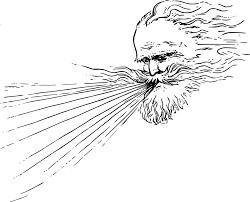
Once upon a time, the Rain God and the Wind God had an argument.
“I am greater than you,” said the Rain God.
“No, I am greater,” replied the Wind God.
To decide who was truly greater, they made a deal: “Whoever can trouble the people of Earth more, will be the greatest,” they agreed.
The next day, the Rain God started the round. It started with light showers but soon turned into heavy rain. It rained non-stop for an entire week! Crops were drowned. Farmers cried over their year-long hard work being washed away. Poor people’s small huts were destroyed. Some people died under collapsing walls. Animals were washed away in floods. Birds shivered in the cold. Rivers and lakes overflowed. Roads were flooded.
For seven days, the Sun didn’t shine, and people were very worried.
They prayed to the Rain God, “Please stop the rain!”
Hearing their cries, the Rain God finally stopped.
He proudly asked the Wind God, “Now do you agree I am the greatest?”
The Wind God replied, “Wait till you see my power. Then we’ll talk.”
Suddenly, the Wind God blew with all his strength.
Dust flew everywhere. Nothing was visible.
Roofs of huts flew away. People and animals were picked up and thrown down by the strong wind. Trees broke and fell. Even cattle tied in the yard broke their ropes and ran away. People were terrified. They prayed, “Wind God, please calm down!”
Hearing this, the Wind God smiled and stopped.
He told the Rain God proudly, “Look! People couldn’t handle even one day of my power. If I continued, imagine what would’ve happened.”
The Rain God was about to agree when suddenly they heard a voice: “No, you are both wrong!”
Surprised, they looked around. It was the Sun God speaking from the sky.
The Wind God asked, “Are you saying I’m not the greatest?”
The Sun said, “What’s so great about scaring people? If I shine too bright all day, even I can make people suffer. But that’s not our purpose. We exist to help people, not to trouble them.”
The Rain God said, “We just wanted to know who is greater.”
The Sun replied, “If you want to know that, ask Indra or the sages—not the people. You made people cry and suffer. Is that fair?”
Both gods asked, “Then what should we do?”
The Sun said, “Rain God, bring rain when it’s needed—during the rainy season or when the water level is low. Then people will worship you with love and gratitude. Wind God, blow cool breeze during summer. In winter, be gentle. During rains, guide the clouds to where rain is needed. Then people will respect and pray to you. Look at Mother Earth. She gives and serves without asking anything in return. Be like her. Don’t make people suffer just to prove who is better.”
The Rain God and Wind God nodded.
“You are right, Sun God. We agree. We will never make that mistake again.”
And with that, they left peacefully.
From Public Domain
Naramsetti Umamaheswararao has written more than a thousand stories, songs, and novels for children over 42 years. he has published 32 books. His novel, Anandalokam, received the Central Sahitya Akademi Award for children’s literature. He has received numerous awards and honours, including the Andhra Pradesh Government’s Distinguished Telugu Language Award and the Pratibha Award from Potti Sreeramulu Telugu University. He established the Naramshetty Children’s Literature Foundation and has been actively promoting children’s literature as its president.
.
PLEASE NOTE: ARTICLES CAN ONLY BE REPRODUCED IN OTHER SITES WITH DUE ACKNOWLEDGEMENT TO BORDERLESS JOURNAL












 Borderless