Categories
Editorial

And This Too Shall Pass…

“April is the cruelest month, breeding
lilacs out of the dead land…”
-- TS Eliot, Wasteland
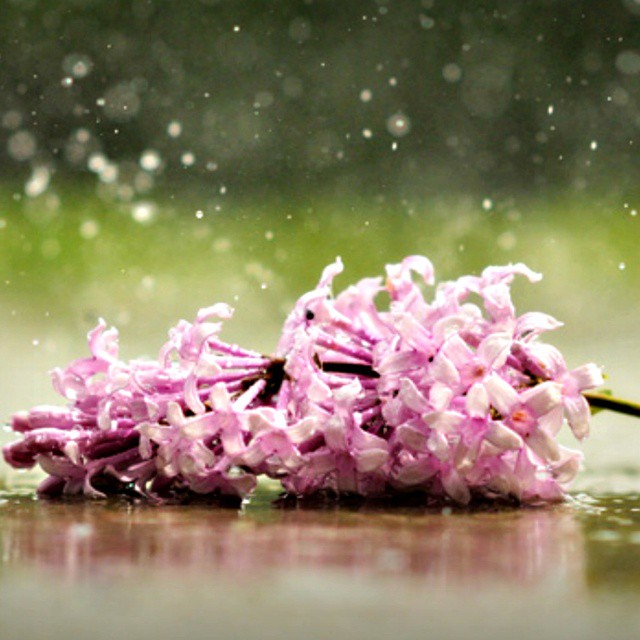
April and May have been strange months — celebrations withered to anxieties. As the pandemic took on demonic proportions in its second wave, devastating millions with death and darkness, paralysing with the fear of losing friends and relatives or ones’ own life, festivities gave way to mourning. April this time truly seemed like the cruellest month as expressed by TS Eliot in the start of the Wasteland, turning our joyous thoughts on healing to a devastating reality of swirling smoke of pyres and graves that continue to throng certain parts of the world. However, mankind needs hope like the Earth needs rain, hope to survive. Great literature and writing inspire to give just that.

This month is also the birth month of three greats who were able to generate that kind of hope with their work: Rabindranath Tagore, Edward Lear and Kazi Nazrul Islam. We launched our new Tagore section on May 7th with Aruna Chakravarti’s translations of the maestro, Songs of Tagore. Do visit us at Tagore & Us to read them and more. We plan to keep adding to this section on a regular basis. This time we have Bengal Academy Award winner Fakrul Alam’s translations of six seasonal songs of Tagore, a translation from Borderless of a poem by the maestro that is not quite accepted as Rabindra Sangeet as the tune was given by the eminent musician Pankaj Mullick. An essay by Dr Anasuya Bhar highlights different lives given to Tagore’s writing by his own rewrites, translations, and films – an interesting perspective. We also carry tributes to Tagore in verse from Ilwha Choi of Korea, Mike Smith of UK, Himadri Lahiri and Sunil Sharma from the poet’s own homeland.

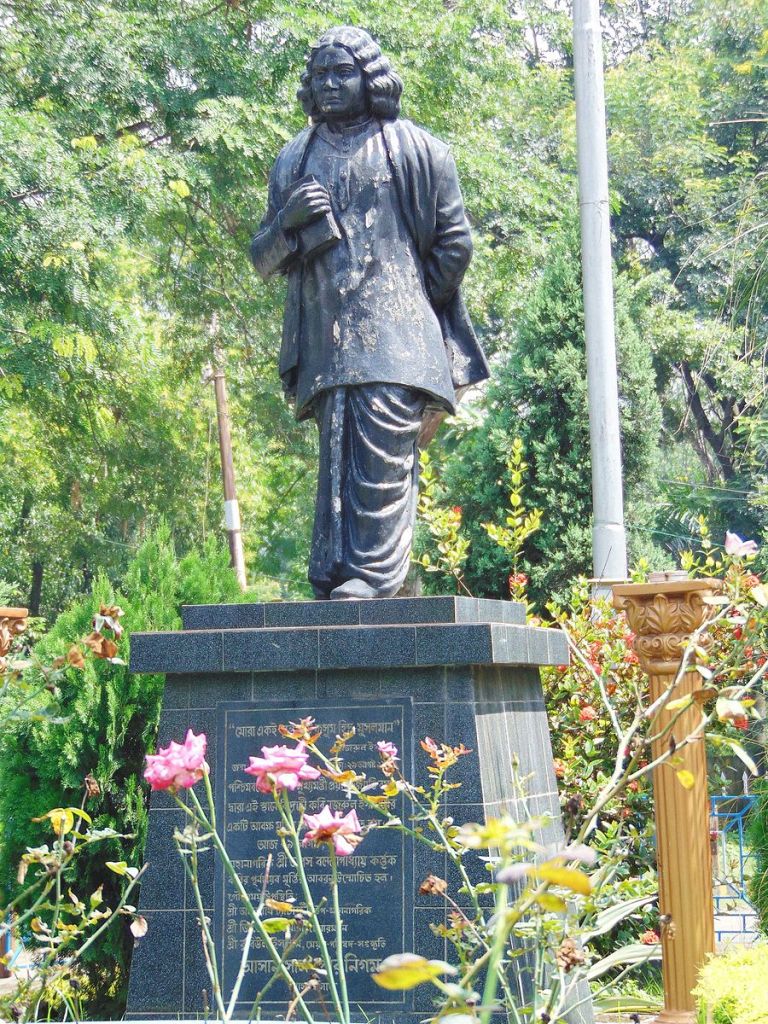
We celebrated Edward Lear’s birthday with some limericks and Rhys Hughes essay placing the two century old writer’s poetry in the present context and a hilarious conclusion to the sequel of Lear’s famous ‘The Owl and the Pussycat’. Upcoming is the birth anniversary of the rebel poet from Bengal, Nazrul. Sohana Manzoor translated a powerful essay and Shahriyer Hossain Shetu, a poem by this legendary writer who believed in syncretic lore and married a Hindu woman. Now the national poet of Bangladesh, Nazrul even wrote of Hindu Gods in many of his songs and essays – a lore that yearns for revival in the current day where politicians have fragmented the world by building more walls, using the names of religion, race, economics, caste and culture.

We have a poem from Pakistan by eminent poet Akbar Barakzai translated by Fazal Baloch using the lore of Samuel Becket’s Godot and yet another translation from Malayalam by Aditya Shankar of Sujith Kumar’s poem. Our poetry section is exciting with an exquisite poem from Jared Carter on a yeti, resting on the ephemerality of its presence; a funny one from Rhys Hughes and a diversity of poets from many countries, including Bangladesh. We also started a new column called Nature’s Musings which will combine poetry or prose with photographs by award-winning photographer Michael Wilkes and Penny Wilkes, who joins us now as a writer-in-residence.

In stories, we carry a COVID narrative by a real doctor, Shobha Nandavar, based in Bangalore and interestingly another about a doctor, the first women to adopt the medical profession in Bengal. Sunil Sharma in his narrative has highlighted a crisis in humanism. There are many more stories which would make for an interesting read. In musings, other than Devraj Singh Kalsi’s witty take on countries without Nobel Laureates, we have a Canadian writer’s perception of death rituals in Japan. Sybil Pretious has shared with us her strange adventures within China this time. Don’t miss the backpacking granny!

The May issue has a wide range of essays and musings ranging from Candice Louisa Daquin’s write up on the need to trust instincts to Keith Lyon’s residency in the Antarctica with interesting photographs. He writes that you could wear shorts in summers! Bhaskar’s Corner pays a tribute to the Padmashree Odia writer who passed away last month of old age, Manoj Das.

Our book excerpt is from an unusual book by Nabanita Sengupta, A Bengali Lady in England (1885): Annotated Translation with Critical Introduction to Krishnabhabini Das’ Englandey Bangamahila. We also carry reviews by Rakhi Dalal of Feisal Alkazi’s memoir, Enter Stage Right: The Alkazi Padamsee Family Memoir and by Bhaskar Parichha of Raising a Humanist by Manisha Pathak-Shelat and Kiran Vinod Bhatia. Shakti Ghosal’s The Chronicler of the Hooghly and Other Stories has been reviewed by Gracy Samjetsabam.

Our interviews this time are more on practical issues than literary – with the two authors of Raising a Humanist and with someone who supported our Tagore section by inviting us to talk on it in an online festival called Anantha, Sonya Nair. A friend and an academic with decidedly avant garde outlook, she is part of the twenty-year-old peer-reviewed Samyukta Journal that homes many academics. Pause by and have a read to see how they serve.

I would want to give heartfelt thanks to Nidhi Mishra and Archana Mohan for hosting Ms Sara’s Selections from Bookosmia this time as they help many battle the pandemic with hope, especially young children growing up in a world inhibited with masks and social distancing. I would also like to thank all the writers and my whole team for rising above the darkness by helping us get together this issue for our readers who I hope do find solace in our pages. And thank you readers for being with us through our journey.

There is a lot more in our pages than I have written. Do take a peek at this month’s issue and enjoy.

Best wishes,

Mitali Chakravarty
Categories
Tagore Translations

Songs of Seasons by Fakrul Alam

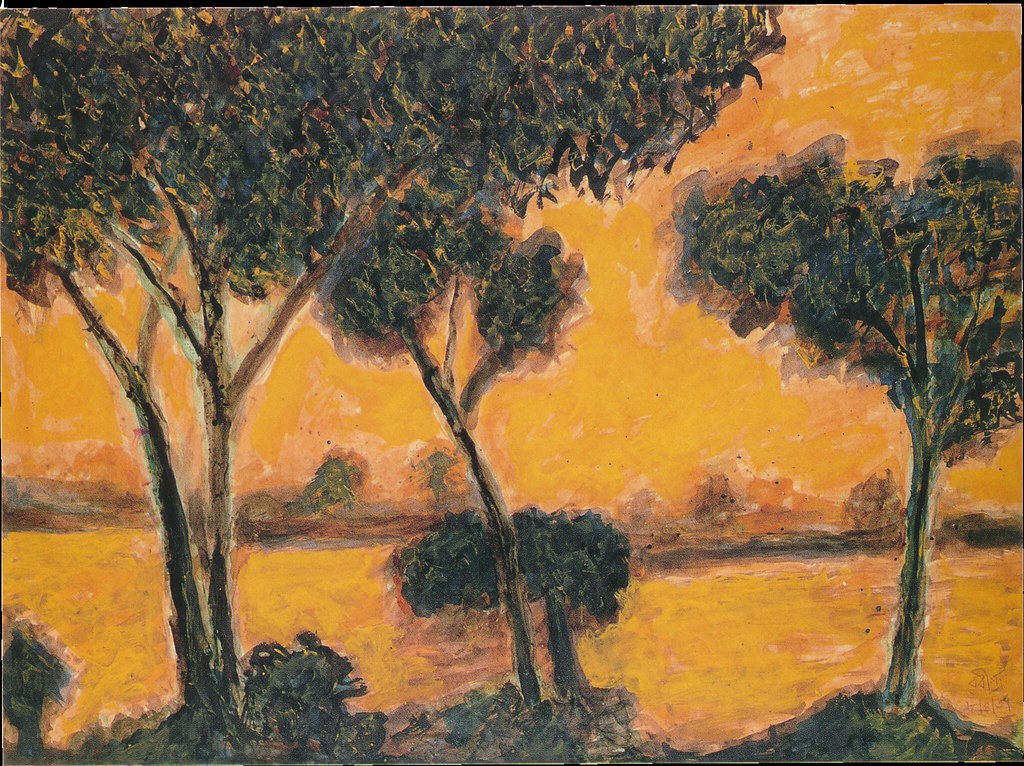
Rabindranth Tagore’s Art. Courtesy: Creative Commons

Tagore wrote on almost all aspects of life. Here are Fakrul Alam’s translations of Tagore’s songs for Ashar, the third month in the Bengali Calendar around the months of June-July. It is the time the monsoons start to set in. The sky, the flora and the fauna are resplendent and fecund with the much-awaited showers. Alam, a renowned scholar and translator from Bangladesh, was kind enough to share these six songs of the season which will soon be a part of his forthcoming publication on translation from the Gitabitan, Tagore’s treasury of more than 2000 songs.

Garland of Lightening Gems
(Bajromanik Diye Gantha, written in 1925)
 
Ashar, how delicate is your garland of jewelled thunderbolts!
Your dark beauty is set off by lightning flashes
Your spells have the power to melt stones and sprout crops--
On your winged feet you bring from sandy wastes flower garlands
On withered leaves you come in torrential and triumphant showers
Your clouds resound like tom-toms in festive abandon
In your deluge of delicious green, parched earth revives
But keep your awful, life-threatening floods away!
 
In the Thunderous Clouds
(Oi Je Jhorer Meghe, written in 1922) 
 
There--in the lap of storm clouds--the rain comes
Its hair loosened, its sari’s borders flying!
Its song beats flutter mango, blackberry, sal and rain-trees
Making their leaves dance and murmur in excitement 
My eyes, moving in beat to its music
Wander in falling rain, losing themselves amidst sylvan shades
Whose familiar voice calls out to me in the wet wind endlessly
Stirring a storm of anguish in my soul on this lonely day?
 
The Tune of New Clouds
(Aaj Nobeen Megher Shoor Legeche, written in 1922)
 
Newly arrived clouds stir a tune in my mind today
And my thoughts become all aflutter causelessly
How these clouds lure me outdoors again and again,
Casting their shade on my eyes every now and then 
In the rain pouring from the sky tumultuously
What message of the path to pursue do they bear?
That path will take my mind’s tune into the unknown
And disperse it in the bower of one forever forlorn!
 
The Sky’s Musings
(Aaj Akashe Moner Kotha, written in 1922)
 
This day I hear the sky’s musings in thundershowers 
They’ve reverberated in my heart all day long.
On the dark lake water, clouds thicken
            The wind, bearing the pain of centuries,
                        Has murmured in my heart all day long
                                  By my window and in darkness
I commune with the sky, all alone 
Like rustling branches, hidden memories stir
                 Evoking a tear-soaked tune in my soul
  As crickets chirp on—all day long! 
  
Under the Kadmaba Trees
(Esho Nipo Bone,written in 1925)
 
Come and walk in the shade of the Kadamba tree rows
Come bathe in rain water streaming down incessantly
Let down your disheveled thick jet-black tresses
Drape around your bodies your sky-blue saris
With kohl-lined eyes and jasmine garlands
Come and walk in the shade of Kadamba tree rows!
Every now and then, my dear, dear soul mates,
Let smiles light up your lips and eyes wondrously
To the beat of pouring rain, let Raga Mallar tuned songs,
Sung in your sweet voices, sound in forests sonorously
Come and walk in the shade of Kadamba tree rows!
 
Tear-filled Sorrow
(Ashrubhara Bedona, written in 1925)
 
Tear-filled emotions stir everywhere!
Whose desire sounds in dark in the clouds this day?
They speed across tempestuously,
Whose lament echoes in the rumbling?
Who could be focused on such fruitless worship?

Fakrul Alam is an academic, translator and writer from Bangladesh. He has translated works of Jibonananda Das and Rabindranath Tagore into English and is the recipient of Bangla Academy Literary Award (2012) for translation and SAARC Literary Award (2012).

.

PLEASE NOTE: ARTICLES CAN ONLY BE REPRODUCED IN OTHER SITES WITH DUE ACKNOWLEDGEMENT TO BORDERLESS JOURNAL

Categories
Tagore Translations

The Last Boat by Tagore

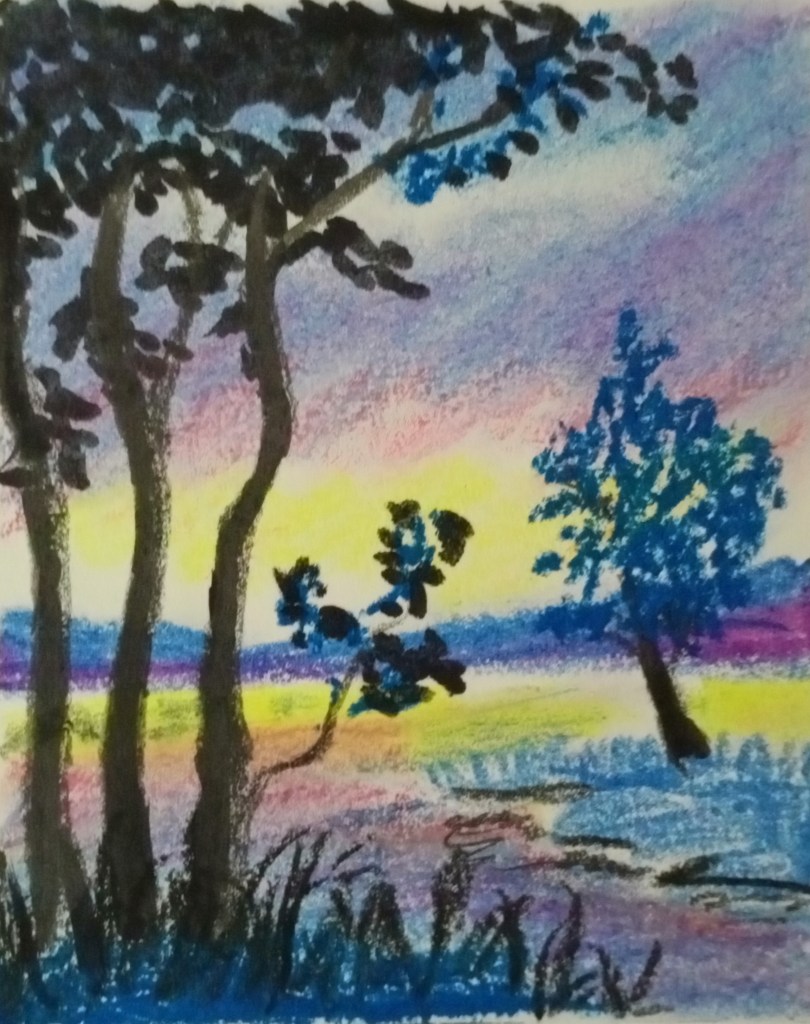
Originally written as a poem by Tagore called ‘Shesh Kheya‘ in 1907 and then set to music in 1922 by Pankaj Mullick, ‘Diner Sheshe Ghoomer Deshe‘( At the Close of the Day in the Land of Sleep) is a solemn song, which seems to cry out with an unfathomable yearning for an unknown fate.

Sohana Manzoor’s pastel that was inspired by Tagore’s Diner Sheshe Ghoomer Deshe
The Last Boat 

At the close of the day, in the land of sleep, a veiled shadow 
Makes me forget, forget my life. 
On the other bank, a golden shore edges the gloaming,
Which like an enchantress disrupts my work.
The wayfarers who head back after completing their task,
Do not look back at the trail they leave behind. 
Like a receding tide, intoxicated, I am drawn away from home.
The dusk sets in as the day leaves. 
Please come, o ferryman, one
Who can row me across on the last
Ferry at the end of the day.
In the dusk, a few ferries ebb with the tide
To the other side. 
How will I recognise the ferryman among the other ones 
Waiting at the arrival to take me to my destination?
Downhill, by the thick vegetation at the bank, 
The shade moves like a shadow.
Where is the ferryman who is willing to halt
When I call out? 
O come, 
The one who will row me 
At the close of the day in the last ferry.
Those who were returning home have gone back. 
Those who headed for the riverside have reached the banks. 
The dusk calls out to one 
Who is neither at home nor at the riverbank, but stuck mid-way.
Flowers do not bloom for those whose crops did not yield harvest —
When I try to shed tears, it turns into sorrowful mirth —
He who has turned off the daylight, did not light up the dusk.
He is the one who sits by the riverbank. 
Please come, 
O ferryman who will row me across
At the close of the day in the last ferry...


Here is the song sung by Pankaj Mullick(1905-1978)

(This has been translated by Mitali Chakravarty on behalf of Borderless Journal with editorial help from Sohana Manzoor.)

PLEASE NOTE: ARTICLES CAN ONLY BE REPRODUCED IN OTHER SITES WITH DUE ACKNOWLEDGEMENT TO BORDERLESS JOURNAL

Categories
Nazrul Translations

Purify My Life

A translation of Kazi Nazrul Islam’s Shuddho Koro Amar Jibon by Shahriyer Hossain Shetu

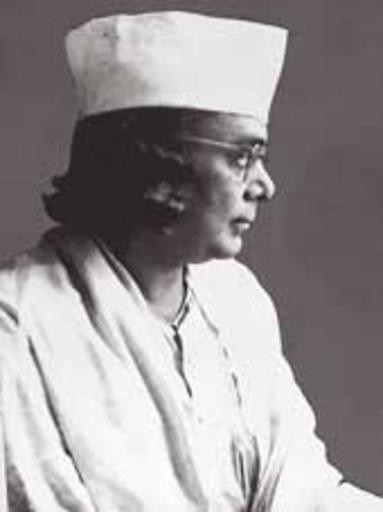
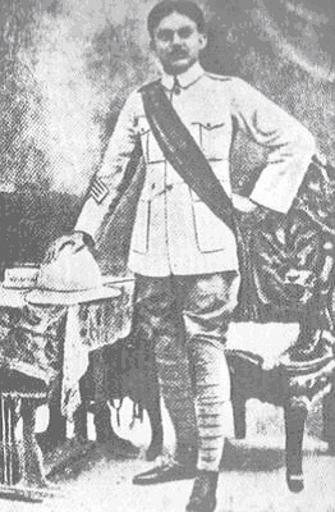
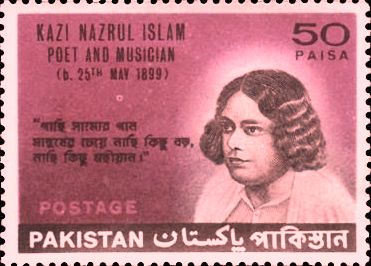
Kazi Nazrul Islam (1899-1976) Known  Bidrohi Kobi, or “rebel poet”, Nazrul was born on 25th May in united Bengal, long before the Partition. Nazrul is now regarded as the national poet of Bangladesh though he continues a revered name in the Indian subcontinent. He was a Muslim, married a Hindu and wrote songs mingling Hindu and Muslim lores. In addition to his prose and poetry, Nazrul wrote about 4000 songs. He was charged with sedition by the British for his fiery writing and jailed repeatedly.

Purify My Life

Purify my life, like dawn let me rise

anew each morn.

Let me be the sunrise,

redefine my life; make me thrive

I’ve been like a depressed widow, a hurtful drop

from Bakul.

Place your hand of blessing on my head

so I grow like a verdant tree when the summer rain

pours on my bosom.

Purify my life like sunrise,

so I become the waking sky.

Turn me into every child’s book of first letters,

and the song of early birds.

Purify my life, so that I

become an island;

Or, childhood, or a new stream of rain;

I’ve drowned in pain and loneliness

And stood like a debdaru.

Purify my life like a fresh blooming flower

so I wake up like a morning’s sleepy eye.

.

*Bakul and Debdaru are both trees that grow in Bengal. Bakul bears flowers that are fragrant and white.

Shahriyer Hossain Shetu is a student in the Department of English & Humanities, ULAB. First Published in Daily Star, Bangladesh.

.

PLEASE NOTE: ARTICLES CAN ONLY BE REPRODUCED IN OTHER SITES WITH DUE ACKNOWLEDGEMENT TO BORDERLESS JOURNAL

Categories
Nazrul Translations

Temples and Mosques

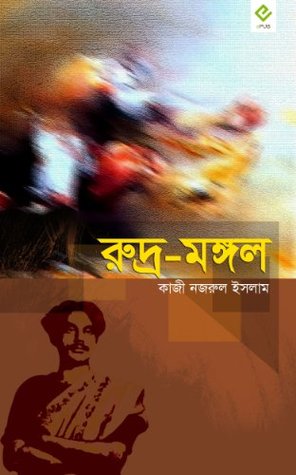
Kazi Nazrul Islam first published Mondir O Mosjid (Temples and Mosques) in Gonovani (People’s Voice) in August 1926, and then as part of his essay collection, Rudromongol(1927) This essay has been translated by Sohana Manzoor.

“Kill those foreigners!” “Bash the non-believers!”—the riot between the Hindus and Muslims had begun anew. At first, it was mere bickering, then it grew into hitting one another, and in the end, it turned into breaking each other’s skulls. In defending the prestige of their respective deities, the Hindus and the Muslims screamed and yelled in a drunken stupor, but as they fell on to the ground after being wounded, I noticed that neither called upon Kali nor Allah; they cried for their mothers. They were lying side by side and were crying like two orphaned children bereft of their mothers.

I also noticed that their screams failed to deter the mosques; the effigies in the temples did not care about their sufferings. Only the blood of the fools continued to stain the stones of the holy buildings. Who would dare to erase the stain of stigma from the temples and mosques, my hero? The future awaits the hero’s arrival.

The Great Spirit approaches, the infinite being who will destroy the meeting place of these drunken religious fanatics. He will demolish the temples and the mosques and bring together all human beings under a single dome of the sky.

I am aware that the self-proclaimed “private secretaries” of the creator will chase me away by throwing their hats and caps, and blowing their shikhas, and yet they are the ones that will fall. They are the fanatics. They have not drunk the light of truth, but the alcohol of the shastra.

Those who hit Muhammad and barricaded his path, those that killed Jesus, have risen again and are in the act of hitting humanity—hurting people like Moses, Jesus and Muhammad. Where are all those prophets who died while saving human beings? They came to save humanity, and today it is their perverted disciples who are causing so much offence to humanity.

The God of humanity is imprisoned today in the secured unit of the temple, in the reformatory of the mosque, in the jail of the church. The mullah, the purut, and the priest are guarding him. On the throne of the Creator sits the devil.

At one place, I saw a total of fifty-nine Hindus beating up a lean, emaciated Muslim. At another, the same number of Muslims thrashed a weak specimen of Hindu. Their way of killing a fellow human being could easily be compared to barbarians killing wild boars. I scrutinised the faces of these murderers and realised that their faces were more ferocious than the devil’s, uglier than the boar. They were filled with jealousy and hatred and hence reeked of hell.

The leaders of both parties are the same and his name is Satan. At times, he joins the Muslims wearing a beard and a cap, and on other occasions, he sports a shikha and works with the Hindus. This same fellow also leads the British soldiers shooting both Hindus and Muslims. His long tail dips into the sea and his face is red like that of the wild monkey beyond the ocean.

I noted that Allah did not arrive to save his mosque and Kali did not appear to save her temple. The top of the temple was destroyed as was the minaret of the mosque. Neither of the two deities cared enough to strike the Muslims with thunderbolt, or to hit the Hindus with stones of Ababil.

Amidst all this turmoil, a few boys appeared and took the clean shaved corpse of Khairu Miah and carried him to the burning ghat uttering “Hari bol at the top of their voices. A few other boys took the body of the bearded Sadananda Babu chanting “La ilaha illallah”, to the Muslim graveyard. The mistaken identities were assumed on the basis of these men having or not having beards.

Were the temple and the mosque growing cracks? Were they laughing at each other?

The battle continued. I saw a thin, wasted beggar-woman begging in the streets with a new-born child at her breast. It was wailing in a thin voice as if protesting against its birth in the world. The woman said, “I can’t even give him milk and he has just arrived. I have no milk in my breast.” I heard the voice of the world’s mother in hers. A man at my side sneered, “And you had to have a male child at this hour too? You don’t have a pound of flesh on your own body even!”

The woman just looked at him without batting her lashes once. Her eyes were burning like stars as if she was saying, “We have to sell our bodies because of hunger. And we sell it to people like you.”

Yes, this man could very well be the father of this child. If it’s not him, it could very well be his friend or brother. Aren’t the stars from the sky hurling the same question to you?

Three days later, I saw the same beggar woman on the street. She had no child with her, and her eyes were vacant. The other day, when she had the child with her, I saw the love of the universe in her eyes and her voice was earnest. But today, the mother in her had died and she was begging for the sake of begging.

She recognised me. I had given her the six paisas I had for tram fare. Her dry eyes suddenly welled up. I asked, “Where’s your son?”

She pointed to the sky and said, “Will you come with me, Sir?”

I followed her to a dustbin by the Krishnachura trees. I shuddered when she dug out a small bundle of rags from beneath the rubbish. She hugged and kissed it saying, “My darling, my sweet.”

This was her child—her darling and her sweet. She sat there quietly for some time and then threw the body in the dustbin. She said, “I bought a tin of outdated barley with the money you gave me the other day. I fed that barley diluted in cold water to my son. I took some myself with the hope of growing some milk in my breast. But no, it did not happen. My darling could not have a drop of milk in these three days. Then the barley was finished too, and he left me just today. It’s good that he left. I hope in his next life he is born to some well-to-do people. At least, he’ll have some milk.”

The beggar woman went off to beg and I took her child and walked toward the graveyard.

On my way, I saw the Hindus and the Muslims fighting with stones and bricks. I stood and watched them with the child’s corpse in my arms. But these zealously religious people had no time to look at a dead child; they were too busy hurling bricks and stones against each other and causing havoc. They had no time to look at the mother of the universe passing them by with ten lakhs of her emaciated children. They were the worshippers of bricks and boulders.

Weren’t those houses of worshipping created for the welfare of humanity? Since when have human beings become sacrificial animals for those houses? If that’s the reason behind the existence of those buildings, demolish them. Let all humanity gather together under the starlit night sky. Human beings built the temple and the mosque with their own hands. Now just because two bricks have fallen from the structure, should innocent victims be punished?

I wonder, when the row of emaciated, hungry men and women walk by the temple and mosque, why aren’t those structures affected?  Why isn’t there an earthquake and why doesn’t the Eternal Power tear down these buildings? Why doesn’t He pursue those caps and shikhas and wipe them out from the face of the earth?

Oh, where are you, the youth of our times? You are the only ones that can overcome such adversities. O my fearless brothers playing with fire, the ten lakh hapless people stand at your door. They seek your help.

You are not part of the team of vultures; you are the roaring fire, and you belong to no race, no creed. You belong with light, with songs, with integrity. Come out and chase those vultures away.

.

Glossary

Shikhas – Crest of hair

Shastras— Hindu scriptures

Mullah – Muslim priest

Purut – Hindu priest

Ababil – Mythical birds from Islamic lore that attacked by pelting stones. Just as Thunderbolt was the weapon of the Hindu deity Indra, these birds attacked invading African armies and protected the Kaaba or the holy Islamic rock in Mecca.

Hari bol, La ilaha illallah – Chants used by Hindusand Muslims while doing death rituals invoking Krishna with Hari Bol and Allah with La ilaha illallah

Kazi Nazrul Islam (1899-1976) was born on 25th May. He was a Muslim, married a Hindu and wrote songs mingling Hindu and Muslim lores. In addition to his prose and poetry, Nazrul wrote about 4000 songs. He was charged with sedition by the British for his fiery writing and jailed repeatedly.

Sohana Manzoor is Associate Professor at the Department of English & Humanities at ULAB. She is also the Editor of The Daily Star Literature and Reviews Pages.

.

PLEASE NOTE: ARTICLES CAN ONLY BE REPRODUCED IN OTHER SITES WITH DUE ACKNOWLEDGEMENT TO BORDERLESS JOURNAL. 

Categories
Poetry

Vikings, Cows & Goldfish

Poetry by Rhys Hughes

NOT MY CUP OF TEA

To be chopped
into tiny pieces by the
axes of furious Viking warriors
isn’t really my cup of tea.
      To sail a yacht
over the edge of a waterfall
and be smashed
to bits on the rocks below also
isn’t my cup of tea.
Please believe me when I say it.
     To fall into the
crater of an active volcano
and plop into the lava
while having a picnic
on the slippery slopes is a thing
one hopes will never
come to pass, ergo it’s not
my cup of tea either.
What else fits into this category?
     Ah yes! I recall.
A hot beverage made from
the hand-picked leaves
of a specific bush and consumed
in a porcelain drinking vessel
that belongs to you…
It’s just not my cup of tea.

 
NO REFLECTION

If the sun shines through a window
onto the mirror in your room
but fails to deflect from the glass
and bathe you in mellow warmth
that’s no reflection on you,
my friend! It’s no reflection on you.

If the moon glows on a silent lake
and the luminous lake silvers
the skins of friends and relations
but leaves you in a dismal shadow
that’s no reflection on you,
my friend! It’s no reflection on you.

If the stars sparkle the frosty brows
of sleeping cows in a meadow
but these sparkling cows reserve
the astral gleam all for themselves
that’s moo reflection on you,
my friend! It’s moo reflection on you.

 
FORGETFULNESS

Once I had a memory like an elephant.
Now I have a memory like a goldfish.
That’s what time does to a man.
But what animals can be found between
     these two extremes?
I must have had a memory like a mule
at one point, and like a squirrel
too, a snake and a fox,
a giraffe and a panda (full of thoughts of
      bamboo), even a baboon.
But I don’t remember…
I just swim around and around inside the
             bowl of my head
                 instead.

Rhys Hughes has lived in many countries. He graduated as an engineer but currently works as a tutor of mathematics. Since his first book was published in 1995 he has had fifty other books published and his work has been translated into ten languages.

.

PLEASE NOTE: ARTICLES CAN ONLY BE REPRODUCED IN OTHER SITES WITH DUE ACKNOWLEDGEMENT TO BORDERLESS JOURNAL. 

Categories
Essay Travel

Four Seasons and an Indian Summer

Four Seasons isn’t just a high-end hotel brand or an iconic piece of classical music that features in luxury car ads. The four seasons — spring, summer, autumn and winter — follow one another regularly over a year. But as Keith Lyons shows with his camera and narrative, this isn’t a universal rule, and the passing of each year is bringing new changes and challenges.


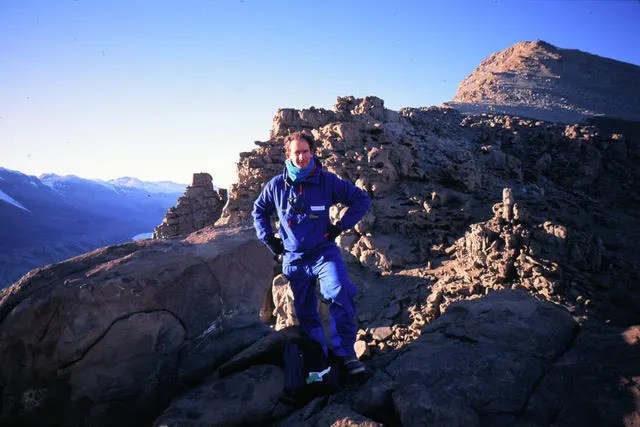
In the Dry Valleys of Antarctica, one of the few places which isn’t covered in ice or snow. Photo Courtesy: Keith Lyons

There are probably a few places on Earth that technically have no seasons, but even that is stretching the definition. The one I went to isn’t really a country, and when I was there, it was at the peak of summer, with days lasting almost 24 hours. On calm clear days, I could wander around in just a t-shirt and shorts. A high SPF sunscreen and Clinique’s Dramatically Different Moisturising Lotion were my constant companions on any outdoor adventures to cope with the sun’s rays and the dry air.

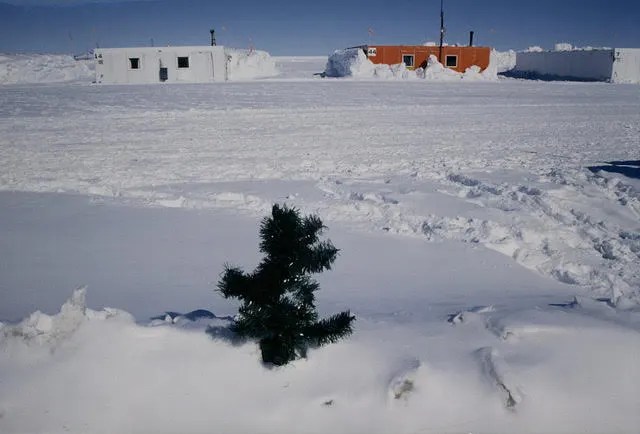
It was too cold and too dry for any trees or shrubs to grow, so I couldn’t get the visual clues about the seasons either.


Williams Field airfield in Antarctica with an artificial Christmas tree the only vegetation. Photo courtesy: Keith Lyons

Which place, you ask? Wherever you are, travel south. More. More still. Right to the bottom of the globe. Antarctica.


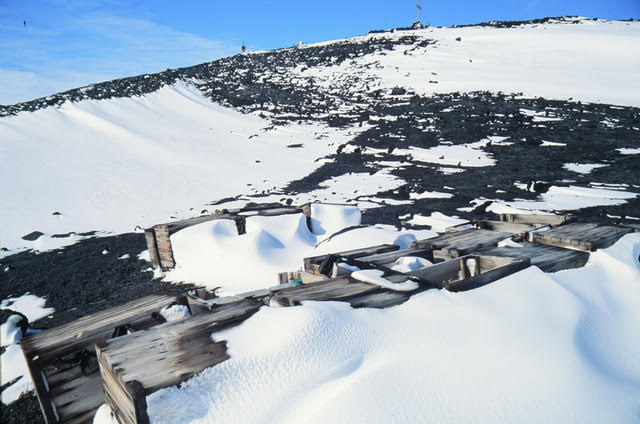
A natural ice sculpture formed by melting ice in the middle of summer at Bratina Island, Antarctica. Photo courtesy: Keith Lyons

Actually, the southernmost continent, which is pretty much ice-covered, does have two seasons: Summer and Winter. It is not in a perpetual winter year-round. Summers are short and cold, and full of sunlight, with the sun above the horizon most of the time. Around mid-summer, it never gets dark. These endless days of summer, from November to February, can play havoc with your circadian rhythms, your ‘inner clock’, interfering with regular sleep patterns, as many scientists, support staff or military personnel discover.


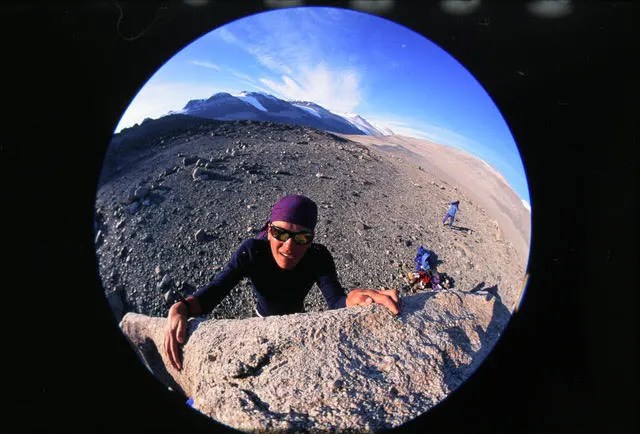
In summer, even rock climbing is possible in Antarctica in the Dry Valleys. Photo courtesy: Keith Lyons

For the few that ‘winter over’ on the inhospitable polar region, from March to October, have to endure long, dark nights before they experience twilights.

An equally intriguing exception to the four-seasons-in-a-year rule can be found along the Equator with some places in the tropics only having two seasons: wet and dry. Regions near the Indian Ocean experience three seasons, with a short winter, then summer, and then, the monsoon. The nation of Bangladesh goes one step further in claiming to divide these three seasons into six, with summer, monsoon, autumn, late autumn, winter and spring. 

As desirable tourist destinations, once Covid-19 is contained, there are a number of places whose climate satisfies the traveller seeking blue skies, sun, and warmth, including Cape Verde in Africa, Mexico, Malta, Dubai, Thailand, the Maldives, Hawaii, Florida, Brazil and of course, India. Even countries such as Singapore and Malaysia have no distinct seasons, at least to outsiders, who just know the island for its heat and humidity and the chill of air-conditioning.

The country of my birth, New Zealand, can claim to have four seasons — four seasons in a day. Due to its remote location surrounded by the ocean and in the path of winds from the west, and a spine of mountain ranges, as well as some volcanoes, New Zealand’s temperate climate, is never too extreme, but as band Crowded House once sang, there are ‘four seasons in one day’. For example, tomorrow’s weather forecast for Christchurch is for a high temperature of 24C but dropping down to 4C with a cold southerly change with winds and rain, and possible frosts the following mornings.

In New Zealand, because the ever-changing (and at times, unpredictable) weather plays an important part in our lives, particularly agriculture and tourism, everyone watches the weather, tuning in for 6.55pm TV forecasts, or checking the MetService app with its severe weather warnings, rain radar maps, and advice. Right now, the app tells me it feels like 12C outside, two layers of clothing are recommended, and the sun which went down at 5.22pm won’t rise until 7.30am.

The weather can influence us in many ways, including our mood. One remedy for malaise is to spend more time in Nature, even if it is in a public park, garden, or in these times of Covid-19 lockdowns, hanging out with a pot plant.

Some people have a preference for a particular season. Overseas tourists often visit over Christmas-New Year and in the warmest months of summer, while others wait until the first snows have fallen in the ski fields. Spring with its daffodils blooming and newly born lambs bleating seems to be a time of promise and hope. Shoulder and off-peak season visitors, along with many retired folk, like March and April for travel, when students are back studying, and the weather can be more settled.

Many hope there will be an ‘Indian summer’. No, this isn’t a derogatory term or even a reference to the second-most populous nation. Its origin may have come from North America a couple of hundred years ago referring to a period of unseasonably warm, dry and calm weather, perhaps associated with haziness from prairie fires set by Native American Indians. The term ‘Indian summer’ may have been picked up and mistakenly associated with the Indian subcontinent during the time of the British Raj in India in the 19th century. Basically, it means a late summer. Or a pleasant early autumn.

For me, this is one of the special times of the year, as I notice the changes happening all around me. In particular, I see the leaves of trees change colour, and eventually fall to the ground. For me, even though the signs are of death and decay, there seems to be more of a link to a deeper purpose, the cycle of life, and the order of the universe, assured by the warm, orangey tones, and the golden highlights.

This time last year, at the end of March, New Zealand went into a lockdown to combat the spread of Covid-19, but while people were urged to stay at home, households were allowed to go out for exercise each day. Many residents re-discovered their neighbourhoods, venturing out to parks or walking down leafy lanes, as the late summer morphed into early autumn. Facebook posts featured landscapes, trees, leaves, and even the veins of leaves silhouetted against the sun. I recall one long walk I took, to escape doom-scrolling the bad news about Covid-19’s contagious spread. On my headphones I listened to Vivaldi’s Four Seasons, while still in my head I held the words of the accompanying sonnet for Autumn, which reminded me to pick up a bottle of Merlot for my parents:

“Celebrates the peasant, with songs and dances,
The pleasure of a bountiful harvest.
And fired up by Bacchus' liquor,
many end their revelry in sleep.
Everyone is made to forget their cares and to sing and dance
By the air which is tempered with pleasure
And the season that invites so many, many
Out of their sweetest slumber to fine enjoyment.”

In tandem with a new appreciation for life — and being alive — there was also another growing awareness of something far bigger than the pandemic sweeping around the globe. Climate change.

Whether you call it global heating, or human-induced climate breakdown, warmer, polluted air is affecting us all.

There are links between stances about climate change, and the pandemic. Covid-19 has been described as climate change in fast motion. Both have their science deniers and sceptics, who tend to be more conservative and individualist.

The words of the Greek philosopher Heraclitus have never been more relevant:

“Nothing in life is permanent, nor can it be, because the very nature of existence is change.”

The challenge for us all is to be present in the moment, acknowledging our fears and anxieties, and action the Latin phrase to ‘seize (or harvest) the day’. My friends, ‘Carpe the hell out of this Diem’.

Keith Lyons (keithlyons.net) is an award-winning writer, author and creative writing mentor, with a background in psychology and social sciences. Keith was featured as one of the top 10 travel journalists in Roy Stevenson’s ‘Rock Star Travel Writers’ (2018). He has undertaken writer residencies in Antarctica and on an isolated Australian island, and in 2020 plans to finally work out how to add posts to his site Wandering in the World (http://wanderingintheworld.com).

.

PLEASE NOTE: ARTICLES CAN ONLY BE REPRODUCED IN OTHER SITES WITH DUE ACKNOWLEDGEMENT TO BORDERLESS JOURNAL. 

Categories
Poetry

Yeti by Jared Carter

               Yeti

Tell me again that nothing’s there,
          that never was
At all, except in places where 
          things slip, or pause,

Yet register, on some high ridge
          where something moves
And then is gone. As though a bridge
          of snow should lose

Its grip, and drop away, but leave
          a shadow where
Such vanishing might still deceive
          in that thin air.

Jared Carter’s most recent collection, The Land Itself, is from Monongahela Books in West Virginia. His Darkened Rooms of Summer: New and Selected Poems, with an introduction by Ted Kooser, was published by the University of Nebraska Press in 2014. A recipient of several literary awards and fellowships, Carter is from the state of Indiana in the U.S.

.

PLEASE NOTE: ARTICLES CAN ONLY BE REPRODUCED IN OTHER SITES WITH DUE ACKNOWLEDGEMENT TO BORDERLESS JOURNAL

Categories
Review

The Fascinating Saga of Feisal Alkazi

Book Review by Rakhi Dalal

Title: Enter Stage Right: The Alkazi Padamsee Family Memoir

Author: Feisal Alkazi

Publisher: Speaking Tiger Books, 2021

Feisal Alkazi is an educationist, a theatre director, and an activist. Over the past 40 years, his group, Ruchika, has directed over 200 plays in Hindi, English, and Urdu. Noor and A Quiet Desire, two plays written by him, were produced recently. He has also directed thirty films, and more than 100 productions for schools all over India. He is actively involved in heritage education, initiating projects in Delhi, Jaipur, Srinagar, and Hyderabad each of which has culminated in a book. He has written over 20 books.

Enter Stage Right by Feisal Alkazi is a family memoir which recounts the story of two families intertwined by a single love – theatre, of people who helped shape much of the Indian theatre from 1940s to 1990s, of people who came together by chance and stayed on to weave a rich tapestry which not only included theatre but also art, media, cinema and advertising. A memoir which draws an exhaustive portrait of one of the first families of theatre in a subtle yet candid manner, unveils some secrets, shares some anecdotes while capturing the complete attention of the reader.

The prologue of this memoir titled ‘Around the Horseshoe – Shaped Table’ starts with:

English theatre in Bombay was born on my grandmother’s horseshoe-shaped dining table in 1943. Literally. A group of young college students, among them my father, Ebrahim Alkazi, listened wide- eyed as my Uncle, Sultan Padamsee, spoke of how they intended to form their own group, simply called the Theatre Group.”

These lines open the book with a perfect scene for the reader, drawing attention to the setting which was at the core of foundation of theatre group formed by Sultan Padamsee, the eldest of the Padamsee siblings including Roshen and Alyque. Roshen became a costume designer for plays directed by Sultan and later by her husband Ebrahim Alkazi. Akbar, their cousin, though not a part of the horseshoe table gathering, became a famed painter, one of the pioneers of modern Indian art, while Alyque a famous theatre personality and ad film maker, probably best known for playing Mohammad Ali Jinnah in Richard Attenborough’s movie Gandhi.

How in the 1940s, the entire Padamsee clan would come together for the preparation of plays directed by Sultan, or Bobby as he was lovingly called, is well recounted by Alyque Padamsee, who was then a kid and Sultan’s younger brother.

There was a little trellis in our bedroom, the roshandaan. We used to climb up on stools and peek through that window to watch what was going on in the drawing room. Bobby reciting Shakespeare, Roshen stitching costumes, Zarina painting posters, Shiraz making some props. It was like a cottage industry, and it was so thrilling to be in a family that had something so exciting to do!”

The seed of this industry, as he calls, was sown by Sultan’s mother Kulsum Padamsee, who had determined the best of English education for her children, which meant that her children were all sent to an elite residential school in Bombay where they had their first lessons in theatre. At her home in Kulsum Terrace, overlooking Colaba Causeway in Bombay, she would allow them to enact plays. Later, she took them to Shropshire, England for further studies where the worlds of Shakespeare and Dickens and Hardy were revealed to them. However it was Sultan, who — having spent six months at Christ Church in Oxford before World War II — began directing plays for the St. Xavier College’s Shakespeare Society in 1943.

Feisal writes about the flamboyant and bold Sultan who revolutionized the theatre scene in 1940s, about his choice of directing Oscar Wilde’s Salome which was controversial enough for the times. His restructuring Shakespeare’s Othello was also a move towards the unimaginable in those days. He writes about Sultan’s suicide at the age of twenty three, the cause of which remained a well-guarded secret of the family for many years. Though Sultan’s untimely demise did create a void, the revolution helmed by him was forged further by the rest of Padamsee clan. As present on the horseshoe – shaped table that day in 1943, was also Ebrahim Alkazi, mentored by Sultan, who was later to become the director of National School of Drama and to shape the subsequent theatre milieu.

In the successive chapters, Feisal delves into the history of his father’s family and staging of plays by the Theatre group after Sultan’s death, about the split in Theatre group with Ebrahim and Alyque going separate ways, about his parents’ stay in post War London and the influences they carried back to India, about his early years at Vithal Court where his father, perhaps continuing the tradition of Padamsee family, turned the whole house into a rehearsal space for theatre! Imagine a life where entire days of the family were spent in reading, rehearsing, soaking in various forms of art, hosting the likes of Nissim Ezekiel, M.F. Hussain, Tyeb Mehta, John Cage, Merce Cunningham and Adi Davierwala, where the house constantly bubbled with activities stimulating the mind, where the children, joined by their numerous cousins and friends, would perform plays for the audience, constituted of their families. Fancy having a childhood like that!

Feisal describes the experience:

Sound, smell, touch, flavor. Open windows that allowed the world in, and that allowed me to peep into the world from my tiny height. Not the isolated ivory tower of the Padamsee childhood but a vibrant, open, engaged view of the world.”      

In one of the chapters, aptly titled Six Women Who Revolt, Feisal gives us a glimpse into the choice of plays his father directed during his last phase of directing for the Theatre Unit in Bombay. Henrik Ibsen’s Hedda Gabler, August Strindberg’s Miss Julie, Jean Anouilh’s Antigone and Eurydice, Lorca’s Yerma and Euripides’ Medea – plays with strong female central characters. While offering critique of these plays and sharing some anecdotes about their production, Feisal interestingly remarks how through the exploration of these characters, his father seemed to be trying to comprehend his own equation with women. It is a discreet, well intended remark which somehow seems to familiarize the reader with the relationship shared by Ebrahim Alkazi with his wife Roshen and then with his later partner, Uma Anand.

In writing about his parents, Feisal dwells more upon his father’s professional life, the plays he directed, the experiments he did with the use of space and light, the revolutionary ideas he brought to NSD (National School of Drama, New Delhi), the fine actors he mentored during his years as Director, but not upon the personal life which Ebrahim shared with his mother. In the chapter where he writes about his parents’ separation, he does write about his mother’s sadness and their difficult initial years in Delhi but focuses more upon his mother’s endeavour in establishing and running an art gallery with her husband and continuing designing costumes for all of his plays even after their separation. What’s even more intriguing is that his parents continued travelling together, every alternate year, to Europe and Beirut to visit Ebrahim’s parents and siblings. Despite their differences, they came together to enrich their children’s lives by revealing to them the best of art and theatre the world had to offer and by letting them spend time with their paternal grandparents, soaking in love, and mores of a culture they lived far away from.

Back home in Delhi, both Feisal and his sister Amal would spend time at NSD, where their father would rehearse and direct plays and their mother would design costumes. During his college years at St. Stephens, Feisal made his own theatre group called Ruchika and spent considerable time in acting and directing the plays. However, it is while he writes about the theatre of questioning and dissent which gained momentum during the late 1970s and 1980s, that the readers get a peek into his role in taking theatre to wider audiences. He talks about the Sikh pogrom of 1984, the rallying of Narmada Bachao, Babri demolition, brutal murder of Safdar Hashmi and about terrorism in Kashmir. Despite his very humane account of repercussions of violence in a society in those times, he does not anywhere refer to the present regime and the sufferings faced by people in the current times.

In writing about his family, he also gives an account of his maternal grandfather Jafferbhai and his aunt Pearl Padamsee, wife of his Uncle Alyque Padamsee. He credits Alyque for making English Theatre accessible, popular and relevant to middle-class audience of Bombay. According to him, Safdar Hashmi, Mahesh Elkunchwar and Alyque were three individuals who widened the scope, subject matter and audience for theatre in 1970s and 1980s, so that it never looked the same again.

Feisal pays homage to his mother by saying that it was the greatest privilege of his life to have been her son — an endearing tribute to the one who taught him all he ever learned of life. He ends the memoir befittingly with an epilogue in which he mentions the death of his father in August 2020. Ebrahim Alkazi was the last survivor of those who had gathered at the horse-shoe shaped table in 1943 and his going marked an end of an era.

Writing a family memoir comes with its own challenges, especially when the entire family is engaged in pursuits which are open to speculations and public opinions. There is always a risk of either going overboard or offering little to the reader in terms of a relevant account. Feisal does a brilliant job in maintaining that balance while offering this memoir. He gives us a detailed account of what matters and merely touches upon that which can be omitted. His writing is astute, rational and pragmatic while being vigorously ebullient.

This memoir is not only the story of a family dedicated to theatre but also an important document which chronicles the history of Indian theatre as well as arts centred around the two important cities of Bombay and Delhi, of the plays which shaped much of the theatre’s panorama in India, of actors, playwrights and directors whose entire lives revolved around enhancing and taking the form to a wider audience, of the efforts the theatre and people associated with it made to give voice to the common man’s concerns in difficult times. This is an essential read for anyone interested in theatre and in the broader art scene happening in the country during the period.

.

Rakhi Dalal is an educator by profession. When not working, she can usually be found reading books or writing about reading them. She writes at https://rakhidalal.blogspot.com/ .

.

PLEASE NOTE: ARTICLES CAN ONLY BE REPRODUCED IN OTHER SITES WITH DUE ACKNOWLEDGEMENT TO BORDERLESS JOURNAL. 

Categories
Musings

The Quiet Governance of Instinct

By Candice Louisa Daquin

I grew up in a rational household. With people who tried to be rational all the time and usually were not. Despite this, I cleaved to the notion, rationality above emotionality or any other kind of reasoning.

My grandmothers were ridiculed for their superstitions and their gut instincts and women whose hands flew to their chests as they felt deeply, were laughed at. The provable, science of reason was the raison d’etre that ruled the day.

In living this way, two things happened. Firstly, I neglected my other instincts entirely. Secondly, I was wrong many times.

Reason cannot explain everything. It merely presupposes itself to be objective and thus, empirical. But as with any man-made presumption, it’s only as good as its maker, who of course, is anything but rational. Furthermore, there’s value in instinct — that gut instinct, someone has walked over my grave feeling your grandmothers had and you laughed at. Looking back, I cannot tell you how many times my gut instinct about a person or a situation was right and I ignored it because it wasn’t rational. For those of us who are non-believers, it’s very hard to believe in something less tangible than reason. But when we realise we have only believed reason is tangible, we can see all is fallacy and begin over.

Beginning over means being open to all possibilities including those that are not easily explained.When I get a feeling about something, I cannot point to its cause and explain it. So many times, I ignored it. More fool me, given it was nearly always right. It’s hard to explain to someone why you don’t want to get to know them, because your instincts say it’s not a good idea, so you go ahead and you ignore that, tamp it down, and later on realise, when they reveal themselves to be the unbalanced person you thought they were initially, how you should have had the courage to be honest. But how do you honestly explain to someone you don’t trust them just based on a feeling?

Instead, we do the socially approved norms and we neglect our instincts because how can we honestly get away with basing everything on feelings?

It is then, a huge irony that feelings, those initial thoughts we have upon meeting someone, are so often right. It may be as simple as an instinct like other animals have, and the accuracy of it is based upon the same natural instincts all animals share, that has just been forgotten by humans. We should make room for the validity of gut instincts and ‘senses’ given how accurate they are. They may not fit well with modern society, we may not be able to tout them as we do science, math, provable things. But when we realise so much of math and statistics is created by us, and thus, is only as empirical as we’ve made it, we can see everything is subjective and there is room for other modes of thinking and feeling.

I’m continually astounded by how accurate my gut instinct is. I met a woman once who I ended up working with extensively on a project. By all accounts she was a professional and a boon to the project. However, my first impression of her was she raised the hairs on the back of my neck. There was just something ‘wrong’ but I ignored this, feeing absurd for my feelings, and proceeded to work with her and have a friendship through that work. With time she revealed herself to be mentally unbalanced and worse, nothing of what she purported, and I found myself wishing I had known, when in reality I always had.

Rather than kicking ourselves we should applaud ourselves when we do have the courage to stand by our instincts. They have always been with us, they are not artificially imposed, they don’t worry about what others think and they’re not subject to whim as much ironically, as ‘facts’ can be, in this day of mutable truisms.

When something feels wrong, it’s probably wrong. When someone doesn’t seem right, they’re probably not. Don’t let their faux-shaming of your instincts, or your own, stop you from doing what you need to do to ward off potential calamity. We have instincts for a reason, and just as your cat knows when a predator is watching it, you know when one is watching you.

.

Candice Louisa Daquin is a Psychotherapist and Editor, having worked in Europe, Canada and the USA. Daquins own work is also published widely, she has written five books of poetry, the last published by Finishing Line Press called Pinch the Lock. Her website is www thefeatheredsleep.com

.

PLEASE NOTE: ARTICLES CAN ONLY BE REPRODUCED IN OTHER SITES WITH DUE ACKNOWLEDGEMENT TO BORDERLESS JOURNAL.