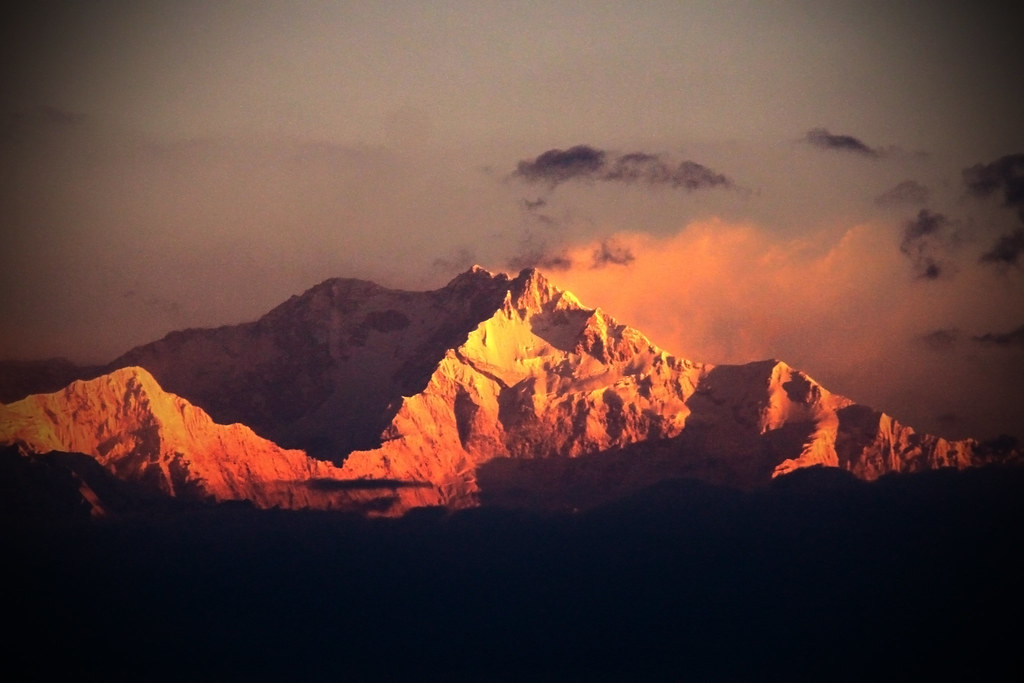
Sunrise at Kanchenjunga from Tiger Hills, Darjeeling.
Blue Sunbirds haunt this region. They
Convert this hill into an odeum.
At five a.m, tree branches sway
When dawn winds blow, making a constant hum.
By six, a gradual colour change
Occurs above the distant mountain range.

The sky, once lazuli and white,
Gets flooded by the hue of orange-gold
From Heaven's massive source of light.
The tourists, standing cheek by jowl, behold
This incandescent spectacle
Like witnessing a one-time miracle.

The children are moon-eyed and thrilled,
Adults and elders bow in adoration
(As if to God Himself), all stilled,
When Kangchenjunga gets its coronation,
And youngsters click and store this view
Until that light has fully bathed them too.
Shamik Banerjee is a poet from India. He resides in Assam with his parents and works for a local firm. His poems have appeared in Fevers of the Mind, Lothlorien Poetry Journal, and Westward Quarterly, among others, and some of his poems are forthcoming in Willow Review and Ekstasis, to name a few.
.
PLEASE NOTE: ARTICLES CAN ONLY BE REPRODUCED IN OTHER SITES WITH DUE ACKNOWLEDGEMENT TO BORDERLESS JOURNAL
‘Himalaya Jatra’ (A trip to the Himalayas) has been excerpted from Jibon Smriti[1] and translated by Somdatta Mandal.
Jibon Smriti by Rabindranath Tagore (1861-1941)
After my head was shaved for the upanayan (sacred thread) ceremony, I was seriously troubled thinking how I would go to school. However serious attraction the European boys had towards the bovine race; they did not have that much respect for the Brahmins. So even if they did not throw anything over the shaven head, they would surely make fun of it.
While I was worried with such thoughts, I got a call one day from the room on the second floor. Father asked me whether I would like to go with him to the Himalayas. If I could shout the words “Yes I do” at a sky-rendering tone, then the feelings of my heart would have been suitably expressed. Where was the Bengal Academy and where the Himalayas!
Before leaving, Father assembled everyone in the house and according to his tradition did the upasana – the traditional prayers. After paying obeisance to all the elders I entered the coach along with Father. At my age, this was the first time that clothes had been tailored for me. Father had personally ordered the colour and the quality of the fabric. A round velvet cap with design in zari[2] was also made for me. I held that in my hand because I felt reluctant to wear it on my shaven head. As soon as I entered the coach, Father ordered, “Wear it on the head.” He did not leave any scope for untidiness and so I had to wear that cap over my shameful head. In the train, I would take it off whenever I got an opportunity to do so but that did not escape Father’s notice. So, I had to keep it in its right place.
Right from youth to maturity, all the ideas and work of my father were always perfect. He could not leave anything hazy in his mind and could not do any work in a haphazard manner. For him his duty towards others and the duty of others towards him were defined very clearly. By nature, we are an easy-going people and not concerned when we deviate a little here and there. So, we were always very scared and alert about our behaviour towards him. Though it did not cause any serious damage, he felt hurt if there was any deviation from his agenda. Before making any resolution, he would mentally visualise everything clearly in all its details. So, for any occasion he would plan where each object should be placed, who would be placed in which position, who would be entrusted with which responsibility and to what extent there would be no deviation from that on any account. After the work was complete, he would gather reports from different people. Then he would compare each description and by putting them together in his mind, tried to see everything clearly. In this respect he did not possess our national character at all. There was no chance for the minutest deviation in his resolutions, thoughts, behaviour and performance. For this reason, for all the days I was with him on this trip to the Himalayas, I had plenty of freedom on the one hand but on the other, all my behaviour was determined in such a manner that it could not be transgressed. When he declared a holiday then he would not prevent one doing anything for any reason whatsoever; when he fixed some rules then he didn’t leave any scope for minute lapses.
Before our journey to the Himalayas commenced, we were supposed to stay for some days at Bolpur. Satya had gone there some time back with his parents. No nineteenth century child from any respectable household would ever believe his travel accounts. But we had not yet learnt to decipher the demarcating line between possible and impossible acts. Even Krittibas or Kashiram Das could not help us in this matter. The colourful children’s books and magazines with pictures in them did not warn us beforehand about the difference between fact and fiction. We had to learn the hard way that there was strict discipline in the world.
Satya[3] had told me that boarding the train was a dangerous act and one could not do it if one did not have special abilities for it. There was no way to save oneself if one slipped and fell. Also, when the train would start moving after that, they would need to assemble all the strength in the body and force themselves to sit down otherwise they would be pushed in such a strong manner that everyone would just get thrown out, scattered, and lost. So, I was quite scared when I reached the station. But when I got onto the train so easily, I started doubting whether the actual part of the boarding was yet to take place. After that when the train started to move very smoothly then I became demoralized that there was no sign of danger.
As the train kept on moving rows of green trees, blue bordered fields and shady villages ran past on both sides like a flood of mirages. We reached Bolpur in the evening. As soon as I got inside the palanquin, I closed my eyes. I wanted to discover all the surprises that Bolpur had in store for me only the next morning when I would open my eyes again. If I got a hint of it in this hazy unclear evening, then I would miss the charm of total happiness the next morning.
Early next morning, I came and stood outside with a tremble in my heart. The erstwhile traveller had told me that Bolpur was different from all other places in the world because though there was no roof over the pathway leading from the main house to the kitchen one would not have to face any rain or sunshine. So, I started looking for that strange path. Readers please do not be surprised to know that I have not found that path to date.
Being a city-bred boy, I had never seen paddy fields before and had painted rosy pictures about shepherd boys in my imagination after reading about them in books. Satya had told me that the fields around Bolpur were full of paddy and playing every day with the shepherd boys was a daily affair. The main aspect of this game was to collect rice from the fields, cook it and sit down with them to share that meal.
I looked desperately on all sides. Where were the paddy fields in this desert land? There might be a few shepherd boys in some field somewhere but there was no way to identify them. It did not take long to regret what I could not see because what I saw was enough for me. There was no control by the servants here. The only line of control was the blue line on the horizon which nature had demarcated and so there was no deterrent for me to roam about freely.
Even though I was quite small, Father did not prevent me from moving about freely on my own. At some places in the meadows of Bolpur the sandy topsoil on the ground had eroded in the monsoon rain and below that level created small caves, rivers, streams, and tiny hillocks full of red gravel and different kinds of stones. It was a complete geographical world for young children. The hillocks and pits here were known as the Khoai. From here I collected different kinds of stones in my pockets and took them to Father. He never made fun of this childish effort even for a single day. He would express interest and say, “How nice! From where did you get them?” I would reply, “There are thousands of stones like this. I can bring them for you every day.” He would then say, “That would be nice. Why don’t you decorate this hill with those stones?”
Earlier an attempt had been made to dig a pond but was left midway because the soil was very hard. Part of the soil from that incomplete hole was heaped up on the southern side like a hill. Father would sit there on a wooden stool early every morning for his upasana. The sun would rise from the eastern horizon in front of him. He would encourage me to decorate that hill with those stones. When I left Bolpur I felt very sad because I could not carry that huge collection of stones along with me. I had not realised then that there was a responsibility and cost for carrying any sort of burden. I could not even claim the ownership and maintain relationship with them just because I had saved them. Even today I sometimes fail to realise it. If God then listened to my sincerest prayers and blessed me with a boon, “From now on you will go on bearing the weight of these stones forever,” I would not be able to laugh and make fun of it as I am doing now.
There was a place in the Khoai where water had seeped through the soil and accumulated in a deep hole. This water would sometimes overflow and trickle very slowly through the sand. Near the mouth of that hole, I found many small fish that dared to swim against the flow of that water. I went and told Father, “I have seen a very beautiful stream, and it would be nice if we could get our drinking and bathing water from there.” He added to the excitement by saying, “Is that so? It will be good then.” and then decided to bring water from there just to award a prize to the discoverer.
I would roam around the hillocks and pits of Khoai at any time of the day and would look for discovering something extraordinary. I was Livingstone in this tiny unknown land. It seemed like land on the opposite side of a binocular. The rivers and the hillocks were so small, the scattered wild berry and wild date palm trees were equally stunted. The fish that I had discovered in that tiny river were equally small and of course there was no need to mention that the discoverer was small as well.
To develop my alertness, Father would give me two or four annas to keep and I had to account for it. He also entrusted me with winding his expensive gold watch regularly. He did not think that there was a possibility of damage; his mission was to teach me a sense of responsibility. When he went out for a walk in the morning he used to take me along. If he met a beggar on the way he would instruct me to give him alms. At the end when it was time to submit the accounts, I could never tally the amount received and spent. One day when my funds extended, he said, “I think I will have to appoint you as cashier; money grows in your hands.” I would take great care to wind his watch regularly. But the amount of care was perhaps a little more than required because very soon the watch had to be sent to Calcutta for repair.
When I grew up later, I remembered those days when I had to submit all accounts to him. At that time, he used to live on Park Street. I had to read the accounts to him every second or third day of the month. He could not read anything by himself then. I had to compare the accounts of last month and last year and place them in front of him. First, he heard the big figures and calculated them mentally. If he had any doubts in his mind, I would have to read out the smaller expenses. Sometimes it had also happened that I had evaded some sections of the accounts which did not tally so that he would not get annoyed but somehow it could never be suppressed. He would sketch the complete accounts in his mind and could detect wherever there were lapses. For this reason, those two days were full of anxiety for me. I have already mentioned how it was his habit to frame a clear picture in his mind – whether it was accounts or any natural scenery or arranging for any celebration. He had not seen the new mandir (prayer hall) and many other things at Santiniketan, but he got the details from different people who went there and then collated the picture in his mind. He had an extraordinary memory and power of assessment. So, once he had something in his mind it could never be erased.
Father had identified certain slokas[4] he liked from the Bhagavad Gita and asked me to copy them along with their Bengali translations. I was an ordinary boy at home, so I basked in the glory of that very serious task assigned to me. In the meantime, I had done away with that tattered blue exercise book and collected a bound Lett’s Diary. To maintain the prestige of a poet my attention was now focused on keeping proper notebooks and other external manifestations. Apart from writing poetry, in my own imagination I tried to establish myself as a poet. For this reason, whenever I wrote poems in Bolpur I would stretch my legs and sit below the small coconut palm tree at the end of the garden and love to fill up my notebooks. This felt quite poetic. Sitting on that grassless stony bed in the heat of the sun I had composed a heroic poem called ‘Prithvirajer Parajoy’ (The Defeat of Prithviraj). Despite having such heroic rasas, that poem could not be saved from destruction. Like its elder sister, the blue notebook, that bound Lett’s Diary also got lost in oblivion.
Starting from Bolpur we went to Sahebgunj, Danapur, Allahabad, Kanpur, and other places. After halting at some of them, we finally reached Amritsar. On the way one incident remains clearly etched in my mind. The train had halted at some big station. A ticket checker came to verify our tickets and after looking at me once he suspected something but did not dare to mention it. After some time, another checker arrived, and both stood uneasy for some time near the door and then left. The third time probably the station master himself arrived. He checked my half-ticket and asked Father, “Isn’t this boy above twelve years?” Father replied, “No.” I was eleven years old then but had more intelligence compared to my age. Then the station master said, “You will have to pay full fare for him.” My father’s eyes glowed in rage. He took out some notes from his box and gave them. When they deducted the fare and returned the change, Father took the money and threw it on the platform which made a jingling sound on the stone and was scattered everywhere. The station master was ashamed and left immediately. That Father would be lying for such a petty thing just to save money was something that made him bow his head in shame.
I remember the gurdwara[5] in Amritsar like a dream. On several mornings I would walk along with Father to that Sikh temple in the middle of the lake. There worship would go on throughout the day. My father went and sat among the Sikh worshippers and would suddenly start singing the hymns along with them. Listening to this song of praise being sung by an outsider, they got excited and got up to welcome him. On our way back we were given pieces of sugar candy and halwa.
Once, Father invited one of the singers of the gurdwara to our house just to listen to his bhajans[6]. The singer would probably be happy even with the lesser amount of money that was given to him. As a result, there were so many enthusiasts willing to come and sing at our house that a strict arrangement had to be made to prevent their entry. Unable to enter the house, they started attacking us on the street. Every morning, Father would take me along with him for his morning walk. During that time singers with tambourines on their shoulders would suddenly appear from nowhere. Just as a bird gets startled when it sees someone with a gun on his shoulders and thinks he is a hunter, so we would also get scared whenever we saw the tip of a tambourine at a distance. But the prey had become so clever that the sound of the tambourine was merely an empty one; it would chase us far away and couldn’t capture us.
In the evening Father would sit in the verandah in front of the garden. I was then called to sing Brahmasangeet[7] for him. The moon would rise, and moonlight infiltrated through the leaves of the trees and fell on the verandah while I sang a song in the raga Behag:
Without you Lord who is our saviour
Who is our support in this dark world?
I can still recollect that picture – Father sitting quietly in the evening with his head bent low, listening to the song with his palms folded on his lap.
I had mentioned before how Father had heard from Srikantha babu and laughed at the two spiritual poems which I had composed. I could take revenge for that much later when I grew older. Let me mention it here. Once I had composed several songs to be sung at the Maghotsav celebrations in the morning and evening. One song among them was worded, “I cannot see you, but you are there in all our eyes.” Father was then staying at Chinsurah and Jyoti dada and I were summoned there. He asked Jyoti dada to sit at the harmonium and asked me to sing all the new songs one by one. He even asked me to repeat some songs. After that he said, “If the king of this land knew the language of this country and could appreciate her literature, he would reward the poet. Since there is no such possibility for the king to do so, I will have to perform that duty.” Saying these words, he handed me a cheque for five hundred rupees.
Father wanted to teach me English and had carried with him several volumes of the series called Peter Parley’s Tales. Among them he selected for me the biography of Benjamin Franklin. He had thought that the biography could be read like a story, and I would benefit from it. But he realised his mistake soon. Benjamin Franklin was surely an intelligent man, but his religious worldview pained Father. At times while reading the text, he would become very annoyed with the extremely materialistic knowledge and advice of Franklin and could not stop without protesting it.
Except for learning Mugdhabodh by heart, I had not learnt any Sanskrit before this. Father started teaching me directly from the second volume of Rijupath and along with it asked me to memorize the word formation from Upakramanika. The way we had been taught Bengali helped us in our learning of Sanskrit. He encouraged me to learn Sanskrit right from the beginning. I would reverse all the words I had learnt and created complex sentences on my own by adding grammatical notes wherever I felt like. In this manner I transformed the language of the gods to the language of the demons. But Father did not make fun of my weird boldness even for a day. Besides that, he would explain to me many things about astronomy verbally from the simplified English text of Proctor. I would write them down in Bengali.
Among the books Father carried with him for his own reading I noticed one book in particular. This was Gibbon’s Rome bound in ten or twelve volumes. From their appearance, they did not seem to have any entertainment value. I used to think that since I was a child I had no choice and was forced to read many things but if Father wished he could easily avoid reading this book. Then why this sorrow?
We stayed in Amritsar for about a month. Towards the end of Chaitra [mid-April], we started our journey from there towards the hills of Dalhousie. In Amritsar, time did not seem to pass, and the call of the Himalayas was making me restless. While we were climbing the mountains in a sort of litter used in the hills, the entire region was full of different kinds of seasonal crops which grew in layers on the mountain slopes and looked very beautiful. We would have milk and bread and then leave early in the morning and take a rest at dak bungalows in the afternoon. My eyes did not rest for the whole day; I feared that I might miss noticing something. When we reached a corner of the mountain at the turn of the road, the bearers would put down our basket carriage and take rest under the dense shade of the trees that bent down with the weight of their leaves; a place where one or two streams leapt down over the mossy black stones that resembled playful daughters of the sages sitting at the feet of old meditating ascetics. I would covetously keep on thinking why they did not leave us there as it would be nice to stay at such a place.
Getting acquainted with something new always has its advantages. Till then the mind does not know that there are many more places like that. Once you get to know it, the mind starts saving its attentive powers but when it sees that everything is very rare then it does away with its stinginess and pays full attention to it. Now on some days when I walk on the streets of Calcutta, I imagine that I am a foreigner. Then I can imagine that there are plenty of things to see, but we don’t see them because we don’t have a mind to value them. That is the reason why people go abroad to satiate their visual hunger.
Father had entrusted me with his small cash box for safekeeping. There was no reason to think that I was the most suitable person for that job. A lot of money was kept there to be spent during our travels. He could have been more assured if he gave it to Kishori Chatterjee, but he had a special reason for handing it over to me. One day after reaching a dak bungalow, I had left that box on the table in the room and Father had chided me for that. After reaching the dak bungalow Father would sit on a bench outside. When it was evening and the stars shone brightly in the clear mountain sky, Father would teach me how to identify the planets and the stars and would discuss astronomy.
Our house in Bakrota was on the highest peak of a mountain. Though it was the month of Baisakh, it was very cold. The snow had not melted at many places on the road, especially where the sunlight did not fall directly. Father did not apprehend any danger here and so did not prevent me from wandering in the mountains at my own free will. There was a big pine forest in the valley near our house. I went alone to that forest quite frequently along with my metal-headed stick. The trees along with their shadows stood like giants and were many hundred years old. But they could not even speak a word when a small human child roamed among them. I would get a special touch from those trees as soon as I entered the shadow of the forest. It seemed to have the coldness of a reptile. The light and shade that fell on the dry leaves seemed like various lines drawn on the body of a huge prehistoric reptile.
Sketch of the house ‘The Snow Dawn’ at Bakrota. Photo provided by Somdatta Mandal
My bedroom was right at the end of the house. Lying on my bed at night I could see the faint light of the planets and the brightness of the snow on the mountain peaks through the windows. I don’t know at what hour of the night it was when I saw Father in a red shawl walking silently with a candle in his hand. He was going to the glass-enclosed verandah outside to sit and pray. After another bout of sleep Father shook me and asked me to wake up. The darkness of the night had not gone away completely. That time was fixed for me to learn by heart the “naroh, narou, narah” grammar from the Upakramanika. Getting out of the warm blankets in that cold weather was indeed a sad beginning.
At sunrise, Father finished drinking a bowl of milk after his morning prayers and then made me sit beside him. He would pray once more by chanting mantras from the Upanishads. After that he took me out for a walk. I could not compete with him. I would stop somewhere in the middle of the path and climb up through a short cut to go back to our house.
After Father came back, I had to study English for about an hour. After that a cold-water bath was scheduled at ten o’clock and there was no respite from this. The servants did not dare to mix some hot water against his orders. Father encouraged me by telling me stories about how he used to bathe in intolerably cold water in his younger days.
Drinking milk was another trial for me. Father drank plenty of milk. I wasn’t sure whether I inherited this strength of drinking milk from him or not, but I have mentioned earlier the reason why my eating and drinking habits went in a completely opposite direction. But I had to drink the milk along with him. I had to beg the servants and they took pity on me by filling up the bowl with less milk and more froth.
After lunch Father sat down once again to teach me but it was impossible to keep my eyes open as the spoilt morning sleep would take its revenge now. I would just doze off to sleep. Seeing my condition, Father would let me go but then the sleep would instantly run away. After that it was the turn of the mountains. On some afternoons I would take my stick and walk alone from one mountain to another. Father never expressed his anxiety over it. Till the end of my life, I have seen that he never wanted to restrain our independence. I did a lot of things that were against his taste or will, and if he so wished he could have scolded and prevented me from doing it. But he never did that. He would wait and see whether I performed all my duties from the core of my heart. He did not accept that we followed truth and beauty only as external manifestations; he knew that if we moved away from truth, we could return to it once again but if we were forced to accept truth through false discipline then it would block the path of our return.
At the beginning of my youth, I had the fancy that I would travel by bullock cart on the Grand Trunk Road and go up to Peshawar. No one approved of my proposal and cited various reasons against it. But when I went and told Father about it, he said, “This is a very good idea. Travelling by train is not real travel at all.” Then he narrated tales of how he travelled to different places on foot or in a horse carriage. He never for once mentioned that it would be difficult or dangerous for me to travel in that way.
On another occasion when I was newly appointed as the secretary of the Adi Samaj, I went to his house at Park Street and told him, “I do not like this idea that only Brahmins can become Acharyas at the Adi Brahmo Samaj and non-Brahmins cannot do so.” He then told me, “All right try and bring a remedy to this if you can.” After I received his permission, I realised that I did not have the power to do so. I could only see the deficiency but was unable to create something wholeheartedly. Where was my strength to do so? Where was the ingredient with which I could break something and rebuild something else? He knew that until the right person came forward, it was better to follow the old rules, but he did not discourage me by mentioning any such problem. Just as he had given me the freedom to roam around in the mountains alone, in a similar way he gave me the freedom to find the right path on my own. He was not scared that I would commit mistakes, did not express his doubts so that I would suffer. He just held the ideals of life in front of us but did not use the rod of discipline.
I would often spend time with Father talking about things at home. As soon as I received any letter from home I would go and show it to him. I am sure he got a lot of information from me about things that he did not have the possibility of getting from anyone else. He would also let me read the letters he received from Baro dada and Mejo dada, my elder brothers. In this manner I also learnt the art of writing letters and he knew that I also needed to learn all these external ways and manners as well.
I still remember that in one of Mejo dada’s letters he had used a phrase which meant that he was slogging at his workplace with a rope tied around his neck. Father repeated a few of those words and asked me the meaning of it. He did not approve of my explanation and offered a different meaning to it. But I had such impertinence that I was unwilling to accept it and argued with him for a long time. If it was anyone else, he would surely have scolded me and asked me to stop, but Father listened to all my protests with patience and then tried to make me understand.
Father even told me many funny stories which included stories about the whims of the rich people in those days. Since the border of the sari or dhoti would hurt their delicate skin, some of these fanciful people would tear the border off and then wear the cloth. Since the milkman used to mix water with the milk, a servant was appointed to look after it. Then another inspector was appointed to keep an eye on that servant. In this way the number of inspectors went on increasing while the colour of the milk turned paler and gradually became as crystal clear as water. When asked for an explanation the milkman replied that if the number of inspectors went on increasing then there would be no other way but to add snails, mussels, and prawns in the milk. I really enjoyed listening to this story when I heard it from him for the first time.
After several months passed by in this manner, Father sent me back to Calcutta along with his assistant Kishori Chatterjee.
.
[1] An early translation of Tagore’s Jibonsmriti (1911, Memories of Life), entitled My Reminiscences, had been done by Surendranath Tagore in 1916 and was reprinted in 1990 by Mitra and Ghosh Publishers, Calcutta. The translation of this particular section has been done by Somdatta Mandal from the original Bengali text.
[7] The songs sung by the people of the Brahmo faith and popularised by Tagore’s father, Debendranath Tagore.
Rabindranath Tagore (1861 to 1941) was a brilliant poet, writer, musician, artist, educator – a polymath. He was the first Nobel Laureate from Asia. His writing spanned across genres, across global issues and across the world. His works remains relevant to this day.
Somdatta Mandal is a critic and translator and a former Professor of English at Visva-Bharati, Santiniketan, India.
.
PLEASE NOTE: ARTICLES CAN ONLY BE REPRODUCED IN OTHER SITES WITH DUE ACKNOWLEDGEMENT TO BORDERLESS JOURNAL
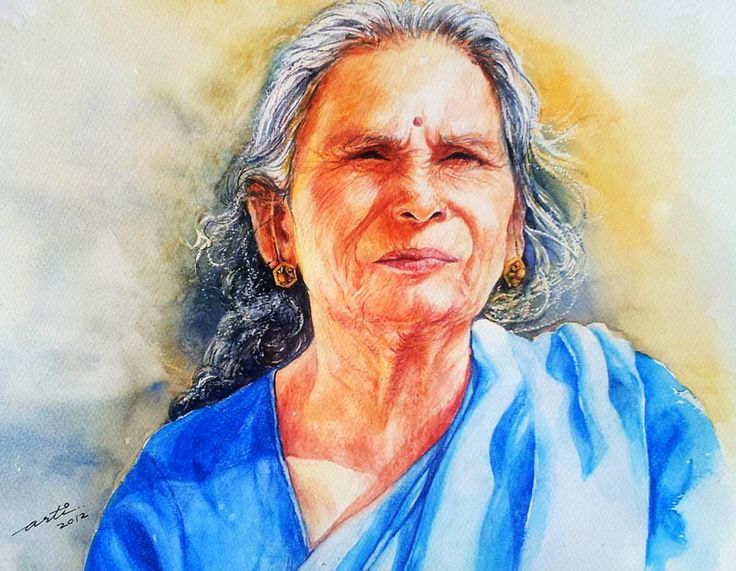
amma's hands were permanently stained bright red as the colour of Lifebuoy cake smelling of freshly ground spices distinctive aromas caraway seeds, cummin, fennel chillies, asafoetida, cinnamon attacking the senses
on the rooftop under the midday sun chopped green mangoes freshly plucked, washed, sun-dried on muslin cloth always watchful of the monkeys around out to destroy her labour of love
this love found its way into the pickle jars sold out on Thursdays at the village 'haat'* unbranded mango, lemon, gooseberry stuffed chillies gave fierce competition to the branded
amma's gnarly hands last seen folded on her chest stiffened with rigour mortis locking the recipes never shared
*Amma translates to mother. *Haat is market
Snigdha Agrawal (nee Banerjee) is a spontaneous writer, writing in all genres, covering poetry, prose, short stories and travelogues. A non-conformist septuagenarian, she took up writing as a hobby post-retirement and continues to learn and experiment with the out-of-the-box style.
.
PLEASE NOTE: ARTICLES CAN ONLY BE REPRODUCED IN OTHER SITES WITH DUE ACKNOWLEDGEMENT TO BORDERLESS JOURNAL
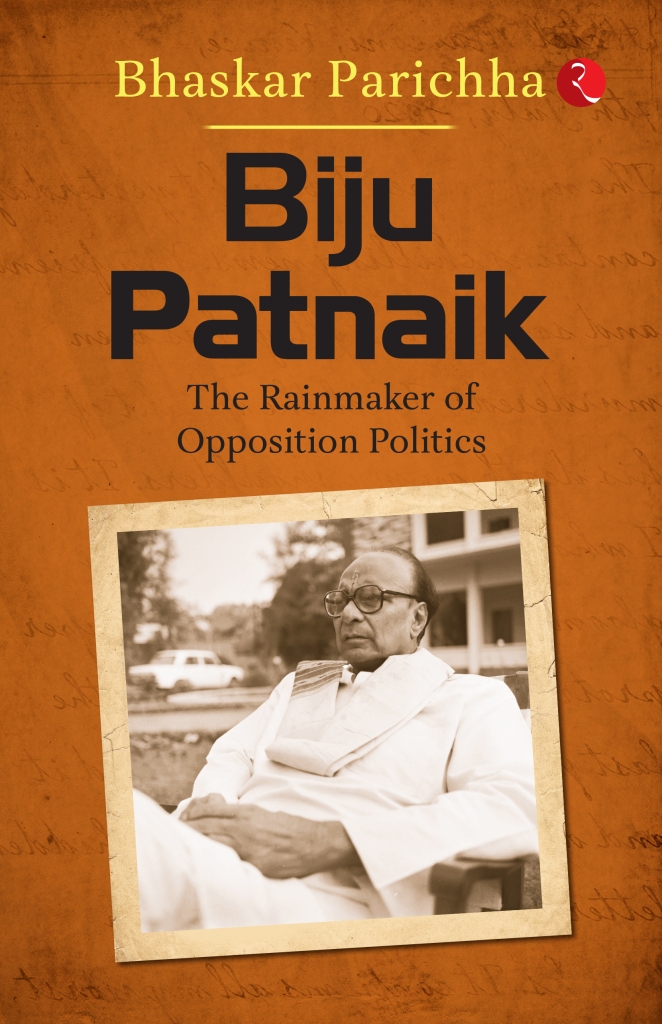
Title: Biju Patnaik: The Rainmaker of Opposition Politics
Author: Bhaskar Parichha
Publisher: Rupa Publications India
Architect of Modern Odisha
Biju had a strong sense of zeal for dreaming big. At that time, no one had even dreamt that there could be a private sector industry, much less one that was successful. He dreamt and succeeded. Throughout his life, Biju stood out as a person with courage, and that by itself chronicled a remarkable saga of industrial adventure in Odisha half a century ago.
In 1945, when he had attempted to establish an industrial empire in Odisha, he had several other responsibilities. He could have remained committed to politics and wielded political power, as he was exposed to it during the height of the freedom struggle. However, he had a unique vision of industrialization of Odisha. As mentioned earlier, Biju was greatly influenced by Manubhai Shah. In the same way that Mahtab taught him the basics of realpolitik, Manubhai taught him the first few lessons of setting up an industry.
In the years following Biju’s release from jail, he developed an unshakable faith in himself and a commitment to utilize his full potential. There were no great merchants or wealthy individuals in his circle, nor was he in possession of vast resources. The only thing he had was a lofty vision. Despite British strongholds throughout the country, he had flipped through quite a few pages on how to struggle and achieve success. However, the actual struggle had not yet begun.
Owing to his aviation background, several years before he became a big industrialist, he had set up his own airline Kalinga Airlines. At one time, it is believed that Biju had seven aircraft registered in his name, a rare possession. This demonstrated the importance of Biju as a pilot—industrialist. Apart from aviation, it was Choudwar’s textile mill that ushered in a new era of industrial expansion in Odisha. With the establishment of the Odisha Textile Mill in Choudwar, he launched the first chapter of his industrial empire. Slowly but surely, the Kalinga Empire was taking shape. Two years later, it swept through the area, adding a few more plants, both large and small. It would be a reiteration of the obvious to dwell on the ingenuity of this stalwart who painted a large industrial landscape on a blank canvas.
In setting his vision of an industrialized Odisha, Biju was clearly aiming to change the fate of Odias; to transform an agriculture-dominated, feudalist economy and society into something more industrial. This was the inevitable course of action that he took.
ODISHA TEXTILE MILL
From 1946 to 1950, Mahtab served as the Chief Minister of Odisha.
There was a great deal of activity during his tenure as
CM Mahtab, like Biju, was also concerned with the industrialization of Odisha. He was seeking a dynamic youth to this end, which he found in Biju. Mahtab was also instrumental in establishing Biju as a leading industrialist in the country. It took just a short period of time for Biju to become one.
In 1944, the interim Indian government decentralized the textile industry. As a result, Odisha received four textile units. As textiles appeared to have great potential, Biju was particularly interested in them. Odisha Textile Mills was established at that time. A company named B. Patnaik & Co. was established. A half stake in the company was owned by Biju. Lala Pratap Singh, a descendant of industrialists Lala Sriram and Bhubanananda Das, held the other half. In Odisha, it was the first private company to begin operations. Through this flagship company, Biju’s enterprise was growing rapidly. Several small- and medium-sized industries emerged, including cotton and ferromanganese. Biju Patnaik & Co. was an industry through and through. It was the birth of a brand. A common thread running through Biju’s corporate credo was the concept of industrialization and diversification.
It was in the late 1940s that Biju joined the Kalinga industrial empire. The primary objective of his career was to establish himself as an upcoming industrialist and develop a company that had the highest annual growth rate. Biju took a shot and Odisha’s industrialization was catapulted into a remarkable era. However, this glory did not last long. Out of his own free will, Btu was renouncing that industrial prowess. The two contrasting factors that contributed to his disdain for the position must have been his well-publicized commitment to do something for the slothful people of Odisha and his dislike of the responsibilities that came with being a manager.
After a brief blossoming, his entrepreneurial spirit soon faded. Biju was the only one apart from Prafulla Chandra Roy[1] in West Bengal, who was able to build industries from scratch. It has been decades since Sir Prafulla Chandra Roy pioneered the West Bengal industry before it withered away.
In 1963, Biju gave away his Ironworks plant in Barbil to the state when it was earning 10-15 per cent profit annually. Biju then gave other plants to his employees. The Kalinga Group saw a gradual decline once he made everything available to the state. All of this had the potential to make him the richest man in the state. This reluctance to engage in business, which Biju demonstrated later as well, was accompanied by a lack of expectation of compensation. All he wanted was a progressive Odisha, which could have never become a reality if he had no political power.
[1]Physicist, educator, historian, industrialist and philanthropist, Roy was an eminent figure in Indian science. Known as the father of chemical science in India, he established the first modern Indian research school in chemistry. While being the founder of Bengal Chemical & Pharmaceuticals, he also served as its chairman.
About the Book
Transitioning from pilot to freedom fighter, businessman to politician, Biju Patnaik(1916-1997) was a multifaceted leader and towering regional icon who has left behind an impactful legacy. Step into the riveting saga of Biju Patnaik, the icon of resurgent opposition politics, through this compelling biography, Biju Patnaik: The Rainmaker of Opposition Politics. His journey, from leaving office in 1963 to reclaiming it in 1990, epitomized resilience and rebirth in politics. Whether as chief minister or Opposition leader, Patnaik’s unwavering connection with the people of Odisha defied conventional politics. Navigating triumphs and trials, Patnaik wielded immense influence, shaping the state’s destiny. His adept manoeuvring from the state secretariat to the corridors of power in Delhi showcased unparalleled strategic prowess, strengthening Opposition alliances and advocating for a credible alternative to the dominant Congress. Biju had tremendous faith in Opposition unity, considering it vital for the survival of democracy in the country. A visionary and unifier, Biju Patnaik’s legacy as a stalwart of Opposition unity echoes through the captivating pages of this stirring account.
About the Author
Bhaskar Parichha is a renowned name in Odisha journalism. Throughout his four-decade long career in the media industry, he has been affiliated with various newspapers in the state. He is the writer of Unbiased: Writings on India, No Strings Attached: Writings on Odisha, and Madhubabu – The Global Indian. Recently, he has also edited a collection titled Naveen@25 – Perspectives. Residing in Bhubaneswar, he is known for his bilingual writing.
.
PLEASE NOTE: ARTICLES CAN ONLY BE REPRODUCED IN OTHER SITES WITH DUE ACKNOWLEDGEMENT TO BORDERLESS JOURNAL
My heart is in upheaval.
I long for you to knock at my door,
To give me the joy to be your host.
I have longed for this day,
To have you with me and for me alone.
I have waited so long for the footsteps of spring.

The road map of our luminous past,
By which our relationship passed,
Is still as painful to recollect as it is to relive,
Still as crushed by your psyche in distress.
Hardly were you ever in your full senses.
You had to vanquish your curses to be here.

Yet, when I saw you in your lonely silence,
I shed all my misgivings,
And welcomed you in my heart.
I will love you and seek nothing in return.
Vanishing images of our lovely past
Will be cherished in the tomb of our love.
Pramod Rastogi is an Emeritus Professor at the EPFL, Switzerland. He is a poet, academician, researcher, author of nine scientific books, and a former Editor-in-chief (1999-2019) of the international scientific journal Optics and Lasers in Engineering. He has published over ninety poems in international literary journals.
PLEASE NOTE: ARTICLES CAN ONLY BE REPRODUCED IN OTHER SITES WITH DUE ACKNOWLEDGEMENT TO BORDERLESS JOURNAL
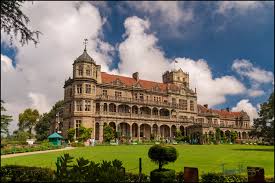
It took a couple of days to sink in, the serene beauty of the place on Summer Hill, Shimla, and the quiet atmosphere of the campus. Indian Institute of Advanced Study (IIAS), now housed in the regal ambience of the Viceregal Lodge[1], still wore its grandeur well, filtering into interior, the corridors, foyer and the conference room that had a stamp of history. Momentous decisions had taken place in this very room. The sylvan surroundings seemed to have rubbed off on the people too who worked in the offices, for they functioned with a quiet harmony, like it was an unstated requirement.
Tulsi Shankar’s paperwork went off smoothly in the office. She was given the keys to her allotted flat, a man was assigned to go along with her to help, and she was asked to tell the housing department if she would need anything more for her flat, the kitchen and the washroom. The man helped her unpack her big boxes of books and folders and set up her laptop. The vessels in the kitchen were minimal and very basic. She added the small items that she had got from her home, a saucepan, a ladle, spoons, cups, mugs, tea, coffee, sugar and milk powder. That would do. The man offered to fix a milkman who would deliver fresh milk every morning. The mess served two meals in a day, so there was nothing more to be done except rustle up an occasional upma or poha[2], if one fancied a change.
Tomorrow, she would explore the books for her area of research in the library, and start her work. She sank into her mattress and made a mental list of the reference books but soon slipped into a deep slumber.
The next few weeks rolled by in a rhythm of studies, notes, typing points on her laptop to draw a skeletal sketch of the chapters for her book. Little did she know how the details she sought would soon rain down on her and submerge her overwhelmingly in. They were right there, within her reach, in the huge library. Sure enough, there were some gaps, but she could always visit the Nehru Memorial Museum and Library at Teen Murti Bhavan in Delhi to fill them up.
She met the three other Fellows who were also working on their manuscript for their books. Whenever they met, at the dining area in the mess, or while strolling back to the institute after meals, or their shopping trips to the mall, the four Fellows exchanged notes about how much easier it was when they wrote their dissertation for Ph.D. years ago. They knew exactly what was expected from them — their chosen topic in itself ‘set limits’ for their scope and research took them forward with a controlled sense of direction. But a book? A BOOK? Good Lord, it seemed to be like entering an unchartered territory. It felt adventurous, thrilling even, but alternated with bouts of uncertainly and panic. It often loomed like a road not taken, yet to be explored. Exciting, and scary at the same time.
They decided to help each other with their research for the background. Sudipta Banerjee who taught history, offered to help Tulsi with Hari Mohan Maitee’s notorious case of brutally raping his eleven-year-old child bride, Phulmani Dasi, causing her death. The case was committed to the Sessions Court in Calcutta in 1890, but Justice Wilson let off Maitee lightly by saying that he had just committed ‘a rash and negligent act’. It was Gidumal Dayaram, a reformer from Bombay, who relentlessly pursued the case of Dasi. On his recommendations, Sir Andrew Scoble based his in 1891. Tripti Sharma from Political Science was equally interested in the steps that led to raising the ‘Age of Consent’ from ten to twelve years, from a legal angle. She had a project for which she needed to know more Sir Andrew Scoble (1831-1916), and the legal aspects of his contribution.
And all three of them took some lessons in yoga from the fourth Fellow Namrata Tripathi in her flat, just before dinner. She had trained in the Tushita Mahayana Meditation Centre. Namrata often warned them – and herself – of the hazards of sitting down on a chair for long hours to read or write. ‘We’ve to move our limbs and walk, or else we’ll become stiff,’ she laughed, even as she herself spent hours poring over her books for her research on the ghats in Varanasi. Sudipta, Tripti and Namrata looked to Tulsi, a published author, for help in writing their drafts.
“Please, Tulsi,” said Tripti. “We’re painfully conscious that we’re not here to write a Ph.D. dissertation. It is a book, a BOOK, for God’s sake.”
“Yes,” said Sudipta. “We’re anxious that thechapters are readable and don’t come across as boring information. You’re a creative writer, so you can tweak our lines.’
*
Then there were the Associate Fellows (called AFs) who could visit the IIAS three times in a span of three years or more, and were allowed each time to stay for one month to consult books in the library and work towards their M.Phil thesis. Hopefully, after their M.Phil, they would be admitted to Ph.D. programmes in their colleges. Each AF was given a single room in the hostel.
The women were nearly through with their lunch. Over the dining table, they whispered to each other about the time they would meet Namrata in her flat in the evening, for yoga lessons. Also learn some tips for meditation, a most elusive practice for them.
The Associate Fellow sitting across two tables was loud. No surprise. Ever since he came from Hyderabad, he has been the most vociferous critic of the food served by the Mess. He was unsuccessful in forming a lobby to join him in his protest and ‘do something’ about the ‘atrocious food’. The others AFs heard him out, some nodded in agreement, but carried on with their work.
Tulsi and her friends considered all that as noise and hurried through their meals.
The man from Hyderabad came over to their table.
“How can you stand this horrible food?” he asked.
“Well…it’s a change, certainly, from what we are used to,” said Namrata, in a placatorytone.
“A change! It’s appalling. You can do something about it. Each one of you haveakitchen in your flat,” he said.
“What!” said Sudipta, getting up from her chair.
“You’re four ladies. You can easily take turns and cook,” he said, glancing at the other AFs over his shoulder.
.
[1] Viceregal Lodge, formerly the residence of the British Viceroy of India, is the present Indian Institute of Advanced Study that has a library with archival acquisitions that go back to the times before the British rule in India. The magnificent building is also a tourist attraction for its stunningly regal structures designed by the British architect Henry Irwin, built in the Jacobean style during Lord Dufferin’s tenure as Viceroy.
[2] Upma—Semolina based savoury dish: Poha – A savoury preparation of flattened rice
Dr. Lakshmi Kannan is a poet, novelist, short story writer. Her recent books include Guilt Trip and Other Stories (Niyogi Books, 2023) and Nadistuti, Poems (Authors Press, 2024). For more details, please see http://www.lakshmikannan.in and her entry in The Routledge Encyclopedia of Indian Writing in English (2023).
PLEASE NOTE: ARTICLES CAN ONLY BE REPRODUCED IN OTHER SITES WITH DUE ACKNOWLEDGEMENT TO BORDERLESS JOURNAL
Poetry by Manzur Bismil, translated from Balochi by Fazal Baloch
Manzur Bismil
In my head,
Bustles a world
With the sun, the moon, and the earth.
In this vast realm,
A stream of light gives voice to my thoughts.
Yet, amidst this brilliance,
A quern has ground fire.
From that fire, pours forth the light.

In my head,
Exists a world
With the sun, the moon, and the earth.
I am an ant, a worm,
Snuggled in a hole,
Somewhere in the corner of that vastness.
My 'sovereign head',
Unaware of the world's flux,
Mute and silent,
Brings no tidings,
Indifferent to all,
Ignorant of the spectrum of life.
I'm an ant, yearning for light,
A worm, a firefly in the dark!
Manzur Bismil is a prominent Balochi poet. He emerged on the literary scene in the early 1990s and soon rose to fame, creating a niche for himself in the pantheon of the Balochi poets. He is widely known for his neo-classic style, especially in his verses. So far he has published eight anthologies of his poetry. This poem is taken from the second edition of “Hoshken Kaaneeg” published in 2017.
Fazal Baloch is a Balochi writer and translator. He has translated many Balochi poems and short stories into English. His translations have been featured in Pakistani Literature published by Pakistan Academy of Letters and in the form of books and anthologies. Fazal Baloch has the translation rights of of this poem from the poet.
PLEASE NOTE: ARTICLES CAN ONLY BE REPRODUCED IN OTHER SITES WITH DUE ACKNOWLEDGEMENT TO BORDERLESS JOURNAL
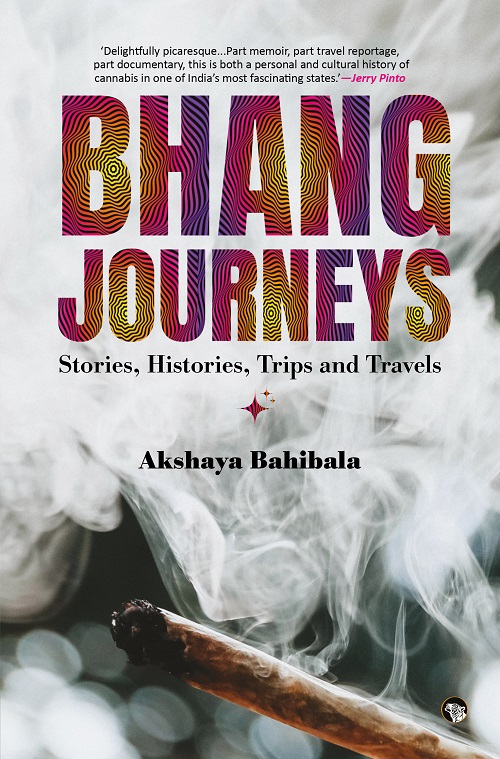
Title: Bhang Journeys: Stories, Histories, Trips and Travels
Author: Akshaya Bahibala
Publisher: Speaking Tiger Books
Akshaya Bahibala is a poet, bookseller, publisher, and library advocate. He is the co-founder of Walking Book Fairs, an independent bookstore and publishing company, as well as one of the most beloved bookmobiles in India, having journeyed over 35,000 kilometres through 20 states to promote a love of literature. Bahibala has authored four books in Odia. This book marks his debut in English. This captivating book is full of unexpected twists and turns, offering a unique blend of memories, adventures, and intriguing facts about a well-known substance. It serves both as an exploration and a cautionary tale.
Bhang Journeys: Stories, Histories, Trips and Travels by Akshaya Bahibala is an eye-witness account of the cannabis in one part of India – Odisha. Quite a bit of research and ideation seems to have gone into the book. This book is truly captivating due to its exploration of a controversial subject — bhang or cannabis..
Reads the blurb: “For ten years, from 1998 to 2008, Akshaya Bahibala was in the grip of bhang, of ganja—drinking it, smoking it, experiencing the highs and lows of an addict on Puri’s beaches with hippies, backpackers and drop-outs from France and Japan, Italy and Norway. Then he drew back from the edge and tried to make a life, working as a waiter, a salesman, a bookseller. He starts this journal-cum-travel book with startling, fragmented memories of his lost decade. From these, he moves to stories about people across Odisha whose lives revolve around ganja-bhang-opium.”
Bahibala commences the book by recounting his experiences of indulging in bhang and ganja on the shores of Puri. He also spends time with a considerable number of foreigners — Caucasian men and women who appear to visit Puri for the purpose of getting high. The author mingles with Japanese, German, French, Italian, and Israeli tourists, sharing meals, borrowing money, exchanging bhang-infused biscuits, occasionally engaging in fights, all while listening to Bob Marley’s soulful rendition of “No Woman, No Cry” in a state of intoxication.
The book has some interesting details like how the owner of a government-approved bhang shop prides himself on selling the purest bhang available, claiming it can make people as forgiving and non-violent as Jesus. Another story is about how an opium cutter, learnt how to massage a lump of opium with mustard oil and carve it into tablets as a boy. There is a heart wrenching narrative of a girl who survived cholera by licking opium and became a lifelong addict. Yet another, is about the yearnings of a goldsmith with an opium de-addiction card for 20 grams a month, but he longs for more — atleast 25 grams. There is also the story of the ganja farmer who flies to Puri from Punjab in a helicopter.
The hallucinations induced by the drug are reflected in the case study of a young man, suffering from ganja-and-bhang-fuelled paranoia, convinced that Indian and American spies are after him makes for an interesting yet concerning read. Descriptions are given of angry villagers indulging in violence against excise department officials who try to destroy ganja plantations.
Alongside these narratives, are official data on opium production, seizures, and destruction; UN reports on the medicinal benefits of cannabis and a veteran’s recipes for bhang laddoos and sherbets. The author delves into the process of creating bhang, highlighting its complete legality in India (unlike charas and ganja, which are prohibited under the country’s 1985 Narcotic Drugs and Psychotropic Substances Act). Additionally, there is a subtly humorous account of a Brahmin bhang shop owner who offers intriguing insights into the procurement and sale of bhang. Bahibala also discusses opium (referred to as afeem locally) cutters and government-operated facilities where opium is manufactured. He sheds light on opium addicts, for whom the government provides a de-addiction program.
The author concludes the book on a rather melancholic tone, discussing the current state of affairs in Puri and the significant changes that have occurred over the past two decades. The absence of foreign tourists on Beach Road, the police cracking down on public marijuana use, the proliferation of hotels and restaurants, and the eagerness of owners to expand and construct more establishments are all highlighted. Additionally, the author reflects on the individuals he once knew during his youth, noting that some have relocated to other countries while others remain in the area.
This book offers a comprehensive perspective on the bhang/charas/ganja culture in India, covering aspects such as production, sale, purchase, and consumption under peer pressure. The author’s personal experiences and lessons learnt add depth to the narrative, making it a captivating read. It is a liberating and unfiltered account, unconcerned with conforming to political correctness and yet, there is his own story, where he feels he ‘lost’ a decade of his life to addiction.
Bhaskar Parichha is a journalist and author of Unbiased, No Strings Attached: Writings on Odisha and Biju Patnaik – A Political Biography. He lives in Bhubaneswar and writes bilingually. Besides writing for newspapers, he also reviews books on various media platforms.
.
PLEASE NOTE: ARTICLES CAN ONLY BE REPRODUCED IN OTHER SITES WITH DUE ACKNOWLEDGEMENT TO BORDERLESS JOURNAL
I wish I could think In an ir - erasable way So that what I write Need not be rewritten To satisfy The whims of expert ideas That are invited To find excuses For erasing What I just wrote.
It is not that I want to write Something unforgettable. For many such things Are often better off When erased, And I don't like To erase anything.
Unfortunately it happens Sometimes or Often Or Usually that What is just written Feels itself to be immature, Not properly dressed, To be presented to The gaze of others.
What can one do Except agreeing to erase Such immature words.
But that is painful.. Or perhaps It ought to be painful With a tinge of guilt For not being able to think In an ir - erasable way. Though perhaps Not as painful As erasing the lives That are just being formed and don't yet know If they are presentable!
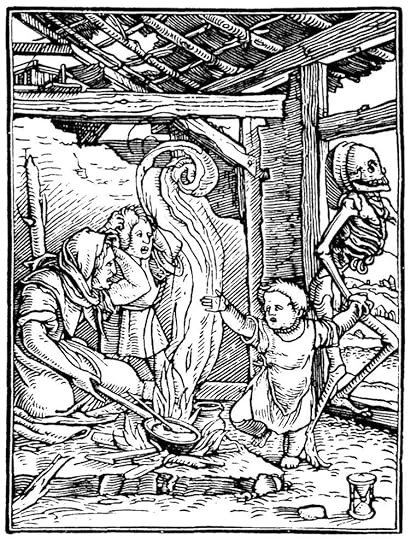
The Dance of Death by Hans Holbein (1497–1543)
Kumar Bhatt is a retired professor of Physics interested in everything in general. After retirement in 2002, he has been trying to learn to write. He lives in Ahmedabad.
.
PLEASE NOTE: ARTICLES CAN ONLY BE REPRODUCED IN OTHER SITES WITH DUE ACKNOWLEDGEMENT TO BORDERLESS JOURNAL
Tagore would have been 163 years old this year. In fact, he is that old this year. That is because he did not die in 1941. When poets pass away, they merely pretend to die, leaving mortals to bear the weight of their non-passage. In my case, at the age of 66, the happy punishment for being a Bengali is to be tied to a childhood spent in the lap of Tagore’s poems. That lap gets younger as I grow older.
I remember listening to Phagun, haoai haoai[1], Tagore’s ode to the winds of spring, on the radio in the attic of my ancestral village home in West Bengal’s Hooghly district. My home bordered a vast, circular expanse of agricultural land contoured by villages that included mine. Sitting in the third-storey attic, next to a terrace that overlooked the fields, I was transformed by the song. It turned vision into movement. The song’s opening lines speak of the poet making the gift of his carefree and untamed soul to the flow of the eager spring winds. Those lines might have added that Tagore had cast my soul as well to his winds. I leapt out of myself: I gladly yielded to my capture by the elements. I looked out, imagining that the spring winds would carry me across the vast fields into the homes and lives of the people who were participating in the rituals of spring, one of which was Tagore’s song itself.
There were many other songs in the same vein that accompanied me into youth. Among them were Tomar khola hawa[2], where Tagore welcomes a fresh gush of wind to his waiting sails and promises the elements no regret even if his boat sinks; and Nil Digante[3], where the blue horizon catches fire from the rioting colours of flowers and even the sun asks for itself in the brightness of the earth. Such were the poetic conceits that lent the urgency of understanding to the passage of my youthful days. To lead the imaginative life was to consign oneself to the youthfulness of Tagore.
My spring is over: Those days have passed, taking a happy Tagore with them. Now, what appeal to me are his sombre songs that deal with mortality and the divine. Tai tomar ananda amar por[4] is an outstanding example of what I would call the Late Tagore in me. Essentially, Tagore says to God: “You are the Creator only because I am the created.” Can you imagine the degree of self-certainty that allows a human to address God so fearlessly? I do not share Tagore’s devout hubris but I listen to that song over and over again to reassure myself that my days have not been useless because they have been inhabited by God-created hours. And, of course, with Jokhon porbe na more payer chinho[5], Tagore turns death itself into a romance with the endless interplay of time and space that defines life. I stand redeemed by his lines.
But I am growing old. I am not conveyed out of myself by the spring poems any more: I prefer to age, as wildly as health and imagination allow me to, within myself. Tagore accompanies me still, but what confounds me is how young he remains even in his constancy to the maturity of my withering years.
Phagun, haoai haoai: Tagore is exulting in the colours of this spring, this very year, even as I accept my autumnal steps to the final winter.







 Borderless