The fudge boat
stays afloat
thanks
to the towering
willpower
of sailors
who love fudge.

The anchor is weighed
every day
and brings up sludge
on its flukes
that looks disgusting
but tastes
robustly nourishing.

This is the fudge
in question.

And the fudge in answer?

Well, that’s as
smooth as an exotic dancer
who undulates
her degenerate limbs
for the benefit
of the salty whims
of the shore leave crew,
captain, navigator and mate,
all of whom
love to chew
the hardest fudge that you
might ever imagine:
it sticks their
jaws together
as if their gums are tethered
to each other
by mooring ropes.

But the fudge boat remains.

Once I took a trip
as a passenger on that vessel.
I nestled in the hold
among the tubs of fudge
and I refused to budge
when we finally
reached our destination.
I loved that fudge too much!

The captain kicked me off
his ship
and I was reduced
to begging in the port city
for cheap toffee
because of fudge withdrawal.

It’s a terrible curse
to love fudge that much
and even worse
to be forced to give it up
but I was a poor man,
not a toff,
and couldn’t afford
to overindulge until I bulged.
Woe is me!

But I am resourceful
and never abandon hope
and now
I'm designing
my own strange boat:
a tiramisu submarine.

If it works, it’ll be a dream,
and if it doesn’t
I will drift with the currents
under the waves
towards those flooded caves
where mermaids
act as envoys for
the rulers of fudge enclaves.

I’ll be brave
and attempt to claim asylum
by denying my
species, class and phylum
and fudging
the figures to the best of my
affable ability.

Fudge paradise, here I come!
Rhys Hughes has lived in many countries. He graduated as an engineer but currently works as a tutor of mathematics. Since his first book was published in 1995 he has had fifty other books published and his work has been translated into ten languages.
.
PLEASE NOTE: ARTICLES CAN ONLY BE REPRODUCED IN OTHER SITES WITH DUE ACKNOWLEDGEMENT TO BORDERLESS JOURNAL
Tommy sat down to dinner with his parents. Roast beef and mash again. He grimaced. His mother, a cashier at Lidl[1], and his father, a travelling salesman, threw him cursory looks: “Tommy, you should eat, meat is so dear,” his mother lamented.
“Eat up boy, money doesn’t grow on trees you know,” barked his father, wheezing irritably, followed by a huff that brooked no further comment on the subject.
Tommy slouched over his plate and wolfed down the food without a word. He left the table, as always, casting a contrary glance at his father, who ate his meal in silence, a ritual to which he demanded both his wife and his son to observe scrupulously.
Tommy slipped outside into the warm breeze of late summer, sitting down on the steps of his parents’ (the bank’s!) town council flat. How his father unnerved him with his tyrannical rules and stentorian ditties. “He’s gone almost half the year selling his cheap, nasty wares, and here he is laying down the law like a bloody dictator. Poor mommy does all she can to meet his inept demands, but when she can’t she cries her eyes out,” he fumed inwardly, clenching his fists.
Tommy took out a box of matches, lighting each one, then flicking them into the yellowing grass of their front garden. He enjoyed watching the little sticks sail into the night air all alit, only to fall extinguished on the stone walk-way or grass. He loved the sulphurous smell of the sparks, the vision of the orange flame. They aroused a shiver of excitement in his belly and spine. The door opened. His father snorted: “Whatever are you doing with all those matches ? Matches don’t grow on trees.” And in a heightened voice, “Stop wasting them …” He slammed the door shut. Tommy clenched his fists, his lips whitening in constrained animosity …
Tommy began his incendiary career at school. Armed with a box of matches that he had pinched from the local grocers, he set fire to the large rubbish bin in one of the maintenance rooms on the first floor of the building, causing billows of smoke to fill corridors and lungs of children and teachers as they rushed about either to escape or extinguish it. The fire was not serious in itself. However, the bin contained plastic substances whose horrible odours and ochre-yellow fumes made everyone retch or choke. Several children collapsed from smoke inhalation. Since no one had suspected Tommy, or any other child for that matter, the school board of directors concluded that it was due to an act of negligence. Hence, the elderly maintenance man was promptly sacked!
The thirteen-year old Tommy’s maiden exploit filled his lungs with pride, and would incite him to bigger deeds of daring …
And bigger deeds they indeed were: Southwold’s supermarket fell prey to Tommy’s insatiable fiery appetite. He had spotted an area outside the supermarket where hundreds and hundreds of wooden boxes, crates and cartons had been stacked all along the wall. This storage area was fenced off from a vacant lot which ran the whole length of it. In full daylight, the defiant Tommy sprinkled gasoline all along the mass spread of boxes, crates and cartons, then tossed matches into them. He ran and lay low under the scant bushes of the lot as the fire took hold and spread. Soon the flames were licking the wall, arching high over the roof of the supermarket (it wasn’t Lidl where his mother worked!), casting sparks into the hot, August air.
Tommy crawled away to safety into a nearby woods where he observed the now roaring flames with gratifying glee. Sirens drowned out the shrills of clients and supermarket personnel. The young arsonist dusted himself off, pushed back his tousled hair, and like all seasoned arsonists have done (and will always do), stepped gingerly into the gathering crowd that watched the fiery spectacle, listening to them conjecture unintelligently on the origins of the fire. He covered his mouth, concealing a victorious smile, mesmerised by the grandeur of the blaze. The thirteen-year-old Tommy eyed the spectators with disdain, his shrewd mind already kindling his next performance for all to see — one that would ‘bring down the house’, as his father would always jeer with that gross guffawing of his.
In that nearby woods which separated the shopping mall and the school from Tommy’s neighbourhood, a gang of ruffians had built a huge tree-fort in an aged oak, whose horizontal growth provided an excellent setting for their fort. It was very long, sloping upwards into the large leafy branches, built with brand new wood stolen from the construction sites and roofed with a huge metal sign that the rowdies, no doubt, had pilfered from some warehouse. The fort was furnished with stolen furniture, pieces of carpet, framed pictures, curtains and all sorts of knick-knacks. Tommy despised this gang of thugs who constantly stopped him on his way to school on the wide path that divided the woods in two, either to filch his lunch money, which they deemed ‘toll fee’ for passage through ‘their territory’, or simply to slap him about a bit ‘just for fun’. Tommy could have gone around the woods, but that would have implied a forty-five minute trek. Class began at eight.
Tommy’s heart, aflame by these extorting blighters, especially by their crass, vulgar laughter, carried out his revenge with ardent savagery and meticulous precision …
Four days later, at five o’clock in the afternoon, gigantic flames spearing upwards from the clearing of the woods were seen miles away. Even the heat was felt in the nearby neighbourhoods. Indeed, Tommy had thought out his plan of action with methodical mania. He knew when the wretched hooligans would be out of their lair of lechery, all eleven of them, out on ‘errands’ as they snickered; that is, stealing, extorting, fighting. He spread two small jerrycans of gasoline, siphoned from his father’s car, thick over the tree-fort, trunk and branches of the oak. He felt a pang of sorrow for the aged oak … but what must be done must be done, right ? When these preliminaries had been accomplished the rest was child’s play. The dryness of the tree and the wood of the fort produced a conflagration that even took Tommy by surprise, all the more as it spread at an incredible speed out of the clearing into the surrounding wooded areas. Alarmed but fascinated by the raging, arching, yellowish-orange flames, he threw more and more brushwood into the sweeping blaze, screaming at the top of his lungs – “Feed the fire! Feed the fire! Feed the fire!” But this unexpected madness nearly cost him dearly, for at that very hysterical moment, one of the ruffians who had probably seen the flames from afar on his way back to the tree-fort, overheard Tommy’s uncontrollable cries and spotted the arsonist on the edge of the clearing, flinging dead wood into the flying sparks that shot out from all quarters of the main blaze.
“Hey you!” the lad shouted. Tommy didn’t need to turn around. He recognised the voice. He took to his heels through the twisting paths of the woods which had not as yet been touched by the lapping flames, running as fast as he could. He heard the other pacing after him, yelling at the top of his voice words that struck fear in Tommy’s little heart. But Tommy knew the woods like his hand. He veered off the path and darted into a pocket of thick thorny undergrowth, his face and hands pricked and slashed. The pursuing lad stopped, out of breath, hesitant to follow, for now the unfurling blazes were curling up in front him! Knowing that the criminal had escaped, he back-tracked, hoping to escape. He did, for the morning newspapers reported no deaths from the tragic incident. As to the arsonist, he battled through thorn and thicket, managing to flee by way of a tiny footway which led him behind his neighbourhood. He waited in a copse of willows and, under the cover of darkness, made for his parents’ flat, looking furtively at the rising flames, which by then had all but devoured the woodlands. At ten o’clock he reached his doorstep, seen by no one …
Sirens screamed well into the night, accompanied by the coarse calls of clusters of men, apparently out in search for the culprit.
Tommy, exhausted by the fire and his flight, silently opened the front door, slid in and tip-toed upstairs to wash his face and hands, smelling of smoke and streaked with dried blood from the thorns. Once this operation completed, he stepped outside, then stood on the steps of the flat, watching the crimson glow of the conflagration light up the sky. Many neighbours were doing the same, some standing and talking in the middle of the high street. His father and mother stepped outside to watch the spectacle.
“How awful! How terribly awful!” wailed his mother, hands cupped over her mouth.
“I hope they catch the animal and skin him alive!” his father yelped in a burst of his usual condemnatory judgement. “I’ll be the first to lend a helping hand,” he added in a angry voice, spitting out a cigarette stub into the garden flower-bed. Tommy listened, a slight grin spreading over his aching face.
“Tommy, what are you doing here on the steps at this hour?” his mother suddenly enquired rather nervously, as if she had just emerged from some trance.
“I’m doing what you and everyone else in the neighbourhood are doing, mommy, watching the fire.” This pertinent answer prompted no reply.
The next morning at breakfast, Tommy explained away the scratches on his face and hands because of their cat, whose viciousness was quite known to them all if caressed the wrong way.
“Please don’t muck about with the cat, dear,” his mother lovingly reprimanded. “Look at your face and hands.” Tommy shrugged his shoulders at this show of motherly concern, thanking his stars that his father was out early that morning at some sales show in connivance with his associates to fleece their clients. His mother harped on about the woodland fire and all the rumours and gossip that conflated it. Tommy hardly listened.
The three devastating fires that broke out in the wheat and rye fields and in the orchards of the neighbouring villages and hamlets west of Southwold during September convinced the police that they were not dealing with some feckless firebug, but a shrewd and odious serial compulsive pyromaniac. And since there had been no rain for months, the fields and orchards went up like ‘a box of matches’ as the expression goes. And yet, not one single shred of evidence could be brought against him (or her?). No one had seen anyone near the fires, nor had that ‘anyone’ left a clue of his or her identity by inadvertence. The adolescent who had pursued Tommy in the woods, when interrogated by the police, admitted that because of the smoke and the hood over the fugitive’s head he could not give any clear portrait of the heathen.
Meanwhile, vigilante squads had been formed to track down and ferret out the beast, corner him (or her?) in his or her lair or den …
Tommy read or heard all these trumpetings with considerable apathy, working hard at school, keeping to himself, playing the shy, reserved boy during recreation or when out with a friend or two. His conscious was clear … his keen sense of survival, too. How he jeered inwardly at all this fuss over him: Little Tommy Harper, the pyromaniac! It did indeed hoist his pride. His mother and father talked unceasingly about the misbegotten pyromaniac at dinner night after night, his father booming out his usual commonplace clichés, his mother, those exasperating soughs and sighs. As to Tommy, he remained silent, meditating on the fact that his father had suspended his sacred ritual of silence at the table — at least for this major event– but more importantly, mulled over his next exploit, one that would go down in the chronicles of their precious sea-side town. What Tommy did not know, and this goes without saying, that this chronicled exploit –for indeed it was chronicled– would be his last …
The origin of the daring deed lay in an ugly tussle between Tommy and one of his classmates over a boat-outing at the boy’s father’s boat some five miles or so from Southwold on the River Blyth. It seems that the boy’s father, for some unknown reason, had taken a disliking to Tommy’s father, a dislike which then tainted Tommy. When the classmate invited several mates on his father’s catamaran one Saturday morning, Tommy was overtly excluded. He demanded an explanation for this unfair ostracism. He was given none! The boy merely smiled in unconcealed contempt. Tommy, fists clenched, knocked him down and began pummelling him with vicious blows until two or three teachers came to the battered boy’s rescue. The incident occurred during recreation and created quite a stir at school.
Tommy was, henceforth, not only shunned by his fellow mates, but was suspended from school for three days. His father in a spurt of terrible wrath, took the belt to him, beating him so hard that the boy’s mother had to intervene to avoid her son from fainting: “I’ll have no blood in this house ! No blood!” she raged and ranted, putting an end to the thrashing. The red-faced father pushed his son to the floor and marched out of the house …
A week later Tommy had thoroughly refined his plan. Nothing would curb his revenge. How sweet it would be… He would reduce that boat to cinders! Everything up in crisp, crimson flames! Everything: yachts, catamarans, the boat-house and club. Everything! That’ll teach them all what it means to be humiliated, banned like an outlaw. “Fire for fire! Feed the fire! Feed the fire! Feed the fire!” he repeated to himself raving.
On one very warm night, at the beginning of October, Tommy slipped out of the flat at midnight. His father had gone off on one of his ‘travelling tours’ and his mother was fast asleep. He dressed all in black, a hood hid his blond hair. As always, he had three jerrycans of gasoline stuffed in a backpack, siphoned from a neighbour’s car, along with two or three large boxes of matches and his father’s pruning shears.
The walk to the waterfront took him over three hours, but the effort would be worth its weight in gold. He had studied the area inside and out, had even drawn a map of it. The pruning shears got him into the enclosure. From there, the rest would be easy. First targets: the boat-house and club. He saturated their walls with enough siphoned gasoline to ignite the Tower of London. Then to the yachts and catamarans he skipped gayly, the berthed vessels dancing lightly in their slips[2]. Yachts, motor boats and catamarans were soaked with what was left of the gasoline, Tommy jumping from one to the other in a state of uncontrolled dementia. Above him, a full moon girt with a golden halo seemed to fuel fire to the leaping lunatic, giggling and choking with laughter at each wild hurl of gasoline: “Feed the fire! Feed the fire! Feed the fire!” he howled into the darkened air …
Suddenly hurried footsteps! A torch carved out a hollow tunnel of hazy light in his direction. No time to lose; it was the watchman on to him. He had not counted on that. He lit several matches, igniting boat after boat. The torchlight swung from left to right, the footsteps hurried here and there as flames burst into the blackness. From the boats Tommy then jumped onto the floating dock, hurrying to the boat-house and once there threw matches randomly at the saturated walls. A curtain of flames shot up, spiralling speedily towards the rooftop. The whole house went up like a rocket ship out of its launch. Two small explosions followed.
“There must have been demijohns of gas inside,” Tommy thought. As he raced to the marina club-house to complete his crazed ravaging two or three gunshots rang out, one of which ricocheted metallically off a crane just to the left of him next to a boat ramp. “He’s shooting at me the bloody git!” Tommy lashed out, scowling. He ran and cringed for cover behind stacks of buoys and coils of rope. The marina club-house still lay several feet to his right, but here the desperate arsonist hesitated. He had no cover to reach it, and worse still, because of the dark and the spiralling smoke he couldn’t see the watchman. Could the bugger see him? Tommy had never been confronted by such a perilous predicament. Escaping from pursuing ruffians was one thing but dodging bullets was another. This was no police or action picture. Tommy realised that one bullet could put an end to his life in a split second.
Tommy baulked at the idea of running to that awaiting target, but completely obsessed with it, he was about to take the risk. However, something unexpected happened. Unknowingly he had hid behind the buoys and coils of rope that had been piled up on a pontoon moored to one of the many floating docks on the river waters. The ropes that moored the pontoon to the dock had been burnt away by the flames racing out of the marina boat-house, flames that had all of a sudden surrounded Tommy. About to dash towards the boat-club to escape the approaching flames, he realised that the pontoon was moving out into the river, slowly. The River Blyth that led out to the Broads … then to the ocean! A few more shots rang out in his direction. He caught sight of the watchman, it was good Mister Knowles, the father of one of his classmates. The man, well over his fifties stumbled then fell, lying still as the flames seemed to engulf his body. Tommy screamed in despair. An arsonist he indeed was… but a murderer ?
Sirens rang out in the heat of this dreadful night. Firemen and police had since entered the marina battling through the blazes and stifling smoke with tons of water sprayed at random. Had they seen Mister Knowles body? Would they be able to save him?
Torchlights swept the marina then swerved into the river. Hidden securely behind the buoys and rope the cringing boy could not be seen, yet the police were training their torches on it as if suspecting something. “They’ll get the rubber boats out after me,” Tommy fretted. “I’m done for !” As his father had said, they would skin him alive! Already the lynching squads were out in the nearby streets, tracking the heathen who had struck again. And those blokes were no choir boys.
The pontoon moved quicker and quicker towards the Broads where the fierce swells tossed and rocked the fragile vessel. Tommy thought of putting on a buoy but he couldn’t swim, and anyway the vigilantes would be scouring the marshes along the river in search of the fugitive; he could hardly stay in the water, floating about like a cork in a pond or an apple bobbing up and down in a barrel. Thick grey, fleecy clouds slid athwart the halo of the moon. Tommy was suddenly swallowed up in a shroud of gloom as the pontoon bounded out beyond the Broads into the rising rolls and swells. The thirteen-year old Tommy Harper screamed for his mommy. A scream that no ear heard!
Further and further out the doomed passenger, stranded on the pontoon, was borne into the darkness and distance …
*
After months and months of searching for the pontoon, the naval patrols and the local police abandoned their hunt. All that they were able to find were two or three floating buoys. As to the sudden disappearance of thirteen-year old Tommy Harper, it was said that he had absconded from home. Oddly enough, the police never suspected the boy of the fires, believing his disappearance, and the end of the series of tragic conflagrations, a mere coincidence. Furthermore, the only person to have had a clear view of the criminal, Mr Knowles, had unfortunately died of smoke inhalation, the firemen arriving too late to resuscitate him. When neighbours of dubious doubts questioned Mrs Harper about this ‘coincidence’ over a cup of tea at bridge she would reply in lachrymose accents, wringing her knotty hands: “Why would my Tommy ever do that ?”
One or two neighbours of the Harpers believed that they had caught sight of a boy who bore a remarkable resemblance to their son in Amsterdam, walking up and down the streets, handing out leaflets. This information, however, was never investigated. Besides, Mr Harper, ravaged by all this gossip and hearsay about his son threw up his hands and declared :
“I’ve washed my hands of that boy. Let him go to the devil!”{ His poor mother on the other hand, cried and cried every day and night, praying that her only son, her little Tommy, would cheerfully come walking through their front door …
He never did.
.
[1] A German founded discount supermarket chain located in many European countries
Paul Mirabile is a retired professor of philology now living in France. He has published mostly academic works centred on philology, history, pedagogy and religion. He has also published stories of his travels throughout Asia, where he spent thirty years.
.
PLEASE NOTE: ARTICLES CAN ONLY BE REPRODUCED IN OTHER SITES WITH DUE ACKNOWLEDGEMENT TO BORDERLESS JOURNAL
Musical resonance, the skeletal grind, wheel well tumblings on a red vineyard clime – Sardinian giant wormholes, shivering, stuck on a what in the world island, heaving cardamom can’t work corners, the formation of sand and mixtape spools, a cursory lust over the wanting membrane: frothing, feasting, ruthlessly ensnared And Jericho was no one’s lover, scorned his heart for an apple-bride’s cleaver, drove scurvy from the harbours, devoured the worm from the bottom of the bottle, held Man high as the oldest scar, taunting the land with boundless shadows: inventor of the first way to die.
Ryan Quinn Flanagan is a Canadian-born author residing in Elliot Lake, Ontario, Canada with his wife and many bears that rifle through his garbage. His work can be found both in print and online in such places as: Evergreen Review, The New York Quarterly, Borderless Journal, GloMag, Red Fez, and Lothlorien Poetry Journal.
.
PLEASE NOTE: ARTICLES CAN ONLY BE REPRODUCED IN OTHER SITES WITH DUE ACKNOWLEDGEMENT TO BORDERLESS JOURNAL
Getting the opportunity to interact with witches in real life is a bigger privilege than meeting celebrities from the world of fashion and entertainment. The paranormal world remains full of mysteries to unravel and the element of human interest in spooky affairs never dips.
I must say I have known and heard a lot about their cauldron – pot, potions, and potency – ever since the school days when I read Shakespearean plays. From Macbeth came the supreme knowledge that fair is foul, and foul is fair as they hover through the fog and filthy air. While there remains the possibility of classifying them as good or evil, my template was I would prefer not to label them without having a first-hand encounter.
Their culinary delights are unsavoury for most of us as the menu list, as mentioned in Macbeth, includes blood, carcass and animal parts considered unfit for human consumption in the civilised society. While these items are possibly sources of good nutrition for them, we feel like puking whenever there is a mention of these being cooked.
Frankly speaking, I did not have a whit of an idea that witches would make such a swift entry and grand entry into my life that would leave me rattled and throw me into a dizzy state of disarray. Like a gentle knock on the door announces the likelihood of a visitor, they should have first tried the sleep, dream route instead of barging into the dilapidated house to lay siege and hold me hostage.
I confess not being a casual or avid reader of eerie, ghostly tales. I do not have the voracious appetite to watch horror flicks even if they are the sophisticated types without blood dripping through the corner of the mouth like saliva or through the eyes like tears. So, this rules out of the possibility of my sending across any signal or invitation to visit my abode.
That the evil forces were living with me was brought to my notice by a tarot-reading relative during her visit this winter. Probably, they had tagged along with her, but she specified that the spirit was a single, permanent resident living in my home for several years. It was surprising that I had never had any alarming encounter in the past during the phase of co-existence. I asked her particular questions about eviction but she refused to answer them except clarifying that the spirit was living in the rear portion of the house. Since I do not often venture to that side, probably I missed bumping into the evil power that had turned benevolent inside the house, influenced by my benevolent company that must have reformed her even if she had arrived with malicious intent.
My probing mind concluded that the spooky, invisible witch’s visit must be an act of mischief by the relative who lived in a matchbox-size apartment while I have an old, dilapidated but sprawling house with branches sprouting from parapets. To draw my attention to the possibility of the residence being a haunted one, she appeared to have concocted a weird potpourri to seek retribution of sorts. That she enjoyed the stay and only at the time of departure chose to reveal the big secret made me suspect that it was something to be taken with a pinch of salt. The presence of evil spirits was confirmed by the senior lady guest who also added a twist by saying this could be the handiwork of an envious neighbour who performed some black magic and despatched a witch to my place to cause harm. Almost immediately I was ready with a roster of queries that seemed to put her in a fix. The wide-open spaces were dubbed as haunted, but no clue was provided so I suspected she wanted to scare me and make me join her by living in a flat next to her complex and this was an effective strategy to attain that goal.
Since this information had been registered in my brain, the fear of a sudden encounter with the spirit of the witch inside the house has unnerved me and compelled me to sleep with lights on. The slightest sound woke me up with a jolt. I had no idea how the witch sneaked in, through which open or closed door or window or ventilator. I had no idea how the witch found me a suitable resident without focusing on my bad habits. Assuming for a moment that there was indeed a vampire shaking my empire, with a special fixation for sucking blood, I decided to buy a one litre of lamb’s blood from the nearby butcher’s shop and keep it in a bowl in a desolate corner where the witch could quench her thirst without any disturbance. I decided to wear proper clothes at home all the time so that my attire never appeared offensive or inviting to the resident witch for a seductive encounter. I had no idea about her age but I visualised her to be an eternal, graceful beauty with an effervescent smile.
Coming back to facts, the bowl of blood remained in place even after a week. It meant that the witch preferred other drinks. When I checked my refrigerator, I found juice cans missing and a rose sherbet bottle almost empty. This confirmed there was indeed a witch who enjoyed the stuff in the fridge and never complained or agitated because the diet was healthy and nutritious even though completely vegetarian, non-alcoholic, and milk-based.
Still not fully convinced that my haemoglobin was not gobbled up by a goblin during my sleep hours using a straw pipe penetrated through the nostrils or ears, I decided to undergo a blood test to confirm the level had not plummeted to an anemic level. To remain on the safer side, I asked the doctor to pump more blood in my body through transfusion and clear my confusion. He had a hearty laugh when he heard the reason. I invited him to my place to have an experience of sorts, which he declined with a grin. His scientific temperament did not revolt, and he did not prescribe anything for my safety but suggested I use this material to write more fanciful stories.
Perhaps he spread this news to other retired folks in the locality, who visited his clinic for regular check-ups. They landed up at my entrance gate with curiosity and suggested a fresh coat of lime wash on the building to ward off evil spirits as it looked haunted to them. The logic that freshly painted homes do not attract witches was anything but convincing.
In terms of palpable changes, my urge to write was at an all-time high as I felt I could finish off a novel within a fortnight. My writing picked up pace and clarity and I began to think the witch was probably a literary heavyweight trying to express her ideas through my pen. This comforting thought buoyed me and I felt assured that it was sending cosmic powers to support my fledgling writing career. Perhaps the witch had a failed literary past and did not want another aspirant to hit the nadir.
The witch had improved my craft as my writing began to be livelier. I wanted to entertain more through incredible stories. I must share the credit for this transformation with the appealing witch working secretly in my favour and acknowledge the contribution in the foreword of my next novel.
Waking up in the middle of the night after hearing weird noises sent a shiver down the spine – as if the spirit was dining in the hall, with the sound of cutlery and mastication. When the pastry or ice-cream tub went missing from the fridge, I did not remember if I had polished it off but suspected the witch had a sweet tooth. Despite all negativity evil powers bring in wherever they go, this one ushered in a splash of positive vibes. During the prayer session, I could hear some other person mumbling. The act of worship liberates and cleanses spirits as well and brings more goodness to their invisible lives. I do not worry much now as I find the witch to have a cordial rapport with me – more generous than what wily relatives have with me.
Several months had passed and the earlier fear has subsided a lot, replaced by a strange friendly feeling towards the witch even though I have not seen her. I look around for signs of any spooky activity to add spice to life, but I find none. Empty beer cans lying scattered in the backyard do not belong to the witch but the bachelors living in the next apartment, who throw these including cigarette and contraceptive packs in my compound.
To bring this matter to a close and ensure my sanity, I was advised to consult a magician with rich occult experience. Driven by the urge to see how he managed to unfold the truth and the strategy he chalked out to exterminate the spirit from my premises, I opted for a budget-friendly professional wearing black robes.
He came and sniffed and some stray dogs standing on the boundary wall started barking loudly. He silenced them all with a finger on the lips like a school headmaster. The obedient dogs surprised me with their submissive behaviour though he was a stranger in the locality. He explained that dogs and cats have innate powers to feel the presence of spirits around if a magician can generate those in canine creatures though I had only read about sniffer dogs trained to track gangsters and detect hidden explosives.
He picked up some ash mixed with talcum powder from the staircase and suggested the spirit was living there. He walked ahead of me while I followed him with a torch and stick. When he reached the landing area and the loft beside it, he stopped in his tracks as he said there was a struggle and heckling going on which I could not witness with my naked eyes. He was being stopped to climb further so he opened his tool box and read out some mumbo jumbo and gave a stern warning in English that surprised me. He explained to me the witch was not of Indian origin but someone from abroad who came in search of her sailor lover from the Orient, travelling thousands of miles and finally found the right address.
I said I was no sailor. But the professional occultist said the previous owner of the house from whom I had purchased this old, haunted house at a cheap price was her lover. Since his family died here, the witch from Scotland also chose to follow the Indian tradition of true love and united with her lover here. He said she was communicating with him in the house and their love affair was still ongoing.
So where did I fit in here? And what was I supposed to do? Was there any risk of her falling in love with me? These questions rushed to my mind, but instead of answering me, he asked her when she would leave this house and she grumbled and replied she would never leave this place. I told the magician to remind her that true love is never fulfilled, never fully reciprocated but the witch was in no mood to listen to his command. I said the backlog of love stories, failed and unrequited, was heavy in India and there was no hope of quick clearance for some more centuries at least.
The occult practitioner said the witch would definitely leave the house if I was ready to pay extra for some special rituals. When he quoted the premium price, I felt the pinch in the pocket. As the witch had not caused any harm to me, I gave in to her continuing in the house and I retrieved a framed photograph of her sailor lover from the storeroom and placed it on the staircase wall for emotional comfort. The occult expert tried to scare me by saying she might change her mind or accidentally bite you out of love, and the oozing blood from my arterial nerve in the neck could suspend blood supply to my brain and cause sudden death. I said I was confident she would not prove to be a treacherous lover, unlike the ones today and remain loyal to the dead sailor lover smiling in the portrait.
Sometimes, books in the library could be found open those days. Most of them were British classics. I was proud of an avid reader of classic literature residing in the house of another writer who was yet to finish reading those books. Her literary thirst was quenched in the house full of books and that is why there was no sucking up of blood. Maybe, she was a writer herself and she wrote novels, poems, and stories. So I asked the magician to disclose her name during the session. I was ready to continue the live-in relationship with a bewitching witch even though I had not seen her. I asked the magician to give me an idea of how she looked and he said she was nothing less than a film heroine in terms of complexion and looks.
Now, I am living in a different city and the haunted house remains locked. I strongly believe the witch still remains there. But while I am crafting this tale, I hear a flush in the pan and the digestive biscuits have gone missing from the glass jar along with the bottle of mixed pickle, making me suspect the witch has joined me here or my hyperactive brain is conjuring up images to feed a nutritious diet to my imagination. Or perhaps, I want to derive consolation by thinking that I have finally succeeded in driving a wedge between those lovers and made her fall madly in love with me now!
Devraj Singh Kalsiworks as a senior copywriter in Kolkata. His short stories and essays have been published in Deccan Herald, Tehelka, Kitaab, Earthen Lamp Journal, Assam Tribune, and The Statesman. Pal Motors is his first novel.
PLEASE NOTE: ARTICLES CAN ONLY BE REPRODUCED IN OTHER SITES WITH DUE ACKNOWLEDGEMENT TO BORDERLESS JOURNAL
Are you going to bloom in the rain tonight? I hear your footsteps in the darkness, I smell your scent on the budding seeds, and wonder whether you are among the stars.
This life can only be lived due to your existence. I feel like I am losing myself more than usual. After losing everything I cared about, I considered migrating to a different country.
Regrets have shattered some of my aspirations, and I miss giving my all to love someone like you. Why does tonight’s rain sound so sad? I've cried for ages, and you haven't flowered yet.
Thousands of breaths push me towards your sweet lips. Allow our sorrows to touch the drenched grass in the park, and follow the moonlight to find me waiting with a rainbow umbrella…
TWO FINGERS CROSSED
I'm wondering if my depression stems from my past or what I'll become in the future. Is it because I speak your language with an accent? I'm sorry, but my accent represents who I am.
I wish I could erase children's memories of everyday genocide with a pencil and eraser. My phone isn't charging. My cousin is wearing my face mask. I lie dead in my blood-soaked bath.
Does the moonlight still brighten your melancholy heart? What arouses your emotions? Can you dream about kissing me the way you usually do? Who wouldn't love a walk under the twinkling stars?
I miss the way you hold my frigid hands behind my back, with at least two fingers crossed. When I inhale your breath, I trust my senses completely. Your amazing voice is the music that brings me joy.
PACK OF CIGARETTES AND LIQUOR
I'd swap my rusty flesh and chilly blood for a pack of smokes and a drink.
I am willing to sacrifice my emotions and peace for a pack of smokes and alcohol.
I'm willing to surrender my citizenship and foreign passport for smokes and whisky.
I am willing to compromise my values and ethics for a pack of smokes and alcohol.
I'd swap my wounded heart and warm hands for a pack of smokes and a drink.
I'd swap my youthful smile and tears for a pack of smokes and a drink.
I'm willing to exchange my healthy organs and memories for smokes and whisky.
I'd exchange my imprecise accent and colourless fantasies for a pack of smokes and a bottle of vodka.
I will never give up my past and hometown for a coffin which I tried to steal before my sentence by hanging with death.
Ahmad Al-Khatat was born in Baghdad, Iraq. His work has appeared in print and online journals globally. He has poems translated into several languages such as Farsi, Chinese, Spanish, Albanian, Romanian. He has published some poetry chapbooks, and a collection of short stories.
.
PLEASE NOTE: ARTICLES CAN ONLY BE REPRODUCED IN OTHER SITES WITH DUE ACKNOWLEDGEMENT TO BORDERLESS JOURNAL
It is clear that English is employed here not as a language on loan, but as the rich, spluttering resource of the marrow and the bloodstream.-- Arundhathi Subramaniam.
At the outset, let me make a candid statement. I am a very prosaic person, someone who in her long teaching career and academic writing as well as translation, has never ventured to write poetry myself. I might seem like the odd woman out, but somehow, I have been closely following the recent trends in which Indian Poetry in English has been rapidly spreading its wings and with new volumes being published every other day, it is now a force to be reckoned with.
Tomb of Henry Louis Vivian Derozio at the South Park Street Cemetery, Kolkata.
Recapitulating literary history briefly, it is well known that Indian English Poetry (or often called Anglophone poetry in India) is the oldest form of Indian English literature. Beginning roughly from 1850 to 1900, it went through the ‘imitative’ phase when Indian poets were primarily ‘romantic’ and tried to imitate the British masters. Beginning with Derozio[1], many poets of the time — namely Rabindranath Tagore, Sri Aurobindo, Sarojini Naidu, Michael Madhusudan Dutt, Toru Dutt — were also Bengalis by birth. The poetry written between 1900 to 1947 belonged to the ‘assimilative’ period and often questions were asked why the poets didn’t write in their ‘own’ languages. Post-independence poetry was primarily experimental, and when we come to contemporary Indian English poetry, we find it becoming wholly urban and middle-class. The poets are realistic and intellectually critical in the expression of their individualised experience. They go in for precision at all levels and do not stick to one genre but experiment with multiple poetic forms.
Interestingly, I realised that a whole host of Indian English poets writing at present (some have several volumes of poetry published already, whereas others have just given birth to one or two), but coincidentally many of them happen to be Bengalis — Bashabi Fraser, Sudeep Sen, Kiriti Sengupta, Sanjukta Dasgupta, Mitali Chakravarty, Angshuman Kar, Shyamasri Maji, Basudhara Roy,Radha Chakravarty, and others. It is not a complete list at all, and what makes this study more interesting is that except for a couple of them, all these poets come from an English literature background. It is also not a coincidence that most of them teach English as their profession. So, whether it be personal lyrics, free verse, memories, experiences, observations, or even translation, the English muse therefore gives them the impetus to experiment with all forms, and at the same time helps them to move away from themes like nationalism, nature, Indian culture, love etc. that dominated Indian English Poetry in earlier times.
Bashabi Fraser receiving her CBE (2021 The Queen’s New Year Honours) from Prince Charles, now King Charles III.
Bashabi Fraser is an Indian-born Bengali and a Scottish academic, editor, translator, and writer. She is a Professor Emerita of English and Creative Writing at Edinburgh Napier University. Fraser’s work traverse continents in bridge-building literary projects. She was appointed a Commander of the Order of the British Empire (CBE) in the 2021 New Year Honours for services to education, culture and cultural integration in Scotland, in particular for her projects linking Scotland and India. Among her several volumes of poetry the Bengal and Bengali connection comes out in volumes like From the Ganga to the Tay: a poetic conversation between the Ganges and the Tay (2009), Letters to My Mother and Other Mothers (2015), My Mum’s Sari (2019), and Lakshmi’s Footprints and Paisely Patterns: Perspectives on Scoto-Indian Literary and Cultural Interrelations (2023). Fraser has worked extensively on a project about the Bengal Partition and the angst resulting from this divide expresses itself in the following poem.
This Border
Can shadow lines on the earth’s surface divide language and literature, rituals and customs, rivers…and memories?

There was a time when you and I
Chased the same butterfly
Climbed the same stolid trees
With the fearless expertise
That children take for granted
Before their faith is daunted
Do you remember how we balanced a wheel
Down dusty paths with childish zeal
Do you remember the ripples that shivered
As we ducked and dived in our river
Do you remember what we shared
Of love and meals, and all we dared
Together – without fears
Because we were one
In all those years
Before we knew that butterflies
Were free to share our separate skies
That they could cross with graceful ease
To alight on stationary trees
On either side of this strange line
That separates yours from mine
For whose existence we rely
Entirely on our inward eye
This border by whose callous side
Our inert wheel lies stultified
This border that cuts like a knife
Through the waters of our life
Slicing fluid rivers with
The absurdity of a new myth
That denies centuries
Of friendships and families
This border that now decrees
One shared past with two histories
This border that now decides
The sky between us as two skies
This border born of blood spilt free
Makes you my friend, my enemy.
Another well-established poet is Sudeep Sen who studied in New Delhi and in the United States and is a global citizen, so to say. Sudeep’s literary output is enormous and some of the titles of his volumes of poetry have subtle references to Indianness and Bengaliness embedded in them as well. Mention may be made of volumes like Leaning Against the Lamp-Post (1983), The Man in the Hut (1986), Kali in Ottava Rima (1992), Postmarked India: New & Selected Poems (1997), and several others. Though he might not do it consciously, his Bengaliness remains embedded in his psyche.
Kiriti Sengupta who has been awarded the Rabindranath Tagore Literary Prize (2018) for his contribution to literature, is a poet, editor, translator, and publisher. What is more significant is that along with Bitan Chakraborty, he mans the publishing house Hawakal, which has already carved a niche for itself as the largest publisher of Indian Poetry in English. Several poets mentioned in this essay have seen their creations see the light of the day through Hawakal Publishers and they have done yeomen service in this regard. As an established poet, Sengupta has several volumes of poetry to his credit. His collection from 2019, called Rituals, is very different from the work readers usually read in that there is a narrative thread in many poems that is not there simply to tell a story but to ultimately present a meditation on an aspect of life and the modern world that they haven’t considered before. “Fleeing the house and leaving the doors ajar. Is it perversion or fallacy?”
In an earlier volume entitled Solitary Stillness (2018), Sengupta does not give away the traits that have pervaded his poetry, he has not forgotten his Bengali roots, and has once again drawn his poetry on the canvas of the time that has been rooted in Calcutta. As he elaborates upon this point in his professional website, here, he makes a reference to Lapierre, and indeed, the ‘city of joy’ tag sounds fake just as we read that particular poem, which is so natural, that it almost appears to have been spoken by a resident of a city, one who is not a poet. According to him, that person who complains about water logging or that person for whom any tag of romanticism about the city is bourgeois, it is nothing but a label that’s needed to promote consumerism.
Mitali Chakravarty, the indefatigable editor of Borderless Journal, wrote to me saying that she is happy I feel she belongs to Bengal, “I call myself a Bengali and a human”. Though a non-resident Bengali, her perception of her own work and Bengali cultural identity is clearly revealed in a poem published in The Daily Star (Bangladesh)[2].
Confused

I am mixed up – cannot help
English and Bengali under my belt

I can read a bit of Hindi
Cannot understand much of French
A little Chinese …low class, they said…
I am mixed up – cannot help
English and Bengali under my belt

I grew up thinking I will find a way
But now pidgin is all that I can say
I write in English – the language borrowed from the West
The language that taught us or brought us unrest
The language that through The Raj spread
Importing Nationalism in its tread
I am mixed-up – cannot help
English and Bengali under my belt

But my life is that of the non-English
A probashi Bengali at best

People say I am not typical, not quite the right type
A mixed-up Bengali – I said
Culture is something I dread at every tread
Because what Culture I have is mine
- Not of a Race, a Country or Religion –
Human Being is the only race to which I belong

Help protect my home, the Earth – its every drop, its every stone

In a world of 7.7 billion, can I be alone?
I am mixed up – cannot help
English and Bengali under my belt
Though she has been writing poetry for a long time, Mitali’s first poetry collection, Flight of the Angsana Oriole: Poemswas published by Hawakal only in October 2023. In the ‘Introduction’ to this volume, she states that her random collection of poems “are sometimes of the past” as she knew it and “sometimes of the present. And sometimes in quest of a future or a dream that she hopes will go to create a more hopeful future than the world presents to us currently.” The poems in this volume are personal; some talk of her journey through life, the world as she sees it, some even influenced by her travels across the world. She further states: “Inherent in each line is not just the influence of my experiences in many countries but the nurturing I had in India, where I was born, educated and spent the first two decades of my earthly existence.” So, poems like ‘Death of Lalon’, ‘Shivratri’, ‘Kali Rise’, ‘Shraddha‘ [last respects] and a few others do convey the subconscious Bengaliness embedded in her psyche, irrespective of where she physically resides now.
Radha Chakravarty, a prolific writer and translator, Former Professor of Comparative Literature and Translation Studies at Ambedkar University, Delhi, has recently joined the bandwagon of Indian Poetry in English with her debut collection of poems Subliminal published by Hawakal Publishers in 2023. In a detailed interview given to Mitali Chakravarty for the March issue of Borderless Journal[3], she tells us about her aims and ambitions as a poet and how most of the poems in Subliminal are independent compositions, not planned for pre-conceived anthology.
My poetry actually delves beneath surfaces to tease out the hidden stories and submerged realities that drive our lives. And very often, those concealed
truths are startlingly different from outward appearances. I think much of my poetry derives its energy from the tensions between our illusory outer lives and the realities that lurk within.
Many of Radha Chakravarty’s poems express the feeling of Bengaliness in different perspectives. We read about the typically soft quilt called kantha in Bengali in the poem ‘Designs in Kantha‘ thus:
Sewn into soft, worn layers,
forgotten fabric of grandmother tales –
patterns of the past,
secret memories, hidden designs,
intriguing patterns in silk strands
dyed in delicate dreamy shades—
embroidered storylines
in exquisite, dainty kantha-stitch.
When Mitali Chakravarty asks her why she writes in English though it isn’t her mother tongue, she answers:
Having grown up outside Bengal, I have no formal training in Bengali. I was taught advanced Bengali at home by my grandfather and acquired my deep love for the language through my wide exposure to books, music, and performances in Bengali, from a very early age. I was educated in an English medium school. At University too, I studied English Literature. Hence, like many others who have grown up in Indian cities, I am habituated to writing in English. I translate from Bengali, but write and publish in English, the language of my education and professional experience. Bengali belongs more to my personal, more intimate domain, less to my field of public interactions….
Both Bengali and English are integral to my consciousness, and I guess this bilingual sensibility often surfaces in my poetry. In many poems, such as ‘The Casket of Secret Stories,’ ‘The Homecoming’ or ‘In Search of Shantiniketan’, Bengali words come in naturally because of the cultural matrix in which such poems are embedded.
Of course, the poet also mentions that all her poetry is not steeped in Bengali. In fact, in most of her poems, Bengali expressions don’t feature at all, because the subjects have a much wider range of reference. As a globe trotter, Radha has written about different places and journeys between places.
Another debut book of poems that Hawakal Publishers brought to light in December 2023 entitled Forgive Me, Dear Papa and other poems is written by Shyamasri Maji, an Assistant Professor of English teaching at Durgapur Women’s College, West Bengal. Dedicating this collection of poems to her “incurably romantic self,” Maji feels that “being ‘romantic’ in this context is being imaginative, reflective, puerile, rebellious and emotional.” The poems are a mixed bag, belonging to different thematic issues. Some focus on a woman’s radical views on the gender hierarchies in our society, in some nature plays the role of mediator between the narrator and the world, the idea of loss of love, which is closely linked with thoughts of death, while a few poems also represent an interpersonal dialogue between the self and the other. Some of Maji’s poems focus on the role of memory whereas some are experimental in the sense that they portray a woman’s comprehension of a man’s thoughts. Stressing upon the fluidity of identities, she shows how love, pain, pandemic, separation and grief affect all human beings irrespective of an individual’s gender and sexual orientation.
Six books of published poems and twenty-five years of creative journey has been a consistent exploration by the poet Sanjukta Dasgupta as she tries to find the path of freedom from among the misleading mesmeric mazes that threaten and stifle both sense and sensibility. As a woman poet with a strong feminist stance, Dasgupta admits in an online interview given to Basudhara Roy[4]:
Though I read Bangla poetry since my schooldays, I wrote my poems in English. It was an unconscious choice. Much later I learnt that I should have been embarrassed about writing in English rather than in my home language, my mother tongue Bangla. The poems written in English kept on being born on the page with embarrassing regularity.
Writing poetry is an irrepressible urge for me. It is, in a way, far more intense than the biological labour pain. This labour pain of creativity leaves me restless till the words are born on the page. But the creative process allows endless revisions; a biological production is largely about acceptance, neither revision nor deletion are considered ethical practices. In the case of poetry, it is not about choice, it is a compulsion which is intense and gratifying and multiple revisions often lead to the emergence of the perfect product.
The title of Dasgupta’s poetry book Lakshmi Unbound (Chitrangi, 2017) is very significant. Lakshmi being an intrinsic part of the fabric of Bengali culture, the radicality and dissidence of the idea of ‘Alakshmi[6]’ will require no explanation to a Bengali reader.
She thinks the core agenda in Lakshmi Unbound is a defiant, determined search for freedom. So, it is not just deconstruction, it is an endeavour to call attention to the need to destabilize the deep-rooted stereotypes that have controlled the minds and mobility of women. In Sita’s Sisters (Hawakal, 2019), she crafts a revisionist feminist mythology by taking up familiar figures like Sita, Lakshmi, Kali, Mira and attempts to free these mythic figures from their claustrophobic space so that they can be re-invented in sync with the contemporary times.
Residing in Jamshedpur, in the state of Jharkhand, Basudhara Roy is an established poet and has several books and publications to her credit. In her own website, is stated: “Committed to an undying affair with words, Basudhara finds in poetry an epistemological and existential skylight. She writes because she feels she must test words on her tongue, pulse, moods, agitation, abstraction and satire. She is convinced that words can change the world and hence, she works at them in her own culinary way – washing, peeling, grating, pounding, baking, sautéing, kneading, roasting, often flaming them for what they might yield.”
The following poem from Stitching a Home (Red River, 2021) considers the eternal problem of a woman that plagues women writers a lot.
The Right Kind of Woman

The right kind of woman will
inspire affection, regard, trust.
Not promiscuity, never lust.

Bred by a mother equally right,
she knows to avert her eyes to
innuendoes, telling smiles.

In crowded buses, shops, streets,
she knows to shut tight, bud-like,
relinquish space, circumscribe limbs.

Above all, she knows the prudence
of holding her tongue, of choosing
silence’s worth over wordy rebellion.

Schooled to surrender in dark
rooms, she knows, unasked, to
feign desire, moan, stifle, sigh on cue.

On her forehead, she had a
third eye to emit fire, take sides,
rake storms. Last night, its lid rusted

with disuse fell out, and the right kind
of woman laughed herself to death
over all she had left undone, unsaid.
“Writing poetry is an isolation exercise” says Angshuman Kar, an established Bengali poet who by profession is also an English Professor at a university in West Bengal. His book of poems Wound is the Shelter (Hawakal, June 2023) is unique and different from the other volumes discussed here because the poems are all translated by the poet himself from his original Bengali poems. In the ‘Introduction’, Kar tells us that authors who translate themselves often seem to be unhappy about the task of translating their own works. The Marathi poet Arun Kolkatkar likens it to incest, — “like making love to your own daughters.” Critics of translation studies have both supported and criticised self-translation. Those who support it argue that the author knows their work the best and hence s/he is the best translator of their own work. Those who oppose self-translation argue that the author-translator takes too much liberty while translating his/her own work; thus, the translation hardly remains faithful to the original. In such a situation Kar says, “Without being critical, I must say that I love self-translation. I enjoy translating my own work, I love committing incest. It makes me a better poet…. As a self-translator, I find incest healthy. It makes me a better poet – il miglior fabbro.“
Coming to the individual poems in Wound is the Shelter, it need not be reiterated that most of them portray universal feelings but at the same time are seeped in Bengali culture as well. In “My Poems” Kar talks about Jungle Mahal, the three districts of West Bengal that are full of jungles; in “World,” he writes about blooms of a sal tree and shiuli flowers; in “Memory Card” he talks about a bus ride to reach his maternal uncle’s house in Bankura from where he went to the studio to take a family photograph — “Grandma in the middle/On either side we – three brothers, two sisters and a cousin”. In “Father” he mentions how his father’s bereavement fades with time and how his portrait adorns the wooden throne in which gods and goddesses are kept and he stands with Kali, Shiva and Durga. In “Neelkantha” he refers to Shiva; in “Park” he states how man forgets grief when he comes to a park, “That is why in a city as sad and lonely as Kolkata the number of parks is always high.” The five-part poem “Tiger” is also very powerful, “there is a tiger inside every human being” he states. Kar also mentions about the mask of a demon of Chhou dance of Purulia, the aal path in paddy fields, the Chandi mandap[7] of a small village, the man called Bhagaban Das who labours in a factory, and the man called Shubhasis Babu who rents him cars, whose voice he hears but has not seen him. Thus, even in his transcreated poems, Kar’s Bengaliness expresses itself overtly.
It is not possible to analyse the poems of each of the Bengali poets that I have mentioned above within the purview of this single essay, and so I have just selected a few of them (especially the poets who have one or two volumes to their credit at present). As mentioned earlier, though Bengali by birth, all the poets rendering their emotions in English, do often consciously or unconsciously express multicultural elements, Bengali cultural nuances, and idiomatic force in their poems. As the trend for providing glossary is passe now, much is left to the readers’ imagination, but still certain occasional Bengali words and phrases make their poems even more appealing.
After sharing my random thoughts about Indian Poetry in English in general and selectively mentioning a few Indian English poets who also happen to be Bengali and often unconsciously exude a sort of Bengaliness in some of their poems, without attempting to sound rather parochial, I wholeheartedly wish to see more volumes of their poetry being published in future. I conclude by quoting a very salient observation made by Arundhathi Subramaniam who is not wholly optimistic about the situation, but believes that despite hurdles in publishing, the voices of Indian poets writing in English would be heard [8]:
Despite the clunky discourse that continues to hover around it, however, Indian poetry in English endures, even flourishes, seventy years after Independence. Publishers may be few and far between, the royalties meagre, the critical climate thick with indifference or theoretical bluster, and the poets themselves bewildered by disputes over their identity, even their existence. But poetry, in its mysteriously resilient fashion, continues to be written, shared and discussed (if sometimes with more passion than discernment). … I am not ecstatic about the state of Indian poetry in English. (But then I am not ecstatic about poetry; only, at times, about poems.) What I do know is that Indian poetry in English is alive. And like all things alive, it engages, it annoys, it provokes, it excites. On several occasions, it has given me the jolt of wonder for which I turn to poetry in the first place.
Considering the slightly mellow tone in Subramaniam’s observation, I personally feel Indian English Poetry has become a significant force in the literary arena at present and will grow stronger with time. Seasoned poets who have several volumes of poetry published already, as well as the fresher ones whose debut volumes promise a lot more to come in future, can all look forward to seeing their ‘spontaneous overflow of powerful emotions’ in print and carry on the legacy of Indian Poetry in English to newer heights. And sure enough, the sub-genre of Bengali Indian English poetry can be researched in greater details in future.
.
[1] Henry Louis Vivian Derozio (1809–1831), poet and assistant headmaster of Hindu College, Calcutta, a radical thinker and started the Young Bengal Movement.
It's a thousand years now since I died. I can't get used to it, though I've tried. To some the silence may appeal but to me it does not seem real. Or all too real, perhaps. Who knows? I remember a whispering of snow. But here, beneath the frozen ground, is always a hope of some small sound. It is this, all this, I find so grating. The stillness, silence; the waiting, waiting.
EVENING SONG
Now the evening sun has set, time to leave empty rooms, and yet, as last light strains between the trees my mind is bathed in memories of times long gone, yet still so real, precious moments I brightly feel. O, what happy days I have known in this old house, in this our home. Sparks of time I'll aye remember, quenched in sunset's dying embers. But yonder, see! A blue horizon, it's early morn, the sun is rising. In the east a soft light has grown on our new house, on this, our home.
EARLY ONE MORNING
Now it is dawn and the new sun tears through the sinews of night, as the dissolving grey heralds the day, where waves of the sea sparkle bright. On the horizon, as the sun is rising, a pale ship emerges, ghost-like, on a sea, so serene, as if in a dream, the deep silence concealing its might. On the soft sands there a man stands, a lone silhouette now come into sight; and from sea to sky a seagull flies, a lonesome cry of white. Shadows swirl in an unreal world, bathed in an emphatic light.
Stuart McFarlane is now semi-retired. He taught English for many years to asylum seekers in London. He has had poems published in a few online journals.
.
PLEASE NOTE: ARTICLES CAN ONLY BE REPRODUCED IN OTHER SITES WITH DUE ACKNOWLEDGEMENT TO BORDERLESS JOURNAL
Title: Out of Sri Lanka: Tamil, Sinhala and English Poetry from Sri Lanka and its Diasporas
Editors: Vidyan Ravinthiran, Seni Seneviratne, Shash Trevett
Publisher: PenguinIndia (Vintage)
What makes poems in a collection belong to each other? Their shared spirit, one believes, would be the foremost — the way they thematically and stylistically accentuate each other, enter into conversation, deliberate, disturb, demand, and defend. Another significant consideration would be the commitment with which they collectively lay bare a social concern — unpacking it for public attention and discussion, and offering myriad points of entry into its dense complexity. Good poetry, by nature, offers a kind of prescience that is based on empathy, understanding, and the possibility of communication. A good anthology, by its sound aesthetic and social vision, effectively multiplies these virtues by the number of poems it showcases and ensures that the sum is always greater than its parts.
At a time when anthologies of poetry, worldwide, are mushrooming and often questionable in their inarticulate raison d’etre, it is rejuvenating to come across an anthology that exactly knows what it is up to and proceeds to execute its vision with ideological clarity and ineluctable grace. Out of Sri Lanka: Tamil, Sinhala and English Poetry from Sri Lanka and its Diasporas edited by Vidyan Ravinthiran, Seni Seneviratne, and Shash Trevett is the most comprehensive and perhaps, one of the most representative anthology of post-independence poetry in English to emerge from Sri Lanka. Bringing together almost a hundred and forty poets and more than four hundred poems written originally in English or translated into English from Tamil and Sinhala, both from within the country and its scattered diaspora, the book articulates the rich and scarred multicultural heritage of Sri Lanka, what it means to claim belonging to this contested land, and the spirit of belonging itself.
The tiny waterdrop-shaped island of Sri Lanka located on the southern tip of India has always been historically significant. Colonized first by the Portuguese, then by the Dutch and finally by the British, it became an independent nation-state in 1948, the transfer of power there being peaceful and orderly, unlike the gory turbulence witnessed in the mainland of the Indian subcontinent. Ceylon, as it was known then and until 1972, showed every promise of securing a more stable statehood and better standards of socioeconomic development among the many new decolonized states across Asia and Africa. But the trajectory of Sri Lanka’s post-independence history, its fatal walk toward ethnic democracy and the violent consequences of such deep antagonisms are well-known.
The twenty-six-year civil war in the island between the Sinhalese-dominated government (mostly Buddhist) and the Liberation Tigers of Tamil Eelam (mostly Hindu) has been one of the most intense, brutal, and protracted ethnonational conflicts in global politics, the economic and human costs of which have been enormous. Acts of violence and ethnic cleansing by the LTTE against Muslims, Sri Lanka’s third-largest ethnic community have also occupied a significant place in its history. Added to these pogroms have been the ravages of nature in the tsunami of December 2004 which left the island totally uprooted and its severe economic crisis in recent times.
Waves of migration from the island, both voluntary and forced, have led to the creation of a group of expatriates and refugees who refuse to acknowledge their identity as Sri Lankans. How do a people find themselves under such circumstances? How do they lay claim to belonging and community? How do they resurrect for themselves a sense of tradition out of the debris? Out of Sri Lanka attempts a searching answer to all these questions and more as it brings to us, from all sections of its diverse society, voices that have, over the years, negotiated with all these crises in order to craft a narrative of resilience which, as the editors hope, will enable it to “take control of its destiny”.
The extremely articulate and well-researched introduction to the book is, in many ways, an intellectual treasure as it places poetry from the country and its diaspora within its seasoned and sensitive political and linguistic contexts, and offers an entry through it, into the fluid and dynamic nature of postcolonial poetry as a whole. The editors’ decision to not compartmentalise the poets in the collection on the basis of the languages they choose to write in but to showcase them in alphabetical order has been, by far, one of the most pertinent editorial decisions in keeping with the vision of this anthology. Given the linguistic grounds on which the political history of the island has been repeatedly fractured, the representation of poets as a cohesive group of witness-bearers regardless of their language and the ethno-ideological affiliations that a language is likely to connote, is a major step toward the envisioning of a more equitable and egalitarian society.
Again, as the editors observe, the traditions of Tamil, Sinhala, and English poetry on the island have rarely rubbed shoulders with one another with the result that their growth, development, and stylistic manifestations have remained rather insular. This book is an attempt to break that insularity by bringing poems from various linguistic heritages and frameworks in dialogue with one another and the results, as any conscientious reader will affirm, are spectacular. One confronts, here, a canvas of multiple arcs of intimacy, fear, insecurity, estrangement, acceptance, accusation, longing, loss, but above all, belonging. Resplendent throughout the book is the idea of identity – gender, territorial, ethnic, linguistic, national, transnational and human.
The editors tell us: “The explosiveness of Sri Lankan history, its cavalcade of events seeming to demand a response, produces a situation where deeply felt and meaningfully shaped poems are often not written by ‘poets’ as we understand that role as a profession supported by publishers, festivals and academic institutions. Instead, we find poems written by photographers, government workers, novelists, journalists – people for whom the luxury of considering themselves one of Shelley’s unacknowledged legislators of the world was never available, but who were pressed by extraordinary circumstances toward a lyric recognition of complexities otherwise beyond understanding.”
Here, in other words, is an urgent poetics, a rupturing into poetry by the incision of circumstance. For the editors, this anthology represents “a human rights intervention.” It is an act of commemoration, a historical acknowledgement of its tumultuous past, “a matter of putting things on record”. In ‘My Land [1981]’ by Cheran (translated from Tamil by Lakshmi Holmstrom) the pre-Civil War Sri Lanka is conjured with heartwarming admiration: “I stand on a hundred thousand shoulders/ and proclaim aloud: This is my land./ Across the seven seas,/ overcoming the rising waves,/ the wind shouts it everywhere:/ My land/ My land.” And yet, as the decades advance, pain bitterly takes over. “Like an unwritten poem/ you itch/ inside my head” goes the poem ‘No. 16’ by Mahagama Sekera (translated from Sinhala by Ranjini Obeyesekere) and the figurative density of the poem, as one would notice, travels from the personal to the political. In ‘Loose Change’, Ru Freeman writes: “…keep it keep/ the change keep the change keep/ all the noise-making metal Give us the rest/ whatever that is in this every man an island/ country of deceit We are far from home”
“…the time is right – the moment is now – for the world to know Sri Lanka better: its beauty and its pain” assert the editors of Out of Sri Lanka and one cannot but agree with them. A monumental work of literary activism, rigorous and laborious archival, and passionate commitment, this is more than a collection of poems. It is an act of rehabilitation, an attempt toward community-building, an unforgiving appraisal of the past, and a clear-eyed gaze into the future. Every nation must, at some time, stop to listen to itself and to speak of itself. One is glad that for Sri Lanka that time is here.
Basudhara Roy teaches English at Karim City College affiliated to Kolhan University, Chaibasa. Author of three collections of poems, her latest work has been featured in EPW, The Pine Cone Review, Live Wire, Lucy Writers Platform, Setu and The Aleph Review among others.
.
PLEASE NOTE: ARTICLES CAN ONLY BE REPRODUCED IN OTHER SITES WITH DUE ACKNOWLEDGEMENT TO BORDERLESS JOURNAL
OPTIONS UNDERWATER: THE SONG OF THE FIRST AMPHIBIAN

“Evolution’s a Fishy Business!”

1.
Breathing underwater through antiquated gills,
I’m running out of options. I need to find fresh Air,
to seek some higher Purpose. No porpoise, I despair
to swim among anemones’ pink frills.

2.
My fins will make fine flippers, if only I can walk,
a little out of kilter, safe to the nearest rock’s
sweet, unmolested shelter. Each eye must grow a stalk,
to take in this green land on which it gawks.

3.
No predators have made it here, so I need not adapt.
Sun-sluggish, full, lethargic—I’ll take such nice long naps!
The highest form of life, that’s me! (Quite apt
to lie here chortling, calling fishes saps.)

4.
I woke to find life teeming all around—
mammals, insects, reptiles, loathsome birds.
And now I cringe at every sight and sound.
The water’s looking good! I look Absurd.

5.
The moral of my story’s this: don’t leap
wherever grass is greener. Backwards creep.
And never burn your bridges, till you’re sure
leapfrogging friends secures your Sinecure.

(Originally published by Lighten Up Online)

DAVENPORT TOMORROW

Davenport tomorrow ...
all the trees stand stark-naked in the sun.

Now it is always summer
and the bees buzz in cesspools,
adapted to a new life.

There are no flowers,
but the weeds, being hardier,
have survived.

The small town has become
a city of millions;
there is no longer a sea,
only a huge sewer,
but the children don't mind.

They still study
rocks and stars,
but biology is a forgotten science ...
after all, what is life?

Davenport tomorrow ...
all the children murmur through vein-streaked gills
whispered wonders of long-ago
Michael R. Burch’s poems have been published by hundreds of literary journals, taught in high schools and colleges, translated into fourteen languages, incorporated into three plays and two operas, and set to music by seventeen composers.
PLEASE NOTE: ARTICLES CAN ONLY BE REPRODUCED IN OTHER SITES WITH DUE ACKNOWLEDGEMENT TO BORDERLESS JOURNAL
In the last section of that book with the most beautiful of titles, Per Amica Silentia Lunae,[1] the Irish poet Yeats, addressing Iseult Gonne, refers to those moments when he becomes happy – when poetry over brims on the page, and things turn luminous, and time seems to “burn up” in the sense of no longer mattering, no longer having the power to detract or diminish.
He is writing about lyric poetry, of course, and about those special moments that may come upon us at any age or at any time, but which become more recognisable to the poet as he or she grows older, and more experienced and knowledgeable – although they are also becoming, in actuarial terms, more rare.
But perhaps not. Perhaps, with wisdom and insight and acceptance, they actually increase in frequency. Recently I told an old friend, a visitor to my home, that after all these years I have finally begun to understand how to write poems. Put simply, I have gotten better at being patient, and at waiting until they appear. I have learned the necessity of silencing my own thoughts in order to hear the brushing of their wings as they pass overhead.
Or, to change the metaphor – only when the wind dies down can the bee or the butterfly land on the blossom. Genuine lyricism comes only after the self has been quieted. Not put to sleep, or – least of all – “put on hold,” in that ugly modern phrase.
Rather, shifted into neutral. Allowed to drift, and possibly to become something rich and strange.
“It may be an hour before the mood passes,” Yeats writes, in a completely disarming, unexpected passage, “but latterly I seem to understand that I enter upon it the moment I cease to hate.” He goes on to say, “I think the common condition of our life is hatred – I know that this is so with me – irritation with public or private events or persons.”
He attempts to define what he means by not hating, and it is not necessarily loving. Rather, “in those brief intense visions of sleep, I have something about me that, though it makes me love, is more like innocence. I am in the place where the Daimon is, but I do not think he is with me until I begin to make a new personality.”
This new personality is a paradox. Recognisably human – fragile, perishable, transient – it lacks the negative aspects of selfhood. It is no longer selfish or greedy or hateful. It has accepted its present state of being and its eventual death and dissolution.
We are speaking, then, of neither comedy or tragedy, nor their dramatic manifestations in verse, but of the lyric temper in poetry, and of the manner in which the poem is its abode – just as the moth or butterfly, as it seeks to gather up the pollen, finds its momentary resting place in the flower. But there is a dark side to this metaphor, and in any such discussion it cannot be avoided. Even the purest lyric voice is, by its very nature, transitory and perishable.
Honeybees, too, gather up pollen, but these are worker bees, who venture far from the hive, and who overcome all manner of risk in doing so. Within the hive itself, the drones partake of the bounty, but they do nothing to earn their keep. Only one of them will bed the queen. The others, whether they know it or not, are doomed. By autumn, as part of the very nature of things, the workers, understanding that only a finite amount of food is available to see them through the winter, push the drones out of the hive, where they perish amid the thorns and brambles.
Sappho
The works of many a lyric poet, who has dined the summer long on the ambrosia of the imagination, will eventually be subject to sheer circumstance, and drop away from the hive. Sappho[2]’s main works are lost; Keats[3]’s productive years were pitiably few. Madness overtook Smart[4], Hölderlin[5], Clare[6], and dozens more. We know this, and thus each lyric poem we have managed to preserve from past centuries speaks to us in an especially poignant way. However lovely, however evocative, we know it will not last.
The philosopher and poet George Santayana[7] has summed up the situation: “Even the most inspired verse, which boasts not without a relative justification to be immortal, becomes in the course of ages a scarcely legible hieroglyphic; the language it was written in dies, a learned education and an imaginative effort are requisite to catch even a vestige of its original force. Nothing is so irrevocable as mind.”
This is why lyric poetry retains its power to speak to us, down through the ages: because it is perishing before our very eyes, even as our own eyes are perishing. And yet it does not matter. “I am in the place,” Yeats explains, “where the Daimon is.”
And what might that be – the presence of “the Daimon”? Such a term can mystify, but surely this refers to some fundamental antinomy of human existence, some intuition of paradox that lies at the heart of being. Keats called it “negative capability”; F. Scott Fitzgerald[8] praised “that ability to hold two opposed ideas in the mind at the same time, and still retain the ability to function.”
The two ideas? The notion that art itself, in all its fragility, strives to endure. Perhaps another poet, Edwin Arlington Robinson[9], best described the paradox, in his tribute to Walt Whitman[10]: “When we write / Men’s letters on proud marble or on sand,/ We write them there forever.”
To be with the Daimon, to participate in timeless awareness, is why we write lyric poems, why we return to them – and why we revere the great periods of lyric achievement. Undoubtedly there have been many, in different cultures around the world, but we have managed to record only a few.
We treasure the lyric writings of the Sufis and the Elizabethans. We hark back to the time of Wordsworth and Hölderlin, to the T’ang Dynasty [618-906] and to that amazing stretch from Baudelaire to Mallarmé in the second half of the nineteenth century, a time that included Tennyson, Dickinson, Verlaine, Hopkins, Housman, Hardy, and Yeats himself.
Eventually, in the course of time, all these will slip away and be forgotten, which is why they now seem so lovely and memorable. They are that which has managed to survive and come down to us in spite of everything. Wang Wei knew this quite well. As the glories of the T’ang began to crumble and fall away, he paid tribute to that bittersweet awareness that we have come to know as the lyric temper:
Be not disquieted either by kindness or by insult –
          empty joy or sorrow.
Do not count on good or evil – you will only
          waste your time . . .
And why seek advice from the Yellow Emperor
          or Confucius?
Who knows but that we all live out our lives
          in the maze of a dream?
“Per amica silentia lunae” is a line from the Virgil[11]‘s Aeneid. Yeats translates it as “Through the friendly silences of the moon”. It is a most pregnant line. The moon never speaks; its very essence is change. And yet each of us considers it a friend, and we invariably greet it with our innermost being, each time we see it in the night sky. We have carried on this friendship since childhood. Lyric poetry deals with such verities.
The following is by Witter Bynner[12], taken from his masterful introduction to The Jade Mountain: A Chinese Anthology: “. . . if we will be honest with ourselves and with our appreciation of what is lastingly important, we shall find these very same poems to be momentous details in the immense patience of beauty. They are the heart of an intimate letter. They bring the true, the beautiful, the everlasting, into simple, easy touch with the human, the homely, and the immediate.”
A key phrase in this passage is worth repeating and remembering: “The immense patience of beauty.” Surely it is to this that the poet must surrender if the lyric temper is to be made manifest.
[1] Translates to ‘Through the Friendly Silences of Moon’, was written by Yeats (1865-1939) between January and May of 1917, and consists of a Prologue and an Epilogue for Iseult Gonne
Jared Carter’s most recent collection, The Land Itself, is from Monongahela Books in West Virginia. His Darkened Rooms of Summer: New and Selected Poems, with an introduction by Ted Kooser, was published by the University of Nebraska Press in 2014. A recipient of several literary awards and fellowships, Carter is from the state of Indiana in the U.S.
.
PLEASE NOTE: ARTICLES CAN ONLY BE REPRODUCED IN OTHER SITES WITH DUE ACKNOWLEDGEMENT TO BORDERLESS JOURNAL








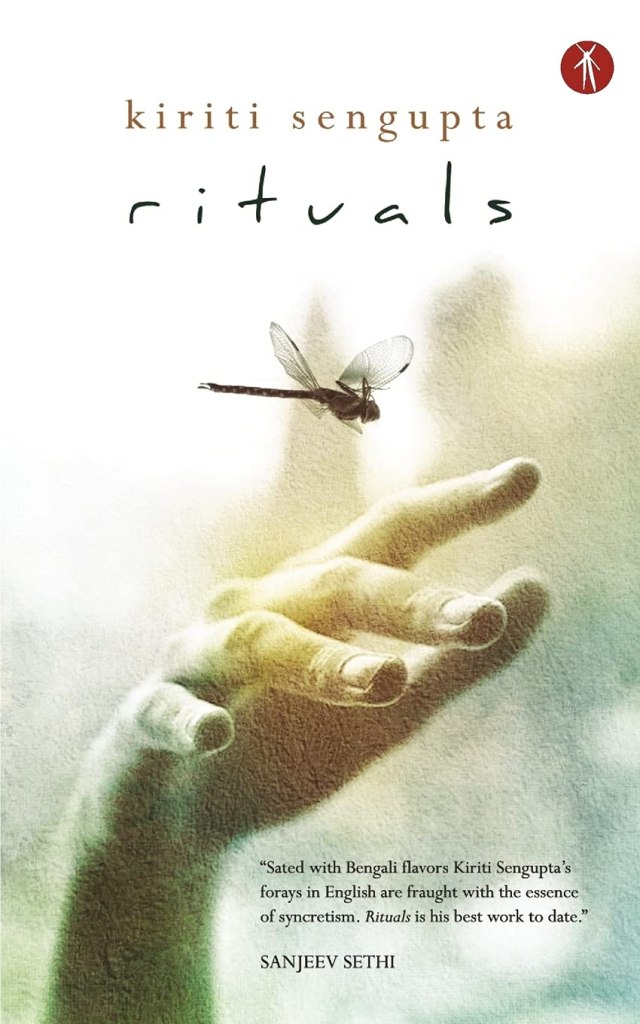


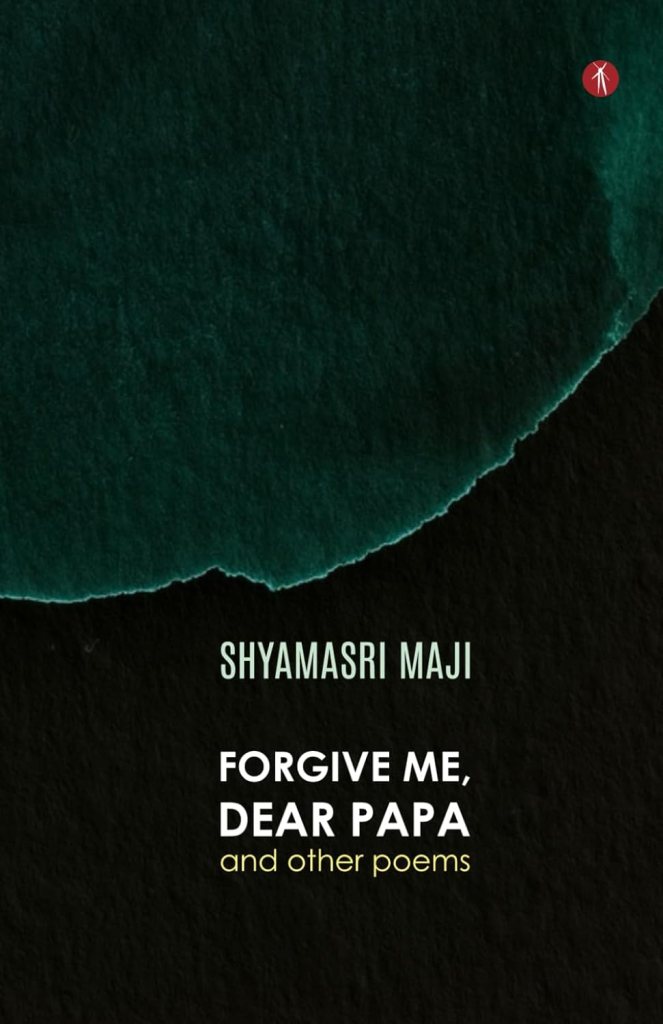







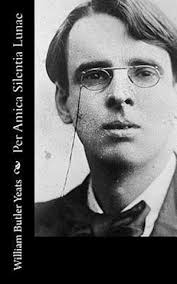


 Borderless