Categories
Musings of a Copywriter

Godman Ventures Pvt. Ltd.

By Devraj Singh Kalsi


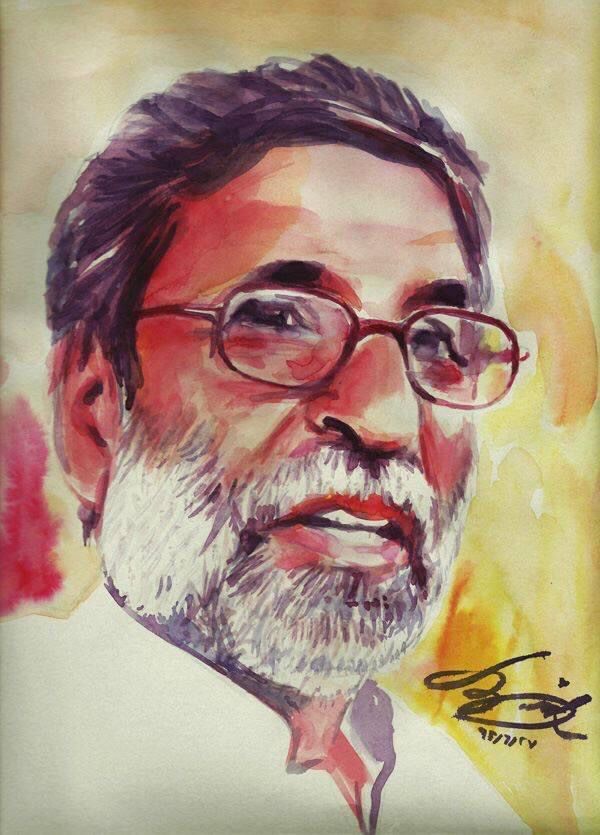
Before setting up any new business, strengths, weaknesses, opportunities, and threats must be studied in detail. If the business involves trading in the commodity called faith, it is categorised as high risk. Where the stakes are high with a fantastic margin of profit, proper assessment of how contemporary dealers operate in the thriving, burgeoning market also becomes essential. With such pearls of wisdom forming the tapestry of my entrepreneurial necklace, I am confident that the time is just right to translate the long-cherished dream of becoming a popular godman with pan-India presence and acceptance, with multiple customers, oops, devotee touch-points, to deliver maximum satisfaction.

Finding a unique proposition, however, remains elusive, and without casting a magical spell on the masses the proposed venture cannot gather traction. Stiff competition in the fast-moving consumer category – with the faux cult and occult gurus mushrooming across the country – has rendered a creative challenge to package something inimitable and refreshing for the faith buds (read taste buds). Honestly, this plan was kept in abeyance in the hope that something clutter-breaking would emerge from my oversized head blessed with a tiny amount of grey matter. The post-pandemic world presents the right opportunity to attract the vulnerable poor and middle-class people besotted with the pursuit of happiness and predictable materialistic dreams.

Setting up an organisation with crowds of devotees demands a big investment. It has to begin with purchasing a vast piece of land, preferably barren and cheap, and then turning it into a fertile ground to rake in the wealth. Approaching a bank to finance the project should deliver a positive outcome. The alternative is of course usurping a disputed land owned by farmers or an estate where the claims of ownership are being battled. Such a locale would be ideal to establish a commune. In case this fails to materialise, catching hold of a local politician to donate land for community service could do the trick. This land parcel could later be converted into a veritable godman’s cave where a substantial chunk of humanity gathers to pray and prey every day.

I am at a loss to generate catchy ideas to repackage and give a brand-new appeal. For that, I have to study other godmen who touch the key pain points first and then deliver effective solutions. They have hundreds of volunteers called sewadars who accord a warm welcome to all those who come – with stolen roses from the gardens of other people in the neighbourhood or bought dirt cheap from farmers when they start drooping. Even though I wish to exploit, it should not look like that – my aura should cover it all.

I have found one godman who calls himself a Living God and millions of devotees attend his preaching sessions just to catch a glimpse and touch the dust of his feet or his bullet-proof limousine. This smart chap wears impeccable white and promises all his devotees that he will come personally to escort them at the time of their death. This is a big idea that has sold well. Till now, only heard of religion spelling out the concept of heaven and hell where ordinary mortals have to go alone based on their actions. But this charming godman with a flowing white beard has made it super easy ostensibly with his promise of companionship on the last journey. He escorts the dead – and comes personally to receive them. Wow! Simply brilliant! Devotees feel special, privileged, and liberated. They know they will not be alone after death. This is a very attractive service that has brought him mega success.

Nobody likes to think about what happens in case the godman dies before his followers as he has special powers. They are assured there will be a Living Master to escort them at the time of death. The succession plan is active as the godman has appointed a successor to take over his intermediatory role, to have access to the vast coffers they have raised. This man will carry forward the business. At the time of death or just before the eternal sleep mode starts functioning, a note emerges from the bed or a cupboard, proclaiming the name of the savvy successor who appears smart enough to shoulder the responsibilities and also proceeds with the expansion plans on the anvil.  

The assurance of royal treatment from the godman to liberate the dead appears a gripping idea but I wonder how many days one has to devote to this onerous job. With the pan-India presence of followers, this would become a burdensome task unless there are special teams appointed to perform it. Perhaps to streamline, to make it faster, the godman keeps his helicopter ready as he has to cover long distances to reach the dead and then escort them to their final destination or push them into the next life. Since death has no holiday and no fixed hour of arrival, the logistics factor needs to be borne in mind. If juniors are entrusted with this special task, then the godman loses appeal. This is one job he should perform personally to satisfy followers who believe the gospel truth that the godman himself will accompany to escort them post death. I am impressed with this special feature and would like to add it to the bouquet of my proposed offerings to ensure this does not remain the unique proposition of solely my competitor.

As a godman, one is self-styled but one has to be sure about the slew of plans one intends to launch. If the godman is lustful, then there are daily supplies of gullible women. He needs gun-toting guards or a private army to protect his honour while he dishonours the unsuspecting folks under his hypnotic influence. He could also extend supplies to his political contacts through the charities he runs, and nobody would suspect foul play for decades. He can dupe farmers and grab their land – use it for organic farming by making his resident followers toil on the land to grow crops. The godman can package and sell at a premium price to open another revenue source for the trust nobody distrusts. He can keep threatening to acquire more agricultural land and use political contacts to get the work done in exchange for a few favours like asking millions of his followers to vote for the political party of his choice.

He can parade his strength by inviting tall leaders to the commune who come in search of a vote bank. He can add more people from powerful positions who have abused power all their life and they can be showcased to convince more followers that the powerful are also meditation addicts seeking salvation just like them. With corrupt celebrities and VIPs roaming around, the common believers are convinced that this is the best place to ensure a good departure.

When a common man sees a respected personality falling at the feet of a godman then he is reassured. So, I would need to have such a network that impresses new entrants to my cabal, signing up for salvation. I should offer some relief package to retired public servants or other debauched professionals from various fields who have taken up this spiritual path for the well-being of their impure souls. I need to have their impressive testimonials to scale up the membership drive. Though it might sound unethical but only the successful survive. I should focus on embalming bereaved hearts. Hard-hitting stories cast a spell when these are narrated with tearful eyes. An atmosphere of divinity is created with a vast amount of healing energy building up in the space left by grief.  

My search for good ideas has led me to another godman who promises the complete transfer of sins. I’d heard of forgiveness for sinners and a general acceptance of such people, but this godman says no one need bear the burden of sins throughout their life as he is ready to accept all their sins, no matter how vast, major or filthy. This has rendered him popular as the masses love the idea of living guilt-free. They can pass on their past sins with the knowledge they can continue sinning and then transfer more sins to the godman. This is what the public expects to hear from God who disappoints by saying that everyone is responsible for their own sins. Afterall, there is this one godman who is ready to bear the entire burden and with this prime promise he shows immense potential to lure believers as the direct sin transfer scheme catches the imagination of the masses.

Although we all are sinners, we do not know how to wash our sins. We go for a dip or a confession, but this godman boldly invites sinners to come and register their names and get lifetime freedom from the guilt of accumulated sins. Besides, there is no need to set forth on any pilgrimage for atonement. Seek subscription and transfer sins to the godman’s account. It is a real innovation. I would like to add this to the list of key offerings. Well, bundling up of such strengths should make an irresistible fusion.

Leading godmen offer secret mantras to practice in isolation or or smear ash on the face – some offer exclusive mumbo-jumbo to baptize in this fashion so that they do not reveal it even if all their devotees have been blessed with the same code. In contrast, my package should be such that it gives maximum comfort to the mind, body, and soul. I should not talk of conquering the ego but show multiple ways to magnify it, show them routes to reach seven to nine heavens, and gain super sensory experiences – all during one lifetime. Since I target people from all religions to give up religion and follow me as a godman, I need to evolve into a cult figure to command attention and start building the base on the foundation of their frustration with existing religions. It is quite a challenge for any godman to shake them up from deep within – shake their roots of traditional faith and turn them into blind devotees.

Even though as a godman, I could fail to get their undivided devotion, I am willing to share their belief in gods and goddesses. But when it comes to choosing a godman, I should be the first and obvious choice. Devotees need to keep my photos in their wallets or wear it in a locket. I could play with their minds and be a good psychologist, reading their desires with perfection. I should be perceived as their sole saviour. Though as a godman I could run the risk of being exposed or shot at by rivals or crazy folks, I need to have an escape route ready in case there is a stampede. I must have followers in foreign lands to help me set up my base, buy islands for me, and help me escape in case of any emergency. When I challenge God, as a godman I should not depend on his mercy.

Since godmen are getting embroiled in controversies and getting a bad perception, I should be ready to be the new avatar. Some are out of the country, and some are languishing inside prisons so there is a great scope to enter this industry. Even though they all claim innocence after committing financial and sexual frauds, their popularity wanes as their claim of being framed with dubious intentions – just as gods had to suffer agony and brickbats for the common public – does not cut much ice. I should work with the mission that believers do not need to travel beyond two miles to find my ashram. I should have my branches sprouting all around. With big expansion plans, I must begin the journey like a corporate behemoth and corrode the fundamentals of faith for my landslide profit.

As a godman, my strategy should be to convert one member of a family first and entrust him with the job of bringing others to the fold. The multiplier effect could grow the numbers. But I need to sit back and draw up at least three solid points to allure devotees. A fusion of cutting-edge ideas would make devotees assured they are all super intelligent beings for choosing me as the logical and ultimate choice.

If I can add science and logic in the mixture of faith in a clever manner, I can have the educated queue up as well.  This topping would convert rationalists into believers. Instead of trying to convert them from their religion, I should offer them the scope to continue with their choice. I should focus on the vast groups of non-believers.

My research shows the burden of modern living is reducing the number of non-believers steadily. I need scientific-tempered preachers in my fold. We could deliver sense by making sure the journey of life is showcased as the most important one. Let me toss some ideas in that direction to emerge as a godman with a halo of human, super-human qualities. If divine justice ever trod my way, I would merely have to prove gods are losing out in popularity to godmen and therefore they have united to conspire against us, thus gaining back more sympathies and following. I would be unconquerable!


Devraj Singh Kalsi works as a senior copywriter in Kolkata. His short stories and essays have been published in Deccan Herald, Tehelka, Kitaab, Earthen Lamp Journal, Assam Tribune, and The Statesman. Pal Motors is his first novel.  


PLEASE NOTE: ARTICLES CAN ONLY BE REPRODUCED IN OTHER SITES WITH DUE ACKNOWLEDGEMENT TO BORDERLESS JOURNAL

Click here to access the Borderless anthology, Monalisa No Longer Smiles

Click here to access Monalisa No Longer Smiles on Kindle Amazon International
Categories
Musings

That Box of Colour Pencils

By G Venkatesh

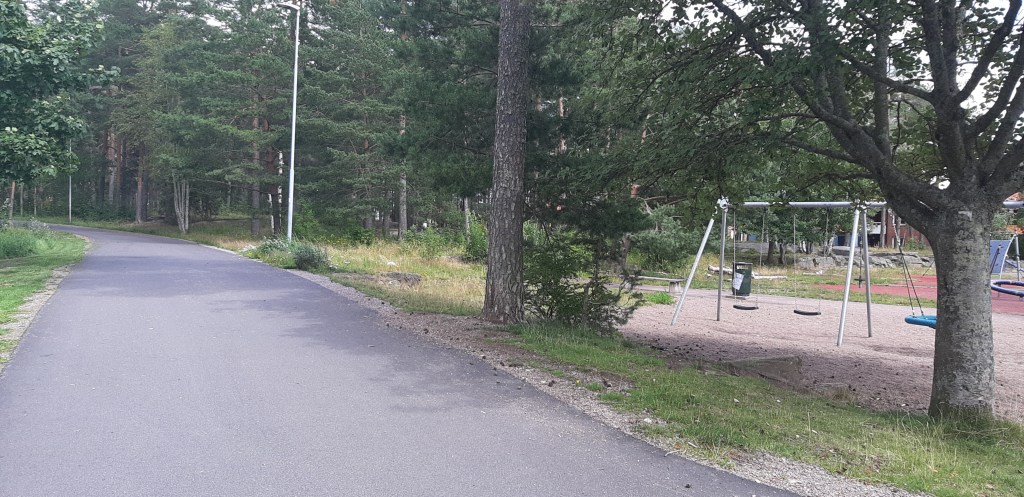
I walked down the forest path in Karlstad, Sweden, wondering how best I could ensure that a box of 36 colour pencils (used to different degrees), when given away could continue to be used so that they could fulfil the purpose they were fabricated for, as completely as possible. I recalled a tarot reader having said that ideas do not come to us when we think, but rather when we have stopped doing so. They come unbeckoned from somewhere beyond the astral realm. I stopped the train of thought in its tracks, to let the engine cool down a bit, and surrendered to the divine process of ideation and inspiration.

The next day, I was walking down the very same path – this was a routine after a couple of surgeries, for the purpose of recovery and regaining strength in my lower torso – when I saw two little girls (less than 6 years old, perhaps) playing in the garden to my left. An idea bubbled up. I hastened to my apartment, fetched the box of colour pencils and rushed down to the garden where I had seen the little girls. They were still there, on the swings. I walked up casually, making sure not to scare them (my bearded foreign face told me that I need to be careful here), and called out from a distance, in Swedish – “Hallo, vill ni gärna ha den? (Hello, would you like to take this?)”

The younger of the two came a bit closer, looked at the box in my hands, and asked curiously – “Vad är det? (What is it?)”

I explained that it was  a box of 36 colour pencils, some used more than the others, and that I wished to gift it away to them. As more and more questions were hurled at me, I could not help but smile and recollect Rudyard Kipling’s poem:

I keep six honest serving-men
(They taught me all I knew);
Their names are What and Why and When
And How and Where and Who.

The elder of the two girls then came down to brass-tacks, and asked, “Är det verkligen gratis? (Is it really for free?)”

I said yes, and she took it from my hands.

As I was about to turn around and walk away, I heard some murmured whispers behind me. I thought they would have opened the box, started counting and marvelling at the various shades of blue, red, green and yellow in there.

Vänta, vänta…(Wait, wait).”

I turned and they came running towards me. The younger one was now holding the box of pencils in her hand.

“Vi vill gärna betala dig (We would like to pay you for this).”

I repeated that it was a gift and one does not have to pay for gifts.

“Nej, nej…vänta (No, no, wait).”

The older one then started searching in the little pouch she had around her waist, and fished out a 2 SEK coin. Summertime in Sweden, and little kids are provided with some money by their parents, which they carry around in these mobile piggy-banks strapped around their waists. Once they have accumulated enough, they spend the money on purchasing ice-cream or chocolates or candies.

“Här, (Here),” she said proudly with a smile across her face. “Den är för dig (This is for you).”

I accepted it with a smile, which hid mixed feelings. I did not wish to deprive the little one of the feeling of pride which she was experiencing – of having put aside money to ‘buy’ this gift from a stranger.

What it was that triggered the desire to monetarily compensate me for the gift I gave them, I would never know. I would also not wish to know. Maybe because I was a stranger to them, who also looked a bit bedraggled after the surgery. Maybe it made them feel good to also give me something in return for what I had given them. That would be another thing I would surrender to the realm of ideas, which had played a part in bringing these two little girls momentarily into my life that day – the invisible hand of God, of ideas floating around in the ether ready to inspire those who are fit to receive them.

Photo Courtesy: G Venkatesh

G Venkatesh is an Associate Professor in Karlstad University, Sweden. E-mail: Venkatesh_cg@yahoo.com

PLEASE NOTE: ARTICLES CAN ONLY BE REPRODUCED IN OTHER SITES WITH DUE ACKNOWLEDGEMENT TO BORDERLESS JOURNAL

Click here to access the Borderless anthology, Monalisa No Longer Smiles

Click here to access Monalisa No Longer Smiles on Kindle Amazon International

Categories
Poetry

Ghosting Sally Fairchild

By Ryan Quinn Flanagan

Lady With a Blue Veil (Sally Fairchild) by John Sargent(1856-1925). Sourced by Ryan Quinn Flanagan
GHOSTING SALLY FAIRCHILD 

What a ghost of a woman!
That Sally Fairchild, with hand raised to chest
as if poignantly aghast at the very sight
of her own faded rendering,
a noticeable accompaniment on the ring finger,
so there is that limited certainly,
but the thickets already seem to be gripping at apparitional days,
a loosening auburn bun swallowed up in blushing blues,
rimmed day hat, much the same:
perhaps, it is that maniacal jungle of colour
all around her, swirling spiked monsters
jumping out from a forgotten child’s scary closet –
what was John Singer Sargeant thinking?
No woman wants to be painted like that.
As if she is disappearing right out of existence.
Vanishing before everyone, even herself.

Ryan Quinn Flanagan is a Canadian-born author residing in Elliot Lake, Ontario, Canada with his wife and many bears that rifle through his garbage.  His work can be found both in print and online in such places as: Evergreen Review, The New York Quarterly, Borderless Journal, GloMag, Red Fez, and Lothlorien Poetry Journal

.

PLEASE NOTE: ARTICLES CAN ONLY BE REPRODUCED IN OTHER SITES WITH DUE ACKNOWLEDGEMENT TO BORDERLESS JOURNAL

Click here to access the Borderless anthology, Monalisa No Longer Smiles

Click here to access Monalisa No Longer Smiles on Kindle Amazon International
Categories
Stories

The Orange Blimp

By Joseph Pfister

Two days after learning her husband is sleeping with another woman, Elena crashes her son’s moped. Later, she will remark it was fortunate the only vehicle in the garage at the time was the moped, and not something that could’ve gone a great deal faster.

It’s a Tuesday. Afternoon. All the husbands are at their offices downtown, taking two-hour lunches with clients and customers; their wives hiding indoors from the heat, impatiently awaiting September, the start of school and the cooler temperatures that accompany autumn in the Midwest. When Elena frees the moped from its tarpaulin and stomps the kickstart, she isn’t sure whether it’s her or the bike that’s vibrating like a plane about to sprint down the runway. All she has to do is release it.

She leaves the helmet she insisted Nathan wear on the sawhorse. She squeezes the throttle down as far as it will go and the moped responds in earnest, shooting out from under her so fast, she almost falls off the back like a cowboy from his reluctant mount. Never mind that Nathan’s friends christened it “The Orange Blimp”, after Elena and her husband told him he couldn’t have a motorcycle, that they were a death wish. Within a block, she is traveling fast enough that the wind lifts her hair off her shoulders, her green house dress flapping against the rear spokes. The whrrrrrr of the bike—somewhere between the throaty growl of a motorcycle and high whine of a lawn mower—erases all thought. She ignores the stop sign and pushes the bike faster, giving it all the gas the little bike has.

The odometer wobbles around 40 m.p.h. on the little glass dial. It’s hard to tell because everything is bouncing and rattling like San Francisco during a quake. The thought occurs to her like lightning out of a clear blue sky: She doesn’t know where the brakes are. No one ever showed her and she didn’t think to ask. Panic races down her arms, into her fingertips. Her mind goes blank as a classroom with the lights off. She releases the throttle, but the bike seems to have a mind of its own. Thirty-eight…thirty-five… She isn’t losing speed nearly fast enough.

The cul-de-sac at the end of Pine Street rises to greet her. In a split second, she decides to bail rather than crash headlong into the Georgesons’ above-ground swimming pool. Her shoulder smacks the pavement first, and she rolls four or five times before coming to a stop. The Orange Blimp hits the curb like a missile, careening into the Georgesons’ metal trash cans with a terrific bang that shatters the afternoon, momentarily interrupting the pressure-cooker hiss of the cicadas.

It takes Elena a long, stunned moment to recover herself and appreciate that she is, more or less, all right—minus the continuous scrape down the left side of her body and the throbbing bruise where her stubborn heart continues to beat. At least she didn’t hit her head, thank God.

The Georgesons’ youngest boy gallops from the house, his freckled, nine-year-old face caught somewhere between terror and excitement. The bike’s rear wheel is still spinning.

“Mrs. Jaeger!” the boy shouts. “Gosh! Are you all right?” He is wearing a cowboy hat, the string cinched beneath his chin, a pair of twin holsters riding on his hips.

Perhaps, it is the result of the tremendous spill she has just suffered, or maybe the fact that her quiet, comfortable life has just been pulled from beneath her unsuspecting feet. Either way, the first thing she thinks to ask is:

“Did anyone else see?”

“No, I don’t think so. Just me. But that was cool!”

The Gottliebs’ blinds twitch, she’s sure of it, and she thinks she sees a shadow in the MacKenzies’ front room.

Christopher and James used to play with the MacKenzies’ oldest, she remembers. Baseball in the spring; football in August. Patrick was it? Or Paul? She hasn’t seen Loretta since the news. It hits her somewhere in the middle of her chest: She will have to sell the house, of course. She knows this, has known it all along, though she hasn’t admitted it to herself until now. Already Loretta and the others are treating her like a deceased relative, the cold corpse of their friendship whisked from its bed before dawn, delivered to the undertaker’s back door.

“Nobody else’s mom would have done that!” The Georgesons’ boy is still there, still watching her. Perhaps he’s worried about her. She would be.

The clamor of the cicadas has returned, the air vibrating with their insect whine.

“Yes, well,” she says, teetering to her feet, “none of the other moms’ husbands are leaving them.”

Elena corrals The Orange Blimp and, with a defiant jut of her chin, marches it past her neighbours’ darkened windows, back to her silent, waiting house.

,

Joseph Pfister’s fiction has appeared in Oyster River Pages, PANK, Juked, and X-R-A-Y, among others. He is a graduate of the MFA Writing program at Sarah Lawrence College and teaches fiction at Brooklyn Brainery.

.

PLEASE NOTE: ARTICLES CAN ONLY BE REPRODUCED IN OTHER SITES WITH DUE ACKNOWLEDGEMENT TO BORDERLESS JOURNAL

Click here to access the Borderless anthology, Monalisa No Longer Smiles

Click here to access Monalisa No Longer Smiles on Kindle Amazon International
Categories
Poetry

Poems by Adeline Lyons

Adeline Lyons
UNDRESSING

flaming trees
whisper

I sought
infinite

turned
immovable

became
dimensional

shed
body

embraced
nakedness

found
light

froze
in reaching

for the absolute

FINDING, FULFILLED

fiercely, you freed me,
roughly parting the chained
veil of my keeping.

you knew not to touch
or look too deeply.
you claimed me,

cutting the barbed cage
with your smooth scythe.

aged eye gazing
on freshly fallen flesh,
you said,

cherish this gift.
ask for none other.

Adeline Lyons is an emerging writer from New York.  She studies at the University of Wisconsin-Madison.  Her work can be found in The Hooghly Review and Spark to Flame Journal.

PLEASE NOTE: ARTICLES CAN ONLY BE REPRODUCED IN OTHER SITES WITH DUE ACKNOWLEDGEMENT TO BORDERLESS JOURNAL

Click here to access the Borderless anthology, Monalisa No Longer Smiles

Click here to access Monalisa No Longer Smiles on Kindle Amazon International

Categories
Notes from Japan

In Praise of Parasols

A classic way to keep cool

By Suzanne Kamata

Painting by Georges Seurat(1859-1891). From the Public Domain.

Parasols? Seriously? Such were my thoughts when I first arrived in Japan one summer over twenty years ago. How quaint, I thought. How old fashioned! If a lady was worried about preserving her lily-white complexion, why not just slather on sunscreen and wear a hat?

In South Carolina, where I’d just come from, the only time I ever saw women wielding parasols was when I visited antebellum mansions. There, tour guides flounced around plantations in hoopskirts, twirling parasols as part of their period costumes. In real life, no one used them.

Back then, many of my friends spent hours laying out in the sun, in pursuit of the perfect tan. In the United States, people found my skin to be too pale, but in Japan women wore long white gloves and smeared their faces with whitening cream. And they carried parasols to ward off the sun.

Parasols have actually been in use in the Middle East and Asia for a very long time. They are depicted in ancient art in India, Egypt, Mesopotamia, and Greece, and are mentioned in a divination book from the Chinese Song Dynasty printed in 1270. Although alternative uses have been discovered for the parasol – for example, in 1902, ladies were advised by The Daily Mirror to use their parasols to fend off ruffians — the basic design is much the same as that of first century China.

A postcard from the turn of the 20th century. From the Public Domain

The only parasol I’d ever owned was a bright red one made of paper, bought from a souvenir shop in Southeast Asia, which I displayed in a corner as an ethnic accent to my home décor. I never thought of using it outside.

Parasols were fussy and cumbersome, I thought. How could you do anything with your hands if you were holding one? They were a nuisance, and yet when I went to a baseball game with my mother-in-law in mid-summer, and the hot sun beat down upon us, I was grateful to share the shade of her black umbrella.

Ever conscious of my carbon footprint, I walk to the neighbourhood store with my eco-bags. One sweltering day last summer, I started to reach for my hat on my way out the door, but grabbed an umbrella instead. It really was cooler underneath! And carrying a parasol helps cut down on the new freckles. Today I browsed online for a new parasol. A number of new vendors have popped up in the West offering a variety of designs – Battenburg Lace for outdoor weddings, solid team colours for stadium sports, and more. Could it be that the parasol is about to come into fashion again in my native country? Here in Japan, it has never gone out of style. 

Suzanne Kamata was born and raised in Grand Haven, Michigan. She now lives in Japan with her husband and two children. Her short stories, essays, articles and book reviews have appeared in over 100 publications. Her work has been nominated for the Pushcart Prize five times, and received a Special Mention in 2006. She is also a two-time winner of the All Nippon Airways/Wingspan Fiction Contest, winner of the Paris Book Festival, and winner of a SCBWI Magazine Merit Award.

PLEASE NOTE: ARTICLES CAN ONLY BE REPRODUCED IN OTHER SITES WITH DUE ACKNOWLEDGEMENT TO BORDERLESS JOURNAL

Click here to access the Borderless anthology, Monalisa No Longer Smiles

Click here to access Monalisa No Longer Smiles on Amazon International

Categories
Poetry

Poetry on Migrations

By Nilsa Mariano


BEAUTIFUL AND COLD

Soundlessly they move at night beautiful and cold
morning light reveals a lawn covered in snow
a red headed woodpecker chips and drums steady
oak trees that stand strong bare witnesses to it all

morning light reveals a lawn covered in snow
blood spatters announce predators overhead and near
a red headed woodpecker bangs steady blows
hungry finches frantically feed watching the sky in fear

blood spatters announce predators overhead and near
the news announces more dead due to Ice and climate
hungry finches frantically feed watching the sky in fear
we fight for climate change but tolerate ICE

the news announces the dead in Ice and snow
the damaged fall like tree branches on the border
we fight for climate change but tolerate ICE
children in tents watch the snow and cry mother

the damaged fall like tree branches on the border
both sides claim and deny any blame
children in tents watch the snow and cry mother
the red headed woodpecker watches with shame

Both sides claim and deny any blame
the oak trees stand strong bear witness to it all
children in tents watch the snow and cry mother
soundlessly they cross at night resolute beautiful and cold


CORN BEANS SALT

Querida madre,

we crossed the border made it here tired but well
we were caught by la migra there are many of us in a shelter
which smells bad but they feed us and give us water
the food is cold and bland
I am grateful and do not complain
but at night at bedtime
the lights make it hard to sleep
in the quiet you hear the little ones crying
for their families or because they are afraid
as for me …it is you I worry about I miss your face mama
keep the dog near it can keep you safe it will bark and warn you of intruders
try to keep your strength do not wander far from the house
right now I see you clearly
hair dark as frijoles negros held back in place with a thin ribbon
you are smiling and shaking your head
that here I am far away telling you what to do

I have faith that any day now I will make my case
the judge will understand after he hears my plans and sees how strong I am
despite all the weight I have lost
I will tell them that I am already fifteen
I will work hard so I can send for you
they are lining us up for a shower it's been a long time
God keep you safe
I hope you have corn beans and salt
enough to keep you going
you are always in my heart

te quiero mama

tu hijo


SWEETWATER


Just the name made my mouth water
With sugary southern syllables
Sweetwater
he carefully tracked the path of the Eclipse
this was one of the cities (he smiled)
spectacular prime viewing
Although the shabby hotel
The best in town did not meet my big city artificial aspirations
fine-tuned over the years to four dollar hotel ratings
But It was outside town had an expansive lawn and the right cost
Arriving the night before the blessed event we drove into town
Looking it over with small expectations
The town center howled back with pacemaker shattering music
A stuffed astronaut dressed in silver affixed to a post
like a symbol of Christ
Vendors and stray dogs filled the streets
Around the plaza were small shops with enticing windows
I could not resist
I saw some old luggage I envisioned using as props
the owner strode over as backup to the salesgirl
We looked each other up and down
New York she said
Brooklyn I said
Williamsburg we said
Espanol we Espanglished
Screaming and laughing like teenagers
We hugged and traded ancestral names and towns
trying to establish our connections
We discovered we lived blocks from each other in Brooklyn
We knew the same vibrant scary neighbourhoods
We had Family names we shared
I kept quiet about the stories
of my father the case worker
Visiting families to assess their needs
long hours away from home with select
Desperately beautiful women
As she drew me close to answer her questions
and we declared we were sisters
She wanted me to meet her blind mother
blind with the same rare disease
My blind father had….
my heart went on pause…. breathe
We traded phone numbers
Made plans to visit each other
Had a glass of wine
A toast to life
I paid for my discounted luggage

I imagined my future with a sister I never had
let the past be past and welcome the new
The next day we sat in wait
With hundreds of others
Waiting for the eclipse
The crickets and frogs alerted us
Special glasses in place
We watched as the moon
Passed between the sun and the earth
Darkness came with a loud gasp

Packing the car the next day
Sweating in the heat we left
high with expectations
But there were
No Emails no calls
Nothing but
crickets from Sweetwater
A chance meeting
unexpected eclipse

Glossary:

La migra: Informal Mexican Spanish term  for US Immigration

Querida madre: Dear mother

frijole negros: Latin American dish made with black beans

te quiero mama: I love you Mum. I have to go

tu hijo: your son

Nilsa Mariano is a graduate in comparative literature from Binghamton University New York. She has been published in Stone Canoe, Five Minute Magazine and MicroFiction Monday Magazine, Muleskinner Journal, Wildgreens Magazine and Chicken Soup for the Latino Soul.

.

PLEASE NOTE: ARTICLES CAN ONLY BE REPRODUCED IN OTHER SITES WITH DUE ACKNOWLEDGEMENT TO BORDERLESS JOURNAL

Click here to access the Borderless anthology, Monalisa No Longer Smiles

Click here to access Monalisa No Longer Smiles on Kindle Amazon International

Categories
Review

Connecting Diverse Cultures and Generations

Book review by Bhaskar Parichha


Title: Unpartioned Time: A Daughter’s Story 

Author: Malvika Rajkotia

Publisher: Speaking Tiger Books

Malavika Rajkotia is a prominent divorce attorney based in Delhi. She has collaborated with numerous non-governmental organisations addressing civil liberties and human rights concerns. Additionally, she has a strong background in theatre, participating in approximately thirty productions in both Hindi and English. She has also served as the host of Shakti, the inaugural television talk show in India dedicated to women’s rights.

Her memoir, Unpartitioned Time: A Daughter’s Story, is a complex tale that intertwines the history and current experiences of a family following the Partition. Jindo, Malavika Rajkotia’s father, arrives in India amidst the chaos of the Partition riots. He is allocated a piece of desolate land in the small town of Karnal, where he must clear and cultivate the land to reclaim his role as landlord and patriarch. However, devoid of his past and confronted with an uncertain future in a place where the language is foreign to him, he undergoes a significant transformation. Rajkotia intricately weaves a narrative around this generous, humorous, loving, and increasingly despondent figure, delving into her family’s history and present.

The story explores themes of yearning and belonging, the nature of privilege and its loss, while reflecting on the resilience of a people stripped of their autonomy. Through her evocative and lyrical writing, she leads readers through the challenges faced by a large family—comprising uncles, aunts, siblings, cousins, and esteemed figures—who are all in pursuit of recognition, identity, and stability.

Rajkotia fearlessly confronts her milieu, whether navigating the radical Khalistan movement, the tensions between the Sikh faith and Hindu nationalism, or the pervasive cynicism of Indian politics. Her vivid, meditative, finely detailed portraits of a rich family life are filled with moments of tears, laughter, and music, and a diverse array of characters who are immensely relatable. Ultimately, this brave and moving book is about the enduring quest for meaning and fulfilment that transcends cultural boundaries.

Narrates Rajkotia: “The diffused light of dawn lit a dull, flat landscape cut by the highway, gleaming under randomly spaced streetlights. Until about thirty years ago, this single carriageway witnessed an almost daily carnage that left heavy and light motor vehicles, bicyclists, and bullock carts in confused mangles. Everyone had a personal story of loss on this road. Three of my family was killed in two separate accidents. A splintered windshield glass lodged in a young girl’s throat. An aunt and cousin died when their car rammed into a truck to avoid a cyclist.”

She has a detailed account of the road in Karnal town thus: “For over 2,500 years, this road has streamed with traders from Central Asia, scholars from China, adventurers from Europe, sadhus from the Himalayas, and armies coveting Hindustan. This portion of the road was the battlefield of the story of the eighteen-day Mahabharata war, marking the cusp of the end of the Dwapar Yuga and the rise of the Kali Yuga. Eighteen days of soldiers’ cries and trumpeting elephants and neighing horses, each ending with sunsets blackened by smoke from the funeral pyres hanging heavy until impelled by the sounds of wailing women.

“From myth, we come to somewhat recorded history in 300 BCE, when Chandragupta Maurya built this road to connect his fast-growing kingdom, spanning the north of the subcontinent from the source of the Ganga to its northwestern limits. The road was developed by Sher Shah Suri. My father remembered the time when it was called ‘Jarnailly Sadak’ under the British, and then GT Road, its official name, The Grand Trunk Road. The government of independent India called it Sher Shah Suri Marg, the Sanskrit ‘marg’ guillotining the English ‘road’ and the Urdu ‘sadak’.”

The memoir stands as a testament to the power of storytelling in bridging gaps between cultures and generations, ensuring that the voices of those who experienced Partition are heard and remembered. As part of the growing body of literature on this subject, it encourages further exploration and discussion, ultimately contributing to a more nuanced understanding of the complexities surrounding Partition and its enduring legacy.

.

Bhaskar Parichha is a journalist and author of UnbiasedNo Strings Attached: Writings on Odisha and Biju Patnaik – A Political Biography. He lives in Bhubaneswar and writes bilingually. Besides writing for newspapers, he also reviews books on various media platforms.

.

PLEASE NOTE: ARTICLES CAN ONLY BE REPRODUCED IN OTHER SITES WITH DUE ACKNOWLEDGEMENT TO BORDERLESS JOURNAL

Click here to access the Borderless anthology, Monalisa No Longer Smiles

Click here to access Monalisa No Longer Smiles on Amazon International

Categories
Poetry

Leaving for Barren, Distant Lands

Poetry by Allah Bashk Buzdar: translated from Balochi by Fazal Baloch

Allah Bashk Buzdar. Courtsey: Fazal Baloch

The world of my dreams longs for you,
My love, come and fill my thoughts with radiant hues and shades.
Let my eyes feast on your glowing face,
And grace my lips with the warmth of your breath.
Let my hands feel your soft caress,
And let the fragrance of blooming flowers
Permeate the air around me,
Filling my heart with boundless joy.
Let the breeze rising from your comely gait
Enchant my existence.

My destination lies far from here,
I’ve to journey beyond borders of tyranny and oppression.
Every stone and thorn along the way
I must gather,
The tangled strands of life
I must unravel.

A new harvest of love
I must sow.
Bid me farewell with
Blessings and infinite hope.
Hold me in your gaze
And beneath your sable tresses,
Lest the sapling and bloom of love
You planted should wither away.

I must leave for barren, distant lands,
I’m aware
The quest of life may lead me astray.
And who knows then,
On whose shoulders
Your tresses will fall in soft disarray?

Translator’s Note: Allah Bashk Buzdar is a remarkable modern Balochi poet known for his distinct diction, unique poetic language, and peculiar mode of expression. He writes in the Sulaimani dialect—one of the three major dialects of Balochi, predominantly spoken in the eastern regions of Balochistan and adjoining areas. Buzdar’s poetry reflects his unwavering love and commitment to humanity. Even when writing verses of love and romance, he connects them to the plight of people who live around him. He has published two anthologies of poetry so far. The translated poem is taken from his first anthology, Hoshken Rakk Saoz Bant (The Parched Lips Will Bloom Anew), published by the Balochi Academy Quetta in 2004.

Fazal Baloch is a Balochi writer and translator. He has translated many Balochi poems and short stories into English. His translations have been featured in Pakistani Literature published by Pakistan Academy of Letters and in the form of books and anthologies. Fazal Baloch has the translation rights to this poem.

PLEASE NOTE: ARTICLES CAN ONLY BE REPRODUCED IN OTHER SITES WITH DUE ACKNOWLEDGEMENT TO BORDERLESS JOURNAL

Click here to access the Borderless anthology, Monalisa No Longer Smiles

Click here to access Monalisa No Longer Smiles on Amazon International

Categories
Poetry

Monastery Lores

By Noopur Vedajna Das

LUNG TA/DARCHOG

Triangular thin
cloth flags,
Lung ta,
fluttering
along
the winding path
to the monastery.

Colourful
in their appeal,
red, blue, green
yellow and white,
the Darchog,
for peace
and tranquility,
a heavenly abode
high in the mountains,

Soon blown
to smithereens
by the blast
of the
vicious wind.
Triangular flags at a monastery. From Public Domain

Noopur Vedajna Das is a writer, poet and an educator. She’s a keen birder and loves to travel. She resides in Mumbai along with her family.

.

PLEASE NOTE: ARTICLES CAN ONLY BE REPRODUCED IN OTHER SITES WITH DUE ACKNOWLEDGEMENT TO BORDERLESS JOURNAL. 

Click here to access the Borderless anthology, Monalisa No Longer Smiles

Click here to access Monalisa No Longer Smiles on Kindle Amazon International