As I was fast asleep in my bed of roses,
Someone silently moved
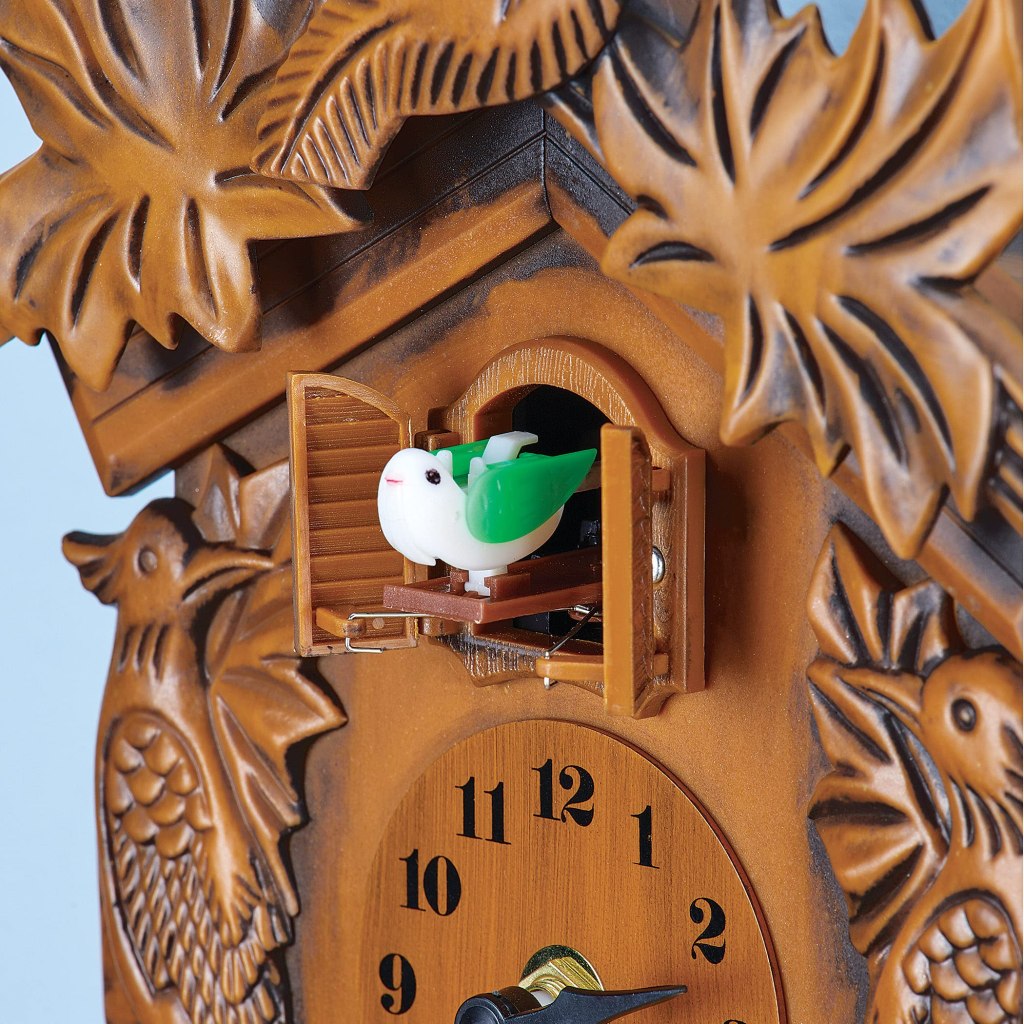
           The cuckoo clock standing against the eastern wall
And hung it next to the awning through which I watch sunset.

            As I sleep on my bed of roses,
The cuckoo comes out of the darkness every hour.
The cuckoo's breast is brown, like the pile of wood stacked on funeral pyres.
The cuckoo would look at the unencumbered nail sticking out,
And blow its honest heart out,
                            ‘It’s not about death I am afraid,                                                                                                                  It’s about living’ –
It’s time I hang a picture of the churchyard symmetry
        Where my father, my mother and my friend have gone before, sleep.
          I sleep past my bed of roses.
I do not draw conclusion from the waxing of or waning of the moon
The moon passes through the window over the beads of raindrops
All night,
           The good old cuckoo clock minds
‘Cuckoo…, cuckoo…’.
From Public Domain
Saranyan BV is poet and short-story writer, now based out of Bangalore. He came into the realm of literature by mistake, but he loves being there. His works have been published in many Indian and Asian journals. He loves the works of Raymond Carver.
.
PLEASE NOTE: ARTICLES CAN ONLY BE REPRODUCED IN OTHER SITES WITH DUE ACKNOWLEDGEMENT TO BORDERLESS JOURNAL
Chaptek: The feathered shuttlecock is kicked with the heel to keep it in the air as long as possibleBelon acah (or galah pajang) is a team sport where players cross against the barricading opponents.
LIFETIME BY MAIN MAIN

wooden blocks, wooden trains,
ageing memory still remains.
     friends divide, police and thief,
     evening sweat a stress relief.
Belon acah on badminton court,
cari lobang through the fort.
      colourful feathers adorn chaptek,
      mesti main during pagi break.
hantam bola with acrobatics,
ducking projectile, elak tactic.
       rounders, imperfect diamond,
       home runners jadi legend.
ceper with five bottle caps,
navigating past the 3D traps.
     guli lined up without blame,
     mata sempit taking aim.
tightened cord, to spin gasing,
if too loose kepala pusing,
     whack the stick, gili danda,
      count back jangan salah.
Hide and seek, every little nook,
hearts like pages of an open book.


Glossary
main main: play, playing
Belon acah: name of the game
cari: look; lobang: gap or hole
chaptek: featherball
mesti: must
pagi: morning;
hantam: strike / hit; bola: ball
elak: avoid
jadi: become
ceper; bottle cap
guli: marble
mata: eye; sempit: narrow slit
gasing: tops that spin
kepala: head
pusing: turn, context is disoriented
gili danda: name of the game
jangan: don’t: salah: error / mistake
You can check out more about the games mentioned in the poem by clicking here.
A game of Ceper
.Sanjay C Kuttan, poet, philosopher and writer, was born in Malaysia, lives in Singapore, has his poetry published in Where Fires Rage, In One Breath, Under the Spell of Flickering Lights, Quilted Sails and in other anthologies.
.
PLEASE NOTE: ARTICLES CAN ONLY BE REPRODUCED IN OTHER SITES WITH DUE ACKNOWLEDGEMENT TO BORDERLESS JOURNAL
Farouk Gulsara on a cycling adventure through battleworn Kashmir
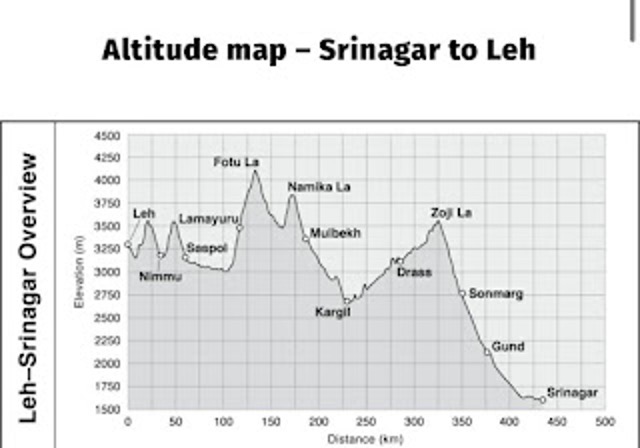
They say to go forth and explore, to go to the planet’s edge to increase the depth of your knowledge. Learning about a country is best done doing the things the local populace does, travelling with them, amongst them, not in a touristy way, in a manicured fashion in a tourist’s van but on leg-powered machines called bicycles. Itching to go somewhere after our memorable escapade in South Korea, cycling from Seoul to Busan, as the borders opened up after the pandemic, somebody threw in the idea of cycling from Kashmir to Ladakh. Long story short, there we were, living our dream. The plan was to cycle the 473km journey, climbing 7378m ascent in 8 days, between 6th July 2024 and 12th July 2024.
Our expedition started with us landing in Amritsar after a 5.5-hour flight from Kuala Lumpur. From there, it was another flight to Srinagar, where the crunch began.
Day 1. Amritsar
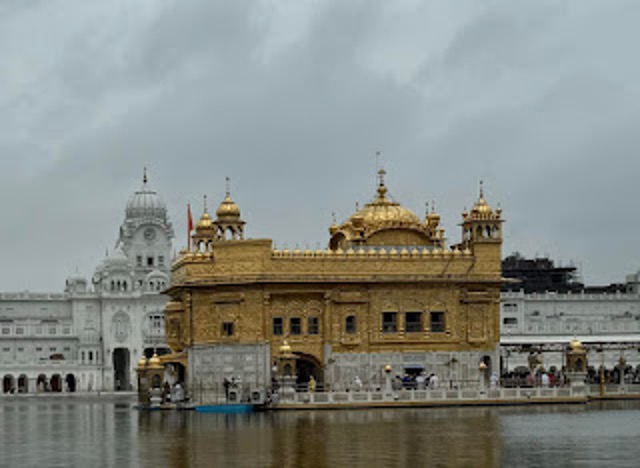
Amritsar Golden Temple. Photo Courtesy: Farouk Gulsara
After a good night’s sleep, everyone was game for a quick, well-spread breakfast and a leisurely stroll to the Harmandir, the Sikh Golden Temple. Much later, I realised the offering was 100% vegetarian and did not miss any non-vegetarian food. As a mark of respect, the vicinity around the temple complex served only vegetarian food, including a McDonald’s there. Imagine a McDonald’s without the good old quarter pounder! Hey, image is essential.
The usual showing of gratitude to the Almighty was marred by the unruly behaviour of the Little Napoleons, the Royal Guards. New orders were out, it seems, according to one guard with a chrome-plated spear and a steely sheathed dagger at his hip—no photography allowed. Then, on the other end of the Golden Pool, it was okay to photograph but only with a salutary (namaste) posture, with hands clasped on the chest. On the other side, it was alright. One can pose as he pleases. The guards were more relaxed there.
That is the problem when rules are intertwined with religion. People make their own goal post and shift it as they please. When little men are given power to enforce God’s decree on Earth, they go overboard. They feel it is their God-given raison d’etre and the purpose of existence. Since nothing is cast in stone and everyone in mankind is on a learning curve, what is appropriate today may be blasphemous tomorrow and vice versa. We distinctly remember snapping loads of pictures of the full glory of Harmandir day and night during our last visit, preCovid.
We all know what happened in the Stanford experiment when students were given powers to enforce order. It becomes ugly very quickly. Next, the flight to Srinagar.
Boat House Dal Lake, Srinagar
Srinagar. Photo Courtesy: Farouk Gulsara
My impression differed from when Raj Kapoor and Vyajanthimala were seen spending their honeymoon boating around the lake in the 1964 mega-blockbuster Hindi movie Sangam. Then, it had appeared insanely cold, with mists enveloping the lake’s surface. Serenity was the order of the day. What I saw in the height of summer with a temperature hovering around 30C, was anything but peaceful. Even across the lake, the constant blaring of car horns was enough to make anyone go slightly mad.
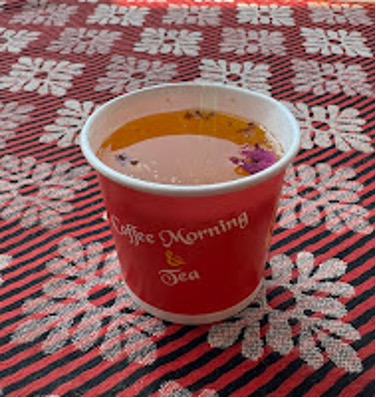
The lake is a godsend for dwellers around it. Many depend on the lake to transport tourists and sell memorabilia and other merchandise on their boats. The rows of boat houses are also popular sites for honeymooners and tourists to hire. Privacy may be an issue here. Imagine small-time Kashmiri silk vendors just landing at the boat house and showing produce to the occupants. They may want you to sample their kahwa,a traditional spiced-up, invigorating, aromatic, exotic green tea.
Day 2. Boat House, Dal Lake, Srinagar
Kashmiri Kahwa, a spiced tea. Photo Courtesy: Farouk Gulsara
Early morning starts with peaceful silence until the honking and murmur of the crowd start slowly creeping in. It was a leisurely morning meant to acclimatise ourselves to the high altitude (~1500m) before we began to climb daily till we hit the highest point of ~5400m. This would — aided by prophylactic acetazolamide –hopefully do the trick to keep altitude sickness at bay.
The morning tête á tête amongst the generally older crowd was basically about justifying our trip ahead. The frequent question encountered by these older cyclists was, ‘Why were they doing it?’ The standard answer was similar to what George Mallory told his detractors when he expressed his desire to climb the peak that became Everest.
“Why? Because it is there!” Mallory had said.
The cyclists told their concerned naysayers, “Because we can!”
Yeah, the general consensus was sobering. Time was running out, and so many things needed to be done before the big eye shut. There were so many places and so little time!
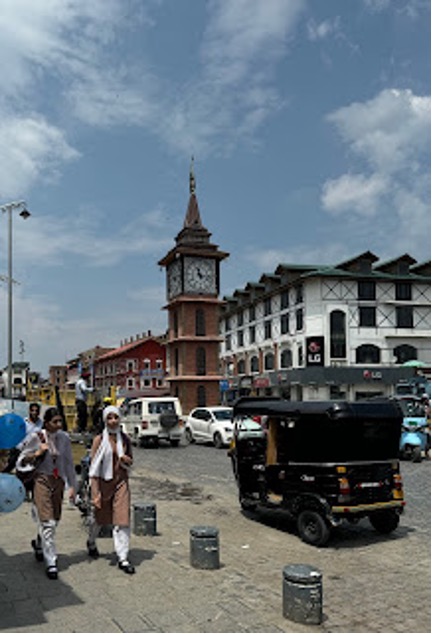
Lal Chowk. Photo Courtesy: Farouk Gulsara
Continuing the easy-peasy stance before the crunch, a trip to town was due. Backed with the symphony of the blaring of honks, we made a trip to the town square, Lal Chawk. After checking out how regular people got along with life, we realised the heavy presence of armed army personnel at almost every nook and corner of the town. Perhaps it was because it was Friday and prayers were in progress.
The return trip to our boat house was a trip down memory lane. After spending most of our adult lives in air-conditioned cars, the trip back on a cramped Srinagar town bus brought us back to our childhood, when rushing to get a place in the bus and squeezing through shoulder to shoulder in a sardine-packed bus was a daily challenge. That, too, was in the tropical heat minus the air conditioning.
By noon, temperatures had soared to a roasting 30C. So much for cool Kashmir!
Our trip coincided with the Amarnath Yatra, an annual pilgrimage for Shiva worshippers who pay obeisance to Holy Ice Lingam.
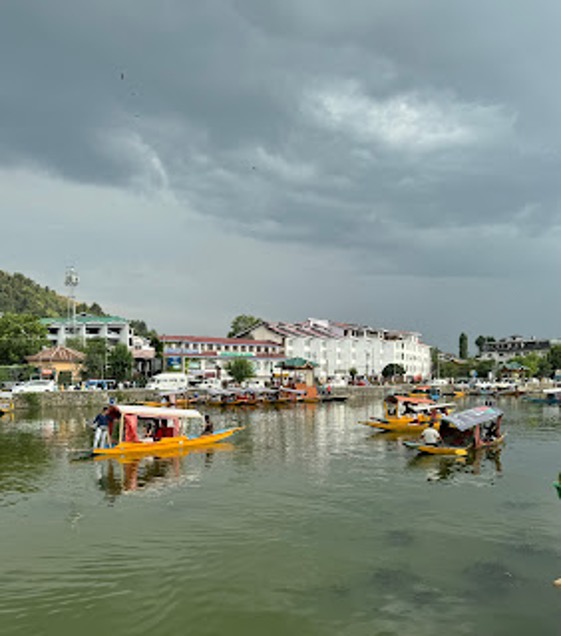
Dal Lake. Photo Courtesy: Farouk Gulsara
The evening was the time to familiarise ourselves with our machines, which involved a ride around the city. It was a nightmare of an experience where we had to simultaneously see our fronts, back, and sides. It was jungle fare. Nobody knew from which direction vehicles were going to barge at us. We survived somehow, if ever we were born in India, our most probable cause of death would be death by road traffic accident.
The ride brought us to the affluent part of Srinagar, which changed our perception of Kashmir as a war-torn zone. What we saw were nicely manicured lawns and neatly painted buildings. The only hint of disturbances is the apparent presence of armed army personnel nearby. It is said that the one single sign of peace is to see people hanging around lakes and esplanades. We did see this on this ride. Young families were strolling along the promenade to a string of shops selling potpourri of delicacies. Kashmir appeared peaceful.
Day 3. Srinagar…move it, move it…
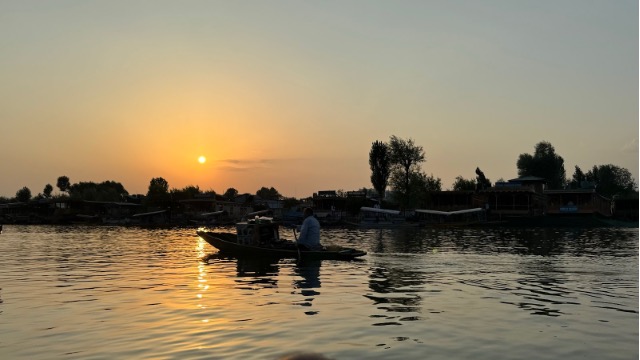
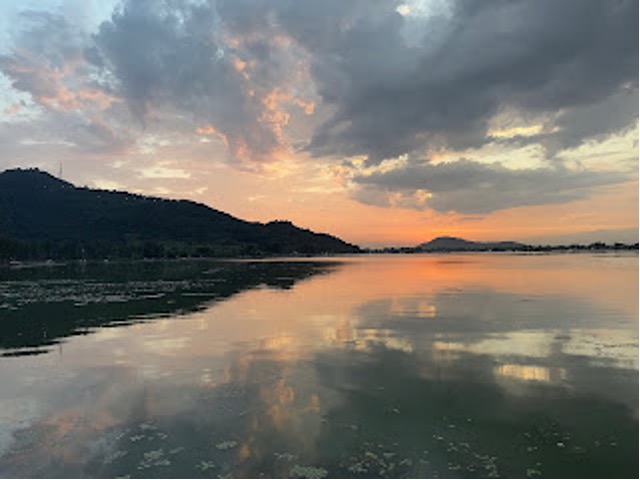
Sunset at Dal Lake. Photo Courtesy: Farouk Gulsara
It was 4am in Kashmir, and all through the night, it had been raining with occasional threats of thunder in the distance. The plan was to start riding as soon as the day broke with the first ray of the sun. That could be 5am or later. And it has probably nothing to do with Indian timing. Today’s ride would be a 90km challenging ride with an ascent of 4.5%.
All the cyclists survived the ordeal. Starting around 6am, after checking the machines and last-minute briefings, we were good to go.
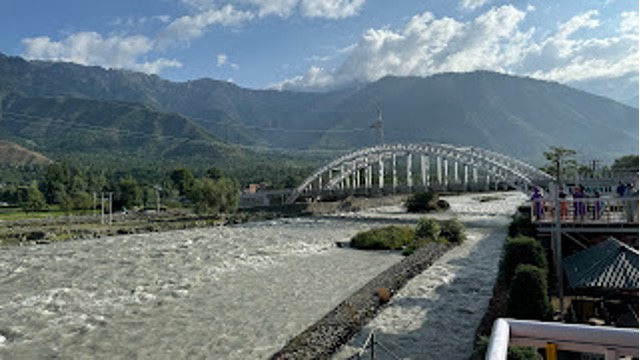
We did not know that Lake Dal was so huge. The first 20km was all about going around the lake. The first stop was at Mani Gam, a picturesque countryside with a massive tributary of the Sindh River, for an early breakfast of hot milk coffee.
As expected, the traffic was heavy because of the Amarnath Yatra. But one would expect attendees of a divine voyage like this to want to exhibit tolerance, patience, and softness. Unfortunately, the ugly side of drivers was in full glory. If the rest of the world would blare their honk with all their might just before a head-on collision, here, the same action is synonymous with informing another fellow road user that he is around.
To be fair, many pilgrims were in chartered vans, and the drivers were quite aggressive, overtaking in blind corners and swerving to the edge of the roads. All in the name of making more trips and making money for the family.
Sind River at Ganderbal. Photo Courtesy: Farouk Gulsara
They say with greater powers comes great responsibility. Apparently, the lorry drivers here missed the memo. Locally, they are known as the King of the Road, with multi-octaved ear drums rupturing high-decibel honks, sometimes to the tune of Bollywood numbers.
The cyclists continued grinding despite side disturbances that can push any person raving mad; the steady climb was unforgiving. Just when they thought that was the end of the climb, they were fooled for another just after the bend. The most gruelling part was the end of the day’s trip. We rode more than 85 km, climbed a total elevation of 2692 m, and still lived to tell.
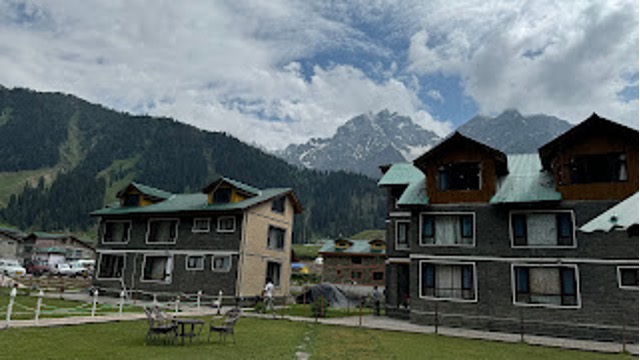
Hotel Thajwass Glacier, Sonamarg
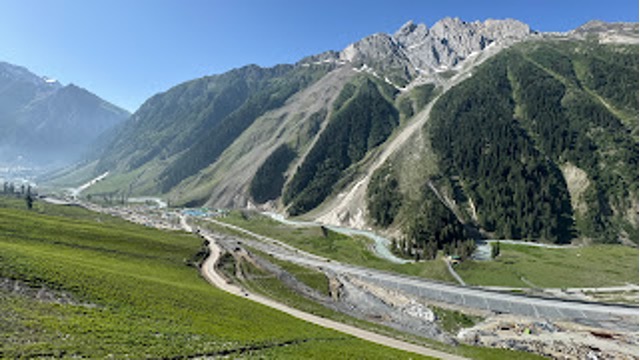
Along Srinagar…Ladakh Highway. Photo Courtesy: Farouk Gulsara
Dinner was entirely vegetarian as a mark of respect to the hotel’s occupants who were there to fulfil their pilgrimage at Amarnath temple. The brouhaha that struck a chord amongst many occupants was the cancellation of helicopter services to the pilgrimage site. The pilgrims were given the choice of either walking a 15 or 22-km track to fulfil their vows or they could pre-book a helicopter ticket to go there. The trouble with the helicopter services is that their feasibility depended on the weather. Weather is controlled by God, the logical explanation would be that God was not too keen to give audience to the so-and-so who were scheduled on flight.
After the light chat with fellow hotel dwellers and answering their curious questions about why able bodies would want to torture themselves, it was time to hit the sack. We could have asked them why fly when they could walk, but we did not.
Day 4. Sonamarg
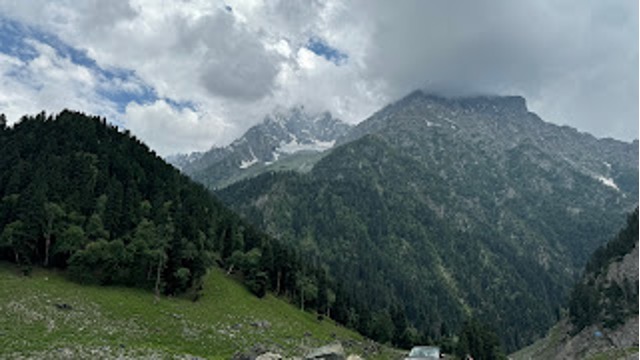
Sonamarg. Photo Courtesy: Farouk Gulsara
We decided to make it a day of light and easy. Everyone was left to their own devices after the spirit-sapping grind the day before. Most took a rain check on the initial hike but went for a long walk instead.
So, we took a stroll in the Kashmiri Valley, admiring the result of Nature’s choice of colours in His palette: the symphony of rushing cool mountain water and the refreshing cool breeze.
We met a couple from Chennai at the breakfast table with a sad tale. They had recently lost their only child who was born with cerebral palsy. They had to part from her after caring for their child for many years. They suddenly found plenty of free time on their hands. They decided to spend the rest of their remaining post-retirement lives doing short gigs, earning enough money to tour around and help out other families undergoing the same predicament as they did with their special child.
When we think we do not have nice shoes, we should not forget about those with no feet. No matter how big our problems seemed, others could have had it worse.
Sonamarg can be classified as a tourist town with rows of hotels on either side of the road, occasionally laced with souvenir shops and restaurants. The township appears to have been newly built, with freshly tarred roads, loose pebbles on the road shoulder, and unfinished touch-ups.
Day 5. Off to Drass
On the way… Photo Courtesy: Farouk Gulsara
We were off to Drass, the coldest inhabited place in India in winter. A quick read and one might read it as Dr-Ass, rather fitting of a name as one could use an examination of one’s derrière after a climb that was upon us. We will see you in hell. But wait, hell is supposed to be hot, is it not? Or hath hell frozen over?
At one point in the 1947-48, Drass was invaded and captured by Pakistan. Soon later, India recaptured Drass. We were only 12km from the line of control (LOC).
Hotel D’Meadow Drass
As expected, it was a gruelling ride. The first 21km were excruciatingly torturous, with narrow roads that had to be shared with the notorious motorists who thought that without the honk, one could not drive. We had to test our trail biking skills later as quite a bit of the stretch was undone or probably collapsed as a result of downpours. We were left with a sand tract and later fabricated stone tracks, which gave good knocking on our posterior ends. Remember our appointment with Dr Ass?
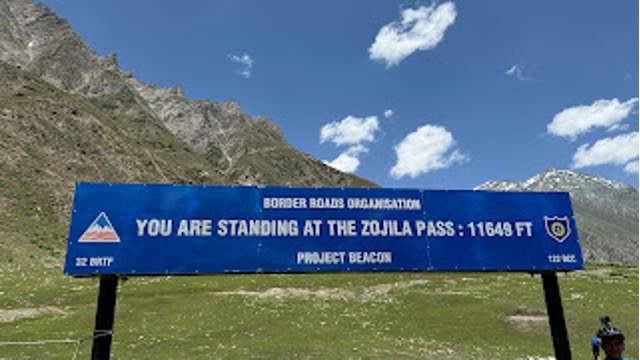
Zojila Pass. Photo Courtesy: Farouk Gulsara
After the 21 km mark, it was generally downhill, but our guide told us to unlock the mountain bike suspension for more comfort due to the violent bumping. The road improved as we entered Ladakh but was interspersed with occasional potholes that shook the machine.
After a short lunch break at a remote restaurant (referred to as a hotel), we were good to go and finally reached Drass at about 3 pm.
We had gone through the gruelling Zojila Pass. A tunnel is currently being built to connect Sonamarg and Drass. It would cut down travel from 4h to 1.5h.
Point to note: this Pass lives up to its name. When Japan was attacked by many post-nuclear attack monsters, the biggest one was referred to as Gojira. Hollywood decided to christian Gojira as Godzilla, giving rise to the meaning of gigantic as in Mozilla and Godzilla’s appetite. Zojila Gojira, what’s the difference? Both were scary.
Day 6. Drass to Kargil
Leaving the ‘Gateway to Ladakh’ and the ‘Coldest place in India’, we headed toward Kargil, which had been immortalised in annal of history when Pakistan and India fought a war in 1999.
Today’s cycling routine was less enduring compared to our previous rides. Most of the route was a downhill trend lined by dry, stony mountains on one side and the gushing blue waters of a tributary of the Indus on the other. The road condition was pretty good, with recently tarred roads, barring some stretches being tarred and resurfaced in various states.
After completing the close 60km trip to Kargil, we were told we were the fastest group the organiser had ridden with. Eh, not bad for a bunch of sixty-something madmen! Maybe they were just words of encouragement.
I was surprised to see Kargil as a bustling town with many business activities. Construction is happening here and there. Vendors were spreading their produce. Touters were busy looking for clientele. Hyundais, Marutis, and motorcycles thronged the streets, which were obviously not built to handle such tremendous volumes. Everyone was in a hurry. That is a sign of development.
We were housed in the tallest building around here. It was a four-story, four-star hotel with a restaurant and 24-hour hot water services. In most places we stayed, hot water was only supplied at short, predetermined intervals.
Day 7. Kargil to Budkharbu
The day started at about 6:45 am, with temperatures around 9C. This leg was expected to be tough. Two-thirds of our journey would be climbs, and there’d be more. It is expected to be sunny throughout, so we could expect a lot of huffing and puffing.
Today’s ride was easily the toughest one. Straddling on our saddles for 7.5 hours was no easy feat by any means. The climbs went on and on. The steepest and most prolonged ascent came after 39 km. It was a sustained climb for the next 10 km, hovering between 4% and 12% ascent.
Photo Courtesy: Farouk Gulsara
Nevertheless, we were feasted with some of the most mesmerising views of barren, arid landscapes, as though someone had painted them with hues in the brown range, occasionally speckled with malachite green and a top of sky blue. It was a feeling as if we were at the edge of heaven.
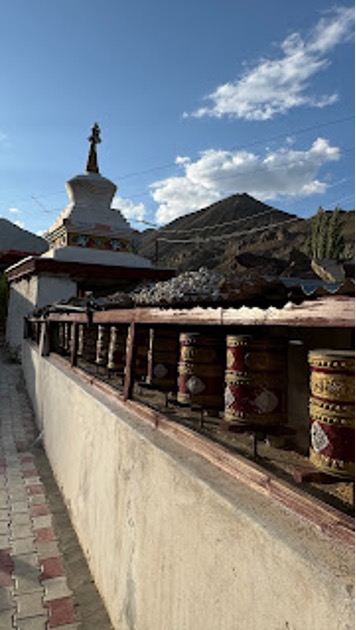
We pass through a small town called Malbech, which appears to be a Buddhist town with many temples and chanting over its public address system. I guess no one wants to keep their sacred words of God to themselves. They had a compelling desire to broadcast it to the world.
Many Shiva temples and mosques lined the road of our ride, all showing their presence with specific flags, colours and banners claiming those areas.
We finally reached Budhkharbu at 2 pm in the heat of summer Ladakh. The temperature was about 22C. The total biking time was 5h 43m. Everyone was shrivelled, depleted of glycogen and energy.
Budhkharbu is so far from civilisation that the occupants do not feel the need for digital connectivity. Only we, the town folks, were having withdrawal symptoms for not being able to upload our Strava data to earn instant gratification. Foreigners were not allowed to purchase SIM cards, so we were essentially crippled for a day.
Day 8. Padma Numbu Guest House, Budhkhorbu to Nurla
Photo Courtesy: Farouk Gulsara
Rise and shine. Rinse and repeat. Breakfast at the Guest House to a vegetarian, sorry, no eggs too, accompanied by the aroma of incense and the tune of ‘Om Jaya Jagatheeswara Hare1‘, we were good to go. I suspect the owners of this guest house were ardent BJP supporters. The keyholder to our rooms carried a lotus symbol. And the BJP mission office was their neighbour.
We were up on the saddle and ready to move by 7:15 am. The sun was already bright and shiny by then, and we were all enticed by the 26kms steep decline.
After 9 kms, we did not mind the initial steep climb traversing the unforgiving Fotula Pass. At one point, we almost reached 4,200m above sea level. Other than the occasional passerby and military barracks, there wasn’t a single inkling of life there. It was just barren, arid land for miles and miles.
64 km later, we arrived at our destination, Nurla. Nurla is a no man’s land and is not featured for first-time visitors to Ladakh. Nearby is a self-forming statue of the Sleeping Buddha and a giant statue of Maitreya Buddha. Here, the seed of the Namgyal Dynasty started. It is famous for Tibetan paintings. As temporary sojourners, we just learned and moved along.
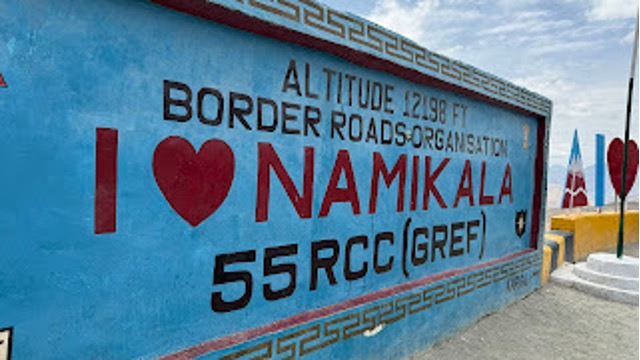
By now, we had learnt how the honking system worked. Even the brotherly advice from BRO (Border Road Organisation) advises using vehicle horns, especially at blind corners and overtaking another vehicle. At a telepathic level, the driver seems to converse with the other, ‘I can take charge of my vehicle as I overtake you. Now, don’t you make any sudden moves, can you?’ The melodious tone of honks, especially of lorries and buses, is just to liven up the monotonous journey, as do music (and movies).
Day 9.Travellers’Lodge, Nurla to Leh
We were told today’s leg would be challenging, with 85 km to cover and a steep one. Hence, we had to be up on our saddles by 5 am.
In essence, today’s outing was the toughest by far. We climbed two hills, and just when we thought everything was done and dusted, another climb to our hotel came. Overall, we covered 85km and 1672m elevation in 7h 2m.
We saw two essential tourist attractions as we approached Leh: Magnetic Hill and gurudwara. Magnetic Hill is believed to create an optical illusion of a hill in the area and surrounding slopes. The cars may be going uphill when they are, in fact, going downhill.
Sourced by Farouk Gulsara
The Guru Pathan Gurudwara is another curious worship site in the middle of nowhere. Legend has it that Guru Nanak stopped at this place, coming from Tibet and towards Kashmir. It was a Buddhist enclave. While meditating, an evil demon tried to crush him by rolling down a boulder. Hold behold, the stone turned waxy soft and did not injure the Guru.
An indestructible piece of rock was encountered while constructing this stretch of the highway. The Buddhist monks told the authorities of the legend, and the Gurudwara was erected. The Buddhists revered Guru Nanak and treated him as a great teacher.
The journey ended with a brutal, unrelenting climb to our final destination, Hotel Panorama in Leh.
The next journey the following day to Khardungla was optional. Only the young at heart opted for it. A 37 km journey with an inclination of 8% constantly with possible extreme subzero temperatures was too much to ask from my gentle heart. I opted out.
Thus ended our little cycling escapade from Srinagar to Leh, Ladakh. Few will attempt this journey with SUVs or superbikes; only madmen will do it with mountain bikes.
P.S. I want to thank Sheen, Adnan, Basil, and Samir of MTB Kashmir for their immaculate planning and supervision of the rides.
A holy chant extolling the lord of the Universe ↩︎
Farouk Gulsara is a daytime healer and a writer by night. After developing his left side of his brain almost half his lifetime, this johnny-come-lately decided to stimulate the non-dominant part of his remaining half. An author of two non-fiction books, Inside the twisted mind of Rifle Range Boy and Real Lessons from Reel Life, he writes regularly in his blogRifle Range Boy.
.
PLEASE NOTE: ARTICLES CAN ONLY BE REPRODUCED IN OTHER SITES WITH DUE ACKNOWLEDGEMENT TO BORDERLESS JOURNAL
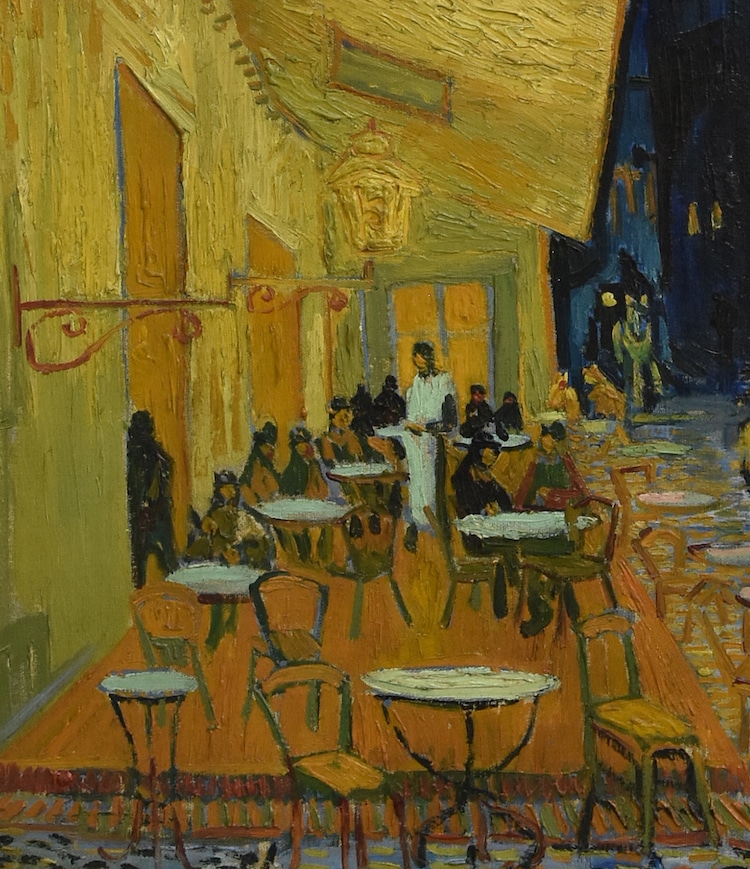
Cafe Terrace by Vincent Van Gogh (1853-1890) From Public Domain
MAKING THE ROUNDS


You
     can
see the
       pink street lights
coming on at that
      exact point where late afternoon
makes the exchange with early evening and you can
       still smell the White Magnolias in the night wind
as it sweeps the sky clean of any last
      clouds, and the streets are all deserted now except for
cats and crows and the odd patrol
       car out making their
rounds. And some-
       where
not
     too
   far
     from here,
              someone is
                        playing the cello.


ON-HOLD

Eight hours on-hold with
     Public Assistance would make
the Dalai Lama
     madder than a rattlesnake
          caught in a hot clothes dryer.


NEVER GET OUT OF THE GODDAMN BOAT!
(Sleight Return)

It’s a wet, grey morning in mid-December, here in South
Central Missouri (the less fashionable foot-hills of the
Ozarks as it’s known by some), not exactly pouring, but
a fairly constant and consistent plip, plip, plipping, and not
exactly warm, but an unseasonably tropical 50-some-odd
degrees (almost balmy, you might say, for this time of year,
anyway) and I have only just woken from a strange surrealist
montage of dreams, broken by the sudden subterranean
trainyard rumble of thunder (though there haven’t been any
trains in these parts for decades); dreams of deer roaming
and snuffling, freely, through the sleeping streets of Kansas
City, Missouri, dreams of star charts on my inner eye- lids,
milk-white phantom dreams, blue-black storm dreams where-
in, every night, I go up the snaking circuit cable of the river,
and every night I get out of the boat and walk deep into the
sweating jungle to confront what must be my inner nemesis,
only to be stalked and devoured, again and again, by the
brightly burning tiger’s fearful symmetry.
Jason Ryberg is the author of eighteen books of poetry, six screenplays, a few short stories, a box full of folders, notebooks and scraps of paper that could one day be (loosely) construed as a novel, and, a couple of angry letters to various magazine and newspaper editors. He is currently an artist-in-residence at both The Prospero Institute of Disquieted P/o/e/t/i/c/s and the Osage Arts Community, and is an editor and designer at Spartan Books. His latest collection of poems is Kicking Up the Dust, Calling Downthe Lightning (Grindstone Press, 2023). He lives part-time in Kansas City, MO with a rooster named Little Red and a Billy-goat named Giuseppe and part-time somewhere in the Ozarks, near the Gasconade River, where there are also many strange and wonderful woodland critters.
PLEASE NOTE: ARTICLES CAN ONLY BE REPRODUCED IN OTHER SITES WITH DUE ACKNOWLEDGEMENT TO BORDERLESS JOURNAL.
The grand images of a historic event flashed before her eyes, as 11-year-old Jui, flanked by her sisters, sat still in the dark hall of Gulistan Cinema Hall. There was a great buzz about the new Technicolor documentary on the coronation.
The week before she had heard her elder sisters, Ruby and Shelly trying to convince their mother to let them watch it at Gulistan. For an affluent wealthy Muslim family, allowing girls to watch movies outside was unheard of. But the matriarch of the family, Zubeida, was groomed in a different manner. Born of a renowned family in Munshiganj, she was educated at the Sakhawat Memorial Girl’s High School in the 1920s. Inspired by the values of the Bengali feminist writer and the founder of her school– Begum Rokeya Sakhawat Hossein, Zubeida was an avid reader and extremely aware of the social issues of her times. When she was married at the age of 14, her husband, a renowned physician, encouraged her to read at home.
Zubeida’s sons and daughters grew up reading the latest literary journals and novels written by legendary Bengali writers. Being the third daughter and the fourth among all the siblings, Jui was surrounded by casual conversations of the latest plays in town or the scintillating songs from the All India Radio. Her immediate elder sister Shelly was a huge fan of Dilip Kumar’s songs and was often seen pressing her right ear to the battery driven radio, swaying to the mellifluous melodies of S.D. Burman. But life was not all play in Zubeida’s home.
In the evenings, as soon as everyone completed their Maghrib prayers, the children had to study. Seven children had several different techniques of playing truant during this special time. The eldest son being an avid football player, would often stay away from home playing in tournaments for the Mohammedan team. The next child Ruby looked at life in a more serious manner. She sat on her table with the hurricane lamp illuminating her social studies book. But sometimes, Jui would often see books by Kamini Roy, or Ashutosh Mukherjee or Tagore hidden within the centrefold of the schoolbooks!
Once, their father had just returned from his medical chamber to catch Shelly pressing her right ear to the small battery driven radio intently listening to the latest Dilip Kumar song.
“Ruby’s Maa!” he exclaimed, “These girls will all get married to rickshawallas! All they do, every day, is to waste time. How will they ever pass their exams?”
While the veteran patriarch was fuming in rage, Ruby’s Maa, Zubeida, appeared to be totally undisturbed by his lamentations. She never worried about the future. With her deep faith in God, she took life one day at a time,
Ruby and Shelly were intently looking at the screen transporting themselves to Westminster Hall amid all the grandeur of the Coronation. The sultry voice of Laurence Olivier wafted through the Cinema Hall of Gulistan as images of a sparkling crown being placed on the elegantly styled head of Queen Elizabeth II mesmerized the audience.
Zubeida, in her usual quiet persuasive way, had convinced her husband to give them permission to watch the famed documentary on the coronation of the new Queen — Elizabeth II. Abu Chacha– their darowan1 went to great lengths to get 5 rickshaws for the journey from Naya Paltan to Gulistan.
The ladies adorned themselves in their best attires. The older daughters gave special care to apply their homemade surma2 on their eyes. The younger ones were just too excited to have a day out with the ladies of the household. Zubeida wore a beautiful cream coloured saree with a black border, the dark kohl accentuating her dreamy eyes, and she had mouthful of paan that made her lips ruby red. With a splash of attar, the ladies wearing saris got on the rickshaws– all veiled meticulously — so that passersby would not see their faces.
Abu Chacha was relegated with the noble duty of guarding the ladies–perched on a sixth rickshaw keeping track of the ladies at the front. As soon as Zubeida and her daughters reached Gulistan Cinema Hall, Abu Chacha stood on guard at the front of the Hall. He was not interested in the coronation of a foreigner. His life was not affected by the wonders of the colonial rulers. His only loyalty was for Doctor Sahib — who saved his mother from her deathbed. He would dedicate his life to the service of Doctor Sahib’s family.
Jui was silent– perhaps a little overwhelmed by the discipline and formality of the whole affair. She wondered if she would ever break away from the confines of her home and see the world outside. She was always the quiet one. Since she was not as robust as her sisters, she was considered to be docile and shy. But the 11-year-old girl had a deep-rooted desire for breaking boundaries. The ornate gilded halls of Buckingham Palace flashed throughout the screen. Huge paintings framed in gold and the elegant procession of the Royal Guards clad in red and gold transported the audience to the glamour of the crowning of the new Queen of the United Kingdom. Jui, with her innate curiosity, watched the red canopy covering the Queen as she was anointed with holy oil. She had no idea about the significance of these actions. All she noticed was the splendour of a distant world – where women did not have to travel in covered rickshaws.
Queen Elizabeth’s calm but firm look seemed to send a message to this little girl thousands of miles away. As she sat on the cushioned seats of Gulistan Cinema, surrounded by her protective sisters, Jui suddenly felt her resolve strengthening. She wanted to know more and see more of the world. She dreamed of visiting the land of the Queen one day. She dreamed of breaking out of the confines of her home one day.
I have lived with over 27,550 moons.
Weather permitting, I speak to them.
Occasionally, one speaks back
depending on my schedule and needs.

Tonight, he’s full, starts the conversation.
This is new and exhilarating,
he describes quite poetically that he
sees himself as an island of truth.

I am responsible for tides, time and light,
my phases affect your sleep, he smiles.
I help birds migrate, navigate, and now
I need to get involved; it is true that

truth is subjective, depending on the tides,
two people will see the same event and have
different recollections, descriptions, analysis -
a third comes along and says it didn’t happen.

He says earth’s aura is turning murky grey,
indicating that its credibility is burning out,
that the lying and hate have become normal,
and the universe, the galaxies are watching,

They always have, thinking man humorous until
the last hundred years, caging, killing your young
isn’t acceptable. I see karma in man’s horoscope,
the planets aligning. You should leave, find an island.
Craig Kirchner thinks of poetry as hobo art, loves storytelling. He has had two poems nominated for the Pushcart, and has a book of poetry, Roomful of Navels.
PLEASE NOTE: ARTICLES CAN ONLY BE REPRODUCED IN OTHER SITES WITH DUE ACKNOWLEDGEMENT TO BORDERLESS JOURNAL
This monsoon: that darkened Now dresses my windows in the glory of her wetted pearls
This monsoon: that (g)rumbled Now sings an opera; sometimes whispers a Hallelujah
This monsoon: that quieted Now visits the sonnets huddled upon the mantle of her mind
This monsoon: that scattered Now draws us to the hearth, immersing us in the infinite unsaid
This monsoon: that shadowed Is now a Hail Mary, that our Mother may bring forth Her flower and fruit
This monsoon: a monster unclothed Now purrs like a kitten, that I may tickle her chin
This monsoon: an adversary Now walks arm in arm. Innocent. Whistling a tune
This monsoon: pick-pocketer of hope Now lends us a full breath of abundance divine
This monsoon: once a marshland Washes away longing and regret, that we may flourish to be
Another Garden of Eden
Nia Joseph is a part-time poet with a published children’s book. She is of the belief that poetry says what no picture or thousand words can. She draws inspiration from nature, relationships and her three young children.
PLEASE NOTE: ARTICLES CAN ONLY BE REPRODUCED IN OTHER SITES WITH DUE ACKNOWLEDGEMENT TO BORDERLESS JOURNAL
      A family of climate evacuees
    Escaped the rage of magisterial Kali
     In one of her imperious avatars,
        Ingraining its identity,
        And tears-strewn remains
   Of missed lands – the lands with the promise
    Of a tryst for life, long years ago.

     The family in its distant perches
   Was left with food not for its memories,
         For aspirations and hopes.

    Frail childhoods of children of the times,
    Plausibly moulded by maladies of life, and
       Bereft of love-struck reminiscences,
     Inured in the given as divinely ordained.

   Growing lives shrouded in the garb of serenity,
         Construing the writing on walls
                 Making ends meet
     All by themselves as alienated individuals
         On estranged lands of prejudices.

        The tide of time moved on
   Bringing motherhood and fatherhood to them.
  And their children, like those of a lesser god,
    Find time to accompany them, occasionally,
      With manifest sense of bonding,
  Overshadowed by packages of individuality
Causing suffocation in posing for an unlikely family portrait.
G. Javaid Rasool, a self-proclaimed Lucknow boy, is professional social worker specialising in documentation services and training. The Wire has been publishing his poetic compositions.
PLEASE NOTE: ARTICLES CAN ONLY BE REPRODUCED IN OTHER SITES WITH DUE ACKNOWLEDGEMENT TO BORDERLESS JOURNAL
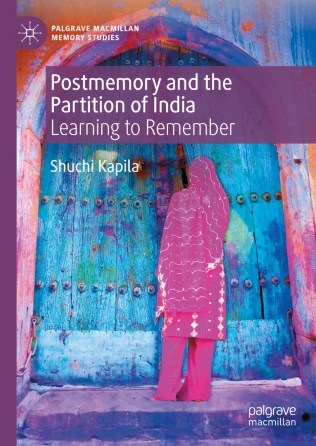
Title: Learning to Remember: Postmemory and the Partition of India
Author: Shuchi Kapila
Publisher: Springer
Shuchi Kapila’s book on Partition focuses on the hinge generation — the one separated by a generation or two from the actual experience of the Partition, but increasingly drawn to analyse its memories in their own lives and its significance for the future. Simply because, the Partition with its trauma and losses remains a huge part of their parental, familial and collective memory.
While Kapila’s book recovers these embedded memories through interesting anecdotes, the fact remains that the historical event of the Partition cast a huge shadow on her parents’ lives, and that of many like her. She, like others (Priya Kumar, Urvashi Butalia) are drawn to excavate and unpack this silence and trauma that impinged upon the parents’ lives and shaped them in umpteen ways. Such postmemory is described by Marianne Hirsch as “the experience of those who grow up dominated by narratives that preceded their birth, whose own belated stories are evacuated by the stories of the previous generation shaped by traumatic events that can be neither understood nor recreated” (Hirsch 1996, 659, quoted by Kapila). She goes on to write: “It is the largeness of these stories that dominate our psyches even as we often know very little about them, a kind of haunting that is often not understood.”
Like many in this generation, Kapila was protected from all knowledge of the event by the silence of those who had experienced it directly. At the same time, she strongly felt a compulsion and an ethical imperative to understand the legacy of the Partition on her own terms.
Kapila points out that the flood of writing on the Partition that has emerged since the fiftieth anniversary of independence in India and Pakistan includes scholarly histories, oral histories, feminist studies, and literary and cultural studies of the Partition (which have poured out in a steady stream in the decades after 1997), show a strong inclination to exhume buried and seemingly lost memories. Priya Kumar’s Limiting Secularism, one of the most significant studies of the ethics of remembering, presents a compelling summary of this terrain of ‘return’ to the Partition. She argues that it is not merely that the first generation of Partition migrants is now dying out leading to an understandable anxiety about capturing their voices(as Butalia also voices in her book The Other Side of Silence) but also that the fact that Partition is the “founding trauma” (Dominick la Capra) of the subcontinent to which we must return in constant acts of “avowal” (Kumar 2008, 87).
Kapila’s book then is one such act of return and avowal in exploring again from a post memorial position the travels and travails of Partition memory. The enormity of the Partition— around a million dead, migration of between twelve and fourteen million across the borders of Punjab and Bengal, 75,000 women of different faiths abducted and very few “rehabilitated”– the numbers are mind-numbing.
Given that Partition was a territorial, social, and political division of peoples who had lived together for the previous centuries, there were many who resisted the idea of this division but recognised equally that it was a moment for Muslim self-determination in the formation of Pakistan. A common feeling in this context which prevailed among all communities, Hindus, Muslims, Sikhs, was a feeling that the departing colonial powers had betrayed them. With these affects,the act of remembering Partition, the author feels, can never be a single, linear, decisive and discrete fact specific to communities but somewhat fuzzy and porous. It is inevitably marked by the recognition of multiple narratives jostling for attention with all communities involved as perpetrators and victims. The Indian nationalist myth that the Indian Congress party wanted a united India whereas Muhammad Ali Jinnah, the leader of the Muslim League, wanted to divide India and secure Pakistan for Muslims has been interrogated most famously by Ayesha Jalal who argues that literary narratives have also offered scholars the opportunity to think through the ethics of co-existence, which is the focus of Priya Kumar’s study, Limiting Secularism (2008), in which she considers how literary texts imagine possibilities and histories of productive relationships that seemed to have been irrevocably lost with partition.
Another significant area of research opened up was that of collecting narrative oral histories, a methodology which has been referred to by Ritu Menon and Kamla Bhasin in Borders and Boundaries(1998) and used powerfully in Urvashi Butalia’s The Other Side of Silence(1998). These accounts revealed that women’s lives were deeply impacted by the rape and violence visited upon them during Partition and the silencing of their narratives as a patriarchal state was inaugurated. Jill Didur (2006) reads the silences and ambiguities of women’s stories as an important counter-narrative that unsettles Partition, revealing, for instance, how the agency of abducted women was completely eluded even in the recovery operations to establish a benevolent paternalist state. Given that there is a necessary relationship between the public and private realms of memory, it is unsurprising that some of the same themes can be found in testimonials and oral histories as well. This is the case made by Anindya Raychaudhuri (2019) whose attempt to think through Partition as “a productive event” is very much in line with Kapila’s effort to highlight the different generational voices of interviewees (Raychaudhuri 2019,13).
The book also considers private family memory and public institutions like the 1947 Partition Archive and the Amritsar Partition Museum. However, Kapila is aware that both these public institutions are relatively recent developments making it difficult to gauge their impact on private memory. Like literature and cinema, oral histories have also expressed themes of loss, violence, home, childhood, and trauma that appear repeatedly in stories of Partition migrants. Yet, as Kapila avers, “despite scholars’ clear understanding of the particularity of each oral history encounter, most studies distill them for themes and documentary evidence rather than as specific performances” based on “the subject position of interviewer and interviewee, time, space, social and regional position.” In contrast to this, Kapila is observant about the processual aspect of memory that are constituted by a more expansive understanding of “the filial and affiliative in each encounter as it rearticulates the nature of family, belonging, and community and while Partition literature and film have coloured narratives and tropes which shape how people remember or narrate,” her focus is on the interaction between the subject position of interviewer and interviewed.
Anjali Gera Roy’s significant work on Partition testimonies works toward an amplification of the historical record, which works by filling in “the personal, sensory, affective memories of both documented and undocumented historical events”(Gera Roy 2019, 24). She describes her work, as a “corrective and as supplement” to historical accounts. In the 160 testimonies gathered by her and her research assistants in many cities of North and East India, she unearths the ‘intangible violence’ of Partition.
The questions she poses sheds considerable light both on the processes and workings of memory as well as the methodology of such an enquiry: “How much of my parents’ relationship was structured by a deep and intimate understanding of Partition trauma? How much of their subterranean anxieties about their children were shaped by the experience of Partition? Heeding Marianne Hirsch’s description of postmemory mediated “not by recall but imaginative investment, projection, and creation,” she asks how we could help in exploring its potential for progressive futures (Hirsch 2012, 5). Family history, though repeated many times and extensively written about is both representative and singular, each experience one more testimony to what millions experienced.
In emphasising a humanistic approach to Partition memory, she explores it not as aggregation of historical or social fact but for the relationship it sets up among post memorial generations and between them and first-generation migrants and the importance of each act of articulation. This book is thus a study of the culture of Partition memory that is being built by post memorial generations through public institutions, research, oral history, and family stories. For these generations, studying Partition is an experience in learning to remember from new socio-political locations not just in South Asia but also in its diaspora in Europe and the United States, and other parts of the world. These acts of memory are significant not only to gain insight into an event, but also ultimately to address the psychological impact of the event.
Kapila’s work is a significant contribution to Partition and memory studies. In revisiting Partition through the lens of memory, her book reminds us about the significance of processing painful memories as a way of approaching the past. The chronology is also significant, coming as it does, more than seventy-five years after Partition. Yet it is precisely this belatedness which makes it significant. In their preface to their edited book on The Psychological Impact of Partition in India, psychiatrists Sanjeev Jain and Alok Sarin (2018), mention the lack of conversation or research material on the psychological impact of Partition in the sub-continent. They flag the urgency of revisiting and processing traumatic memory. Understanding the delayed effects of trauma thanks to their extensive experience as psychiatrists and psychologists, they view the time lapse and belatedness as central to the way memories work.
Kapila’s book has a chapter on the idea of ‘nostalgia’ for instance and then also on new institutions of memory like the museum. She explores different avenues that have been developing to rectify some of this missing memory of Partition, through extensive interviews. This is the thrust of the first half of the book—these intergenerational conversations and understandings of Partition. The second half of the book looks more closely at the two physical spaces that have been established to communicate about Partition. These two physical spaces include the Berkeley, California 1947 Partition Archive, which now contains at least 10,000 oral histories of Partition, available for researchers, scholars, and individuals to explore and examine. India has also recently opened the Partition Museum, Amritsar, the first museum of its kind in India. Museums tend to craft particular narratives of events or experiences, and Kapila considers this new museum in that light
Postmemory and the Partition of India: Learning to Remember is a fascinating interrogation of this concept of remembering and memory, and how we craft narratives of our understandings of events through our memories or the memories of others. Ultimately, Kapila is asking the reader to consider how it is we learn to remember, particularly how we learn to remember complex, political events that shape who we are and how we think of ourselves in the world. Focusing on the centrality of processing traumatic memory in order to negotiate our daily lives, Kapila’s work is deeply interdisciplinary. Her scholarship can also be viewed as a labour of love and a tribute to her parents — and their generation — for the considerable emotional labour they invested to ensure that their children were able to go beyond their own memories of loss.
.
Dr Meenakshi Malhotra is Associate Professor of English Literature at Hansraj College, University of Delhi, and has been involved in teaching and curriculum development in several universities. She has edited two books on Women and Lifewriting, Representing the Self and Claiming the I, in addition to numerous published articles on gender, literature and feminist theory. Her most recent publication is The Gendered Body: Negotiation, Resistance, Struggle.
.
PLEASE NOTE: ARTICLES CAN ONLY BE REPRODUCED IN OTHER SITES WITH DUE ACKNOWLEDGEMENT TO BORDERLESS JOURNAL
I haven’t been happy for so long I don’t even remember How it feels to be happy I’ve lost it Somewhere along the way I lost it And when I look back And try to search for it I find nothing As if all the memories That used to bring me joy Have been eaten away And all there’s left Is a silent hollowness And it feels so very mundane So very normal Like life has always been this way So dead and wasted So awful and useless Even in the brightest of days The sun can’t outshine the dark And I don’t know how To not notice it anymore And I can’t hold it in anymore But I can’t allow other people To see me like this I don’t want them to be sad I don’t want them to cry As they stare into my gloomy Blank Lifeless eyes And witness the hell That burns inside I WISH I WERE STRONGER
I wish I could keep up the facade But I can’t bear to plot through Yet another masquerade To paint happiness on sorrow To say the lines without a hook To pretend stars mean something in the sky To act like nothing is wrong When nothing is right And smile And smile And smile So nobody would worry about me I know there’s a light somewhere But I can’t pretend everything Is just going to be all right When it’s all still in my head The unforgettable dreams The inescapable present The picture of a faceless man Standing in an empty room With no windows and no doors Living a life Punctured with an ache That’s so fierce So persistent It breaks the spirit of his soul And its will to resist And I can’t help but wonder Maybe the muzzle flash Is the famous light At the end of the tunnel Everybody has been talking about
Koiko Tsuuda is a writer from a little town in Estonia. Originally, Koiko picked up writing for his band, where he played drums. But when the band ended, the writing stayed and became more important than the music ever was. In his work, Koiko explores the dark, the ugly and the grim reality of the human experience and does that in an honest and evocative language. These poems are from his book, Twenty Six and Twelve.
.
PLEASE NOTE: ARTICLES CAN ONLY BE REPRODUCED IN OTHER SITES WITH DUE ACKNOWLEDGEMENT TO BORDERLESS JOURNAL

 Borderless