I wanted to see him for a considerable period, of course, for a purpose. I wished to offer him a few of my poetry books—not because I had read a whole bunch of his poems and considered him a great poet, but because alongside my poems, my books featured paintings and illustrations by a few talented artists from Calcutta. I wanted his remarks on the artwork, for the person in this context was the Padma Bhushan awardee Jatin Das, an Indian artist who rightfully deserved to be portrayed as a legend.
Jatin Das and Kiriti Sengupta meet for the first time. Photo provided by Kiriti Sengupta
I first met Jatin Das at the India Habitat Centre for an event organised by Oxford Bookstore on April 29, 2024. Honestly, I had no clue I would meet him there. Post-event, I introduced myself and offered him my new book, Oneness. “Ah, you are a poet. What do you do for a living?”—Das was eager to know. “I deal with books; I represent an independent press named Hawakal,” I answered. “Do you have a business card?” Das inquired, but I didn’t have one.
I need to be equipped with a visiting card. I’m severely laid back when presenting myself, even for “business”. I’m yet to learn where my inhibition stems from. I’m not otherwise lethargic.
Nevertheless, as I intended to leave, I humbly told Das, “Sir, Paritosh Sen was my great-uncle—my Dad’s youngest uncle.” His eyes glittered; he gently pressed my cheeks and embraced me in his arms. Das was visibly surprised. “But Paritosh-da was taller than you. Do you live in Calcutta?” I quickly responded to his last question for that evening, “I currently live in Delhi. It’s been three years.” Das shared his card, “Drop by my studio; call me when you want to.”
“I will,” I promised and introduced my wife (Bhaswati) and son (Aishikk) to him before I left the party. My son had a semester break at his college in Chennai. He had come to Delhi with his mother as we had planned a trip to Mussoorie. We headed to the hill station the next day, and on our way, I got a call from an unknown number. I was stunned as I found Jatin Das on the other side. He affirmed, “Your book is nicely done. I asked my staff to find you on the Internet.” After knowing that we were out for a vacation, Das asked, “When will you return? Do visit my studio when you come back to Delhi.” Receiving a surprise call from someone like Jatin Das was the least expected because he didn’t have my number.
Photograph of Bitan Chakraborty and Kiriti taken by Jatin Das. Photo provided by Kiriti Sengupta
“Fold your hands when you greet someone to say Namaskar. You may not utter the word, but the right gesture is important. You are a Bengali, come on,” Jatin Das firmly put forward his directions as I met him again on May 6, 2024, at his studio in Delhi. I was accompanied by Bitan Chakraborty, who followed Das’s instructions as he introduced us to the studio members. There was a visitors’ book where I put down our names and other details. Das looked at us with a hint of bewilderment, “Ah, you guys don identical shirts and trousers? This is amazing. I feel energised seeing you. Let me click a photo; I must do it. Stand together.”
Das isn’t tech-savvy. He categorically refuses to become one. “I am 83,” he proudly mentions his age. However, getting clicked by an artist of his stature is rare, especially his warm compliments for dressing up in similar clothes were overwhelming.
What followed was a guided tour inside his large atelier, packed with his paintings, sketches, books, souvenirs, pots and vessels, numerous folders, paper documents, poems written in loose pages, hats, and other items of art and aesthetics.
Painting by Jatin Das
Every nook and corner of the studio brightly declared the presence of an agile artist who declined to halt his sojourn with art and creativity. Meanwhile, Das had another visitor. While wrapping up his conversations with her, he wanted us to introduce ourselves to the lady. As we exchanged pleasantries, Das pointed at my conduct, “Please stand up when you greet someone. I maintain the same stance even if someone as young as twenty comes to meet me.” Another lesson learned.
As I offered him three of my books, Das urged, “Sign them for me.” I was hesitant. I needed to be more confident; signing my books never comforted me. He skimmed through the books and paused at Shimmer Spring, an all-colour, square-back coffee table book I edited in 2020. He inquired, “Who’s the artist?”
“Pintu Biswas,” I informed him.
“I don’t know about him. He must be young, but it’s fine work, I can tell you,” Das remarked as he carefully probed Shimmer Spring.
We were offered water before a boy in his studio served tea in transparent glass cups. “Finish the water first,” Das directed us. He also warned me to check on my sugar intake as I added two teaspoonfuls of white sugar to the cup of tea. He checked on the water again, “Finish your glasses.” As we savoured the aromatic tea, we discussed several matters like poetry, publishing, Indian publishers, his acquaintance with Dom Moraes, Hawakal’s journey, Das’s first book of poems, which was published by Writers’ Workshop (Calcutta) in 1972, JD Centre of Art (JDCA, Bhubaneshwar) among other things.
We had a challenging two-hour-long intriguing session with the artist. Before leaving his studio, we bowed before him to pay our obeisance. “People don’t offer Pranam anymore,” quipped Das. While returning home, I asked Bitan, “Was it really important to empty the glass of water?” His face glowed when Bitan said, “Drinking a glass of water wasn’t a big deal; it’s an alert. Maybe he wanted to convey his concern about the wastage of water.” Jatin Das—the artist and his intrinsic consciousness dawned on us.
Painting by Jatin Das
Kiriti Sengupta, has authored fourteen books of poetry and prose; two books of translation; and edited nine anthologies. Sengupta lives in New Delhi.
PLEASE NOTE: ARTICLES CAN ONLY BE REPRODUCED IN OTHER SITES WITH DUE ACKNOWLEDGEMENT TO BORDERLESS JOURNAL
Oh, my beloved, Come back once again And see the scars on my Sobbing heart. You left us desolate With intense agony. Oh, my beloved, come again And see my raven heart, Mourning in separation, Mourning from dawn to dusk. Oh, my beloved, come As a raindrop and soothe my mind That got lost in your thoughts, With these flames of love And the patience of madness That you have forged in my soul. Spring comes and flowers blossom, And I think about you. My eyes still looking for you, My heart still wandering in despair. I search for you here in autumn and winter, In the depth of the river, But cannot find you anywhere... You vanished just like that...? Still, I remember that day... When you left us alone with miseries. Oh, my beloved, come... Come once again to these fields of daffodils... Oh, my beloved, I have forgotten a chapter. This reminds me of your fiction. Everything is the same except you. Nothing has changed Except for broken memories. The time we spent together Was it neither yours nor mine? Vacant... and washed seashores of a distant dream...?
Ahmad Rayees is a freelance poet and writer from Kashmir valley.
.
PLEASE NOTE: ARTICLES CAN ONLY BE REPRODUCED IN OTHER SITES WITH DUE ACKNOWLEDGEMENT TO BORDERLESS JOURNAL
A good translation is a sorcery of desire, determination, and language. It opens a portal into not just another culture, reminding us of the texts, subtexts, contexts and conned texts richly underlying words but involves an admission into a whole new world that the reader would have missed altogether had it not been for the sincere striving of a visionary translator.
For, indeed, all translation is built around a vision that extends beyond that of giving life to a work in another language. There has to be a rationale as to why this reincarnation should, at all, be necessary or worthwhile, a logic as to how this can be effectively worked out in the asymmetrical arena of languages, and a dream as to what can be accomplished through this.
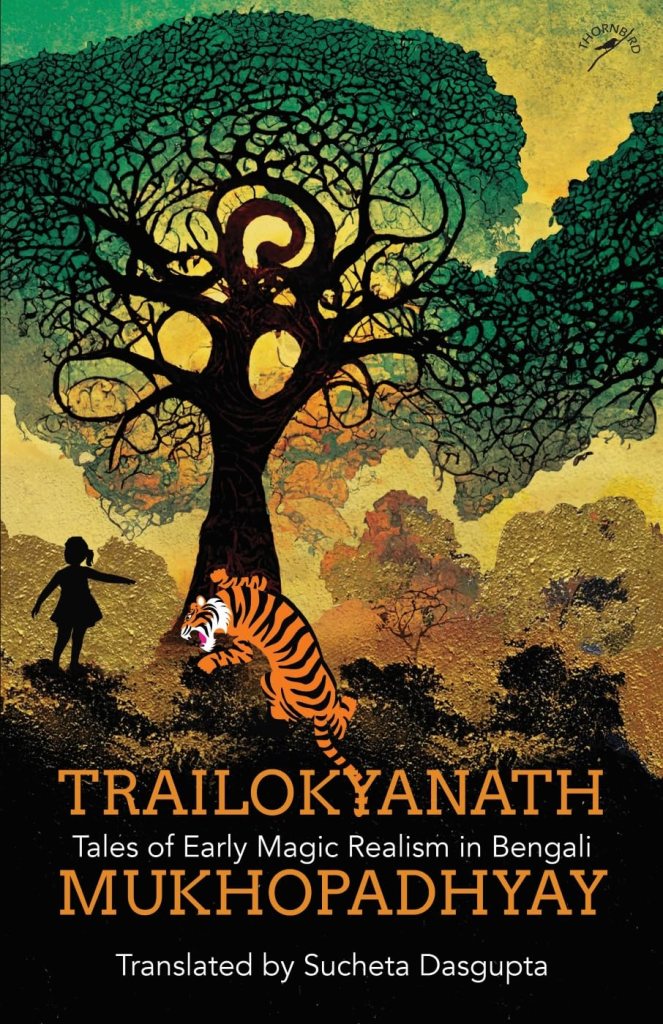
In Sucheta Dasgupta’s case, the translation of Trailokyanath Mukhopadhyay’s Tales of Early Magic Realism in Bengali stems from a desire to introduce readers of English to the wide, vibrant, unusual and remarkably fabulist world of the author as a pioneering attempt in the field of global speculative fiction.
Speculative fiction as a genre, is an umbrella term that stands for all modes of writing that depart from realism. It includes myth, fable, fantasy, surrealism, supernaturalism, magical realism, science fiction, and more. Being a speculative fiction writer herself, Dasgupta finds in Trailokyanath’s world an interesting attempt at “creating these genres and bending them in Bengali, in nineteenth-century United Bengal” which, to her, was a revelation of sorts.
Her intention to bring Trailokyanath Mukhopadhyay to the attention of a wider international audience has helped to add to our understanding of the rich and diverse society of nineteenth-century Bengal and its conflicting intellectual inheritance. This translation, in vital ways, also does service to Bengali literature in which Trailokyanath’s reputation has remained eclipsed and which, following Tagore’s estimation, has mostly looked upon him as a children’s writer.
A mere glance, however, at the six interesting translations in Tales of Early Magic Realism in Bengali will clarify that they are far from yarns meant for children. Driven by a clear vision to make sense of their times by negotiating between two distinct epistemologies – the native and the colonial, these are essentially narratives of ideas that speak to the confused public conscience of the age.
The tales, in question, are ‘Lullu’, ‘Treks of Kankabaty’, ‘Rostam and Bhanumati’, ‘The Alchemist’, ‘The Legend of Raikou’ and ‘When Vidyadhari Lost Her Appetite’. These are, properly speaking, ‘tales’ that stem from and echo a fecund oral tradition of storytelling and answer to no formal conceptions of the short story genre. They are indiscriminate with regards to length, plausibility, fineness, and intention and except for the last story which exemplifies a certain tightness of plot and effect, these tales are characterised by a clumsy looseness which marks oral forms.
Rich in description and sensory detail, each of these stories has its own distinct style and flavour. While ‘Lullu’ and ‘Treks of Kankabaty’ are pure fantasy, ‘Rostam and Bhanumati’ and ‘The Legend of Raikou’ weld elements from myth and folklore. ‘The Alchemist’ attempts to combine moral treatise and scientific history together while ‘When Vidyadhari Lost Her Appetite’ sticks to realism, emerging as the most well-told tale in the collection terms of both craft and cultural representation.
How far it is justified to call these six narratives ‘tales of early magic realism’ remains a question well-raised in the ‘Foreword’ to the book by Anil Menon where he points out that the bringing together of realism and fantasy sans the socio-political context of the twentieth century seems inadequate. “What we can say is that there is a magic realist reading of such-and-such work. The classification refers to the relationship between the reader and text, and not to some essence in the text itself.”
Trailokyanath’s world, whether realist or fabulist, is the world of a robust, liberal, discerning intellectual who is well aware of the various currents and counter-currents of native and colonial reflection of his times, all of which he adroitly conjures in his fiction to offer readers sumptuous food for thought. While these tales might want in artistry and unity of effect, they revel in ideas and the multiplicity of points of view which offer readers today a very faithful portrait of nineteenth-century Bengal and the intellectual debates that actively ranged on issues such as religion, widowhood, sati, women’s education, fashion, the codes of marriage and remarriage, caste, family, and economy.
Dasgupta makes sincere efforts to offer as honest a translation as possible, (“I fully intend my work to be the ‘same text in a different language’ and not a transcreation”, she points out in her ‘Translator’s Note’.) retaining native words where there are not acceptable substitutes and offering a well-researched and nuanced glossary at the end of each tale to point out Bengali meanings and usages. The prose style of the book, following the original, tends to be ornate at places but the humour and satire that gives sinewy form to these tales is unmissable.
In ‘Lullu’, for instance, Aameer insists that the only qualification for an editor of a newspaper is the ability to curse and his purpose in choosing to appoint a ghost as editor was that “…all the curse words known to man have been spent or gone stale from overuse. From now on, I will serve ghostly abuse to the masses of this country. I will make a lot of money, I am sure of it.” In our own times, the experience of sensational headlines and of fake news, and the sight of bickering spokespersons and screaming anchors in newsrooms makes us smile at Trailokyanath’s foresight.
In ‘Treks of Kankabaty’ which attempts to be a Bengali adaptation of Lewis Caroll’s Alice’s Adventures in Wonderland (1865), a mosquito informs the protagonist that the true purpose for which humans have been created is so that mosquitoes “can take a drink of their blood”. “All mosquitoes,” states Raktabaty “know that humans have brains, but no intelligence. The foolish amongst us are called humans in the pejorative sense.”
A comic geographic, cosmic and karmic purpose for the traditional religious prohibition on travel for Indians emerges in this tale:
“India is surrounded by the black waters on three sides while on the other, there are gargantuan mountain ranges. Just as animals are kept inside a paddock, so, too, we had kept Indians enclosed by the means of these natural fences. By staying in India, Indians so far had remained at our service and humbly donated their blood for the purpose of our nourishment. Not so any longer. Today, some of them are waging attempts to cross the high seas and conquer the mountains. That if they behave thus and deprive us of their blood, they commit a great sin is common knowledge.”
Again, on hearing that “the British have banned the custom of sahamaran[1]”, the monster Nakeshwari says:
“Well, the British did ban the custom, but do you know what the young and educated Bengali men believe today? They believe in restarting old customs in the name of Indian pride. They have gone stir-crazy in the name of throwing their grief-stricken mothers and sisters into the burning fire. And we, monsters, heartily support them in their mission.”
In ‘When Vidyadhari Lost Her Appetite’, humour aligns with stark realism in this argument between two maids:
“One day, Rosy addressed Vidyadhari, ‘Have you lost your judgement? Just this morning, you went to the confectioner’s shop and bought Sandesh for the master. Before serving it to him, you let the brahmin lick at it twice and then you, yourself, gave it ten good licks. When did you say to me, “Rosy, why don’t you, too, give it a couple of licks?” If one attains something, one’s duty is to share it with others.”
Common to all these tales is the empowering of the marginalised, a challenge to status quo, and a sustained intention to speak the truth for empowerment. In that sense, these narratives are all anti-authoritarian and disrupt various forms of hegemony to establish a vision of life that is swift, changing, capable of responding to oppression with wit, and where the spoken word has sacral value. That is why in ‘Lullu’, Aamir’s thoughtless remark ‘Le Lullu’ to frighten his wife actually summons a ghost called Lullu who spirits her away. Similarly, in ‘Treks of Kankabaty’, the moment Kankabaty’s father says, “…if a tiger appears in this very moment and asks for Kankabaty’s hand, I shall give it to him”, a roar is heard and a tiger appears seeking her hand in marriage.
Language, in its diverse potential, becomes an important thematic link in these tales and in this immensely polyphonic text that unleashes a host of voices, human and non-human, to capture a reality that operates on multiple axes and can be best appreciated through the third eye of the imagination.
.
[1] Dying together — A wife(or Sati) was burnt in the funeral pyre of her husband. This custom was banned in India by the British in 1829 and continues banned.
Basudhara Roy teaches English at Karim City College affiliated to Kolhan University, Chaibasa. Author of three collections of poems, her latest work has been featured in EPW, The Pine Cone Review, Live Wire, Lucy Writers Platform, Setu and The Aleph Review among others.
.
PLEASE NOTE: ARTICLES CAN ONLY BE REPRODUCED IN OTHER SITES WITH DUE ACKNOWLEDGEMENT TO BORDERLESS JOURNAL
She barely ties her hair or pulls it together into a knot or a bun. It prefers the taste of liberty, sometimes kissing the breeze until it dries. As whimsical as it can be, or sometimes it's ideally set on a shoulder; cascading.
It mirrors the river that flows at will; one uncontrollably ferocious river, evoking constructed sensuality and stigma alike. Like the same river whose fervour is captured by civilisation in dams, a civilisation whose women are confined to four walls. So, it refuses to be kept, on their face in a rebellious act.
She fears the tangled ones though, stubborn knots like those inevitable questions put forth to women who set to fly. But the quest to undo them is perhaps life; life that women live in their quest to be seen. Should the mess be kept in an updo? Because it's an absolute fear if someday she finds someone untangling those tousled ties, while wrapping her in all sorts of bindings.
Like that woman, forever tending the furnace that keeps and sustains her home, sweat of whose work would deny the hair to touch the nape. So in a perpetual bun, her hair remains, the way she is stuck to flawed familial bargains. Whether tied or untied, kept or unkept, for her, it's a constant elopement to stay unattached from the old skeleton of woman-being, and if free, it always escapes the arms of new bindings.
Swetarani Tripathy is a feminist scholar based in India. She is currently pursuing a PhD in Economics at Jawaharlal Nehru University of Delhi.
.
PLEASE NOTE: ARTICLES CAN ONLY BE REPRODUCED IN OTHER SITES WITH DUE ACKNOWLEDGEMENT TO BORDERLESS JOURNAL
Ratnottama Sengupta muses on the ongoing wars and violence as acts of terror and gazes back to an incident in the past which resulted in a powerful Bengali poem by Tarik Sujat that she has translated here
The world is in the grip of violence, Rabindranath Tagore wrote on March 5, 1927, sitting in the abode of peace – Santiniketan. Full 97 years later, the world is still in the grip of violence?
It’s Gaza today. Ukraine yesterday. Afghanistan some days ago. Sri Lanka not so long ago. Sometimes it is Bosnia. At other times, it’s Vietnam. Lands far flung and near adorn themselves with blood-red mark of hatred. Religion. Self-seeking dictators. Communism. Global lust for power. No matter what is at stake, the pawn is an innocent life. Always. A woman. An elder. An unborn child…
Tagore wrote Hingshay unmatto prithibi[1]– “The world is in the grip of violence as a prayer to the Almighty. The delirium is leading to conflicts, cruel and ceaseless… Crooked is the world today, tangled its philosophy. No bond is sacred.” And the anguish of such a state of affairs? It led even the Eternal Bard of Bengal to pray for a new birth of ‘Him of Boundless Life.’ “Save them,” Tagore had prayed to the Serene, “raise your eternal voice of hope” so that “Love’s lotus, with its inexhaustible store of nectar” may open its petals in His light. In His immeasurable mercy. To wipe away all dark stains from the heart of the continents.
In vain he prayed.
“Forgive them!” Jesus said, for “They know not what they do!” And what did the soldiers do? They gambled for his clothes by throwing dice! (Luke 23:34)
Forgive them? “Have you forgiven those who vitiated the atmosphere and snuffed out light for innocent lives?” Tagore asked the Almighty, in ‘Proshno (Question)‘. Have you forgiven those who deal hate in the secret hours of night? Have you embraced with love those who murder the helpless in broad daylight under the cover of ideology? Don’t you wince when a pregnant Bilkis[2] is gang-raped? Why do you shed silent tears when elected rulers choke people’s voice with furtive use of power?
And like his Prayer, Tagore’s ‘Question’ too has remained unanswered. And dumb sit the messiahs when men with mistaken notion of mission kill, maim, mutilate hostages who become mere numbers in newspaper headlines – until a new dateline wipes it off our collective memory. Thus, once again, the world was shaken by brutalities carried out in the name of God, in Dhaka’s elite neighbourhood, Gulshan.
On July 1, 2016, before the Cinderella hour struck, five militants entered the Holey Artisan Bakery with bombs, machetes, pistols, and opened fire on men and women, from Italy, Japan, India, Bangladesh. Sunrise. Sunset.. Sunrise… unsuccessfully the police tried to secure the hostages. An elite force of the Bangla Army had to raid to put an end to what BBC News described as “the deadliest Islamist attack in Bangladesh”. Meanwhile? The toll had risen to 29 lives, totaling 17 foreigners, three locals, two policemen, five gunmen, and two bakery staff who were trying to earn their daily bread!
Since Gulshan is home to many embassies and high commissions in the capital of the secular nation, the news stirred up the world in no time. And prayers poured in – over cellphones, on Facebook, television and newspapers too. Prayers of wives for their husbands. Prayers of mothers for their sons. Prayers of a niece for her aunt. Prayers of American friends for their Indian batch mate. But once again, prayers went unanswered…
Among those who did not survive to tell the story was Simona Monti of Italy who worked in textiles. Then 33 years of age, Simona was soon to go to her home an hour away from Rome, to deliver the child she had nursed in her womb for five months. But Michelangelo too did not live to breathe in the world vitiated by hatred. When the news reached her brother, he prayed his Simona’s bloodshed would make this “a more just and brotherly world.”
His prayer, too, remains unanswered.
But poets and other men of conscience did not remain silent. Within days of the incident Tarik Sujat wrote Janmer aagei aami mrityu ke korechhi alingan (Even before my birth I embraced death, July 6, 2016). No diatribe in his words, but the muted cry of an unborn being jolts us. That cry left me with a tear in one eye and fire in the other…
On my very first reading I was touched, I was moved, I fell silent. The pensive mood of the embryonic life turned me reflective. Anger, rage, fury was not the answer to hostility, loathing, abhorrence, I realised. So will you, as you go through the poem that was handed out in Magliano Sabino when Simona’s hometown prayed for her eternal rest.
I Embraced Death Before Birth

Even before my birth I embraced death.
I have no nation, no speech,
No stock of my own.
No distinction between Holy-Unholy,
Sin and Virtue, Sacred or Cursed.
Having seen the ghastly face of life
I've swallowed my last drop of tear...
My first breath did not pollute
The environs of your earth.
My last breath was the first gift
Of this planet to me!

Maa!
You were my only playhouse,
My school, and my coffin.
I had yet to open my eyes -
And still I saw
The sharp nails of executioner
Ripping apart my naval cord.
My ears were yet to hear sound,
Still I could catch bells
That summon lads to schools...
The obscure sound echoed
Through churches, temples,
And minarets of masjids
Until, slowly, it fell silent...

My first bed was my last.
My mother's womb was
My only home
In the unseen world.
On that nook too, darkness descended.
Floating down the river of blood
I groped for my umbilical cord
To keep me afloat...
My tiny fingers, my soft palm
Could find nothing to clutch.

In that Dance of Death
My unseeing eyes witnessed
Koran, Bible, Gita, Tripitak
Bobbing in receding blood.
In the achromatic gloom
Of my chamber
I got no chance to learn
A single mark of piety!

Still...
I embraced death before I was born.
My mother's womb is my
Grave, my coffin, my pyre.
The world of humans
Is enveloped in fire -
A few droplets of my meagre body
Does not quench its thirst!

(Translated from Tarik Sujat’s Bengali poem by Ratnottama Sengupta)
Why has this portrayal of a tormented soul found voice in French, German, Swedish, Italian, English…? Why has it been translated into 17 languages? In the answer blowing in the wind lies hope for mankind. For, the answer is: Not every man is created in the image of Lucifer. That is why, when Giulia Benedetti learnt that she will never again see her aunt Nadia Benedetti, that “she will not talk, will not comment on fashion, will not sing together again…” she wrote on Facebook: “Do not forget. Do not lose her memory. Do not let crazy people massacre. Do not let them win…”
And I immerse my voice in the Bard’s to say: “Let life come to the souls that are dead…” And I pray, bring harmony, bring rhythm, bring melody in our lives, O Serene! Wipe away every dark cloud from the world yet to dawn!
Ratnottama Sengupta, formerly Arts Editor of The Times of India, teaches mass communication and film appreciation, curates film festivals and art exhibitions, and translates and write books. She has been a member of CBFC, served on the National Film Awards jury and has herself won a National Award.
.
PLEASE NOTE: ARTICLES CAN ONLY BE REPRODUCED IN OTHER SITES WITH DUE ACKNOWLEDGEMENT TO BORDERLESS JOURNAL
As I count the years,
something changes and I do notice that.
If I tell you about --
One to five,
I named my little doll ‘tuktuki’.
Six to ten,
red lipstick was my escape,
and I played with my friends and neighbours.
Eleven to fifteen,
Everything seemed beautiful.
butterflies, flowers, poetry, cats, and the ocean.
Sixteen to twenty,
I am drawn to memories now.
It’s habit to collect pieces of everything,
and paste them in my scrapbook.

It is a process of telling me that I am now older,
but my heart says something else.
Why do I still like butterflies?
and why does red make my heart beat faster?

I often write letters to myself.
It is indeed an art --
there are flowers stamped, poetry in cursive.
They cherish a piece of my childhood.
Reading my own letters,
feels like,
touching a different soul,
re-discovering the inner child.
I’m telling you --

Being twenty is also being a child at heart.
Nusrat Jahan Esa is a BA English Literature student at the University of Liberal Arts Bangladesh (ULAB). Writing Poetry is her way of expressing herself and embracing her inner child.
.
PLEASE NOTE: ARTICLES CAN ONLY BE REPRODUCED IN OTHER SITES WITH DUE ACKNOWLEDGEMENT TO BORDERLESS JOURNAL
Olivia had cruised along I-26 from the capital to the coast of South Carolina more times than she could count, but this time was different. Back in the day, she had ridden shotgun in a girlfriend’s convertible, with a passel of other co-eds in the back, on their way to spring break and beer and boys at the beach. Or, another time, it had been in her yellow VW Beetle, on the way to see the do-gooder surfer guy she thought she couldn’t live without, the one who spent the summer at Myrtle Beach and took her to that place where they tossed their clam shells onto a sawdust-covered floor. Then there was that excursion to Hilton Head Island with Masahiro, before they got married, the one where he freaked out when he saw an alligator sunbathing on the golf course green.
Later, she’d driven to Charleston for an academic conference where she’d presented her paper on Aiken-born writer Gamel Woolsey. And then there had been that trip to promote her own short story collection – her first ever book tour! When their kids were small, they’d met up at the Isle of Palms with her brother Ted and his wife Parisa and their daughter and two sets of grandparents — the good old days. Olivia felt an arrow pierce her heart. This time, it was just Olivia and her two teenagers in a rental car. A minivan. She wasn’t used to driving such a big car. In Japan, she drove what they called a toaster-shaped Kei car, which was small enough to navigate the narrow roads in their neighborhood.
“Why don’t you drive faster?” Yuto asked from the back seat. He’d been more or less silent for the first hour of the trip, busy filming roadside novelties with his smartphone, which he’d later post on Instagram or Snapchat or TikTok or whatever – she couldn’t keep up.
“Why?” Oliva asked, irritated. She looked into her rearview mirror, and saw his head, topped by a baseball cap, hovering over his phone. He’d bought a SIM card before leaving Tokushima. For all she knew, he was chatting with his friends back home.
“Because everybody’s passing you,” he said.
As if to prove his point, a massive semi whooshed past them, followed by three more cars, all made in Japan. She glanced at the speedometer and confirmed that she was, indeed, driving the speed limit.
Olivia had read somewhere that early in the pandemic, the highways were so tantalizingly devoid of traffic that many drivers could not resist pressing down on the gas pedal. The highway patrol had raked in the bucks from the speeding tickets they’d issued, back when just about every other business was gasping for breath. But Olivia was used to driving slowly. Also, to be honest, she wasn’t in a hurry to get where they were going. To be completely honest, she was struggling with the desire to turn the car around and go back to Columbia.
She looked in the rearview mirror again to check on Sophie. As expected, she was engrossed in her manga, oblivious to the scraps of blown-out tires and English-language billboards on the side of the road urging her to repent. Her hearing aids were in her lap.
“Anyone need to stop?” she asked. “Looks like there’s a service station up ahead.”
She thought she heard a murmur of agreement, and she wanted to use the restroom anyway, and take a moment before hurtling on into this dreaded not-a-vacation, so she eased onto the next exit ramp.
Once the car was parked, she leaned over the back seat and tapped Sophie’s knee. She signed “bathroom?” – one hand making a “W. C’ like an OK sign with an open O. Olivia was sure that it was an obscene gesture in some European country – Italy, maybe – just as the Japanese sign for “older brother” meant “fuck you” in America.
Sophie nodded and pushed the thick manga off of her lap. They went in together, Olivia waiting outside the bathroom while her daughter went in first. When she came out, Olivia handed her a couple of crumpled dollar bills. “Buy a snack or a drink,” she signed.
Inside the bathroom, she stood in front of the mirror, far enough back to take in at least half of herself. Her shalwar kameez with the Parisa! label stitched in back was not as wrinkled as she’d expected. This one, in a Palmetto print with a nod to the South Carolina state tree, had a touch of polyester. She was wearing it as kind of conciliatory gesture toward her sister-in-law, the eponymous Parisa!
A few years back, Parisa had come up with the idea of marketing the traditional tunic and pants combo of Southeast Asian women to ladies who lunch in the South. Instead of stitching them up into the usual jewel-toned silks and cottons of her parents’ India, she chose Liberty of London florals, playful prints, and alternative materials, such as paper. The “pajama pant suits” had taken off locally, and then nationally, after a few significant influencers had posted photos of themselves dressed in Parisa! on their social media. The outfits were classic, flattering to just about every body type, and they were super comfortable. Now, Parisa’s fan base included female politicians, writers, and talk show hosts. Parisa! had become a household name.
Olivia smoothed down the front of her tunic with the palms of her hands, then swiped at the smudges of mascara under her eyes with a pinky. There was a dent between her eyebrows. If only she had been injected with Botox! If only she were ten years younger! She sighed, turned away from the mirror, finished her business and went back to the car.
Yuto and Sophie were already in the back seat, buckled up and ready to go. Sophie had popped open a can of Diet Coke.
“What’d you get?” Olivia asked.
Yuto held up a bag of fried pork rinds. “Want some?”
“Uh, no thanks.” Sure, Olivia had lived in the South, but she’d never become quite that Southern.
Parisa
Parisa had just finished making the last bed when she heard the crunch of tires on gravel. She spent a few extra seconds smoothing the coverlet, stalling, before moving to look out the window.
Normally, when the family gathered at the beach house, they would go to the linen closet themselves, get the sheets, and make their own beds. They had their favorites. The kids liked the ones with faded cartoon characters, which reminded them of being innocent and carefree, of those days before the anxiety of zits and dating and final exams. Olivia went for the sheets with the highest thread count, which were probably nicer than the ones on her bed in Japan. Parisa didn’t think they could afford such sheets, even if her husband was a professional golfer. It had been a while since he had won any tournaments, and she seemed to remember that he’d lost one of his endorsements. And in Japan, didn’t they sleep on mats or something? Parisa had seen Olivia petting the bed after she’d finished making it, as if she enjoyed the silky smoothness. But this time, Parisa made the beds for them. It wasn’t a normal time. Parisa wondered if life would ever feel normal again.
As if sensing her mood, Chester padded into the room and nudged her with his snout. The golden retriever shed something awful in the warmer months, and he left a patch of fur on her maroon USC T-shirt. She plucked at the dog hair, her fingers grazing the Gamecocks emblem. She’d worn the shirt on purpose to remind her of how they had all met, she and Ted and Olivia.
They’d all been students at the University of South Carolina in Columbia. She and Olivia had been in the same class, but they had not met until Ted introduced them. Ted had been a year ahead. They had worked together at a swanky restaurant, one where the staff had been trained in table settings and wine pairings. In between bussing tables, Ted had told Parisa about the bistro that he planned to open himself someday, and she’d told him about her dream of becoming a fashion designer. Once they’d started to get serious, she’d brought him home to meet her parents, who had immigrated from New Delhi back in the 1960s – and her older brothers, who’d been born in Greer, South Carolina, just as she had, but who had been raised to be good Indian boys.
She remembered how her parents had met them at the door, and how, after stepping inside, Ted had gotten down on his hands and knees and touched their feet in greeting. Apparently, he had seen someone do this in a movie or something. Parisa had been both embarrassed for him, and deeply moved by his effort. She had remained standing, twisting her hands together. Her mother, who had dressed in a peacock-blue sari for the occasion, had taken it all in stride, as her due. Her father had chuckled and ordered him to his feet.
They’d led him into the living room where her brothers, Arun and Anil, sat waiting in armchairs. The Indian-style swing, which hung from the ceiling, and which Arun usually preferred, was empty. When they got up to shake his hand, Parisa was momentarily worried that Ted would try out a “namaste” on them, but he didn’t. He shook their hands, as he would those of any American, and when invited, sat down on the sofa. And then they’d all grilled him mercilessly. Where was he born? What did his parents do? What was he studying? What did he aspire to do in the future? Where did he want to live after graduation? And so on.
The Hispanic housekeeper had brought out a silver tray of chai and Indian sweets – laddoos and barfi – which Ted had dutifully consumed. He had raved about them, not realizing that Parisa’s mother had bought them at the Asian market. She spent as little time in the kitchen as possible.
Once they were back in the car, about to drive back to campus, Ted took a deep breath and slowly exhaled. “Wow,” he said. “That was grueling.”
She’d worried that it had all been too much for him, but a week or so later, he’d taken her to meet his parents, who’d moved down to South Carolina from Michigan. They had been kind and welcoming, a bit more subdued than her own parents. Ted’s mother had served meatloaf with mashed potatoes, and peach pie for dessert. Although they had asked one or two questions about her parents’ backgrounds and jobs, they hadn’t pried.
It had taken a bit longer for Ted to introduce her to his sister.
“She’s kind of…different,” he’d said, more than once. “I worry about her sometimes.” A cloud seemed to form over him every time her name came up. He’d frown and lower his voice as he itemized his concerns: She didn’t have any sort of career plan for after graduation. She liked to write poetry, and she sometimes consulted tarot cards. Also, her taste in men left a lot to be desired. She tended to go out with guys who had earrings and wore eyeliner. Often, they played in bands. One had been arrested for drug possession. Luckily, these romances never lasted long.
“When am I going to meet your her?” Parisa had asked more than once, even as she harbored her own reservations. What if Olivia didn’t like her? What if she didn’t like Olivia? What would that mean for their future together?
“Yeah, soon,” Ted always said, but the occasion never seemed to arrive.
One Friday evening, when they were both off of work, he invited her over to his apartment for dinner for the first time. He was planning a feast, he told her. She wondered if this was it, if he would propose.
Parisa dressed up in a black linen sundress. Her shapely legs were a toasty brown, so she didn’t bother with hose. She showed up on Ted’s doorstep with a bottle of wine. He was wearing an apron over his blue button-down Oxford shirt and khakis, which was cute. He leaned in and kissed her, and she caught a whiff of Polo. With one hand, he took the wine, murmuring appreciatively, and with the other at her back, ushered her into the living room/dining area.
The apartment, which he shared with two other guys, was neat and tidy, so unlike a typical college guy’s domain. Healthy green plants flourished in the corners of the room, and an aquarium gurgled pleasantly. The guppies and black mollies always swam in clear water, so it was obvious that someone – Ted – regularly changed it. There were no stray socks or empty beer cans or empty pizza boxes anywhere in sight. No old newspapers, no cockroaches scuttling about. The air was redolent with sizzling steaks and butter-fried garlic. A colorful salad in a teak bowl already sat at the center of the table, which was covered in damask. Candles stood sentinel on either side of the bowl, ready to be lit. Cloth napkins tucked into pewter rings were settled beside each earthenware plate.
“Are you hungry?” he asked, a hopeful lilt in his voice.
“Famished.” Seeing how much effort he had put into the evening, she’d already decided that she would praise the food no matter what. She would eat every morsel. But she could already tell that it would be delicious.
He uncorked and poured the wine. She sat down at the table and spread her napkin over her lap. He brought out the perfectly seared steaks, the stuffed mushrooms, and steamed broccoli. Once everything was just so, he took his place across from her. They toasted and clinked their wine glasses together, took sips.
“Yum!” she said, lifting her fork. She had just taken her first bite when the phone rang.
A flicker of annoyance passed over Ted’s face. He ignored the call at first, but then the answering machine beeped, and they heard a tremulous voice. “Ted? Are you there? I need your help.”
He sighed gustily, and pushed back from the table. “Sorry, it’s my sister. Better see what she wants.”
Parisa continued eating, chewing quietly so that she could listen to Ted’s half of the conversation.
“What? How did that happen? No, never mind, don’t tell me. Where are you? Okay, sit tight. Stay in the store, where there are people around. I’ll be there soon.”
He hung up the phone, squared his shoulders, and turned back to the table. “I’m so sorry. My sister ran out of gas in a bad part of town. I have to go help her.”
Parisa surveyed the table. She knew that Ted had spent a lot of money and time on this dinner, and if they left the table now, it would be wasted. That’s when she understood how much Ted truly cared about his sister, what a good, kind brother he was. What a good, kind, caring man.
“Do you mind if I go with you?” She could finally meet the mysterious Olivia.
He hesitated for a moment, then shrugged. “Not at all.”
Ted grabbed a jerry can which he just happened to have on hand. She remembered that he had been a boy scout, and that their mantra was “be prepared.” They drove out to the edge of town, where Parisa had once gone with a sorority sister to deliver Meals-on-Wheels. Parisa wondered briefly if Olivia had gone out there to buy drugs, then quickly quashed the thought. There were many reasons why she might have ventured into the area. Maybe she had gotten lost.
Ted’s jaw was tensed on the mostly silent ride. Finally, they pulled into a convenience store parking lot. The windows were covered with grills. Almost as soon as Ted had killed the engine, the door opened and a waifish young woman with black hair, done in a bob, pale skin, and fire engine red lips came rushing out. In the harsh light, Parisa could see that her eyes were surrounded in kohl. She looked like a goth Snow White. She was wearing a black leather jacket over a tight leopard print dress, and her legs were covered in fishnet hose. With her black Doc Martens, she seemed as different from Parisa’s sorority sisters, with their curling-ironed blonde hair and Lily Pulitzer pants, as a girl could get.
The rear car door opened, and Olivia slid in, dragging the back of her hand under her nose. Parisa then saw that it was not kohl surrounding her eyes, but smeared mascara. Clearly, she had been crying.
“Are you okay?” Ted asked. “Did someone hurt you?”
“Only my heart,” she said with a sniffle.
Ted looked over at Parisa and rolled his eyes. “Boyfriend,” he mouthed.
“Hi,” Parisa said, leaning over the seat. “I’m Parisa.”
“Ted’s girlfriend,” Olivia said. “Yeah, I’ve heard a lot about you. Good things. Nice to finally meet you.” She smiled, and Parisa smiled back. She knew right away that they would be friends.
About the Book:
Cinnamon Beach is a multicultural tragicomedy, told from three female perspectives, in which an American writer living in Japan returns to South Carolina to scatter the ashes of her brother while trying to maintain the “perfect-family” facade she created from afar and support her Indian American sister-in-law who wants a future which might upset everyone. Sparks fly at an impromptu book-signing when the author reconnects with her college friend, now a famous African American country music star, and her daughter who is deaf finds ways to communicate with a secret first-love. The book will be published worldwide by Wyatt-Mackenzie Publishing on August 6, 2024. It is now available for preorder.
About the Author:
Suzanne Kamata was born and raised in Grand Haven, Michigan, and later moved to South Carolina where she graduated from the University of South Carolina. She is the author of the award-winning short story collection, The Beautiful One Has Come and four previous novels – Losing Kei (Leapfrog Press, 2008), which has been translated into Russian; Gadget Girl: The Art of Being Invisible (GemmaMedia, 2013) winner of multiple awards including the APALA Honor Award and the Paris Book Festival Grand Prize; Screaming Divas(Simon & Schuster, 2014) which was named to the ALA Rainbow List; and The Baseball Widow (Wyatt-MacKenzie,2021), IPPY Gold Winner and 2022 NYC Big Book Award Winner. She has also received awards from the Sustainable Arts Foundation, the Independent Publisher’s Association, SCBWI, and Half the World Global Literati Awards. Additionally, she has edited three well-received anthologies, and her essays have appeared in Real Simple, Brain, Child, literarymama.comand many others. She has an MFA from the University of British Columbia, and teaches English at Naruto University of Education in Japan. She lives in Tokushima Prefecture with her husband and cats.
Yesterday I visited the sky,
and found stars suspended in space.
All of them emitted sparkles
like diamonds.
Some sparkles were so intense
that I couldn't keep looking at them.
Yet, all of them were immaculate.
After all, those were not mine.
I am not the owner of those–
the starry sky or its stars.
I turned to my side and recalled–
There are many potholes in the sky.
How would I get back home?


I was made to travel back home.
Then I looked at the sky again
through the transparent window-pane,
and saw countless traversable paths.
Ayesha Binte Islam writes as a hobby, and is currently pursuing a Bachelor of Science in Computer Science and Engineering.
PLEASE NOTE: ARTICLES CAN ONLY BE REPRODUCED IN OTHER SITES WITH DUE ACKNOWLEDGEMENT TO BORDERLESS JOURNAL
“Keep off my emotional lawn,” young Dorothy Carmody snapped, fourteen years young. “You’re trampling on my rhododendrons.”
“Geez, Dory.”
“Adventure. Need some ASAP, you know how it is.”
“Sure.”
And then a new girl, a transfer, came sashaying along the school corridor, her skirt whipping up a storm of self-assurance — Constance Harrington, known to the hoi polloi simply as Connie. And the moment Dory laid eyes on her, she knew. Here was a partner in crime. Here was a throw caution to the wind cohort, someone who wouldn’t back down from the prospect of adventure.
It was the very same week she had met Connie that she discovered a pack of cards buried in a pile of leaves beside her verandah. In the smoky autumn air, choked with swirling leaves, on her way up the walk she caught a glimpse of something out of the corner of her eye. She thought it was a discarded pack of cigarettes, but the colour of it seemed odd. It was a deck of cards, and hardly your run of the mill playing cards. These cards were mini works of medieval art, in vivid colours.
“What’s that?” her mother asked. “My guess, tarot cards.”
She thumbed through the cards and found herself in a strange world populated by cups and knights, pages, swords, pentacles, and collapsing towers. What in the world, she wondered, or perhaps out of it. Here were unusual cards that seemed culled from the mists of time. Runes from the leaf piles of autumn.
As she fingered each card, it seemed to speak of faraway places. The meanings, she felt, would instinctively reveal themselves to her. She would look them up on her laptop, but she knew no amount of research was a substitute for what she might intuit and how she might construe the meanings for herself. Spunky was funky that way.
Now young mistress Carmody needed to share her newfound treasure, even before absorbing the meanings of these odd cards. She retreated to her room and called Connie. “You know anything about the tarot?” she asked.
“Oh! billy clubs and chopsticks,” Connie retorted.
“Come on, Connie, don’t give me the stonewall treatment. I’m staring right here at a pack of tarot cards — they’re shaking in my hands, as though they want to speak.”
“I’m tone deaf, Dory, tired and tone deaf. Too many idiots got on my nerves today,” Connie said.
“Connie, I’m serious. These are hot, and there’s adventure here. Emergency confab — third period study hall. Tomorrow. In the stacks.”
“If you insist,” Connie sighed.
The study hall was sprinkled largely with numbskulls or brainy types toiling quietly in their heads. But there were tall metal racks of books, a modest library. And you could enjoy a bit of secrecy there. Dory slyly slipped the pack of tarot cards into Connie’s hands.
“Rider deck,” Connie said, to inquisitive eyes. “Yup.” “Well?”
Connie plucked a card at random from the deck. Wheel of Fortune.
Suspicious looks were exchanged and shoulders shrugged. “So?” Dory said.
And suddenly the room began to spin, and her eyes were tiny pinwheels. She felt a whirlwind coming on, a sweeping blur. “Con — ?”
“Grab my hand,” Connie said, and they were both caught up, heads spinning in a kind of wild vertigo.
When they regained their composure and the seeming gale had subsided, they were no longer in the school library. They were on some deserted beach in the tropics, complete with palm trees, and water as pale green, clear and pristine as all of creation. Waves rolled and crested, lapping the sands, and they were shoeless, and the heat stung their toes. They looked left, they looked right. The beach was deserted. Sure enough, they were alone.
“Our own private Idaho,” Connie joked. “Spunky Dory, what have you done?”
“No,” Dory said. “We’re dreaming. Snap your fingers, come on.”
Thumb and fingers snapped, but the portrait of paradise did not morph one iota.
“Now, Miss Thirst-For-Adventure, how do you propose we get back?”
“Who needs back? We’ve hit it, Con. Paradise. Park ourselves down in the palm shade and chill, Con, chill. Unless you’d prefer our private limousine.”
Dory pointed. There was a leaky old wooden rowboat at water’s edge tethered by a long rope that extended around the trunk of one of the palm trees.
“No,” Connie said. “We’re in Never Never Land, and that old boat is going to take us where?”
“Over the rainbow, beyond the blue horizon, take your pick.”
“And here they come,” Connie said, as out of the trees poured what appeared to be natives of some sort, and their cries shattered the bliss, not to mention the spears they were jostling in their hands. Had Connie’s imagination done a back flip?
“The cards, the cards,” she said, and she rubbed the Wheel of Fortune card, frantically rubbed and rubbed.
“Dor– ?” she said, terrified, and just as grass skirts, spears and painted warrior faces were all but upon them, angry ones at that, they felt their heads begin to spin dizzily again, and trees and sand and ocean swirl madly around them and they clung to each other and in what seemed like hours but was only an instant, they were back among the library stacks.
“No,” Connie shook her head. “No way.”
“Yeah,” Dory said. “Oh yeah. And we chickened out.”
“We sure as suds did, and not a moment too soon. What did we have for lunch today anyway, was it spiked? I mean, did we just — “
“Yeah, we just…”
“And you wanted us to, well, indulge our just, is that the just of it?”
“Where is your sense of adventure?”
“I think I left it in algebra class. Assuming we weren’t having one big hallucination, what just happened?”
“That’s what we’re gonna to find out.”
“Look, we are gonna be late for fourth period.”
“Saturday, Connie. My basement. Word of honour?”
“Dory, you’re crazy. No way.”
“Come on — besties?”
Reluctantly, Connie nodded: “Okay, besties. As in, it was the bestie of times, it was the worstie of times. You’re gonna get us in a mess, Dory, I just know it.”
Had they imagined this? Had the cards transported them to a temporary Shangri-la, an island paradise, or had too much cramming for school fried their innocent, developing, and surely hyperactive brains?
Those cards had some very strange pictures, and paradise island may or may not have been a figment of their imaginations run wild. But what if they dared investigate the rest of those cards, because Connie suspected that was the plan. She shuddered to think.
Saturday came, as it always does, with its wonderful sense of liberation and kick around freedom, and after lunch in the kitchen of Dory’s home, with the two girls munching on sandwiches, Dory gave the nod.
Connie was apprehensive, but down into the darkened depths of the cellar they went. The air was cool and a bit stale, and small windows didn’t admit much outside light. There was an old workbench there, and a cold room where her father stored paints and tools. They sat side by side on the workbench, and Dory fanned out the pack of tarot cards in front of them.
“Here’s the deal,” Dory told her friend. “There are twenty-two major arcana and fifty-six minor arcana cards. Fifty added to six reduces to eleven. That led me to eleven minor cards and twenty-two major.”
“I think you’re confusing me with key signatures.”
“Well, those are supposedly special numbers. You’ll have to do your own research there. Eleven and twenty-two. Back to the main game. The major arcana — that’s the twenty-two — are sort of major changes in your life, and the minor ones are day to day activity. Still with me?”
Connie was growing impatient.
“The cards with pictures of cups — well, the cups represent feelings. The swords represent actions. The pentacles, those gold coins, the five- figured ones, represent the material aspects of life — like work and business. And finally, there are wands, and those express action, passion and energy. Get the picture?”
“Pictures, Dory dearest. A passel of confusion. And what about that wheel card?”
“The Wheel of Fortune, the destiny card. There are also court cards — king, queen, knight and page.”
“Couldn’t we try something less precarious, like say gin rummy or hearts or something? Dory, lead us not into temptation.”
“I’ll shuffle, you get to make the pick.”
How lucky could a girl get, Connie thought to herself. Oh boy, here we go again.
Dory worked the deck, the cards crunching as she shuffled and cut, shuffled and cut. She was waiting perhaps for one of the cards to spring unbidden from the pack, for fate to play its hand. And wouldn’t you know, a card flopped out.
“Kismet, Connie.”
“Yep, that’s what my friends call me, good old ‘Kismet Connie.’ Never met a kiss I didn’t like. Or was that kiss, bat my eyes.”
The card that had flopped out was in fact the eight of pentacles, depicting a relatively young fellow in Renaissance squire’s costume seated at a workbench, wearing what appeared to be a doublet and red tights. He was intently using a mallet and chisel to hammer gold coins. There were five-pointed pentacles stamped on the coins, eight in all. He seemed amiable enough.
“Everything up to date in Kansas City?” Connie kidded. “Watcha got there, pentacle fellow?”
Just as quickly, the card seemed to respond, and Connie and Dory felt the whirlwind coming, the dizziness, and the wild spinning sensation. The room was going round and round, and where it’d stop nobody knew — like some kind roulette wheel spun by the hand of fate.
“Me and my big mouth,” Connie said, as the girls sought refuge by clinging to each other. “And to think, instead of this I could have been out there shopping for basics.”
Fate seemed to murmur: Fly me to the moon and let me play among the stars. . . Their heads spun and spun, the girls clung and clung, you really had to be there, and the scene around them was changing, and as they became lucid again, the spinning sensation had stopped. Lucid, in point of fact, now in a medieval workshop, just like the one depicted in the tarot card, as before them a lad was busy with hammer, chiselling away at his coins.
Connie leaned to her friend — “Thanks, pal. Thanks a ham sandwich.”
“Look at this, we’re in a medieval workroom or something. Come on, tell me you’re not digging this.”
“You want the long version or the short? Dory, you’ve done it again, and dragged me in a windstorm with you. When oh when will I ever learn?”
Dory gestured her friend in the direction of the busily hammering boy.
“You first,” Connie said. “Con?”
“I get it. I get the dirty assignments. Okay, little miss wizardry, I shall be so bold. As always, you are pushing the envelope. I won’t even ask where we are, but I’m guessing we made a wrong turn somewhere at Camelot.”
The young man seemed oblivious to their presence, as though they weren’t even there.
“Uh, excuse us, medieval person,” Connie said, “I believe we took a wrong turn at a traffic stop in the village. Yes, we are obviously from another time warp and out of our depth, so to speak. Think fish out of water. Twenty-first century hussies. Whatever you want but get us back to where we once belonged. You get the gist, even if gist wasn’t even a word that had been invented during the Middle Ages, Renaissance, what have you.”
“I like that,” Dory said. “Middle Ages!”
“Hey, I’m cutting edge,” came the sarcastic tone of Connie’s voice.
“Are you here for the coins?” he asked. Yes, the ‘he’ at the workbench who was pounding away at just such coins.
“No, we’re here to pick up the laundry,” Connie joked. “Actually, we’re sort of not here at all, imagine us as shadows, will-o’-the-wisps, ghosts. What we really could use is a lift somewhere, preferably back to the twenty-first century. I hear the distinct sound of reality calling. You got a spare oxcart or something?”
“One,” he said. “I will part with but one.”
“Oxcart or coin?” Connie couldn’t resist.
“Here, take it.” He handed them a gold coin.
“For good fortune.”
“Good fortune we could use,” Connie said. “And a couple of airline tickets outta here fast.”
Let’s face it, who could look a gift coin in the mouth, even if it was a medieval mouth?
Dory appropriated the coin, and the moment she touched it — uh-oh, spinning heads and flying saucers, whipping winds and wildebeests, and in what seemed two shakes of a lamb’s tail, they found themselves back in Le Present Age, also known as the here and now — yes, down in Dory’s dank basement.
It was still there in the palm of her hand, the gold coin, albeit it had somehow dwindled in size. It was now the regular size coin rather than the giant medieval family variety. But it did glitter and come to tell it was actually made of gold, as Dory found out later when she consulted a local precious metals dealer.
“And now,” Connie said, “can we do some clothes shopping and give that pack of cards a big hearty heave-ho where it belongs?”
“Aw Con.”
“Aw nothing. Ditch them. Dory, forgive me, but time machines are sooo yesterday.”
“Connie, Connie, Connie,” Dory muttered, shaking her head. She knew she could pretend to accede to Connie’s wishes, but she also knew she was going to hide that magical little deck of cards somewhere in her bureau drawer, for another day. If you couldn’t look a gift coin in the mouth, you sure couldn’t look a gift adventure, not with life being as humdrum as it was.
“Loosen up, Con,” she winked. “Yeah, yeah. Don’t say it.”
Dory smiled ear to ear. “Girls just wanna have fun.”
Ronald V. Micci, a native New Yorker, is a prolific author of plays, screenplays, novels, and short stories, both comedic and serious, many available for perusal on the Booksie, Simply Scripts and Amazon websites. A published playwright (Brooklyn/Heuer Publishers), former magazine editor and advertising proof reader, his one-act plays have been staged in Manhattan and throughout the country.
.
PLEASE NOTE: ARTICLES CAN ONLY BE REPRODUCED IN OTHER SITES WITH DUE ACKNOWLEDGEMENT TO BORDERLESS JOURNAL
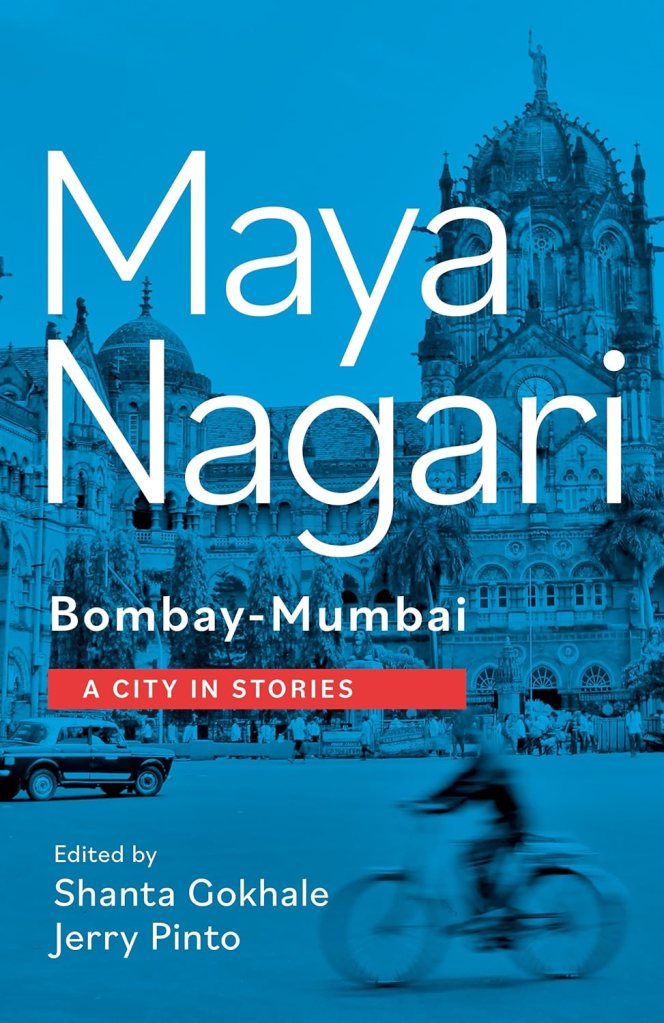
Title: Maya Nagari: Bombay-Mumbai A City in Stories
Editors: Shanta Gokhale, Jerry Pinto
Publisher:Speaking Tiger Books
The very mention of the name Mumbai (or Bombay) brings to our minds a great city in India where the thriving metropolis grows at a rapid speed because people not only flock here from different parts of the country to make quick bucks and survive against all odds, but also because the film industry of Bollywood has also established it as a city of dreams, one that never sleeps and instead creates a mirage-of-sorts — an illusion, rightly labelled by the editors of this anthology as ‘Maya Nagari’. Edited by Shanta Gokhale and Jerry Pinto, this book, comprising twenty-one short stories about Mumbai takes the road less taken to create a non-uniform image of the metropolis. In tune with its multicultural and multilingual nature, we have stories about the city that is a sea of people and speaks at least a dozen languages. There are stories translated from Marathi, Urdu, Gujarati, Tamil, Hindi, Kannada, Malayalam, and stories written originally in English. Among the writers are legends and new voices—Baburao Bagul, Ismat Chughtai, Pu La Deshpande, Ambai,Urmila Pawar, Mohan Rakesh, Saadat Hasan Manto, Ambai, Jayant Kaikini, Bhupen Khakhar,Shripad Narayan Pendse, Manasi, Krishan Chander, Udayan Thakker, Cyrus Mistry, Vilas Sarang, Jayant Pawar, Tejaswini Apte-Rahm and Anuradha Kumar.
As Jerry Pinto clearly states in the introduction, the stories can be read as we like, we can begin with the first story or the last, or any story in between. The observant reader might notice that he and the other editor Shanta Gokhale have deliberately chosen not to organise the material according to chronology, or geography. This is partly because they believe that the city lives in several time zones and spaces at once, as does India, but also because there is something essentially chaotic about its nature. So, he says, “the stories echo and bounce off each other, they do not collide, but there is a Brownian motion to these patterns” and he hopes to let the readers find it. Here, Mumbai is stripped of its twinkle; it is deglamourised to reveal how it’s the quotidian that lends the city its character—warmth and hostility alike and as inhabitants of the city the editors call ‘home,’ they hope a narrative will emerge.
In the twenty-one stories of this collection, there is the city that labours in the mills and streets, and the city that sips and nibbles in five-star lounges, the city of Ganapati, Haji Malang and the Virgin Mary. What binds the stories together is ‘human muscle’ – the desperate attempts of men and women of all classes and castes to survive in this heartless city amid all odds.
The stories are of different lengths and written in different narrative styles. Of the five or six stories translated by Shanta Gokhale herself from Marathi, one is struck by the excessive length of the so called ‘short’ stories. The very first one “Oh! The Joy of Devotion” by Jayant Pawar, forty-five pages in length, narrates in detail about the Ganapati festival and how it is related to the fate of the local people. Pu La Deshpande’s story “A Cultural Moment is Born”, set in the 1940s, tells stories of people living in chawls [slums] and how they spend their cultural days. Another very long story translated by Gokhale called “The Ramsharan Story” tells us about the rise and fall of a bus conductor by the name of Ramsharan who turns out to become a union leader. Baburao Bagul’s “Woman of the Street”, written originally in Marathi and translated by Gokhale again, tells the story of Girija, a sex-worker trying to collect money to cure her son in the village. The story ends on a disturbing note, as it reaffirms the relativity of success.
Once again, Krishan Chander’s story “The Children of Dadar Bridge” translated from Hindustani by Jerry Pinto is so long that it qualifies to be called a sort of novella. In this powerful story God comes to earth to a chawl and offers food to the first-person narrator. Then, impersonating as a small and innocent child, and along with the child narrator, he moves around different places in the city to witness its activities firsthand — we get to know about behind the scene affairs that take place in the film studios, about satta[1] dens, about bribery, local dons who arm-twist every new hawker to carry on their business after receiving their weekly cut money and more. In “Civic Duty and Physics Practicals”, Malayalam writer Manasi reveals the different experiences one comes across living in a society defined by power equations. Issues of hooliganism, superstition, illegal colonies, corruption, intimidation and violence are explored in a single story where the narrator is struggling, for days, with blaring speakers at a wedding nearby, even as her son tries hard to prepare for his upcoming exams. The story soon takes a dark turn where power trumps over consideration for fellow human beings.
A very powerful story written by Ambai in Tamil called “Kala Ghora Chowk” deals with issues of Marxist ideology, trade unions and the fate of a raped woman called Rosa. Anuradha Kumar’s “Neera Joshi’s Unfinished Book” tells us the life story of one woman who “made the city” and the perennial problems of displaced mill workers when the closed mills give way to high-rise buildings. Some of the stories are of course written in a lighter vein, though they also depict different problems related to city life. As the title of Vilas Sarang’s story “An Afternoon Among the Rocks” suggests, it narrates the plight of a couple trying to make love in the deserted seashore and how they get hijacked by a smuggler! In “The Flat on the Fifth Floor”, Mohan Rakesh writes about two sisters who meet the narrator after one failed love affair. A moving picture of the closing down of cinema halls in Mumbai comes out very beautifully in the Kannada story “Opera House” by Jayant Kaikini, especially narrating the plight of one of the sweepers working there when the declaration of permanent closure is pasted everywhere. Tejaswini Apte-Rahm’s “Mili” tells the story of a man who meets his ex-girlfriend after five years.
Though it is not possible to give the details of each and every story included in this anthology in this review, one must mention some of the stories that were originally written in English. Cyrus Mistry’s “Percy” about a young and lonely Parsi boy is so compelling that it was even made into a Gujarati motion-picture. “House Cleaning” by Jerry Pinto tells the story of a woman cleaner and his son, who talks about the reality of street dwellers. Eunice de Souza’s “Rina of Queen’s Diamonds” is not a straightforward narration at all but offers a collage of different vignettes of life in Bombay.
Though most of the stories portray the seamier side of life and in some ways de-glamourise Mumbai, at the same time they also portray how human resilience can combat all sorts of odds, and the city can be revealed only through shared experiences. Thus, each of the twenty-one stories in this collection tells a different tale of Mumbai, Bombay, Momoi, Bambai, Manbai and many others. As the editors have rightly pointed out at the beginning of their introduction, “You cannot catch a city in words. You cannot catch a city at all.” They felt that “it is not meant to be caught…this city resists even more because it was not designed at all; it just happened and it keeps on happening.” Thus, the four-hundred plus pages of this anthology Maya-Nagari remains a book to be treasured and read now at leisure and also at any time in the future.










 Borderless