Categories
Tagore Translations

Playlets by Rabindranath Tagore

Rabindranath Tagore wrote several playlets for young people. These reveal the lighter side of the poet. Two of these have been translated from Bengali by Somdatta Mandal

Courtesy: Creative Commons

Aryans and Non-Aryans

Adwaita Charan Chattopadhyay and Chintamani Kundu.

Adwaita: Who are you?

Chintamani: I’m an Aryan, a Hindu.

Adwaita: What is your name?

Chintamani: Sri Chintamani Kundu.

Adwaita: What is your intention?

Chintamani: I want to contribute to your paper.

Adwaita: What would you like to contribute?

Chintamani: I’m an Aryan. I would like to write about the Aryan religion.

Adwaita: Sir, what is this thing that you call Aryan?

Chintamani: (surprised) Sir, you don’t know who an Aryan is? I’m an Aryan, my father Sri Nakur Kundu is an Aryan, his father, Late Nafar Kundu is an Aryan, his father —

Adwaita: I see! What is your religion?

Chintamani: That is a tough question! If I can put it in a nutshell, the religion of the non-Aryans is not that of the Aryans.

Adwaita: Now, who are the non-Aryans?

Chintamani: Those who are not Aryans are non-Aryans. I’m not a non-Aryan, my father Sri Nakur Kundu isn’t a non-Aryan, his father Late Nafar Kundu wasn’t a non-Aryan, his father—

Adwaita: Say no more! So, since Sri Nakur Kundu isn’t my father and since I have no relationship with Nafar Kundu, I’m a non-Aryan.

Chintamani: I can’t say that for sure.

Adwaita: (annoyed) What kind of talk is that? What do you mean that you can’t say for certain? Can’t you say for certain that Nakur isn’t my father? What caste are you? What could I have to do with the likes of you?

Chintamani: I’m not talking about caste, I’m talking about dynasty. You too have been born in the world-famous Aryan dynasty –

Adwaita: I born in the same dynasty in which your father Nakur Kundu was born? How dare you—the son of a peasant—even imagine such a thing?  

Chintamani: Yes, sir. You might not be an Aryan, but I, and my respected father are Aryans. Alas! Where could my glorious ancestors be? Where are Kashyap, Bharadwaj, Bhrigu? What kind of talk is that?

Adwaita: What rot this man speaks? Kashyap happens to be my ancestor. We are all part of the Kashyap clan how can Kashyap, Bharadwaj, Bhrigu be your ancestors?

Chintamani: You know nothing about these issues, so there is no point in discussing these things with you. I’m afraid this is all the tragic consequence of English education.

Adwaita: Hasn’t English education affected you?

Chintamani: Sir, you can’t blame me for such a thing. Because of the Aryan blood coursing through my veins, I ran away from school at quite an early age.

Enter Harihar Babu and several other writers.

Adwaita: Please come in. Have you got it all in writing?

Harihar: Yes. Here it is.

Chintamani: Sir, what have you been writing about?

Harihar: Lots of things.

Chintamani: Have you written anything about the Aryans?

Harihar: No.

Chintamani: About the science of the Aryans?

Harihar: The Europeans are Aryans and their science –

Chintamani: The Europeans are a very inferior race and compared to the knowledge that our Aryan forefathers had, they are really illiterate. I can prove this. Even now all descendants of Aryans invoke Aswathama before massaging oil over their bodies and then pour oil thrice on the earth. Do you know why they do so?

Harihar: No.

Chintamani: Do you?

Adwaita: No.

Chintamani: Do you?

First Writer: No.

Chintamani: If you don’t, then why talk about science? Do you know why Aryans click their fingers when they yawn?

All: (in unison) No, none of us do.

Chintamani: Really? Do you know the reason why our Aryan women beat the hand-fan on the floor if the fan touches the body of the person they are fanning?

All: No, not at all.

Chintamani: See, you know nothing. Without discussing these issues at all, without any sort of enquiry into such matters you persist in saying that European science is the best. And yet you don’t even know why Aryans sneeze, yawn or massage oil.

Harihar: All right, sir. You tell us. Why must oil be poured on the ground before it is poured over the body?

Chintamani: Magnetism! Nothing else. This is what is known in English as magnetism.

Harihar: (surprised) Have you read anything about magnetism in English science?

Chintamani: Nothing. No need for that. There is no need to study English to learn science or anything else. What do our Aryans say? There are three forces in nature – life force, causality and positivism. Just before bath the slippery force of oil being added to these forces creates physical negativity within our body. This is nothing but magnetism. Just think — the practice of wiping the body with a towel prevalent among Englishmen since the nineteenth century has been practiced by our Aryans for thousands of years for they have been using the gamcha for the same purpose since then.

The Writers: (with surprise) Wow! How commendable! What scientific skill the Aryans have! What great research our Aryan Kundu Sir has undertaken!

Harihar: We have fallen into the hands of a real idiot today! But there is no point in annoying him. He writes for several newspapers. I have heard that this Aryan Kundu is quite adept at cursing gentlemen a lot. That is why he is famous.

Chintamani: Look over there. That Aryan Brahmin is plucking flowers early in the morning. Why do you think is he doing such a thing?

Adwaita: To give them to the god during prayers.

Chintamani: Shame, shame. You don’t bother to get to the bottom of things. When the sages  permitted the plucking of flowers at dawn it became obvious that they were aware of the presence of oxygen in the air. Since they knew of this, there is no doubt that they also knew of the presence of other gases too. In this manner we can clearly prove by moving from point to point that they were aware of all that was subsequently discovered by modern European chemistry. Why do we click our fingers when we yawn? That is also magnetism. When the rising gases combine with positivism, then the negative force conducted by the physical force exceeds the life force, causality and the positive force by its own power. Then the three qualities of sattwa, rajah and tama (excellence, essence of activity and lowest attributes) achieve exceptional attributes. During this phase, the heat caused in the air as a result of the friction between the middle finger and the thumb combines with the heat of the nervous system and solar heat to prevent the ultimate destruction of physical heat. If this can’t be called science, what can it be called? Isn’t it curious that none of our Aryan sages ever read any book by Darwin.?

The Writers: Amazing! Blessed be the achievements of the Aryans. All this time we couldn’t understand such theories.

Harihar: (to himself) But even today I don’t understand anything.

Chintamani: If you are wondering about the hitting of the hand fan on the floor, then that too is magnetism. Expansion, expulsion, repulsion and attraction – these physical acts add up to —

Adwaita: Spare us, spare us Sir. My head is reeling. You can write about the hitting of the hand fan in my newspaper. You have said enough already. Let me get you a paan.

Chintamani: No, sir. I haven’t come here to have a paan. You aren’t following Aryan customs and actions. The spiritual force flowing in our Aryan veins for generations, that force –

Adwaita: Enough, enough! I won’t give you a paan; you need not have one. If you permit me I will get you some tobacco instead.

Chintamani: Tobacco! What destruction! What a thought! It is even worse. Do you know why high caste people don’t smoke the hookah used by lower caste people? Why doesn’t one caste consume food touched by another caste? Why did the Aryan in earlier times not even tread over the shadow of a non-Aryan?  Don’t you think there is a science behind it? Of course, there is. Let me explain it all to you. That too is magnetism. The three kinds of bodily radiance – excellent, mediocre and base –

Adwaita: Stop, stop. I won’t give you tobacco. You need not smoke the hookah. No need for paan or for tobacco do what is convenient for you, something that will retain your bodily radiance.

The Writers: Shame on you, Adwaita babu. You did not allow us to listen to the learned words of Sri Kundu, the best of the Aryans.

First Writer: (to the second writer) Sri Kundu has such exceptional reasoning skills and knowledge. But, did you understand anything?

Second Writer: No, nothing. Let us ask him properly once again. Sir, you spoke of causality, reason and many other forces, what are they?

Chintamani: They are nothing than what is known in English as force and magnetism.

The Writers: (in unison) Oh, we’ve understood.

Harihar: Sir, I am none the wiser!

The Writers: (disgusted) You still can’t understand anything? Magnetism, force — these are easy concepts. You know what magnetism is. You know what force is. This is also the same thing. We know all of this because of the exceptional scientific enquiry pursued by the Aryans.

First Writer: If you have to understand these things clearly then you need to know all sorts of scriptures. Haven’t you read the scriptures?

Chintamani: No, I haven’t. My father and I, and Nafar Kundu are Aryans – that’s why I don’t consider it necessary to study the scriptures.

Second Writer: That’s true. But you’ve certainly read science very well.

Chintamani: Not at all. I’ve acquired the theories of sneezing, coughing, breaking the knuckles of the fingers and other specific scientific theories from my imagination. It wasn’t necessary for me to study science. You will probably not believe it, but swearing on the Aryan holy books I can say that I have studied neither Aryan scriptures nor scientific discourse. Everything that I know is the product of my imagination.

Harihar: Yes, but you certainly don’t need not swear by it. No one will ever accuse you of studying!

[Translated from “Arya O Anarya” (Chaitra 1292 B.S.) by Somdatta Mandal]

Testing the Student  

The student is called Sri Madhusudan and Sri Kalachand Master is his tutor.

Enter the guardian.

Guardian: Kalachand babu, how is Madhusudan faring in his studies?

Kalachand: Sir, Madhusudan is very naughty but good in his studies. I never have to repeat anything twice to him. He never forgets what I have taught him once.

Guardian: Really! So let me put him to a test today.

Kalachand: Sure, go ahead.

Madhusudan: (to himself) Yesterday Mastermoshai beat me so badly that my back is still hurting. I will have my revenge today. I am going to have him thrown out.

Guardian: So now Modho, do you remember all that you’ve been taught till now?

Madhusudan: I remember whatever Mastermoshai has taught me.

Guardian: OK. Tell me then — what is a plant?

Madhusudan: Something that comes out of the earth.

Guardian: Give me an example.

Madhusudan: An earthworm!

Kalachand: (with eyes flashing) What did you just say?

Guardian: Shhh Sir…, don’t tell him anything now.

To Madhusudan

You have studied poetry; so, tell me, what blooms in the garden?

Madhusudan: Thorns.

Kalachand takes out a cane.

Why sir, why are you caning me? Am I lying?

 Guardian: All right. Who destroyed Siraj-a-Daulah? What does history teach us?

Madhusudan: Insects.

He is caned again.

Sir, I am being caned for no reason at all! Not only Siraj-a-Daulah, but my entire history book has been eaten up by insects. Have a look.

 He shows the book. Kalachand Master scratches his head.

Guardian: Do you remember any of the grammar you’ve been taught?

Madhusudan: Yes.

Guardian: What is a ‘subject’? Explain it with the help of examples.

Madhusudan: Okay. The subject is Joy Munshi who lives in the other village.

Guardian: Can you tell me why?

Madhusudan: He is a doer, busy with many virtuous rituals and activities.

Kalachand: (angrily) You must be off your head!

He canes him on his back.

Madhusudan: (startled) Sir, it’s not the head I am talking about, it’s my back.

Guardian: Tell me, what is the best way of compounding words?  

Madhusudan: I don’t know.

Kalachand babu canes him again.

I know the answer to this one very well. It’s the grammar of the cane.

The guardian laughs. Kalachand babu is not amused at all.

Guardian: Have you learnt your maths lesson?

Madhusudan: Yes, I have.

Guardian: All right. Suppose you are given six and a half pieces of sweets and told to eat as many as you can in five minutes. Whatever remains will have to be given to your younger brother. If you need two minutes to eat one sweet, how many will you end up giving to your brother?

Madhusudan: Not a single piece.

Kalachand: How come?

Madhusudan: I’ll eat all of them. I wouldn’t want to give the sweets to anybody!

Guardian: All right. Suppose a banyan tree grows a quarter of an inch each day. If the tree was ten inches tall on the first of the month of Baisakh, how tall will it be on the first of Baisakh the next year?

Madhusudan:  If the tree grows crooked then I won’t be able to say; but if it grows straight then we’ll be able to measure it and find out its exact height; but in the meantime if it dries up then there is nothing to be done.

Kalachand: Your brain won’t function at all till you get a good beating. Rascal, it’s only when I’ll beat you black and blue, that you’ll straighten up.

Madhusudan: Sir, even very straight things will bend if you keep beating them.

Guardian: Kalachand babu, you’re mistaken. Physical abuse won’t get you far. There is a saying that you cannot flog a donkey and turn it into a horse, but sometimes a flogged horse can turn into a donkey. Most students are capable of learning, but most teachers aren’t capable of teaching. But it’s the pupil who gets the beating. Please take yourself and your cane away and leave with your cane and let Madhusudan’s back rest for a few days, and then I myself will start teaching him.

Madhusudan: (to himself) Oh, I am so relieved!

Kalachand: Sir, I am so thankful. Only a labourer will enjoy teaching this boy—all it amounts to is manual labour. After working on him for thirty days all I get is only five rupees, while the same labour in tilling the earth would fetch me at least ten rupees per day!

[Translated from “Chhatrer Pariksha” in the Hasyakoutuk ]

Hasyakoutuk(1914) by Tagore

Somdatta Mandal is a former Professor of English and ex-Chairperson, Department of English, Visva-Bharati, Santiniketan, India. A recipient of several prestigious fellowships like the Fulbright Research and Teaching Fellowships, British Council Charles Wallace Trust Fellowship, Rockefeller Residency at Bellagio, Italy, Salzburg Seminar and Shastri Indo-Canadian Faculty Enrichment Fellowship, she has been published widely both nationally and internationally. She has also an award from Sahitya Akademi for the All India Indian Literature Golden Jubilee (1957-2007) Literary Translation Competition in the Fiction category for translating short stories series ‘Lalu’ by Sarat Chandra Chattopadhyaya.

.

PLEASE NOTE: ARTICLES CAN ONLY BE REPRODUCED IN OTHER SITES WITH DUE ACKNOWLEDGEMENT TO BORDERLESS JOURNAL

Categories
Tagore Translations

Endless Love: Tagore translated by Fakrul Alam

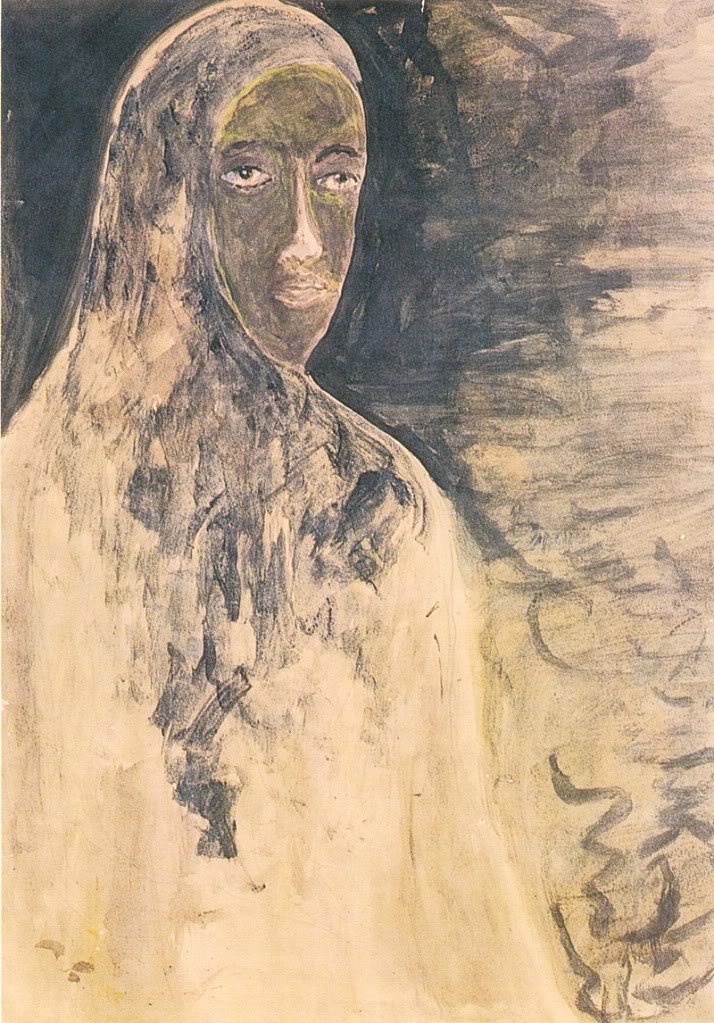
Veiled Woman: Painting by Rabindranath Tagore. Courtesy: Creative Commons
ENDLESS LOVE (Anonto Prem)

It is as if I’ve loved only you,
Hundreds of times, in hundreds of forms
In life after life, age after age, again and again!
Forever, and with an enchanted heart,
I wove necklaces of lyrics
Which you’d wear beautifully,
Accepting my gifts gracefully,
Life after life, age after age, again and again!
The more I hear stories from far away times
Of agonies lovers endured in ages long past,
Of tales of unions and separations
And whenever I look at events of days of yore,
Piercing the veil of darkness of times past
They appear in the form of an eternal star
In your visage.
The two of us float forward
In the current of a union
Emanating from eternity.
The two of us keep frolicking
Amidst millions of lovers,
Whose eyes moisten with tears of separation
Or light up with bashfulness as they meet—
In a love transcendental but in a guise all new
In love everlasting, but of this very day and age! 

Fakrul Alam is an academic, translator and writer from Bangladesh. He has translated works of Jibanananda Das and Rabindranath Tagore into English and is the recipient of Bangla Academy Literary Award (2012) for translation and SAARC Literary Award (2012).

.

PLEASE NOTE: ARTICLES CAN ONLY BE REPRODUCED IN OTHER SITES WITH DUE ACKNOWLEDGEMENT TO BORDERLESS JOURNAL

Categories
Poetry

All Because you Smiled…

Poetry by Michael R Burch

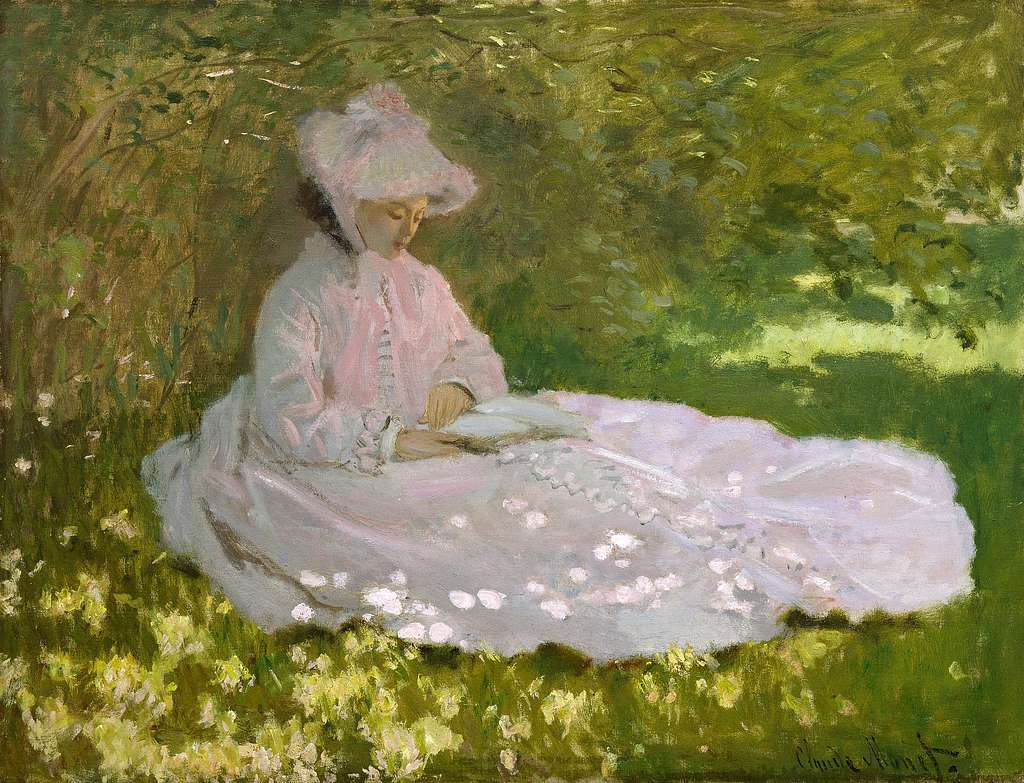
Springtime by Claude Monet ( 1840-1926). Courtesy: Creative Commons
REMEMBERING NOT TO CALL 


(A villanelle permitting mourning, for my mother, Christine Ena Burch)

The hardest thing of all,
after telling her everything,
is remembering not to call.

Now the phone hanging on the wall
will never announce her ring:
the hardest thing of all
for children, however tall. 

And the hardest thing this spring
will be remembering not to call
the one who was everything.

That the songbirds will nevermore sing
is the hardest thing of all
for those who once listened, in thrall,
and welcomed the message they bring,
since they won’t remember to call.

And the hardest thing this fall
will be a number with no one to ring.

No, the hardest thing of all
is remembering not to call.


LOVE UNFOLDED LIKE A FLOWER 

Love unfolded
like a flower;
Pale petals pinked and blushed to see the sky.
I came to know you
and to trust you
in moments lost to springtime slipping by.

Then love burst outward,
leaping skyward,
and untamed blossoms danced against the wind.
All I wanted
was to hold you;
though passion tempted once, we never sinned.

Now love's gay petals
fade and wither,
and winter beckons, whispering a lie.
We were friends,
but friendships end . . .
yes, friendships end and even roses die.


MELTING

(for Beth)

Entirely, as spring consumes the snow,
the thought of you consumes me: I am found
in rivulets, dissolved to what I know
of former winters’ passions. Underground,
perhaps one slender icicle remains
of what I was before, in some dark cave—
a stalactite, long calcified, now drains
to sodden pools whose milky liquid laves
the colder rock, thus washing something clean
that never saw the light, that never knew
the crust could break above, that light could stream:
so luminous,
                     so bright,
                                    so beautiful . . .
I lie revealed, and so I stand transformed,
and all because you smiled on me, and warmed.

Michael R. Burch’s poems have been published by hundreds of literary journals, taught in high schools and colleges, translated into fourteen languages, incorporated into three plays and two operas, and set to music by seventeen composers.

.

PLEASE NOTE: ARTICLES CAN ONLY BE REPRODUCED IN OTHER SITES WITH DUE ACKNOWLEDGEMENT TO BORDERLESS JOURNAL

Categories
Stories

The Agent

By Paul Mirabile

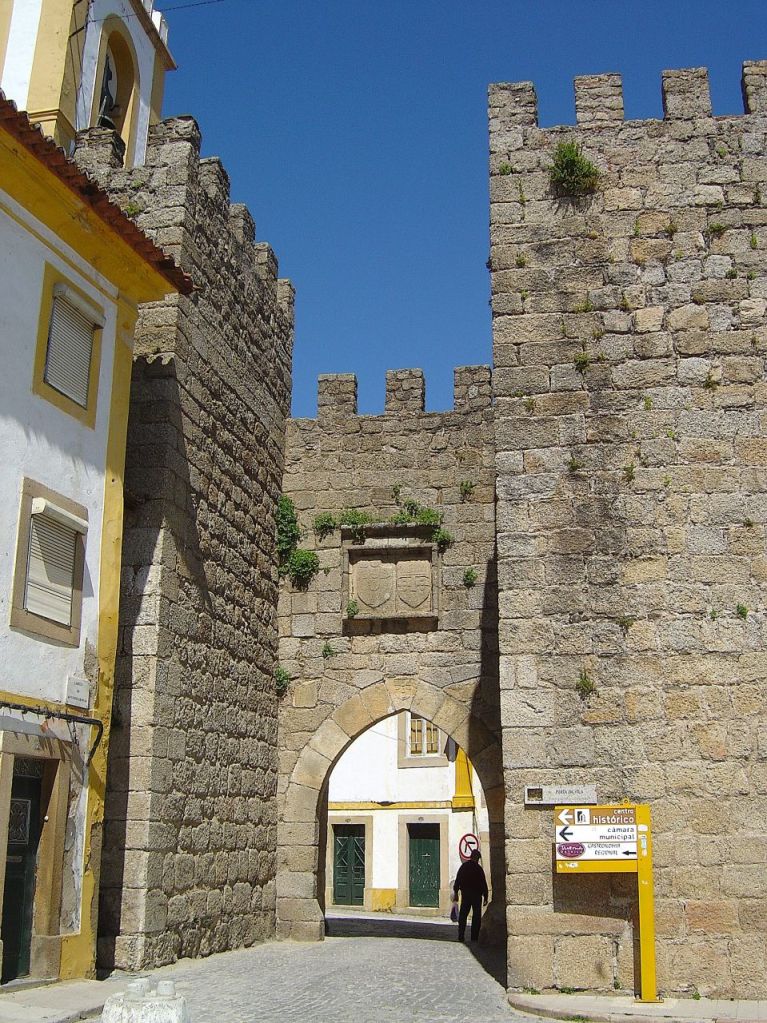
Nisa, Portugal. Courtesy: Creative Commons

  “ … And do you think our present government is meeting the demands of its people ?” spouted the Spokesman Doctor, chairman of the Portuguese Communist Party Delegation in Nisa. Seated in a squalid, fly-laden café, he directed his poignant words towards a group of glassy-eyed villagers, seemingly rather perplexed at such a display of political pathos. He had been at it now for at least two hours.

A dusty gust of wind and shuffling of feet directed the villagers’ languid attention to the doorway. Long strips of coloured plastic peevishly scraped against one another. Someone stepped in : a young man, well-to-do, by his appearance, obviously not from Nisa. He side-stepped a dozing dwarf, making his way to the counter. All glassy eyes fell on the stranger.

 “You never answer questions,” the Spokesman Doctor said, turning on the villagers coldly, although keeping a watchful eye on the stranger at the counter. “All of you, how long are you going to sit here swallowing insult and humiliation ? You can’t live on olives and bread alone. Look at our land … where are the tractors ? Where’s the money from America ?” There was no reply to those beseeching questions, only the slight chuckling of the stranger, who leaned gingerly at the bar sipping a coffee.

 “You’d rather live then without running water and electricity ?” the Doctor spat out, staring hard at the stranger, who stared back at the Doctor even harder. “And still you don’t understand my questions.” One skinny, toothless fellow made some effort to amuse the Spokesman Doctor, but only succeeded in ordering another cup of coffee. The stranger broke into a wide grin. All eyes peered at him from yellow, sunken sockets. He broke the frosty silence by asking in the most delicious courtesy, but in the most atrocious Portuguese, for a glass of iced lemonade.

The unexpected appearance of this stranger brought whispered comments from the villagers. The Spokesman Doctor’s wiry face eyed the stranger with suspicion. He set aside his cup of coffee. A fly aimlessly found itself inside the sugar-coated rim of the cup where it remained until the Spokesman Doctor swished it disdainfully away.

“Are you Portuguese ?” he asked, rhetorically, with a slight accent of irony. The young man turned to him and answered in his choppy Portuguese that he was not, adding a few instants later that he was an American on visit to a friend whom he works with in France. This last phrase was declared in excellent French, something which surprised many of the villagers, most of whom had worked in France for years. The most astounded, however, was the Spokesman Doctor.

“So you have a friend in Nisa ?”

 “Yes I do,” returned the American, catching a note of doubt in the Doctor’s authoritative tone.

 “Who is this friend of yours ?”

“Domingo Flaco, but he’s still in France just now. I think he’s on his way, or at least he should be. I’m not certain ; he wrote me some time ago.”

“Do you still have the letter ?”

The American searched the Doctor’s tiny, black eyes, twitching nervously in their sockets.“No, am I supposed to have it ?”  the other retorted dully.

The lanky American’s easy flow of speech and command of French relieved some of the villagers’ mistrustful thoughts, thoughts put there by the Doctor’s obsessional fear of alien spies in the mountain villages. Domingo’s name set the villagers at ease, but the Doctor remained on his guard, shifting irritably about the table, playing mindlessly with his empty cup of coffee. Another fly, finding itself helplessly stuck in the grounds of the coffee, the Doctor savagely crushed it with his thumb. He seemed to sense something foul ; something amiss, even insalubrious in this clean-cut American who spoke excellent French. Domingo indeed did live in Nisa, that was an undeniable fact. But what would an American be doing with Domingo … a poor mountain peasant who had immigrated to France, and there was presently working on a wine farm ? This relation had no logical link to it, or if it did, it completely escaped his wits. A well-to-do American visiting a peasant in the poverty of Portugal concealed a reason that his imagination could not fathom.

The Spokesman Doctor fell on his prey like a lion : “Does anyone know him ?” he asked the villagers in Portuguese. There followed a long pause. During that pause the American ordered another lemonade, quite unaware that he had become the topic of discussion. Nonchalantly he drained his glass, eyeing the assembly curiously. Again a jumble of words struck him oddly. The cold lemonade contrasted sharply with the heat that had been accumulating around him.

“Do you know this American ?” asked the Spokesman Doctor again, but this time addressing the veiny-face villager behind the counter.

 “I think he does work with Domi,” he responded, wiping the counter for about the hundredth time which scattered the vexatious flies.

 “No, I don’t think he does work with Domingo,” rallied the Doctor hurriedly. “I saw him handing out Jesus Christ leaflets yesterday. He was haranguing people for money. Then he went from bar to bar asking questions. Where’s your papers, American ?” The Doctor shot a fiery glance at the young man, who for one, was relieved that this man had finally spoken to him directly, and in French.

“What papers ?” he inquired. The Spokesman Doctor laughed haughtily. The others followed, but with more restraint. The Doctor now felt he had hit the nail on the head. His ‘people’ were with him, as always. “Come on, we want to see your papers. I saw you yesterday handing out Jesus Christ leaflets to people in the streets.”

The American wiped the sweat off his forehead, intrigued more by the use of ‘we’ than by the accusation. “What the hell are you talking about ?” replied the American, crimsoning under the glow of a dozen eyes.

“Are you a Communist ?” rifled the Doctor. The American nodded in the negative, taken aback by the bluntness of the question.

“Are you then a Capitalist ?” Again the same negative nod.

 “Then you are nothing but an evangelizing parasite !” A pasty smile flitted across his lips. The American breathed deeply, moving a trembling finger across the counter. He couldn’t think of anything to say to defend himself ; all this seemed utter nonsense.

“Where are your papers ?” asked the Spokesman Doctor cloyingly.

 “What in God’s name are you raving about, man ?” fired the American, stepping back, the enraged flies skirling about his red, sweaty face.

Again the Doctor smiled, slowly pushing his way towards the circle of villagers round the counter.

“Do you know about the CIA here in Portugal ?”

This question frightened the stranger. He brushed his flaky blond hair from his forehead, then threw the villagers a bewildering look. “Should l know about it ?” he retorted, involuntarily shifting his right foot towards the swaying, plastic strips of the doorway.

Suddenly a man shouted out coarsely : “No Doctor, he does work with Domi in France. I saw him there six months ago when I visited my cousin in Beaune.”

“No !” brayed the Spokesman Doctor vehemently. “I tell you I saw him yesterday handing out  Jesus Christ leaflets. You know, there’s lots of those people in Portugal today, mostly Americans, too … you know, with the elections coming up … Look what happened before the last elections … the same thing, American agents running about the countryside posing as people of the Jesus Christ Movement.” This last statement was met by incredulous glances from the villagers. They all acknowledged the Doctor as a grand man, politically astute and well-read, but a doubt reigned over their blurry, uneducated minds. And yet, it was true: an American in Nisa posed a problem, and raised a mystery that none, at least in that hot and illiterate café, could unravel.

“You know a lot about many things, don’t you ?”enquired the Spokesman Doctor, ingratiatingly. This time the subject of conversation did not deign to reply. The Doctor scoffed at this show of pretense. “I don’t know American, but I saw you yesterday going from café to café with those dirty leaflets in your hands. There’s something about you I can’t understand. I know you speak excellent Portuguese, too.” With this ‘compliment’, if it may be considered as one, the American lifted an enigmatic eyebrow.

“There’s a lot of CIA activity in this area round election time,” continued the Doctor with his pasty smile. “Communism is very strong in our villages. Look around you … everything is falling apart in our villages. Americans are to blame for the poverty of our country.”

 “Not Americans,” blared out the young man beside himself. “The …”

 “No !” screamed the other louder than his rival. “I don’t want to listen to your sweet, poisoned words. Laughing, he turned away to speak quietly to his people.”

Many words darted in and round the savage, swirling flies, words which the American was at a loss to comprehend. He could have left, the way was clear to the door. But he remained adamant in his right to be in that café and drink coffee with the villagers. No proxy lout of a Communist courtier would eject him from that public place. Then a strange sensation crept up on him : everyone appeared to have come to some sort of resolution … verdict would be a better word … As if he had been accused of some crime. He saw the jury to his right … then the judge, to his left, a dark man, sporting a moustache with a horrible pasty smile.

“We have found the accused guilty,” came a hushed, indescribable voice. A wave of panic seized the accused.

“Guilty … guilty of what ?” The sad, sunken eyes of the jury hung suspended in the air. The flies, too, seemed to have adjourned their monotonous gyrating. The eyes of the judge were laughing at him, as a sickly moustache inched its black way into the left corner of his mouth.

— Has everyone gone crazy ? the American thought. –An innocent man has been falsely accused. Yes, something is very wrong here. How could this have happened ? I only came in for a cup of coffee ! Really I did … — These inner pleadings hammered at his temples, hot and pulsating. Was it real ? –To the doorway– were his next whispered words. –Must escape before they trap me in here.– The American rushed towards the doorway but scraping feet forced him to swing his shoulder to the left. –It’s not true … they’re on me. For what ? — A knotty fist shot out. He blocked it with his forearm. Then another which again he easily countered. –They’re all crazy … really crazy, — a tiny voice within him admonished.

He wanted to speak aloud but his voice found no chamber to echo his confused thoughts. Something cracked in his mouth; blood filled the spaces between his teeth. He stumbled back, catching hold of the counter. Turning, he faced his judge, and in an instant of crystal clarity he caught sight of a dull, metal object in his hairy hand. A flame tore through his belly. He grabbed at it … fingered it … found clots of blood smeared on it.

“What have you done ?” he managed to spit out in a flow of blood, his eyesight gradually fading into an empty space behind his head.

The American crumbled to his side, still conscious of his surroundings. A face slid across his sight, that of a moustached man, smiling a very pasty, wicked smile. A glibly voice nettled what remained of his pride. “That will be all for you,” said the pasty, wicked smile.

And it was true what that smile said. For the young man moaned aloud, then lay still. Everyone rose and left the café …

Paul Mirabile is a retired professor of philology now living in France. He has published mostly academic works centred on philology, history, pedagogy and religion. He has also published stories of his travels throughout Asia, where he spent thirty years.

Categories
Review

Tulip of Istanbul by Iskendar Pala

Book Review by Gracy Samjetsabam

Title: Tulip of Istanbul

Author: Iskender Pala

Translator: Ruth Whitehouse

Publisher: Niyogi Books

Tulip of Istanbul was originally written in Turkish in 2009, is a historical novel by Iskender Pala. The translation to English by Ruth Whitehouse and its publication by Niyogi Books in December 2021 has put it within the reach of the larger community of Anglophone readers.

Iskender Pala is a professor of Turkish (Ottoman) Divan Literature, an author, and a columnist. He is a recipient of the Turkish Writer’s Association Prize (1989), The Turkish Language Foundation (1990), The Turkish Writer’s Association Essay Prize (1996), and was honoured with The Presidential Culture and Arts Grand Award in literature in 2013. He has been conferred the title of “The People’s Poet” by popular vote in Usak, Turkey. Ruth Whitehouse is a scholar of Modern Turkish Literature and translator with multiple translations from Turkish.

Tulip of Istanbul , a fictionalised historical romance, is a murder mystery that is woven to highlight the period that followed the Treaty of Passarowitz in 1718. The story spans 1729 to 1730. Also known as the Tulip Age, this was a time when the glory of the peaceful period since the 1718 treaty was interrupted by an outbreak of a public revolt that showed resentment to over-indulgence and wastage, leading to social and economic downfall. The book has 66 brief chapters that seek to answer a question that is set as the title of each chapter. In the ‘Preface’, the author claims he wrote the book under the influence of a handwritten anthology of Turkish poetry by an anonymous compiler from an “Auction of Stamp Collections and Old Books” outside Istanbul’s Marmara Hotel. Impressed by the book, he wanted to showcase part of the Ottoman history as a storyteller. Thus was born the One Murder, Sixty-six Questions in Turkish translated as the Tulip of Istanbul.

The ‘Prologue’ reveals that “truth must not remain concealed” and so, the story is told two weeks after the October Revolution that deposed Sultan Ahmet III and slayed his son-in-law Grand Vizier Ibrahim Pasha of Nevsehir. The book opens with the question, “Is There No Limit to Self-Sacrifice?” The mysterious murder of Naksigul, the bride with heavenly beauty on the first night of the wedding, left the husband, Falco, distraught and deranged. The death of his wife had him thrown to prison as the prime suspect. Naksigul was holding a rare and beautiful purple twin bud tulip when she died. Two lovers were brought together by fate when Falco escaped the jailors. They jointly set out to solve the mystery.

In the story, Pala beautifully alludes to the rich culture and history of Istanbul. He manages to introduce the readers to the ninth-century music therapy called “Farabi”; historical figures who visited the empire of the time, the poet Nedim, the painter Van Mour and dignitary Lady Wortley Montagu; and to the Empire’s culture of maintaining insane asylums, prisons, lodges, and coffee houses. The narrative is interestingly infused with plots that are a story-within-a-story about the social life of the Ottoman Empire, the accounts behind the architectural beauties of the walled city of Istanbul, the picturesque sunsets of the Turkish straits be it by the Bosporus or sea of Marmara, the magnificent domed mosques, and palaces with fashionable gardens.

The action peaks to an important juncture at the house and garden of the most coveted tulip cultivator Hafiz Celebi. In the story, Pala includes mesmerising tales on the nomenclature, symbols, and meanings of the “Tulip” flower, which metaphorically and literally relate to the flourishing business, architectural beauty, and exchange of politics, art, and aesthetics of the Empire with the countries like Iran, Austria, Holland or Crimea. Through the story, Pala aptly accommodates how the Horticulturist community indirectly played a role in the policies and well-being of the state. Tulips are strewn through the story binding it into a poetic whole. Pala mentions the upgrade in information sharing with the coming of the first printing press in Turkey and succeeds in connecting it to the ongoing social unrest and the gruesome revolt that ensued in the Tulip Era. The mystery livens up till the end of the story where love guides and transforms, its own meaning and the seeker.

The language used by the translator in the story aids in understanding the appreciation for elegance and perfection in the art and aesthetics of the Ottoman Empire. Tulip of Istanbul is a potent read with a capacity to broaden the perspective about a culture one knows less about, a perfect springtime read. Changing seasons and social change serve as the backdrop to the dreamlike story filled with intrigues of royal secrets and suspense wreaths with those that pursued power alongside those that pursued love.

.

Gracy Samjetsabam teaches English Literature and Communication Skills at Manipal Institute of Technology, MAHE, Manipal. She is also a freelance writer and copy editor. Her interest is in Indian English Writings, Comparative Literature, Gender Studies, Culture Studies, and World Literature. 

.

PLEASE NOTE: ARTICLES CAN ONLY BE REPRODUCED IN OTHER SITES WITH DUE ACKNOWLEDGEMENT TO BORDERLESS JOURNAL

Categories
Poets, Poetry & Rhys Hughes

My Favourite Poem

I am not sure it is wise to choose a favourite poem out of the millions that exist. It would seem to exclude all the others from the imaginary summit of a fictional pillar. The circumference of that pillar means that there is only room for one poem up there and it might be better not to erect the pillar in the first place and leave the literary landscape unobstructed.

But it is too late for me. I have already chosen a favourite poem. In fact, I have chosen a favourite several times. The first poet I read in any depth, Edgar Allan Poe, provided me with my first favourite, not ‘The Raven’ but a slightly less famous work called ‘The Bells’. How I loved the tinkle, jangle and crash of the cadences in the stanzas of that piece!

I read it again recently and found that it retains great musical power and it is still a poem I regard with intense fondness, but it is no longer my favourite of all. That is hardly surprising considering I was reading Poe when I was 15 years old. Our youthful tastes change not only according to our experiences but also as a result of all the other literature we consume. There is surely a tendency to prefer narrative poems when we are small and a diminishing reliance on actual stories as we grow older. Yet it was the music of ‘The Bells’ that fascinated me rather than the febrile images it contains.

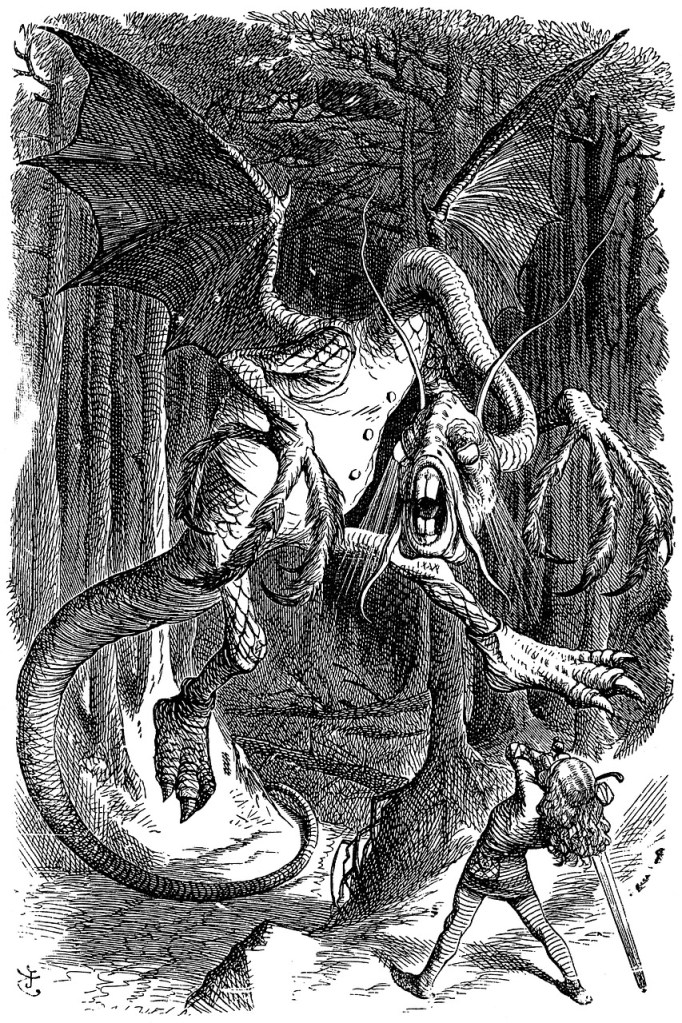
Jabberwocky. Courtesy: Creative Commons

I think my love of euphony has always meant that I relish the way a poem sounds more than I appreciate any meanings it might convey. This is why it was easy for a nonsense poem to become my new favourite and to gently push aside the Poe piece. Lewis Carroll’s ‘Jabberwocky’ became for me the supreme poem and I learned it by heart. It is a poem that makes contextual sense despite all the meaningless neologisms with which it is sprinkled. Somehow, we understand the new words coined by Carroll and there is no need to have them explained. It is a poem that we absorb through osmosis rather than through the normal process of everyday communication. A masterpiece!

When I was 18 years old, I began reading Byron, Shelley, Coleridge and a few other English Romantics, and I discovered ‘Ozymandias’. Now this seemed to me to be a perfect poem. It had music, imagery and a moral, and furthermore it was ironic, an archaic episode with timeless relevance. Again, I learned it by heart, and I found myself in the not uncommon position of reciting it to myself whenever I happened to be confronted with an ancient ruin, whether the blocks of a tumbled castle or shattered torso of a fallen statue. It is a poem that turns a reader into an actor, an introvert into a declaimer. It became my new favourite but only for a short while. The poem that caused it to fall in my estimation was another in the same anthology I was reading.

An Illustration from Kubla Khan. Courtesy: Creative commons

Kubla Khan’ struck me as especially appealing because it has a wildness about it that balances out its sense of control. I am not sure why Coleridge affected me to a greater extent than Shelley (and Byron affected me hardly at all) but I was enthralled by the imprecise exoticism and the intimations of doom among paradise in this poem, which is as menacing as it is delightful, as frantic as it is magical. Coleridge himself regarded it as a work in progress, a frustrated potential, unfinished, a burst dream bubble. I wonder if a continuation might have diminished it? The fragmentary nature of the piece adds to its allure by increasing its strangeness. There is atonality here as well as smoothness, like troubling chords inserted in a serene nocturne.

A few years passed and I discovered a new favourite and had to topple poor old ‘Kubla Khan’ from the apex of that idealised pillar and replace it with The Rubáiyát of Omar Khayyám in the first Edward Fitzgerald translation, but whether this series of seventy-five quatrains can be regarded as just one poem is open to debate. Personally, I regard the quatrains as linked inextricably by mood, metaphors as well as theme, and there is a mini-sequence within the whole that gains significant momentum by being treated as a single creation. My ambition once again was to learn the work by heart and recite it at moments that were appropriate but despite my efforts I failed in the endeavour. There was simply too much wordage for me to succeed.

I tried reading more modern poetry, serious and mature work that I failed to understand at first and had to consider very carefully before I could tease out any meaning. I read Akhmatova, Rilke, Pound, Eliot. I tried (but was generally defeated by) Ginsberg, Olsen, William Carlos Williams. This was all well and good but my candidate for new favourite turned out to be something light, an insignificant ditty dashed off by a poet who wrote it as a gift for a friend, and once again it was the music that won me over, the jangling, tinkling, tingling, clipping, clopping, jingly rhythms. ‘Tarantella’ by Hilaire Belloc imitates the sound of a guitar and clapping hands, it clatters along merrily, nostalgically, a tribute to an ephemeral occasion in a mountain tavern that can never be lived again, and the words and their phrasing evoke much of the atmosphere of that night with an appreciable impetus. A candidate for new favourite, yes, but it ultimately failed to displace the Rubáiyát.

That was in my early twenties and soon after I lost interest in poetry, I have no idea why, and rarely read any. Occasionally I would browse an anthology and discover something interesting, but only a few poems made any impression at all on me, and none became my favourite. The Rubáiyát of Omar Khayyám remained at the summit of my appreciation by default. My return to poetry was slow and uneven. The work of Federico García Lorca caught my attention and I chose ‘Canción de Jinete’ to learn by heart, which I did, probably poorly (my Spanish was never fluent). A little later I discovered the precocious genius of Arthur Rimbaud and taught myself ‘Le Coeur Supplicié’ because its torrent of fantastical words appealed to my inner ear.

Unfortunately, what I believed poetry had to offer was something I had no great use for. I misunderstood what it had to offer. That is no great crime, but I did miss out on its delights for a long time. Not until my mid-thirties did I start to return to the pleasures of poetry, and it was the humourist Don Marquis who ushered me back into the heaven I had forsaken, yet it is too much to claim that any of his poems became my favourite. I adore his cycle of poems about the cockroach Archy and the cat Mehitabel, but they must be taken as a whole in an evolving mythos. No individual poem of the cycle is worthy of special attention at the expense of the others. All are good, but together they are brilliant and thus they disqualify themselves from the game.

Now that I was reconciled with poetry, my tastes widened, and I read from a broader set of cultures and times than before. Sappho, Ovid, Catullus, Tagore, Basho, Tu Fu, Housman, Holub, Mandelstam, Eliot, Yeats, Edward Thomas, Dorothy Parker, Ai Ogawa, Ogden Nash, Derek Walcott. I was very enthusiastic about the novels and short stories of Richard Brautigan, so I read his poetry too and found a poem called ‘All Watched Over by Machines of Loving Grace’ that neatly summed up my own hopes for the future of the world. Did it become my new favourite? Not quite. I continued reading. Pessoa enthralled me, Cendrars and Queneau dazzled me. Complicated poetry dealing with the human condition and experimental verse based on mathematics made me nod my head sagely in a close approximation of a deep appreciation.

The City’ by C.P. Cavafy became my new favourite. I had heard his name often mentioned but felt no great desire to explore further. Then by chance I saw this particular poem. What a terrific piece! Hard, bleak even, wrenchingly bitter, but it does not depress the spirits of the reader despite its melancholy message. On the contrary it seems to inspire the reader to action. The poem is quietly and relentlessly insistent that you will never change your life for the better, that you can never escape the circumstances that have trapped you. It issues a challenge to the reader. Prove me wrong, the poem seems to say! I immersed myself in as much of Cavafy’s poetry as I could find. I went out of my way to visit his house in the city of Alexandria in Egypt, so wonderful did I now regard his work. Was this the final destination on my poetic voyage?

Not quite. There was another poem by another poet sunk deep beneath the surface of my awareness and it had been there for a long time. I can say that it had probably been my secret favourite from the beginning. I must have read it in an idle moment and forgotten about it, or thought I had forgotten about it, but it remained on the seabed of my subconscious, and ultimately it wrecked all the poetical vessels that followed, for I was never fully satisfied with any of those I called my favourites. I rediscovered it one unexpected day and it returned with unstoppable force into my affections. It was written by a poet who went to sea and saw the world, who travelled rather aimlessly for a number of years before the urge to write poetry took hold of him.

‘Cargoes’ by John Masefield is evocative and beautiful. It is heady and a little regretful at the same time. It contrasts the supposed splendours of the past with the drab present, and yet ironically in our own age we perceive romance even in the grime and smoke of Masefield’s ‘present’. Three ages are given to us for contemplation, a pre-classical time, the golden age of the Spanish Main, and the very start of the 20th Century, and three ships loaded with merchandise to represent those ages. The ships of Assyria and Spain are loaded with exotic and tropical treasures. They are floating envoys of a pair of widely spaced but equally fabulous cultures. The British ship is grimy and ugly and it wallows through a drab sea on a blustery day, carrying cargo that is practically an insult to the taste of the aesthete. The language employed is perfect for Masefield’s purpose. I know of no poem I like better.

Quinquireme of Nineveh from distant Ophir,
Rowing home to haven in sunny Palestine,
With a cargo of ivory,
And apes and peacocks,
Sandalwood, cedarwood, and sweet white wine…

Cargoes (1903), John Masefield (1878-1967) 

Rhys Hughes has lived in many countries. He graduated as an engineer but currently works as a tutor of mathematics. Since his first book was published in 1995 he has had fifty other books published and his work has been translated into ten languages.

.

PLEASE NOTE: ARTICLES CAN ONLY BE REPRODUCED IN OTHER SITES WITH DUE ACKNOWLEDGEMENT TO BORDERLESS JOURNAL

Categories
Poetry

Evanescent Murmurings

By George Freek

Ou Yang Hsiu (1007-1072), a Song dynasty writer and politician who died at 65. Courtesy: Creative commons
POEM AFTER OU YANG HSIU

In my younger days,  
I was arrogant, thinking
I was wise. I had friends,
who reassured me.
Now they’re dead,
and I’m sixty-five.
I took to wine. 
It helped, but 
life moves by so fast,
nothing lasts. Alone,
I watch the river
and its eternal flow.
I sip a cup of tea,
listening to clamouring geese.
They make me smile.
I think, perhaps,
they’re laughing at me.

George Freek’s poetry has recently appeared in The Ottawa Arts Review, Acumen, The Lake, The Whimsical Poet, Triggerfish and Torrid Literature.

.

PLEASE NOTE: ARTICLES CAN ONLY BE REPRODUCED IN OTHER SITES WITH DUE ACKNOWLEDGEMENT TO BORDERLESS JOURNAL

Categories
Stories

The Rebel Sardar

By Devraj Singh Kalsi

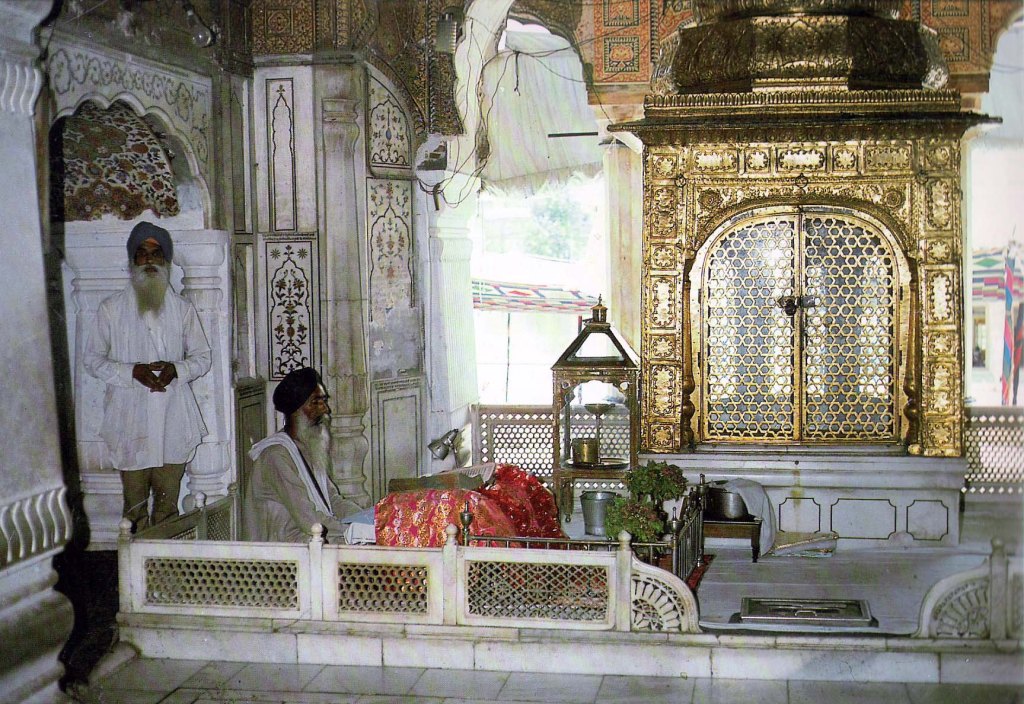
Sikh Altar. Courtesy: Creative Commons

On Sangrand, Sardar Ratan Singh and his wife went to the Gurudwara with a bagful of marigold garlands in the morning. The canopy of the Lord would be bedecked with flowers of the season on the first day of the new month. The response was cold when he handed it over to the priest who walked a few steps to place it on the wooden table near the entrance door. The prolonged silence seeded doubt in Sardar Ratan Singh’s wife who asked him politely, “Any problem, Babaji?”

“The Gurudwara Committee has ordered flowers should not be brought inside the hall.  But I will do the job of decorating. Put these on the railings, the front part at least, and the rest near the main door. I will manage if the Committee members object,” Babaji assured the couple who brought these garlands with much devotion.

Sardar Ratan Singh was unable to figure out how the Gurudwara Committee, headed by the elderly, could issue such a guideline. Sardarni Simran Kaur was anguished to hear these words from the priest who was supposed to be the custodian of the Rehat Maryada, the code of conduct for Sikhs.

“The guideline goes against the Sikh tradition. All Gurudwaras are decorated with flowers during Gurpurab and other festive occasions,” Sardarni Simran Kaur asserted, with hope that this comparison would suffice.

Babaji endorsed her statement before reiterating his stand: “What you are saying is correct. I have myself seen that in many Gurudwaras. But I have to obey the Committee rules. I will do it today since you were unaware of the order, but next time onwards please do not bring flowers to decorate the Guru Granth Sahib. They will hold me responsible for breaking the rules.”

Although Babaji conveyed the rules of this particular Gurudwara, it was agonising to hear the outright rejection of floral service by devotees. Not the one to be cowed down, Sardarni Simran Kaur transformed herself into a warrior-spirited lady and made herself clear: “Thanks for being kind enough to allow this today, but the Gurudwara Committee has no power to frame such laws. I am going to bring flowers and garlands again and decorate the canopy myself. I would like to see how the Committee members gang up and stop me from doing this sewa (service).”

Babaji understood that the lady was determined to proceed with her plans. He stood with folded hands, with lowered gaze, with a humble request to reconsider the decision. Sardar Ratan Singh gauged the growing discomfort in Babaji who feared losing his job if he failed to execute the orders of the Committee.

Assuring Babaji that they would not drag him into the tussle with the Committee, Sardar Ratan Singh said, offering his visiting card, “You can mention my name to the Committee and ask them to have a word with me. We are going to bring flowers next month as well. If they charge you, just dial the number on this card and connect me to the Committee.”

Babaji was relieved he had their contact number to give to the Committee in case he was charged with dereliction of duty. Somewhat enthused by their confidence, a fleeting smile appeared on his sullen face. He carried the garlands inside the hall while Sardar Ratan Singh and Sardarni Simran Kaur proceeded to bow down before the Lord and pray for strength to stand up against injustice. Babaji began to decorate the front part of the canopy and specified to the couple once again that the remaining garlands would be used to decorate the entrance door. It appeared to be a risky exercise for Babaji to cover the sanctum sanctorum with flowers as he knew the members of the Committee would corner him in the evening durbar.

That is exactly what happened that evening when Sardar Ajit Singh entered the Gurudwara. Anger was etched his face as the garlands brushed against his turban. He cast a furious glance at Babaji who sat fine-tuning his musical instrument. After genuflecting before the Lord, Sardar Ajit Singh swerved around and hurled his first question: “Who brought these flowers?”

“Sardar Ratan Singh,” Babaji replied promptly without looking at him. He muffled his simmering anger with a tight slap on the tabla.

“Did you not tell him the Gurudwara rule?”

“I told everything but he gave me the phone number, to forward to the Committee if they objected,” Babaji responded while fishing out the visiting card from his kurta pocket and flashing it before his eyes. Sardar Ajit Singh hated English and he never read anything written in the Queen’s language. Babaji further added without losing composure, “Sardar Ratan Singh’s wife said she would come again with flowers next month.”

This nugget of information weakened the resolve of Sardar Ajit Singh who had a bad record of losing arguments with women. A couple of months ago, he threatened to drive out girls who spoke English instead of Punjabi inside the Gurudwara premises. Since he did readings from the holy scriptures every day, he exercised special authority and treated the Gurudwara as his fiefdom, seeking submissiveness from people to support the rules formulated by the Committee, based on his recommendations.

Despite being well-versed with Guru Granth Sahib, septuagenarian Sardar Ajit Singh showed no signs of understanding the true meaning of Shabad, the words of God and crushing his haume or ego. Since he hailed from a money-lending family which  had diversified into respectable businesses like travel and transport, he knew his brothers would support his decisions and the sangat, the fellowship, would never mess with those who wielded political clout and muscle power in society.

Showdown was unavoidable. The Committee would definitely object to what Sardar Ratan Singh was up to. Sardarni Simran Kaur expected the misgovernance phase to be over at the earliest – preferably through amicable discussions.

From reliable sources, it was gathered that Sardar Ratan Singh was relocating to Punjab. The Committee wondered whether it was better to avoid a conflict. Most of the members suggested a wait and watch policy. But the secretary and the treasurer were adamant that punitive action must be taken otherwise this would encourage others to flout the norms.

Sardar Ratan Singh noticed another shortcoming when Babaji did not offer the traditional karah parshad of flour halva after Ardaas, the Sikh prayers. When he asked for it, Babaji said with a tinge of regret, “The Committee stopped making karah parshad. Allowed only on special occasions.”

The cauldron was stirred once again as Sardarni Simran Kaur resumed the discontinued practice of preparing karah parshad in the gurudwara every day. Sardar Satwant Singh, who had become the Secretary five years ago, implemented this order and his acolytes rallied behind him in support. Being diabetic, many members of the Committee could not consume karah parshad. Babaji was asked to stop this exercise as the turnout was thin every evening. Though this excuse was not justifiable under any condition, the sangat was made the scapegoat.

It was a momentous decision in a Gurudwara but the Committee members harboured no guilt. The practice started by Guru Nanak had been discontinued by his followers here.

Sardar Ratan Singh and Sardarni Simran Kaur came with the necessary ingredients to the Gurudwara next week. Offering ghee, wheat flour, and sugar to Babaji, she said, “From now on, we would like to do karah parshad sewa every day, every month, every year.”

Babaji did not know how to react. This was the second instance in one month that made him nervous. Although devotees chose to prepare it for a day or two, this was a unique case where the couple wanted to take the full responsibility of sponsoring karah parshad for the entire year. Babaji realised this would be another provocation challenging the Gurudwara Committee. One individual was trying to revive a tradition that was suspended by the Committee. Since they were not incurring any expenses, they should have continued to stay out of it. But the pesky members would get curious to know who was behind the resumption of karah parshad.

“Babaji, use words like ‘Gurmukh parivar’(Gurmukh family) during ardaas instead of mentioning our name because it is not proper to highlight that while we perform a service for the community,” Sardar Ratan Singh requested the priest.

It was a valid ground to hide this secret. Babaji accepted the ingredients and specified the monthly quota of ingredients to be supplied henceforth. Agreeing to deliver the requirements, she said, “Since the Committee has stopped making karah parshad, we see no point in informing them about it. But we know they will interfere in this matter again. Just like flowers are thorns for them, this one is going to prick them as well. It is not our intent to antagonise them. But if they make an issue out of it, we are definitely going to oppose them again. You can convey this to the Committee head in advance.”

Babaji looked confident of handling this better. When he served karah parshad the next evening to all, he was very happy he was doing the right thing after a long time. The sangat got parshad and looked blessed. Sardar Satwant Singh took a small bit reluctantly and his wife asked, “Gurmukh parivaar who?”

Babaji pretended not to hear it but the question was repeated. Left without choice, Babaji had to disclose the name of Sardar Ratan Singh. The karah parshad was stuck in his throat now. Instead of saying anything to Babaji, Satwant Singh communicated through Vimal Rai.

Babaji got a call late at night. He felt like dropping the call because it was time to sleep as he had to wake up early for the pre-dawn prayers, the amrit vela. But he changed his mind and answered the phone call. The voice on the other side hollered right away, “If anyone wants to do karah parshad sewa, tell him the Committee should be approached first as we alone decide the quantity. Tell him to pay us the money and we will take charge of making it. It has to be done through us only. No direct sewa allowed. You should mention us instead of directly taking up such responsibility.”

Babaji got miffed this time and said, “How can I stop a devotee like that? You should call him and tell him all this. I cannot. Sat Sri Akal.”

The priest knew this behaviour would be read as gross insubordination with dire consequences. But he had restored full faith in God because he felt God had sent Sardar Ratan Singh with a definite plan. He was mentally prepared for the worst now.

When Sardarni Simran Kaur came in next week with the supplies, Babaji made brave effort to defend the Committee and test her resolve, “Avoid taking the trouble of bringing this every week and instead give the money to Committee to prepare karah parshad.”

She sensed some kind of agreement had been reached and the Committee wanted to take charge. “Is there any problem if we bring the samagri? We maintain hygiene and purchase from the best shops. Besides, I want to do this on my own, just paying money is not enough. We do not trust the Committee. Whether they would use pure ghee or not, whether they would save money and divert it. There is enough ground for mistrust an suspicion. It is quite possible they would ask you to mix Dalda (vegetable oil) with desi ghee or reduce the daily quantity after taking full money. The Committee that discontinued parshad sewa cannot be trusted with its resumption.”

Babaji heard the candid reply from the lady without saying a word. The Committee had indeed made incorrect decisions with brute majority and imposed the same upon the sangat who did not expect this would happen.

When Vimal Rai came for the evening durbar, he heard Babaji’s reply. “I told them to contact you, to give the Committee the duty of making of parshad but they refused. They said it is the duty of the Committee to make it themselves instead of seeking money from us to make it. This tradition is followed in all Gurudwaras across the country.”

Vimal Rai was upset to hear this valid point. He came with the desire of singing Shabad Gurbani but the notes of harmony were lost. He delivered a spiel as the Sangat was yet to arrive: “Why doesn’t he understand we are Committee, here to look after everything. Where was he all these years? Why does he emerge now and try to run a parallel system? You can tell him our decision is final and binding. In this Gurudwara, karah parshad will be made with our permission only. Warn him not to try our patience. We have been merciful but we cannot let this rebellion take root while we sat quiet and observe anarchy spread like wild fire.”

Harsh words flowed out instead of ambrosial nectar. The situation was spiralling out of control, reaching a flashpoint. If he conveyed his message in the same language, Sardar Ratan Singh would retaliate. When the couple came for morning prayers, Babaji conveyed bad news to them. It was the most important task he was assigned to prove his loyalty to the Committee. He tried to look the other way to make it less hurtful: “Actually, the Committee has made new rules and these do not allow me to prepare parshad unless it comes as an order from the Committee. The order came last mid-night. Please excuse me and understand I am working under the Committee. My hands are tied.”

Realising these were sacrilegious words, tears welled up in his eyes. He broke down and disclosed that he was planning to leave this place as his salary was delayed every month and he was never paid in full.

The couple had full sympathy for the priest as he was conveying the words of the Committee. “I do not understand what sadistic pleasure they get by delaying his salary and deducting money? He has a family to feed, kids to educate,” Sardarni Simran Kaur urged her husband to take note of this injustice. “Don’t you think the Committee has crossed the limits by misbehaving with the priest who serves Wahe Guru every day? Our silence would mean participation, don’t you think so?”

It was a fact that Babaji was not accorded respect. There were several such instances. They shouted at him for trivial reasons and dominated him as much as possible. The Committee had deviated from the path of righteousness. After listening to his wife, Sardar Ratan Singh assured Babaji, “Will pursue these matters but you do not think of leaving this place. Our ancestors built this Gurudwara and it is our duty to ensure injustice does not happen.”

Feeling encouraged, Babaji spilled the beans, revealing the recent case of theft. The donation box was emptied but the locks were not broken. This mischief pointed to the fact that the members of the Committee who had the keys played a role in it. Besides, there was no official complaint lodged. The large sum of money collected throughout the year just vanished. Not reporting such grave offences meant there was some kind of tacit involvement.

In the afternoon, after lunch, Sardarni Simran Kaur urged her husband to raise his voice, and he said, “Such issues will not get community support. Haven’t you seen how these members stand with folded hands in front of Sangat? Who will believe us? Babaji will be the loser as they will sack him and bring another one next month.”

Sardarni Simran Kaur highlighted these points in her group and specified salary deductions. “Why does he not speak up?” The headmistress of a primary school wanted to know.

“He is under their employment. He was promised free gas and electricity connection but he has to bear these bills every month.”

“I will discuss with my husband and let you know,” she assured Sardarni Simran Kaur.

“Just make sure Babaji is not involved otherwise he will be in trouble. My husband says men should quit and women members should form the Committee,” Sardarni Simran Kaur added, to make her feel enthusiastic about the slew of changes on the anvil.

In the meantime, Sardar Ratan Singh started gathering more facts from those who lived near the Gurudwara. The inside stories always help. He spoke with a senior lady who stayed beside the Gurudwara and she gave a true account of the events inside.

“Many things are not right here but there is nobody to object. All are businessmen and linked to each other and they do not offend the rich. That is the story. Small fish afraid of big fish,” she summed up the story without mentioning the names.

“That does not mean the Committee should have the freedom to commit wrongs and get away with it. There has to be some accountability,” Sardar Ratan Singh reasoned.

“Beta, we have lost faith and have accepted this as the reality. We go to Gurudwara, pray, and come back. No discussions. They change timings, set their own programmes as per their convenience and the sangat is never involved. There are many improprieties but it is useless to discuss these now,” she gave ample indications.  

The cashier of the Gurudwara entered the premises while they were discussing. He wished her a loud Sat Sri Akal intentionally while ignoring Sardar Ratan Singh. She quickly made her move as he would report this interaction to other members of the Committee. With the glut of information indicating multiple misdoings, Sardar Ratan Singh went inside and bowed before the Lord seeking the strength to set things right. When he came home, he thought of possibilities. The easiest way was to bring in changes unilaterally – without involving the Committee.

Next day, both of them came to the Gurudwara with three large crystal chandeliers to light up the aisle, along with an electrician who cracked open the false ceiling right from the middle to access the electric points and hang them firmly. The entire operation was done within two hours. Babaji observed the smooth execution in stunned silence. When everything was over, Sardar Ratan Singh called up the Pradhan, the chief of the Committee, from Babaji’s phone and introduced himself, “Sardar Ratan Singh calling. I have installed three chandeliers in the hall without seeking your prior permission.”

 
The Pradhan could not utter a single word even though he was keen to teach the rebellious Sardar a good lesson in the recent past.

“Do you have any objection, Pradhan ji?” Sardar Ratan Singh asked in a stentorian voice again.

“No, no, it is guru ki sewa. Every person has the right to do it.”

“Exactly, Pradhan ji. Hope you really believe so.”

Babaji took the phone and clicked pictures of illuminated chandeliers and posted them in the group of Committee members along with the name of Sardar Ratan Singh typed in the message box. Babaji was glad to see the flood of lights inside, the dazzling shimmer inside big gurudwaras was here as well.

Thrilled, he extended a personal invite: “Performing special kirtan in the evening, please be here.”  

“Ok, Babaji, we will come in the evening,” Sardar Ratan Singh promised, “and if any member of the Committee worries about the spike in electricity bill, I am ready to bear the extra charges.”

Babaji kept wondering that the Pradhan who spoke angrily had turned into a meek lamb all a sudden. God’s miracle? One thing was clear that the Committee members did not shoulder individual blame. They preferred to hide behind their collective might. Since Vimal Rai was charged directly, he chickened out despite the golden opportunity to lambast the rebellious Sardar.

The hall was packed with Committee members and their families who were looking at the dazzling lights and pondering over the inflated electricity bill. The Pradhan was informed by Babaji that Sardar Ratan Singh would pay extra for the electricity consumed by the chandeliers.

Such a lit-up Gurudwara they were seeing for the first time in the small town. The Sangat was happy to see these chandeliers inside the Lord’s abode. They were curious to know the name of the donor. Sardar Ratan Singh rolled off the priest’s tongue with pride and the Committee members looked down. By this time, Sardar Ratan Singh and his wife came in and bowed before the Lord and then proceeded to sit near the door. The Committee members sat close to the Lord.

Babaji sang two new Shabads with full energy and the Committee members looked around, asking each other in hushed tones how much these would have cost. The guessing game kept them away from God and Shabad Kirtan.

When the Durbar drew to a close, Vimal Rai and Satwant Singh smiled at Sardar Ratan Singh and exchanged pleasantries in front of the Sangat to cultivate their good image. Was it beyond their power to switch off these chandeliers forever? Should they formulate a new law to stop Sewa by individuals?  Every evening they would switch on the chandeliers and get dazzled by the glare. The name of Sardar Ratan Singh would flash before them.

The reaction to assert hegemony came in fast. The Committee suspended the services of the tabla player using the excuse that the turnout was poor. When Sardar Ratan Singh noticed that the tabla player was not coming for more than a week and Babaji had to face difficulty because of the missing accompanist, he posed this question to Sardar Satwant Singh in front of a sizeable crowd, “Why did you stop the tabla player from coming in the evenings?”

 He was not expecting to be charged in this manner in front of so many people. He looked at the faces of his team mates but they were not willing to rise up in his support. He delivered whatever came to his mind in his ruffled state of mind: “The sangat does not come regularly, no use wasting resources that should be put to better use.”

“The sangat is blamed for everything. You stop karah parshad, the sangat is blamed. You don’t want flowers inside. What is going on in this Gurudwara? Rules are made to break rules. From where does the Committee learn this audacity? Even if one person comes to Gurudwara he should get karah parshad, he should get to hear kirtan. With all modesty, I am ready to bear the salary of the tabla player if the Committee cannot afford. But make sure he is hired soon. And if you want to do good, hike the salary of the priest so that he can engage an expert to train his son to play the tabla with him daily.”

Vimal Rai inched closer to Satwant Singh and pulled his arm. There were women who got to know many startling facts. The Committee was exposed in front of the Sangat for the first time in years.  

Vimal Rai cut in politely, “We will look into the matter and respond soon. Many charges were pressed against us, but it should not have happened. We are elderly and deserve respect from the younger generation.”

Satwant Singh and Vimal Rai went near the garage to have a brief meeting. This open mutiny meant this man had to be reined in somehow otherwise they would face further insults and all their misdoings and misuse of power would come out in the open.

Sardarni Simran Kaur tried to explain certain facts to women but the wives of the Committee members formed a separate group. The split was clear. How this face-off was going to pan out? Whether the priest would lose his job, whether the Committee would get stricter now? Speculations were rife.

The Committee decided to hold a Durbar with snacks and tea on Sunday mornings with the hope that this session would fetch big crowds. It was also an attempt to mobilise the crowds and keep up appearances. After Sukhmani Path, the prayer for peace, snacks like samosas and jalebis were served. But the turnout was not as expected. The next month, the Committee decided to hold langar every week. They hoped this would surely bring in more sangat. Even this bait was a damp squib.

Finally, the Committee started wondering why these arrangements failed to draw large crowds. Was it God’s will that the sangat would not be impressed with whatever the Committee did? Was this a retribution for their misbehaviour with Babaji in the past? The Committee ordered that more members of each family participate and that the appeal of the Committee should be honoured by the entire community. Forwarding messages was suggested as an effective way to make the sangat aware that the Committee was indeed doing a lot.

Sardar Ratan Singh continued with his makeover exercise. He donated chhatars to decorate the canopy. The gold and diamond plated pieces looked wonderful. When Sardar Ajit Singh came to pray and saw the chhatars, he was livid and charged Babaji with gross negligence, “The canopy cloth must be damaged with piercing in several places. Who will pay for its replacement?”

“Sardar Ratan Singh has said he would donate a new Chanani next month,” Babaji said coolly. He was inside the Gurudwara otherwise he would have grabbed his neck for uttering that vile name. Sardar Ajit Singh did not sit for Chaur Sewa and stomped out of the hall.

Sardar Ratan Singh and his wife continued making visible changes inside the Gurudwara and the Committee was irritated by all the new installations without their consent or permission. Sardar Ajit Singh turned competitive and donated three chairs for the elderly. Sardar Ratan Singh matched this move by placing three velvet cushions on the chairs. Babaji was given a new comfy mattress with frills on the bed cover for the wooden diwan where he sat for Kirtan every evening. Sardar Ajit Singh was miffed but he could not say anything. He kept asking himself: Why is this man after us?

In less than three months many things underwent changes and the Committee became jittery about losing control. It tried to do new things to win the trust of the sangat. But the sangat had seen this Committee for years and the sudden switch to action mode was not difficult to comprehend. It was clearly to suppress the dissident Sardar Ratan Singh, who enjoyed the support of the sangat for the makeover that made them feel good. Besides, they were happy that a single person had stood up and fought against the Committee. All the energies were invested in the task of painting Sardar Ratan Singh as a villain who did not respect the senior members of the Committee. Sardar Ratan Singh and his wife had quietly overturned their rules and set new things in place.

The pipe of the wash basin was broken. It remained like that for months but now it was replaced quickly. Satwant Singh approached every single member to seek feedback regarding the efforts to spruce up the Gurudwara premises. The cashier was engaged with the task of collecting more funds.

One evening, they planned to approach Sardar Ratan Singh for monetary assistance as he was spending a lot on the upkeep of the Gurudwara. His response took them by surprise: “I am doing sewa for the Guru and that is all. I do not intend to pay money to any Committee.” His refusal to shell out big bucks inflamed them. Sardar Ajit Singh went ballistic, “We are committee members and you do not acknowledge us. The Gurudwara is under our control.”

“Yes, the Gurudwara is under your control, but not the Lord. How can you stop us from doing sewa? What kind of devotees you are? Are you Sikhs?”

They chickened out one by one without answering him. It was clear the Committee would make it a rule that Sardar Ratan Singh would not be allowed to do sewa on his own.  

Next morning, a big truck with marbles arrived, followed by sand and cement bags. A team of masons arrived within hours. The Committee was challenged to stop him when this process started. Sardar Satwant Singh and Vimal Rai were asked to be present.

“You have to answer an important call from Amritsar. Come to the Gurudwara,” Sardar Ratan Singh called up the Pradhan using Babaji’s phone.

Satwant Singh and the cashier came along with Vimal Rai to boost his morale. The cashier was asked to answer the phone but ultimately the Pradhan had to connect.

He heard a faint voice from the other side in Punjabi seeking confirmation they were Committee members. The name of Sardar Ratan Singh was mentioned and the proposal to send a representative was conveyed to the Committee head. Vimal Rai could not muster the courage to seek identification of the caller or press for the purpose behind sending a representative. But he understood he was some authority and the representative was coming here to look into the affairs.

Vimal Rai stared at Sardar Ratan Singh for going this far. He informed his friends that an authority was coming here soon. Satwant Singh and the cashier looked worried about the external interference. Sensing that difficult times were in store now, Vimal Rai sought relief on health grounds and tendered his resignation from the post of Pradhan.  

Within a week, a senior person arrived and asked specific questions about the management of the Gurudwara. Babaji was asked to explain fearlessly and he disclosed how the Committee was mishandling everything. Based on the facts shared, it was clear that the Committee could not answer many questions. So, the visitors recommended dissolution of the Committee and the formation of a new one.

Many women wanted Sardar Ratan Singh to be the new Committee head, but his wife, Sardarni Simran Kaur explained, “We do not want power for ourselves. My husband hates it. But we would certainly like the Gurudwara to be managed by true devotees who pray, do the Nitnem, understand Baani, and lead honest lives.”

The task of finding such devotees was not Herculean as Babaji had already shortlisted two women who did Sewa with selflessness. They were made the joint heads of the new Committee and it was hoped the Gurudwara would not be mismanaged henceforth. Sardar Ratan Singh and his wife were now relieved of the tension.

Babaji was asked to make karah parshad every day and the diwan had to be florally decorated. A new tabla player was hired and the durbar was now teeming with devotees. Many people who had stopped coming to Gurudwara after a former priest was manhandled by a son of the Committee member were now back in full strength.

Satwant Singh, Ajit Singh, Vimal Rai, and the cashier also resumed regular visits to the Gurudwara. But they sat aloof, huddled in a corner. Stripped of power, they were now ordinary sangat who did not have the right to order other people to do sewa.

Sardar Ratan Singh and his wife would be leaving for Punjab from Bengal forever, and so they hosted a langar in memory of their parents. There was a huge crowd on the day of langar. A big change was introduced. The newly-formed Committee allowed the poor people to come in and sit beside the well-off people in true Sikh tradition. Without any discrimination of caste or status. The closed gates of Gurudwara Khalsa Diwan for the poor on langar* days were now thrown wide open.

*Langar is a communal Sikh Kitchen which feeds the poor and rich alike.

.

Devraj Singh Kalsi works as a senior copywriter in Kolkata. His short stories and essays have been published in Deccan Herald, Tehelka, Kitaab, Earthen Lamp Journal, Assam Tribune, and The Statesman. Pal Motors is his first novel.  


PLEASE NOTE: ARTICLES CAN ONLY BE REPRODUCED IN OTHER SITES WITH DUE ACKNOWLEDGEMENT TO BORDERLESS JOURNAL. 
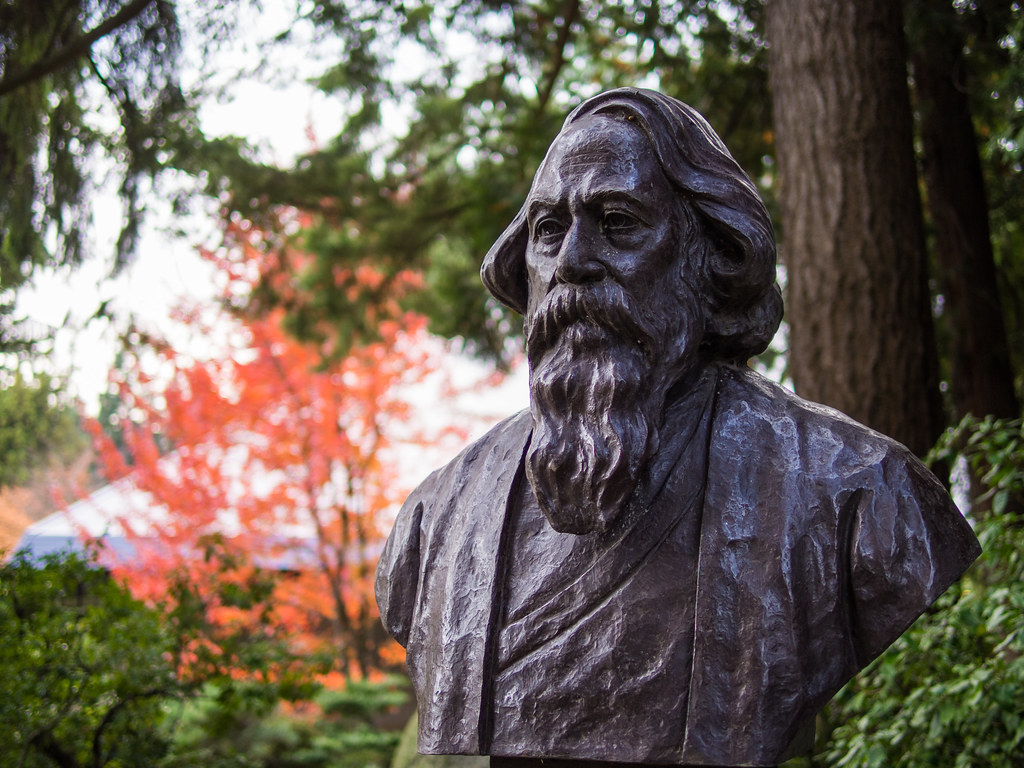
                                  

Categories
Poetry

Lines from the Riverside

By J.D. Koikoibo

DRAPETOMANIA*

We have no desire to stay in
this your plantation
of modified minds;
our desire is to cause disorder
in the order of your faux Deity

the cornrow of our hearts
will lead us home
and the seeds planted before
you shipped us across several seas
will sprout and feed
the unborn seedlings

Fingers, unlocked
from those of Fear
Mental chains, succumb
to the pull of umbilical
cord and placenta
planted in the holy place

Call us madmen
as we walk
home with the Great Spirit

We have no desire to return to
the slavery of your Deity;
we are home with our people
making threads of our hearts
to sew the loose fabric of Love.

*In 1851, American physician Samuel A. Cartwright hypothesized that Drapetomania was a (falsely) supposed mental illness as the cause of enslaved Africans fleeing captivity. Cartwright said the Deity's will was to make the negro "the submissive knee-bender" to white slave masters.

Dieworimene Koikoibo writes by the riverside.

.

PLEASE NOTE: ARTICLES CAN ONLY BE REPRODUCED IN OTHER SITES WITH DUE ACKNOWLEDGEMENT TO BORDERLESS JOURNAL

Categories
pandies' corner

Children of Nithari: A Will To Be Human

Based on a real life story by Sachin Sharma, translated from Hindustani by Diksha Lamba

Sachin Sharma joined the pandies’ workshops when they started there in 2006 and has been among the most consistent ‘performers’ there. He calls himself a dreamer who harboured a secret desire to be an actor as a child. He found an English word to describe his shyness when he joined the school run by the NGO, Saksham, in 2003 — “introvert”. The support of the two organisations helped him survive the difficult times following the Nithari pogrom. He resolved to not give up on his passion for the arts while doing what was necessary, financially, to aid his family. His family also encouraged and supported his interest in acting and singing. The onset of the pandemic left him unemployed as the company he worked for shut down under economic losses brought on by the lockdowns. He used that time to finish a Masters’ degree in English Literature. He sings Haryanavi songs along with his elder brother and works for a multi-national company at present. He is also pursuing a course in Event Management as that area would combine his passion for acting and entertainment with the capability to earn for the family. 

A Will To Be Human

In this world brimming with desires, humans have high expectations from life. Some look up to others, some to God and some look within to find the human strength and courage to achieve those. All of us do know that in this world full of hopes and desires no one has it all. 

This is a story of the human will to resolve to find happiness and purpose in life despite many hardships. Here we have a boy who was dealt a bad fate, you could say, because of a disease but it was made worse by a human error, yet he refused to accept defeat.

Ankit was born in a small village called Nithari in Uttar Pradesh to a middle class family. In this village, which sat uncomfortably as a necessary evil in the heart of Noida City, children are born with desires higher than the skyscrapers and malls towering on top of their village and desires deeper than the overflowing drains and sewage pipes under their feet. 

The fragrance of freshly made sweets greeted the guests who had visited the family to welcome Ankit into this hardened world. Ankit’s family could not stop smiling and distributed gifts and clothes to near and dear ones. These smiles would be wiped off their faces soon. Small villages like Nithari are treated as necessary evil by the encircling city.  The children born here have as precarious an existence as the village itself. They may or may not find the right kind of medical care at the right time. 

At the height of festivities and celebrations, Ankit’s body started to burn with high fever. He was immediately rushed to Mandiki hospital where the doctor, unfortunately or just out of sheer habit, was not on duty. A compounder (close to quacks with no medical education) gave Ankit the wrong injection in doctor’s absence. Polio preyed upon Ankit’s small body and he lost the use of both his legs. This resulted in a lifelong dependency on crutches. 

The family felt crushed with helplessness. The government’s polio awareness campaign had not yet crossed the residential complex across the street to this village yet. The cramped lanes and the aroma of overflowing drains make it harder for public awareness campaigns to reach such small places. This smallness was not to define who Ankit would become as he grew up. Such is the strength and power of the human desire to live and to live with dignity. 

When Ankit started school, he made many friends. They were supportive and sympathetic about his situation. The thought that he could not jump around and play like other kids in school kept nagging Ankit. He gradually resigned to what fate had in store for him. Something else – that was more powerful – also grew out of his handicap. He started focusing on the talents he did have. His heart and mind took up the challenges life had strewn in his path. 

Even when he was just a child, Ankit had a sharp mind and a keen interest in sports and education. Unable to play with friends, he spent most of his time studying. He earned a postgraduate degree and simultaneously started to work harder on his interest in music.

He made it a point to spare enough time from his hectic coursework to practice music at home with his younger siblings. With a desire to establish himself an artist, he picked up musical instruments like dholak (drums) and harmonium, and started singing. 

He managed to take long strides ahead with his brothers by his side. He made considerable progress day by day and released his first Haryanavi song on YouTube along with his younger brother in 2018. The song received much love and appreciation online. Ankit has never looked back since that day. He carries on singing. Many of his songs are played during wedding festivities and are famous on YouTube.

Ankit’s will power had the courage to change his weakness into his strength. This story is about all those people who find their inner strength when life gets tough. People who accept defeat should take inspiration from Ankit’s story. If you are willing to work hard, it is possible to make a mark in this world. 

This is my elder brother’s story. You can find this name, Titu Sharma Nithariya, on any social media platform today. The boy fought against hopelessness and followed his passion against many odds to start his own company, TSN Records. I write in the hope that, like me, you will find inspiration to dream big even in moments of crisis. My brother has been my inspiration and both of us have decided to contribute to the world of singing. We hope to inspire others through our art.

Diksha Lamba is among the senior members of pandies’, having over 15 years of experience of performing (acting and workshopping) for the group. Coming from a background of studying and teaching English Literature, Diksha is now pursuing Law and teaching a course module of Theatre and Law at NLSIU, Bangalore.  She has been associated with Saksham, Nithari from the time that pandies’ started working there and has a 15 year association with the place and with Sachin.

.

PLEASE NOTE: ARTICLES CAN ONLY BE REPRODUCED IN OTHER SITES WITH DUE ACKNOWLEDGEMENT TO BORDERLESS JOURNAL