they have drawn epistles, narrative cannonballs, dispatched correspondence and reprints

prose before puberty what place would you want in the future..?

Having drawn from many artists, poets, scientists, eccentrics eventually falling into your own house of writing, now I ask how to sit properly or eat before using the cutlery? Am I entitled to this family?

I read books given to me, bought for Christmas and ones I bought myself for true keeps.
Lots were passed down from my older sister Danielle the year I turned 13; the early 70's.
Woman of the Future by David Ireland. I was given this by Danielle with the words, 'this book reminded me of you '.
Althea, the protagonist with a brain full of ideas and the body of the androgen, metamorphosis into a leopard near the end. Besotted I was, I imagined Althea around the places I played. She walked with me to school and stayed with me until I  layed on the grass later in the year, with a new fascination; The Interpretation of Dreams by Freud.  Given to me for my 13th birthday my grandma asked me what it was I liked so much about Freud. I think she thought I was too young to be reading such a controversial composition.
Carefully recording my own dreams, pen in hand, I held a ton of notes in a scrambled batch of excercise books.
My bedroom was strewn with paperwork and pictures of favourite artists. My school work lay around somewhere. I knew how to find anything in a split second.

Oh teachers of the plain high school I attended. I'm sure you meant well but you had a hellraiser on your hands not to mention one up and coming intellectual who was also an existentialist. I wrote an essay on the subject and the teacher didn't believe that I had written it, accusing me of plagiarism. I swore black and blue that I didn't but he gave me a 'D'. Other teachers weren't so hasty in their appraisal, knowing fully well that I was a special case, either doomed for failure or going places with the mind of its own. Right, wrong.

Grieving for years I drank my heart out, writing songs that succeeded traditional melodies using chromatic scales as a base for a tune. I was onstage, my only home. Reality didn't interest me; writing songs about my predictions did. And I was always right. The psychic nature of mine was always accurate.
And so on until I died.

An autopsy revealed that I had consumed a number of barbiturates, heroin and cocaine. My stomach had swollen to the highest value. So I was cremated, indeed the first fire I had ever been to. No, the second.

Once I was running out late, my ex husband following me. As I turned the corner I saw a huge amount of smoke coming from the chemist store. I ran into it, engulfed by fire all around me: burning hell. It looked so strange, like an orange sky lit up for Guy Fawks Night. Quickly I ran across the street without seeing him again and back at home, my clothes worn and black.
For pennies, opals, amethysts and Onyx, my black queen you are the devil and dance of Eden. Fantasy of becoming someone, something, to look for the next new free styler is a hard department at all times. Open only at certain times. It takes luck to know when. Capacity full they say. Not true.
All welcome at the house of fame and glory.
Black Queen knows.
Mimi Bordeaux likes drinking coffee and smoking cigarettes in Melbourne Australia. She writes dark prose and hybrid poetry.
.
PLEASE NOTE: ARTICLES CAN ONLY BE REPRODUCED IN OTHER SITES WITH DUE ACKNOWLEDGEMENT TO BORDERLESS JOURNAL
In 1967 the US Supreme Court decision Loving v. Virginia, ruled that blacks and whites had a legal right to intermarry. Between 2000 and 2010, the number of white and black biracial Americans doubled, while the population of adults with a white and Asian background increased by 87%. (Pew Research) “horizontal hostility” describes black mixed-race experiences of societal black rejection, and how this perception of ‘(in)authenticity’ impacts self-perception and the expression of ethnic identity.
Recently something that happened to me personally that segued into a greater story of biracial identification in America. I have lived in four countries in my life so far and nowhere has racial identity been as contentious as in the USA. When The Queen died, like many others, I did a post saying ‘Rest in Peace’. I am by no means, a Monarchist but serving for 70 years felt like an impressive feat. I was immediately jumped on by a few who felt I was a pro-colonialism and “white privilege oppressor”.
As a psychotherapist, I often bite my tongue and do not express myself when others are insulting or being triggered. I have grown to respect the value of doing this, because too often it inflames things when we say anything to clarify or defend contentious subjects. However as this was posted publicly, I had to clarify. My point is not about what happened to me, but about the assumption that individual made in calling me a “white privileged oppressor.” Likewise, assuming I am white.
If people of colour decide the degree of melanin in another’s skin represents their race and culture, this will only end up emulating what was done to people of colour by white-skinned racists. Two wrongs do not make a right. It is something that comes up a lot as we discuss what it means to be a person of colour. African-American presidential candidate Ben Carson accused President Obama of not being able to understand “the experience of black Americans” because he was “raised white”. It is more common for those mixed-race than a singular race to fail to ‘please’ either side.
Just ask celebrities like singers Mariah Carey or Shakira who have struggled with this their entire lives. Or singer Lenny Kravitz (Black, Jewish, and Native American) who is quoted as saying when he had to fill out the ‘race’ sections on school forms, “My great-grandmother’s Cherokee Indian. My father’s a Russian Jew. My mom’s Bahamian. [I thought], ‘what the hell do I put on this thing?’ The teachers came over and [said], “Black. That’s what you are.” And so, so many parts of your heritage are just squashed. ‘That’s it.” (Huffington Post, 2013). Obviously if you can ‘pass’ then you have that attending privilege. Where I live about 70 percent are Hispanic and only recently there is talk of ‘white’ Hispanics versus ‘brown’ Hispanics, which goes back to the caste system in countries like Mexico, where historically the darker you were, you’d be considered serving class because you were more ‘Indio’ and if you were lighter, you were considered more Spanish. Ultimately these sub-categories seek to further divide people rather than describe them.
Fortunately, this racist tide is beginning to turn as people understand skin colour should never confer privilege even if historically it was warped to do so. Perhaps like any culture, there is a desire to stand out from the average, so anyone different may be admired more, if you are lighter than average, you may be admired more (or less), and vice versa. Ironically in countries like England, Canada, France, Germany etc., if you are darker skinned, you are considered more attractive and admired for being darker skinned, in countries where everyone is trying to tan and become darker. So, we have two polar opposites, parts of Asia where women may even bleach themselves to be lighter, and parts of Europe (and America) where people may literally die to tan.
In this day and age, so many of us are ‘mutts’ meaning we are so mixed; we carry Black, Asian, European, everything. But we’re still striated into colors because of racism and casteism. They are not the only reasons, it’s also about how we identify and how others identify us.
“Individuals who do not fit monoracial categories may be oppressed on systemic and inter-personal levels because of underlying assumptions and beliefs in singular, discrete racial categories” (Johnston, Marc P, and Kevin L Nadal. 2010. “Multiracial Microaggressions: Exposing Mono-racism in Everyday Life and Clinical Practice.”). I was assumed to be Anglo because I look it, so as far as others were concerned, I cannot understand the experience of being of colour because I don’t have any colour. Even if I were married to a person of colour with children of colour and my parents were of colour, it would be about my individual experience. But the flaw lies in assuming we can have an individual experience. We can’t. We are moulded by our family and our ancestors and whilst some of us may not know where we come from, DNA testing makes it more possible. This should alleviate some of the worst racism, but it hasn’t. Both sides seem further apart than ever before.
Author and activist James Baldwin defined his stance thus: “he was a Negro by choice and by depth of involvement–by experience, in fact.” Meaning, even if someone did not ‘look’ black if they were, and identified as such, they were. The one-drop rule is a long held legal principle of ‘racial classification,’ prominent in the 20th century United States. It asserts any person with even one ancestor of black ancestry (“one drop” of “black blood”) is considered black. Before the American Civil War, free individuals of mixed race (free people of color) were considered legally white if they had less than either one-eighth or one quarter African ancestry (depending on the state). Equally during slavery in America being born to an enslaved mother, made them automatically enslaved from birth. Racial integrity laws have existed throughout time with different groups and are essentially used to oppress a particular group. In theory they could be easier to enact now, given DNA testing.
Ironically, I have more blood of ‘colour’ than many, who if we were in a photograph together, would be assumed to be of colour, whist I would not. Which is understandable, but what is not understandable is when people deny mixed-race individuals their identity in seeking to label them or condemn them for being able to ‘pass’ ethnic groups and racially distinctive groups vary but can also be the same. Respecting someone’s ethnicity and race are necessary in order to avoid becoming as bigoted and discriminatory as the past.
When George Zimmerman fatally shot Treyvon Martin, he was called a ‘White Hispanic’ for three reasons. One he was light skinned. Two his last name was a non-Hispanic name. three, he shot a black child. It was an example of the media manipulating the truth in order to make Zimmerman more of a racist seeming person. Perhaps Zimmerman is just a bad racist, or maybe he would have shot a kid no matter their skin colour, we may never know. We know Martin called Zimmerman racist things like ‘Cracker’, but since society says a person of color cannot be racist then that was not considered. Whist most of us hopefully want violence against young black men to end, we shouldn’t deny that much violence toward young black men is perpetuated by young black men. Lack of opportunities seem to kill young black men as much as racism but maybe the two are the same thing, coming from difference directions.
What we can say is our society hasn’t given young black men chances and that can lead to increased temptation toward crime or violence. Surely if a young black man is shot for simply walking down a street, nobody should justify it. Just as with Brianna Taylor and so many innocents, killed for the colour of their skin. However, we should be able to make this argument without turning the perpetrator into a white man when he was not. It is a classic example of manipulating the truth in order to make it more about racism than it may have been. Or it was purely about racism, but if two people of colour cannot be racist then how can it be? There are so many issues here what we do know is two wrongs don’t make a right.
Pew Research has found most Americans who are mixed race, identify with one race (61 percent) because they ‘look’ like that race. Which points to how we look as continuing to be the determinant for racial identity even if it’s inaccurate and often leaves people feeling they have lost half of their identity The survey also found that the way people may describe their personal racial background does not always match the way they think others see them. “Six-in-ten Americans with a white and black background (61%) believe they are seen as black; only 19% say they would be seen as multiracial (an additional 7% say they would be perceived as white only). The shift is happening, case in point, Rachel Dolezal, who was the head of the local chapter of the NAACP and identified herself as African-American. But her Montana birth certificate said she was born to two Anglo people. Dolezal earned a master’s degree from the historically black Howard University in Washington, D.C., and was a professor of Africana Studies at Eastern Washington University. Her contemporaries assumed she was African American. It shows that whilst for many years, people with black heritage may have sought to deny it, now some Anglos seek to be black.
One of my best friends had a red-haired white mother and a Jamaican father. She was 70 percent ‘Anglo’ because her Jamaican father was not entirely black but mixed race himself. But she ‘looked’ black and identified as black whist her brother looked white and identified as white. Which are they? Is identity sufficient to say? Or how others perceive us? I can say I’m mixed race but if I tell people I’m a black woman or a Latin woman I might be laughed at because I don’t look like I am. Would it even be right to say so? What is right? It depends upon whom you’re speaking to. These are reductive discussions of identity that parody race and don’t allow individuals to say who they are.
My siblings could look black whilst I could look white, it can leave people feeling like they have racial imposter syndrome where a person feels they are appropriating a culture that actually not their own! If we feel liminal like we drift between cultures but belong to none, isn’t that often because of the stereotyping that goes on even within cultures as much as without cultures?
I’m Jewish but I do not believe in God, nor do I go to Temple, so when I have tried to join Jewish writing groups, I have been shunned as not being Jewish enough. When I worked for a Jewish organisation, I was considered Jewish, but I was the ‘wrong’ kind of Jew because I was Mizrahi and Sephardi rather than Ashkenazi. In other settings, I wasn’t brown enough to be considered a Mizrahi or Sephardi jew. The absurdity of all the micro aggressive ways a person can be catalogued or disqualified wasn’t lost on me. It is worse for some who are more obviously mixed race but don’t possess whatever that group demands for admission but are also racially attacked by other groups. For example, what does ‘you act white’ really mean? That you are not speaking with the right accent, or that you should know another language or wear different clothes or? My other friend is constantly told she is not Latina enough because she has no accent, and her Spanish is perfect rather than Tex-Mex and she likes to eat Indian food. Does one group have more of a ‘claim’ to being of colour?
Candice Louisa Daquin is a Psychotherapist and Editor, having worked in Europe, Canada and the USA. Daquins own work is also published widely, she has written five books of poetry, the last published by Finishing Line Press called Pinch the Lock. Her website is www thefeatheredsleep.com
.
PLEASE NOTE: ARTICLES CAN ONLY BE REPRODUCED IN OTHER SITES WITH DUE ACKNOWLEDGEMENT TO BORDERLESS JOURNAL.
Traigh Beach lies on the west coast of the Scottish Highlands, and from it you look out towards the islands of Eigg, Rhum, and Skye; you look out towards sunset.
It’s a beach I know well, for an outsider. I’ve visited it, probably on average more than once a year for the past forty years, and once or twice in the decade before that. I have written poetry on it. But as often as not, I’ve passed it on my way to another beach a couple of miles up the coast, and that beach, forty years ago, was featured in a film that has become something of a cult movie.
I’m talking about Camusdarach beach, and about Bill Forsyth’s movie Local Hero[1], which starred among others, Camusdarach beach.
But there’s another tale, and in fact more than one, that has drawn attention to this little stretch of coastline. Published as a short story a further fifty years into the past, and by a writer who is now almost totally forgotten, L.A.G. Strong’s[2] tale ‘The Seal’ doesn’t name the beach, but one of its minor characters has a dog named Darach, with has no other reason to be there but to give us that clue.
And the beach is described — broom, dunes, the path along the burn leading in, never mind that view of Skye and the other islands – with picture postcard accuracy. It’s a simple but haunting tale of intimacy not quite achieved between the newly married George, clumsy, boisterous and totally obtuse and the contemplative, highly sensitive Rosamund. The first time I read it, I was thinking of Camusdarach long before the dog put in its brief appearance!
It’s a remarkable story, for its subtlety and its insights, but also for the fact that there is not a single word in it that would need to be excised for you to imagine it taking place, and having been written, in the last day or two. Equally, it could have been written, and again word for word, a hundred years before its publication over ninety years ago. That durability, of place as well as the story is astonishing, and both reassuring and daunting. If one of my stories managed such a feat of, well, transcendence, I would be very happy. It would also be possible to transfer Strong’s tale to just about any beach anywhere in the world over all that time by merely adjusting the names of people, places, and that dog, and the nature of the eponymous animal and the plants growing behind the beach. How’s that for universality? And curiously, the fact that you could do that makes it less worthwhile to do it! Strong’s story in its original setting could speak to us all from the day it was written and will continue to do so while people fail to connect.
Yet I’ve found remarkably little written about Strong. He was a prolific writer across several genres – plays, poetry, essays, novels, as well as the short story – but he’s one of those very good writers (based on the thirty-one short stories in this collection), that seems to have dropped out of our consciousness. How could I find out if this was indeed the beach he had in mind, and why did I want to?
I recently took a holiday cottage overlooking Camusdarach and spent most of a week staring at that view. It’s one of those special places that, in its continuous changes and in its unchanging certainties, holds the attention, day into night, night into day. I made sure to take my copy of Strong’s 1931 collection Travellers, in which ‘The Seal’ is included. I thought it would be good to read it, looking out to sea as Rosamund does in the story. And it was.
But I re-read the other stories too, and among them found the names of Arisaig, and Morar, villages a couple of miles to south and north of me respectively. I found also Glenan Cross farm – to which he pins a headless ghost, and which still sits a bare half mile away on the other side of the coast road — and the name of one the little islands lying just beyond the headland to my left as I read.
So, no biographical evidence, but there in the stories, the minutiae of place that tells me he knew it and implicitly, like me, loved it, though he would have been an incomer too.
And as I’m working on this piece, and dipping into the story, I notice with a frisson of recognition two more little details a few lines apart: ‘She crossed the road’, and ‘After the room at the farm’, which makes me think he pictured her walking the path from Glenan Cross, though he doesn’t name it here, and which I too walked only a few weeks ago.
I’m not a great fan of tagging an author’s biographical details to their writings. What a story means to them is their business, and what it means to me is mine, and the two need neither coincide nor influence one another, but to find myself in a place I know, reading a story set in that place and written by an author who knew it too, brought me a little closer, and not only to the story. Might I say that it heightened my sense of a common humanity and the shared experience of a story as timeless as a fine sunset?
[2] Leonard Alfred George Strong (1896 –1958), a popular English novelist, critic, historian, and poet, and published under the name L. A. G. Strong.
Mike Smith lives on the edge of England where he writes occasional plays, poetry, and essays, usually on the short story form in which he writes as Brindley Hallam Dennis. His writing has been published and performed. He blogs at www.Bhdandme.wordpress.com
.
PLEASE NOTE: ARTICLES CAN ONLY BE REPRODUCED IN OTHER SITES WITH DUE ACKNOWLEDGEMENT TO BORDERLESS JOURNAL
CORALS

Scuba divers lumber over the sand, the unwashed rocks, the algae water.
The bay showed odours of unwillingness.
At sun break,
One or two coconuts fell and made splashes
To deter us.
We lumber at dawn, flippers on shoulder,
Cylinders on back, the divers kit heavy;
We lumber, our hearts ingest what we’d experienced,
Our bowels anxious for new,
We lumber under seawater,
Careful not to touch or caress or be caressed
Knowing we can’t be corals.
Saranyan BV is poet and short-story writer, now based out of Bangalore. He came into the realm of literature by mistake, but he loves being there. His works have been published in many Indian and Asian journals. He loves the works of Raymond Carver.
.
PLEASE NOTE: ARTICLES CAN ONLY BE REPRODUCED IN OTHER SITES WITH DUE ACKNOWLEDGEMENT TO BORDERLESS JOURNA
Across from the Char Minar

You see how one butterfly
left us a trace of its colour,
before killing itself
on this busy street.

Here one thousand people,
one then the other
crossed and walked on
without even looking.

Any afternoon, when the sun
smiles like a white flower
on the head of the Char Minar,
just walk straight into his look.

It’s not so hard
to pour one look into
an ever-burning oven,
a house of molten sights.

Here where the butterfly forgot
its colour and flew off into the dark,
stay and stare straight into life.
Tell me how it looks.

The thousand people who walked,
limped, and ran by this road
told me at least a thousand lies
but in innocent tongues.

Another Word

At the end of crying out,
my word is a dwarf.

How long can I live on a dwarf?

The tear that sang before my beginning
never leaves me a gasp of shore.

I can’t become your sea or sky.

I am just a tearlet
beneath your eye.

The drop
that can swallow a desert.


In the Middle of the Poem

The line gasps, interrupted.
Quick gulp of silence.
Someone pants at the rear.

The road flies back.
A scene flits past,
along with the footsteps.
Silence has so many faces.

Someone walks on either side,
hazy, indistinct.
Someone sighs behind the shoulder.
The poem stops.

A Rain Lost in Hyderabad
1

Since there is nothing like evening here,
I just dream an evening
in every bit of my sleep.

When the trees erase their shades,
when the sky dries out its final sunshine,
a cold wave scoops me.

I rush to my nest and hide in its wings
before the dark night takes me.

2

Never know if this was raining since morning
or just began this noon.
The lives that unfurl in the noons
don’t know morning breezes.

Getting up past noon,
I realise the alarm was tired
of alarming me and sighed itself off.

I am best at reading time
in reverse.

3

I am the crooked one

who is born when all the rains and winters
lose their hope of moving.

4

Hyderabad is my altered self —

a dreamless sleep,
a sleepless dream,

awaking slipped under a nap.
(Excerpted from Evening with a Sufi: Selected Poems by Afsar Mohammad, translated from the Telugu by Afsar Mohammad & Shamala Gallagher. Published by Red River, 2022)
About the book
Evening with a Sufi: Selected Poems volume brings together, for the first time in English translation (translated by the poet in collaboration with Shamala Gallagher) the selected, and often groundbreaking poetry of the celebrated Telugu poet Afsar Mohammad, known for his trendsetting poetry and literary criticism in the post-1980s Telugu literary culture. Beside an erudite translator’s note from Gallagher, Evening with a Sufi also contains two in-depth essays on Afsar Mohammad’s poetry by David Shulman and Cheran Rudhramoorthy, plus an interview with the poet by poet and translator Rohith.
About the Author
Born in a small village in the South Indian state of Telangana, Afsar Mohammad now teaches South Asian Studies at the University of Pennsylvania. Known as a trendsetting poet and literary critic in the post-1980s Telugu literary culture, Afsar has published five volumes of poetry, one collection of short stories and two volumes of literary theory essays. Afsar is also a distinguished scholar of Indian studies and has published extensively with various international presses, including Oxford and Cambridge. He is now working on a translation of Sufi poetry from Telugu to English. He can be reached at afsartelugu@gmail.com
About the translator
Shamala Gallagher is a mixed-race Indian American writer, community college teacher, and mother to a preschooler. She is the author of a poetry collection, Late Morning When the World Burns (The Cultural Society, 2019), and her writing has been published in several literary journals, including Poetry, Gulf Coast, Black Warrior Review, and the Missouri Review. She lives in a hundred-year-old house in Athens, Georgia, USA with her family and cats.
I’m sorry, my Lord.

My poem is not your slave,
it’s a sickle with its head to the sky.

My poem is not a damsel timid in your moonlight,
it’s a tiger prowling in a shadowed forest.

My poem won’t be your grand constitution,
devoted to your happiness
at all costs.

-	‘Outcast’s Grief’ from Evening with a Sufi
Not all poetry can be read with the same eye or ear. Certain poems demand to be seen and heard on their own terms, offering to the reader their own canons of understanding and appreciation in imaging an idea that, through them, has just been born into thought. Afsar Mohammad’s Evening with a Sufi sets out to be one such thought-provoking book of poems.
A slim collection of twenty-six verses selected and translated from Afsar Mohammad’s extensive oeuvre in Telugu by Shamala Gallagher and the poet himself, these are existential political poems that are as theoretically perspicacious as they are urgent and astounding in their overwhelming sincerity. Like Eliot’s The Waste Land, Afsar Mohammad’s Evening with a Sufi aesthetically documents a difficult world, especially one criss-crossed with systemic hegemony, and bereft of equality. An engagement with these poems is a direct invitation to the reader to embark on an epistemological tour into a sharp symbolic landscape that encapsulates visceral records of social meaning.
The title, to begin with, itself upholds a strong symbolism. Its ‘evening’ bespeaks the twilight of civilisation, the personal-social moment of the unleashing of despair, and a decadent global landscape thriving on inequity and deprivation. And yet, evening, in these poems, is also the transitional period of awareness, self-reflection, evaluation, and the collective envisioning of an egalitarian dawn. These poems, therefore, become investigations and articulations of both fatigue and rest, of falling apart and re-gathering, and of old failures and new beginnings, leading us to look at the idea of the Sufi or Sufism anew.
“For me, Sufism is nothing but a tool of resistance,” avers the poet, indicating how Sufism, as a philosophy, offers a vigorous counternarrative to transnational policies and practices of discrimination, marginalisation, disempowerment and exclusion. “In my village Sufism, I see how people of diverse colours and castes share food, rituals and stories. As a village person, it’s not a far-fetched utopia for me — but an everyday reality. My writings are nothing but reminders of that shared realm of life.”
In Afsar’s poems, Sufism becomes a political as well as existential search for a vision of oneness. This vision is, at the same time, philosophical and social, local and global, integrating and intimidating in the way that most revolutions are – “The drop that can swallow a desert” (‘Another Word’) or “Where walls are knocked down,/ we won’t need the splendour of curtains” (‘The Spectator is Dead’) or “I always speak the language of war.” (‘A Green Bird and the Nest of Light’)
Identity surfaces as a significant theme in this book. Most of the twenty-six poems in Evening with a Sufi embark on a complex exploration of identity on geographical, cultural, social, historical or linguistic terrains. However, the book’s conceptualisation of identity is far from monolithic. Germane to the vision of these poems is the essentially dialogic space of identity and its characterization as an ever-contingent work-in-progress.
Mark the first poem in the collection, for instance. Titled ‘Name Calling’, an ambiguous phrase that poignantly addresses the phenomenon of naming as an act of use and abuse, the poem captures the essential seamlessness of names and identities. The protagonist of the piece is a boyhood contemporary called Usman who is visibly an ‘other’ to the speaker of the poem, the difference between them marked out distinctly in class terms and perhaps also (less evidently) in terms of physical ability – “You scared all the children/ away from the river./ A body like a wound/ peeks from your torn shirt.” It is, however, to this social pariah – “the one street dog doggedly haunted by a ball” that the speaker feels affiliated in his later life:
Now I don’t see much difference between you and me.
We are the same.[…]
Usman, times never change
only the roles change.
Muslim, Telugu and Third-world migrant, the poet reads the theory and experience of otherness on a number of sociological axes and through a variety of cultural lenses. In ‘The Accented Word’, he uses the idea of accent to explore the complex genealogies of language on the intersections of purism and cultural hegemony, contemplating variously, through the three sections of the poem, on linguistic integrity, capitalist subordination, and postcolonial erasure:
Words
are stillborn babies.

Their blood has gone bad with white poison,
their words have gone bad from the accent.

I’ve been poured, shared, and bathed in white poison
since I was little
and now I want to speak out for myself.

But my voice is in chains
and my language is poisoned,

and the language of my time is poisoned.

We live on the brackish water of life.
While Shakespeare’s Caliban in The Tempest felt that the colonizer’s language profited him by teaching him “how to curse”, Afsar’s poems approach language with utmost caution, forever mindful of the possibility of trampling and obscuring buried histories of domination and betrayal. Many of the poems, here, are metapoetic in their thrust, assiduously exploring the value of meaningful postcolonial poetic creation from the inescapable inequities and ideological loopholes of language: “a market piles up words sounding like poetry” (‘The Accented Word’) or “How long this slavery to white poems?” (‘Outcast’s Grief’) or again as in “Poetry: / just one dried leaf.” (‘Walking’)
In ‘A Piece of Bread, a Country, and a Shehnai’, bread, music, war and pain – all come together to avow our subcontinent’s shared heritage of poverty and cultural intimacy brutally shredded by politico-religious separation. In ‘No Birthplace’, the speaker of the poem is as much the Indian subcontinent as its hapless postcolonial citizen faced with the inability to reconcile its historical legacy of cultural plurality with the blind spots in its mythological and ideological machinery:
Come, divide me by myself, I say.
Not by forty-seven.

My laughs, screams, harangues, deaths, and rapes —
They’re all yours too!
It is interesting to note how Afsar’s poems consistently invigorate and socially translate the idea of spirituality through sinewy sociological imagery with the result that spirituality is transformed from a closeted and socially-indifferent personal practice to a welfare-oriented everyday social ritual. In ‘Iftar Siren’, the idea of fasting as self-purification is ironically brought to bear on the understanding of the hunger-stricken socially dispossessed as perpetually cleansed while the overfed victimisers walk about unconcerned:
What a great life.
In the holy month,

do you see how you are all becoming pure?
I’ve been like this for years

burning in the divine fire.
Unable to turn into ashes.

I’m a fire-pit you try
and try to stamp out.

Yes, the fire-pit
is tired too.
The haunting and incendiary metaphor of hunger as fire and the stomach/body as the fire-pit, tired of being stamped out or dispossessed, makes these poems powerful bandages for social injustices as well as flaming flags of protest. In ‘Qibla’, the posture of prayer, again, pivots on the stomach – “a belly turned deep/ into itself/ in which I obscure my body,/ feet, hands and everything/ for a long time” – suggesting the omnipotence of hunger as surpassing all acts of asocial faith. The poem concludes with considerable uncertainty of the efficacy of prayer and with an ideological pun on “arms” (arm/armament) as a means of erasing human hatred.
The stupendous yet composed energy of the book needs no forestatement. Every single word here is deftly chosen, well-placed, and tersely poised to make emotional leaps on command. The images are taut, the sentiments thoroughly grilled in the fire of creative originality, and everywhere, there is a sense of potential unruliness held firmly in check by a balanced and farsighted imagination.
In considering these poems, one must not forget, also, their complex linguistic history. Though translated from the original Telugu, the Telugu language itself includes, for the poet, “the entangled history of Urdu, Hindi and English — the languages that indeed shaped my emotional realm.” Arriving into English via such multi-layered linguistic travails and travels, these exceptionally well-translated poems infuse postcolonial English with a visceral depth, a spiritual profundity and a razor-sharp urgency that would be difficult to come by in the original English.
Accompanied by a very relevant author interview and insightful essays by the translator and valuable first readers of this collection, Evening with a Sufi arrives, in its essential philosophy and call for humanitarian action, with a new theory and praxis for the world, determined to reconstruct rather than redeem it.
Basudhara Roy teaches English at Karim City College affiliated to Kolhan University, Chaibasa. Drawn to gender and ecological studies, her four published books include a monograph and three poetry collections. Her recent works are available at Outlook India, The Dhaka Tribune, EPW, Madras Courier and Live Wire among others.
LINES WRITTEN AT NALANDA

The fanatics of every day and age
Are known to fear the inquisitive mind.
One such was Bakhtiyar who came to wage
A campaign of a very savage kind.
Here, witnessed by these time-encrusted walls,
A thousand helpless monks he set ablaze;
While o'er these hills a cloud of smoke so tall
Engulfed the skies that darkness reigned for days.
The knowledge of eight hundred years contained
In countless parchment scrolls, in flames was tossed;
And when the fires died all that remained
Was human ash and ash of wisdom lost.
     Today, a tale survives in these relics:
     Of mankind’s folly told in blackened bricks.
Sourav Sengupta is an architect by training and a human resource manager by profession. His poetry has been published in literary journals like Revue {R}évolution, Society of Classical Poets and Better Than Starbucks. He lives and works in Kolkata, India.
.
PLEASE NOTE: ARTICLES CAN ONLY BE REPRODUCED IN OTHER SITES WITH DUE ACKNOWLEDGEMENT TO BORDERLESS JOURNAL
“How about you throw yourself a sixty-first birthday party?” Alex asked me.
It was hard enough having thrown myself a milestone sixtieth the year before. That had been fun, so on second thoughts I decided to throw myself another party. This time I would just ask extended family and a few close friends. I had finalised the RSVP when the day before the party my old friend Madeleine sent me a text: “Do you mind if I come without Gary? He has a clash….” I responded saying that that was fine and was looking forward to her company. Madeleine and Gary were anti-vaxxers.
I rescued the fairy lights Alex had bought for my party the year before and fixed them above the blinds. We had to leave the blinds open because our border collie had destroyed many of them when she had been left alone inside one day. We prepared the food and drinks, and my sister Rochelle brought the birthday cake. All the guests arrived except Madeleine. The evening wore on and I was getting a little tired, but as our guests were mainly around sixty like me, or young children, they excused themselves just at the right time. We don’t have stamina these days for long nights out.
Only when the last of the guests had gone home did I check my phone. Madeleine had sent me a text message excusing herself saying that she wasn’t feeling well. I knew there would have been a good reason for her not to have turned up.
The next day my adult daughter Eloise texted me to say her younger sister Annika was feverish. I went to visit her and discovered that she was motionless in her bed. I gave her a RAT[1] test and the result was negative. She was too sick to move and so I booked a locum. The receptionist told me the locum would be there in four hours. I spent the next hours bringing her water, serving her medicine to reduce her fever and passing a cool flannel over her forehead. Four hours later the locum had not arrived. So, I phoned the receptionist.
“He only has seven more calls before you,” she explained.
It was nearly midnight, so I decided to go to bed and wake up when the doorbell rang. Within thirty minutes the locum had arrived. I took him upstairs to Annika’s room.
“The RAT test was negative,” I explained, thinking he would administer a second one.
“Negative is negative,” he demurred. “Open your mouth,” he ordered my daughter.
He probed his torch inside her mouth and made her say ‘ah’. Then without any further comments or questions he announced, ‘It’s tonsillitis.’
He wrote out a prescription and was on his way, after having spent just a few minutes examining her.
I spent the rest of the night administering regular medicine to relieve her temperature. Even though the doctor had pronounced tonsillitis I had my doubts and kept my mask on. Until I didn’t. Annika was finally able to walk to the bathroom and back and seemed to have recovered slightly.
I wasn’t sure whether I should return to Alex, just in case I had caught something, but he rang me and told me it was ok to come back.
“We won’t get Covid. We’re invincible,” I asserted to Alex.
He looked at me quizzically. “Anyone can get it. Even people like us, who are triple vaxxed,” he countered.
As the day wore on, I had an unusual sensation of the onset of a fever. Unlike his usual robust self, Alex started to sense a dryness in his throat.
“We’d better go and get a PCR test,” he suggested.
We drove off to the testing center. Within twenty-four hours the results came to our phones: ‘Negative’.
Over the next day I continued to sense the onset of fever and kept taking my temperature. The thermometer confirmed what I had been suspecting. It was rising. Alex and I decided to go and get another test.
We drove to the testing center later in the evening when it was likely to be less crowded.
“Have you had a Covid test before,” the nurse questioned.
“Yes, we have.”
“When?”
“Yesterday.”
The nurse looked surprised but administered the test anyway.
The next morning a different message came to our phones: ‘Positive’ followed by an admonition to remain in our place of residence for seven days. This was followed by a message saying that if we required online counseling for the stress this would be provided.
I had to tell the party invitees about the positive case. I texted Grace and Jeremy. Negative. Next my sixty-three-year-old friend, Sally: Positive. Next my sixty-year-old friend Katie. Katie was dreading a positive diagnosis because she was looking forward to a trip to Bali with her best friend. Positive. Katie canceled her trip to Bali. I was relieved that my anti-vaxxer friends Madeleine and Gary had not attended because it would have been much worse for them had they contracted Covid.
Over the next few days the temperature persisted and we felt too tired to do anything. This was followed by a sore throat so severe that we could not even sip a cup of coffee. I suddenly craved a smoothie and remembered a recipe a friend in Japan had given me when my children were toddlers. This was made by combining a banana, some milk, and slices of canned pineapple in a blender. I told Alex the recipe, and he substituted yogurt for milk. I suggested adding feijoas from the garden.
The result was something that even those with taste buds damaged from Covid could appreciate.
By Day Five our appetites had returned, and our taste buds restored. It was boring having to be confined indoors until the end of the week when we are not required by law to stay at home. It felt like the aftermath of a storm. I was grateful that the fever had gone and I could swallow again, but my body took days to recover from the shock it had had to endure.
Meredith Stephens is an applied linguist from South Australia. Her work has appeared in Transnational Literature, The Muse, The Font – A Literary Journal for Language Teachers, The Journal of Literature in Language Teaching, The Writers’ and Readers’ Magazine, Reading in a Foreign Language, and in chapters in anthologies published by Demeter Press, Canada.
PLEASE NOTE: ARTICLES CAN ONLY BE REPRODUCED IN OTHER SITES WITH DUE ACKNOWLEDGEMENT TO BORDERLESS JOURNAL
LEAVE TAKING

Brilliant leaves abandon
battered limbs
to waltz upon ecstatic winds
until they die.

But the barren and embittered trees
lament the frolic of the leaves
and curse the bleak
November sky.

Now, as I watch the leaves'
high flight
before the fading autumn light,
I think that, perhaps, at last I may
have learned what it means to say

goodbye.

(Originally published by The Lyric)


DAVENPORT TOMORROW

Davenport tomorrow ...
all the trees stand stark-naked in the sun.
Now it is always summer
and the bees buzz in cesspools,
adapted to a new life.

There are no flowers,
but the weeds, being hardier,
have survived.

The small town has become
a city of millions;
there is no longer a sea,
only a huge sewer,
but the children don't mind.

They still study
rocks and stars,
but biology is a forgotten science ...
after all, what is life?

Davenport tomorrow ...
all the children murmur through vein-streaked gills
whispered wonders of long-ago.
Michael R. Burch’s poems have been published by hundreds of literary journals, taught in high schools and colleges, translated into fourteen languages, incorporated into three plays and two operas, and set to music by seventeen composers.
.
PLEASE NOTE: ARTICLES CAN ONLY BE REPRODUCED IN OTHER SITES WITH DUE ACKNOWLEDGEMENT TO BORDERLESS JOURNAL
Blazing trails, as well as retracing the footsteps of great explorers, Christopher Winnan, a travel writer, delves into the past, and gazes into the future while conversing with Keith Lyons.
Chris Winnan in Shangri La. Photo courtesy: Chris Winnan
Christopher Winnan is a man of many hats. He has travelled widely throughout Asia, seeking out the latest breakthroughs and emerging technologies; with an uncanny ability to pick and forecast trends. As a travel writer and location scout, he’s explored off-the-beaten-track places; contributing to National Geographic and Frommers. When not consulting or publishing about Asia’s newest frontiers, he has an on-going fascination with past exploration, from the karst landscapes of south China’s opium trails to the ancient tea-horse trading routes across the Tibetan borderlands and eastern Himalayas. He writes on a wide range of subjects, both non-fiction and fiction, transporting guests to worlds old and new. Keith Lyons introduces us to the multi-faceted persona of Christopher Winnan, his past, present and future…
Tell us about growing up in the UK. When did you first get into writing?
The first paid writing gigs that I had in the UK were for top shelf men’s magazines, titles like Mayfair, Knave and Men Only. I was still too young to write the Readers Wives’ Real Stories, and so instead, I would pitch them bizarre subjects that they used as factual fillers. One I remember doing was a deep dive on the Scottish cannibal Sawney Beane, and another was about the Sultan’s harem in Constantinople. I used to find obscure books at the library on strange subjects and then compress them into articles. I may not have been Pulitzer Prize work, but the pay was good, and the work was steady.
Before you moved to Asia, what things did you do?
In the UK, I worked as a manager in a pet food warehouse, and I was one of the first casualties in the steady move to logistics automation. Just about everybody I worked with has since been replaced by AI and robots. I was not all that cut up because I had been working almost every hour that God sent, and the great boss that had originally hired me had since moved on a replaced by someone I could not get along with. I was happy to go, just to get away from him. Fortunately, I got a nice redundancy settlement, and decided to spend it on one of those round-the-world air tickets. I always thought that I would be back in twelve months and find another job. I would not have believed that I was never going back.
What first brought you to visit Asia, and where did you go? What was your first impression?
I heard about a big military parade in Seoul, and so I decided to make that my first stop. I was only planning to stay a couple of days before moving onto Tokyo, but an Australian at my guesthouse persuaded me to go for an interview at a local English school. I had never done a days’ teaching in my life, but they did not seem to care, and I was hired on the spot. I started work two days later. The school was a massive Hagwon[1], a cram school right in the middle of downtown. There were at least 300 foreign teachers, and about two-thirds of us were illegals, working on three-month tourist visas. Back in those days, the authorities did not care. South Korea was an Asian Tiger economy and everybody and their dog wanted to learn English. The Korean won was really strong against the dollar, and so we were all making bank. We would do three months on and three months off. During the down time, we would go off and explore other parts of Asia, and party like animals. Then we would come back and work like dogs for three months. I can remember that it was not long that I knew all the textbooks by heart and was teaching 14 contact hours a day, starting at 6am and finishing at 10pm. I had taught just about every class at least a dozen time so my prep time was minimal, and honestly, I loved every minute of it. The entire country was on a massive growth streak, and everybody had high hopes for the future. It was an amazing time. Eventually, I started dating one of the Korean teachers at my school. Unfortunately, she was not an ordinary local. He father had been an ambassador, she had studied at Oxford, and Papa was now the mayor in Korea’s second largest city. When he found out that his precious daughter was with a dirty foreigner, he hit the roof. The following Monday six immigration officers turned up at the office of my Director of Studies. They were all wearing long black trench coats and dark glasses and looked like the Gestapo.
“Tell us which classroom Chris Winnan is in. If you do not tell us we will arrest every teacher you have and close down the entire school.” Clearly, he did not have a lot of choice. I spent a couple of nights in an out-of-town jail and was then on a plane back to the UK. I was not too cut up about it, because at the time, Kim Il-sung[2] in North Korea, was jumping up and down threatening to turn Seoul into “a sea of fire”. A lot of the other teachers were desperate to leave but could not get out of their contracts. Anyway, it had been a good run. I had only planned to be in Seoul for three days, but I ended up staying for nearly three years.
And China, what was your first encounter like, and what made you decide to live and work there?
Like I said, we were doing three months on and three months off in Seoul, which gave us plenty of chance to explore the rest of Asia. Some places were just starting to open-up in those days. We went wreck diving in the largest WWII warship graveyard in the Philippines and ancient coin hunting in Cambodia. Cambodia, for example, was still a scary place in those days. The Khmer Rouge had only recently been ousted from power, and there were still UN peacekeepers everywhere. The markets were full of weapons, and much of the country was still off limits. We went down to Sihanoukville because we heard about an intrepid Frenchman was setting up the country’s first dive centre down there. When we went back three months later, he had been murdered by Khmer Rouge militants. We took the once-a-week train back to Phnom Penh and then just a week later, Khmer Rouge bandits kidnapped a dozen westerners and twenty odd locals off the very same train. Every one of them was executed and ended up in a shallow cave. That was a very close shave. If we had been travelling just one week later, we too would have been on this train, and I would not be talking to you now. Unsurprisingly, there were not a lot of other travellers at the time. Back in the capital, we met a Swiss who was smuggling looted artefacts out of places like Angkor back to Europe. Then there was the young Belgium kid who was trying to buy authentic Khmer Rouge uniforms. He was heading off to Battambang, which was the militants last remaining stronghold. We never saw or heard from him again.
It was dangerous but incredibly cheap. We met an American who had rented a massive nine-bedroom villa out of town for just a hundred dollars a month. It turned out he was a bit of an idiot though. He was petrified of being abducted and so he went to the Russian market and bought a load of land mines. He buried them all around the perimeter of his place, and then that night the monsoons rains came, and washed them all away.
When I was deported from Korea, I was still quite flush with cash and I had really enjoyed my teaching experience, so I decided to do a year-long intensive TEFL[3] course back at university in the UK. The course itself was a waste of time, far too academic to be of any real practical use in the real world, but I was one of the only native speakers, on the course so I had a wonderful time partying with teachers in training from all over the world. Even in those days, the universities were corporate money-making machines. My course had about thirty students and nearly all of them were non-EU residents, which meant that they were paying around four or five times as much we UK residents.
This was long before the influx of mainland Chinese students, but there were at least half a dozen Koreans and Japanese in my class. They could barely speak a word of English between them, but the professors were instructed to give them every possible assistance, in order that they would come back and sign on for even more lucrative Masters and PhD courses. The faculty would bend over backwards to help them and practically wrote their essays for them, while we English students were generally ignored. I can only imagine that universities are far, far worse now that they are full of rich tuhao[4] Mainlanders. At my university, there were only two Mainlanders in the whole place out of about 6,000 students in total, and they both looked as though they had stepped right out of the Cultural Revolution. They were more like a pair of North Koreans than the Chinese students you see today.
Their English was excellent, but they both wore Mao caps, and they talked as if they had come out of a time warp. They wanted to exchange stamps and discuss Marxism, while everybody else wanted to go down to the student union and get drunk. They must have had a tough time of it. Talking to them I realised that mainland China was about the only place in Asia I had not yet visited and so once I finished my course, that was where I decided to go.
What was China like when you first went, and how has it changed?
I initially went to Shanghai and worked at the very first English First language school. I soon saw what cowboys they were at that company, but fortunately, there was an abundance of work in Shanghai at the time, so I quickly jumped ship and went to work as a ‘Training Manager’ at a local five-star hotel. There were only a handful[5] of luxury foreign hotels in Shanghai, and so I was really lucky to have landed such a plum job. I got my own room and ate like a king at the restaurants along with the other executives. My hours were few, especially when compared to that of the interns who had come out from the UK and who had to share rooms and eat in the staff canteen.
Shanghai in those days felt much like it must have done in the twenties nearly a century earlier. In the clubs that we went to at the weekend, famous MTV VJs and Cantopop stars from Hong Kong would fly in to party. There were so few foreigners at that time, that we still had a kind of rock star status, which I fully took advantage of. I ended up dating the Prima Ballerina from the Shanghai Ballet, which gave me all kinds of incredible introductions to the local movers and shakers. For a year or so, I felt like I was living a charmed life.
Unfortunately, all good things come to an end. Shanghai was growing so fast that scores of new five-star hotels were being built. The one where I worked was one of the first, and therefore one of the oldest. Occupancy rates dropped as other more exciting options came online. They had to make cuts and having a full time English teacher on the management roster seemed to be rather extravagant and so I was one of the first to be let go.
I decided to take a job in Guangzhou at the Guangdong Foreign Language University. I went for that option because I had heard that university jobs were becoming more prestigious, even if they were not as well paid. The salary back then was 1,100 RMB per month which was about US$100. Fortunately, I had been earning ten times that at the hotel, and as it was full board, I had been able to save most of it.
I can still remember the staff of the foreign affairs office picking me up at the Railway Station and how we drove though the downtown of Guangzhou. We passed a couple of big five-star hotels, and I immediately felt more comfortable, thinking that this will not be so bad after all. We then continued to drive for another hour, and I found out to my dismay, that I was going to be working out in a secondary campus way out in the sticks.
The teacher apartments had definitely seen better days and the student canteen was like something out of the Cultural Revolution. This time, I was in for a major culture shock. Fortunately, the students were all very keen and enthusiastic. They were mainly from poor second and third tier cities out in the hinterland. Most of them had been delighted to be accepted into this particular big city university, but like me, hit the ground with a bump when they realised that were going to be at an out of town, secondary campus.
Immediately, corruption reared its ugly head. The waiban (the foreign affairs office) had a nice little earner going where they would hire out their teachers to the local joint ventures at the weekend for inordinate corporate rates. I was immediately placed at Coca Cola in a nearby industrial city. The money was good, but it was two hours travel either way and really ate into my weekend.
The other big problem that I was one of only two qualified teachers. All the other foreigners were undercover Christian missionaries from some American church organisation, who actually paid the University to hire them. Most of them were far more interested in preaching than teaching.
After a couple of months of extreme boredom, stuck out in the middle of the Chinese countryside, I started to take the long bus trip downtown to explore Guangzhou. The city itself was amazing and far more interesting than Shanghai, as it really was the Workshop of the World in those days. It was filled with every kind of wholesale market you could imagine. If it was a ‘Made-in-China’ product that ended in the west, it was guaranteed that it had gone through the markets in Guangzhou first. And they were huge sprawling places, as big as any shopping mall back home, and each one focussed on just one range of products. There were vast buildings filled with suppliers of tools, toys, Tupperware and textiles. Every time I ventured downtown, I would visit a new one and it would usually take me the whole day to explore the entire place.
I remember the day I first went to the Toy Market. There was a peasant woman outside with a bunch of plastic Star Trek figures on a piece of battered plastic tarp. Upon closer inspection, I found that they were all stamped with serial numbers on the feet, and most of them were very low numbers indeed. There was a 0001 Captain Picard, a 0002 Commander Riker and a 0003 Mr Data. I quickly realised that these were probably the factory prototypes, the original production batch that had gone up to marketing for displays and presentations before the main quantity was shipped out. I made her an offer and bough the lot, some thirty or forty figures. This was in the days before Ebay, so I went on a few early Star Trek collectors’ forums and told them what I had found and offered them for sale. Unfortunately, I made the mistake of telling them where I had found these, and everybody immediately accused that the figurines were fakes. China’s reputation was terrible even in those days. I could not give them away, let alone sell them, and so I sent them back to a friend in the UK as a gift. I hear that many of them are now worth hundreds of dollars apiece. This experience got me very interested in export opportunities, and from then on, I bolstered my measly teaching income by buying all kinds of oddities that I would stumble across in my travels and sell them overseas. One day I found the factory who made all the patches and insignia for the FBI and the Secret Service. For many years, I exported vast quantities to collectors in the US. I was buying them for pennies and selling them at high prices on eBay, with the help of a couple of partners in the US.
How was your experience in Beijing, Guangzhou and Shanghai?
Guangzhou was an interesting place to be in the early days. It really felt as though I had been taken back in a time machine. In the decade before the handover, Hong Kong was at its most exciting and vibrant, and crossing the border back into the mainland after a visa run was like suddenly going back fifty years. Bicycles ruled the road, there was no such thing as the internet and there was not even any English language TV. I might as well have been on another planet. Guangzhou was the first city to open up to western business interests, and this had also been the case in the past, and so the people that were drawn there were curious about all things western and what was going on in the largely unknown outside world. The city had been hosting the world’s largest international Trade Fair for more than fifty years, and so twice a year I was able to make friends with intrepid entrepreneurs from the remotest corners of the earth. I remember developing a passion for Yemeni cuisine, partying with Senegalese ambassador and exploring the factory slums with a group of businessmen from Madagascar.
Living conditions were most definitely in the hardship category, but the opportunities were immense. I left the university and went to work for an American corporate training company right in the heart of downtown, and fully immersed myself in what was, at the time, the most exciting city on earth. I had always felt myself to be somewhat of an ugly duckling, but here I quickly transformed into a tall, handsome swan. While I was coaching the eager new managers at the world’s biggest multi-nationals, I had a nice little sideline in modelling gigs. One year, I played the role of visiting businessman in an advertisement for the first state-owned five-star hotel in the city, and suddenly, my face was on TV all over Guangdong and Hong Kong, twenty times a night. I could not walk down the street without people recognising me and wanting to talk to me.
It was ironic that I was so popular downtown because my name was mud back at the University that I had just left. I was talking to some of my old students, and they told me that one of the missionary teachers had been caught in bed with one of the students. Rather than fire and deport the missionary, they expelled the student. They then announced at a student assembly that it was me that had been caught en-flagrante, and that I had been fired for this indiscretion. This was of course a lie, but I was no longer there to defend myself, and it also meant that they got to keep a missionary teacher that they did not have to pay.
I later landed a short-term six-month contract at the brand new computing campus of BeiDa, Beijing’s most prestigious university, and I hated just about every minute of it. I had been looking forward to working with the crème de la crème of Chinese education, but the students turned out to be robotic study machines, superb exam takers, many with photographic memories, but barely a shred of imagination between the lot of them. Nobody ever asked any pointed questions, contradicted what I said or suggested interesting alternatives. All that they were capable of was rote-memorisation and mindless regurgitation of the textbook.
Obviously, any discussion of current affairs, geo-politics and domestic issues was completely off the table. Here I was, with what was supposed to be a few thousand of the brightest young minds in China, and not one of them wanted to discuss anything of consequence. To make things worse the climate was appalling, the freezing temperatures made worse by industrial smog that was so thick that you could cut it with a knife and spread on your toast for breakfast. I did a little bit of sightseeing on my days off, but everywhere had been so thoroughly transformed with revisionist propaganda that I soon gave up. Even the food was appalling. Chinese cuisine is disappointing at the best of times, especially if you have spent any length of time in any other Southeast Asian countries but coming directly from Guangzhou where Cantonese really bucks the national trend, being in Beijing was like being on prison rations. After six months, I was going crazy and incredibly relieved to leave.
What has it been like to be in China at its peak in terms of energy, growth, dynamism?
I am not really sure I saw China at its peak, not by a long shot. You have to remember that China was way ahead of the rest of the world back in the days of Confucius and then again back in the Tang and Ming Dynasties. When I was there in the nineties, China was still reeling from a series of the worst man-made disasters that the world has ever seen, including the Great Famine and The Cultural Revolution. It was not surprising the Deng Xiaoping era was a period of rapid growth. They were after all starting from almost nothing and just about every other country on the planet was years ahead of them. People talk about the Chinese economic miracle, but in hindsight, which other way could it have gone? They were already at rock bottom in terms of economy and technology. From there the only way was up.
I was very lucky that I was living there as a foreigner with all the advantages that entailed, but it was still pretty unpleasant to be a Chinese citizen, especially a female. For ordinary Chinese people, life was not much better than it is in Iran, Russia or even North Korea. It was slightly better for a few years after Deng’s reforms, up until, say the Beijing Olympics, but it was not some Golden age of equality and mass prosperity.
As foreigners, we were somewhat isolated from the most unpleasant aspects. In fact, many existed entirely inside an expat bubble of privilege and protection, not even wanting to know what was going on in the real China. As an explorer, I saw with my own eyes what life was like in the mega-city slums, or back in the quasi-medieval villages of the hinterlands, and it was really grim. I can only imagine what it is like now, with the mass lock downs and large-scale crackdowns.
Most of the expats I knew enjoyed the exoticness of their existences, but it is not like we lived like the British colonials of the Raj. Yes, occasionally you met the kind of expat businessman who live in a gated villa and threw away a thousand dollars a night on karaoke whores, but most of us were teachers who lived in regular apartments and shopped at local wet markets. The fact was that life in China was so unpleasant that the really rich folks simply did not want to go there. I can remember briefly doing some consulting work for the heir to the VW[6] fortune, who was planning to invest millions, if not billions in green technology and environmentalism. Once he arrived, he found that he hated the place so much that he immediately flew back to Tokyo permanently and handed off all responsibility to his subordinates. Once his initial enthusiasm disappeared, so did the funds and the whole thing came to nothing.
I can also remember meeting an eighty-year-old who was backpacking his way around Yunnan, staying in hostels and guesthouses with youngsters that were around a quarter of his age. It turns out that he had been stationed in Shanghai as a Marine, just after the war when he was still in his twenties. For me, that would have been a much more interesting period to experience China, or maybe even earlier, in the days of Chiang Kai Skek and the gangsters that ruled the city.
How did you get into researching and writing travel articles and guidebooks?
I was on a visa run in Hong Kong, browsing through the China travel books in a bookstores in Tsim Sha Tsui. I was quite proud of the growing body of knowledge that I was slowly accumulating on the growing megalopolis of Guangzhou, and I wanted to see what the existing guidebooks said about the place.
I was very disappointed when I saw that the writer for Frommer’s claimed the entire city was a complete waste of time. He talked about a few lacklustre tourist sites, but this was completely unfair as Guangzhou was never a tourist city. It was an international business hub. He practically ignored all the wholesale markets, and the vibrant restaurant culture. I was very disappointed and wrote to the publisher telling them so, and that Guangzhou deserved much better. They agreed and asked me if I would contribute to their forthcoming edition, and could I cover another eight provinces at the same time.
When did you venture into Southwest China and how did it contrast with other parts of coastal city China?
It was when I got that first commission that I really started venturing into the Hinterlands. Obviously, I was required to cover all the coastal cities, but honestly, most of them were just provincial versions of Guangzhou filled with pop up factories and very little else. Huizhou Hangzhou, Fuzhou, Wenzhou and every other bloody Zhou were almost all identical. A few fake temples to replace everything that had been destroyed during the Cultural Revolution, but otherwise all pretty similar and boring. I was glad to get out into the sticks and explore the mountains and the countryside. Of course, this also had its downsides.
The second time I worked for Frommers’, I recommended a guy that I had met on the road who had been working for Rough Guides. They gave him Shanghai, Beijing and Xinjiang, all the places that I did not want and so it worked out really well. I had just had a meeting in Shenzhen with the new Director of PR for Shangri La hotels, who had been incredibly gracious and offered to comp me at any of her properties all over the country. I was grateful, but back in those days there were only about two Shangri Las in all the provinces that I was covering, so it was not really a big deal. Anyway, I told my friend Simon from Rough Guides to get in touch with her, and she quickly offered him the same deal. There were so many Shangri Las in his patch that over the next twelve months he enjoyed more than 200 free room nights completely at her expense. She was so happy with all the free coverage that he gave the brand, that she put him and his entire family up for a two-week, all-expenses-paid vacation at the company’s flagship hotel in Hong Kong. All meals included, unlimited bar tab, limo, everything. It must have been the holiday of a lifetime. As for me, I can remember turning up at the Shangri La in Beihia, and it was a worn-out shell of a state-owned enterprise dump that had yet to be renovated. I took one look at the place and decided to pay for a guest house in town out of my own pocket instead.
Exploring an old town in China. Photo Courtesy: Chris Winnan
What’s your fascination with things like the ancient tea-horse routes or opium trails?
I was very lucky working for Frommers’, as the editor encouraged me to explore and find new places. She gave me a freedom that most other guidebook writers did not enjoy. If you work for Lonely Planet, you have to cover the three must see sites, the three most popular eateries and three of the most well-known hotels. They cover so much that there simply is not room for anything else.
With Frommers, I had much more autonomy. For example, the first edition that I did they asked me to go and cover the up-and-coming destination of Hainan. It was so disappointing that I told them if they insisted that I go back, I would not be doing another edition for them. Fortunately, they agreed.
I was fascinated by the real history of China, not the propaganda that the official guides had to memorise in tourism school. I knew that there were stories that were being suppressed, fascinating takes of history and adventure that deserved to be told. The Opium Trails was a great example. For hundreds of years opium has been the main cash crop in Southern China, and much of the North too. Not only was in popular domestically as a recreational drug, but it was also exported to feed the habits of all the coolies that worked in the Chinese enclaves that existed all over Southeast Asia and beyond. So much of it was grown by the greedy landlords that it often led to regional famines and conflict. When the Communists took over, they changed the names of most cities, but if you start looking at the old records, you soon see that opium was the key commodity of the domestic economy. In Kunming alone, there were more than 120 opium distilleries.
How do you feel as a guidebook writer knowing later others will use your expertise to make it easier, but also that it might change a place?
Nowhere stays the same forever. Brigadoon is not real. Everywhere changes, whether I write about or not. In fact, it would be incredibly arrogant of me to assume that I can do anything alter the vector of a specific location. I agree that tourism can cause irreparable damage to pristine environments, but that is a problem that is caused by the many flaws of capitalism, not by me writing about it. To be honest, most of the very best places that I ever discovered are still relatively unknown even by the most adventurous travellers. For a while I did consider keeping them a secret, but I soon realised that was completely pointless. The real damage is caused by mass tourism, not by a few adventurous backpackers trying to get off the beaten path. From what I have seen, even the most remote locations were pillaged and plundered long before I was even born. Occasionally, I would find a remnant of what existed before, but it is usually just a brief glimpse of what was there previously.
How have you managed to stay at the cutting edge of ideas, new places, trends etc?
I love to read old guidebooks that have long been out of print. One time, I found an eighties paperback that had been compiled by a couple of overseas language students who wanted to explore the provinces of Guangxi and Guizhou during their summer vacation. Much of what they had written was tips on how to avoid the local authorities and visit places that were usually off limits to foreigners. Back in those days, nearly everywhere was forbidden and those two guys seemed to have spent half their holiday being escorted onto buses by local policemen who really did not want them to be there. Their explorations were long before the first Lonely Planet, and so their guidebook was filled with places that I never heard of before. This is the main problem with guidebooks. They establish well-travelled routes, which then receive so much traffic that everywhere else is usually ignored, even if the places recommended in the book have gone so far downhill that they are hardly worth considering any more.
I was always on the lookout for new places that I had never heard of. Whenever I arrived in a new town, the first place that I would check out was the local Xinhua bookstore. In the days before mobile phone and even owning a GPS device was completely illegal and likely to get you arrested as a spy, locally printed maps were always a treasure trove of information. Libraries are few and far between in rural China, but everywhere has a state-owned bookstore that disseminates all the government propaganda and school textbooks.
Sometimes I would really on local expertise. I remember one time I was travelling through Yunnan with a really glamorous Shanghai socialite. I think that she was slumming it with me, probably to enrage her parents. While we were in Kunming, she insisted on visiting one of the most expensive hairdressers in town for a suitably elegant coiffure. I asked her to quiz the head stylist on the trendiest new restaurants in town, and he gave us some amazing leads. One of the best was an amazingly innovative new place that had set up shop in what was previously a retail outlet for the local, state-owned Chinese medicine factory. It was full-on oriental apothecary in style, wall-to-wall with all those tiny wooden drawers that they used to store all the herbs and tinctures inside. The menu was a bamboo pot full of temple shaker sticks, the kind that are used by Chinese fortune tellers. You shake the sticks and depending on what falls out they tell you your future. In this case, we shook the sticks in order to decide what to order. All the food had medicinal ingredients like Lion’s Mane mushroom, gingko nuts and goji berries. It was a unique experience, that I would never have found by myself. Sometimes, insider information is essential.
How glamorous is being a travel writer and how does the reality compare with the perception?
As I explained before with regard to my friend from Rough Guides and all his free comps, it can be extremely glamorous. I imagine that if you are working for the New York Times and writing about the Caribbean, it must be a non-stop life of luxury. If, on the other hand you are out in the back of beyond in rural China, working for an English language guidebook in a place where absolutely zero percent of the population speaks any English, it is more of a challenge. In a place like China, in terms of finding interesting places, you have to kiss an awful lot of frogs before you ever meet any princes. Unfortunately, I can never be absolutely sure of that fact until I had actually been there and had a good look around for myself.
There again, some of the most spectacular discoveries come from the most uncomfortable conditions. The further you get away from civilisation, the more unspoiled the nature becomes, but the harder the travel becomes. I can remember spending endless hours in a horribly cramped minibus to reach a remote one-donkey mountain village that probably had barely changed in the last five hundred years. The accommodation would have been considered hardship conditions even by Mary and Joseph. There was no heating, the bed was carved into the bare rock and the toilet was a couple of planks over the adjoining pig sty. Despite all of this, the terrain was some of the most spectacular karst that I have ever seen, ancient stone staircases cut directly into the side of the mountains surrounded by vistas straight out of a Tolkien epic poem.
What’s the process of writing for you? How do you find topics or get ideas?
I try to keep abreast of interesting new developments by dipping into a wide as range of media as possible. Fortunately, this is easier than ever with the modern internet. I especially like websites that have very active comments sections, where people express a wide range of opinions and add valuable insights to the original article.
It is only when you dig into sites that have very active comments sections that you start to get some contrary opinions and interesting leads to follow up. Reddit is obviously one of the most useful resources, while Youtube videos have by far the most comments.
I recently watched a video about the future of resin 3D printers, and the presenter asked his viewers to share their thoughts on the way that that the industry was heading in the comments. The result was a selection a very knowledgeable individuals offering some very valuable insights that would have been difficult to find anywhere else. Good videos can often have thousands of individual comments and so in that case, I find that it is always good to sort them by the most replies received. That way you can start with the most active conversations and avoid all the mundane monosyllabic comments.
I recently found an interesting website called Exploding Topics. They have a regular newsletter where they highlight the most searched for trending topics on Google. Most of them are quite obscure but it is still interesting what is going viral before it hits the mainstream.
With subjects that I am especially interested in, I will do a regular Youtube search every month or so and sort the results by date uploaded. This way I can see all the latest content since I last searched and see for myself what is trending. For example, I regularly search for new 3D printing related videos, and recently discovered that the field of 3D musical instruments is suddenly taking off. Some wind instruments, such as clarinets can be extremely expensive, often requiring rare tropical hardwoods and craftsman engineering for all of the finger controls. Seeing and hearing some of the 3D printed versions showed me that the technology is rapidly catching up, and it probably will not be long before we see the very first entirely 3D printed orchestras. A 3D printed violin might not sound like a Stradivarius, but open-source designs are being improved on all the time and are vastly reducing the cost of entry for any aspiring musicians.
The general media is slowly being eviscerated and they simply have not got the resources to cover all the interesting stories out there. Even with the field of 3D printing, there are so many new areas opening up. Mainstream media cannot be expected to cover niche topics such as 3D printed firearms, 3D printed clockwork mechanisms or 3D printed crossbows, but all of these are making very rapid advancements and are fascinating subjects to watch develop.
What satisfaction do you get from being an expert in your many fields, getting positive reviews, gaining acknowledgement?
I am not sure it is possible to really become an expert these days, especially when so many fields are advancing so rapidly. It is good to try and keep an overview over a broad range of topics. Anyway, that is where the most interesting breakthroughs come from. From people in different fields making imaginative connections between topics that would otherwise seem completely unrelated. Hopefully, one day I will be able to make one of those world-changing cross-fertilisations that nobody else had ever considered before.
How vital are language skills, contacts, connections and your own drive to help find the latest?
The world has become such a huge place that I am not sure that personal networks are really of all that much value as they were in the past. If anything, I would say that social media is a distinct disadvantage in this sense. It is too much of distraction and too often becomes an echo chamber. Look at Wechat in China for example. Everybody is separated out into their little special interest groups which really makes it difficult to get an accurate view of the bigger picture. It is for this reason that I choose not to have a phone, and I notice that slowly, more and more people are starting to see the advantages of this choice. Not many at the moment, admittedly, but I recently found out that both Alan Moore[7] and Andy Hamilton[8] both choose not to have mobiles. These are two great examples of amazing writers, and so I am tempted to believe that I am following the right path.
How do you stay disciplined for your writing?
My last job in China was as the director of Marketing with a Chinese travel agency. The Chinese owner had very little clue of what was involved in the creation of quality content. Towards the end of my contract, she signed a contract that would have required me to write about 400,000 words in a matter of months. In the end, the project never came to fruition, but for a for weeks, I found myself under enormous pressure and realised that I was quite capable of writing 10,000 words per day, something that I would never have dreamed possible previously. I would not like to have to maintain that kind of output on a regular basis, but it is very useful to know that you can do it when push comes to shove.
These days, I like to get at least a thousand words out of the way first thing in the morning before I check my email or get sucked into Reddit. This gives me a sense of achievement early in the day and means that I can be more productive for the rest of the day.
How has the guidebook industry changed from the days of Lonely Planet/Frommers to now in the digital age?
On-line Travel Agencies such as Agoda, Tripadvisor and Booking.com killed the guidebook publishing industry stone dead. I hear that there are still a few Lonely Planet guidebooks being published, but they do not really count, as that company never paid a decent living wage in the first place. I read that that the brand has been sold twice in the last couple of years and are now a major money sink. Unfortunately, the OTAs are no better, and in many ways much worse. Having worked in the travel industry for such a long and having experienced all the tricks that hotels and travel agencies get up to, I would estimate that at least 90% of TripAdvisor reviews are fakes. They might not be paid for in cash, but are usually part of some quid pro quo deal, like a kind of insider trading within the hospitality industry. The remaining 10% that might be genuine are usually for the most popular, well-travelled places that everybody already knows about. The end result is that there are plenty of reviews of five-star business hotels that are paid for with points or exchanged air miles, but hardly anybody is going out finding new routes, and discovering new places.
The other main problem is the fact that the OTAs charge 20% or 30% per booking which has put huge financial pressure on a lot of the smaller accommodations. Admittedly, this was also partly true for Lonely Planet. In any location, the three places that got included in the book usually had more business than they could handle, while everybody else struggled to find customers. The OTAs have only made the situation far worse and have caused endless numbers of smaller operations to simply give in and shut up shop completely.
Still, what grates me most about about the OTAs is that they did away with one of the most rewarding jobs in the world. Anybody that was paid to be a professional travel writer literally had their dream job. I am all for automating as many of the dull, dirty and dangerous jobs out of existence as possible, but why do away with the most exciting jobs on the planet, just so that another Internet company can improve its bottom line by a few bucks? The demise of the paid guidebook writer is the end of an era, amazing job opportunities that future generations will never even know existed.
How different is factual writing from writing fiction?
Writing fiction is far more difficult because you need to be constantly creating an original storyline. Either you need to be a natural born storyteller, or you need to do a lot of drugs. I have been working on a solar punk novel for many years now but it requires much more effort than non-fiction. Rather than repackaging facts, you have you come up with truly novel ideas and then back them up with believable facts anyway, which makes it at least twice the work of producing non-fiction. Some of the more prolific novelists seem to be able to channel stories from another dimension. I remember reading that Robert E Howard[9], for example, would just sit down at the typewriter and the character of Conan the Barbarian would just flow out of him, like he was possessed by some literary spirit. Only very occasionally have I had that kind of experience, but I sure wish it was something that I could turn on and off at will. Now I understand why so many fiction writers struggle with writer’s block. At least when you are writing about real world facts for a work of non-fiction, you can always go out and do some more research. It is really frustrating when you are halfway through a fictional plot line and suddenly the inspiration just dries up and will not come back.
What is travel like post-Covid? What have been the best places you’ve lived in, and where are you now?
Honestly, I have not yet done any post Covid travel. It is still too much hassle to consider at the moment and anyway, I am lucky that I have spent the lock downs in a very pleasant Thai beach resort, and I could not have been more comfortable if I had tried.
As for the best places that I have lived, well I always found that tourist locations were a better bet than solely industrial or commercial centres. Tourist towns are usually popular with good reason, and as long as you find one that is not too developed, then they are often quite affordable. Obviously, this does not apply to the Bahamas or Tahiti or Monte Carlo. While I was living up in the Himalayas, I would often bump into fellow guidebook writers who were there on vacation, but who like me had chosen to live full time in one of their favourite discoveries. I met an Australian who had relocated to Thimphu in Bhutan, a Kiwi that was living up on the terraces of Ubud above Bali, and a couple who were enjoying the high life in Hong Kong. This was shortly after the handover but still long before the descent into despair, back when Hong Kong was still a world class city.
What was interesting was that most guidebook writers would choose to settle somewhere that had been a highlight in their travels, and that these places were often far more attractive than any of the places that you see in these entirely fabricated Top Ten Places to Retire articles. The only exception was the Lonely Planet writer who was compiling the latest China edition. It turned out that he lived in Ulan Bataar of all places, the capital of Inner Mongolia. It turned out that he had married a Mongolian girl and that is why he was stuck in Bataar.
These days, there are far fewer places to choose from than before. Most countries have clamped down on long term visas, and the end of the globalisation era will see far fewer long-term expats than I have experienced in my lifetime. A worldwide wave of fear and xenophobia prevails all over and the only foreigners that are welcome are those with huge amounts of disposable cash, even though they often end up wrecking the housing market and the economy for the locals.
I was very lucky to experience as much travel as I did, and it is sad to see that current generations will not have the same opportunities. When I was young it was easy to travel and find work as an English teacher or in the tourist industry, but those days have rapidly come to a close, and in the future, I think that if you really want to travel to exotic climes, you will probably have to go with the military as part of an invasion force.
Untried paths. Photo courtesy: Chris Winnan
How about air travel in the age of climate change? Is it better to view documentaries?
Oh yes, definitely. I gave up flying in the early part of my writing career, but I was lucky in that I had plenty of time to travel, and so going everywhere by boat and train was an adventure that I could justify. These days the new cost of flying is so prohibitive that it is going to be restricted mainly to the very wealthy from now on. The good news is that you can explore many of the most amazing parts of the world through travel documentaries. When I was young, we were lucky to see the occasional show about the rain forest or the outback, but these days, there are amazing films of some of the most remote places on the planet. These guys that jet around the globe with the aim of visiting every single country on the planet, honestly make me sick. What utterly narcissistic excess, when you can now travel all the way around the globe from the comfort of your very own armchair!
What future travel plans do you have?
Not many at the moment. Covid has put pay to just about everything and it looks like we are entering into a global recession that will make travel expensive and difficult for a long time to come. Still, there were not all that many places left on my bucket list anyway. It is ironic that most of the places that I really wanted to tick off were locations that most people had either never heard of or would never dream of actually visiting. For example, Kigali, the capital of Rwanda, has been at the very top of my list for a long time now, and yet the UK government only considers it a place to forcibly deport unwelcome refugees. In truth, Kigali was one of the fastest developing cities in Africa, attracting lots of high-tech investment and with a wonderfully cool climate and beautiful countryside. Admittedly, it was not ideal when it came to democracy and freedom of speech. I really wanted to experience the urban chaos and incredible opportunities of Lagos in Nigeria.
I always wanted to see the Tepuis of Venezuela, and I always fancied the idea of living in one of those medieval tower blocks in Sana’a in Yemen. Unfortunately, more and more of these places are now becoming off limits to even the most intrepid of travellers, and so maybe I will have to wait until my next life before I get chance to experience their charms.
The good news is that life in Thailand is really not so bad.
What’s your advice for aspiring writers?
There is good money to be made on Amazon, but only if you approach writing as a business. This means putting in long hours and hard work when you are getting started. It means having a wide selection of attractive products for your potential customers to choose from and making sure that they are up to date and relevant. I took all the unique experience that I built in Guangzhou and created the world’s only guidebook to the city and its hundreds of specialist wholesale markets. Unfortunately, as soon as the Chinese economic miracle began to grind to a halt, so did my sales. Although I had recommendations from embassies, consulates and chambers of commerce, I could not get any official backing at all from the local government or tourist authorities. Then, on top of this I had to deal with assassination reviews from local tour guides and interpreters because my work was so thorough that it negatively impacted their business. Finally, Covid struck and by now, my book is probably completely out of date.
Initially it took years of adventure and exploration to compile, and now I doubt that I could ever afford to update it, even if I could get back into the country in the first place. Therefore, my advice is to try and make sure that your writing has a long shelf life. If you want to create an evergreen title that provides you with a long-term passive income, then you will need to choose your subject matter very carefully. Find a good cover designer on Fiverr or develop the necessary skills yourself. A good cover sells your work and a bad cover will quickly consign it to Amazon oblivion. Find a fellow author who will help you with proof-reading and editing. You will never catch every single spelling mistake by yourself, no matter how many times to go over your work, and this will be the first thing that readers will complain about in their reviews. Professional editors are very expensive, so find someone who you can share the task with.
Always be looking for new subjects to write about. Your breakthrough book will very likely be the title that you least expected to succeed, but the more you publish, the more you increase your chances of it happening.
Keith Lyons (keithlyons.net) is an award-winning writer, author and creative writing mentor, who gave up learning to play bagpipes in a Scottish pipe band to focus on after-dark tabs of dark chocolate, early morning slow-lane swimming, and the perfect cup of masala chai tea. Find him@KeithLyonsNZor blogging at Wandering in the World (http://wanderingintheworld.com).
PLEASE NOTE: ARTICLES CAN ONLY BE REPRODUCED IN OTHER SITES WITH DUE ACKNOWLEDGEMENT TO BORDERLESS JOURNAL

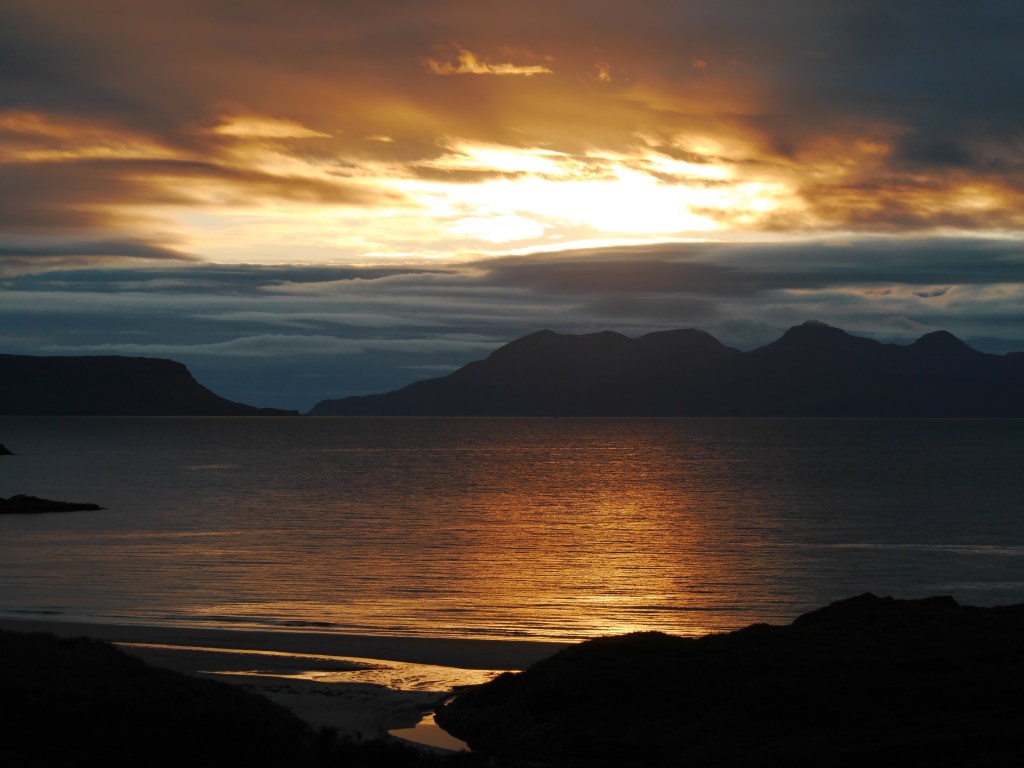


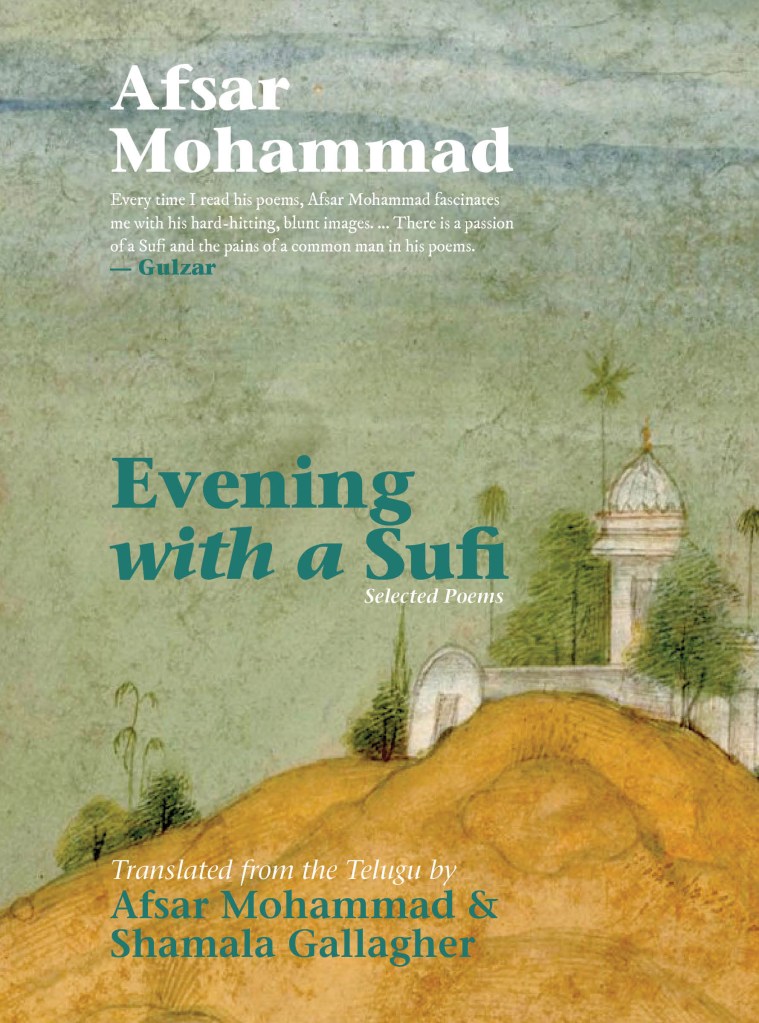


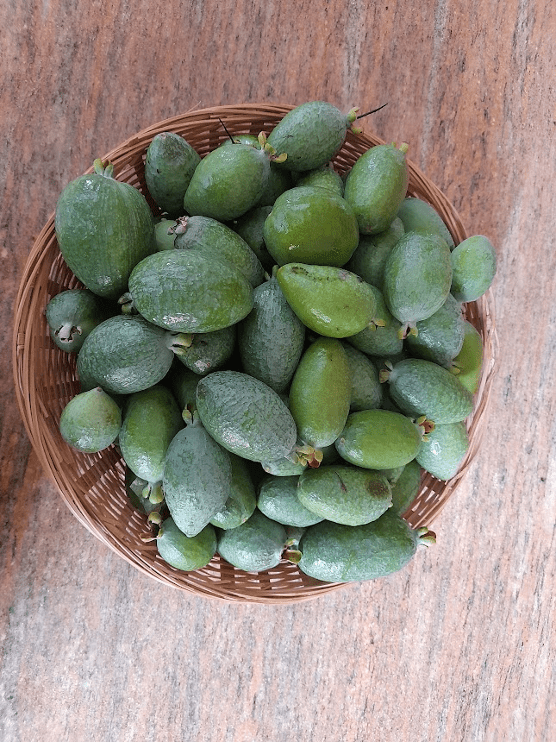


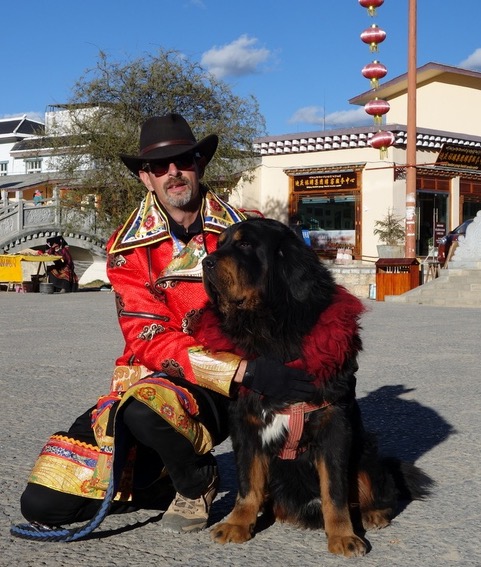
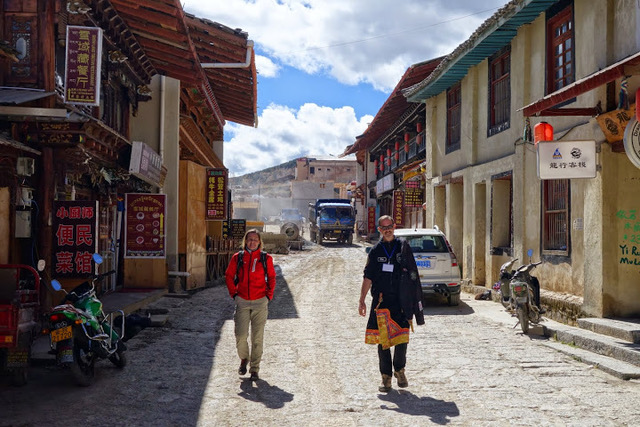
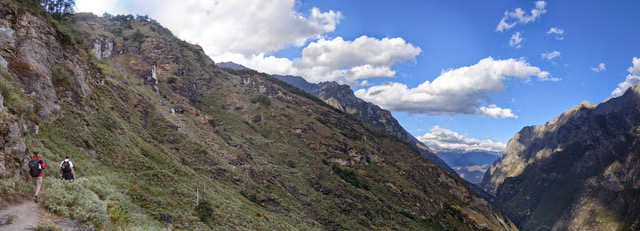
 Borderless