Categories
Independence Day Stories

Bundu, Consoler of the Rich

A story by Nadir Ali, translated from Punjabi by Amna Ali

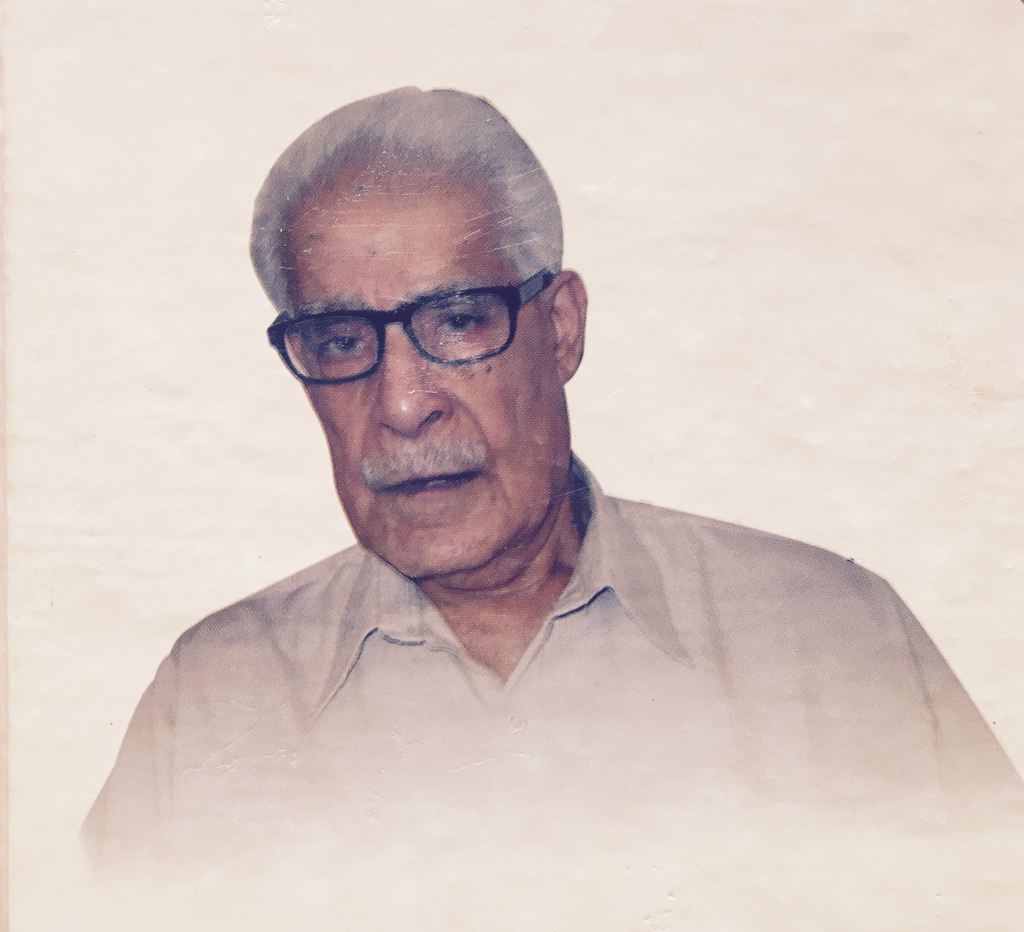
Nadir Ali(1936-2020), recepient of the Waris Shah Award from Pakistan Academy of Letters in 2006.

A peculiar dream replayed itself in my mind recently. I am the kind of man who always thinks deeply about dreams. When I lost and then initiated the arduous task of recalling my memory, I went in search of all those times I could not account for by raking through my dreams. We rarely make sense of the surreal glue that holds dreams together, reconstructing them as if they are stories.  Indeed, sometimes they chronicle our longings, other times they unfold our ardent desires reaching fulfilment, as in the union of a man and a woman! In essence, words lay the foundation, not only of the inner world, but also of our dreams. Words illuminate this journey we undertake in the pitch dark. They help us penetrate the maelstrom of existence!

This is how the dream began. I address a seated man, apparently a doctor, I recognize as Shahabuddin. He transmutes into a woman when I sit down across from him. She has the most beautiful eyes. Dark-complexioned, she appears to be Bengali. I find her very attractive. We take a stroll to the front of the Zamindara College in Gujrat. I point out Nawab Sahab’s grave to her. She moves closer to me as we approach the college hall. We continue onward to the back of the college. My heart turns tranquil as the dream fades. 

I did not have to venture far to find the rungs that would help me comprehend my dream. Ah, I had recently read the translation of the Musaddas by Sir Shahabuddin. Since Shahabuddin had tanned skin, he visited my dream as a woman with dark complexion. Again, it was he who dissolved into Balo Jati in my dream because he belonged to the Jat caste. I rushed to Balo and narrated the night’s dream. “Lady, I have to remove curtain upon curtain to find you, even in my dreams!” She laughed and explained, “Such a distance lies between an old man and his youth!” I persisted with my interpretation of the dream. “I showed you Nawab Sahab’s grave to indicate that I am old and decrepit, yet I live on, like Nawab Sahab’s name lives on.  We went to the back of the college to excavate my youthful days.”

“Lahore, Chaudhry Sahab, is overflowing with young lovers. My most prized beloved, though, remains this old man. He is a parent and lover rolled into one. People need conversations to share our joys and sorrows, no? Who would I converse with if I don’t see you Chaudhry Sahab?”  Balo’s words lifted my spirits. My dream bestowed its blessings and then was forgotten. Two months passed.

Yesterday, as I sat reading the biography of Khwaja Muinuddin Chishti – the Consoler of the Poor*, Bundu dhobi* appeared in my thoughts out of the blue.  Consider that one of Khwaja Sahab’s miracles or the secret of caring for the crushed! My mind was reminded of the two-month-old dream. I pictured the dark-skinned woman’s eyes. Ah, exactly like Bundu’s! So, the woman was in fact Bundu the washerman!  Bundu is the only person I remember fondly from my two-year stint as a professor at Gujrat’s Zamindara College.  He transformed me into a Sahab during those youthful days of surviving on the pittance I was paid as a novice professor. I wore the best starched and brightest white shalwar kameez in the entire college. 

I also happened to be the college hostel warden. One day, Bundu appeared with a plea. 

“Sahab, it is impossible to find accommodation in the homes seized after the exodus of the Hindus from the city. The Neighborhood of the Untouchables too is under the police’s control. They have escorted so many women there, turning it into their own personal cantonment. It is indeed not befitting for real men to spend nights at the police-station! Please if you get me a place at the hostel, I will manage.”

I arranged lodging for him at the hostel. Meanwhile, I found it hard to manage my expenses after sending two hundred and fifty rupees home each month. I had rashly jumped on the marriage bandwagon too. I ended up renting a house in Madina village situated on the outskirts of the town. Bundu would walk the two miles to my place. I had a bicycle at least.

Bundu never learnt to ride. “It has a mind of its own!  What if the damn machine decides to carry me to Momdipur from Madina village?” Bundu would tease.

The marriage ceremony and monthly expenses drained us of all our money within a month of marital bliss. One day, my wife announced, “Someone named Bundu dhobi is asking for you.”

I stepped outside to meet him. “Sorry Bundu, I am penniless this month. I won’t be able to pay you,” I told him.

“Sahab, I am not here to receive my payment. I am here to pick up the dirty laundry. Moreover, I haven’t even congratulated you on your marriage. Your wife is one lucky woman. A good man usually finds a good match.” Little by little, Bundu developed the routine of picking up our laundry from my wife multiple times a week, instead of once a week. Thanks to the care he showered upon our clothes, my wife and I climbed up the social ladder. When the college let him go, he managed to rent a small place that used to belong to Hindus in Muhammadi village. We remained broke.

One day, my wife took out some old bills. “Bundu heard us fighting about the expenses. He left thirty rupees with me.” I expressed my anger. We didn’t have a penny. How were we going to repay him given how impossible it was to borrow from anyone in our village?

“He said we could repay him after one month. He placed the money in my hand,” My wife tried to allay my worries.

Bundu played an important role in my transfer to Lahore when our principal accepted a position at the university and took me along. “You are the best-dressed man in all of Gujrat!”, the principal had said. From Lahore, I went on to Dhaka University in 1965.  My children and I took to Dhaka, but luck was not on our side.  We were spared the perils of detention in 1971 as we had returned to West Pakistan for the summer holidays. But I remained affected by 1971. I became very ill. I lost my memory during my treatment.  Once recovered, I made a trip to Gujrat after a gap of twenty-five years. Bundu had passed away by then.

Today, Khwaja Muinuddin, the Consoler of the Poor, reminded me of my Consoler of the Rich, a most loving and kind-hearted man. Perhaps even Khwaja Sahab had been softened by such love from people! After all, a poor person can also be a benefactor of the rich!  Such are the links of love. The foundational bond, too. As in the love between a man and a woman!  In my dream, he appeared as a beautiful, dark woman. He was a very handsome man. How can I ever forget his deeply telling eyes?

*Also known as Khwaja Ghareeb Nawaz (Consoler of the Poor), he was a sufi saint and founder of the Chistiya Sufi order in the early 13th century

*A dhobi is a washerman

Biographies:

Nadir Ali (1936-2020) was a Punjabi poet and short story writer. In 2006, he was awarded the Waris Shah award for his collection Kahani Praga. Coming late to writing, particularly fiction, Nadir Ali is credited with spearheading a unique style, blurring the boundaries between significant and petty, artistic and ordinary, primarily due to his preference for and command over the chaste central dialect understood by the majority of Punjabi speakers. He is also noted for writing and speaking about his experiences as an army officer posted in East Pakistan at the height of the 1971 war.

Amna Ali is Nadir Ali’s daughter.  She is currently translating a selection of Nadir Ali’s short stories into English. She is a librarian and lives in San Francisco with her husband and two sons.

(Published with permission of the author’s family)

.

PLEASE NOTE: ARTICLES CAN ONLY BE REPRODUCED IN OTHER SITES WITH DUE ACKNOWLEDGEMENT TO BORDERLESS JOURNAL
Categories
Poetry

Korean Poetry in Translation: Five Rupees

Ihlwha Choi translates his own poem set in Kolkata from Korean to English

Five rupees

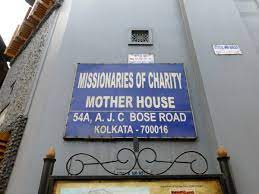
In front of the house where Mother Teresa was laid to rest,
Several women took up their position at the entrance with
Young six or seven years olds.
Whenever I went near the house,
They gathered around me shouting -- five rupees –-
with palms open, arms outstretched.
I gave each of them one coin several times.
That became the source of the calamity.
Whenever they saw me in the morning or the evening,
They scrambled to get a coin.
Especially one woman with a baby around her waist,
Approached me more vehemently, shouting five rupees.
She followed me not only to the distance of ten or twenty meters,
But also to the other side of the road.
So I gave her several times more.
I forgot the guide's request that I must not give them,
Because someone had victimised them for wealth.
I felt very sorry to shake off the hands of the women.
It hurts to think of the young mothers,
Who seemed not to eat a plate of cereal all day,
And the baby who seemed to have no more tears to shed.

Ihlwha Choi is a South Korean poet. He has published multiple poetry collections, such as Until the Time When Our Love will Flourish, The Color of Time, His Song and The Last Rehearsal.

PLEASE NOTE: ARTICLES CAN ONLY BE REPRODUCED IN OTHER SITES WITH DUE ACKNOWLEDGEMENT TO BORDERLESS JOURNAL. 

Categories
Tagore Translations

A Poem of Hope by Tagore

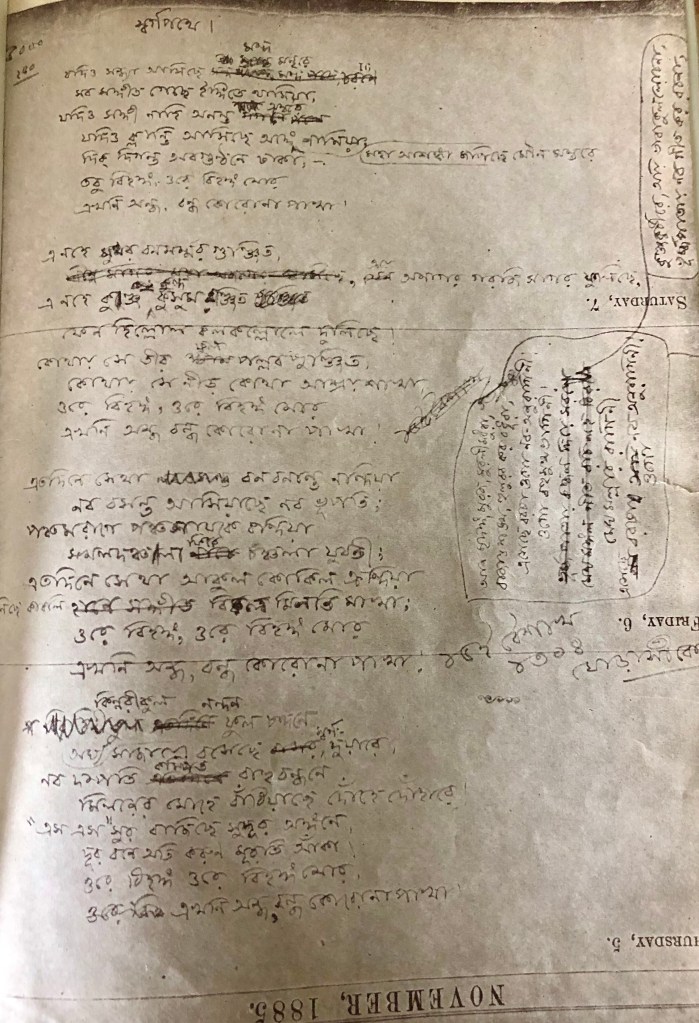
A translation of Dushomoy (bad times), written originally by the poet as Swarga Patthe (On the path to Heaven) in the Bengali month of Boisakh 1304, roughly April 1897 of the Gregorian Calendar.

Courtesy: Creative Commons
A Journey of Hope


Though dusk sets in slowly,
    The songs of the spheres have been silenced.
Though you fly companionless in the endless sky,
     Though exhaustion seeps into your body,
A terrifying dread prays in mute chants, 
    All horizons across the orb are covered by a veil --
Yet bird, o lone bird of mine, 
     Despite the blinding darkness, do not stop beating your wings.

This is not the murmur of woods, 
     This is the python-like ocean swelling.
This is not a bower of flowers, 
      This is the undulating hood swaying to the music of waves.
Where is that shore full of blossoms and foliage,
     Where is the nest, where is the branch to rest?
Yet bird, o lone bird of mine,
     Despite the blinding darkness, do not stop beating your wings.

The long night stretches ahead,
     The sun sleeps stilled after sunset.
The universe is breathless under restraint. 
     In this stunned stance, time meanders.
Swimming across the shades of the limitless night,
     A crescent moon appears in the distant skyline. 
Yet bird, o lone bird of mine,
     Despite the blinding darkness, do not stop beating your wings.

High up in the skies, the stars point their fingers
     Towards your path while gazing at you.
Deep below lies restless death in rising crests
      Of hundreds of waves that beckon. 
In distant shores, some call out with an offering,
    “Come, come,” they entreat, they plead. 
Yet bird, o lone bird of mine,
    Despite the blinding darkness, do not stop beating your wings.
 
There is no fear, no tie of affection, no attraction,
      There is no expectation, expectation is only a mirage.
There is no language, no futile weeping,
      There is no home, no floral bed to rest on.
There are only these wings, there is the celestial quadrangle,
     The dawn is led astray by the drawing of the sequestered night —
Yet bird, o lone bird of mine,
    Despite the blinding darkness, do not stop beating your wings.

(Translated by Mitali Chakravarty, edited by Sohana Manzoor on behalf of Borderless Journal. Thanks to Dr Aruna Chakravarti for the discussion and feedback which helped improve the translation.)

Tagore’s draft of the poem, ‘Swarga Patthe’, with the signature and date. This is the poem that has come down to us as ‘Dushomoy’, now translated as ‘Journey of Hope’.
Click here to listen to Tagore recite the poem about a lone bird in his own voice in Bengali.

.

PLEASE NOTE: ARTICLES CAN ONLY BE REPRODUCED IN OTHER SITES WITH DUE ACKNOWLEDGEMENT TO BORDERLESS JOURNAL

Categories
Nazrul Translations

The Equaliser

A Translation of Kazi Nazrul Islam’s poem “Samyabadi” by Shahriyer Hossain Shetu

Samyabadi recited in Bengali by Kazi Sabyasachi, Nazrul’s son
I sing the song of equality --
Where all obstacles have become one,
To unite Hindus, Buddhists, Muslims, Christians.
I sing the song of equality!
Who are you? -  A Parsee? A Jain? A Jew? A Santhal, a Bhil, a Garo?
Confucius? Charbakh Chela? State, state again and again.
My friend, regardless of what you want to be,
Whichever scriptures or books you carry on your stomach, back, shoulders, brain --
Read as much of Quran-Purana-Veda-Vedanta-Bible-
Tripitaka-Zendabesta-Granthasaheb as you can.
But why would you carry these burdens that only hurt?
Why bargain at stores when fresh flowers bloom in your path?
You have all the books, the knowledge of all ages,
You will find all the holy texts if only, my friend, you open your life!
All religions and eons reside inside you,
Your heart is the abode of all the Gods.
Why search for the divine in dead scriptures and skeletons?
He smiles within the immortal nectar that lies concealed in  your heart.

My friend, I am not lying,
This is the place where all royal crowns bow down.
This is the heart where can be found Nilachal, Kashi, Mathura, Vrindavan,
Buddha-Gaya, Jerusalem, Madina, Kaaba-Bhaban,
Here are the mosques, the temples, the churches,
Here Jesus and Joshua were introduced to the truth.
On this battlefield, the youth who played the flute chanted the great Geeta,
Shepherds and prophets met God on this field as friends.
Here is the heart that made the Sakyamuni meditate,
Discarding his kingdom for the cry of suffering humanity.
In the mountainous cave, the beloved son of Arabs heard his calling
To recite the verses of equality in the Quran.
I haven’t heard a lie, my friend,
No temple or Kabah is bigger than this heart.

Shahriyer Hossain Shetu is a student in the Department of English & Humanities, ULAB.

.

PLEASE NOTE: ARTICLES CAN ONLY BE REPRODUCED IN OTHER SITES WITH DUE ACKNOWLEDGEMENT TO BORDERLESS JOURNAL

Categories
Poetry

The Law of Nature by Akbar Barakzai

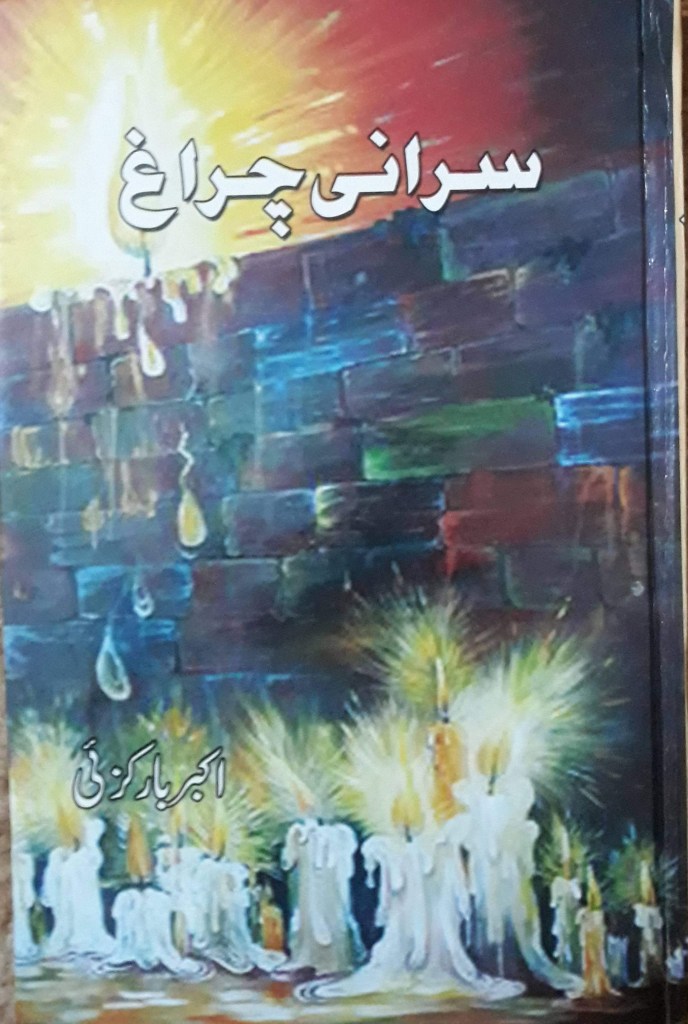
Akbar Barakzai was born in Shikarpur, Sindh in 1938. He is ranked amongst the proponents of modern Balochi literature. His poetry reflects the objective realities of life. Love for motherland, peace and prosperity and dignity of a man are the recurrent themes of his poetry. His love for human dignity transcends all geographical and cultural frontiers. Barakzai is not a prolific poet. In a literary career which spans over half a century, Barakzai has brought out just two anthologies of poetry, Who can Kill the Sun and The Lamps of Heads, but his poetry has depth and reaches out to human hearts with its profundity. Last year, Barakzai rejected the Pakistan Academy of Letters (PAL) award, quoting  the oppressive policies meted out to his region by the government as the reason.

The Law of Nature

(First Voice)

Come, you the riff-raff evildoer!
Hearken to what I utter

You are my slave 
I am your Master
You are homeless
At my feet are forts and palaces
You are homeless 
I’m the lord of power and puissance 
You are destitute and famished
I am rich and affluent

I am wise and prudent, you are brainless
I am the man of might, you are weak and frail
I'm the owner of large estates and orchards
Irksome is your existence in this world
I’m the master
You are my subject

Of faith and the divine book
Guidance I always seek
You are a wayward heretic
I am pure, you are filth
I am strong, you are meek

Have you ever pondered?
On the law of nature
Always subdued in the world
Are the weak and vulnerable 
A shark preys on little herrings
The lion hunts the ibex
Birds and locusts are the falcon’s prey

History bears witness
Always favours the fittest
Throne and crown,
Glory and pride. Discern! 
In rebellion
You’ll gather only humiliation
I am powerful, you are powerless
I am the master, you are the subject

(Second Voice)

Granted, you are the master
Proud, rich and affluent
I am miserable and poor, 
Pious jurists and clerics
Your companions and cohorts
I am but a sinner and transgressor

True you are the mighty overlord
I'm just a wretched slave
But listen you to me --
I’m also a man, a descendant of Adam
No matter how much you oppress me
I wouldn't accept your law of nature
A pretext of my subjugation
No matter how mighty you are
No matter how weak and frail I am.

Fazal Baloch is a Balochi writer and translator. He has translated many Balochi poems and short stories into English. His translations have been featured in Pakistani Literature published by Pakistan Academy of Letters and in the form of books and anthologies. Fazal Baloch has the translation rights to Barakzai’s works and is in the process of bringing them out as a book.

.

PLEASE NOTE: ARTICLES CAN ONLY BE REPRODUCED IN OTHER SITES WITH DUE ACKNOWLEDGEMENT TO BORDERLESS JOURNAL
Categories
Tagore Translations

The Last Boat by Tagore

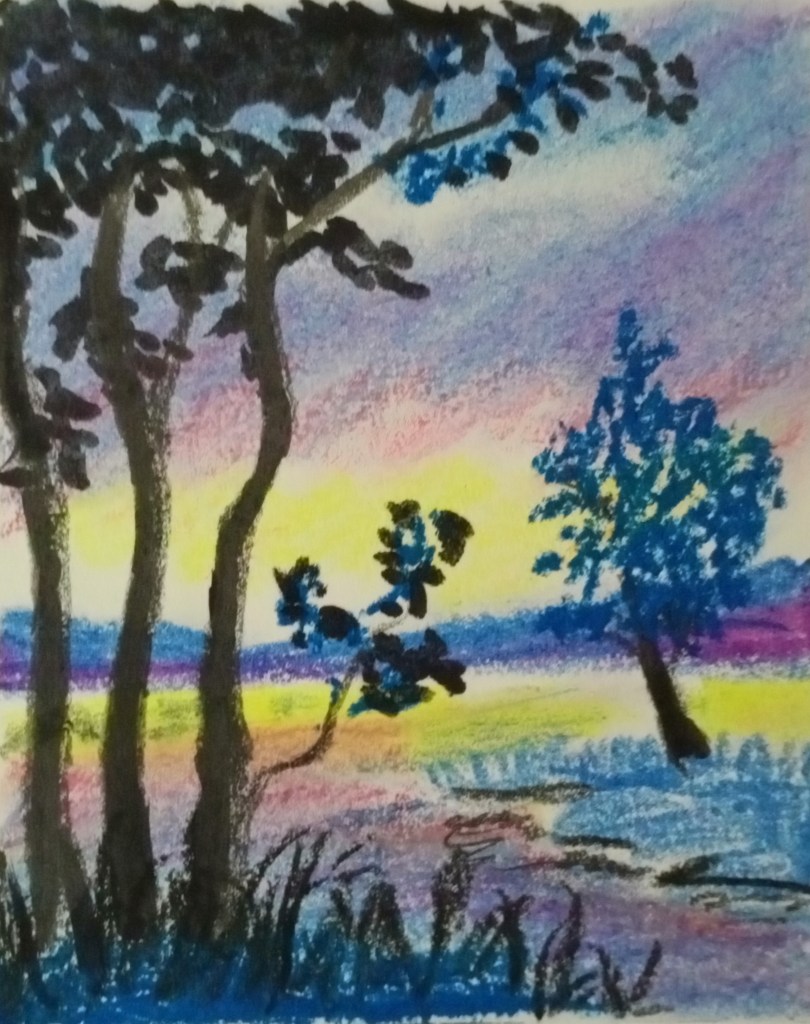
Originally written as a poem by Tagore called ‘Shesh Kheya‘ in 1907 and then set to music in 1922 by Pankaj Mullick, ‘Diner Sheshe Ghoomer Deshe‘( At the Close of the Day in the Land of Sleep) is a solemn song, which seems to cry out with an unfathomable yearning for an unknown fate.

Sohana Manzoor’s pastel that was inspired by Tagore’s Diner Sheshe Ghoomer Deshe
The Last Boat 

At the close of the day, in the land of sleep, a veiled shadow 
Makes me forget, forget my life. 
On the other bank, a golden shore edges the gloaming,
Which like an enchantress disrupts my work.
The wayfarers who head back after completing their task,
Do not look back at the trail they leave behind. 
Like a receding tide, intoxicated, I am drawn away from home.
The dusk sets in as the day leaves. 
Please come, o ferryman, one
Who can row me across on the last
Ferry at the end of the day.
In the dusk, a few ferries ebb with the tide
To the other side. 
How will I recognise the ferryman among the other ones 
Waiting at the arrival to take me to my destination?
Downhill, by the thick vegetation at the bank, 
The shade moves like a shadow.
Where is the ferryman who is willing to halt
When I call out? 
O come, 
The one who will row me 
At the close of the day in the last ferry.
Those who were returning home have gone back. 
Those who headed for the riverside have reached the banks. 
The dusk calls out to one 
Who is neither at home nor at the riverbank, but stuck mid-way.
Flowers do not bloom for those whose crops did not yield harvest —
When I try to shed tears, it turns into sorrowful mirth —
He who has turned off the daylight, did not light up the dusk.
He is the one who sits by the riverbank. 
Please come, 
O ferryman who will row me across
At the close of the day in the last ferry...


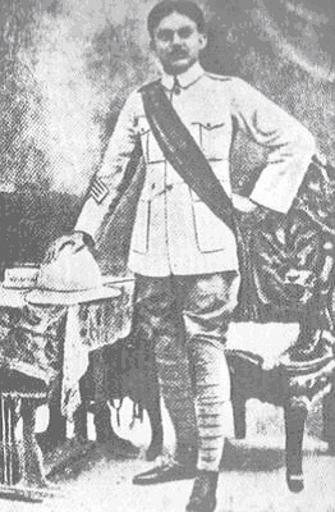
Here is the song sung by Pankaj Mullick(1905-1978)

(This has been translated by Mitali Chakravarty on behalf of Borderless Journal with editorial help from Sohana Manzoor.)

PLEASE NOTE: ARTICLES CAN ONLY BE REPRODUCED IN OTHER SITES WITH DUE ACKNOWLEDGEMENT TO BORDERLESS JOURNAL
Categories
Nazrul Translations

Purify My Life

A translation of Kazi Nazrul Islam’s Shuddho Koro Amar Jibon by Shahriyer Hossain Shetu

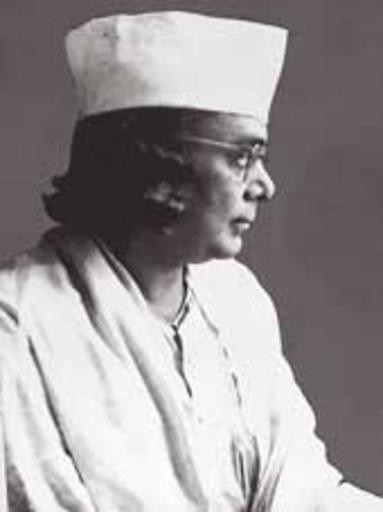
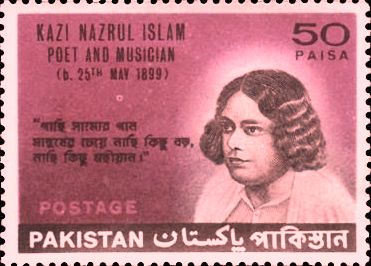
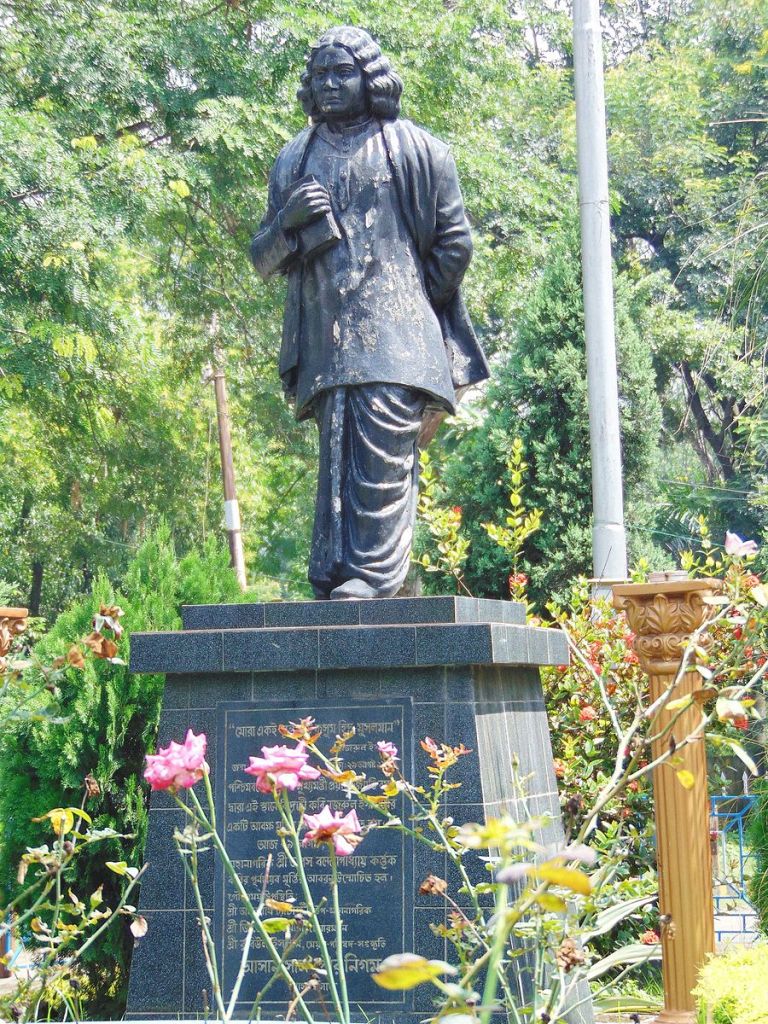
Kazi Nazrul Islam (1899-1976) Known  Bidrohi Kobi, or “rebel poet”, Nazrul was born on 25th May in united Bengal, long before the Partition. Nazrul is now regarded as the national poet of Bangladesh though he continues a revered name in the Indian subcontinent. He was a Muslim, married a Hindu and wrote songs mingling Hindu and Muslim lores. In addition to his prose and poetry, Nazrul wrote about 4000 songs. He was charged with sedition by the British for his fiery writing and jailed repeatedly.

Purify My Life

Purify my life, like dawn let me rise

anew each morn.

Let me be the sunrise,

redefine my life; make me thrive

I’ve been like a depressed widow, a hurtful drop

from Bakul.

Place your hand of blessing on my head

so I grow like a verdant tree when the summer rain

pours on my bosom.

Purify my life like sunrise,

so I become the waking sky.

Turn me into every child’s book of first letters,

and the song of early birds.

Purify my life, so that I

become an island;

Or, childhood, or a new stream of rain;

I’ve drowned in pain and loneliness

And stood like a debdaru.

Purify my life like a fresh blooming flower

so I wake up like a morning’s sleepy eye.

.

*Bakul and Debdaru are both trees that grow in Bengal. Bakul bears flowers that are fragrant and white.

Shahriyer Hossain Shetu is a student in the Department of English & Humanities, ULAB. First Published in Daily Star, Bangladesh.

.

PLEASE NOTE: ARTICLES CAN ONLY BE REPRODUCED IN OTHER SITES WITH DUE ACKNOWLEDGEMENT TO BORDERLESS JOURNAL

Categories
Poetry

Malayalam Poetry in Translation

Aditya Shankar translates a poem by Shylan

Shylan
Silencer

The silencer disengages
From the motorbike on the ascent.

Onward, 
The routes resonate multi-fold.

After stripping off 
The celebrated name 
That stuck by chance, 
May be my resonance too
Would turn glorious. 

Shylan (b.1975) is a poet and film critic. His poetry collections include Vettaikkaran, Nishkasithante Easter, Ottakappakshi, Thamraparni, and Deja Vu.

Aditya Shankar is an Indian poet, flash fiction author, and translator. His work has appeared in international journals and anthologies of repute and translated into Malayalam and Arabic. Books: After Seeing (2006), Party Poopers (2014), and XXL (Dhauli Books, 2018). He lives in Bangalore, India.

.

PLEASE NOTE: ARTICLES CAN ONLY BE REPRODUCED IN OTHER SITES WITH DUE ACKNOWLEDGEMENT TO BORDERLESS JOURNAL
Categories
Poetry

The Word by Akbar Barakzai

Translated from Balochi by Fazal Baloch

Akbar Barakzai

Akbar Barakzai was born in Shikarpur, Sindh in 1939. He is ranked amongst the proponents of modern Balochi literature. His poetry reflects the objective realities of life. Love for motherland, peace and prosperity and dignity of a man are the recurrent themes of his poetry. His love for human dignity transcends all geographical and cultural frontiers. Barakzai is not a prolific poet. In a literary career which spans over half a century, Barakzai has managed to bring out just two anthologies of his poems, but his poetry has depth and reaches out to human hearts with its profundity. Last year, Barakzai rejected the Pakistan Academy of Letters (PAL) award, quoting  the oppressive policies meted out to his region by the government as the reason.

The Word 

We begin with the word 
With the word we end 
Blessings and Salutations 
To the Apostle of the word! 

The word is God 
The very existence 
And the guiding ocean of time
The word brings forth 
Freedom and providence 
Prosperity and ruin 
Mountains trembles with the fear of the word 
Who could put out the ever-leaping flames of the word? 
Don’t ever bury the word 
In the chasm of your chest 
Rather express the word 
Yes speak it out! 
The word is freedom 
End of oppression 
Light and radiance 
Beauty and bliss
The word is Socrates’ free-spirited paramour 
The ember glowing in Mansour’s fervent heart 
The harbinger of a new dawn 
Don’t ever bury the word 
In the depth of your chest 
Rather express the word 
Yes, speak it out. 
The Word brings forth 
Freedom and providence.

Fazal Baloch is a Balochi writer and translator. He has translated many Balochi poems and short stories into English. His translations have been featured in Pakistani Literature published by Pakistan Academy of Letters and in the form of books and anthologies. Fazal Baloch has the translation rights to Barakzai’s works and is in the process of bringing them out as a book.

.

PLEASE NOTE: ARTICLES CAN ONLY BE REPRODUCED IN OTHER SITES WITH DUE ACKNOWLEDGEMENT TO BORDERLESS JOURNAL
Categories
Poetry

Poetry in Translation

Aditya Shankar translates poetry by Krispin Joseph

Sleep

A hundred men
Unlikely to ever rise
Stands guard at the river bank
Though those buoyant feet
Would never let them float away.
The feet of the guard outlives
The primitive tribes of the river
And retreats, unsure if it is
The breast or the belly
That grazes their fingers.
To those who return from
The river, I need to enquire
About the taste of the girl
Who died yesterday.

(Urakkam, translated from Malayalam by Aditya Shankar)

Bio: Krispin is a poet, media person, editor and organizer. He has two poetry anthologies to his credit: La(R)va and Sharapova. He was the editor of an anthology of love poems for DC Books, Kerala. He has been part of the editorial team (both as team leader and sub editor) for the International Film Festival of Kerala (IFFK) and the International Documentary and short Film Festival of Kerala (IDSFFK).

Aditya Shankar is an Indian poet, flash fiction author, and translator. His work has appeared in international journals and anthologies of repute and translated into Malayalam and Arabic. Books: After Seeing (2006), Party Poopers (2014), and XXL (Dhauli Books, 2018). He lives in Bangalore, India.

.

PLEASE NOTE: ARTICLES CAN ONLY BE REPRODUCED IN OTHER SITES WITH DUE ACKNOWLEDGEMENT TO BORDERLESS JOURNAL