Categories
Editorial

What do they Whisper?

No, they whisper. You own nothing.
You were a visitor, time after time
climbing the hill, planting the flag, proclaiming.
We never belonged to you.
You never found us.
It was always the other way round.

‘Moment’ by Margaret Atwood

With an unmanned mission reaching the moon — that moon that was chipped off the Earth’s surface when Theia bashed into the newly evolving planet — many feel mankind is en route to finding alternate biomes and perhaps, a solution to its housing needs. Will we also call moon our ‘Homeland’ and plant flags on it as we do on Earth?  Does the Earth — or the moon — really belong to our species. Do we have proprietary rights on these because of lines drawn by powerbrokers who say that the land belongs to them?

These are questions Margaret Atwood addresses in her writings which often fall into a genre called cli-fi. This is gaining in popularity as climate has become uncertain now with changes that are wringing fear in our hearts. Not all fear it. Some refuse to acknowledge it. While this is not a phenomenon that is fully understood by all of us, it’s impact is being experienced by majority of the world — harsh stormy weather, typhoons, warmer temperatures which scorch life and rising water levels that will eventually swallow lands that some regard as their homeland. Despite all these prognostications, wars continue to pollute the air as much as do human practices, including conflicts using weapons. Did ‘climbing a hill’ and ‘planting the flag’ as Atwood suggests, ever give us the rights over land, nature or climate? Do we have a right to pollute it with our lifestyle, trade or wars — all three being human constructs?

In a recent essay Tom Engelhardt, a writer and an editor, contended, “Vladimir Putin’s greatest crime wasn’t simply against the Ukrainians, but against humanity. It was another way to ensure that the global war of terror would grow fiercer and that the Lahainas of the future would burn more intensely.” And that is true of any war… Chemical and biological weapons impacted the environment in Europe and parts of Afghanistan. Atom bombs polluted not only the cities they were dropped in, but they also wreaked such havoc so that the second generation’s well-being continues impacted by events that took place more than seven decades ago. Yet another nuclear war would destroy the Earth, our planet that is already reeling under the impact of human-induced climate change. Flooding, forest fires and global warming are just the first indications that tell us not only do we need to adapt to living in changed times but also, we need to change our lifestyles, perhaps even turn pacifist to survive in a world evolving into an altered one.

This month some of our content showcase how to survive despite changes in norms. Suggesting how to retain our flora in a warming world is a book, Roses in the Fire of Spring: Better Roses for a Warming World and Other Garden Adventures, by M.S. Viraraghavanand Girija Viraraghavan, the grandson-in-law and granddaughter of the second President of India, Sarvepalli Radhakrishnan (1888-1975). They have been in conversation with Shantanu Ray Chaudhuri to explain how they have adapted plants to create hybrids that survive changing climes. Would it be wishful to think that we can find solutions for our own survival as was done for the flora?

Critiquing the darker trends in our species which leads to disasters is a book by an eminent Singaporean writer, Isa Kamari, called Maladies of the Soul. He too looks for panacea in a world where the basic needs of humans have been satiated and they have moved on towards overindulgence that can lead to redundancy. In a conversation, he tells us how he hopes his writings can help towards making a more hopeful future.

This hope is echoed in the palliative poems of Sanket Mhatre from his book, A City full of Sirens, excerpted and reviewed by Basudhara Roy. Bhaskar Parichha’s review of Samragngi Roy’s The Wizard of Festival Lighting: The Incredible Story of Srid, is a tribute also from a granddaughter to her grandfather celebrating human achievements. Somdatta Mandal’s discussion of fiction based on history, Begum Hazrat Mahal: Warrior Queen of Awadh by Malathi Ramachandran not only reflects the tenacity of a woman’s courage but also explores the historicity of the events. Exploring bits of history and the past with a soupcon of humour is our book excerpt from Syed Mujtaba Ali’s Tales of a Voyager (Joley Dangay[1]), translated from Bengali by Nazes Afroz. Though the narrative of the translation is set about ninety years ago, a little after the times of Hazrat Mahal (1820 –1879), the excerpt is an brilliant introduction to the persona of Tagore’s student, Syed Mujtaba Ali (1904-1974), by a translator who describes him almost with the maestro’s unique style. Perhaps, Afroz’s writing bears these traces as he had earlier translated a legendary work by the same writer, In a Land Far from Home: A Bengali in Afghanistan. Afroz starts with a startling question: “What will you call someone who puts down his profession as ‘quitting job regularly’ while applying for his passport?”

Other than a semi-humorous take on Mujtaba Ali, we have Rhys Hughes writing poetry in a funny vein and Santosh Bakaya giving us verses that makes us laugh. Michael Burch brings in strands of climate change with his poems as Jared Carter weaves in nature as we know it. George Freek reflects on autumn. We have more poetry by Luis Cuauhtémoc Berriozábal, Pramod Rastogi, Peter Devonald, Afshan Aqil, Hela Tekali and many more, adding to the variety of colours that enhance the vivacity of conversations that run through the journal. Adding more vibrancy to this assortment, we have fiction by Paul Mirabile, Saranyan BV and Prakriti Bandhan.

In non-fiction, we have Devraj Singh Kalsi’s funny retelling of his adventures with a barber while Hughes‘ essay on the hugely popular Tintin makes us smile. The patriarchal past is reflected in an essay by G Venkatesh, whereas Suzanne Kamata from Japan talks of women attempting to move out of invisibility. Meredith Stephens and Candice Louisa Daquin both carry on the conversation on climate change. Stephens explores the impact of Californian forest fires with photographs and first-hand narrative. Vela Noble draws solace and strength from nature in Kangaroo Island and shares a beautiful painting with us. Madhulika Vajjhala and Saumya Dwivedi discuss concepts of home.

Two touching tributes along with a poem to recently deceased poet, Jayanta Mahapatra, add to the richness of our oeuvre. Dikshya Samantrai, a researcher on the poet, has bid a touching adieu to him stating, “his legacy will continue to inspire and resonate and Jayanta Mahapatra’s name will forever remain etched in the annals of literature, a testament to the enduring power of the poet’s voice.”

Our translations this time reflect a diverse collection of mainly poetry with one short story by Telugu writer, Ammina Srinivasaraju, translated by Johny Takkedasila. Professor Fakrul Alam has introduced us to an upcoming voice in Bengali poetry, Quazi Johirul Islam. Ihlwha Choi has translated his own poetry from Korean and brought to us a fragment of his own culture. Fazal Baloch has familiarised us with a Balochi ballad based on a love story that is well known in his region, Kiyya and Sadu. Our Tagore translation has attempted to bring to you the poet’s description of early autumn or Sharat in Bengal, a season that starts in September. Sohana Manzoor has painted the scene depicted by Tagore for all of us to visualise. Huge thanks to her for her wonderful artwork, which invariably livens our journal.

Profound thanks to the whole team at Borderless for their support and especially to Hughes and Parichha for helping us source wonderful writings… some of which have not been mentioned here. Pause by our content’s page to savour all of it. And we remain forever beholden to our wonderful contributors without who the journal would not exist and our loyal readers who make our existence relevant. Thank you all.

Wish you all a wonderful month.

Mitali Chakravarty

borderlessjournal.com

[1] Translated literally, it means Water & Land

.

.

Visit the September edition’s content page by clicking here

READ THE LATEST UPDATES ON THE FIRST BORDERLESS ANTHOLOGY, MONALISA NO LONGER SMILES, BY CLICKING ON THIS LINK.
Categories
Musings

A Planet of Missing Beauties – In Memoriam

By Tom Engelhardt

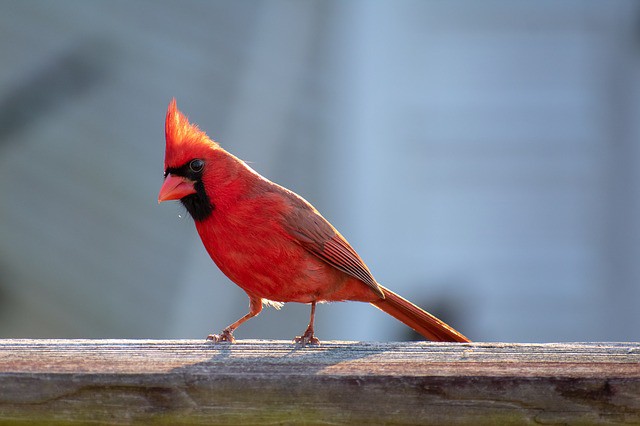
The other morning, walking at the edge of a local park, I caught sight of a beautiful red cardinal, the first bird I ever saw some 63 years ago.

Actually, to make that sentence accurate, I should probably have put either “first” or “ever saw” in quotation marks. After all, I was already 12 years old and, even as a city boy, I had seen plenty of birds. If nothing else, New York, where I grew up, is a city of pigeons (birds which, by the way, know nothing about “social distancing”).

Nonetheless, in a different sense, at age 12 I saw (was struck by, stunned by, awed by) that bright red bird. I was visiting a friend in Connecticut and, miraculously enough, though it was 1956, his parents had a bird identification book of some kind in their house. When I leafed through it, I came across the very bird I had seen, read about it, and on going home wrote a tiny essay about the experience for my sixth grade teacher, Mrs. Casey (one of those inspirational figures you never forget, just as I’ll never forget that bird). I still have what I wrote stuffed away amid ancient papers somewhere in the top of my bedroom closet.

Six decades later, in this grim coronavirus March of 2020, with my city essentially in lockdown and myself in something like self-isolation, I have to admit that I feel a little embarrassed writing about that bird. In fact, I feel as if I should apologize for doing so. After all, who can doubt that we’re now in a Covid-19 world from hell, in a country being run (into the ground) by the president from hell, on the planet that he and his cronies are remarkably intent on burning to hell.

It was no mistake, for instance, that, when Donald Trump finally turned his mind to the coming pandemic (rather than denying it) as the economy he had been bragging about for the previous three years began to crash, one of the first groups he genuinely worried about didn’t include you or me or even his base. It was America’s fossil-fuel industry. As global transportation ground down amid coronavirus panic and a wild oil price war between the Saudis and the Russians, those companies were being clobbered.  And so he quickly reached out to them with both empathy and money — promising to buy tons of extra crude oil for the nation’s strategic petroleum reserve (“We’re going to fill it right to the top”) — unavailable to so many other endangered Americans.  At that moment he made it perfectly clear that, in an unfolding crisis of the first order, all of us remain in a world run by arsonists led by the president of the United States.

So, a cardinal? Really? That’s what I want to focus on in a world which, as it grows hotter by the year, will only be ever more susceptible to pandemics, not to speak of staggering firesfloodingextreme storms, and god knows what else. Honestly, given a country of closed schools, self-isolating adults, and the sick and the dying, ona planet that seems to be cracking open, in a country which, until recently, couldn’t test as many people for Covid-19 in a couple of months as South Korea could in — yes, this is not a misprint — a day, where’s my sense of proportion?

A Secret Life

Still, if you can, bear with me for a moment, I think there’s a connection, even if anything but obvious, between our troubled world and that flaming bird I first saw so long ago. Let me start this way: believe it or not, birds were undoubtedly the greatest secret of my teenage years.

On spring weekends, my best friend and I would regularly head for Central Park, that magnificent patch of green at the center of Manhattan Island. That was the moment when the spectacular annual bird migration would be at its height and the park one of the few obvious places in a vast urban landscape for birds to alight. Sharing his uncle’s clunky old binoculars, my friend and I would wander alone there (having told no one, including our families, what we were doing).

We were on the lookout for exotic birds of every sort on their journeys north. Of course, for us then they were almost all exotic. There were brilliant scarlet tanagers with glossy black wings, chestnut-and-black orchard orioles (birds I wouldn’t see again for decades), as well as the more common, even more vivid Baltimore orioles.  And of course there were all the warblers, those tiny, flitting, singing creatures of just about every color and design: American redstarts, blackburnians, black-and-whites, black-throated blues, blue-wingeds, chestnut-sideds, common yellowthroats, magnolias, prairies, palms, yellows.

And here was the secret key to our secret pastime: the old birders. Mind you, when I say “old,” I mean perhaps my age now or even significantly younger. They would, for instance, be sitting on benches by Belvedere Castle overlooking Belvedere Lake (in reality, a pond), watching those very birds. They were remarkably patient, not to say amused (or perhaps amazed) by the two teenaged boys so eager to watch with them and learn from them. They were generous with their binoculars, quick to identify birds we otherwise would never have known or perhaps even noticed, and happy to offer lessons from their bird books (and their own years of experience).

And, for me at least, those birds were indeed a wonder. They were genuine beauties of this planet and in some odd way my friend and I grasped that deeply. In fact, ever since we’ve grown up — though this year may prove to be the self-isolating exception — we’ve always tried to meet again in that park as May began for one more look at, one more moment immersed in, the deep and moving winged beauty of this planet of ours.

Of course, in the 1950s, all of this was our deepest secret for the most obvious of reasons (at least then). If you were a boy and admitted that you actually wanted to look at birds — I’m not sure the phrase “bird watch” was even in use at the time — god knows what your peers would have said about you. They would — we had no doubt of this — have simply drummed us out of the corps of boys. (That any of them might then have had their own set of secret fascinations would never, of course, have crossed our minds.) All you have to do to conjure up the mood of that moment is to imagine our president back then and the kind of mockery to which he would certainly have subjected boys who looked at birds!

Now, so many decades later, in another America in which the coronavirus has already reached pandemic proportions (potentially threatening staggering losses, especially among old folks like me), in which the stock market is already tanking, in which a great recession-cum-depression could be on the horizon, and our future FDR — that is, the president who helped us out of the last Great Depression in the 1930s — could an over-the-hill 77-year-old former vice president, it seems odd indeed to write about beautiful birds from another earthly moment. But maybe that’s the point.

Fini?

Think about it this way: as last year ended, Science magazine reported that, in North America, there were three billion fewer birds than in 1970; in other words, almost one out of every three birds on this continent is now gone. As Carl Zimmer of the New York Times put it, “The skies are emptying out.” Among them, warblers have taken one of the heaviest hits — there are an estimated 617 million fewer of them — as well as birds more generally that migrate up the East Coast (and so have a shot at landing in Central Park). Many are the causes, including habitat loss, pesticides, and even feral cats, but climate change is undoubtedly a factor as well. The authors of the Audubon Society’s most recent national report, for instance, suggest that, “if Earth continues to warm according to current trends — rising 3 degrees Celsius (5.4 degrees Fahrenheit) by 2100 — more than two-thirds of North America’s bird species will be vulnerable to extinction due to range loss.”

Extinction. Take that word in. They’ll be gone. No more. Fini.

That, by the way, is a global, not just a North American, reality, and such apocalyptic possibilities are hardly restricted to birds. Insects, for instance, are experiencing their own Armageddon and while — monarch butterflies (down 90% in the U.S. in the last 20 years) aside — we humans don’t tend to think of them as beauties, they are, among other things, key pollinators and crucial to food chains everywhere.

Or think about it this way: on Monday, March 8th, in my hometown, New York City, it was 68 degrees and that was nothing. After all, on February 19th, in Central Park, the temperature had hit a record-breaking 78 degrees in the heart of winter, not just the highest for that day on record but for the month of February, historically speaking.  At the time, we were passing through a “winter” in which essentially no snow had fallen. And that should have surprised no one. After all, January had started the year with a bang globally as the hottest January on record, which again should have surprised no one, since the last five years have been the warmest ever recorded on this planet (ditto the last 10 years and 19 of the last 20 years). Oh, and 2020 already has a 50% chance of being the warmest year yet.

And by the way, soon after that 68-degree day, in our parks I began to notice the first crocuses and daffodils pushing through the soil and blooming. It was little short of remarkable and, in truth, would all have been beautiful, not to say glorious — the weather, the flowers, the sense of ease and comfort, the springiness of everything — if you didn’t know just what such “beauty” actually meant on a planet potentially heating to pandemic proportions.

How sad when even what’s still truly beautiful on this globe of ours increasingly tells a story that couldn’t be grimmer. So, think of this as my in-memoriam essay about the planet I thought I grew up on and the birds I thought I knew. Consider it a kind of epitaph-in-advance for a world that, if the rest of us can’t get ourselves together, if we can’t rid ourselves of arsonists like Donald Trump and his crew or those fossil-fueled CEOs that he loves so much, may all-too-soon seem unrecognizable.

In the meantime, consider me — semi-locked in my apartment — to be, in my own fashion, in mourning. Not for myself, mind you, though I’m almost 76 and my years on this planet are bound to be limited, but for those I’ll be leaving behind, my children and grandchildren in particular. This just wasn’t the world I ever wanted them to inherit.

In truth, in this coronaviral moment of ours, our world is being transformed before our eyes into one of missing beauties. Given my teenage years, I want to leave my grandchildren the pleasure of entering Central Park in some distant May, long after I’m gone, and still seeing the brilliant colors of a scarlet tanager. That’s my hope, despite everything.

Tom Engelhardt is a co-founder of the American Empire Project and the author of a history of the Cold War, The End of Victory Culture. He runs TomDispatch.com and is a fellow of the Type Media Center. His sixth and latest book is A Nation Unmade by War.

Follow TomDispatch on Twitter and join us on Facebook. Check out the newest Dispatch Books, John Feffer’s new dystopian novel (the second in the Splinterlands series) Frostlands, Beverly Gologorsky’s novel Every Body Has a Story, and Tom Engelhardt’s A Nation Unmade by War, as well as Alfred McCoy’s In the Shadows of the American Century: The Rise and Decline of U.S. Global Power and John Dower’s The Violent American Century: War and Terror Since World War II.

First Published in Countercurrents.org