Zihan stirred in his sleep. A chill breath passing over his limbs had awakened him. He strained his eyes, still heavy with wine fumes, and looked around. Where was he? This was not his room and this wasn’t his bed. He was lying in what seemed to be a small, confined space under an ornate gilded ceiling in a bed so soft, his limbs were sinking into its depths. The sky was paling with first light and long beams from a dying moon streamed in through the open window. The fragrance of an unknown flower, wild and sweet, filled the room.
He turned his head towards the window. Something, like an opalescent haze, was obscuring his vision. At first, he thought it was a sheet of mist. Then, before his amazed eyes, it started to take a shape and form. It became a woman. He could see her slender limbs, smooth as white satin, shimmering through the garment that swayed and billowed around her form. Diaphanous as a film of gossamer. So light, it seemed woven out of moonbeams. Her face was swathed in mist.
The figure moved from the window and came gliding towards him. He could see her face clearly now. A perfect oval with apricot shaped eyes, brows like strung bows and hair that fell down her back like a sheet of black silk. He stared at the vision of loveliness so long and hard …his eyes began to hurt. He had never seen such beauty in a woman before.
She stood by his bed for a while gazing into his eyes, then lay down, her body light as a feather against his. Taking his face in her hands, she caressed it with a tenderness that reminded him of his mother’s touch. She drew the silky strands of her floating hair all over his naked body. Across his chest and abdomen, over his genitals, thighs and legs, down to the insteps of his feet. The wildflower scent from her limbs filled his nostrils. Her kisses fluttered on his lips, soft and cold as drifting snow…
The wine, still running in his blood, quivered in his veins. His limbs, untouched by a woman before, heaved luxuriously and his eyes closed in ecstasy. He drifted away…
How long he lay in this state of bliss, he couldn’t tell. It could be minutes. It could be hours. Gradually, an uneasy feeling came over him. Something heavy was pressing against his body. It was squashing his chest and squeezing the breath out of his lungs. He moved aside but the pressure grew in intensity, driving him further and further towards the edge of the bed. And now his heart beat rapidly with an unknown dread. What was happening? Washe still asleep and this a fearful dream? Suddenly his eyes sprang open and what he saw sent currents of ice water rippling down his spine. He felt the hot blood pulsing and pounding in his ears. A muscle twitched and shuddered in his cheek…
The reed-slim body of the woman beside him had bloated to a colossal size. Her eyes, thin slits in the vast globe of her face, glittered with hate. Her mouth was a deep red gash through which yellow teeth, long and sharp as a panther’s fangs, hung to her chin.
The mountain of flesh was growing larger and larger every moment. It was filling the bed. He would fall over the edge any moment now. A scream gathered in his lungs but froze before it could reach his throat…
Suddenly she sprang on him; her nails sharp as claws ripping the skin off his chest and thighs. Digging her teeth into the soft flesh just below the right shoulder, she bit off a large hunk. Zihan’s eyes were glazed with pain and fear. He stared mesmerized as the monstrous creature rose from the bed and swayed and shuffled towards the opposite wall. She wore a garment of sheer white muslin that swelled and surged like waves about her form. Blood dripped from her slavering mouth and fell on the floor as her great body waddled, like a gorilla’s, from side to side. And now, for the first time, Zihan saw the coffin. It was open…
Zihan screamed. Shriek after shriek burst from the throat that had been frozen all this while, hit the walls, and sent fearful echoes all through the house. Then, exhausted and half dead from shock and loss of blood, he lay motionless, whimpering like a child.
Kueilan was a light sleeper and the first to hear the cries. They seemed to be coming from the dead girl’s room. Her heart thudded with fear as she rushed to it and flung the door open. She stood where she was for a while, her eyes glued to the coffin. It stood in the same place but the seal was broken and its open lid rested against the wall. A lily-white hand with long tapering fingers was dangling from the edge. And now the lid began to move downwards. Slowly, soundlessly, it was falling in place. In a few moments it would reach the hand and crush it. A tremor ran through Kueilan’s frame. Her mouth opened in a scream but before she could utter a sound, the hand glided over the edge and slipped into the hollow where the rest of the dead girl lay. Then, before Kueilan’s amazed eyes, the coffin closed, the seal came together and all was as it had been.
‘Published with permission from Penguin Random House India from Creeping Shadows (2026)’.
About the Book:
The stories in Creeping Shadows are spread over a vast canvas, both in terms of time span and locale. A teahouse in ancient China. A brothel in nineteenth-century Calcutta. A forest lodge in Bankura. An old mansion in Bangladesh. A university campus in today’s Delhi. Beginning as human-interest narratives, they end with sudden, unexpected twists that raise hair ends and send trickles of ice water down the spine. Here are tales of shadows, tingles and chills…
About the Author:
Aruna Chakravarti has been principal of a prestigious women’s college of Delhi University for ten years. She is also a well-known academic, creative writer and translator with eighteen published books on record. They comprise five novels, two books of short stories, two academic works and nine volumes of translation. Her first novel, The Inheritors (published by Penguin Random House), was shortlisted for the Commonwealth Writers’ Prize and her second, Jorasanko, received critical acclaim and became a bestseller. Daughters of Jorasanko, a sequel to Jorasanko, has sold widely and received rave reviews. Her novel Suralakshmi Villa was adjudged ‘Novel of the year (India 2020)’ by Indian Bibliography published in The Journal of Commonwealth LiteratureU.K. Her other well-known works include The Mendicant Prince which has been shortlisted for the Rabindranath Tagore Literary Prize, and Through a Looking Glass: Stories. Her translated works include an anthology of songs from Rabindranath Tagore’s Gitabitaan, Saratchandra Chattopadhyay’s Srikanta and Sunil Gangopadhyay’s Those Days, First Light and Primal Woman: Stories. Her most recent work is titled Rising from the Dust. Among the various awards she has received are Vaitalik Award, Sahitya Akademi Award and Sarat Puraskar. She is also a scriptwriter and producer of seven multi-media presentations based on her novels. Comprising dramatized readings, interspersed with songs and accompanied by a visual presentation by professional artists and singers, these programmes have been widely acclaimed and performed in many parts of India and abroad.
Translators are bridge builders across cultures, time and place. We have interviewed five of them from South Asia. While the translators we have interviewed are academics, they have all ventured further than the bounds of academia towards evolving a larger literary persona.
The doyen of translation and the queen of historical fiction, Aruna Chakravarti, and poet, critic and translator, Radha Chakravarty , feel their experience at bridging cultures has impacted their creative writing aswell. Somdatta Mandal, is prolific with a huge barrage of translations ranging from Tagore, to women to travellers, despite being an essayist and reviewer, claims she does not do creative writing and views translations as her passion. Whereas eminent professor and essayist from Bangladesh, Fakrul Alam tells us that translating helped him as a teacher too. Fazal Baloch, translator and columnist from Balochistan, tells us that translation is immersive, creative and an art into itself. We started the conversation with the most basic question – how do they choose the text they want to translate…
How do you choose which texts to translate?
Aruna Chakravarti
Aruna Chakravarti: A translation is an attempt at communication on behalf of a culture, a tradition and a literature. Choosing an author and, more importantly, the most significant areas of his or her work are the first steps towards this communication, because it is only through translation that masterpieces from a small provincial culture become universal ones. Since I come from Bengal, I have always chosen the best of its literature for translation. My first translation was of Rabindranath Tagore’s lyrics. Rabindranath once said that even if all his other work fades to oblivion, his songs would remain. Saratchandra Chattopadhyay, a leading writer of 19th and early 20th century Bengal, considered Srikanta the best of his novels and the most suited to be conveyed to a global readership. I translated Srikanta. Sunil Gangopadhyay is hailed as the most eminent writer of present-day Bengal. My translations of his novels and short stories are extraordinarily well received by non-Bengali readers, to this day.
Radha Chakravarty
Radha Chakravarty: Every occasion is different. Sometimes a text chooses itself because I feel compelled to translate it. Sometimes I select texts to translate, in response to suggestions or requests from editors, readers and friends who read. Several of my books in translation evolved alongside my research interests as a scholar and academic. For instance, VermillionClouds, my anthology of stories by Bengali women, developed from my general interest in feminist literature and my desire to bring texts from our own culture to the English-speaking world. My translations of Mahasweta Devi’s writings, especially the stories on motherhood in the collection titled In the Name of the Mother, happened when I was working on a chapter about Mahasweta for my PhD thesis. Our Santiniketan, my translation of her childhood memoir, emerged from my interest in her writings, as well as my admiration for Rabindranath Tagore. The translations of Chokher Bali1, Farewell Song (Shesher Kabita) and FourChapters reflect my special fascination with Tagore’s woman-centred novels, for this was also the subject of my post-doctoral work. Later, I developed this research into my book Novelist Tagore: Gender and Modernity in Selected Texts. For my edited anthology Shades ofDifference, a compilation of Tagore’s works on the theme of universality in heterogeneity, the selection involved a great deal of thinking and research. And translating Kazi Nazrul Islam’s essays turned out to be an incredible learning experience.
Somdatta Mandal
Somdatta Mandal: I have been translating different kinds of texts over the last couple of decades, and I have no fixed agenda of what I choose to translate. Usually, I am assigned some particular text by the author or a publisher, but sometimes I pick up texts which I like to do on my own. Since I have been working and researching on travel writing for a long time, I have chosen and translated several travel texts from Bengali to English written by women during the colonial times. I have also translated a lot of Rabindranath Tagore’s essays, letters and memoirs of different women related to him. Recently I translated a seminal Bengali travel text of a sadhu’s sojourn in the Himalayas in the late nineteenth century. I have a huge bucket list of texts that I would love to translate provided I find some publisher willing to undertake it. Since copyright permissions have become quite rigid and complicated nowadays, I have learnt from my own experience that it is always advisable to seek permission from the respective authorities before venturing into translating anything. Earlier I was naïve to translate stories which I liked without seeking necessary permission from the copyright holder and those projects ultimately did not see the light of day.
Fakrul Alam
Fakrul Alam: I have no fixed policy on this issue. Sometimes the texts choose me, so to speak. For instance, I began translating poems from Bengali when I first read Jibanananda Das’s “Banalata Sen”. The poem got hold of me and would not let go. I felt at one point an intense desire to translate it and read more of Jibanananda’s poems. Translating the poem elated me and having the end product in my hand in a printed page was joyous. The more poems I read by Jibanananda afterwards, the more I felt like rendering them into English, as if to share my delight and excitement at coming across such wonderful poems with readers who would not have read them in Bengali. That led to my first book of translations, Jibanananda Das: Selected Poems (Dhaka, UPL, 1999). As I ended my work on Jibanananda I thought: why not translate some poems by Rabindranath too? I had climbed one very high mountain satisfactorily and so why not venture forth and climb the topmost peak of Bengali literature? And so, I began translating Rabindranath’s poems as well as his songs. I had grown up with them, but till now had never imagined I could render them into English. Kumkum Bhattacharya, a dear friend who at that time was in charge of Viswa-Bharati’s publishing wing, Granthana Vibhaga, had seen samples of my work and told me to think of an anthology of his translated works to be published in Tagore’s sesquicentenary year for them. This led me to the poems, prose pieces and songs by him that I translated for The Essential Tagore (Cambridge, Mass, Harvard UP, 2011 and Kolkata: Viswa Bharati, 2011), a book that I had co-edited (with Radha Chakravarty). My last book of translations, Gitabitan: Selected Song-Lyrics of Rabindranath Tagore (Dhaka: Journeyman Books, 2023) alsocame out of this same compulsion of translating works in Bengali. This particular work is a book of translations of nearly 300 songs that I love to listen to again and again—songs that made me feel every now and then that I had to translate them, especially when I heard them sung by a favourite Tagore singer. My translations of a few Kazi Nazrul Islam’s poems and some of his songs are also the result of such compulsive feelings.
However, I also translated some works because I was requested to do so by people who knew about my Jibanananda Das and Tagore translations and who felt that I would be a competent translator of works they felt were worth presenting to readers in English versions of Bengali books very dear to them. My three translations of works by Sheikh Mujibur Rahman, The Unfinished Memoirs (Dhaka: UPL Books, 2012), The Prison Dairies (Dhaka: Bangla Academy, 2017), and New China 1952 (Dhaka: Bangla Academy, 2021) were all outcomes of requests made to me to translate them. Translating Ocean of Sorrow, the epic 1891 novel by Mir Mosharraf Hossain, has been the most challenging translating work I have had to undertake till now (Dhaka: Bangla Academy, 2016). I would not have dared take on the task of translating such a long and demanding prose work if Shamsuzzaman Khan, the Director of the Bangla Academy of that period, had not kept requesting me to translate this classic of Bengali Literature.
I will end my response to this question by saying that every now and then I translate poems and prose pieces by leading writers who are my contemporaries and who keep requesting me to translate them. Occasionally, I will also translate poems by major poets of our country of the last century—poets like Shamsur Rahman and Al Mahmud—because a poem or two by them had gripped me and made me feel like venturing forth into the realm of translation.
Fazal Baloch
Fazal Baloch: Translating poetry and prose are two very different endeavors. Poetry often makes an immediate impact. Sometimes just a few lines strike me powerfully on the first reading, creating an atmosphere that sets the translation process in motion. In other words, I tend to translate the verses that stir something in me or resonate deeply.
Prose translation, by contrast, works differently. It usually unfolds after a longer process and often requires multiple readings of the text. At times, it even calls for a more deliberate, conscious effort.
Does translating impact your own writing?
Aruna Chakravarti: Yes, it does. While translating the great masters of Bengali literature I have learned much that has impacted my own writing. From Rabindranath I learned that prose need not necessarily be dry and matter of fact. It could be imbued with lyricism without appearing sentimental and over emotional. Saratchandra taught me the importance of brevity and precision. Search all his novels and you will not find one superfluous word. I try to follow his example and shun over-writing. From Sunil Gangopadhyay, I learned the art of dialogue. His direct, no-nonsense style and use of colloquialisms work best in dialogue.
Radha Chakravarty: Yes indeed. As I have just indicated in my answer to your previous question, my translations often take a course parallel to my research, and the two strands of my work sometimes become inseparably interrelated. In my critical works on Indian literature, I remain conscious of bringing these writings to an audience beyond India. Hence an element of cultural translation infuses my analysis of texts by Indian writers. In my own English poetry, when I write about Bengali settings and themes, bilingual overtones often seep in.
Somdatta Mandal: No, not at all. I am not a creative writer per se, so there is no way that translation can influence my own writing.
Fakrul Alam: I will start answering the question by saying that apart from translating and writing nonfiction essays in the creative mode, I have not authored literary works. I am first and foremost an academic. Inevitably, translating Rabindranath’s works have impacted on me academically. By now I have at least one collection of essays on various aspects of Rabindranath’s life and enough essays on him that can lead to another such book. No doubt coming to know Rabindranath so intimately through the kind of close reading that is essential for translation work has made me more sensitive to him as a thinker, educator and visionary, as well as a poet and writer of prose and fictional works. Reading literary creations by him, his letters and lectures that I came across because of my involvement with his work has also lead me to editing; the work I did as co-editor of The Essential Tagore is surely proof of that.
Let me add that my translations have also impacted on my teaching. I am now able to draw on comparisons with Bangladeshi writers and Bengali literature for comparison and contrast in the classroom when I teach texts written in English to my students. Reading up on the authors I have translated has also equipped me to be more aware of Bangladesh’s roots and national identity formation. This has led me to essays on these subjects.
Fazal Baloch: Translation is not separate from the process of creativity. Through it, we enter a new world of meaning and explore the experiences of others through a creative lens. As a writer, I find translation essential for nurturing and enriching the mind. It is also worth noting that translation is not partial or fragmentary but a complete and holistic act. When I translate, I move with its current just as I do when I write. Both processes unfold in their own rhythm without obstructing one another. In fact, it is through translation that I have come to recognize and understand great works of creativity in a deeper way.
What is the most challenging part of translation? Do you need to research when you translate?
Aruna Chakravarti: Yes, since a major part of my translation work was set in 19th century Bengal, I needed to understand and imbibe the ethos and ambience of the times. Being a Probasi Bangali who has lived outside Bengal all her life, this was important. Consequently, a fair amount of research was involved. This has stood me in good stead in my own writing.
Speaking about challenges there are many. The more divergent the two literary traditions the greater the dilemma of the translator. But the test of a good translation is the absence of uncertainty, hesitation and strain. Since translation undertakes to build bridges across cultures it is important that it reads like a creative work. The language must be flowing and spontaneous; one that readers from other languages and cultures don’t feel alienated from. One that they are willing, even eager to read. One they can sail through with effortless ease.
On the other hand, readability or beauty of language cannot be the sole test of a good translation. If the translator becomes obsessed with sounding right in the target language, he/she could run the risk of diluting and distorting the original text which would be a disservice to the author. The reader should hear the author’s voice and be conscious of the source language and culture, down to the finest nuance, if the translation is a truly good one. A good translator is constantly trying to keep a balance between Beauty and Fidelity. No translation is perfect but the finer the balance…the better the translation.
Radha Chakravarty: When translating from Bengali into a culturally distant language like English, the greatest challenge is to bring the spirit of the original alive in the target language, for readers who may not be familiar with the local context. Literal translation does not work.
The need for research can vary, depending on the nature of the text being translated, the purpose of the translation, and the target readership. Some texts travel easily across cultural and linguistic borders, while others need to be interpreted in relation to the time, place and milieu to which they belong. The latter demand more research on the part of the translator, who must act as the cultural mediator or interpreter. When translating Tagore’s writings for my anthology The Land of Cards: Stories, Poems and Playsfor Children, I found that these works speak to all children without requiring too much explanation or contextualization; very often the context becomes clear from the writing itself. But Boyhood Days, my translation of Tagore’s childhood memories in Chhelebela, required greater contextualization, for present day readers to grasp unfamiliar details of life in old-world Kolkata.
Somdatta Mandal: The most challenging part of translation is to maintain the readability of the text which I consider to be of foremost importance for any text to communicate with its readers. However, this readability should not be achieved at the cost of omission or suppression of portions of the original. Instead of rigidly following one particular criterion, usually my focus has been to choose what best communicates the nuances of the Source Language [SL]. Sometimes of course when it is best to do a literal translation of cultural material rather than obfuscate it by transforming it into an alien idiom taken from the target language resulting thus in a significant loss of the culture reflected in the original text.
As for doing research when I translate, the answer depends on what kind of text I am working on. If it is a serious academic piece, then occasionally I must consult the dictionary or the thesaurus for the most suitable word. Sometimes contextual or historical references need special attention and background research but such instances are occasional. What really attracts me towards translation is the inherent joy of creativity – of being free to frame the writer’s thoughts in your own words.
Fakrul Alam: The most challenging part of translation is getting it right, that is to say, conveying the words and feel of the original as accurately as possible. But “getting it right” also means being able to convey the form and tone of the original as well as is possible. In every way the translator must carry on his translating shoulder the burden of accuracy whenever and whatever he or she is into translating. In this respect a translator like me is different from creative people who take on the task of translating ready to take liberties to render the original in distinctive ways that will bear their signatures. They do not feel constrained like translators of my kind who never dare to move away more than a little distance from the original in order to convey the tone and the meaning as imaginatively and creatively as is possible for them.
I have a simple method when it comes to translating. My first draft is the result of no aid other than printed and/or online dictionaries. If there are allusions I come across when readying the first draft, I Google. Lately, AI has been very helpful in this regard—it even gives me the English equivalence for quite a few Bengali words when, for instance, I type the title in English of a Bengali song-lyric by Rabindranath. Then I compare my translation with that of other translations available online to see if my version is deviating to much from the ones I see.
Occasionally, I will need to do research on the work I am translating. In translating Mir Mosharraf Hossein’s epic novel, for example, I kept searching on the net to know more about the characters and situations of history he had rendered into his narrative than I knew from his writing. I will also do a lot of research if and when I feel a poem or prose work needs to be contextualized and footnotes or end notes needed by readers to understand what is being depicted fully. Thus, for Jibanananda Das’s “Banalata Sen” alone I had to Google a number of times to understand fully the imaginative geography of the piece and get a feel of the real-life equivalents of the places and characters mentioned. In particular, for the first stanza of the poem I had to look for glossaries I intended to provide on words like Vimbisar, Vidarbha, Sravasti and Natore for overseas readers.
Fazal Baloch: Translation is not simply the process of transferring of text from one language to another; it is more like a conversation between cultures, a process through which they come closer and begin to understand one another.
For me, the most challenging part of translation is working with idiomatic and metaphorical expressions. Every language has its own unique idioms and linguistic frameworks, and these are often difficult to carry over into another language. To meet this challenge, I often need to conduct research and explore the etymological roots of words.
What is more important in a translation? Capturing the essence of the work or accuracy?
Aruna Chakravarti: Capturing the essence of the work is certainly more important than accuracy. Translators shouldn’t translate words. They should convey the spirit, the intent of the work. There are some authors so obsessed with their own use of language… they want translators to find the exact equivalent for each word they have written. This is a bad idea. Firstly, it is simply not possible to find exact equivalents. At least, not in languages as diverse as Bengali and English. Secondly, the job of the translator is not to satisfy the author’s ego. It is to transfer a literary gem from a small readership to a larger, more inclusive one. If one is unable to do so, the author revered in his own country will fail to speak meaningfully across the language barrier and the onus of the failure will fall on the translator.
Radha Chakravarty: A literary text is a living reality, not a corpus of printed words on the page. It is this living spirit that needs to animate the translated text, rather than precise verbal equivalence. The popular emphasis on fidelity in translation is misplaced. For literary translation cannot be a mechanical exercise. It is, in its own right, a creative process, which depends, not on rigid verbal ‘accuracy’, but on the translator’s ability to recreate, in another language, the very soul of the original. Perhaps ‘transcreation’ is a good word to describe this.
Somdatta Mandal: Regarding translation, it must be kept in mind that though something is always lost in translation, one must always attempt to strike the right balance between oversimplification and over-explanation. Translation is also creative and the challenges it poses are significant. The intricate navigation between the source language and the translated language shows that there are two major meanings of translation in South Asia – bhashantar, altering the language, and anuvad, retelling the story. Without going into major theoretical analyses that crowd translation studies per se, I feel one should have an equal grasp over the SL and the TL [Translated Language] to make a translated piece readable. I translate between two languages – Bengali and English. Sometimes of course, cultural fidelity must be prioritised over linguistic fidelity.
Translating has caught up in a big way over the past five or six years. Now big publishing houses are venturing into publishing from regional bhasha [Language] literatures into English and so the possibilities are endless. Now every other day we come across new titles which are translations of regional novels or short stories. Translating should have as its prime motive current readability and not always rigidly adhering to being very particular about remaining close to each individual line of the source text. The target readership should also be kept in mind and so the choice of words used, and glossary should be eliminated or kept to a minimum. The meaning of a foreign word should as far as possible be embedded within the text itself. All these issues would make translating an enjoyable experience. Way back in 1995, Lawrence Venuti popularised the term ‘foreignized’ so that readers can get access to the source culture as well. He used the term to explain the kind of translation that ‘signifies the difference of the foreign text by disrupting the cultural codes that prevail in the target language.’ Thus, the idea of translation is not to just communicate the plot but also to make readers familiar with the traditions, rituals, and world views of the other.
Fakrul Alam: To me the most important goal is to come as close to the original in every possible way. This means aiming for accuracy, but surely it also means coming as near as possible to the essence of the original. In other words, as far as I am concerned, accuracy will lead to essence. But as I indicate above, most creative writers doing translation will go for the essence and forego accuracy. But knowing something will be lost in translation I will try to minimize the loss by sticking close to the original in every possible way—word meaning, the rhythm of speech, sound elements and imagery. Of course, a man’s reach should exceed his grasp but what else is going to bring the translator close to cloud nine?
Fazal Baloch: Both essence and accuracy matter, but in poetry translation, the limited space to maneuver often makes essence the priority. As I mentioned earlier, the goal of translation is not only to carry over the meaning of the words but also the rhythm, tone, emotion, and cultural context that bring the original to life.
In practice, this means the translator has to balance several tasks at once: preserving cadence and rhythm, maintaining poetic flow, and ensuring semantic clarity. Yet above all, the translator must not lose the spirit of the original when choosing between essence and accuracy.
Prose, on the other hand, offers more freedom. Because it allows greater room to preserve meaning, accuracy tends to matter more, though essence still plays a role.
In short, poetry often gives more weight to essence, while prose allows essence and accuracy to work together more harmoniously.
Best friend from Childhood, literally Sand from the Eye ↩︎
Bios of Featured Translators:
Aruna Chakravarti has been the principal of a prestigious women’s college of Delhi University for ten years. She is also a well-known academic, creative writer and translator. Her novels, Jorasanko, Daughters of Jorasanko, The Inheritors, Suralakshmi Villa and The Mendicant Prince have sold widely and received rave reviews. She has two collections of short stories and many translations, the latest being Rising from the Dust. She has also received awards such as the Vaitalik Award, Sahitya Akademi Award and Sarat Puraskar for her translations.
Radha Chakravarty is a poet, critic and translator based in Delhi, India. She has published over 20 books, including translations of major Bengali writers such as Rabindranath Tagore, Bankimchandra Chatterjee and Kazi Nazrul Islam, anthologies of South Asian writing, and several critical monographs. She has co-edited The Essential Tagore (Harvard and Visva-Bharati), named Book of the Year 2011 by Martha Nussbaum. She was Professor of Comparative Literature and Translation Studies at Ambedkar University Delhi.
Somdatta Mandalis the Former Professor of English and Chairperson at the Department of English & Other Modern European Languages, Visva-Bharati, Santiniketan. Somdatta has a keen interest in translation and travel writing.
Fazal Baloch is a writer and translator. So far, he has published seven English anthologies and one Urdu collection of his translations. His. works include “God and the Blind Man: Selected short stories by Munir Ahmed Badini (Balochistan Academy of Science and Research, 2020), The Broken Verses: Aphorism and Epigrams by Sayad Hashumi (Balochi Academy Quetta 2021), Rising Stars: English Translations of Selected Balochi Literature by the Writers under the Age of Fifty (Pakistan Academy of Letters Islamabad 2022), Muntakhib Balochi Kahaniyan (Pakistan Academy of Letters Islamabad 2022), Adam’s Remorse and Other Poems by Akbar Barakzai (Balochi Academy Quetta 2023), “Why Does the Moon Look So Beautiful?: Selected short stories by Naguman” (Balochistan Academy Turbat, revised edition 2024) and “Every Verse for You”: Selected Poetry by Mubarak Qazi (Balochistan Academy Turbat, revised edition 2025). His translations have also been included in different anthologies such as ‘Silence between the Note’ (Dhauli Books India, 2019), Unheard Voices: Twenty-One Short Stories in Balochi with English translations (Uppsala University Sweden, 2022) and ‘Monalisa No Longer Smiles: An Anthology of Writings from across the World (Om Books International, 2022). He also contributes literary columns to various newspapers and magazines. He lives in Turbat Balochistan where he serves as an Assistant Professor at Atta Shad Degree College Turbat.
(The interviews were conducted via email by Mitali Chakravarty)
PLEASE NOTE: ARTICLES CAN ONLY BE REPRODUCED IN OTHER SITES WITH DUE ACKNOWLEDGEMENT TO BORDERLESS JOURNAL
Aruna Chakravarti writes of the Bauls (wandering minstrels) of Bengal and the impact their syncretic thought, music and life had on Tagore
Bauls by Jamini RoyBaul Singer by Jamini Roy Paintings by Jamini Roy (1887-1972). From Public Domain
Religious movements such as Bhakti and Sufi have spanned time and territory and entered Bengal, in successive waves, creating a syncretic culture in which music and poetry are amalgamated. One of the forms in which these movements find creative expression is Baul Gaan —the singing of itinerant minstrels.
Universally recognised as foremost among the oralities of Bengal, the Baul Sampradai is a community for whom singing is synonymous with worship. The Baul expounds a philosophy of humanism which rejects religious orthodoxies and stresses human equality irrespective of caste, class, religion and gender. The Baul sets himself on a spiritual journey, lasting a lifetime, towards discovering his moner manush (man within the heart) thereby alienating the notion of seeking the Divine in external forms such as mosques, temples, images and sculptures. Since God is believed to reside within man, the human body is viewed as the site of the ultimate truth –that which encompasses the entire universe. This tenet of Baul philosophy is known as deha tatwabad—the belief that the soul being pure the body that houses it, together with all its functions, is pure and holy.
Concentrated mostly in Kushthia, Shilaidaha and Sajadpur in East Bengal (now Bangladesh) and Murshidabad and Birbhum in West Bengal, the Baul tradition, though drawing elements from Tantra, Shakta and Sahajiya[1], stems from two main sources — Muslim Sufi and Hindu Vaishnav. Hence the simultaneous presence of Hindu and Muslim bauls in the villages of Bengal and great composers from both streams—Lalon Fakir, Duddu Shah, Madan Baul, Gagan Harkara and Fakirchand. Rejecting religious codes such as Shariat and Shastras, caste differences, social conventions and taboos, which they see as barriers to a true union with God, they sing of harmony between man and man. “Temples and mosques obstruct my path,” the Baul sings, “and I can’t hear your voice when teachers and priests crowd around me.”
Refusing to conform to the conventions of religion and caste ridden Bengali society, Bauls (the word is sourced from the middle eastern bawal meaning mad or possessed) are wandering minstrels who sing and dance on their way to an inner vision. Essentially nomadic in nature walking, for them, is a way of life. “No baul should live under the same tree for more than three days” — the saying seems to stem from the Sufi doctrine of walking an endless path (manzil) in quest of the land where the Beloved (the Divine) might be glimpsed. Bauls live on alms which people give readily. In return the Baul sings strumming his ektara[2] with dancing movements. The songs are rich with symbolism, on the one hand, and full of ready wit and rustic humour on the other. The Baul rails against the hypocrisy of religion and caste and takes sharp digs at the clergy but totally without rancour.
Many of the composite forms found in an older culture of Bengal have become sadly obscured in the present scenario of identity politics. But the one that has not only survived but is gaining in recognition day by day, is the Baul tradition. This is, in no small measure, owing to the intervention and interest taken by Rabindranath Tagore. In his Religion of Man Rabindranath tells us that, being the son of the founder of the Adi Brahmo Samaj, he had followed a monotheistic ideal from childhood but, on gaining maturity, had sensed within himself a disconnect from the organised belief he had inherited. Gradually the feeling that he was using a mask to hide the fact that he had mentally severed his connection with the Brahmo Samaj began tormenting him. And while in this frame of mind, travelling through the family estates in rural Bengal, he heard a Baul sing. The singer was a postal runner by the name of Gagan Harkara and the song was “Ami kothai paabo tare/ amaar moner manush je re[3].”
“What struck me in this simple song,” Rabindranath goes on to say, “was a religious expression that was neither grossly concrete, full of crude details, nor metaphysical in its rarefied transcendentalism… Since then, I’ve often tried to meet these people and sought to understand them through their songs which are their only form of worship.” In his Preface to Haramoni[4], Rabindranath makes another reference to this song. Quoting some lines from the Upanishads— Know him whom you need to know/ else suffer the pangs of death— he goes on to say, “What I heard from the mouth of a peasant in rustic language and a primary tune was the same. I heard, in his voice, the loss and bewilderment of a child separated from its mother. The Upanishads speak of the one who dwells deep within the heart antartama hridayatma[5]and the Baul sings of the moner manush. They seem to me to be one and the same and the thought fills me with wonder.”
A Portrait of Lalon Fakir sketched by Jyotindranath Tagore(1849-1925)
Lalon Fakir’s commune was located in the village of Chheurhia which fell within Rabindranath’s father’s estates. Though there is no authentic record of a meeting between the two, it is a fact that the poet was the first to recognise Lalon’s merit which had the quality of a rough diamond. His inspiration was powerful and spontaneous but, lacking in clarity of expression, lay buried in obscurity till Rabindranath brought it out into the open. Publishing some of the songs in some of the major journals of the time, Rabindranath took them to the doors of the educated elite. Not only that. They gained in popularity from the fact that he, himself, often used Baul thought and melody in his own work. “In some songs,” he tells us in his Manush er Dharma[6], “the primary tunes got mixed up with other raags – raaginis which prove that the Baul idiom entered my sub conscious fairly early in life. The man of my heart, moner manush, is the true Devata[7]. To the extent that I’m honest and true to my knowledge, action and thought — to that extent will I find the man of my heart. When there is distortion within, I lose sight of him. Man’s tendency is to look two ways — within and without. When we seek him without — in wealth, fame and self- gratification — we lose him within.”
But it wasn’t only in his compositions that Rabindranath disseminated Baul ideology. It went deeper than that. The primitive simplicity and freedom of Baul thought and living charmed him so completely that he started imbibing them in his own lifestyle. He grew his hair long, kept a flowing beard and wore loose robes. He created Baul like characters in his plays and dance dramas and enacted the roles himself. And, as he grew older, a restlessness; an inability to stay in one place took hold of him. Leaving the ancestral mansion of Jorasanko he relocated to Santiniketan but even there he could not stay in the same house for more than two months. In the last two and half decades of his life, a tremendous wanderlust seized him. He travelled extensively both within the country and without, earning for himself the sobriquet of ‘roving ambassador for India’.
Perhaps, the most powerful testimony of the evolution of Rabindranath from a princely scion of the Tagores of Jorasanko to the man he finally became is found in Abanindranath’s portrait of his uncle. It depicts an old man with flowing white locks and beard, wearing a loose robe and holding an ektara high above his head. The limbs are fluid in an ecstatic dance movement. It is a significant fact that the painting is titled Robi Baul.
Robi Baul (1916): Painting by Abanindranath Tagore (1871-1951). From Public Domain
[1] Different schools of philosophy and religion. The Sahajiya is a philosophy that embrace nature and the natural way of life.
[3] Translates from Bengali to: “Where will I find Him — He who dwells within my heart”
[4] The Haramoni (Lost Jewels) is 13-volume collection of Baul songs compiled by Mansooruddin to which Tagore wrote the preface for the first volume published in 1931
[5] Translates to ‘innermost part of the heart and soul’
[6] Collection of Lectures by Tagore in Bengali, published in 1932
Aruna Chakravarti has been the principal of a prestigious women’s college of Delhi University for ten years. She is also a well-known academic, creative writer and translator. Her novels, Jorasanko, Daughters of Jorasanko, The Inheritors, Suralakshmi Villa and The Mendicant Prince have sold widely and received rave reviews. She has two collections of short stories and many translations, the latest being Rising from the Dust. She has also received awards such as the Vaitalik Award, Sahitya Akademi Award and Sarat Puraskar for her translations.
.
PLEASE NOTE: ARTICLES CAN ONLY BE REPRODUCED IN OTHER SITES WITH DUE ACKNOWLEDGEMENT TO BORDERLESS JOURNAL
Translated from Bengali by Aruna Chakravarti, who adds: ‘The story, Musulmani’r Galpa[1], was published posthumously in July 1995 in the journal Ritupatra. In all probability, it was dictated from the writer’s sick bed just before his death in 1941.’
Veiled Woman, Ink on paper, by Tagore, National Gallery of Modern Art, New Delhi. Courtesy: Creative Commons
This is a story of long ago. Of a period in our history when the seeds of evil governance had sprouted thorns all over the land. When fear and anxiety had trapped the soul of the common man in the skeins of such a stifling web that all other emotions had dwindled and died. When imagined assault from demonic forces gripped all minds. When the simple act of living turned into a nightmare and trust could be reposed in neither God nor Man. When the line between good and evil had blurred and tears were the only reality…
In an age such as this, the presence of a girl was deemed a curse in a middle-class family. More so if she was beautiful. Porarmukhi![2]May your fair face burn to ashes! Curses such as these, bitter and stinging, were heaped on the poor girl. “If we could only rid ourselves of this accursed creature,” the women of the family wailed, “we might sleep peacefully in our beds.”
Such a situation, exactly, had arisen in the household of Bangshibadan, the talukdar[3] of Teen Mahala. His niece Kamala was beautiful. Worse, she was an orphan. Had she died along with her parents the family could have breathed easy. But she had lived on as a burden in her uncle’s household and was made aware of it every passing minute. “Just look at my luck sister,” her aunt was often heard complaining to the neighbouring women, “The parents dumped this monumental responsibility on my shoulders and left for the other world. Evil glances are cast at her from all sides. Anything may happen at any time. I have young children of my own and can’t sleep from fear of what will become of them. I live in constant dread…”
Bangshibadan didn’t share his wife’s annoyance at Kamala’s presence in his house. He loved her dearly and had brought her up with great solicitude. He kept her hidden from prying eyes, personally supervising her welfare and taking care of her needs. Life went on somehow but when a marriage proposal came for her, she couldn’t be kept hidden anymore. “I will wed her only into a family which has the means to protect her,” Bangshibadan was in the habit of saying, and now it seemed as though he had found what he was looking for.
The boy was the second son of Paramananda Seth, the zamindar of Mochakhali. People feared Paramananda for his money power but even more for the posse of hefty Bhojpuri lathiyals[4] he kept to guard his house and possessions. “There isn’t one son of a gun in the whole district,” the prospective bridegroom boasted to Bangshibadan, “who’ll have the gall to lay a hand on her.” He was very proud of his father’s wealth and had devised many ways of spending it. Falcon flying, gambling, bird fights…he was a master of all these pursuits. He was, as well, extremely susceptible to feminine charm. Though he had a wife already he was looking for another, younger, one and when reports of Kamala’s beauty reached his ears, he decided that she was the bride for him.
Kamala was appalled when she heard what her uncle had in mind for her. “Where are you sending me Kakamoni?” She burst into tears, “You may as well set me adrift in the river.”
“If I had the power to, protect you,” Bangshibadan replied sadly, “I would have kept you clasped to my breast for all time to come. You know that Ma…”
The arrival of the wedding party at the bride’s house was accompanied by a lot of fanfare. The sound of drums and pipes rent the air. Bangshibadan was alarmed. “Babaji,” he folded his hands before the groom, “It would be better if the noise was toned down a bit. It is unwise to attract too much attention.” But the groom was unfazed. “Let’s see which son of a gun…” he repeated his old line, his chest puffed out with importance.
“I am a poor man with little clout,” Bangshibadan sighed and said, “I can’t vouch for the safety of everyone under my roof for long. I take responsibility only until the completion of the rituals. After that I will leave it to you to conduct your bride safely to your father’s house.”
“No need to worry. No need to worry,” The bridegroom twirled his moustache arrogantly and, watching him, the lathiyals were emboldened to twirl theirs as well.
It was nearing midnight when the wedding party set off with the bride for Mochakhali. A couple of hours later, while crossing the dreaded tract of land called Taaltarhir Maath, they were waylaid by the notorious dacoit Madhu Mallar and his gang. Bearing down on them with flaring torches and weapons far deadlier than lathis, the dacoits soon made short shrift of the lathiyals. The wedding guests fled in all directions abandoning the palanquin in which Kamala sat trembling with fear. Then, just as she was about to step out and try to hide in the bushes, she heard a man’s voice booming out of the dark. “Halt! Go back from where you came my sons. I am Habir Khan.”
Madhu Mallar and his gang stepped back instantly. They had great reverence for Habir Khan. In their eyes he was no less than a paigambar …a messenger from God.
“We can’t disobey you Khan Saheb,” Madhu Mallar said glumly, “but you’ve certainly ruined my business for the night.”
Habir Khan did not oblige him with a reply. Helping Kamala out of the palanquin he told her, “You are in great danger, child. You must leave this place at once. Come with me. I will take you to my house. It is only a short distance from here.” Seeing her shrink at his suggestion, he added, “I understand your reluctance. You are a Hindu, a brahmin’s daughter. It is natural for you to hesitate before entering a Muslim household. But let me tell you something. A truly devout Muslim respects a truly devout Hindu and won’t dream of harming him in any way. Trust me my child. You and your religion will be totally safe in my house.”
Habir Khan and Kamala walked through the woods till they came to a huge mansion. Leading her into one of its eight wings, he said, “This will be your home from now on. You will live here exactly as you did in your uncle’s house.” Kamala looked around. There was a yard with a temple at one end and a tulsi manch[5]at the other. The place looked no different from an upper-class Hindu abode. Everything she would need for her day-to-day living could be found here.
An elderly Brahmin came forward to greet her. “Come Ma,” he said in a kind voice. “Have no fear. This place is sacred. Your religion will be fully protected.”
Kamala burst into tears. “Please inform my uncle about what has happened. Tell him to come and take me home.”
“You are making a mistake child,” Habir Khan’s voice came to her ears, “After tonight’s incident you won’t find acceptance in any Hindu household. You’ll be thrown out into the streets.” He saw the expression on Kamala’s face and sighed. “Very well. I will take you there and let you see for yourself.”
Habir Khan led her to the door of Bangshibadan’s house and bade her go in. “I’ll be waiting here in case you need me,” he said.
Kamala flung herself on her uncle’s chest and wound her arms around his neck. “I have come back to you Kakamoni. Don’t send me away,” she begged. Bangshibadan’s eyes filled with tears. But before he could utter a word his wife burst into the room. “Throw her out,” she shrieked, “Throw the blighted creature out at once. She’s lived in a Muslim’s house. She’ll pollute us all.” Then turning to the weeping, shivering girl, she cursed and upbraided her in shrill penetrating tones. “Accursed one! How dare you show your face here after what you’ve done? Don’t you have any shame?”
Bangshibadan disengaged Kamala’s arms gently from his neck. “Forgive me Ma,” he said sadly. “I cannot take you back. I’m a Hindu. I’ll lose caste if I accept you. I’ll be ostracised by everyone in the village.” Kamala stood for a while, head bowed, then slowly made her way out of the house to where Habir Khan was waiting. She went away with him. The door of her old world was now shut against her for all time to come.
Kamala settled down in the rooms allotted to her. “All this is yours,” Habir Khan said to her waving his hands across the yard. “Not a single member of my family will set foot in this wing. Feel free to live in it the way you wish.”
This part of the mansion had a history. It even had a name. It was called Rajputani’r Mahal[6]. Many years ago, a nawab of Bengal had brought a Rajputani princess and installed her here. He had kept her with great dignity and made sure that she had no difficulty in practicing her religion. She was a very devout woman and an ardent worshipper of Shiva, so a temple was built for her in her own premises. She loved going on pilgrimages and arrangements for them were made with meticulous care. Over the years she became a role model for other Hindu begums and many of them found sanctuary under her sheltering wings.
Habir Khan was the Rajputani’s son. Though he followed his father’s religion he worshipped his mother like a goddess. He sought her guidance in every matter and it was from her that he had learned to respect the opposite sex. She had been dead these many years, but Habir Khan never forgot the vow he had made to her. To provide shelter to widowed and abandoned Hindu women. Scorned, persecuted, hated and stigmatised for no fault of theirs, many were forced to sell their bodies for a roof above their heads and a handful of rice in their stomachs.
As the days passed a realisation started dawning on Kamala. The freedom and comfort she enjoyed in this Muslim household was of a quality she hadn’t even dreamed of while living with her uncle. He cared for her but was powerless to protect her from ceaseless taunts, curses and abuses. She had grown so used to them… she had begun to think of herself as a blighted creature, a disgrace on the family, fit only to be thrown out on the streets. Here, in her new home, she was showered with luxuries. Every need of hers was taken care of by Hindu serving women. She was overwhelmed with kindness and love.
A few years went by. Slowly a change came over her. The winds of youth started to blow and her mind and body quivered with an unknown emotion. She fell in love with one of Habir Khan’s sons.
One day she opened her heart to her protector. Habir Khan’s face paled at her confession, but she went on calmly, “My love is my religion Baap jaan[7]. I have no other. I have worshipped many gods and goddesses in the past. I have poured out my heart and soul to them in prayer. I have begged for deliverance. Yet not one deity deigned to cast a glance at me or even send a sign that my prayer had been heard. What hope is left to me from a religion that leaves a poor, trusting, suffering girl rotting in a pit of abuse and persecution? I have known what it is to live, truly live, only after I stepped across your threshold. From you I’ve learned that even the lowest of human beings deserve love and protection.” Tears rolled down her cheeks. She wiped them away and continued, “From all the hardships I faced in life I have learned one lesson. The Lover and Protector is the true deity. He is neither Hindu nor Muslim. Baap jaan, I have given my heart to your second son, Karim, and my worship is now tied with his. In embracing Islam, I need not give up the faith I was born to. I can follow both.”
The marriage took place. Kamala’s name was changed to Meherjaan and she became a valued and integral part of Habir Khan’s family.
Now the time came for Bangshibadan to wed his own daughter. And history repeated itself as it is wont to do. While crossing Taaltarhir Maath the groom’s party was waylaid by Madhu Mallar’s men. They had been thwarted once. They were out for revenge. But as soon as they launched their attack a voice came out of the dark. “Khabardar[8]! Step back at once.”
“Ore baba re[9]!” the dacoits ran helter skelter, “It’s Habir Khan!” Abandoning the bride to her fate the wedding guests did the same. Suddenly, a figure appeared on the scene holding a banner aloft on a spear. It was Habir Khan’s banner with his emblem, a half- moon, painted on it. But the bearer was a woman. Approaching the palanquin, she helped the trembling girl out of it. “Don’t be afraid Sarala,” she said, “Your elder sister is here to save you. From today you’ll be under the protection of the One who loves and provides sanctuary to all human beings irrespective of caste, creed or religion.”
Turning to her uncle she said, “Pronam kaka[10]. Don’t be alarmed. I shall not pollute you by touching your feet. Take Sarala home. No one has dared to lay a finger on her. She’s as pure today as on the day she was born. And tell kaki[11]that I never thought I could pay back the debt I owe her. The debt of food and shelter so ungraciously doled out while I was her dependent. I am doing so now.” Putting a red silk sari and an asan[12] covered with rich brocade into her uncle’s hands, she added, “I brought these gifts for Sarala. Take them. And remember, if she’s ever in trouble her Muslim sister will be there for her. To give her all the care and protection she requires.”
Aruna Chakravartihas been the principal of a prestigious women’s college of Delhi University for ten years. She is also a well-known academic, creative writer and translator with fourteen published books on record. Her novels Jorasanko, Daughters of Jorasanko, The Inheritors, Suralakshmi Villa have sold widely and received rave reviews. The Mendicant Prince and her short story collection, Through a Looking Glass, are her most recent books. She has also received awards such as the Vaitalik Award, Sahitya Akademi Award and Sarat Puraskar for her translations.
.
PLEASE NOTE: ARTICLES CAN ONLY BE REPRODUCED IN OTHER SITES WITH DUE ACKNOWLEDGEMENT TO BORDERLESS JOURNAL
Written in 1916 by Rabindranath Tagore, ‘Aparichita’ is a short story featured in his ‘Golpo Guchho’ (A Collection of Stories). It has been translated from Bengali by Aruna Chakravartias The Stranger.
Goplo Guchho, a collection of 95 short stories was originally published in five parts by Indian Publishing House from 1908-1909
The Stranger
I am twenty-seven years old today. My life has been unremarkable, so far, both in terms of length and quality. Yet it is not without value. It can be compared to that of a flower on whose breast a honeybee had nestled once, leaving behind a faint glimmer that germinated and swelled into a tiny ball of fruit.
Something similar happened to me. The encounter was brief; almost ephemeral. In chronicling the events I shall be brief too. But make no mistake. Though short, my story should not be passed over unread. Those who take the trouble to go through it will find meaning in it.
I am well educated. I have passed all my college examinations with ease. I am good looking too. When I was a child my school masters would mock my pretty face. Simul phul they would call me. Makal phal. Simul is a flower and makal, a fruit. Both have gorgeous exteriors but are of no use to anyone. The first is totally lacking in fragrance and the second in flavour. I would shrink with shame and resent the unfairness of these remarks. But as I grew older, I told myself that if another birth was granted to me, I would like it to be a replica of this one. My face should be as handsome and those of my schoolmasters as twisted with derision as when I was a lad.
My father had been poor once. In later life he made a lot of money. However, his profession as a lawyer demanded so much time and effort that he never got a chance to enjoy any of it. He must have heaved a sigh of relief when he died. For the first time he had been granted a rest.
My upbringing was left to my mother. Having come from a poor family she never lost sight of the fact that she was a wealthy woman. Nor did she allow me to do so. As an infant I remember being carried long after I had learned to walk. As a result, I never really grew up. I still look amazingly young for my age. I could easily pass for the elephant headed god’s younger brother nestling in his mother Annapurna’s lap.
After my father’s death, my maternal uncle took charge of our affairs and became my guardian. Mama[1] was only six years older than me. But, like the parched sands of a subterranean river, he steadily sucked away everything we had… assets, liabilities, hopes, cares, dreams and aspirations. The draining had been so thorough that we were unable to access anything on our own. We had to dig into him for every drop. In consequence, I lived a life totally shorn of responsibility.
Fathers of marriageable daughters could not but consider me a good catch. I had no bad habits. I’d never even touched tobacco. I was simple and good tempered. That’s because being simple and good tempered made life easy for me. I obeyed my mother because I lacked the guts to disobey her. I was prepared to allow this quality full play in future. Girls permitted to choose their own husbands would do well to keep this in mind, when making their choice.
As soon as the time was ripe, marriage proposals from the best families started to pour in. But my uncle, who was the Chief Agent of the Dispenser of my Destiny, had very definite ideas of what constituted a good match. The girl had to come from an impoverished family for only then would she keep her head bowed and be humble and obedient. On the other hand, what was the value of a daughter-in-law who didn’t bring a substantial dowry? My uncle’s requirements were simple. The father had to be poor yet ready to give him all the money he wanted. He must be the kind of man Mama could milk with ease yet wasn’t obliged to treat with respect. One who wouldn’t complain if he was offered tobacco in the coconut shell hookah meant for subordinates instead of the lordly silver albola he smoked himself.
My friend, Harish, works in Kanpur. On one of his visits to Kolkata, he said to me, “O hey! Speaking of brides, I know an excellent girl.”
I was in a state of limbo at the time. I had passed my M.A. some months earlier. Now there was nothing for me to do. I didn’t have to study or look for a job. Nor was I required to poke my nose into any of my financial affairs. No work, no worries, no opinions were expected of me. A desert of indolence and inactivity stretched before my eyes. I was consumed with thirst for something; someone… I had no idea who or what I was searching for.
In this frame of mind Harish’s words struck a chord in me. My mind and body trembled with an unknown emotion — the way newly budding leaves on the boughs of a bakul[2] tree shiver and quiver with the first warm winds of spring, throwing dancing patterns of light and shadow on the ground. Harish had a romantic side to him, and he spoke with tenderness and passion. He described the girl in words that fell like a sweet shower on my shrivelled soul. I looked at him with star struck eyes, “Why don’t you speak to Mama, Harish?” I begged.
Harish was ready to oblige. He was a great entertainer, and everyone enjoyed his company including my uncle who, once they sat down to a chat, was loath to let him go. Mama, of course was more interested in the girl’s father than in her. From Harish’s description he came to know that, though wealthy once, the gentleman was now in straitened circumstances. However, there were still some good scrapings left in the pot of gold bequeathed to his family, years ago, by the goddess Lakshmi. Unable to keep up the lofty standards set by his forefathers, he had decided to leave his ancestral village and settle in a small town in the west where no one knew him and he could live a simple life, without worrying about lost prestige. He had just this one daughter, no one else, so he wouldn’t hesitate to pour the contents of the pot into the hands of one who ensured her happiness. What could be better? My uncle was thoroughly convinced that this was the man he was looking for.
So far so good. But there was one worrying factor. The girl was fifteen. Why had she been kept unwed for so long? Was there some flaw in the family? “Arre na na[3]” — Harish hastened to explain. The father was very picky. He hadn’t found anyone he considered worthy of her, so far. He didn’t mind waiting till the right boy came along. But the girl’s age did. Refusing to stop at her father’s command it had marched on at its accustomed pace. Harish’s ability to charm his listeners and lull their fears, worked. Mama was persuaded to look into the proposal.
Mama considered any place outside Kolkata to be as alien and exotic as the islands of the Andaman. The furthest he had travelled in his life was to Konnagar. If he had been Manu[4], he would have forbidden the crossing of Howrah Bridge, in his Samhita[5], for who knew what dangerous territory lay beyond it? There was no question of his leaving Kolkata, so my cousin Binu was sent to Kanpur to conduct the negotiations and, if all went well, seal the new relationship by a ritualistic blessing of the bride. Mama had full faith in Binu da[6]’s good sense, good taste and sagacity. I would have liked to go with him and see the girl but couldn’t summon up the courage to ask for permission. I didn’t even dare ask to be shown a photograph.
Binu da returned satisfied. “She’ll do…,” he muttered, “pure gold.”
He tended to speak in monosyllables and was extremely reticent in his praise. Where another would have exclaimed “Wonderful!” or “Excellent!” he mumbled, “Not bad”. His “She’ll do” was ample affirmation. It was clear to all of us that Fate had smiled on me. Prajapati, the God of marriage, had given the nod.
As was to be expected, Mama decided that the wedding would be held in Kolkata. The resultant effect was the bride’s father was forced to make all the arrangements in a city of which he knew nothing. Shombhunath Babu was a handsome man of about forty. There were traces of silver in his whiskers though not in his hair which was black and plentiful. He had the kind of good looks that compels attention even in a crowd. The immense trust that he reposed in Harish was evident from the fact that he agreed to the marriage without seeing me. He set eyes on the one who was to be his son-in-law only three days before the ceremony.
I fervently hoped that he liked what he saw. It was difficult to tell. He spoke little in a very soft voice and listened quietly when Mama’s tongue wagged vigorously with exaggerated accounts of our wealth and status and our reputation as one of the first families of Kolkata. I squirmed with embarrassment under that gentle, probing gaze. But Mama’s enthusiasm would not be dampened. He went on and on. He probably assumed, from Shombhunath Babu’s subdued voice and manner, that the man was spineless and easily intimidated. The thought must have filled him with glee for, in fathers of brides, this quality was deemed a virtue. He remained seated when his guest rose to take his leave. He didn’t think it necessary to escort him to his carriage.
The cash component of the dowry had been agreed upon already. Mama, who prided himself on his extraordinary skill in negotiation; his well-honed ability to extract the best deal for himself in any given situation, now turned his attention on the quality and quantity of jewels that would adorn the bride’s person. Polite but pointed questions elicited the response he desired. Enough would be given to satisfy the most determined of blood suckers. I had no idea of what was going on between the two guardians. To tell the truth I wasn’t interested. Financial affairs were not my business. Besides I was confident that, in any battle of wits, Mama would emerge the winner. It mattered little that we didn’t need the money or that Shombhunath Babu was being squeezed dry. I was proud of Mama as were we all.
The turmeric ceremony was conducted with a lot of fanfare. So many trays of gifts were sent to the bride’s house with so many maids and servants carrying them, that doling out the necessary tips must have been a financial drain on her father. Exchanging gleeful remarks about the poor man’s distress and helplessness, Ma and Mama had a good laugh.
The wedding day arrived. The bridegroom’s procession was led by a mighty concert of drums, trumpets, flutes and fiddles. This set up such a pandemonium of discordant sounds that the noise could be compared to a stampede into Saraswati’s lotus garden, by a herd of mad elephants, violent enough to force the goddess of music to flee to safer havens. Covered with brocade and precious gems, I looked exactly like a jeweller’s shop in the middle of an auction. I had to prove to the bride’s father, had I not, the worth of the son-in-law he had had the good fortune to acquire? It was a battle of prestige and I rushed headlong to win it.
Mama was not impressed by the wedding venue. The assembly hall, to which the bridegroom’s party was ushered, was small and the seating somewhat constricted for the number of guests we had brought. The arrangements were on an ordinary scale, hardly befitting our family’s wealth and position. He was also a bit miffed by Shombhunath Babu’s behaviour. He found it strange. Rather cold and distant. If it weren’t for another man’s servile bowing and scraping, oily smiles and folding of hands, Mama might have felt incensed enough to walk out of the house with the bridegroom in tow. This was a lawyer friend of the bride’s father—a hulk of a man with a huge bald head and a very dark complexion. That he was in charge of the logistics was obvious from the greasy sheet he had wrapped around his middle and the cracked voice that was clearly the result of having shouted orders all day. The good thing was that, unlike the bride’s father, he was aware of the niceties of social behavior and what was owing to the groom’s party. He smiled and swayed his heavy head at everybody and addressed strings of flattering words to each, from the cymbal player in the band to the most distinguished of the wedding guests.
Shortly after our arrival Mama took our host aside and whispered something in his ear. The two walked out of the room. I don’t know what transpired between them but, within a few minutes, Shombhunath Babu returned. “Babaji!” he said, “Your presence is needed. Please come with me.”
The problem was a simple one. Some persons, not all, are ruled by a single compulsion. Mama was one of them. He had a goal before his eyes of which he was determined never to lose sight. This goal, he would never forgive himself if he failed to reach it even in the tiniest degree, was that he would never allow anyone to get the better of him. He had a horror of being cheated. The bride’s father had promised a good amount of jewellery. But could he be trusted to keep his word? The man seemed somewhat tight-fisted judging from the tips and return gifts the servants, carrying the turmeric, had brought back with them. Who knew if the bridal ornaments were of the weight and purity of gold promised? The sensible thing to do was to have their worth assessed before the rituals commenced. To wait till after the ceremony would be an exercise in futility. Thus, with due caution and good sense, he had included our family goldsmith in the wedding party.
My future father-in-law led me to a small room. It was empty, except for Mama who was seated on a chowki[7], and the goldsmith who sat on the floor with his scales, weights and touchstones spread out before him.
“Your uncle wishes to have the girl’s jewels tested before the ceremony,” Shombhunath babu looked at me with a strange expression in his eyes. “What do you say?”
I hung my head in silence.
“Why should he say anything?” Mama answered for me. “It’s what I want that counts.”
“Is that so? Do you endorse your uncle’s statement?” The gentle, thoughtful gaze unnerved me. Not knowing how to respond I tilted my head expressing assent. Financial affairs were handled by guardians. What right did I have to interfere?
“Very well.” Shombhunath Babu murmured. “The trouble is…it will take some time to remove the jewels. The bridal toilette is complete, and my daughter is wearing them already. Had I known….no matter… please stay here till I return.”
“Why?” Mama cried out surprised. “Why should he stay here? Go back to the hall, Anupam, and join the others.”
“No.” Shombhunath Babu’s voice was soft but firm. “He will stay here.”
He left the room and returned after half-an-hour with a bundle wrapped in a gamchha[8]. Spreading out its contents on the chowki, he invited the goldsmith to begin his examination. The goldsmith’s practiced eye told him the worth of what he saw in an instant. “There’s no need to examine anything,” he said, “The gold is hundred percent pure. Not a trace of alloy. Look.” Picking up a bangle he pressed it gently. A tiny dent appeared. “These are obviously from a bye gone era. Nothing like this is fashioned anymore. The girl’s grandmother’s perhaps?” He threw a questioning glance at our host.
The moment he heard this Mama whipped a notebook out of his pocket and started listing the ornaments one by one. He had to make sure that everything he had been shown would find its way into the family vault. A pleased smile appeared on his face. They were far more in number and of greater weight than he had expected.
Now, Shombhunath Babu picked up a pair of earrings from the pile. “Kindly examine these and let me know their value,” he said. The goldsmith turned them over in his hands. “Bought from an English shop,” he curled his lips disdainfully, “They have hardly any gold to speak of.” Shombhunath Babu took them from him and handed them to Mama. “Keep these with you,” he said. Mama’s face flushed a deep red with embarrassment. They were the earrings he had sent with Binu da for the bridal blessing.
“Go Anupam.” He tried to recover his composure. “Go sit with the others in the assembly—”
“No. No.” Shombhunath Babu interrupted smoothly. “There’s no need to go to the assembly hall just now. Dinner, for the bridegroom’s party, has been served and your guests have proceeded to the dining area. Let me take you there.”
“What!” Mama exclaimed, “Eat now? Before the ceremony begins…?”
“The auspicious hour is far off. Why wait till then? Please come with me.” There was something in his voice, a strength that came from a long habit of command, that compelled obedience. Mama rose meekly and followed him out of the room.
The meal, though not ostentatious, was well-cooked, neatly served and plentiful in quantity. The guests ate to satiety and were well content. Shombhunath Babu invited me to join them, but Mama was aghast at the suggestion. “What nonsense!” he cried forcefully, “How can the bridegroom sit down to a meal before the rites have begun?”
Shombhunath Babu ignored the outburst. “What do you say?” His eyes looked into mine thoughtfully. As though he expected a reaction. Any reaction. But I remained silent. What could I say? How could I go against the express wishes of my uncle and guardian?
“Very well then.” Shombhunath Babu turned his attention back to my uncle. “You have taken a lot of pains and come a long way,” he said pleasantly. “My hospitality, I’m afraid, has not met the standards your illustrious family is used to. I’m a poor man. Please forgive me. I do not wish to trouble you any further.”
“It’s alright. It’s alright.” Mama waved his hands in the lordly manner he used to reassure his inferiors and demonstrate his generosity. “Let the ceremony begin. I’m ready…”
“It will take a few moments for your carriages to arrive. Kindly wait till then.”
“What!” Mama’s eyes nearly popped out of his head. “Is this a joke?”
“You are the one who has turned a serious affair into a joke.” Shombhunath babu answered calmly. “How could you even think that I would steal my own daughter’s jewels? What sort of people are you? I am sorry but I cannot give my daughter in marriage to a family like yours.” He looked straight into Mama’s eyes ignoring me completely. He didn’t glance at me even once or try to gauge my reaction. He seemed to have made up his mind that I was nothing.
What happened after that? As was to be expected the groom’s party shouted and cursed, broke the furniture, smashed the chandeliers and having completed the carnage to their satisfaction made their way home. The band that had pronounced its entry into the wedding venue with such a cacophony of sounds now slinked along the streets in funereal silence. The lamps had burned out and the only light that guided the mournful procession came from the stars.
The rest of the family was wild with fury. Had anyone even dreamed, let alone seen or heard, anything like this? Such arrogance in a bride’s father! What did the man think of himself? “Let’s see how he secures another match for his precious daughter,” the women cried out to one another, “The world doesn’t run according to his whims and fancies. Wait and watch. He’ll be taught the lesson of his life.”
Which was all very well. But what was the point of cursing a man with the eternal spinsterhood of his daughter if he was prepared to keep her unwed all her life?
In the whole of Bengal, I was the only bridegroom with the distinction of being turned away from the wedding venue. I, who was so eligible! Such an excellent catch! And to think that the stigma stamped on my brow had followed such a jingoistic display of wealth and status from our side! Everyone was laughing at us. Mama’s breast burned with rage and humiliation. The thought that stung him most cruelly was that the wily father of the bride had outwitted him. How cleverly he had managed to feed him and his party, keeping them in his debt forever, before sending them packing! The insult was not to be borne. “I’ll sue the scoundrel for defamation and breach of promise,” Mama shouted as he stomped about the house. “I’ll make sure he spends the rest of his days turning the grinding stone in jail.”
At this point some of his well-wishers stepped in. If he tried anything of the sort, they warned, he would lose the few shreds of dignity he had left. The farce would be complete.
Needless to say, I was fuming too. “If only some disaster were to strike the man,” I thought over and over again,” he would regret his folly and come rushing to my feet begging for forgiveness…” I wished fervently for something terrible to happen. I lined up all kinds of possibilities tugging at my whiskers in nervous anticipation.
Yet, running parallel to this dark stream of hate and malice, was another. Irradiated with light. My thoughts had been submerged in its waters all these months and would not be dismissed. No matter how hard I tried, I couldn’t pluck out the image of the unseen maiden which had taken root in my heart. Her face had possessed me entirely and continued to do so. I saw a brow adorned with sandal paste. Cheeks flushed a deep rose in shy expectancy. A form draped in red silk, glittering with jewels. In the fantasy world I inhabited she was a golden creeper, ready and waiting to shower her wealth of spring blossoms at my feet. One moment, another step, and I could have claimed her. But the moment had stretched to eternity. A mighty wall had appeared between us, and I had lost sight of her…
Ever since Binu da’s return from Kanpur I had made it a point to visit him, every evening, and pester him with questions. Being extremely economical in language and expression he had said little. Owing to that very fact, perhaps, the few words he uttered sent sparks flying into my soul and set it aflame. I was overwhelmed with a sense of the girl’s beauty. It was not of this world. It was ethereal.
I had waited patiently for the moment when the imagined would transform to reality. When I would see, with the eyes of the flesh, what I had only dreamed about. But alas! Fate had beguiled me with false hopes then dashed them to the ground. A thick veil of mist had risen between us. She had disappeared beyond it, and I was left on the other side, lurking like a ghost.
The girl had been shown my photograph… so I’ve heard from Harish. I’m sure she approved of what she saw. Why wouldn’t she? My heart told me that she has kept it hidden in a secret drawer. And on lonely afternoons, secure in her room with doors and windows locked against prying eyes, she would take it out and look longingly at it. I saw her bending forward to examine it more closely, her beautiful hair falling on both sides of her face in long shining strands. And the moment she heard footsteps, she would hide it quickly in the scented folds of her sari.
The days passed, one by one. No one mentioned marriage. Mama was still nursing his grievance and Ma thought it preferable to wait till people have forgotten my humiliation.
Harish told me that good matches were found for the Kanpur girl, but she had taken a vow to remain unwed. The news filled me with elation. My inner eyes could see her… pale and worn with longing for me. She ate little and that, too, when she was forced. Dusk[9] would set in but she would forget to braid her hair. Her father looks at her and wondered. “What has happened to my girl? Why is she so changed?” Sometimes, he would walk into her room and find her sitting by the window, her eyes streaming with tears.
“What is the matter Ma?” he would ask tenderly. “Tell me the truth. Is something troubling you?”
“Why, no Baba.” She wiped her eyes quickly and rose to her feet. “Nothing is wrong.”
The father’s heart would sadden. She was his only child. His pride and joy. How could he bear to see her thus? How could he stand by and watch a delicate bud, just about to open its petals, wilt and wither in the hot dry winds of a rainless summer? He decided to swallow his pride. He would rush to our door and beg pardon with abject humility…
After that…what?
The stream of hate that lay coiled within me unwound and stretched to its full length. “Tell the girl’s father to make fresharrangements,” it wouldhiss like a poisonous snake. “Let lights blaze and guests arrive from far and near. Then, just when the ritualsare about to commence, gather the bridegroom’s party together and walk out of the wedding venue with a smile.”
But the other stream, pure as a lover’s tears, appeared before me in the form of a milk white swan. “Set me free,” it pleads. “As Iflew to Damayanti’s[10] garden, aeons ago, so let me wing my way to the beloved one and whisper the joyful tidings in her ears.”
The dark night ended, new rain fell, the drooping flower raised its face. The wall crumbled and made way for me. Only me. The others were left behind. And then…?
My story ended here.
But no. It wasn’t the end. I’ll come to the point at which it was left hanging and conclude my narrative.
I was accompanying my mother on a pilgrimage to some holy cities of the north. I had been entrusted with the task since Mama, as I’ve said before, was so averse to travelling that he hesitated to even cross the Howrah Bridge. Tossed this way and that by the swaying of the train, I slept fitfully, dreams dancing in shards in and out of my head. Suddenly, it came to a halt, and I awoke. My eyes beheld an expanse of light and shadow the like of which I had never seen before. I was still in the throes of my dream, I think, because everything looked remote; unreal. I felt I was in another world. Only the few lamps burning on the station platform seemed vaguely familiar.
I turned to Ma who lay sleeping on her berth, the green curtain shielding her eyes from the light. Boxes and bundles, dislodged from their places by the movement of the coach, lay scattered. I hadn’t come out of my dream fully, perhaps, because even this common place scene appeared surreal in my eyes. The scattered objects, the dim green light…I felt I was floating in a space between existence and non-existence.
Suddenly the silence of the night was broken. “Come,” someone cried out, “Come quickly. There’s space here.” My heart leaped upon hearing the Bengali language spoken in a feminine voice. Was what I had just heard a string of words?Or was it a song? I wondered at myself. Did I react the way I did because the voice belonged to a member of the opposite sex? No, I’m quite sure that wasn’t the reason. Perhaps I had been yearning to hear my mother tongue through all these months of staying away from my roots. Have I heard anything like this before? I asked myself, feeling awed and humbled. Opening the window, I looked out. There was no one there. The guard waved his lantern and the train started to move.
All my life I have found myself being moved by a beautiful voice. Beauty of face and form has its own attraction but the human voice, I’ve always felt, expresses that which lies deep within the soul. Though I could see nothing with the outer eye a form started taking shape within me. Like a star-studded sky which wraps one in its folds but does not brush the skin, it slid deep into my soul making music as it went. You who are so perfect; so complete! I called out to that divine melody. You bloom like a flower on the bruised heart of a capricious age and let its winds pass over you. Yet not a petal is blown away. Not a speckappears on your pristine purity.
The train picked up momentum. The rattle was as metallic as before, falling like strokes on an iron drum. But, strange to say, it made music in my ears. There’s space here… I heard with every beat… there’s space here. But was there a space? In this self-absorbed world did anyone concede space to another? Did anyone know the truth about another? Yet, this not knowing, I was convinced, was a web of mist; an illusion. Once torn apart all would stand revealed. Recognition would be complete.
“ I know you,” my heart murmured to the one who was once a stranger, “I’ve known you from the beginning of time. You called out to me, ‘Come quickly,’ you said. I’ve come to you. I haven’t wasted a moment.”
I couldn’t sleep the whole night. At every station I opened the window and looked out, fearing that the unseen one would depart unseen…
We got down, the next morning, at a junction station where we had to change trains. Since I had reserved seats in a first-class compartment, I was not worried about being caught in a crowd. But the sight that met my eyes filled me with dismay. The platform was choc a bloc with sahebs and their orderlies. Some army general, out on a pleasure trip with his cronies, was waiting for the train which arrived, a few minutes later, crammed with passengers. I realised that travelling first class was out of the question and felt a stab of anxiety. Where, on this crowded train, would I find place? I ran up and down the platform peering into every window when a girl, standing at the door of a second- class compartment, called out to my mother. “Why don’t you come to our coach? There’s space here.”
I looked up startled. The same voice. The same words. There were only a few moments left for the train to leave. I helped my mother up then, climbing in, I called out to the coolies to stow the luggage. Just then the train started moving. Overcome with panic I stood helplessly, not knowing what to do. Who was worse equipped than me to deal with a situation like this? But the girl, with extraordinary dexterity, snatched the boxes and beddings from the hands of the running men and flung them on the floor. In the commotion of the moment, an expensive camera of mine was left behind. I made no effort to retrieve it.
What happened next? A perfect bliss pervaded my being of a kind impossible to put in words. How shall I even begin to describe it? Stringing a bunch of words together seems meaningless. They would express nothing.
The music I had only heard so far had assumed a shape and appeared before our eyes. I glanced at Ma. She was staring at the girl with such rapt attention that not an eyelash flickered.
She was about sixteen or seventeen. But the shy diffidence of approaching womanhood, so common in girls of her age, sat lightly on her. Her gaze was clear and unflinching, her gestures free, and there was a purity in her face and form the like of which I had never seen before. Not a trace of timidity or unease marred the natural grace of her movements.
What I felt at the time went beyond what I saw. To tell the truth, I can’t even recall the colour of the sari she wore. All I remember is that she was dressed very simply and that I was filled with a sense that externals held no meaning for her. She rose, slender and upright as a tuberose stalk, above the plant that had given her birth. Above the earth in which it was embedded. Her fragrance was hers alone and came from within.
I sat in one corner, my eyes glued to the pages of a book. But my ears were keenly attuned to the excited voices of the little girls who were travelling with her. I marvelled at the way she became one with them. Though considerably older she was totally at ease, and they laughed and joked merrily together. The little ones had an illustrated storybook out of which they were pestering her to read a story. I gathered, from their chatter, that they had heard it several times yet wanted to hear it again. I understood why. It wasn’t the story. It was her voice they wanted to hear; the golden voice that reinvented as it went along and made everything sound new. That, springing from the heart like a fountain, filled their ears with music. I found myself responding in much the same way. Her presence made my sun shine brighter. My sky was more intimate in its embrace. My heart was washed by the pristine waters that emanated from the one who was still a stranger…
At the next station she beckoned to a vendor and bought an enormous cone of spiced gram which the whole party proceeded to eat with gusto. My nature was so hedged in by restrictions that, though tempted, I couldn’t bring myself to ask for some. “Stupid me!” I thought, “this was my chance of speaking with her. Of letting her know I wanted something from her…”
The moment passed.
From the expression on Ma’s face, I realised that she was puzzled. She couldn’t decide what to make of our travelling companion. The way she was wolfing down large handfuls of the crunchy mixture, that too in the presence of a male, was surely reprehensible in a girl of her age! Yet, and this too I saw in Ma’s eyes, one couldn’t really think of her as shameless and greedy. There was an innocence about her, a lack of self-consciousness that proclaimed the fact that, though adult in years she was a child at heart. Perhaps she didn’t have a mother and hadn’t been taught the niceties of feminine deportment. Ma is not a garrulous woman. She cannot converse easily with strangers. I could see that she wanted to find out more about the girl, but her natural reticence stood in the way.
The train stopped at a large station and a group of sahebs, clearly belonging to the general’s entourage, came in. Striding purposefully up and down the compartment they scanned the seats with eagle eyes. There wasn’t an inch of extra space and they left.
A few minutes later a railway employee, a native, entered with two name cards which he proceeded to hang on the seats we were occupying. “These are reserved seats,” he told me, “You’ll have to move to another compartment.” Ma’s face turned pale and even I felt a pang of apprehension. But before I could say or do anything someone spoke in Hindi. “No,” the familiar voice was cool and confident, “We won’t give up our seats.”
“You’ll have to,” the man answered roughly, “There’s no other way.”
The girl left the train and returned with the station master, an Englishman who was clearly embarrassed by what he was being forced to do. “I’m sorry,” he looked at me with a rueful smile, “But these seats are—”
I rose to my feet and started walking towards the exit calling “Coolie! Coolie!” as I went. Suddenly I had to stop in my tracks. The girl was standing before me. “No,” she said firmly, “You’re not going anywhere. Please return to your seat.” Turning to the station master she said in flawless English, “That’s a lie. These seats are not reserved.” Plucking the name cards off the seats she flung them out of the window.
The man who had been allotted the seats was standing at the door instructing his orderly to stow his luggage. He stared in shock at the cards flying out of the window and, unable to meet the fire raining eyes, turned away. Plucking at the station master’s sleeve he whispered something in his ear. I have no idea of what transpired between them. All I know was that the departure was delayed for a while and a new coach fitted to the train.
Kanpur station arrived. Our travelling companions rose and started gathering their belongings. My mother, who had sat in silence all this while, could hold herself in no longer. “What is your name Ma?” she asked.
“My name is Kalyani.”
Ma and I threw startled glances at one another.
“Your father?” Ma’s voice was a whisper.
“He’s a doctor. His name is Shombhunath Sen.”
CONCLUSION
Setting my mother’s wishes firmly aside, disobeying Mama’s express command, I went to Kanpur. I met Kalyani and her father and apologised on my own and my family’s behalf with folded hands. The latter’s heart seemed to melted but the former remained firm in her resolve. She would not marry.
“Why not?” I asked.
“I follow my mother’s command.”
But she didn’t have a mother. I was wild with desperation. Was there another maternal uncle, then, lurking somewhere? Was history repeating itself?
It didn’t take me long to arrive at the truth. Her mother was Bharat Mata. After the fiasco of the wedding, she had taken a vow to dedicate herself to her country. And how better to do that than spend her life educating girls of the land?
But I did not give up hope. A stream of music, the like of which I’d never heard before, had crept into my ears from out of the dark and seeped into my soul. That exquisite melody played in my heart, all day long, like the strains of a flute from another world. It became the lodestar of my being; the refrain of my life-song.
I was twenty- three then… I’m twenty- seven now. I have shed my uncle. He is no longer part of my life. And my mother, perhaps because I’m her only son, has preferred to remain with me.
If you are under the impression that I nurture hopes of marriage–you are wrong. All I live for is hearing that voice speak the same words There is space. Of course, there is space. There has to be. If there wasn’t, where would I find the ground to stand on?
Years have gone by. I’ve stayed on here. I see her from time to time. I hear her voice. She entrusts me with small tasks, and I carry them out. This is the space I’ve needed and dreamed about. “O stranger!” my heart calls out to her, “you will forever remain a stranger for there is no end to knowing you. Yet I’m grateful. My destiny has been kind to me. It has granted me the space I’ve yearned for all my life.”
Painting by Tagore Tagore (1861-1941) Courtesy: Creative Commons
[8] Traditional thin, coarse cotton fabric often used in lieu of a towel
[9] Traditionally, women were supposed to tie their hair especially in the evening.
[10] Nala Damayanti, a story from Mahabharata, where the couple were parted before they were reunited.
Aruna Chakravartihas been the principal of a prestigious women’s college of Delhi University for ten years. She is also a well-known academic, creative writer and translator with fourteen published books on record. Her novels Jorasanko, Daughters of Jorasanko, The Inheritors, Suralakshmi Villa have sold widely and received rave reviews. The Mendicant Prince and her short story collection, Through a Looking Glass, are her most recent books. She has also received awards such as the Vaitalik Award, Sahitya Akademi Award and Sarat Puraskar for her translations.
.
PLEASE NOTE: ARTICLES CAN ONLY BE REPRODUCED IN OTHER SITES WITH DUE ACKNOWLEDGEMENT TO BORDERLESS JOURNAL
The twenty-fifth day of Baisakh dawned. A hot airless day when not a leaf stirred in the trees and the red earth burned like smouldering coals. Rabindranath was taken to the southern veranda in the morning as usual but he lay in his armchair so listless, so drained of energy, Nandita realized that something was wrong. ‘Let me take you back to bed, Dadamoshai,’ she said. ‘You had better rest the whole day and reserve your strength for the evening. The students have organized a programme for your birthday.’
‘I know.’ Rabindranath nodded. ‘I mustn’t disappoint the children. But I would like to give them something in return. Fetch a pen and paper. Closing his eyes, he sang slowly in an old man’s quavering voice. He nutan/dekha dek aar baar janmer pratham shubhokshan:
Oh ever new!
Let my eyes behold once more
the first blessed moment of birth.

Reveal yourself like the sun
melting the mists that shroud it.

Reveal yourself
tearing in two the arid empty breast.
Proclaim the victory of life.

Give voice to the voiceless that dwells within you;
the eternal wonder of the Infinite.

From emerging horizons conches blow;
resonating in my heart.
Oh callout to the ever new!
Twenty-fifth of Baisakh!
Rabindranath lay on his bed all day breathing heavily, the heat sapping his strength. He felt so exhausted that even to lift an arm or keep his eyes open was an effort. He could sense the activity that was going on around him. People were coming from far and near with gifts of flowers and fruit. They begged for a glimpse of him but he, who had never refused to meet anybody in his life, now lacked the energy to do so.
He felt a little better towards the evening when the heat of the day had dissipated and a cool breeze started to blow from the khowai. Then at dusk, Nandita came in. ‘Get up, Dadamoshai,’ she ‘ said brusquely. ‘You’ve rested long enough. Time to get dressed.’
Rabindranath sat up meekly and allowed her to put on him his birthday garments of silk dhuti and chador. He didn’t object even when she adorned his brow with sandal paste and hung a garland of fragrant juin flowers around his neck. But when Protima came in with a bowl of fruit he couldn’t stand the smell. ‘Not now, Bouma.’ He shook his head, ‘I’m not hungry.’
Protima wouldn’t go away. ‘You’ve hardly eaten anything today,’ she said firmly. Have a few pieces of mango. It’s your favourite himsagar. Prashanta brought a basketful.’
Lacking the strength to protest, he put a small piece in his mouth and shuddered with distaste. ‘The good days are gone, Bouma,’ he said sadly. ‘Else why does the king of fruits taste bitter in my mouth?’
‘But even last season you were eating five or six a day!’
‘I know.’ He smiled. ‘That is why I say the good days are gone.’
(Excerpted from Daughters of Jorasanko by Aruna Chakravarti, published by HarperCollins India)
About the Book:
The Tagore household is falling apart. Rabindranath cannot shake off the disquiet in his heart after the death of his wife Mrinalini. Happiness and well-being elude him. His daughters and daughter-in-law struggle hard to cope with incompatible marriages, ill health and the stigma of childlessness. The extended family of Jorasanko is steeped in debt and there is talk of mortgaging one of the houses. Even as Rabindranath deals with his own financial problems and strives hard to keep his dream of Santiniketan alive, news reaches him that he has been awarded the Nobel Prize for literature. Will this be a turning point for the man, his family and their much-celebrated home? Daughters of Jorasanko, sequel to the bestselling novel, Jorasanko, explores Rabindranath Tagore’s engagement with the freedom movement and his vision for holistic education, brings alive his latter-day muses Ranu Adhikari and Victoria Ocampo and maps the histories of the Tagore women, even as it describes the twilight years in the life of one of the greatest luminaries of our times and the end of an epoch in the history of Bengal.
About the author:
Aruna Chakravarti has been Principal of a prestigious Women’s College of Delhi University for ten years. She is also a well-known academic, creative writer and translator with seventeen published books on record. They comprise five novels, two books of short stories, two academic works and eight volumes of translation. Her first novel The Inheritors (published by Penguin Random House) was shortlisted for the Commonwealth Writers’ Prize and her second, Jorasanko (published by HarperCollins India)received critical acclaim and also became a best seller. Daughters of Jorasanko, a sequel to Jorasanko, (HarperCollins India) has sold widely and received rave reviews.Her novel Suralakshmi Villa, published by Pan Macmillan Ltd under the Picador imprint, has been adjudged “Novel of the year (India 2020)” by Indian Bibliography published in The Journal of Commonwealth Literature U.K. Her latest work, The Mendicant Prince, a semi-fictional account of the Bhawal legal case, was released by Pan Macmillan Ltd, in July this year to widespread media coverage and acclaim. Her second book of short stories Through a Looking Glass: Stories has just been released by Om International Ltd.
Her translated works include an anthology of songs from Rabindranath Tagore’s Gitabitaan, Sarat Chandra Chattopadhyay’s Srikanta and Sunil Gangopadhyay’s Those Days, First Light and Primal Woman: Stories. Among the various awards she has received are Vaitalik Award, Sahitya Akademi Award and Sarat Puraskar.
She is also a script writer and producer of seven multi- media presentations based on her novels. Comprising dramatised readings interspersed with songs and accompanied by a visual presentation by professional artists and singers, these programmes have been widely acclaimed and performed in many parts of India and abroad.
.
PLEASE NOTE: ARTICLES CAN ONLY BE REPRODUCED IN OTHER SITES WITH DUE ACKNOWLEDGEMENT TO BORDERLESS JOURNAL
The author of In a Better Place is a highly respected medical practitioner with a long and distinguished career in U.K. and India. Given the vast knowledge and wide-ranging experience that have gone into the writing of this book, it is surprising to note that it is not an academic work. It is a novel, written with effortless ease, that proves to be as informative as it is readable and interesting. Bornali’s language is simple and has a gentle mellowness and her style, though lively, isn’t racy or trendy. It has a leisurely flow but demands close attention. She gives her reason for writing this book in her ‘Author’s Note’:
“While reams of clinical history and medical notes are written arduously every day in every hospital by its diligent doctors and nurses, there is hardly anyone to document the human stories that unfold continuously in the long corridors and lonely wards of hospitals.”
The book, as per her own admission then, is not an account or analysis of medical research and clinical practice. It is a story of human lives caught in the cusp of aspiration and reality. Of sickness and suffering entwined with the pressures and frailties of care givers. It draws from detailed and extensive research into the lives of Indian doctors during the last thirty years of our history. A momentous period which saw globalization and the waking up to a Many countries; One world, concept in a big way.
The writer shows a comprehensive understanding of her subject. Her characters are a group of idealistic young doctors, who are genuinely eager to use their medical education to treat the sick in the best way possible. They inhabit two worlds, India and England, sometimes physically; sometimes in spirit. They are confronted with two choices to begin with. Adherence to convention and traditional ways. Or carrying out their aspirations for what they think will be a better life, in defiance of social and parental pressure. Those who are unhappily trapped in India’s heat and dust, poverty and primitive systems, crowds and chaos yearn for foreign shores. Those who have made it to the West are ill at ease in the strange new life they have embraced. A sense of not fitting in, of somehow being reduced to the other despite all their education and proficiency in English, dogs them. Swamped in nostalgia and exile they are confused and bewildered.
Both sets of lives are seen as fragmented. Places define people and relationships. The book provides a fascinating kaleidoscope of yearning and aspirations in a direct, not always complimentary way. The value of the book lies in its creation of complex emotions, use of empirical data and honest telling.
The chief protagonist of the novel, Sudha, undergoes post graduate training in a government hospital in Delhi before moving to England with her husband, another young doctor called Girish. Their friends, Jai and Sanjay, also make it to their dreamland. All four are overwhelmed, initially, by the difference in the two systems and take a jingoistic delight in having reached where they wanted to be. The dirt and squalor in Indian hospitals, the rusted equipment and callous attitude to suffering by overworked doctors and nurses, is a shameful contrast to what they see in English hospitals. At first the picturesque buildings, manicured lawns, spotless beds and hushed corridors win their total admiration and respect. But, gradually, they get a sense that all is not as it appears on the surface. They, who only wish to do their best, encounter hurdles, injustice and racism and the cold, hard superiority of people who will never forget or let them forget they were once their rulers. An immigrant angst overtakes them. Some make a desperate bid to overcome it and manage to carve a groove for themselves in the land of their exile through unequal, often loveless, marriages with British citizens. Some begin to consider going back to India. But the choice, either way, is equally hard.
Dr. Chatterjee, a senior doctor in the hospital Jai works in, has made two attempts to return to India. Both proved abortive and he was forced to return. His wife and children, having lived too long in the West, could not adjust to India. He has become the proverbial nowhere man, unable to find a comfort zone anywhere. Though an excellent doctor and an intelligent, cultured gentleman, he knows that he will never reach the top of his profession or be accepted socially by his colleagues.
“’The Whites…,’ he tells Jai, ‘don’t want to socialize with you. Take Dr Smith and Dr Weldon. I’ve called both of them for dinner to my house, their entire families, not once but two times. But there is no reciprocation from their side. Not once have they invited me over, although they get together quite often.’”
Aspirations die but hope continues. People suffer but they also find solutions. The author is non-judgmental.
“There is never right or wrong, she says in conclusion to her story. Just what works for one and what works for another. Life goes on regardless, both inside and outside of the hospital, through the trepidation of change, of migration, of loss and adoption of a foreign land.”
But what, in the end, is a better place? Though Bornali doesn’t provide the answer I am tempted to do so. I quote from a poem I used to recite as a child:
Mid pleasures and palaces though we may roam
Be it ever so humble there’s no place like home.
Aruna Chakravarti was the principal of a prestigious women’s college of Delhi University for ten years. She is also a well-known academic, creative writer and translator with a number of published books on record. Her novels, The Inheritors,Jorasanko, Daughters of Jorasanko, have sold widely and received rave reviews. The Mendicant Prince is her last novel and Through a Looking Glass, her latest short story collection. She has also received awards such as the Vaitalik Award, Sahitya Akademi Award and Sarat Puraskar for her translations.
PLEASE NOTE: ARTICLES CAN ONLY BE REPRODUCED IN OTHER SITES WITH DUE ACKNOWLEDGEMENT TO BORDERLESS JOURNAL.
Aruna Chakravarti reveals how she wove a historic novel, The Mendicant Prince(Published by Picador India, 2022), from a controversial court case that took place in the early twentieth century and created ripples through not just Bengal but the whole country and even England.
Perhaps we can call her the queen of historical fiction or an author inspired by history, but Aruna Chakravarti, an eminent award-winning Anglophone writer, evokes the past of a united Bengal – long before the Partition along religious lines in 1947 — repeatedly giving us a glimpse of an age where culture superseded beliefs. She recreates a period where we can see the seeds of the present sowed. In her last novel, Suralakshmi Villa (2020), she gave a purely fictitious account of a woman who pioneered changes in a timeframe that dates back to more than a century. Before that in the Jorasanko novels (2013, 2016), she brought to life the Tagore family history. By then, she had written her own family history set in the same period called The Inheritors (2004), which was shortlisted for the Commonwealth Award. Perhaps, her grounding comes from having translated Sunil Gangopadhyay’sFirst Light and Those Days, both novels set around the nineteenth and early twentieth centuries. She also won the Sahitya Akademi Award for translating Sarat Chandra’sSrikanta, a novel again set in a similar timeframe. She started her journey as a writer translating Tagore songs for which she won the Vaitalik award. Perhaps, this grounding has made her what she is today – a powerful re-creator of history where the characters come to life. You emote and react to their statements and on their actions. Her narrative carries you with it.
Her novel based on the real story of the Bhawal Prince which was launched last month, gives a clear glimpse of the event with historical accuracy. The Bhawal prince turned mendicant after losing his memory in 1909 in Darjeeling. He was recovering from a bout of syphilis. He fell prey to intrigue and might have been poisoned. The prince was abandoned as a corpse during his cremation and yet he survived …and then, twelve years later, he returned — having travelled through much of the country with a band of Naga sadhus — to claim his rightful place. Swapan Dasgupta, a journalist turned politician, wrote when he thought of the Bhawal case, the “Dreyfus affair in late 19th century France, the John F. Kennedy assassination in the US and the James Hanratty case in Britain are ones that come readily to mind.” He was reviewing an earlier historical narrative written by Partha Chatterjee(2002) called A Princely Imposter?, which Chakravarti tells us she has used as a resource.
Set against the independence movement and colonial era, she has painted a man, who though flawed, gains the sympathy and wins the heart of the reader. The writing is fluid and evocative. Given that the trial lasted for more than sixteen years, and his first wife and her family refused to acknowledge the prodigal prince, the story has been made into films multiple times, once Sanyasi Raja(Bengali, Mendicant Prince, 1975), the second time, a remake in Telugu Raja Ramesh (1977) and more recently somewhat anachronistic, a movie called, Ek je Chhilo Raja (There was a King, 2018). The Mendicant Princedeparts from the films in being a stickler for the period, the historicity and brings to fore events and nuances the author researched by interviewing surviving Bhawal family relatives. What is amazing is the way in which Chakravarti has fleshed out each character to make the persona real, to the point where, as in her earlier Jorasanko novels, the reader can visualise them. Aruna Chakravarti’s strength is definitely her mastery over the language and her ability to breathe life into the past.
In this interview, Aruna Chakravarti tells us how she has woven the novel into the timeframe and created a novel based on history – an excellent lesson for aspiring writers of historical fiction from the empress of the genre herself.
What moved you to write a novel on the Prince of Bhawal?
The controversial prince of Bhawal, Ramendra Narayan Roy. The top is a picture of the claimant and the bottom has the picture of the prince as a Naga sannyasi or mendicant.
I first heard of the Bhawal case in 1950 when I was about ten years old. The time was the aftermath of Indian Independence and Partition when many Hindus from Pakistan were relocating in India. A family from East Bengal came to live in the government quarter next to ours and became very friendly with us. One of its members, we called him Uncle, was an excellent story teller and regaled us with many tales.
One was about a legal case concerning a prince turned sannyasi [mendicant] then prince again. It had taken place in Bhawal, a principality in present day Bangladesh. The case was still fresh in his memory. The Privy Council verdict had been announced as recently as July 1946 and it was natural for him, still nostalgic for the land he had left behind, to wish to talk about it. I was so mesmerised by the tale that it stayed with me for decades afterwards.
I never thought of writing about it till recently, when some friends distantly related to the royal family urged me to. ‘You havealready done two novels on the Tagores so why not the Bhawals?’ I didn’t take to the idea easily. It seemed too big and complex a project. Then, during the Covid years, in the state of incarceration we all found ourselves, I started thinking seriously about it. But I was constantly beset with anxiety. ‘Would I be able to pull off sucha delicate operation?’ A meticulous adherence to the facts together with dates was called for since these were already out in the public domain. There was no way I could take liberties with them. A reconstruction of the life and times of the concerned people, within these limits, called for tremendous imaginative power and an equal amount of discipline and concentration. Covid worked in my favour. In the complete silence and absence of activity; in the total encapsulation of self by the mind; I found myself getting slowly entrenched in the world I was creating. A world of queens and mistresses, liaisons and stratagems, faith and betrayal and a desperate British imperialism slowly eroding under the pressure of an awakening nationalism.
It seems amazing to me now. But it worked.
What kind of research went into it? Did you travel to Jaidevpur?
No. That was one of the hurdles Covid put in my way. For all my other novels I have made it a point to do an extensive amount of field work. This time, travel being rendered impossible, I had to depend entirely on secondary sources. My chief source was Dr Partha Chatterjee’s book A Princely Imposter? It contained a treasure trove of information. Articles in Bangladeshi journals of which there was quite a significant number and other books, both English and Bengali, fiction and non-fiction, helped me to understand and visualise the context in which the drama had unfolded. The two films Sanyasi Raja and Ek je Chhilo Raja also offered a few glimmerings. These, however, were negligible. What came in truly useful was the first-hand research I had done for my earlier work such as my translations and other novels. As also the conversations I had with some distant relatives and family friends of the Bhawals.
How much of your story is fact and how much is fiction?
This question, invariably put to me in the context of my creative writing, is difficult to answer since it is impossible to put a quantum to either. All I can say is that the events the reader is taken through in The Mendicant Prince are historically accurate and documented. But the book is not history. It is a novel; an imaginative reconstruction of a prominent legal case fought in the dwindling twilight of British India. The fictional element travels beyond the case to the lives of the people it affected, particularly the women of the family. Nothing much is known about these women so I have had to give them backgrounds and contexts; personalities and distinguishing characteristics that are wholly imagined.
It is true that you have woven history and fiction meticulously and seamlessly in the book. In creating the ambience of the period, you have touched on prevalent myths such as the education of a woman results in her widowhood. You have also mentioned bedes and kheersapati mangoes. Were these actually part of what you found in the Bhawal story? Or is it something you introduced? If so, what was the intention?
No. They had nothing to do with the Bhawal case. These details were provided to intensify the ambience; to make the world of early twentieth century Bengal come dynamically alive. Reformers like Ishwar Chandra Vidyasagar, Raja Ram Mohan Roy and Debendranath Tagore had advocated education for women. But the idea was fiercely resisted by the conservative section of Bengali society. Many clung to an age-old belief that educated women were liable to become widows. It was natural for Rani Bilasmoni [the prince’s mother], with her disdain for education even for her sons, to hold such a belief. In terms of the novel, this is a distinguishing trait of her character and brings into focus Bibhavati’s difficulties with her mother-in-law and her alienation in her husband’s home.
Pannalal Basu’s preference for kheersapati mangoes, along with other fictional details about his nature and tastes, takes him out of the realm of history and gives him a personality and voice. The presence of bedes at the river bank, just before the monsoon sets in, is a regular feature of the riverine culture of East Bengal, now Bangladesh. The addition of this detail enhances authenticity. In this case it provides a bit of dramatic irony as well. The band is travelling to Bhawal. Bhawal which has been the central focus of Pannalal Basu’s life for over six years…
You discussed the story with a relative of the royal family. What kind of interview did you have with him? Please share with us.
Actually I spoke to several members of the family. None of them are directly connected to the royal line. The person with whom I interacted most closely is the grand-nephew of the bara rani [the eldest queen], Sarajubala Debi. It was not a structured interview. Some family gossip and reminiscences, were shared, from time to time. That, too, mainly in connection with the bara rani. Among the bits of information I gathered, was the bricked over Bhawal vaults, filled with gold vessels, which ran across one entire wall of a room in the palace. Another was the conversation in which Bibhavati tells Sarajubala about the aridity of her sex life. I also came to know that the mejo kumar’s [second prince’s] second marriage was arranged by Sarajubala and that she had initial doubts about its suitability since Dhara Debi was small and slight and the mejo kumar very tall and hefty.
Your characters, each one are very well drawn, and the narrative makes readers travel back in time. How do you manage this? How do you gauge the reactions of the characters?
It is difficult to answer this. It has, I suppose, to do with instinct and the ability to internalise. In a historical novel, characters are conceived within a factual framework to begin with, then internalised and allowed to evolve through the course of the novel. The process is not planned. There is no strategy involved. It flows naturally and spontaneously. Not only the characters… the world that the author is recreating expands and grows in depth and richness as one goes along. Gradually it pervades one’s whole consciousness. So much so that sometimes one is not even aware of where fact ended and the imagination took over. I find myself in this state of confusion quite often. Did I read or hear about this somewhere, I’m often caught wondering, or did I imagine it?
Some women in your Jorasanko and Suralakshmi Villa are path breakers. But in The Mendicant Prince, they are more within the stream of history. Was this a conscious call or was it the circumstances? Please elaborate.
Suralakshmi Villa was pure fiction and I wanted to project a certain kind of woman as the central character. A woman who is far ahead of the times in which she lives; who breaks stereotypes and lives on her own terms; who dismisses societal expectations without giving it a second thought. A complex, enigmatic character whom people find difficult to understand, even a century later.
In Jorasanko, some of the characters were indeed path breakers. Digambari forbade her husband entry into his own home because, in her opinion he had strayed from the moral path. Jogmaya refused to obey her brother-in-law’s diktat that his entire family embrace the Brahmo faith, resulting in the rift that divided the Tagores into the Hindu branch and the Brahmo branch. Tripurasundari refused to give up her husband’s property. Jnanadanandini introduced many changes in the way the women of the household lived. These were real people and their actions are documented facts. There were no such progressive women in the Bhawal family. So how could I present them as path breakers?
The Bhawal case had been a mystery for a long time and no one knew why the prince’s first wife, Bibhavati, refused to recognise him. Have you figured that one out? Do you have an opinion on it?
No one knows the truth. Bibhavati’s insistence that the sanyasi was not her husband has left people baffled to this day. The case was fought many years after the alleged death and cremation of the prince and the verdicts given were based mostly on circumstantial evidence. I have tried to rationalise her stance and find a cause for it. This is where the fictional element comes in. It lies in the kind of person Bibhavati is and her relationship with her brother. In terms of the novel, I mean. Nothing has been made very explicit. But there are hints. I’m hoping readers will be able to figure it out for themselves.
You have written historical novels before this one. You have dealt with the Tagore family ancestry and your own. How different was working on this novel?
The difference was that this one dealt with a court case the details of which were already out in the public domain. There was very little known about the Tagore women and my own family of course. For the latter, I had to depend on what I had heard from family members, which was very little. For the Tagore women project I gleaned titbits of information from their own writing, biographies of Rabindranath, and Rabindranath’s autobiographical writing. The facts being few and far between the imagination was allowed full play.
Writing The Mendicant Prince was a different proposition altogether. The facts were well known. What could I add to them to justify a new work? And then an idea came to me. How would it be if I were to bring to the fore the women of the family who were strongly affected by what was happening but about whom nothing is known? They were only names in the drama that was unfolding around them. I could flesh out these women, give them thoughts, emotions, aspirations and distinguishing characteristics. This component would be pure fiction. As a result, the book came to be structured on two levels. It is an authentic record of the Bhawal case supported by documents like letters, diary entries, newspaper cuttings, legal papers and case histories. But the account is interspersed with the personal revelations of the women of the family. Gradually the musings of a few other characters were added. The District Judge and some of the subjects were also given a voice.
Do you have another book on the cards? What should we look forward from you next?
A collection of stories titled Through a looking glass: Stories is scheduled for publication by Om International. It should be in the market in a few months. There are nine stories showcasing women from across the spectrum of Indian society. Though coming from diverse religions and provincial cultures, they are all trapped in the tradition of silence which is the woman’s lot. Each has a secret space within her with a hidden story.
Thank you for giving us your time.
The Prince of Bhawal before he became a mendicant, early 1900s.
It was a raw, blustery morning in late January. A small knot of people could be seen standing near the Buckland Bund, an embankment on the Buriganga river. The river, which swirled and foamed along the edges of the city of Dhaka, was especially turbulent this winter.
All eyes were fixed on a man, a stranger to these parts. He had been sitting cross-legged on the Bund, gazing into the distance day and night, for the past three months, impervious to the cold gusts of wind and spray that rose from the agitated waters below. There was something odd about his appearance. He could be a Bengali, the locals surmised, judging by the shape of his face with its somewhat square jawline, wide nose and high cheekbones. His body was covered with ash but the patches that were visible were as fair as a European’s and his eyes, hooded by dark, heavy lids, a greenish brown. Masses of tawny hair fell in dreadlocks down his sturdy back and shoulders and a matted beard almost touched his navel. A tattoo—a word in some strange language—could be seen on his right arm. He was naked except for the strip of coarse orange cloth that covered his genitals. The men standing around stared at him with unabashed curiosity and exchanged glances. Once in a while someone would fling a question at him. They had been doing so from the first day they saw him sitting on the Bund.
‘Who are you? Why are you here?’ A middle-aged man in a silk lungi and woollen vest asked in a stern voice.
‘Main Bangla nahin jaanta.’ [1]The stranger’s lower lip twisted to the right as he answered in Hindi.
A barrage of questions followed in a Hindi thickly accented with Bengali.
‘What are you doing here?’ ‘Nothing. Just sitting.’
‘That we can see. But why here?’
‘No reason. I just … just came here …’
‘Are you a sannyasi?’
‘Yes. I’m a roaming sadhu.’
‘You look quite young. Must be in your mid-thirties. Am I right?’ The stranger shrugged his heavy shoulders and turned his eyes northwards on a massive structure looming in the distance. It was the zamindar’s mansion locally known as the Rajbari. The zamindars of Bhawal were rich and powerful beyond ordinary landowners and had been dignified by the title of Raja. Their sons were addressed as Kumar, each according to his position in the hierarchy.
The man in the lungi moved aside. Another, an elderly gentleman in a dhuti[3] and shawl, took his place.
‘You are too young to abandon the world. When did you become a sannyasi?’ The old man leaned forward and examined the stranger’s face and head closely. There was a puzzled look in his eyes.
‘I ran away from home in my youth and joined a group of holy men.’
‘How long ago was that?’
‘I don’t remember.’
‘Where did they take you?’
‘To the mountains. I spent many years there.’
The old man nodded. But the answer didn’t seem to satisfy him.
The crowd ebbed, melted and swelled once more. Others took up the interrogation.
‘Do you have parents?’
‘No.’
‘Are you married?’
The man, calm and unruffled all this while, stiffened at this question. As though alerted to some hidden hostility. He had a prominent Adam’s apple which jumped up and down his throat.
‘Um …’ he hesitated, ‘yes … n-no. Yes. I had a wife … once.’
‘You left her too?
‘Yes.’
‘Why do you keep looking at the Rajbari?’
‘No reason.’ The answer came pat as though he had prepared for the question. ‘There’s nothing else to see …’
The men walked away and stood a little apart. They exchanged meaningful looks and nudged and whispered. Snatches of their conversation came floating through the air.
‘Exactly like the mejo kumar[4]. The same height and build. The same small hands and feet. Even the tiny wart on the lower lid of the right eye. What do you think, Taufique?’ The elderly gentleman turned to the man in the lungi.
‘Yes, indeed, Kashi kaka. I never did believe the story.’
‘You think anyone does?’
‘I don’t know about the family. The subjects certainly don’t. Not one.’
‘The man seems to be about thirty-five or thirty-six. Exactly the age the mejo kumar would have been today. Have you noticed the way he sits? Hunched forward like a bull.’
‘And his complexion! What man other than a royal could be that fair? His body is covered with ashes but I noticed his hands and feet. Particularly the feet. Rough and scaly but shell pink. Like new milk with a drop of vermilion mixed in it.’
‘The colour of his eyes? And the tiny angles sticking out from the tops of his ears? The resemblance is uncanny. The mejo kumar too had …’
‘There are marks on his back and legs. And tiny patches on the scalp in between the dreadlocks. I looked at them closely …’
‘Yes, I noticed them too. The mejo kumar’s body was ridden with syphilis when he was sent to Darjeeling. These must be the scars.’
‘He seemed a bit rattled when I asked if he was married.’
‘He did indeed. He couldn’t decide what to say.’
‘He is the mejo kumar,’ a chorus of voices joined in. ‘The story we have been told is bunkum.’
‘Mark my words, brothers,’ an old man wearing a skull cap observed darkly, ‘this man is pretending to be a sadhu, when he is in fact the mejo kumar – the second prince of the royal family. Now that both his brothers are dead, he is the sole heir of the estate. The real ruler. If I’m proved wrong, I’ll never venture another opinion as long as I live.’ He moved his head solemnly from side to side.
About the Book:
In the winter of 1909, Ramendranarayan Roy, the ailing second prince of the Bhawal zamindari, proceeds to Darjeeling with his wife Bibhavati, brother-in- law Satyendranath and a retinue of officials and servants, after being advised a change of air by his physicians. Three weeks later, a telegram from Satyendranath arrives at the Bhawal estate, carrying news of the prince’s demise and subsequent cremation.
Soon peculiar rumours start circulating around Bhawal and the surrounding town. Some say that the prince was poisoned, while others suspect that his body was taken to the burning ghat but not actually cremated. There are also whispers about an incestuous relationship between Bibhavati and her brother. The story takes a bewildering turn when, twelve years later, a mendicant comes to Bhawal, claiming to be the long-lost prince and the heir to the estate.
With no resolution in sight, matters reach the court, where the so-called prince and some family members face off against Bibhavati and her brother, aided by the British Court of Wards who are keen on maintaining ownership of the zamindari. The breathless legal drama that ensues will culminate in an incredible series of events, permanently altering the course of the estate’s history.
Inspired by the legendary Bhawal sannyasi case and evocative in its recreation of pre-Partition Bengal, The Mendicant Prince is an intriguing tale of dual identity and the inexplicable quirks of fate.
About the Author:
Aruna Chakravarti has been Principal of a prestigious women’s college of Delhi University for ten years. She is also a well-known academic, creative writer and translator with fifteen published books to her name. Her novels, The Inheritors, Jorasanko, Daughters of Jorasanko and Suralakhsmi Villa, have sold widely and received rave reviews. She is the recipient of the Vaitalik Award, the Sahitya Akademi Award and the Sarat Puraskar.
An important task for those committed to tracking the path of women’s Issues, past and present, is to embark on a study of the academic discourses on gender sparked off by feminist scholars and activists — an area that is fast gaining ground all over the world. Yet there is another dimension to the effort. It also involves an exploration of creative writing generated by sensitive, imaginative feminism. It is important to understand that concepts such as Patriarchy, Agency and Resistance are not limited to feminist debate and discourse. They are equally and dynamically present in poetry and fiction. In India, the field of feminist creative writing is growing rich with promise every day.
One such endeavour is Devika Khanna Narula’s novel Beyond the Veil. A work of epical dimensions it operates on a vast canvas. Vast both in terms of space and time, it spans half a century, between 1900 and 1950. It offers interesting insights into life as lived by upper class and middle-class women during a momentous period of Indian history. A time when a mass resistance against British rule was spreading all over the country culminating in the independence of India. A movement in which some women also participated.
Spatially the narrative shuttles between two families from two different parts of India linked by marriage. They belong to different cultures though they come from a common stock. They are the Punjabis of Lahore and the Punjabi Khatris of Bandhugarh, a fictional name for Bardhaman, in West Bengal. The founder of the Kapoor family in Bandhugarh, came from Punjab in the sixteenth century and, by sheer dint of merit and hard work, amassed lands and wealth. His progeny followed in his footsteps, established themselves as zamindars and, at some point, were dignified by the title of Rajah by the British.
The Khannas of Punjab and the Kapoors of Bandhugarh seem very different in externals. The first belongs to the ‘small business’ class. The other is related to royalty. One is of pure Punjabi extraction. The other, though from the same genetic type, is highly Bengalised having lived in Bengal over many generations. They speak Bengali, eat Bengali food, dress like Bengalis, worship in Bengali temples and use idioms and expressions that serve to accentuate the effects of defamiliarization and alienness among the daughters-in-law who, in an effort to keep the bloodline pure, are brought from the old pristine stock.
These women face the challenges their upheaval brings in its wake. They are required to come to terms with another kind of life, learn to adapt to a new environment, cope with taunts about their dissimilarities and conquer their fears and insecurities. It works both ways. Roopmati, coming from Punjab has to turn herself into a Bengali in her marital home. Her daughter, brought up as a Bengali in Bandhugarh, is wed to a young man in Lahore and has to adapt to a different set of priorities and values for which she is totally unprepared.
Yet, scratch the surface and the fates of women, whether in Punjab or Bengal, are identical. Denial of education, economic dependence on the male, social conditioning over generations and the suppression of individual identity by an oppressive ‘joint family’ ideology are present across the spectrum. Humiliation and desertion by husbands, violence—physical and mental, molestation and rape both marital and by other males of the family are normalized and hidden from view. Adherence to tradition have rendered other horrors acceptable and inevitable. The custom of Sati and Purdah, female infanticide and neglect of the girl child are part of a patriarchal system that exists in both communities.
The strange thing is that the women who suffer these indignities, day in and day out, are the very ones who are entrusted with perpetuating the system. Males set the rules but females are expected to implement them. And many do. Mindlessly like automatons. Some even enjoy the process. Because this is the only area of dominance men have relegated to women. Women like Bebe of Bandhugarh and Rukmini of Lahore enjoy power through a determined subjugation of the younger women of the family, particularly the daughters-in-law. They also see it is as their duty to break the clay of the other and force it into the patriarchal family mould.
The world in which the young women of Beyond the Veil live is cold and dark. But occasionally a shaft of sunlight pierces through the clouds. Some women upset the status quo from time to time. These are rebels who expect consideration and fair play. They demand change. The mother and daughter duo Roopmati and Maina are two such women. It is heartening to see that, under their influence, their husbands too develop sensitivity and compassion for the women in their households. Other males follow suit. The curtain falls on a world slowly waking from slumber.
The ambience of both worlds is created with great sensitivity and detail. Descriptions of food eaten, clothes worn, journeys undertaken and the joys and sorrows of day-to-day living are totally credible. The narrative flows smoothly unmarred by jolts and jars. The topography of Lahore, Karachi and Bandhugarh of those days is authentic and accurate. Life as it is lived in, whether it is the Khanna family or the Kapoor, the cultural differences come through with clarity and precision. Events and locales are rooted in history and dates are adhered to. Names of streets, restaurants, railway stations, cinema halls… even the films that were shown in them a century ago… can be put to the test and will not fail. Best of all are the local legends and myths that have grown around communities and families, rivers and lakes, temples and mansions. The book is a storehouse of information of a bye gone era.
.
Aruna Chakravarti has been the principal of a prestigious women’s college of Delhi University for ten years. She is also a well-known academic, creative writer and translator with fourteen published books on record. Her novels Jorasanko, Daughters of Jorasanko, The Inheritors have sold widely and received rave reviews. Suralakshmi Villa is her fifteenth book. She has also received awards such as the Vaitalik Award, Sahitya Akademi Award and Sarat Puraskar for her translations.
.
PLEASE NOTE: ARTICLES CAN ONLY BE REPRODUCED IN OTHER SITES WITH DUE ACKNOWLEDGEMENT TO BORDERLESS JOURNAL

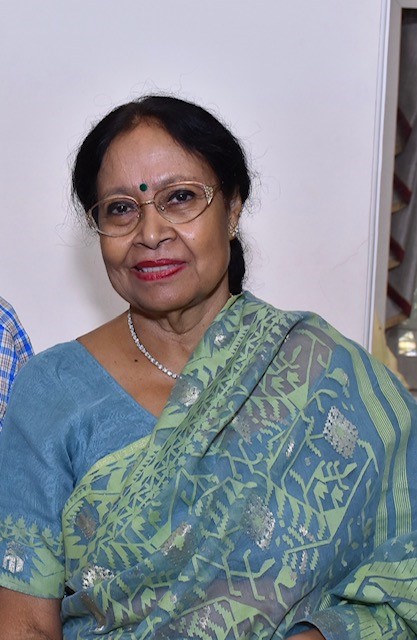

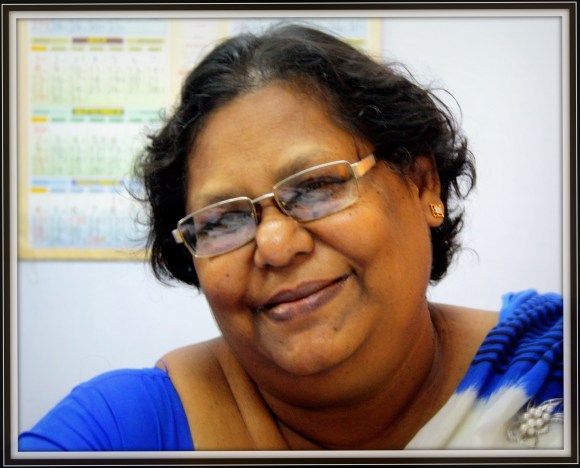
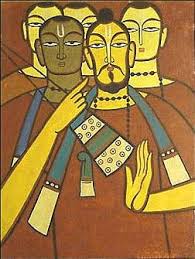
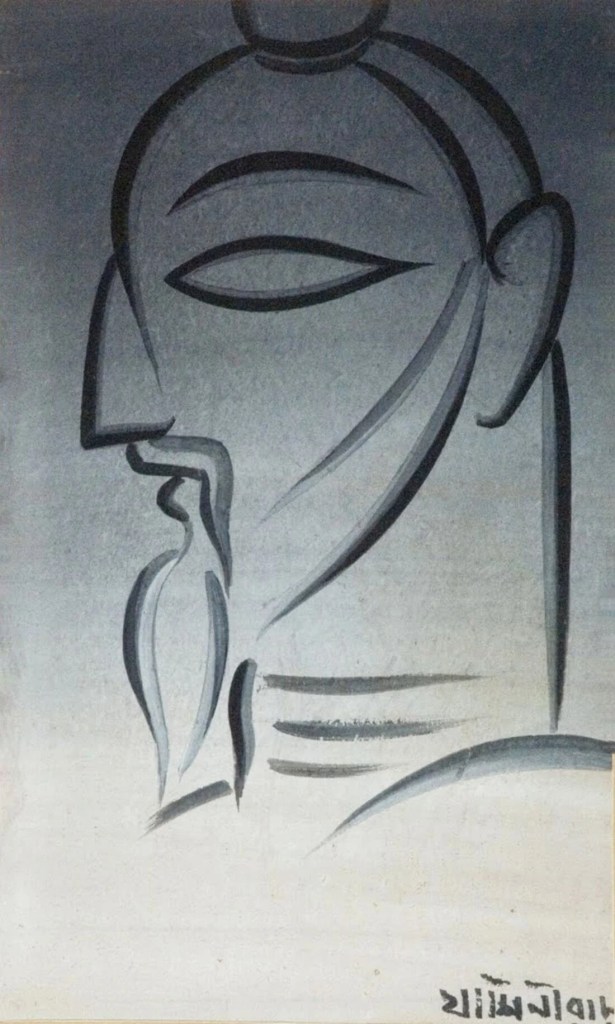
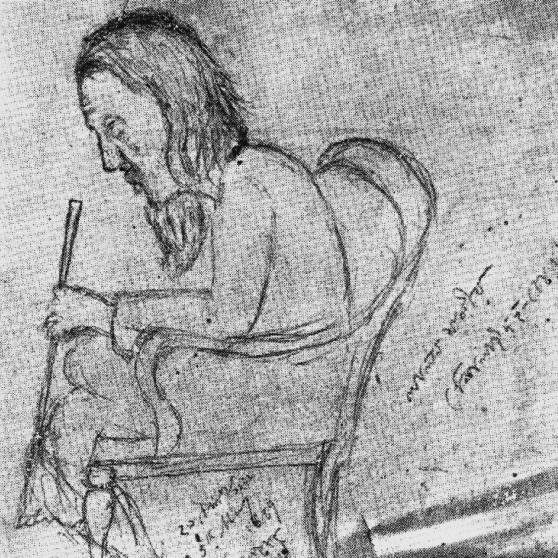


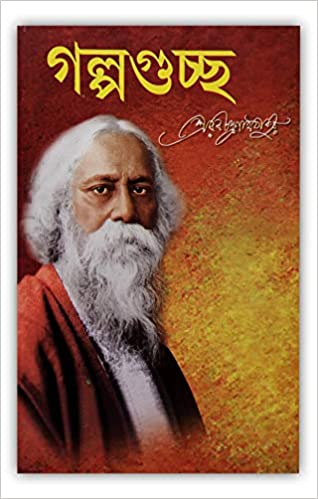
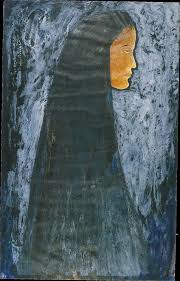
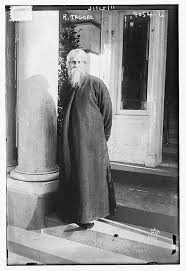
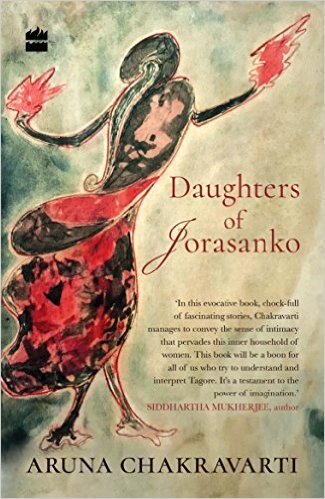



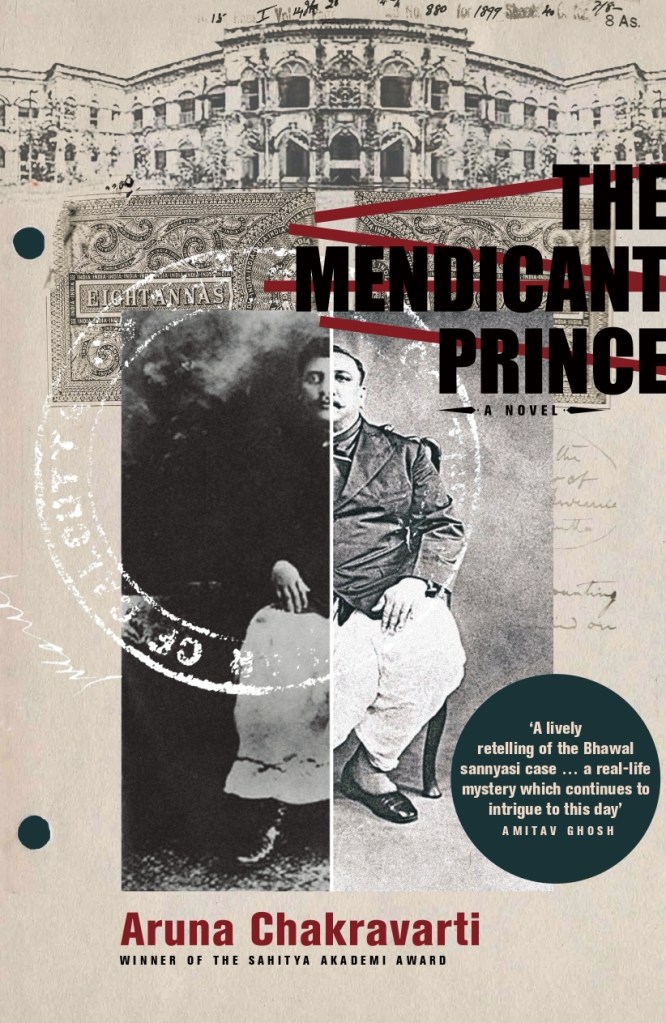

 Borderless